Category Archives: Science & Technology

Rifath Sharook, Mohammed Abdul Kashif Played Lead Role in Designing World’s Lightest Satellite

Karur, TAMIL NADU :

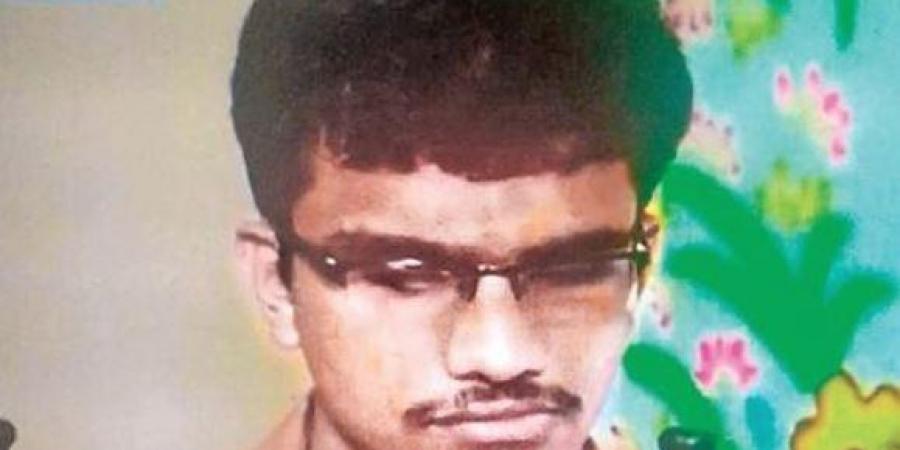
Rifath Sharook (Photo: Rifath’s Facebook profile)

New Delhi :

On January 25, India’s Polar Satellite Launch Vehicle (PSLV-C44) successfully injected Microsat-R and Kalamsat-V2 satellite into their designated orbits. Two young engineers who played lead role in designing and building world’s lightest satellite Kalamsat-V2 are Rifath Sharook and Mohammed Abdul Kashif.

They were part of a 12-members team of Space Kidz India- a group which trains aspiring space students. The group was being led by 18-year-old Sharook who hails from Tamil Nadu. Sharook is the youngest student of the team. Giving the credit of building the satellite, the media called him one-man army.But Sharook rejects to take credit solely.

Apart from Kashif (lead engineer), those who are in his team include Vinay S Bhardwaj (design engineer), Yagna Sai (lead technician) and Gobi Nath (biologist).

They were all working on rocket and space technology under the mentorship of Chennai-based Srimathy Kesan, who is the founder of Space Kidz India.

Sharook who hails from Tamil Nadu’s Karur is Chief Technology Officer (CTO) at Space Kidz India. Sharook’s father, Mohammed Farook, was also scientist. When he was in Class V, his father had left for heavenly abode. He was interested in space since his childhood.

“My dad was also a scientist. He’d do independent research on astronomy. We’d spend hours watching the space through a telescope,” Sharook was quoted by rediff.com as saying.

Talking about the Kalamasat V2, Mohammed Abdul Kashif said “We have produced a new electronic architecture for this satellite that ensured that it was lighter, smaller, more economical and consumed less energy while functioning like any other communication satellite”.

He added “There are a wide variety of uses it can be deployed for. But with this launch, we are only testing the technology and seeing how it operates”.

The satellite was 64 grams, 3.8 centimeter-cube-sized and it is world’s lightest and smallest satellite. It was made through the competition ‘Cubes in Space’ which was a collaboration between NASA and ‘I Doodle Learining’.

Muslim boy Sharook and Kashif played larger role in building the world’s lightest satellite and it was named also after a Muslim scientist A P J Abdul Kalam, who was the president of
India.

source: http://www.caravandaily.com / Caravan Daily / Home> Indian Muslim> Indian Muslims / by Caravan News / February 04th, 2019

A doctor and his legacy

NEW DELHI :

Taking up the challenging task of achieving unity and tolerance

M.H. Ansari viewing an exhibition on Mukhtar Ahmad Ansari at the M.F. Hussain Art Gallery, 2015

Fifty-six is no age to die. Mukhtar Ahmad Ansari, MD, MS, with a tall reputation in London’s Lock Hospital and Charing Cross Hospital, and ‘free Doctor’ to uncountable poor in Delhi, was on a train bringing him back to his hometown, Delhi, from Mussoorie where he had gone to treat the Nawab of Rampur when, on May 10, 1936, a heart attack – his first and fatal – took him away. He was four years short of sixty.

Doctors are human and death’s sudden grasp comes to medical luminaries just as it comes to ordinary mortals. Ansari must have been in some disbelief at his heart’s capitulation. But his death shocked a whole world beyond himself, a world of grateful and trusting patients, former patients, friends, families of patients, countless Congress and Muslim League leaders who were his patients, some of them, and fellow freedom fighters, all. For he had been more, incredibly more, than the ‘good Doctor sahib‘. He had been, for over two decades, a political guide and pathfinder to all those who believed in India’s plural integrity and in India’s destiny as a leader of progressive causes globally.

The Balkan War in 1912 saw 32-year-old Ansari lead a medical team from India to Turkey to help wounded Turkish forces in what was not just a humanitarian act but one that formed lasting bonds, as the medical mission of the doctor, Dwarkanath Kotnis, to China in 1938 during the Sino-Japanese war was to do. The Kotnis Mission has been the subject of a film, Dr. Kotnis Ki Amar Kahani by V. Shantaram, for which K.A. Abbas wrote the script. A film has to come on Dr. Ansari Ki Amar Kahani about that mission’s work. Mrinal Sen could well have made such a film a decade ago but perhaps Javed Akhtar or Shyam Benegal will yet do it, for it cries out, filmographically and civilizationally, to be done.

M.A. Ansari’s life as such needs to be known, not for his sake – he is beyond the reach of recognition or neglect – but ours. Being invited to play a constructive political role in the formulation of the Lucknow Pact between the Congress and the Muslim League in 1916 and to preside over the Muslim League’s sessions in 1918 and 1920, Ansari emerged as a sturdy champion of the Khilafat Movement and Hindu-Muslim unity.

His commitment to that cause soon steered away from League politics, the separate electorates idea and all that was to lead to the demand for Pakistan. This resulted in his becoming inevitably, a general secretary of the Indian National Congress in 1920, 1922, 1926, 1929, 1931 and 1932 and in 1927, its president. A former president of the Muslim League becoming president of the Indian National Congress? Incredible, but incredible things did happen in Gandhi’s and Nehru’s India.

Drawing close to the Mahatma’s eclectic nationalism, Ansari became Gandhi’s ‘Delhi host’ in his old Delhi manor called ‘Darussalam’ and physician to members of Gandhi’s family, including his grandson, Rasik, son of Harilal Gandhi, who contracted typhoid in 1929 while on a visit to Delhi (from eating roadside jalebis, as Rasik himself explained) and in spite of Ansari’s valiant efforts, could not be saved. Gandhi was touring the North West Frontier at the time. Ansari sent him a telegram conveying the news. Gandhi steeled himself. “I loved the boy,” he wrote, “I had placed high hopes on him…” The trauma brought the doctor and the Mahatma closer to one another.

Ansari was instrumental in the founding of the Jamia Millia Islamia, and bringing to it a whole host of nationalists, Muslim and Hindu, to learn and to teach. In return for learning Urdu, Gandhi’s youngest son, Devadas, was recruited to teach the Jamia spinning. Ansari was Jamia’s chancellor when he died.

Liberation from mutual animosity and mistrust among Hindus and Muslims was for him a passion. Ansari was, to use an old-fashioned phrase, a man of God. He was also a man of Science. His being a man of science doubtless had something to do with his harbouring his eminently rational goal of wanting Hindus and Muslims to live in civilized amity, not conflict.

As it happened, on the very day Ansari died, Gandhi was meeting in the Nandi Hills, near Mysore, India’s most famous man of science, Chandrasekhara Venkata Raman. If a man of god can be a man of science, a man of science can be a man of god.

Raman to Gandhi: “The growing discoveries in the science of astronomy and physics seem to me to be further and further revelations of God. (But) Mahatmaji, religions cannot unite. (Only) Science offers the best opportunity for a complete fellowship. All men of science are brothers.”

Gandhi to Raman: “What about the converse? All who are not men of science are not brothers?” ( The Collected Works of Mahatma Gandhi, Volume 62, pages 387-9)

Within a few hours of this conversation, M.A. Ansari, man of science and of god, brother to all who came in contact with him personally, professionally or politically, lay dead in his railway coach.

Gandhi had gone to the Nandi Hills with Sardar Patel, among others, for a ‘health’ sojourn at Ansari’s behest. When the news reached him the next day, he was stunned. Penning a tribute for the Associate Press, he described him as “the poor man’s physician if he was also that of the Princes” and said, “His death will be mourned by thousands for whom he was their sole consolation and guide.” He added: “…He was my infallible guide on Hindu-Muslim questions. He and I were just planning an attack on the growing social evils.”

An attack on social evils. Strong words, scorching words. What was the biggest ‘social evil’ that Gandhi was exercised most about in 1936? Hindu-Muslim mistrust.

He needed a guide from among the Muslim community to tackle this. And, with Ansari, that guide was gone. At a loss to find a successor he turned first to Zakir Husain. “I ask, will you take Dr Ansari’s place?” On Zakir Sahib not agreeing, he turned then to Maulana Azad for that crucial assistance. It is entirely reasonable to suppose that had Ansari lived he would have played a defining role as a symbol, spokesman and strategist for Hindu-Muslim unity in the Constituent Assembly and then, very probably, in 1950, become president or vice-president of India. He would have been only 70, the age at which his grand-nephew, Mohammad Hamid Ansari, first became vice-president of India.

What was the main concern – ‘social evil’ – forcefully, passionately expressed in Vice-President Ansari’s farewell address to Rajya Sabha? The challenge to Hindu-Muslim unity, pluralism, not as mere ‘tolerance’ but in Netaji Subhash Chandra Bose’s words: cultural intimacy.

We know what Vice-President Ansari, descended from that great name in Indian pluralism – Dr M.A. Ansari – who rejected everything that led to Pakistan, has received by way of a ‘reward’.

Seventy five years after the Quit India Movement, 70 years after Independence, we the people of India, brothers and sisters in plural mutuality, must tell the shatterers of India’s unity, Hindu, Muslim and other: Quit, quit terrorizing India.

source: http://www.telegraphindia.com / The Telegraph, online editon / Home> Opinion / by Gopalkrishna Gandhi / August 22nd, 2017

The book ‘Aankh Aur Urdu Shayeri’: A poetic eye on ‘aankh’

Aligarh, UTTAR PRADESH :

UrduBookMPOs11mar2019

An anthology of Urdu verses and proverbs, all on eyes, was launched recently

Eyes are a mirror of the soul, it is said. Some eyes are sly and roguish, some serene and shining, a few, seductive and mysterious. Prod Dr Abdul Moiz Shams and he reels out details about a variety of eyes and their intrinsic worth. He should know considering he is an ophthalmologist by profession, but then Dr Shams also has a keen eye for Urdu  poetry.

DrAbdulMoizMPOs11mar2019

During his long service as an ophthalmologist, he has looked into innumerable defective eyes holding a little flashlight. While restoring vision, he has also looked beyond, into the soul. And what he has come up with is a book titled Aankh Aur Urdu Shayeri.

Inki aankhen ye keh rahi hain Faraz

Ham pe tasneef ek kitab karo

(Her eyes tell Faraz

Write a book on us)

Dr Shams has compiled a 389-page book containing couplets of different shades and emotions on eyes. It’s a treasure trove for connoisseurs of poetry. From Mirza Ghalib, Allama Iqbal to Meer, Sauda, Shaad, Faiz, Majaz, Jigar Muradabadi, Ali Sardar Jafery, Parveen Shakir — a whole lot of Urdu poets and their verses on aankh have been listed.

The book is divided into three parts — the first one contains couplets beginning with aankh, the second one has verses which are allegorical in nature and the third part has proverbs containing the word aankh, listed topic-wise. The book is a ready reckoner of sorts, on eyes. This is perhaps the only book of its kind where all the pages are full of verses on one body part.

Right from his student days Dr Shams had a love for poetry and when he became an eye specialist, his passion took a different turn. He started focussing on poetry of eyes. It’s no wonder that he has four other books to his credit: Hamari Aankhen, Jism-o-Jan, Jism-Be-Jan and Aab-e-Hayat.

“The eye is the jewel of the body. Its function is not just to see but to look beyond and sense colour, form, light and movement. That’s why I started collecting couplets on eyes,” says Aligarh-based Dr Shams who released his book in Hyderabad.

The insightful couplets are real eye-openers. Sample this couplet of Parveen Shakir.

Aankh ko yaad hai wo pal ab bhi

Neend jab pehle pehal tuti thi

Full-length ghazals of Ali Sardar Jafery, Khaisar Siddiqi, Hasrat Mohani and Basheer Badr, all on eyes, make for delightful reading.

Gulab aankhen, sharaab aankhen

Yehi to hain lajawab aankhen

Aankhen uthen to dard ke chashme ubal pade

Palken juhken to payar ka badal baras gaya

One can get an eyeful of couplets in this book which was released at the recent two-day National Urdu Science Congress at the Maulana Azad National Urdu University. “There is no dichotomy between science and literature. In fact they complement each other,” says Dr Abid Moiz, who is also a good humour writer.

source: http://www.thehindu.com / The Hindu / Home> Life & Style> Book / by J S Ifthekhar / March 06th, 2019

Mumbai Based Businessman Offers Rs 110 Cr To PM Relief Fund For Pulwama Martyrs

Kota, RAJASHTAN / Mumbai, MAHARASHTRA :

The 44-year-old Murtaza A Hamid, a Mumbai based businessman has offered to donate Rs 110 crore from his taxable income to the PM’s National Relief Fund which gets spent on the welfare of the families of the Pulwama martyrs.

PTI/DAINIK BHASKAR
PTI/DAINIK BHASKAR

The businessman Hamid, who hails from Kota sent an email and  sought an appointment to PM Modi in this regard. Visually impaired by birth, Hamid had graduated from Government Commerce College, Kota and is currently working as a scientist and researcher in Mumbai.

Speaking to TOI over phone Hamid told what inspired him to donate, “The inspiration to help and support those who lay down their lives for our motherland should be in the blood of every citizen of the country.”

ShamimMurtuzaMPOs17mar2019


Hamid also said that he regrets that if the government had recognised his scientific innovation timely, the incident like Pulwama could have been averted. He claimed that he innovated ‘Fuel Burn Radiation Technology’  which helps to trace and to locate any vehicle or object without GPS, camera or any other technical machinery.

He also claimed that he had proposed to government and offered his innovation free of cost to NHAI in September 2016,  but he received the approval two years later in October 2018 and there has been no further development ever since.

(With TOI inputs)

source: http://www.indiatimes.com / India Times / Home> News> India / by Maninder Dabas / March 04th, 2019

Dr Najma Heptulla inaugurates National Unani Conference

NEW DELHI :

The National Unani awards were presented on the first day of the two day conference

The National Conference on Unani Medicine kicked off on Monday with much fanfare in the presence of a galaxy of dignitaries.

“Unani Medicine can offer the right solution for many health challenges we are facing due to lack of treatment of many diseases and paucity of resources”, said Dr. Najma Heptulla, Governor of Manipur, inaugurating the two-day conference organized by the Central Council for Research in Unani Medicine (CCRUM). It is a part of the 3rd Unani Day celebrations.  Dr. Heptulla urged the Unani fraternity to progress and evolve with the changing times, adapt to new techniques of health research and contribute new approaches to health management. She said that Manipur has the treasure of over 500 medicinal plants and invited scientists to visit the state for research. 

Addressing the conference themed on ‘Unani Medicine for Public Health’, Minister of State (IC) for AYUSH, Shripad Yesso Naik enlightened the audience on concrete steps taken by the Ministry of AYUSH to promote Unani Medicine.

The Lifetime Achievement Awards were conferred on Prof. Naeem Ahmad Khan, Aligarh Muslim University, Aligarh and Prof. M A Jafri, Jamia Hamdard, New Delhi for Best Academician and Best Researcher in Unani Medicine respectively

“Our efforts are focused to tap the real potential of AYUSH systems in imparting preventive, promotive and holistic healthcare to the people,” he said. Paying tributes to Hakim Ajmal Khan, whose birth anniversary is celebrated as Unani Day on 11thFebruary every year, he described him as a versatile genius.

Highlighting the strengths of Unani Medicine and other AYUSH systems in his address, Union Minister for Minority Affairs Mukhtar Abbas Naqvi said that the AYUSH systems are golden key to health and wellbeing. India is the strongest hub of Traditional Medicine which is one of the reasons medical tourism is flourishing in the country. He stressed on Integration of Unani Medicine in Mainstream Healthcare in line with the government policies and initiatives for mainstreaming of AYUSH in national healthcare.

On this occasion, AYUSH Awards for Unani Medicine were conferred on various Unani scientists and experts in recognition of their contributions for research, teaching and practice of Unani Medicine.

The Best Research Paper Awards were presented to Dr. Arshiya Sultana, Associate Professor, National Institute of Unani Medicine, Bangalore for Clinical Research and Dr. Noman Anwar, Research Officer (Unani), Regional Research Institute of Unani Medicine, Chennai for Drug Research in Unani Medicine. The Young Scientist Awards were conferred on Dr. Jamal Akhtar, Research Officer (Unani) Scientist – III, CCRUM for Clinical Research and Dr. Nasreen Jahan, Associate Professor, National Institute of Unani Medicine, Bangalore for Drug Research in Unani Medicine.

The Best Teacher Awards were presented to Prof. Tanzeel Ahmad, Aligarh Muslim University, Aligarh for Clinical Research, Prof. Mohd Aslam, Jamia Hamdard, New Delhi for Drug Research and Prof. Khalid Zaman Khan, Aligarh Muslim University, Aligarh for Literary Research in Unani Medicine. The Lifetime Achievement Awards were conferred on Prof. Naeem Ahmad Khan, Aligarh Muslim University, Aligarh and Prof. M A Jafri, Jamia Hamdard, New Delhi for Best Academician and Best Researcher in Unani Medicine respectively.

source: http://www.medibulletin.com / MediBulletin / Home> Alt Medicene / by MediBulletin Bureau / February 11th, 2019

List of Padma awardees — 2019

NEW DELHI :

PadmaAwardeesMPOs30jan2019

21 of the awardees are women and the list also includes 11 persons from the category of foreigners/NRI/PIO/OCI, 3 posthumous awardees and 1 transgender person.

Padma Awards — one of the highest civilian Awards of the country, are conferred in three categories, namely, Padma Vibhushan, Padma Bhushan and Padma Shri. The Awards are given in various disciplines/ fields of activities, viz. art, social work, public affairs, science and engineering, trade and industry, medicine, literature and education, sports, civil service, etc. ‘Padma Vibhushan’ is awarded for exceptional and distinguished service; ‘Padma Bhushan’ for distinguished service of high order and ‘Padma Shri’ for distinguished service in any field. The awards are announced on the occasion of Republic Day every year.

These awards are conferred by the President of India at ceremonial functions which are held at Rashtrapati Bhawan usually around March/ April every year. This year the President of India has approved conferment of 112 Padma Awards including one duo case (in a duo case, the Award is counted as one) as per list below. The list comprises 4 Padma Vibhushan, 14 Padma Bhushan and 94 Padma Shri Awards.  21 of the awardees are women and the list also includes 11 persons from the category of foreigners/NRI/PIO/OCI, 3 posthumous awardees and 1 transgender person.

Bharat Ratna (3)

1. Nanaji Deshmukh (posthumous)

2. Dr. Bhupen Hazarika (posthumous)

3. Pranab Mukherjee

Padma Vibhushan (4)

1. Ms. Teejan Bai — Art-Vocals-Folk — Chhattisgarh

2. Shri Ismail Omar Guelleh (Foreigner) —  Public Affairs — Djibouti

3. Shri Anilkumar Manibhai Naik — Trade & Industry-Infrastructure — Maharashtra

4. Shri Balwant Moreshwar Purandare — Art-Acting-Theatre — Maharashtra

Padma Bhushan (14)

1. Shri John Chambers (Foreigner) — Trade & Industry-Technology — USA

2. Shri Sukhdev Singh Dhindsa — Public Affairs — Punjab

3. Shri Pravin Gordhan  (Foreigner) — Public Affairs — South Africa

4. Shri Mahashay Dharam Pal Gulati  — Trade & Industry-Food Processing — Delhi

5. Shri Darshan Lal Jain — Social Work — Haryana

6. Shri Ashok Laxmanrao Kukade — Medicine-Affordable Healthcare — Maharashtra

7. Shri Kariya Munda — Public Affairs — Jharkhand

8. Shri Budhaditya Mukherjee — Art-Music-Sitar — West Bengal

9. Shri Mohanlal Viswanathan Nair  — Art-Acting-Film  — Kerala

10. Shri S Nambi Narayan — Science & Engineering-Space — Kerala

11. Shri Kuldip Nayar (Posthumous) — Literature & Education (Journalism) — Delhi

12. Ms. Bachendri Pal  — Sports-Mountaineering —  Uttarakhand

13.  Shri V K Shunglu  — Civil Service —  Delhi

14. Shri Hukumdev Narayan Yadav  — Public Affairs — Bihar

Padma Shri (94)

1. Shri Rajeshwar Acharya — Art-Vocal-Hindustani — Uttar Pradesh

2. Shri bangaru Adigalar — Others-spiritualism — Tamil Nadu

3. Shri Illias Ali — Medicine-Surgery — Assam

4. Shri Manoj Bajpayee — Art-Acting-Films — Maharashtra

5. Shri Uddhab Kumar Bharali — Science & Engineering-Grassroots Innovation — Assam

6. Shri Omesh Kumar Bharti — Medicine-Rabies — Himachal Pradesh

7. Shri Pritam Bhartwan — Art-Vocals-Folk — Uttarakhand

8. Shri Jyoti Bhatt — Art-Painting — Gujarat

9. Shri Dilip Chakravarty — Others-Archaeology — Delhi

10. Shri Mammen Chandy — Medicine-Hematology — West Bengal

11. Shri Swapan Chaudhuri — Art-Music-Tabla — West Bengal

12. Shri Kanwal Singh Chauhan — Others-Agriculture — Haryana

13. Shri Sunil Chhetri — Sports-Football — Telangana

14. Shri Dinyar Contractor — Art-Acting-Theatre — Maharashtra

15. Ms. Muktaben Pankajkumar Dagli — Social Work-Divyang Welfare — Gujarat

16. Shri Babulal Dahiya — Others-Agriculture — Madhya Pradesh

17. Shri Thanga Darlong — Art-Music-Flute — Tripura

18. Shri Prabhu Deva — Art-Dance — Karnataka

19. Ms. Rajkumari Devi — Others-Agriculture — Bihar

20. Ms. Bhagirathi Devi — Public Affairs — Bihar

21. Shri Baldev Singh Dhillon — Science & EngineeringAgriculture — Punjab

22. Ms. Harika Dronavalli — Sports-Chess — Andhra Pradesh

23. Shri Joravarsinh Jadav — Art – Dance (folk)  — Gujarat

24. Ms. Godawari Dutta — Art-Painting — Bihar

25. Shri Gautam Gambhir — Sports-Cricket — Delhi

26. Ms. Draupadi Ghimiray — Social Work-Divyang Welfare — Sikkim

27. Ms. Rohini Godbole — Science & Engineering-Nuclear — Karnataka

28. Shri Sandeep Guleria — Medicine-Surgery — Delhi

29. Shri Pratap Singh Hardia — Medicine-Ophthmology — Madhya Pradesh

30. Shri Bulu Imam — Social Work-Culture — Jharkhand

31. Ms. Friederike Irina (Foreigner) — Social Work-Animal Welfare — Germany

32. Shri Joravarsinh Jadav — Art-Dance Folk — Gujarat

33. Shri S Jaishankar — Civil Service — Delhi

34. Shri Narsingh Dev Jamwal — Literature & Education — Jammu & Kashmir

35. Shri Fayaz Ahmad Jan — Art-Craft-Papier Mache — Jammu & Kashmir

36. Shri K G Jayan — Art-Music-Bhakti — Kerala

37. Shri Subhash Kak (Foreigner) — Science & Engineering-Technology — USA

38. Shri Sharath Kamal — Sports-Table Tennis — Tamil Nadu

39. Shri Rajani Kant — Social Work — Uttar Pradesh

40. Shri Sudam Kate — Medicine-Sickle Cell — Maharashtra

41. Shri Waman Kendre — Art-Acting-Theatre — Maharashtra

42. Shri Kader Khan (Posthumous-Foreigner) — Art-Acting-Films — Canada

43. Shri Abdul Gafur Khatri — Art-Painting — Gujarat

44. Shri Ravindra Kolhe (Duo)* — Medicine-Affordable Healthcare — Maharashtra

Ms. Smita Kolhe (Duo)* — Medicine-Affordable Healthcare — Maharashtra

45. Ms. Bombayla Devi Laishram — Sports-Archery — Manipur

46. Shri Kailash Madbaiya — Literature & Education — Madhya Pradesh

47. Shri Ramesh Babaji Maharaj — Social Work-Animal Welfare — Uttar Pradesh

48. Shri Vallabhbhai Vasrambhai Marvaniya — Others-Agriculture — Gujarat

49. Ms. Gita Mehta (Foreigner) — Literature & Education — USA

50. Shri Shadab Mohammad — Medicine-Dentistry — Uttar Pradesh

51. Shri K K Muhammed — Others-Archaeology — Kerala

52. Shri Shyama Prasad Mukherjee — Medicine-Affordable Healthcare — Jharkhand

53. Shri Daitari Naik — Social Work — Odisha

54. Shri Shankar Mahadevan Narayan — Art-Vocals-Films — Maharashtra

55. Shri Shantanu Narayen (Foreigner) — Trade & Industry-Technology — USA

56. Nartaki Natraj — Art-Dance-Bharatnatyam — Tamil Nadu

57. Shri Tsering Norboo — Medicine-Surgery — Jammu & Kashmir

58. Shri Anup Ranjan Pandey — Art-Music — Chhattisgarh

59. Shri Jagdish Prasad Parikh — Others-Agriculture — Rajasthan

60. Shri Ganpatbhai Patel (Foreigner) — Literature & Education — USA

61. Shri Bimal Patel —  Others-Architecture — Gujarat

62. Shri Hukumchand Patidar — Others-Agriculture — Rajasthan

63. Ms. Madurai Chinna Pillai — Social Work-Microfinance — Tamil Nadu

64. Ms. Tao Porchon-Lynch (Foreigner) — Others-Yoga — USA

65. Ms. Kamala Pujhari — Others-Agriculture — Odisha

66. Shri Bajrang Punia — Sports-Wrestling — Haryana

67. Shri Jagat Ram — Medicine-Ophthalmology — Chandigarh

68. Shri R V Ramani — Medicine-Ophthalmology — Tamil Nadu

69. Shri Devarapalli Prakash Rao — Social Work-Affordable Education — Odisha

70. Shri Anup Sah — Art-Photography — Uttarakhand

71. Ms. Milena Salvini (Foreigner) — Art-Dance-Kathakali — France

72. Shri Nagindas Sanghavi — Literature & Education-Journalism — Maharashtra

73. Shri Sirivennela Seetharama Sastry — Art-Lyrics — Telangana

74. Shri Shabbir Sayyad — Social Work-Animal Welfare — Maharashtra

75. Shri Mahesh Sharma — Social Work-Tribal Welfare — Madhya Pradesh

76. Shri Mohammad Hanif Khan Shastri — Literature & Education — Delhi

77. Shri Brijesh Kumar Shukla — Literature & Education — Uttar Pradesh

78. Shri Narendra Singh — Others-Animal Husbandry — Haryana

79. Ms. Prashanti Singh — Sports-Basketball — Uttar Pradesh

80. Shri Sultan Singh — Others-Animal Husbandry — Haryana

81. Shri Jyoti Kumar Sinha — Social Work-Affordable Education — Bihar

82. Shri Anandan Sivamani — Art-Music — Tamil Nadu

83. Ms. Sharada Srinivasan — Others-Archaeology — Karnataka

84. Shri Devendra Swarup (Posthumous) — Literature & Education-Journalism — Uttar Pradesh

85. Shri Ajay Thakur — Sports-Kabaddi — Himachal Pradesh

86. Shri Rajeev Tharanath — Art-Music-Sarod — Karnataka

87. Ms. Saalumarada Thimmakka — Social Work-Environment — Karnataka

88. Ms. Jamuna Tudu — Social Work-Environment — Jharkhand

89. Shri Bharat Bhushan Tyagi — Others-Agriculture — Uttar Pradesh

90. Shri Ramaswami Venkataswami — Medicine-Surgery — Tamil Nadu

91. Shri Ram Saran Verma — Others-Agriculture — Uttar Pradesh

92. Shri Swami Vishudhananda — Others-Spiritualism — Kerala

93. Shri Hiralal Yadav — Art-Vocals-Folk — Uttar Pradesh

94. Shri Venkateswara Rao Yadlapalli — Others-Agriculture — Andhra Pradesh

* indicates duo case. (counted as one award)

In the earlier version of this article, a Padma Shri awardee name was repeated. It has been corrected now.

source: http://www.thehindu.com  / The Hindu / Home> News> National / by The Hindu Net Desk / January 25th, 2019

3,000 books in top honcho’s library

Bengaluru, KARNATAKA / Silicon Valley, USA  :

As senior vice-president of SAP, V R Ferose’s job has taken him to as many as 40 countries.

Ferose01MPOs30jan2019

Bengaluru :

As senior vice-president of SAP, V R Ferose’s job has taken him to as many as 40 countries. With back-to-back meetings and tight schedules, Ferose rarely has had any time to explore the places. But the corporate honcho has found a unique way of understanding cultures: Visiting bookstores. In fact, he even planned an entire vacation to visit the world’s largest independent bookstore – Powell’s Bookstore in Portland, USA.

VR Ferose
VR Ferose

As a child, Ferose read magazines such as Reader’s Digest and comics, but his reading habit didn’t really take off until college. “My wife Deepali was a voracious reader, and gifted me Eric Segal’s The Class. That is when I got hooked to reading,” he says.

Today, he has more than 3,000 books in his collection, but Ferose reveals that he doesn’t have a particular way of organising these books. “Currently I am cataloguing my 100 rarest books.

I have always wanted to organise my books properly, but never found the time. Also, I find there is fun in randomness and the hunt for finding a book is a part of the experience,” he says.People may call him crazy for his quirky hobby, but his wife has always been supportive. To an extent. He explains: “I have no more place in my home or office. Sometimes, my wife gets frustrated when books pile up in our wardrobes.”

So in order to strike a balance, Ferose does what most booklovers would find hard to do: “I have started giving away books – every time I buy a book, I give away one!” says the senior corporate professional.
On a visit to the Nobel museum in Stockholm, he found that every chair in the cafeteria was signed by a Nobel Laureate. This then sparked off another idea: to collect books signed by Nobel Laureates.

Over a decade, Ferose managed to expand his collection of such books to 67. This collection includes Geetanjali signed by Tagore, My Experiments with Truth signed by Gandhi, Effects And Self Fertilization In The Vegetable Kingdom signed by Darwin, Where Do We Go From Here signed by Martin Luther King and Profiles In Courage signed by John F Kennedy.

Ferose03MPOs30jan2019

His favourite, however, is Man’s Search for Meaning by Victor Franklyn. “It was hard to get a signed book by him, since he rarely signed books. Getting this copy from a book dealer was a high point,” he explains.

His favourite bookstores are all over the world, from Mystery Pier Books in LA (where every book is a true first edition) to El Ateneo in Buenos Aires (considered to be the most beautiful bookstore in the world) to Bookworm in Bengaluru. Collecting books, however, isn’t just a hobby for Ferose. “It’s also about focus and constant learning. A hobby allows me to stand out in the crowd and it’s something I lean on in good times and bad. As they say, books are uniquely portable magic,” he says.

source: http://www.newindianexpress.com / The New Indian Express / Home> Cities> Bengaluru / by Simran Ahuja / Express News Service / January 08th, 2019

Interview with Arshia Khan from University of Minnesota Duluth

Hyderabad, TELANGANA / Minnesota, U.S.A :

Dr. Arshia Khan interview at SAI Conference

source: http://www.youtube.com

Dr. Arshia Khan Ph.D, Associate Professor, Department of Computer Science, Swenson College of Science & Engineering, University of Minnesota Duluth, USA

Website :

http://www.d.umn.edu/~akhan

AMU researcher publishes book

Aligarh, UTTAR PRADESH :BookBrassicaceaeMPOs27dec2018

Aligarh :

Dr Naser A Anjum, a DBT-RLF researcher (Scientist-D) in the Department of Botany, Aligarh Muslim University edited “The Brassicaceae – Agri-Horticultural and Environmental Perspectives” in collaboration with Prof Om Parkash Dhankher (University of Massachusetts Amherst, USA), Prof Juan F Jimenez (Instituto Potosino de Investigación Científica y Tecnológica, San Luis Potosí, Mexico), Dr Sarvajeet S Gill (MD University, Rohtak) and Dr Narendra Tuteja (ICGEB, New Delhi). The Frontiers Media, Lausanne, Switzerland has published the book.

The book covers Agri-Horticultural and Environmental role of members of Brassicaceae, an angiosperm family that includes model plants such as Arabidopsis, Alyssum, and Brassica, developing model generic systems like Boechera, Brassica, and Cardamine and several cultivated plant species including radish, rocket, watercress, wasabi, horseradish, vegetable and oil crops.

According to Dr Anjum, the book is available at https://www.frontiersin.org/research-topics/3959 for free consultation and download.

source: http://www.amu.ac.in / Aligarh Muslim University / Home> AMU News / Public Relations Office,  Aligarh Muslim University / December 26th, 2018

Ansari Abdullah: The IITian from Malegaon gets admission for Phd in IIT Delhi

Malegaon, MAHARASTHRA :

Ansari Abdullah with his parents

Ansari Abdullah, the boy from Malegaon who is not only an engineer but also hafiz- e- Quran had mentioned in his converstaion with TwoCircles in the year 2016 spoke about his challenges, dreams and doing research in Japan.

Abdullah skipped campus placement from IIT Kanpur as he was more interested in research and development. And his focus was so immense that his thesis was awarded the Gold Medal for ‘Best M.Tech Thesis at IIT Kanpur’. And now after his MTech, he appeared for the admission test to pursue his doctorate. And he was seleted by the top  three IITs including IIT Roorkee, IIT Kanpur and IIT Delhi for PhD in Civil Engineering.

But Ansari Abdulah chose IIT Delhi, because IIT Delhi received “Institute of Eminence Award”, this year.

Abdullah is thankful to his parents, his sprirtual and religious guides, his guides in college who helped during his college days in graduation and post graduation to research write and  submit his thesis Dr. Prashant B Daigavane and Dr. Javed Mallik. And Dr. Kenji Satake who guided him during his internship at the University of Tokyo.

With inputs from S N Ansari, asst editor, Urdu City, Malegaon

source: http://www.twocircles.net / TwoCircles. net / Home>  Education> Indian Muslim> Lead Story> Youth / by TCN News / December 26th, 2018