Category Archives: Science & Technology

A blood donors’ directory from MGU

Kochi, KERALA :

The initiative involving students is part of its social outreach programme

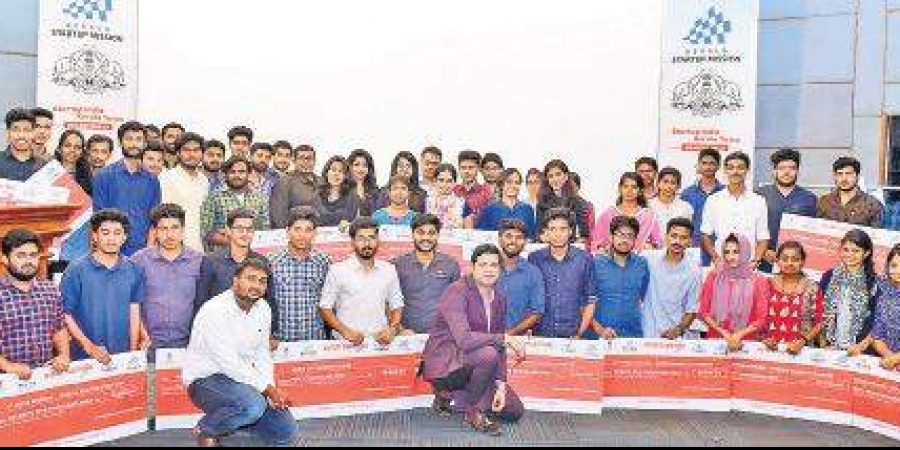
As part of its social outreach initiative, Mahatma Gandhi University (MGU) will soon come up with an online blood donors’ directory involving its students.

The Blood Donors’ Forum will be part of the portal — nss.mgu.ac.in — being developed by the internal IT cell of the varsity. “The project forms part of the social commitment and civic engagement that the varsity would like to take forward. The public can access the directory by clicking the Blood Donors’ Forum link on the portal,” said K. Sherafudeen, Syndicate member and convener of its finance committee.

BloodDonorsMPOs19may2018

Students of various affiliated colleges and varsity departments can submit their blood groups to the programme officer of the National Service Scheme (NSS) unit in each institution. The officer will be responsible for including the names of students on the portal. Mr. Sherafudeen said the names of students would not be revealed, but those requiring blood could contact the programme officer. The public could check the list of students in each blood group category online. The contact number of the officer will be available on the website. The NSS official in each college will be responsible for bringing together students willing to donate blood.

The portal will have facilities to include details on the functioning of NSS units, which will be linked online. Principals can log in and appoint programme officers, who can enter the portal by typing password and username.

The portal will have NSS camp details, monthly attendance report, fund details, and the audit report. The notice board on the website will update the developments in NSS units.

The NSS department in the varsity can verify details on a real-time basis. It will have facilities to manage the NSS department fund and generate NSS certificates. The online facility will help in speeding up the process of awarding grace marks to students enrolling in NSS.

source: http://www.thehindu.com / The Hindu / Home> News> States> Kerala / by G. Krishnakumar / Kochi – May 12th, 2018

Life lessons learnt from a gaming console

Hyderabad, TELANGANA :

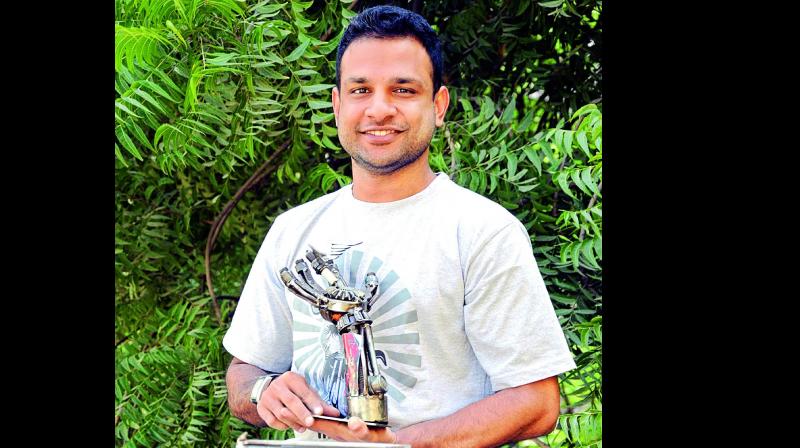
Passion and dedication is the key towards success. Whatever you choose to do, you must do it wholeheartedly. Winning or losing is secondary, what matters is participation.

habeebullahKhanGamerMPOs01may2018

Bengaluru :

Passion and dedication is the key towards success. Whatever you choose to do, you must do it wholeheartedly. Winning or losing is secondary, what matters is participation. This is what gaming has taught me,” says the 21-year-old Habeeb Ullah Khan from Hyderabad.

He started gaming full-time in 2014. He had to cope with studies, career and gaming simultaneously. He says, “I was part of a boot camp in Delhi without any kind of financial support. I’m glad I have made it so far.”

After he finished his B.Com, he realised that it was time to follow his passion. “My cousin used to play national tournaments. I always had a competitive spirit within me, but didn’t know how to nurture it. With help from my cousin, I ventured into professional gaming,” says Habeeb.

He started playing Counter Strike Global Offensive initially, but later chose DOTA-2.

Over the past three years he developed a team — Wipeout, which includes four other members.

He has participated in 30-40 national tournaments. He won six tournaments last year, such as Taiwan Excellence Gaming and The Indian E-Sports Championship.
He is known as ‘CLown (K)’ in the virtual world and practices 14 hours a day. Team Wipeout also practices every day whenever they are free. They maintain separate schedules for gaming and other activities.

He says, “Gaming is similar to outdoor sports. The more you practice, the more skilled you become. It involves coordination and quick thinking. E- Sports (electronic sports) is a great community where you grow as a person. There is no hectic schedule, unlike other professions.” He has learned patience, focus and anger management.

He suggests that the aspiring gamers should not get de-motivated by failures. He cites his own example and says, “My journey in the gaming world has been a roller coaster ride. I have failed numerous times, but I never stopped learning. I’m successful today because of my failures.”

Talking about the gaming field in India he says that gaming is still not considered as a career. He says, “The youth should be encouraged to take up gaming as a profession. One should not think about losing. Winning and losing is a part of life. You will always gain valuable experience. Although E-Sports does not have adequate resources right now, over the next few years it will gain momentum. It has wide scope and rewards well.”

source: http://www.newindianexpress.com / The New Indian Express / Home> Lifestyle> Tech / by Ivy Chatterjee / Express News Service / April 13th, 2018

ShareChat founders, all UPites, figure on Forbes’ 30 under 30 Asia list

UTTAR  PRADESH :

Founders of social media platform ShareChat — hailing from Lucknow, Gorakhpur and Ghaziabad — have made it to the Forbes 30 under 30 Asia 2018 list. The list features young disruptors, innovators and entrepreneurs across Asia, all under the age of 30.

Left to right: Farid Ahsan of Lucknow, Bhanu Pratap Singh of Gorakhpur and Ankush Sachdeva of Ghaziabad. (Handout image)

Founders of social media platform ShareChat — hailing from Lucknow, Gorakhpur and Ghaziabad — have made it to the Forbes 30 under 30 Asia 2018 list. The list features young disruptors, innovators and entrepreneurs across Asia, all under the age of 30.

The Forbes website reads: “Farid Ahsan, Bhanu Pratap Singh and Ankush Sachdeva met as students, and in 2015 they created ShareChat, an online local language-based social media platform.”

All three are alumni of the Indian Institute of Technology, Kanpur (IIT-K).

Farid Ahsan, 25, of Lucknow, Bhanu Pratap Singh, 26, of Gorakhpur and Ankush Sachdeva, 24, of Ghaziabad developed the vernacular social networking application ShareChat as a technology led start-up based out of Bangalore.

According to information mentioned on the Forbes website, the youngsters’ aim was to share the social media experience with speakers of South Asian languages, Hindi and Punjabi, allowing them to make profile, upload content and establish followers.

“Their app is used by eight million users monthly. Currently, they have raised $23.6 million from investors such as SAIF Partners and Xiaomi,” reads the website.

Speaking on how their platform was designed to cater to the needs of the Indian internet users, Farid said, “ShareChat is changing the way in which the next set of billion Indian users consume the internet through their multi-lingual user-generated content platform and cutting-edge technology infrastructure. It is the first social network that gathers geo-specific data on Indian content on a large scale and leverages a highly data-oriented approach to cater to the diverse needs of the Indian internet users.”

Bhanu added, “ShareChat app can be downloaded from the Google Play Store and used in various regional languages. It allows users to create posts, follow people, consume multimedia content, interact with other people through comments and share things with various other communication platforms in an easy way.”

Calling the application intuitive and convenient, Ankush said, “ShareChat aims to optimise social media content for Indian users and become a unique problem solver for the mass vernacular audience in the country.”

Backed by strategic investors, ShareChat has an established user base of almost 30 million users spread across the country and provides the platform in 14 languages including Hindi, Malayalam, Gujarati, Marathi, Punjabi, Telugu, Tamil, Bengali, Odia, Kannada, Assamese, Haryanvi, Rajasthani and Bhojpuri.

source: http://www.hindustantimes.com / Hindustan Times / Home> Cities> Lucknow / by Rajeev Mullick, Hindustan Times,Lucknow / April 14th,2018

Mohammed Hanish assumes office as KMRL chief

KERALA :

Kochi :

HaneeshMPOs17apr2018

The Kochi Metro Rail Ltd (KMRL) has a new chief.

APM Mohammed Hanish took over the reins on Thursday as Elias George bowed out from the top job after successfully completing five years with Kerala’s prestigious project. After assuming office, Hanish said his primary aim will be to smoothen the path ahead for KMRL. “Our main focus will be the extension of Kochi Metro up to Tripunithura.

Along with that, we will also launch the second phase of the project, from Jawaharlal Nehru Stadium to Kakkanad.

Another project we are carrying forward is the Water Metro, which is expected to revolutionise the transport sector in Kochi,” Hanish said.

However, the newly appointed managing director of KMRL said there are certain challenges in front of KMRL. “These include the land acquisition hurdles,” he said.”We need to speed up the land acquisition proceedings for completing the project in a time-bound manner. I believe my experiences with the Kerala Roads and Bridges Development Corporation (RBDCK) and PWD will help me in achieving the goals. Kochi Metro is, of course, a prestigious project and I’m happy to become a part of it.

The work culture, as well as the office environment, is quite different at KMRL. The young brigade consisting of vibrant staff members is the real strength of KMRL.” The outgoing MD, Elias George, said the new chief will have to undertake some key challenges, including the second phase of expansion of Kochi Metro.

“Personally, I will say that my tenure with KMRL as its MD is one of the most satisfactory jobs that I have undertaken in my whole career,” he said.

Hanish, who also holds the top position with Supplyco, had served as the nodal officer for the FIFA U-17 World Cup matches in Kochi.

He is also the officer-in-charge of the Kochi Smart City Mission.

source: http://www.newindianexpress.com / The New Indian Express / Home> Cities> Kochi / by Express News Service / November 03rd, 2017

Indian Scientists Led by Muslim Woman Succeed in Making Hydrocarbons with Microbes

All India, NEW DELHI :

From left — Scientists Shriessh Srivastava, Syed Shams Yazdani, Zia Fatma and Tabinda Shakeel studied the phospholipid pathway of E. coli . (Photo – The Hindu)

New Delhi :

A team of scientists at the International Centre for Genetic Engineering and Biotechnology (ICGEB), New Delhi has successfully experimented with the use of microbes in making hydrocarbons.

The scientists “have succeeded in engineering the metabolic pathway of Escherichia coli in such way that it would synthesise hydrocarbons of carbon chain length 15 and 17, which are the fundamental components of diesel,” says a report in The Hindu.

The results of the study, conducted by four researchers of microbial engineering – Shriessh Srivastava, Syed Shams Yazdani, Zia Fatma and Tabinda Shakeel – were recently published in the Journal of Metabolic Engineering.

“Few cyanobacteria are known to produce a low quantity of alkane. So we put the genes responsible for this production into the laboratory bacteria. But then the production was very minimal. So we took the approach of in-silico metabolic pathway, and finally over-expressed a gene (zwf gene) and removed few genes from E. coli which resulted in significantly high hydrocarbon production,” explained Zia Fatma, Postdoctoral researcher and first author of the paper.

Dr Syed Shams Yazdani, from Microbial Engineering group and corresponding author of the paper said: “Currently, most of our need for fuels is met by non-renewable crude petroleum. Few countries have commercialised biodiesel made via transesterification of vegetable oil, but they can only be blended in the proportion of 5-20% with diesel and are not compatible with the supply chain,” says per. “The production is currently only at the lab level. We have to integrate the engineered plasmid into the genome and go for mass production. We are working to bring about a ten-fold increase in the production and at the same time bring down the cost of the new product.”

source: http://www.caravandaily.com / Caravan Daily / Home> Editor’s Notes / Caravan News /  April 01st, 2018

Doctors of Royapettah Hospital bring out a book on toxicology

Chennai, TAMIL NADU :

ToxicologyMPOs26mar2018

Doctors of the Department of Internal Medicine at Government Royapettah Hospital have brought out a book, Manual of Toxicology — An Indian Perspective, which, they say, will fill a lacunae in the knowledge about poisons.

“Most toxicology manuals are silent on many of the Indian posions, as they have been written from a western perspective. This book is based on our experience treating cases involving toxins,” says Dr. A. Shaik Sulaiman Meeran, one of the doctors who spearheaded this book project.

Dr. P. Paranthaman was the editor-in-chief. Dr. Sulaiman, Dr. A. Samuel Dinesh and Dr. D. Venkateswaralu served as associate editors and Dr. P. Raja as co-editor. The book has been brought out by Chess Educational Publishers.

Dr. Sulaiman says that knowing the sources of danger will prevent accidental ingesting of poisons or strikes by venomous reptiles and insects.

Knowing where to seek help will be a crucial factor in recovery.

He says snake bite cases from the southern suburbs, which include Tambaram and surrounding areas, parts of Old Mahabalipuram Road and East Coast Road are common. Anti-venom serum for treatment of bites by cobra, viper and krait is available. Government general hospitals have them.

Residents of semi-urban areas can face the problem of snake bikes, it is available in primary health centres, he says. Here is a word of caution. “Ninety percent of the sea snakes are poisonous and there is no anti-venom serum for them. Only supportive treatment can be given. Sea snakes are sometimes found near fishermen’s settlements. They get entangled in fishermen’s nets and are brought ashore. There is always a high possibility of finding them near fishermen’s hamlets on East Coast Road,” says Dr. Sulaiman.

source: http://www.thehindu.com / The Hindu / Home> News> Cities> Chennai / March 23rd, 2018

Four doctors to be feted

Mangalore, KARNATAKA :

Indian Medical Association will honour four doctors on Friday on the occasion of Doctors’ Day celebration in recognition of their professional excellence, service to society, and service to the IMA. Doctors’ Day is observed in memory of legendary physician and second Chief Minister of West Bengal B.C. Roy.

I.G. Bhat
I.G. Bhat

The doctors being felicitated are: I.G. Bhat, Parvathi Bhat, Y.M. Hegde, and D.K. Abdul Hameed. Mangalore University Vice-Chancellor T.C. Shivashankara Murthy will be the chief guest, according to an IMA press release.

The IMA said Dr. Abdul Hameed, who did his MBBS in 1968 and post graduation in TB and Chest Diseases in 1979 from the Government Medical College, Mysore, served the Health and Family Welfare Services of the Government of Karnataka from 1970 to 1997. For eight years, he served the Wenlock Hospital here and six years in the Primary Health Centre, Bajpe, and 14 years as a District Tuberculosis Officer. He had received the Best District T.B. Programme Award in 1990 and Meritorious Service Award in 1996 from the State government. He was conferred the Rajiv Gandhi Shiromani Award from the National Integration and Economic Council, New Delhi, for outstanding individual achievements and distinguished services to the nation for 2006-07.

The release said I.G. Bhat, serving as professor of Neurology, Kasturba Medical College here, has attended various national and international conferences. He has served as president of Dakshina Kannada chapters of IMA and the Association of Physicians of India. He did his MBBS from Mysore Medical College in 1965, MD (Medicine) from KMC Mangalore in 1970, DM from NIMHANS, Bangalore, in 1975.

Dr. Parvathi Bhat, retired professor of Pharmacology, worked in various capacities from tutor to professor and Head of the Department in KMC, Mangalore. She was the Chief Superintendent of Examinations and has edited and published the book, Drug Formulary in 1994. She did her MBBS from Mysore Medical College (MMC) in 1965, MD from KMC here in 1973. She received “Lady Dufferin Silver Medal” for being the best outgoing student of MMC from the President, the IMA release said.

It said Dr. Hegde, an ENT Surgeon, who was awarded D.L.O.R.C.S. from the Royal College of Surgeons, England, in 1976, served in different hospitals in the U.K. till 1979. On his return, he served the Father Muller Hospital as consultant for two years. He worked as Assistant Professor at KMC, Mangalore, till 1988 and served in the Ministry of Health at Muscat from 1988 to 1992. He served the Father Muller Medical College from 1999 to 2008 as Prof. and HoD, ENT. At present, he is serving the institution as Honorary Professor and is on its Trust Committee. He did his MBBS from KMC, Manipal, in 1968, M.S. (ENT) from King George Medical College, Lucknow.

source: http://www.thehindu.com / The Hindu / Home> National> Karnataka / by Special Correspondent / Mangalore – July 01st, 2011

DSS powering up differently-abled to earn a living

Hyderabad, TELANGANA :

Zubeda Begum (extreme left) and her workers busy assembling solar lights in Sangareddy on Thursday.

Employs 15 divyangans led by Zubeda Begum

Sashikanth, who was affected by polio in childhood, never thought he could earn his living. But life has changed for better since the past three months, thanks to Divyangan Solar Society (DSS).

Led by Zubeda Begum, a differently-abled woman fighting for the rights of divyangans, the DSS has employed Sashikanth along with 14 others who are differently-abled to sell solar-powered lights. It has also given indirect employment to a total of 85 persons. So far, the Society has sold over 20,000 solar lights of different varieties.

Work begins at 9.30 a.m. and workers get ₹3,000 a month as salary. For many, more than the money they get by working here, it’s the respect that they earn by doing so that matters the most. “Everyone considers a differently-abled person a burden both on the family as well as the society. We don’t get jobs easily as the employers see certain limitations in what we can do and refuse to give us a chance to prove them wrong. It’s humiliating. That’s the reason why I began my fight for divyangans and their rights. I can say I have been partly successful in this regard,” Ms. Zubeda told The Hindu.

About two decades ago, she set up a public telephone booth, which took her almost a year, for self-sustenance. Given her grit to live life on her own terms, she was entrusted with the responsibility of running DSS after it was established in 2016. For the past two years, the Society has done business of ₹18 lakh. It produces 10 varieties of solar lights.

The DSS has also established its units in Mahabubnagar, Janagam, Manchiryal and Kamareddy.

source: http://www.thehindu.com / The Hindu / Home> News> Cities> Hyderabad / by R. Avadhani / Sangareddy – March 17th, 2018

Here are innovators you wouldn’t want to miss in a science fair

Bengaluru, KARNATAKA :

Ramanagara GWPTR College student Arpita B(Ext. Left) and her friends displayed their Invention Bio- Electrical Body Fat Analyser, at the three day 'Engineering Fair', at Visvesvaraya Industrial and Technological Museum, in Bengaluru on Thursday. DH photo
Ramanagara GWPTR College student Arpita B(Ext. Left) and her friends displayed their Invention Bio- Electrical Body Fat Analyser, at the three day ‘Engineering Fair’, at Visvesvaraya Industrial and Technological Museum, in Bengaluru on Thursday. DH photo

Arpita B enthusiastically clamps the sensors to the wrist. With deft plucking of the keys, she feeds her subject’s age, gender and body weight.

Then, five pairs of eyes excitedly watch the display of the gadget as it flashes some numbers. “Here’s your body fat,” 18-year-old Arpita said with a smile.

Know your body fat

The group of five girls from GWPTR College in Ramanagaram, which Arpita is part of, are proud of their invention – bio-electrical body fat analyser.

The model was one of several exhibits at the three-day engineering fair at the Visvesvaraya Industrial and Technological Museum, which showed potential for future mass production.

The girls made this device in two months at Rs 15,500. “We’ve done successful tests on people and several doctors have verified the readings,” Arpita said.

Organised by the ministry of culture for industrial training students between the ages of 18 and 23, the fair displayed several simple innovations that had practical applicability.

Bomb-detection robot

Mohammed Nuhid’s bomb-detection robot is one such invention. The fourth-semester industrial training student from the Government ITI College came up with the solution as he was moved by the scenes of soldiers being ripped apart by IEDs and landmines.

The robot can detect metal, batteries and explosive substances from a distance, Nuhid said. The battery-operated device can crawl several miles, saving the user from harm. Nuhid put the device together in 10 days, spending Rs 4,000.

Wireless CNC tractor

The wireless CNC multi-purpose tractor was one more incredible piece of innovation that five boys from the MEI Polytechnic made for cash-strapped farmers.

“This tractor can perform multiple tasks like removing weeds, tilling land, and sowing and levelling the ground to prevent birds from eating the seeds,” said Dhanush S, who is part of the team that came up with the tractor.

“We designed this exhibit after learning about the troubles farmers go through to hire field hands. This will significantly cut down their labour cost,” Dhanush added.

The team tested the tractor, which they designed in a month and made with just Rs 17,500, at a farm in Hoskote.

Automated sericulture gadget

Three innovators proudly demonstrated the Sericulture and Automation Centre, which would allow farmers to double their silk produce while halving their workload. Works are automatically fed to the centre, where temperature and moisture are moderated. The farmer can monitor the progress on CCTVs or mobile phones.

Hemanth Kumar H A, co-inventor of the technology with fellow students of APS Polytechnic, said the model can also work well for poultry, livestock and pisciculture.

In all, the fair displayed 85 different models ranging from automated money transfers with debit/credit cards, accident safety chambers in aircraft (to ensure passengers do not die in crashes), laser-based thermocol cutters, mobile phone-based home-monitoring devices to automated helmet connector with motorbikes.

A special platform had been given to students from the Association of People with Disability.

source: http://www.deccanherald.com / Deccan Herald / Home> City / DH News Service / Bengaluru – March 16th, 2018

99 gallstones removed from woman’s abdomen

Tumkur, KARNATAKA :

The surgical team displaying the 99 gallstones that were removed from a patient at Tumkur District Hospital. | Photo Credit: Special Arrangement

When 45-year-old Salma went to the Tumkur District Hospital with pain and swelling in her abdomen, little did she know that doctors would detect as many as 99 gallstones. Ms. Salma, a diabetic and having hypertension for the last 10 years, had visited several hospitals and was diagnosed with umbilical hernia. As she also had heart problem, she postponed the surgery.

However, at the Tumkur District hospital, an ultrasound revealed she had multiple gallstones in her abdomen. “When she came to us, she had severe abdomen pain. Her sugar level was abnormally high and haemoglobin was low, apart from other issues. We admitted her for 15 days and stabilised her parameters before we worked her up for the surgery. The surgery was done on Tuesday,” said Dinesh R. and Waseem Imran, the doctors who performed the surgery.

Dr. Waseem said although multiple gallstones are not unusual, finding 99 in a person is rare. “In the three-hour surgery we removed her umbilical hernia and the gallstones. She is recuperating well in the ICU. She will be discharged in eight days, he added.

source: http://www.thehindu.com / The Hindu / Home> News> States> Karnataka / by Special Correspondent / Bengaluru – February 28th, 2018