Category Archives: Science & Technology

MCEME graduates make cell-controlled lighting system

Hyderabad, TELANGANA :

Appreciating efforts: JNTU Hyderabad Vice Chancellor Venugopal Reddy interacting with students who designed the street lights control system and exhibited at Military College of Electronics and Mechanical Engineering during convocation ceremony in Hyderabad on Thursday. | Photo Credit: K.V.S. GIRI

If it were left to young engineers of Military College of Electronics and Mechanical Engineering, Country’s street lights would be auto-operated. The 91st graduating batch of the college produced a GSM connected, cell phone-operated lighting system which can be turned on and off based on requirement.

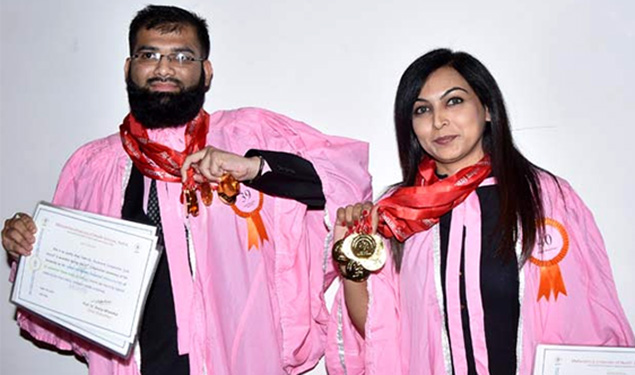
The power-saving circuit built by Noushad M.E., Ashish Kaushik, Sumit Dhanda and Akhil A.R. cost ₹ 57,200. It could be used for both civilian and defence purposes, the innovators said. The model also allows operators to operate just one or two light bulbs in a whole series. “If the operator thinks that just a few light bulbs are enough for lighting any area, they could turn off the rest by texting the details into the circuit,” said Mr. Akhil A.R. The model displayed in MCEME contained a circuit connected to six bulbs.

“The model also detects faulty operations if there are any. If a light bulb goes off, it will alert the operator,” M.E. Noushad told The Hindu. Mr. Sumit Dhanda said the project will be useful in huge military campuses which use power. “If the model is adopted by city development corporations it could cut power costs by one third,” said Mr. Dhanda. The MCEME awarded its annual best project prize to the four officers at its Convocation Ceremony on Thursday.

The MCEME passing out batch had also come up with a simple solution – a microcontroller-based automatic ventilation system – for car interiors which get heated when parked in the open. The ventilator contains a small control unit and a solar-powered exhaust fan which runs on external battery.

The microcontroller which is programmed to check the status of temperature and humidity inside the car every two seconds, triggers the exhaust fan when needed, to clear out the heat,” said an officer Vipin Jaiswal and the team leader. Other members of the project were Mukesh Thakur, M. Hariharan and M.S. Shakhavat.

Military boost

The college displayed a solar rechargeable backpack for troopers among its exhibits. The backpack with solar panels can be used as a tracking devise when soldiers go for long treks in the field, graduates said. “In any dire circumstance if the user presses a button on the backpack it sends a Save Our Souls message to control base. It will help officers to track those who are in danger during combat situation,” said Pankaj Saini who was the syndicate leader of the team which came up with the model. The other members in the team were Harmeet Singh, Sachin Yadav and Sagar.

Speaking at the convocation, A. Venugopal Reddy, Vice Chancellor of Jawaharlal Nehru Technological University asked the graduates to pay attention to new developments in cyber security and be abreast of technological innovations. “Your convocation is not like others’ passing out functions. You leave this institution to serve the motherland,” Mr. Reddy said.

source: http://www.thehindu.com / The Hindu / Home> News> Cities> Hyderabad / by Nikhila Henry / Hyderabad – June 16th, 2017

Students go innovative, price of their drone dips

Bengaluru , KARNATAKA :

KNS Institute of Technology students display the drones designed by them at Eduverse, the ninth edition of Jnana Degula education expo organised by Deccan Herald and Prajavani, at Jayamahal Palace Hotel grounds on Sunday. DH photo

An unmanned aerial vehicle (UAV) at Rs 1,500? Students of KNS Institute of Technology have done it, without much fanfare. They plan to enhance the design to customise the drones for surveillance and transporting goods.

The makers of the plane – Inayatullah, Debabrata Mondal, Premkumar Singh and Syed Junaid – represented their college along with vice principal Nayeem Ahmad at Jnana Degula-Eduverse event organised by DH and Prajavani.

Inayatullah said the plane was made of simple polymer materials (expanded polyolefin and polystyrene) and can carry 350 gm payload. “It can fly for an hour at a speed of 45 km per hour. We have used a propeller made of composite material with aluminium coating so that it can fly at a height of 500 feet and withstand force of up to 85 newtons,” he said.

The team is also working on a plane specifically designed for surveillance.“While the 45 kmph plane can be improvised to make it a delivery drone, we are working on a plane that flies slower, at 36 kmph, providing opportunities for deeper surveillance of a particular area,” Mondal said.

Inayatullah said the cost of the UAVs will come down further if produced on a large scale. “The UAVs produced by government agencies cost a lot. Our planes are disposable. The army can use the surveillance drone and does not have to worry if one of them is lost or destroyed,” he said.

The planes can be controlled by a 2.4GHz radio frequency device, which has a range of 2.5 km. “The remote controller cost us Rs 3,500. Considering that it is the plane and not the device that is susceptible to damage, we think ours is the most affordable UAV,” he said.

“The turbo is imported from China for Rs 90 and sold in India for Rs 250. The same turbo can be made in India at a cost of Rs 40. Nearly 95% of the materials were imported from China. After a detailed study, we found the cost will come down to Rs 600, if we make these materials in India,” Inayatullah said.

source: http://www.deccanherald.com / Deccan Herald / Home> City / DH News Service / Bengaluru – May 29th, 2017

In tribute to Kalam, NASA names new species after him


Kalam had his early training at NASA in 1963 before he set up India's first rocket-launching facility in the fishing village of Thumba in Kerala. DH Photo
Kalam had his early training at NASA in 1963 before he set up India’s first rocket-launching facility in the fishing village of Thumba in Kerala. DH Photo

In great news for India, scientists at NASA have named a new organism discovered by them after the much-loved A P J Abdul Kalam.

Till date, the new organism — a form of a bacteria — has been found only on the International Space Station (ISS) and has not been found on earth!

Researchers at the Jet Propulsion Laboratory (JPL), the foremost lab of NASA for work on inter-planetary travel, discovered the new bacteria on the filters of the International Space Station (ISS) and named it Solibacillus kalamii to honour the late president, who was a renowned aerospace scientist.

Kalam had his early training at NASA in 1963 before he set up India’s first rocket-launching facility in the fishing village of Thumba in Kerala.

“The name of the bacterium is Solibacillus kalamii, the species name is after Dr Abdul Kalam and genus name is Solibacillus which is a spore forming bacteria,” said Dr Kasthuri Venkateswaran, senior research scientist, Biotechnology and Planetary Protection Group at JPL.

The filter on which the new bug was found remained on board the ISS for 40 months. Called a high-efficiency particulate arrestance filter or HEPA filter, this part is the routine housekeeping and cleaning system on board the international space station.

This filter was later analysed at JPL and only this year did Venkateswaran publish his discovery in the International Journal of Systematic and Evolutionary Microbiology.

According to Venkateswaran, even as it orbits the earth some 400 kilometres above, the ISS is home to many types of bacteria and fungi which co-inhabit the station with the astronauts who live and work on the station.

Venkateswaran said even though Solibacillus kalamii has never been found on earth till date, it is really not an extra-terrestrial life form or ET.

“I am reasonably sure it has hitch hiked to the space station on board some cargo and then survived the hostile conditions of space,” explained Venkateswaran.

Naming the new microbe after Kalam was natural to Venkateswaran and his team.

“Being a fellow Tamilian, I am aware of the huge contributions by Dr. Kalam,” he said.
New bacteria are usually named after famous scientists.

Venkateswaran is part of a team which is asking that eternal question “are we alone in the universe?”

Towards that, his responsibilities include monitoring the bug levels on the ISS and he also has to ensure that all spacecraft that fly to other planets are free of terrestrial bugs.

One of his big jobs was to ensure that NASA’s Mars Curiosity rover — the massive car-sized almost 1000 kg buggy — was totally sterile when it left earth.

By international law, this extreme hygiene is required else other planets could get contaminated by bugs that reach the Martian or other planets hidden on human satellites.

Today the ISS is the size of a football field and its construction started with a launch in 1998 and as of now it is the largest human-made object orbiting the earth.

Weighing about 419 tonnes, it can house a maximum of six astronauts and has costs roughly USD 150 billion.

Till date, 227 astronauts have flown to the space station. This makes the space station actually a very dirty place and maintaining hygiene is critical so that humans can live on it with ease.

On the space station all the air and water is recycled, being a completely closed environment there is a rapid build- up of moulds and bacteria on the station.

These not only have to be cleaned but monitored to ensure that they do not corrode the walls of the space station and do not turn hazardous to the astronauts.

Venkateswaran’s main job is to monitor the environment of the space station so that harmful bugs do not proliferate.

He heads the ‘Microbial Observatory’ on the ISS projects to measure microorganisms associated with compartments owned by the US.

According to NASA, he also directs several research and development tasks for the JPL – Mars Program Office, which enables the cleaning, sterilisation, and validation of spacecraft components.

He directs several NASA competitive awards on the microbial monitoring of spacecraft and associated environments for the Exploration System Mission Directorate, closed habitats like ISS or its earth analogues for the Human Exploration and Operation Mission Directorate.

But is the new bug of some use.

“These spore formers tend to withstand high radiation and also produce some useful compounds protein wise which will be helpful for biotechnology applications,” Venkateswaran said.

His team has not characterised the bacteria fully but he hints that the new bug could be a key source for chemicals that can help protect against radiation damage.

source: http://www.deccanherald.com / Deccan Herald / Home / Press Trust of India, Los Angeles / May 21st, 2017

IIT-H develops biodegradable nano-particles to treat cancer

Some of the members of the IIT-H team working to make cancer treatment better, on the institute’s campus in Hyderabad. | Photo Credit: Mohd Arif;Mohd Arif

Team working on finding alternative to chemotherapy

The Indian Institute of Technology-Hyderabad (IIT-H) has developed biodegradable non-particles that could be instrumental in treating cancer.

A team led by assistant professor Aravind Kumar Rengan has been working on finding alternative ways to chemotherapy and radiotherapy for cancer treatment to minimise side-effects caused by these therapies. He designed a novel nano system which kills the cancer cells by photothermal therapy.

The group is currently working on making more cost-effective nano particles for photothermal therapy, integrating these particles with cancer specific drugs to have an enhanced effect in killing cancer.

The team members involved in the research are Tejaswini Appidi, Syed Basseruddin, Deepak Bharadwaj, Anil Jogdand, Sushma, Anula — all Ph.D. scholars; junior research fellow Rama Singh, and postdoctoral fellow Surya Prakash Singh.

Photo thermal therapy is a treatment procedure where light (photo) energy is supplied by means of an external laser to nano particles which absorbs this energy and converts it to heat (thermal) energy. This heat generated by irradiation of laser would increase temperature within the tumour and result in the death of cancer cells.

No side-effects

The important aspects of the research is that the treatment procedure has no side-effects, since the nano particles would be accumulated in the tumour region, and also the irradiation is specific to particles, which means the heat is generated only within the tumour and not elsewhere in the body.

Also, the laser used to provide light energy would not harm the healthy cells around the tumour region as these healthy cells would not absorb this light energy as they remain transparent to this irradiation.

The nano particulate system is very unique in its own way. The particles, after generating the heat required to kill the cancer cells, will degrade inside the body and further breakdown into much smaller particles which will be excreted from the body.

“This procedure had very good results in experiments carried out in mice, and is expected to show the same in humans too. This treatment is now under clinical trials and once the trials are completed, this would be available as an alternative treatment procedure to cancer,” Dr. Rengan told The Hindu.

Dr. Rengan was recently awarded the prestigious INSA award in the young scientist category for his outstanding research in treatment of cancer by photothermal therapy using biodegradable particles.

source: http://www.thehindu.com / The Hindu / Home> News> Cities> Hyderabad / by R. Avadhani / May 19th, 2017

Meet the 18-year-old from Tamil Nadu who designed the world’s lightest satellite

PallaPatti,  TAMIL NADU :

On June 21 this year, history will be made with the launch of the world’s smallest ever satellite — KalamSat. The launch will also hold special significance for India, with 18-year-old Rifath Sharook, a native of Tamil Nadu, being the brains behind the satellite. This will be the first time an Indian student’s experiment will be operated by NASA.

18-year-old Rifath Sharook; Source- New York Post

Hailing from the Tamil Nadu town of Pallapatti, Sharook has truly achieved something special with the KalamSat. The satellite will be launched by the US-based National Aeronautics and Space Administration (NASA), and weighs only 64 grams. Named after India’s former President and nuclear scientist A.P.J. Abdul Kalam, the satellite is slated to be launched from a NASA facility in Wallops Island.

Dr. Rubina Heptulla works on a cure for a disease that hits close to home

Mumbai, MAHARASHTRA  /New York,  USA :

When Dr. Rubina Heptulla, a pediatric endocrinologist who was just awarded a $1.1 million grant to study a possible new use of a diabetes drug, isn’t doing research or treating patients, she can be found scuba diving off the coast of India or eating calamari at the Mamaroneck Diner.

The 46-year-old Rye resident leads the pediatric endocrinology program at the Children’s Hospital of Montefiore Medical Center in the Bronx. She was awarded a grant from the National Institutes of Health to figure out if the drug Januvia can help people with a less common form of diabetes.

The drug is now used for people with the most common form of diabetes, Type 2. Heptulla’s research is trying to determine if the medication can also help people with the more rare form of the disease, Type 1, control blood sugar levels after a meal. The once-a-day medication would be taken in addition to insulin by study participants to see if helps prevent blood sugar levels from rising.

Heptulla has had an interest in treating Type 1 diabetes – an autoimmune disease that can’t be prevented or cured – since childhood because her father had the disease. Unlike Type 2 diabetes, the illness is not related to diet or lifestyle and most often develops when a person is young.

The Westchester resident grew up in Mumbai and attended medical school there, completing her training in Rhode Island, Boston and at Yale. Heptulla was living in Houston with her husband, a geneticist, and their two children when she was recruited to lead the pediatric endocrinology program at Montefiore.

She is chief of the division of pediatric endocrinology and diabetes at the Children’s Hospital at Montefiore and Albert Einstein College of Medicine of Yeshiva University. She is also professor of pediatrics and medicine at Einstein.

As part of the job, she oversees six pediatric endocrinology and diabetes clinics that treat 200 patients each week, including one in Eastchester and one on Central Park Avenue in Yonkers.

When she’s not taking care of her young patients or doing research, Heptulla can be found at home engaging in one of her favorite pastimes, painting landscape portraits.

Ten things you didn’t know about Dr. Rubina Heptulla:

1.

She has a 17-year-old son and a 15-year-old daughter, both students at Rye Neck High School.

2.

Her favorite restaurant is the Mamaroneck Diner, where she often orders calamari – along with a salad.

3.

She manages to sneak away to her native India at least once a year, where she enjoys shopping for the latest in both contemporary and traditional clothing.

4.

Heptulla is a certified scuba diver and when she’s in India she likes to go to Lakshadweep, a series of islands off the southwestern coast known for its diving.

5.

When she was a child she wanted to be an artist.

6.

She still loves to paint and is now experimenting with acrylics. Her home overlooks the Marshlands Conservancy and she has set up an easel on a staircase landing that gives her a good view of the changing landscape.

7.

She belongs to a book club and not long ago hosted a talk at her home with author Rebecca Lewis about her novel “Jacob’s Folly.”

8.

Heptulla spends a lot of time at the Rye YMCA, where she takes classes in Zumba, yoga and swims.

9.

She likes Lady Gaga.

10.

Her favorite author is Bryce Courtenay. a South African-born Australian best known for his novel, “The Power of One.”

Twitter:

JaneLernerNY

Participants are needed for Dr. Heptulla’s research into the use of Januvia in people with Type 1 diabetes. To be eligible a person must:

Be between the ages of 13 and 30.

Have Type 1 diabetes.

Have no other medical condition except for hypothyroidism.

For more information, contact:

Jeniece Trast at 718-741-2542 or jtrast@montefiore.org

Venkat Renukuntla, at 718-920-7004 or ven kat.renukuntla@ein stein.yu.edu

source: http://www.lohud.com / Lohud.com / Home> USA Today / by Jane Lerner / January 04th, 2014

Facebook donation helps save life of 9-month old Maldivian baby

Bengaluru, KARNATAKA :

Akiyal was born with a rare heart condition known as double outlet, right ventricle

Nine-month-old Akiyal with doctor Adil Sadiq (Photo: DC)

Bengaluru:

Nine-month-old Akiyal’s father Farhan, an engineer from the Maldives, is all praise for Facebook.

“It was very difficult for us to generate funds for our son’s operation,” he says. “We could do it only because of Facebook.” Akiyal was born with a rare heart condition known as double outlet, right ventricle (DORV), a condition in which the blood vessel that carries oxygen-rich blood from the heart, is located in the wrong place.

“It was a complex surgery in the sense that the child was born with one side of the heart not developed, undeveloped left pumping chamber and a large hole in the heart along with a blockage of the artery going to the lung. He required a complex repair job, which wasn;t being done in the Maldives,” says the child’s treating doctor, Adil Sadiq, Head Cardiothoracic Surgeon, Sakra World Hospital.

Farhan says, “It was not possible to get funds in the Maldives, so my family and I decided to go online and ask for help from the social media. We went ahead with creating a Facebook page for our son.” They started the Facebook page, ‘Help Akiyal — Save A Child’s Heart’.

“We promoted the page by paying five dollars, which implied that 20,000 Facebook users would see the page,” says Farhan. In no time, people across the world saw it and donations started pouring in. “The money that we used to promote the page time and again was less than 100 dollars, but we were able to raise Rs 8 lakh over the course of the year,” adds Farhan.

This digital media approach helped Farhan to get donations from anonymous altruists in Sri Lanka, Belgium, Maldives and even Bangalore. Those who could not donate sent Akiyal their earnest prayers and blessings. By the end of the year, the page had 4,388 likes and thousands of people had visited it.

“She is now fine and we would be taking her back home to Malidives in a few days,” says an elated Farhan.

source: http://www.deccanchronicle.com / Deccan Chronicle / Home>  Nation> Current Affairs / DC / by Joyeeta Chakravorty / May 25th, 2014

As India Mulls Over An Apt Tribute, UN Renames Satellite After APJ Abdul Kalam

Tamil Nadu, INDIA :

While India mulls over giving an appropriate tribute to the late former India President APJ Abdul Kalam and fights over his social media accounts, the UN has decided to name a satellite after the late scientist as a tribute to celebrate his vision.

Founded in 1999, CANEUS (CANada-Europe-US-ASia) serves to develop a common platform for space technology solutions for natural and man-made disaster management. The ‘GlobalSat for DRR’ is a UN-driven global initiative on sharing space technology for disaster risk reduction, Milind Pimprikar, chairman of CANEUS, told IANS.

KalamMPOsfeb2017

The satellite will provide a common platform that will allow sharing of space and data segments, with an ability to serve individual nation’s disaster management and development needs, IANS reported.

Talking about the similarities between the satellite and Dr. Kalam, Pimprikar said, “In his ‘World Space Vision-2050’ Mr. Kalam had envisaged space faring nations joining hands to find solutions to mankind’s major problems such as natural disasters, energy and water scarcity, health-care education issues and weather prediction. Therefore we now plan to dedicate the UN GlobalSat initiative as a tribute to Late Dr. Abdul Kalam by renaming it ‘UN Kalam GlobalSat’.’

KalamMPOs22mar2017

He hopes that the renaming will inspire new generations and scientists, and they’ll strive to work like Dr Kalam.

source: http://www.scoopwhoop.com / Scoop Whoop / Home / by Isha Jalan / August 08th, 2015

No Raman effect: How his dream died a quiet death

Madras / Bangalore (KARNATAKA ) :

Sir C V Raman had planned to set up a scientific institute in 1959 on a four-acre land in Madras.

Sir Raman has clarified that he was not sent out of Mysore, but came from Calcutta to Bangalore in 1933, and received support from the Dewan for his scientific work.

Bengaluru:

A research institute – complete with a lab, a science museum, a science library, a lecture hall and office rooms – was late Nobel laureate Sir C.V. Raman’s idea of giving something back to Madras (Chennai), a city where he commenced his scientific career, and to make a “distinct contribution” to the scientific life of the city, but it has remained an unfulfilled dream.

Sir Raman planned the second institute in 1959, 11 years after establishing Raman Research Institute (RRI) in Bengaluru, on a four-acre land parcel owned by him in Mylapore (Madras), where “scientific work of the highest standard could be carried on”.  He estimated that the research institute could be built with a budget of a couple of lakhs of rupees and carry on work with a minimum recurring expenditure of Rs 2,000 a month. “My confidence in the usefulness of the proposed institute is indicated by my preparedness to find from other sources one half of the capital expenditure proposed and also to meet one half of the recurring expenditure necessary for the next five years. If the Government of Madras could see their way to make an equal contribution, the construction of the institute could be immediately taken up and proceeded with,” states the renowned physicist’s letter dated August 18, 1959, to the late C. Subramaniam, minister for finance education, Government of Madras,  unearthed by Deccan Chronicle on the eve of National Science Day, observed on February 28 to mark the discovery of ‘Raman Effect.’

Subsequent correspondence between Mr Subramaniam and Sir Raman point at the state government’s willingness to support the proposed institute, but with a suggestion that the Nobel laureate write to the Union government for non-recurring expenditure of the project. “I may say, however, that subject to the condition that the assistance to be given by the Government of India, if any, will be taken into account in fixing the actual grant, this Government will be willing to meet a maximum of half the non-recurring cost of establishing the research institute and to make a suitable annual recurring grant for five years in the first instance,” reads the late Mr Subramaniam’s reply.

With the erstwhile Madras government listing several conditions as part of the grant-in-aid code for half grant towards construction of the institute and repeated suggestions for securing the Union government’s financial support, Sir Raman’s subsequent letter to Mr Subramaniam points at his reluctance to seek help from New Delhi. “My past experience and present knowledge of the attitude of the Central Government in matters concerning scientific research alike indicate that any application for a building grant made to that Government for the proposed institute would be met with a refusal. Not until the institute has been fully established and proved itself useful would the Central Government feel at all inclined to extend a helping hand to it,” mirrors his disinclination to write to the Centre.

Sources in RRI Trust said Sir Raman had adopted a similar stand vis-à-vis RRI and the Union government. “It was only after Sir Raman’s demise that the Union government offered aid to RRI, and the Trust invited his son Prof V Radhakrishnan to head RRI,” sources added.

Sir Raman came to the rescue of Dewan Ismail
Another set of letters, exchanged between Sir Raman and Sir Mirza Ismail, the Dewan of Mysore, in 1939, illustrates how the Nobel laureate rushed to support the latter in the wake of an article published in “The Hindu Outlook”, accusing the Dewan of favouring Muslims in appointments in Mysore state.

Sir Raman has clarified that he was not sent out of Mysore, but came from Calcutta to Bangalore in 1933, and received support from the Dewan for his scientific work.

“Throughout this period, I have received nothing but kindness and consideration from Sir Mirza Ismail on all occasions, and indeed I have had reason to feel most grateful for the fact that he has held the high office of Dewan of Msyore during these years,” reads Sir Raman’s letter in response to an article published by Krishna Lal Anand in “The Hindu Outlook” on September 14, 1939, with a headline “Muslim Dewan over Hindu state.”

source: http://www.deccanchronicle.com / Deccan Chronicle / Home> Lifestyle> Viral and Trending / by B R Srikanth, Deccan Chronicle / February 28th, 2017

Boy with ‘spine defect’ saved by rare procedure

Hyderabad, TELANAGANA :

Nizar after the success of his surgery

Hyderabad :

A nine-year-old boy born with a rare spinal chord development defect got a new lease of life after doctors at a city hospital performed a first-of-its-kind procedure on him.

According to doctors at MaxCure Hospital, Nizar was brought in with complains of breathing difficulty. Investigation revealed that he had developed two swellings -one in the neck and the other in the chest – that were compressing his oesophagus (food pipe) and trachea (windpipe), causing breathlessness.

“While this kind of a spinal cord defect is common in the lower spine, it is very rare in the neck region (which was the case with the young boy). So far no such case has been successfully treated anywhere in the world,” claimed Dr Ratnakar, consultant neurosurgeon at MaxCure. He said Nizar had breathlessness since his childhood.

Doctors had to perform the surgery in three sittings, to address the complication.”This is a rare case because a thoracic (chest) component was different (it was a remnant of gut or extra gut) from the neck component, which accumulated fluid and was increasing in size and compressing important structures,” said Dr Krishna Prasad, the director and the chief cardio thoracic surgeon at the hospital.

He said, “Removal of this (swellings) could be fatal. We managed it with two-staged operations and drained the fluid completely without any damage to chest structures.”The total cost of the treatment was around Rs 10 lakh. While the hospital bore most of the expenses, Aarogyasri dispensed Rs 1.6 lakh towards the procedure.

source: http://www.timeofindia.indiatimes.com / The Times of India / Home> News> City News> Hyderabad News / TNN / February 16th, 2017