Category Archives: Science & Technology

Cipla chairman donates Rs 8 cr to promote chemistry

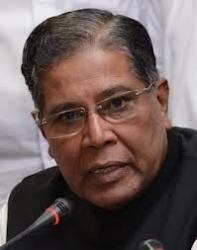
Indian business leader, scientist and philanthropist Dr Yusuf Hamied on Monday announced a major financial donation to the Royal Society of Chemistry, the world’s leading chemistry community, to support an innovative chemistry education programme for school students in India. 

CiplaChairmanMPos11feb2014

Dr Hamied, who is the chairperson of the generic pharmaceuticals company Cipla and has pioneered the model of producing affordable medicines for patients in developing countries, is donating Rs eight crore to the Royal Society of Chemistry’s Hamied Inspirational Chemistry Programme.

The programme will be managed by the Royal Society of Chemistry in partnership with the UK’s Salters Institute and leading Indian academic institutes to enhance the skills and knowledge of Indian chemistry teachers and inspire students to study chemistry at university.

Over the next five years, the programme aims to equip 8,000 teachers across India with the specialist knowledge and skills to deliver exciting and engaging chemistry lessons, and to pass this knowledge on to their colleagues. It will also provide 1,600 of the brightest chemistry students from all backgrounds with places at chemistry camps to motivate them to reach the necessary standards to study chemistry at university.

Dr Hamied said: “I am very pleased to be working in partnership with the Royal Society of Chemistry to support the Hamied Inspirational Chemistry Programme. I believe the programme will make a real difference to the education and experience of students studying chemistry in schools across India.”

Chief Executive of the Royal Society of Chemistry, Dr Robert Parker, said: “We are delighted to be working with Dr Hamied and grateful for his generous donation to enable us bring together leading organisations from the UK and India to deliver this education programme and make a real impact.” Dr Hamied added: “To inspire the next generation of great Indian scientists we must equip our teachers with the specialist knowledge and practical skills they need to show their students that chemistry is a fascinating.”

Just as teachers pass on their knowledge to their pupils, the programme will support the most talented chemistry teachers in India to train their colleagues to deliver informative and exciting chemistry lessons – a “train the trainer”  approach. I am very pleased to support this sustainable model for teacher training which will allow the programme to reach thousands of teachers across the country.” Dr Hamied said: “An inspiring chemistry education isn’t just about excellent teachers.

We need to encourage and motivate the best students to achieve the knowledge and skills they need to go on to study chemistry at university and eventually, to make a strong contribution to India’s success. This isn’t just about getting the best grades – we also need students to develop problem-solving and interdisciplinary skills. That is why I am also very pleased that this joint initiative will support the best students – particularly those from disadvantaged backgrounds – to take part in chemistry camps at leading academic institutions and experience a true taste of chemistry at university.”

Dr Simon Campbell, former president of the Royal Society of Chemistry and personal friend of Dr Hamied, said: “This unique programme is a significant educational investment with great potential to train the skilled chemists that will be vital for India’s growth and social wellbeing.”

source: http://www.deccanherald.com / Deccan Herald / Home> State / Bangalore – DHNS / February 10th, 2014

J A K Tareen awarded Padma Shri

J A K Tareen, former professor of the University of Mysore, has been conferred the prestigious Padma Shri Award, in recognition of his contribution to the field of education and literature.

Professor Tareen is the fourth professor from the Mysore University to have received the national award. He has now joined the elite club of eminent personalities of Mysore such as C D Narasimhaiah, U R Ananthamurthy and Javare Gowda.

He is also the first professor from the science faculty of UoM to receive such an award. Tareen, who has served as the vice-chancellor of the Kashmir University, hails from Mysore where he did his schooling and received master’s and PhD degrees.

source:  http://www.articles.timesofindia.indiatimes.com / The Times of India / Home> City> Mysore> Padma Shri / TNN / February 03rd, 2014

Hygiene Comes First on This Butcher’s Block

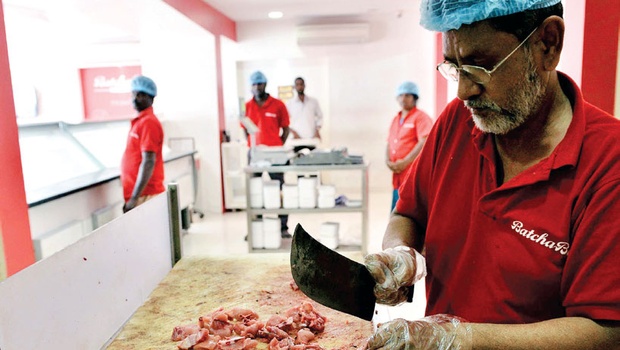
BatchaBai’s meat shop in T Nagar | P Jawahar

Sparkling white tiles, gleaming metal counters, spotlessly clean knives and the soft humming of refrigerators… This could be the sight that greets you when you walk into a run-of-the-mill meat shop on the streets of Chennai. Not in a few years or even a few months, but right now.

The Meat Sciences Department of the Tamil Nadu Veterinary and Animal Sciences University (TANUVAS), has been providing meat retailers free designs and consulting services to convert their shops into places where hygiene is the priority – and they have been doing it for the past five years.

“We have been giving out designs and consultation to any entrepreneur who wishes to start up or modernise his business,” says Robinson Abraham, Head of theMeat Services Department. “All they have to do is approach us.” Consulting at a private firm would be prohibitively expensive to the small businesses that most meat shops were, he pointed out.

But when asked about what these five years of free consulting has engendered, he points to just one operating shop in Chennai. The BatchaBai meat shop in Kilpauk stands as a silent testimony to what a few well-thought out improvements in slaughter house design can do.

There are counters made of stainless steel, teflon cutting boards, rounded edges to prevent wiping hands on tables and white tiles to make any spattered blood visible. Compared to the ill-lit, ill-washed rooms that most meat shops offer, the sight is almost unreal in its cleanliness. “These are very small but necessary design elements,” points out R Narendrababu, one of the three professors in the department. “They improve the hygiene of the shop tremendously.”

The reason why hygiene comes in a sad second in the owners’ list of priorities, he adds, is because consumers themselves have been desensitised to the dangers of bad hygiene. “Unless people refuse to buy meat from shops that don’t adhere to basic hygiene norms, retailers will never feel the need to implement these practices,” he says.

source: http://www.newindianexpress.com / The New Indian Express / Home> Cities> Chennai / by Jonahan Ananda – Chennai / January 29th, 2014

Kalam inaugurates centenary celebrations of Pamban bridge

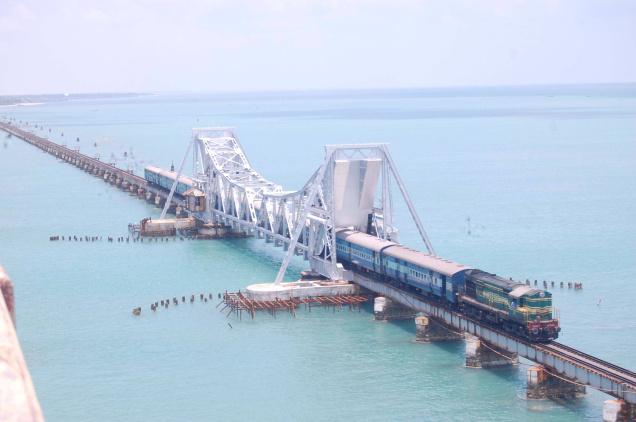
ENGINEERING MARVEL: The special train carrying former President A.P.J. Abdul Kalam at Pamban railway bridge./  Photo: L. Balachander / The Hindu
ENGINEERING MARVEL: The special train carrying former President A.P.J. Abdul Kalam at Pamban railway bridge./ Photo: L. Balachander / The Hindu

India’s first cantilever bridge connects Rameswaram with mainland

A long-time resident of Rameswaram and former President A.P.J. Abdul Kalam inaugurated the centenary celebrations of the Pamban railway bridge — India’s first cantilever bridge, connecting the pilgrim-island of Rameswaram with the mainland. He turned nostalgic as a two-coach special train took him from Mandapam across the bridge. “Pamban bridge is part of my life,” Mr. Kalam said. As a young boy, he had travelled hundreds of times on the bridge to take newspapers to the island for distribution.

Mr. Kalam unveiled a plaque and released a book Marvels of South Indian Railway, marking the inauguration of the nearly month-long celebrations.

Southern Railway General Manager Rakesh Misra said the bridge was an engineering marvel that had withstood corrosion and a violent sea for over a century. The 65.23-metre-long rolling central lift span (the bridge is 2.06 km long), named after Scherzer, German engineer who designed and built the span, has been given a fresh coat of paint and decorated with lights. It opens up like a pair of scissors to allow vessels to pass through under the bridge.

Mr. Kalam had played a vital role in preserving the bridge. After the Railways announced its uni-gauge policy in 2006, and almost gave up gauge conversion at the bridge, he brought in IIT-Madras expertise to thrash out an engineering solution.

The bridge was put to test for the first time in December 1964, when a severe cyclonic storm hit this part of the area. All girders, both RCC and steel, were washed away. Two of the 141 piers were also damaged. But, Scherzer’s span withstood nature’s fury.

source: http://www.thehindu.com / The Hindu / Home> National / by Walter Scott / Pamban – January 29th, 2014

A Digital Village

Shahid Ahmad (38) Project Director, Chanderiyaan

When you ask a software engineer like Shahid Ahmad about Jacquard weaving, the answer would stump many a fashion designer. “It is actually the world’s oldest binary system,” says Ahmad of Digital Empowerment Foundation (DEF). He has even devised a Jacquard card punching machine that eliminates two weeks of manually punching a card with the binary sequence to an hour’s work. And the weavers of Chanderi village in Madhya Pradesh are rejoicing.

Ahmad’s tryst with the age-old traditional weaving business of Chanderi began when it was gasping on its last breath. It started off with a 2008 basic survey of Chanderi village on the instigation of Jyotiraditya Scindia when Ahmad had gone to invite him for a DEF function.

The survey threw up distressing facts: weavers were being treated as labourers and earned a pittance; a few businessmen controlled the market; there wasn’t much demand for the products in the market and the youngsters were migrating to cities. Ahmad decided to give the ancient craft and its craftsmen a shot of digital empowerment. Thus was born Chanderiyan, a programme that has transformed the ancient weaving village of Chanderi.

Ahmad eased the bottleneck in the designing process (which was done manually by a couple of designers on graph paper). “I wanted to speed up designing and other aspects of the business while retaining the traditional looms,” he recalls. He also wanted to increase the earning capacity of the weavers, which was then at Rs 2000 a month.

He customised the CAD CAM software and trained 20 weavers in using the software. Of these, three to four weavers were selected to train a further 100 weavers. Simultaneously, a design library was created with 10,000 traditional designs, some retrieved from old saris.

Digitisation gave the weavers a chance to create designs and replicate the same in the loom quickly. It also allowed them to visualise new colours and create contemporary variations without having to waste precious man hours. The demand for Chanderi saris increased as the market saw newer designs and faster supply. Today, the weavers earn at least Rs 10,000 per month. The business turnover, according to an IIM Calcutta survey is anywhere between Rs 65 crore to 100 crore.

Ahmad has now taken his big idea a step further: he has devised an e-portal (Chanderiyaan.net) wherein weavers can sell their products directly to the customers globally. He also trained the weavers in aspects like taking photographs of their products, sending couriers etc. He also put up Wi-fi in a five kilometer radius. “From raw materials pricings to what exhibitions are on, the youngsters can now take their own decisions,” says Ahmad.

His dream is to make the weavers the future businessmen of Chanderi. Ahmad admits to now being more of a textile engineer than a software engineer; he even trains NID students from Bhopal on the technique of Jacquard weaving. He might not be familiar with colours, warps and weaves, but he sure knows his binary system.

source: http://www.bangaloremirror.com / Bangalore Mirror / Home> Work / by Jayanthi Madhukar, Bangalore Mirror Bureau / January 21st, 2014

UPPCL signs agreement for solar power purchase

Lucknow :

The UP Power Corporation Limited (UPPCL) has entered into an agreement with solar power  developers for purchasing 110mw of power. The agreement was entered in the presence of UP chief secretary, Javed Usmani, who said that under the state solar policy the state government will be setting up 500mw of power solar power plants in the state.

The New Energy Development Authority (NEDA) had invited bids for setting up of power plants compositely to the tune of 200mw. The authority had also put in place a competitive bidding process for power tariff from these power plants. Against this, the authority received bids for 130mw. On Friday, the UPPCL signed the agreement for 110mw power.

The solar power plants with which the agreement was signed included, 10mw by Azure Surya Private Limited, 50mw by M/s Essel Infra Project, 20mw by Moser Baer , 10mw by M/s Refex Energy, 10mw by M/s Jackson Power and 10mw to be set up by DK Infracon. All these power plants are proposed to be set up in Bundelkhand region. Usmani said that NEDA would soon invite bids for the rest 370mw.

source: http://www.articles.timesofindia.indiatimes.com /  The Times of India / Home> City> Lucknow / by Pankaj Shah, TNN / December 28th, 2013

INS Circars celebrates 74 anniversary


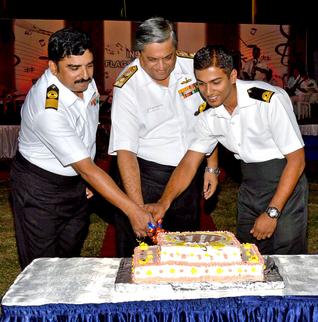
Flag Officer Commanding-in-Chief Eastern Naval Command Vice Admiral Anil Chopra along with Commanding Officer INS Circars Commodore Saleem M. Anwer cutting a cake to celebrate the 74th anniversary of ENC Depot Ship INS Circars in Visakhapatnam on Thursday./ by Special Arrangement / The Hindu

The premier depot ship of the Eastern Naval Command, Indian Naval Ship Circars, celebrated its 74th Anniversary here on Thursday.

Initially established as a small base by the Royal Indian Navy in December 1939 shortly after the outbreak of World War II, the role of Circars changed over the years from coordinating naval operations, functioning as a repair organisation and being an establishment for Boys training, to its present status of being the premier depot ship of the ENC.

Festive look

The establishment currently provides administrative and logistics support to as many as 44 naval units in and around Visakhapatnam, catering to an approximate strength of over 3,500 personnel. Flag Officer Commanding-in-Chief Vice Admiral Anil Chopra was the chief guest for the celebrations marked to commemorate the occasion. The naval base wore a festive look, and saw active participation by personnel and families of INS Circars and allied units. A large number of serving and retired officers participated in the celebrations. The traditional cake cutting ceremony was followed by release of in-house Hindi magazine Circars Vaani. Speaking on the occasion, Commanding Officer, INS Circars Commodore Saleem M Anwer said that the depot ship was fully prepared to meet all challenges in its assigned role of supporting the ENC.

source: http://www.thehindu.com / The Hindu / Home> News> Cities> Visakhapatnam / by Special Correspondent / Visakhapatnam – December 13th, 2013

Hyderabad Biotechnologist in Marquis Who’s Who

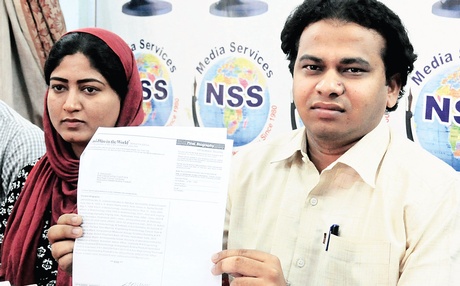
Zahoorullah S MD, assistant professor of biotechnology at JBR Engineering College, showing the letter received from Marquis Who’s Who in the World informing him of his name’s inclusion in the 2014 edition of the book at a press conference in Hyderabad on Monday. | RVK Rao

City-based biotechnologist and scientist Zahoorullah Shaikh Mohammed’s biography has been selected and enlisted for publication by Marquis Who’s Who in the World for year 2014.

The 29-year old is currently working as an assistant professor of biotechnology at Joginpally BR Engineering College here. A resident of Aziz Bagh Colony in Tolichowki, Zahoorullah has taught 27 subjects in engineering, presented 20 national and international research papers, attended 20 workshops and authored seven books. His lectures are available on the Internet and are being shared by many foreign universities, according to a press release issued here on Monday.

Marquis Who’s Who, established in 1899, is a renowned American publisher of a number of directories containing short biographies of individuals who are achievers in their respective fields. A subsidiary of News Communications Inc, the books are usually titled, Who’s Who in America, Who’s Who of American Women, Who’s Who in the World, Who’s Who in Science and Engineering, Who’s Who in American Politics, etc.

An M.Tech and Ph.D in biotechnology, Zahoorullah became an assistant professor at a young age of 23 and his appointment was ratified by JNTUH. He was also a teacher certified by Dale Carnegie Training Institute, USA in high-impact teaching skills.

He sent his biography in January and, after several stages of screening, its enlistment has been confirmed recently. “I want to become a very well-known scientist and motivate youngsters towards research. Despite having several good laboratories, our students are lagging behind in research. My only aim is to establish myself through innovation in science and engineering, and motivate others,” Zahoorullah told Express.

source: http://www.newindianexpress.com / The New Indian Express / Home> Cities> Hyderabad / by Express News Service – Hyderabad / December 03rd, 2013

Smart vendor carts & homeless shelters that turn into shops

Eleven student teams from across the country have conceptualised innovative, implementable ideas that can make a huge impact and a difference to one’s daily life. The products, a result of those ideas, range from a one-stop smart card that can be used for 14 different kinds of public transport, to a clock that alerts a mother on the days her newborn is due to get vaccinations.

These ideas were showcased at the National Student Challenge (NCS), a competition held by the Indian Institute of Human Settlements (IIHS). Students had prepared for the challenge for more than six months. The competition was spread across various fields such as urban culture, basic services, urban poor, human development, safety and violence, livelihood, transport and mobility, affordable housing, etc.

The third edition of NCS saw the participation of over 1,100 teams from across the country, of which 25 were selected for the semi-finals that were held on Wednesday. Nina Nair, chief people officer and head, NCS said, “The concept of NCS is aimed at challenging the youth to stop wringing their hands and to do something about the things that irk them. This year, however, we made it mandatory that they come up with concepts that can be implemented. Thinking up ideas is easy; implementing it is the real hurdle. The 25 teams have done extensive research on the workability of their ideas.”

Here’s a look at some of the innovative ideas.

Innokart
In the wake of the Food Safety and Standards Authority of India recently issuing notices to street food vendors on maintaining cleanliness and hygiene, this innovation by a team of four from Jamia Millia Islamia, Delhi comes as a blessing in disguise for vendors.

Their idea: an improved food cart. Targeted at meal vendors, the cart comes complete with segregated dustbins, folding flaps where customers can stand and eat and storage and advertising space. “We studied vendors outside Nizammuddin railway station and in Saraikale Khan, Chandni Chowk, Sarojini Nagar and Karol Bagh. We found that most of the carts were huge and space-occupying. Vendors also dirtied the area around them. We will team up with National Association of Street Vendors in India to educate vendors on the importance of the carts,” said Huma Parvez and Nida Haque, who along with their team members Faiza Jamal and Ahmed Faraz Khan conceptualised Innokart.

Transpact
Two students from Jadavpur University, Kolkata have developed a concept that facilitates cashless transactions on any mode of public transport. Their idea: a one-stop smart card to integrate ticketing across 14 modes of transport. If their idea is implemented, a commuter needs only carry just one currency-loaded smart card which can be used use as a ticket on buses, Metros, taxis and autos. Since the origin of their idea is in Kolkata, the team has included travel on tram and ferry too. “It erradicates the change problem,” said Avishek Das. “We have also seen a lot of illegal tokens flood the existing system as well as paper wastage. To eliminate all that and to centralise the transport system, we came up with this concept.”

His teammate, Arunima Sen, added, “With this system we can also record patterns on commuter traffic and bring accountability to those running the system.”

Infilight
On a 20-day education yatra, Saif Khan and Imbesat Ahmed from IIT, Kharagpur stumbled on the poor electricity situation in villages of Bihar. Even though there were schools and teachers, the students could not pursue their studies, revise for exams and do their homework after coming back home due to long power cuts. But almost every child above Std VIII possessed a bicycle, thanks to the Bihar government’s Cycle Yojna scheme. It triggered the idea of a cost-effective lighting solution powered by bicycles. “Our innovation comes with a rechargeable battery that can be fitted to a dynamo which in turn is fixed to a bicycle. Using the energy generated from cycling, the dynamo recharges the batteries which can be used to power LED lamps that we will provide in the kit,” said Saif. The easy-to-fit device will be dust, shock and water resistant.

DRP
To address the problem of over seven lakh homeless people in India, a group of three from Piloo Mody College of Architecture, Cuttack has invented night shelters for homeless people. Their idea: prototype kiosks that can accommodate up to three people at night and can be used as small shops for grocery and other knick knacks. “Most of the people who are homeless in the cities are either beggars or daily wage labourers. These 7.35 sq mtr kiosks made of scrap block boards can be assembled anywhere and cost only Rs 1,200 to produce,” said Debadyuti Nandy, who along with teammates Rajarshi Das and Sraman Ghosh designed the kiosk.

Padawans
Have an elderly relative at home and are worried about his/her safety while you are away at work? No problem, says this group of friends who are from Vydehi Institute of Medical Sciences, University College London and Amity, Noida. Their idea: a portable, wireless emergency alert device in the form of a bracelet or pendant that automatically sends out an alert when the person wearing it is debilitated or incapacitated. “The aged usually suffer from various kinds of diseases and it is not possible to keep an eye on them all the time. Our device, which can be triggered by the press of a button, will send a message via a bay station to the hospital the patient is registered with, and to a close relative. Each device will have a medical ID that paramedics using our app can check to get access to critical health information,” says Shankhanil Chowdhury, who along with his brother Saurav Chowdhury and friend Prasenjit Lahiri developed the concept.

Badlaav
Two students have conceptualised a device that can serve as a timely reminder for mothers to get newborns vaccinated. Their idea: a wall clock that has an automated display issuing notification at regular intervals in visual and audio format from six weeks to 18 months of the child’s birth. The reminders are as per specified by doctors. Asmita Misra who worked on the concept designed by her teammate Sahil Goyal, learnt during one of her field researches that parents had no idea when to get their child vaccinated. “We found that they were given a card but did not know how to read it. An in-house alert system was the need of the hour. For illiterate mothers, we have installed a small audio reminder that will start reminding the family three weeks prior to the date of vaccination – once every week,” she said.

Kaizen
Railway terminals are often a garbage dump with travellers and commuters throwing away used mineral water bottles and other plastic items. This not-so-pleasant sight caught the attention of a group of friends studying at Vellore Institute of Technology who have come up with an idea to improve the recycling process. Their idea: development and deployment of plastic collection machines in cities to deposit plastic bottles in exchange for a nominal amount of cash. “Ragpickers usually sort out plastic bottles at source. We plan to have them bring the collected mass to our kiosks at railway stations. And like systems in the West, they will get paid for feeding the bottles into the machines which will then compress it, thus enabling the transportation of more bottles at one go. These machines will also have sensors to detect pet bottles from ordinary plastic and separate them. The amount ragpickers bring in will be weighed and they will be paid a fee that is at least Rs 2 higher than what they get per kilo now,” said Yashanshu Jain, a of the team members who has worked on the concept. The other members of the team are Sarang Surve, Piyush Pangarkar and Rohit Kumar Tiwari.

source: http://www.bangaloremirror.com / Bangalore Mirror / Home> Bangalore> Others / by Tapasya Mitra Mazumder, Bangalore Mirror Bureau / December 17th, 2013

Rahman Khan urges Muslims to revisit Golden Age of Islamic science

Rahman+KhanMPos14dec2013

December :

(Pervez Bari): “The time has come for the entire Muslim world to introspect and get awakened to revisit five centuries, from 750 to 1258 AD – which is often described as the Golden Age of Islamic science — the teaching and practice of medicine in Europe was heavily influenced by the works of Al-Razi (d. 925), Al-Zahrawi (d. 1013) and Ibn Sina (d. 1037) to reinvent Islam’s image of peace, human values and service to humanity through Quranic injunction and Prophet Muhammad’s (PBUH) sayings (Hadees).

The difference between non-Muslims and Muslims is only that of service to humanity by the latter on the directives of Quran”.

The above observation was made by Mr. K. Rahman Khan Union Minister of Minority Affairs, who was the chief guest, while delivering the inaugural address of the three-day International Conference on “Revisiting Abul Qasim Al-Zahrawi’s Legacy in Medicine and Surgery” here on Friday evening at the India Islamic Cultural Centre.

Rahman Khan lamented that whole of Islamic world today is in turmoil despite it is blessed with wealth at its hand but no research is being conducted to benefit mankind. He called upon Muslims, especially youth, to emulate Al-Zahrawi, who has been called father of modern medicine and surgery, not only in medical but all other fields to serve the mankind.

The New Delhi-based Institute of Objective Studies, (IOS), in collaboration with MESCO (Muslim Educational, Social and Cultural Organisation, Hyderabad), and Maulana Azad Education Foundation, Ministry of Minority Affairs, New Delhi is organizing the three-day international conference on to mark the 1000th death anniversary of the pioneer physician and surgeon and highlight his wide-ranging contributions to medicine and surgery. The co-sponsors of the event are India Islamic Cultural Centre, New Delhi, and PARAS HEALTHCARE.

Prof. Omar Hasan Kasule, Sr. Faculty of Medicine, King Fahad Medical City, Riyadh, KSA, in his presidential address said that Islamic medicine is not specific medical procedures or therapeutic agents used in a particular place or a particular time. Islamic medicine is universal, all-embracing, flexible, and allows for growth and development of various methods of investigation and treatment of diseases within the framework described above’. The conceptual clarification from this definition opened the door to Islamization of modern scientific medicine.

Prof. Kasule Islamic Health Care Industry provides a value-added to medical care, spirituality, ibadat-friendly hospital, and Islamic ambience. The Islamic approach provides holistic care. Unlike Islamic finance, it started with professional training at faculties of medicine. All have a stake in health only a few have a stake in banking, he added.

Meanwhile, Harish Chandra Singh Rawat, Union Minister of Water Resources, in his address said that he salutes the sense of dedication and sense of inequality in Islam which Al-Zahrawi followed to serve whole humanity and not Muslims alone.

Dr. Fakhruddin Mohammad, Organising Secretary & Hony. Secretary, MESCO, Hyderabad threw light on the introduction of the theme of the international conference aptly.

Dr. Ahmad Abdul Hai, MD & Chief Consultant, Hai Medicare & Research Institute, Patna, in his key-note address said: “Islam has made a very glorious contribution to the art of healing. The basic impetus and the inspiration for this Islamic medicine came from the Noble Quran and the teachings of the Holy Prophet which took medicine away from the realm of superstation & fantasy and gave it a rational footing. This was the basis of Islamic Medicine”.

Dr. Hai quoted Dr. Ahmad Al Kadi of USA who had said: “the treatment in question may be spiritual, physical, exercises, nutritional adjustment, pharmaceuticals preparation (natural or synthetic) surgical procedures, implants, use of modern diagnostic tools (MRI & PET Scan), radiation therapy or a combination of any of these modalities”.

This definition of Islamic medicine may come as a surprise for some of us who feel that Islamic medicine is something limited to the therapy practiced by the revered old Hakeem’s, or is rooted only in natural herbs or is limited to the direct health related teachings found in the Quran & Hadith, or some faith healing manoeuvres, he added.

He said that Islamic medicine includes all the modalities of modern medicine but yet differs from it because it is rooted in divine faith & ethics. It strives for excellence. It is comprehensive, paying attention to the body, the psyche and the soul. It takes into account not only the individual patient but also the society. It is universal, utilizing all useful resources and offering its services to all mankind.

Earlier, Dr. Fakhruddin said that Abul Qasim Khalaf ibn al-Abbas al-Zahrawi (940-1013), known as Albucasis in the West, devoted his entire life, in Madinat al-Zahra, near Cordoba, in Muslim Spain, to medical research and practice. He made an outstanding and original contribution to medicine, surgery, orthopaedics, gynaecology and obstetrics, pharmacology and dentistry. He has been described as the father of modern surgery.

At the outset Maulana Abdullah Tarique recitated verses from the Holy Qur’an. Prof. M. Afzal Wani, Professor of Law, GGS IP University, Delhi, welcomed the dignitaries, guests and delegates. The inaugural session of the International Conference will be webcast live on the link http://vectraimage.com/webcast/ios/. Dr. Mohammed Iftekharuddin, Director, MESCO, Hyderabad conducted the inaugural function with aplomb.

Meanwhile, after the Maghrib prayers a plenary session was held on the theme of Islamic ethos in al-Zahrawi’s contribution to medicine and surgery which is still going at the time of going to the press. The plenary session is chaired by Maulana Dr. Saeed Al Azami Al Nadwi, Chancellor, Integral University and Chief Editor, Al Baas Al Islami, Lucknow. Prof. Hakim Syed Zillur Rahman, Founder President, Ibn Sina Academy of Medical Medicine and Sciences, Aligarh is the Co-Chairman of the session.  (pervezbari@eth.net)

source: http://www.siasat.com / The Siasat Daily / Home> India / by Pervez Bari pervezbari@eth.net / Friday – December 13th, 2013