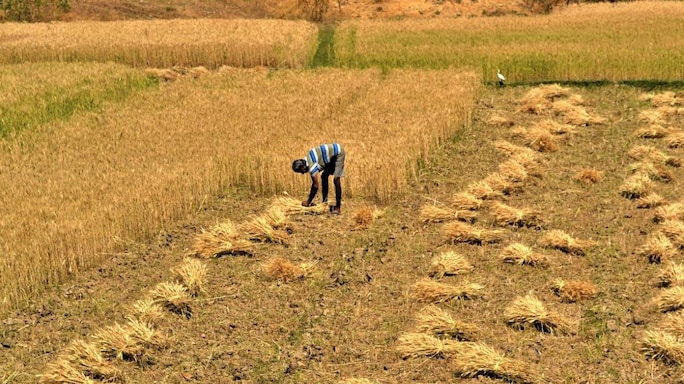
Riyaz Zaman and Mustafa Qamar Zaman decided to donate their entire standing crop to the state asking for the wheat to be distributed among the underprivileged.
Image used for representative purposes only (courtesy Pixabay).
Two brothers in Madhya Pradesh’s Guna district toiled away on their wheat field for months tending the crop with the hope of making a decent profit. But with the coronavirus pandemic striking terror and bringing the country to a standstill, they decided to donate the entire harvest to the state so that the poor and the needy can be fed.
The duo, Riyaz Zaman and Mustafa Qamar Zaman, approached the Guna district administration and expressed interest in donating their standing crop in an area of 25 bighas (around 6 acres) to the state.
The district administration swung into action immediately. Led by Guna district collector S. Vishwanathan, the local administration took possession of the land and started harvesting the crop.
“They are devout Muslims belonging to the Bohra community, and they wanted to do their bit for the state and the country. Hence, they dedicated the crop with the condition that this would be distributed among the poor,” says R. B. Sindoskar, the deputy collector of Guna, who is overseeing the harvest of the crop.
Talking to Reader’s Digest, Sindoskar said that the crop once cut would yield more than 100 quintals of wheat, which will be donated to the state granary.
The crop in the field located in the Bhullan Pura area of the Guna district, Sindoskar says, has almost been cut, and it is being transported to a granary in Guna. Sindoskar estimates that at today’s rates, the wheat would cost around ₹2 lakh.
The teachings of the Bohra Muslim community religious head Syedna Mufaddal Saifuddin—that helping those in need is the greatest service to humankind—was the inspiration behind the two brothers’ charitable effort.
“They have set an example for others,” says Sindoskar, also adding that the wheat will indeed be distributed for the cause the brothers intended.
source: http://www.readersdigest.in / Reader’s Digest / Home> True Stories> Heroes / by V Kumara Swamy / April 20th, 2020
While Mustafabad heals, Al Hind Hospital is now a sanctuary—over 50 people, left homeless by the politics of hate, are housed there.
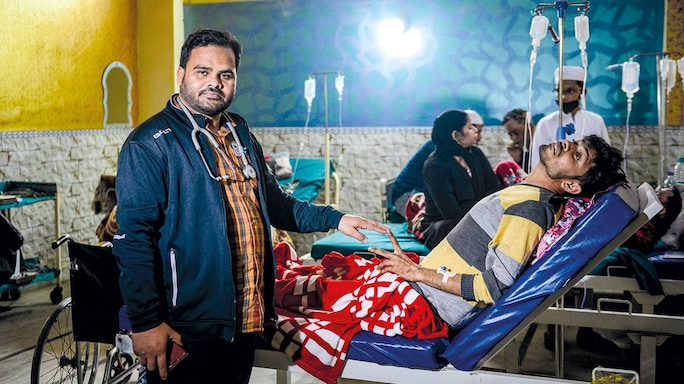
24 February 2020 was a busy day at Al Hind Hospital at Delhi’s Old Mustafabad. This three-storied hospital, in a Muslim-dominated neighbourhood, found itself in the eye of a communal storm, and its founding doctor—40-year-old M. A. Anwar, a migrant from Bihar—thrust into the foreground.
“Patients started coming in from 2:30–3 a.m. The facility is small; we didn’t have the infrastructure, but became the only refuge for those who needed medical help,” Anwar says.
Through the next few days of communal fire, nearly 600 patients streamed in, turning the first floor into a makeshift emergency ward. Mattresses and sheets were requisitioned, ropes were strung across the room to hang drip feeds. Alarmingly, many of the injuries Anwar treated were from bullets and pellets; some were worse. “Every wound I witnessed wasn’t just trauma—it was plain savagery. They spread a man’s legs until his groin split in half.”
“There were attacks everywhere. All the entry points into Mustafabad were barricaded,” he continues. “We tried to call ambulances but the Centralized Accident Trauma Services, meant for this very purpose, flatly refused.” The police were no better. “We had wheeled out a patient with a severe head injury on a stretcher, and others with pellet injuries, about a quarter of a kilometre from here.” When an ambulance organized by some of Anwar’s doctor friends reached, the police refused entry. “They said, ‘Our constable was killed, so how does it matter if eight or 10 of yours also die’. Kids with pellet injuries were beaten up mercilessly by men in uniform.”
Handicapped by institutional failure, Anwar found himself doubting his ability to help. But, he found his resolve soon, “I decided, we will try our best. For the rest, kudrat [nature] will take its course.”
His faith paid off. Justice S. Muralidhar of the Delhi High Court was to hear a plea on 25 February on allowing safe passage to the wounded from Al Hind Hospital to Guru Teg Bahadur Hospital, which was better equipped to treat these severe injuries. Advocate Suroor Mander arranged for Anwar to testify on the desperate situation at the hospital. “The honourable judge—simply doing his duty, listening to those affected—saved us.”
Doing one’s duty—and doing it well—is exactly what sets Anwar apart too. Not abandoning his station, even when he had the opportunity to, speaks volumes of his commitment to his profession. “It is during times of trouble that a doctor is needed. I didn’t have the time to think it through, but had I fled that day with my family, I would have lived with the regret that I didn’t do my duty. I have just done my job.”
Witnessing this scale of violence could shake anyone’s faith inhumanity but Anwar disagrees: “We all have our conscience. It’s been suppressed to an extent in some; sometimes it feels like it has taken leave of others. But everyone has a sense of what is right. And everyone knows what happened was wrong,even if they don’t have the courage to speak up.”
While Mustafabad heals, Al Hind Hospital is now a sanctuary—over 50 people, left homeless by the politics of hate, are housed there. “We are trying to rehabilitate them. Give them rent and rations for a couple of months; most of them had low-income jobs, so we are also trying to find them work. Currently, we are building a database of those who want to help and those in need—to bring them together.”
Anwar moved to Delhi almost 18 years ago from Bihar’s Champaran district. After he decided to pursue a career in medicine, his mother would tell him, that once he became a doctor, he shouldn’t charge fees. “I think, now, I have kept her word,” he laughs.
source: http://www.readersdigest.in / Reader’s Digest / Home> True Stories> Heroes / by Naorem Anuja / April 29th, 2020
In the mid 1940s, as the Muslim League began to realise its vision of a separate nation state for the subcontinent’s Muslim population under Muhammad Ali Jinnah, it met with resistance not only from the Congress’ high command but also from the Jamiat Ulama-i-Hind (JUH), a political organisation that was founded in 1919. In this excerpt from Venkat Dhulipala’s Creating a New Medina, the leader of the JUH, Maulana Hussain Ahmad Madani, presents his reasons for his opposition to the Muslim League and the two-nation theory.
The JUH now formed a separate party, the Azad Muslim Parliamentary Board, to fight the elections and ward off the criticism that it was merely a handmaiden of the Congress. Its chief campaigner was Maulana Husain Ahmad Madani, the principal of the Darul Uloom, Deoband, and one of the foremost Islamic scholars in the country. Madani, as his name suggests, had an intimate connection with Medina as he had been a renowned teacher of Hadith in that holy city for nearly fifteen years. Madani remained steadfast in his advocacy of a composite undivided India and emerged as the most prominent alim opposed to the ML and its Pakistan demand. Reacting to the accusation that he had ‘joined the Hindus’, he wrote to a correspondent in Rawalpindi
You write that I have joined the Hindus and you are stunned by that. Why do you get affected by such propaganda? Muslims have been together with the Hindus since they moved to Hindustan. And I have been with them since I was born. I was born and raised here. If two people live together in the same country, same city, they will share lot of things with each other. Till the time there are Muslims in India, they will be together with the Hindus. In the bazaars, in homes, in railways, trams, in buses, lorries, in stations, colleges, post offices, jails, police stations, courts, councils, assemblies, hotels, etc. You tell me where and when we don’t meet them or are not together with them? You are a zamindar. Are not your tenants Hindus? You are a trader; don’t you buy and sell from Hindus? You are a lawyer don’t you have Hindu clients? You are in a district or municipal board; won’t you be dealing with Hindus? Who is not with the Hindus? All ten crore Muslims of India are guilty then of being with the Hindus.
Madani believed that the ‘fundamental institution of contemporary political life was the territorial nation-state’ and India was indeed such a State . The main problem facing India was British imperialism which could only be overthrown through a joint Hindu-Muslim struggle. This would have the effect of also freeing other parts of Islamic world from British yoke, since it was control over India that allowed them to hold on to their worldwide Empire. Madani opposed Pakistan since he saw it as a British ploy to divide and weaken the nationalist movement and extend British control over the subcontinent. He pointed to their dismemberment of the Ottoman Empire and reducing its component parts to colonial appendages. Madani therefore attacked ML and Pakistan in a number of different ways. To begin with, he accused Jinnah of deliberately not coming up with a concrete plan about Pakistan. Quoting a news report from the Haqiqat of Lucknow, he pointed out that when Jinnah was asked at a press conference in Karachi about what Pakistan meant, the Qaid asked for more time to provide clarifications on the matter. On being pressed further, Jinnah directed the inquisitive newsman to existing writings and his own statements on Pakistan. When a Muslim editor reportedly pointed out that he had read all the existing literature and concluded that Pakistan was suicidal for the Indian Muslims, Jinnah got upset and refused to take further questions. For Madani this meant that Mr. Jinnah till date had not fully thought through or worked out the implications of Pakistan.
By contrast, Madani claimed that he himself had thought deeply on the matter and proceeded to lay out Pakistan’s devastating consequences for the Indian Muslims. While earlier JUH commentators had highlighted its dangers for the ‘minority provinces’ Muslims, Madani added that even those belonging to the majority provinces would find themselves in the lurch. He made it clear that according to the principles of the Lahore Resolution itself, existing provincial boundaries would have to be altered. It would entail Muslims in eastern Punjab and western Bengal being excluded from Pakistan. After all numerical majority was the deemed principle for partition, and non-Muslim districts in the Muslim majority areas could not be forced to join Pakistan. Assam too would not be a part of Pakistan as Muslims were a small minority in the Brahmaputra Valley. Madani noted that Iqbal too had talked of severing the Ambala division from Punjab to make it more religiously homogenous. By echoing the official Congress stance on the issue of territorial division Madani squarely called into question Jinnah and Liaquat’s claims that Pakistan would include six provinces in their entirety.
Madani also ridiculed the idea that Pakistan would be an Islamic State based on principles of the Sharia. He noted that the Asr-i Jadid of Calcutta had quoted Jinnah as saying that Pakistan’s constitution would be created by a Constituent Assembly elected by its people. Madani also referred to the Shahbaz of Lahore that carried an Urdu translation of Jinnah’s interview to the News Chronicle of London, in which he likened Pakistan to a European style democracy. Jinnah had also made it clear that Pakistan’s basic industries would be state controlled thus making it more akin to a socialist State. Madani’s extensive and careful citation of various newspaper reports in his pamphlets against Pakistan attests to the importance of the popular press not only in terms of being a critical site for debating Pakistan but also as a vehicle for dissemination of information and ideas to a wide audience.
Madani was however selective in quoting Jinnah since he largely ignored his many public statements wherein the Qaid asserted that Pakistan’s government would be established according the principles of the Sharia. Even if Madani quoted one such speech where Jinnah asked the minority provinces Muslims to sacrifice themselves for the purpose of establishing such a State, he dismissed it as a charade (dhong). After all Jinnah was not a practicing Muslim and Islamic practices had no meaning for him. The JUH ulama would go on to call Jinnah Kafir-iAzam and Churchill’s showboy. Madani also pointed out that Jinnah did not particularly care for even the worldly needs of fellow Muslims. Jinnah had after all sacrificed Muslim legislative majorities in Punjab and Bengal in the 1916 Pact. Closer home, Madani noted that the staff of Jinnah’s newspaper the Dawn, included only three Muslims while it had six Hindus, two Christians, a Jew, and even a Qadiani such as Z.A Suleri.
The League’s anti-Islamic character, its close association with the imperialist government, its dangerous ploy of Pakistan and the devastating consequences it would have for Indian Muslims were themes that Maulana Husain Ahmad Madani reiterated in a number of pamphlets on the eve of the elections as he tried to wean Muslim voters away from the ML. These were pithily summarized in a widely circulated appeal to the Muslim voter that listed all the anti-Muslim activities of the ML over the past three decades.
1) The ML had betrayed Islam by undermining a comprehensive Shariat Bill in the Central Assembly by adding conditions that rendered it useless and dead.
2) The ML toed the government line by passing the Divorce (Khula) Bill which made it unnecessary for Muslim judges to adjudicate divorce in Muslim families. When the JUH ulama sought to redress this issue by introducing a Qazi Bill, the ML at the government’s behest opposed and killed this bill since it did not want the ulama to be invested with any authority.
3) The ML had co-operated with the government to enable the passage of the Army Bill even though 500 ulama signed a fatwa opposing it.
4) The ML had not objected to the transfer of the Shahidgunj court case from Punjab to Calcutta thus sinking the Muslim cause forever in the Bay of Bengal.
5) The ML supported amendments to the Civil Marriage Act allowing marriages between Muslims and non-Muslims even though it knew that such marriages were against the Quran.
6) The ML forced the Sarda bill upon Muslims with government help even though the ulama protested against such an imposition.
7) The ML signed the Lucknow Pact of 1916 reducing the Muslims to legislative minorities in the provinces of Punjab and Bengal.
8) During the 1930 Round Table Conference, the ML got together with Europeans, Indian Christians, and Anglo-Indians and again reduced Bengal and Punjab Muslims to a minority in their own province, making their demand for establishing Pakistan in these very areas rather ironic.
9) The ML repeated this despicable tactic again after the Communal Award of 1932.
10) The ML supported the government in imposing stiff conditions for obtaining drivers licenses making life more difficult for poor drivers.
11) The ML did not condemn the government for shooting dead 47 Muslims who were part of a public procession mourning the hanging of Abdul Qayyum by the Sind government.
12) The ML government in Bengal was responsible for the death of 35 lakh people during the Bengal famine, a majority of who were Muslims.
13) The government of Sir Nazimuddin was extremely corrupt and government contracts were mostly handed over to friends and relatives of the high and mighty including many Hindus.
14) The Central government dropped 700 bombs from the air upon the NWFP as part of its offensive against the rebellion killing a number of Muslims. When the Congress member from Madras, Mr. Satyamurthy introduced a motion to condemn these wanton acts of the government, the ML did not support him and instead kept silent.
15) While the ML raised a hue and cry over atrocities perpetrated upon Muslims in the minority provinces by the Congress governments, when Rajendra Prasad offered an enquiry to be headed by the Chief Justice of the Federal Court, the ML flatly declined and instead demanded a royal commission to probe the charges.
16) The ML did not raise even a murmur of protest when the government itself declined to set up a Royal Commission for this purpose.
17) The ML did nothing for the cause of the Palestinians or the Muslims of Zanzibar.
An excerpt from Venkat Dhulipala’s Creating a New Medina: State Power, Islam and the Quest for Pakistan in Late Colonial North India. Reproduced with the permission of Cambridge University Press.
VENKAT DHULIPALA :Venkat Dhulipala is Assistant Professor of History at the University of North Carolina Wilmington, and teaches courses on the history of modern South Asia, comparative colonial histories and introductory surveys in Global History.
source: http://www.caravanmagazine.in / The Caravan / Home> News> History / by Venkat Dhulipala / March 08th, 2015
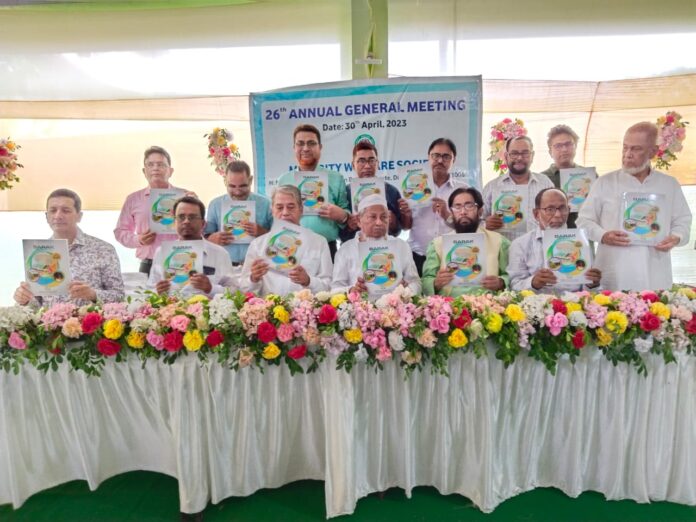
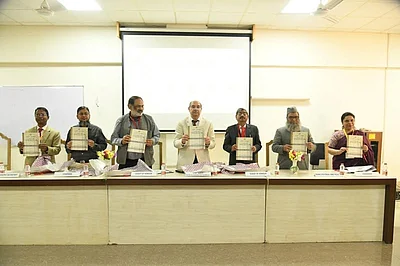
01The annual magazine of the Minority Welfare Society, “Barak”, was unveiled at the Society’s annual general meeting held in Guwahati on Sunday.
Shahidul Alam Choudhury, who had a very humble background, came to limelight in 1985 when he was sworn in as a cabinet minister in the AGP government of Assam. He was the lone minister from the Barak Valley in the cabinet. He shone over the political sky of Barak valley for nearly three decades until his death in November 2012. In order to perpetuate his memory and to keep his service to the community embedded in public mind, Minority Welfare Society (MWS) Guwahati instituted the Annual Sahidul Alom Choudhury Memorial Award in 2014. It may be mentioned here that late Sahidul Alam Choudhury was five times elected as MLA from Algapur Constituency of Hailakandi District and served two times as Cabinet Minister in the Government of Assam. The award is meant for persons of Barak Valley origin for outstanding achievement in their field of activity such as education, literature, social service, science and technology, arts, sports, medicine, health care, professional excellence, journalism, entrepreneurship, etc.
This year’s Sahidul Alom Memorial Award was conferred to Janab Habibur Rahman Choudhury, editor of the daily newspaper “Nababarta Prasanga” published from Karimganj, Assam. Besides being an acclaimed journalist, Habibur Rahman is also an educationist, social activist, and opinion leader who is respected in India and abroad. The award includes a memento, citation, and cash component of Rs 25,000. The award was given away at MWS 26th annual general meeting held in Guwahati on Sunday. Habibur Rahman, however, returned the award amount back to MWS for using the same for humanitarian purposes. Among earlier recipients of the award are Hafiz Rashid Ahmed Choudhury (jurisprudence), Abid Raja Majumdar (literature), Ali Haidar Laskar (history), Dr Baharul Islam (academics), and Dr Md Masoom (medicine & social service).
Earlier in the first session of AGM, the general secretary of MWS, Abdul Karim Choudhury, placed before the house the annual report of the activities of the society for the year 2022–2023.
In the second session, presided over by Abdus Sattar Choudhury, president MWS, three publications of MWS were unveiled in presence of a galaxy of dignitaries including Dr Abu Saleh Nazmuddin, former health minister of Assam and KJ Hilaly, Secretary to the Govt of Assam.
Abdul Waris Chowdhury, Vice President MWS, highlighted the journey of the society and its activities since its formation in 1994.
Various competitions among children were also organised on the occasion.
The event was anchored by Dr Ferdous Ahmed Barbhuiya.
source: http://www.twocircles.net / TwoCircles.net / Home> India News / by TCN News / May 02nd, 2023
The Department of Architecture, Zakir Husain College of Engineering and Technology (ZHCET), Aligarh Muslim University organized a national conference on the “Legacy of Islamic Architecture” with an objective to engage academicians and researchers in deliberations on the history and relevance of Islamic architecture.
In his presidential remarks at the inaugural session, AMU Vice Chancellor, Prof. Tariq Mansoor discussed the special features of Islamic architecture in different regions of the world like the Middle East, Turkey, Europe, Qatar and Spain. With the special mention of the Pari Mahal garden palace in Srinagar, he highlighted the contribution of Dara Shikoh in developing an Indian version of Islamic architecture.
The guests of honour, Prof. S.M. Akhtar, former Dean, Faculty of Architecture and Ekistics, Jamia Millia Islamia, New Delhi and Prof. Jagbir Singh, Director, Amity School of Architecture congratulated the department for organizing the conference on an interesting theme.
The Dean, Faculty of Engineering and Technology, Prof. Mohammad Altamush Siddiqui also shared his views regarding achievements of the faculty. Prof. Mohd. Khalid Hassan explained the vision of the conference for systematic, scientific, and methodical discussions and exchange of information for understanding the features, forms and techniques of Islamic Architecture that developed in different parts of the world.
Convener of the programme, Prof. Sharmin Khan discussed the nuances of Islamic architecture underlining the theme, which stands beyond a mere representation of certain notional architectural features and elements. Prof. Mohammad Farhan Fazli, organizing secretary extended the vote of thanks.
A wide range of topics including the Ideology conflict regarding Islamic or Muslim Architecture, Islamic architecture and sustainability, Principles and elements of Islamic Architecture, contemporary Islamic Architecture and Construction techniques in Islamic architecture were discussed during the technical session of the conference and the participants presented their abstracts.
Prof. Mirza Salim Beg, Chairman, NIRF Ranking Committee was the chief guest and Prof. I.H. Farooqui, Chairman, Department of Civil Engineering was the guest of honour in the valedictory programme.
Best paper and best paper presentation awards were given under research scholar and students categories, respectively.
source: http://www.thenewsagency.in / The News Agency / Home> Uttar Pradesh / by Team TNA / March 01st, 2023
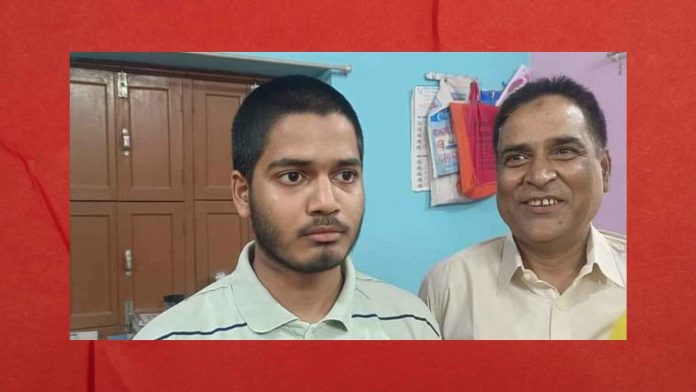
Mohammad Rumman Ashraf from Islamia High School, Sheikhpura topped the Bihar matric exam by securing 489 (97.8℅) marks| Photo: Twitter
A Muslim student, Mohammad Rumman Ashraf from Islamia High School, Sheikhpura topped the Bihar School Examination Board (BSEB) has released the BSEB 10th Result 2023 by Bihar Education Minister by securing 489 (97.8℅) marks.
Dr Chandra Shekhar, the state’s minister of education, announced the result though a press conference that started at 1:15 PM. Around 16 lakh BSEB Class 10 students’ results have been released this year. A total of 81.04 % of students passed.
The Bihar Board officials have chosen to award prizes this year, and as a result, the first-place finisher will receive a cash prize of Rs. 1 lakh, while the second and third-place finishers will each receive cash prizes of Rs. 75,000 and Rs. 90,000.
(Developing Story)
source: http://www.muslimmirror.com / Muslim Mirror / Home> Education> Indian Muslim> Positive Story / by Muslim Mirror Staff / March 31st, 2023
Rafil Ahmed, a student of Shri Dharmasthala Manjunatheshwara College of Business Management, Mangalore has secured second rank at the Mangalore University in the BA (HRD) CBCS Course.
Rafil Ahmed is the son of Mohammed Haneef PS and Rehana Ahmed AK of Mangaluru.
Rafil Ahmed secured 2651 marks of the 3500 total marks to secure the second rank.
Husna Farhath from Alva’s College Moodabidri secure first rank with 2797 marks while Bryttan Mathew of Field Marshal KM Cariappa College, Madikeri with 2648 marks secured third rank in the course.
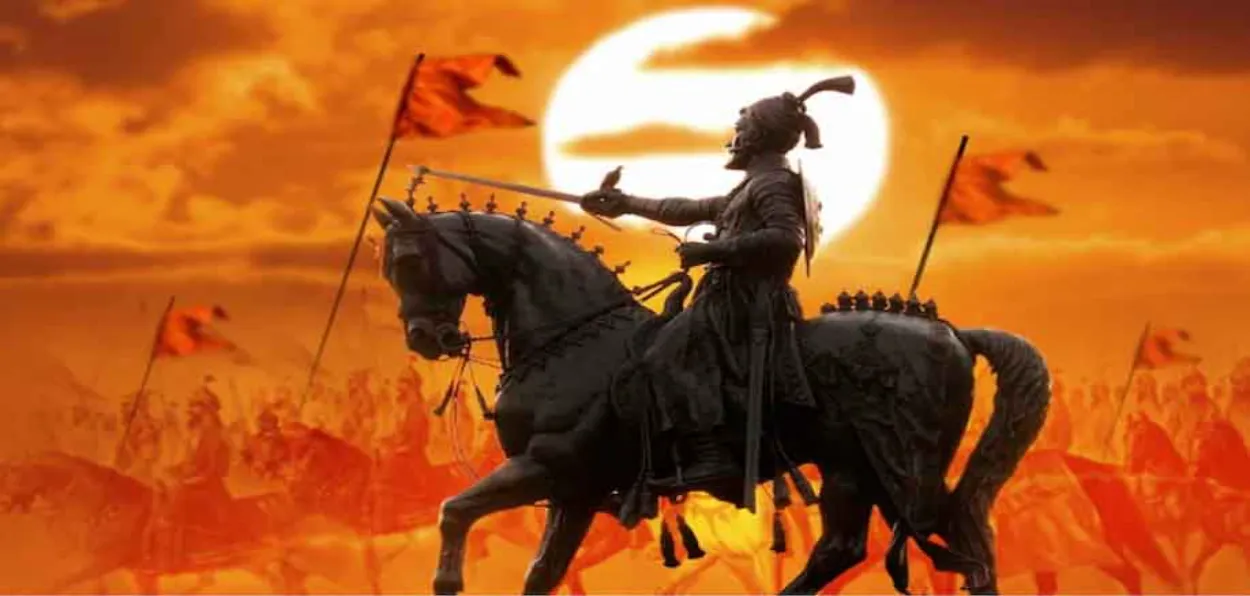
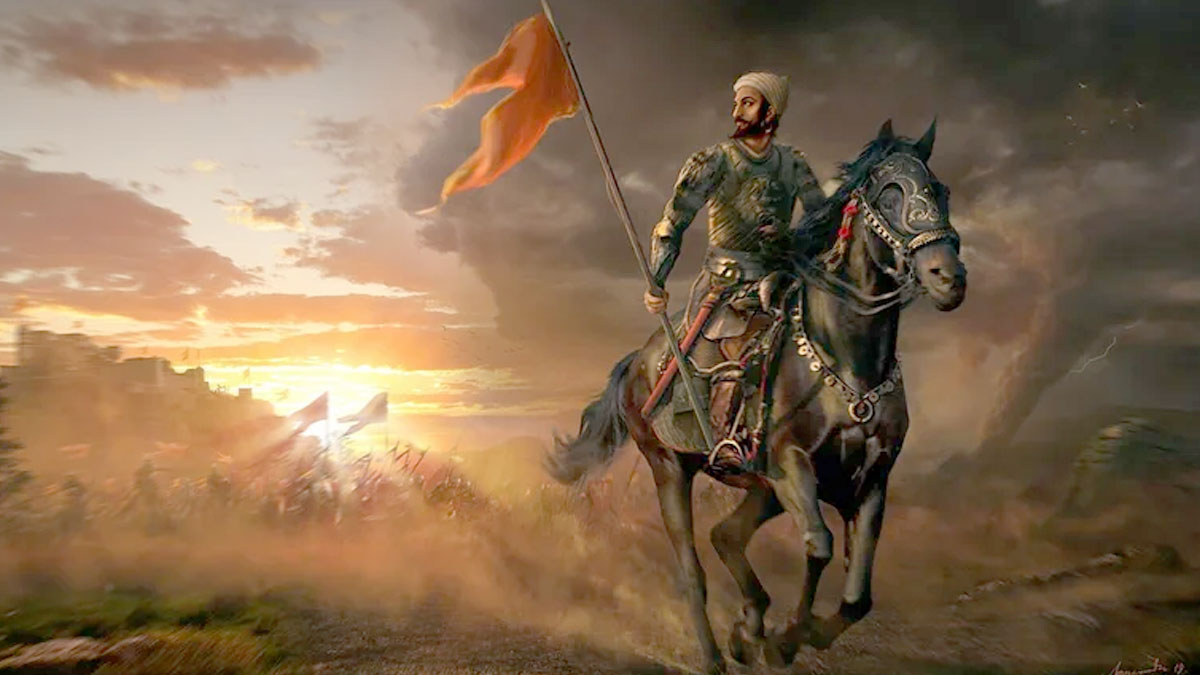
Chhatrapati Shivaji Maharaj’s name is taken with great pride and respect in Maharashtra. Every year on February 19, Shivaji Jayanti is celebrated with great pomp across the state. The coronation day of Shivaji Maharaj is also celebrated on June 6, 1674. About 350 years ago, Shivaji Maharaj was coronated at Raigad Fort in the presence of thousands of people.
There have been many kings but people remember only those who worked for the good of the people. Chhatrapati Shivaji Maharaj is one of them as he established Swaraj based on the values of equality, brotherhood, and justice. During his rule, he worked for public welfare without any discrimination.
These days, Shivaji Maharaj is portrayed as a Hindu ruler by vested interests like political parties and organizations. Is it fair to see a great personality like Shivaji Maharaj only in the frame of religion? To see Shivaji Maharaj only as a protector of religion amounts to diminishing his stature. Shivaji’s life was spent following high ideals.
He respected Saints, Peer Auliyas, and all religions. For this reason, when he established Swaraj, along with the local Marathas, a large number of Muslims also supported him. At that time the Marathas who were in his army were called Mawle of Shivaji. Thousands of Muslims participated in the battles he fought; his administration also had Mawle. That is why even today Muslims of Kolhapur, Satara take part in Shivaji Jayanti processions with great fanfare.
During the rule of Shivaji Maharaj, public welfare, justice, and brotherhood were given priority. That’s why he and his regime are remembered even today.
Shivaji Maharaj’s family respected Sufi saints a lot. His grandfather had named his two sons Shahji and Sharifji after the Muslim Pir Baba Shah Sharif. Shivaji Maharaj had great respect for Sufi Saint Baba Yakut. Before leaving for the war front he visited Baba to seek his blessings. He also had oil lamps lit on various dargahs, the resting place of the Sufis.
Women were respected during Shivaji’s reign. Even during the war touching a woman was prohibited. It seems that after the governor of Kalyan was defeated at the hands of Shivaji’s forces, his beautiful daughter-in-law was presented to Shivaji. He was ashamed of his General’s act of using a woman as a booty. He apologized to the Muslim woman and told her she is like his mother and returned her to her homeland with full state honour.
Shivaji Maharaj had unwavering faith in his Muslim soldiers. There were more than 60 thousand Muslim soldiers in his army. He had also established a strong Navy and its command was in the hands of Muslim soldiers. Even the management of sea forts was entrusted to experienced Muslim governors like Darya Sarang, Daulat Khan, Ibrahim Khan, Siddi Mistry. Many Muslim warlords like Rustamozman, Hussain Khan, Qasim Khan left the princely state of Bijapur and joined the army of Shivaji Maharaj along with 700 Pathan soldiers. Siddi Hilal was one of the closest Sardars of Shivaji Maharaj. His acts of bravery in the war are famous.
Most of the cannons used in Shivaji’s army were manned by Muslim soldiers. Ibrahim Khan was the chief gunner; Shama Khan and Ibrahim Khan were the head of the Cavalry squad.Siddi Ibrahim was one of Shivaji’s bodyguards. In the encounter with Afzal Khan, Siddi Ibrahim saved Shivaji Maharaj by risking his life. Later, Shivaji Maharaj appointed him as the head of the Fonda fort. All the facts bear testimony to a close bond between Shivaji and his Muslim associates.
When Shivaji was under arrest in Agra Fort, a Muslim man named Madari Mehtar played the most important role in his escape. While Shivaji escaped from the fort, Mehtar masqueraded as him.
With his secular ways, Shivaji Maharaj won the hearts of his colleagues and they were ever ready to make sacrifices for their king.
Qazi Haider, a scholar of the Persian language was Shivaji’s Chief Law officer. He had a major role in the administration’s correspondence and agreements and secret plans. Once a Hindu Sardar expressed doubts about Qazi Haider and advised Shivaji against trusting him. Shivaji told him rather curtly: “Honesty is not tested by looking at someone’s caste (religion), it depends on that person’s deeds”.
The preparations for the coronation of Shivaji Maharaj had started long back. New buildings including temples were being constructed when Shivaji Maharaj reached Raigad to review the work. On his return to his palace, he asked his Sardars while they have built magnificent temples why no mosque for Muslim subjects has been built. Immediately, a mosque was built right in front of the palace and it stands there even today.
Today the rivalry between Shivaji and Afzal Khan is presented as a story of Hindu-Muslim tension. The truth is after Afzal Khan died, Shivaji Maharaj ordered that his body be buried with Islamic rites. A concrete grave was built for Afzal Khan; his sons were pardoned.
Such behaviour of a ruler against his enemy is rarely found in history.
All these incidents of history prove that the war between Shivaji Maharaj and the Mughals was of mutual conflicts between the kings for political interests and not for religious supremacy.
source: http://www.awazthevoice.in / Awaz, The Voice / Home> Story / by Mukhtar Khan, ATV / posted by Aasha Khosa / February 22nd, 2023
The Media Foundation has chosen Shahina KK as the winner of the Chameli Devi Award for an outstanding woman journalist. In her acceptance speech she spoke of her attempt to establish that the police conspired to forge a case against Abdul Madani after the Bangalore blasts. “I have always tried to espouse the cause of those who live on the margin and who cannot have their say,’’ she said.
She was awarded for work done while with Tehelka. She is now with Open magazine.
I am using this opportunity to explain who I am.
See, I happen to be a Muslim, but I am not a terrorist.
Unfortunately, anybody carrying a Muslim name, no matter whether he or she is a believer, agnostic or atheist has to keep this as an opening line on every occasion of a dialogue in public. I have hardly practiced any religion right from my adolescence yet I have to make this kind of a statement.
You may have an idea about what I am going to talk about. In fact this award gives me a great opportunity today to talk about the crime I have committed. I interviewed two of the prosecution witnesses in the infamous Bangalore blast case in which Kerala PDP leader Abdul Nasar Madani is an accused. Madani had spent 10 years in prison as an under-trail in the Coimbatore blast case of 1997 and later was exonerated in 2007. The firebrand orator, who once triggered some kind of belligerence among the post-Babri Masjid Kerala Muslim youth, in his second coming had made a public alliance with the left parties in the last Lok Sabha polls. A man who was speaking the language of democracy, a politician who was using the tools of parliamentary politics had been again taken by the police, this time from Karnataka, for his alleged involvement in the Bangalore blast case. He was arrested immediately after the Lok Sabha polls.
Two of the six prosecution witnesses in the case, Jose Thomas and Mohammed Jamal who is the younger brother of Madani, had approached the court alleging that their testimonies had been fabricated. The third witness was on death bed in a hospital in Ernakulam on the day the police recorded his testimony. He died four days later. Police records say that the testimony was recorded in Kannur, around 500 kms away from Ernakulam where he was admitted. The hospital records prove that on that day he was not in Kannur, but was very much in the hospital in Ernakulam. Speech continues here.
On the eve of 24th January 2023, the cast and crew of the documentary All that Breathes was huddled in producer Aman Mann’s house to see the ceremony of the nominations for Oscar awards. Others involved in the film joined online. As soon as the list was announced, there was jubilation in the room.
All That Breathes by Shaunak Sen is among the shortlisted documentary feature films for the best in this category. From India, another film, The Elephant Whisperers by Kartiki Gonsalves is another documentary nominated for the coveted award in short category.
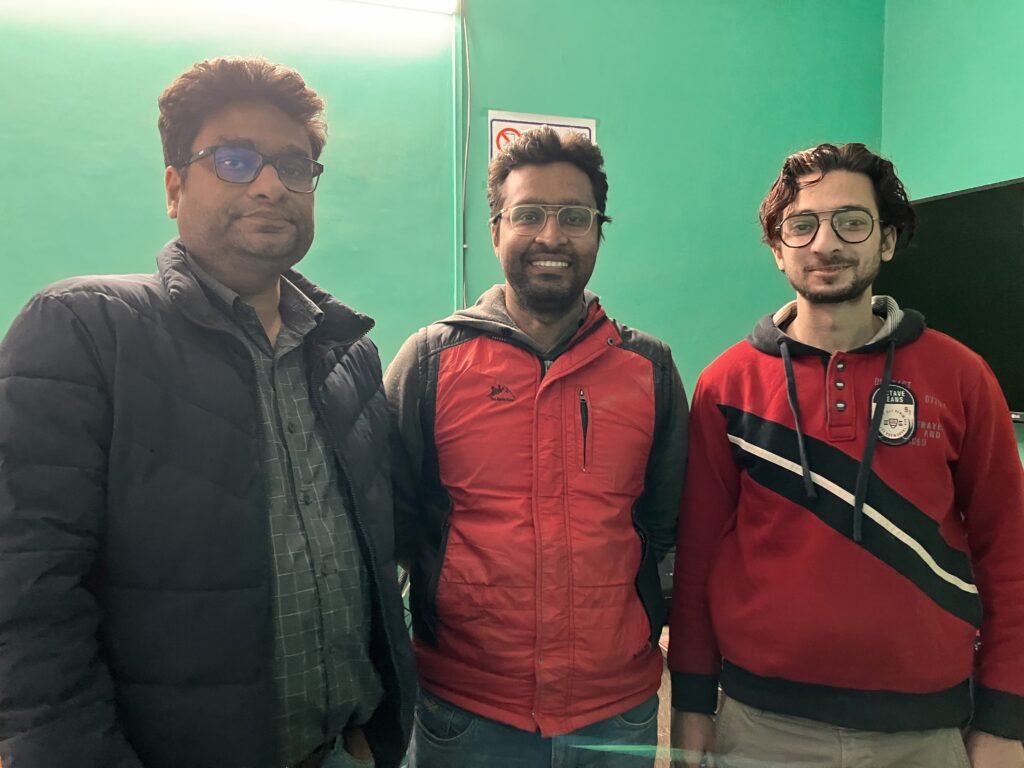
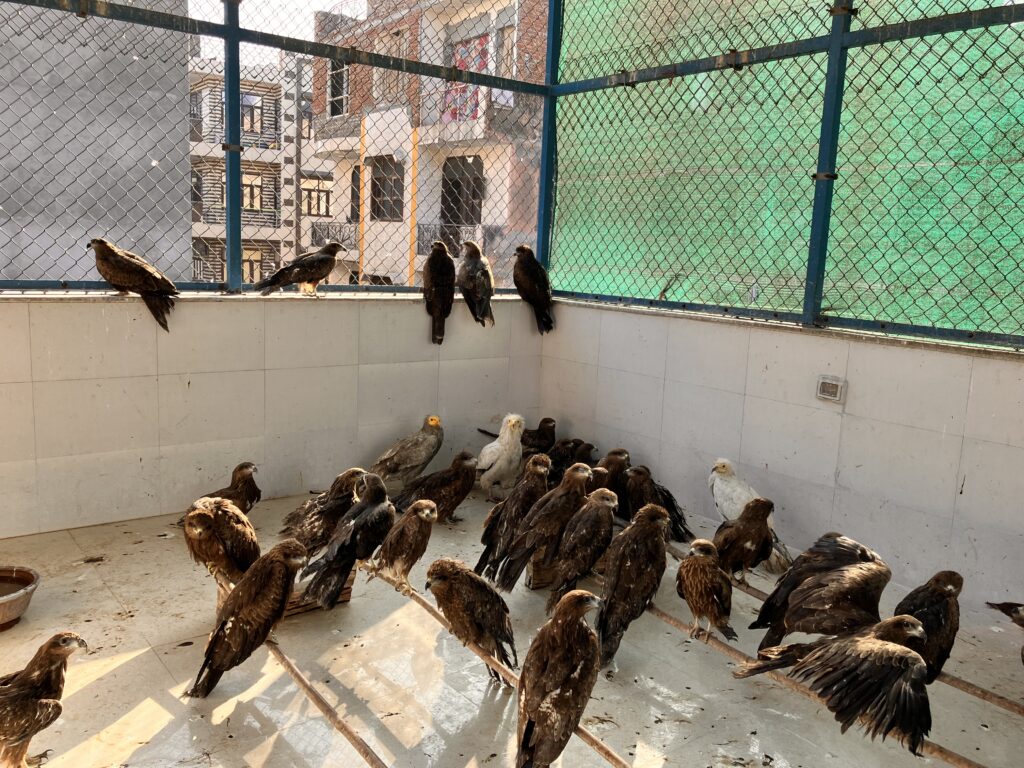
After Writing with Fire in 2022 this is the second time when Indian documentaries have made it to the Oscars. All that Breathes is a 90 minutes feature based on the story of brothers Nadeem Shehzad and Muhammad Saud who run the “Wildlife Rescue Centre” in North Delhi’s Wazirabad for treating owls and raptors (big kites).
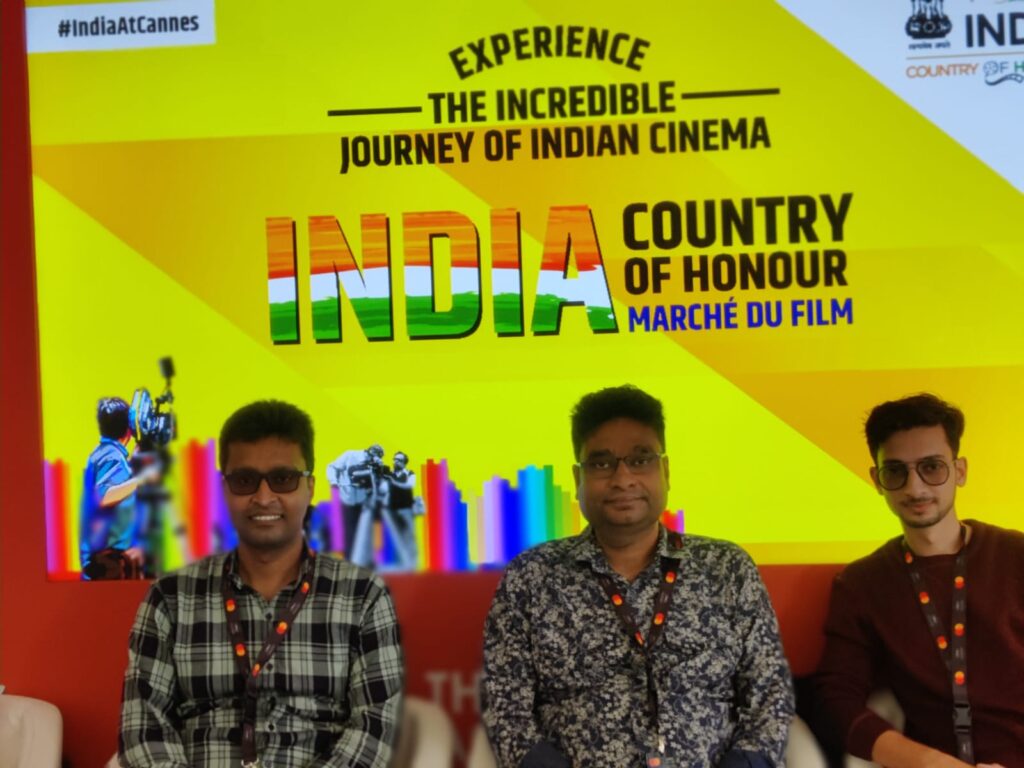
The film has already been screened in Sundance Film festival, Cannes International Film Festival where it bagged the best documentary award. It has also been screened at Dharampura International Film Festival. It’ll be screened in Bangalore at a World Wildlife conference on 12th February then at the BAFTA followed by the Oscars ceremony in March.
As Awaz-the Voice visited their three-storey Home-cum-office-cum-hospitals in Wazirabad after the film made it to Oscar Nominations, brothers Nadeem and Saud spoke stoically about this event, for they were immersed in thoughts about where to raise funds from for their organisation and the mission.
They say that to run an NGO like theirs funds were a dire need and people weren’t that enthusiastic about helping out raptors like Kites, Vultures, Owls and other similar avians, “Some consider them a bad omen while others feel they aren’t endangered, it is easy to get funds for tigers, lions rabbits and elephants but not for carnivorous avians…they have zero cuteness factor”
Nadeem says, “We don’t have any recognition even now, it isn’t like after watching our film we were ushered with a lot of funds, our film producer did give us some, but it is strange as to how even after such a good film people are hesitant with the funds..” Nadeem jokingly chips in, “Many channels have released funds for doing a story on us but they cannot release funds to help our cause…”
Inside the building, the walls of the office have chipped sea green paint. Behind the reception counter are two chairs and a working computer. While Nadeem and Saud are seated, Salik is moving to and fro looking after the chores while an incumbent team member Sana is documenting the records on the word file.
Nadeem,42, and Saud,40, started the NGO in 1993. Salik joined the team later To solve the problem of constant lack of funds, the brothers have set up an organization in the USA because they find “It a bit easier to get funds in the US..” “We lack the running money for day-to-day basis—like salaries, transportation, bird food, medicines, and other expenses are always on the back of our mind; we always have what after two months, what after three months..”
On being asked as to why kites and other raptors were so important for the ecosystem they say that the Kites, Egyptian Vultures, Falcons and others help in clearing up the filth left by the slaughtering of animals, these big birds are nature’s scavengers, “India is the second largest exporter of meat after Australia..the waste from the slaughterhouses is normally dumped in Ghazipur, there one can see upto 7 thousand kites that eagerly wait for the dump…”, he adds.
He further adds that in Delhi open garbage system is a normalcy and then there is the tradition of feeding the eagles and the kites, “In Old Delhi and parts of Rajasthan people feed them, they consider them lucky, in a very dramatic manner the meat loaves are thrown in the air while the raptor scales down with its wings to savor upon the treat..”. This scene also serves as the opening for the trailer.
He adds that, “Rajasthanis often come and give us meat to feed the birds as they feel connected to their roots by following the tradition..”
Apart from treating Kites they also treat barn owls, sparrow hawks, harriers, falcons, migratory birds, egrets, storks, hornbill, “last year we had around 3100 birds, we are the largest care takers of the raptors in the world, this is because we have the highest population of kites and more than that we have manjha (glass powder covered kite flying threads that are suicidal for birds), thus we have means of hurting them as well with us..”
He adds that injuries due to manjha (flying kite thread coated with glass powder) are rampant in India, Pakistan and Bangladesh, “we are continuously trying our best to augment the research around operating the birds injured due to manjha and we have presented the same techniques in the US conferences…”
He says that to their amazement the, “US wildlife centre likes our work and we discovered that even there this work hadn’t been done to retrieve a fully functional wing…” Nadeem and Saud told Awaz the Voice that their work falls under Wildlife Rehabilitation and they were a part of the community of rehabilitators, “US has the largest rehabilitator community and we often get sponsored trips to the US to take training and courses and incorporate them here..”
Nadeem says that their rehabilitators community is highly accepting and they don’t feel foreigners at all while on work trips, “We stay at other members homes thus fooding and lodging is expense free, I feel they are eager to share information which we as Indians lack a lot…the findings in the US are shared by one and all..the findings are shared annually worldwide through conferences…”
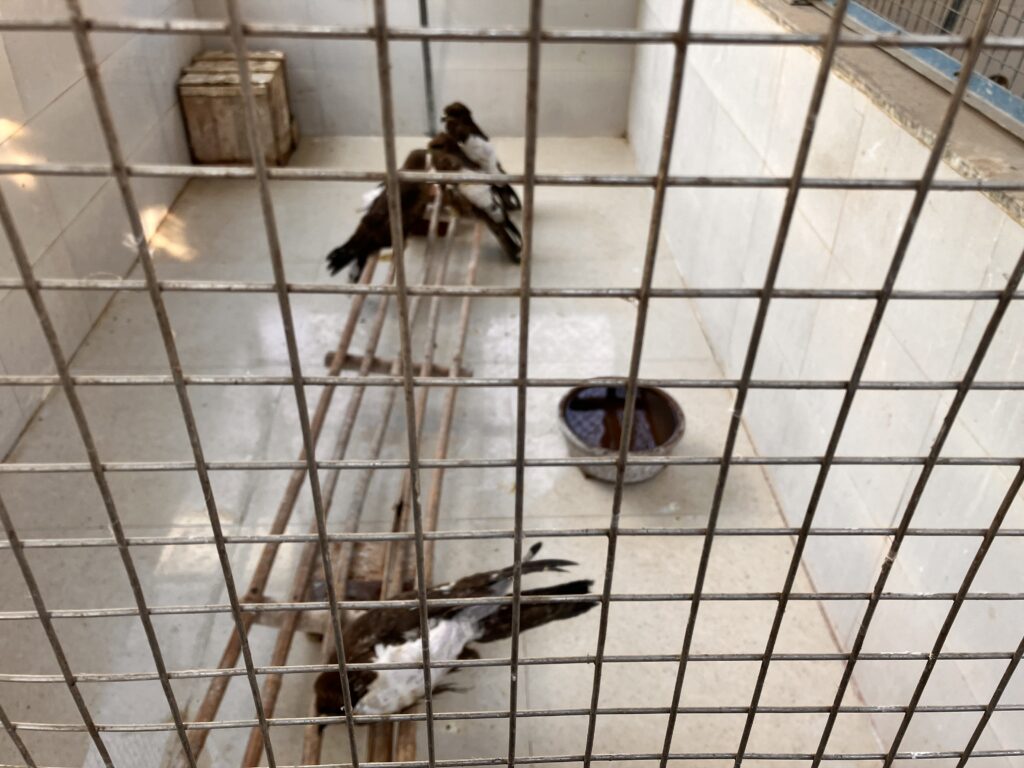
The rooftop hospital in Wazeerabad has three enclosures, the first one is an open on where healed birds are kept, it is designed in a manner that until the bird can fly 10 ft effortlessly, it won’t leave, whereas the rest of the healthy birds can come and go as and when pleased. Enclosure two holds surgery cases whose treatments are underway, whereas the the third Enclosure are reserved for birds under medication. Nadeem adds, “Since 2010 we get all the birds that are carnivorous, so in a way we are easing their work..”
The birds meanwhile cooed on top of their voice making the reporter realise their existence. While the rooftop was covered with black kites, Egyptia Vultures and falcons looked like foreigners. Nadeem continues, “We are a collection point for hospitals like Charity Jain hospital, Sanjay Gnadhi hospital, Menaka Gandhi Hospital, Animal care hospital, Karol Bagh jain hospital, we collaborate with them…” He says that their rescue rate differed according to seasons, during the bird’s nesting season they got maximum cases, “during this time we just need to feed them and give them water, we give them drips they are easy to maintain…”
“Second kind of cases are those due to the wounds by the Manjha, these are deep cut wounds in which even the bones are shattered…” He adds that in such kind of wounds the next part is to regain their functnality, “We may heal it and forget about wing functionality but then reconstructing is where the process lies. Here we need better understanding and better doctors. In humans we can achieve it through microsurgery but in birds they can lead to gangerine and then death…” He believes that even in birds also the wings can be fixed but then, “we do not have that kind of facilities. ..”
He adds with a shrug, “Animal hospitals abroad are better maintained than human hospitals here in India , cataract surgery for animals is available in abroad but in Indiat have Dr.Reena Dev who specialises in cataract surgery..” Talking about his favorite moments from the film he says he liked the end credits a lot, “When you see the movie you’ll see a lot of kites sitting on the trees and after color correction it looks like an oil painting, the shot gives the feel of a still shot until a bird flies far off then comes the names and it feels as if words are drooping down from the branches…it feels surreal…”
Talking his heart out about disappointments has eased Nadeem a little as he then reminisces his childhood days saying, “Bachpan se mai oscars zaroor dekhta tha..in fact DD Metro pe bhi Oscars aate the..(I always used to watch Oscars on DD Metro in my childhood) but after coming into this profession our lives are upended, we have no personal life whatsoever…”
The three years shooting gave them some special moments and for Nadeem the moment when they swam, across the river to rescue birds will always be special.
He says, “Our favorite ones are mostly deleted, out of the 500 hours of working footage only 90 minutes were in the Final Cut..still the camerawork and cinematography is beyond our imagination…”
Documentaries juxtapose real lives and thus a scene shows the duo (Nadeem and Saud) fighting over some trivia matter when asked they both reply instantly, “Asi ladaiyan toh roz hoti hain..(We fight like this on a daily basis)… See the work we are doing is very stressful and that too without money, there is a lot at stake and when workload increases our temperature also soars but then we are family so it is all in good faith..” “After 5 minutes we are like..what was it we were fighting about..we are best friends and brothers for life..so yea..this is normal..”, Saud adds.
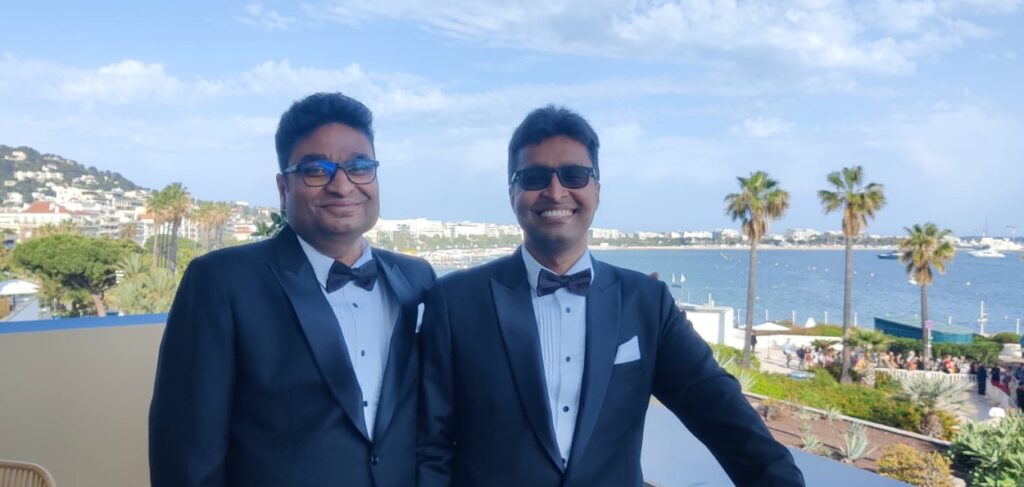
Saud says that Shaunak took three months to make them feel at ease with the camera’s presence, “He started shooting us when we finally started yawning in front of the camera which was one of his idiosyncrasy, he used to say treat the camera as a fly on the wall..” Sharing his experience at various screenings Nadeem says, “at DIFF people were whistling on the scenes that they liked, they started clapping whenever they liked a shot whereas Cannes is very cosmopolitan..” He says that the close collar dress code at Cannes is a sign of respect for the artist, “we came across many great artists, the cameramen were running after them but we couldn’t recognise them, people were clicking selfies but then I didn’t knew them and then Shaunak was like Oh..Nadeem they are so and so of the Industry…”
Talks about Cannes has lightened the air and Saud seeems relaxed and hopefull than before yet he says, “Asli Khushi tab milegi jab Oscar milega..(we’ll be really happy after bagging the Oscars)” Salik chimes in saying, “It is a tough call but we are hopefull..” He adds, “We never thought that one day a documentary will be made on our efforts or that we will become world famous one day, it feels great…” Salik has a camera friendly face and when for the first time he saw his photo on the big screen he was excited. His favourite scene from the feature is the one where the kite takes his spectacles, “I just say arey chasma le gayi yeh mera(oh! She took my specs), it was as if they were aware of being documented…then there is a moment when I rescued a squirrel and it stays in my pocket, i had no idea that it was being shot but then it came out really well…” Salik feels that their social media presence has increased after the movie.
The ambience of the room feels lighter than before as the talks about the upcoming awards night are now the topic and who’s going to wear what becomes the major question now. Saud says, “There isn’t any prep for it as such, if there’ll be a photo shoot then we’ll prefer it in traditional Indian attire …”
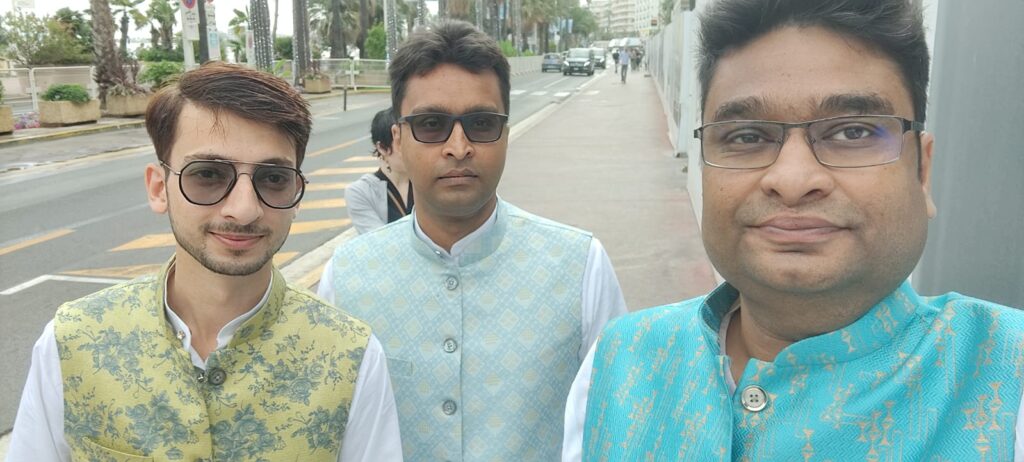
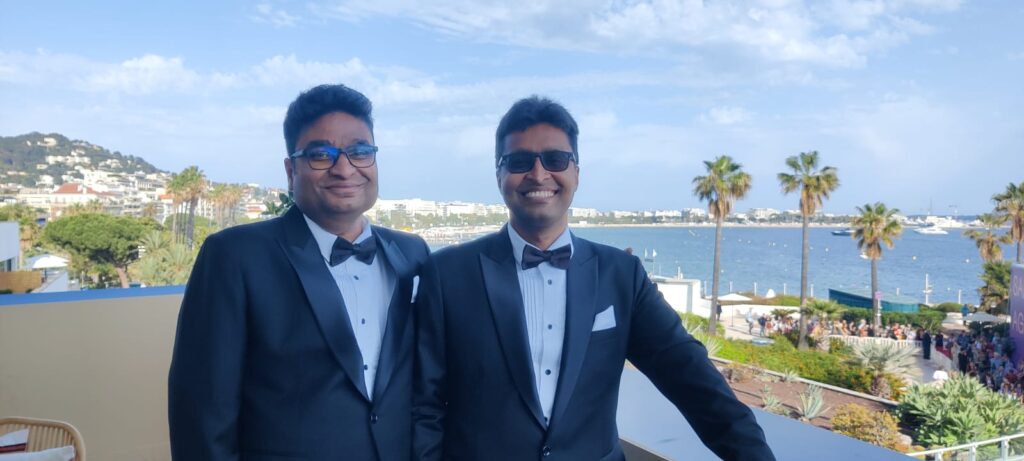
Saud then smiles and tells Awaz the Voice, “In France people stopped us on the road and complimented us for our traditional wear..” Nadeem looked befuddled and happy for the first time when he says, “the women were wearing such long gowns that two to three men were carrying it yet our Indian attire outshone them.” Saud continues, “It was white linen Kurta with a closed collar and Jawahar cut jacket..” “We made sure to keep it as close to Indian traditions as possible..” Abdul Rehman of skylark tailors stitched our whole attire, Saud says, “When people asked is your tux from Paris, we replied “No, Chandini Chowk…the fabric was sourced from Katra Neel and Krishna Market in Old Delhi…”
They add, “We didn’t had much time, it was done at the last moment…” Even for Oscars Abdul Rehman will be stictching the attire for the brothers. One may find skylark tailors in Ballimaran near Rabia Girl School. Coming to footwear it was sourced from SreeLeathers and Ballimaran. Sharing their hopes and visions for the future the duo says that they want a hospital outside their home with proper operation theater, x-ray machines, blood testing laboratories, “someone gave us their lab equipment when they shut down theirs but we don’t have any money to hire a lab assistant…”
Meanwhile two boys rushed in with an injured kite to whom Nadeem attended like a professional healer. He felt for signs of injury through palpitations that were done manually and later placed it under observation after giving it first aid. He wishes people to be more sensitive and more aware of the surroundings like the movie which says “life is kinship and we are the community of air” thus “we must learn to share our surroundings with all the things alive around us. I am not asking everyone to open a hospital but we can still make time to help each other…”
On being asked what after Oscars and what if they win they say, “We’ll be back to work after the oscars..” They went on to add, “On 1st march there is a technical film festival and we are trying to reach them to learn how to document our work as many techniques that we know can be shared with the world…”
“We want to document our research in print and digital format now…We are working on orthopedic surgeries and very few know about it, especially the wounds by th kite flying thread, the surgeries require intricacies, for example if the bird is brought in late o the hospital then the technique to cure them is different..”
“The muscle moisture has evaporated, thus the method to cure them is different and difficult…we are currently researching the same…” Saud adds,“We don’t want our techniques to die with us,we wish them to be known to the world..” Nadeem winds up by saying, “Wildlife preservation conference see a huge footfall by the conservationists every year thus we wish to present it there…”
They again looked disappointed when they said, “It is tough to work with Indians, they have big egos, whereas people abroad are much more open to learning new techniques” “We have had hands on experience..through consultations with various vets we have developed these techniques, also we have had interaction with human doctors more thus we have tried to replicate the same in the birds..”
source: http://www.awazthevoice.in / Awaz, The Voice / Home> Story / by Shaista Fatima / February 07th, 2023


%20course%20-%20Google%20Chrome%2015-03-2023%2017_55_03%20(2)_vb_70.png)