Category Archives: Uncategorized

Kerala HC grants permission to Muslim girls to wear hijab for pre-medical test AIPMET

Kochi, KERALA :

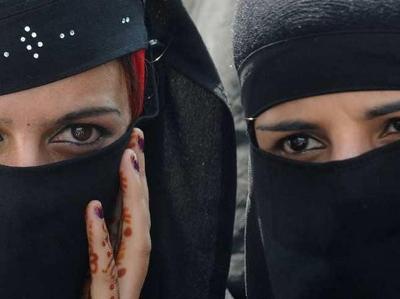
Most victims of the UK hate crimes were Muslim girls and women aged from 14 to 45 in traditional Islam dress. The perpetrators were mainly while males aged 15 to 35 (File photo)

Kochi  :

The Kerala high court on Tuesday granted permission to Muslim girls to wear  hijab, a customary religious dress, for the All India Pre-Medical Test-2016 but on condition that they should be present at the hall an hour before the exam for frisking if necessary.

The order was issued by Justice Muhammed Mushtaq while hearing a writ petition by one Amnah Bint Basheer challenging the dress code prescribed for the candidates by CBSE in the bulletin relating to conduct of AIPMET-2016.

The judge allowed the plea on condition that the girls shall be present at the hall half an hour before the exam and, if required, the invigilator can search the body.

The petitioner contended that the instructions contained in the AIPMET-2016 bulletin regarding dress code, as per her religious beliefs and practises, would amount to violative of exercise of religious freedom.

 The court issued directions to CBSE to permit Muslim girl students to wear hijab for attending the  AIPMET .
Last year, a single Judge of the Kerala high court had allowed two Muslim girl students to wear hijab while appearing for the CBSE AIPMT-2015.
source: http://www.timesofindia.indiatimes.com / The Times of India / News Home> India> PTI / April 26th, 2016

Briefly

Madikeri, Kodagu / KARNATAKA :

Madikeri :

WORLD CONSUMER DAY

The World Consumer Day was celebrated recently in Madikeri under the joint auspices of Kodagu district administration, Food and Civil Supplies Department and Kodagu District Consumer Forum.

Mir Anis Ahmed, DC of Kodagu, inaugurated and V.A. Patil, President, Kodagu District Consumer Forum, presided over the programme which was attended by more than 150 people.

C.V. Nagaraj, retired Senior Chemist, Regional Agmark Laboratory, Bengaluru, demonstrated simple tests to detect adulteration in various food items. He also spoke about the harmful effects of various types of adulteration and on the laws that exist in India against food adulteration.

Associations interested in arranging such lecture-demos can contact C.V. Nagaraj ( 2521640, 9945651990).

CULTURAL FEST

The Department of Tourism and Hospitality Management, Pooja Bhagavat Memorial Mahajana Education Centre, has organised an inter-collegiate cultural festival on April 12 and 13. For registration contact festival convener Paul Iruthayaraj on 9739824423, Faculty coordinators Gunarekha B.S. on 9480438394 or Priyadarshan Bhat on 8867204780.

source: http://www.thehindu.com / The Hindu / Home> National> Karnataka / Mysuru – April 11th, 2016

The British Library’s oldest Qur’an manuscript now online

It is one of the largest of known fragments of an early Qurʼān written in the māʼil script.

Image credit: Pixabay

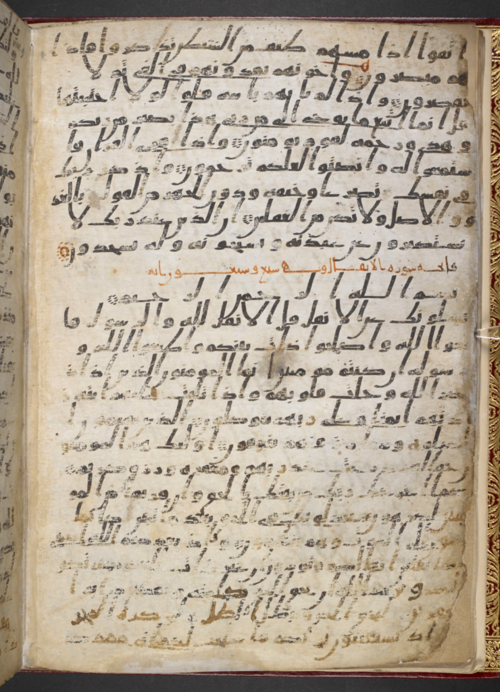
The British Library’s oldest Qur’ān manuscript, Or.2165, dating from the eighth century, has now been fully digitised and is available on the British Library’s digitised manuscripts site. Among the most ancient copies of the Qurʼān, it comprises 121 folios containing over two-thirds of the complete text and is one of the largest of known fragments of an early Qurʼān written in the māʼil script.

The end of Sūrah 7 (Sūrat al-A‘rāf, ‘The Heights’) and the beginning of Sūrah 8 (Sūrat al-Anfāl, ‘The Spoils of War’). The heading in red ink gives the title of the Sūrah and says that it contains 77 verses (British Library Or.2165, folio 7v)

This manuscript was purchased by the British Museum in 1879 from the Reverend Greville John Chester (1830-1892) as noted on a fly leaf at the back of the manuscript. Chester was an ordained clergyman interested in archaeology, Egyptology and natural history and made numerous trips to Egypt and the Near East, where he acquired objects and manuscripts, which are now in the collections of major UK cultural and library institutions. It is very likely he acquired this Qur’ān when he was in Egypt.

Acquisition details recorded at the end of the manuscript (British Library Or.2165, endpaper)

The earliest Qur’ān manuscripts were produced in the mid-to-late seventh century, and ancient copies from this period have not survived intact and exist only in fragments. Or.2165 contains three series of consecutive leaves (Sūrah 7:40 – Sūrah 9:96; Sūrah 10:9 – Sūrah 39:48; Sūrah 40:63 – Sūrah 43:71) from the so-called mā’il Qur’ān, which is about two-thirds of the Qur’ān text and is one of the oldest Qur’āns in the world. It probably dates from the eighth century, and as far as can be ascertained, was produced in the Hijaz region of the Arabian Peninsula.

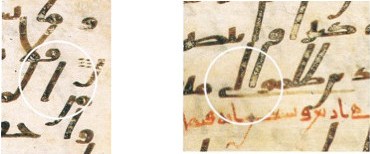
The Arabic word mā’il (by which this Qur’ān is known) means ‘sloping’ and refers to the sloping style of the script – one of a number of early Arabic scripts collectively named ‘Hijazi’ after the region in which they were developed. The main characteristic of mā’il is its pronounced slant to the right. It can also be recognised by the distinctive traits of some of its letters, for example, the letter alif does not curve at the bottom but is rigid, and the letter yā’, occurring at the end of a word, turns and extends backwards frequently underlying the preceding words.

Left: the letter alif; six small dashes mark the end of the verse. Right: the letter yā’; the Sūrah heading in red ink was added later

In early Qur’āns there are no vowel signs, and this early style of script is also notable for its lack of diacritical marks to distinguish between letters of similar shape. Verse numbering had also not yet been established; the end of each verse was indicated by six small dashes in two stacks of three. The sūrah headings were added much later in red ink in the recognisable space purposely left blank to distinguish between the end and the beginning of chapters. Red circles surrounded by red dots to mark the end of every ten verses were also added later.

The beginning of Sūrah 12 (Sūrat Yūsuf, ‘Joseph’) showing the verse markers and also the red headings and circles which were added later (British Library Or.2165, folios 23v-24r)

As with all early Qur’āns, the text is written on vellum and would have been bound into a codex or muṣḥaf – originally a collection of sheets of vellum placed between two boards. Each double sheet was folded into two leaves, which were assembled into gatherings then sewn together and bound as quires into a codex.

The importance of Or.2165, in addition to all other known early Qur’ān fragments, cannot be overestimated. They provide the only available evidence for the early development of the written recording of the Qur’ān text and help towards our understanding of how early Qur’ān codices were produced.

This article first appeared on the British Library’s Asian and African Studies blog.

source: http://www.scroll.in / Scroll.in / Home> Historical Writing / by Colin F. Baker, The British Library / April 08th, 2016

VIT student bags full scholarship for master’s programme

Vellore, TAMIL NADU :

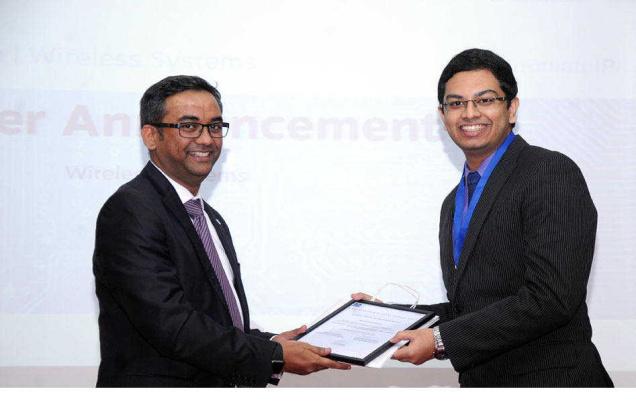
Neeraj Gupta, founder and CEO of Formulate IP presenting the scholarship award to Khwaja. Mohammed Kamal Khwaja, a final year B.Tech student of VIT University, was declared the first prize winner of the KTH Master's Challenge 2016 in Wireless Systems track.
Neeraj Gupta, founder and CEO of Formulate IP presenting the scholarship award to Khwaja. Mohammed Kamal Khwaja, a final year B.Tech student of VIT University, was declared the first prize winner of the KTH Master’s Challenge 2016 in Wireless Systems track.

Khwaja to pursue studies at KTH Royal Institute of Technology, Stockholm

A final year B.Tech student of VIT University has been awarded a full scholarship to pursue master’s programme at KTH Royal Institute of Technology, Stockholm, Sweden. The scholarship came after he bagged the first prize at the KTH Master’s Challenge 2016 in Wireless Systems track.

As part of the challenge, Mohammed Kamal Khwaja, who is studying Electronics and Communication Engineering at VIT, went through a number of quizzes, essays and interviews. He was declared one of the top three students in India during December 2015. The positions of the top three prize winners were announced at a prize ceremony in Bengaluru, a press release said.

“The KTH Master’s Challenge is a nation-wide competition organised by KTH Royal Institute of Technology. The competition has multiple rounds to test various skills and knowledge of students,” he said.

He added that the first prize winner was offered a full scholarship of INR 23,00,000 to pursue the master’s programme at KTH along with an internship opportunity at FormulateIP.

Khwaja, who is currently pursuing his final year project at Singapore University of Technology and Design, said he was delighted to be declared the first prize winner, and as part of the prize, he has been awarded a two-year scholarship to pursue master’s studies at KTH.

The Wireless Systems programme, which is part of the Electrical and Electronic Engineering at KTH Royal Institute of Technology, Sweden, is ranked 16th in the world by the QS rankings 2015.

Khwaja has also been offered an internship to work at FormulateIP – an intellectual property, innovation management and consulting firm co-founded by a KTH alumni.

He has pursued research internships at Hong Kong and Singapore. Presently, he is pursuing his final year semester project at Singapore as part of the Semester Abroad Programme offered by VIT.

VIT Chancellor G. Viswanathan said their goal has always been to help students reach their full potential be it through academics or extra curricular activities, the release added.

source: http://www.thehindu.com / The Hindu / Home> National> Tamil Nadu / by Staff Reporter / Velllore – February 29th, 2016

City’s Muay Thai Boxers bag 14 medals

Mysuru, KARNATAKA :

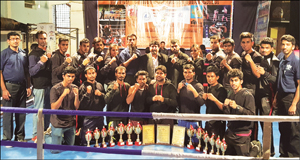
Seen in the picture are (kneeling from left) M. Manoj, Phaneesh, R. Darshan, N. Puneeth, Varun Bhat, K.M. Raaghu, B. Kishora, and Rohith Bhat; (standing from left) Referee M.J. Chethan, Abdul Razack, Naveen Shetty, Chidambaram, C. Chethan, M.S. Sanjana, MTI Official Tanveer Ahmed, MTI President M.H.Abid, Head Coach-Kru.Vikram, R. Rashi, Sumanth Subrahmanya, Dileep, Syed Touseef, Suleman Shariff and Referee Srihari.

Mysuru :

Muay Thai Kick Boxers, representing Mysore Muay Thai Trust in city, have bagged 14 medals at the Muay Thai gala events conducted at the Muay Thai India-MTI national head quarters in Bengaluru recently.

Fighters from Odisha, Maharashtra, TN, Kerala and Karnataka participated at the events.

Results:

Shetty- Bantam Weight-Winner-A Div

B. Kishora – Welter Weight-Winner-A Div

Abdul Razack- Light Middle Weight-Winner-A Div

N. Puneeth- Light Fly Weight -Winner-B Div

Rohith.G. Bhat- Light Welter Weight-Winner-B Div

R. Rashi- Pin weight-Runner up-A Div

R. Darshan- Bantam Weight-Runner up-A Div

Chidambaram- Light welter Weight-Runner up-A Div

Suleman Shariff- Light Weight-Runner up-A Div

Syed Touseef Ahmed- Light Middle Weight-Runner up-A Div

C. Chethan- Middle Weight-Runner up-A Div

M.S. Sanjana- Fly Weight- Runner up-B Div

K.M. Raaghu- Light Welter Weight- Runner up-B Div

Varun Bhat- Cruiser Weight-Runner up-B Div

Sumanth- Cruiser Weight-Runner up-A Div

L. Srihari- Light Welter Weight-Semi Finalist-A Div

Dileep- Light Weight- Semi Finalist -B Div

Phaneesh Nagaraj- Welter Weight- Semi Finalist -B Div 

M. Manoj- Welter Weight- Semi Finalist -B Div

source: http://www.starofmysore.com / Star of Mysore / Home> Sports News / February 28th, 2016

Wizards of letters and numbers

Madurai, TAMIL NADU :

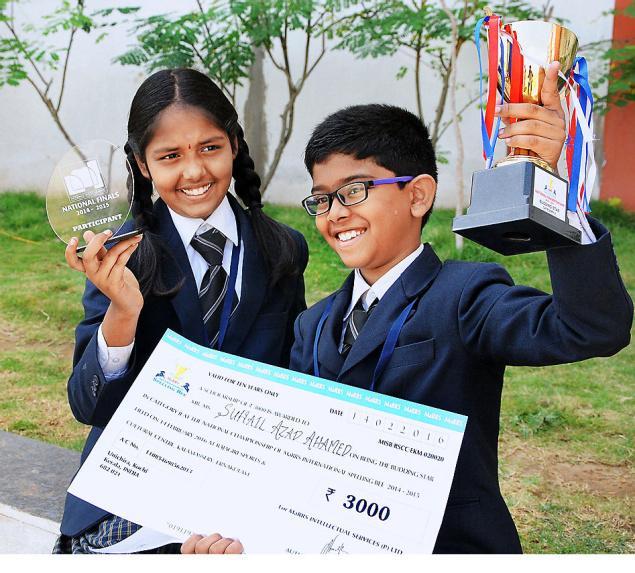
CHILD PRODIGIES:Suhail Azad Ahamed and S. Sri Rachana of Queen Mira International School who won laurels at national level spelling bee and math league competitions held recently in Kerala.— Photo: G. Moorthy

“There were written and oral rounds, besides questions on etymology of words”

 For Suhail Azad Ahamed, studying Third Grade in Queen Mira International School, it was his passion to become proficient in English which got him interested in spelling bee contests.

What started as a hobby, however, has now brought laurels to Suhail, who secured 11th rank in the national level MaRRS International Spelling Bee contest, an annual event organised by a private organisation, recently held at Kalamassery in Kerala.

“I didn’t feel that I was in a contest. It was just like one of the spelling bee sessions I regularly practice at home and school,” said Suhail who competed with about 400 participants in the event. However, he said that the national-level contest was comparatively challenging. “Until State level, it was just written tests. In national level, there were both written and oral rounds apart from questions on etymology of the words,” he said, adding that he will aspire to get selected for an international level contest next year.

While for Suhail it was his interest in English, for S. Sri Rachana, a Grade Five student from the school, it was her interest to improve performance in Mathematics that took her to the national level math league competition, organised by the same group along with the spelling bee contest. “Compared to other subjects, I found Maths to be tough. So I took it as a challenge to participate in math league, which involves instant solving of math puzzles. But I never thought I will reach the national level,” Sri Rachana said.

Sujatha Guptan, Principal, said that while students from their school had participated in the competitions before, this was the first time they reached the national level. “In the spelling bee contests, there were only two schools from Tamil Nadu. One is ours and another from Chennai,” she said.

Abinath Chandran, Managing Director of the school, said that the curriculum followed in the school helped the students develop interests in multiple fields instead of just focusing on academics.

source: http://www.thehindu.com / The Hindu / Home> News>Cities> Madurai / by Staff Reporter / Madurai – February 22nd, 2016

Touch, and go

Mumbai, MAHARASHTRA :
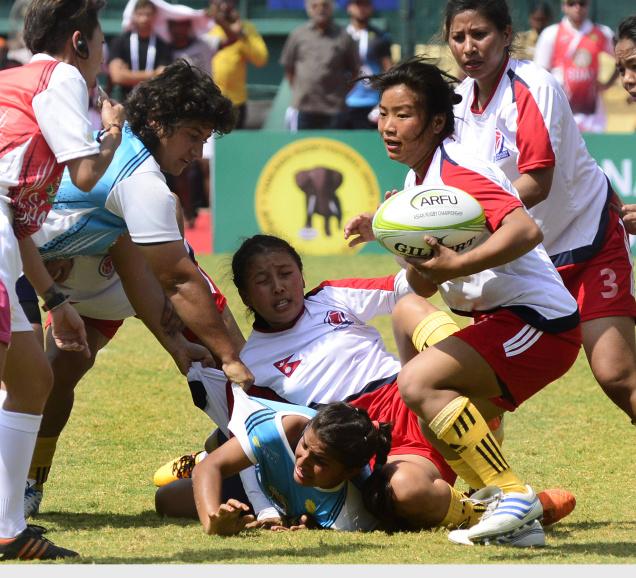
WomensRugbyMPOs22feb2016

Rugby in the country, and in Asia, has a lot of picking up to do, writes TANAY APTE

In our cricket-crazy country, it would be safe to assume that all other sports fall under the minority category. In their fight for more recognition, football, hockey, badminton and even kabaddi now have glitzy, cash-rich leagues — modelled, ironically, on the IPL. These have gone some way in increasing the sports’ fan following, but are nowhere close to dislodging cricket off its pedestal.

And then, we have rugby. The first rugby match was played on Indian soil nearly 150 years ago, in 1872, in Kolkata — a team of Englishmen took on another with Scottish, Welsh and Irish players. Almost a century later, the Indian Rugby Football Union (IRFU) was founded in 1968. But, it received recognition from the International Rugby Board only in 1999.

The sport is a huge hit among Western European countries, Oceanic countries and, of course, in South Africa. To increase its popularity in Asia, the governing body, Asia Rugby, introduced the Asian Seven Series in 2009. Although it has not set the world alight by any means, the quality of rugby has definitely improved.

After the success of last year’s Asian Rugby Sevens Olympic Pre-Qualifiers in Chennai, the city was given a chance to host the Asian Rugby Development Sevens Series as part of the Asia Rugby Sevens calendar. The tournament took place at the Jawaharlal Nehru stadium on February 20 and 21.

Nasser Hussain, the General Manager of Rugby India, had said, “Riding on the success of last year’s edition, the top teams in Asia are well prepared to raise the bar of the competition. We will witness some of the best Rugby in Asia, during the course of the tournament.” He was not wrong.

Hosts India competed against the likes of South Korea, the Philippines, Thailand, Indonesia, Kazakhstan, Saudi Arabia, Syria, Guam, Bangladesh, Nepal, the UAE, Lebanon, and Chinese Taipei, which eventually emerged victorious in the men’s section, beating Thailand 36-21 in the final, with a powerful display. The women’s final was a cracking affair, in which South Korea defeated Guam 24-19, via a golden try after the game ended in a tie at the full-time whistle.

The Indian women’s team won the bronze medal match against Nepal in a lopsided encounter, in which the score read 39-0. The men’s team ended up with a sixth-place finish.

In a country of more than a billion, you would expect some semblance of a crowd at an international sporting event. But, although their numbers were scarce, the locals turned up the volume throughout the tournament. With drum beats, whistles and loud cheers, the atmosphere at the stadium egged on the players to give it their all.

Rugby is still not a professional sport in India (though there are roughly 50,000 men and women playing it), and the sport finds it hard to attract the investment needed to take it to the next level.

Asia Rugby’s tournament consultant, Aaron Stockdale, however, believes there is light at the end of the tunnel. “Over the past decade, India has consistently been developing as a serious contender in the Asian rugby circuit. With an event of this stature being held here, it is only a matter of time before the youth of this nation help build a formidable line-up that will compete amongst the best.”

The 2019 Rugby World Cup is scheduled to take place in Japan — the first time an Asian country will host the event. Japan’s stunning win over South Africa in the World Cup last year sent shockwaves throughout the sport. It put Asia on the rugby map and, more importantly, gave hope to the Asian rugby nations that they can mix it up with the big boys and not feel out of place.

However, that date might be a bit too soon for India, as the sport is still in its infancy. But, with careful nurturing, we can one day see ourselves staring at TV sets as the national team goes toe to toe with rugby’s finest.

source: http://www.thehindu.com / The Hindu / Home> Features> MetroPlus / by Tanay Apte / February 22nd, 2016
Pages from History : South Indian Coinage

Mysuru, KARNATAKA :

by Prof. A.V. Narasimha Murthy, former Head, Department of Ancient History & Archaeology, University of Mysore

I had the good fortune of serving the Numismatic Society of India, Varanasi, as its President, Secretary and Editor. I used to attend the annual conferences of this Society regularly. I once noticed that scholars attending the Varanasi Conference from South India could be counted on finger tips. The reason, I learnt, was that North India was very far and travel would be difficult and many scholars suggested ‘Why not a South Indian Coin (Numismatic) Society be started?’ It was a good suggestion and I contacted Dr. R. Krishnamurthy, Editor of Dinamalar (Tamil Daily) from Chennai and he welcomed the idea but told me that his business as the Editor of a Daily would not allow him to devote full time and energy for this. But he hastened to add, ‘If you can take that responsibility, my full support to you is there.’

Prof. K.V. Raman of Chennai gave me his support. The Head of the publication of New Era, Dr. Srinivasan Srinivasan agreed to print and publish the Journal of the Society on the condition ‘I should be its Editor.’ I agreed and South Indian Numismatic Society came into existence in 1990. So far it has conducted 26 conferences at different centres in Karnataka, Andhra, Tamil Nadu, Kerala. This time it met at Thiruvananthapuram in Jan. 2016. About 150 Numismatists attended.

It was our good fortune that it was hosted by the Centre for Heritage Studies under the Cultural Affairs Department of Kerala. K.C. Joseph, Minister for Rural Development, Culture and Planning, who inaugurated the conference, extended full cooperation to this conference which was a success.

There was a time when barter was the system of trade. People realised its limitation and began using coins. Coins as such have not been noticed in the Indus Valley Culture. However, Rig Veda mentions coins like Nishka, Rukma, Khadi, in the sense of coins. But actually Nishka means a necklace and hence, it has been taken as a necklace made of gold coins (kasinasara). Anyway, that is the earliest coin of our country.

South India had a period which is generally referred to as Sangam age and it was considered as a literary imagination or even bunkum. Suddenly, Dinamalar Krishnamurthy discovered a coin belonging to a Sangam King called Peruvalathi. For the present, this is considered to be the earliest coin of South India. Barring this, the Satavahana (Andhra) coins are the earliest coins of Deccan and South India.

However, we have had uninscribed punch marked coins all over the country including South India and Karnataka. These silver coins had 5 symbols punched on them and one of them represented the government or the king. At this time, Roman merchants came to South India and gave their gold and silver coins and purchased our spices, especially black pepper, which was considered as an antidote for malaria. Thus the large number of Roman coins gave an impetus for the minting of coins in South India.

Kadambas of Banavasi are considered to the actual inaugurators of coinage in Karnataka. They issued what are called Padmatanka coins. A Padmatanka is a gold piece which has a central punch of a lotus or Padma with some symbols and letters like ‘Sri’ with or without the name of the issuer. The Pallavas of Kanchi issued their own coins in gold and copper. This system was continued by the Cholas of Thanjavur. They minted the portrayal of the king with Nagari or Tamil legends. Chola coins have been discovered in plenty as to fill up them, in gunny bags. In Andhra area, Vishnukundins minted coins. In Karnataka, the Chalukyas minted coins and their most popular coin is called Varaha. This word survives even today in traditional parlance. In fact, the coin name Varaha is a contribution of Karnataka in general and that of the Chalukyas in particular.

The Western Gangas of Talakad minted gold and copper coins with elephant as the important symbol. Unfortunately, Rashtrakuta coins have not been discovered in plenty. Later, Chalukya coins have been found in plenty. The Hoysalas minted coins in gold and copper. Vishnuvardhana minted coins with lion and the legend Talakadugonda symbolising the defeat of the Cholas. One interesting coin is the one which has a portrait of Saint Ramanujacharya. The Sevunas or the Yadava coins include those of Bhillama, Singhana and Ramachandra.

Kings of Vijayanagara introduced innovation in coinage. It is not only a golden age but a golden period for Karnataka coinage. Their coinage has been praised by foreign travellers also. They introduced legends in Kannada and Nagari. The most important coin of Krishnadevaraya are the coins representing Lord Venkateswara of Tirumala and Sri Krishna holding a lump of butter in his hands. Krishnadevaraya performed Kanakabhisheka to Balaji of Tirupati by minting gold coins which had the representation of Venkateswara with Sridevi and Bhudevi and his name in Kannada or Nagari. Nayakas of Madura imitated the coinage of Vijayanagara. Their coins contain legends in Kannada and Tamil.

We may turn our attention to the coinage of Muslim kings — the Bahamani dynasty, Adil Shahi dynasty and Barid Shahi Sultans. They minted coins with legends in Arabic and Persian on both sides. Hyder Ali and Tipu Sultan occupy an important place in Karnataka history. Tipu’s innovation in coinage is amazing. He established seventeen mints in different parts of South India and minted coins in gold, silver and copper. He gave each coin a name after the Islamic Saints. His gold coins contain the Persian legend ‘The religion of Ahmad is illumined in the world by the victory of Hyder.’ The reverse has the legend ‘He is the Sultan, the unique, the just, the third of Bahari, cyclic year Azal 2.’

The Wadiyars of Mysore (now Mysuru) began issuing coins with legends. The representation of Hindu Gods by Krishnaraja Wadiyar is unique. They also minted coins with portrayals of lion and elephant with legends in Roman, Kannada and Persian. Once the British took over, they began to follow the British coinage. After independence, the entire country, including South India, is following the system which we are now seeing. Thus, South India followed a unique system of coinage which has a history of over 2,000 years.

source: http://www.starofmysore.com / Star of Mysore / Home> Feature Articles / February 21st, 2016

It’s a Jawa Day everyday with Motorcycles & Memorabilia

Mysuru, KARNATAKA :

People across the globe celebrate Jawa Day on the second Sunday of July every year, but for H. Ajay Kumar of Mahadevapura in Mysuru, who owns four Yezdi and a Jawa bike, everyday is a Jawa Day! One may wonder as to what makes him so unique when there are so many other people who own more Jawa bikes. What makes Ajay stand out is not just the motorcycles but the memorabilia of Ideal Jawa, the collectibles of Jawa factory and the info about the factory he has right on the tip of his tongue that shows his passion for the legacy that Ideal Jawa left behind. This Weekend’s Pictorial Star Supplement will take our readers on a nostalgic ride of the good-old Ideal Jawa days.

by B.N. Ramya

AjayKumarMPOs21feb2016

The Motorcycles…

Anyone studying physics in eighth standard would think of scoring high marks in exams or at the most of learning physics for the sake of good marks which counts a lot in CET to get an engineering or medical seat. But Ajay Kumar has a different story to tell.

Speaking about how his love grew for automobiles, he says, “It was when I was in eighth standard that I learnt about steam engine, internal combustion and then my curiosity to know about two-stroke and four-stroke engine arose. My dad had a Hero Puch then and with that I was introduced to Prasad uncle of Gururaja Automobiles on Ramanuja Road, the authorised dealers of Hero Puch. So anything I wanted to know about engines and machines, I was there at his shop satiating my hunger to know more about automobiles.”

It is a known fact that the words ‘automobiles’ and ‘Mysuru’ will no doubt make one think of Ideal Jawa, the second biggest Jawa motorcycle manufacturing factory in the world, next only to the original factory in Czechoslovakia. Ajay too was fascinated towards Jawa bikes like any other bike enthusiasts for its reliability and ruggedness.

About his first bike Ajay says: “As I told you my dad had a Hero Puch which I did not actually like much. I so very much wanted a bigger vehicle. When I once visited my grandma’s house on vacation, I saw a X standard boy riding bullet and I wanted to have one such bike. My father bought me Yezdi 175 CC when I was in X std. in 1999; that was my first BIG bike.”

“After that somewhere in 2002-03, I got to know about a Yezdi 60CC lying idol at a house of one of the Jawa employees, who had stopped using that vehicle after the factory had stopped production. I purchased that bike, which is now in a good condition after being given the required attention,” says Ajay adding: “then followed the purchase of Roadking from Vijayanagar; Joining some like-minded bike enthusiasts like Gavin and Azam, a Jawa Group was formed in 2007, which made way for the purchase of Jawa and then again Yezdi D250 Classic.”

“Initially I used to be an active member of the Jawa group, biking around and popularising the bikes. With passage of time and getting busy with family, though I fail to make more Jawa rides, I make sure that come what may, I attend the Jawa Day celebrations and go on rides,” says the bike enthusiast who added, his longest trip on bike was to Kodaikanal with friends and he keeps visiting Sakleshpura, where his in-laws reside, on bike enjoying the greenery en-route.

When asked where does he get his bikes repaired if they break down, Ajay says: “I alone can make repairs most of the time and if I need any major repair works, I approach Jawa mechanics Mohammed Dastagir and his son Shamshir Ahmed, who have a garage behind Dalvoy School. They are quite well-known among Jawa enthusiasts. People from Bengaluru, Chennai and Kerala too come there to get their bikes repaired.”

A native of Anantapur in Andhra Pradesh, Ajay is the son of H.V.G. Raju, a retired employee of Coffee Board and Yashoda and is married to Ashritha. Ajay, an alumnus of Sarada Vilas Educational Institutions in city, who has worked for various automobile showrooms, now runs a car driving school (The Search) in Vishweshwaranagar.

The Memorabilia…

Power bikes do not have speed and speed bikes do not have power. Jawa bikes are terrain bikes, says Ajay who is so much in love with the thundering sound of these yesteryear bikes.

Ajay, who can tell the exact date and year of the different models released by Ideal Jawa, laments about the decline of the Ideal Jawa, saying: “To demolish the factory completely, it took almost 5-6 months and I was there for almost five months everyday seeing the producer of the legendary bikes coming down. There I found some spare parts, bouchers, photographs and bulletins of Jawa factory, which speaks a lot of this giant bike producer.”

source: http://www.starofmysore.com / Star of Mysore / Home> Feature Articles / February 20th, 2016

Heavenly… Masala Chai … Atop Chamundi Hill

Mysuru, Chamundi Hill ,  KARNATAKA :

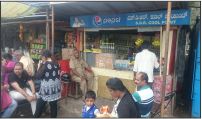
Tourists and localites at Farman's tea shop atop the hill.
Tourists and localites at Farman’s tea shop atop the hill.

Chai, does this 4 letter word make you go into a trance? If yes, then you are a tea lover! There are two types of people in this world — those who love tea and those who don’t. The love for tea can never be understood by the latter category, no matter how much the former group tries to make them understand !

Chai lovers love their cuppa and are very sceptical when it comes to substituting it with something like green tea. Although green tea has various health benefits, masala chai is equally healthy and tastes far better than that bland cuppa.

Though many tea stalls in city prepare and sell masala black chai with their own ingredients in it, one such tapri that sells masala black chai is SDR Cool Point atop Chamundi Hill, which is thronged by locals, to savour the unique masala chai prepared by Mir Farman Ali. Even tourists, who had earlier relished the masala chai, make it a point to visit his shop whenever they came to Mysuru.

Mir Farman Ali, a resident of Turabh Ali Street in Mandi Mohalla, speaking to SOM, said that prior to selling tea he frequented Chamundi Hill to sell the inlay works prepared at his home during the year 1980.

Coming from a family of artisans, Farman, who himself is an expert in inlay works, said things were going good for some days and he used to earn enough to take care of his family. But as the business declined, his meagre earnings were not enough to feed the family.

It was at this juncture he thought of changing his business and embarked on the idea of selling tea to visitors and devotees who thronged the temple as there were just one or two shops atop the hill then.

Instead of the regular tea, he wanted to sell tea prepared out of some unique ingredients that his mother used to give him as a child. So, in the year 1991, Farman opened a small shop and began to sell masala chai.

Disclosing some of the ingredients, Farman said his tea contained Jeera, Ginger, Black and White Pepper, Saffron and Black Salt among others which are powdered in the right proportion. These ingredients are useful to fight inflammation, fatigue, cold and flu, improves digestion, good for heart, boosts metabolism and also helpful in preventing diabetes, he claims.

One of Farman’s customers, P.K. Anil Kumar of Wildwalkers, who organises trekking expeditions to various places in the State, said that though he is not a tea freak, he never forgets to visit Farman and have a glass of that masala chai as it is very refreshing and fights tiredness. Anil has been visiting Farman’s chai shop since 18 years.

Many trekkers, who climb the steps of Chamundi Hill, never forget to visit Farman’s stall located near the parking lot behind Mahishasura’s Statue and savour the cuppa.

So next time you visit the hill-top, don’t forget to have a sip of that magical masala chai as the experience cannot be expressed in mere words !

source: http://www.starofmysore.com / Star of Mysore / Home> Feature Articles / February 19th, 2016