Category Archives: Uncategorized

Glowing tributes flow for MB Club’s oldest member

Lucknow, UTTAR PRADESH :

Lucknow :

Mahomed Bagh Club on Sunday paid homage to its oldest lifetime member Iqbal Ahmad Khan who passed away last month at the age of 82. The man was known for his charismatic persona and was a popular face in Lucknow’s social circuit, a symbol of the city’s secular heritage.

Born in landed family of Shahjahanpur, he was the younger child of Yameen Khan and Phundan Begum who shifted to Lucknow when he was a teenager. In Lucknow, Iqbal attended St Francis’ College, La Martiniere College and Lucknow University. He was a cycling champion and held a record not broken till date.

“He was the soul of our club without whom any party or function was incomplete,” said Col Jyotirmoy Ghosal (retd), secretary of MB Club.

“Daddy’s contribution to the society can never be forgotten as a man who could go out of his way to help others even strangers at times,”said Khan’s daughter Iffatara.

Khan has left behind his wife Asmatara Farida Begum, his sons Yusuf and Murad Khan, daughter Iffatara Khan and his elder sister Rabia Durrani. “His memories will be cherished by anyone who has ever come across his magnificent personality, he was a hero. An inspiration for many who were awestruck with his elegance,” said Nusrat Durrani, his nephew.

The Tribute ceremony was held at Chairman Lawn inside MB Club, “The lawn is not usually used and this symbolises Iqbal bhai’s contribution to the club”, added Iqbal’s cousin.

source: http://www.timesofindia.indiatimes.com / Times of India / Home> Chennai News> Lucknow News / by Mirah Zamin / TNN / February 13th, 2017
From Purdah To Parliament: Begum Aizaz Rasul

UTTAR PRADESH :

http://www.ndtv.com/people/from-purdah-to-parliament-begum-aizaz-rasul-1652956?site=full


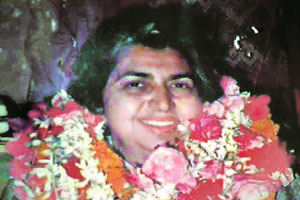
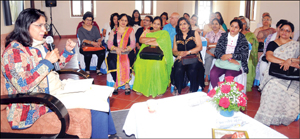
Begum Aizaz Rasul was the only Muslim woman in the Constituent Assembly that drafted the Constitution.

source: http://www.ndtv.com / NDTV / Home> People / written by Radhika Bordia / January 26th, 2017

Nineteen years later, Rampur Begum laid to rest in Iraq

Rampur, UTTAR PRADESH :

OBITUARY

NawabBegumAftabMPOs16jan2017

Almost 19 years after her death, Nawab Aftab Dulhan Sakina-uz-Zamani Begum Sahiba, the wife of the last Nawab of Rampur, Syed Murtaza Ali Khan Bahadur, has found her final resting place in Karbala, Iraq.

Hailing from Peerpur estate in Lucknow, the Begum died on August 4, 1993. Before dying, she had reportedly expressed her desire to be buried in Karbala. Since the Nawabs of Rampur are Shias, they favour a burial in Karbala, and are even reported to have a reserved place there.

But for all these years, the family failed to get the Iraqi government’s permission. So, the body was kept at the ancestral Imambara of Kothi Khas in Rampur. Till last week, when the body was finally taken to Iraq.

It is learnt that the Iraqi government finally gave the required permission in October last year.

After completing the necessary formalities, including obtaining a no-objection certificate from the district administration, the Begum’s body was finally taken to Iraq on February 23.

Confirming this, Nawab Kazim Ali Khan, nephew of the late Nawab, said the burial had been carried out in Karbala. “It was her wish, but somehow the matter was delayed,” he said.

The Begum, who contested the 1984 Lok Sabha elections under the banner of Sanjay Vichar Manch which was floated by Maneka Gandhi, is survived by two children — a Delhi-based daughter, Nighat Abedi, and a Goa-based son, Mohammad Ali Khan.

source:  http://www.archive.indianexpress.com / The Indian Express / Home> Archive / by Faisal Fareed / Lucknow, Wednesday – February 29th, 2012

Author Yasmeen Premji in City

KARNATAKA :

yasminpremjimpos21dec2016

Mysuru :

International Books, Arts and Cultural Society, Mysuru, had organised an interaction with Yasmeen Premji, author, philanthropist and architect, at a function held at Wind Chimes in Nazarbad here this morning to commemorate the first anniversary of its English Book Club.

Yasmeen Premji, who is also the Director of Azim Premji Foundation, interacted with the members of the Club on her novel ‘Days of Gold and Sepia’ based on the life of Laljee Lakha, an orphan who rose from a humble family in Kutch to amass a fortune as Bombay’s cotton king in pre-independence era.

English Book Club Founder- President Shubha Sanjay Urs, Club In-Charge Yogini and others were present.

source: http://www.starofmysore.com / Star of Mysore / Home> General News / December 15th, 2016

Story-Telling

Mysuru, KARNATAKA :
Kalasuruchi has organised a story-telling by Ayesha Karim, Retd. Bank Officer, Canara Bank, Mysuru, at Suruchi Rangamane, 476, Chitrabhanu Road, Kuvempunagar, on Dec. 17 from 4.30 pm to 5.30 pm

For details, contact Ph: 0821-2541795 or Mob: 92435-81097, according to a press release.

source: http://www.starofmysore.com / Star of Mysore / Home> In Brief / December 16th, 2016


British Prison testimony to sacrifices of freedom fighters

Andhra Pradesh :

Built in 1750s, it was used to confine freedom fighters from Krishna and Guntur districts till another jail was built in Vijayawada in 1920s

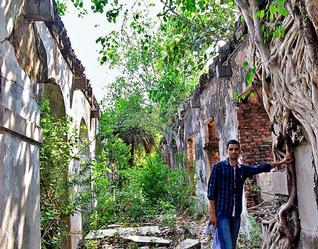
The remains of the British Prison at Bandarkota village near Machilipatnam in Krishna district.

A British construction here stands as a witness to the bravery and sacrifices of the freedom fighters of Masulipatnam and Krishna district.

The giant building, known as ‘British Prison’, reminds one of the history of freedom struggle in Andhra Pradesh.

“It was built after the Anglo-French war in 1750s. The British required a prison in Machilipatnam to incarcerate the local freedom fighters within the area of Krishna and Guntur districts and Nalgonda in Telangana State during the freedom struggle,” local historian Mohammed Silar toldThe Hindu .

According to available literature on Machilipatnam, it was the only prison to confine the freedom fighters until another prison was built in Vijayawada in early 1920s.

Jaggery unit

‘Masula History’ penned by Chitta Bala Krishna Sastry in 1922 predicts that Machilipatnam would witness rapid industrial activity, by citing the jaggery production unit set up in the British prison by then.

“After the British left the prison by early 1920s, local entrepreneur Jaldu Rama Rao obtained permission from the British to use the prison premises for production of jaggery and sugar,” said Mr. Silar. However, sugar cane production had to be stopped by mid 1940s, owing to various business reasons.

Currently, the British prison is owned by the family of Jaldu Rama Rao.

Now, an old woman resides at the entrance of the site, which is yet to get the heritage status.

Only if it gets the heritage status, any conservatory initiatives by the Archaeological Survey of India could be expected to take place.

Another heritage structure

Ironically, the British prison is located opposite another heritage site which was a hospital during the Nizam’s period.

The efforts made by the Indian National Trust for Art and Cultural Heritage (INTACH) for the conservation of the British prison as well as the other sites at Bandarkota have not yielded any results so far.

source: http://www.thehindu.com / The Hindu / Home> Andhra Pradesh / Bankarkota(Krishna) / August 15th, 2016

Tailor who cycled 2700km to meet Kalam narrates how the former President ignited his mind

Chennai, TAMIL NADU :

S Nagoor Meraan
S Nagoor Meraan

Chennai :

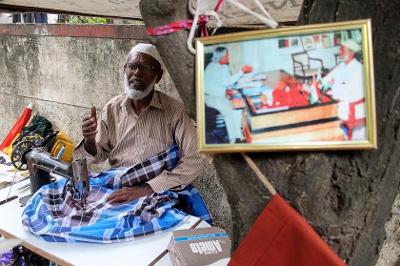
Seventy-year-old S Nagoor Meraan is a tailor by day and a watchman by night. Meraan is one of those scores of people whom you wouldn’t bother giving a second glance unless you come across his photograph with former President Abdul Kalam that adorns his makeshift workplace under a tree in Thiruvanmiyur here.

Pointing to the photograph, he recollects the story of pedalling all the way from his hometown Tenkasi in Tamil Nadu to Rashtrapati Bhavan in New Delhi (over 2700km) in 2003 to meet the former President.

The idea of meeting Kalam was mooted when a Lions Club member told him to make use of his passion for cycling to attract the Missile Man’s attention.

Thus began the journey that lasted 35 days taking the Chennai, Hyderabad, Nagpur, Bhopal and Agra route. During the journey, he camped at police stations, open spaces and even strangers’ houses. “Curiously enough, not even once did my cycle tyres get punctured. It was a smooth journey. It was as if Allah was conspiring for my meeting with Kalam,” says Meraan, who’s now into his 70s.

Initially, his plans of meeting the former President was met with uncertainty. “When I reached Delhi, I couldn’t meet him immediately. I wrote a letter of my mission and dropped it in a guest box on the Rashtrapati Bhavan premises. Fortunately, he read the letter and extended an invite,” he says.

Meraan dined with Kalam during the rendezvous that spanned 35 minutes. “I had taken along with me a shawl to present to him. But he declined the offer citing the presence of many homeless in the capital city suffering due to extreme cold and asked me to give that to one of them,” he recollects.

He stayed in the official residence for two-and-a-half days and had his brush with a few politicians. During the time, they discussed issues such as world peace, humanity and a charter of demand for Meraan’s hometown among other things.

“Kalam sir asked me to make interacting with school students a habit. I had always hatched a plan to travel to Mecca, partly by cycling and partly otherwise. He strongly advised against it citing security issues,” says Meraan who has been a tailor for over three decades now.

Reflecting on Kalam’s first death anniversary, Meraan says, “He should have lived, instead of me.”

He is penning a collection of short poems and plans to publish the same in the near future if there are takers.

source: http://www.timesofindia.indiatimes.com / The Times of India / News Home> India / Shilpa Vasudevan / TNN / July 27th, 2016

These Adil Shahi era cannons cry for attention

Vijayapura(Bijapur), KARNATAKA :

VijayapuraCanon02MPOs04jul2016

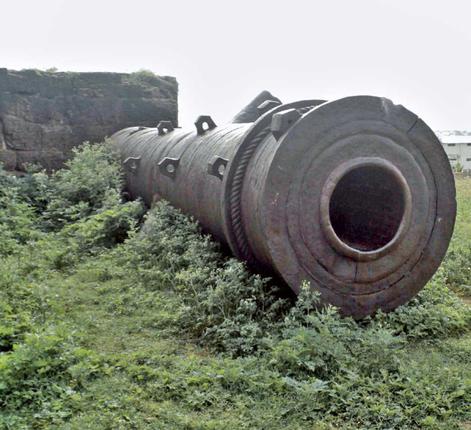
The Mustafabad cannon at Allapur Gate and Landa Qasab cannon, in Vijayapura, are facing neglect.

Some of the massive and marvellous cannons belonging to the Adil Shahi era here are decaying because of lack of efforts to preserve them.

While only a few giant cannons have been preserved at Nakkar Khana, the main pavilion of the Gol Gumbaz, at Malik-e-Maidan, some others are left there in the open.

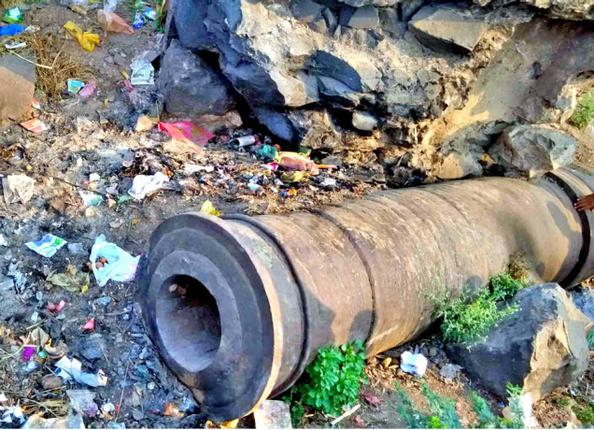
The cannons at Mustafabad near Allapur Gate, a few hundred metres from the Gol Gumbaz, are in the worst shape.

The cannon was earlier placed on the fort wall. Over a period of time, the wall collapsed owing to lack of maintenance and the giant cannon fell on the ground.

The authorities have not made any efforts to locate it to a better place where it could be preserved. They are now getting gradually buried under a heap of garbage and human waste.

Similar is the condition of the Landa Qasab cannon near Kirti Nagar and Ali Burj.

While a signboard has been placed by the Archaeological Survey of India near the Landa Qasab cannon, the one at Mustafabad does not have one.

According to historians, these cannons played a significant role in protecting the boundaries of the Adil Shahi empire from enemies.

They were strategically placed on towers where security men could keep a watch on the entry of enemies.

source: http://www.thehindu.com / The Hindu / Home> National> Karnataka / Firoz Rozindar / Vijayapura – June 30th, 2016

Muslims offer special prayers for rain

Mangaluru, KARNATAKA :

PrayersMPOs02may2016

Mangaluru:

The State which is going through a rough time with extreme drought,witnessed a group of Muslims offering special prayers for rain and progress.

South Karnataka Salafi movement organised special prayers at Nehru Maidan. Even women were a part of Namaz-e-Istesqa.

The Khatheeb of Nandavar Salafi mosque, Ahmed Ali Khasimi led the prayers and explained about the importance of water in daily life.

Many devotees were seen expressing their grief for the sins committed and also praying for rain.

Namaz-e-Istesqa is a way to humble oneself before god almighty and look for forgiveness so that rains descend on the city.

source: http://www.newskarnataka.com / NewsKarnataka.com / Home> Cities / May 01st, 2016