Category Archives: Uncategorized

UOM Syndicate gets six nominated members

Mysuru, KARNATAKA :

Mysuru :

Exercising its powers under provisions in Section 28(1)(G) of the Karnataka Universities Act 2000, the Karnataka Government has nominated six members to the Syndicate of the University of Mysore (UoM) through a circular issued by In-Charge Principal Secretary to the Department of Education K.L. Subramanya.

Those nominated to the UoM Syndicate are Prof. D. Nanjundaiah, resident of Vijayanagar 2nd Stage, Ln. H. Ramesh, resident of Kestur Koppal in K.R. Nagar taluk,  Mohammed Abbas Salam Tanveer, resident of Chamaraja Mohalla, Shruthi Tharun Giri, resident of Yadavagiri , Kumar, retired Principal and a resident of Kuvempunagar and M.S.S. Kumar (Marballi Kumar), resident of Marballi in Mysuru taluk.

Ln. H. Ramesh, who retired after serving as Accounts Officer at KPTCL, is now serving as the Vice-President of the State Unit of KPTCL Employees Union, President of KPTCL Housing Co-operative Society besides serving as the Regional President of Lions Club of Mysore Kuvempunagar.

M.S.S. Kumar (Marballi Kumar), son of former Taluk Board President late M.D. Shivappa, is the General Secretary of Mysore District Congress Committee besides serving the Greater Mysuru Housing Society as its President.

 Shruthi Tharun Giri
Shruthi Tharun Giri

The only lady nominated to the Syndicate

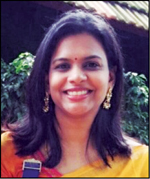
The only lady nominated to the Syndicate is Shruthi Tharun Giri. She holds a Post Graduate Degree in International Relations from the University of Nottingham, England and has a Bachelors Degree in Political Science from the prestigious Lady Shriram College in New Delhi.

Shruthi Tharun Giri is married to Tharun Giri, Managing Director of Windflower Resorts and Spa, Mysuru.

Shruthi has experience in opening Placement Cells in Colleges and has also helped her husband set up a chain of Ayurvedic Spas, which have gone on to win numerous awards and recognition.

She is also actively involved in local charity organisations with focus on providing education and infrastructure for under privileged women and children.

source: http://www.starofmysore.com / Star of Mysore / Home> General News / Sunday – January 10th, 2016

Two Chinese arrive in Kozhikode to find Zheng He’s grave

english.manoramaonline.com

Kozhikode, KERALA :

Kozhikode :

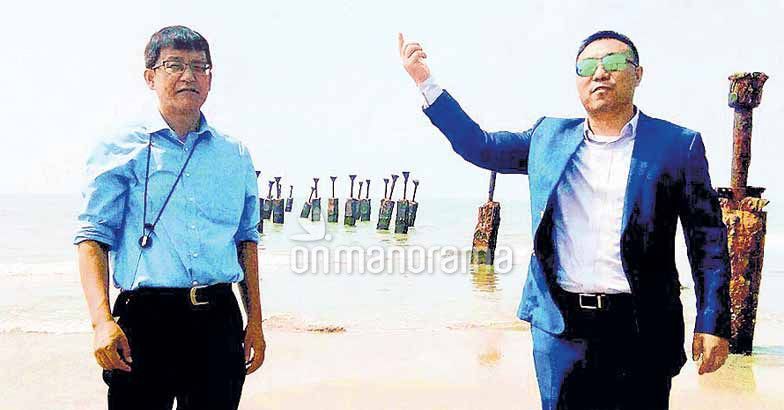
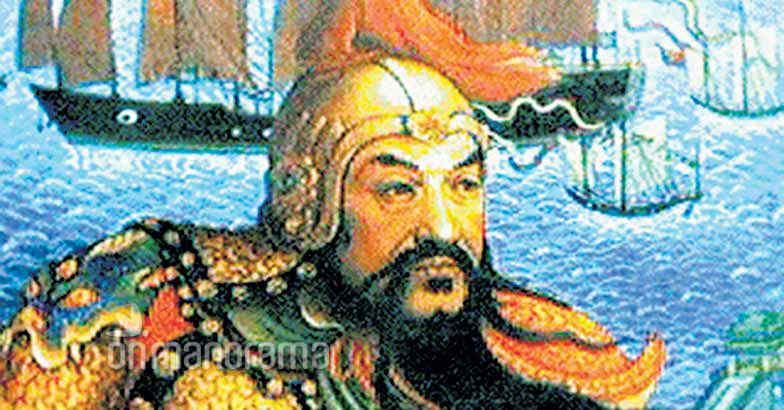
Two Chinese have come to the land of Zamorin to find the final resting place of the Chinese explorer who conquered seas through willpower.

The goal of these researchers is to find the grave and the trading points of Zheng He, the explorer who landed in Kozhikode seven times on ships .

They are professor Haiyun Ma, a Chinese descendant who teaches history at Frostburg State University in the US, and Dr Shaojin Chai, a senior researcher at the UAE’s culture ministry .

Zheng He is a hero in China, where students learn about his adventures. They only know that he died  in Kozhikode due to sudden illness. Chinese researchers have come to find out if there is  anything in Kozhikode that reminds of him .

A Chinese had been buried at Cheenedath mosque in Valiyangadi. Though the team visited the mosque,  they could not find anything specific. Haiyun Ma and Shaojin came to Kozhikode with the  help of Abbas Panakkal, a fellow at Griffith University, Australia.

english.manoramonline.com

The man who brought Ma Huan

Zheng He, born in 1371, began his travel at the age of 28. He landed in Kozhikode in 1430 with Chinese silk, vessels, jars and fishing nets. He was received by the Zamorin. He returned to China with spices and other goods many times. Over the period, he brought 2,800 Chinese to Kozhikode. One among them was Ma Huan, a historian.  It is said that Zheng He even took elephants and horses from here. It is not clear  whether Zheng He, a Muslim, was buried on land or at sea .

source: http://www.english.manoramaonline.com / OnManorama / Home> News> Kerala / by Lenin Chandran / Saturday – January 09th, 2015

Javeed Ahmed appointed new Uttar Pradesh DGP

Javeed Ahmed, a 1984 batch Indian Police Service officer, was appointed DGP after Jagmohan Yadav retired on December 31. (Photo: @ANI_news Twitter handle)

Lucknow, UTTAR PRADESH / Patna, BIHAR :

Javeed  Ahmed, a 1984 batch Indian Police Service officer, was on Friday appointed as the director general of police by the Uttar Pradesh government.

Ahmed, who had earlier served as the joint director of the Central Bureau of Investigation during central deputation, was serving as the director general (railways). The post fell vacant after Jagmohan Yadav retired on Thursday.

State principal secretary (home) Debashish Panda said Ahmed will take the charge on Friday.

There was a race among IPS officers for the top post after Yadav’s retirement. The officers played all the cards – caste, religion, loyalty to the ruling party, experience as well as closeness to the family members of the ruling Yadav family – to outdo each other for the coveted post.

No consensus could be reached even after several rounds of meetings. Suspense continued till late on Thursday night as home department officers remained in the office awaiting finalisation of the new DGP.

Sources said since chief minister Akhilesh Yadav was at his native village Safai, it was decided that the name of the new DGP will be announced on Friday.

source:  http://www.hindustantimes.com / Hindustan Times / HT Correspondent, Lucknow / January 01st, 2015

Tipu Jayanti : District Admn. holds celebration in city today

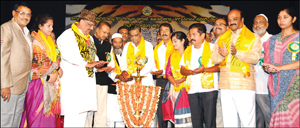
District Minister V. Sreenivasa Prasad is seen lighting the lamp to inaugurate Tipu Jayanti organised by District Administration at Kalamandira in city this morning. Others seen are (from left) MLC R. Dharmasena, ZP President Dr. Pushpa B. Amarnath, MLA Tanveer Sait, MP R. Dhruvanarayan, Sir Khazi Moulana Mohammad Usman Shariff, MLA Vasu, Zoo Authority Chairperson Rehana Banu, MLA M.K. Somashekar, MUDA Chairman K.R. Mohan Kumar and DC C. Shikha.

Mysuru :

District In-charge Minister V. Sreenivasa Prasad, who inaugurated Tipu Jayanti celebrations here today, said that Tipu Sultan always dreamt of a welfare State during his rule.

Speaking at the celebrations jointly organised by the District Administration, Department of Minority Welfare and District Wakf Consultative Committee at Kalamandira, he said that people who are unaware about the history of Tipu Sultan were indulging in raking up a controversy over the issue and added that Tipu fought against British who were looting the wealth of our country. Calling for maintaining religious harmony, Minister Sreenivasa Prasad said that India was a secular country where people belonging to various religions, castes, culture and traditions lived in harmony.

Stating that the entire six crore population in Karnataka should participate in the Jayanti celebrations, the Minister said that Tipu worked for the welfare of the people and the title ‘Mysore Tiger’ would not have been given to him if he had any other intention.

Speaking on the occasion, MLA Tanveer Sait said that Tipu Jayanti was not restricted to one particular community and added that the controversy behind the Jayanti celebrations were being created by people unaware of Tipu history.

Calling for a debate to resolve the controversy, Tanveer Sait said that though there was a demand to name the Bengaluru International Airport after Tipu Sultan initially, the Muslim community raised no objection after it was named after Kempegowda.

“The demand for celebration of Tipu Jayanti was long-pending. We are grateful to Chief Minister Siddharamaiah who passed the orders to celebrate the Jayanti by the State Government,” the MLA said.

Referring to yesterday’s incident in Kodagu, Tanveer Sait called upon the people not to indulge in violence and to live in peace and harmony.

Earlier, the programme was inaugurated by offering floral tributes to the portrait of Tipu Sultan and by lighting the lamp. The event was presided by MLA Vasu. Journalist T. Gururaj spoke on Tipu Sultan.

Sir Khazi of Mysuru Moulana Mohammed Usman Shariff, Mili Council President Moulana Zakaullah, ZP President Dr. Pushpa B. Amarnath, Vice- President L. Madappa, MLA M.K. Somashekar, MP R. Dhruvanarayan, MLC. R. Dharmasena, MUDA Chairman K.R. Mohan Kumar, Zoo Authority of Karnataka Chairperson Rehana Banu, DC C. Shikha, former MLA Mukthar Unnisa Begum, Tahsildar Naveen Joseph and others were present.

source: http://www.starofmysore.com / Star of Mysore / Home> General News / November 11th, 2015

‘Dr. Kalam still lives in the hearts of people’

Jayaprakash Rao, a close aide of former President, interacts with scribes

Mysuru :

“Dr. A.P.J. Abdul Kalam was a ‘People’s President’ who always thought about building new India,” said Jayaprakash Rao, a close aide of late former President.

He was speaking during an interaction programme organised by Mysore District Journalists’ Association (MDJA) at its premises in city yesterday.

Rao said that though the former President did not speak against corruption in public, he made sure to build a sense of hatred among children against corrupt people.

Talking about Kalam’s simplicity, he mentioned that the former President never travelled in a car with red beacon and added that he treated the guests at Rashtrapathi Bhavan from his own pocket and never used Government funds.

Rao also said that Kalam, who noticed crores of rupees being lost in the purchase of Sukhoi fighter aircraft, had advised the Government of India to come out with indigenous fighter aircrafts which resulted in Hindustan Aeronautics Limited (HAL), Bengaluru, coming out with the same.

Mentioning that an International Foundation would be launched on the occasion of Kalam’s birth anniversary (Oct.15), Rao said the former President had saved his earnings for the Foundation.

MDJA President K. Deepak, General Secretary K.J. Lokesh Babu, City Secretary B. Sreekantswamy were present at the interaction.

source: http://www.starofmysore.com / Star of Mysore / Home> General News / October 15th, 2015

Bleed Care Unit Opened

Thiruvananthapuram  :

The gastroenterology department of NIMS Medicity has opened a GI Bleed Care Unit and it is to be headed by Dr Harish Kareem.

The unit, which will function round-the-clock, was inaugurated by the chairman of KG Hospital, Coimbatore, Dr Bhaktavalsalam.

Former ISRO chairman G Madhavan Nair and NIMS Medicity managing director M S Faisal Khan were present on the occasion.

source: http://www.newindianexpress.com / The New Indian Express / Home> Cities> Thiruvananthapuram / by Express News Service / September 12th, 2015

The heart of the natter

Chatterers both, these siblings are each other’s sounding boards, critics and best friends. The energy is infectious, we find
DanishKubraMPOs10dec2014

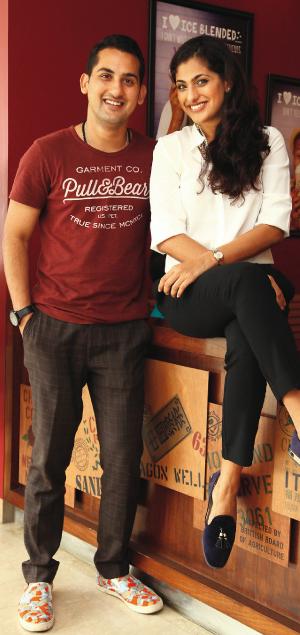
Relative Value with Danish (26) and Kubra Sait (31)

A riot. That’s what this brother-sister duo is. What was meant to be an hour-long interview steamrolls at full speed into nearly three, before plodding to a reluctant halt. They laugh a lot. They also tease, crack abundant jokes, high five each other repeatedly, make casual conversation with onlookers and fans, and are generally high on life. Exhaustingly so, especially to reticent people not given to much exuberance. Danish and sister Kubra, well known in Bangalore as anchors, emcees, TV hosts and him, the voice of prankster Nagaraj on the radio (or Chacko, Azhgar…take your pick), make no effort dispel the notion that they are talkers. Fun ones, at that.

Older sister Kubra will repeatedly deny that she is a bully — and Danish will say she used to be one — but it is apparent that she is very involved in her little brother’s life. Case in point — the T-shirt, shoes and socks she has carried with him to change into photographs for this interview, which Danish obligingly accedes to without a thought or a look at her choices. He trusts her implicitly, it’s clear. “This is my world — my mom and sister. We are each other’s best friends,” he says earnestly, and she nods.

They get along like a house on fire, and it’s almost impossible to catch them out of tune. Danish starts a sentence, Kubra completes it. Kubra teases a train of thought, Danish responds with perfectly-timed laughs. They put their synergy down to having grown up in a broken home, where their parents were constantly at odds. Through it all, Kubra, a self-proclaimed “warrior”, remained fiercely protective of her brother. “He was so cute! Not that he isn’t now,” she says, looking at him fondly. ‘Didi’ (older sister) as Danish endearingly calls her even as we are surrounded by starry-eyed autograph-hunters, is the proverbial older sibling — pampering, indulgent, and sometimes domineering.

She recalls growing up with an “adorable” kid, who ate up all his chocolates and asked her to share as per mom’s strict instructions. “He didn’t even have his own clothes!” she says with a giggle. “He was so fair that if you gave him a tiny slap on the cheek, he would start bawling and turn beetroot red,” she says, gesturing animatedly. “So my mum would put him in my red frilly frock, which had layers and layers going right down to the floor, and give him a small smack on the cheek, and then click a picture while he would cry.” That is all she can complete before collapsing into laughter while a mortified Danish yells into the microphone — “We were poor! POOR! Put that down as the reason please.”

Mother and daughter would “torture” the littlest member of the family, but also made him the centre of their universe. Kubra has drawn his biology diagrams for him, driven him to boarding school and even sat with his head on her lap as they bawled when it was time to leave him there. “Of course we miss each other — first when she went to Dubai and now that she is in Mumbai,” says Danish, restlessly swirling chopsticks in the air before Kubra promptly puts them away. “Some of my best childhood memories are of the family going to the movies — she and mom on one bike and me and dad on another — and all I’d want to do is sit with Didi because she was the cool one.” Kubra also dropped him to school — a ride on a black, kickstart TVS bike filled with chatter and games where they would follow the fastest person ahead of them on the road.

Danish too weighs in on his sister’s relationships, work choices, and even plays mediator when she fights with their mother, who he says, “runs their lives.” “And when we quarrel with mom, one will stand up for her saying ‘you can’t talk like that about her!’ before becoming one unit and telling mom to leave the other alone. But while I’ll listen and resolve things, this one will go add more fuel to the fire — bloody!” he says, gesturing at his sister who is convulsing in laughter before saying guiltily, “Yes he’s right, I do that!”

Danish’s sister is his first critic — pulling him up for everything from calling an old man a ‘rascal’ in humour during a prank call to critiquing his clothes — “Look at what he’s wearing!” She recalls how as a child, he fought with her and went to Lalbagh, dressed in a casual t-shirt and his school tie, “and then clicked photos with all the Mickey Mouse dustbins.” He’s also honest with her. In fact, a week before they co-anchored the Pro Kabaddi League for TV, Kubra says she was on edge, unconvinced that it would work. “He was sure — and look how well it did!” They go on to talk about how much they love Shah Rukh Khan, who they met during Temptations 2004 in Bangalore and then during the Pro Kabaddi league. Once again, it’s hard to pries them apart.

Kubra says it “melts her heart” when “no matter where we are or with who we are, he’ll turn around and say, ‘Didi, can we go? Didi, can we do this?’ He’s taller than me, super independent and so, good at what he does, but still accords me that respect and fondness.” On stage, therefore, the first time he referred to her as Kubra, it gave her a jolt. “I also find it very weird ya, to call her Kubra. So I just say ‘HEY’!” he says loudly, with his trademark energy. And just when it seems like it’s all sibling love, he pulls her leg. “After a point when we’re hosting, I’ll call her Didi and she’ll call me Dan. But this one toh goes into a trance! We were doing a show where we’re giving the 1,000 ranked person an award and she goes ‘you are the lonely lamp in this darkness…’. I’m thinking, God, stop it already!”

Being in the same profession, they say, was a happy accident. “He was doing really well in theatrics school, while I was in Dubai, working for Microsoft and also anchoring events for the company before realising I wanted to do it for myself. Somehow, we both found our way into this profession. We took separate paths, but landed up in the same place,” Kubra says.

Ever since, there has been no looking back. Today, the two try and work together when possible, and make it a point to solicit feedback from the other “and mom, of course” no matter where they are. Work is central to both their lives, especially Danish’s, who admits that he doesn’t have too many friends. “In the last two-three years, people have gotten to know me. But for old Bengalurians, I’m still Kubra’s brother. In fact, we sometimes whet events like that. If I introduce myself as Kubra’s brother and they don’t know who she is, I know what kind of work they’ll give me,” he says. She nods, adding, “And now Danish is doing so well that people recognise me through him. It’s a weird twisted heirloom.”

We’ve hurtled from early evening to night, and it is time to wrap up. They banter about how she went from being a tomboy who wore Danish’s WWE t-shirts to college to one “glam” chick because of the “double poverty” they were in, he says with a guffaw. Loud laughter, again. The hilarity, we realise, is just one of the many reasons these two are as tight as thieves.

source: http://www.bangaloremirror.com / Bangalore Mirror / Home> Columns> Sunday Read / by Sowmya Rajaram , Bangalore Mirror Bureau / November 15th, 2014
Village commemorates 41 Wagon Tragedy victims on anniversary day

Malappuram :

On the occasion of observing 93rd anniversary of Wagon Tragedy, the darkest chapter of Malabar rebellion during British period on Thursday, a village near Tirur commemorates 40 people hailing from the village, who were killed in the tragedy.

A total of 70 among the 90 odd Mappila rebels who were taken in an air-tight goods wagon from Tirur to Podanur were killed on November 20, 1921. The prisoners were taken into custody when the rebellion was in peak and almost 80 detained rebels were despatched in freight wagon from Tirur to Podanur in Tamilnadu. During the journey about 60 of the rebels suffocated to death in wagon.

It is believed that among the 41 persons from Kuruvambalam who were victims of the tragedy, majority were bachelors who left behind no progeny. “Even the historians and local people were not much aware of the role of the Kruvambalam people in the incident till couple of years ago. According to the elders in the village the youngsters here had played a major role in the struggle against the British during the rebellion and more studies have to be conducted to shed light on the contribution of tragedy victims”, said Salim Kuruvambalam, Malappuram district panachayat member, who took initiative for setting up a memorial for the Wagon Tragedy victims at Kuruvamabalam. The district panchayat president Zuhara Mampad will inaugurate the comemmoration programmes in the village. Historians will also attend the programme.

Talking about role of Kuruvambalam persons in the tragedy, the historian KKN Kurupp said that government should conduct a comprehensive study on the victims of Wagon tragedy and other related incidents of Malabar rebellion. ” As there was no such study held so far the state government should initiate action to start a detailed historical and cultural study on the various incidents during the rebellion period. We are going to observe 100th anniversaty of the rebellion in 2021. But still we have no clear data or official document regarding the incidents and the details of the persons who were killed in Wagon tragedy”, he pointed out.

The historian and scholar M Gangadharan has recently opined that the Wagon tragedy was not a cruellest act of the British oppression during the Malabar rebellion, as about 200 Mappila youngsters pulled out of their house and they were killed infront of their family in October of the same year.

source: http://www.timesofindia.indiatimes.com / The Times of India / Home> City> Kochi / by T. P. Nijeesh, TNN /  November 20th, 2014

This centre of medicine has unique ‘Urdu tehzeeb’ museum

Aligarh  :

The Ibn Sina Academy of Medieval Medicine and Sciences was founded by Padma Shri Hakim Syed Zillur Rehman in the year 2000. It is well known for its vast library and the museum of medieval science and medicine. Few people know, however, that it also houses a museum that showcases “Muslim culture, steeped in Urdu tehzeeb”.

Rehman says this museum “chronicles Muslim culture through objects”. He says the attempt is to preserve, before these cultural artefacts are lost entirely.

Why would a centre dedicated to medicine and science preserve a “chogha” (an earlier form of the sherwani)? Where else, in a centre like this one, would you expect to see a three-metre dupatta studded with diamonds and laced with gold and silver? Step into this museum to see crockery that sat on the dining tables of Muslim households in times gone by.

“Times are changing. Sixty-seven years after independence, many families now have a second generation that is acquiring a modern education. They will then go out in search of work and money, and a time will come when they will feel nostalgia and return in search of their roots and their traditions. People want to know of their virasat,” he said, adding, “That is when some of my efforts to conserve our heritage through these things will matter”.

Some of the objects on display were part of his own inheritance. Some were gifted by people who saw that he had the wherewithal to preserve priceless items for posterity.

An NGO “Heritage Restore” has now started work on documenting the objects in Rehman’s collection. So far, over 4,500 objects are recorded as stored in this repository.

Heritage Restore president Azfar Ahmad said, “People think Muslim culture is about maqbara and madarsa. But look here – you find gramophones, harmoniums, costumes for weddings and trays for biryanis, all uniquely designed.”

Some of these objects, in some years, will be so alien that few will understand without explanation what a paandaan (a box for preserving items used to make paan), ugaldaan (spittoon for the pan user), haath ka pankha (a hand fan), batua (wallet), chogha (a form of the sherwani), gharara (a dress item) look like.”

Rehman’s collection also has a fruit tray from the dining table of Begum Sultan Jahan of Bhopal, her brooch made of precious stones, with her name inscribed in gold, a chogha that belonged to the Qazi Shamsuddin of Rewari, dating back to 1830, a paandaan weighing over 5 kg and a betel stand.

There are original royal orders of Mughal emperors that have come to Rehman from his father, and a paper weight made of shells that was used by Sir Syed Ahmad Khan.

There are also silver-lined razais (quilts), dinner sets with plates having a vacuum so that hot water poured in them keeps the curry warm till the last bite.

Rahman has earlier served as professor and chairman, department of Ilmul Advia at the Ajmal Khan Tibbiya College, Aligarh Muslim University. After a 40-year stint, he retired as dean, faculty of Unani medicine.

He is the author of 45 books and several papers on different aspects of Unani. He boasts of being the possessor of the largest collection of books on Unani medicine. He was conferred the Padma Shri in 2006 for his contribution to the field of Unani medicine.

The museum grew out of his penchant for all things unique, some of which were also priceless — coins from ancient times, stamps, pens and other artefacts.

source:  http://www.timesofindia.indiatimes.com / The  Times of India / Home > City> Agra / by Eram Agha, TNN / November 12th, 2014