Category Archives: Videos

Ajmal Sabu from Kerala on creating the video of Donald Trump supposedly crooning ‘Mappilapattu’

Changanassery (Kottayam District), KERALA :
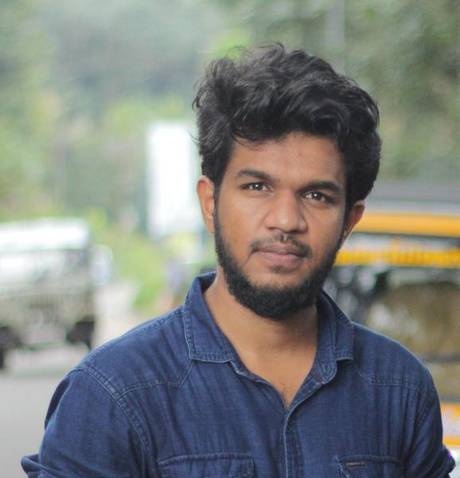
Ajmal Sabu | Photo Credit: Special arrangement

The editor-cinematographer has a popular Instagram page ‘cuts.zzz’ dedicated to such mash-up videos

Perhaps one of the most forwarded videos on social media during this lockdown has been US President Donald Trump ‘singing’ Mappilapattu. In this video, which has got 4.25 lakh views on Instagram page, ‘cuts.zzz‘, the president is depicted singing a traditional folk song of the Muslim community in Kerala, with Indian Prime Minister Narendra Modi, First Lady Melanie Trump, Ivanka Trump, Jared Kushner, and thousands of people cheering him on.

The “mash-up video” features the filmi version of the popular Mappila song, ‘Aminathathede Ponnumolaanu’, from the Malayalam movie Honey Bee 2.5, sung by actor-director Lal. The mastermind behind the video is editor-cinematographer-director Ajmal Sabu. With accolades coming in from the world over for his editing skills in creating the impression that Trump himself is singing those lines, the 24-year-old is on a high. The viral video has so far got over eight lakh views on Facebook as well.

____________________________________

Instagram

https://www.thehindu.com/entertainment/movies/ajmal-sabu-from-kerala-on-creating-the-video-of-donald-trump-supposedly-crooning-mappilapattu/article31227192.ece

____________________________________

“I didn’t expect such a reach for the video. I am getting messages from across India and even abroad,” says Ajmal over phone from his home at Changanassery in Kottayam district. He adds, “My professional commitments have been stalled due to the lockdown. So, instead of wasting time I thought of doing something interesting. I came across this song in a video my friend had sent me. I was hearing that version of the song for the first time and felt that I should put it to use somewhere. As the ‘Namaste Trump’ event at Sardar Patel Stadium in Ahmedabad, Gujarat, was a much-discussed event, I thought of giving it a try. And it clicked!” says the 24-year-old.

Mass appeal

Ajmal started his Instagram page for mash-up videos two years ago and most of them have gone viral. There are over 50 videos on the page, with another popular one being American wrestler and WWE superstar Big Show and WWE’s chief branding officer Stephanie McMahon supposedly saying the dialogues of Nakulan (Suresh Gopi) and Ganga (Sobhana) from an iconic scene in the Malayalam movie, Manichitrathazhu.

_________________________________________

Fact file
  • An alumnus of Maya Academy of Advanced Cinematics in Pune, from where he learnt animation, VFX and post production, Ajmal started out as a cinematographer with a Marathi film, Dhap. He was an assistant director in the Malayalam films Kappirithuruthu and Love Action Drama. He has also been a spot editor and is much sought-after in Malayalam film industry for making promo cuts, teasers and trailers of movies. He has directed short films and has done cinematography and editing in music videos, short films, documentaries and ad films.
  • He is all set to turn independent as an editor and cinematographer with a Malayalam film. “If the lockdown wasn’t there, the shoot would have begun on April 10. It is a good project and I still can’t believe that I am doing it,” he says.

__________________________________________

The first mash-up video he created was of the Joker-Batman scene from The Dark Knight with dialogues from Maheshinte Prathikaram, picturised on Soubin Shahir and Alencier. Among other videos that fetched lakhs of likes are those of Bruno Mars dancing to the tune of ‘Margazhiye malligaye’ from Megham, Rihanna’s video with the track of Popy umbrella ad, scene from Guardians of Galaxy with dialogues from Aniyathipravu and Modi’s speech at a rally with lottery announcement.

Ajmal says that there is no short cut to creating these videos. “It takes several hours to mix and match the scenes. I spent seven to eight hours on the Trump video alone. If you are taking a song or dance number, matching rhythm and steps are not that difficult. But the toughest part is lip sync. It is possible to experiment with all videos. However, you have to keep on trying to get the perfect match,” he says, adding, “At the same time you shouldn’t compromise on humour.”

source: http://www.thehindu.com / The Hindu / Home> Entertainment> Movies / by Athira M / Thiruvananthapuram – April 01st, 2020

Watch: 5 Indian Muslim Feminist Writers You Should Know About

INDIA :

Today, we remember these 5 powerful Indian Muslim feminist writers, who wrote boldly of issues that were considered taboo, shattering gender roles and stereotypes in their fierce writing and the politics they advocated for.

Watch this video detailing the life and times of luminaries like Ismat Chughtai, Rashid Jahan, Begum Rokeya, Wajida Tabassum and Qurratulain Hyder. #IndianWomenInHistory

source: http://www.youtube.com /

source: http://www.feminisminindia.com / Feminism In India (FII) / Home> History / by FII Team / November 09th, 2017

North Carolina voters make history by electing first Muslim woman to hold office

Chennai, TAMIL NADU / North Carolina, U.S.A. :

https://thehill.com/homenews/campaign/486113-north-carolina-voters-make-history-after-electing-first-muslim-woman-to?jwsource=cl

Nida Allam has become the first Muslim woman to be win elected office in the state of North Carolina.

According to local reports , history was written on Tuesday night when voters in Durham County went to the ballots to elect Allam as their next county commissioner.

Allam said in a statement provided to The Hill that, growing up as a Muslim in the U.S., she “never thought running for office let alone winning and making history would ever be a possibility.”

“I was driven to politics in 2015 after my best friend Yusor, her husband Deah and younger sister Razan were brutally murdered in their home in Chapel Hill in a hate crime committed by their neighbor,” she said. “This was a heinous act of hate that caused ripples across the world.”

Allam was referring to the murders of Deah Barakat, 23, his wife, Yusor Abu-Salha, 21, and her sister, Razan Abu-Salha, 19. The three college students had been living in a condo in Chapel Hill, N.C. when a man, Craig Stephen Hicks, entered their home and killed them.

Local authorities initially claimed the shooting incident was over a parking dispute, but the chief of the Chapel Hill police department, Chris Blue, apologized years later, saying “the man who committed these murders undoubtedly did so with a hateful heart.”

Hicks was ordered to serve three life sentences without possibility of parole after pleading guilty to three counts of first-degree murder in 2019.

Allam said in her statement that her “community suffered deeply” after the deaths of her friends.

“How can I be content with all the blessings I have been given in this world when there is so much to do to fight injustice, uplift one another and to make our communities healthier. I’m fighting for a better nation so that others don’t have to suffer the pain my community did,” she said.

During her campaign, Allam pushed for police reform, better quality education and wage increases for county workers, among other issues.

Prior to her run for local office, she worked as a political director for Sen. Bernie Sanders’s (I-Vt.) 2016 presidential campaign. She also served as third vice chair of the North Carolina Democratic Party and chair of Durham Mayor Steve Schewel’s (D) Council for Women.

The historic first in North Carolina comes years after voters saw a record number  of Muslim candidates run for statewide or national office in 2018, the highest in nearly 20 years at the time. That was also the year Reps. Ilhan Omar (D-Minn.) and Rashida Tlaib  (D-Mich.) became the first Muslim women elected to serve in Congress.

source: http://www.thehill.com / The Hill / Home / by Aris Folley / March 05th, 2020

Explained | War heroes who resisted Portuguese: The mega film Kerala is talking about

KERALA :

Directed by Priyadarshan, Marakkar: Arabikadalinte Simham features the popular actor Mohanlal and was reportedly made on a budget of Rs 100 crore, making it the most expensive Malayalam film ever.

Directed by Priyadarshan, it features the popular actor Mohanlal and was reportedly made on a budget of Rs 100 crore, making it the most expensive Malayalam film ever.

On March 26, the big-budget  film Marakkar: Arabikadalinte Simham (Marakkar: The Lion of the Arabian Sea) will release in Kerala and elsewhere. Directed by Priyadarshan, it features the popular actor Mohanlal and was reportedly made on a budget of Rs 100 crore, making it the most expensive Malayalam film ever.

Last month, a petition was filed in the Kerala High Court against the film, alleging ‘distortion of history’ and demanding a stay on the release. The court declined.

What is the film about?

It is a war film depicting the heroics of the Marakkar clan, whose leaders were naval chieftains of the Zamorin of Calicut during the 16th and 17th centuries. The Zamorin, Samoothiri in Malayalam, was the title given to rulers of the Calicut kingdom on the Malabar coast. The Marakkars fought against Portuguese invaders for nearly a century.

Who were the Marakkars?

By some accounts, they were of Arab origin and had migrated from Tunisia to Panthalayani near Koyilandy in present-day Kozhikode, and later moved to the region around present-day Kottakkal and Thikkodi near Payyoli. By other accounts, the Marakkars were descendants of affluent businessman from the Cochin kingdom who migrated later to Calicut.

Historian M G S Narayanan said the name ‘Marakkar’ could have originated from maram or marakkalam, meaning ship, as these families lived along the coast and used ships. Alternatively, it could have originated from the Arabic word markaba, meaning those who migrated via ships. “The Marakkars were mostly Muslims, but in some parts, they have been found to be Hindus as well,” Narayanan said.

What was the war against the Portuguese about?

Faced with invading Portuguese ships, the Zamorin reached out to the Marakkars to defend the coast. They were led in succession by four Marakkars, chief admirals who were appointed by the Zamorin with the title of Kunjali. Related by bloodline, they were Kuttyali Marakkar (Kunjali Marakkar I, appointed in 1507), Kutty Pokker (Kunjali Marakkar II), Pathu Marakkar (Kunjali Marakkar III) and Muhammad Ali Marakkar (Kunjali Marakkar IV, appointed in 1595).

“Their strategy was similar to guerrilla warfare. The Portuguese had massive ships which could not make easy manoeuvres in the sea. The Marakkars used small ships which could easily surround the Portuguese ships, enabling the fighters to attack at will,” Narayanan said.

In the span of 100 years, the exploits of the Kunjali Marakkars are said to have improved the naval fleet of Calicut as well as other kingdoms, stretching from Saurashtra to Ceylon along the Indian coast. War technologies and ammunition greatly improved as well.

Who is the ‘Lion of the Arabian Sea’ depicted in the film?

Mohanlal plays Kunjali Marakkar IV, who earned his reputation with his fierce onslaught on Portuguese ships, the favours he gave those who fought against the Portuguese, and his efforts to strengthen the fort at Kottakkal.

When he took charge in 1595, relations between the Zamorin and the Marakkars were deteriorating. The Zamorin was feeling threatened by Kunjali Marakkar IV’s popularity, and by reports (said to be spread by the Portuguese) that he was planning to create a Muslim empire.

In 1597, the Zamorin signed a peace treaty with the Portuguese and attacked Kottakkal fort. For months, the Marakkars resisted the attack by the Zamorin’s Nair soldiers and the Portuguese fleet. Eventually, as Portugal sent more forces and the Zamorin mounted his effort, Marakkar surrendered to the Zamorin on the assurance that their lives would be spared. But the Portuguese violated the terms, arrested him, took him to Goa and beheaded him.

Why was a petition filed against the film in the High Court?

Mufeeda Arafath Marakkar of Koyilandy, who identified herself as a descendant of the Marakkar clan, argued that the the film’s version of events could mislead students and researchers. Among the contentions is that Kunjali Marakkar IV is shown to have romantic interests when there is no such evidence in history. He is shown sporting a picture of Lord Ganesh on his turban; the petition contends that he was actually a pious Muslim who did not display Hindu imagery.

The High Court declined to impose a stay and asked the film certification Board if it had handed over the complaint to the Centre. The Board conveyed that the subject deals with art and that it cannot interfere in the freedom of expression of the filmmakers.

source: http://www.indianexpress.com / The Indian Express / Home> Explained / by Vishnu Varma / Kochi, March 09th, 2020

Maulana Azad: The Voice Behind the Dream for a Unified India

NEW DELHI  :

(This story was first published on 10 November 2017. It has been republished from The Quint’s archives to mark Maulana Azad’s death anniversary.)

“I am an essential element, which has gone into building India. I can never surrender this claim.”

These were the famous words uttered by Maulana Abul Kalam Azad, when he stared at the daunting prospect of Partition. On his birth anniversary, we remember his contribution to the country.

source: http://www.youtube.com / The Quint

Azad was among the many Muslim leaders in India who opposed the Partition of Unified India into Pakistan and Hindustan. As the leader of the All India Congress Committee in 1946, he put forth a Cabinet Mission proposal that advocated a federal structure of government, with autonomy for states. Though the proposal did face a great deal of skepticism, the Working Committee passed it, with even Jinnah agreeing to it for ‘the greater good of Indian Muslims’.

This proposal was certainly considered a breakthrough, as Jinnah and Azad had never enjoyed very good relations, predominantly owing to their opposing stances on Partition. Where one batted for Hindu-Muslim unity under a larger India, the other was vehement on the creation of two separate states. But their souring relations never stopped Azad from attempting to convince Jinnah to consider a ‘unified India’.

For instance, when Jinnah’s clamour for Pakistan grew louder, Azad is known to have sent a telegram insisting on the perils of a two-state ideology. Jinnah is said to have insulted Azad in his response, calling him Congress’ ‘show boy President’.

Don’t you feel that the Congress has made you a show boy President to hoodwink non-Congress parties and other countries of the world? You represent neither Muslims nor Hindus.

Having failed at getting Jinnah to reconsider, Azad then unsuccessfully tried to convince the Congress leaders to wait till a solution could be found. But even Patel, who earlier backed Azad’s proposal, was now vehemently pro-partition. Azad in his autobiography later writes that the party agreed to the Partition as “blindness of Congress leaders to facts, and their anger and frustration clouded their vision.”

According to Azad, as he writes in his autobiography, Nehru too contributed to angering the Muslims, by committing two mistakes which ultimately drove Jinnah to lose faith in the proposal and go through with partition.

The first was when Nehru refused to take two Muslim League leaders as Cabinet Ministers in the UP elections of 1937. The second mistake was when after taking over as the President of the Congress in 1946, he indicated that the earlier Cabinet Mission proposal could be changed, which culminated in Jinnah insisting on the formation of Pakistan.

Maulana had not only opposed Partition as an Indian leader, but also as a Muslim. He was, in fact, of the opinion, that the two-state policy will only “create more problems than solve”.

And true to his word, even today the relations between the two countries are strained at best, despite their shared history.

source: http://www.thequint.com / The Quint / Home> News Videos / November 10th, 2017 / and February 22nd, 2020

Saudi NRI promoting education in Hyderabad

Hyderabad, TELANGANA / SAUDI ARABIA :

MMS01MPOs06feb2020

Hyderabad:

 Arshad Pirzada’s successful career in Saudi Arabia has enabled him not only to help his family but also serve the community through education initiatives.

Whether it was learning skills from various General Motors representatives at Al-Jomaih Automotive Company or learning from the Indian expatriates, Pirzada’s hard work has paid off.

“Okay, I had gone to the Kingdom to alleviate the economic woes of my own family. But should one stop there? Shouldn’t he think about the people he has left behind in his city who were in the midst of an economic crisis for a long time?” Pirzada asks looking back at his stay in Saudi Arabia.

The moment one asks Pirzada about the ups and downs in his life, he goes back to the times of grandfather (maternal) who was the Collector of Rychur, formerly a part of Nizam’s Hyderabad State. Those were the days when there was peace and prosperity prevailed. But the 1948 Police Action changed all that.

Speaking about how began his journey to educate a miniscule part of the community, he says, “My children are well settled. My wife, on the other hand, is a teacher of Quranic Arabic, author of a book and an entrepreneur in her own right.  She designs and sells mostly Bridal ware. This where my active association with Mount Mercy School comes in,” he informed.

Mount Mercy School
Mount Mercy School

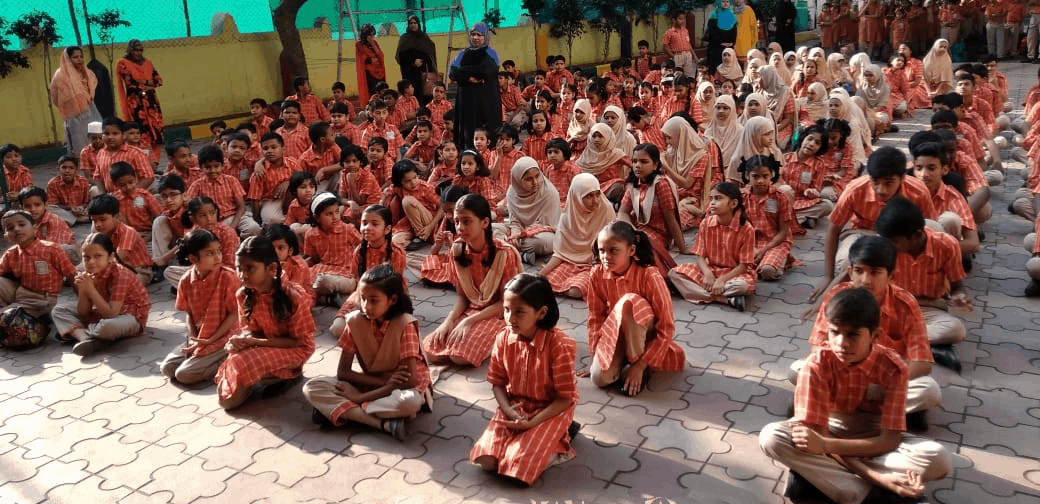
Established in June 1999, the school in its early days has gone through the pangs of growth. There was always a galore of challenges. Initially only 56 students enrolled. Yet, through better infrastructure developed and word of mouth, there are now 850 students.

MMS04MPOs06feb2020

Pirzada mentions, “Not many among us realise how bad the literacy levels are among the Muslims. For example, around 30 to 40 percent of the kids in MMS are first-generation learners who come from families with limited financial resources. Also, whatever money we make is pumped back into the development of facilities at the school.”

He said, “In today’s competitive, globalized market, soft skills are just as important as the hard skills. We also polish the kids and prepare them for interviews for different competitions, contests and tournaments as well.”

Although the journey that lead to him to forming Mount Mercy with others is one that many Hyderabadi gulf migrants will identify with. That too, whether or not they came from the same background as Pirzada.

source: http://www.siasat.com / The Siasat Daily / Home> News> Hyderabad / by Daneesh Majid – Researcher/Writer / posted by Minhaj Adnan / February 04th, 2020

Meet Salma Mahfooz: World’s first Muslim woman to do her PhD in Sanskrit

Dibai, (Bulandshahar District) , UTTAR PRADESH :

Born as Salma Begum in a Muslim family of a small town Dibai, District Bulandshahar in the northern state of India, Uttar Pradesh, she went on to become the first Muslim woman in the world to do her PhD in Sanskrit (1969), India’s ancient language. After marriage she changed her name to Salma Mahfooz.

“My father, Ishtiaque Ahmed and mother, Ehsaan Fatima encouraged me to pursue my higher studies in Sanskrit as I was deeply interested in the language.

After completing high school from the UP board, I came to Aligarh Muslim University (AMU) for higher studies in 1961 and opted for Sanskrit,” says Dr. Salma Mahfooz.

Salma Mahfooz completed her BA and MA in Sanskrit and finally went on to write her PhD thesis in Sanskrit on the ‘Types of Heroines in Sanskrit Dramas’ under the supervision of India’s acclaimed Sanskrit scholar Dr. Ram Suresh Tripathi. She also did an MA in Hindi literature.

“In my PhD thesis, I have analysed several roles that a woman portrays in multiple Sanskrit literary forms,” says Dr. Salma Mahfooz.

She taught Sanskrit at Rani Bhagyawati College in Bijnor and later joined AMU as a Lecturer.

Under the fellowship of India’s regulatory body for higher education, University Grants Commission, she authored a book ‘A Critical Study of ‘Sirre Akbar visa-vis-The Upanishads’ by Dara Shikoh (1615 – 1659), the eldest son of Mughal Emperor Shah Jahan

“I have taught Upanishads, Hindu religious texts, and various other Sanskrit literature components,” adds Dr. Salma Mahfooz.

A practicing Muslim, Salma Mahfooz has studied Hindu scriptures and texts, including The Bhagavad Gita, a 700-verse Sanskrit scripture that is part of the Hindu epic Mahabharata, and Kama Sutra, an ancient Indian Sanskrit text on sexuality and eroticism.

She was a Senior Research Fellow and Research Associate at the University Grants Commission and also headed the Sanskrit Department of the Aligarh Muslim University.

source: http://www.youtube.com / www.cineink.com / Cine Ink / January 10th, 2019

Now, learn about Hyderabad’s Hayat Bakshi Begum through virtual reality experience

Hyderabad, TELANGANA :

The HDW, which has been organized by the Telangana government in partnership with India Design Forum (IDF) and the World Design Organisation (WDO), is being held parallelly with the World Design Assembly
  • A trailer titled, ‘Ma Saheba – The queen of Hyderabad’, explores 360-degree VR animation as the latest technology of film
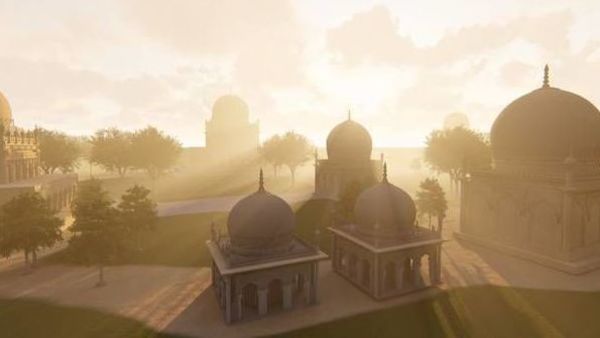
  • The technology enables the viewer to visit the Qutb Shahi tombs (necropolis) from the comfort of their own location, interacting with the landscape as if almost they were physically present there

Hyderabad:

A team from the Indian Institute of Technology-Hyderabad’s (IIT-H) department of design has created a Virtual Reality (VR) experience for an oral historical narrative of Begum Hayat Bakshi, one of the most influential historical figures of the Qutb Shahi dynasty (1518-1687), which founded Hyderabad (in 1591).

The story of Hayat Bakshi Begum is considered to be of women empowerment, given that she lived through the rule of three kings of the Qutb Shahi dynasty. A trailer titled, ‘Ma Saheba – The queen of Hyderabad’, explores 360-degree VR animation as the latest technology of film. Begum was the daughter of Mohammed Quli Qutb Shah (1580-1611), the founder of Hyderabad.

She was married to Mohammed Qutb Shah (1612-26), the nephew of (and king after) Mohammed Quli Shah. After the death of her husband, though her son Abdullah Qutb Shah (1626-71) became king, Hayat Bakshi Begum had a considerable influence over the affairs of the Golconda (or Qutb Shahi) kingdom, which was founded in 1518. The VR oral history narrative will be available for the public on 11 and 12 October in Hyderabad, as part of the ongoing (9 to 13 October) Hyderabad Design week (HDW).

The HDW, which has been organized by the Telangana government in partnership with India Design Forum (IDF) and the World Design Organisation (WDO), is being held parallelly with the World Design Assembly, which will be held in Hyderabad on 11 and 12 October.

“Using the premier technology in immersion, IIT-H developed a virtual exploratory landscape which lets the user experience the historical monuments (tombs, where the founders of Hyderabad and others from the kingdom are buried) of Qutb Shahi like never before. The use of virtual reality-based technology to preserve and explore history is a method that provides results with almost lifelike experiences,” said a press release from IIT-H on Wednesday.

Speaking about the initiative, Prof. Deepak John Mathew, head, department of design, IIT-H said, “This project is initiated with the support of the Design Innovation Centre at IIT Hyderabad. The objective is to create a Visual Model of the monuments in India. This is the first attempt in this series. This will be exhibited at the airport as well as HICC during the WDO Conference. This is a fusion of art and technology.”

The technology enables the viewer to visit the Qutb Shahi tombs (necropolis) from the comfort of their own location, interacting with the landscape as if almost they were physically present there. The installation aims at raising awareness about the intricate history of Hyderabad. The IIT-H’s department of design undertook a high-resolution scan of the tomb complex for the project.

source: http://www.livemint.com / Live Mint / Home> Explore / by Yunus Y. Lasania / October 09th, 2019

Unique initiative of Siasat: Old Age Home inaugurated by Prince Muffakham Jah

Hyderabad, TELANGANA :

OldAgeHome-18

Hyderabad:

Education is very essential. There can’t be anything more pleasant than the restoration of high standard of Madarasa-e-Aliya. This was stated by Prince Muffakham Jah while addressing the inaugural function of Old Age Home, “Sukoon” yesterday which was established by Siasat Urdu Daily at Vikarabad.

Prince Muffakham Jah further told that if any steps are taken for the restoration of old standard Madrasa-e-Aliya, he is ready to provide all kind of assistance.

It may be mentioned that in his welcome address, Mr. Zahid Ali Khan had recalled the good olden days spent as a students by him and Prince Muffakham Jah at Madrasa-e-Aliya.

Mr. Zahid Ali Khan mentioned that he could find no other person suitable for the inauguration of Old Age Home than Prince Muffakham Jah. He also recalled the long association of his family with the Asif Jahi rulers and said that the contribution they made for the development of Hyderabad City cannot be undermined.

Citing the modesty and humility of Prince Muffakham Jah, Mr. Zahid Ali Khan told that quite often, prince says that Hyderabad is not identified by its Biryani and Sherwani but it is known for the humility and nobility of the Hyderabadis. He further said that he salutes this passion of humility of Prince Muffakham Jah.

He told that he and Prince Muffakham Jah are the products of Madrasa-e-Aliya.

Present on this occasion were Dr. Shahid Ali Khan, Mr. Zaheeruddin Ali Khan, Managing Editor of Siasat Urdu Daily, Mr. Amer Ali Khan, News Editor of Siasat Urdu Daily, Mr. Mohammed Jalaluddin Akbar, IFoS, Mr. Khudadad Khan, Mr. Syed Abdul Wahab Qadri, Mr. Aizazur Rehman Khan, Vice Chairman of Shadan Group of Institutions, Mr. Ali Masqati, Mr. Iftekhar Husain, Mr. Sarib Rasool Khan and others.

Addressing the gathering on this occasion, Mr. Zaheeruddin Ali Khan told that taking advantage of the presence of Prince Muffakham Jah in Hyderabad City, the inauguration of Old Age Home has been organized.

He further told that the Old Age Home provides accommodation for 100 persons. He mentioned that basic amenities and medical facilities will be ensured for the inmates of Old Age Home.

The audience congratulated Siasat Urdu Daily and said that the need for such a modern and well-furnished Old Age Home was deeply felt.

source: Siasat News

source: http://www.archive.siasat.com / The Siasat Daily / Home> Hyderabad> Top Stories / by Sameer / April 08th, 2019