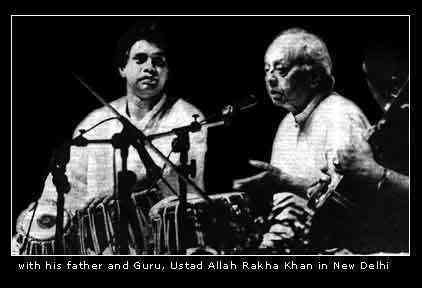
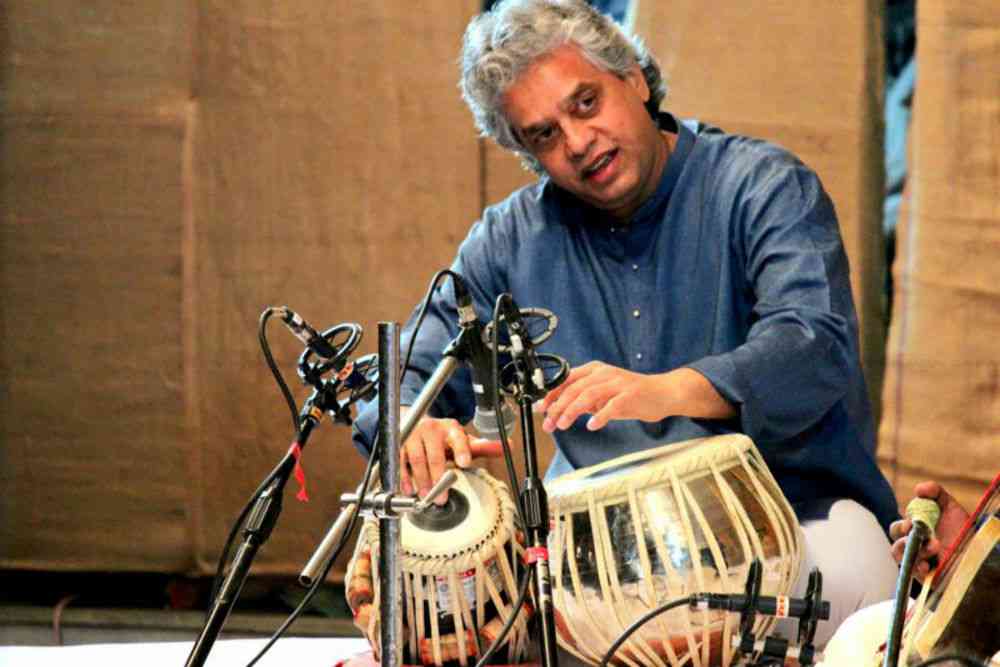
Category Archives: Videos

Kashmir’s Amir-e-Kabir Days

JAMMU & KASHMIR :

The period between 1371 and 1405, during the initial days of the Shahmiri Sultanate, was extremely crucial in Kashmir’s transition to Islam. It witnessed the arrival of Amir-e-Kabir, his son and their 1000-odd followers who joined a more than 200-year old campaign for Islam in a Hindu state. How these 33 years changed Kashmir forever is one of the fascinating stories of Kashmir’s quantum jump in faith and mobility, reports Masood Hussain
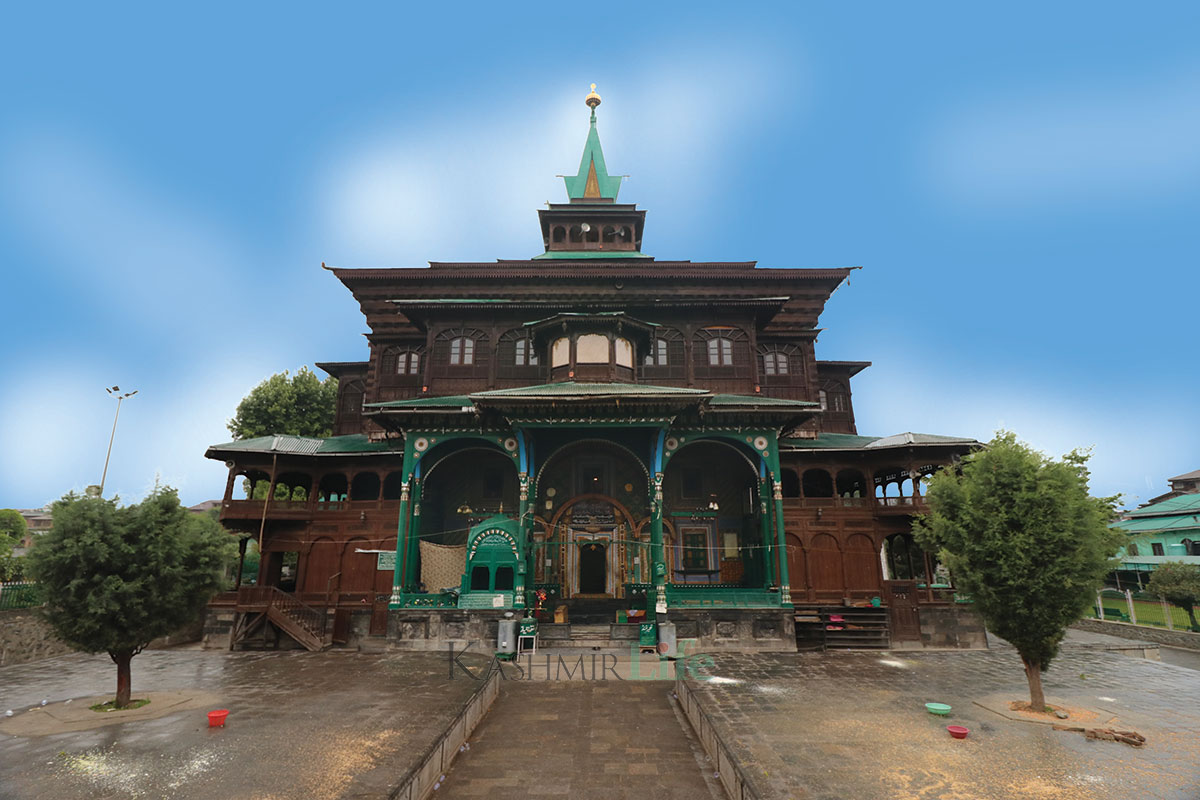
Khanqah Moula. KL Image: Bilal Bahadur

Noble of nobles, commander of Persia;
whose hand is the architect of the nations;
Ghazali himself learned the lesson of Allah is He;
and drew meditation and thought from his stock;
Guide he of that emerald land, counsellor of princes, dervishes, and Salatin;
A king ocean-munificent, to that vale, he gave sciences, crafts, education, religion;
That man created a miniature Iran, with rare and heart-ravishing arts,
With one glance, he unravels a hundred knots
rise, and let his arrow transfix your heart.”

Allama Iqbal on Shah-e-Hamadan in Javid Nama

Involving the reign of four Sultans, the history of Islam in Kashmir had a vital three decades that went into shaping the society as it is known today. This period begins with Shah-e-Hamadan visiting Kashmir in 1371, and concludes with the emigration of his son Mir Mohammed Hamadani from Kashmir in 1405. This period also witnessed the emergence of Sheikh Noorruddin Noorani, Kashmir’s bearer saint, and Lal Ded, one of Kashmir’s most popular woman ascetics, whose campaign against idolatry is unprecedented in Kashmir history.

This period falls in the first phase of Kashmir Sultanate that Shahmir built in 1339 over the ruins of a Hindu empire. The Sultanate lasted around 191 years till 1530. Muslim rule was actually established by Ladakhi prince Rinchan, who effortlessly took over a headless, mourning Kashmir in 1320 after Dulchu wrecked the Vale. Three years later, a Hindu king succeeded him for five years but the administration was controlled by Shahmir family, who eventually founded the Sultanate.

What makes this period distinct is that faith started interrupting the power politics at a time when Kashmir was still a Hindu majority state with Muslim chunks in army and administration. Mir Syed Ali Hamadani and his son Mir Mohammad Hamadani were the two major players behind these interventions. This was perhaps because Shah-e-Hamadan, the most respected Islamic scholar of his time, came from Hamadan’s ruling family. His father was the city governor.

Even though the number of visits Amir-e-Kabir made to Kashmir has divided historians, it is generally believed that he came for four months in September 1372 and then left for Mecca. He then returned in 1379 to stay for almost two and a half years. His last visit to Kashmir was in 1383 and he stayed for almost a year.
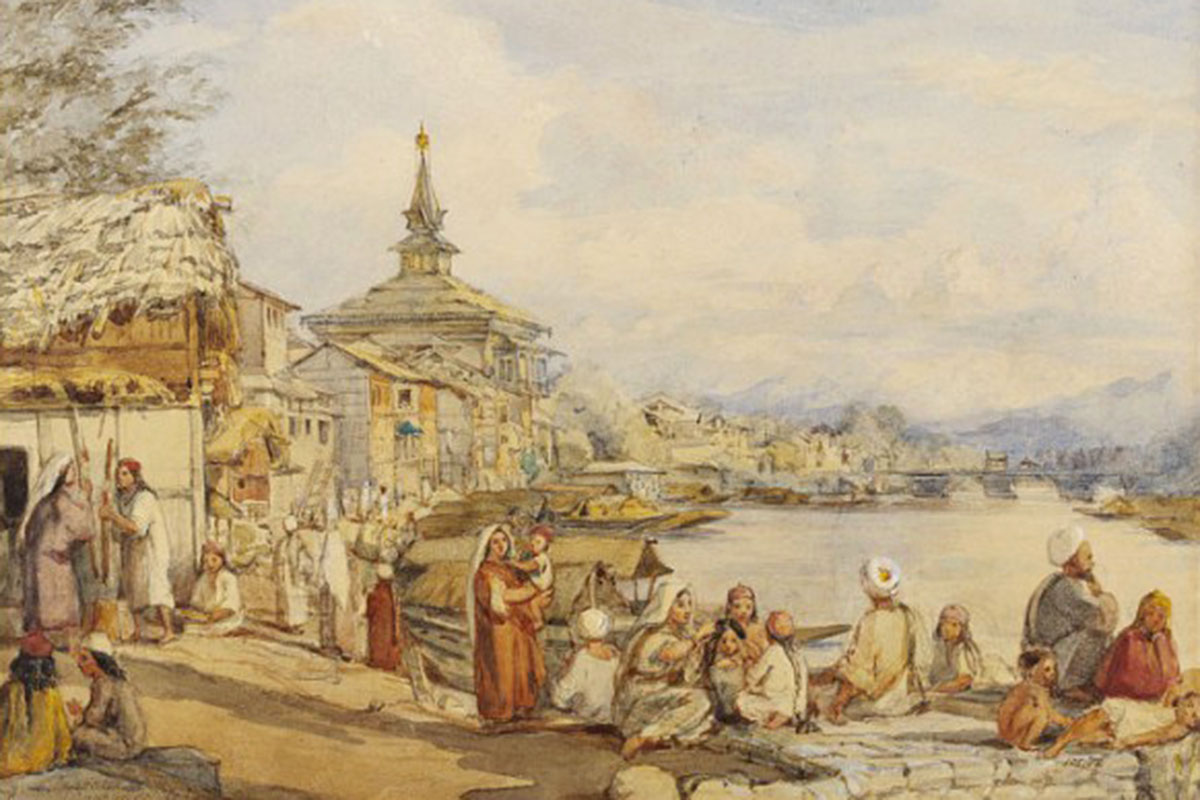
Near Khanqah-e-Moala British colourist William Carpenter Junior (1818-1899) has drawn this picture during one of his three visits to Kashmir. the most Known was in 1853.

“The most credible sources of the particular era talk of only one visit of the Amir,” Prof M Ashraf Wani, the author of Islam in Kashmir. “There is, however, a dispute over the duration of the visit between 80 days and six months.”

Historians perceive his last visit as the most consequential one since he led 700 people from Hamadan to Kashmir who eventually began working as missionaries and preachers, after settling in the valley. More than faith, they spearheaded a socio-cultural transformation of Kashmir.

Amir’s Migration

Amir-e-Kabir belonged to Alawi Sayyids who were facing problems due to Timur’s Iran takeover. Timur disliked the Sayyids who knew that circumstances may force them to migrate. In anticipation of his visit, Amir sent his cousins to Kashmir to explore if it was hospitable for missionary work, and possibly migration. The first cousin was Sayyid Tajuddin, who came in the reign of Sultan Shahabuddin (1354-73). The king built a Khanqah for him in Shahabuddin Pora in Srinagar and, according to historians, assigned revenues from Nagam village for the hospice’s maintenance. The Sultan visited him frequently. On his insistence, Tajuddin opened a  few Darsgahs where Hadith and Fiqah were taught.

Later, Tajuddin invited his brother, Syed Hussain Simnani, who had already migrated to Delhi, to Kashmir along with his family and they settled in Kulgam. On his hand, Salat Sanz, Sheikh Noooruddin Noorani’s father converted to Islam. Syed Tajuddin is buried in Awantipore.

Amir followed his cousins to Kashmir. It was September 1372 and Shihabuddin was ruling Kashmir. But the Sultan was out, probably on an expedition against king of Ohind (now Attock Khurd), and Qutubuddin, in-charge ruler, writes Muhib-ul Hasan in his Kashmir Under the Sultans, went out with his chief officials and received the Amir with great warmth and respect, and brought him and his followers to the city. He started living in Alauddin Pora where a Suffa, a raised floor, was built for his prayers, which the Sultan would usually attend.

After staying in Kashmir for four months, the Amir left, and, according to G M D Sufi, the author of Kashir – Being a History of Kashmir, he visited the battleground and brought reconciliation between the two Muslim rulers.

It was his next visit in 1379 when Sultan Qutubuddin personally received him. Amir stayed for two and a half years, the longest of his three sojourns in Kashmir.
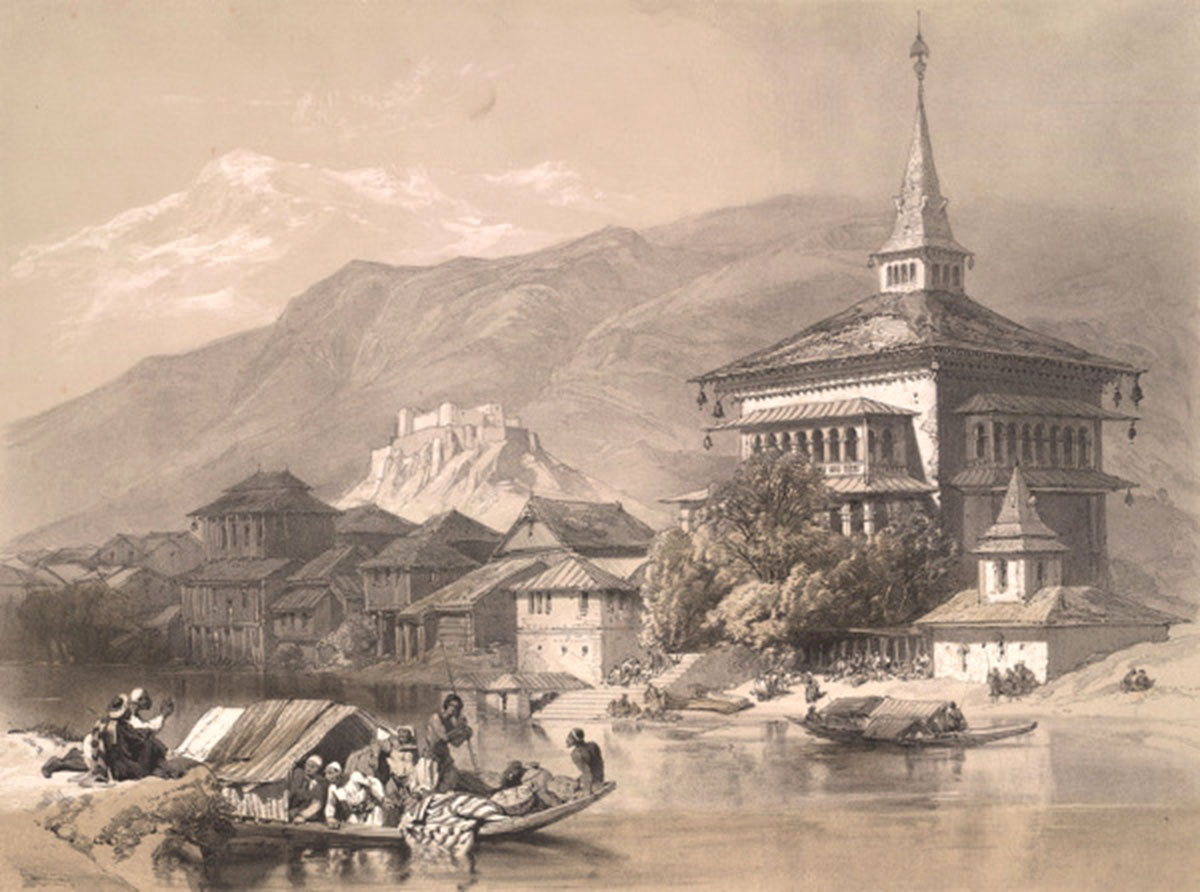
This lithograph drawn by James Duffield Harding (1798-1863) was an English landscape painter somewhere in 1847, shortly after Kashmir was sold under Treaty of Amritsar.

Then, kings were Muslims but the majority of the subjects were Hindus. Beliefs had changed but the customs and the traditions of the neo-converts were rooted in Hindu culture. Qutubuddin would wear the typical Hindu elite dress; perform a yagna to avert a famine, go to the Alaudin Pora temple every morning along with Muslims and had two sisters in his harem. Amir intervened. The Sultan divorced the older of the two sisters he had married, remarried the younger one in Islamic tradition, and started using the Muslim nobles dress.

Limited Intervention

A great scholar, Amir-e-Kabir would write in Persian and Arabic on a variety of subjects. He has authored nearly 170 books in his life. The manuscripts of around 20 of his Rasails are preserved in Oriental Research Department, Srinagar, according to Mohammad Hayat, who has extensively worked on Hamadani’s religious thought as part of his doctorate.

Historians have specially mentioned his Zakhirat-ul-Malook, a collection of his thoughts about routine life, politics, governance and the statecraft. Amir’s idea of Muslim rulers was that they should not be pleasing-all, dishonest, haughty rulers who would appoint cruel tax collectors or draw peoples’ attention by force and ignore ulema. He wanted them to be just and benevolent rulers who would address the needs of the Muslims before offering prayers, follow the Caliphs in dress and food, are polite with subjects, have a strong sense of good and bad, keep promises, and respect elders.

The Amir put the subjects into Muslims and Kafirs and gave the Muslim subjects 20 rights. Listed by Darakhshan Abdullah in Religious Policy of the Sultans of Kashmir (1320-1586), the Amir disliked the Muslim ruler listening trivial things against Muslim subjects or unnecessarily peeping into their faults. He wanted the ruler to pardon smaller offenders, avoid entering into Muslim homes without permission, not treat a wicked and civilised at par, encourage the rich to send poor on Haj on their behalf, take care of the poor, set up robber-free roads, lay bridges, build mosques, appoint Imam’s and pay them for their services, and implement lawful and prevent unlawful.

The book included a set of 20 rules about how the Sultan should handle zimins. Invoking an agreement of the Caliph Omar bin Khatab, the Amir wanted the Muslim ruler must disallow non-Muslims construction and repairing of temples, living near Muslims, burying their dead in Muslim graveyards, mourning loudly over a death, imitating Muslim dress, taking Muslim names, riding any house with saddles and bridles, putting swords, arrows and bows, exhibiting their rituals to Muslims, or using signet rings. Hindus, according to this doctrine, required a distinct dress, could not take a Muslim slave, or disrespect Muslims.

Not Delinked From Politics

“One of the significant contributions of Hamadani was, despite being a Sufi, he did not set himself aloof from politics or the government,” Mohammad Iqbal Rather writes in his doctoral thesis A Study of Islamic Political Thought of Mir Syed Ali Hamadani (1314-84). “He, apart from writing on political affairs of state, personally established contacts and wrote letters to the rulers of Kashmir for enlightening them with Islamic teachings and Shariah rulings, particularly regarding state affairs.”

Sultan Qutubuddin would routinely attend his sermons in Srinagar. Still, he received a letter from the Amir, possibly from Pakhli. “If the tempters lead the unbelievers towards evil, it is not surprising. What is surprising is that Muslims are running away from the true path in spite of God’s warning,” the Persian letter translated by A Q Rafiqui in his Letters of Mir Syed Ali Hamadani, reads. “Out of sheer love, I advice you that the worldly glamour is like a fast wind and the worldly favour is like an unfulfilled dream; He alone is wise who neither gets fascinated by dreams, not feels proud of any notion but learns a lesson from the experiences of bygone people, believing firmly in the axiom that ‘one who does not learn the examples of others, himself becomes an example for others’”.

“Hamadani, uniquely opines that a just ruler must be accompanied by a ‘Sufi reformer’ who would keep a check on the rulers,” writes Rather. “He suggests that the Sufi reformer should assist the ruler to keep the society free from injustice and rebellion and should always guide him in implementing the laws of Shariah. At the same time, Hamadani lays stress on the economic autonomy of the Ulama so that they may not work under the influence of the ruler and dictate the laws according to the wishes and whims of the rulers.”

“Anxious not to antagonise his non-Muslim subjects, Qutubuddin did not follow every advice of the Sayyid, but he held him in great reverence, and visited him every day,” Muhibul Hassan writes. “Sayyid Ali gave him a cap, which, out of respect, the Sultan always wore under his crown.” The Amir has not accepted any monetary help or royal gifts and is recorded to have earned his livelihood by making Kullah caps, one of which he had gifted to the king. He had stayed in a Saraie and not the palace. In his Sufism in Kashmir (14th to 16th Century), historian Dr Abdul Qayoom Rifiqui concludes: “Sayyid Ali’s political thought was altogether theoretical and had no bearing upon actual practice.”

Facilitating Faith

Sultans had the power at the core of their priorities. So they disagreed with the preachers on many counts. But they never stopped facilitating the preachers in spreading Islam. Many think that the thousand-odd Sayyids came as a sort of state-supported intervention in the spread of Islam in Kashmir that, till then, was organic. Every single migrant-preacher deployed on ground by the Amir was extended some sort of support by the Sultanate in Srinagar. Various Khanqahs were set-up and revenues from specific villages were assigned to their upkeep.

Some of the most prominent of the Amir’s followers were Sayyid Kamaluddin, the preacher whom Sultanate retained for guidance when the Amir decided to leave Kashmir. There was Sayyid Muhammad Kazim, aka Sayyid Qazi, Amir’s librarian (Lethpora), Sayyid Kabir Baihaqi (Srinagar), Sayyid Muhammad Balkhi aka Pir Haji Mohammad Qari, the scholar who would teach the royal family, lived and is buried in the Khanqah that history knows as Langherhat (Srinagar), Sayyid Mohammad Qureshi and Syed Abdullah, who were stationed in Vijayesvara (now Bejbehara), Sayyid Fakhruddin and Sayyid Rukunuddin (Avantipore).
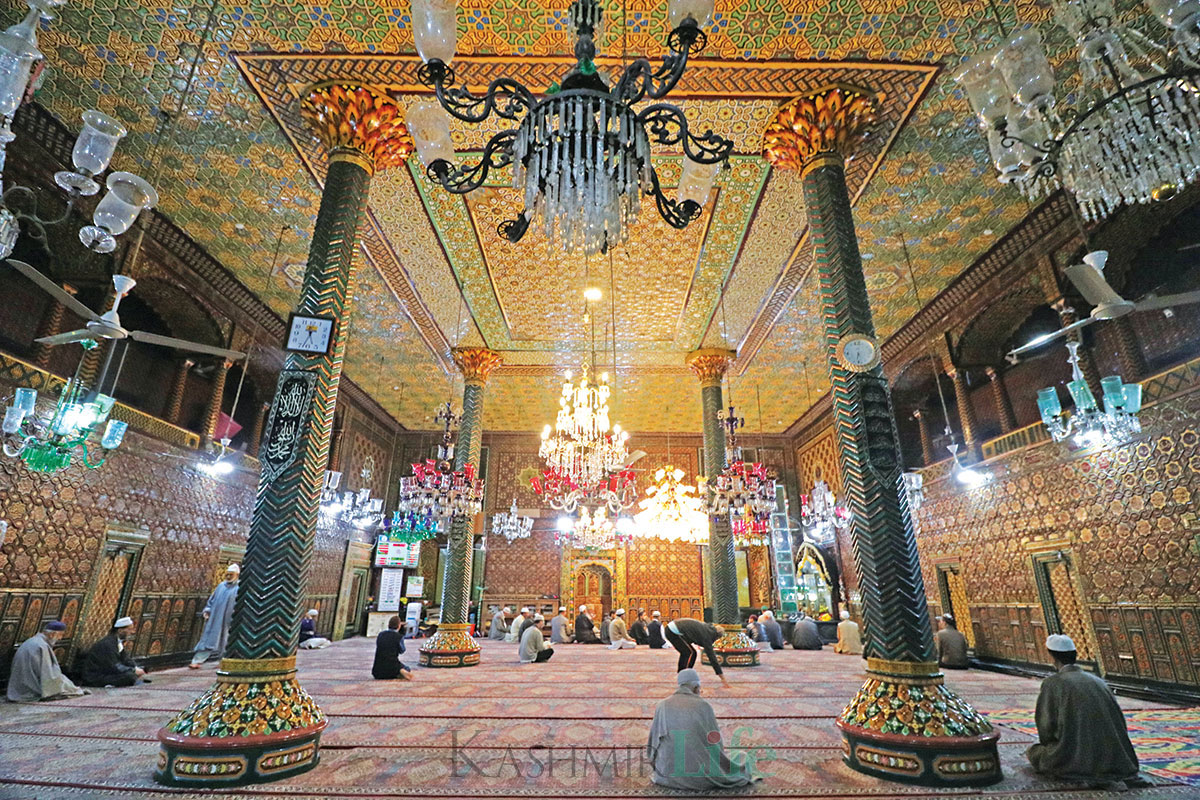
An inside view of Khanqah Moula. KL Image: Bilal Bahadur

The Sayyids’ entry came at a time when the ground had slipped away from Hinduism, and the situation was ripe for a change. Lal Ded, Kashmir’s most known acetic was Amir’s contemporary. She is recorded to have met his cousin in Kulgam.

“Men were intolerant, depraved and vicious, and women were no better than they could make of them,” Dr R K Parmu writes in A History of Muslim Rule in Kashmir (1320-1819) explaining how Lal Ded’s poetry ripped the society apart. “The people were generally made to believe in occultism, in magic, in stocks and stones, in springs, in rivers, in fact, in all the primitive forms of worship.” Parmu has written that the ascetic openly preached against this kind of worship. “The stone in the temple, she says, is no better than a millstone or the stone in a pavement,” Parmu wrote. “The idol is but a lump of stone and the temple the house of this lump.”

The rebellion within the caste-ridden society opened the doors for Islam.

“She preached harmony between Hindu Vedantism and Sufism,” Fehmida Wani writes in her excellent study The Search for Shared History of Mankind: A Case Study of the Technological and Cultural Transmission from Persia and Central Asia to Kashmir. “It benefited in the process of conversion.”

Sayyid Impact

With the state apparatus supportive and the society willing to change, how the immigrant Sayyids used the situation for Islam’s spread is something that historian may have to find answers for. So far, the narratives that have emerged in the last more than 600 years revolve more around ‘miracles’ and legends of the privileged preachers.

Islam, it needs to be mentioned, existed in Kashmir more than 200 years before the Ladakhi prince converted at the hand of Hazrat Sayyid Sharfuddin Abdur Rahman, the Bulbul Shah, in 1320. However, what was visible was that converts were rooted in the culture they had come from. That is perhaps why Tarikhi Kashmir insists that the Amir “cleaned the mirrors of the hearts of the converts of Kashmir from the rust of darkness by showing them the right path.”

Written by Sayyid Ali in 1579, historians see Tarikh-i Kashmir as the first Persian chronicle that details the migrations of the father and son along with 1000-odd murids who contributed in Islamising Kashmir culture.

Amir’s followers and disciples had come from the cradle of Muslim civilisation. Men of letters, they came with improved crafts and a sense of politics and history. Amir himself was a master Sozan Kar, a poet, an impressive prose writer and thinker. With access to the ruling structure, having some sort of economic tools in hand and logical explanations to the issues of faith, Sayyids obviously had an impact on the ground. They changed the culture forever.

The Aurad

Prof Mohammad Ishaq Khan, however, sees the situation differently. “It seems that Sayyid Ali’s stay in Kashmir was brief, not extending beyond one year. During this period, he remained the royal guest and, as such, his activities remained mainly confined to royal circles. He imparted lessons to the Sultan on God’s commands about the good works and evil,” Khan assesses in his magnum opus Kashmir’s Transition to Islam. “Besides engaging in some missionary activities in Alauddinpura and around the capital, he does not seem to have established any mass contacts. One wonders how, in view of the language barrier, a Sufi scholar like Sayyid Ali, would have made the esoteric as well as the exoteric version of Islam, as given by him in a plethora of works, intelligible to the Kashmiri masses.”
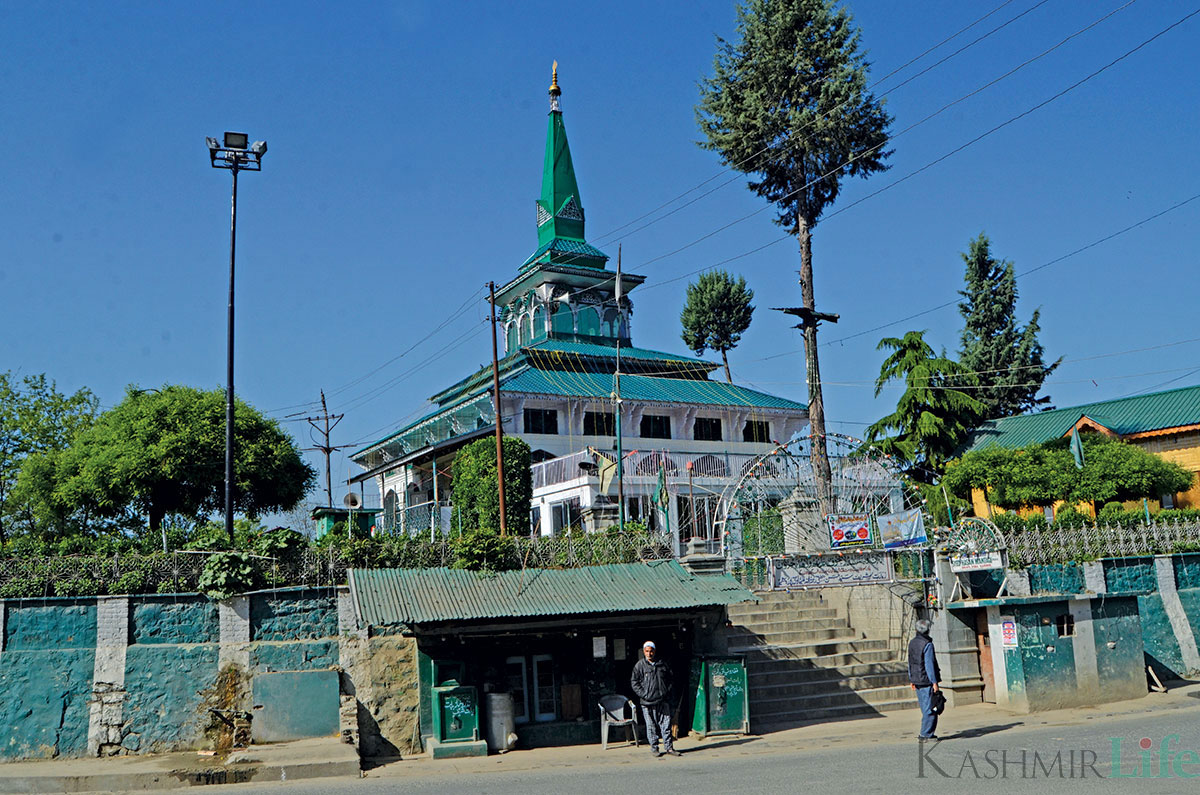
Syed Hassan Mantaqi shrine, Awantipora. KL Image: Bilal Bahadur

Khan, however, sees Hamadani’s major contribution in the Aurad-i-Fatḥiyyah. A grand mix of prayers, the praises for God, excerpts from the Quran, this Aurad has been an essential morning recitation in mosques for nearly 700 years now. It was Amir’s response to the pleas of neo-converts that the temple rings disrupt their morning prayers and they need something for loud joint recitation, something they had been doing for ages as Hindus. Khan sees it as “local influence” and “assimilation of the local mode of worship in the Islam of Kashmiris”.

“Islam, in no small measure, owes its success to his remarkable role which was distinguished by his tolerance towards the Kashmiris’ penchant for singing hymns aloud in temples,” Khan wrote. “The sight of a small number of people professing faith in Islam and simultaneously going to temples must have caused a great deal of concern to Sayyid Ali. But it goes to his credit that instead of taking a narrow view of the religious situation in Kashmir, he showed an acute discernment and a keen practical sense in grasping the essential elements of popular Kashmiri religious culture and ethos, and gave creative expression to these in enjoining his followers in the Valley to recite Aurad-i Fathiyya aloud in a chorus in mosques”

As the neo-converts chanted the Aurad, even the Hindu court historian Srivara was impressed: “It was here that the yavanas (Muslims) chanted mantras and looked graceful like the thousand lotuses with humming bees.”

But Ashraf insists that Amir’s contribution was in laying the foundations for the institutions of Islam in Kashmir. “Islam was spreading gradually before him and took a long time after him as well,” Ashraf said. “But the institutions of faith in Sufi systems were set up by him and his disciples.”

Departure

“After Sayyid had been for about a year in the Valley, he decided to leave,” Hassan writes about Amir’s eventual departure in 1383. “The sultan tried to persuade him to postpone his departure, but Sayyid refused, and departed with some of his followers, leaving behind Moulana Mohammad Bulkhi commonly called Mir Haji Mohammad, at the request of the sultan, to give him guidance in matters relating to the Sharia.”
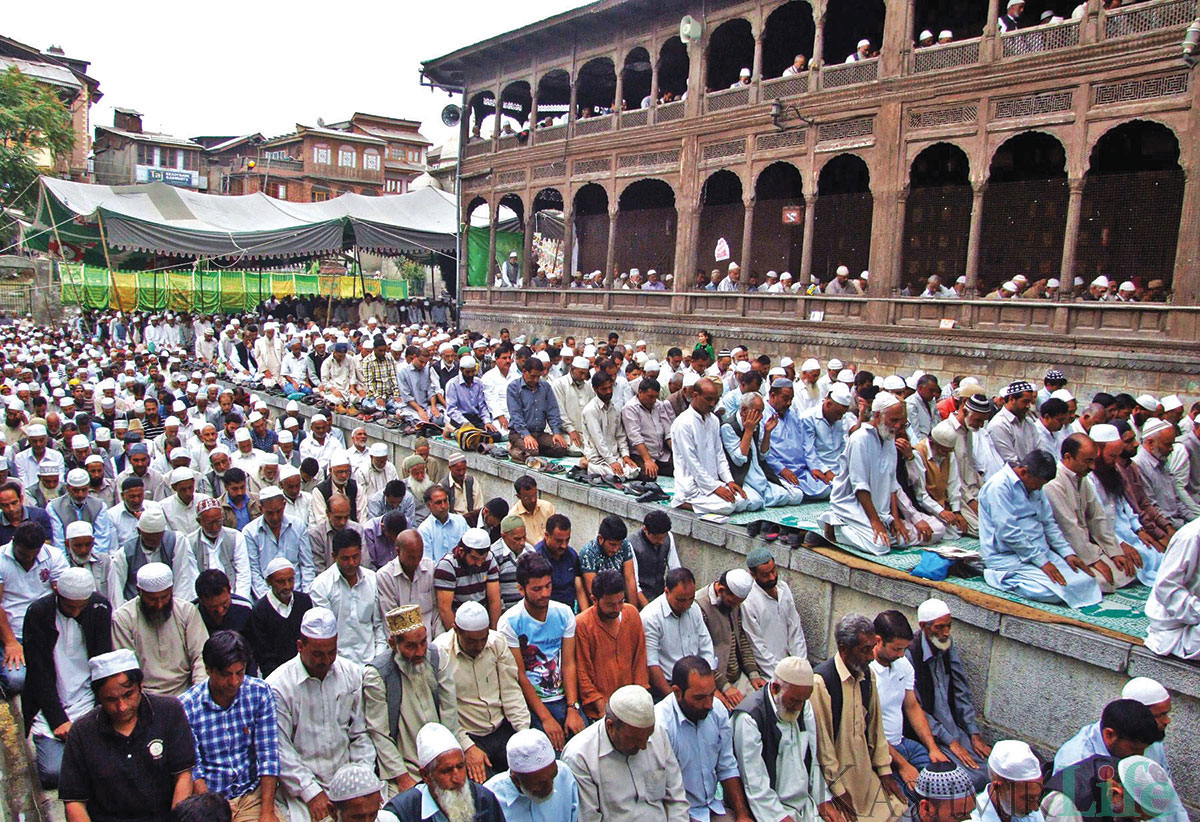
People offering prayers outside Khanqah Moula. KL Image by Bilal Bahadur

Did the Amir leave because he was unhappy with the Sultan, who would still go to the temple and meet the Brahmins. “As chronicler Sayyid Ali (Tarikhi Kashmir) points out “a large majority of his subjects were kafir and most of his officials were polytheists” so for maintaining a cordial relation, he considered it necessary to follow such a policy,” writes Darakhshan. “It was on this ground that Qutubuddin did not follow every advice of Sayyid Ali regarding state matters. Dissatisfied with Sultan’s response to his directives, Sayyid Ali decided to leave Kashmir. He left via Baramulla with the intention of performing the pilgrimage.” Another contemporary history, Baharistan-e-Shahi also points out that Sultan could not oblige the Amir by implementing the Shariah.

Ishaq Khan, however, says that his departure was not the outcome of the alleged conflict with the Sultan. Amir had written favourably to the king, even after his departure. “Notwithstanding Sayyid Ali’s emphasis on following the Sharia, he seems to have allowed practical wisdom and expediency to guide him in his attitude towards the Sultan’s non-Muslim subjects in Kashmir rather than the model he had chosen in his general work for a Muslim Sultan to follow,” writes Khan. He continued writing letters to the Sultan. In one, he praised a devote Brahmin. “In another letter sent to the Sultan from Pakhli, Sayyid Ali urged him to leave no stone unturned in popularizing the Sharia, but only within the possible limits.”

But, at the same time, it was also a fact that Amir’s letter indicated the spread of Islam in Kashmir was still a work in progress. “Our souls can never live in peace and tranquillity even if all (our) ambitions get fulfilled,” the Amir wrote to Muhammad Khawarazim, who he had left in Kashmir. “But it is really surprising that how can one ever live peacefully in the land of infidels or feel contended where the wicked flourish and are provided support!”

(This is first of the three-part series on the socio-economic impact of the immigration of more than 1000 preachers and professionals that Amir-e-Kabir Mir Syed Ali Hamadani led to Kashmir during the initial years of the Kashmir Sultanate.)

source: http://www.kashmirlife.net / Kashmir Life / Home> Cover Story> Faith / by Masood Hussain / May 22nd, 2019
Ahmad Abbas: The man who gave us Amitabh Bachchan

Panipat, HARYANA / Mumbai, MAHARASHTRA :

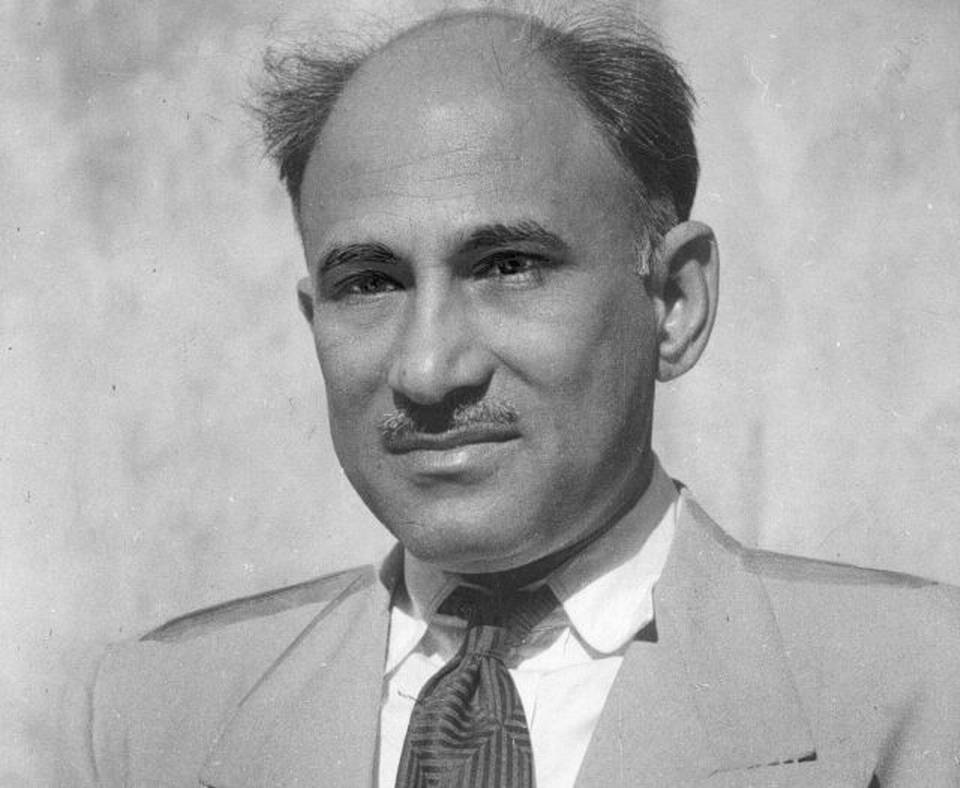
Mr. Khwaja Ahmad Abbas, well-known film critic, script writer and producer. | Photo Credit: THE HINDU ARCHIVES

On the occasion of writer-filmmaker Khwaja Ahmad Abbas’s 102nd birth anniversary that fell earlier this week, some reflections on his first movie Dharti Ke Lal, a film that was not available for public viewing until about a year back…

The name Khwaja Ahmad Abbas, whose 102nd birth anniversary passed by this week with nary a mention of him in mainstream media, rings a bell in the mind of an average cinephile primarily for two reasons. The first is as the story/screenplay writer for Raj Kapoor’s cinema; and the second is as the filmmaker who introduced the star of the millennium, Amitabh Bachchan, to Hindi films. His directorial output, comprising 14 feature films and numerous short films and documentaries, is either ignored or overlooked.

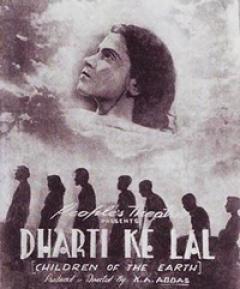
This year is special for someone who wants to get introduced to Abbas’s cinema — heavily influenced by the art of Soviet filmmakers like Sergei Eisenstein and Vsevolod Pudovkin — as it marks seven decades since his first film, Dharti Ke Lal (Sons of the Soil) was released. It was a unique experiment by the Indian People’s Theatre Association (IPTA), co-founded by Abbas, at film-making and an early example of Indian film industry’s tryst with social realism. This was the realism of the kind that would be seen later in the films of Satyajit Ray, Bimal Roy and Mrinal Sen.

The tale of a peasant family’s struggles during the British-authored Bengal famine of 1943 during World War-II, the film was a combined adaptation of three literary works — Bijon Bhattacharya’s Bengali play Nabanna; a Hindustani play Antim Abhilasha; and Krishan Chander’s short story Annadata.

KAabbas02MPOs27sept2019

Dharti Ke Lal can also be considered a part of an Abbas trilogy (emphasis mine) of 1946. The three films — the other two being Dr. Kotnis Ki Amar Kahani and Neecha Nagar, both written by him — presented three different ways in which he expressed the idealism of a common man in pre-Independence India. Dr. Kotnis Ki Amar Kahani, a biopic on Dr. Dwarkanath Kotnis, was based on Abbas’s story, And One Did Not Come Back. It showed a young doctor, inspired by Pandit Jawaharlal Nehru’s call to serve the wounded Chinese during the Sino-Japanese War, staking his career to serve the dispossessed masses in a distant country. This was a primer into Abbas’s early-day internationalism.

Neecha Nagar by Chetan Anand, about a nonviolent rebellion by residents from a decrepit shantytown, shows an educated youngster Balraj (Rafiq Tanwar) motivating and organising the masses to speak up against Sarkar (Rafi Peer), the municipality head. Abbas’s desire to lift the urban subaltern to a state of peaceful revolution found expression through the screenplay of the movie.

https://www.youtube.com/watch?v=VLv5Nb4M534&feature=player_embedded

Neecha Nagar – Part 1 of 10 – Cannes Awarded Indian Classical Movie 

source: http://www.youtube.com

Dharti Ke Lal, with a young peasant Niranjan (played by Balraj Sahni) in the lead role, was much more explicit than Neecha Nagar in advocating for independence and self-rule. It is set in Ameenpur, a village in pre-Partition Bengal, is slowly coming to grips with India’s struggle for independence. Through references to Saare Jahan Se Achcha, with Ravi Shankar’s music playing in the background, Abbas introduces a nationalist tenor into the film.

The first half, where the family of Samaddar, the village pradhan (head) and his son, Niranjan, tries to live a happy, agrarian life within their means, is an early-day attempt at realistically portraying the village life. This is celluloid portrayal of the kind of society people got introduced to through Munshi Premchand’s novels like Godan and short stories like Panch Parameshwar. Tropes like the affinity of the villagers toward their land and the affection they show toward their cattle and cow are straight out of a Premchand short story.

The second half, where Samaddar’s family is forced to migrate to Calcutta is Abbas’s attempt to see the city through the prism of a humble peasant. The scarcity created by the famine; the apathy of the rich in the city; and the simmering Hindu-Muslim animosity combine to create absolute misery in the lives of the economic migrants. They further encounter indifference as they are forced to beg. Finally, following the end of famine, they are forced to return to their village where they mobilise themselves into a group and practise saajhe ki kheti (collective farming).

Coming back to the Abbas trilogy part, while Dr. Kotnis Ki Amar Kahaani and Neecha Nagar were inspired by Nehru’s vision of an enlightened urban India, Dharti Ke Lal seeks to emphasise Gandhian ethos of seeking comfort in the village life.

In terms of aesthetic merits, Dharti Ke Lal ranks equal to the likes of Do Bigha Zameen made in the next decade. The affection with which the camera views the villagers as it takes their close-ups makes the characters and their situations relatable. Just notice the sense of wonder on the faces of the family members in the 10th minute as they welcome the clouds, emphasising the love-hate relationship a farmer enjoys with the monsoons. The poignancy of the moment is accentuated by an alaap, with a flute playing in the background. This surely reminded me of joy in the face of villagers of Champaren in Lagaan as they anticipate the rains on seeing the clouds, expressed through the ghanan-ghanan song.

source: http://www.youtube.com

In a radio interview quoted in an audio tribute, Abbas expressed a sense of pride when he says that Dharti Ke Lal is the only film that was ‘socialist’ when it comes to the production process. He says none of the members was paid less than Rs.200 or more than Rs.400. His socialist ideals and life-long belief in upliftment of the downtrodden — his commitment to idealism made journalist Vinod Mehta compare him to historian Eric Hobsbawm — kept informing his writing and his film-making.

source: http://www.youtube.com

His production company, named ‘Naya Sansaar’ (A New World) was his way of voicing his message of empowerment as he made films like Shahar Aur Sapna, Do Boond Paani and Saat Hindustani. Most of them were commercial disasters and some of them look didactic from a 2016 viewpoint. However, if there is one film that has remained relevant, both in terms of its art and its content, it is Dharti Ke Lal.

source: http://www.thehindu.com / The Hindu / Home> Cinema / by Hari Narayan / June 11th, 2016

How this vlogger travels the world, free of cost

Utraula, UTTAR PRADESH / Charummoodu, KERALA :

JinshaVlogger01MPOs26sept2019

While most of us here find it difficult to save money for an annual vacation tour, vlogger Jinsha Basheer is earning money for every trip she takes. The crossroad of her life was her decision to publish photographs and videos of her own journeys online. When her posts on Facebook crossed 8000  likes, Jinsha was assured. Vlogging is more remunerative than the job of an engineer.”

Jinsha Basheer, who grew up in village of Charummoodu near Thiruvalla has only 11 months of experience in vlogging.  But this 28-year-old has more following than those who had been dabbling on Facebook Facebook for over 10 years. Jinsha became a vlogger by chance soon after landing a job with an IT  firm after completing her engineering. The story goes like this:

JinshaVlogger02MPOs26sept2019

Jinsha and Faisal when refuelling at a petrol bunk near Adoor, happened to witness an altercation involving one of the petrol bunk employees and a biker. The biker claimed that he was given less petrol for the money he had paid. The employee argued that every customer should check the counter to ascertain the quantity of petrol received.

Faisal, deciding to get to the bottom of the issue, enquired with another employee of the petrol bunk who revealed a big secret: Fill petrol for 5 or 10 rupees more than the required quantity.  For example, fill petrol for 110, 220, or 1015 rupees. In such cases petrol will be filled as per the exact amount. He talked about those petrol bunks which manipulated the software and delivered less quantity of petrol for the money paid. To make this event public, Jinsha recorded a video and posted it in Facebook with an advice to fill petrol for 5 or 10 rupees more  than the usual exact amounts like 100, 200, 1000 etc. Their Facebook page, which till then had only Jinsha and Faisal as members, received 5000 likes within a day.

A reply to trolls

JinshaVlogger03MPOs26sept2019

Jinsha was born in Utraula in Uttar Pradesh to Basheer, a military man and Barisha, a nurse, as the  youngest of the three sisters. When she was 8 years old, the family resettled in Charummoodu.  Jinsha loved travelling since her childhood. During her studies, she travelled to Mysore and Madurai. Taj Mahal, Agra and Qutub Minar remained her dream destinations. On the first weekend of getting married to Faisal, they travelled to Vagamon and her passion for travelling was rekindled.

While she was working in an IT firm owned by Faisal (which was also a period of many journeys), she  got an offer for taking up a job of a teacher in Qatar. The school management asked her to send a video depicting a simulation of her teaching the pupils. By the time the school management intimated her of their satisfaction of her teaching video, the ‘petrol bunk’ video had become  ‘viral’ in the Facebook. Jinsha decided to focus on volgging instead of taking up the teaching assignment in Qatar. Faisal, too, supported that decision. The first vlog.trip was made from Masinagudi to Ooty via the Kallatti pass. Another vlog on a journey through the Bandipur forests followed. These videos highlighting the beauty of the forests, too, became viral.

JinshaVlogger04MPOs26sept2019

Attempts were made by some elements to hurl abuses at Jinsha and her father through adverse and offensive comments. Jinsha was appalled but decided not to quit. But both Basheer and Faisal supported her cause. “If you bow down now, it will be akin to accepting total surrender.”

Jinsha took a screenshot of the Facebook page of the person who was vitriolic on her which also had that person’s photograph and posted it on her own Facebook page. Within minutes, the children and nephews/nieces of the person apologized. Soon after that, the Facebook page of the person disappeared.

Making money for and from travelling

JinshaVlogger05MPOs26sept2019

One of the first international vlogs Jinsha Basheer did was in Singapore. Dubai and Thailand followed.  The followers were introduced to the facts that in Singapore, a bottle of water costs Rs 350 and that in Thailand, one could take selfies with tigers, all through her vlogs.

“Rains round the year, gentle sunshine, towering buildings, beautiful landscape…Singapore is a place that must be visited at least once in a lifetime. At the same time, Dubai is a place of Guinness Book of world records. There is a village in Dubai with a rivulet and farming. This village is known as Al Barari Farm.” More than one lakh likes were received for this vlog alone.

JinshaVlogger06MPOs26sept2019

“Thailand is a country of individual freedom. The issue is how that freedom is utilized. There is a zoo housing 200 tigers in Thailand. In the elephant rearing centre, one could play with the elephant calves. Photos can be captured with one riding a crocodile in a lake of about 1000 crocodiles.” These facts were included in Jinsha’s vlog on Thailand.

‘Mariner of the Seas,’ a royal Caribbean cruise liner which berthed in Kochi was visited with special permission. “The vlog relating to this visit to the ship with an interior bigger than the LuLu Mall got instant popularity,” Jinsha explained how she started getting remuneration from Facebook.

The vlogging technique

JinshaVlogger07MPOs26sept2019

Jinsha and Faisal discovered ‘The Earth Lounge’ in Kochi international airport while on their way to Dubai. They entered the lounge to avoid the boredom of waiting for their flight. Two hours in there costs Rs 2000. But if you are holding Visa Platinum, Master Card etc it will cost only Rs 2. With that unlimited food and drinks, bathing area, relaxing area etc are made available to you.  ‘The Earth Lounge’ which the airport runs with the promotion of banks, was immediately videoed by Jinsha. Similar videos with little known facts were released on Jinsha’s Facebook page.  Likes and comments started piling up on such posts. Remuneration flowed from Facebook and You Tube.

“Tour operators approach us. They invite us to film the package tours they conduct. The tour and accommodation facilities would be arranged by the operator. The vlog that is made on the tour should reflect the services provided by the tour operators. The tour operator which took us on their package tour to Thailand saw more number of tourists opting for its services. The income comes through the Facebook posts. If 1000 readers read it, some small amount will come in the account.  You Tube is the best paymaster. If there are 1000 subscribers and 4000 minutes of viewing, an account for transferring remuneration can be created. The more the number of viewers, more is the remuneration. Jinsha explains after going through the statistics after turning a professional vlogger she has 87,000 followers on You Tube.

Offers for international tours are waiting her attention. There is some indecision on where to fly next among the options available. Faisal loves Switzerland. Jinsha has decided that as soon as her Dubai trip is over, she would fly out to Europe.

source: http://www.travel.manoramaonline.com / OnManorama / Home> Travel> Celebrity Travel / by Baiju Govind / May 16th, 2019

From cooking tips to charity: Meet the ‘vlogger family’ from Malappuram

Mallapuram, KERALA :

MalappuramVloggers01MPOs25sept2019

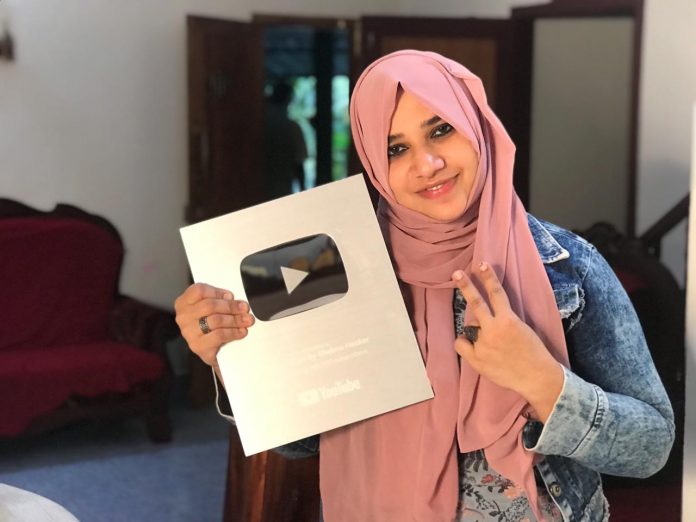
Vlogging or video-blogging is nothing new in this modern age of technology. But there is an interesting vlogger family worth knowing about. Let’s meet four women from a family in Malappuram, who have established their paths in successful vlogging – Shamseera, Femina, Sabeena and Shabna.

Moyin KP and Khadeeja EC belong to the village of Munduparamb in Malappuram. They have four children – a daughter and three sons. Their daughter Shabna and the three daughters-in-law are into vlogging now. It all began with Shamseera, their eldest daughter-in-law. She grew up in Kerala and Qatar and lived with her husband and kids in Dubai where she too worked for a while. But when they moved to Saudi Arabia in 2014, she found it so different from the places she had been till then – it was hard to go out alone, she couldn’t work as job opportunities were very less for foreign women back then.

Her only solace then lay in her cooking experiments, reading and crafts etc. She even joined her kids’ school as an art teacher but soon realised that ‘teaching itself was art I (she) lacked’. In between, she was also watching videos on YouTube, which gradually brought her to the idea of starting a channel of her own. Shamseera began a YouTube channel in 2016 but had to drop it due to some technical issues. She then began another one in 2017 and uploaded the videos of the previous one in it and thus started the journey again. Since then, she hasn’t turned back from her ‘Momtastic’ channel. (https://m.youtube.com/channel/UCL-LW86fWpQejgKbsoWrQqw#menu). She now has 2.98 lakh subscribers from different parts of the world.


Shamseera Sherin and family

The other three were inspired by Shamseera. Shabna Hasker was the second to enter the field. She began her channel ‘Taste Tours’ (https://www.youtube.com/channel/UCwXXEk9v87KS57cFkpoTgIQ) in May 2018, and soon Sabeena Shemin joined with ‘Sabeena’s Spice Diary’ (https://www.youtube.com/channel/UChiazvVDnNGssDgqshIKGAA) in June 2018. And now, Femina couldn’t stay back. She joined the YouTube journey along with her husband Shajin in October 2018 – ‘Femina & Shajin’ (https://www.youtube.com/channel/UCzfIuOwn17TYHnt9NygsWKg) The topics they have selected are all similar – cooking, cleaning, organizing, gardening, crafts, travel, daily house chores etc. Shamseera chose English as the medium for her vlogs, though she has done one in English, Malayalam and Hindi together. Sabeena and Femina began in English and switched to Malayalam owing to the request of viewers. Shabna uses only Malayalam in her videos.

Femina Shejin and family

All the four ladies manage their YouTube channels along with taking care of their respective families and running their houses. Shamseera, a graduate in commerce, lives in Riyadh with husband and two kids. Femina, an MBA graduate, is in Calicut with her husband and two kids. Sabeena, a Statistical Investigator on leave from government service, lives with husband and a kid in Sharjah. Shabna, a graduate in commerce, lives in Malappuram with husband, three kids and parents-in-law. Speaking to TwoCircles.Net, they said that they wished to upload videos twice or thrice a week in a fixed time but were not able to do so always. Shamseera, Femina and Sabeena shoot their videos and do the related works when their kids are away in school, while Shabna has her youngest child always with her at home and so has to do her works at night after the kids go to sleep. All mentioned the support of their families. Shabna’s channel has more than 1.5 lakh subscribers, while Sabeena’s has 1.01 lakh and Femina’s more than 31,000.

Shabna Hasker and family

Shabna now has a cookbook to her credit – ‘Janapriya Ruchikal’ by leading publisher DC Books, expected to be released soon. It was her husband Dr Hasker who suggested the idea and pushed her into writing it when she was reluctant. Shamseera has even starred in an advertisement for the famous Lulu Supermarket.

When asked how they managed their private life and public vlog with the camera inside their homes, all four said they were extremely particular that their vlogging shouldn’t affect their private lives. Shabna said, “We do capture our daily life at home but only for a short time. For example, we capture the first few moments of having food and then turn it off. So we have our time too.” Femina owes the lag between her videos to the priority she has kept.

shabna hasker
shabna hasker

While the other three vlog on their own, Femina does it along with her husband. “It is good. We can spend some more time together,” she said. In addition to the usual topics dealt with by all, they also do comedy videos along with their kids. However, there are times when Femina has to do the vlogs alone as Shajin gets busy with work. The daughter of an Army Major, Femina was born in Kerala and grew up in different parts of the country. After completing her graduation in Commerce, she did MBA in HR and worked for a while when they were in Dubai and back in Kerala. Now she is also running a home décor-related business online.

Sabeena Shemin and family

They also try to keep regular contact with their viewers–replying to messages on social media and trying to do videos on request. “Editing and uploading a video is a big task. My eyes get tired, my energy levels fall. But once I publish a video, the comments from my loving viewers are just enough to make my battery level go 100% in a few seconds,” said Shamseera. She recalled an experience she had last month on a trip to Kochi when a lady rode 6-7 kilometers on a scooter with two kids just to meet her.

So, how has YouTube affected their lives? Shamseera confesses she was reserved and shy earlier, but vlogging has made her a more confident person. Life has become busier and more hectic, but now that they are used to it, Femina says it is a beautiful mix. The women are doing their bit for charity too, the latest being during the floods in Kerala. Life has changed for all the four – getting recognized is indeed a matter, but it makes them more responsible too.

MalappuramVloggers07MPOs25sept2019

source: http://www.twocircles.net / TwoCircles.net / Home> TCN Positive> Indian Muslim> Lead Story> Women / by Najiya O – TwoCircles.net / September 16th, 2019

Khaja Moinuddin’s no-frills cooking on ‘Nawab’s Kitchen’ helps feed orphans

Hyderabad, TELANGANA :

Khaja01MPOs29aug2019

Cooking demo videos galore, but Khaja Moinuddin’s popular no-frills videos serve to fill hungry orphans as well

If you are able to look away from Khaja Moinuddin’s ear-to-ear grin, you will notice a 40 kilogram-capacity degcha or a handi that is either resting over a bed of embers or bubbling with food in the heat of a wood fire. His kitchen is always outdoors; Moinuddin is either cooking in the open under the sky or, during the summer months, under the shade of a tree. His smile remains intact, no matter where.

Moinuddin’s cooking is on a big scale, similar to his boundless smile. And if you are one of those who gets sucked into the web of cooking demo video feeds, then you are sure to have come across his.

If Moinuddin’s name doesn’t strike a bell, the YouTube channel Nawab’s Kitchen sure will. Popular as one of the viral content creators from Hyderabad, the chef is almost always cooking to be able to feed 40 people. The cooked food is distributed in orphanages and their staff, as well as among people who stop by and wait patiently to watch him cook.

“I always cook extra and never come back with leftovers. Once we are done cooking, everyone in and around the area where we cook is free to join us to eat. Initially we would pack the cooked food in boxes and distribute it, then we thought we would feel even better if we are able to serve the people directly,” says Moinuddin.

Khaja02MPOs29aug2019

And who is the ‘we’ he is referring to? Moinuddin clarifies he might be the face of Nawab’s Kitchen, but there are two others who work equally hard to put every video on YouTube. “My colleagues-turned-friends Srinath Reddy and Bhagat Reddy are with me in this. We conceptualised Nawab’s Kitchen (NK) together,” smiles Moinuddin.

Moinuddin has over 10 years of working experience in regional TV channels as a producer. His friends and partners Srinath and Bhagat who prefer to work behind the scenes are experienced at working in the video editing department. Having known each other for a good number of years, the three decided to quit their jobs and start a YouTube channel that will engage, educate and be on a neutral topic like food. “There are very few people who don’t pause while scrolling, to watch a video on how a certain dish is being cooked. Especially if it is an dish Indian, and been shot to show the richness of rustic regional cuisine,” adds Moinuddin.

NK’s no-frill videos and a relaxed explanation of the ingredients and cooking process, wins him fans on his YouTube channel. His recipes are easy and simple to follow. “However, we choose a venue to cook that is close to some orphanage so that we can share the food with them. When we set out to put together NK we wanted to do social service through what we were gaining,” adds Moinuddin.

None of the three friends are trained chefs, they function with the knowledge and experience that comes with observing their families cook. Moinuddin adds, “My nani was an excellent cook, when I was in Tenali with her while doing my graduation, I learnt her style of cooking.”

For dishes like pizza and cakes, Moinuddin equips himself by learning online. “When we reach the gates of the orphanages, the smile and love with which the children greets us, banishes the day’s stress. The love and appreciation they show towards us makes us wonder where the children get their wisdom from,” says Moinuddin. NK regularly visits about 15 orphanages to share their food.

What is Nawab Kitchen’s signature dish? “My mutton biryani has a lot of fans,” he laughs.

source: http://www.thehindu.com / The Hindu / Home> Life & Style>Food / by Prabalika M. Borah / August 20th, 2019

Son-of-the-soil diplomat does nation proud

Hyderabad, TELANGANA / New York, U.S.A :

Syed Akbaruddin
Syed Akbaruddin

Syed Akbaruddin’s friends describe him as a thorough professional

India’s Permanent Representative to the United Nations, Syed Akbaruddin, won accolades from Twitteratti after he extended his ‘hand of friendship’ to Pakistani journalists and reportedly asserted at the U.N. Security Council’s closed consultation on Kashmir that Article 370 was an internal matter of the country. But unbeknownst to many, the suave diplomat has a strong Hyderabadi connection, including that of serving as joint secretary of Nizam College Students’ Union.

Those who have been acquainted with Mr. Akbaruddin describe him as ‘focussed’, ‘articulate’, ‘soft spoken’ and with ‘no enemies’.

“He was a degree student at the Nizam College from 1977 to 1980. His father S. Bashiruddin was head of the Department of Journalism from the early 70s to the mid-80s and then moved to Dr. B.R. Ambedkar as its Vice-Chancellor. He also served as Ambassador to Qatar,” says his friend and journalist M. Somasekhar, who met the diplomat around six months ago. “He was active in student politics in the college and was very popular. He continues to be articulate and soft spoken.”

Mr. Akbaruddin’s school, Hyderabad Public School at Begumpet, tweeted its appreciation on Tuesday, “We are proud to recognize the man of the moment, Syed Akbaruddin who is the permanent representative of India at the United Nations, an alumnus of the HPS @IndiaUNNewYork @AkbaruddinIndia @UN #HPSBegumpet #HPS #Alumni #Hyderabad #Begumpet”.

Managing editor of Siasat Daily, Zaheeruddin Ali Khan, who was the diplomat’s junior in Nizam College, describes Mr. Akbaruddin as ‘truly secular’ and ‘highly efficient’ with a deep understanding of not just diplomatic issues, but also those connected to the culture of the country.

“We had organised an exhibition of Indian calligraphy exhibits in Delhi in 2013. It was there that he understood its potential and wanted to project it as India’s contribution to global Islamic culture. A thorough professional, one can never find him in controversies and has always maintained a clean record,” Mr. Khan says.

source: http://www.thehindu.com / The Hindu / Home> News> Cities> Hyderabad / by Syed Mohammed / Hyderabad – August 22nd, 2019
Dr Tausif Malik: Entrepreneur, maverick, evangelist and artist

Pune, MAHARASHTRA / Chicago,  U.S.A :

The new treasurer for Democrats Abroad India, Dr Tausif Malik is the founder of America’s largest community-based Spelling Bee competition (muslimspellingbee.com). The Indian-American social entrepreneur brings a tremendous amount of experience and knowledge to the job; he is the pioneer in creating branding through recruitment advertisement of IT clients in the mid-90s. Connected to India engaged with him to know about his journey from Pune to Chicago and back to Pune again. Here are the excerpts:

Dr Tausif Malik - treasurer for Democrats Abroad India.
Dr Tausif Malik – treasurer for Democrats Abroad India.

CtoI: Your LinkedIn profile says you are an entrepreneur, maverick, evangelist and an artist. How do you manage to be good at so many things?

Tausif Malik: According to me, all my personality attributes are interrelated; for example, one has to be a maverick to take the risk to be an entrepreneur, you need to be an artist to create an image about your work and evangelist to promote your work and business.

CtoI: What is your vision as the new Treasurer for Democrats Abroad India?

Tausif Malik: My vision as an elected board member for Democrats Abroad India (Democratic Party USA’s International chapter) is to create awareness amongst Americans living abroad that they can register and vote for city, state and federal elections through a vote by mail option. America is one of the few countries which offers this option to its citizens, so Americans living in any part of the world can participate in elections. Many Americans living abroad are not aware of these rights.

Currently, America is getting affected on a daily basis due to incompetent leadership. My hope is more Americans living abroad get registered and vote by mail and elect competent candidates.

CtoI: Please tell us in detail about your recent ventures; Muslim Spelling Bee, Muslim Science Bee, Muslim Math Bee, Muslim Geography Bee and Muslim History Bee.

Tausif Malik: The Muslim Spelling Bee was started in 2012 with the intention of being the first-ever spelling competition specifically meant for Muslim students. The competition is open to students of all ethnicities and religious denominations. The main impetus for creating the bee was to provide an opportunity for Muslim students between the ages of 8 and 14 to have such a contest.

All other major minority groups in the US have their own spelling bees, but Muslims did not, hence, I decided to go ahead and start one. It was during the month of Ramadan in 2011 that the idea for the spelling bee occurred to me. I started getting the word out with local friends and community leaders in the Chicago area, but soon found that I was being inundated with requests for more information from organisers around the country. This was surprising as I had only sent the information out to a few people in the local area. I really did not anticipate the kind of level and support this idea got from all over the US.

In 2012, the first iteration of the Muslim Spelling Bee was held, with 460 students participating from cities all over the nation. The bee currently takes place in 11 different cities, with some 55 community organisations coordinating their own regional competitions. These competitions are divided into four different groups, labelled A through D, and each one has several winners who rank from 1-3. Each of the groups is of a different age level: 0-7, 8-9, 10-11, and 12-14 years of age. The winners then advance to the championship round in Chicago.

Two contestants in 2013 were even Hindu students from India, a great sign of how widespread the reach and power of the spelling bee really is.

Dr Tausif Malik: Entrepreneur, maverick, evangelist and artist
Photo courtesy: Dr Tausif Malik

CtoI: You had your initial education from Pune, India and then you moved to Chicago, US, and now you are back to Pune. What brought you back to your roots? Please tell us about your journey and experiences.

Tausif Malik: I was born and raised in Pune (Maharashtra) and now I’m based out of Chicago. I did my schooling from Bishop’s School Pune, studied at Poona College (11th to M.Com) and Institute of Management Education, Pune (PGDBA). I did my Doctorate in Business Administration (DBA) from Argosy University, Chicago.

I emigrated to Chicago in 2007 to fulfil the dream of my late father Ata-ur-Rehman Malik, who believed that I can have a great future in the US. I returned to India in 2015 to take care of my ailing mother, during that time I launched various startup festivals, including the All India Muslim Business Startup Network (AIMBSN.com), GCC Startup Fest (GCCStartupFest.com), India Startup Fest (IndiaStartupFest.com), GCCStartup.News (GCCStartup.News) and Schoolpreneur.biz, in an effort to empower individuals to achieve economic liberation and benefit from India’s government initiatives Make in India, Digital India, Skill India, Standup India and Startup India.

CtoI: In a sentence describe your life as an Indian-American.

Tausif Malik: It’s actually a great combo, being part of India, the largest democracy, and America, the oldest democracy. I love both countries because they gave me a great platform to excel personally and professionally. Life is exciting as I am living as an American expat in India and in US, I was living as an Indian expat.

CtoI: Do you think that the xenophobia which has engulfed America, which started during the elections and continues post the election of President Trump, will settle down? Or is this the new America?

Tausif Malik: I don’t know how far this will go and how it will impact in the long term. But it has truly rallied Americans under one banner, and everyone is standing shoulder to shoulder with their fellow Americans. After the Muslim ban, Americans stood with their fellow American-Muslims across US. I have never seen this happening anywhere in the world. This xenophobia, in fact, has pushed many American-Muslims to contest city, state and federal elections and they have got a lot of support from fellow Americans. I also contested for the same reason.

CtoI: You did your doctorate in Chicago. Please share your achievements and experience as an Indian-American.

Tausif Malik: I was the pioneer in creating branding through recruitment advertisement of IT clients in mid-90s. I had developed and executed branded recruitment advertisement campaigns for Infosys, Geometric Software Services, Scala Mindworks, ITB India, Veritas Software India and others. I had co-founded Crossover Software with India’s no #1 pop star Lucky Ali and later moved to Sultanate of Oman and established Oman’s first PR agency SIMPA PR and Press Club of Oman. I was invited to co-author a book Doing Business with Oman, which has been selling since 2002. I headed major advertising agency networks in the Middle East and India. I teach at major MBA and MassComm Institutes, and a speaker at major startup events and mentors startups.

My Achievements:
1.
Nominated and shortlisted for prestigious Ellis Island Medal of Honor, USA 2016.
2. Past Nominated for Sheikh Muhammad Al Makhtoum ruler of Dubai, UAE promoted Prestigious Global Islamic Economy Award – Dubai Government in association with Thompson Reuters.
3. Panellist with The Guardian Newspaper UK.
4. Community Member on Illinois Muslim Council by Governor Pat Quinn.
5. External Review committee member University of Wisconsin School of Architecture.

CtoI: You are inclined towards start-ups. Can you share your ideas on marginal groups (Dalits and Muslims) still lagging behind?

Tausif Malik: Yes, startups help the youth and individuals through empowerment, as it provides employment and a source of income. But nowadays, the way they are established and operated is highIy unprofessional as many are there for the quick money. But consolidation will happen before long and they will change from boys to men.

As per the Indian census, Muslims constitute 13-15 % of the population and they best way to connect them to the mainstream is through the Prime Minister Narendra Modiji’s policies such as Make in India, Digital India, Skill India, Standup India and Startup India.

These programmes can help Muslims in India to earn income, create income and create economic growth. I have hosted two different events in 2016 and we have generated a large business amongst the attendees. Our next event, All India Muslim Business Startup Network (AIMBSN.com), will be hosted in July 2017 in Jaipur. We are also setting up incubators and innovation at minority institutions, so we can inform people about the startup ecosystem, Make in India, Digital India, Skill India, Standup India and Startup India and enrol more Muslim entrepreneurs.

Also, we will be hosting All India Muslim Business Startup Network (AIMBSN.com) at global locations where are sizeable Indian Muslims, such as London, Dubai, New York, Chicago, Singapore and Australia. As many Non-resident Indians (NRIs) Muslims want to establish businesses in India, invest in India and support Indian Startup Ecosystem. Hence, our All India Muslim Business Startup Network (AIMBSN.com) connects the Indian Muslims diaspora with entrepreneurship & Indian Startup Ecosystem.

source: http://www.connectedtoindia.com / Connected To India / Home> News> USA / by Garjma Kapil / April 20th, 2017

Good old radios

Coimbatore, TAMIL NADU :

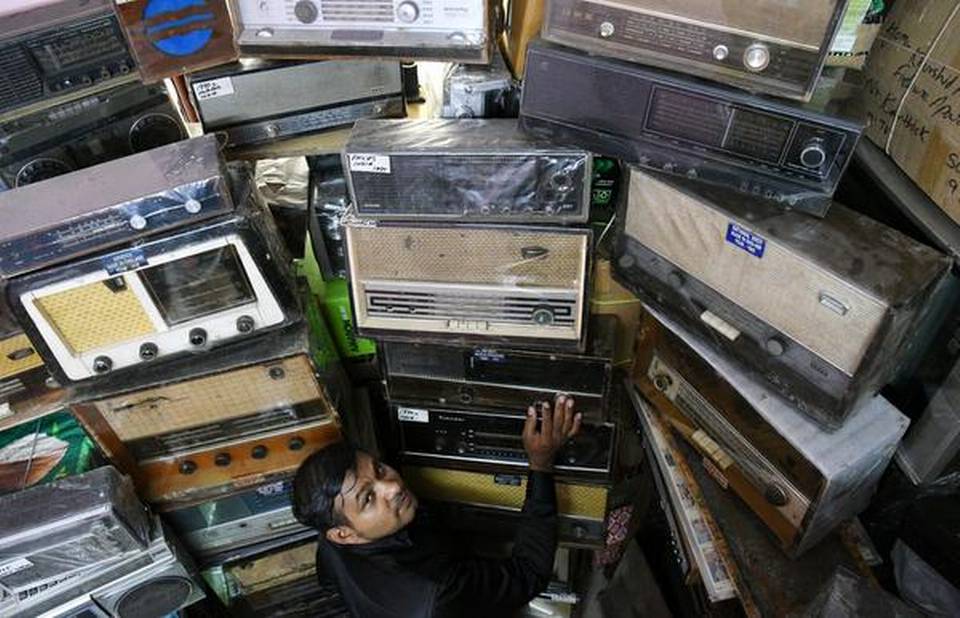
Abuthahir M A with his collection of vintage radios | Photo Credit: M.Periasamy

Abuthahir MA wants to share his love for vintage radios with the public and dreams of having them displayed in a museum

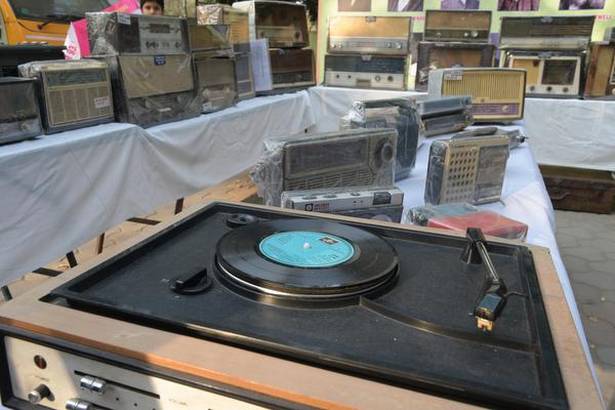
“Vintage products are all about the history that they have. I am glad that I can preserve some of it through my collection,” says Abuthahir M.A. He has recently exhibited his radios in the city as a part of the World Radio Day. The event was in association with The Rotary Club of  Coimbatore,  Cotton City. There were 100 or so familiar radio brands such as Murphy, Radiolla, Regentone, Zenith, Tata and Philips that he had collected in the last 28 years.

“Radios always fascinated me. As a child, I listened to movie songs on my neighbour’s radio.  My first job was in a radio servicing centre in Coimbatore. It was there that I learnt about its different parts and how it works.” He bought his first radio for ₹35 from a scrap dealer in 1990 . “It is a Jennith Ham Radio from the 1924-1936 period. It has a wooden body and vacuum tubes inside. The parts are made in America and England and it is the oldest in my collection.”

Scenes from the exhibition | Photo Credit: S.SIVA SARAVANAN

The 42-year- old has collected the radios from Kerala, Karnataka, Andhra Pradesh, Maharashtra and West Bengal. “Earlier I used to ask the older people about the history of these radios. Now the information is easily available from the internet.” His most expensive acquisition is a Gerard’s Philips Radio (1956 model). “It weighs 70 kg and was for sale at a house in Namakkal in 1999. Just as I reached there, I found another man carrying it away in an auto! I was sad but my search for a similar radio continued and, nearly a year later, I found one at Thoothukudi. I bought it for ₹16000,” recalls Abuthahir.

His collection has radios from the 1930s to the 1990s. “I own 160 radios of which 50 work. I have rented a house to keep them. The radios are treated with pesticides once in a month and I make sure they are kept away from moisture.”

He also has a collection of coins, stamps and clocks, watches and wooden dolls. He has conducted 53 exhibitions of his collections in Tamil Nadu and in Puducherry. “I hope to conduct more such shows and spread awareness. My biggest dream is to build a public museum with my collection on display in Coimbatore.”

source: http://www.youtube.com

source: http://www.thehindu.com / The Hindu / Home> Life & Style / by Susan Joe Philip / February 14th, 2019

Why the Meo Muslims in Mewat remember Mahatma Gandhi in December every year

Ghasera Village (Mewat) , HARYANA  :

In 1947, Gandhi visited a village in the region to urge the Muslims living there not to leave the land of their forefathers for Pakistan.

One of Ghasera fort's four entrance gates – and the only one standing – in Haryana's Ghasera village. | HT
One of Ghasera fort’s four entrance gates – and the only one standing – in Haryana’s Ghasera village. | HT

Every December 19 since 2000, Meo Muslims in Haryana have been commemorating Mahatma Gandhi’s visit to Ghasera village in Mewat district as Mewat Diwas.

On this day, the Meos, who have long been the target of a campaign of communal violence unleashed by Hindutva groups, gather at Ghasera village to recall how Gandhi had called the Meos “Iss desh ke reed ke haddi” or the backbone of India.

The Meos are a large community found in the Mewat region, which is spread across the states of Uttar Pradesh, Haryana and Rajasthan. They profess Islam but also follow several Hindus customs.

During his visit, Gandhi had assured the community that they would not be forced to leave India. He also asked those who wanted to leave to stay on in the land of their forefathers. A month later, Gandhi was assassinated in Delhi

Gandhi’s assassination came as a blow to the Meos. “The Meos who had been convinced to stay once again started feeling they would have to leave,” said local historian Siddique Ahmad, who belongs to the Meo community and has written extensively about Mewat’s connection to Gandhi. “The women of Mewat used to sing a song – ‘Bharosa utth gaya Mevan ka, goli lagee hai Gandhiji kay chathee beech.’” The Meos have lost their trust, now that a bullet has pierced Gandhiji’s chest.

At the village, now sometimes referred to as Gandhigram Ghasera, Deen Mohammed, a key organiser of Mewat Diwas explains how the commemmoration began. “We felt the need to commemorate this occasion every year because our children must know our past,” he said. “There are people who call Mewat mini-Pakistan and us Pakistanis, but try as they may, the truth is that this is our land, we have shed blood for it and Gandhiji was with us in this fight. The world should be reminded of that.”

Haryana's Ghasera village. (Photo: HT).
Haryana’s Ghasera village. (Photo: HT).

‘Ethnic cleansing’

“The Meos believe that one of the reasons for Gandhi’s assassination was that he managed to ensure that a large population of Muslims residing near Delhi was stopped from leaving,” said Ahmad, sitting in his study in Banarsi village in Mewat district. “This angered men like [Gandhi’s assassin Nathuram] Godse.”

Ahmad conceded that there were others reasons for Gandhi’s assassination such as his insistence that Pakistan be paid the arrears promised to it under the terms of the division of assets and liabilities between India and Pakistan, but insisted that his visit to Mewat was also a reason.

To buttress his argument, he cited an oft-repeated but never confirmed story that the pistol involved in the assassination was supplied by the Alwar royal family, which had once ruled over parts of Mewat region.

As Ahmad related the story of how the Meos were affected by Partition, the reasons for their respect for Gandhi and their distrust of the princely families of Alwar and Bharatpur became clear. (Both Alwar and Bharatpur lie in present-day Rajasthan.) In 1933, after the royal family of Alwar imposed heavy taxes, the Meos launched a successful agitation that led to the British deposing the Alwar king and taking over the administration of the state.

“The king of Alwar was already angry with the Meo farmers for an agitation they had led against him and one that got him dethroned so he already had great animosity against the Meo,” said Ahmad. “The Raja of Bharatpur wanted to create a Jatistan that would stretch from Nuh in Haryana to Bharatpur.”

Ahmad’s accounts of the violence during Partition are backed by historians like Shail Mayaram who have worked extensively on the history of the region. Mayaram noted in a 2000 article :

“[In 1947] the Meos are subject to one of the first exercises of ethnic cleansing. This is euphemistically (and literally) called safaya (to clean). Thirty thousand Meos are killed in the princely state of Bharatpur alone. And this is an official figure. No figures are available for the numbers killed and displaced in Alwar. But the total Meo population in the two princely states is nearly 200,000. Overnight, the Meos are slaughtered or evicted by multi-caste mobs referred to as dhars. Their villages are razed to the ground. Only those allowed to stay have been subject to shuddhi (so-called purification, in fact, a euphemism for a conversion rite). The violence is hardly spontaneous. It is completely organised by the princely states and orchestrated by the organisations of what are today referred to as the ‘Hindu Right’. Certain national level leaders belonging to the Congress are also among its supporters/participants.”

Those who survived the violence fled to camps that were mushrooming across Nuh, Rewari and Sohna, which were then in Punjab. These were “waiting camps” where people would live till the time they were made to cross over to Pakistan. “Everyone wanted the Meos to go to Pakistan,” said Ahmad. “The rulers of Alwar and Bharatpur, of course, the Hindu Mahasabha, every right-wing Hindu organisation, but even the Congress.”

The land of their forefathers

That the Meos resisted the pressures to leave in the midst of such madness speaks of their love for their land. Ahmad pointed to a record of a famous panchayat held at the time, where community leaders declared that the Meos would not leave their homeland.

According to him the idea to ask Gandhi to intervene initially came when Abdul Hai, the secretary of the All India Mev Panchayat, spoke to the Communist leader PC Joshi. Joshi is believed to have said that only Gandhi could bring peace. Led by the most respected and cherished leader of the Meos, Chaudhary Yasin Khan, a delegation met Gandhi on September 20, 1947, at Birla House in Delhi. “The Meos told Gandhiji that we would prefer to die than go to Pakistan,” said Ahmad.

In the ballads sung by the Meo mirasins (folk singers), Gandhi is said to have ended that meeting with a statement that “he too would prefer to die with those who never want to die in their motherland and were unwilling to leave her”.

Gandhi may well have been killed for expressing sentiments such as this. But the Meos refused to leave. It is a battle they still fight against the intellectual descendants of those who unleashed the violence against the community during Partition. One of the ways they resist is by annually invoking the memory of Gandhi and the promise he made to them.

The author was supported by Karwan-e-Mohabbat fellowship for this article.

source: http://www.scroll.in / Scroll.in / Home> History Revisited / by Radhika Bordia / January 30th, 2019

‘He was ahead of his time’: Fazal Qureshi on the genius of his father, tabla maestro Ustad Allarakha

Phagwal, JAMMU & KASHMIR / Mumbai, MAHARASHTRA :

In the centenary year of Allarakha’s birth, his son talks about their music school and carrying forward an immense legacy.

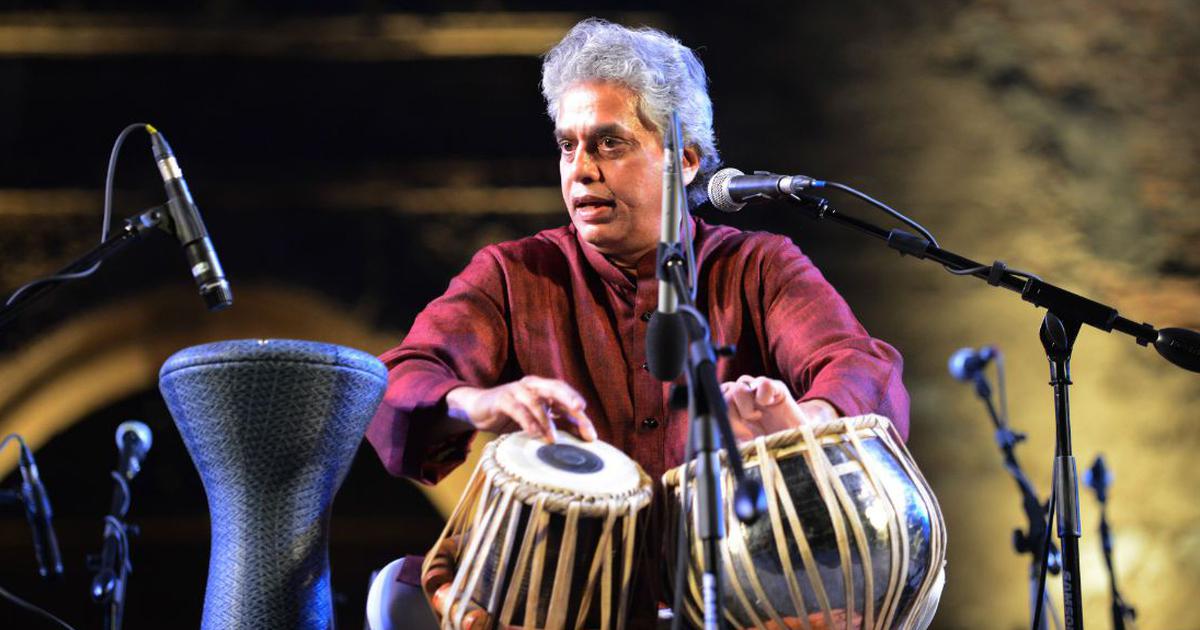
Fazal Qureshi | Sam Panthaky/ AFP

This year marks the 100th birth anniversary of arguably one of the greatest tabla players of all time – Ustad Allarakha. Born on April 29, 1919, in Phagwal, Jammu and Kashmir, Allarakha’s passion for music and talent came to the fore when he was only 12. During his many successful decades on the stage, he accompanied several of India’s most proficient musicians. His jugalbandi with sitar maestro Pandit Ravi Shankar is perhaps what he is most remembered for.

Allarakha was also a singer who composed music – under the family name AR Qureshi – for close to 40 films. He spent several years teaching in America and Mumbai, where he started the Ustad Allarakha Institute of Music in 1985.

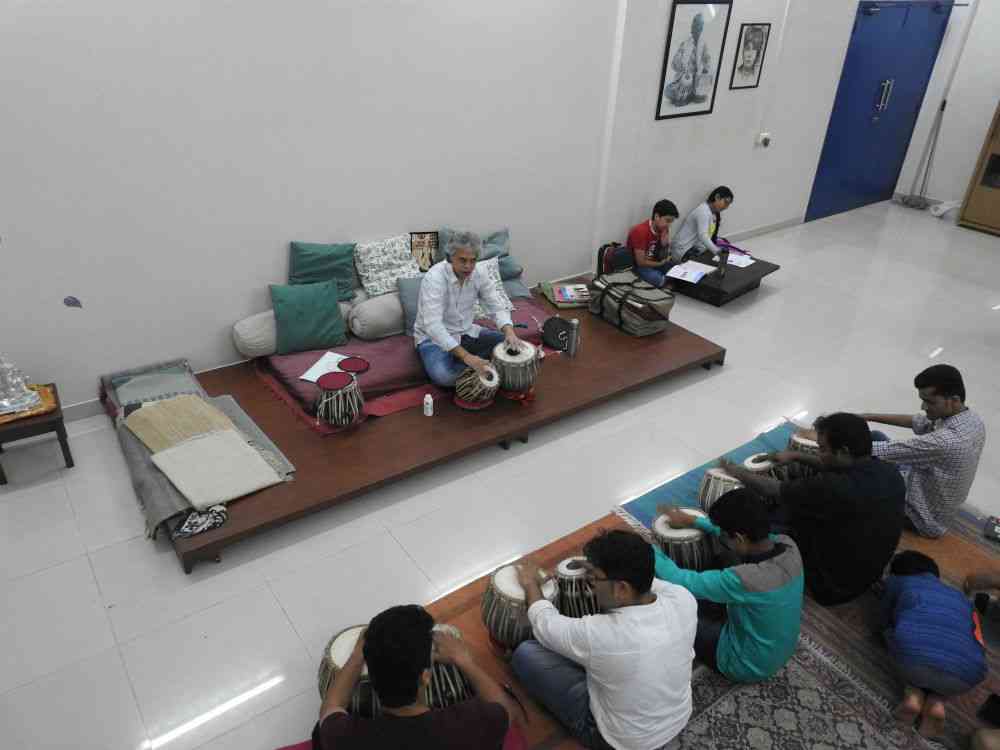
His son Fazal Qureshi, an accomplished tabla player in his own right, now runs the institute. Classes are held in a large room in the Gala Building within the Mahatma Gandhi Memorial Swimming Pool complex in Shivaji Park. I remembered the institute from having shot a scene there for a documentary film I was making on Guru Dutt in 1989.

I returned to it last December. After nearly an hour of listening to the exhilarating sounds of several tablas being played together under the guidance of Qureshi, I sat down to speak with him. During a long, freewheeling conversation, he spoke about the institute’s origins, his father’s teaching style, what prompted him to take up the tabla, his memories of his father and what makes classical music a draw for youngsters today.

Fazal Qureshi with students at the institute. Photo credit: Sanket Washikar.

How did the institute come about?
My father knew DM Sukthankar and S Tinaikar, both music lovers and commissioners at the Brihanmumbai Municipal Corporation [then called the Bombay Municipal Corporation]. Tinaikar’s son Mahesh played the guitar and was in a band called Indus Creed. Zubin Balaporia and I played in the band too. Back in those days, Abbaji said, “Mujhe sikhana hai, kuchh karna chhahiye aap logon ko (I would like to teach the tabla, you both must help me)”. So Sukhtankar and Tinaikar managed to allot a room for Abbaji in the building over there.

The deputy municipal commissioner, GR Khairnar, was a strict and upright person – he had, at the time, demolished many illegal structures in Mumbai. He lived in the house just behind the building where we were, and he used to come and listen to my father and his students. Later we moved to this classroom.

Did your father have many students?
Yes, and for many years. Previously they would come to our home in Shimla House. At one point, my father had decided he wanted to dedicate most of his time to teaching. There were many students who wanted to learn from him, and having a classroom was a boon. [Even if he] wasn’t feeling well, he would say, “No, no, I have to go. The students are coming there.” He enjoyed teaching and because of that his students enjoyed learning.

Your father was taught in a one-to-one relationship with his guru. How did he or you find teaching to a group?
I teach about seven to 10 students at a time and I manage to concentrate on each one of them. They are at different levels, and so they are divided into sub-groups. That is exactly how my father used to teach.

[Let me tell you about how] I learned from my father. [Back then] he was so busy – he was travelling and [performing at] concerts. When he would come home, he’d just sit and practise. I would sit in front of him and play whatever he was playing. There was no question of being the student – whatever he played, I played.

You were mirroring him? Learning by imitation?
Yes, by imitation. There was no time to write the bols down. I had to learn them by heart. And properly, because the next time Abbaji was home after a tour, or the day after a concert, he would ask me to play whatever he had played. I did not always get the kaidas right, so I would [listen to] a recording of a concert in which he played that particular kaida, and study the variations. That helped me reproduce it. He would be impressed and would say, “Seekh gaya bacha. (You have got it.)”

Fazal Qureshi / Facebook.

And how old were you at the time?
About 15. I started pretty late. There’s a story behind that. There was a documentary made on my father in the 1970s by the Films Division in which you can see me playing the tabla with Taufiq [Fazal Qureshi’s younger brother]. We were just kids. After that I didn’t touch the tabla.

Abbaji used to tour America and also taught there, so some of his students would come to study here. There was a 16-year-old boy called Peter Peringer who came all the way from America to experience Indian culture. He was my father’s student and was very good. He stayed with us in Shimla House, and used to practise the whole day. I would go to school in the morning and when I’d come home, he would still be practising. I would take the tabla, sit in front of him, and play whatever he was playing, just as fast as him. Peter would say, “I practise this thing the whole day, and he just comes, picks up the tabla and plays the same thing, and as fast as me. How is that possible?” He recounted this incident to his friends in America who later told me about it.

But how did you do it?
I don’t know. The Peter incident was before my father had started teaching me. For me, it was something [that came] naturally. I was a little boy. I recently saw a video of a three-year-old playing the drums in an orchestra. A three-year old – now what does he know? But he plays as if he does.

Peter inspired me. I thought, look at this guy: he’s come all the way from America. And he’s just 16. He used to recite the bols so well. Zakir bhai [Zakir Hussain, Fazal Qureshi’s older brother] used to teach him too. He would take Peter to all his concerts and ask him to recite. Everyone was fascinated by his recitation: here’s this American who could recite almost like my father. He was so good. Sadly, Peter is no more.

Do you think there are more students today than when your father was teaching?
Of course. It’s [cyclical] – you come, you learn for a few years, and then you go because you’re already at a certain level and you want to perform on stage. Some of Abbaji’s students are now performing, including Yogesh Shamshir, Aditya Kalyanpur and Anuradha Pal. Then comes the next batch and the next. Many of Abbaji’s students are in America, and many of my students have established themselves as teachers and performers.

Students at the institute. Photo credit: Sanket Washikar.

How many classes do you have in a week?
We have about 40-50 students in circulation. I don’t call all the students at the same time – we give them specific days. We have classes from Tuesday to Saturday. If I miss a lesson because I am on tour, then I take the class on a Sunday. I want every student to come at least twice a week. Our fee is Rs 700 a month. It’s nominal because we want people to learn the tabla [irrespective of whether they are] rich or poor. I have a blind student who comes from beyond Thane. His grandfather brings him here. I teach him by reciting the bols. He’s got very good hearing, and could play even before we met, [though] he wasn’t taught.

Can we say your teaching belongs to a certain gharana?
For the newcomers, it’s basic training like how to use the right and left hand. I have watched and learned that from Abbaji. There are a lot of students who already have some facility in hand movements.

I am not strict about sticking to one gharana – when I teach a certain bol, [in] the way my father taught me, I want them to play in that style/gharana. But some students come to me [after] having been taught in a different gharana, so I don’t really change their hand. I cannot, because that would be starting from scratch. Over a period of time the students realise there’s a certain way they need to play, so they change by themselves. I don’t have to tell them. Nowadays they can watch videos on YouTube, and observe the way bols are played by Abbaji, Zakir bhai or Fazal bhai.

How long do you think it takes for a student to perform on stage?
I can’t say, [but] I can give you my example. I started learning when I was around 14 or 15 and by the time I was 18, I was performing on stage. That’s not very much in terms of years, but remember, I was brought up in a musical atmosphere.

If I were to generalise, I’d say you need to learn for at least five or six years. You’ve got to get into the groove. A music school doesn’t teach you how to perform. You have to get out there. It’s like studying for an MBA – but then how do you apply what you’ve learned? You have to work in an office [and] learn the ropes, as they say.

A person must know how to apply their knowledge. Many of my students send me videos of their performances. I watch them and say, “Okay, here there was no need for you to play this or you played a little too long. It was not required.”

When you’re performing on stage, it’s [all about] teamwork. There is the instrumentalist and the tabla player, and together they [put up a] good performance. It’s not two performances happening at the same time – it’s one performance. You have to be in sync with each other. This is the attitude I want to instil in my students.

What is the most difficult thing about teaching the tabla?
I’m finding my way. Abbaji had his own thought process or philosophy behind the creation of a new composition, and that applied to when he was performing a kaida or rela. I am following his system because I used to ask myself how he created those variations. Analysis is important, and because of that I am able to add my variations to his compositions – I follow the same patterns.

It’s a way of thinking that’s passed on, and I’m trying to pass that philosophy to my students: I’m teaching you a variation, see how it’s created, see how you can develop it. From one variation another emerges. It’s like a chain. You need to understand how the chain is built and only then will you understand the composition. Create your own stuff later.

Does it surprise you that young people are still drawn to learning classical music in today’s fast-paced life?
No – in fact, I see more students now than earlier. If you go to a Zakir Hussain concert, you’ll see many young people in the audience.

It’s [about] that one personality who brings in the audience. In the ’70s, it was Ravi Shankar. Everyone wanted to learn the sitar because of Raviji – that he had played with The Beatles [was a big draw]. Then there was Ustad Ali Akbar Khan saab, who was a big name in sarod. Everyone wanted to learn the sarod. The santoor and the flute became popular thanks to Pandit Shivkumar Sharma and Pandit Hariprasad Chaurasia. They made a good team with Zakir bhai. When they were on the stage, people went gaga over them. The tabla was already popular and with Zakir bhai, it has become even more popular.

The musician makes an instrument popular. That’s why the Rudra veena or the Saraswati veena are not very popular. It is because we don’t have a personality associated with these instruments. Why is the mandolin popular? It’s thanks to U Srinivas who was a great mandolin player. The mandolin is not even an Indian instrument, it’s a western instrument. The violin is not an Indian instrument either but it’s popular because of the personalities of the musicians who play the violin in the South as well as the North.

Pandit Ravi Shankar and Ustad Allarakha/YouTube.

This year marks your father’s 100th birth anniversary. How would you like him to be remembered?
My father was way ahead of his time. And a lot of people would agree with me. While everyone performed straightforward taals, he was creating new compositions in different rhythm cycles – he played six and a half, seven and a half, things the others were not doing. He was very innovative.

Abbaji was one of the first tabla players to accompany South Indian musicians, international drummers and classical violinists from the West. He was the first tabla player to compose film music. In later years, other classical musicians starting composing for the movies, including Ravi Shankar, Ustad Ali Akbar Khan and Ustad Vilayat Khan. Abbaji was a very open-minded musician. Despite being a traditionalist at heart, he was doing all this other stuff which was not connected to the tabla. In the 1940s, he was even employed as a vocalist with the All India Radio.

I’d like people to remember him as an all-round musician. He was a tremendous film composer. That’s one of the reasons why we created The Journey Continues, a musical tribute for my father with actor-storyteller Danish Hussain. It showcased Abbaji’s many talents.

What do you remember of him as a father?
He was a very calm and relaxed person who did not lose his temper. Taufiq and I were closer to each other in age. Zakir bhai was older. Abbaji never scolded us, [even though] we kids were up to all kinds of mischief, running amok around the house. He never scolded us. My mother would go crazy, but he would sit calmly – and let us do whatever we wanted. He had a lot of aspirations for Zakir bhai because he was the first son born in the family. It was not just Abbaji – most people around him shared his feelings. “Bhai, Ustad Allarakha ka ladka hai, pehla ladka hai, yeh to bajayega hi. (After all, he’s Ustad Allarakha’s eldest son, he is bound to play the tabla).”

Was your father an affectionate man?
He was very affectionate. And unbiased. If I was sitting among his students and practicing, he would not pay me more attention just because I was his son. He was very impartial. For him, talent was important – if you’re good, no matter who you are, rich or poor, I’ll teach you more.

Fazal Qureshi / Facebook.

What if a student is no good? What do you do?
I have to tell them – look, this is not happening, try something else. I don’t want them to waste their time or mine. If I want to be a professional musician and I am not good enough, I should realise it myself. Just because your father is in that profession, you don’t have to follow him.

When it comes to my relationship with the students, I’d like them to treat me as a friend, they should feel free to talk to me. They can ask me questions. I prefer a relaxed atmosphere – hierarchy shouldn’t exist.

How did your father deal with his students?
The older generation were very direct in telling people if they were going wrong. He used to sit in the audience and if his student was making a mistake, he would say out loud: “Arre, kya kar rahe ho? (What do you think you’re doing?)

Abbaji was outspoken. He used to think if you have something to say about someone, say it to their face, don’t talk behind their back. That’s how many great musicians were in those days.

source: http://www.scroll.in / Scroll.in / Home> Magazine> Interview / by Nasreen Munni Kabir / January 12th, 2019