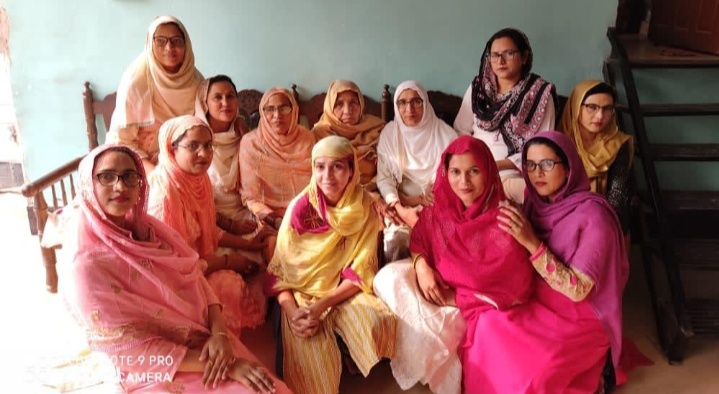
Muslim dominated Mewat, one of the most backward regions of the country, will now also be known for producing 11 daughters who strived hard – braving the patriarchal set up – to realise their dream of obtaining higher education and choose their own lifestyle.
All of them are well qualified and work in different sectors. Four of them are government school teachers. One of them, who is named Nusrat is a lecturer at Government Polytechnic, Malab, Mewat. Apart from them, sister Razia is an MBA and works in a private firm while Nazia has done Diploma in architecture and is employed in the private sector.
They hail from Chandeni, a village in Haryana’s Muslim-dominated Mewat area.
Shabnam, who is a government school teacher, told Muslim Mirror that she along with her sisters had gone through a long struggle to realise their dreams of education.
She recalled that her sisters had to travel a lot and move to different locations due to the lack of good colleges in nearby areas.
Locals used to tell her elders that they should not give higher education to their girls because they will have to face difficulties to marry them.
Shabnam believes that in the 90s when she and her other sisters were in schools, it was difficult to find a perfect match for educated girls in Mewat. ”However, that situation has changed nowadays,” she added.
Sometimes, the sisters have to face ‘troubles’ at the workplace due to their Muslim identity. ”We meet troubles, more specifically in private sectors,” Shabnam added.
”However, they gradually change their behaviour with us when they come to know about us,” she stated.
In her message to society, Shabnam said, ”Apart from getting degrees, people should try to be open-minded and good human beings for the society.”
Indian parents, more commonly in villages, hesitate to send their daughters to colleges and universities. That’s why a large number of girls fail to be independent financially as well as mentally. In such an atmosphere, the success story of ’11 sisters’ is encouraging.
Their Qualifications:
1: Nafeesa: J.B.T and B.Ed and working as govt.teacher.
2:Shabnam: M.A, J.B.T and working as a govt. teacher.
3:Afsana: J.B.T, M.A, B.Ed.
4:Farhana: J.B.T, M.A, B.Ed and working as a govt.teacher.
5:Shahnaj : J.B.T, M.A, B.Ed and working as a teacher in private school.
6:Ishrat: B.A.
7:Nushrat: J.B.T, M.A, M.Ed and working as a lecturer in Malab Polytechnic.
8:Ana: J.B.T, M.A B.Ed and working as a govt. teacher.
9: Razia: M.B.A and working in private sector.
10:Nazia: Diploma in architecture and working in private sector.
11:Bushra: M.A, B.Ed
source: http://www.muslimmirror.com / Muslim Mirror / Home> Featured / by Hasan Akram / March 13th, 2021
Anisa Mohammed is the interim captain as Stafanie Taylor is unavailable for the T20I series due to serving a period of isolation in Antigua
Anisa Mohammed to lead West Indies team as Stafanie Taylor in isolation.
St John’s (Antigua):
A 13-member West Indies women’s squad led by interim skipper Anisa Mohammed for the opening T20 International against South Africa Women at the Sir Vivian Richards Cricket Ground on Wednesday (IST) was announced by the Cricket West Indies (CWI) Women’s Selection Panel on Tuesday.
Anisa Mohammed is the interim captain as Stafanie Taylor is unavailable for the T20I series due to serving a period of isolation in Antigua, after being identified as a primary contact of a COVID-19 positive case in Jamaica.
The women’s chief selector, Ann Browne-John said in a statement:
“The T20I and ODI series against South Africa gives another opportunity for the team to play international matches ahead of the upcoming ICC World Cup qualifiers (In March-April next year in New Zealand). It is unfortunate that Stafanie will not be available for this series but there are a number of experienced players who we would be looking to, to fill any void.
“The young player Qiana Joseph brings another left-hand batter option as well as left arm orthodox bowling which has been lacking in the team. This will be a good test coming out of the recent Pakistan series, since South Africa is one of the higher ranked teams.”
The West Indies women’s team returns to the field after a successful double series win over Pakistan women, where they took the T20I series 3-0 and the ODI series 3-2. The West Indies women’s squad has been preparing in a high-performance camp in Antigua prior to the upcoming series.
The second and third T20Is will take place at the Sir Vivian Richards Cricket Ground on September 2 and September 4 respectively. The five ODIs will be played from September 7 to 19, with the first three matches being played at the Coolidge Cricket Ground (CCG) and the last two at the Sir Vivian Richards Cricket Ground.
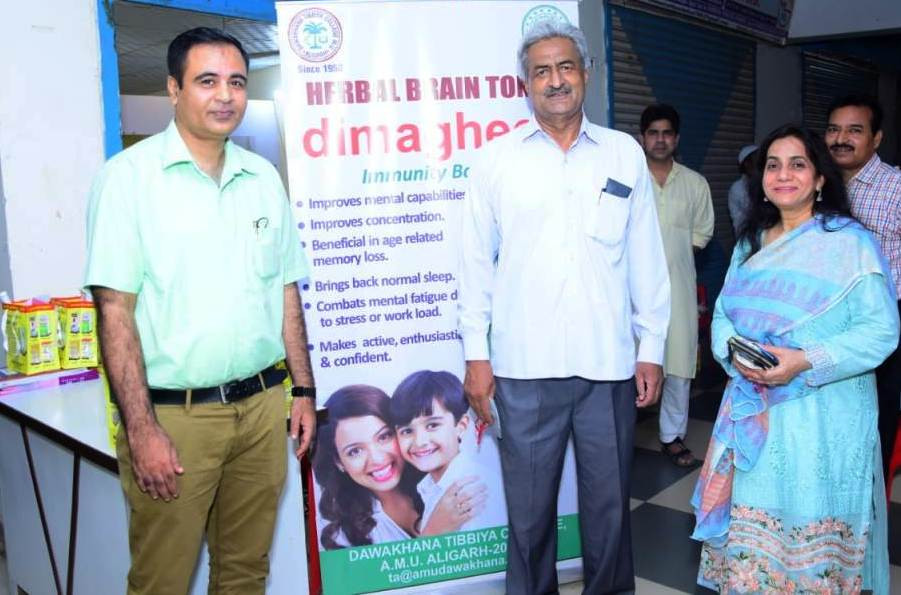
In a patient-friendly move to meet community health needs, free Unani medicines were distributed to patients from the lower economic strata by a team of Dawakhana Tibbiya College (DTC), Aligarh Muslim University (AMU). The free medicines were dispensed during the inaugural of a Unani Medicine Clinic in Jamalpur locality.
“We found that many poor patients were struggling to get medicines. Some of them have been without any income and couldn’t afford the health facilities. It prompted us to distribute free medicines to people in dire need,” said Prof Salma Ahmed (Member-in-Charge, DTC).
She distributed the medicines with the DTC Marketing Team headed by Mr Shariq Azam.
Former Dean, Faculty of Unani Medicine, Prof Abdul Mannan; Prof Shamim Ahmad (Department of Agriculture Management) and Prof Mohd Khalid Azam (Department of Business Administration) stressed that this free medicine campaign in the wake of the pandemic is a big boon for the financially backward patients.
They added that it is our duty to provide the financially weaker sections with free essential health services including medicines.
source: http://www.amu.ac.in / Aligarh Muslim University / Home> AMU News / by Public Relations Office, AMU / August 27th, 2021
One of the very well-known plywood manufacturers K S Nazeer Ahmed & Co’s Satinply brand, has bagged two top awards namely ‘Most Promising & Innovative Plywood Manufacturing Firm of the year 2021’ India award under ‘Ethical Business Approach & Quality Products’ category for the year 2021 (Global Edition) and ‘Outstanding Contribution In Business & Entrepreneurship Domain’ Award.
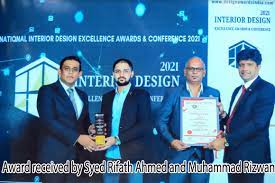
K S Nazeer Ahmed & Co, Satinply brand, was honoured with the two national awards at the National Architecture & Interior Design Excellence Awards 2021 held at Taj West End, Bengaluru on August 18.
While the ‘Most Promising & Innovative Plywood Manufacturing Firm of the year 2021’ award was received by Syed Rifath Ahmed and Muhammad Rizwan Husaini, and other award under the category ‘Outstanding contribution in Business & Entrepreneurship Domain’.
About K S Nazeer Ahmed & Co, Satinply
The company, K S Nazeer Ahmed & Co, is a family-run business that was founded by K S Maqdoom Peeran in 1930 as a timber logs sawing firm in Karkala. Using his strong determination and focus, he established connections with the Indian defence forces, Indian Railways and film industry and laid the foundation for the future success of the company. His son, K S Nazeer Ahmed, when holding the reigns of the family company, took the initiative to adapt to new technologies that allowed the manufacture of a wider range of timber products and cater to a growing number of customers.
Upon the untimely demise of K S Nazeer Ahmed in 1994, Rehana Nazeer took over the role of managing partner in the family business, overseeing the industrial and agricultural activities.
Under the directive of late K S Nazeer Ahmed and now Rehana Nazeer, their sons Syed Rizwan Ahmed and Syed Rifath Ahmed, the third generation of the family business, identified the change in the consumer demand in India and an opportunity to expand vertically to enter the plywood industry.
The company had to overcome the initial challenge of getting exposure in a competitive industry operating from a relatively remote area. However, due to persistence and hard work, they have grown to reputable plywood manufacturers with sales all over India.
Future plans of K S Nazeer Ahmed & Co, are to delve further into the niche interior design market and launching new brands for upscale furnishings and interiors.
Contact: K S Nazeer Ahmed & Co, Plywood, Blockboard, Timber Merchants & Saw Mill, Salmar Street, Karkala – 574104, Udupi District, Karnataka State, India / Mobile: +91-98457-46620 / Email: ksnazeerahmedco@yahoo.com / Email: info@satinply.com / www.satinply.com
source: http://www.daijiworld.com / DaijiWorld.com / Home> Business / by Media Release / August 20th, 2021
A total of 181 candidates have been selected as Medical Officer Grade –II (Paediatric) of them 19 are Muslims.
UPPSC Recruitment: As many as 27 Muslims have been selected to join as Medical Officer (Grade II Post) in Uttar Pradesh State Civil Services exam result of which was declared yesterday.
A total of 181 candidates have been selected as Medical Officer Grade –II (Paediatric) of them 19 are Muslims.
On the other hand 114 candidates will be recruited as Medical Officer Grade-Il (Anaesthetist). Of them 07 candidates are Muslims. The list of Muslims selected in the two categories is as under.
Medical Officer Grade-Il (Paediatric)
1. Fatima Afreen Ahmad 2. Mohd Abu Bakar Ansari 3. Farha Khan 4. Uzma Nadeem Siddiqui 5. Naved Akhter 6. Kamran Ahmad 7. Mohd Saleem Khan 8. Mohd Kashif Siddiqui 9. Md Naseem 10. Zakaullah
11. Abdul Quddoos 12. Mohanmad Yunus 13. Abdullah 14. Ati Ullah 15. Mohanmad Badruzzana Ansari 16. Mohanmad Aziz Khan 17. Run Siddiqui 18. Saleem Ahmad 19. Faraz Ahmad Khan
Medical Officer Grade-Il (Anaesthetist)
1. Darvish Hussain 2.Shadia Zia Usmani 3. Arif Husain 4. Mohammad Ahtesham Khan 5. Abdul Wahid 6. Zainab Parween 7. Fahad Khan 8. Nikhat Parveen
The Uttar Pradesh Public Service Commission (UPPSC) has also declared the result of Assistant Statistical Officer to work under Industries Department. Among the 38 candidates who have been selected 02 are Muslims. They are:
1. Naushad Alam 2. M Farman Ali
The Uttar Pradesh Public Service Commission (UPPSC) had conducted the personal interview to select the above candidates in two phases – Phase 1 from July 26 to 30, 2021, and Phase 2 was completed from August 2 to 4, 2021.
source: http://www.ummid.com / Ummid.com / Home> Education & Career / by ummid.com news network / August 21st, 2021
This year’s seven Wikimedian of the Year award winners were announced today at the 2021 virtual Wikimania convening .
Read the interview below with Dr. Netha Hussain, recipient of the Honourable Mention Award.
Dr. Netha Hussain has been a Wikimedia volunteer for over a decade, as well as a medical doctor and researcher who has contributed to English and Malayalam languages of Wikipedia, Wikidata, Wikimedia Commons, and Meta-Wiki.
Throughout the COVID-19 pandemic, Netha wrote, updated, and translated dozens of Wikipedia articles to ensure reliable information about the pandemic is available for everyone. She also recently launched a project to improve information about vaccine safety topics on Wikipedia, helping combat misinformation. In the process, Netha has collaborated with Wikimedians around the world and inspired many others to ensure information is verifiable and reliable.
“The idea of sharing free knowledge with millions of people around the world excites me, and this serves as a motivation to keep doing more.”
Additionally, Netha has contributed to outreach and research surrounding the diversity of participation and content on Wikimedia projects, particularly of the gender gap. In 2020, she was recognized by Red Hat as a 2020 Women in Open Source Award winner.
The Wikimedian of the Year Honourable Mention award recognizes exceptional Wikimedians who already have a strong presence in the movement, as well as public exposure such as press coverage, local recognition, and national titles. pix02
This recognition is one of seven awards made this year to celebrate contributors who have made an exceptional impact on our movement. The awards were announced at this year’s virtual Wikimania celebration by Wikipedia Founder Jimmy Wales (watch the announcement!).
“Dr. Hussain is a role model in the Wikimedia movement for her staggering medical and scientific contributions to Wikipedia, contributions she balances alongside her own medical career. Throughout the COVID-19 pandemic, her work has brought increased visibility to Wikipedia’s unique role as a source for reliable public health information about the virus and the vaccines. In addition, her constant advocacy to address the gender gap and her support for Indic communities demonstrate the values of collaboration and contribution that are integral to our movement.”
– Jimmy Wales
We spoke with Netha to learn more about her experiences and perspectives on the Wikimedia movement. Here are some highlights:
Q: Can you share a favorite memory from your time contributing to Wikimedia?
“Creating my first article is a special memory that I cherish to this day. The process did take a long time because, back in 2010, I was running on a 128 kbps internet connection in a six year old desktop computer on an old version of the browser.
I wanted to create an article about an Indian cuisine called chutney in Malayalam language Wikipedia. I wasn’t sure about the rules one has to follow while editing, but I thought I will make a try anyway. I created some text and saved it as a new Wikipedia page. The next day, I was surprised to find out that other editors have improved upon that page by adding media and more content. This was the first nudge which paved the way for the rest of my Wikimedia volunteering journey.
Another memory was when I saw that a pathology image that I added to Wikimedia Commons was re-used on a prominent medical website. This made me reflect on the scarcity of good quality medical images in online sources, and prompted me to start the first of its kind GLAM [galleries, libraries, archives, and museums] collaboration with Government Medical College, Kozhikode.”
Q: What motivates you to contribute to Wikimedia projects?
“I am motivated by the satisfaction of having done a small part in making the world a better place. The idea of sharing free knowledge with millions of people around the world excites me, and this serves as a motivation to keep doing more.”
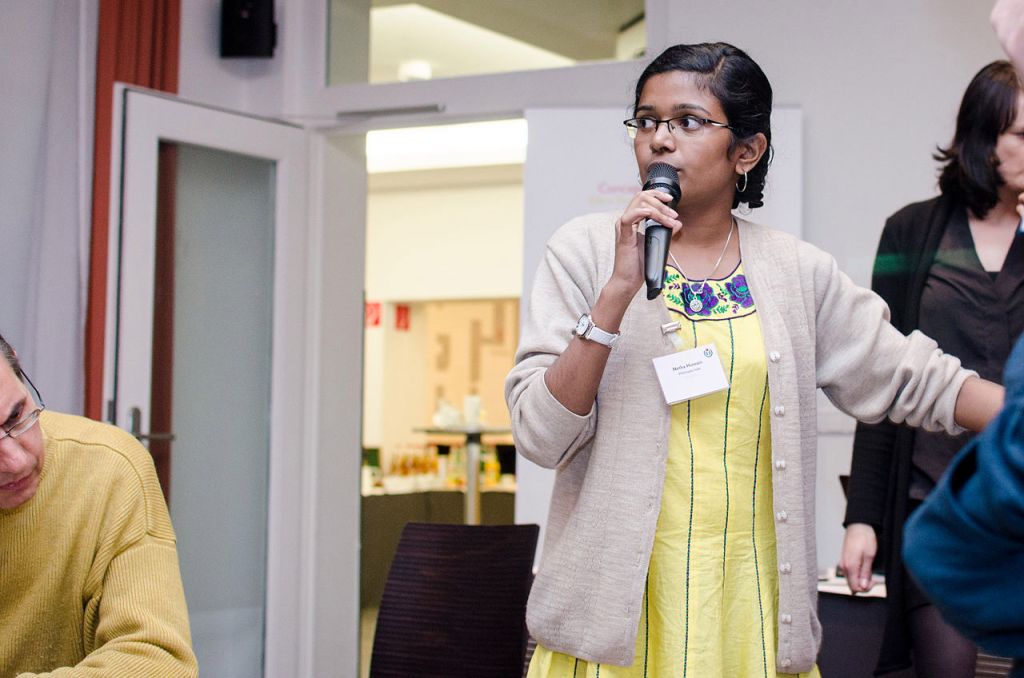
Netha Hussain presenting at the Wikimedia Diversity Conference in 2013 (Christopher Schwarzkopf (WMDE), CC BY-SA 3.0)
Q: How has Wikipedia helped tackle COVID-19 disinformation and misinformation?
“Wikimedia was able to play a large role in tackling COVID-19 disinformation because of its people, technology, and policies.
The people who make up the Wikimedia movement are experts from a wide variety of subject areas. They perform tasks such as copyediting, structuring, and adding rich media to Wikimedia pages. Wikimedia has robust policies around verifiability, neutrality, and original research, which warrants the use of sources with high credibility. The technology used in Wikimedia provides a simple interface for editing and has provisions to counter vandalism.
All these factors taken together, as well as learnings from the movement’s previous experience in responding to crisis situations helped Wikimedia tackle disinformation effectively.”
“It is hard to imagine all the ways that Wikimedia will influence the future of the ecosystem of free knowledge in medicine, but I am convinced that Wikimedia will continue to occupy a central role in the process.”
Q: How does your work on Wikipedia contribute to the future of medicine?
“I was a medical student when I started contributing to Wikimedia in 2010. At that time, I worked on concepts that I learned at medical school. Later on, I focused on building content around specific topic areas. My current focus is on creating content related to COVID-19 and vaccination. The articles created by me in English and Malayalam languages are being edited several times by other editors and are becoming richer and more comprehensive by the day. I think that these articles will continue to educate (and perhaps also entertain and enlighten) people in the future.
The text and media that I and fellow editors created will continue to be remixed, curated and magnified several times by third party sources such as search engines, websites, and virtual assistants. Additionally, the edit history of the work that we performed on Wikimedia is likely to serve as a historical documentation of how events unfolded in time and how scientific evidence changed over time.
Our discussions on talk pages would serve as a reminder for how and why we made some decisions regarding the policy or structure of Wikimedia entities. The metadata of our edits are likely to act as data points for researching about trends and patterns in editing, paving way for insightful conclusions regarding the growth and diversification of Wikimedia projects. The structured data contributed by us would serve as the database for search engine and machine learning algorithms. It is hard to imagine all the ways that Wikimedia will influence the future of the ecosystem of free knowledge in medicine, but I am convinced that Wikimedia will continue to occupy a central role in the process.”
“In the process of researching health conditions and treatment options, people…eventually to Wikimedia projects. Therefore, it is important that Wikimedians should work in the interest of public health.”
Q: What is Wikipedia’s role in public health?
“Wikipedia is the largest non-profit website in terms of pageviews. Wikipedia has become a popular source of healthcare information because of its simplicity of content, higher ranking in search results, easiness in accessibility, availability of citations, presence of photo/video illustrations, ability to edit quickly and possibility to navigate in multiple language editions.
Most often, in the process of researching health conditions and treatment options, people go online, and eventually to Wikimedia projects. Therefore, it is important that Wikimedians should work in the interest of public health and invest resources for making its medical content reliable, comprehensive and updated.”
“I wish everyone knew that they have something to contribute to the Wikimedia movement.”
Q: What is one thing you wish everyone knew about Wikimedia projects?
“I wish everyone knew that they have something to contribute to the Wikimedia movement. People usually shy away from contributing to Wikimedia because they think that the expertise they have is trivial or irrelevant for Wikimedia.
We need not only content creators and curators, but those interested in technology, outreach, fundraising, strategizing, to name a few. We need to make non-content related contributions more visible and rewarding so that everyone knows what is possible for them to do on Wikimedia projects, and enjoys doing what they love or care about.”
Congratulations, Netha!
About the 2021 Wikimedian of the Year Awards
The Wikimedian of the Year is an annual award that honours contributors to Wikimedia projects, including Wikipedia editors, to highlight major achievements within the Wikimedia movement in the previous year. The tradition dates back to 2011 and has evolved since then in dynamic ways to welcome and celebrate Wikimedians from different backgrounds and experiences. This year’s celebration is bigger and more inclusive than ever before, recognizing seven exceptional contributors to the Wikimedia movement in six categories , including Newcomer of the Year, 20th Year Honouree, Rich Media and Tech contributors, and Honourable Mentions, as well as the Wikimedian of the Year.
*This interview has been edited for clarity and length.
source: http://www.diff.wikimedia.org / Wikimedia.org / Home> Wikimania 2021 / by Wikimedia Foundation / August 15th, 2021
Khan says that the story her grandmother told stayed with her for years and when she started researching the Rampur culture, it kept coming back to haunt her while she walked through the old settlement of Rampur city.
New Delhi :
She doesn’t really remember when she heard the story of the woman she named Feroza Begum in her book. Perhaps it was one of those tales her grandmother narrated when the children gathered around in the courtyard of their rambling home. “We loved to listen to the stories of bygone years as they had an immediacy, a reference point – about some relative or friend we knew,” she recalls.
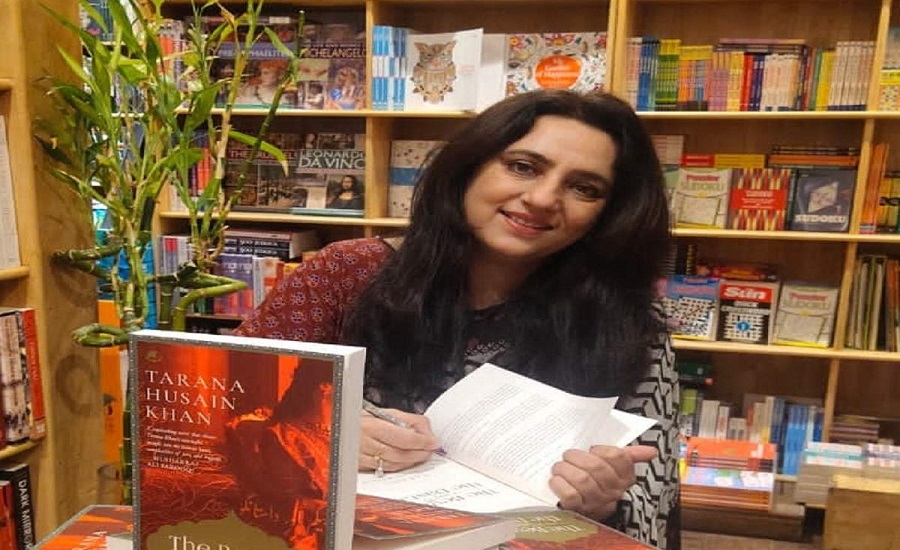
Author Tarana Husain Khan, whose book ‘The Begum and the Dastan’ (Tranquebar) recently hit the shelves goes back to the year 1897 where in the princely state of Sherpur, Feroza Begum, beautiful and wilful, defies her family to attend the sawani celebrations at Nawab Shams Ali Khan’s Benazir Palace. Feroza is kidnapped and detained in the Nawab’s glittering harem, her husband is forced to divorce her, and her family disowns her. Reluctantly, Feroza marries the Nawab, and is compelled to negotiate the glamour and sordidness of the harem.
Khan says that the story her grandmother told stayed with her for years and when she started researching the Rampur culture, it kept coming back to haunt her while she walked through the old settlement of Rampur city.
“I wanted to know how Feroza lived her life, her thoughts and aspirations and her death. I was surprised by my emotional investment in the ancient tale. It made me feel suffocated and vulnerable at the same time maybe because it was a sort of cautionary tale for young girls,” she tells IANS.
Talk to her about the metamorphosis of Feroza’s character — how she starts to ‘accept’ the circumstances with the Nawab, and if a modern reader would be comfortable with that, and Khan asserts that the protagonist’s options were limited by her predicament.
“She was confined in the Nawab’s harem and her family had abandoned her. How did a woman in the late nineteenth century deal with such circumstances? It might be difficult for the ‘modern’ or ‘feminist’ person to understand her actions. I didn’t want Feroza to be a modern woman dressed in ancient clothes. I didn’t want to project these sensibilities to Feroza’s character. In fact, I had to restrain myself from putting my words and thoughts into her persona. She belonged to a certain time in history and her actions and thoughts had to mirror those times.”
The author, who has weaved two timelines in the book, insists that at the core of ‘The Begum and the Dastan’ is the question of patriarchy. “I began with writing Feroza Begum’s story but the question of the state of the girl child in small town India had been troubling me because of my first hand experience teaching young children. Ameera who lives in modern times poses the question — has anything changed for the young girls today. I wanted my readers to think beyond Feroza’s plight. Patriarchy affects young girls in Indian homes by restricting their vision of themselves as well as posing physical constraints. So the life of the veiled Begums and their limited options has a modern counterpoint in Ameera’s life,” she says.
While researching Feroza’s story, Khan realised that there were many women who had disappeared from the pages of history and whose voices inhabited oral history. There were women who left their imprint on political decisions and on cultural developments but rarely found mention in cisgender male histories. “In giving cadence to some of these voices, this book was born,” says Khan, whose previous books include ‘I’m Not a Bimbette’ (2015) and its sequel ‘Cyber Bullied’ (2020).
Currently, Khan is researching on Rampur culinary archives, which is a part of ‘Forgotten Foods: Culinary Memory, Local Heritage and Lost Agricultural Varieties in India’, a project funded by the Arts and Humanities Research Council that brings together researchers and practitioners.
“So my translation of nineteenth century Persian cookbooks meets the skill set of the khansama and we create something that is workable. The ultimate aim is to expand the repertoire of the local khansamas and enhance their employability. This should also popularize the ‘forgotten’ dishes of Rampur cuisine.The penultimate aim is to publish a cookbook of the forgotten dishes and to showcase the dishes at a cultural fest, the ‘Jashn e Benazir’, which we plan to host in Rampur in 2022.”
Editing a book on Rampur cuisine and culture which is slated for publication in April 2022, Khan is also writing a novel. “It is still in its initial stages. I am essentially a storyteller, a dastango like Mirza Kallan, a character in my book, who spins tales till the boundaries of reality and fiction blur,” she concludes. — IANS
source: http://www.clarionindia.net / Clarion India / Home> Books / by IANS / August 02nd, 2021
As a child, Ayesha Fatima aspired to become a doctor. But all her dreams were shattered when the most trusted and loving person in her life- her father, abandoned her at a very young age. Survival became a tough battle. The responsibility of feeding the family fell on Ayesha who gave up her studies and started working as a salesgirl for a minimal salary.
Ayesha then turned to Rubina Nafees Fatima and her NGO – SAFA, for help. She joined the ITES course for training and later got placed as a data entry operator at a private company. “The course changed my life,” she says.
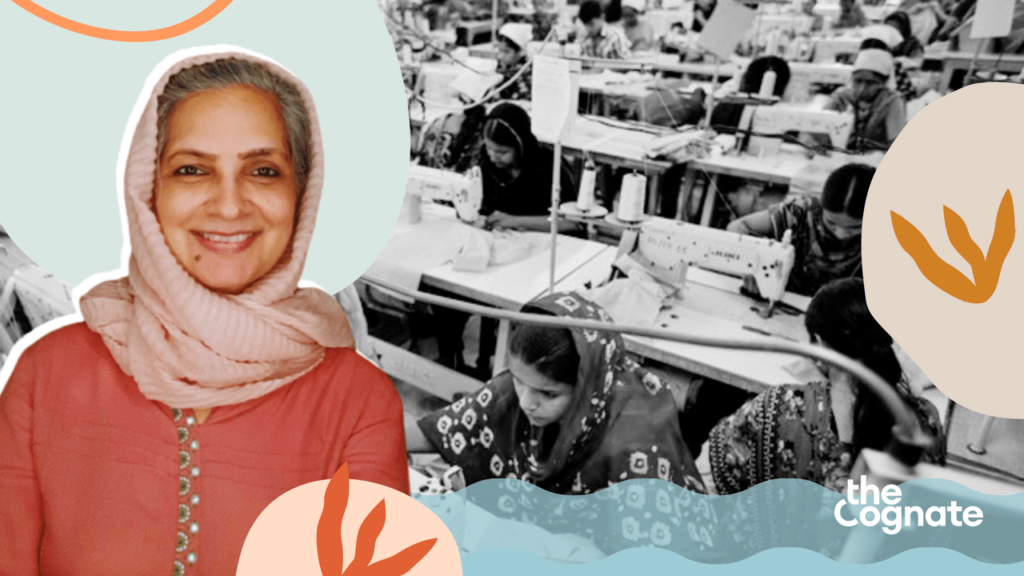
Since 2006, Rubina Nafees Fatima’s Hyderabad-based organisation, SAFA, has helped thousands of women and youth from marginalized, socio-economically backward communities by empowering them to earn livelihoods through education and skill training and capacity building.
Rubina is a determined woman and a passionate social worker. She was conferred with the FLO Women Achievers award by the Federation of Indian Chamber of Commerce (FICCI) towards ‘empowering women to bring about a change in society’, the Social Enterprise award for ‘social impact’ by the Deshpande Foundation and the Australia Award by the Export Council, government of Australia.
‘Proud Muslim Woman’
Rubina believes that it is the duty of every Muslim woman to contribute positively to society.
“Women need to assert themselves- within their families and also in the outside world- they need to be proud of their culture, their heritage and everything about themselves.”
“Be a proud Muslim woman,” she says.
Rubina grew up with four sisters. “My father encouraged us all to be extremely independent. I believe economic independence is a freedom that every woman should have”, she says, adding that this led her to believe that women need to have a suitable platform to utilize their potential. “To first realise their potential and then use it to the maximum.”
A Leap Of Faith
“I was generally looking around for avenues and how I can contribute my bit, I feel it’s my duty, as an educated Muslim woman,” says Rubina who has been an active volunteer in various development programs since her college days. “I wanted to be working with Muslim women, largely because I feel I know the dynamics of the community. I feel, being a part of the community, I understand the challenges of the community. I know where the roadblocks are,” she says.
Rubina had initially set up a commercial venture for training and placements in Hyderabad. “I had to shut that down because I wanted to get into SAFA full-time. This didn’t make many people happy in my network,” she recounts.
“After the initial three years, I was on the verge of a shutdown. I picked a very difficult slum in Hyderabad. The crime rate was very high over there. No NGO had worked there for decades, as they felt they would not see any results,” Rubina says while narrating how the absence of a team and funding caused her to almost give up.
“But then I took a leap of faith,” she says.
“In each phase, there have been a different set of challenges and we continue to have them. It never stops. But I feel it builds our resilience, to face the many more to come,” Rubina adds.
SAFA has been conferred with the ‘e-NGO Challenge Award’ in the Southeast Asia category by Digital Empowerment Foundation and the Manava Seva Dharma Samvardhani – Fellowship Award. It was titled the ‘Pride Of Telangana’ by Round Table India in the ‘emerging NGO category’ and the ‘Trendsetter Award’ for innovative practices in Urban livelihoods by United Way Hyderabad.
‘Women Were Not Even Allowed To Come To Our Training Centres’
SAFA’s vision is to bring about change whilst retaining the cultural ethos of the community. Women are also given the freedom to work from home after being trained. “Our processes are designed in such a way that if the woman has a machine at home, she can work from home and give us the products,” Rubina says.
“Initially, women were not even allowed to come to our training centres,” she recounts.
“We were very open in talking to the male members of the family and addressed the concerns they had about letting the woman come in and get trained. Men could have some insecurities that stop them from encouraging women to go to training centres and NGOs, it could also be a concern for the woman’s safety, coupled with the socio-cultural context.”
Rubina stresses the need for Muslims to talk about the issues that exist in the community. “In the urban slums of Hyderabad, every second home has an alcoholic husband. Why aren’t there any detox centres for Muslim men? Why are we still sweeping our issues under the carpet,” she asks, adding that “these issues will only get worse if left unaddressed.”
SAFA’s Empowerment Initiatives
Rubina, along with her team at SAFA are currently working on 14 three-year-long projects.
SAFA sets up skill training centres for women and youth who drop out of college or have discontinued school education. They are later connected to jobs. Currently, SAFA runs seven skills training centres in Hyderabad.
However, for semi-literate and illiterate women, SAFA trains them in culinary skills and tailoring. These women are later employed at Luqma Kitchens, a packaged food and catering service run by SAFA or Artizania – a manufacturing unit for apparel and eco-friendly lifestyle products.
“The end result is that women need to be engaged in some kind of a meaningful income generation in order to make a decent living,” Rubina says.
‘Luqma’ was launched to empower underprivileged women through a commercial community kitchen. It currently functions with two kitchens in the slums of Hyderabad, catering to fresh traditional Hyderabadi food and packaged products.
“Luqma is not just about food, it’s about the empowerment and livelihood of women. Most women working here are victims of domestic violence, deserted or abandoned and from below the poverty line,” she says. These women are trained in basic culinary skills by expert chefs and can cook up to 400 meals at a time.
Right next to the kitchen, is a space that can accommodate about 20-25 people – the Luqma Studio, which Nafis Fatima says is a ‘safe space’ for Muslim women. “Activists have been telling me that Muslim women are still reclusive and it’s challenging to find ways to interact with them. So, I thought why not create an open and safe space for them?”
Women from different communities engage in discussions on social and political issues at Luqma Studio. “Largely I want to bust stereotypes of Muslim women. I feel other communities do not get a chance to know about Muslims, especially Muslim women. The moment they think of Muslim women, they start stereotyping- they are the victims of patriarchy, are an oppressed group and other such notions,” she says.
The studio works as a platform for Muslim women to unwind, engage in dialogue, network, exchange ideas, and find out about other communities.
SAFA also helps in setting up micro-enterprises for women and connects them to banks for larger loans. With capital as little as 10,000 women have started small shops, tailoring shops and grocery stores.
Many Muslim women don’t even have bank accounts, especially those who hail from poor conditions. “All our women have bank accounts, now,” she says.
SAFA also runs self-help groups across Hyderabad, largely for Muslim women. “Despite 45,000 self-help groups existing on city records. Very few of them have Muslim women,” Rubina says.
With many more women approaching SAFA, their network and impact on the social landscape of Hyderabad is increasing by the day.
NOTE: SAFA is looking to expand its social enterprise product sales in India and abroad and looking for partners. You can reach them at rubina@safaindia.org / 9866174665 or visit their website www.safaindia.org
source: http://www.thecognate.com / The Cognate / Home> People / by Rushda Fatima Khan / August 11th, 2021
Jamia Millia Islamia has declared Class 10 (Regular) examination results, girls outshine boys.
Jamia Millia Islamia (JMI) has declared the result of Class 10 (Regular) today. Out of the total students assessed approximately 48 percent were boys and 52 percent were girls. The result is available online at www.jmicoe.in.
Girls outshine boys in the exam and grabbed top positions. Sumaiya Hasan Khan with 98.85 % got the first position. There was a tie on the second position as both Sadia Aman and Arisha Majeed Zahoory secured 97.85% . Nafisa Hasan secured 3rd position with 97.71% marks.
A total of 595 students secured 1st division with distinction and 209 students secured above 90% marks.
Due to the Covid-19 pandemic, Jamia Millia Islamia followed the alternative assessment policy submitted by the CBSE before the Delhi High Court which was designed by a 13-member committee set up by the board.
JMI Vice-Chancellor Prof. Najma Akhtar congratulated the successful students and wished them a bright future. She hoped that they would bring laurels to the Institution and Nation.
Prof. Akhtar appreciated the efforts of the Dean Faculty of Education and Dean Faculty of Engineering &Technology who were coordinators of the exam. She also appreciated the Controller of Examination and his team for timely declaration of results.
source: http://www.indiatoday.in / India Today / Home> Education Today> News / by India Today Web Desk, New Delhi / July 16th, 2021
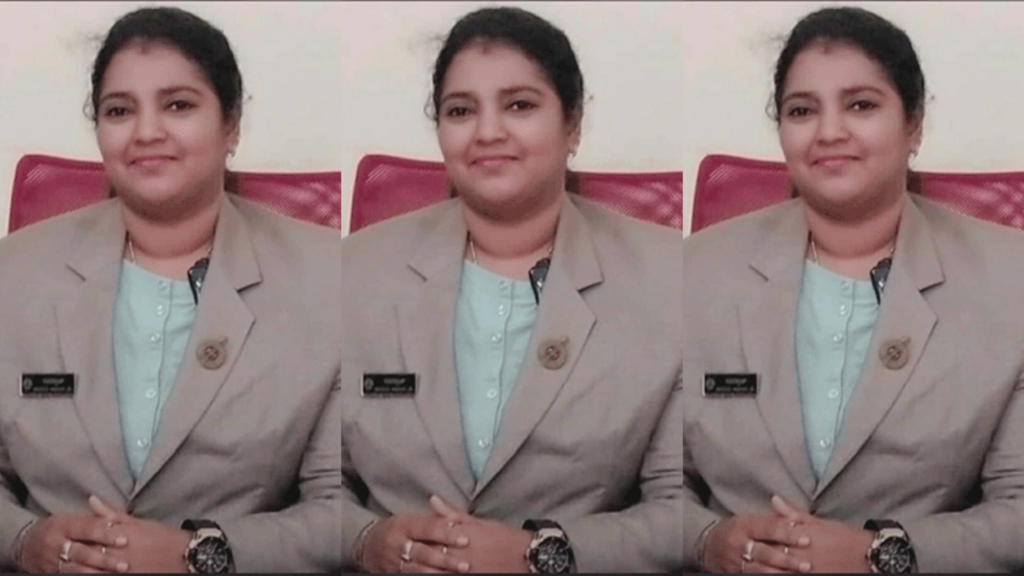
Udupi’s Assistant Director of Prosecution (ADP) Mumtaz has been appointed as the district judge, making her the first Muslim woman in Karnataka to become a district magistrate.
Mumtaz secured the first rank in the judicial exams held in Feb-March earlier this year. She is among the 12 among people who got selected to become district judges.
Mumtaz completed her LLB degree from SDM Law College in Mangaluru before moving to Mysuru for master’s degree.
Mamtaz was selected as the assistant public prosecutor in the JMFC court of Bhatkal in 2010. Later, she was shifted to Udupi JMFC. In 2018, Mamtaz got promoted as ADP to the district SP office of Udupi.
source: http://www.thecognate.com / The Cognate / Home> News / by Shaik Zakeer Hussain / August 06th, 2021