Naqvi made the remarks after signing the bilateral annual Haj 2020 agreement between India and Saudi Arabia with Haj and Umrah Minister of Saudi Arabia Mohammad Saleh bin Taher Benten.
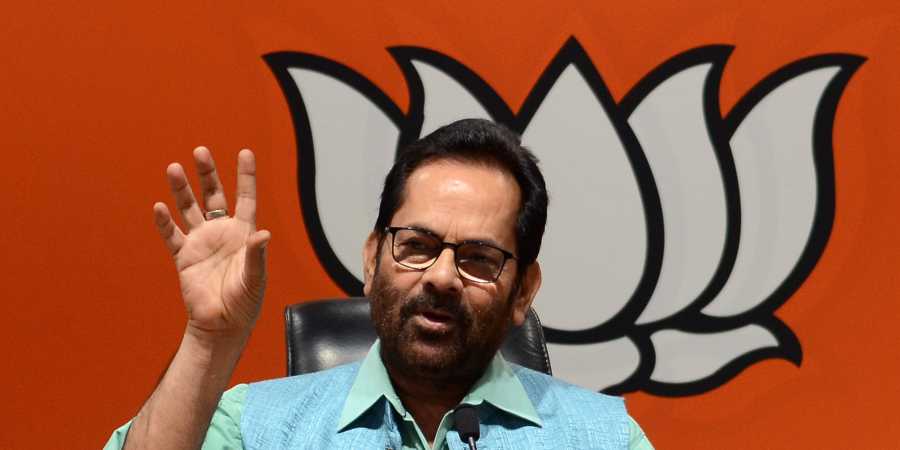
Minority Affairs Minister Mukhtar Abbas Naqvi (File photo | PTI)
Jeddah / New Delhi :
India has become the first country to make the entire process for pilgrims going on Haj completely digital, Minority Affairs Minister Mukhtar Abbas Naqvi said on Sunday after signing the bilateral agreement for next year’s pilgrimage with the Saudi Haj Minister in Jeddah.
An online application, e-visa, Haj mobile app, “e-MASIHA” health facility, “e-luggage pre-tagging” providing all information in India itself regarding accommodation and transportation in Mecca and Madina will be provided to 2 lakh Indian Muslims going for Haj in 2020, he said.
Naqvi made the remarks after signing the bilateral annual Haj 2020 agreement between India and Saudi Arabia with Haj and Umrah Minister of Saudi Arabia Mohammad Saleh bin Taher Benten.
He said for the first time facilities were provided for digital pre-tagging of pilgrims’ baggage.
This will ensure the Indian pilgrims will get information in India itself about the building and the room allotted to them as well as the transportation details for travel after reaching the airport in Saudi Arabia, Naqvi was quoted as saying in a statement issued from his office.
Even the mobile phone SIM card has been linked to mobile App which will ensure pilgrims immediately get all the latest information regarding Haj in Mecca and Madina on their mobile phones.
This year, a 100-line information centre has been established at the Haj House, Mumbai for providing information regarding the entire Haj process.
A health card is being provided to Indian Haj pilgrims in the country, Naqvi said.
E-MASIHA (E-Medical Assistance System for Indian Pilgrims Abroad), an online system to create and maintain the complete health database of Indian pilgrims along with doctors’ prescriptions, medical treatment as well as medicine disbursal, has been developed to deal with any emergency in Mecca and Madina, Naqvi said.
“Haj Group Organisers (HGOs) have also been connected with 100 per cent digital system which has ensured transparency in their functioning and has also ensured better facilities to Indian Haj pilgrims,” Naqvi said.
“A portal of HGOs http://haj.nic. in/pto/ (Portal for Haj Group Organisers) has been developed which contains all the details of HGOs and their packages,” the minister said.
The Ministry of Minority Affairs has taken effective and successful steps during the last four years to make Haj and other programmes completely digital or online as a part of Digital India campaign of Prime Minister Narendra Modi, Naqvi said.
Making the entire Haj 2020 process digital has helped in providing better facilities to people going for Haj and ensured transparency by eliminating middlemen, he said.
The minister said the Indian government – in coordination with the Saudi Arabian government, the Indian Consulate and various concerned agencies in Saudi Arabia – was working to ensure safety, better services and medical facilities for the pilgrims during the Haj.
In 2020, a total 2 lakh Indian Muslims will perform Haj that too without any subsidy, he said.
Naqvi said that till November 30, 1.76-lakh haj applications, including 15,000 online applications from Jammu and Kashmir, had been received.
The last date of submission of Haj application is December 5, 2019.
The Saudi Arabian government has always played an active and effective role to ensure safety and better facilities to Indian Haj pilgrims, Naqvi said, adding that it is a part of strengthened bilateral relations between the two countries.
India-Saudi Arabia relations have achieved newer heights under the leadership and guidance of gulf nation’s King Salman bin Abdulaziz and Prime Minister Modi, Naqvi said.
Both the countries share strong cultural, historical, economic and political relations, he said.
Saudi Crown Prince Mohammad bin Salman’s visit to India and Prime Minister Modi’s visit to Saudi Arabia in October 2019 have further strengthened relations between the two countries, the minister said.
Naqvi thanked King Salman for his guidance and active support to make Haj 2019 successful.
Indian Ambassador to Saudi Arabia Ausaf Sayeed, Additional Secretary Ministry of Minority Affairs Jan-e-Alam, Consul General Mohd Noor Rehman Sheikh, Haj Committee of India Chairman Nabi Jinna Sheikh, Haj Committee of India CEO M A Khan and other senior officials were present on the occasion.
source: http://www.newindianexpress.com / The New Indian Express / Home> Nation / by PTI / December 01st, 2019
‘Dastan-e-Ghadar: The Tale of the Mutiny’ by Zahir Dehlvi offers insights that are particularly relevant today.
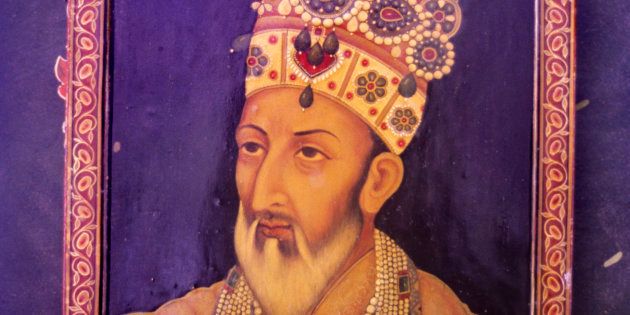
NDIAPICTURES VIA GETTY IMAGES Miniature of Bahadur Shah Zafar.
Butkhano’n mein jab gaya main kenchkar qashqa Zafar
Bol utha woh but, ‘Brahmin yeh nahin to kaun hai?’
(When Zafar went to the temple with a tilak on my forehead
The idol exclaimed, ‘If not a Brahmin then who is he?’)
—Bahadur Shah Zafar
Abu Zafar Sirajuddin Mohammed Bahadur Shah, better known by his pen name Bahadur Shah Zafar, was the son of Akbar Shah II and his Rajput wife Lal Bai.
He inherited an empire that was his only in name as the British writ ran through it. He was their pensioner. The British Resident in Delhi was responsible for everything that happened in Delhi as well as in the Qila.
Bahadur Shah Zafar [foresaw] trouble and banned cow-slaughter in the areas he nominally controlled… Bakr-Eid passed peacefully in 1857 thanks to the wise decisions of the emperor.
However, along with his empire he also inherited the national outlook of his ancestor Akbar and father Akbar Shah II. He believed in the wisdom that all his subjects were his children, and in fact his last prayer when he left the Qila after the fall of Delhi on the night of 16th September 1857 was:
“Khuda, the Hindus and Muslims of India are my children. Please keep them safe and don’t let them suffer for my deeds at the hands of the British.”
(Related by his daughter Kulsum Zamani Begum who saw him praying on his musalla the night he left it. This has been included in the story “Shahzadi ki Bipta” in the book Begumat ke Aansu which comprises eyewitness accounts recorded by Khwaja Hasan Nizami.)
The Hindu men and women who came to bathe in the River Yamuna every dawn would participate eagerly in the jharokha darshan when the emperor appeared before his subjects in the balcony of the Musamman Burj in the Qila every morning. Only after that would they go home and eat.
Bahadur Shah Zafar condemned the actions of maulvis who tried to divide the populace on religious lines:
Kaho mullah se kiya hum se rindo’n ko padhega
Ki hum Lahaul padh ke teri taqreer sunte hain
(Ask the mullah what can he teach one, so drunk in love
I hear his speeches with a disclaimer on my lips)
Akbar Shah II, who started the Phoolwaalon ki Sair , would offer pankhas both at Qutub Sahib’s dargah and Yogmaya temple in Mehrauli. Bahadur Shah Zafar went to the extent that he would not go to the dargah if for some reason he couldn’t visit the temple the previous day.
The Indian society of the 19th century was living quite happily and in communal harmony, bar a few incidents here and there. When Bahadur Shah Zafar was exiled there was a palpable sense of loss amongst the Hindus and Muslims alike; they felt as if they had lost their father.
Nowhere is this emotion more emphasized as in an anecdote described by Zahir Dehlvi in Dastan-e-Ghadar*.
“Once, some Hindus, along with officers of the British government, hatched a plot to throw all the butchers slaughtering cows out of the city. The British government gave orders stating that these butchers should take their shops out of the city. They had all the shops within the city closed.
When the butchers realized that they had no choice but to obey and lose their means of livelihood, they banded together, took their wives, children and possessions, and came and camped on the riverbank under the jharokha. From there, they appealed to the king, asking ‘How can we leave our city and go away?’
The cherisher of subjects, the emperor, heard their petition and gave the order that his tent be pitched alongside theirs on the riverbank.
‘Whatever is the state of my subjects is my state,’ he said.
As per the decree of their emperor, the servants immediately took the imperial paraphernalia and installed it on the bank of the river.
As soon as the British Resident heard the news, he came running to the emperor and respectfully asked, ‘Huzoor, what are you doing? All the people of the city will come and stand here with you.’
Badshah Salamat replied, ‘I am wherever my subjects are. My subjects are my children and I can’t be separated from them. Has flesh ever been separated from the fingernail? Today, the butchers have been given orders to leave the city; tomorrow, it will be some other community; the day after, it will be another one, and these orders will continue. Slowly, the entire city will be emptied. If the intention of the British government is to empty the city, then tell me so in plain words. I will take all my people and go and live in Khwaja Sahib. Since you have control over the city (Shahjahanabad), you can do whatever you will.’
The Resident was taken aback. ‘Huzoor, don’t even think of such an action. I will redress the complaints of these people immediately and settle them in the city. Huzoor, please have your camp removed from here.’
The Resident gave orders for the butchers to go back to their houses and ply their trade within the city as before. The tent of the emperor was removed.”
Bahadur Shah was equal in his treatment of his subjects and did the same for the ghosis or herdmen of Shahjahanabad when they were faced with a similar situation. Zahir Dehlvi in Dastan-e-Ghadar* writes:
“Once the British government gave orders to the herdsmen to take their family and cattle and leave the city and go and settle outside the city. There was a tumult in the entire city and once again the ghosi (herdsmen/milkmen) along with their families and cattle came and camped on the Reti.
Once again the Emperor, Raiyyat Panaah (shelter of the subjects) was so distraught by the cries of the children and the distress of the cattlemen the emperor gave orders for his tent to be pitched alongside theirs so he could share their sorrow. Once again the Resident came and pleaded with the Emperor and gave orders revoking the previous ones so that the herdsmen could go back to their original quarters in the city.
This time the Emperor told the Resident, ‘Look in my presence do not exile my subjects from their houses. After me you will be in control and can devastate the city (eeint se eeint baja dena).’
That is what was done (after the Emperor).”
On 12th May 1857 when the Indian soldiers who had risen up against the British crowned Bahadur Shah Zafar as the Emperor of India he issued the following decree:
“To all the Hindus and Muslims of India, taking my duty by the people into consideration at this hour, I have decided to stand by my people… It is the imperative duty of Hindus and Mussalmans to join the revolt against the Englishmen. They should work and be guided by their leaders in their towns and should take steps to restore order in the country. It is the bounden duty of all people that they should, as far as possible, copy out this Firman and display it at all important places in the towns. But before doing so, they should get themselves armed and declare war on the English.”
During the Uprising of 1857 the British tried their best to disrupt the Hindu-Muslim unity that was very apparent amongst those they called “baghi” or rebels.
Colonel Keith Young, Judge-Advocate General of the Indian Army who was present with the British forces on the ridge in Delhi regularly sent letters to his wife in the safety of Simla. This wife published them later as “Delhi—1857; the siege, assault, and capture as given in the diary and correspondence of the late Colonel Keith Young’.
On 29th July 1857 he wrote to her:
“Camp, Delhi Cantonments, Wednesday, 29th July:
Hodson just now came into our tent and interrupted my writing this. He tells me that a letter has just come in from the city confirming what we had before heard of the dissensions going on, and they seem likely to terminate in something serious at the Festival of the Eed, as some of the Mahomedan fanatics have declared their fixed intention of killing a cow as customary on that day at the Jumma Musjid. It is hoped that they will religiously adhere to their determination, and there is then sure to be a row between the Mahomedans and Hindoos.”
Colonel Keith Young to his wife. Camp, Delhi Cantonments, Thursday, 30th July:
“All is quiet in camp, and the mutineers must, I should hope— as we all believe—be quarrelling amongst themselves, and unable to agree to come out and attack us again. The Eed, we trust, will bring matters to a crisis with them, and be the day for a grand row between the Hindoos and Mahomedans.”
Camp, Delhi Cantonments, Sunday, 2nd August:
“Our hopes of a grand row in the city yesterday at the Eed Festival have not, apparently, been fulfilled—at least the only newsletter received from the city alludes to nothing of the kind. The King had issued strict orders against killing cows, or even goats, in the city, and this, if acted upon, must have satisfied the Hindoos; and instead of fighting amongst themselves they all joined together to make a vigorous attack to destroy us and utterly sweep us from the face of the earth, when it was arranged that the King should perform his evening prayers in our camp!”
Bahadur Shah Zafar had foreseen this trouble and banned cow-slaughter in the areas he nominally controlled. In The Great Uprising of 1857, Prof Z.H. Jafri cites that they found several documents in the Mutiny Papers in the National Archives, New Delhi by Bahadur Shah Zafar and Bakht Khan, the commander in chief of the Indian forces, asking the people to desist from cow-slaughter and to the kotwal to capture the cows from the houses of people who might go ahead with such sacrifices. There is evidence to support the fact that the police officers took these orders very seriously and thus prevented any sacrifice of cows by them, which could have led to the trouble that Young, and his colleagues were so eagerly anticipating.
Bakr-Eid passed peacefully in 1857 thanks to the wise decisions of the emperor.
The fallout of the First war of Indian Independence was the well-documented policy of divide and rule adopted by the British, which tried to create disharmony between Hindus and Muslims. The two communities fought together again in the freedom struggle leading up to Independence in 1947, but the partition of India and subsequent riots and murder show that the British did succeed to a great extent.
* Book excerpt from ‘Dastan-e-Ghadar : The Tale of the Mutiny ‘ by Zahir Dehlvi, translated from Urdu by Rana Safvi, Penguin Random House.
source: http://www.huffingtonpost.in / HuffPost / Home> The Blog / by Rana Safvi / May 18th, 2017
For 35 years, the activist dedicated his life to building a movement for justice. Unfortunately, Bhopal appears set to forget his contributions.
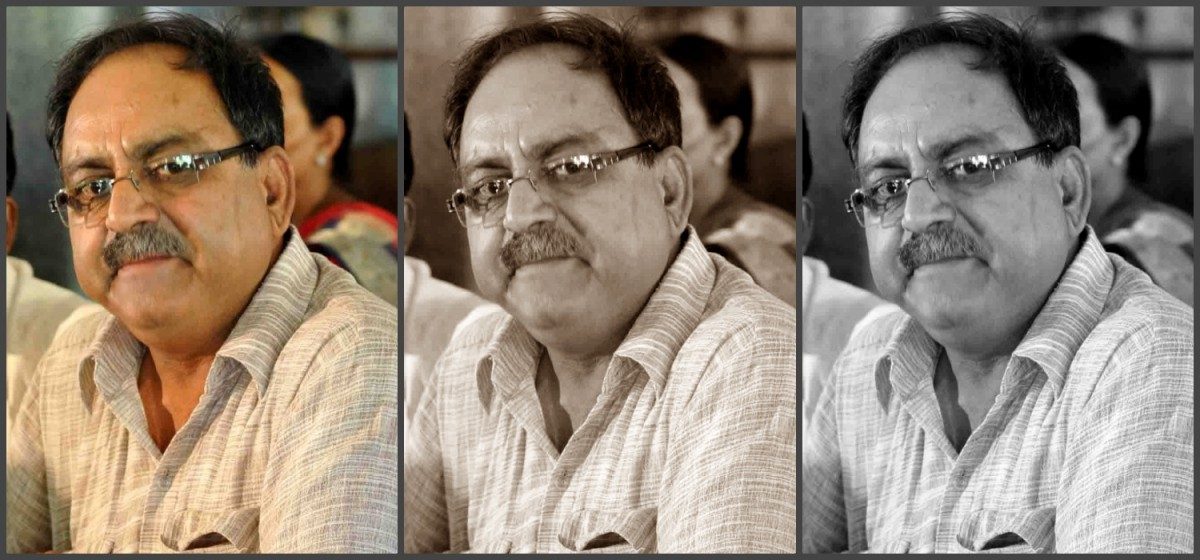
Abdul Jabbar. Photo: Facebook
India can learn a lot from Abdul Jabbar’s glorious struggle for justice for the dead and the survivors of the Bhopal gas tragedy.
At a violent time like this, when governments cannot tolerate even dissent on social media, the most indefatigable fighter for the victims can be a lodestar to all those who wish for an equitable society.
Jabbar Bhai, as he was fondly addressed, died of multiple ailments on November 12 in a Bhopal hospital, but his legacy endures. His evolution, through a 35-year-long struggle from a hand pump fitter to a tenacious strategist, is unparalleled in independent India’s history of people’s movements.
His strategy was essentially premised on eight pillars: secularism, empowerment of women, emphasis on self-employment through skill development, regular interactions with co-fighters, spreading education about mass struggles, frequent judicial recourse through public-spirited lawyers, street agitations, joining similar people’s movements and an uncompromisingly adversarial stance against the government, regardless of ideology. An overboard public relations exercise was anathema to him, though Jabbar would go all out to help journalists who sought his help.
His organisation, the Bhopal Gas Peedit Mahila Udyog Sangthan, metamorphosed from an assorted group of women to a well-organised fighting force. This was an extremely daunting task, which Jabbar Bhai himself was initially clueless about. But his undiminished righteous rage over the killing of innocent people in the world’s worst industrial disaster steeled his will to fight an epic battle through thick and thin.
How this came about is an inspiring story, which began the day the Union Carbide factory spewed 40 tons of poisonous MIC gas. On the night of December 2-3, 1984, Abdul Jabbar was asleep at his home in Rajendra Nagar when the deadly gas leaked.
The poisonous gas from the Union Carbide pesticide factory killed 8,000 people in its immediate aftermath, and nearly 25,000 over the next few decades. It also left over 1,50,000 people suffering with respiratory, hormonal and psychological illnesses.
When the strong smell emanating from the carbide plant made its way into Jabbar’s house, he took his mother, started his scooter and drove for almost 40 km to get her to a safe place. They left Bhopal for Abdullah Ganj. However, his escape proved futile. He soon lost his mother, father and an elder brother to the after-effects of this disaster. His own lungs and eyesight were substantially damaged. When he returned, an apocalypse was awaiting him on streets – dead bodies were strewn everywhere.
Then 28 years old, Jabbar was a changed man when he reached home. Keeping personal losses aside, he started taking the injured to the local government hospital for treatment. He also volunteered to take dead bodies for their post-mortem. The deeper he plunged himself into voluntary service, the more his anger surged.
He would later recall, “I started this campaign from my locality when I witnessed injustice around me. Politicians who were beneficiaries of carbide corruption were not coming forward to help us. So we the victims had to take matters in our own hands.”
Nearly three years later, in 1987, he started the Bhopal Gas Peedit Mahila Udyog Sangathan (Bhopal Gas Female Victims’ Association), an advocacy group for victims, survivors and their families. He led demonstrations seeking not merely allowances and compensation, particularly for widows who lost their husbands in the disaster, but also employment opportunities.
His first campaign slogan was the famous “Khairat nahi, rozgar chahiye (We don’t require charity, we want jobs)”. The slogan turned into a war cry as the organisation swelled.
Jabbar did not wait for the government to provide jobs to the women in his organisation. He succeeded in setting up tailoring centres where about 2,300 women learnt how to make zardozi strips and bags. He helped them fight lawyers, doctors, bureaucrats and the police. Soon enough, Jabbar’s organisation included nearly 30,000 survivors, predominantly women, in Bhopal.
The members began to gather every Tuesday and Saturday at Bhopal’s Yaadgaar-i-Shahjahani Park, a historic site where the battle against British colonial rulers was staged in 1942.
In 1988, Jabbar moved the Supreme Court urging it to order interim relief to the survivors until they get their final compensation. The next year, the Centre settled with the Union Carbide for $470 million or Rs 7,200 crore, and the Supreme Court endorsed the agreement. The gas victims were outraged at the meagre amount. They felt cheated. It took a decade-long legal and street battles by Jabbar’s organisation before the apex court ordered the government of the day to disburse a further Rs 1,503 crore and admitted that there were over 5,70,000 claimants to be compensated. Earlier, only one lakh claimants were recognised.
His relentless fight since his first victory in the Supreme Court is well documented. Nearly all judicial interventions and mass agitations that have resulted in the gas victims getting compensation, houses and hospitals and the perpetrators being prosecuted bear an indelible imprint of Jabbar’s fighting spirit. For more than three decades, he went around conducting protests and filing court petitions, seeking greater medical rehabilitation for victims and the prosecution of local Union Carbide officials.
In the past three months, a severely diabetic Jabbar, suffering multiple heart ailments, moved from one hospital to another.
He circulated a WhatsApp message days before his death, saying a super speciality hospital like the Bhopal Memorial Hospital (BMHRC) had failed to treat him because they did not have the facilities. He called it “shameful”. As his condition worsened, and gangrene set in, the Madhya Pradesh government prepared to airlift him and take him to Mumbai’s Asian Heart Institute for treatment, but he died before that.
He would often stress that the fight for justice was important not just for Bhopal but for all of India.
His noble worldview was reflected in the way he painstakingly educated women in his organisation, on a wide range of topics: conflicts in the Middle East, Adivasi and Dalit rights movements including the Narmada Bachao Andola, and so on.
Jabbar’s ideals, though, were not limited to the organisation.
During the saffron surge in the last several years, our conversations would be more about India’s social fabric being torn apart than the plight of gas victims. He would admit that his struggle had been losing steam, because people in Bhopal have become dangerously polarised along communal lines.
He would lament that even citizens who benefited from his agitations for compensation and hospitals have turned apathetic to the plight of others who are deprived.
“They appear to have convinced themselves that fight for justice is over now that victims have been distributed money. A majority of Bhopal’s Hindus betray an impression that since potential beneficiaries of my fight are largely Muslims, why should they bother too much about it all.” He sounded equally bitter about the Muslim community’s apparent unwillingness to change with the changing times.
Jabbar had complaints about the media too, which he thought shamelessly endorsed the majoritarian view. He would blame the public and media apathy for the system ignoring gas victims, particularly the poor.
His grouse was not without basis. In the 15 years of Bharatiya Janata Party rule in Madhya Pradesh, gas victims got a raw deal. At one time, a move was afoot to wind up the gas relief and rehabilitation department altogether. The hospitals run for gas victims do not have enough staff or equipment.
Ironically, Jabbar Bhai’s cynicism about the media, system and society as a whole was proven right during his illness and eventual death. He was virtually shunted out of the hospital that came up due to his PIL in the Supreme Court. Reduced to penury due to two months of treatment in hospitals, he was forced to do what he had never done all his life: seek government help. The help was promised, but came too late.
For someone who sacrificed his entire life for the dignified rehabilitation of half a million gas victims, Abdul Jabbar’s last journey was a grim reminder of the Bhopal’s ungratefulness to his long struggle.
Barely a few hundred people turned up for his funeral. Barring his journalist and activist friends and some politicians, the graveyard looked like a Muslim gathering. Worse, his woman comrades, who fought with him shoulder to shoulder all these years, were told to stay away from the last rites. The grieving fighters gathered at Abdul Jabbar’s ramshackle two-room house and stayed put.
The departed soul would not have been pleased with what happened at his home on that day.
Undivided Madhya Pradesh saw the birth of three memorable people’s movements – the Chhattisgarh Mukti Morcha of late Shankar Guha Niyogi, Narmada Bachao Andolan of Medha Patkar and the third led by Abdul Jabbar.
Jabbar’s was different in the sense that unlike the other two, the warrior of Bhopal had taken on the might of a giant multinational in an urban milieu.
Jabbar also had to contend with myriad complex socio-economic and political obstacles. Complex relations between Hindus and Muslims in the city was unique to Jabbar’s fight. Plus, his agitation had to deal with a substantial middle class, which had no qualms lapping up the fruits of Jabbar’s labour and then abandoning him when he needed their support for treatment for the poor.
Rakesh Dixit is a Bhopal-based journalist.
source: http://www.thewire.in / The Wire / Home> Rights / by Rakesh Dixit / November 17th, 2019
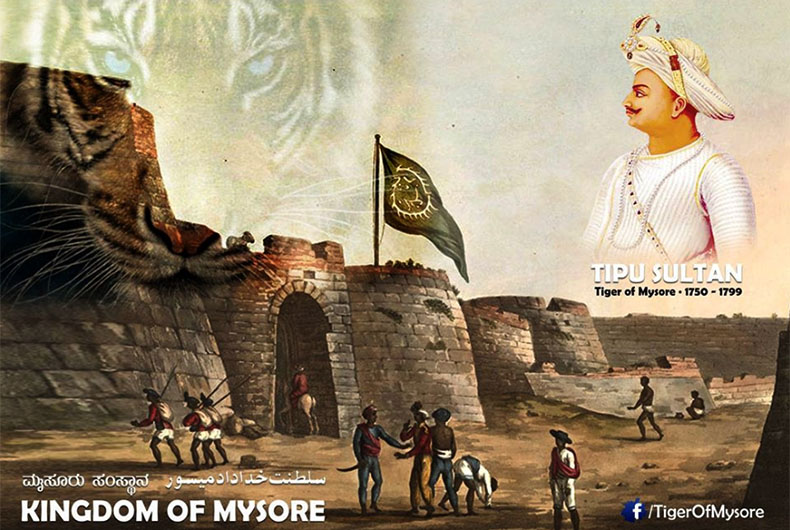
Tipu Sultan was born on November 20, 1750 and died on May 4, 1799 fighting with the Colonial forces
New Delhi:
Twitter users on Wednesday paid rich tributes to Tipu Sultan on his birth anniversary, with many posting the quotes of the King of the erstwhile Kingdom of Mysore as also pictures of his prized possessions with hashtags #Tipusultan, #SherEHindTipuSultan, #TipuJayanti and #TigerOfMysore.
As many as 3,143 tweets were posted by Twitterati on Tipu Sultan.
Vanchit Bahujan Aghadi leader Prakash Ambedkar wrote: “Tipu Sultan, the king of Mysore, will always be known for his valour and his continuous resistance against the British rule”.
“A tribute to the first freedom fighter of India on his birth anniversary”, the grandson of Dr BR Ambedkar wrote.
Another Twitter user wrote: “Tipu Sultan was the only Indian ruler who understood the dangers the British posed to India, and fought four wars to oust them from India – in that sense he could be called the first freedom fighter in the subcontinent”.
One user posted a quote attributed to Tipu Sultan: “One day’s life of a lion is preferable to hundred years of a jackal”.
Many Twitter users also hailed his liking for advanced technology.
“Tipu Sultan was fascinated by science & technology, got gun-makers, engineers, clockmakers & other experts from France to Mysore, then set up a manufacturing of bronze cannons, ammunition & muskets to ‘Make in Mysore’. Basically the first who worked for MakeinIndia”, (sic) wrote one user.
Make in India is a type of Swadeshi movement covering 25 sectors of the Indian economy. It was launched by the Government of India on 25 September 2014 to encourage companies to manufacture their products in India and enthuse with dedicated investments into manufacturing.
Tipu Sultan was born on November 20, 1750 and died on May 4, 1799 fighting with the Colonial forces.
source: http://www.ummid.com / Ummid.com / Home> India / by Ummid.com with inputs from IANS / November 20th, 2019
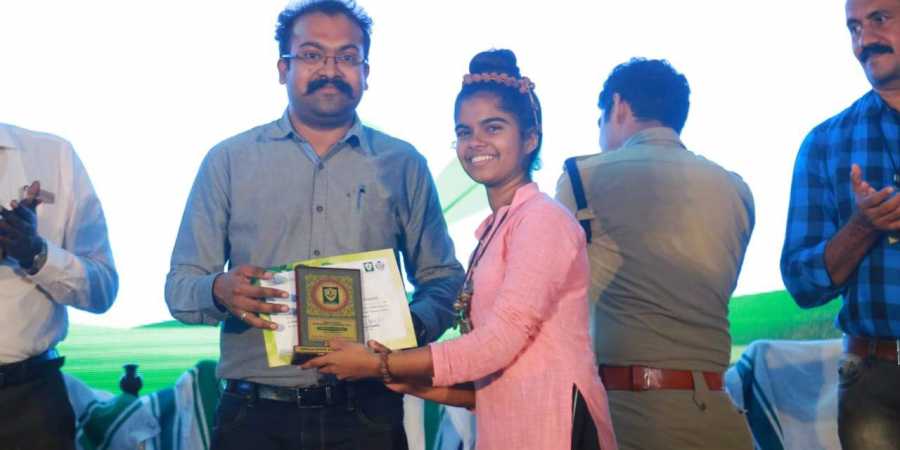
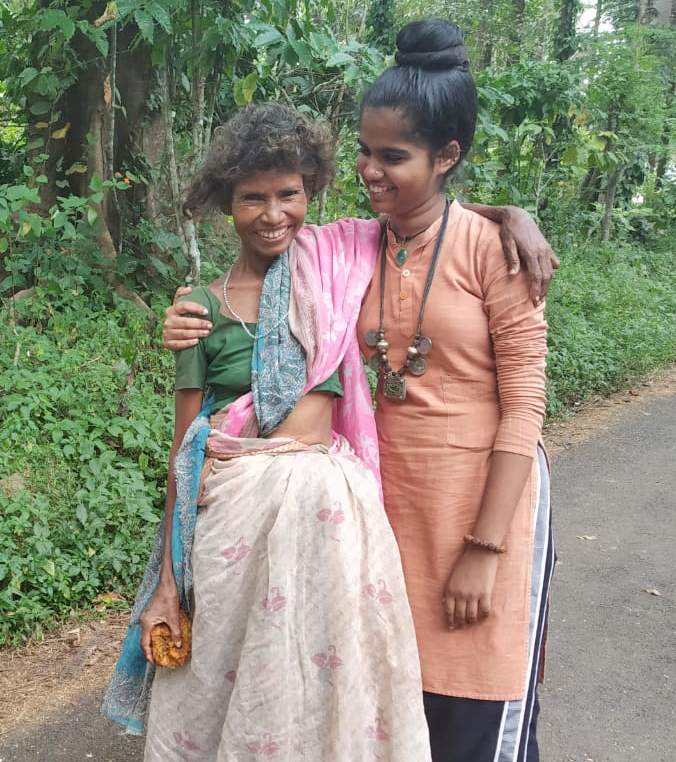
An ardent apiculturist, Jodha was presented with a horse named Aman Chand by her mother Amiya Taj who is also a horse rider.
Oli Aman Jodha
Thiruvananthapuram :
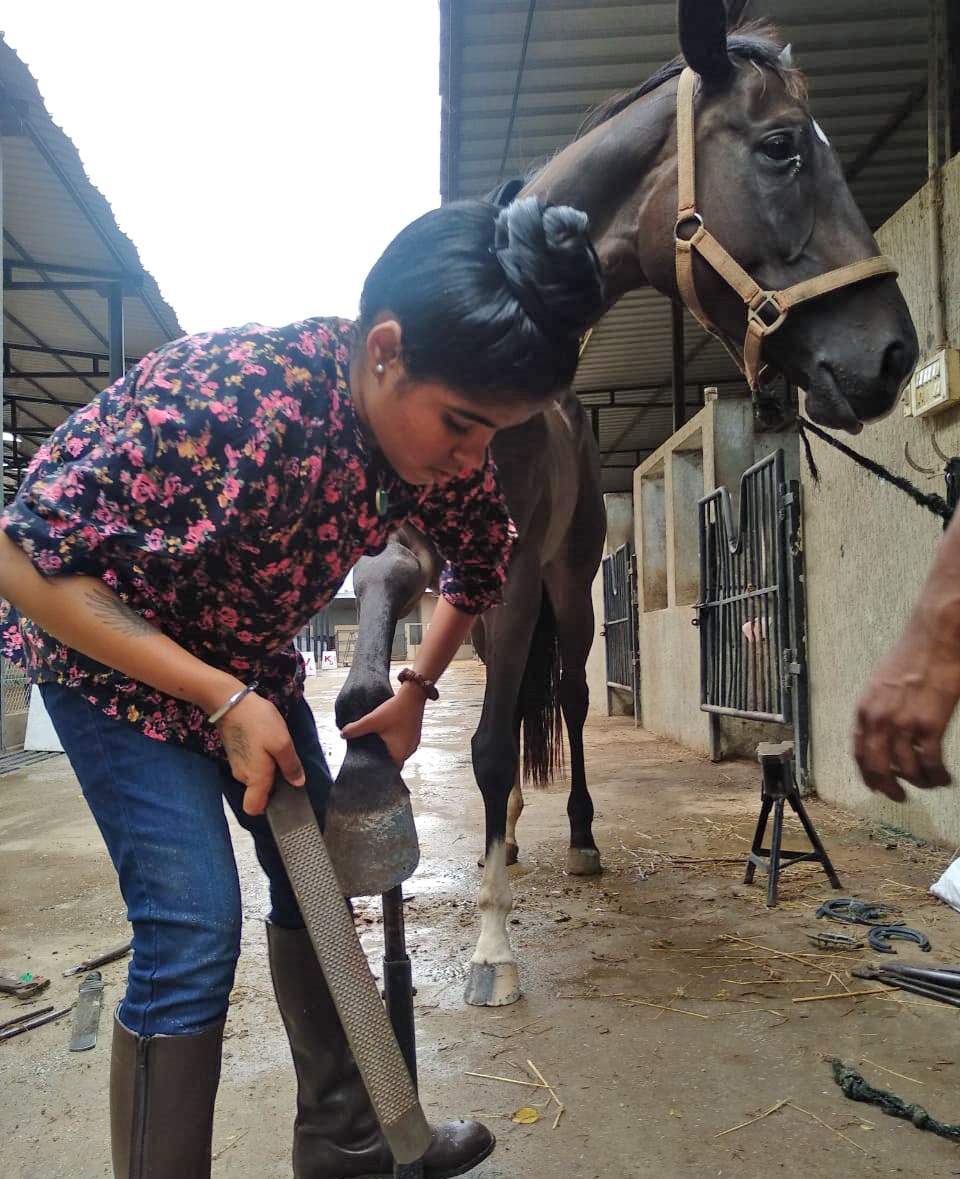
Breaking gender barrier is not uncommon these days. But Oli Aman Jodha has set a new milestone by becoming arguably the first woman farrier in the country. She is just 14. Jodha, who hails from an orthodox Muslim family from North Kerala, has been leading a nomadic life for the past few years because of her love of horses and bees.
An ardent apiculturist, Jodha was presented with a horse named Aman Chand by her mother Amiya Taj who is also a horse rider. Though riding has been her passion, an incident of fixing a horse shoe on Aman by an amateur farrier drew Oli to the profession.
Right after the farrier from Tamil Nadu fixed the shoe on her horse’s hoof, there was profuse bleeding.
Following this, the next time Aman needed a horseshoe, Oli tried fixing the shoe with the help of family friend Sukumaran, a forest guard at Kallar in Ootty. She was just nine at the time. Later, her mother sent her to Nepal where she trained in fixing horseshoe under the tutelage of farrier Thaj at Kohalpur.
In the meantime, a national award came Oli’s way for her expertise in apiculture and even got an invitation to be the resource person in apiculture at Swaminathan Research Foundation, Wayanad, and National Institute of Rural Development and Panchayati Raj, Hyderabad. Her stay in Hyderabad opened a new vista for her in fixing horse shoes as the place has a plenty of horses.
“In the peak time, I used to fix shoes on around 20 horses a month. I have done this in Tamil Nadu, Karnataka, Gujarat, Andhra Pradesh and Rajasthan. A farrier’s focus would always be on ensuring that the shoe perfectly matches the horse’s hoof,” she said.
It’s not an easy task to prepare a custom-made shoe. The farrier must have a sound knowledge of forging and basics of metallurgy.
Oli used to shape the metal with the help of an anvil, hammer, nipper, cutter and tongs like a blacksmith. She also has to bear some of the horse’s weight while fixing the shoe. In the case of oxen, the shoeing can be done by holding the animal to the ground, but it is done on horses in standing position. And if the farrier makes a wrong move or is in the wrong place, he/she can get trodden on easily. All the factors make the profession challenging, especially for women.
Oli has had her share of rough life at this young age. She is a class 1 dropout and had to continue her studies till class 8 through open education. Now, she is planning to write her class 10 exams. She is looked after by her mother after her father left the family. She doesn’t even have a permanent house to reside.
Future plans
Oli wants to be an equine veterinarian and is ready to tread an extra mile to achieve the dream. Not many Indian universities offer equine veterinarian course. But she is hopeful of God bringing luck in her life.
source: http://www.newindianexpress.com / The New Indian Express / Home> States> Kerala / by Dhinesh Kulkarni / Express News Service / November 12th, 2019
Ahmedabad-born Indian woman Conservative nominee for UK poll
London (IANS) :
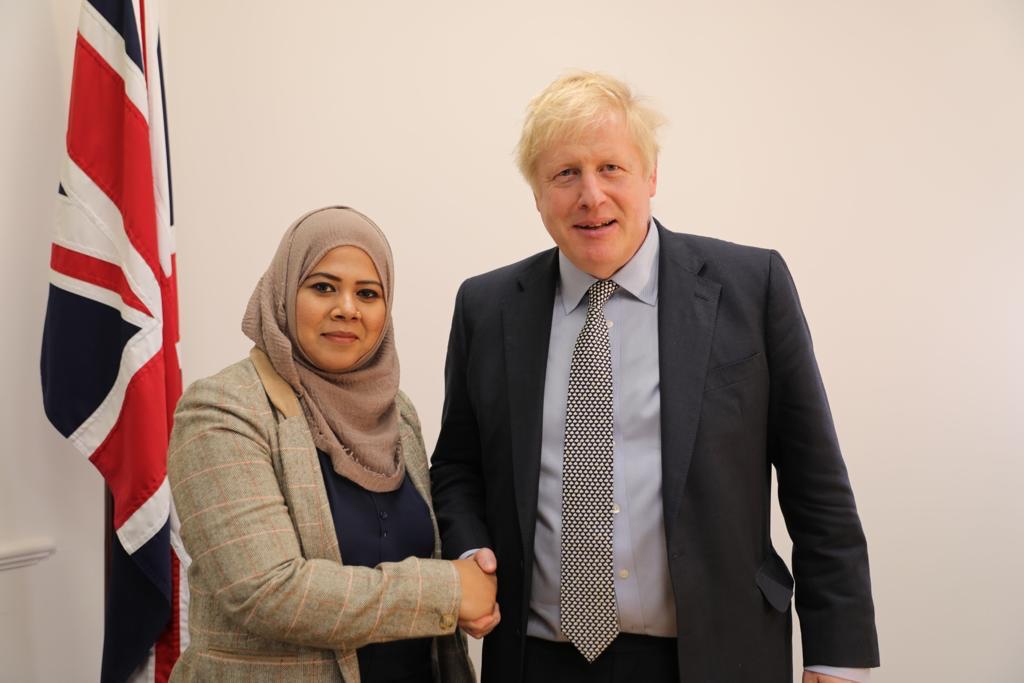
Indian origin Tamkeen Shaikh, born and raised in Ahmedabad, has been selected as the Conservative Party candidate for the Barking constituency for the December 12 UK elections.
“Delighted to be selected as the Conservative Party Candidate for Barking. Hard work begins now! #BlueBarking,” Shaikh, who studied and worked as a journalist in India before coming to the UK, tweeted on being named candidate.
A staunch supporter of Prime Minister Boris Johnson and Brexit, Shaikh left home 14 years ago for a Masters in media and management in the UK.
Married with two children, Shaikh is now working in the education sector.
She says: “The reason I have joined politics and particularly the Conservative Party is, it’s the best way to contribute to the society and the party believes in creating opportunities for business and innovation.
“Here the Parliament is pushing to have 50:50 representation of men and women and are encouraging women on a wider scale to get involved in politics. If elected my priority is to draw more investments in school, social enterprise, youth engagement, building family homes and care for the elderly.”
“The mantra that has worked for me is ato be consistent and persistent’ that will lead you to achieve your goals. Indians are a large economical contributors in UK and continue to do so. Indian community has integrated well within the community and are making huge progress in all sectors,” she adds.
“Like the majority of Barking residents, I voted Leave and I want to get Brexit done.
“You only have to look at the epidemic of fly-tipping, the state of Barking Station and our failing high streets to realise the Labour Party is failing us. We deserve better than Labour. I live in Barking, my children go to a local school and so I understand the needs of local people.
“We need an MP who will fight for more investment in our schools, improved care for the elderly and to give young people things to occupy them to keep them off the streets and give them a better future.
“I want to see a thriving high street that will benefit social enterprises and small businesses, providing jobs for residents. I am your local candidate representing the local people of Barking and I will get Brexit done,” she promised.
source: http://www.therahnuma.com / The Rahnuma Daily / Home> World / by IANS / November 26th, 2019
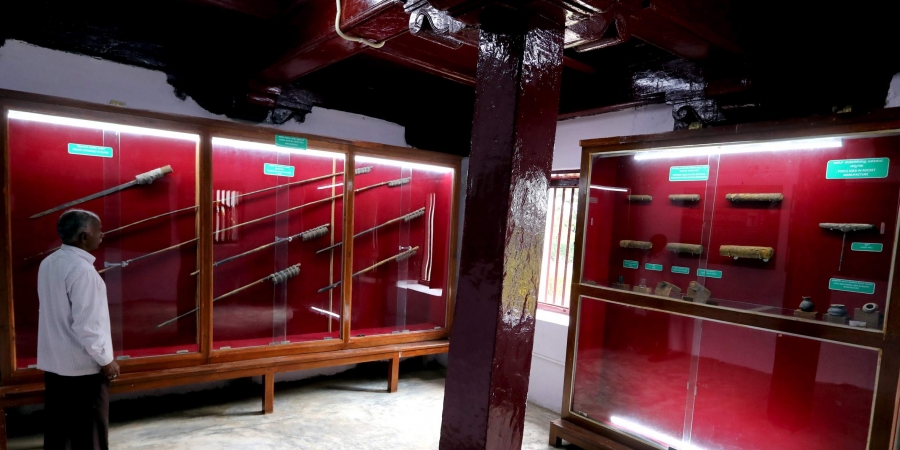
The museum has a large cache of 1,700 such rockets that were recovered from an old well at Nagara village in Hosanagar taluk last year.
An image of the ‘Tipu rockets.’
Shivamogga :
A dedicated gallery housing metal cased rockets used during Tipu Sultan period (18th century) has been opened in Shivamogga city. However, it was thrown open to the public without a formal inauguration by people’s representatives, which according to sources, is due to the recent controversy surrounding the ruler.
The gallery was opened to the public on the first day of the Heritage Week on November 21.
The gallery has been set up at the Shivappa Nayaka Palace which is also a museum. It is the first and largest gallery having the “Tipu rockets” or “Mysore rockets” in the world.
While the Royal Artillery Museum, Woolwich Arsenal in London, is home to a collection of two such rockets, three pieces are at the government museum in Bengaluru. There was no dedicated gallery for the rockets until the one in Shivamogga opened.
The museum has a large cache of 1,700 such rockets that were recovered from an old well at Nagara village in Hosanagar taluk last year. However, only 15 are kept in the gallery owing to lack of space.
The length of the rockets now housed at Shivappa Nayaka Museum ranges from 190 mm to 260 mm and the diameter ranges from 33 mm to 65 mm. While the lightest specimen weighs 372 g, the highest one weighs 1.75 kg.
History buffs throng museum to see ‘rockets’
Sources in the Archeology, Museums and Heritage Department told TNIE that a formal inauguration was not done to “avoid any further controversy.” Earlier, the BJP State government had decided not to celebrate Tipu Jayanti at the government level and is thinking of removing lessons related to the ruler from textbooks.
History enthusiast Ajay Kumar Sharma said, “The department also avoided naming the gallery as Tipu Rockets Gallery but played safe by naming it as Mysore Rockets Gallery. There is also an argument that similar rockets were used by the Marathas. However, thorough carbon dating needs to be done to determine the period. Though it is not clear who invented these rockets, it is said that they were used during the period of Hyder Ali and his son Tipu Sultan.”
‘World’s first metal cased rockets’
Information put up at the gallery states that Mysore in the 18th century was the greatest threat to the development of the British colonial enterprise in India. The British fought them at every step. It was in this series of wars that England and the wider world was introduced to a new weapon of war – The Mysore metal cased rocket. The instant bamboo stick or sword blade attached to the rocket passed through a man’s body.
It resumed its initial speed and destroyed 10 or 20 men until the combustible matter with which it was charged was spent.
“Mysore was the first state in the world to have moved to the next stage of rocket development from wooden firework rockets to metal war rockets successfully,” the information reads. Though there was no formal inauguration, the gallery has already attracted history buffs who are visiting the gallery each day.
source: http://www.newindianexpress.com / The New Indian Express / Home> States> Karnataka / by Marx Tejaswi / Express News Service / November 23rd, 2019
The Taj Mahal and 4 other monuments earned Rs 146.05 crore, more than half the total revenue generated by centrally-protected monuments, in 2017-18.
New Delhi:
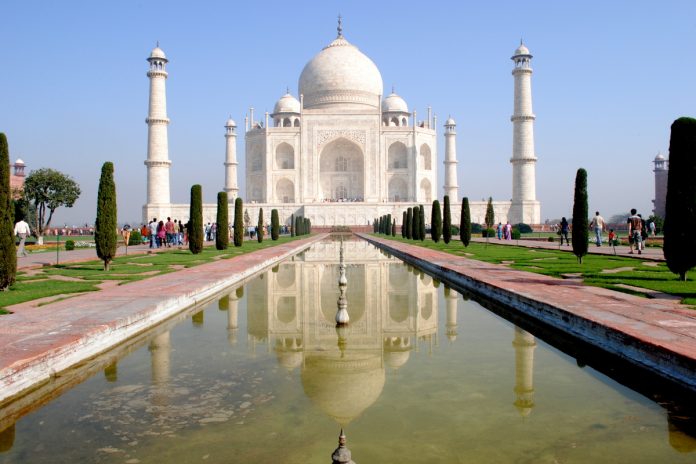
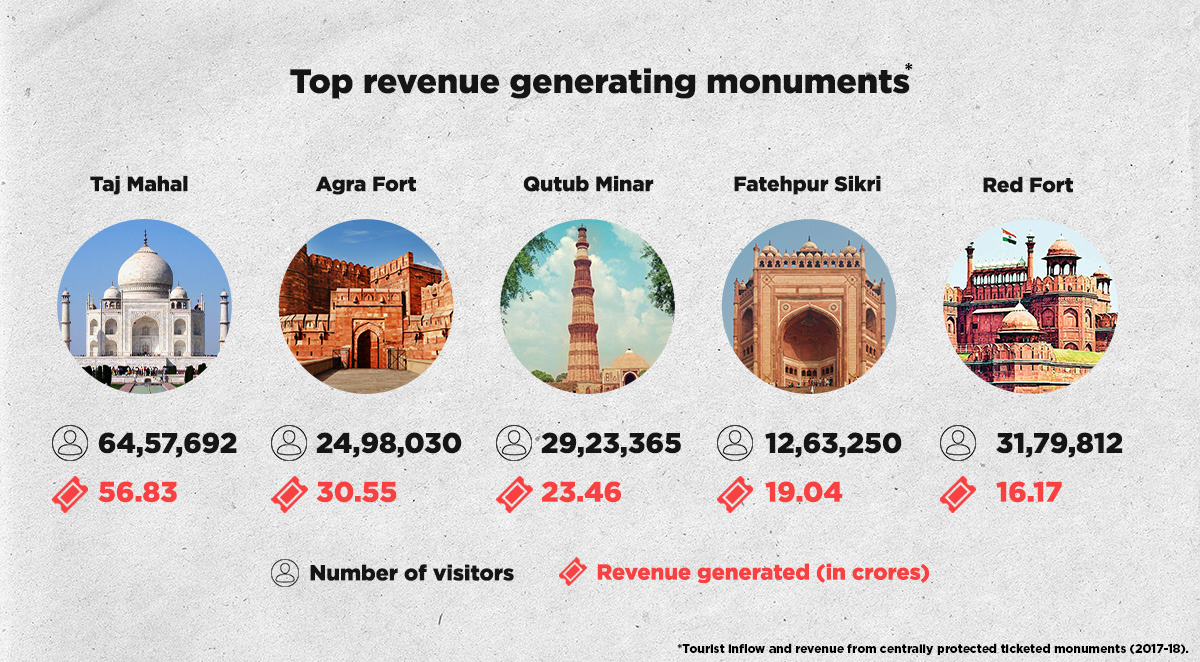
Fringe Hindu groups and even some BJP leaders may have sought to belittle their significance but official data shows that India’s top five revenue generating monuments were all built by Muslim rulers – the Taj Mahal, Agra Fort, Qutub Minar, Fatehpur Sikri and Red Fort.
While Qutub Minar was built by rulers of the Delhi Sultanate, the rest were constructed by the Mughals.
These five monuments together earned the government Rs 146.05 crore in 2017-18, according Archaeological Survey of India (ASI) data. This is more than half the total revenue of Rs 271.8 crore generated by all centrally-protected monuments.
The Print
The Taj Mahal, which has been in the news for all the wrong reasons in recent years, with the Supreme Court last month pulling up the ASI for its poor maintenance, continued to be the highest earner at Rs 56.83 crore.
While some politicians sparked a controversy last year by arguing that the Mughal-era monument did not represent Indian culture, the number of visitors to it, both Indian and foreign, only increased since 2016-17.
A total of 64.58 lakh people visited the Taj Mahal in 2017-18 compared to 50.66 lakh in 2016-17.
Last year, the UP tourism department had even omitted the Taj Mahal, a UNESCO world heritage site, from a brochure listing the state’s principal attractions.
With total earnings of Rs 30.55 crore, Agra Fort built by Mughal emperor Akbar, another UNESCO world heritage site, was the second highest revenue generator in the last financial year.
While the Konark Sun Temple in Odisha came second after the Taj Mahal in terms of number of visitors (32.3 lakh), it generated only Rs 10.06 crore as revenue. This, officials said, is because the temple is mostly popular only with Indian tourists, with 32.21 lakh domestic visitors making the trip last year.
While Indian tourists are charged Rs 30 per head as entry fee to world heritage monuments across the country, foreign tourists have to pay Rs 500 each.
“It is impossible to communalise the entire Indian population through the meaningless political venom spewed by politicians,” said historian S. Irfan Habib, explaining the increase in visitors to the Taj.
“No matter what they say about the Taj Mahal and Red Fort, Indians will continue going there,” he added.
source: http://www.theprint.in / The Print / Home> India> Governanace / by Sanya Dhingra / June 07th, 2018
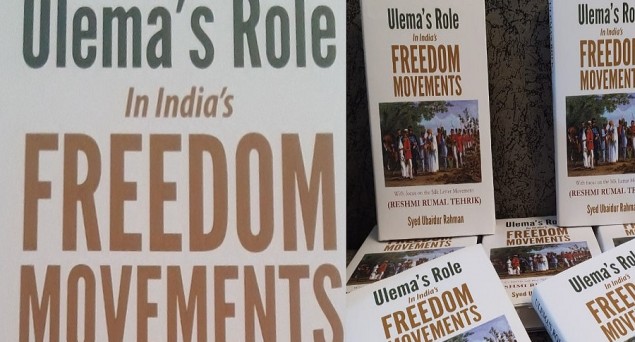
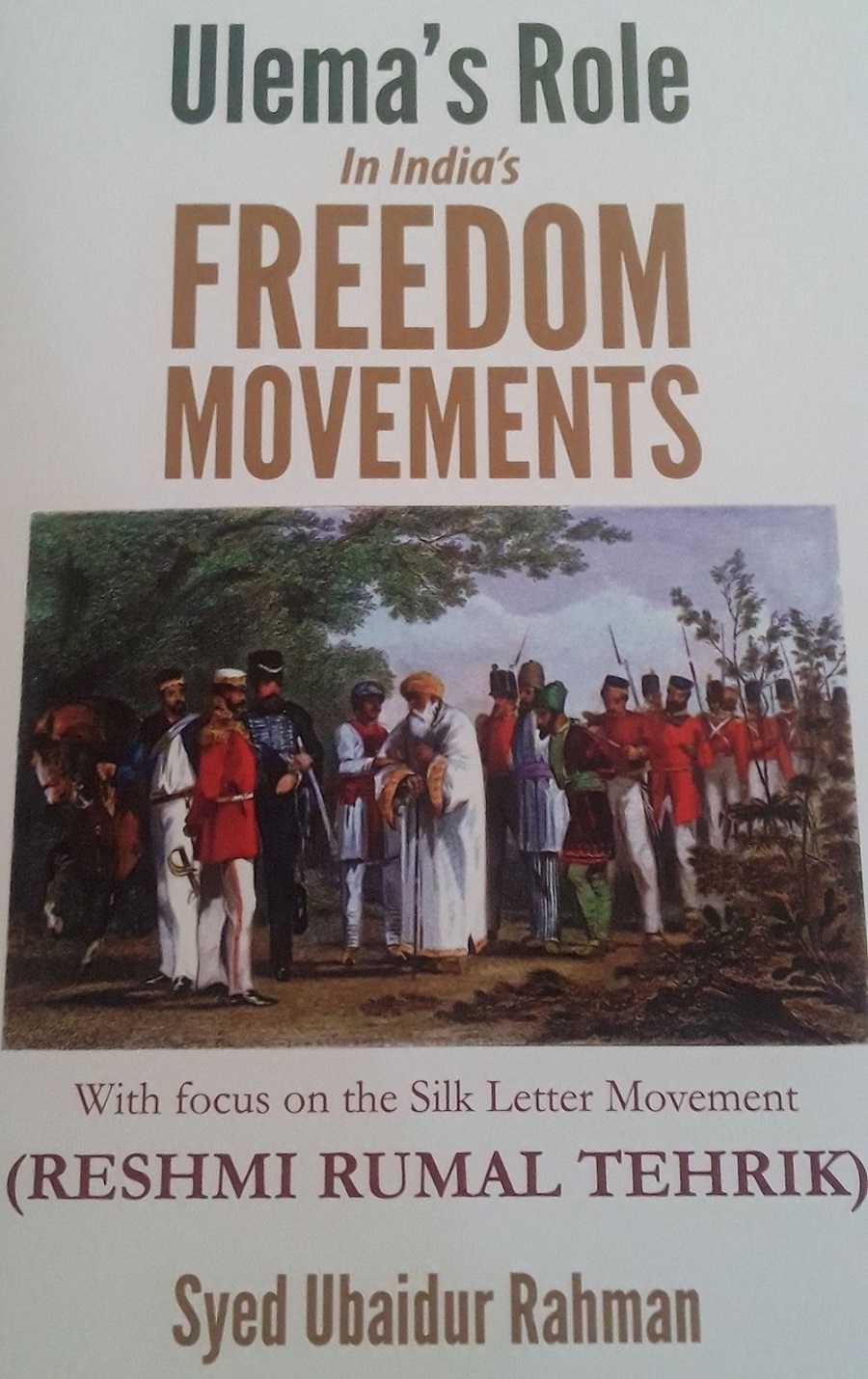
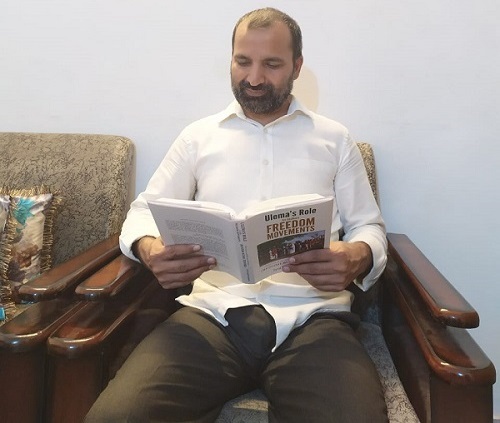
Amidst well-organized and power-backed attempts to erase M-word from the history of India’s freedom movement, has come out a humble academic bid to preserve in black and white the key role of Ulema or Muslim clerics in the ‘bloody’ freedom struggle spreading over around one century. Written by a young writer Syed Ubaidur Rahman, who is just 44, the book ‘Ulema’s Role in India’s Freedom Movements: With focus on Silk Letter Movement (Reshmi Rumal Tehrik) captures Ulema’s sacrifices in the Mutiny of 1857 and 1858, Faraizi Movement and Sayyid Ahmad Barelvi’s movement besides mainly focusing on the Silk Letter Movement as the title declares.
“The word ‘Ulema’ has become a rather very misunderstood term in the present day Indian society. Like everything Muslim, a conscious effort has been made to malign and ridicule the Muslim clergy…Over the last few centuries, the Muslim scholars have contributed immensely in seeing to it that the nation remains a single, united and cohesive unit and have made significant contributions to this end,” writes the author in the introduction of the book.
While admitting that “Ulema’s role in the society has considerably shrunk over the last several centuries,” he says that Ulema “used to have a very important place in the Indian society during Muslim rule in the country and even after the dismantling of the Mughal empire…over the centuries, on many occasions, they have led not just on spiritual front but on temporal front as well.”
“Every time in the past, when the country found itself in challenging situations, they stepped in and tried to play a much bigger role than what is usually anticipated from them. This was seen during different phases of freedom movements beginning with the first war of independence of 1857,” writes Rahman, a journalist by career who has penned several books in the last one decade, besides regularly writing articles and columns for various periodicals.
The 280-page book deals with different phases of India’s freedom struggle “with special focus on Silken Letter Conspiracy, better known as the Reshmi Rumal Tehrik.”
Highlighting the need and relevance of the book, the author says: “Not much has been written on Reshmi Rumal Tehrik or the people behind it and thus it remains shrouded in mystery. The book also discusses at length the Mutiny of 1857 and 1858, Faraizi Movement that was anti-colonial movement launched and sustained by Islamic scholars, besides Tehrik-e-Jihad of Sayyid Ahmad Barelvi in North Western Frontiers and Kashmir.”
The author says: “Despite the slide of the Muslim empire and the subsequent dismemberment, first between Muslim nawabs in the North, Deccan and South India, and later the annexation of these territories by the East India Company, Muslim scholars remained instrumental in trying to keep the Muslim empire intact. They were at the forefront in trying to stop the slide, and in posing challenges, first against those who fought the Mughals and later against the British East India Company. Shah Waliullah, the legendary Islamic scholar and reformist, did everything to stop the Mughal Empire from going to dogs. But, when despite all his efforts nothing happened, he sent a later to Ahmad Shah Abdali and also to Nawab of Oudh and Hafiz Rahmat Khan, the shrewd Ruhella chieftain. The rest is history.”
Deliberating on the core topic of the book, that is the role of Ulema in India’s freedom movement, the author writes: “Muslim ulema’s role was not limited to merely giving advice to the rulers and then become mute spectators of what was taking place. On the contrary, when they realized that there was no one coming forward to lead the masses, they took up leadership role, and fought off the invaders. From Bengal to Balakot and from Delhi to Lucknow, Muslim ulema played prominent roles in all the uprisings against the British (mis)rule. Be it Faraizi Movement, first war of independence of 1857 or the Reshmi Rumal Tehrik, they were instrumental and took leadership role. During the Mutiny of 1857, ulema were at the forefront and paid heavy price for their leadership role.”
The book highlights the contributions of some Ulema during the Mutiny of 1857 and subsequent fights.
The author says: Maulavi Ahmadullah Shah was one of the most prominent leaders of the entire freedom movement, who led on many war fronts and collaborated with all other renowned freedom fighters. Despite being among the most prominent leaders of the 1857 Mutiny, Maulavi Ahmadullah Shah remains a rather unknown figure in the country.He was a stalwart, a shrewd military planner, a great scholar of Islamic sciences and above all a unifier beyond any iota of doubt. He allied with almost all the leading actors of the 1857 revolution, be it Tantia Topi, Nana Sahib, Begum Hazrat Mahal, Bakht Khan Ruhilla, Khan Bahadur Khan Rohilla of Bareilly or any other freedom fighter of repute. It is an irony that despite his military successes against the British East India Company in 1857 from Lucknow to Bareilly and Shahjahanpur, his name is not even mentioned. His military planning unnerved the colonial rulers and his bravery won praise from the British generals like George Bruce Malleson and Thomas Seaton.
Haji Imdadullah Muhajir Makki was another alim of repute, known for his personal piety, scholarship, courage and military exploits during the Mutiny of 1857. A father figure among ulema of his time, his most renowned disciples include Maulana Qasim Nanotwi and Maulana Rasheed Ahmad Gangohi who not just fought alongside him in Thana Bhawan and Shamli but later went on to launch Darul Ulum Deoband. Maulvi Liaqat Ali, another alim was behind the uprising in Allahabad and evicting the East India Company out of the major North Indian town. It was his personal charisma and shrewd military planning that first brought together the mutineers and later successfully beat back the Company forces. Many more ulema played prominent roles during the uprising and paid dearly when the Company came back with a vengeance. Tens of thousands of ulema were hanged to death. Even those ulema who had nothing to do with the Mutiny were implicated, jailed, sent to kalapani and unceremoniously killed. However, this dance macabre didn’t stop them from taking to the same means to defeat the colonial rulers later.
Silk Letter Movement
The author says: “Reshmi Rumal Tehrik is a freedom movement that remains largely unknown. Not much has been written on it and both its top leaders, Mahmud Hasan and Ubaidullah Sindhi, despite their stellar roles and sacrifices, remain rather unknown. While Shaikhul Hind spent three years in trying circumstances in Malta, Ubaidullah Sindhi spent more than three decades in exile, first in Afghanistan and then in Turkey and Hejaz.”
Silk Letter Movement, known more widely as the Reshmi Rumal Tehrik, was launched by ulema of Deoband, particularly Mahmud Hasan and his renowned disciple Ubaidullah Sindhi, who later went on to become the Home Minister in the first provisional government established in Kabul. Raja Mahendra Pratap Singh was its President and Maulana Barkatullah Bhopali was its Prime Minister. The Reshmi Rumal Tehrik had a two-fold objective, one to incite the tribal people in North Western Frontier region and then forging alliance with other world powers including Afghanistan, Turkey and Germany. While Mahmud Hasan headed to Hijaz to seek help from Turkish officials, Ubaidullah Sindhi went to Kabul to forge alliance with Afghan amir. Both were very successful in their planning, but while Mahmud Hasan was still in Hijaz, Ottomans suffered heavy reverses against Sharif of Mecca who was being propped by Britain. At the same time, the entire planning of Ubaidullah Sindhi was discovered when the Silken Letters, sent by him to Mahmud Hasan were unearthed by the British CID. Hundreds of their supporters across Punjab, United Provinces and Delhi were arrested by British police.
In the introduction of the book, author Rahman says: “The pages that follow unravel a history that has been often suppressed and not much has been written on it. To many people, this side of the history may seem rather bewildering as I examine it and try to make sense as to what happened in our part of the world and how those brave men, despite the failure of 1857 mutiny rose repeatedly to defy the British Raj.”
How Important Is This Book when saffron eraser is moving fast on the canvas of freedom history of India?
Talking to India Tomorrow, the author responded to the question: “History needs to be preserved. It is the responsibility of the people, communities and the nations to preserve their histories and present right perspectives to what happened in the past. Indian Muslims have done precious little when it comes to presenting their perspective in right context. On the contrary, the Sangh Parivar, bent upon distorting the history of the last few centuries, has made strides in this field. Despite the fact they were never part of the freedom movement, they have claimed an important role for them, and have tried to co-opt major historic figures as part of their narrative. This began with Patel. Now they are trying to claim Gandhi and Ambedkar as their own, despite both being fiercely opposed to their ideology of hate. On the contrary, the Muslims have ignored this part completely. Hope this book serves its purpose and creates awareness among masses about what Muslim scholars and ulama did for the nation in the freedom struggle.”
The book has come out at a time when the BJP government in Karnataka has decided to scrap the state’s official celebrations around Tipu Sultan’s birth anniversary. Going one step ahead, the government announced to remove the lesson on the 18th century Mysore ruler from school history books.
Author Syed Obaidur Rahman
Given the communal hatred widening the gulf between Hindus and Muslims, the author wants the book reaches the masses.
“While this is of paramount importance to render this book in Hindi and other vernacular languages, this seems a hard nut to crack due to want of resources. God willing, I would definitely like to bring it in Urdu, Hindi and other regional languages,” says Rahman who has several other books to his credit, including Muslim Freedom Fighters: Contribution of Indian Muslims in the Freedom Movement, Understanding Muslim Leadership in India and Muslim Mujahideen e Aazadi, aur Tehrik e Azadi mein unki khidmaat (Urdu).
Book:Ulema’s Role in India’s Freedom Movements: With focus on the Silk Letter Movement (RESHMI RUMAL TEHRIK)
FPG/HULTON ARCHIVE/GETTY IMAGES
Image caption
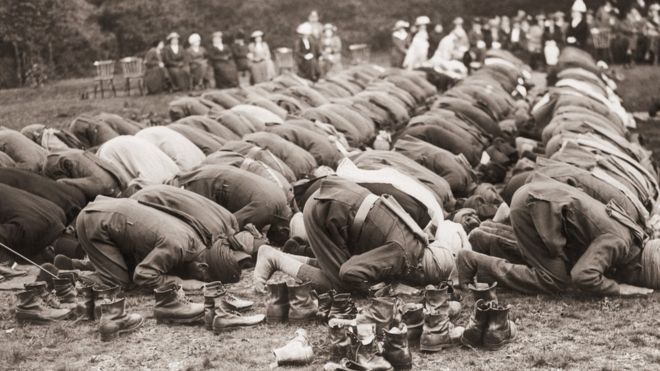
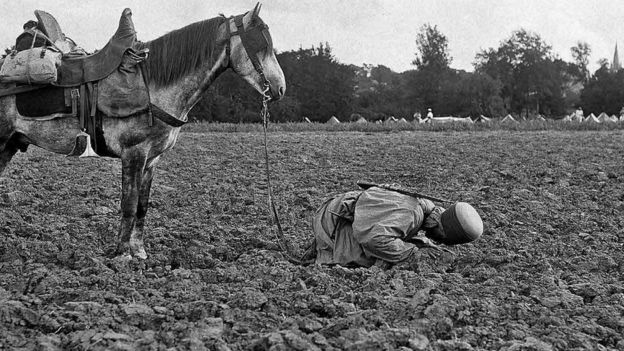
Indian troops serving with the British army pray outside the Shah Jahan Mosque in Woking, Surrey
A hundred years since the end of World War One, historians think recognising the contribution of Muslims can help tackle contemporary issues such as Islamophobia.
“Muslim soldiers have been forgotten about over time,” Hayyan Bhabha, from the Muslim Experience, says.
“The core far-right narrative is that Muslims have never done anything for us.
“Well, actually, with facts that are over 100 years old, we can say Muslims fought and died for the history and security of Europe.”
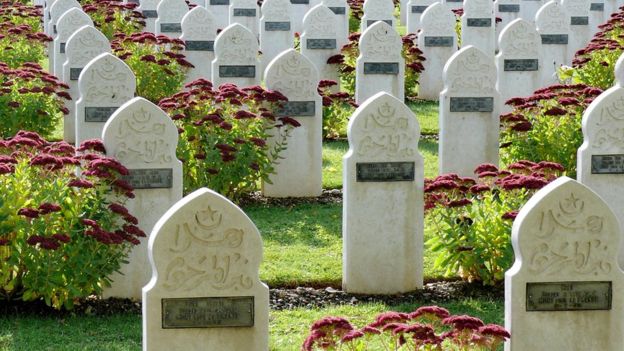
It is estimated that 1.5 million Indian troops fought to defend Britain. Of those, 400,000 were Muslim soldiers.
The Muslim Experience is working to highlight the global contribution of Muslim soldiers to World War One and says raising awareness could silence anti-Muslim rhetoric by far-right groups in Britain today.
Mr Bhabha says his team is now opening up documents and discovering new information about their role in the War.
“Accessing archives from 19 countries, we have discovered that more than four million Muslims either fought or served as labourers during the War, from around the world,” he says.
Image copyright FORGOTTEN HEROES 14-19 Image caption Muslim graves in French military cemetery Notre Dame de Lorette.
One of those was Sepoy Khudadad Khan, an Indian soldier who fought alongside British troops.
He was the sole survivor of a team assigned to defend vital ports in France and Belgium from German forces.
According to accounts, Khan managed to hold off the enemy advance long enough for British reinforcements to arrive.
On 31 October 1914, Khan, of the 129th Duke of Connaught’s Own Baluchis Regiment, became the first South Asian to receive the Victoria Cross, Britain’s highest military honour.
‘Feel more British’
Groups such as the Muslim Experience want stories of soldiers to be heard.
They also want more British Muslims to find out if they have a personal connection to World War One.
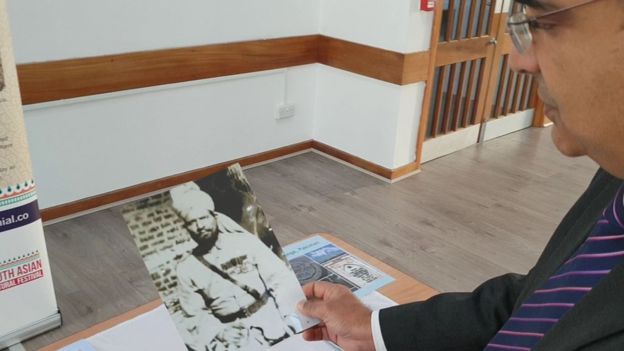
Just as a local GP in Nottingham, Dr Irfan Malik, did after he had a chance conversation with a patient that led him to discover two of his great-grandfathers had fought for Britain.
Image copyright FORGOTTEN HEROES 14-19 Image caption It is estimated that millions of Muslims fought for the Allied forces globally
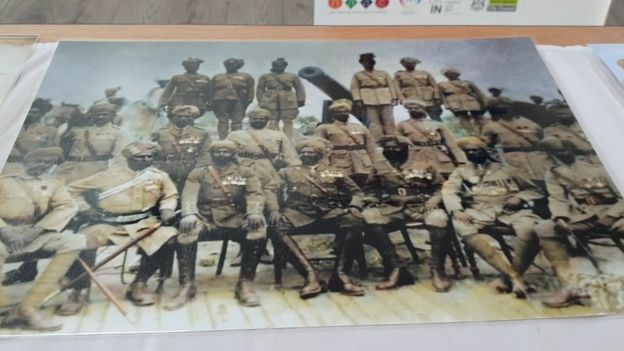
Dr Malik’s great-grandparents, Capt Ghulam Mohammad and Subedar Mohammad Khan, were two of 460 soldiers from a tiny village called Dulmial, in modern-day Pakistan, sent to fight in the 1914-18 conflict.
“One of my patients is a researcher of Commonwealth contribution to World War One and I told him about a village in modern-day Pakistan where I’m from that has a cannon commemorating the Great War,” he says.
“From that point four years ago, my journey began and I found out my two great-grandparents fought for Britain.
“I’m very fortunate to have images from 100 years ago. It means a huge amount to me. It’s made me feel more British as we have this shared history in common and I believe it helps community cohesion.”
Dr Irfan Malik has collected pictures of his great-grandfather Subedar Mohammed Khan
But how connected do British Muslims feel to the War and how aware is the community itself of its links to British military history?
Mr Bhabha thinks some young Muslims in particular are not engaged with British military history.
“Most Muslims are not engaged with military history because they can’t relate to it,” he says. “The way it is taught currently is very European-centric.
“The history that is taught doesn’t show the true diversity of everyone that took part in the First World War.”
Indian Muslim soldiers in the village of Dulmial, modern-day Pakistan
So, it has launched a campaign, Remember Together, to raise awareness in schools.
Steve Ballinger, from British Future, says: “Finding out that Muslim soldiers fought and died for Britain to protect us and to protect the freedoms we enjoy today, that’s an important history for everyone to know.”
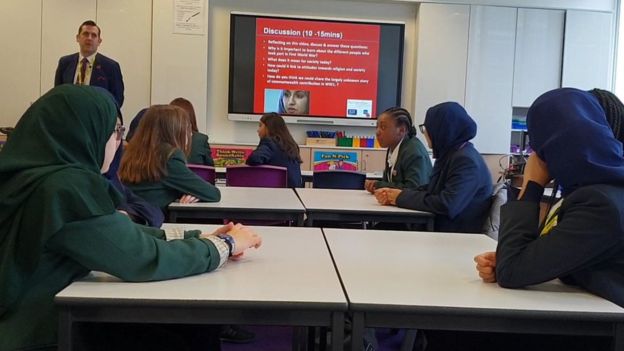
Pupils at Eden Girls School learn about the Muslim contribution to World War One
It has certainly meant a lot to Daleesha Naz, 14, of Eden Girls School, in east London.
“Today I learned that 400,000 Muslims fought in the British Indian army and it has made me feel closer and more connected to British history,” she says.
As the 100th anniversary of the end of World War One is remembered, historians, campaigners, and descendants of the soldiers are making sure the contribution of Muslims is never forgotten.
Luc Ferrier, who chairs Forgotten Heroes 14-19 – the umbrella group for the Muslim Experience – says: “If the world really wants to reach out to the international Muslim community, then they need to know the enormous contribution these people have made, fighting a war none of their making.
“Only by recognising and honouring the global Muslim sacrifices, not only these of the British colonies, we are reaching out to them and saying a genuine thank you”.
source: http://www.bbc.com / BBC News / Home> UK / by Rahil Sheikh / BBC Asian News Network / November 09th, 2018