Category Archives: World Opinion

Syed Mohammad ‘Rainbow’ Hadi: First man to score a Ranji Trophy hundred

Hyderabad, TELANGANA :

Syed Mohammad Hadi was nicknamed Rainbow for his prowess in cricket, tennis, field hockey, football, table-tennis, chess, and polo.

Syed Mohammad Hadi scored 132 not out in his team’s score of 227, becoming the first ever centurion in Ranji Trophy cricket. Photo courtesy: Wikimedia Commons.

One of the main issues under discussion during the July 1934 meeting of BCCI, held in Bombay, was a detailed discussion regarding the introduction of a nation-wide First-Class cricket competition, where teams representing the different local cricket associations of the nation would participate to ultimately determine the national champion. It was founded as “The Cricket Championship of India”. The tournament kicked off in 1934-35. The handsome trophy was donated by His Highness Sir Bhupinder Singh, Maharaja of Patiala, in memory of Ranji to cricket lovers all over the world.

As all students of Indian First-Class cricket history are aware, the very first Ranji Trophy match of all, between Madras and Mysore at Madras on November 4, 1934 turned out to be a bit of a letdown, the whole match being completed in one day. It remains the first of only 2 First-Class matches played in India to be completed in a day till date (the second being Saurashtra vs Baroda at Rajkot on December 5, 1959).

This match will forever be remembered for the wonderful bowling performance that resulted in a match of such short duration, 6 for 19 (out of total of 48) and 5 for 16 (out of 59) by the doyen of Madras cricket at the time, the great left-handed all-rounder, AG Ram Singh, patriarch of the first family of contemporary Madras cricket.

Perhaps a little overshadowed by AG Ram Singh was a right arm medium-pace and off-break bowler from the Mysore team, appropriately named Mysore Vijayasarathi, who picked up 6 for 23 in the only Madras innings of 130. Vijayasarathi would later cause a flutter among lovers of cricket trivia by umpiring a Ranji Trophy match between Mysore and Andhra in Dec/1960 at Bangalore along with his son, MV Nagendra.

The sad but undeniable fact was that there were no outstanding batting performances in the first two Ranji Trophy matches played.

The third Ranji Trophy match of the inaugural season began on the Friday, November 23, at Secunderabad. Hosts Hyderabad, led by Syed Mohamad Hussain, were taking on the Madras team, led by M Venkataramanjulu.

The hosts won the toss and decided to take strike. They reached a competitive score of 256 in their 1st innings, captain SM Hussain top-scoring with 80 and F Toorkey, opening the innings, making 72 runs. As if it were pre-ordained, Ram Singh captured 5 for 88. The Madras 1st innings finished at 301, with only Ram Singh (74) and Cotar Ramaswami (61) reaching double figures.

The Hyderabad 2nd innings was in disarray when the 3rd wicket fell at the team score of 12. Syed Mohammad Hadi then arrived at the crease to take strike. He scored 132 not out in his team’s score of 227, becoming the first ever centurion in Ranji Trophy cricket. This match was his Ranji Trophy debut match as well, and this century his maiden First-Class century.

In a surprising turn of events, the visitors were dismissed for 169 in their 2nd innings. That man Ram Singh (70) scored another half-century and MJ Gopalan made 58. The man who wrecked the Madras 2nd innings was one Tata Rao (8 for 73), and Hyderabad won by 13 runs.

Born August 12, 1899 in India, Hadi was a right-hand batsman who has no record of ever bowling in this format of cricket. In a span of 1930-31 to 1940-41, SM Hadi played 24 First-Class matches aggregating 1,043 runs with a highest of 132 not out (as mentioned above) and an average of 32.59. He was to later score another century and 3 fifties, and to take 9 catches.

Hadi’s profile informs us that his father Captain Syed Mohammed, erstwhile officer in army of Hyderabad state, had passed away when Hadi was just about two years of age. Hadi’s subsequent upbringing was through the support and supervision of the family of Sir Asman Jah, former Prime Minister in the court of the Nizam of Hyderabad.

He was brought up alongside the son of Sir Jah, Nawab Moin-ud-Dowlah, after whom the famous cricket tournament was to be named and who would become a famous patron of the sports of the region. Hadi had the opportunity of learning horse riding as a youngster and was sufficiently good at soccer to play for Nizam College. In view of the boy’s obvious aptitude for a number of sports, the family of Sir Jah decided to send him over to England to continue his studies.

In the newsletter VARSITY, dated June 12, 2016 from Cambridge is an article by Matt Worth, in which he comments, “The wardrobe in his room at Peterhouse must have been bursting with light blue jackets, as he shone at polo, tennis, soccer, field hockey, cricket and table tennis. A particularly fine tennis player, it is at the racket game that his sporting career perhaps hit its greatest heights, as he played at Wimbledon five times, reaching the doubles quarter final in 1926. He also represented India at the 1924 summer Olympics and in the Davis Cups of 1925 and 1926. The run of representative appearances for his country must have more than made up for his frustration at being denied the Light Blues’ tennis captaincy on account of his nationality.” He had an MA from Cambridge and a Masters from the University of Pennsylvania.

Hadi made his First-Class debut for Hyderabad against Maharaj Kumar of Vizianagram’s XI in the Moin-ud-Dowlah Gold Cup semi-final of 1930-31, played at Secunderabad in 1930-31, under the leadership of wicketkeeper SM Hussain, who was also keeping wickets.

He was well past the age of 30 at that time, and scored 17 and 42 not out against a team captained by Jack Hobbs, and for whom Herbert Sutcliffe scored 165 in the side’s only innings of 329. Hyderabad managed totals of 265 and 194 in a drawn match that was awarded to the visiting team on the basis of their 1st-innings lead.

It may be mentioned here that Hyderabad batted against the bowling of the brothers CK and Cs Nayudu and Ghulam Mohammad, among others. An interesting sidelight of this match was the fact that while Naoomal Jaoomal kept wickets in the home team’s first innings, he not only bowled but took 2 for 7 from his 3 overs while one P Shankerdas, who was not in the playing eleven for the visiting team, was allowed to keep wickets as a substitute.

In the Ranji Trophy clash with Madras at Chepauk in December 1935, Hadi, captaining the Hyderabad team, scored 85 and 0 in a match that Madras won by 6 wickets, Ram Singh being the undisputed hero of the match, scoring 121 and 57, both not out, and taking 2 for 77 and 6 for 32.

It was at Chepauk in February 1936 that India took on an Australian team in an “unofficial Test”. The home team was led by Wazir Ali and included luminaries like Kartick Bose, Mushtaq Ali, Lala Amarnath, Amar Singh, Ram Singh, Hadi and Mohammad Nissar. The Australian team was led by the ageing Jack Ryder and included, among others, ‘Stork’ Hendry, ‘Hammy’ Love (though he did not keep wickets in this match), and the one and only ‘Governor-General’ — Charlie Macartney.

India batted first and put up 189, thanks to 45 by Amar Singh and 43 by Mushtaq Ali. Macartney took 3 for 52. The Australian 1st innings ended at 162, with a good 48 from Fred Mair. Nissar (5 for 61) and Amar Singh (5 for 54) shared the wickets.

India managed only 113 in their 2nd knock, the top-scorer being Hadi with 19 not out (he had also made 19 not out in the 1st innings). Once again, it was Macartney among the wickets with 6 for 41.

The Australian 2nd innings was an even feebler effort — 107, with the only worthwhile score being 41 by captain Jack Ryder. Nissar (6 for 36) and Amar Singh (2 for 54) ensured an Indian victory by 33 runs. It must be said, however, that for the visitors, Hendry, Ryder, Love, wicketkeeper John Ellis, Macartney, Joe Davis, and Harry Alexander were past their prime and playing their last First-Class match. For the home team, Wazir Ali completed 1,000 First-Class runs for the season, and Hadi completed 500 career First-Class runs.

It was against the old foes, Madras again, that Hadi scored his other First-Class century, in the Ranji Trophy match at Secunderabad in December 1939, with a score of 106 (his 100 coming in 120 minutes) in a total of 443. Hyderabad batted only once in a match and won by an innings and 2 runs. Ram Singh, however, had still not finished with them, capturing 5 for 136 and scoring a solid 44 in the Madras 1st innings of 262. When he had scored 81, in this match, Hadi completed 1,000 First-Class runs.

His final First-Class match, again against Madras, was at Chepauk in December 1940. As captain of Hyderabad, his contributions were 2 (out of 98) and 16 (out of 132). Ram Singh, perennial nemesis of the team, turned in another stellar performance with 27 and 53, and picked up 6 for 30 and 4 for 26, as Madras won by 254 runs.

Retirement from his active playing days did not diminish his interest in sports. Along with his step-brother, Col. Ali Raza and with Nawab Mahmood Yar Jung, SA Rahim and Ahmed Mohiuddin, Hadi founded the Hyderabad Cricket Association and Hyderabad Football Association in 1934, with himself as the first Secretary.

He became the Director of Physical Education in Hyderabad and later, Joint Secretary of Education of the Indian Government. He was National Commissioner of Boy Scouts of India and, when the All-India National Council of Sports was founded in 1959, he was the first Secretary. The runners-up trophy of the Mon-ud-Dowlah Gold Cup tournament is now called the SM Hadi Memorial Trophy.

This multidisciplinary sportsman died in his native Hyderabad on July 14, 1971 of lung cancer. For his extraordinary skill at the seven sports of cricket, tennis, field hockey, football, table-tennis, chess, and polo, SM Hadi is fondly remembered by all Indian lovers of sport as ‘Rainbow’ Hadi.

(Pradip  Dhole  is a retired medical doctor with a life-long interest in cricket history and statistics)

source: http://www.cricketcountry.com / Cricket Country / Home> English> Features> Moments in History / by Pradip Dhole / June 16th, 2016

COVER STORY : Travelling in tandem

Bengaluru, KARNATAKA :

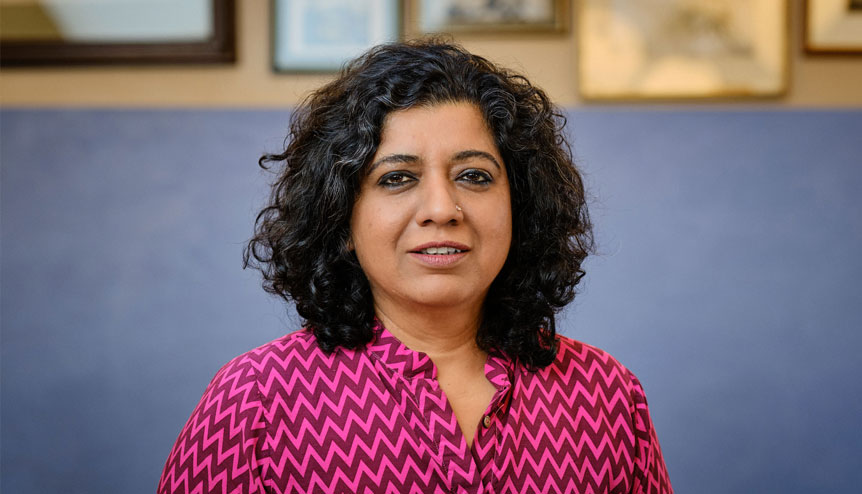
Anjum is a self-confessed foodie, and loves cooking. In fact, she recalls, it was this love and talent that led to her meeting Omer at the restaurant: “I used to bake a lot, and market my cakes and pastries to earn my pocket money, to spend on music and clothes”

He is a descendant of the royal families of Bhopal, Pataudi and the Paigahs of Hyderabad, she is the sister of the tycoons who run one of Bengaluru’s biggest realty companies. They have now joined hands to raise the level of living in the Prestige Group’s apartments and resorts-she designs and executes the interiors, while he has set up and runs the group’s hospitality vertical

Prestige01MPOs07oct2019

Nawabzada Omer Bin Jung and Anjum Razack met on a blind date. Well, not exactly a blind date, they say: “Actually, we were set up!” says Anjum, and Omer agrees. “But she picked me up!” he adds, with a twinkle in his eye. He is being literal: “I had no car, and used to roam around in buses and auto-rickshaws when I was working with Wipro.” So this young woman whom he had never met came to his office and gave him a lift.

Recalling the incidents of more than a decade ago, husband and wife keep bickering good-naturedly and correcting each other over details. The story that emerges is that a friend of Anjum’s said she wanted to meet her-at Casa Piccola, a restaurant to which Anjum used to supply cakes she baked. “And will you please pick up this guy Omer on the way? I want to meet him too,” she said. So an unsuspecting Anjum drove an equally unsuspecting Omer to the restaurant, where they sat and waited for the friend. When some time passed and she didn’t appear, they realised what had happened.

Was it love at first sight? “I don’t know if it was love, but I knew immediately that this was the guy I was going to marry!” she says. “My mother had always told me: ‘You should know what kind of boy you should bring home to meet me!’-and that afternoon I told her I had met the right man.”

Omer, for his part, “Enjoyed being the hunted, for a change”. They didn’t meet, or talk, for a month; but one day-just before Valentine’s Day, Anjum remembers-she and her friend were driving somewhere, when they spotted Omer walking. “We stopped, said ‘Hi!’ and gave him a lift.”

Things didn’t take very long after that. “My family doesn’t have the time for trivia!” Anjum explains. “I told my mother as soon as I got home that I had met the boy I was going to marry. I mean, we were two eligible young people in the same town. He was not of our caste of traditional business people, which was actually a plus point in his favour! Our families met, and I went through the various shredders his family put me through, then picked up the pieces-and we got engaged, then married in the next eight months.”

“We were two eligible young people in the same town. He was not of our caste of traditional business people, which was actually a plus point in his favour! Our families met, and I went through the various shredders his family put me through, then picked up the pieces−and we got engaged, then married in the next eight months.” − Anjum

Prestige02MPOs07oct2019

A few months before the marriage, they went to see Omer’s grandmother: “That was the first time I took a break from work,” she says. “Morph was still a one-person company, with only a set of carpenters to supervise. When we came back, I was broke, and went straight back to work. Side by side, I set up home and pottered around there, too.”

Anjum, the sister of the Razack brothers who run Bengaluru-based construction major Prestige group, is an entrepreneur in her own right: she set up Morph Design Company (MDC), which she runs as its Managing Director. Omer, who heads Prestige’s recent diversification into the hospitality business, comes from a long line of rulers-from the Paigahs of Hyderabad on his father’s side to a royal pedigree on his mother’s. “I have an interesting and diverse lineage. My maternal grandmother was the ruler of Bhopal with its matriarchal system. She married the Nawab of Pataudi, which was a much smaller kingdom, but both became our family’s houses. My father’s people were Prime Ministers to the Nizam of Hyderabad.” The Paigahs are a family of the senior aristocracy of the erstwhile Hyderabad State, with each of them maintaining his own court, individual palaces and a standing army of 3,000 or 4,000 soldiers.

Anjum, on the other hand, was what she calls ‘a one-woman army’ in a male-dominated business when she joined her brothers in 1993 and set up MDC. That ‘one-woman army’ has grown in 23 years to a Rs. 200-crore, 30-member team; but she continues to work hands-on with every project. “They are a bunch of kids-we are a young, growing office,” she says. “Besides, I love what I do-and I always put in 100 per cent into any assignment, because you always get only what you put in. I am also an obsessive perfectionist and would never deliver to a client what I wouldn’t live in myself.”

She had found, when she finished school, that she was in a ‘strange situation’ with not too many career options for a girl of her background-a Kutchi Memon in a typical business family, but one whose father had believed in education for his daughter as well as his three sons. “My parents have always been very aspirational for all their four children,” she explains. “We were all given education, encouraged to travel and grow-all against the norm in our community.” So after her B Com, she did a course in interiors with paint manufacturer Jenson & Nicholson. She then got a job with an interior designer in the early 1990s before joining the family business. “I jumped into the ocean headlong, without even knowing how to swim!” she says. “It was only the challenge that kept me

Prestige03MPOs07oct2019

MDC, which she established soon after that plunge, not only creates all the interiors in the Prestige Group’s developments, but also offers consultation, comprehensive planning and end-to-end design solutions for a range of other select clients for both their existing structures and new projects. She is also rightfully proud of the fact that her brothers Irfan Razack, Chairman and Managing Director of the Rs. 4,700-crore Prestige Group, and Rezwan Razack, who is Joint MD, never gave her any special privileges in business. “Even though we are a very close-knit family,” she says. “Morph is my very own, Prestige is my client. I charge design and project management fees, and for the furniture and other material I supply from either my own manufacturing units or those from whom I source them.” She does, however, describe working with family as putting her ‘between a rock and a hard place’ very often.

“My big idea was to reach out to the discerning interior design market, be it luxury or aspirational, and provide my clients with a lifestyle that they would enjoy,” is how Anjum how explains the way she approaches her work. “I wanted to introduce discerning customers to living spaces that represent and reflect their individual taste and stay relevant through changing times.” Designing an interior space, she points out, presupposes that “A design metaphor will reveal itself in every object, colour, finish and patina”. Obviously, when the idea finds expression and rhythm in such detail, the natural outcome would be a space made distinctive by its very uniqueness. “That,” she adds, “is why I do not just stop at designing the experience of an interior space, but also construct or create most of the objects that shape the design.”

“I went to boarding school at Sanawar, then Hindu College in Delhi and the London School of Economics. When I came back to India, I decided to move to Bengaluru instead of Hyderabad−it was a new city as compared to Hyderabad, and I could do anything here with its own level of decadence! Besides, my elder brother was here too” − Omer

“Good taste in interiors has come of age. The challenge lies in the fact that often, the notion of interior design stops at the placement of attractive objects in a well-designed room. While that is a mandate we can serve with ease, we challenge ourselves to give our customers much more. This we do by shaping their experience of interior space, through manipulation of spatial volume, as well as surface treatment. So, while apartments today are predicated on the optimal use of space and uniformity, our challenge is to create a unique interior space in a structurally similar landscape,” she says.

“We have also integrated backward to create a super-large vertical, with project management, sourcing and a trading company-and now even furniture manufacturing. We create 90 per cent of all the furniture that is provided in any Prestige construction.”

Prestige04MPOs07oct2019

From its beginnings as an in-house interior design subdivision, Morph has morphed into a fully integrated interior design firm that executes and handles projects for external clientele, too. It provides a one-point solution from design, creating a portfolio of work across apartments, villas, clubhouses, spas, resorts and hotels. Hotels, resorts or serviced apartments. “All of these need to be addressed very differently from one another,” Anjum explains. Along the way, the company has worked with globally renowned architecture firms like Dileonardo, Woods Bagot, HBA, MAP and SRSS, and executed projects as large as 2.5 million sq ft (nearly a quarter million sq m). “We have also won a lot of awards, in different areas of our work. My brothers look at me differently now!” she adds.

Describing herself as an entrepreneur at heart, not satisfied with interior design alone, Anjum says this is why she vertically integrated the manufacturing process by setting up state-of-the-art in-house factories over two decades ago, to cater to the different design sensibilities of customers, from traditional, classic to the more contemporary, experimental and eclectic. “Our products are also designed to give our clients great value for money across the entire product spectrum,” she adds.

“From a process perspective, everything from concept, drawings, prototyping, to the final production of each and every piece of furniture that we use in our projects is backward integrated,” she explains. “Our external dependence is minimal and allows us to achieve unmatched quality giving us the ability to create truly bespoke interiors, where each detail is created by us. Having control over customisation and production, we ensure that our design process is a constantly evolving and dynamic one”

“The journey has been tough-but a good tough!” Anjum smiles. “The biggest chip on my shoulder is that I didn’t go to design school. But I love working, and I have been loyal to my work.” She did, however, take a course in designing at Cornell University. “I firmly believe that you must always start from the back operations to be strong. There was a sad lack of originality and quality in the market-that’s why I started my furniture business with visits to China, Italy, Germany, Austria and Burma, getting the best rates at which I could import what I needed for each project.”

With this bottom-up organisational design approach, Anjum has been responsible for business development, strategic planning, diversification, and project management along with all other key executive functions. Her work is inspired by a diverse set of influences, both traditional and contemporary, and she references the Deco and Nouveau period styles as being particularly impactful. Firmly believing in the importance of constant evolution for prolonged success, she doesn’t hesitate to incorporate innovative materials into her projects, work with young artists and experiment with all aspects of execution.

“Some things are non-negotiable! For instance, no phones are allowed at meal time. The kids get a platform to talk to each other and us, about things that would otherwise get buried in their busy lives. There are some ground rules, and they stick to them” – Omer

Prestige05MPOs07oct2019

“My two new factories involve a huge investment, which means I will probably be able to break even only two or three years,” says the businesswoman, now 49. “The state-of-the-art factories have been conceived with a lot of mechanisation-manufacturing wooden joineries, handcrafted furniture, modular furniture, wardrobes, windows and kitchen assemblies. MDC also has a unit which specialises in developing soft furnishings.” Today, Anjum can proudly claim that she has nurtured MDC into one of the country’s most respected décor studios with globally recognised clientele and numerous national and international awards to its credit.

Talking of challenges, Anjum says the biggest one has always been the debate between functionality and design and how to marry them: “The aspirational customers have a relatively limited budget and want products that are aesthetically pleasing, have longevity and are easy to maintain. We have strived to address the needs of this particular segment and are happy to say that we have managed to achieve it to a very large extent.”

The other challenge, she says, is to provide aesthetic designs to any area. “Everyone deserves appealing spaces, regardless of its size,” she says. “We, at Morph Design Company, excel in providing just that.” Pointing out that the business also involves effectively executing two opposing areas of demand: the high-volume kitchen and wardrobe assemblies on one side, and the need for personalised and exclusive products that cater to the individual versus the mainstream on the other, she credits the nature of these challenges is what keeps her and her team striving for excellence.

Anjum is a self-confessed foodie, and loves cooking. In fact, it was this love and talent that led to her meeting Omer at the restaurant: “I used to bake a lot, and market my cakes and pastries to earn my pocket money, to spend on music and clothes,” she says. “Casa Piccola was one of my biggest customers. And so, when my friend Goga suggested meeting her there, I didn’t think it was at all strange.”

She also reads voraciously and loves to travel-collecting art and antiques from the places she visits. Her husband shares her interests-and so they pack their bags and heads off to different locales in India and abroad. The couple began with a two-week honeymoon in Africa; and because he loves surprising her, he recently took her on a road trip from Budapest to Prague via Vienna-“He made me drive!” she mock-complains- so that he could treat her to a four-hour meal at a three-star Michelin restaurant on the way.

Prestige05MPOs06oct2019

Nawabzada Omer Bin Jung, formally designated Executive Director, Hospitality-Prestige Group, is also the Founding Managing Director of Prestige Leisure Resorts (P) Ltd. With three decades of experience in hospitality, he is currently spearheading the Group’s foray into hospitality. “I went to boarding school at Sanawar, then Hindu College in Delhi (where he was a gold medallist in his BA, Anjum intercedes) and the London School of Economics,” he says. “When I came back to India, I decided to move to Bengaluru instead of Hyderabad-it was a new city as compared to Hyderabad, and I could do anything here with its own level of decadence! Besides, my elder brother was here too.”

After a couple of years in the finance department of Wipro, he joined his brother who has a resort in Bandipur. “Actually, it was a just a Club House; now it has been converted into the Northwest County resort,” he explains. In 1997, three years after he married Anjum, he floated the idea of helping his brothers-in-law take their construction business into resorts. “There has been no looking back since then,” he says. “We also have food courts in malls, we run franchises for Subway, Falafel and others… it’s a good mix.”

Adds his Begum: “It wasn’t an asset class at all – it was Omer’s brainchild.” He explains that because the business was totally in real estate, it had no assets on its balance sheet because all its projects were sold. “Assets are always good to have,” he says. “That’s where the discussion started. And we began to become more asset heavy.”

And so, having established Prestige Leisure Resorts, Omer now aims to set up international spas, city hotels, resorts and food courts all over India in the coming years. He is amply qualified: besides his gold-medal BA and his post-graduate Diploma in Business Studies from LSE, he also has a post-graduate Master’s Degree in Business Administration with a specialisation in Marketing, as well as a Certification in Strategic Management by Cornell University School of Hotel Administration, US.

“To excel in any field, one needs to be a team player. Managing people and ensuring employee and customer satisfaction is an integral part of being a success. We are a service-oriented industry and it is our team’s talent that decides the success of our work” – Anjum

Prestige07MPOs07oct2019

At Prestige, Omer has been instrumental in conceptualising and tying up with Banyan Tree Hotels and Resorts, Singapore, for one of Bengaluru’s most beautiful spa resorts the world-class Angsana Oasis Spa & Resort; the Angsana Oasis City Spas at UB City; Hilton International for the Conrad, Bengaluru; Oakwood Asia Pacific for the Oakwood Premier Serviced Residences at UB City and the Oakwood Residences-Forum Value Mall, Whitefield as well as the 3.4-hectare Sheraton Grand Whitefield Hotel and Convention Center in the group’s Shantiniketan project; the JW Marriott Hotel in Prestige Golfshire below the Nandi Hills and the 23-storey Conrad Hotel overlooking the Ulsoor Lake. He is also the brain behind the Transit food lounge at The Forum, Koramangala.

“We have introduced some of the most reputed international brands in the world to South India, such as the Hilton Group and Marriott International for hotels; the Banyan Tree for resorts: our Angsana Oasis Spa & Resort is managed by Banyan Tree Hotel & Resorts, Singapore. We also have the Oakwood Premier Prestige Serviced Residences in our landmark development, UB City, as well as in Whitefield,” he points out. We launched our hotel, ‘The Aloft’, in Prestige Cessna Business Park in 2014 in association with Starwood Hotels & Resorts Worldwide.”

Anjum also shares some of the secrets for her success: “To excel in any field, one needs to be a team player. Managing people and ensuring employee and customer satisfaction is an integral part of being a success. We are a service-oriented industry and it is our team’s talent that decides the success of our work. Therefore, it is very important to ensure that your team is motivated and happy. Finally, it is crucial to have in depth knowledge of both the industry and the products, which is only possible if you have a genuine passion for your work, as only then will you constantly strive towards perfecting your art.” Apart from this, it is paramount to believe in yourself, your abilities and objectives and have the right conviction. Life is full of complexities. Keeping things simple and using a straightforward approach helps unravel intricacies.

Her role models are her father Razack Sattar, an enterprising entrepreneur who started Prestige Fashions way back in 1956; and after his passing, her three elder brothers Irfan, Rezwan and Noaman have been her mentors, propelling her to success. “They have inspired me to keep pushing myself to achieve greater heights and are a source of constant motivation for me,” she explains. She too wants to carry on this culture of helping others: “I want to create a platform for young interior, product and furniture designers whom I will launch and mentor, to help hone their skills and realise their dreams,” she concludes.

The Jungs’ daughter Zara was born in 1999, and their son Ayaan five years later. “Kids never worried me, I enjoy them at all ages,” Omer says. And Anjum gives him ‘100 per cent for being an outstanding father’, saying: “He handles the children so well. Till date, he puts Ayaan to bed every night. He also takes his just-into-his-teens son on a fishing and hunting trip for two weeks every year.”

How did they manage everything: work, which is often 24×7, parenting- which is 24×7-and getting away for holidays? “We have a very good support system in the family,” Anjum says. “My mother has always been a big help, even though she was looking after my father who fell sick in 1995 soon after our marriage, and never recovered till he passed away in 2004. But I too never thought of multi-tasking-handling work, kids and home-as a problem. Of course, we had good staff: our maid and driver are very devoted to the family.”

Both of them are religious, and practise their faith: “We pray, fast, and go for Haj,” Omer says. Adds Anjum: “My mother was very pragmatic in her approach to Islam, though my father was more ritualistic.” According to Omer, their prayers are more for thankfulness than to ask for something. “We are so blessed,” he points out. “We have been to Arabia few times. So yes, we practise-but at the same time, we question.” Says Anjum, simply: “I like the balance.”

And the children are, fortunately, not yet growing away from their parents: Zara has her own life, but is at the same time totally plugged into the concept of family. “Some things are non-negotiable!” says Omer. “For instance, no phones are allowed at meal time. The kids get a platform to talk to each other and us, about things that would otherwise get buried in their busy lives. There are some ground rules, and they stick to them.” They are not totally happy going away on their own, but can still manage independently all over the place. Zara, for example, went to Oxford on her own for a summer course, Anjum points out. “She organised her own travel, and did very well there too-she came first in her class.”

All four of them spend a lot of time together as a family, even on holidays. “We don’t need to go out and mingle, we are very content by ourselves,” she says. “Three holidays every year are a must. We go away for the summer, Dussehra and Christmas vacations.”

Prestige08MPOs07oct2019

Last year, Ayaan came up with a surprising question: “Why must we always fly abroad? Why don’t we take a holiday in India?” Says Omer: “Both of us had found it very difficult earlier to wrap ourselves around a holiday in India. But after my son asked this question, we decided to go to Rajasthan-it was fun. We like our luxuries-but besides the Michelin restaurants, we also like to eat local food in different places. For example, we had a great meal of daal-bhaat at a truck stop in Rajasthan.” They didn’t of course, exactly rough it out in the desert: his royal connections ensured that they had the best hospitality in the local palaces. “India is brilliant!” Anjum says.

“Even though both of us are busy, we like to invest time in the kids as well as for ourselves together,” Omer says. “Of course, there is always a trade-off, in terms of earning less than we could if we concentrated only on our work or business. The question of what has priority in our lives keeps changing. But health, time with the children, family time, religion-they all take precedence.”

In addition to all this, Omer manages to find time to play cricket-coming as he does from a cricketing family-and golf, besides his angling and hunting which again is a throwback to his family’s traditions. “He is a ‘renowned shot’!” Anjum says with obvious pride. That, he explains, is a qualification that enables him to participate in national shooting championships. He is also interested in football, and took his son to watch Manchester United play a home match on Boxing Day last year: “There must always be an element of surprise in what I do,” he grins. “I had planned the itinerary for that trip with a gap of one day, which the rest of the family were clued in that they didn’t even notice! That was the day I just took off with Ayaan for the match.”

“We have introduced some of the most reputed international brands in the world to South India, such as the Hilton Group and Marriott International for hotels; the Banyan Tree for resorts: our Angsana Oasis Spa & Resort is managed by Banyan Tree Hotel & Resorts, Singapore” — Omer

How have they found the much-vaunted “entrepreneur-friendly” systems introduced by the government, especially that of Karnataka where they operate? “Well,” starts Omer, “When we started the hospitality business, we needed a total of 29 licenses… But today,” he pauses dramatically, and adds: “We need 29 licenses, still. The license raj has not gone away, it is only that we have learned to handle it more gracefully. The pain is still there. But we had the luxury of assets like easy access to loans and, our families.”

Anjum’s story is slightly different. “I started as a woman entrepreneur,” she explains. “That angle worked for me.” She still loves to cook; and, Omer says, “People love to be invited to our home for a meal.”

“We never have the time to get bored,” Anjum says. “We’ve practically grown up together, through our 23-year marriage. Both of us are the same age, so that’s almost half our lives. We have so many things in common; like, we were reading the same translation of the Quran, or The Little Prince, at the same time-but we are still as different as chalk and cheese. Of course, his stupid sense of humour sometimes irritates me, but…” To which her husband grins. And she adds: “I promise you, I wouldn’t want to grow older with anyone else but Omer.”

source: http://www.corporatecitizen.in / Corporate Citizen / Home> Cover Story / by Sekhar Seshan / Vol.3, Issue No. 2 / April 15th, 2017

Tracing the Journey of Murrabas from Central Asia to the Indian Kitchen

INDIA :

Image result for images Tracing the Journey of Murrabas from Central Asia to the Indian Kitchen

__________________________________
Highlights
  • Murraba came down to the Indian kitchen possibly from Central Asia
  • The Royal Turkish kitchen had a separate section devoted to murraba
  • In Azerbajjan, the jams are part of every tea time table

__________________________________

It’s a spiced and sweet preserve that possibly has as many people who revile it as those who love it. Murabbas are not for everyone-and even before we begin this piece, here’s the disclaimer: I absolutely, staunchly, vehemently dislike it. But then I don’t care for European style jams either, and my revulsion with the murraba may have something to do with the fact that as children we were force fed quite a bit of it on grounds of good health.

Unlike the mango murraba, popular in Gujarat, in UP, it is Amla ke Murraba that used to be quite popular at least within a social mileu engendered by the fabled composite Ganga-Jamuni tehzeeb or culture of the region. While that culture may be marginalized today, the story of murraba is one that can keep it preserved, much like the fruit itself.

Murrabas possibly came down to the Indian kitchens from Central Asia, where they are a part of many regional culinary cultures. Georgian food, for instance, has preserved sweet fruit as part of the traditional desserts . In Azerbaijan, the jams are part of every tea time table. And the food of the Ottomans that borrows from all these traditions has murraba-making firmly in place. The royal Turkish kitchens had a separate section devoted to “rub” and “murraba”, styles of jams that were thicker than the other Western style jams. To make these, fruit pulp and sap was boiled and thickened and then dried in the sun to preserve it for the harsh winter months.

Photo Credit: Nata Vkusidey/Istock. Mango murraba from Gujarat

Murrabas in all these central Asian and Turkish traditions naturally used the bounty of the land – the many fruit available in these regions from black currants to quince, pomegranate and even rose that grew in the imperial gardens. Different cities were famous for different jams.

The Mughals who ruled India for almost 300 years obviously brought to the subcontinent this way of preserving fruit from central Asia. Some murraba traditions that we still find in the country – like a ginger candy in Andhra Pradesh are quite reminiscent of the central Asian sweets. However, the Subcontinent had its own fruit and spices and local produce was naturally used to make these preserves.

Image result for images Tracing the Journey of Murrabas from Central Asia to the Indian Kitchen

Photo Credit: Xuanhuongho/Istock

Apple  murraba from Himachal, Amla from UP and Mango from Gujarat are perhaps the three most popular murrabas in our midst today, though the almost anything can be candied. Naturally, any fruit with a slightly sour (or astringent) flavour is far better suited to being stewed than sweet ones, which already have a high sugar content.

Amla, or the Indian gooseberry, now regarded as a superfood, is rich in Vitamin C, has fiber to combat digestive ailments and a host of trace minerals which are invaluable nutrients. In Ayurvedic medicine, the fruit is support to bring many benefits-it is given to pregnant women as a source of nutrition.

To make a murraba out of amla was obviously a way to make the fruit more palatable. The sour and bitter berries are cooked in honey  or sugar , candying them. Eating one or two of these candied fruit a day is supposed to be therapeutic.

Murraba04MPOs07oct2019

Of course, the use of murraba or preserves as something out of a pharmacy itself is a Turkish tradition, where the royal cooks developed recipes out of ingredients regarded as medically superior for the elite. It was a practice that the Mughal aristocracy followed too and murrabas became a rich man’s delicacy and indulgence. Those times are past, and yet some tastes linger on.

_________________________________

About the Author:

Anoothi Vishal is a columnist and writes on food for The Economic Times and NDTV Food, and runs the blog a moveablefeast.in. She tracks the business of restaurants and cuisine trends and also researches and writes on food history and the cultural links between cuisines. Anoothi’s work with community-based cuisines led her to set up The Great Delhi Pop-Up three years ago, under which she promotes heritage, regional and community-based cuisines as well as researched and non-restaurantised food concepts. She has also been instrumental in reviving her own community’s Kayastha cuisine, a blend of Indo-Islamic traditions, which she cooks with her family and has taken across India to a diverse audience.

Disclaimer:

The opinions expressed within this article are the personal opinions of the author. NDTV is not responsible for the accuracy, completeness, suitability, or validity of any information on this article. All information is provided on an as-is basis. The information, facts or opinions appearing in the article do not reflect the views of NDTV and NDTV does not assume any responsibility or liability for the same.

source: http://www.food.ndtv.com / NDTV Food / Home> Food & Drinks / by Anoothi Vishal / September 18th, 2017

India’s blind judokas win 19 medals at Commonwealth Judo Championships

INDIA :

JudokasMPOs01oct2019

Visually impaired judokas of India made a clean sweep at the 16th edition of the Commonwealth Judo Championships held in the United Kingdom winning seven gold medals.

The Indian national anthem could be heard 19 times at the University of Wolverhampton Sports Centre in Walsall, United Kingdom, venue of the Commonwealth Judo Championships as India’s visually impaired judokas made a clean sweep walking away with seven gold, seven silver and five bronze medals.

Nineteen members of the 20- strong Indian contingent won medals at the event, making it a day to remember.

The names of the medal-winners in each category were as follows:

  • Gold – Kusum, Poonam Sharma, M. Manoharan, Karmpal, Kapil Parmar, Swati Sharma and Subhashini.
  • Silver – Syed Ahtram Hussain Naqvi, Kokila, Muthulakshmi, Monu, Ramesh, Sonali and Mohit.
  • Bronze – Rohit, Buddhadeb Jana, Sarita Choure, Renuka, and Ajay Birajdar.

The other countries taking part in the event were England, Wales, Scotland and South Africa. Scotland, England and Wales also won gold medals, but India was far ahead of the rest. The performance has made the Indian Blind and Para Judo Association, which manages visually impaired judo in India since 2010, very proud.

We are very happy to have made a clean sweep at the Commonwealth Judo Championships. I really hope that the experience and exposure that the players have got will help them play better in the future. Also, the confidence that the team gets after a performance like this, is unparalleled. – Munawar Anzar, General Secretary, Indian Blind and Para Judo Association

Aaesha MunawarJoint Secretary of the association, told NewzHook that given the challenges faced by people with disabilities in India, their success was truly remarkable. “Compared to the kind of support that non-disabled sportspersons get, para sports gets nothing”, said Munawar. “We have to beg and borrow for everything and when you cast a glance at the support other countries give, the contrast is glaring”.

Over the years the number of visually impaired judokas in India has grown. There are now about 700 visually impaired judokas playing at the national level, about 45% of them girls. The maximum participation is seen from the states of Tamil Nadu, Haryana and Uttar Pradesh. Judo, says Munawar, gives them the opportunity to empower themselves, but convincing families and blind schools to send students for judo training is hard.

“We have girls as young as 10 taking part and its great to see that but the challenges are many. We want to make their parents proud and help the judokas improve their levels”. The association hopes to send a team to the Tokyo 2020 Paralympics and all efforts are currently geared towards that.

source: http://www.newzhook.com / Newz Hook / Home> Stories / September 2019

Hyderabad-based doctor wins Bhatnagar Award for contributions in science and technology

Hyderabad, TELANGANA :

The list of awardees was announced on Thursday. This is the fourth Bhatnagar award for LVPEI, which is the only eye institute to win the award.

Dr Mohammad Javed Ali of the Hyderabad-based LV Prasad Eye Institute. ( FIle Photo )

Hyderabad :

Dr Mohammad Javed Ali of the Hyderabad-based LV Prasad Eye Institute (LVPEI) has won the coveted ‘Shanti Swarup Bhatnagar Award’ in the ‘Medical Sciences’ category for his outstanding contributions in science and technology this year.

Javed currently heads the Govindram Seksaria Institute of Dacryology at LVPEI and is a senior Humboldt scientist at Friedrich-Alexander University, Nuremberg, Germany.

The list of awardees was announced on Thursday. This is the fourth Bhatnagar award for LVPEI, which is the only eye institute to win the award. This science award is presented annually by the CSIR and is considered as the highest multidisciplinary science award in India.

Another reward for research

Among his several awards, Dr Javed has received The Experienced Researcher – Senior Alexander Von Humboldt Fellowship Award, which is one of the pinnacle awards given out for research

source: http://www.newindianexpress.com / The New Indian Express / Home> Cities> Hyderabad / by Express News Service / September 28th, 2019

How Budha Ismail Jam, a Gujarati fisherman, challenged multinationals in a US Court

Tragadi Village (Mandvi Taluk, Kachchh District), GUJARAT :

BudhaIsmail01MPOs30sept2019

In 2005/06, when coal plants were set up in Kutch District of Gujarat district, locals were promised employment. The project, set up by Adani and Tata Groups and backed by international financial institutions, was considered ‘efficient’ and aimed at selling power to other states too.

More than a decade later, locals continue to count the ecological costs of these plants.

Tragadi, one of the villages, is home to fishermen who realised that their catch has decreased dramatically after the plants were set up, while the village of Navinal, which was rich in horticulture and agricultural produce, saw damaged date palms and other fruits and reduction in farming.

Adani Power started the region’s first coal-fired power plant. The village of Navinal is about 8 km from the Adani Mundra plant. The Tata Mundra “ultra mega power project,” built by the Tata Group is also nearby.

The heated wastewater released from the plants containing saline, from the outflow channel of the plant, released in the sea waters at the rate of 600 million litres per hour, was badly affecting marine resources.

Apart from this, huge amounts of sand were deposited near wells used for drinking water, turning them saline and non-potable.

The coal dust and fly ash and the groundwater now contaminated with saline water have made farming difficult and many people have given up growing crops.

And this is when Budha Ismail Jam, a fisherman from Tragadi, and the people of Navinal came together to form MASS (Machimar Adhikhar Sangharsh Sanghathan) in 2010 and act collectively to make accountable the powers behind their woes.

In a conversation with TwoCircles.net, Jam explained how their lives had been impacted after the power plants were set up. “Earlier, I and my sons used to catch plenty of fish within a short distance of just 2 kilometres with just one fishing boat. But gradually our catch decreased and we had to sail at least 12 kilometres to catch fish. And since one boat was not enough, I had to avail a loan and buy 3 more fishing boats.”

“Today, our catch from the 4 boats equals the catch of one boat before the power plant was set up,” he explained.

They first complained to the companies about the damage to marine life and demanded that the companies switch to a closed-cycle cooling system instead of the open cooling system that required 3 times more water. But the company refused to comply.

Then, the people had a series of meetings with the whole community and the leaders approached a Delhi-based NGO called Centre for Financial Accountability’. The executive director of this NGO, Joe Athialy, helped the fishermen and farmers moved the complaint advisor ombudsman of IFC (International Finance Corporation). The ombudsman conducted an internal audit and submitted its report in 2012 and the CRP submitted its report in 2015 but nothing changed.

The Role of the International Finance Corporation

The IFC, which has its headquarters in the United States, has partially funded the TATA power project. The entire project costs $4.14 billion and the IFC has funded $450 million, while the remaining was funded by Asian Development Bank and other agencies.

IFC, which is a member of the World Bank Group, focuses on financing private sector developmental projects in poor and developing countries. The mission of IFC is to “carry out investment and advisory activities with the intent to not harm people and the environment.”

However while investing in the TATA Mundra Plant; they went against their mission causing damage to the environment, livelihood and health of the people.

Jam, also the leader of the fishermen community which is mostly Muslim, told TwoCircles.net, “due to the water contamination, many people here keep falling sick frequently”.

The Suit in the US court

Jam, Bharat Patel from the Fishing Union and Joe Athialy sent a petition signed by 30,000 signatories to the World Bank President asking them to withdraw the funds to the TATA project due to the environmental violations caused by the plant. They even wrote to Indian tribunals that worked on environmental issues.

They tasted brief victory when the nearby plants were halted. But operations resumed when the plant got environmental clearance a year later.

But after their petition reached the World Bank, their story became known in other parts of the world and soon activist lawyers from EarthRights International came to their village and met the aggrieved fishermen.

And thus in 2015 began the Jam et al v. International Finance Corporation trial. EarthRights International (ERI), an NGO which works extensively in defense of human rights and the environment, supported Jam and the others in suing the IFC in the Federal District Court for the District of Columbia claiming damages and injunctive relief for the harm caused due to air, water and land pollution by the power plant financed by IFC.

IFC claimed immunity because groups like the World Bank were exempt from prosecution under the US International Organisation Immunities Act (IOIA), 1945. And in 2016 the court agreed that IFC enjoys ‘absolute immunity’ and dismissed the case.

But Jam and his team did not give up. They appealed again in the court of Appeals (which is like High Court) for the District of Columbia Circuit where again IFC won because the order of the district was upheld.

Just when things were becoming bleak, Stanford Supreme Court Litigation Clinic, a law school which offers hands-on legal experience in Supreme Court litigations, offered to help the litigants Jam, Patel, Earthrights International to move the Supreme Court of US in 2018.

Mundra thermal power station ( Photo from Wikipedia)

TwoCircles.net also spoke to Joe Athialy, who had attended the proceedings at Washington on behalf of the litigants back home and he explained, “We understood the importance of our case being heard in the Supreme Court when we learnt that out of 7,000 cases, the Supreme Court agrees to hear only 150 cases. And we were lucky our case was one among these. Here, all the 9 judges sit for all the cases unlike in India.”

“But in our case one judge, who was in the Appeals court, excused himself and the other 8 judges heard the case.”

He also explained that there were a lot of people present in the courtroom and that the entire proceedings were completed very fast.

And then came the verdict this year in February 2019, wherein the Supreme Court, ruled in favour of Jam and others and ruled that even International organisations can be sued and that they do not enjoy absolute immunity.

This was a landmark judgment and a huge victory, not just for the plaintiffs from India but to all the people who think that international organisations are not above the law.

On winning the suit Joe Athialy told TwoCircles.net, “This is a big deal not just for the people of Mundra but for multiple reasons because this is the first time in the world, a case against the World Bank has come to this level, this is the first time the immunity of the world bank is challenged. And this allows people anywhere in the world to sue the World Bank if there has been damage to the environment and lives of the people.”

“We believe this is another step towards holding these institutions accountable,” he added. “Now the case has been sent to the district court for further litigation.”

Apart from this case against the IFC, Jam, Patel and Joe have also written to the other financial institutions that have funded this project like ADB. They have also written to the pollution control board in India.

“We also wrote to the Indian Banks through whom the project is operating. But none of the banks has even responded”, Athilay said. “At least international banks respond. They don’t even have such policies”.

Jam says, “I am happy that our efforts have paid off and we have won the case. But I have asked for compensation for the losses we have incurred in our livelihood and I hope we will be given compensation.”

“I was offered money for not fighting the case but I stood my ground because I was not thinking of just myself but all the fishermen community,” he said proudly. But in a sad tone he added, “Earlier when our fish business was good, I had many dreams for my grandchildren. But today we are not earning half of what we did before and I don’t give much thought to my dreams.”

However, he hopes for better days if the courts order the power plant to stop the open cooling system then the wastewater outflow will be reduced and things might improve slightly better.

source: http://www.twocircles.net / TwoCircles.net / Home> Lead Story> TCN Positive / by Nikhat Faima, TwoCircles.net / September 28th, 2019

Urdu not a foreign language, says Panjab University’s Urdu Department

PUNJAB :

From its glorious status during the Nizami Deccan, Urdu has few takers today.

PU’s Urdu Dept. objects to being clubbed with foreign tongues

The Panjab University’s Urdu Department has objected to its proposed merger with other foreign tongues, asserting that Urdu is not a foreign language  but an Indian one like Hindi and Punjabi.

The university recently proposed making the Urdu Department part of the School of Foreign Languages to be set up after merging departments of Russian, French, German, Chinese and Tibetan languages, said Urdu Department coordinator Ali Abbas on Saturday.

“Urdu was born, nurtured and cultured in India during the first two decades of the 13th century by Amir Khusrau. From that moment onward, Urdu and Hindi languages have not looked back. Not only this, even Punjabi language was put on the path of development by Baba Farid Ganj Shakar,” said Mr. Abbas in a letter to the PU’s Dean University Instructions (DUI). A “wrong impression” is being created by certain elements that Urdu is a foreign language”, said Mr. Abbas, asserting that “it is far from the truth”.

The Urdu script. The photo is for representative purpose only. | Photo Credit: S. Harpal Singh

Urdu, Punjabi and Hindi are the three main languages of India which were later accorded the status of State language at different times, the letter stated.

The Urdu Department raised the objection after the PU authorities recently proposed to merge small departments with less than six faculty members with each other to form one single school or centre, as per new norms laid down by the National Assessment and Accreditation Council (NAAC).

As per PU’s proposal, the merger is aimed at enhancing “academic performance by sharing infrastructure and human resources of various smaller departments”.

Mr. Abbas has, however, suggested bringing the departments of Hindi, Urdu and Punjabi under one umbrella of the department of Indian languages. “… or the Urdu Department may be allowed to function independently as per the present arrangements,” he wrote.

Final call tomorrow

Several other departments are also being merged. A 15-member panel will take a final call on the proposed mergers on September 30.

Before Partition, the Urdu Department was a major department of the then University of Punjab, Lahore, which was set up in 1882.

It was introduced in Panjab University, Chandigarh, in 1976.

source: http://www.thehindu.com / The Hindu / Home> News> National / by PTI / Chandigarh – September 29th, 2019

World Athletics C’ships: Jabir reaches 400m hurdles semi-finals, long jumper Sreeshankar disappoints

KERALA :

Jabir finished third in Heat 1 with a timing of 49.62 seconds to qualify for the semi-finals to be held on Saturday.

Long jumper M Sreeshankar failed to reach the final after a disappointing performance while 400m hurdler M P Jabir made it to the semifinals on the opening day of the World Athletics Championships here on Friday.

Another 400m hurdler Dharun Ayyasamy, the national record holder, tumbled after the last hurdle in his heat and failed to qualify for the semifinals.

Kicking off India’s campaign, 20-year-old Sreeshankar could only produce a best jump of 7.62m from his three attempts in the qualification B to finish 22nd overall. His effort was well below his season’s best of 8.00m, which he had produced only last month in Patiala.

Later in the day, Jabir finished third in Heat 1 and 11th overall in men’s 400m hurdle with a time of 49.62 seconds to qualify for the semifinals to be held on Saturday. He has a season’s and personal best of 49.13.

Ayyasamy could only clock 50.55 as he lost precious time after hitting the final hurdle. He finished sixth in Heat 5 and 27th overall to miss out of the semifinals.

Ayyasamy, who had recovered from an injury recently, has a personal and season’s best of 48.80.

The first four in each of the five heats and the next four fastest qualify for the 400m hurdles semifinals.

source: http://www.scroll.in / Scroll.in / Home> World Athletics / by Press Trust of India / September 27th, 2019

Kashmir’s Amir-e-Kabir Days

JAMMU & KASHMIR :

The period between 1371 and 1405, during the initial days of the Shahmiri Sultanate, was extremely crucial in Kashmir’s transition to Islam. It witnessed the arrival of Amir-e-Kabir, his son and their 1000-odd followers who joined a more than 200-year old campaign for Islam in a Hindu state. How these 33 years changed Kashmir forever is one of the fascinating stories of Kashmir’s quantum jump in faith and mobility, reports Masood Hussain

Khanqah Moula. KL Image: Bilal Bahadur

Noble of nobles, commander of Persia;
whose hand is the architect of the nations;
Ghazali himself learned the lesson of Allah is He;
and drew meditation and thought from his stock;
Guide he of that emerald land, counsellor of princes, dervishes, and Salatin;
A king ocean-munificent, to that vale, he gave sciences, crafts, education, religion;
That man created a miniature Iran, with rare and heart-ravishing arts,
With one glance, he unravels a hundred knots
rise, and let his arrow transfix your heart.”

Allama Iqbal on Shah-e-Hamadan in Javid Nama

Involving the reign of four Sultans, the history of Islam in Kashmir had a vital three decades that went into shaping the society as it is known today. This period begins with Shah-e-Hamadan visiting Kashmir in 1371, and concludes with the emigration of his son Mir Mohammed Hamadani from Kashmir in 1405. This period also witnessed the emergence of Sheikh Noorruddin Noorani, Kashmir’s bearer saint, and Lal Ded, one of Kashmir’s most popular woman ascetics, whose campaign against idolatry is unprecedented in Kashmir history.

This period falls in the first phase of Kashmir Sultanate that Shahmir built in 1339 over the ruins of a Hindu empire. The Sultanate lasted around 191 years till 1530. Muslim rule was actually established by Ladakhi prince Rinchan, who effortlessly took over a headless, mourning Kashmir in 1320 after Dulchu wrecked the Vale. Three years later, a Hindu king succeeded him for five years but the administration was controlled by Shahmir family, who eventually founded the Sultanate.

What makes this period distinct is that faith started interrupting the power politics at a time when Kashmir was still a Hindu majority state with Muslim chunks in army and administration. Mir Syed Ali Hamadani and his son Mir Mohammad Hamadani were the two major players behind these interventions. This was perhaps because Shah-e-Hamadan, the most respected Islamic scholar of his time, came from Hamadan’s ruling family. His father was the city governor.

Even though the number of visits Amir-e-Kabir made to Kashmir has divided historians, it is generally believed that he came for four months in September 1372 and then left for Mecca. He then returned in 1379 to stay for almost two and a half years. His last visit to Kashmir was in 1383 and he stayed for almost a year.

Near Khanqah-e-Moala British colourist William Carpenter Junior (1818-1899) has drawn this picture during one of his three visits to Kashmir. the most Known was in 1853.

“The most credible sources of the particular era talk of only one visit of the Amir,” Prof M Ashraf Wani, the author of Islam in Kashmir. “There is, however, a dispute over the duration of the visit between 80 days and six months.”

Historians perceive his last visit as the most consequential one since he led 700 people from Hamadan to Kashmir who eventually began working as missionaries and preachers, after settling in the valley. More than faith, they spearheaded a socio-cultural transformation of Kashmir.

Amir’s Migration

Amir-e-Kabir belonged to Alawi Sayyids who were facing problems due to Timur’s Iran takeover. Timur disliked the Sayyids who knew that circumstances may force them to migrate. In anticipation of his visit, Amir sent his cousins to Kashmir to explore if it was hospitable for missionary work, and possibly migration. The first cousin was Sayyid Tajuddin, who came in the reign of Sultan Shahabuddin (1354-73). The king built a Khanqah for him in Shahabuddin Pora in Srinagar and, according to historians, assigned revenues from Nagam village for the hospice’s maintenance. The Sultan visited him frequently. On his insistence, Tajuddin opened a  few Darsgahs where Hadith and Fiqah were taught.

Later, Tajuddin invited his brother, Syed Hussain Simnani, who had already migrated to Delhi, to Kashmir along with his family and they settled in Kulgam. On his hand, Salat Sanz, Sheikh Noooruddin Noorani’s father converted to Islam. Syed Tajuddin is buried in Awantipore.

Amir followed his cousins to Kashmir. It was September 1372 and Shihabuddin was ruling Kashmir. But the Sultan was out, probably on an expedition against king of Ohind (now Attock Khurd), and Qutubuddin, in-charge ruler, writes Muhib-ul Hasan in his Kashmir Under the Sultans, went out with his chief officials and received the Amir with great warmth and respect, and brought him and his followers to the city. He started living in Alauddin Pora where a Suffa, a raised floor, was built for his prayers, which the Sultan would usually attend.

After staying in Kashmir for four months, the Amir left, and, according to G M D Sufi, the author of Kashir – Being a History of Kashmir, he visited the battleground and brought reconciliation between the two Muslim rulers.

It was his next visit in 1379 when Sultan Qutubuddin personally received him. Amir stayed for two and a half years, the longest of his three sojourns in Kashmir.

This lithograph drawn by James Duffield Harding (1798-1863) was an English landscape painter somewhere in 1847, shortly after Kashmir was sold under Treaty of Amritsar.

Then, kings were Muslims but the majority of the subjects were Hindus. Beliefs had changed but the customs and the traditions of the neo-converts were rooted in Hindu culture. Qutubuddin would wear the typical Hindu elite dress; perform a yagna to avert a famine, go to the Alaudin Pora temple every morning along with Muslims and had two sisters in his harem. Amir intervened. The Sultan divorced the older of the two sisters he had married, remarried the younger one in Islamic tradition, and started using the Muslim nobles dress.

Limited Intervention

A great scholar, Amir-e-Kabir would write in Persian and Arabic on a variety of subjects. He has authored nearly 170 books in his life. The manuscripts of around 20 of his Rasails are preserved in Oriental Research Department, Srinagar, according to Mohammad Hayat, who has extensively worked on Hamadani’s religious thought as part of his doctorate.

Historians have specially mentioned his Zakhirat-ul-Malook, a collection of his thoughts about routine life, politics, governance and the statecraft. Amir’s idea of Muslim rulers was that they should not be pleasing-all, dishonest, haughty rulers who would appoint cruel tax collectors or draw peoples’ attention by force and ignore ulema. He wanted them to be just and benevolent rulers who would address the needs of the Muslims before offering prayers, follow the Caliphs in dress and food, are polite with subjects, have a strong sense of good and bad, keep promises, and respect elders.

The Amir put the subjects into Muslims and Kafirs and gave the Muslim subjects 20 rights. Listed by Darakhshan Abdullah in Religious Policy of the Sultans of Kashmir (1320-1586), the Amir disliked the Muslim ruler listening trivial things against Muslim subjects or unnecessarily peeping into their faults. He wanted the ruler to pardon smaller offenders, avoid entering into Muslim homes without permission, not treat a wicked and civilised at par, encourage the rich to send poor on Haj on their behalf, take care of the poor, set up robber-free roads, lay bridges, build mosques, appoint Imam’s and pay them for their services, and implement lawful and prevent unlawful.

The book included a set of 20 rules about how the Sultan should handle zimins. Invoking an agreement of the Caliph Omar bin Khatab, the Amir wanted the Muslim ruler must disallow non-Muslims construction and repairing of temples, living near Muslims, burying their dead in Muslim graveyards, mourning loudly over a death, imitating Muslim dress, taking Muslim names, riding any house with saddles and bridles, putting swords, arrows and bows, exhibiting their rituals to Muslims, or using signet rings. Hindus, according to this doctrine, required a distinct dress, could not take a Muslim slave, or disrespect Muslims.

Not Delinked From Politics

“One of the significant contributions of Hamadani was, despite being a Sufi, he did not set himself aloof from politics or the government,” Mohammad Iqbal Rather writes in his doctoral thesis A Study of Islamic Political Thought of Mir Syed Ali Hamadani (1314-84). “He, apart from writing on political affairs of state, personally established contacts and wrote letters to the rulers of Kashmir for enlightening them with Islamic teachings and Shariah rulings, particularly regarding state affairs.”

Sultan Qutubuddin would routinely attend his sermons in Srinagar. Still, he received a letter from the Amir, possibly from Pakhli. “If the tempters lead the unbelievers towards evil, it is not surprising. What is surprising is that Muslims are running away from the true path in spite of God’s warning,” the Persian letter translated by A Q Rafiqui in his Letters of Mir Syed Ali Hamadani, reads. “Out of sheer love, I advice you that the worldly glamour is like a fast wind and the worldly favour is like an unfulfilled dream; He alone is wise who neither gets fascinated by dreams, not feels proud of any notion but learns a lesson from the experiences of bygone people, believing firmly in the axiom that ‘one who does not learn the examples of others, himself becomes an example for others’”.

“Hamadani, uniquely opines that a just ruler must be accompanied by a ‘Sufi reformer’ who would keep a check on the rulers,” writes Rather. “He suggests that the Sufi reformer should assist the ruler to keep the society free from injustice and rebellion and should always guide him in implementing the laws of Shariah. At the same time, Hamadani lays stress on the economic autonomy of the Ulama so that they may not work under the influence of the ruler and dictate the laws according to the wishes and whims of the rulers.”

“Anxious not to antagonise his non-Muslim subjects, Qutubuddin did not follow every advice of the Sayyid, but he held him in great reverence, and visited him every day,” Muhibul Hassan writes. “Sayyid Ali gave him a cap, which, out of respect, the Sultan always wore under his crown.” The Amir has not accepted any monetary help or royal gifts and is recorded to have earned his livelihood by making Kullah caps, one of which he had gifted to the king. He had stayed in a Saraie and not the palace. In his Sufism in Kashmir (14th to 16th Century), historian Dr Abdul Qayoom Rifiqui concludes: “Sayyid Ali’s political thought was altogether theoretical and had no bearing upon actual practice.”

Facilitating Faith

Sultans had the power at the core of their priorities. So they disagreed with the preachers on many counts. But they never stopped facilitating the preachers in spreading Islam. Many think that the thousand-odd Sayyids came as a sort of state-supported intervention in the spread of Islam in Kashmir that, till then, was organic. Every single migrant-preacher deployed on ground by the Amir was extended some sort of support by the Sultanate in Srinagar. Various Khanqahs were set-up and revenues from specific villages were assigned to their upkeep.

Some of the most prominent of the Amir’s followers were Sayyid Kamaluddin, the preacher whom Sultanate retained for guidance when the Amir decided to leave Kashmir. There was Sayyid Muhammad Kazim, aka Sayyid Qazi, Amir’s librarian (Lethpora), Sayyid Kabir Baihaqi (Srinagar), Sayyid Muhammad Balkhi aka Pir Haji Mohammad Qari, the scholar who would teach the royal family, lived and is buried in the Khanqah that history knows as Langherhat (Srinagar), Sayyid Mohammad Qureshi and Syed Abdullah, who were stationed in Vijayesvara (now Bejbehara), Sayyid Fakhruddin and Sayyid Rukunuddin (Avantipore).

An inside view of Khanqah Moula. KL Image: Bilal Bahadur

The Sayyids’ entry came at a time when the ground had slipped away from Hinduism, and the situation was ripe for a change. Lal Ded, Kashmir’s most known acetic was Amir’s contemporary. She is recorded to have met his cousin in Kulgam.

“Men were intolerant, depraved and vicious, and women were no better than they could make of them,” Dr R K Parmu writes in A History of Muslim Rule in Kashmir (1320-1819) explaining how Lal Ded’s poetry ripped the society apart. “The people were generally made to believe in occultism, in magic, in stocks and stones, in springs, in rivers, in fact, in all the primitive forms of worship.” Parmu has written that the ascetic openly preached against this kind of worship. “The stone in the temple, she says, is no better than a millstone or the stone in a pavement,” Parmu wrote. “The idol is but a lump of stone and the temple the house of this lump.”

The rebellion within the caste-ridden society opened the doors for Islam.

“She preached harmony between Hindu Vedantism and Sufism,” Fehmida Wani writes in her excellent study The Search for Shared History of Mankind: A Case Study of the Technological and Cultural Transmission from Persia and Central Asia to Kashmir. “It benefited in the process of conversion.”

Sayyid Impact

With the state apparatus supportive and the society willing to change, how the immigrant Sayyids used the situation for Islam’s spread is something that historian may have to find answers for. So far, the narratives that have emerged in the last more than 600 years revolve more around ‘miracles’ and legends of the privileged preachers.

Islam, it needs to be mentioned, existed in Kashmir more than 200 years before the Ladakhi prince converted at the hand of Hazrat Sayyid Sharfuddin Abdur Rahman, the Bulbul Shah, in 1320. However, what was visible was that converts were rooted in the culture they had come from. That is perhaps why Tarikhi Kashmir insists that the Amir “cleaned the mirrors of the hearts of the converts of Kashmir from the rust of darkness by showing them the right path.”

Written by Sayyid Ali in 1579, historians see Tarikh-i Kashmir as the first Persian chronicle that details the migrations of the father and son along with 1000-odd murids who contributed in Islamising Kashmir culture.

Amir’s followers and disciples had come from the cradle of Muslim civilisation. Men of letters, they came with improved crafts and a sense of politics and history. Amir himself was a master Sozan Kar, a poet, an impressive prose writer and thinker. With access to the ruling structure, having some sort of economic tools in hand and logical explanations to the issues of faith, Sayyids obviously had an impact on the ground. They changed the culture forever.

The Aurad

Prof Mohammad Ishaq Khan, however, sees the situation differently. “It seems that Sayyid Ali’s stay in Kashmir was brief, not extending beyond one year. During this period, he remained the royal guest and, as such, his activities remained mainly confined to royal circles. He imparted lessons to the Sultan on God’s commands about the good works and evil,” Khan assesses in his magnum opus Kashmir’s Transition to Islam. “Besides engaging in some missionary activities in Alauddinpura and around the capital, he does not seem to have established any mass contacts. One wonders how, in view of the language barrier, a Sufi scholar like Sayyid Ali, would have made the esoteric as well as the exoteric version of Islam, as given by him in a plethora of works, intelligible to the Kashmiri masses.”

Syed Hassan Mantaqi shrine, Awantipora. KL Image: Bilal Bahadur

Khan, however, sees Hamadani’s major contribution in the Aurad-i-Fatḥiyyah. A grand mix of prayers, the praises for God, excerpts from the Quran, this Aurad has been an essential morning recitation in mosques for nearly 700 years now. It was Amir’s response to the pleas of neo-converts that the temple rings disrupt their morning prayers and they need something for loud joint recitation, something they had been doing for ages as Hindus. Khan sees it as “local influence” and “assimilation of the local mode of worship in the Islam of Kashmiris”.

“Islam, in no small measure, owes its success to his remarkable role which was distinguished by his tolerance towards the Kashmiris’ penchant for singing hymns aloud in temples,” Khan wrote. “The sight of a small number of people professing faith in Islam and simultaneously going to temples must have caused a great deal of concern to Sayyid Ali. But it goes to his credit that instead of taking a narrow view of the religious situation in Kashmir, he showed an acute discernment and a keen practical sense in grasping the essential elements of popular Kashmiri religious culture and ethos, and gave creative expression to these in enjoining his followers in the Valley to recite Aurad-i Fathiyya aloud in a chorus in mosques”

As the neo-converts chanted the Aurad, even the Hindu court historian Srivara was impressed: “It was here that the yavanas (Muslims) chanted mantras and looked graceful like the thousand lotuses with humming bees.”

But Ashraf insists that Amir’s contribution was in laying the foundations for the institutions of Islam in Kashmir. “Islam was spreading gradually before him and took a long time after him as well,” Ashraf said. “But the institutions of faith in Sufi systems were set up by him and his disciples.”

Departure

“After Sayyid had been for about a year in the Valley, he decided to leave,” Hassan writes about Amir’s eventual departure in 1383. “The sultan tried to persuade him to postpone his departure, but Sayyid refused, and departed with some of his followers, leaving behind Moulana Mohammad Bulkhi commonly called Mir Haji Mohammad, at the request of the sultan, to give him guidance in matters relating to the Sharia.”

People offering prayers outside Khanqah Moula. KL Image by Bilal Bahadur

Did the Amir leave because he was unhappy with the Sultan, who would still go to the temple and meet the Brahmins. “As chronicler Sayyid Ali (Tarikhi Kashmir) points out “a large majority of his subjects were kafir and most of his officials were polytheists” so for maintaining a cordial relation, he considered it necessary to follow such a policy,” writes Darakhshan. “It was on this ground that Qutubuddin did not follow every advice of Sayyid Ali regarding state matters. Dissatisfied with Sultan’s response to his directives, Sayyid Ali decided to leave Kashmir. He left via Baramulla with the intention of performing the pilgrimage.” Another contemporary history, Baharistan-e-Shahi also points out that Sultan could not oblige the Amir by implementing the Shariah.

Ishaq Khan, however, says that his departure was not the outcome of the alleged conflict with the Sultan. Amir had written favourably to the king, even after his departure. “Notwithstanding Sayyid Ali’s emphasis on following the Sharia, he seems to have allowed practical wisdom and expediency to guide him in his attitude towards the Sultan’s non-Muslim subjects in Kashmir rather than the model he had chosen in his general work for a Muslim Sultan to follow,” writes Khan. He continued writing letters to the Sultan. In one, he praised a devote Brahmin. “In another letter sent to the Sultan from Pakhli, Sayyid Ali urged him to leave no stone unturned in popularizing the Sharia, but only within the possible limits.”

But, at the same time, it was also a fact that Amir’s letter indicated the spread of Islam in Kashmir was still a work in progress. “Our souls can never live in peace and tranquillity even if all (our) ambitions get fulfilled,” the Amir wrote to Muhammad Khawarazim, who he had left in Kashmir. “But it is really surprising that how can one ever live peacefully in the land of infidels or feel contended where the wicked flourish and are provided support!”

(This is first of the three-part series on the socio-economic impact of the immigration of more than 1000 preachers and professionals that Amir-e-Kabir Mir Syed Ali Hamadani led to Kashmir during the initial years of the Kashmir Sultanate.)

source: http://www.kashmirlife.net / Kashmir Life / Home> Cover Story> Faith / by Masood Hussain / May 22nd, 2019

Deccan’s heritage on display

Kalaburagi (formerly Gulbarga), KARNATAKA :

Ayaz01MPOs27sept2019

From coins to paper currency, books, radio, telephone, gramophone and old cameras, one can find a wide variety of antiquities at Ayaz Art Gallery in Kalaburagi. Detailed information about each item exhibited here makes this collection a heritage enthusiasts’ favourite. The credit for developing this intriguing collection goes to Mohammed Ayazuddin Patel, who is a photographer by profession.

After the completion of his education, Patel worked abroad for six years. In the meantime, he developed an interest in Deccan’s heritage. As a professional photographer, he has extensively documented the region’s ruined monuments.

Collection of coins and currency at Ayaz Art Gallery in Kalaburagi.

Patel has collected the antiquities from various places, urban and rural. There are instances of him finding value in an item that others would discard as scrap. Apart from objects, he also has a good collection of rare books published during the British and Nizam rule. Some of them are printed at Oxford Press.

Coins and currency form a major part of the collection. The coins from Satavahana, Rashtrakuta, Chalukya, Hoysala, Nagas, Gandhara, Khilji, Lodhi, Tughluq, Mughals, Bahmani, Wadiyar, Kalachuri, Tipu, Qutb Shahi, Nizam Shahi, Adil Shahi, Barid Shahi,  Imad Shahi, Malwa, Kashmiri, British, and present coins and notes of Indian government are available with him.

Being an artist, he has exhibited the collection aesthetically, with all the details like the currency name, country, capital of country and country’s population on display. Presently, he is having about 275 countries currency notes in his collection which can be treated as the largest collection in Karnataka.

Many research scholars visit his art gallery to get information about the region’s history and heritage.

He has travelled to 26 countries to present the cultural beauty of the Hyderabad Karnataka region. While returning, he picks each country’s flag. Such flags are displayed neatly at the gallery.

Apart from this, he has exhibited his work of digital art, attended seminars, art camps and got honours for the same. Some of the unique pieces found in the gallery include an old lantern used in the ship; an ink bottle of 1855 AD used for fountain pens ; metal locks from Bahmani to Nizam period and terracotta plates and bowls of Nizam period.

Property and other agreement bonds written in Arabic, Parsi, Halegannada, Sanskrit and other languages find a place in his collection. The stamp papers of Jodhpur State and Bikaner State, Jaora State under the of Iftikhar Ali Khan Bahadur, Bhopal and Burma Government both, British India, Travancore and Dewas State, Rajgarh State, Government of Madras, Government of Mysore and Indian non judicial paper are in his collection.

After practicing photography for many years, he started digital art using his photos that portray the heritage of Hyderabad Karnataka.

Mohammed Ayazuddin Patel

He acknowledges the support extended by his parents. His mother used to collect coins and antiquities as a hobby. And his father, Mohammed Khaja Naveed Patel, was a Munsi and was an expert of history. “Kalaburagi has a rich history and heritage.  It is everyone’s responsibility to collect and preserve these objects,” Ayazuddin says.

source: http://www.deccanherald.com / Deccan Herald / Home> Spectrum> Spectrum Statescan / by Rehaman Patel / August 17th, 2019