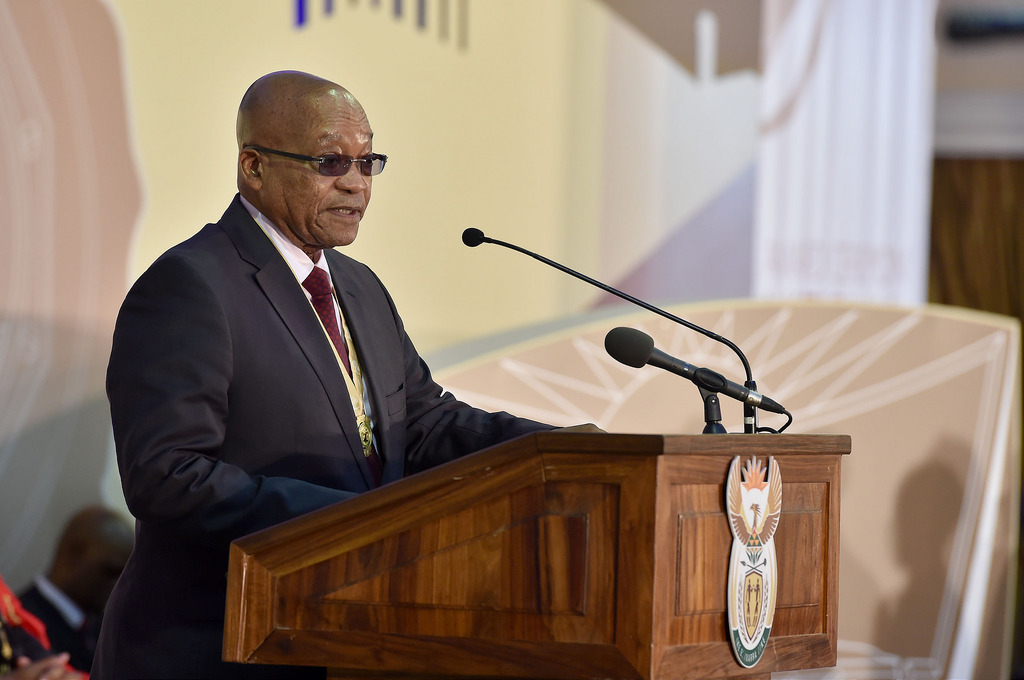
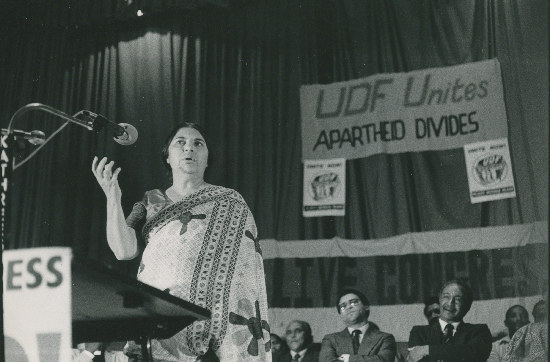
Fatima Meer and Shantie Naidoo, two Indian-origin women veterans of the freedom struggle in South Africa, were conferred South Africa’s highest National Order awards by President Jacob Zuma.
South Africa President Jacob Zuma presenting the awards. Photo courtesy: GovernmentZA
Meer posthumously received the Order of Luthuli in Silver; while Shantie Naidoo joined 21 others, who were part of a group who suffered at the hands of the apartheid-era security police, to receive the same award at the Presidential Guest House in Pretoria.
Meer, who was a longtime friend of the late Nelson Mandela together with her husband Ismail Meer, started her activist career as a high school student aged 17 in 1945.
“The Indian community suffered the enactment of the first Segregation Act which restricted their economic and residential rights to specific areas in the country,” said Meer’s citation from the President. “The Indian community resisted by organising Satyagraha, the first since Gandhi’s Satyagraha at the close of the century.”
Meer mobilised high school students and established the Students Passive Resistance Committee to canvass and raise funds for the Passive Resistance Campaign.
Meer was a prolific writer, historian and sociologist, and penned many books including a biography of Mandela, as well as the script for the film Taj Mahal, made by Indian filmmaker Akbar Khan.
In 1969, she published a book, Portrait of Indian South Africans, donating the total proceeds thereof to the Gandhi Settlement towards the building of the Gandhi Museum and Clinic at the Phoenix Settlement started by Gandhi. After the advent of democracy in 1994 under President Mandela, Meer served as a member of parliament before her death in 2010.
Fatima Meer. saha.co.za
Naidoo is a descendant of Thambi Naidoo, one of Gandhi’s most trusted lieutenants during his tenure in South Africa. She was imprisoned multiple times as a member of the Transvaal Indian Congress and the African National Congress.
“My mother Amma Naidoo, inspired by my grandfather Thambi before her, was at the forefront of the historic Women’s March to the Union Buildings in Pretoria in 1956 to protest the unjust anti-apartheid laws,” Naidoo said.
“Her undying commitment to justice, freedom and equality was in turn an inspiration to me, my brother and sisters,” said Naidoo at the award reception.
source: http://www.connectedtoindia.com / Connected To India / Home> News Global / by Tushaar Kuthiala / May 02nd, 2017
Ian Sansom on a clan whose empire became synonymous with India
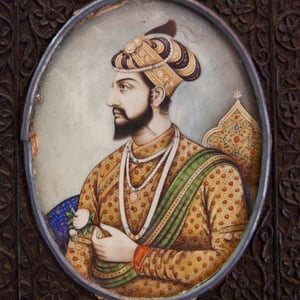
Shah Jahan, who built the Taj Mahal. / Photograph: dbimages/Alamy
In the month of Ramadan of the year 899,” writes the great Babur (1483-1530) in his autobiography, The Baburnama, “and in the 12th year of my age, I became ruler in the country of Fergana.” Babur – his name means “tiger” – inherited the tiny kingdom of Fergana, in what is now Uzbekistan, from his father. The family was descended from Genghis Khan and Tamerlane the Great; Babur the boy-king became the first of the Mughal emperors, a family of Turko-Mongol rulers who, according to the historian Abraham Eraly, “so decisively stamped their personalities on India that the Mughal Empire became, in the public perception, synonymous with India.”
Babur established his empire through conquest, successfully invading India in 1526. His son, Humayun (1508-1556), who succeeded him, came close to losing everything that his father had achieved. It wasn’t until the rule of Akbar (1542-1605), Humayun’s son, that the Mughal Empire was consolidated. Akbar, like Margaret Thatcher, slept only four hours a night. When he was awake, which was most of the time, he set about expanding the Mughal territories abroad and reforming the government at home. He ended the tax imposed on non-Muslims. He invited Jesuit missionaries into his court. And he formed his own religion. Above all, he knew how to make friends as well as enemies. According to his court historian, Abul Fazl, “His majesty forms matrimonial alliances with princes of Hindustan and of other countries; and secures by these ties of harmony the peace of the world.”
Jahangir (1569-1627) succeeded his father, Akbar, in 1605. He preferred to drink and carouse rather than to rule, and his wife, Nur Jahan, took on the responsibility of the state. The fifth Mughal emperor, Shah Jahan (1592-1666), was more like his grandfather Akbar and his great-great-grandfather Babur: a schemer, a man of grand plans and ideas. When his wife, Mumtaz, died in 1631, Shah Jahan was grief-stricken, so much so that, according to one observer, he “gave up the practice of plucking out grey hair from his beard”. He also decided to build his wife a memorial. The English travel writer Peter Mundy described the construction: “The building is begun and goes on with excessive labour and cost, prosecuted with extraordinary dilligence, Gold silver esteemed common Mettal, and Marble but as ordinarie stones.” According to Rudyard Kipling, the place was “the embodiment of all things pure, all things holy, and all things unhappy”. It was the Taj Mahal.
Shah Jahan’s rule ended with a war of succession between his sons, in which Aurangzeb (1618-1707) emerged triumphant. Having killed his brothers, he imprisoned his father. After Aurangzeb the decline of the Mughals began. In 1738, India was invaded by the forces of Nadir Shah, ruler of Iran. Territories were divided. Then the British East India Company moved in.
The last of the long line of Mughal emperors was Bahadur Shah II, known as Zafar. “Personally, he was one of the most talented, tolerant and likeable of his dynasty,” writes William Dalrymple in The Last Mughal (2006). The first emperor, Babur, had been a warrior. Zafar was an aesthete – a poet and an architect. Alas, empires tend not to survive under aesthetes. “While the British progressively took over more and more of the Mughal Emperor’s power,” writes Dalrymple, “the court busied itself in the obsessive pursuit of the most cleverly turned ghazal, the most perfect Urdu couplet.”
Zafar died in exile in Rangoon in 1862. His courtiers were hanged and much of Mughal Delhi was destroyed. “The death of the ex-King may be said to have had no effect on the Mahomedan part of the populace,” wrote the British commissioner at the time, “except for a few fanatics who watch and pray for the final triumph of Islam.”
source: http://www.theguardian.com / The Guardian – International Edition / Home> Family> Great Dynasties of the World / by Ian Sansom / July 16th, 2019
On January 25, India’s Polar Satellite Launch Vehicle (PSLV-C44) successfully injected Microsat-R and Kalamsat-V2 satellite into their designated orbits. Two young engineers who played lead role in designing and building world’s lightest satellite Kalamsat-V2 are Rifath Sharook and Mohammed Abdul Kashif.
They were part of a 12-members team of Space Kidz India- a group which trains aspiring space students. The group was being led by 18-year-old Sharook who hails from Tamil Nadu. Sharook is the youngest student of the team. Giving the credit of building the satellite, the media called him one-man army.But Sharook rejects to take credit solely.
Apart from Kashif (lead engineer), those who are in his team include Vinay S Bhardwaj (design engineer), Yagna Sai (lead technician) and Gobi Nath (biologist).
They were all working on rocket and space technology under the mentorship of Chennai-based Srimathy Kesan, who is the founder of Space Kidz India.
Sharook who hails from Tamil Nadu’s Karur is Chief Technology Officer (CTO) at Space Kidz India. Sharook’s father, Mohammed Farook, was also scientist. When he was in Class V, his father had left for heavenly abode. He was interested in space since his childhood.
“My dad was also a scientist. He’d do independent research on astronomy. We’d spend hours watching the space through a telescope,” Sharook was quoted by rediff.com as saying.
Talking about the Kalamasat V2, Mohammed Abdul Kashif said “We have produced a new electronic architecture for this satellite that ensured that it was lighter, smaller, more economical and consumed less energy while functioning like any other communication satellite”.
He added “There are a wide variety of uses it can be deployed for. But with this launch, we are only testing the technology and seeing how it operates”.
The satellite was 64 grams, 3.8 centimeter-cube-sized and it is world’s lightest and smallest satellite. It was made through the competition ‘Cubes in Space’ which was a collaboration between NASA and ‘I Doodle Learining’.
Muslim boy Sharook and Kashif played larger role in building the world’s lightest satellite and it was named also after a Muslim scientist A P J Abdul Kalam, who was the president of
India.
source: http://www.caravandaily.com / Caravan Daily / Home> Indian Muslim> Indian Muslims / by Caravan News / February 04th, 2019
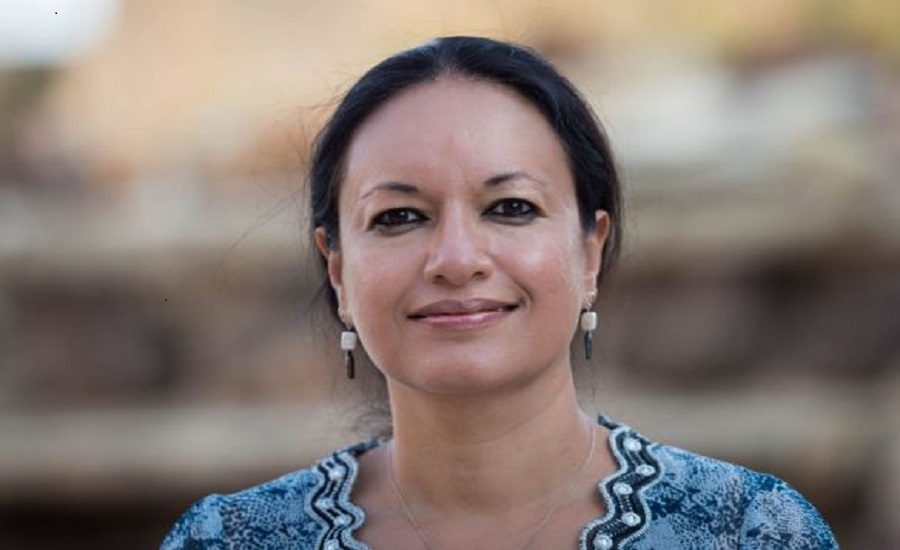
Dr. Nyla Ali Khan has been appointed as a Commissioner on the Oklahoma Commission on the Status of Women. She has been appointed for a five-year term by Senator Greg Treat, who is President Pro Tempora of the Oklahoma Senate.
“The Oklahoma Legislature created the Oklahoma Commission on the Status of Women in 1994 to act as an advisory entity on equity issues relating to gender bias; monitor legislation to determine whether it is discriminatory toward one gender or the other; act as a resource and a clearinghouse for research on issues related to women and gender bias; report annually to the governor, president pro tempore of the Senate, and speaker of the House of Representatives regarding its activities and make recommendations concerning needed legislation or regulatory changes relating to equity and gender bias.”
Dr. Nyla Ali Khan is the first South Asian Muslim member of the Oklahoma Commission on the Status of Women. She said that as a member of the Oklahoma Commission on the Status of Women, she acts as a resource and provides expertise to the Commission. She provides research and information on societal violence and structural inequities that result from deep-rooted prejudices against women. Dr. Nyla Khan said, “The questions to which I seek to provide well-substantiated answers are as follows: How can we, as women, develop the ability to organize and mobilize for social change, which requires the creation of awareness not just at the individual level but at the collective level as well? How can we develop self-esteem for which some form of financial autonomy is a basis? How can we make strategic life choices that are critical for people to lead the sort of lives they want to lead? We require a quality education for these mammoth tasks.”
c.reddirtreport.com
source: http://www.caravandaily.com / Caravan Daily / Home> Indian Muslim / March 12th, 2019
Once the land on which the Jino-ki-Masjid and the Dargah was build was to the tune of 600 acre.
Hyderabad :
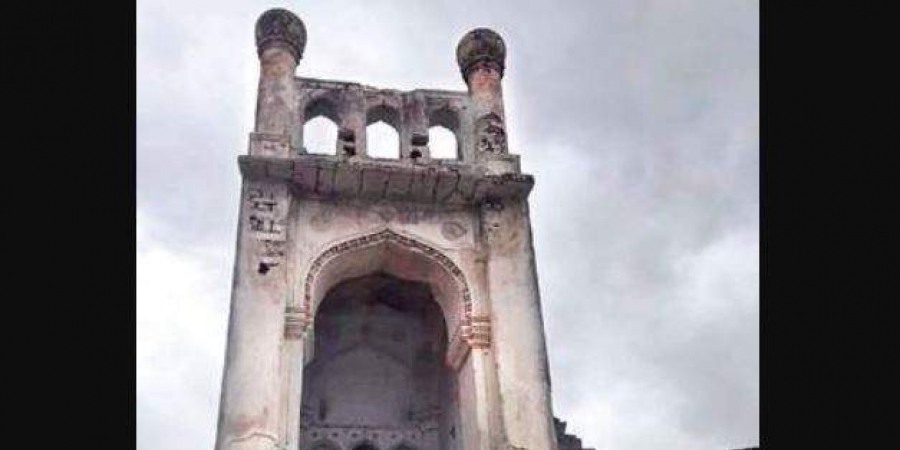
Located a stone’s throw away from the Dargah Hazrath Syed Shah Imaad Uddin Mahmood Al Hussaini, a nondescript structure stands out in front of the scenic hilltop on the banks of Mir Alam tank. This Qutub Shahi structure, popularly known as the Jino-ki-Masjid, may well be the ‘smallest mosque’ in the world.
Less than 10 sq m in area, this structure has the traditional elements of Qutub Shahi architecture including turrets and a big arch, under which there is a small space for devotees to pray. However, although it is located within the complex of the Dargah, the small structure stands dilapidated. The lime plaster has given away at various places, revealing the skeletal brickwork underneath.
The turrets are also broken at places, and so arch. The way to the mosque is also rocky, with no clear path. The mosque’s state could very well pose as a risk for visitors. The mosque gains importance as the Dargah complex was home to Syed Shah Imamuddin Husaini alias Mir Mahmood Nimatullahi, one of the oldest sufis of Hyderabad. In ‘Landmarks of the Deccan’, its author Syed Ali Asgar Bilgrami wrote, “He first came to Hyderabad from Najaf (Mesopotamia) during the reign of Sultan Abdullah Qutub Shah and stayed on this hillock.”
Mahmood had laid several buildings erected on this hill. “The mason who worked here were paid over and above the wages and the pregnant women-labourers were paid double the wages,” Landmarks of the Deccan said, adding that since no one knew his source of income, “it was a general belief that the Saint had some supernatural means of income”.
Once the land on which the Jino-ki-Masjid and the Dargah was build was to the tune of 600 acre. However, now, with time, most of it is occupied with houses built on one side of the hillock. The place comes alive during Urs, usually held on the 13th Shaban of the Islamic Calender, which was on April 19. During that time, many visit the Dargah, and hence it becomes important to conserve and repair the ‘smallest mosque’.
source: http://www.newindianexpress.com / The New Indian Express / Home> States> Telangana / by Express News Service / April 23rd, 2019
Conservation architect Vikas Dilawari’s work on Worli shrine is a significant chapter in the city’s built heritage
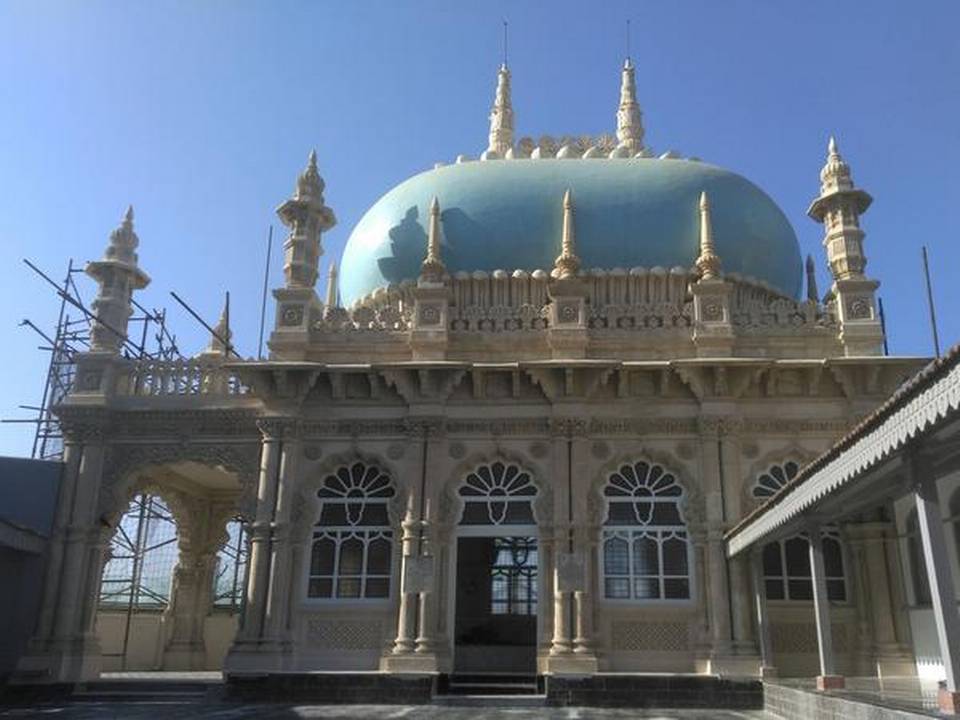
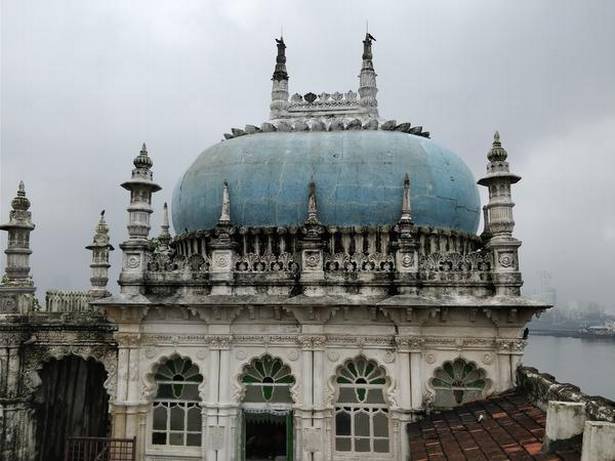
Cocooned in the shielding hold of the bay, just off the arterial, traffic-clogged road that hugs the coastline, is the 111-year-old Ma Hajiani Dargah, restored to its former glory. The restoration of the building began in November 2017 and was completed by conservation architect Vikas Dilawari on April 19, which also marked the eve of Shab-e-Baraat.
The dargah is one of the lesser-known spots of quiet in the city, often interchanged with the more popular Haji Ali Dargah, a stone’s throw away. Built in 1908 when Sir George Sydenham was the Governor of Bombay — primarily in Porbandar stone and basalt ashlar plinth — it is an ideal example of Indo-Saracenic architecture. Subtle influences of the colonial style of construction are evident, particularly in the ornamental work. “This is a very unique building. It is a magical place, of tranquillity, at the tip of the land on a natural rocky outcrop, elevated so gracefully,” Mr. Dilawari said.
Over the years, the dargah’s neighbouring plots of land were sold to private developers. The towering Samudra Mahal — a piece of prime real estate — was where the residence of the Scindias of Gwalior once stood, before being demolished in 1960. “Until a few decades ago, the Mahalakshmi temple, the Haji Ali Dargah, and the Ma Hajiani Dargah would have been the beacons along the coast of Bombay. The proliferation of high-rises without appropriate urban design is certainly impacting the pristine setting, and this might change further with the introduction of the impending coastal road,” Mr. Dilawari said.
A nautical past
The dargah is the site of three graves: Ma Hajiani, Haji Ismail Hasham Yusuf, and his son, Sir Mohamed Yusuf, draped in red and green brocaded chaddars and rose petals. The Yusuf family has been eminent in shipping trade and philanthropy in the city. Haji Ismail Hasham Yusuf founded the Bombay Steam Navigation Company in the late 19th century, and established the erstwhile Marine College at Rashid Mansion in Worli as a charitable institute, later moved to the island of Nhava and still functional as Training Ship Rahaman.
The mausoleum is built in honour of Ma Hajiani, a saint believed to be the sister of Saint Pir Haji Ali Shah Bukhari. The Haji Ali Dargah, houses the tomb of the latter. According to legend, they died at sea and their bodies were washed ashore, a few metres from each other. They were then buried at the respective spots they were found. Subsequently, two tombs were built — Haji Ali for the brother and Ma Hajiani for the sister. At the Ma Hajiani Dargah, women have always been allowed to access the maqbara. Women frequent in large numbers, making offerings of red or green glass bangles: red indicating one’s wish for marriage, and green for offspring.
source: http://www.thehindu.com / The Hindu / Home> Society> History & Culture / by Khorshed Deboo / Mumbai – April 23rd, 2019
Hues of an art Farha Ansari and her designs / Murali KUmar K
From Hillary Clinton to Alia Bhatt, Ahilaya’s designs have invaded the wardrobes of celebrities
In the Bombay of the 1970s, when his daughters were young, Anwar Ansari started a hand-printed chikankari textile business called First Lucknowi, because he believed he was the first to start such a venture. Chikankari is a traditional embroidery style that originated in Lucknow. Anwar and his partners hired local artisans in Bombay and Lucknow to handcraft these designs on cotton, silk, chiffon and other fabric.
Almost half a century later, First Lucknowi is different yet, essentially, the same. Today, it goes by the name Ahilaya, named after the queen of the 18th Century Malwa kingdom, Rajmata Ahilyadevi Holkar.
Managed by Anwar’s daughters, Farha, Nagma and Sana, the number of employees has grown from 40 to 200 and its customer base has also increased. Many celebrities — Hillary Clinton, Ivanka Trump, Drew Barrymore, Anushka Sharma, Alia Bhatt among others — are among Ahilaya’s customers.
According to Farha, the chief reason for the brand’s longevity and success is, “We do everything and do not outsource anything.” “The materials have to be pure; there should not be any synthetic. We are stringent about that.”
The designs and raw material are couriered to the artisans in Lucknow and Mumbai, who in turn handcraft the clothes, she adds.
Farha, now lives in New York and oversees ‘Leaves of Grass’, an international offshoot of the family-run business. Though her sisters, Nagma and Sana, take care of the Indian affairs, Farha visits the Bengaluru store at least once a year. This visit is ritually followed by a meeting with craftsmen too.
“They feel happy when they learn that the clothes they make are worn by models and celebrities. We sometimes call them for photo shoots, order biryani and have a good time.”
The price range starts at Rs. 4,000. Farha says, exclusively handcrafted wear often costs more. Comparing synthetic and machine-made wear to handmade garments, according to her, “is like differentiating microwaved dinner from gourmet food. We also pay fair wages to our workers. If we reduce the price, we might not be able to do that.”
source: http://www.thehindu.com / The Hindu / Home> Features> MetroPlus / by Praveen Sudevan / April 16th, 2019
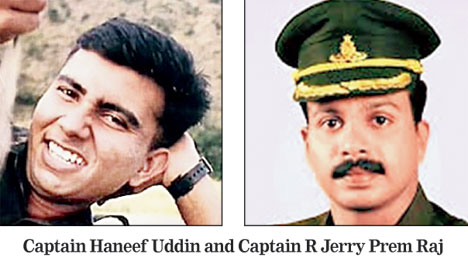
Captain Haneef Uddin was preparing to celebrate his 25th birthday at an altitude of 18,500 ft in Kargil when a bullet fell him in the summer of 1999.
Calcutta:
Captain Haneef Uddin was preparing to celebrate his 25th birthday at an altitude of 18,500ft in Kargil when a bullet fell him in the summer of 1999.
The young officer’s story of valour remains at the centre of a 13-part series on little known heroes of the Kargil war on All India Radio’s FM Rainbow station that is played out at 3pm every Sunday.
On Kargil Vijay Diwas on Thursday, Major Akhil Pratap, an ex-army officer who has been hosting the series, will have family members of 13 such unsung heroes as guests for a live-chat on AIR.
“Kargil was one of those battles which witnessed many casualties. There are several faces whose stories have remained unheard and untold despite all the coverage by the media. I have tried to dust out some of those faces and present them to India,” said Akhil, who was last posted with the Rashtriya Rifles in Jammu and Kashmir in 2010.
“I believe this is the first time that AIR is hosting such a show on the occasion of Kargil Vijay Diwas.”
Born in Delhi, Captain Haneef was a service code officer attached to Rajputana Rifles and posted at Turtuk during the war. His body lay at the height for 46 days before it was handed over to his family.
The army later renamed a sub-sector in Kargil after Captain Haneef.
Apart from Captain Haneef, those feature in the radio series are Captain R Jerry Prem Raj from a small village in Venganoor near Thiruvananthapuram and several others who fell to bullets at Kargil.
“Each of these men had responded to the war-call differently. But they died almost the same way,” Akhil said.
Captain Prem Raj was with his wife on honeymoon in Ooty when a call came from his headquarters and he rushed to Drass.
On the intervening night of July 6 and 7, he was on duty as observation post officer, trying to locate enemy camps. A bullet first hit his shoulder. He fell down, stood up and fired back. A shower of bullets pierced Captain Prem Raj. The army has a hill to his dedication – the gun hill in the Drass sector.
Commissioned in June 1997, Haneef was doing his rounds braving the sub-zero temperature in Turtuk when he suddenly faced a shower of bullets from an altitude.
“Haneef’s parents didn’t seek anything, just his body. The government honoured him with Vir Chakra posthumously,” said Akhil.
Prem Raj, too, was honoured the same for taking bullets in the Drass sector two years after he was commissioned as an artillery officer.
“Prem Raj’s brother is an IAF person and elder to him by three years. Together, the two brothers had brought home several trophies and laurels. But when Prem Raj’s body arrived, his brother stood all alone,” said Akhil. “We want to share these stories with India.”
The Thursday’s live chat is scheduled for 8 am.
source: http://www.telegraphindia.com / The Telegraph, online edition / Home> West Bengal / by Kinsuk Basu in Calcutta / July 26th, 2018
THE TRIBUNE COMMEMORATES JALLIANWALA BAGH CENTENARY
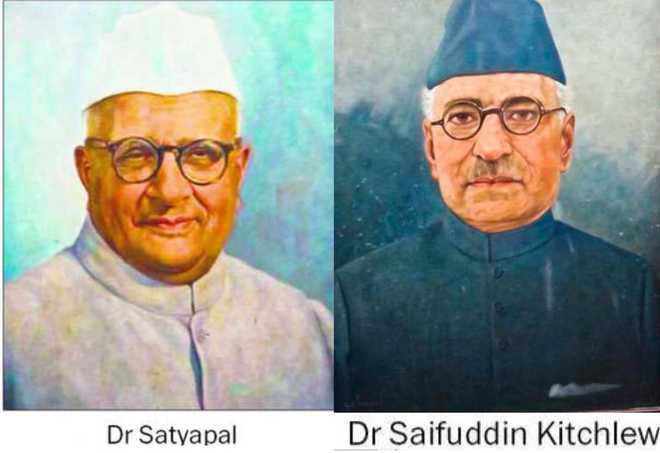
Dr Kitchlew & Dr Satyapal were towering freedom fighters, their arrest led to Jallianwala rally
Dr Saifuddin Kitchlew and Dr Satyapal — a hundred years after Jallianwala, these are the two names with which each conversation about the massacre starts in Amritsar. But in the past 100 years, the governments have rarely mentioned their names.
The meeting that was “dispersed” by General Dyer’s bullets had been called to protest Dr Kitchlew and Dr Satyapal’s arrest. The two towering leaders had emerged as great symbols of Hindu-Muslim unity during the April 6 hartal and, on April 9, people had raised slogans of ‘Kitchlew ji ki jai’ and ‘Satyapal ji ki jai’ during Ramnavami jaloos. It was the collective charm of both the leaders that the Hindus and Muslims were publicly drinking water from the same glass.
Dr Kitchlew’s father Azizudin, a prominent Kashmiri businessman dealing in embroidered shawls, had moved to Amritsar in the 19th century. He sent his son to England and Germany from where he obtained his PhD degree and also developed close ties with Jawaharl- al Nehru. “Kitchlew was widely admired in Amritsar and his picture would be seen hanging in almost every shop as a tribute to the sacrifices he made during the freedom struggle. Tall, fair-complexioned and mostly attired in white khadi, he was known for his unfailing courtesy and winsome smile,” historian Prof VN Datta, hailing from Amritsar, recalled in the preface of a book.
A few days before his death, Dr Kitchlew told Prof Datta that the trouble on April 10 in Amritsar could have been averted had he and Satyapal not been arrested. The government was absolutely despotic and never understood what the people felt and wanted, he said.
After Partition, Dr Kitchlew refused to move to Pakistan and decided to stay back in Amritsar. He, however, was forced to leave the city he loved the most and shift to Delhi after rioters burnt down his four-storey house and the family-owned Kitchlew Hosiery Factory in the heart of Amritsar.
During his last meeting with Dr Kitchlew in Delhi, Prof Datta saw a bare cot, old furniture and broken pieces of crockery eloquently speaking of the financial difficulties he was facing. Yet, there was no bitterness for anyone. “I manage to live because Jawahar sends me some briefs,” he would say.
The last tragic memories of Dr Kitchlew’s family were related to his youngest son Toufique, who spent his last days in penury. Before he passed away, he had expressed a desire to shift to Amritsar and the Punjab Government even annou-nced rent-free accommodation, but the address was never shared with him.
Dr Satyapal, on the other hand, became the Punjab Vidhan Sabha Speaker post-Partition. He had famously said: “I was never a rebel, but to revolt for righteousness is our religion and duty.” He completed his MBBS with a gold medal from Punjab University and became active in the freedom struggle.
Dr Shailja Goyal, a lecturer at DAV College, Jagraon, who has done her PhD on Dr Satyapal, says he was a man of rare integrity and character. She says he was vocal even about the wrongs within the Congress. “He was instrumental in organising the AICC session in Amritsar.” He died in 1954 and his two daughters moved abroad.
Darbari Lal, former Deputy Speaker of Punjab Assembly, says Dr Kitchlew was a powerful orator and his words would sway the masses. “Dr Kitchlew and Dr Satyapal are household names in Amritsar and will surely remain so.”
source: http://www.tribuneindia.com / The Tribune / Home> Punjab / by Vishav Bharti, Tribune News Service, Amritsar / April 13th, 2019
A vivid piece of maritime history is hidden in the memories of the cooks and deckhands who once sailed off the Malabar coast
By noon, the sun would heat up the vast blue expanse through which they sailed at great risk to their lives. By evening, when salt and dirt clung to their bodies, the skies would turn crimson, symbolising streaks of revolt. Later, weather permitting, the shimmering stars would give them clues to the voyage that lay ahead through the inky waters of the Arabian Sea, often to the Persian Gulf. On the shore, they would unload the goods they had loaded on to the wooden dhows: timber, bamboo, coconuts, tapioca, tiles, salt, sugar, fertilizers. And sometimes, hidden among the cargo, people .Being smuggled to the far shores.
But even when they returned to their homes in Kerala, none of the deckhands of the dhows wrote about their experiences; in fact they actively strove to forget this tempestuous period in their lives that ended when better transportation facilities arrived. It’s been nearly four decades since these traditional vessels with their distinctive masts set sail from the Malabar coast, either along the coastline or farther afield. But it’s only now that the world has begun to hear the stories of these intrepid men, an integral part of the maritime history of peninsular India.
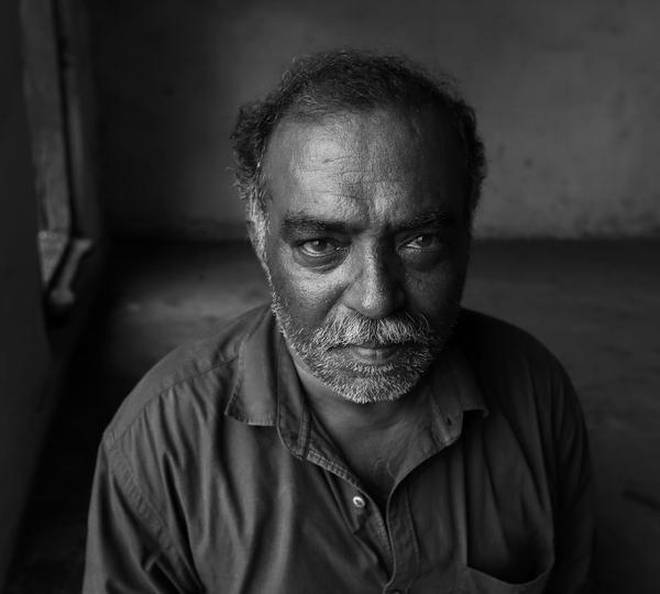
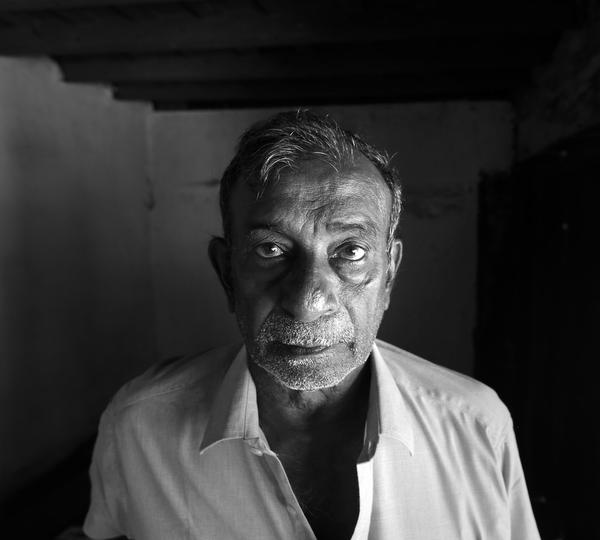
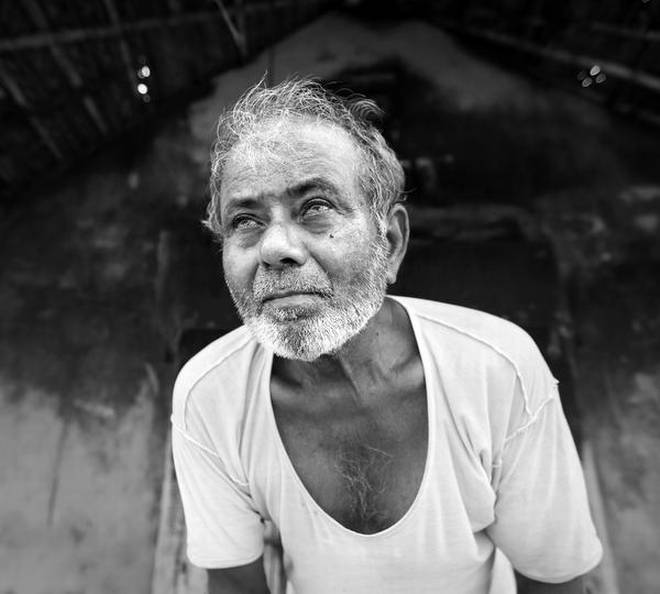
And this is thanks to a photo artist from Kerala’s port town of Kodungallur, around which scholars speculate the ancient Muziris harbour existed until destroyed by the 1341 calamity. K.R. Sunil’s photographs, a series titled ‘Manchukkar — The Seafarers of Malabar’, captures the faces of 34 deckhands. It was on show last month at URU Art Harbour in Kochi. Through them we learn of the misery of people caught in a vortex of exploitation and unshielded from nature’s furies.
Bare frames
The faces are stark, the frames bare. But every black-and-white image tells a story. Of how poverty forced pre-teen boys to pack themselves off in an uru or sailing vessel on long-distance voyages battling rough seas and uncertainty for weeks on end, and then return home — if lucky — only to set off on another strenuous voyage. Years would pass, the boys would turn into middle-aged men. Then, seen as worthy of nothing else, plagued by ill-health, they would be sent home, discarded like boats with rotten hulls.
T. Ibrahim is now 80 and lives an unremarkable life in Ponnani, a fishing town in Malappuram district. He considers himself fortunate to have lived this long. As a youth, he recalls how he once sailed a dhow laden with tiles and a dozen sailors that got caught in a storm on its way to Ratnagiri in Maharashtra. Ibrahim joined his panicked colleagues and began jettisoning cargo. The vessel sank nevertheless. “Some of them managed to get away on a lifeboat. Ibrahim and four others held on to a piece of wood and floated for two days,” says Sunil, recalling his meetings with Ibrahim.
Ibrahim’s …
The youngest in Sunil’s photo series is also called Ibrahim, or simply Umboocha. Now 53, the man from Kasargod, along the Karnataka border, had his final sailing trips on motorised dhows in the 1990s. Memories of manchu, as the boat is called in his part of Malabar, where people also speak Tulu and Kannada, still make him shudder. Their vessel once sank during a cyclone when they were bound for Iran. They roped together emptied cargo barrels and drifted on the improvised float for three days. Rescue came, but they landed in jail: all of them had lost their identity documents.
Siva Sankaran, also from Ponnani, remembers that his first trip on a dhow to Bombay took seven weeks instead of four days. Reason: bad weather. But tempests were just one part of the deckhands’ ordeal, says Sunil. From starvation to sexual exploitation to unhygienic conditions to taxing work hours, the voyages were invariably hellish. “Circus in the seas,” is how Abdul Rahiman, 68, recalls them. “One had to climb 50 feet up on swinging ropes to set the sail. You may have to do it deep in the night, when the boat is violently rolling,” Sunil quotes the sailor as recalling.
The artist’s first trip to Ponnani was in 2014, though it was only two and a half years ago that he turned his focus on these deckhands of yore. “As a child, I had heard a lot about Ponnani. We had country boats with merchandise travelling there from Kodungallur.” The town charmed him on his first visit and inspired several more. The next time he brought his camera along. A photo series from these trips was shown at the 2016 Kochi-Muziris Biennale.
Steeped in pathos
Then, four months before the biennale, Sunil stumbled upon an old man singing a song to his friends. “There was something curious about its lines and the tune steeped in pathos. I thought I should explore more,” he says.
This was T. Ibrahim and this wasn’t the only sailing song he knew. He had learnt several from Rasakh Haji, a merchant of essential oils who owned the boat in which Ibrahim was a deckhand. Haji had a talent for creating songs and had composed one about the dhow. They sailed together from Mumbai to Kerala and “the ditties seeped into Ibrahim too,” says Sunil.
Most deckhands began their careers as cooks (pandari) when they just 11 or 12 and were routinely sexually exploited. Those who moved up the ladder became deckhands or khalasi. The capable among them rose to become captains or srank.
Abdul Lathif thought himself lucky to become a deckhand at 17, but is now repulsed by the memories. “The boat’s woodwork was always infested with roaches and scorpions. You would see them floating even in the drinking water. We were covered with lice. The winter winds gave us mouth ulcers,” he trails off. “After unloading the goods, we would appy a mixture of oil, lime and ghee to the boat’s keel to prevent barnacles. The work was done standing in a slush of mud and human excrement.”
C.M. Ummar was a young man during the 70s when he crewed in dhows carrying people looking for work in West Asia. Illegally. “A couple of hundred job-seekers would be taken aboard along with the cargo. You’d hide them with a tarpaulin. And in the high seas, another boat would come to fetch them,” he recalls. “Sea-sick, they would sometimes plead to be taken back home. Getting them back was equally dangerous.”
Deaths weren’t uncommon — whether from falling from the mast or from disease. Hussain, 64, recalls a friend’s demise: “With a heavy heart we offered prayers, and buried him at sea with a rock tied to his body.”
The primary duty of Muhammad Koya, 81, was to smear kalpath, a mixture of coconut-fibre, cow-dung, sawdust and ghee, on the keel to plug gaps. “It involved holding one’s breath under water for long periods; the job affected Koya’s hearing,” notes Sunil, who is now in the process of making a documentary on this bit of “ignored history”.
Floating bodies
P. Ummar is 20 years younger than Koya, and recalls how armed pirates would sometimes rob their cargo. “Such encounters were common along the Maharashtra coast,” he says. Koran, now an oracle for the traditional Theyyam dance in Kasargod, talks of the dead bodies he saw floating near the Bombay port during his manchu days. He suspects this was from the smuggler-customs encounters.
Kochi, Kerala, 07/02/2019 : K K Khadher, from the series ‘Manchookar – The seafarers of Malabar’ by K R Sunil. Photo: Special arrangement
K.K. Kadar talks of how seasoned sailors would read signs of impending danger in “unusual changes in the colour of seawater, the rising froth, intertwined sea-snakes, dead fish…. they were indicators for the crew to prepare themselves for eventualities,” he says. Today, he is a public worker, and preoccupied with the 80th anniversary of a historic beedi workers’ strike that had once been held in Ponnani.
T.V. Moideenkutty …
For T.V. Moideenkutty, too, life is calmer. The 54-year-old lives on the tranquil shore of Ponnani with his family in a tile-roof house. He started life as a cook in a dhow and then worked as a deckhand for eight years. At least it staved off poverty, he says, smoking a beedi.
Life on the dhow taught him a lesson: the value of drinking water. “I learned the word for water in many languages, especially before hitting ‘Hindistan’ during our Mumbai voyages,” he says, retying his mundu and tucking it in at the waist.
The lighthouse near Moideenkutty’s house stands tall with its gas flasher scanning the ocean. Standing outside URU gallery, I can see the sea dotted with gleaming new-age ships filled with crew and cargo heading out to harbours around the world.
The Delhi-based journalist is a keen follower of Kerala’s traditional performing arts.
source: http://www.thehindu.com / The Hindu> Voyager> Society / by Sreevalsan Thiyyadi / April 13th, 2019