Malnad, KARNATAKA , INDIA / Riyadh, SAUDI ARABIA :
Riyadh :
Malnad Gulf Association®, a prominent social and community development organization in KSA recently hosted Iftar event at Ramada Hotel Riyadh, Saudi Arabia.
The event was organized to promote the activities conducted by Malnad Gulf Association® and to spread the message of peace and brotherhood. “I believe every great community work starts with giving and the wealth is a blessing from Almighty God which must be spent on less fortunate among the people,” said Niyaz Ahmad, who headed the Iftar event.
The association has been working for the past five years with various branches in Dammam, Jubail, Khobar, Riyadh, Al Hasa, Jeddah and Madinah with over 300 active members. The association also has India branches in Chikkamagaluru, Shivamogga, Kodagu and Hassan currently focusing on uplifting the less fortunate people among the community in the region.
The Riyadh zone president Junaid Ismail Chakmakki welcomed the gathering and the emcee of the event was Irshad Ahmed Chakmakki.
The event had a special guest, Saad Abu Nahyaan, a Saudi national, who delivered an inspiring message of community and taking care of the other around us. The event was attended by over 150 people from different walks of life.
It was attended by various dignitaries including Basheer Balupete, president MGA central committee, Ismail Yousuf, president of India Fraternity Forum, Aziz Bajpe, president of Dakshina Karnataka Sunni Center, Fazalurrahman, president of Khidma Foundation, Illyas, president of Hidaya foundation and Saad Tarin, DGM of Saady Group of Companies.
The event concluded with a determined plan to increase the support to communities in different parts of the region.
source: http://www.daijiworld.com / DaijiWorld.com / Home> Middle East / by Media Release / May 29th, 2019
Shaamil Karim, a grade 11 student at the Indian High School Dubai, was selected from thousands of entries.
Karim’s project detects if a car or person is passing by and makes the next street light brighter and the previous light dimmer, saving energy.(Shaamil Karim/ facebook)
A Dubai-based Indian boy has ranked among the top 100 regional finalists for the Google Science Fair global contest for his project to make street lights smarter, the media reported.
Shaamil Karim, a grade 11 student at the Indian High School Dubai, was selected from thousands of entries, Gulf News reported on Saturday.
His project detects if a car or person is passing by and makes the next street light brighter and the previous light dimmer, saving energy.
Karim, a 15-year-old computer whizkid who originally hail from Chennai, said his father was his inspiration to come up with a solution for power wastage.
“We were at a park late at night and all the lights were switched on. My dad said, ‘Can’t we do something about this?’ I decided to do my project to make street lights smart,” he told the Gulf News.
Karim added that his project would be around 63 per cent cheaper than infrared-based sensors.
The global 20 finalists are expected to be announced this month.
source: http://www.hindustantimes.com / Hindustan Times / Home> Education / by Indo-Asian News Service, Dubai / May 26th, 2019
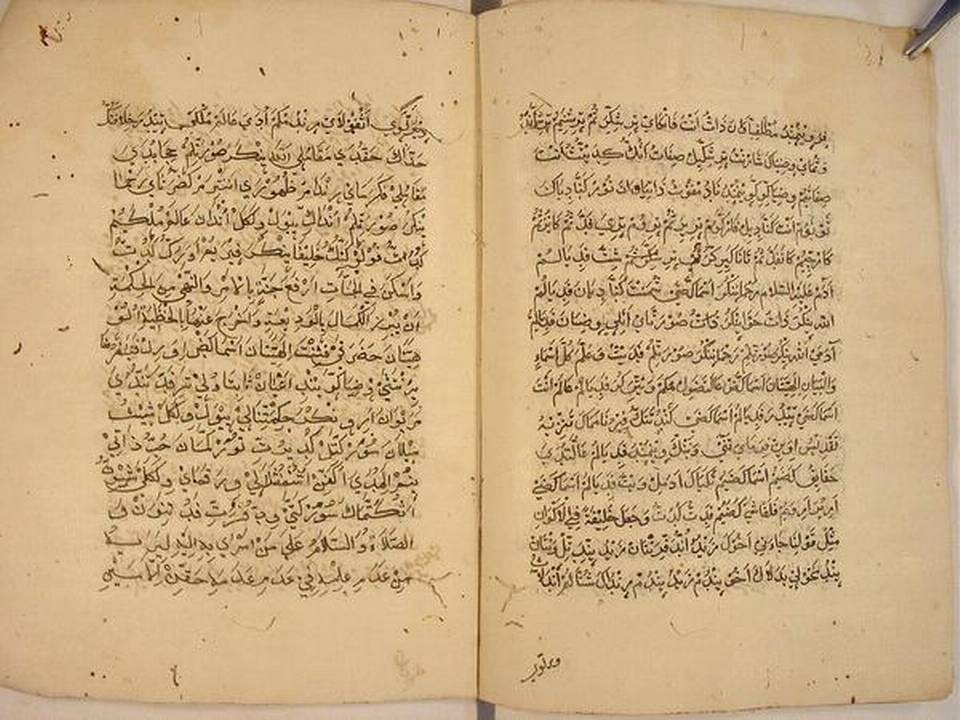
An Arwi manuscript. Photo: Special Arrangement/The Hindu
Tracing the roots of Arabu-Tamil, a link-language that evolved to facilitate communication between Arab settlers and Tamil Muslims
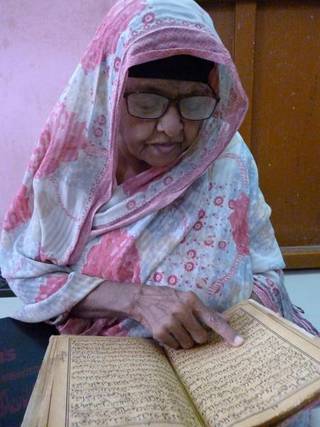
A hush falls over the room when Ammaji Akka starts reading out from the yellowing pages of a textbook called Simt-us-Sibyan (Pearls of Wisdom for the Young). Her voice may quaver, but her fingers glide surely on the modified Arabic alphabet that expresses ideas in Tamil.
The Salem-based septuagenarian is among a dwindling number of people who know Arabu-Tamil (or Lisan al-Arwi), the link-language that texts like Simt-us-Sibyan are written in. A language that evolved to facilitate communication between Arab settlers and the Tamil Muslims in southern India and Sri Lanka, Arwi was in active use from the 8th century up to 19th century.
A former Ustad Bi, or female teacher of Islamic scriptures, Ammaji Akka used to visit Tamil Muslim families at home to tutor adolescent girls and women in how to recite the Holy Quran in Arabic.
Simt-us-Sibyan (written by Maulana Mohamed Yusuf al-Hanafi al-Qadiri) was a learning tool in religious studies; and for many Tamil Muslim children up to the 1970s, used to be a part of Quran recitation classes.
Ammaji Akka, a former Ustad Bi or teacher of Islamic scriptures, reads an Arabu-Tamil booklet at her home in Salem. Photo: Special Arrangement/The Hindu
“I have four Arabu-Tamil books — Noor Nama (an account of Prophet Muhammad’s life), Simt-us-Sibyan, Ya Sayed Maalai (songs in praise of the Prophet) and Penn Buththi Maalai (advice for Muslim women). Though nobody wants to learn Arabu-Tamil anymore, I still read these books out loud after the evening (Maghrib) prayer, because I believe they will bring good fortune to the neighbourhood,” says Ammaji Akka.
Linguistic influence
The impact of Arabs on the Indian subcontinent is most evident in its languages; and Arabu-Tamil is just one of the several hybrid tongues that were once prevalent here.
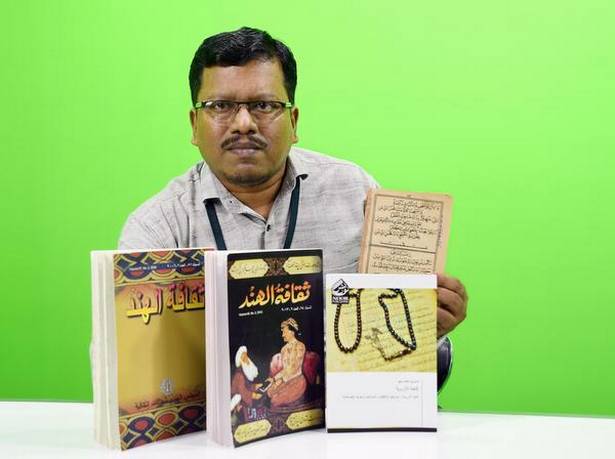
“The vocabulary and certain grammatical features of indigenous languages like Hindi, Punjabi, Bengali and Sindhi have been affected by Arabic,” says KMA Ahamed Zubair, assistant professor, Department of Arabic, New College, Chennai, who has written four books on Arabu-Tamil. “Some of the languages along the western and southern coasts of India even adapted the Arabic script, as evident in Sindhi, Arabu-Tamil, Gujarati, Arabu-Malayalam, Arabu-Telugu and Arabu-Bengali.
“According to catalogues maintained in the Madras Archives Library, there are 3000 Arabu-Tamil books dating from 1890-1915, on a variety of subjects,” says Zubair. While the Arabu-Tamil texts still in use seem to be primarily religious in nature, the language had covered general topics like sports, astronomy, horticulture, medicine, and children’s literature, among others, when it was in common usage. On most social occasions, such as weddings, invitations would be issued in Arabu-Tamil.
“The Bible was translated in Arwi. There are four Arwi dictionaries published in the 1930s. Magazines in the language were printed in Ceylon and Rangoon since the 1870s,” says Zubair.
Dr KMA Ahmed Zubair of New College, Chennai, with books on Arabu-Tamil. Photo: R. Ravindran/The Hindu
Literacy drive
Arabu-Tamil spurred a major literacy drive in the Tamil Muslim community in pre-independence India, with women especially using the language to play vital roles in education, medicine and even politics.
“In those days, Tamil Muslims were invariably taught Arabic, not Tamil,” says J Raja Mohamed, former curator of Pudukottai Government Museum, who has chronicled the use of the language in his book Maritime History of the Coromandel Muslims (A Socio-Historical Study on the Tamil Muslims 1750-1900). “In conservative families, women were educated in Arabu-Tamil rather than Western languages. Many people still have archive files of personal correspondence and bookkeeping ledgers in Arabu-Tamil. Most of the Islamic folkloric traditions such as prayer songs and hymns in praise of the Prophet were recorded in this language.”
Tamil Muslim merchants were the descendants of Arab maritime traders who had settled down in the coastal areas of southern India. The power of this mercantile community declined in the early 20th century due to stiff competition from the British and the reluctance of the Tamil Muslims to adopt new shipping technology and modern education.
After independence, Arabu-Tamil started losing out to the predominance of English in nearly every sphere of life, and has become an heirloom language that only a few can remember. Seminaries in Kayalpattinam and Kilakkarai are among the places where rare Arwi manuscripts can be found. With qualified calligraphers of Arwi no longer available, most printers have stopped publishing Arabu-Tamil books.
_________________________________________
How it works
The Arwi alphabet consists of 40 letters, out of which 28 are from Arabic, and 12 are devised by adding diacritical marks that allow Arabic letters to express sounds particular to Tamil.
Common loan words from Arabic that are still in use in Tamil:
Abattu (danger, from the Arabic root Aafat)
Baaki (remaining, from Arabic root Baaqi)
Jilla (district/zone, from Arabic root Zill’a, one side of a triangle)
Wasool (levying/collection, from the Arabic root Wusool, arrival
_______________________________________
Need for revival
It is ironic that while Arabic is taught at graduate level in several colleges across the State, Arabu-Tamil doesn’t get much attention, except in a few madrassas (religious schools).
“Arwi works should be introduced as Open Educational Resources (OER) content to reach Tamil Muslims and the diaspora living in Malaysia, Singapore, Myanmar and Bangladesh,” says Zubair, who has devised Unicode substitutes for four Arwi characters in a research paper.
There are others who are hoping to revive interest in the language among young people. E Mohamed Ali, a former telecom employee based in Tiruchi, learned Arwi in his childhood through the devotional songs taught by his mother.
He is currently transliterating into Tamil, the Arwi song anthologies Tohfat-ul-Atfal and Minhat-ul-Atfal written by noted Sri Lankan Islamic scholar Syed Mohamed Alimsa for a local magazine, and is also planning to release an audio CD of the same with young singers.
“Arabu-Tamil enriched not just Arabic, but also Tamil, in many ways. Notable poets and writers of the coastal districts have written extensively in this language. Bringing it back would be a rewarding experience for the coming generations,” says Ali.
source: http://www.thehindu.com / The Hindu / Home> Society> History & Culture / by Nahla Nainar / May 24th, 2019
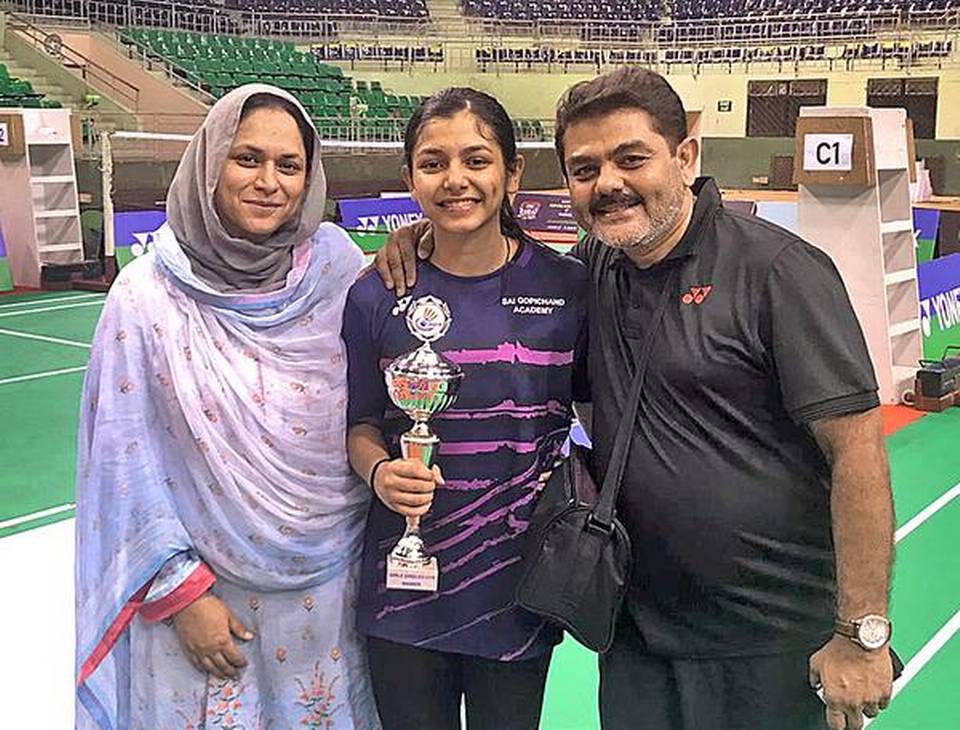
Champion shuttler Samiya Imad Farooqui with her parents.
City girl wins national ranking tourney in Chennai
She is rated to be one of the best young badminton talent in India. And, on Sunday, the 15-year-old gifted shuttler from the city, Samiya Imad Farooqui, served a reminder of her growing stature, winning her maiden National under-19 ranking tournament in Chennai on Sunday.
“It feels great to win the first-ever title as I really worked had in extremely hot weather and it will remain a special one. Frankly, I never expected to win it but just tried to give off my best,” the articulate young champion from the city informed The Hindu on her return on Sunday evening.
The 10th standard Open school student interestingly won the ABC under-15 title two years ago but never a national-ranking event. “Yes, when I look ahead, this title is sure to spur me to achieve big. I am thankful to Gopi Sir who has been my mentor and always there to help me in giving those invaluable tips,” says Samiya. “I am privileged to see the big guns like Saina, Sindhu train in the same Academy since 2009 and sometimes they do encourage me, stressing the importance of fitness,” she said.
A huge fan of the World No.1 Tai Tzu Ying of Taipei, the young Hyderabad shuttler confesses that sometimes she tries to play like her idol even while acknowledging that it is never going to be easy. “Yes I see a lot of her videos, she is such a great player,” she added. Samiya also points out that she needs to work a lot more on fitness and reduce the unforced errors for better results.
Mantra for success
Her mantra for success is pretty simple – under pressure, keep the shuttle in play and minimise the errors. And, Samiya says she did exactly that in Chennai to win her maiden national title and hopes to repeat such performances in the days to come.
And, her next big assignment is in Thiruvananthapuram – All India ranking championship this month-end. This young girl will be flying back from the city within two days and is not deterred by the hectic schedule.
source: http://www.thehindu.com / The Hindu / Home> News> States> Telangana / b y V.V. Subhrahmanyam / Hyderabad – May 26th, 2019
Very low concentration of the compound was able to kill all the bacteria in four to eight hours; there was no regrowth of bacteria even after a day.
A novel compound isolated from a soil bacterium shows promise in killing Gram-negative bacteria (Klebsiella pneumoniae and E. coli) that are resistant to colistin, a powerful, last-line antibiotic. The compound was effective in killing colistin-resistant bacteria in studies done in vitro and on mice models. Unlike colistin, the compound was found to be safe and did not damage the kidney of mice, a team led by Dr. Hemraj Nandanwar from the Institute of Microbial Technology (CSIR-IMTECH) found.
The bacterium (Paenibacillus sp) was found in the soil at Malvi village in Jind district, Haryana in January 2016.
“Colistin-resistant bacteria are increasing at an alarming rate in India and outside. It is a serious medical issue. The extent of resistance varies from one bacterial species to another and from one hospital to another. If colistin-resistant bacteria are found in the blood there is 80% chance of death,” says Dr. Abdul Ghafur from Apollo Speciality Hospitals, Chennai and co-author of a paper published in the journal Antimicrobial Agents and Chemotherapy.
The colistin-resistant bacteria were provided by Dr. Ghafur. Nineteen K. pneumoniae samples were from humans and three E. coli were from food samples.
Based on the amino acid composition and other studies, the team found the compound to be a new variant of the tridecaptin family; the variant was named tridecaptin M (the letter M standing for Malvi). Colisitin belongs to a different class of antibiotics, and so there is no cross resistance with the tridecaptin family of compounds.
The compound is novel and this is also the first time that antibacterial effects of tridecaptin family of compounds on colistin-resistant bacteria have been studied.
Interestingly, the new compound was more effective on K.pneumoniae bacteria that were colistin-resistant and less effective on colistin-sensitive bacteria, the team found. When the purified compound was tested on colistin-resistant bacteria, 16 times less amount of the compound was enough to kill the bacteria, compared with colistin.
Studies on resistance
More importantly, studies found that there is less likelihood of bacteria developing resistance against the compound. Very low concentration of the compound was able to kill all the bacteria in four to eight hours; there was no regrowth of bacteria even after a day. So this suggests that the compound resists spontaneous mutation. To further study the evolution of acquired resistance, they exposed the bacteria to very low concentration of the compound for 20 days. Even after 20 days the bacteria showed very low acquired resistance.
Mechanism of action
The mechanism by which the compound kills the bacteria is very different from most of the other drugs, especially colistin. The compound affects the ATP synthesis by the bacteria. With less fuel being produced, the bacteria are unable to multiply and thus killed.
Compared with colistin, the compound shows less ability to get into the bacteria (membrane permeability). So it forms specific pores in the membrane which disturbs the movement of ions leading to a reduction in ATP production. If the compound is used along with low concentration of colistin, the amount of compound required to kill colistin-resistant bacteria is 16-fold less. Thus colistin and the compound act synergistically.
Animal studies
The effectiveness of the compound was tested on mice by infecting the thigh muscle with colistin-resistant bacteria. Whereas colistin failed to kill the bacteria, about 90% of bacteria were killed by the compound.
Acute toxicity was tested by injecting 12 mg per kg every two hours till the accumulated dose became 72 mg per kg. All mice injected with colistin died within a day but no mice injected with the compound died. The kidney of the sacrificed mice did not show any damage.
source: http://www.thehindu.com / The Hindu / Home> Sci-Tech / by K. Prasad / Chennai – May 24th, 2019
She was one of the most powerful women of medieval India, a Mughal princess like no other. And yet, her extraordinary story remains lost in the pages of history.
In an unassuming part of India’s capital city, amidst winding alleys lined with attar and chadar sellers, lies the 800-year-old dargah of Hazrat Nizamuddin Auliya—one of the most revered saints in Sufism. From dusk to dawn, thousands of devotees throng this bustling complex to pay their respects.
Yet, few know that Delhi’s most famous Sufi shrine is also home to the tomb of one of the most powerful women of medieval India, Jahanara Begum.
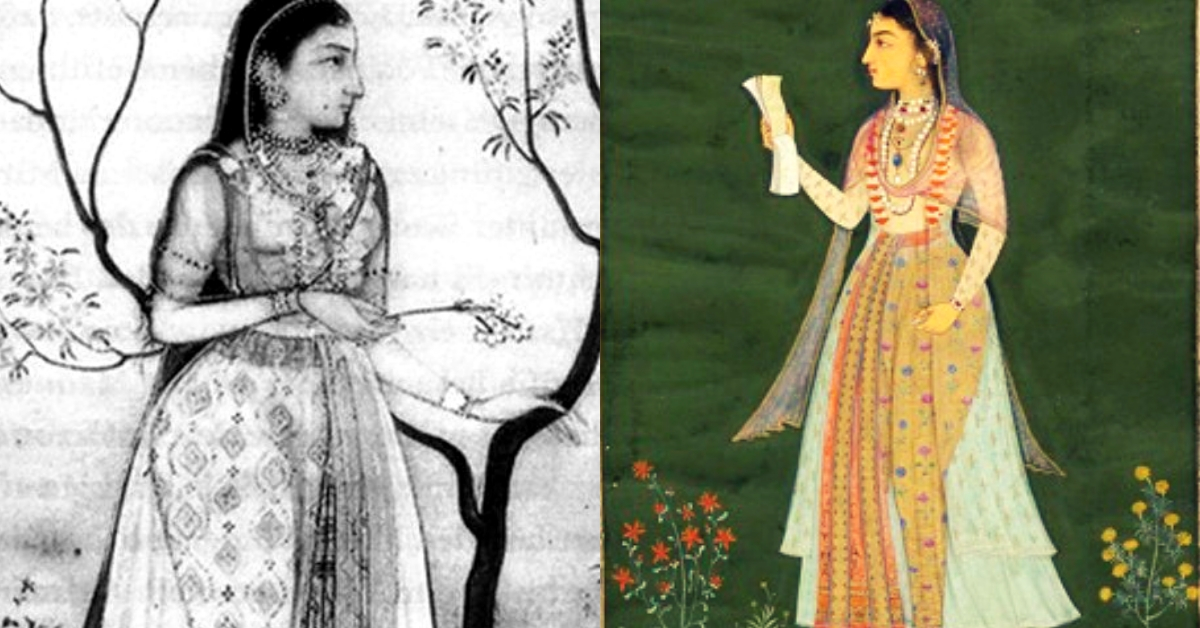
A writer, poet, painter and the architect of Delhi’s famous Chandni Chowk, Jahanara was a Mughal princess like no other.
Portraits of Jahanara Begum. Source: Wikimedia Commons
This is her story.
The eldest child of Emperor Shah Jahan and his favourite wife, Mumtaz Mahal, Jahanara was born in Ajmer in 1614. Growing up in one of the richest and most splendid empires in the world, the young princess spent her childhood in opulent palaces, humming with family feuds, battle intrigues, royal bequests and harem politics.
As such, she was well-versed in statecraft by the time she was a teenager.
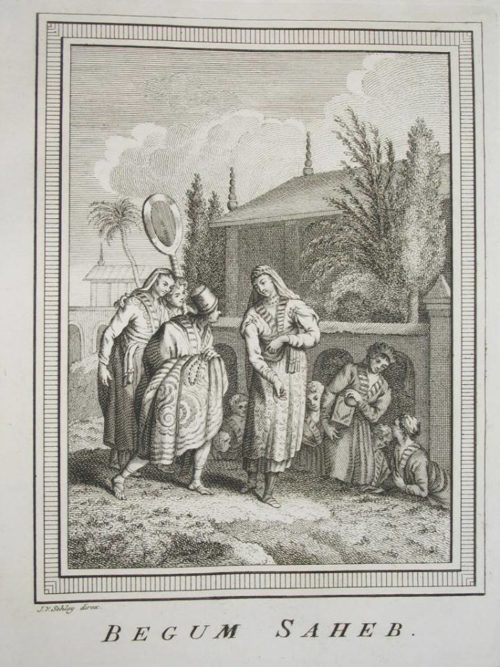
Soon after, Jahanara was appointed Begum Sahib (Princess of Princesses) by her doting parents. She would often spend her evenings playing chess with Shah Jahan, understanding the workings of the royal household, and helping her father plan the reconstruction of other palaces.
As French traveller and physician François Bernier writes in his memoirs, Travels in theMogul Empire ,
“Shah Jahan reposed unbounded confidence in his favourite child; she watched over his safety, and so cautiously observant, that no dish was permitted to appear upon the royal table which had not been prepared under her superintendence.”
Jahanara was also especially close to Dara Shikoh, Shah Jahan’s eldest son and her favourite brother. The two shared a love of poetry, painting, classic literature and Sufism.
In fact, she also wrote many books, including a biography of Ajmer’s Sufi saint Khwaja Moinuddin Chishti, displaying her flair for prose.
The Begum Sahib. Source: Royal India Families/Facebook
But tragedy struck the young princess’s life with the untimely demise of her beloved mother, Mumtaz, in 1631. At the tender age of 17, she was entrusted with the charge of the Imperial Seal and made Malika-e-Hindustan Padshah Begum—the First Lady of the Indian Empire—by the shattered Emperor, whose grief kept him away from his royal duties.
It was only on Jahanara’s behest that the inconsolable Shah Jahan came out of mourning.
In the years to follow, she became her father’s closest confidante and advisor. Highly educated and skilled in diplomatic dealings, her word became so powerful that it could change the fortunes of people. Her favour was much sought-after by foreign emissaries.
In 1654, Shah Jahan attacked Raja Prithvichand of Srinagar. Despairing of success in the battle, the Raja sent a plea for mercy to Jahanara. The Princess asked him to send his son, Medini Singh, as a sign of his loyalty to the Mughal Empire, thereby getting him a pardon from the Emperor.
The following year, when Aurangzeb was the viceroy of the Deccan, he was bent on annexing Golconda, ruled by Abdul Qutb Shah. The Golconda ruler wrote an arzdast(royal request) to the Princess, who intervened on his behalf. Qutb Shah was pardoned by Shah Jahan (against Aurangzeb’s wishes) and secured his safety on payment of tax.
Interestingly, Jahanara was also one of the few Mughal women who owned a ship and traded as an independent entity.
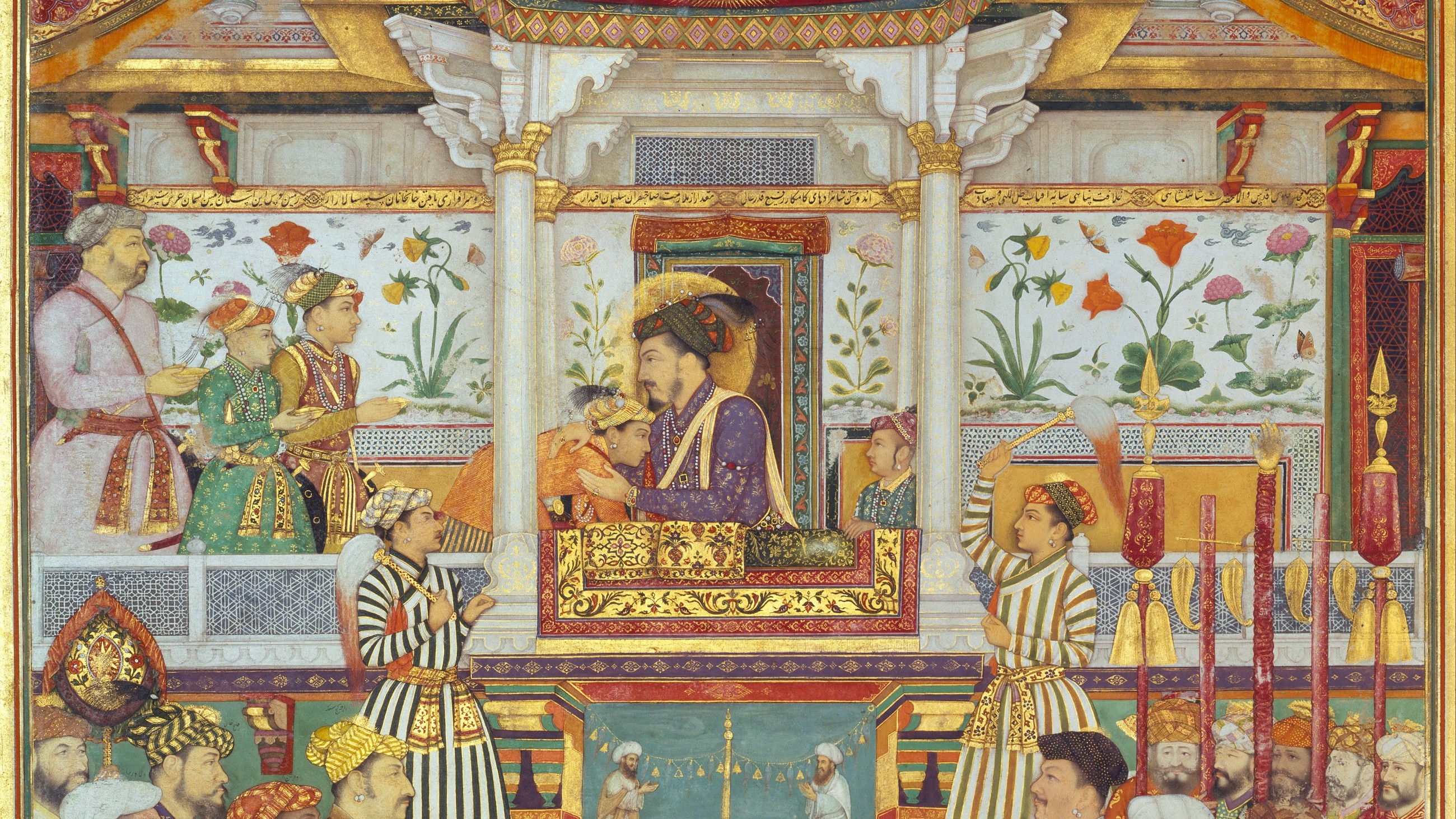
Padshahnama plate 10 : Shah Jahan receives his three eldest sons and Asaf Khan during his accession ceremonies (8 March 1628). Source: Wikimedia Commons
Named ‘Sahibi’ after its owner, Jahanara’s ship would carry the goods made at herkarkhanas (factories) and dock at her very own port in Surat; its revenue and the colossal profits she made via trade significantly boosted her annual income of three million rupees!
In his book Storia Do Mogor, Italian traveller Niccolao Manucci writes, “Jahanara was loved by all, and lived in a state of magnificence.” The book is considered to be one of the most detailed accounts of Shah Jahan’s court.
But Jahanara’s political and economic clout failed to have an impact on the bitter war of succession between her brothers, Dara Shikoh and Aurangzeb. She made several attempts to mediate between them, but as Ira Mukhoty writes in her book Daughters of The Sun , she had “underestimated the corrosive loathing that Aurangzeb has for Dara, whom he blames for his father’s cold criticism throughout his career”.
Aurangzeb ultimately killed Dara Shikoh and placed an ill Shah Jahan under house arrest in Agra Fort’s Muthamman Burj (Jasmine Tower). Faithful to her father, Jahanara set aside her lucrative trade and luxurious lifestyle to accompany him into imprisonment.
A constant presence beside Shah Jahan in his exile, she took care of him for eight years, till he breathed his last in 1666.
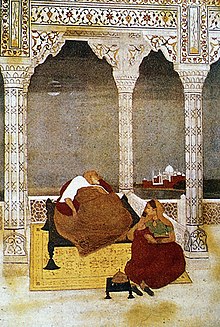
“The Passing of Shah Jahan” (1902), a painting by Abanindranath Tagore. At the foot of the bed is Jahanara Begum, the daughter of Shah Jahan; the Taj Mahal is in the background. Source: Wikimedia Commons
It says much for her stature in the Mughal court that after Shah Jahan’s death, Aurangzeb restored her title of Padshah Begum and gave her a pension along with the new title of Sahibat al-Zamani (Lady of the Age)—befitting for a woman who was ahead of her time.
Unlike other royal Mughal princesses, she was also allowed to live in her own mansion outside the confines of the Agra Fort.
“Jahanara establishes herself in the city as the most influential woman patron[s] of literature and poetry. She collects rare and beautiful book[s], and her library is peerless. She donates money to charity, especially Sufi dargahs, and carries on a genteel diplomacy with minor rajas who come to her with grievances and gifts,” writes Ira Mukhoty in her book.
Spending her last years in the pursuit of her artistic and humanitarian passions, Jahanara passed away in 1681 at the age of 67 but not before she etched her mark in the annals of history in a manner that would have made her father proud.
She commissioned several architectural spectacles, mosques, inns and public gardens across the Mughal empire.
But she is best remembered as the architect of Old Delhi’s legendary bazaar, Chandni Chowk—which translates to ‘Moonlit Intersection’.
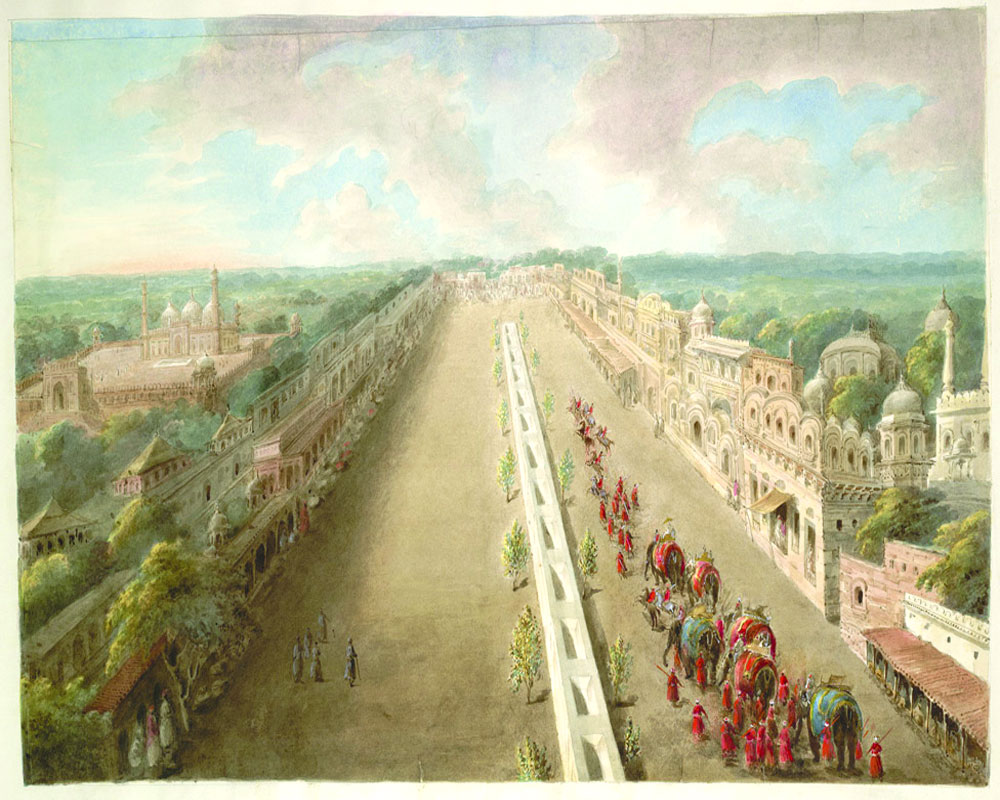
Water colour of Chandni Chowk in Delhi from ‘Views by Seeta Ram from Delhi to Tughlikabad Vol. VII’. Source: British Library
In his book Shahjahanabad : The Soverign City in Mughal India , Stephen Blake writes,
“The chowk was an octagon with sides of one hundred yards and a large pool in its center. To the north, Jahanara built a caravansarai (roadside inn) and a garden and, to the south, a bath. On certain nights, the moonlight reflected pale and silvery from the central pool and gave to the area the name Chandni Chawk (Silver or Moonlight Square). This name slowly displaced all others until the entire bazaar, from the Lahori Gate to the Fatehpuri Masjid, became known as Chandni Chawk.”
Today, many of Chandni Chowk’s ancient buildings have been torn down, as its lanes brim with new shops and colliding crowds. And yet, somehow it manages to invoke the spirit with which Jahanara lived—the same spirit that helped her survive and thrive amidst betrayals and tragedies.
Interestingly, Jahanara’s resting place in the Nizamuddin Dargah is of her own choosing, just like her character.
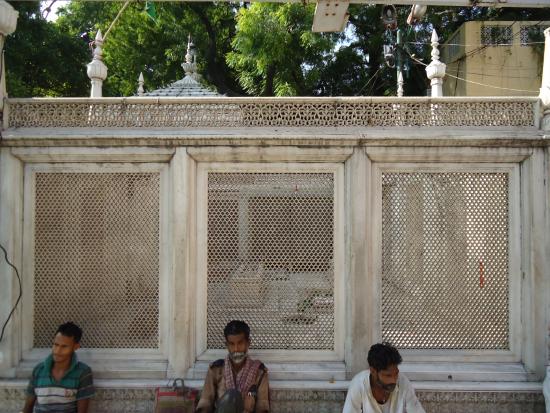
Jahanara’s tomb at the Nizamuddin Dargah. Source
Unlike the giant mausoleums built for her parents, she rests in a simple marble tomb open to the sky, inscribed with her own couplet in Persian:
Baghair subza na poshad kase mazar mara, (Let no one cover my grave except with green grass,) Ki qabr posh ghariban hamin gayah bas-ast. (For this very grass suffices as a tomb cover for the poor.
Perhaps it is poetic justice that green vines grow on the grave of this extraordinary princess of India.
(Edited by Shruti Singhal)
source: http://www.thebetterindia.com / The Better India / Home> History> Women / by Sanchari Pal / May 24th, 2019
Nahida Manzoor has become first Kashmiri woman to successfully summit the World’s highest peak, Mount Everest.
The news about Nahida’s successful summit was made public by Transcend Adventures, the company with which she had gone for her maiden attempt to scale the Everest.
“The Fourth summit of the day is Nahida Manzoor along with her Sherpa Guide Nima Kancha. Nahida hails from the state of Jammu & Kashmir. The 26-year old lady has been passionate about the snow peaks and took to the mountains at a very young age,” Transcend Adventures posted on their official Facebook page.
Nahida along with her group had left from Everest Base camp for the summit on Saturday and on Tuesday she made successful summit of the peak.
The experienced trained mountaineer had on March 4 started crowd funding to support her dream journey.
source: http://www.thedespatch.in / The Despatch / Home> Chai Khana / by The Despatch Staff / May 22nd, 2019
Activist Touseef Raina has been elected as delegate for UN Conference. Touseef Raina, hailing from Baramulla was selected among thousands of applications from across the world.
Arab Youth International Model United Nations (AYIMUN) is an annual conference where young leaders from all over the world sir together in an assembly called a Meeting session and each of them play the role as a diplomat representing the country they are assigned to.
A conference where hundreds of youth will gather, Touseef Raina was selected from Kashmir, to discuss the global issues and represent their countries as diplomats on a global level.
It will be held in Dubai United Arab Emirates Le Méridien Dubai Hotel, UAE.
Raina said, “It is a great opportunity and he is overwhelmed. He is looking forward to learn new things and share his idea and discuss Kashmir.”
Raina is currently working as the Advisor to Municipal President, Sopore. He had recently contested ULB polls.
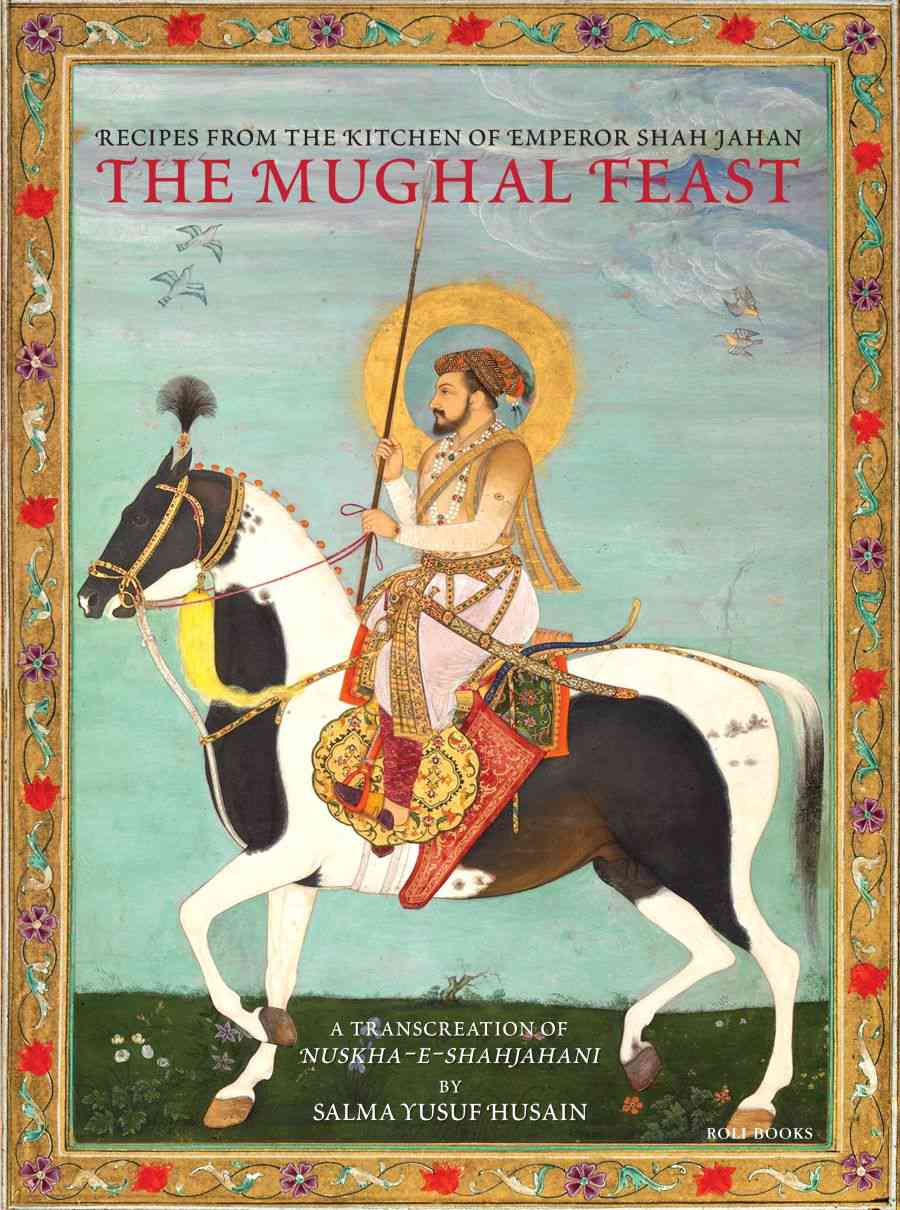
‘The Mughal Feast’ by Salma Yusuf Husain recreates the Persian recipe book ‘Nuskha-e-Shahjahani’, providing a glimpse into a bygone era of pomp and show.
Mughal Emperor Shah Jahan in his court | Google Cultural Institute/Wikimedia Commos Licensed under CC BY Public Domain Mark 1.0].
The silver twilight of Mughal civilization began with Shah Jahan. Delhi was now a sanctuary of an urbane, sophisticated court which had taste, even elegance. By early 1730 the city had absorbed various elements from neighbouring regions and witnessed a mingling of international as well as national strains and an interchange of ideas, customs and food.
The Portuguese relationship with the Mughals had already been established a long time back, along the trade routes. Hence the imperial kitchens, besides Indian ingredients, saw an additional ingredient brought by the Portuguese – the chilli. The chilli was very similar to the long pepper, already in use, and therefore did not look too unfamiliar to royal chefs, but had the hot taste. Other vegetables like potatoes and tomatoes also appeared on the scene and the food of the Red Fort became rich in colour, hot in taste, and varied as compared to the bland food of its ancestors. Qormas and qaliyas, pulaos and kababs, and vegetables in different garb, besides European cakes and puddings, adorned the table.
Cooking and serving food in the royal kitchens was a riot of colours, fragrances, experiments, table manners and protocols. The emperors usually ate with their queens and concubines, except on festive occasions, when they dined with nobles and courtiers. Daily meals were usually served by eunuchs, but an elaborate chain of command accompanied the food to the table. The hakim (royal physician) planned the menu, making sure to include medicinally beneficial ingredients. For instance, each grain of rice for the pulao was coated with silver warq, which aided digestion and acted as an aphrodisiac. One account records a Mughal banquet given by Asaf Khan, the emperor’s wazir, during Jahangir’s time to Shah Jahan – though no outsider had ever seen any emperor while dining except once when Friar Sebastian Manriquea, a Portuguese priest, was smuggled by an eunuch inside the harem to watch Shah Jahan eat his food with Asaf Khan.
Once the menu was decided, an elaborate kitchen staff – numbering at least a few hundred – swung into action. Since a large number of dishes were served at each meal, an assembly line of staff undertook the chopping and cleaning, the washing and grinding. Food was cooked in rainwater mixed with water brought in from the Ganges for the best possible taste. Not only the cooking but the way the food was served is interesting to note – food was served in dishes made of gold and silver studded with precious stones, and of jade, as it detected poison. The food was eaten on the floor; sheets of leather covered with white calico protected the expensive carpets. This was called dastarkhwan. It was customary for the emperor to set aside a portion of food for the poor before eating. The emperor began and ended his meal with prayers; the banquet ran for hours as Shah Jahan liked to enjoy his food, spending long hours at dastarkhwan.
With the passage of time, indigenization in the cooking style became obvious and certain Indian ingredients, like Kashmiri vadi, sandalwood powder, suhaga, betel leaves, white gourd, and batasha, and fruits like mango, phalsa, banana, etc., were used to give different flavours to dishes.
The arrival of every dish was a ceremony and history will never forget the pomp of those times, along with the flavours which remain only in the pages of handwritten manuscripts of those days, such as Nuskha-e-Shahjahani. Not only the imperial kitchens of the emperor, but also the bazaars of the city were charged with the smoke of different kababs, and the environment was filled with the fragrance of nahari, haleem, qormas and qaliyas. The array of breads was dazzling. Festive occasions were never complete without baqarkhani, kulchas and sheermals. Sharbat ke katore and kulfi ke matke added colour to the scenario. The city of Shah Jahan was a paradise of food with the creations of local and foreign chefs.
This luxurious way of serving and preparing food continued only till the time Shah Jahan ruled, as his son Aurangzeb did not believe in luxury, pomp and show. Unfortunately, the last years of this great emperor were unhappy. Deposed by his son Aurangzeb, Shah Jahan was imprisoned in Agra Fort and remained there for eight years until his death in 1666. Legend has it that Aurangzeb ordered that his father be allowed only one ingredient of his choice, and Shah Jahan chose chickpeas. He chose them because they can be cooked in many different ways. Even today, one of the signature dishes of North Indian cuisine is Shahjahani dal, chickpeas cooked in a rich gravy of cream.
QALIYA KHASA DO-PIYAZAH
LAMB COOKED WITH ONIONS, GREEN GRAM AND VEGETABLE | Serves: 4-6
INGREDIENTS
Lamb, cut into medium-sized pieces 1 kg
Green gram (moong dal), washed, soaked for ½ hour ¼ cup / 60 gm
Ghee 1 cup / 250 gm
Onions, sliced 1 cup / 250 gm
Salt to taste
Coriander (dhaniya) seeds, pounded 4 tsp / 20 gm
Ginger (adrak), grated 4 tsp / 20 gm
Beetroots (chuqander), peeled, cut into medium-sized pieces 3 cups / 750 gm
Turnips (shalgam), peeled, cut into medium-sized pieces 3 cups / 750 gm
Carrots (gajar), scraped, cut into cubes 3 cups / 750 gm
Rice paste 4 tsp / 20 gm
Saffron (kesar) 2 gm Freshly ground to a fine powder: Cinnamon (dalchini) ½ tsp / 3 gm
Cloves (laung) ½ tsp / 3 gm
Green cardamoms (choti elaichi) ½ tsp / 3 gm
Black peppercorns (kali mirch), ground 1 tsp / 5 gm
METHOD
1. Heat 100 gm ghee in a pan; sauté the onions and lamb with 2 tbsp water. Add the salt, pounded coriander seeds and grated ginger; cook, on medium heat, until the lamb is tender.
2. Add the beetroots, turnips, carrots and green gram with enough water to cover; cook the vegetables on low heat.
3. When the vegetables and lamb are fully cooked and at least 1 cup water remains in the pan, remove the pan from the heat and separate the lamb pieces and vegetables from the stock.
4. Temper the stock with the remaining ghee. Return the vegetables and lamb to the stock and bring to a boil. Add the rice paste and mix well.
5. Add the freshly ground spices and mix.
6. Transfer into a serving dish and serve garnished with saffron.
NARANJ PULAO
ORANGE-FLAVOURED LAMB CURRY COOKED WITH RICE | Serves: 6-8
INGREDIENTS
Oranges 4 big / 6 small
Rice 4 cups / 1 kg
Yoghurt (dahi), whisked 1 cup / 250 gm
Lemons (nimbu) 2
Sugar 2 cups / 500 gm
Saffron (kesar) ¼ tsp
Ghee 1 cup / 250 gm
Salt to taste
Dry fruits as needed
Green coriander (hara dhaniya), chopped as needed For the yakhni: Lamb, cut into pieces 1 kg
Ghee 1 cup / 1250 gm
Onions, sliced 1 cup / 250 gm
Ginger (adrak) 4 tsp / 20 gm
Salt to taste
Cinnamon (dalchini), 2 sticks 1˝
Green cardamoms (choti elaichi) ½ tsp / 3 gm
Coriander (dhaniya) seeds, crushed 4 tsp / 20 gm
Cloves (laung) ½ tsp / 3 gm
METHOD
1. Peel the oranges carefully so that the case remains intact. Remove the segments and keep aside. Sprinkle salt inside the case and float them in whisked yoghurt for an hour. Remove the cases from the yoghurt and wash with cold water. Boil the orange cases for a minute. Remove and keep aside.
2. In another pan filled with water, squeeze the juice of one lemon and boil the orange cases again. In case lemon is not available, boil in thin yoghurt liquid, simmer to make them tender.
3. Make yakhni with the lamb pieces and all the ingredients mentioned. Temper the stock with cloves.
4. Parboil the rice and keep aside.
5. Prepare a sugar syrup of one-string consistency; keep aside.
6. Remove the seeds and the skin of each segment and coarsely chop and mix with the yakhni. Take 1 tbsp cooked rice and mix it with saffron. Cook on low heat and simmer for 5 minutes. Remove and keep aside.
7. In a separate pan, spread the yakhni, evenly pour 3 tbsp syrup and simmer, when the syrup is absorbed, spread the rice and pour some ghee. Cover the pan and put on dum. While serving, transfer the pulao into a serving dish and place the orange cases over it. Fill one case with almond halwa, another with pistachio halwa, another with saffron and orange rice and another with salted minced lamb*. Garnish all with dry fruits and chopped coriander.
*You can buy almond halwa, pistachio halwa and salted minced lamb at a grocery store, or make them separately. You can also choose your fillings as per your liking.
GURAK KABAB
CHICKEN STUFFED WITH MEAT AND SLOW-COOKED ON CINNAMON BED | Serves: 4
INGREDIENTS
Chicken, cleaned, washed, skinned 2 (700-800 gm each)
Onion juice ½ cup / 125 ml
Ginger (adrak) juice ¼ cup / 60 ml
Salt to taste
Vegetable oil 3 tbsp / 45 ml
Lamb, minced 400 gm
Onion, medium-sized, sliced 1
Coriander (dhaniya) seeds, crushed 1 tbsp / 15 gm
Ginger (adrak), chopped 1 tbsp / 15 gm
Saffron (kesar), dissolved in milk 1.5 gm
Yoghurt (dahi), whisked ¼ cup / 60 gm
Cinnamon (dalchini) sticks to cover the bottom of the pan 8-10
Ghee ½ cup / 125 gm
Black gram (urad dal) flour ½ cup / 125 gm Freshly ground to a fine powder: Cloves (laung) 1 tsp / 5 gm
Cardamom (elaichi) 1 tsp / 5 gm
Black peppercorns (sabut kali mirch) 1 tsp / 5 gm
METHOD
1. Prick the chicken all over with a fork.
2. Marinate the chicken with onion juice, ginger juice and salt; rub well inside and outside the chicken and keep aside for 30 minutes.
3. Heat the oil in a pan; add the minced meat, onion, crushed coriander seeds, chopped ginger and salt. Stir and cook until the meat is tender.
4. Smoke the cooked mixture.
5. Fill the chicken with the minced lamb and tie both legs with twine to keep the shape of the chicken intact.
6. Mix the saffron and ground spices with the yoghurt.
7. Apply the yoghurt and saffron mixture all over the chickens evenly.
8. Spread the cinnamon sticks on the bottom of the pan. Place the chicken on the cinnamon bed and pour the ghee around.
9. Make a semi-hard dough of black gram flour. Cover the pan and seal with this dough.
10. Place the pan on low charcoal heat and cook on dum for 4 hours.
11. Remove the cover, take the chicken out, cut into four pieces and serve over the mince.
BAQLAWA
LAYERED SQUARES GARNISHED WITH PISTACHIOS | Yield: 10
INGREDIENTS
Egyptian lentil 1 cup / 250 gm
Ghee 1 cup / 250 gm
Ginger (adrak) 4 tsp / 20 gm
Salt 8 tsp / 40 gm
Wholewheat flour (atta) 4 cups / 1 kg
Kid fat 4 tsp / 20 gm
Sugar 2 cups / 500 gm
Pistachios (pista), pounded 8 tsp / 40 gm Freshly ground to a fine powder:
Cinnamon (dalchini) ½ tsp / 3 gm
Cloves (laung) ½ tsp / 3 gm
Green cardamoms (choti elaichi) ½ tsp / 3 gm
METHOD
1. Boil the lentil until soft. Remove from heat and drain. Fry the lentil in little ghee with ginger and salt. Then add enough water to cook the lentil, ensuring that it is not mashed and each grain looks separate. Sprinkle the ground spices and smoke the mixture.
2. Knead the flour into a hard dough (in summer one part ghee and two parts kid fat is used while in winter the proportions should be equal).
3. Divide the dough equally into small portions. Roll each portion out into a thin poori, apply ghee and dust with dry flour, sprinkle the lentil mixture lightly and cover with another poori. Repeat the process with 5-7 pooris.
4. Shape them into squares and secure the edges with water.
5. Heat the ghee in a pan; deep-fry the squares. Remove and keep aside to cool.
6. Make a sugar syrup and soak the fried squares in it. When the syrup is absorbed, sprinkle pounded pistachios.
Excerpted with permission from The Mughal Feast: Recipes from the Kitchen of Emperor Shah Jahan, a transcreation of Nuskha-e-Shahjahani by Salma Yusuf Husain, Roli Books.
source: http://www.scroll.in / Scroll.in / Home> Magazine> Book Excerpt / by Salma Yusuf Husain / May 18th, 2019
The fellows participate in Nieman seminars, workshops, master classes and conduct research with Harvard scholars, among others
The prestigious Nieman fellowship entails attending two semesters at Harvard University, starting September 2019
_______________________________
Ashwaq Masoodi, national writer at Mint, has been awarded the Nieman Fellowship at Harvard University. In a press release issued on 3 May, the Nieman Foundation for Journalism announced that Ashwaq will join 26 other Nieman Fellows for the class of 2020. Ashwaq is the only Indian in this list
The prestigious Nieman fellowship entails attending two semesters at Harvard University, starting September 2019.
The fellows participate in Nieman seminars, workshops, master classes and conduct research with Harvard scholars, among others.The release also said that, at Harvard, Ashwaq would explore ways to battle stereotypes and improve media reporting on Muslims, the largest religious minority in India
The Nieman Foundation for Journalism has educated more than 1,600 accomplished journalists from 98 countries since 1938. The selected journalists are from a dozen countries, including Australia, Lebanon, Niger, Turkey, China, Russia, Zimbabwe, Hungary, besides from nine different US states and Washington D.C.
Ashwaq has been working in Mint since August 2013 and specializes in long stories on the lives of the marginalized communities, gender and society.




![Mughal Emperor Shah Jahan in his court | Google Cultural Institute/Wikimedia Commos Licensed under CC BY Public Domain Mark 1.0].](http://www.mpositive.in/wp-content/uploads/2019/05/MughalCookBook01MPOs18may2019.jpg)