A night’s stay in the hotel, which is set to open later this year, might cost up to Rs 8 lakh.
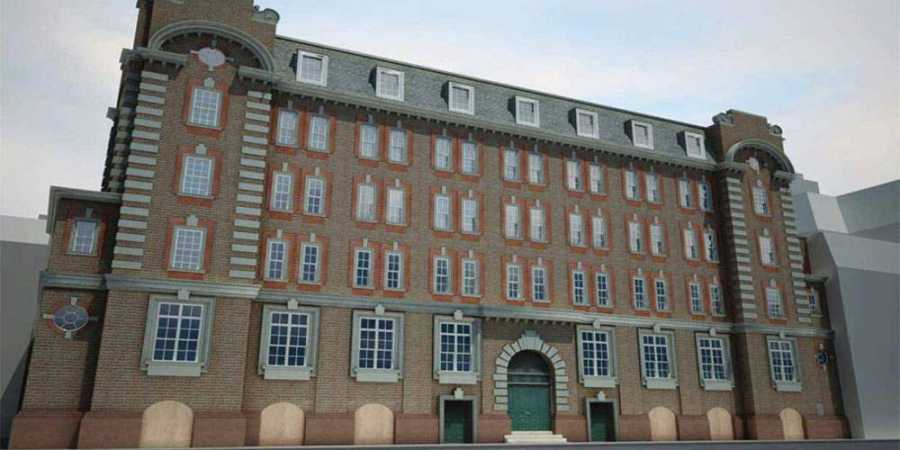
A view of the Great Scotland Yard (Photo | http://www.twenty14holdings.com)
Kochi :
Malayalee billionaire Yusuff Ali, who bought the Great Scotland Yard, which served as headquarters for the Metropolitan police in London, has converted it into a luxurious 5-star hotel. The renovation that cost Rs 685 cr. (£75 Million) was done in 3 years.
The business tycoon, who is chairman of Abu Dhabi-based retail giant LuLu Group had earlier bough the iconic building in 2015 for Rs 1000 crore (£110 Million). The renovated hotel is all set to open later this year and will be managed by the Hyatt Group.
When asked about the property, Yusuff Ali said: “This is a very prestigious project for us as this is one of the most well-known property not just in the UK but around the world. We have not left any stones unturned to make this the most sought-after hotel while retaining the essence of the original building, so that each of our guests get a truly memorable experience”.
Great Scotland Yard has special relevance in UK history as it was chosen by the then Prime Minister Sir Robert Peel as the headquarters for the Met police in 1829. Even after the renovation, the essence of the original building has been preserved.
The hotel will have 153 rooms and the tariff per night is expected to go up to Rs 7,79,842 (10,000 euro). These suites offer guests picturesque views of Nelson’s Column, Westminster Abbey and Buckingham Palace, making it one of the most unique locations in London.
The luxury hotel that is steeped in British political history will include references to the famous criminals of the time gone by. In a secret whisky bar, a decadent chandelier made of glass shards will be a nod to the Forty Elephants, the 19th-century gang of women known for smashing shop windows to steal jewellery. There will also be artwork by prisoners and old military uniforms.
Adeeb Ahamed, Son-in-law of Yusuff Ali and the Managing Director of Twenty14 Holdings, the hospitality arm of Lulu Group said, “Renovating the Great Scotland Yard building and unveiling the UK’s first Unbound Collection hotel will bring a truly individual and world-class hotel to London.
“The Great Scotland Yard is really an important part of the fabric of London and it is a great opportunity for us to be a part of the culture and legacy of this great city and help in its development. The Great Scotland Yard will be an enriching landmark in Westminster as a high-end luxury boutique hotel that recaptures the history, culture and essence of the London of yore.”
source: http://www.newindianexpress.com / The New Indian Express / Home> States> Kerala / by Express News Service / March 26th, 2019
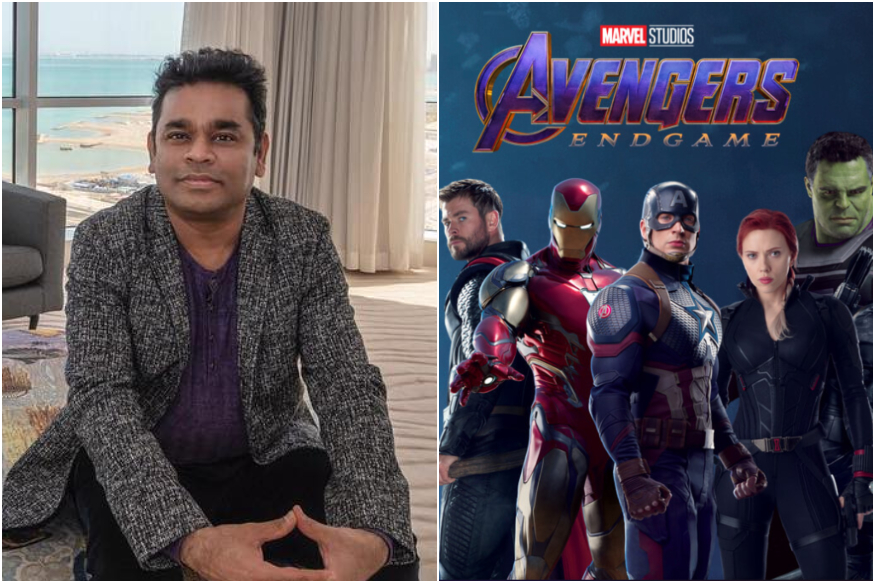
Oscar-winning composer A.R. Rahman has created India’s Marvel anthem for the release of “Avengers: Endgame”
Oscar-winning composer A.R. Rahman has created India’s Marvel anthem for the release of “Avengers: Endgame”.
Oscar-winning composer A.R. Rahman has created India’s Marvel anthem for the release of “Avengers: Endgame”. It will come out in Hindi, Tamil and Telugu.
Marvel India has teamed up with Rahman for the track, which will be released on April 1, according to a statement.
“Being surrounded by Marvel fans in my own family, there was too much pressure to come with something really satisfying and apt for ‘Avengers: Endgame’. I hope Marvel aficionados and music lovers enjoy the track,” said Rahman.
There is much anticipation for “Avengers: Endgame”, especially after the success of “Avengers: Infinity War”
“‘Avengers: Endgame’ is not just a movie, it’s an emotional journey for fans everywhere in India. An original composition by Oscar winner A.R. Rahman was the perfect way to celebrate the love for Marvel among fans in the country.
“This is our small way of thanking the fans here for their extraordinary support”, said Bikram Duggal, Head – Studios, Marvel India.
Kevin Feige has produced the movie, directed by Anthony and Joe Russo. The movie will release in India on April 26 in English, Hindi, Tamil and Telugu.
source: http://www.news18.c0m / News 18 / Home> News18> Movies / by IANS / March 25th, 2019
He was one of the two Indian athletes who were expelled from the 2018 Gold Coast Commonwealth Games.
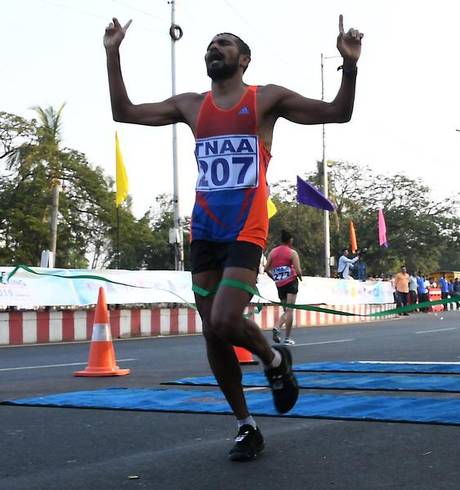
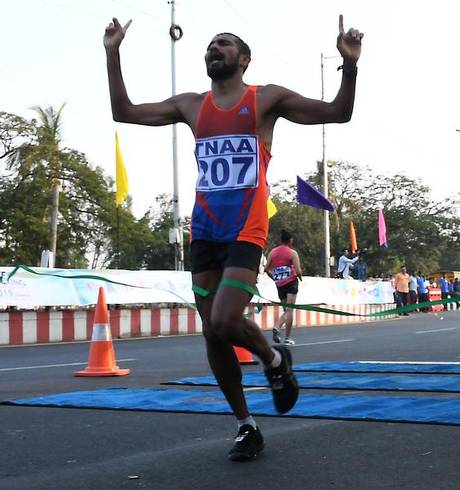
National record holder K.T. Irfan on Sunday became the first Indian from athletics to qualify for the next year’s Olympics while finishing fourth in the 20 km event of the Asian Race Walking Championships in Nomi, Japan.
The 29-year-old Irfan clocked 1 hour 20 minutes and 57 seconds to better the Tokyo Olympics qualification standard of 1 hour 21 minutes. The Olympics qualification period for race walk events and marathon race has begun from January 1 this year and will run till May 31, 2020. The Olympics qualification period for all other athletics events will start from May 1 this year and will run till June 29, 2020.
No other Indian from athletics has so far qualified for Tokyo Olympics. Irfan, who has a personal best as well as national record of 1:20:21 which he did during his 10th place finish in 2012 Olympics, also qualified for this year’s World Championships (September 27-October 6) in Doha, Qatar as he bettered the qualifying mark of 1:22:30.
The Kerala race walker had won the 20 km event in the National Open Race Walk Championships in Chennai last month with a time of 1:26:18.
He was one of the two Indian athletes who were expelled from the 2018 Gold Coast Commonwealth Games for not adhering to the ‘no needle policy’ of the Games. He was disqualified in the 20 km race walk event of the 2018 Asian Games after receiving his third warning for “loss of contact.”
Japan’s Toshikazu Yamanishi won the 20 km race walk event with an impressive time of 1:17:15 while Kazakhstan’s Georgiy Sheiko and Korea’s Byeongkwang Choe were second and third in 1:20:21 and 1:20:40 respectively.
The Asian and World record in men’s 20 km race walk stands in the name of Japanese Yusuke Suzuki who clocked 1:16:36 in the 2015 edition of the same championships in Nomi.
Two other Indians, Devinder Singh and Ganapathi Krishnan also qualified for the World Championships as they clocked 1:21:22 and 1:22:12 respectively. They had finished second and fifth in the Chennai National Race Walk Championships with timings of 1:26:19 and 1:26:43.
In the women’s 20 km race walk event, Soumya Baby finished fourth with a timing of 1:36:08, well outside Olympics qualifying standard of 1:31:00 and World Championships qualifying standard of 1:33:30.
source: http://www.thehindu.com / The Hindu / Home> Sport> Athletics / by PTI / New Delhi – March 17th, 2019
The urs of Mughal emperor Shahjahan will be observed at the historic Taj Mahal for three days from April 2 next. Entry into Taj Mahal will be free for visitors after noon on April 2 and 3 while it will be free for the entire day on April 4.
Lakhs of devotees will throng the 17th century monument during the three-day event and will pay homage at the graves of Shahjahan and his wife Mumtaz, in whose memory the Taj Mahal was built.
On the last day, a ‘saptrangi chadar’ (multi-coloured bedsheet ) will be offered at the graves as part of a ritual. Sandalwood powder will be sprinkled on the grave too.
The urs of the Mughal king Shahjahan is celebrated on the 25, 26 and 27th day of Rajab, which falls of April 2, 3 and 4.
The Shahjahan urs committee will meet here on March 8 to decide on the arrangement and preparation to be made for the urs.
Officials said that a notification was issued by the ASI on the urs of Shahjahan. The administration will prepare a fool proof strategy to ensure full security to devotees attending the urs.
source: http://www.dailypioneer.com / The Pioneer / Home> State Editions> Lucknow / by PNS, Lucknow / March 06th, 2019
Walking to glory: K.T. Irfan began the new season on a confident note.
Both nowhere near their personal best
Olympian race walker K.T. Irfan had the worst possible year of his career in 2018.
He was ejected from the Gold Coast Commwealth Games village after his roommate was found with a syringe in his bag, a few days after the race. And in the subsequent Jakarta Asian Games, he was disqualified.
The 29-year-old from Kerala, who holds the National record, however, began the new season on a confident note by winning the men’s 20K gold in the sixth Open National race walk championships here on Saturday in a time of one hour 26 minutes and 18 seconds.
It was a far cry from his personal best of 1:20.21 at the 2012 London Olympics.
B. Soumya (Kerala) coasted to a relatively easy victory in the women’s 20K category in a time of 1:40.25. Priyanka finished second in 1:41.20.
Soumya was behind Priyanka and Karamjit Kaur in the first 11 laps and after that she took control of the proceedings.
Soumya couldn’t come anywhere close to her National record of 1:31.28 set in Delhi last year in the same event.
Warnings
Karamjit was handed three warnings and was asked to start from the pit lane.
She did not want to continue as she thought she had already lost a lot of time.
“There was some problem with the road. And also I missed the services of [Russian] coach Alexander Artsybashev,” said Soumya. It is learnt that Alexander will soon join the team in the camp.
In the top bunch, which included Sandeep Kumar, Chandan Singh, Devender Singh and Ganapathi Krishnan, Irfan was trailing for most part of the race.
He picked up speed in the last 1km to breast the tape one second ahead of Devender.
“It feels great but I am not happy with the timing.
“It was partly due to the humid weather conditions and the sloped roads,” said Irfan.
Unable to make the qualification grade for the Doha World Championships in September-October, both Irfan and Soumya said they will definitely make the grade in the Asian championships to be held in Nomi (Japan) next month.
Compared to the previous five editions, the Chennai event saw the poorest time recorded by the winners.
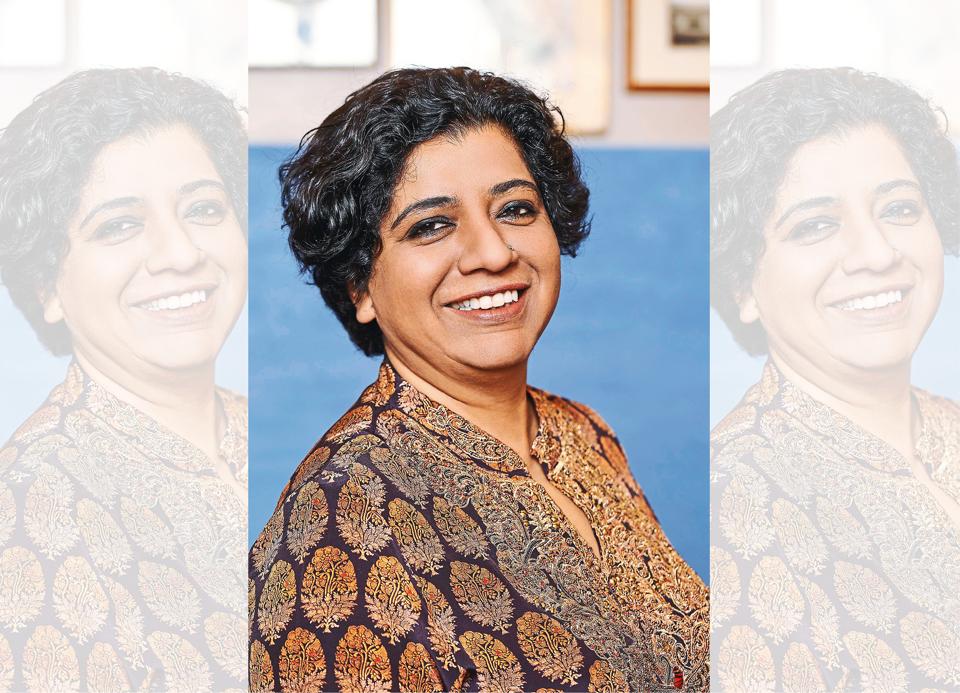
From the desk of Sunday magazine to a celebrated chef now on Netflix’s Chef’s Table, Asma Khan’s story is one of strength, confidence and ambition
The first British chef to make it to Chef’s Table, Asma Khan is also opening all-women kitchens in conflict zones in Syria(Ming Tang-Evans)
It is a funny feeling when a colleague from decades ago becomes a success in a totally different field. And it feels even stranger when you find yourself writing a profile of somebody you once knew as a sub-editor.
In 1990, when I edited Sunday magazine, a young girl came to see me to ask if she could try her hand at journalism. She worked at Lintas, the ad agency, she said, and wanted to do something different but not entirely unrelated.
I hired her on the spot and all of us in the office thought she was very bright and articulate. Then, a few months later, she announced that she was getting married, resigned from her position and went off to live in Cambridge with her new husband.
And that, I thought, was the last I would hear of Asma Khan.
Wrong, very wrong.
A few years ago, she sent me an email. She was now a chef in London, she wrote. Not only did she organise private dinners at home but she was also running a pop-up in a pub in Soho. Why didn’t I drop in and try her food?
I had to search my memory to remember Asma (time to be candid!) and when I asked old colleagues from the Sunday days, they said that they found it hard to believe that she was now a chef.
Then, in 2015, my friend Fay Maschler, London’s most influential critic, wrote about Asma’s pop-up. It was an unqualified rave review and she rated Asma’s little restaurant serving Kosha Mangsho and Kathi rolls ahead of most of London’s fancy Indian places.
The day the review came out, there was a line outside the pub where Asma ran her pop-up. It began raining but the people still continued queuing. Asma and her cooks were stunned. But like good Indians, they felt bad for the crowds. So they made little bowls of rice with dal and distributed them for free to those lining up. The gesture did not go unnoticed and every night after that, the small restaurant was packed. It became the cool place to go for people who wanted real Indian food.
“Fay Maschler changed my life,” says Asma now. And indeed, the changes have been dramatic. A year and a half ago, the owners of Kingly Court, a new development off Carnaby Street in the centre of London, offered her a dream deal on a site for a full-fledged restaurant. The restaurant opened to glowing reviews and became a symbol of the new London. Nigella Lawson came. Sadiq Khan, the Mayor of London, praised it. And Asma appeared on the list of the 100 most influential people in food in the UK.
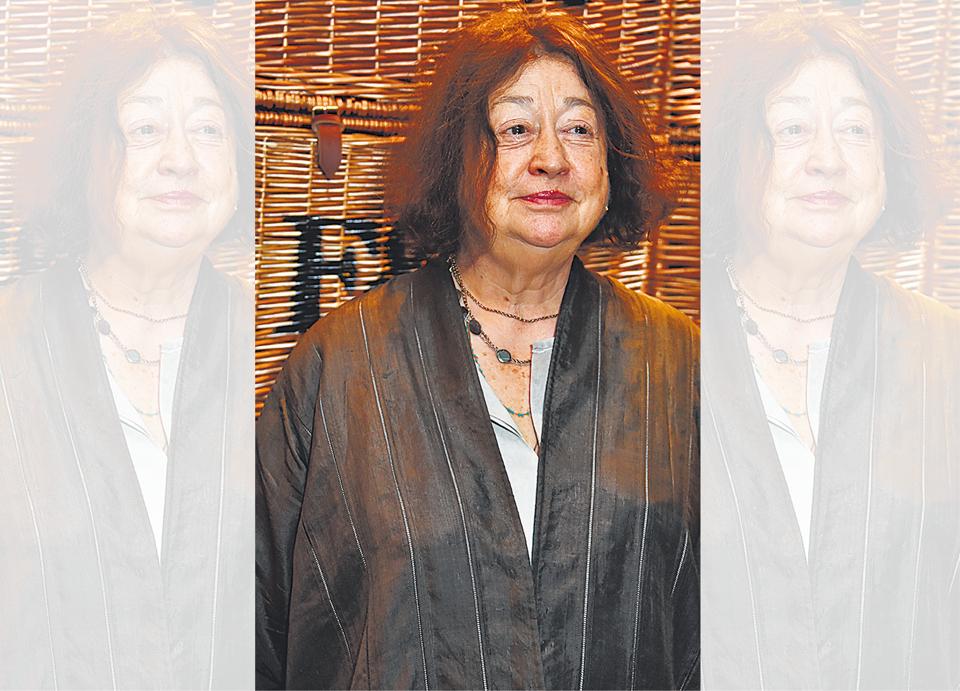
Fay Maschler, London’s most influential critic, discovered Asma
But a few months ago, Asma received her biggest accolade yet. The Netflix series Chef’s Table has featured some of the world’s greatest chefs. It has the power to turn a chef’s life around. Gaggan Anand says that even more than all the honours and awards he has earned (two stars from Michelin, number one restaurant in Asia for an unprecedented four years in a row etc.), it is Chef’s Table that made people from all over the world fly in to Bangkok to eat at his restaurant.
There has been much heartburn in the UK that no British chef has ever made it to Chef’s Table.
So when Netflix announced that it had finally selected a British chef, there was much anticipation. To everyone’s surprise, they chose Asma.
The show airs later this month and as I told Asma, her life will never be the same again. She will soon be one of the world’s most celebrated chefs, the best known Indian chef in the UK and perhaps globally, with the exception of Gaggan.
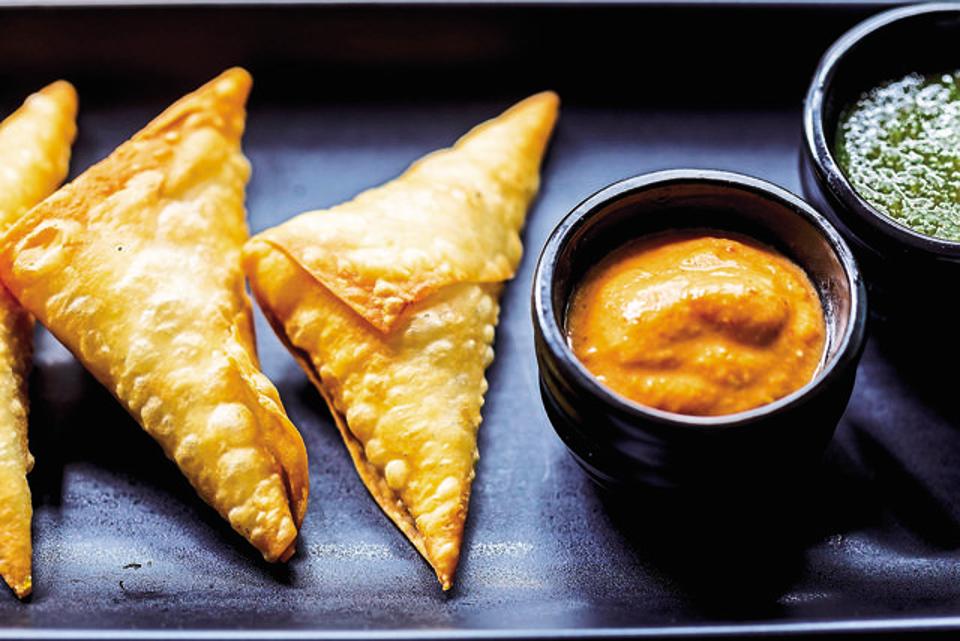
Chicken samosas served with spicy sesame and red chillies chutney, and tamarind chutney ( Ming Tang-Evans )
As wonderful as all this is, a little voice inside my head kept asking, “How did Asma, the same old Asma from the Sunday desk end up becoming one of the great chefs to be featured on Chef’s Table? Had she been a secret cook all along even as she laboured over copy? Had she worked at some of the world’s best restaurants? Had she reinvented classic Indian dishes?”
The answer: none of the above.
The Asma story is so incredible that if you made a movie with this plot, you would be accused of asking too much of the viewer. Suspension of disbelief is okay, but Asma’s life takes us far beyond that.
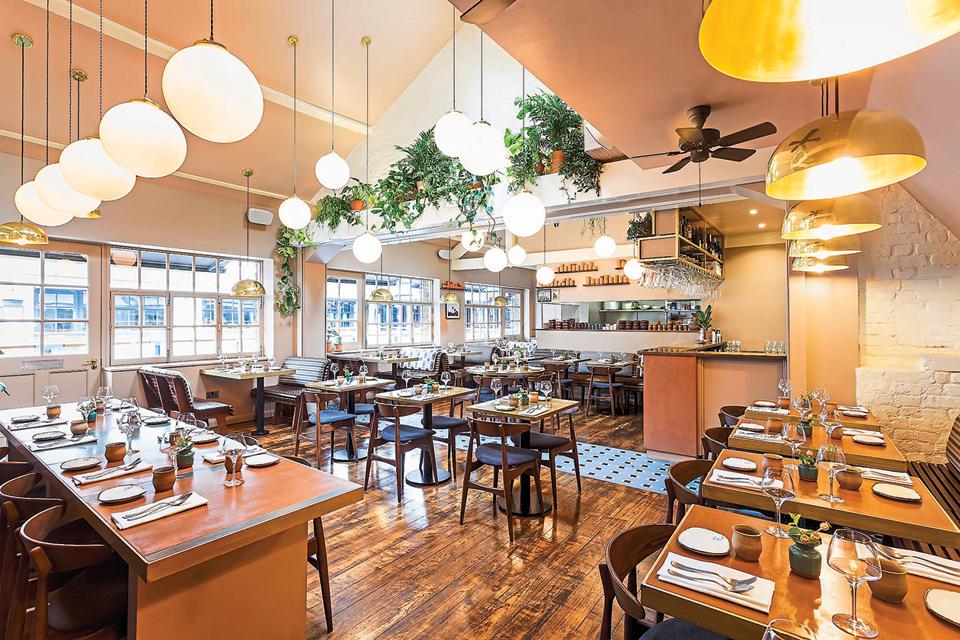
Darjeeling Express started as a dinner for 12 guests at home and is now a hugely successful restaurant ( Ming Tang-Evans )
She was born in Calcutta to a family with roots in nawabi culture (what we would call landed gentry, I guess). She had a standard middle-class upbringing (La Martiniere and Loreto) before going out to work (Lintas and then Sunday). Her parents introduced her to Mushtaq, a brilliant Bangladeshi economist who was a don at Sidney Sussex College in Cambridge. Asma and Mushtaq had, what was for all practical purposes, an arranged marriage and she moved to Cambridge.
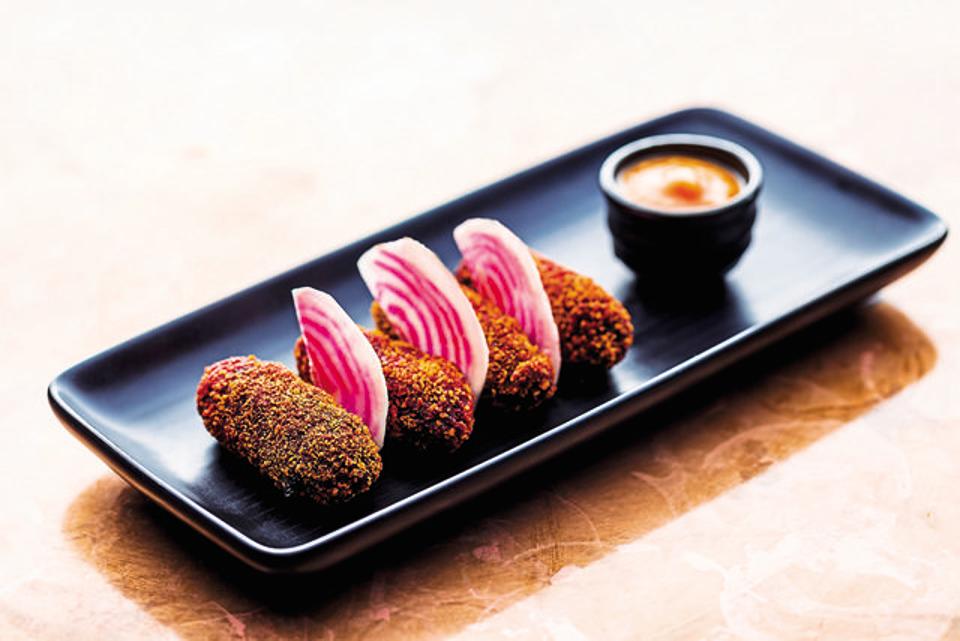
Beetroot chops, Bengali spiced croquettes made with British beetroots ( Ming Tang-Evans )
She was miserable. “I thought the Quran had it wrong when it described hell,” she recalls. “Hell was Cambridge.” She hated the cold, the greyness, the drab English environment (especially after the sights, smells and sounds of Calcutta).
Asma’s book, a collection of authentic Indian recipes
Though her mother had run a catering business in Calcutta, Asma did not know how to cook. She could read copy, she could give clever headlines. But she had no kitchen experience. Fortunately Mushtaq had no interest in food.
So she turned to studying. She got a law degree, and then decided to do a PhD in law. By then, Mushtaq had shifted to the School of Oriental and African Studies in London so she applied to King’s College at London University. She talked the dons at King’s into letting her go directly to a doctorate without a Masters.
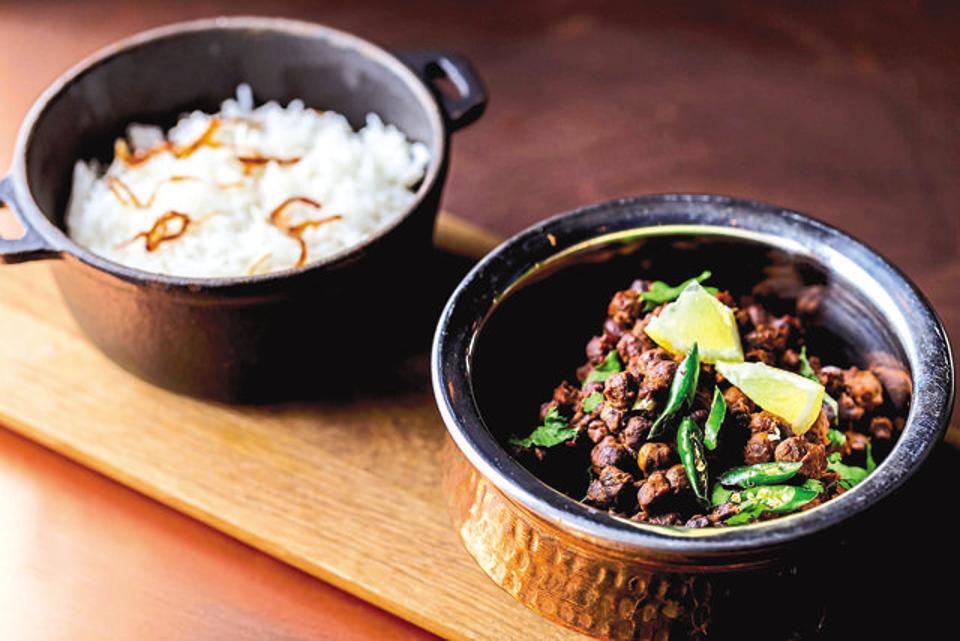
Black chickpeas (kaala channa) cooked with ginger and dried red chilies at Darjeeling Express ( Ming Tang-Evans )
She chose, for her thesis, a subject that was as far removed from Calcutta as possible: how the UK handles the separation of Church and State. But even as she was discussing whether the British monarch should be ‘defender of the faith’, a hitherto undiscovered cooking gene deep inside her reasserted itself.
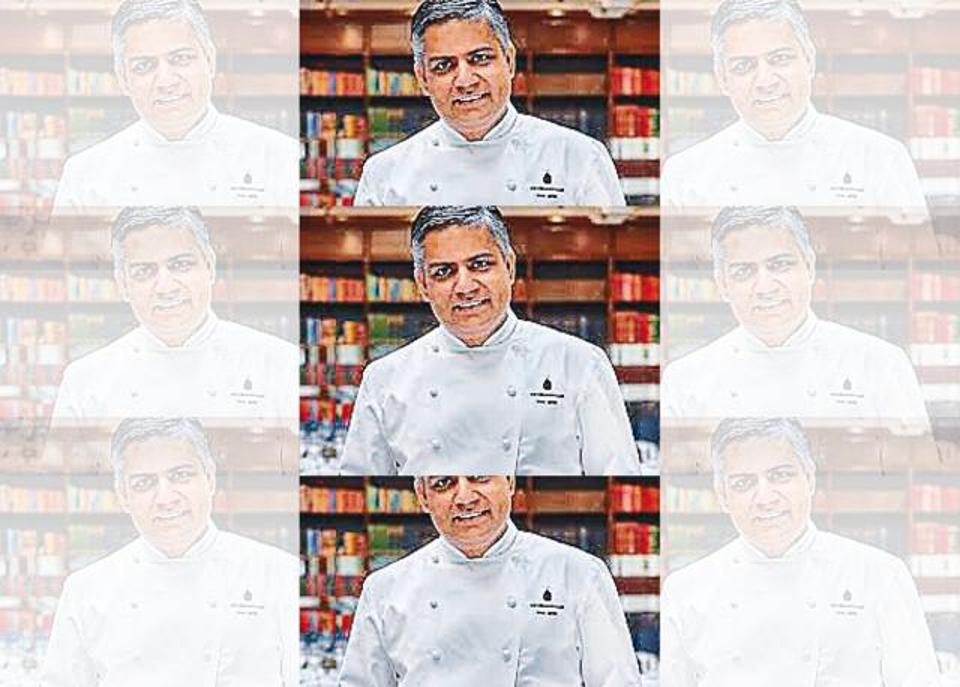
Chef Vivek Singh offered Asma a pop-up at Cinnamon Club
She began to make the food of her ancestors, going back to old family recipes. Eventually, cooking became such an obsession that she started hosting pop-up dinners. Her husband disapproved of the idea so she cooked the dinners when he was travelling. (“We cleared up the house so well,” she laughs “that usko pata hi nahi chala!”)
But her two children, who were not happy with having the house taken over by strangers, complained to their father and soon the jig was up.
Asma is nothing if not super confident, so she called such famous London chefs as Cyrus Todiwala and Vivek Singh to her house for dinner to try her biryani. Even though none of them knew her, they came anyway. They were kind and encouraging. Vivek Singh was so impressed that he offered her a pop-up at his The Cinnamon Club restaurant. She took her all-women team of cooks and won over the all-male Cinnamon Club kitchen team. (“I will always be grateful to Vivek for that,” she says.)
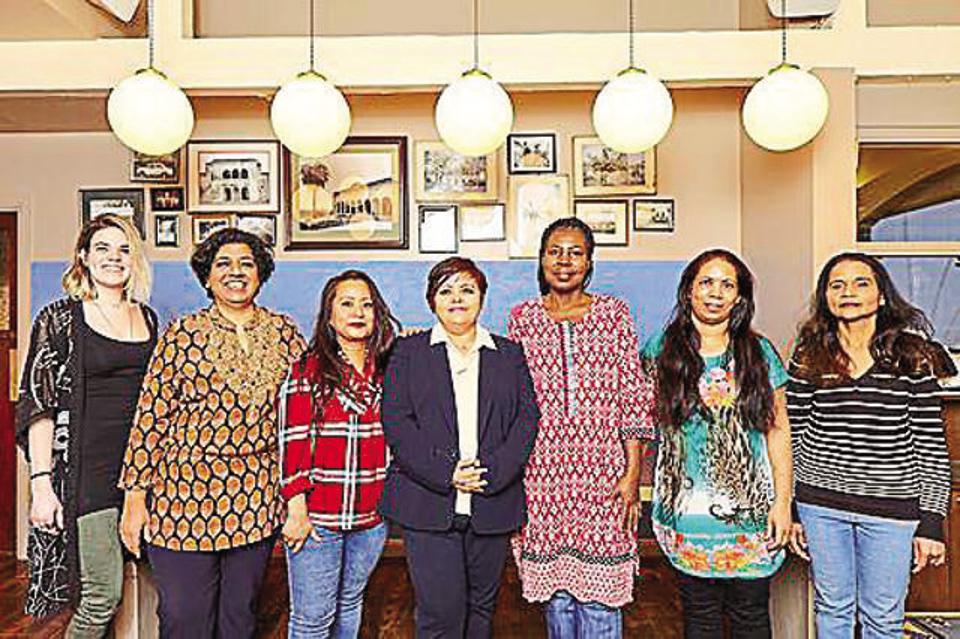
The all-women kitchen team at Darjeeling Express, London
That gave her the credibility to do a full-time pop-up. Word of her skills got out. Fay discovered her. And the rest is the stuff Chef’s Table episodes are made of.
Now, with the success of Darjeeling Express, Asma is well-known in London. People make much of her nearly all-women team. (My wife, who came to lunch at Darjeeling Express with me, loved the female energy; she was sold on the restaurant even before the first dish arrived.) Asma is overtly political, speaking out about sexual harassment in restaurant kitchens, breaking the conspiracy of silence that women in the business have gone along with and has become a symbol of the success that Asian women can find if they overcome prejudice and their own apprehensions.
But ultimately, I judge chefs by their food not by their stories. And Asma’s was terrific. We had puchkas, Bihari phulkis (like pakoras), Kosha Mangsho, a Calcutta mutton chaap, kaalachanna, chicken samosas, beetroot chops and so much more. None of it was molecular or clever, clever. It was just excellent.
You will hear more about Asma in the months ahead.
After Gaggan, she is Kolkata’s second contribution to the global food world.
And you will hear about her in non-food contexts. She is opening all-women kitchens in conflict zones in Syria. As she says, “I don’t want to be remembered as a great chef. I want women to come to my grave and say ‘she changed my life’; that’s what matters.”
She is not short on confidence and ambition, our Asma. And I have a feeling that she will end up being the most successful person to ever emerge from the offices of Sunday magazine!
From HT Brunch, February 24, 2019 / Follow us on twitter.com/HTBrunch /Connect with us on facebook.com/hindustantimesbrunch
source: http://www.hindustantimes.com / Hindustan Times / Home> Brunch / by Vir Sangvi, Hindustan Times / February 24th, 2019
Bertram Sheldrake converted to Islam at the age of 15 and spent much of his fortune promoting the religion in Britain
His efforts brought him an invitation from leaders of the newly proclaimed Muslim nation of Islamestan in China’s far west
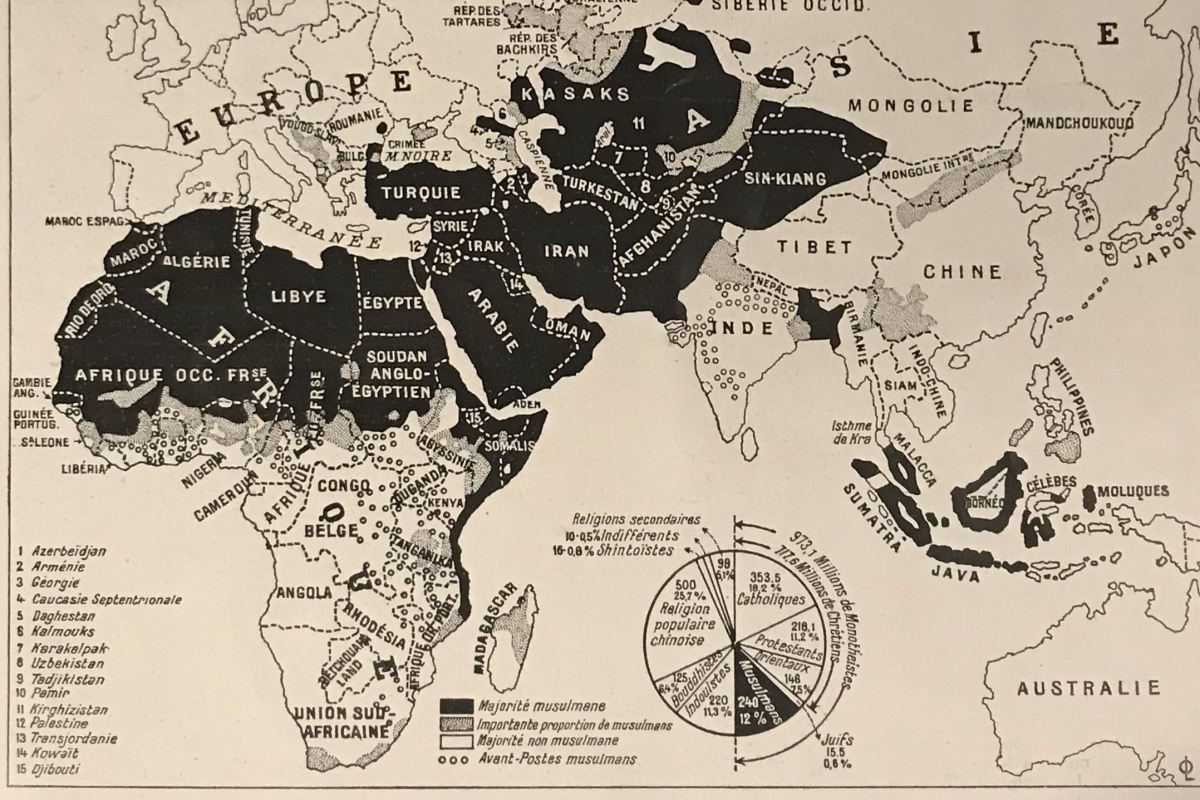
The Muslim distribution in the world, circa 1940.
It’s a long way from the south London suburb of Forest Hill to the once dreamed of Republic of Islamestan.
You may never have heard of Islamestan, in Chinese Turkestan, or its one-time “king”, Bertram Sheldrake. Islamestan is long gone, swallowed up in the historical shifts of a turbulent region, but for a brief and unlikely moment, an English pickle-factory heir ruled, with his wife, Sybil, over the newly independent Muslim country, to the far west of China.
The whole of what was then referred to as Chinese Turkestan, or Sinkiang (now Xinjiang), was, in the 1930s, subject to tribal rebellions and warlord uprisings. It was ultimately concluded by the chiefs of various tribes in the region that only an outsider (but necessarily a Muslim one) could bring unity to the region. Having read newspapers brought by travellers, they sent a delegation to south London to visit an Englishman who had caught their attention. Sheldrake was invited to assume the throne of Islamestan. Not being quite sure of the correct title for the new ruler, the British press helpfully offered some suggestions – “The Pickle King of Tartary”, “The English Emir of Kashgar”, “Lord of the Rooftop of the World”.
To contemporary British newspaper readers, it must have seemed as if Rudyard Kipling’s The Man Who Would Be King(1888), wherein two English adventurers, Dravot and Carnehan, become the leaders of Kafiristan, a remote region of Afghanistan, had come true. Having had a good public-school education on his father’s pickle profits, Sheldrake would have known Kipling’s cautionary tale. Things hadn’t turned out well for Dravot and Carnehan in Kafiristan; neither would they go smoothly in Islamestan for “The Pickle King of Tartary”.
Bertram William Sheldrake was born in the same year that Kipling’s cautionary tale was published, the son of Gosling Mullander Sheldrake (known simply as “George”), who ran the successful firm of G. Sheldrake, Manufacturers of Pickles, Sauces, Chutney, Ketchup, Vinegar, etc.; Bottlers of Capers, Curries, and other Condiments, located at 293-295 Albany Road, London, SE5. The business had done well since being founded in the 1870s, changing its name to the rather pedestrian South London Jam and Pickle Manufactory and then Sheldrake’s Pickles while trading up from the insalubrious surroundings of Southwark to the leafier environs of Denmark Hill.
Bertram must have been a precocious schoolboy. Although raised Catholic, in 1903, at the age of 15, he converted to Islam (then generally termed “Mohammedanism”), learned Arabic and changed his name to Khalid.
Sheldrake in an Evening Report newspaper article dated March 14, 1934.
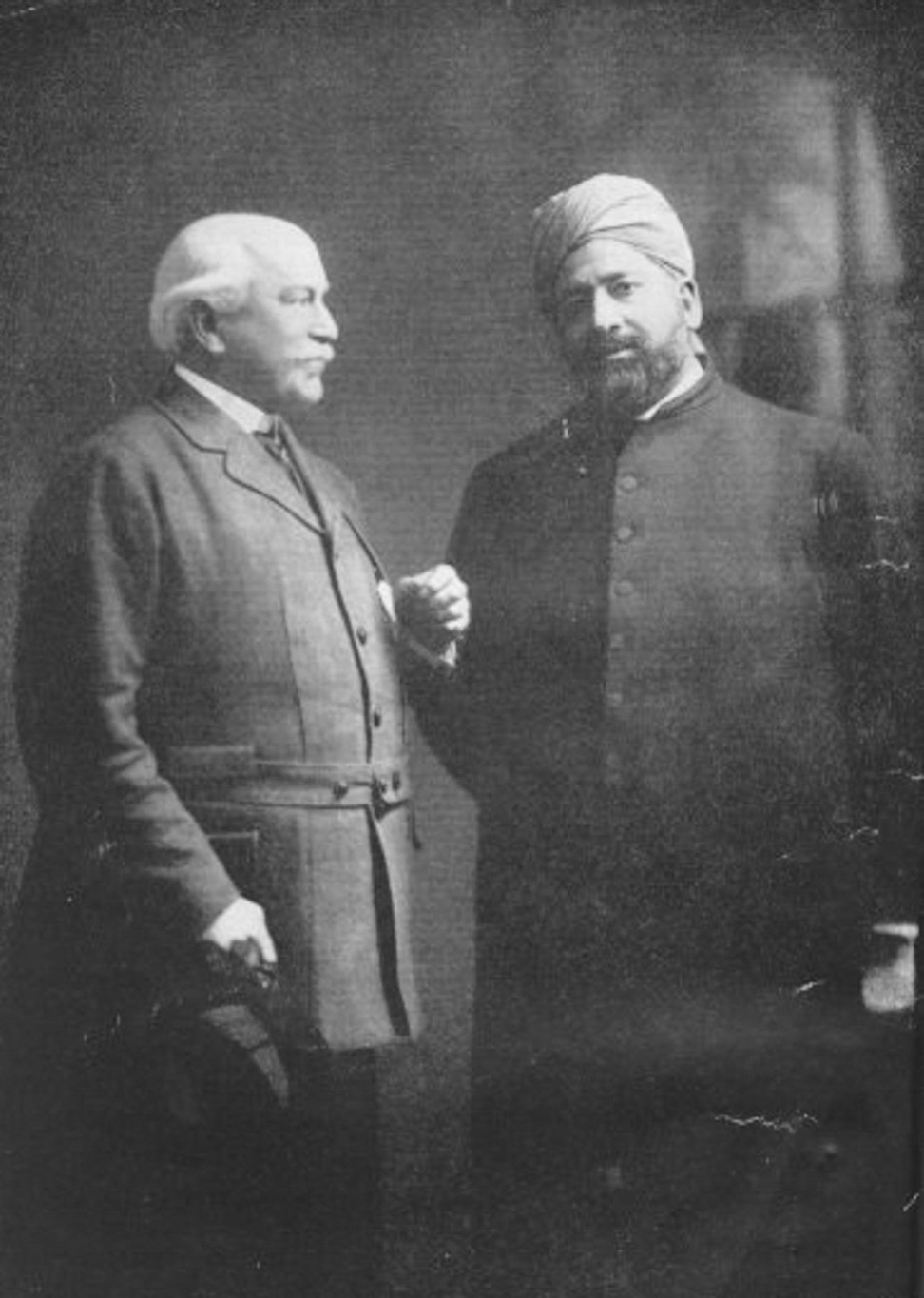
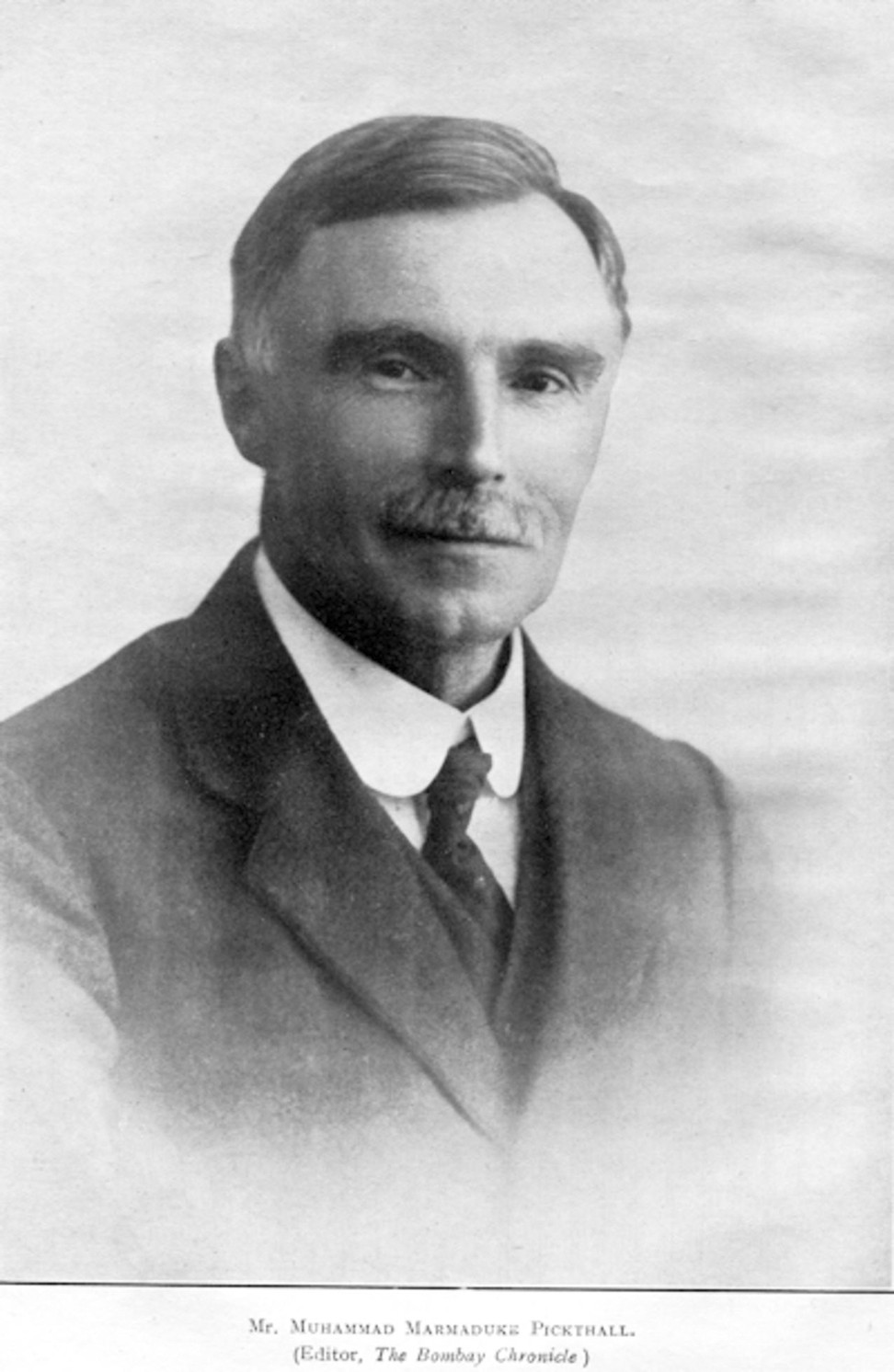
Sheldrake was a relatively early convert. A decade later, the first Muslim missionary to Britain, the Indian Khwaja Kamal-ud-Din, would make several high-profile conversions among socially connected and wealthy British people. These included Irish peer Lord Headley, who became known as Shaikh Rahmatullah al-Farooq, or more commonly in the newspapers as “The Moslem Peer”, and the scholar and novelist Marmaduke Pickthall, who became, more prosaically, Muhammad Marmaduke Pickthall. In 1930, Pickthall was to publish the most complete English translation of the Koran to date.
British people converted for various reasons. For Headley and Pickthall, it seems to have been because of an aesthetic appreciation of the Middle East and “Arabia”. Similarly so for the Scottish noblewoman and Mayfair socialite Lady Evelyn Murray, who had grown up in Cairo and Algiers. She converted and became Zainab Cobbold, undertaking the Hajj pilgrimage to Mecca, Saudi Arabia, several times. She was buried on her estate in the Scottish Highlands facing Mecca.
For others, such as Charles Hamilton, who converted in 1924, it was part of a wider search for order. Hamilton became Sir Abdullah Charles Edward Archibald Watkin Hamilton. A staunch Conservative, he would, in the 1930s, change tack and join Oswald Mosley’s far-right British Union of Fascists.
Less extreme was well-known Liverpool solicitor and temperance advocate William Quilliam, who converted after visiting Morocco. Having changed his name to Abdullah Quilliam, he used a donation from Nasrullah Khan, the crown prince of Afghanistan, to buy three terraced houses, establishing the Liverpool Muslim Institute in one of them.
The success of Sheldrake’s Pickles meant young Khalid didn’t need to work full-time for the family firm. He devoted his spare hours to Muslim causes, helping to found the journal Britain and India in 1920, launching the Muslim News Journal and serving as editor of The Minaret, an Islamic monthly based in London. He wrote frequently and sometimes provocatively. An article by Sheldrake in The Minaret in September 1927 suggesting Napoleon had flirted with conversion to Islam caused a stir on both sides of the English Channel.
Dr Khalid Sheldrake, as he was now referred to in the newspapers (having been awarded an honorary Ecuadorean doctorate of literature), found a wife, Sybil, who also converted, becoming Mrs Ghazia Sheldrake. They had two sons, who they raised in the Muslim faith. The family set up home in a detached house on quiet Gaynesford Road, in Forest Hill. It had a decent-sized front drive, a well-tended rear garden and was only a short commute from the Denmark Hill pickle factory.
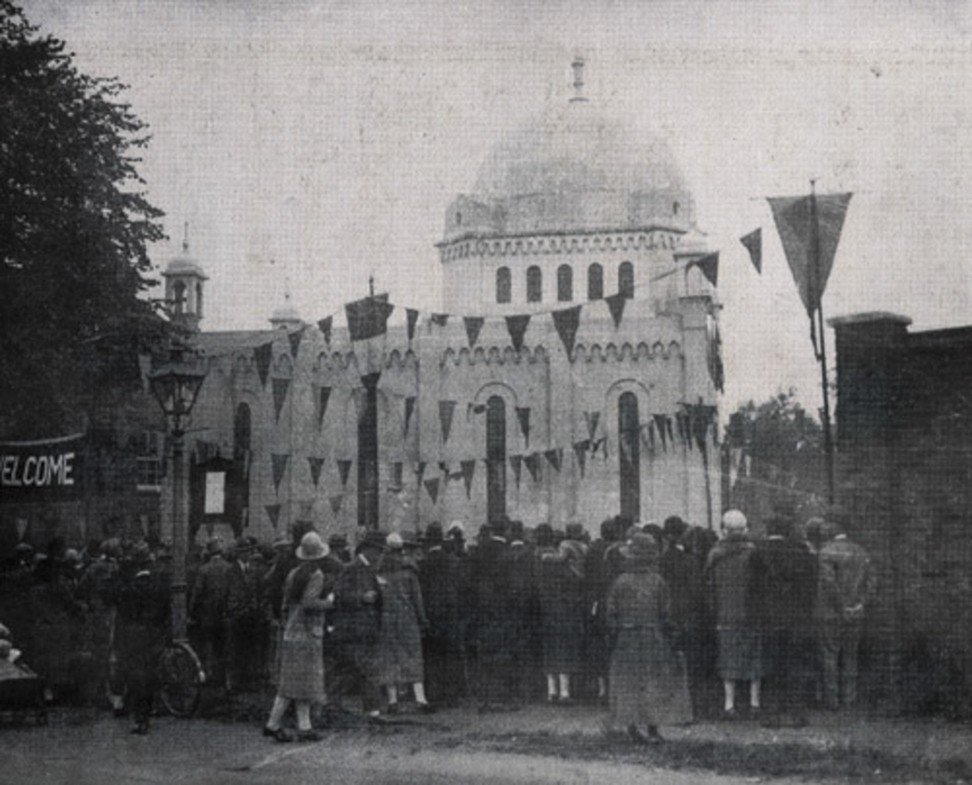
Sheldrake worked hard and committed his resources to opening mosques in Britain. He was involved with the financing and construction of London’s first purpose-built mosque, in Wandsworth, in 1926 (previously, London’s Muslims had gathered in private houses). He organised another mosque in Peckham Rye, in the converted basement of a house he donated.
Here, Sheldrake presided over his own group of activists and missionaries, the Western Islamic Association, which sought to spread the word of the Prophet among the Christian English. In 1927, it was reported that he had opened a mosque in East Dulwich, known as the Masjid-el-Dulwich, after raising funds through “Oriental Bazaars”.
Lord Headley (left), who became known as “The Moslem Peer”, with the first Muslim missionary to Britain, Khwaja Kamal-ud-Din.
Sheldrake also paid for the funerals of Muslims who had died in Britain. In 1928, his self-financed Indigent Muslims’ Burial Fund bankrolled the funeral of Sayed Ali, the long-standing elephant trainer at London Zoo.
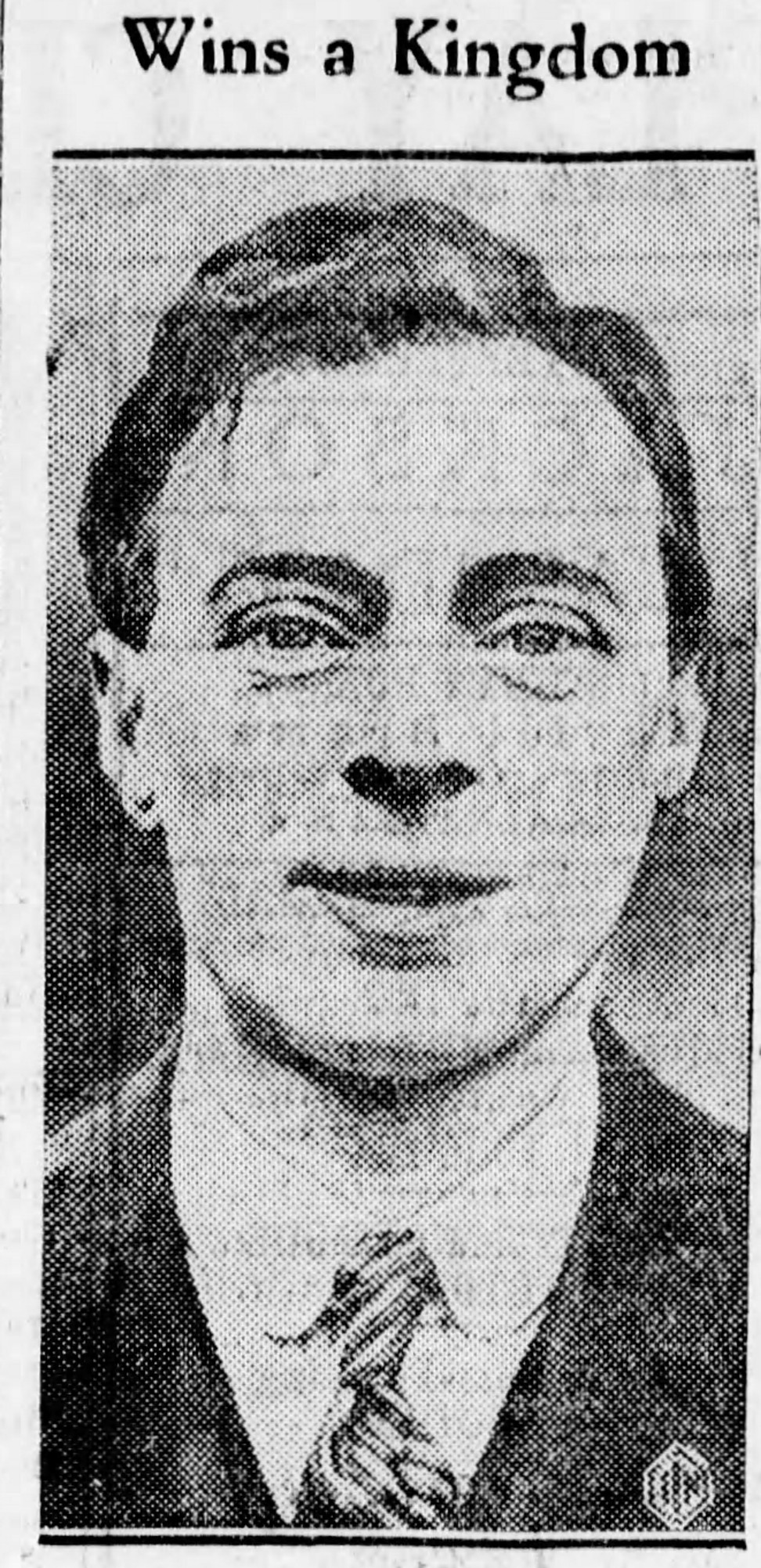
Fleet Street was confused by Sheldrake. He was referred to as the “Sheik of all British Moslems” (which isn’t and wasn’t an official position) and often a picture of an unknown Muslim, portly, dark-skinned and in traditional clothing, was featured and identified as “Khalid Sheldrake”.
In reality, Sheldrake was slight, with sharp features, and not dark-skinned in the slightest. He did, though, often wear a red fez. The papers made various claims: that he was a nobleman of French or Irish stock and that he had renounced his ancient title to become a Muslim. It was suggested he converted to Islam to become polygamous and have several wives. It seemed inconceivable to the newspapers that he could simply be the son of a suburban London pickle manufacturer who had voluntarily adopted Islam.
Sheldrake toured Britain giving talks on Islam. He visited small Muslim communities, such as the Yemeni former seamen in South Shields and Hull, who had grouped together in the 1860s and were subject to much misunderstanding and racism around race-related riots in 1919 and 1920. He toured Morocco in 1927 and, following a large party to celebrate the 25th anniversary of his acceptance of Islam, undertook a lecture tour of India, in 1928.
Nevertheless, Sheldrake by this time was feeling disheartened at the lack of uptake of Islam in Britain. In the early 1900s, when he had converted, there had been fewer than 300 converts in the country; 30 years later, there were still fewer than 600 among only 3,000 Muslims resident in Britain. He started to think about a future in the wider Muslim world.
Sheldrake considered launching a missionary campaign in America. Writing in The Minaret, he said he felt the time might be right for the United States to embrace Islam. He was encouraged by Muslim conversion rates in Brazil and Guatemala but, ultimately, he opted against what would have been, by any stretch of the imagination, a massive undertaking.
In 1930, The Malaya Tribune newspaper in Singapore commented that Khalid Sheldrake’s name was known in almost all Muslim countries because of the propaganda work he conducted in Britain on behalf of the faith. And, by the time the Xinjiang delegation arrived in Forest Hill, the Muslim world was familiar with Sheldrake’s part in the conversion of Gladys Palmer, better known at the time as the daughter of Lord Walter Palmer, of the Huntley and Palmer biscuits empire, and the Dayang Muda of the Kingdom of Sarawak.
At 21, Gladys had married Captain Bertram Willes Dayrell Brooke. The British Brooke family, known as the “White Rajahs”, had ruled Sarawak, on the island of Borneo, as a private kingdom for a century. As a brother of the raja, Charles Vyner Brooke, her husband was titled Tuan Muda (literally “Little Lord”). When he married Gladys, in 1904, she became Dayang Muda, and was referred to as “Her Highness” in English.
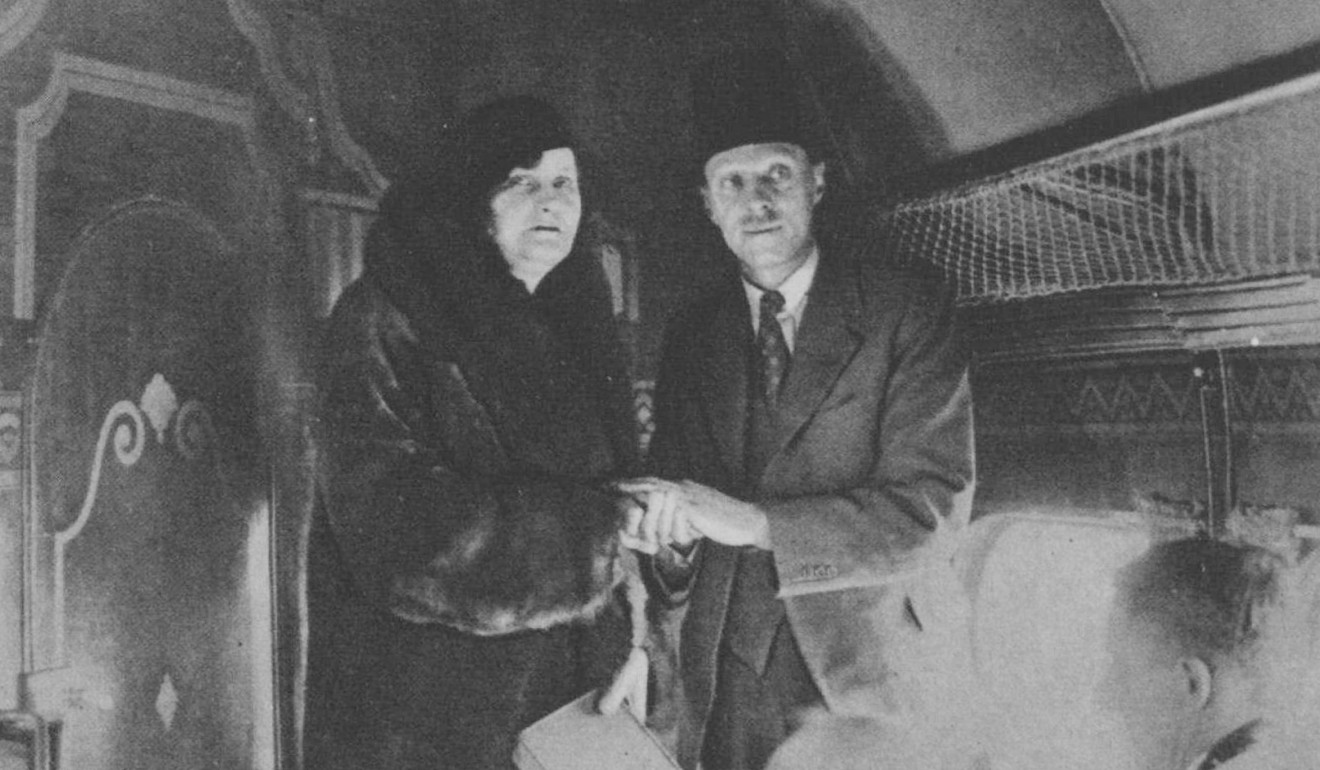
Gladys Palmer and Sheldrake on the plane aboard which she converted to Islam.
Gladys, however, never spent much time in Sarawak. A leading socialite, she relished mixing with peers of the realm, minor royalty and show-business celebrities. She discussed literature with James Joyce in Paris; attended opening nights in London with actress Ellen Terry; and toured the cellar bars of Berlin with the sexually rapacious Irish writer Frank Harris. She formed a movie company in 1922, which made a single (forgotten and lost) film. By the late 1920s, the London society columns were reporting that the celebrated marriage was on the rocks. The couple parted, with Gladys gaining a very favourable settlement.
Then, in 1932, Gladys decided to convert to Islam.
Despite her love of the social whirl, Gladys had long sought spiritual enlightenment. Born into the Church of England, she had already passed through Catholicism (having had a personal audience with the pope) and Christian Science before accepting Islam.
Being wealthy, Gladys didn’t convert in any normal way but rather, “wishing my conversion to be performed on no earthly territory”, undertook the ceremony while flying over the English Channel in a chartered 42-seat Imperial Airways aircraft. Sheldrake, having boarded the plane at Croydon Aerodrome with the Dayang Muda, performed the ceremony mid-flight, reportedly shouting to be heard over the roar of the engines.
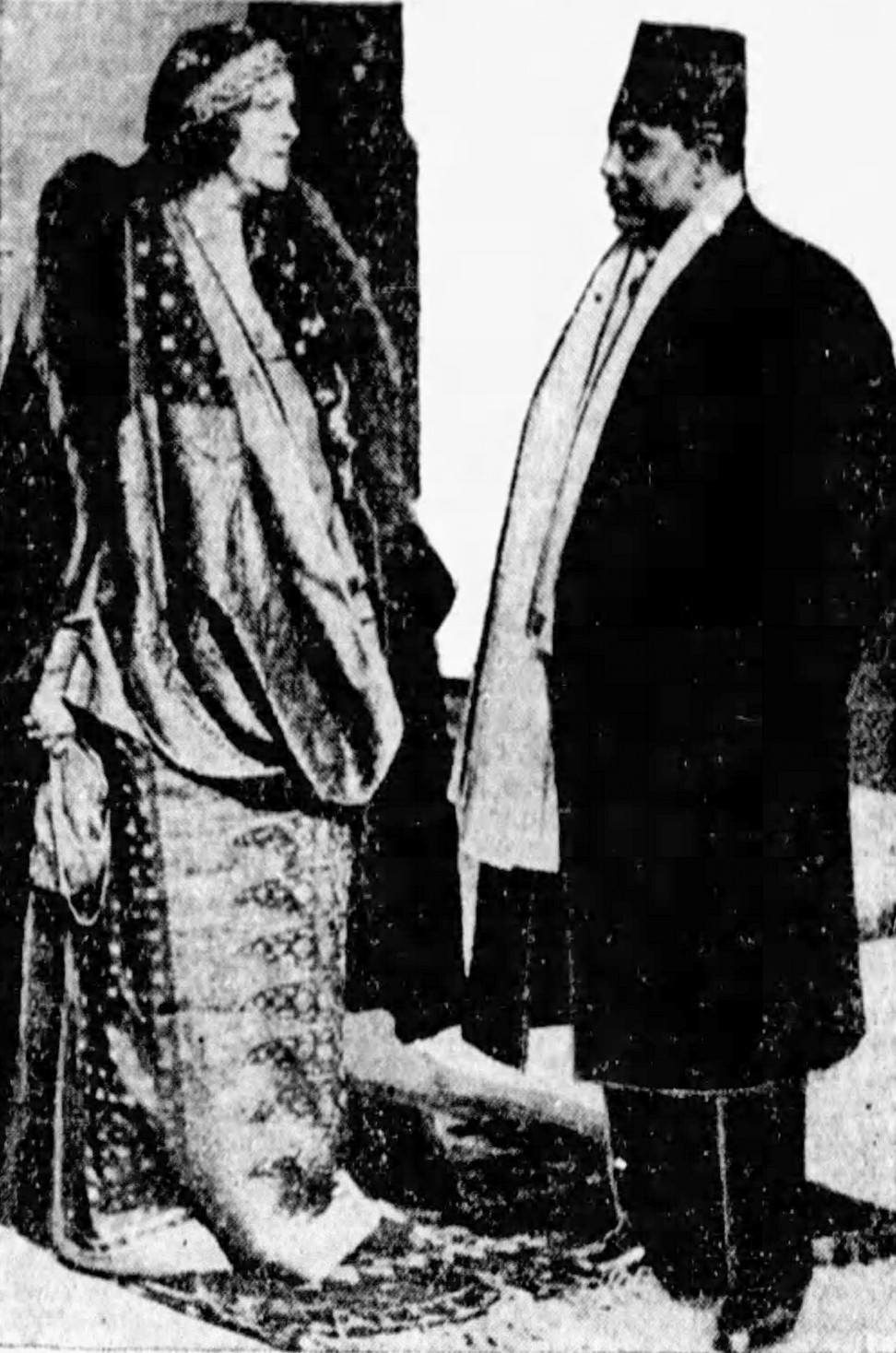
Gladys Palmer Brooke, the Dayang Muda of the Kingdom of Sarawak, clad in quite extraordinary robes for the occasion, was renamed by Sheldrake, Khair-ul-Nissa (“fairest of women”). Visiting a mosque in Paris soon afterwards, Gladys Khair-ul-Nissa told the press she had now, after a couple of false starts, found the “perfect faith” and was planning a pilgrimage to Mecca before an extended trip to the US.
Muslims in Xinjiang are facing human rights abuses: time to break the silence
Newspapers across Europe, America, the Middle East and Asia covered Gladys’ mid-air conversion. Many Muslim readers, even in the remote far west of China, were fascinated by Khalid Sheldrake – this Englishman who had converted to Islam at just 15 and subsequently done so much for their faith and seemed so well connected. Perhaps he was a man destined for higher office? Perhaps he was the man to rule a fledgling Muslim kingdom looking for a king?
What is now known as Xinjiang (“new frontier”), home to the Uygur people, was largely converted to Islam in the 9th and 10th centuries by Turkic Muslims. In the 1200s, Uygur rulers retained control of their kingdom by offering taxes and troops to the Mongol empire. Tribal alliances formed and collapsed, khanates came and went. By the time of the Qing dynasty (1644-1912), part of the region was under Peking’s control and, by the 1870s, the Chinese considered it a province.
All of this was (and, of course, still is) contentious and many tribal chiefs, warlords and political factions bickered, fought and brokered alliances only to break them the next day. China was the dominant influence, though the area was contested by first the Russian empire and then the Soviet Union, just over the border in Central Asia.
In November 1933, the Islamic Republic of East Turkestan (known simply as the ETR) was officially announced by various tribes and warlords who were united in their desire to form an Islamic kingdom with the city of Kashgar as its capital. It was decidedly not to be part of either the Chinese empire or the Soviet Union.
Upon his conversion, novelist Marmaduke Pickthall became Muhammad Marmaduke Pickthall.
The 150,200 sq km ETR, often dubbed “Islamestan” in the Western press, was Uygur-dominated, but with Kyrgyz and other Turkic ethnic groups included as equals. The fledgling government claimed the ETR’s population was about 2 million people.
In Kashgar, Uygur warlord Hoja-Niyaz Haji had assumed the presidency of the ETR; Sabit Damolla, the post of prime minister; and Mahmut Muhiti was appointed minister of defence. Deputations were immediately sent to key people and nations. But nobody was swift to officially recognise the ETR. The Nationalist Chinese government in Nanjing thought the whole thing preposterous; the Soviets refused to deal with religious Muslims; while Afghanistan’s King Zahir Shah was wary of annoying the Chinese.
Still, one deputation had been dispatched to London to sound out Dr Khalid Sheldrake, and there they received a more positive reception.
Over tea in his living room, served byGhazia (formerly Sybil), Khalid Sheldrake welcomed the deputation from Kashgar. The men sat around making pleasantries, admiring Mrs Sheldrake’s prize-winning marigolds and dahlias and Sheldrake’s goldfish bowl. In Sheldrake’s telling, there was only one question: would he consider becoming the king of Islamestan, his wife queen, and the couple taking on the “Overlordship of Sinkiang”?
He told them he would … and that he would leave for Asia immediately.
Among the arrivals by the Dollar liner President Coolidge yesterday was Dr Khalid Sheldrake, the Moslem leader of the West, who is visiting Hongkong as part of his tour to meet Moslems of all Eastern lands South China Morning Post report, March 30, 1934
In 1933, Sheldrake headed east, first visiting Muslim communities in the Philippines and Borneo. He lectured on “The Beauties of Islam” at each stop, attracting – according to the Sarawak Gazette – large and enthusiastic Malay audiences. From Kuching, in Sarawak, Sheldrake headed to Singapore and then Hong Kong.
On October 3, 1933, the South China Morning Post reported, “Among the arrivals by the Dollar liner President Coolidge yesterday was Dr Khalid Sheldrake, the Moslem leader of the West, who is visiting Hongkong as part of his tour to meet Moslems of all Eastern lands.” While in the city, he gave a series of lectures, including one at the Lane Crawford restaurant.
On March 30, 1934, under the headline “King of Sinkiang”, the paper reported that “When Dr Sheldrake was in Hongkong a few months ago, he told a South China Morning Post reporter that he had been offered the kingdom of Sinkiang, but swore the reporter to the strictest secrecy, on the ground that if the news reached certain quarters, attempts on his life would most certainly be made.”
Leaving Hong Kong, he headed to Shanghai and then to Peking. In May 1934, he checked into the Grand Hotel des Wagons-Lits, near Peking’s main railway station. A delegation from Kashgar met Sheldrake at the hotel.
From the start, the Chinese authorities were nervous about just what this Muslim Englishman intended to do in Xinjiang. A very obvious police watch was kept on his hotel and on the entourage of ETR officials who came to meet him.
Upon entering his room, according to Sheldrake, the officials fell to their knees and kissed his hand, rendering him exceedingly embarrassed. They then formally requested he be their head of state. Sheldrake later told TheTimes of India, “I had the choice of becoming a monarch or refusing these earnest and poor people, who might lose heart and become desperate, or fall the prey of some political adventurer.”
A formal title was agreed upon – His Majesty King Khalid of Islamestan.
Sheldrake then briefly visited Japan and Thailand, for scheduled lectures, before planning to leave for Kashgar. In the meantime, the British newspapers had taken up the story – “Deserts Pickles to Become King”.
A 1932 picture of Palmer with the mystery Muslim who was often and incorrectly identified as Sheldrake.
Returning to China, Sheldrake told journalists that he would proceed immediately to Kashgar and that Queen Ghazia had arrived from England with ceremonial robes run up by her seamstress in Sydenham. She was reportedly keen to become queen of Islamestan, and her sons delighted to be princes, though she regretted that she would have to forgo her regular bridge games back in Forest Hill as these had been a great comfort to her while the future King Khalid was engrossed in his books on Islamic history, preparing to rule.
Departing Peking, the king and queen of Islamestan headed 4,350km overland to Kashgar, to attend their coronation. They travelled by camel train, accompanied by their trunks of ceremonial robes and two portable metal bathtubs Ghazia had bought in Croydon.
By June 1934, however, the newspapers were reporting that Islamestan had “hit a snag”. Rumours swirled that Sheldrake was becoming king only to steal all of Xinjiang’s not inconsiderable deposits of jade; that he was a British spy; and that, if he assumed the throne in Kashgar, then Islamestan would become a “British-controlled kingdom”.
The Chinese, naturally, complained to London; London assured Nanjing that it would not tolerate a British national attempting to rule “any form of independent regime within Chinese territory”. Japan, keen on extending its own influence in the region, also lodged an objection to Sheldrake’s coronation while fellow Muslims in Afghanistan withdrew their support for the ETR under Chinese pressure.
The shaky coalition in Kashgar started to fall apart, factions split, fighting broke out across Xinjiang. Two Chinese warlords fought each other as well as any forces either once or still aligned to the ETR. But it was probably the Soviet Union’s hostility that finished off the Islamestan dream.
The Islamic Republic was part of the buffer zone between Soviet territory and British India as well as bordering Mongolia. Succeeding the tsarists, the Soviets had continued the infamous “Great Game”, vying for influence with Britain on the Indian border while being concerned about an expansionist Japan on the Soviet-Mongolian border.
Russian newspaper Izvestia hinted that Khalid’s coronation could presage a British annexation of Xinjiang in a style similar to Japan’s recent annexation and occupation of Manchuria. There, Tokyo had placed the “last emperor” Puyi on the throne as chief executive of what they now called Manchukuo. Islamestan, a self-declared Muslim theocracy effectively controlling the large strip of land bordering Soviet Central Asia, and perhaps influencing Russia’s Muslim population under the guidance of a British subject as king, was unthinkable to Moscow.
Sheldrake, deprived of access to newspapers during his long overland journey, approached Xinjiang in early August to find the ETR collapsing and its last loyal troops surrendering to what appeared to be Soviet-backed forces. The dream of the ETR was dead and Sheldrake’s dream of ruling the new state was disappearing, too – “King’s Dreams of Asian Rule Smashed”, reported veteran United Press China correspondent John R. Morris.
The 1926 inauguration of London’s first purpose-built mosque, in Wandsworth, which Sheldrake helped finance. Picture: Alamy
King Khalid and Queen Ghazia swiftly changed direction and fled with some of the deposed leaders of Islamestan towards India, and the city of Hyderabad. Once safely in the British Raj, Sheldrake explained his relocation to India to TheIrish Times, “I am not ready to be the pawn of any political game or the nominee of any particular political power. For the moment I prefer to be an ‘absentee king’. I am awaiting events before actually proceeding to my kingdom.”
He would never proceed to Islamestan.
Eventually, Khalid and Ghazia made it back home to Forest Hill, her magnolias and his goldfish. China was glad to see the back of him, as was Moscow. His return averted a potential diplomatic incident for the Foreign Office in Whitehall. Xinjiang descended back into warlord feuding.
Back in England, Sheldrake gave lectures on Turkestan affairs but few were interested in somewhere too far away, too foreign and too complex to understand. He went back to raising funds for new mosques and Muslim charities in Britain. He travelled to Libya and Egypt; to Switzerland and Austria. He also went back to the family business, as a buyer of sour pickles in Turkey. During the second world war, he worked for the British Council in Ankara.
He returned to Forest Hill in 1944 and died in 1947, still technically the exiled king of a state that had ceased to exist 13 years earlier, and had hardly existed at all.
source: http://www.scmp.com / Post Magazine / Home> Long Reads / by Paul French / March 02nd, 2019
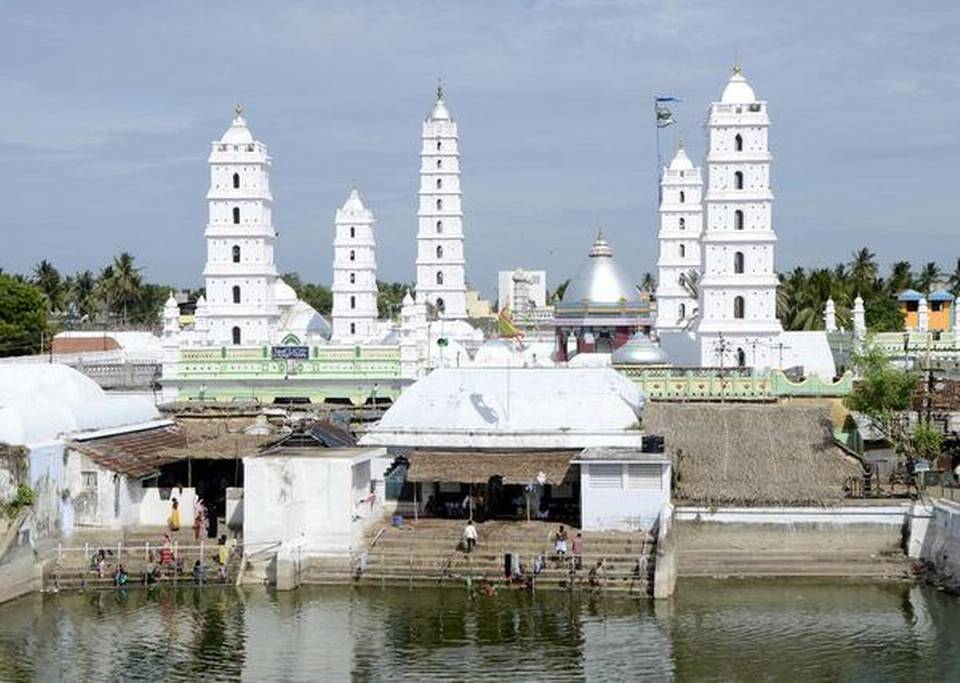
A view of Nagore Dargah, in Nagapattinam | Photo Credit: B. VELANKANNI RAJ
Cutting across faiths, sailors pray to Nagore Miran for a safe journey
“There are so many boats named after ‘Nagore Andavar’ in Kasimedu (a fishing harbour in Chennai). Don’t hastily jump to the conclusion those are owned by Muslims. They actually belong to our people,” cautions Manoharan, to me and writer Nivedita Louis. We were at his residence to record songs on Nagore Andavar as sung by Manoharan, aged about 80 and a retired fisherman of Olcott Kuppam in Chennai. Though the Nagore Andavar he refers to is a 16th century Muslim Sufi saint who transcended religious divides, it still comes as a surprise to know that Hindu fishermen living some 300 km north of Nagore where the Sufi lies buried, name their boats after him.
Continues Manoharan, “When the sea gets turbulent and we feel our lives are at risk, it is to Nagore Andavar that we plead, through songs to rescue us. And miraculously the winds will change, push us to the safety of the shore,” he says. He immediately breaks into a song in Tamil that pours out their fears and pleads for their safety from the wrath of the sea. A hundred km away from Chennai, fishermen at Veerampattinam of Pondicherry, praying for their safety before sailing into the rough sea, make their offerings to Nagore Andavar at Nagoorar Thottam.
Interestingly it was not just fishermen of the Tamil coast, but anyone who left the Tamil coastline in the 19th century placed their faith in the saint to safely cross the seas, and wherever they landed, they built a memorial or shrine for him. Those shrines today stand as testimony to the path taken by the Tamil Diaspora across continents, from maritime traders to indentured labourers. From Penang in South East Asia to the Caribbean in the Americas, with recent additions in Toronto and New York, the influence of Nagore Miran as the Sufi is also known, can be seen.
Nagore Miran, the 16th century Muslim Sufi saint, buried, as the name suggests in Nagore in Nagapattinam district of Tamil Nadu was born as Sahul Hameed in Manikhpur in North India. He took to spiritualism early in his life and travelled through West Asia to Mecca and to Burma and on to China before touching Ceylon and the South Indian coast. Travelling through the Tamil country with his band of followers, local lore has it that the Sufi cured an ailing Achutappa Nayak, the ruler of Thanjavur, and a grateful Nayak gifted land for the Sufi to stay at Nagore. Interestingly, the Sufi arrived at at a time when the Indian seafarers, particularly the Tamil Muslim ship owners, were being harassed by powerful Portuguese naval fleets.
With the hostile Portuguese at Nagapattinam, the presence of the Sufi at nearby Nagore was a great solace not just to the harassed maritime traders but to the sea faring fishermen. Among the miracles attributed to him, it was widely believed by the fishermen that, the Sufi, while residing at Nagore was able to plug the hole in a ship which was otherwise sinking off the coast.
His mysticism touched the lives of people across faiths — from Kings to commoners. They flocked to him and after his death to the Nagore dargah where he lies buried. The dargah received endowments from the Thanjavur Nayaks, Marathas and Nawabs. One of the five minarets at Nagore dargha, the tallest at 131 feet, was built by the Maratha ruler Maharaja Pratap Singh Bhonsle in the mid-eighteenth century. Govindasamy Chetty, Mahadeva Iyer and Palaniyandi Pillai are some of the donors.
In the late 18th century when the British founded Penang in Malaysia as the fourth presidency, it attracted considerable Tamil Muslim traders who were already doing business in South-East Asia. Mostly known as Chulias (those from the land of the Cholas), they became one of the earliest settlers in Penang. By early 19th century, when the settlement had grown considerably, the Company enabled them to build the Kapitan Keling mosque. They built a memorial for Nagore Sahul Hameed at the junction of Chulia street and Kings street. Similar memorials were built across South-East Asia, in Aceh, Burma, Vietnam, Ceylon, Singapore and many other parts of Malaysia wherever the traders went.
However unlike the Tamil Muslim traders, who traded within the Asiatic region, the indentured labourers were taken to distant continents by the colonial rulers, to work in the new plantations. In the early 19th century, as ships set sail from Nagapattinam, the indentured labourers, placed their faith on Nagore Miran for their safe journey across the turbulent seas. The labourers reached lands as distant as the Caribbean Islands. “When in early 20th century they moved to better pastures in Canada and the U.S., Nagore Miran along with Madurai Veeran, Mariamman and many other gods and saints found place in the newly constructed temples at Toronto and New York,” points out Prof. Davesh Soneji of University of Pennsylvania.
If the Muslim traders treated Sahul Hamid as an Awliya, the Hindu indentured labourers, used to idol worship, gave him a form and placed him in the sanctum along with other Hindu deities such as Madurai Veeran, Muneeswaran and Mariamman. “…this divinity is an integral part of most of the ‘Madrassi’ or South Indian Hindu temples in this region. In French Caribbean Islands of Guadeloupe and Martinique, Nagore Mira is worshipped in the form of a Boat and mast decorated with colourful flags. 786, the sacred Islamic number, can be found engraved on the boat,” writes Suresh Pillai, an interdisciplinary artist working at the intersection of arts, archaeology, and cultural artefacts to locate material history and empirical knowledge among living cultures.
Interestingly in Tamil Nadu itself, every year, at the beginning of the Kandhurior Urs festival in honour of the saint, festooned boats resembling ships, adorned with various flags, navigate their way through the streets of the old harbour town of Nagapattinam, before cruising through the national highway leading to Nagore. “It is really surprising how these big boats squeeze themselves through the narrow streets of Nagapattinam and Nagore before finally halting at the saints abode. After which the flags are raised on different minarets of the dargah on the first day of the Urs,” says Harini Kumar, a research scholar on Tamil Islam. Typical of the syncretic nature of the Sufi shrines, as the festival gathers momentum, various communities pay their respects to the saint, with specific non-Muslim families, including the fishermen, accorded hereditary honours.
While the syncretic nature is a common thread that runs through the Sufi beliefs, it is Nagore Miran the Sufi, emerging as the patron saint of the seas, enabling us to trace the path taken centuries ago by the Tamil Diaspora, that seems unique.
source: http://www.thehindu.com / The Hindu / Home> Society> History & Culture / by Anwar’s Trails / by Kombai S. Anwar / March 07th, 2019
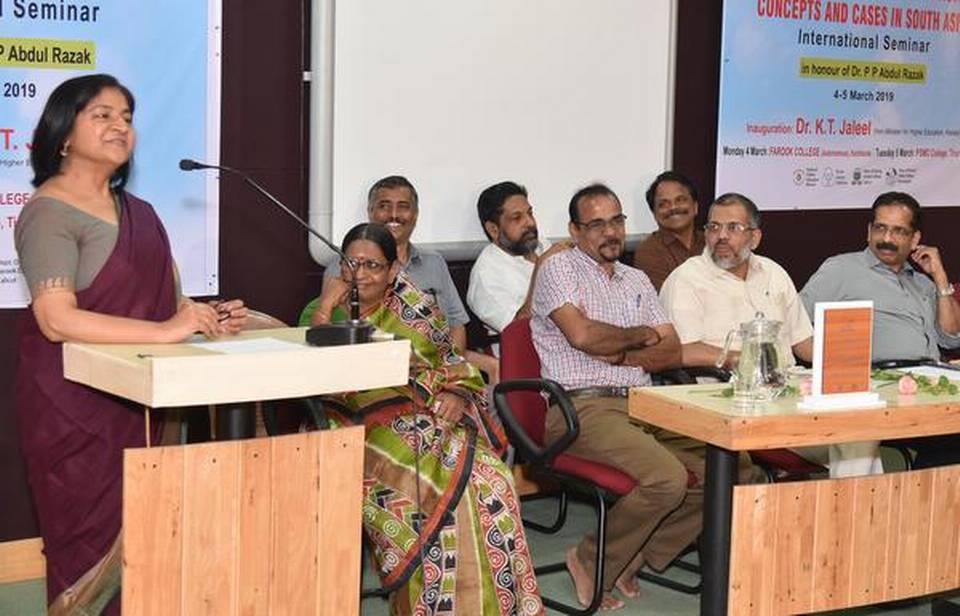
History professor Seema Alavi from Delhi University addressing an international history seminar at Farook College on Monday
Two major colleges of Malabar are jointly hosting an international history seminar in honour of well-known academic P.P. Abdul Razak, who is retiring soon from P.S.M.O. College, Tirurangadi, as its History Department head.
Calicut University Vice Chancellor K. Mohammed Basheer inaugurated the seminar on ‘Early modern and colonial in history: concepts and cases in South Asia’ at Farook College on Monday.
Dr. Basheer called upon historians and researchers to take a diversion from the traditional methods of historiography. He exhorted them to widen the study of history by including the colloquial languages and local history.
“History should be linked to the lives of ordinary people,” he said. Several reputed historians, including Seema Alavi from Delhi University, Mahmood Kooria from Leiden University, Nirmal Renjit Devasiri from Colombo University, K.N. Ganesh and K.S. Madhavan from Calicut University, are attending the two-day meet.
Farook College principal K.M. Naseer presided. T. Mohammedali, head of History Department at Farook College, welcomed the gathering. Kerala History Congress general secretary N. Gopakumaran Nair, Farook College History Old Students Association president P. Ramdas, Vijaya Lakshmi from Malayalam University spoke. K. Lukmanul Hakeem from Government Arts and Science College, Kozhikode, proposed a vote of thanks. While Farook College hosted it on the first day, PSMO College, Tirurangadi, will host the proceedings on Tuesday.
The National Higher Education Mission is supporting the seminar jointly organised by Farook College and PSMO College in association with the Social History Collective, Kozhikode.
source: http://www.thehindu.com / The Hindu / Home> News> States> Kerala / by Staff Reporter / Malappuram – March 05th, 2019
As a river pilot, Naha’s work is to guide ships from Sagar right up to the Calcutta and Haldia ports through the meandering Hooghly
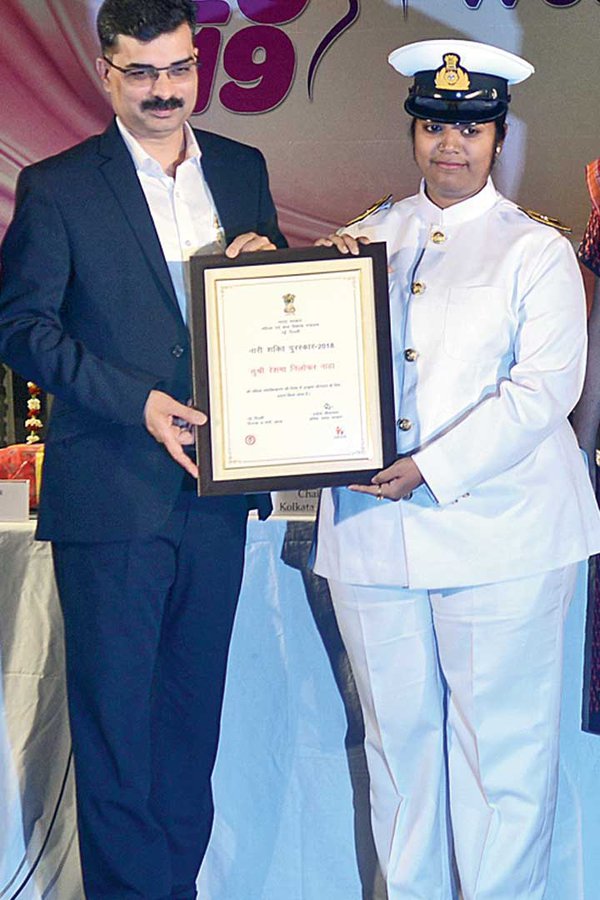
Reshma Nilofer Naha, India’s first woman river pilot, with Vinit Kumar, chairman, Calcutta Port Trust, at ICCR on Monday. Picture Bishwarup Dutta
Reshma Nilofer Naha goes to the high sea on a small boat, climbs on to a large vessel with a rope ladder and enjoys it.
India’s first “river pilot” was felicitated at a women’s day programme hosted by the Calcutta Port Trust on Monday, having returned from Delhi where she received the Nari Shakti Puraskar from President Ram Nath Kovind.
As a river pilot, Naha’s work is to guide ships from Sagar right up to the Calcutta and Haldia ports through the meandering Hooghly, something she has been doing “efficiently and professionally”.
“If you think there are no boundaries then you think everything is possible. There is no glass ceiling. It is just an imaginary concept we all have heard for many many years,” Naha, 30, said during a panel discussion on Challenges: Work and Life.
A BE in marine technology, Naha said she had been keen on an offbeat career ever since she was a child. The Chennai woman joined the Calcutta Port Trust in 2011 as a trainee pilot and qualified as a river pilot in 2018.
“It is a great feeling (to be the only woman river pilot) on one hand but on the other hand I would like to have other female colleagues very soon and I look forward to it. I think my story will inspire more women to get in here,” she said.
Naha said navigating the Hooghly is tough because of “bends and narrow channels” where the depth of the water is a concern. “We have different kinds of ships and each ship behaves differently. The tides are strong here… and all this makes pilotage tough,” she said, recalling how she had to once anchor for four days because of bad weather and strong winds.
“It is a proud moment for the Calcutta Port Trust to have India’s first lady river pilot with us…,” said Vinit Kumar, chairman, Calcutta Port Trust, who felicitated her.
“It is a long treacherous journey she has undertaken. To be a first in anything is always a challenge because the infrastructure, the attitudes, the systems are not very friendly or they are made with keeping only men in mind…. So the struggle of the first person is always more than those who follow,” Kumar said.
source: http://www.telegraphindia.com / The Telegraph, online edition / Home> West Bengal / by Jhinuk Mazumdar and Cordelia Nelson in Calcutta / March 12th, 2019