Category Archives: World Opinion

The haveli of Mughal fireworks in Chandni Chowk

Chandni Chowk, DELHI :

Delhi did have fire-crackers much more than 200 years ago and Haider Quli, the artillery chief, made good use of them at his haveli, now lying deserted.

The cluttered entrance to Haveli Haider Quli in Chandni Chowk

Delhi did have fire-crackers much more than 200 years ago and Haider Quli, the artillery chief, made good use of them at his haveli, now lying deserted. In Chandni Chowk is Haveli Haider Quli, whose inhabitant till February 2016 was the nonagenarian Narain Prasad. The double-story apartment he lived in was only a part of the original mansion, where now houses and shops have mushroomed and the garden that was one of its attractions has disappeared in the ensuing rabbit of a warren locality.

Haider Quli was the chief of the artillery during the reign of Mohammad Shah Rangila (1719-1748) in whose reign Nadir Shah invaded Delhi and took away the Peacock Throne and Kohinoor, along with other fabulous treasure.

Haider Quli got his exalted post because of his patron Hussein Ali, but later turned against his mentor and got him murdered while he was on his way home in Chandni Chowk. A boy related to him fired at one of the assailants, killing him on the spot but the others hacked the boy to pieces with their swords. It is said that Mohd Shah was also involved in the conspiracy, along with his mother as he had become wary of Hussein Ali.

It was Haider Quli who organized the first fireworks in 18th century Delhi some 260 years ago under his supervision as Mir Atish, whose descendants had fireworks shops behind the Jama Masjid.

The Mughal emperors preceding Mohd Shah celebrated Diwali with illuminations but there were no fireworks as such. Possibly the only cracker was a ball of gunpowder exploded by the Mir Atish and a crude kind of Phuljhari (sparkler) for the amusement of the ladies of the harem when the Seths of Chandni Chowk were worshipping Lakshmi in their shops.

It is pertinent to remember that Babur brought guns with him when he invaded India in 1526 and on whose firepower he won the First Battle of Panipat against Ibrahim Lodi-the Sultan’s elephants running amuck at the sound of the blazing cannon and the fireballs they ejected.

Gunpowder was invented or discovered in China in the ninth century and India was practically devoid of it till AD 1250. The Mughals’ ancestor, Changez Khan had made use of gunpowder during his Mongol raids because of which it made its way into parts of Russia. Evidence of this found in the story of Alibaba and the Forty Thieves, in which the chief of the robbers Abu Hassan used gunpowder (Shaitani Rait or Devil’s Sand) to overawe his victims. Then after depositing the loot in his treasure-house Simsim, he retired to the fort, where he resided as the seemingly pious Imam Sahib, to whom people went with their complaints against Abu Hassan. The hypocrite, with his lust for the slave girl Marjina, would then march out with troops in a mock campaign to nab the robber chief.

History shows that before the Mughals some sort of atishbazi was introduced into Delhi during the reign of Nasiruddin Mahmud, Chirag Delhi. But he and other Slave kings are not known to have celebrated Diwali, which was first patronised by Mohmmad bin Tughlak. The succeeding Sayyids and Lodhis may also have willy-nilly followed the custom. Babur and Humayun had their Nauroz celebrations, but Akbar did celebrate Diwali on a grand scale because of his Rajput wives. Jahangir and Shah Jahan had an even more elaborate Diwali, with the latter emperor being bathed in waters collected from seven rivers and pandits chanting mantras while the Maulvis looked askance. However, his daughter Jahanara was not burnt during Diwali celebrations but one evening at the daily lamp-lighting. Aurangzeb, despite his orthodoxy, did observe Diwali with the Rajput chiefs coming to him with sweets and gifts. Gossip would have us believe that his first Diwali was celebrated with his beloved Hira Bai Zainabadi in his arms and offering him a cup of wine to prove his love for her. But when Aurangzeb moved as if to sip it, Zainabadi (appreciating the gesture) took away the cup from his hand. No wonder when she died an early death. Aurangzeb was devastated Jahander Shah, his grandson, celebrated Diwali with concubine Lal Kanwar in Lahore (1712), when he bought all the oil available in the city for illuminations, though fireworks were absent till Mohd Shah took over after the death of Farrukhseyar and some puppet kings.

Historians, however, fix the date when Diwali crackers became popular as 200 years from now, though the British were enjoying fireworks on Guy Fawkes Night in observance of the Gunpowder Plot of 1605 (the year Akbar died). Mirza Ghalib was one of those who were present at the Diwali celebrations of Bahadur Shah Zafar, who released the bluejay or Neelkanth bird as a sign that Durga was on her way home after Dussehra. But Prof Ram Nath observes that it was actually Shah Jahan who first did so. For the later Mughals fireworks were also the main observance during Shabhe-Barat, heralding the approach of Ramzan.

This display of crackers was extended to Diwali. As a matter of fact, during Mohd Shah Rangila’s reign it was a cracker thrown at the palanquin of the emperor’s jeweller, Sukh Karan that led to the March 8, 1729, shoesellers’ riot in which Rangila Piya’s favourite concubine Nur Bai, on her way back home in Chawri Bazar from the Red Fort, lost a tooth when she was hit by a stone thrown by the rioters. So Delhi did have crackers much more than 200 years ago and Haider Quli, the artillery chief, made good use of them at his haveli-now lying deserted as even the last occupant, Narain Prasad’s 94-year-old sister has left it after her brother’s death. But whenever you see the place you instinctively think of fireworks as happened during Guru Nanak’s birthday celebrations amid a crescendo of crackers despite the ban on them.

source: http://www.thestatesman.com / The Statesman / Home> Supplements> Section 2 / The Statesman News Service / New Delhi – February 09th, 2019

Old wives’ tales

Chaat01MPOs09feb2019

Theories abound about the origin of chaat

There are those who say the word chaat originated from its literal meaning ‘to lick’. It was so delicious that people licked their fingers and the bowl made of peepal leaves, called donas, in which it is often served. Others think it originated from the term chatpati (tangy). However, no one truly knows the origin.

One story goes thus: During the reign of Emperor Shah Jahan, in the 16th Century, there was an outbreak of cholera. Desperate attempts were made to control it by physicians and sorcerers. One remedy suggested was to make food with loads of spices so that it would kill the bacteria within. Thus was born the spicy tangy chaat, which the entire populace of Delhi is believed to have consumed. A slight variant attributes it to the court physician called Hakim Ali, who realised that the foul water in a defunct local canal could result in serious water-borne diseases and thought the only way to prevent it was to add a liberal dose of spices — tamarind, red chillies, coriander, mint etc to the food. Hence, the food came to be called chatpati (tangy).

However, no one knows the veracity of these stories.

The grandmaster of history of our cuisine and food, KT Achaya, gives plenty of references to various ingredients and dishes which make up the repertoire of chaats. In his book, A Historical Dictionary of Indian Food, Achaya’s description of dahi vadas is interesting. He says the vadas were first mentioned in the Sutra literature of 500 BC. The Mânasollasa of the 12th Century talks of soaking vadasin milk, rice water or curd. Curd is also mentioned in the Vedas, and curd in Tamil literature is said to have been spiced up using pepper, cinnamon and ginger. Therefore, it may be conjectured that adding curd to the dahi vada and spicing it up with various chutneys and pomegranate seeds could be an ancient habit.

Chaat02MPOs09feb2019

Achaya further writes of how papdi finds a mention in Mânasollasa in the 12th Century as purika. The description fits the present-day papdi which is fried crisp with the addition of cumin seeds and ajwain, using chickpea flour, maidaor wheat flour and not puris.

The use of rock salt or sendha namak and black salt with chaat is common. Alooor potato cubes, fried in oil, is spiced up using a combination of salts, which also have ancient origins. According to Achaya, Mahabharata refers to the use of rock salt or sendha namak and black salt. It is also mentioned in the Buddhist Vinaya Pitaka and by Charaka.

The tale of paani puri can be linked to chappatis. Achaya talks of how cave paintings show balls of dough being made, and how, in Harappan sites, flat metal and clay plates have been seen, which look like the modern-day tava. Hence, chappatis may have a long history, and so do puris.

The Sanskrit word pura, meaning blown up, could be the genesis of the name puris. He further describes puris and paani puris as, “tiny gol guppas, globular puris eaten during festivals or as a roadside snack in North India with a cold, fiery, pepper-mustard liquid concoction”.

Tamarind, whose water-soaked version is the mainstay of panipuris today, was grown in India in prehistoric times. Tamar-ul-Hindi — fruit of India — is how it was referred to by the Arabs and Marco Polo refers to it in 1298 AD as tamarindi.

In Indian Food: A Historical Companion, KT Achaya mentions Sādava from the Buddhist era, which connotes either a spiced fruit dish or a spiced fruit drink. Ginger, cumin and cloves make their way in the Buddhist era. The Aryan era talks of black pepper (maricha) and asafoetida (hing). Spicing up water including tamarind, and fruits was prevalent.

source: http://www.thehindu.com / The Hindu / Home> Life & Style> Food / by Chitra Balasubramaniam  / February 07th, 2019

Mohammed Shami India’s standout performer in the last five months, says coach Ravi Shastri

Amroha, UTTAR PRADESH :

India beat New Zealand by 35 runs in the final match of the series in Wellington.

AFP
AFP

India coach Ravi Shastri heaped praise on pacer Mohammad Shami following his player-of-the-series display to lead the visitors’s to a 4-1 win over New Zealand in the five-match One-Day International series.

A year ago, Shami failed the yo-yo fitness test but bounced back in style with his bowling coming for high praise during India’s overseas tours since the start of 2018.

“If there is one man I have to single out over the last five months or so, it’s Mohammad Shami,” Shastri told broadcasters Star Sports after his side defeated the Kiwis by 35 runs in Wellington.

“He got a kick up the backside after failing the yo-yo test. He went back, did the hard yards, came back fit and has not broken down since. He has been outstanding, that too across all formats.

“In the morning, he was telling [bowling coach] Bharat Arun that Anderson’s seam position is like this….another bowler’s is like that. Arun told him ‘look at your seam presentation. People around the world are taking notice of you, and don’t try to imitate anyone’,” Shastri said.

Hardik Pandya, who made a successful return to the team following his brief suspension, was also lauded for his performance. The all-rounder smashed a quick-fire 45 before picking up a couple of wickets with the ball. The rescue act, though, was kick-started by Ambati Rayudu’s 90, rescuing his side from a precarious 18/4.

“Hardik is a natural talent and a match-winner,” Shastri said. “Those 20-30 runs with the bat made the difference.

“Rayudu played really well today. This was the toughest of all the five matches. From 18/4 to going on to win the game. He batted like a millionaire in the last game and he was told that. The way he came out to today was commendable.”

As for the road to the World Cup in June, the 56-year-old said that there are still places up for grabs. He, however, hinted at resting some of India’s senior players for the Australia ODI series at home.

“There would still be one or two places we would be looking at. In general, the team picks itself,” he said. “What you want is the team not losing form with five games to go for the World Cup. You, in fact, should grab every opportunity you get and make the most of it.

“Now, Shami would need a break – he has had a long season. Shikhar [Dhawan], Rohit [Sharma] could get a break as well.”

India’s first-choice top-three of Sharma, Dhawan, and Kohli have been imperious with the bat. The coach warned that the law of averages would catch up with his team at some point.

“You are bound to lose a couple of wickets,” Shastri said, when asked about India’s top-order collapse in the final ODI. “There could be days like the last two [matches], where you lose your top order early. Respect the conditions, see off the new ball; see off Trent Boult’s early spell. Look at Vijay Shankar…he came across as a guy with very good temperament.”

India now play New Zealand in a three-match Twenty20 series.

source: http://www.scroll.in / Scroll.in / Home> The Field> India in New Zealand 2019 / by Scroll Staff / February 03rd, 2019

AIPTA to begin quest for Hyderabad’s forgotten Persian past

Aligarh, UTTAR PRADESH / Hyderabad, TELANGANA :

Before the arrival of British and English becoming the official language of our country, Persian held the official status in the court and administration.

Hyderabad :

Hyderabadis are in the know of the city’s long tryst with Iranian language and culture. However, it is a lesser-known fact that both the city and areas under the erstwhile Deccan region are home to a large number of Persian literary works as well.

In order to fill this gap, the All India Persian Teachers Association (AIPTA) has initiated works to document the Persian literary works from Deccan region, starting with Hyderabad. The plan is to start scourging the most important repositories of Hyderabad, like Oriental Manuscripts and Research Institute, Salar Jung Museum and State Archives.

Prof Azarmi Dukht Safavi, founder director of the Institute of Persian Research at Aligarh Muslim University and AIPTA-President, speaking to Express said, the catalogue thus created will also have introductory notes on each work. Once done, this catalogue will prove useful for Persian scholars to work on, translate and publish them.

Before the arrival of British and English becoming the official language of our country, Persian held the official status in the court and administration. It heavily influenced many local languages, including Urdu dialect of Hindustani, Punjabi, Sindhi, Hindi, Marathi, Gujarati and Bengali.

Prof Shahid Naukhez Azmi, head of Persian department at Maulana Azad National Urdu University (MANUU) and local secretary of AIPTA, points out that a majority of Persian literary works studied in India at the moment belong to the Mughal period.

However, the Bahmani empire in the Deccan were great patrons of Persian literature, culture and art. This trend continued under the rule of successive dynasties.
It may be mentioned here that AIPTA is organizing its 36th conference in Hyderabad at MANUU from February 5-7 with the theme, ‘Contribution of Deccan to the Persian Language and Literature’.

source: http://www.newindianexpress.com / The New Indian Express / Home> Cities> Hyderabad / by  V. Nilesh – Express News Service / February 03rd, 2019

The zamindar of Laksam

UNDIVIDED BENGAL / current day BANGLADESH :

BegumFaizenussisaMPOs03feb2019

So famous did the zamindar, a descendant of the Timurid dynasty from which the ruling Mughals derived become, in work to develop female education and other issues of social deprivation of women in the latter half of the 19th century, that Her Imperial Majesty Victoria, Empress of India, personally intervened to award the title of “Nawab.”

In that unique process, Begum Faizunnesa Choudhurani became the first woman in South Asia to be so honoured.

Homnabad-Pashchimgoan, now known as Laksam, close to the Indian border in Comilla District of Bangladesh, was a zamindari, characteristic of the British period, being held by a Muslim family in an area which, even today, enjoys a rich heritage of fine Hindu Temples that betrays a probable Hindu majority of the time.

She was born in 1834 to a very devout Muslim family, with its very aristocratic heritage, and was, very strictly, brought up in purda; although, in fact, her father was of sufficiently liberal mind to hire a male tutor to enhance the education of his two daughters.

Of course, in the great traditions of Islam, such an upbringing may not have permitted a great deal of social intercourse, but it is clear that it did facilitate for her an opportunity for a high degree of self education: Reading. Sadly, a vital form of education that has diminished in modern times.

That process of self and home education was, certainly, effective. Arabic and Persian in the household would have been the most commonly used languages, as in most such aristocratic families of the time; indeed, Persian was commonly used, even by the East India Company in its communications, and was an essential learning for Company employees.

Faizunnesa, in the preface of her famous work of poetic fiction, Rupjalal, was to acknowledge her tutor, Ustad Tazuddin, as the source of inspiration, and learning.

It may also be interesting to speculate that she had access to newspapers, that, as English language publications, would certainly have aided a familiarity with social changes, even in Britain.

Two years before her birth, 1832 was the year of the First Great Reform Bill passed by the British Parliament.

The act, itself, only marginally extended the voting franchise, still limited to males, as well as reforming Parliamentary seats. However, in 1817, Jeremy Bentham had first advocated enfranchisement of women, and although it was to be nearly another century before such reform was enacted in Britain, together with the succession to the throne of Queen Victoria in 1837, emancipation of women, combined with an embryonic movement for women’s rights, were certainly already on an international agenda from before the Begum’s birth.

Fascinating, indeed to suspect that, so early already, deep in the rurality of the lands that are now Bangladesh, and in a very strict Muslim family, it appears that something stirred in the field of female educational rights and opportunities.

Which, amongst other things, begins to raise suspicions that the movement towards independence, which seems largely in the late 19th and early 20th centuries to have emerged from a more “anglicised” upper and middle class in the sub-continents, may well have had some roots amongst the more leisured zamindari, especially those of ancient lineage.

However, Faizunnesa found herself at the age of 27, in a traditional polygamous marriage to a neighbouring zamindar, a distant cousin, Muhammad Gazi, becoming his second wife with whom she had two daughters.

In fact, it was a marriage at an unusually high age; at the age of nine, Muhammad Gazi, on a family visit, became obsessed with her, and sought marriage then.

Faizunnesa’s father denied permission then, on the grounds of her youth, but in the ensuing years, found it difficult to arrange any marriage for his daughter, over the well-known objections of her older suitor.

It was evidently not a marriage or situation that suited the well-educated, evidently rather independent-minded young woman.

After bearing two daughters, she returned to her parental home. There then ensued a lengthy process of obtaining marital alimony, at the end of which she received property as a settlement.

It is, however, clear that she remained on good terms with her husband, blaming his first wife, who he had married on rebound from his original failure to marry Faizunnesa, for the failure of the marriage.

On the death of her father, her apparently similarly self-assured and educated mother, took over administration of the zamindari.

On her mother’s death in 1883, Faizunnesa inherited the zamindari.

It is evident that, like so many, she was not content with British colonial rule; we may well surmise that the 1857 rebellion, although it had little impact in Bengal, and indeed the lands still at the time designated as a part of Tripura, especially the suspicion engendered by the role of Muslims in that uprising, was also contributory to her discontent.

Other women rulers in India had proved themselves content with the title Begum, usually the way in which a zamindar’s wife was addressed; Faizunnesa, alone, and a Muslim woman, made it clear that she found it degrading not to be recognised equally with male zamindars

In her writing, she also refers to the suicide of her maternal grandfather, Mozaffar Gazi  Chowdhury, preferring death to submission to the then colonial ruler, the East India Company.

In the period between the Battle of Buxar, that facilitated the Company’s domination of the lands, and the Act of Permanent Settlement in 1793, governance was so rapacious that 75% of zamindari are believed to have changed hands. It was not a period in which such aristocratic rulers could work easily.

But it is apparent that she was determined not to be suppressed by the rule of the successor administration, the British Imperial rule.

As zamindar were invited by Magistrate Douglas, the district magistrate of Tripura, to contribute to funds for his provincial development plan, she was the only zamindar who responded to the request, donating — in the absence of other support — all the funds requested.

As a result, Douglas requested the British government that she be awarded with a title. Nawab,was, at the time, the highest honorific awarded to zamindars.

The male zamindars, however, objected vociferously, and Faizunnesa was awarded the honorific title of Begum, with the agreement of Queen Victoria.

She rejected the offer, pointing out that she was already known in her lands by that title; she demanded that she be treated with equality to male zamindars. The British Parliament decided in her favour, and she became Nawab Faizunnesa. It is not hard to imagine her satisfaction beating the system!

Other women rulers in India had proved themselves content with the title Begum, usually the way in which a zamindar’s wife was addressed; Faizunnesa, alone, and a Muslim woman, made it clear that she found it degrading not to be recognised equally with male zamindars.

Her work as zamindar was far from limited to the effective administration of the lands she held. As early as 1893, with the support of her mother, she had established one of the earliest privately established female schools in the Indian sub-continent.

She also established a school at Pashchimgaon, now upgraded to a college.

In 1893, she established a dispensary for women, particularly destitute women, as well as a hospital for women in Comilla.

Her semi autobiographical “allegory,” Rupjalal, published in Dhaka in 1876, eventually brought her a worldwide literary reputation, but she also remains an outstanding figure in the continuing fight for women’s rights in the lands that are now Bangladesh.

Her origins and her upbringing suggest how hard it must have been for her to plough her furrow, despite her advantages of wealth and family.

A conspicuous, and perhaps somewhat neglected figure in the social and religious cultural development of Bangladesh today.

Tim Steel is a communications, marketing and tourism consultant.

source: http://www.dhakatribune.com / Dhaka Tribune / Home> Opinion> Heritage / by Tim Steel / August 06th, 2016

Abbas Tyabji: Forgotten Indian Freedom Fighter, associate of Gandhi

Baroda, GUJARAT :

AbbasTyabji01MPOs01feb2019

New Delhi:

On the same date of 1st February in 1854, a legend born called as Abbas Tyabji, the Grand old man of Baroda, Gujarat was an Indian freedom fighter and an associate of Mahatma Gandhi. He was an England-educated barrister, brought up in an atmosphere suffused with loyalty to the Empire.

In 1919, Abbas Tyabji pulled into the national movement due to military violence in Punjab. With the events of 1919 having shaken up the country, Tyabji became a member of the committee set up by the INC to inquire into the military violence.

He had served as the Chief Justice of the Baroda High Court. He was also a key ally and supporter of Sardar Vallabhbhai Patel during the 1918 Kheda Satyagraha, and the 1928 Bardoli Satyagraha. He was also a close supporter of Mohandas Gandhi and the Indian National Congress.

AbbasTyabji02MPOs01feb2019

Abbas Tyabji attended along with Gandhi so many social conferences. He was appointed by the Indian National Congress as chairman of an independent fact-finding committee. He also adopted many of the Symbols of Gandhi’s Independence movement. Imprisoned often, the movement changed his lifestyle. He took to khadi, saying “this fakir’s dress has broken down all barriers”.

He is also known for leading Salt Satyagraha in 1930 following Gandhi’s arrest. As Mahatma Gandhi chose a nationwide non-violent protest against the British salt tax. Congress officials were convinced that Gandhi would quickly be arrested, and chose Tyabji as Gandhi’s immediate successor to lead the Salt Satyagraha in case of Gandhi’s arrest. On 4 May 1930, after the Salt March to Dandi, Gandhi was arrested and Tyabji placed in charge of the next phase of the Salt Satyagraha, a raid on the Dharasana Salt Works in Gujarat.

“Under Abbas Tyabji’s influence, Gujarat accepted the non-cooperation programme even before the Congress as a whole did. He was a signatory to the October 1921 manifesto, a bold document, calling upon Indians to withdraw from the civilian and military service of the Raj”, Gandhi wrote in his autobiography.

Abbas Tyabji died in Mussoorie on 9 June 1936.

source: http://www.siasat.com / The Siasat Daily / Home> Breaking News> India> News> Top Stories / by Siasat Web Team / February 01st, 2019

3,000 books in top honcho’s library

Bengaluru, KARNATAKA / Silicon Valley, USA  :

As senior vice-president of SAP, V R Ferose’s job has taken him to as many as 40 countries.

Ferose01MPOs30jan2019

Bengaluru :

As senior vice-president of SAP, V R Ferose’s job has taken him to as many as 40 countries. With back-to-back meetings and tight schedules, Ferose rarely has had any time to explore the places. But the corporate honcho has found a unique way of understanding cultures: Visiting bookstores. In fact, he even planned an entire vacation to visit the world’s largest independent bookstore – Powell’s Bookstore in Portland, USA.

VR Ferose
VR Ferose

As a child, Ferose read magazines such as Reader’s Digest and comics, but his reading habit didn’t really take off until college. “My wife Deepali was a voracious reader, and gifted me Eric Segal’s The Class. That is when I got hooked to reading,” he says.

Today, he has more than 3,000 books in his collection, but Ferose reveals that he doesn’t have a particular way of organising these books. “Currently I am cataloguing my 100 rarest books.

I have always wanted to organise my books properly, but never found the time. Also, I find there is fun in randomness and the hunt for finding a book is a part of the experience,” he says.People may call him crazy for his quirky hobby, but his wife has always been supportive. To an extent. He explains: “I have no more place in my home or office. Sometimes, my wife gets frustrated when books pile up in our wardrobes.”

So in order to strike a balance, Ferose does what most booklovers would find hard to do: “I have started giving away books – every time I buy a book, I give away one!” says the senior corporate professional.
On a visit to the Nobel museum in Stockholm, he found that every chair in the cafeteria was signed by a Nobel Laureate. This then sparked off another idea: to collect books signed by Nobel Laureates.

Over a decade, Ferose managed to expand his collection of such books to 67. This collection includes Geetanjali signed by Tagore, My Experiments with Truth signed by Gandhi, Effects And Self Fertilization In The Vegetable Kingdom signed by Darwin, Where Do We Go From Here signed by Martin Luther King and Profiles In Courage signed by John F Kennedy.

Ferose03MPOs30jan2019

His favourite, however, is Man’s Search for Meaning by Victor Franklyn. “It was hard to get a signed book by him, since he rarely signed books. Getting this copy from a book dealer was a high point,” he explains.

His favourite bookstores are all over the world, from Mystery Pier Books in LA (where every book is a true first edition) to El Ateneo in Buenos Aires (considered to be the most beautiful bookstore in the world) to Bookworm in Bengaluru. Collecting books, however, isn’t just a hobby for Ferose. “It’s also about focus and constant learning. A hobby allows me to stand out in the crowd and it’s something I lean on in good times and bad. As they say, books are uniquely portable magic,” he says.

source: http://www.newindianexpress.com / The New Indian Express / Home> Cities> Bengaluru / by Simran Ahuja / Express News Service / January 08th, 2019

Interview with Arshia Khan from University of Minnesota Duluth

Hyderabad, TELANGANA / Minnesota, U.S.A :

Dr. Arshia Khan interview at SAI Conference

source: http://www.youtube.com

Dr. Arshia Khan Ph.D, Associate Professor, Department of Computer Science, Swenson College of Science & Engineering, University of Minnesota Duluth, USA

Website :

http://www.d.umn.edu/~akhan

Hasan Patel of George Mitchell School in Leyton has won an Eton scholarship

Leyton, East London, UNITED KINGDOM :

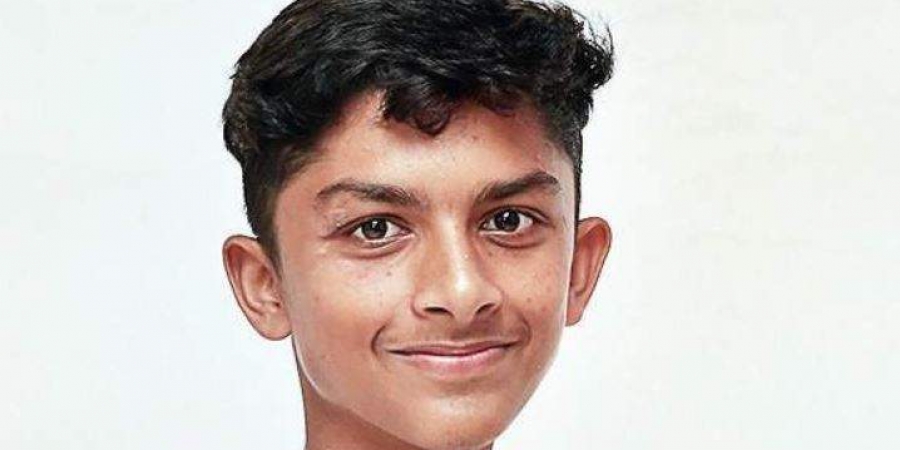
Hasan Patel of George Mitchell School in Leyton

An East End teen who shares his two bed council house with his parents and two brothers has won a £76,000 scholarship to Prince William and Harry’s old school Eton College.

Hasan Patel, 16, became the youngest speaker at a major political party conference, beating former Conservative leader William Hague.

He now has an army of followers after his rousing speech at the Labour conference last August when he was 15.

The state school student from a council estate, will rub shoulders with the elite when he joins the world-famous Berkshire school next September.

The rising political star, who currently studies at George Mitchell School in Leyton, will enter the sixth from to study A-Levels in four subjects; History, Geography, Politics and Drama and Theatre Studies.

It is a far cry from the two-bedroom council flat he shares with dad Abdul, 69, mum Aysha, 49, and two brothers Yusuf, 17, and Adam, 21.

He won his place after coming through a gruelling three-day assessment at the Berkshire School which included three entrance exams, seven interviews and a group interview.

Aged just 15 at the time, he was a year younger than the previous youngest speaker, former Conservative party leader William Hague.

Speaking of his future at Eton, he said: “I am very much there to provoke lively debate.

“I am a boy from a Leyton council estate who receives free school meals. My parents are on welfare and I share a room with my brothers.

“My dad was very smart and politically engaged but lived in abject poverty in India.

“The students at Eton are from the most privileged corners of society, we could not be any more different.

“My views may be different to them because my life experiences are very different. I think that is what impressed Eton, they wanted someone who could offer a different perspective.

“Eton is a place where they encourage debate, I genuinely believe I can offer something to the school.

He added: “My politics won’t change because I am entering a different type of environment.

“I may be attending Eton but I will still be the same boy from East London when I arrive and when I leave.I am not joining the elite but simply benefiting from the education my family would never in a million years be able to afford.

“This opportunity will allow me to return to my community better armed to tackle the many social problems we face.”

Hasan was mentored throughout the application process by his school’s Headteacher Saeed Hussain.

Hasan said: “George Mitchell is an exceptional school. The support I have received from the school, and particularly from my Headteacher, has been incredible.

“This is a place which gives us the students the tools and support to pursue our dreams. I have been here since I was three years old when I joined the nursery; it has played a crucial part in developing me into the person I am today.

Headteacher Saeed Hussain said: “Hasan is a truly exceptional young man. Aside from being incredibly bright he is one of the most engaged and motivated students I have known in my years of teaching.

“He is the type of person who will seize this opportunity generously offered by Eton. His is a name I expect we will all be hearing more of in the near future.”

Hasan’s dad left India in the early 1970s to build a better life for himself and his family. His mum moved over in the mid-1990s.

source: http://www.guardian-series.co.uk / East London & West Essex GUARDIAN / Home> News / January 22nd, 2019

Beyond Sacred: Kerala Muslims Build An Inspiring Mosque With A Modern Art Gallery

Fort Kochi, KERALA :

For the past 10 months, the faithful offering jumu’ah (Friday afternoon prayer) at Masjid-ul Islam in a lane opposite the RDO office in Fort Kochi have been doing so in a hybrid space — for, inside the mosque is a modern art gallery which was opened in April last year.

On Fridays, when it is prayer time, white curtains are hung from discreet hooks covering the art works; currently on show is a photo documentation of 42 communities found in the 5.5 sq km area of Mattancherry and Fort Kochi.

“The only reason why we are covering them during prayers is to ensure that people are not distracted,” says K A Mohammed Ashraf, chairman of the mosque committee, a businessman who set up the place of worship with his own funds four years ago.

Mosque01MPOs30jan2019

Kerala mosque welcomes all, irrespective of faith & gender

The mosque has a board welcoming all, irrespective of faith and gender, and celebrates the diversity of religion with citations from revered spiritual texts. “We want to be inclusive. We don’t have restrictions on the type of dress one should wear,” Ashraf says, adding that the gallery, close to biennale venue, is visited by lot of foreigners.

As one climbs the marble-paved, narrow flight of stairs to the Islamic Heritage Centre (IHC) art gallery on the second floor of the building, two quotes welcome you: a sukta from the Rigveda on the right and a verse from the Quran on the left, epitomising the shared destinies of both religions. The balcony space has several other quotes that build on the syncretic tradition.

On one side of the art gallery, neatly-labelled wooden shelves showcase books ranging from religious texts to even novels and poetry. “This is not much but we are trying to source some rare books. A large reference library is also on the anvil,” says Ashraf, who also runs Masjidul Islam charitable trust.

BCCL
BCCL

The IHC and the gallery is a joint initiative of the trust and Forum for Faith and Fraternity (3F) who are fascinated by the golden age of Islam between AD 8 and AD 14, when mosques were centres of learning and art and science flourished.

“We want people to understand the principles of pluralism, cultural diversity and the importance of upholding these traits in the contemporary world,” says Ashraf who feels this is the only mosque in India which houses an art gallery.

C H Abdul Rahim, chairman, 3F, describes their organisation as a small group of professionals working silently to promote cultural diversity through study of different religions.

“It is a myth that Islam is antithetical to art. It has always promoted art and music and historically mosques were seats of learning,” said Rahim, former executive director of KIMS and a chartered accountant.

The show Transcendence by Biju Ibrahim is emblematic of this vision of plurality. From Lohanas, who are followers of Jhulelal, to Dhakni Muslims and 24 Telugu Manai Chettiars, Biju’s photographs capture vibrant communities in all their diversity.

“I don’t think there is any place in the world that houses so much diversity within such a small geographic space,” says Biju, who began working on the project in 2017 as a resident of Uru Art Harbour.

Most of these community members have strived to preserve their language and culture within their home but share a common identity when they step out of the four walls. “The show began in April but once the biennale kicked off I added five more panels to the exhibition,” he says. His show will be on till end of March.

Originally Published In The Times Of India

source: http://www.indiatimes.com / India Times / Home> News> India / by Binu Karunakaran / TNN / January 14th, 2019