Category Archives: World Opinion

‘Bourbons and Begums of Bhopal’ Flounders Between Academic Research and Family Lore

Bhopal, MADHYA PRADESH :

Indira Iyengar’s book flounders on history, making some foundational conclusions untenable.

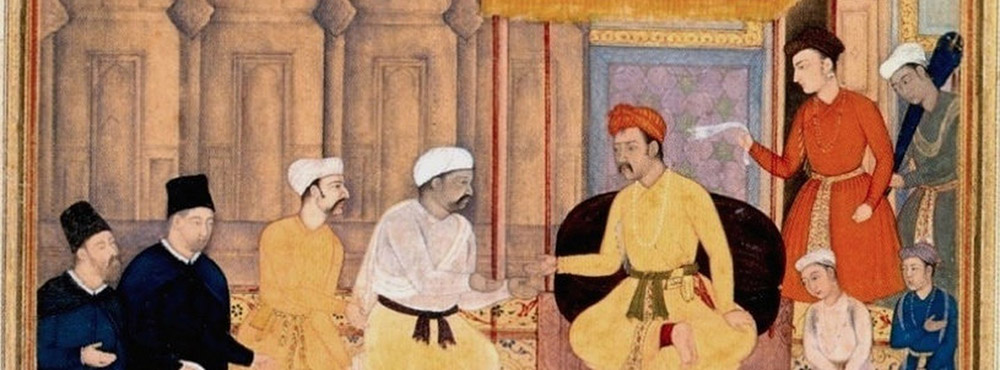
Shazi Zaman who has recently written a well-researched book on Akbar and has a detailed account of Akbar’s contact with the Europeans who visited his court, makes no mention of a Bourbon. Credit: Wikipedia

Some books need to be read because they are likely to tell you things you have always wanted to know. Some stories need to be told because they make for riveting narratives or expand your frontiers of knowledge in exciting and dramatic ways.

It is with such noble (and hopeful) intentions that one embarks upon The Bourbons and Begums of Bhopal: The Forgotten History despite its awkward size and substantial weight. In its size and appearance, it is is an unfortunate mix of a book with pictures and copious amounts of running text: too large to carry while travelling and not sufficiently picturesque to qualify as a coffee-table book. Its contents prove to be an awkward mix too, floundering between academic research and family lore.

The Bourbons and Begums of Bhopal: The Forgotten History Indira Iyengar, Niyogi Books Private Limited, 2018.
The Bourbons and Begums of Bhopal: The Forgotten History
Indira Iyengar,
Niyogi Books Private Limited, 2018.

Indira Iyengar’s tale is part family history, part archival research and part anecdotal memoir. It opens with a disarming admission: ‘I am no historian, but I have a story to tell.’ Iyengar’s mother, Magdaline Bourbon traced her lineage to Jean Philippe de Bourbon who left his native France to arrive in Mughal India, sought and received employment in Emperor Akbar’s court, was actively involved in Akbar’s meeting with the Jesuit priests from Goa. For his services, Akbar is said to have gifted him a small principality, Shergarh near Narwar in present-day Madhya Pradesh and the sister of his Christian wife, an Armenian woman (Portuguese by some accounts) by the name of Juliana who apparently also served as a doctor in Akbar’s harem. Thus began the Bourbon line in India which spread its roots from the Mughal court to the princely state of Bhopal where the descendants of this first Bourbon eventually settled down. Being neither Muslim nor Hindu the Frenchmen were viewed as unbiased and loyal to their masters. The stories of their swashbuckling past and alleged purported ‘royal bloodline’ no doubt added to their mystique.

While Iyengar is at pains to establish her ancestor’s descent from the Bourbons of Navarre, historians are divided as to whether Jean Philipe was indeed from the royal house of Bourbon or simply a fugitive Frenchman, a mercenary who found name and fame in distant India, established a lineage and bestowed a legacy. Iyengar seems to be working on the principle that her mother’s version of the family history should suffice and she, as the custodian of that family history, is obligated to tell the story. ‘My mother’s narration of the family was also very interesting,’ Iyengar writes, ‘and I feel it needs to find a place in recorded history’. It is this assertion that proves to be problematic. For, had it been told as a colourful yarn with anecdotes and family portraits or even bits and pieces of trivia and family lore it could have been a charming story – as history it is on decidedly shaky grounds.

Also, while Iyengar’s research in the archives of the Agra Archdiocese may well establish the role of her French forefathers in various administrative capacities, it does not satisfactorily establish Jean Philippe’s link with Duke Charles III de Bourbon (1490-1527), also known as Connetable de Bourbon. The earliest account of Jean Philippe she is able to offer is by Madame Dulhan Bourbon, wife of Balthazar Bourbon; this comes in the form of a testimony made to a British general. Coming from a family member, that too as late as the late-19th century, it carries dubious weight at best. All other accounts, by missionaries, are in the nature of hearsay, urban legends that acquired veneers of half-truths with each telling. Jean Philippe himself is said to have presented a document to Jahangir in 1605 or 1606, according to Iyengar, stating that he was the son of Charles Connetable de Bourbon and that he had to flee France after arranging a mock funeral for himself. Since such a document does not exist, we can only rely on the author’s mother, Magdaline Bourbon’s memory of a ‘certain priest from Bombay’ who possessed the Bourbon family records that were subsequently ‘lost with time’. Shazi Zaman who has recently written a well-researched book on Akbar and has a detailed account of Akbar’s contact with the Europeans who visited his court, makes no mention of a Bourbon.

While Jean Philippe’s relationship with the House of Bourbon may be in dispute, Iyengar’s research in the archives of the Agra Archdiocese shows that there existed a certain Jean Philipe de Bourbon, who was married to a certain Bibi Juliana (referred to in later Jesuit accounts as Dona Juliana Dias da Costa) who helped build the first Catholic church in Agra in 1588 on land gifted by Akbar. Jean Philipe is said to have died in Agra in 1592 leaving behind two sons one of whom, according to Iyengar, was in charge of the seraglio. At the time of Nadir Shah’s invasion, the Bourbons left poor, ravaged Delhi and the clan, by now comprising 300 men and women, sought refuge in the family estate in Shergarh and thence began the southern sojourn of Jean Philippe’s descendents. Mamola Bai, the first woman ruler of Bhopal, offered Salvador Bourbon the position of general in the Bhopal state army. Salvador married a certain Miss Thome and the family then embarked on a long innings serving as confidantes, generals, even Prime Ministers to the Bgeums of Bhopal.

Already carrying two names, a European and a Muslim one, the Bourbons began to wear Bhopali dress and live like the local nobility. However, the fleur de lis in their coat of arms never failed to remind them and their local patrons of their royal past in distant France.

Rakshanda Jalil is a writer, translator and literary historian.

source: http://www.thewire.in / The Wire / Home> Books / by Rakshanda Jalil / October 05th, 2018

Identity crisis… .the royal kind

Noida, UTTAR PRADESH / Hyderabad, TELANGANA :

Begum Laila Umahani, said to hail from the family of Bahadur Shah Zafar, is living a life of obscurity with her two sons. Film-maker Arijeet Gupta convinced her to talk of her pedigree for “The Living Moghuls”, a documentary on the descendants of the Moghuls. On the other hand, we have Pakeeza Sultan Begum asserting her case as the last known direct descendant. RANA A. SIDDIQUI reports… .

Arijeet Gupta: the documentary film-maker.

HE SCOOTS of to buy vegetables, leave his children at a local school and lives the life of a common man. He is Ziauddin Tucy. His mother tells fairy tales to her grandchildren. But those tales do not constitute fairies, who help people in their moments of distress. They talk of Moghuls, their grandeur, the last Moghul Emperor Bahadur Shah Zafar and his four wives till the period of what is called India’s First War of Independence – the Mutiny of 1857. All these not because the children have inclination for history of Moghuls but because their grandmother herself is said to be the last surviving member and direct descendant of Bahadur Shah Zafar and his first wife, Begum Ashraf Mahal.

Eighty-year-old Begum Laila Umahani, who lives in Asmangarh, a small city in Hyderabad, is this grandmother. She narrates the glorious family history to her grandchildren, knowing that it won’t have any takers if she goes to tell it to people beyond the periphery of her small house.

This is what Arijeet Gupta, the man behind the documentary “The Living Moghuls” screened at India Habitat Centre in New Delhi the other day, tries to prove. Said to be the first-ever archival documentary produced by Public Service Broadcasting Trust – PSBT and financed by Prasar Bharti, it traces the history of Moghuls from1857 to 2002 – a period of 145 years which saw the sudden disappearance of Moghuls from the historical centrestage. But Begum Laila Umahani helps tracing it when she reveals that after Bahadur Shah Zafar’s exile to Burma by the British in 1857, his son Mirza Quaish – the first generation — managed to save his life and fled to Kathmandu. After he secretly came back to India, he was given shelter by Maharana of Udaipur. His son Mirza Abdullah — the second generation — again a fugitive, went to Nagpur and then Aurangabad and finally Hyderabad. Here, Nizam of Hyderabad helped him. His son Mirza Pyre later married Habeeb Begum, hailing from the family of the sixth Nizam of Hyderabad. One “Habeeb Mahal” near Char Minar in Hyderabad, belongs to her which is occupied by one family and they have moved High Court for its possession. Begum Laila Umahani, daughter of Mirza is the fourth and only surviving Moghul from the family.

Begum Laila Umahani: Waiting for recognition.

Begum Laila now lives in a rented house in Aamangarh with her two sons, Ziauddin Tucy and Masiduddin Tucy — the fifth generation. Her husband died earlier. While Ziauddin Tucy is retired marketing supervisor from Andhra Pradesh Government, Masiduddin Tucy is a food consultant in Welcome Group of Hotels in Hyderbad.

The family after several futile approaches made to Indira Gandhi and subsequent governments in Delhi, preferred to take a backseat “Who will listen to me now? Instead they will mock so it is better to remain silent to keep our dignity intact,” Begum Laila says in the documentary. She reportedly broke her silence before the camera after much coaxing from Arijeet Gupta.

There are historians who believe that it is difficult to trace that period after145 years. It simply because after Moghuls were deposed, many records also were destroyed. They were just fleeing for their lives and carried no identity cards.

Pakeeza Sultan Begum: known direct descendant of Bahadur Shah Zafar.

The film-maker, Arijeet Gupta met the family in 1998 after he saw a letter from Ziauddin Tucy addressed to the powers that be requesting the family to grant benefits/ pensions to help them survive with dignity. Since Laila Begum was not ready to articulate her viewpoint, and there could not be many compromises on authenticity, this documentary took five years to complete, he says.

EVEN AS Begum Laila Umahani fights for recognition from the Government, she has to encounter another battle of words and letters – from Pakeeza Begum, claimed to be the only direct descendant of Bahadur Shah Zafar. A resident of Neeti Bagh in New Delhi — her ancestral house Chandni Mahal is in the Walled City — Begum Pakeeza denies that Begum Laila is a direct descendant of the last Moghul Emperor. “The entire Delhi knows that only I am only the direct descendant of the king and not she because only the heir apparent – Vali Ahad — was supposed to be one and Mirza Qwesh — whom she refers to as her forefather — was never a crown prince as reported in a Delhi daily earlier. He wanted to be one and to do that he also accepted the humiliating conditions of the British but never succeeded. While he was only attempting to become one, the 1857 Mutiny broke out. My great grandfather Mirza Fatehul Mulk was the heir apparent.”

She narrates the historical background that she says is found in record books too. It is reported that historians Maheshwar Dayal and Tara Chand also verified the same in their books. “Mirza Fatehul Mulk Bahadur alias Mirza Fakhruh was appointed the heir apparent in 1853. At the time of Mutiny, the son of Mirza Fakhruh, Mirza Farkhunda Jamal was only four or five year old. When Major Hudson killed the sons and grandsons of Bahadur Shah Zafar at Khooni Darwaza, Delhi on Bahadur Shah Zafar Marg, and soon after this news broke out, the nurse – Anna — of Mirza Farkhunda Jamal took the child secretly without even informing the family because those who were responsible for the Mutiny were among the family only. For years, she did not reveal his identity and nurtured him by doing different work at different places. That is how she managed to save the last successor.”

Begum Qamar Sultan with younger brother Hamid Shah in royal costume, 1963.

Some time after the Mutiny the British announced that there would be no killings and punishment, Anna brought the child back to the mother. The British Government released political pension in favour of Mirza Farkhunda Jamal as the heir apparent. After the death of Mirza Jamal, the pension was received by his sons and daughters — Qamar Sultan Begum — daughter of Mirza Jamal who kept receiving this share even after Independence. She refused to take it sometime after the Independence saying now we are free citizens and everyone is equal in this democratic country. Sultan Begum died in June 1993. She had two daughters, Begum Tahira Sultan and Pakeeza Sultan Begum. The former is settled in London while the latter lives in Delhi and is also an ex-director ICCR and an expert on Africa.

She questions the authenticity of Begum Laila’s statements: “Why was Mirza Qwesh running away even after the Mutiny? Despite the fact British announced that there would be no killings? Who was he afraid of? The British? Who, as her statements go that he was helped by the Indian soldiers of British Army to flee to Kathmandu? There were no Indian soldiers in British Army and even if there had been any, they were British soldiers and not from the King’s Army.”

She contends: “He was running away from his own people who got to know of his schemes and policies that he accepted the Britishers’ humiliating condition to become the successor of the Moghuls.”

The lady argues: “I don’t have any problem if she gets any help from the Government but she should not disturb the lineage by giving wrong statements.” She also expresses regret that without going to history books and records with the Government Arijeet Gupta went ahead to make his documentary film.

source: http://www.thehindu.com / The Hindu / Home> MetroPlus – Delhi / September 12th, 2002

Pakeeza Sultan Begum

Noida, UTTAR PRADESH :

PakeezaSultanMPOs02dec2018

PAKEEZA SULTAN BEGUM, daughter of  Princess Qamar Sultan Begum, the great-grand-daughter of the last successor of the throne of Mughal dynasty Mirza Fatahul Mulk Bahadur alias Mirza Fakhru (who was killed by the British after 1857), thus the direct descendent of the last Emperor of Hindustan Bahadur Shah Zafar, left for her heavenly abode on 20 September 2014.

She was born on 13 November 1937. She was married to the senior advocate of Supreme Court of India late Danial Latifi who had died on 17 June 2000.

She was educated at AMU and taught for some time at Lady Shriram College. Later she joined as librarian in the Indian Council of Cultural Relations under the Ministry of External Affairs where she worked at the Africa desk and retired as director of the foreign cultural centres in the capital. She had moved to Noida a few years back to live with a relative.

Princess Qamar Sultan Begum was recognized by Government of India as a direct descendant of the last Mughal emperor. She used to be invited to attend official functions in that capacity. Qamar Sultan Begum died in June 1993.

Begum Qamar Sultan with her younger brother Hamid Shah in 1963

source: http://www.milligazette.com / The Milli Gazette / Home> Online News> Community News / Published online Oct 04th, 2014 / Print edition: 1 -15th Oct 2014

Meet Dr. Mubeena Ramzan, the first Kashmiri women to feature among world’s 500 most influential Muslims

Sopore,( Baramulla District )JAMMU & KASHMIR :

Dr Mubeena Ramza, head of Ansar-un-nissa' a soio religious organisation (Photo: Auqib Javeed/ TwoCircles.net)
Dr Mubeena Ramza, head of Ansar-un-nissa’ a soio religious organisation (Photo: Auqib Javeed/ TwoCircles.net)

Dr Mubeena Ramzan of Kashmir created history earlier this month when she became the first Kashmiri woman to be enlisted among the 500 most influential personalities in the Muslim world. The list was released by The Royal Islamic Strategic Studies Centre, an independent research entity affiliated with the Royal Aal al-Bayt Institute for Islamic Thought.

The list named Dr. Mubeena from North Kashmir’s Sopore as one among the world’s most influential persons. Dr Mubeena heads the women-only socio-religious organization ‘Ansar-un-Nissa’ and is the Rector of ‘Jamia Islamia Mahdul Muslimat’, which has its branches in Sopore (Baramulla), Baghat (Srinagar) and Sumbal (Bandipora) under the aegis of a registered public trust namely ‘Mahdul Muslimat Educational Trust’ in Kashmir. Dr Mubeena travels extensively across the valley for women’s rights and ensure that women suffering from domestic violence are provided “a vent”. In an exclusive interview with TwoCircles.net, Dr Mubeena talks about her activism, journey and her views regarding role of women in conflict-torn state.

Here are the experts

Could you please tell us a little about yourself?

I was born in Sopore of District Baramulla and had my initial schooling from Islamia High School, Sopore where we were taught Islamiyat, Arabic and Hindi, which broadened our thought process.

Students of the madarsa run by Dr. Mubeena (Photo: Auqib Javeed/ TwoCircles.net)

After pursuing Bachelor’s degree in Islamic Studies, Education, Political Science and Philosophy from Islamia College, Sopore. After that, I completed my B.Ed, Masters degree and Research from University of Kashmir (KU). During my Research in Kashmir University, I had specialised in Islamic Law, Jurisprudence (Fiqh) and Orientalism.
Besides all this, I had learned Islamic Sciences from Hazrat Mufti Muzaffar Hussain Qasimi Sahab, Head Mufti, Darul-ul-Uloom Sopore.

When did the idea of setting up your own institute for women come to your mind and why?

As a scholar, my research on Kashmiri Society and its social evils had made me realise that I must play an active part in mitigating the crisis. The very idea motivated me to quit lectureship in a B.Ed college in Kupwara and started Jamia Islamia Mahdul Muslimat under the aegis of Mahdul Muslimat Educational Trust in 2002, from a rented building in Sopore and took us eight years to purchase a land and built a proper girls-only seminary-cum-skill school there.

The objective was to inculcate education with Islamic integration and impart skills among women. We started another branch in Baghat area of Srinagar city and recently, opened another campus at Sumbal-Hajin area of Bandipora district.

What do you teach to your students?

Jamia Islamia Mahdul Muslimat is a seminary-style girls only institute where besides teaching of religious text we impart worldly education also. But main thrust is on religious scriptures like Quranic exegesis, science of Hadith, Jurisprudence and History.
We also teach languages viz, Arabic, English, Urdu and train them in the field of Computers, Cutting & Designing skills to help them become competent and self-reliant.

Tell us about this institute and your journey with it?

We empower our students through education and skills, which boosts their confidence to face different realities of life. I believe that training a girl on these parameters was not possible by mere religious sermons, debates, seminars, etc.

We had to upgrade our religious syllabus on modern lines to make our girl students relevant to the contemporary society. We believe in natural upbringing of students, especially girl. We understand it well that apart from education and shelter, orphans also need motherly love and care. While we try to provide that, we also counsel and guide them regarding their future. This is what our Institute Jamia Islamia Mahdul Muslimat provides.

In 2013, we called a meet of women from different walks of the life-around 100 of them-in Sopore where we decided to have some welfare initiatives among women. And as a result, in March 2014, we floated “Ansar-un-Nissa”, a women welfare body which provides a helping hand to the needy, would-be brides, widows, orphans, and also establishes vocational training centres.

What challenges do you face during your activism in a society that can be patriarchal?

When it comes to a woman who observes Hijab, challenges are tremendous. Women now-a-days is sandwiched between two extremes – Religious and Western. A man is called qawwam in Quran, which means head / protector / sustainers of the family but this status has been misused by some by enslaving women.
I was opposed by so-called Moulvis for starting girls only seminary style institute (Madrassa) as it was in their mind how come a female run a Madrassa. But Alhamdulillah, now their perception has changed as we are successfully running three branches now.

The need of the hour is to have a very balanced approach where woman and man both would take care of their roles and responsibilities. Men and Women are equal, but not similar.

Reportedly, you were associated with Dukhtaran-e-Millat (DeM) of Aasiya Andrabi and later on due to some differences you left from the organisation. What were the differences?

Yes, I was associated with the organisation till 2004. Later on the differences grew with the organization for it being more into political spectrum. I left the organization as I wanted to do activism on academic parameters and started academic activism among women folk.

Do you think there are need for more Muslim women scholars in Kashmir?

Obviously, yes. In the rest of the Muslim world, we have good number of women Islamic Scholars but in Kashmir we are lacking them. We need more and more women scholars in Kashmir in order to educate common women-folk.

You must be knowing that in Ottomans Empire, 40% of contribution to Bait-al-Mal (House of money) was by the women and the oldest degree-granting university in the world i.e., Al-Qarawiyyin University was founded by Fatima al-Fihri, a women.

Women have been the pioneers of the education from the beginning of the Muslim society which is evident from the fact that a great major of Ahadiths (sayings of the Prophet, saws) are quoted by none other than his wife, Hazart Ayesha Siddiqa (r.a).
You have conducted various religious gatherings in different parts of the valley.

What draws you to that endeavour?

There are many issues related to women where she needs to be educated in right perspective. People often gossip about four wives, but no one thinks about having four daughters. Even a mother’s face turn pale now-a-days on the birth of a girl child.

The experiences which I gained after travelling throughout the Valley and beyond it for conduct of various religious gatherings are quite astonishing and still prevalent in this century. Most of the daughters and sisters are being debarred from the property / inheritance while Islam and Islamic law have given them a Right to Inheritance. Remarriage, Widow Marriage is still considered something evil in this Kashmir.

Daughters, Sisters, Wives are being forced to work outside for earnings and height of the things are that now-a-days it is difficult for an unemployed girl to get a suitable match as most mothers prefer to have employed daughter-in-law.

The hadiths of the Prophet (peace and blessing be upon him) about raising girls are beautiful and amazing. Girl children come with great rewards and blessings. If you offer care, love, support and education to your girl child, Paradise awaits you.

At a time when baby girls were deemed a source of shame, even buried alive, the Prophet (peace and blessing be upon him) came to rectify this grave wrong. The Prophet (peace and blessing be upon him) said: If anyone has a female child, and does not bury her alive, or slight her, or prefer his male children to her, Allah will bring him into Paradise. (Ahmad). On one other occasion, The Prophet (peace and blessing be upon him) said, “Whoever supports two girls till they attain maturity, he and I will come on the Day of Resurrection (close to each other) like this –The Messenger of Allah (peace and blessing be upon him) joined his fingers to illustrate closeness.” (Muslim)

These are just examples of how Islam cared for the girl children. The care mentioned in these hadiths and others is comprehensive. It covers the girls’ physical, emotional and mental needs. Such is the care and affection that our daughters deserve. The Prophet (peace and blessings be upon him) commands us to be loving, patient and supportive parents.

You were recently listed as one among the most influential 500 personalities in the Muslim world. Do you have any comments on your selection?

I came to know through my husband about it and I believe that real action and delight comes from helping your people grow. But yes, if your welfare activism is being recognised in any way, it does boost you.

Do you have any personal Muslim women heroes you would like to mention?

Not Hero, but inspiration. Maryam Jameela is one in this regard. She was brought up in a modern society but did not get getting influenced by it. On the contrary, she was able to influence and inspire people with her thought. Yvonne Ridley is other one.

Dr. Mubeena Ramza with her students at the convocation in Srinnagar (Photo: Auqib Javeed/ TwoCircles.net)

Do you have any messages for young Kashmiri Women?

As Muslims, they should believe that their rights, duties and status are justified. They don’t need any westerner or any ragtag activist to tell them their rights as a woman. Those who are rallying behind it are knowingly and unknowingly attempting to overlook the dignified status and rights given to women by their religion.

Islam invites you to a mission based on obedience to Allah and Islam addresses person’s spirit, emotions, belief, etc. West is dragging women from homes, only to fulfil economic and materialistic objectives. It’s intended to commercialize things but Islam gives dignity and status while addressing the soul.

There are some jobs in the field of Education and Health and other suitable fields, where women have a primary role. However, in choosing any job, your home should be your preference. Your family should not suffer at the cost of earning. People in Kashmir nowadays prefer earnings over other things which need to be discouraged.

Almighty Allah says in the Qur’an …..“For Muslim men and women, for believing men and women, for devout men and women, for true men and women, for men and women who are patient and constant, for men and women who humble themselves, for men and women who give in charity, for men and women who fast, for men and women who guard their chastity, and for men and women who engage much in Allah’s praise, for them has Allah prepared forgiveness and great reward” (Al-Ahzab 33:35)

source: http://www.twocircles.net / TwoCircles.net /  Home> Indian Muslim> Lead Story> Women / by Auqib Javeed, Twocircles.net / November 30th, 2018

Princess Esra lends royal touch to book on Nizam

Hyderabad, TELANGANA :

Deepthi Sashidharan and Usha Bala Krishnan releasing a book on Nizam’s jewellery at Chowmohalla Palace on Thursday. | Photo Credit: G_RAMAKRISHNA

Treasures of the Deccan – Jewels of the Nizam released

Princess Esra lent a royal touch to the release of the Treasures of the Deccan – Jewels of the Nizam in Hyderabad’s Chowmahalla Palace on Thursday evening. “I can imagine Alexander Jacob walk into this very same Chowmahalla Palace holding in his hand the 184.5 carat diamond and climb the stairs to meet the Sixth Nizam Mahbub Ali Khan,” said Usha Bala Krishnan, who has co-authored the two-volume work with Deepthi Sashidharan.

The book documents the fabulous collection of the Nizam’s Jewellery, some of which is currently locked up in vaults of banks, while other pieces are in private collections.

The authors made a short presentation about how the book has evolved.

“Earlier, I worked on the Jewels of the Nizam which was more in the nature of a catalogue.

Launching this book in Hyderabad is special, as the jewellery has a special, almost metaphysical, connection to this place,” said Ms. Krishnan who is a well-known historian of jewellery and was commissioned by the Central Government before the jewels of Nizam were put on display in Hyderabad’s Salar Jung Museum in 2001.

“Matching some of the black-and-white photographs with the jewellery that the royalty was wearing at that time was an a-ha moment.

We discovered the jewels in private collection as well as what is known as Nizam’s Jewellery,” said Deepthi Sasidharan who trawled through a vast collection photographs to bring alive the story of Nizam’s jewellery.

source: http://www.thehindu.com / The Hindu / Home> News> States> Telangana / by Special Correspondent / Hyderabad – November 30th, 2018

Azim Premji conferred highest French civilian award

Bengaluru, KARNATAKA :

Wipro Limited Chairman Azim Premji receives the highest French civilian distinction, Chevalier de la Legion d'Honneur (Knight of the Legion of Honour), from Ambassador of France to India Alexandre Ziegler, in Bengaluru on Thursday.
Wipro Limited Chairman Azim Premji receives the highest French civilian distinction, Chevalier de la Legion d’Honneur (Knight of the Legion of Honour), from Ambassador of France to India Alexandre Ziegler, in Bengaluru on Thursday.

Azim Premji, philanthropist and Chairman of Wipro Limited, on Wednesday received the highest French civilian distinction, Chevalier de la Legion d’Honneur (Knight of the Legion of Honour) from Ambassador of France to India Alexandre Ziegler.

Speaking on the occasion at the Wipro campus, Ziegler said the award was bestowed on Azim Premji for his outstanding contribution to developing the information technology industry in India.

“Also, for his economic outreach in France, and his laudable contribution to society as a philanthropist through the Azim Premji Foundation and Azim Premji University,” he said.

TheLegion d’Honneur , instituted in 1802 by Napoleon Bonaparte, is the highest civilian award given by the French Republic for outstanding service to France, regardless of the nationality of the recipients.

The President of the French Republic is the Grand Master of the Order of the Legion of Honour.

In his acceptance speech, Premji said he is extremely honoured by the award bestowed on me. “The vibrancy of the French democracy and its diversity is an inspiration to all across the world,” he said.

Wipro’s association with France spans over 15 years and the company enjoys a close relationship with several French organizations. Nearly 65% of Wipro’s employees in France are locals.

France is a key market for Wipro and the company is committed to continues investments there. Large French digital companies already have a strong footprint in India, employing over 1.3 lakh people at their R&D centres and facilities.

source: http://www.deccanherald.com / Deccan Herald / Home> Business> Business News / by N.V. Vijayakumar / DH News Service, Bengaluru / November 28th, 2018

‘Diversity is our strength’

UTTAR PRADESH / MAURITIUS :

AmeenahMPOs29nov2018

Former President of Mauritius Ameenah Gurib-Fakim tells Asmita Sarkar that there are no two ways forward than making women and minorities part of the progress

She holds many mantles — politician, the first woman President of Mauritius and a biodiversity scientist. Not only that, she is also a proponent of cultural diversity and creating entrepreneurial opportunities for women in Africa. Social media- savvy and with a clear voice, she pushes for saving the planet and its biodiversity.

What is the way forward in Asia and Africa to empower women and other minority sections?

No team can win a football match by leaving 52 per cent of the team on the bench. Women, minorities must all come together with their talents and change their way of doing things. Our diversity is our strength. When it comes to minorities, I am reminded of the words of a great statesman Pierre Trudeau. He stated and I quote, “A just society will be one in which the rights of minorities will be safe from the whims of intolerant majorities”. Countries that have valued immigrants, like the United States, are a classic example. Most of the big brands in the US have emerged from the contribution of immigrants.

As a scientist and politician, how did you envision your expertise in changing the world around you?

Countries need to be technically-driven and this is where scientists have a key role to play in shaping the destiny of their respective countries provided the leadership takes heed. Again those countries that have recognised this technical vision have emerged strong.

Countries need strong institutions and strong leadership to emerge and science and technology are powerful tools. For the first time in 2015, even institutions like the United Nations (UN) have recognised this in the crafting of the UN Sustainable Development Goal’s.

Can you tell us about your link to India?

I am a fourth generation Indian from the diaspora. My forebears came from Ghazipur area in Uttar Pradesh. They left in 1862 to come to Mauritius to work the land and never returned.

Going forward, do you think that conversations around biodiversity have become confined to conservation alone?

May be the conversation has been skewed towards conservation but it is an equally laudable exercise, and one that we cannot shy away from.

What personal struggles did you face while growing up which you wish girls in your country don’t have to anymore?

When I was growing up, I had a set of challenges like girls were forever being denied education. That is no longer the case in my country although I am aware that this still happens in many other countries.

Girls in science were a rarity but is now becoming more common. So hopefully with more role models, it will ease the way for many more to join the efforts for encouraging girls and women in both leadership and power.

What is the way forward for Asia to transition from emerging economies to developed ones without damaging the environment?

Asia is fast emerging but the leadership will have to acknowledge that development must rhyme with sustainability. It is in their interest for their survival, for the prosperity of its people and long term future of their countries.

(The leader will be at the 10th edition of TEDxGateway on December 2 at the DOME @ NSCI Mumbai)

source: http://www.dailypioneer.com / The Pioneer / Home> Vivacity / by Asmita Sarkar / November 27th, 2018

Spectacular beauty of a serene mausoleum

Hyderabad, TELANGANA :

The Paigah Tombs not only symbolise the nobility’s love for magnificient edifices but also represent different styles of architecture.

PaigahTombMPOs26nov2018

Tucked away in the quiet bylanes of the Phisal Banda suburb near Owaisi Hospital, Santosh Nagar, is an architectural marvel, a serene mausoleum which is the final resting abode of erstwhile Hyderabad’s celebrated nobility – The Paigahs. The word Paigah, which means pomp and rank in Persian, was a title given by the second Asaf Jahi Nizam of Hyderabad to the estate of Abul Fateh Khan Taig Jung Bahadur in appreciation of the royal services rendered by him. He was also conferred with the title of Shams-ul-Umra, which gives the tombs their name.

Although the Paigahs were noted and rewarded for their contribution as army officers, ministers and aristocrats, Sir Viqar-ul-Umra is popularly remembered as the man behind one of the finest masterpieces of Hyderabadi architecture – the Falaknuma Palace. Legend has it that the 6th Nizam Mahboob Ali Khan loved the palace so much that Viqar-ul-Umra gifted it to him.

One such masterpiece symbolising the Paigahs’ love for architectural edifices are the Paigah Tombs. The spectacular beauty of the mausoleum is said to have earned it a title of the Taj Mahal of South India among connoisseurs of art and architecture. The Paigah Tombs also include a mosque where prayers are held every day.

The Paigah Tombs were constructed in the late 17th century, and later it was made a family maqbara by his son Fakhruddin Khan Amir-e-Kabir – I. Later, some additions were also made by Sir Viqar-ul-Umra, Sir Asman Jah and Sir Khurshid Jah. The tombs are magnificent structures decorated in stucco work and represented the Mughal, Greek, Persian, Asaf Jahi, Rajasthani and Deccani style of architectures.

PaigahTomb02MPOs26nov2018

The geometric designs in the Paigah Tombs are unique and the perforated screens are examples of the finest craftsmanship. Some screens have flowers and motifs of fruits; others have serpents, drums, and vases.

There is a great amount of effort put into the detailing of the walls, arches, pillars and even of the graves. Floral and geometric patterns are characteristic of medieval Islamic architecture.

The most striking element of the Paigah Tombs is the intricately carved teakwood doors as entrance to each tomb. The carving of the doors is so fine and so regal it only makes one wonder the way art was encouraged and appreciated in the Asaf Jahi era.

The tomb of wife of Khursheed Jah is the most beautiful of the tombs with exquisite marble inlay work. One can still see the hollows in the marble carvings where precious gems were once encrusted on the grave.

Nawab Bashir-ud-Daulah’s grave stands out with a beautifully carved marble chowkhandi which is adorned by a carved mysterious green stone. Legend has it that the lighting doesn’t strike the place where it is placed.

The Paigah Tombs are under the care of the Department of Archaeology and Museums. As one of the most marvellous symbols of Hyderabad’s rich culture and royal heritage, the Paigah Tombs deserve nothing less than the government’s attention to ensure that it is not just preserved and valued but also promoted and highlighted.

Historian Dr Anand Raj Varma says, “I don’t see much improvement and restoration taking place at the Paigah Tombs; it is in the same state for years now. If you see the entrance, it’s in a very shabby state. There is no significant deterioration but there is also no tourist attraction or promotion of Paigah Tombs either. Most people don’t even know that the Paigah Tombs are located there.”

However, says the historian, the contribution of Rahmatullah, the caretaker of the Paigah Tombs, is appreciable as he keeps it going thanks to his passion and love for the Paigah family and the tombs. “The Tourism Department or the government should take this up as a project. It is the heritage which connects us our past and to our present. It is our treasure, heritage our virasat, and it should be protected,” he adds.

Mohammed Safiullah, managing trustee of The Deccan Heritage Trust, says, “The Paigah Tombs are in desperate need for restoration as the structure is in a dilapidated state and deteriorating. Some places have grown moss all over.  The government should invest in the restoration of the Paigah Tombs because there is a scope of return on investment. Once proper restoration work is done, there will be easily about a 1,000 visitors every day.”

A nominal entry ticket would become a means for generating revenue which would help in future maintenance. Simple things like a cafeteria, a souvenir shop and proper toilets could make it more tourist-friendly.

(The writer is a heritage enthusiast)

source: http://www.telanganatoday.com / Telangana Today / Home> SundayScape> Telangana Diaries / by M D Taher Hussain / November 25th, 2018

Lucknow: Now, ‘water gateway’ to Chattar Manzil unearthed

Lucknow, UTTAR PRADESH :

Slice of history: Nawabs probably used fish-shaped boats for transport in 17th century, says historian.

The ongoing excavation work at Chattar Manzil reached another level on Monday as workers unearthed a ‘water gateway’ leading to this iconic structure.

The UP Rajkiya Nirman Nigam (UPRNN), the construction agency engaged in the restoration of the structure, termed it one of the major discoveries so far.

Officials said workers engaged in the excavation stumbled upon a ‘cylindrical structure’ that was lying buried for years.

On clearing the debris, it was found that the structure made of lakhauri bricks was a tunnel, which connects the over 200-year-old Chattar Manzil to river Gomti, flowing just a few metres away.

“This tunnel is around nine metres beneath the ground,” said Nitin Kohli, the contractor supervising the excavation work.

The task is being performed under the supervision of a high-powered committee comprising Archaeological Survey of India (ASI), Abdul Kalam Technical University (AKTU), State Archaeology Department and officials of the civil engineering department, IIT BHU.

Experts said once they are done with the excavation work, they would explore details like the total length of the tunnel and where it leads to.

Officials said the discovery of the tunnel would unravel another chapter from the history of Chattar Manzil and Kothi Farhatbaksh.

The tunnel would also demystify myths and folklore about the Nawabs using water boats to sail within the palace complex, they added.

However, historians have a different take on this tunnel.

PC Sarkar, a noted historian, said: “The structure seems more of a water gate than a tunnel.”

He said some old timers who have been to Kothi Farhatbaksh (Lakhi Pera), residence of major general Claude Martin, had mentioned the structural uniqueness of the twin structures. “In fact, it is on record that the structures were easily approachable from the northern (river Gomti) side by boat also,” added Sarkar.

“After Nawab Saadat Ali Khan bought the fortress-like structure, it was remodelled into a palace-like structure. However, the river side entrance remained the principal one, with the Nawab adding pavilions in the middle of the river itself,” he said.

He said Gomti was the main channel of transport – the nawabs used barges (boats) of various shapes and sizes, some looking like fishes, crocodiles, for transport in the 17th century. The famous ‘More Pankh’ boats were in vogue during that era, said Sarkar.

He said ‘water gates’ may sound unique now, but they were common in the olden days.

The Lucknow Residency too had a ‘water gate’. But it became defunct when Gomti changed its course and more means of road transport came up, he said.

source: http://www.hindustantimes.com / Hindustan Times / Home> Lucknow / by Oliver Fredrick, Hindustan Times,Lucknow / November 20th, 2018

Waheed: Award will bring recognition to Unani medicine

Hyderabad, TELANGANA :

Mohammed Abdul Waheed

Medicine for vitiligo awaiting US FDA clearance, says doctor who was selected for Padma Shri

Hyderabad :

Dr.Mohammed Abdul Waheed, a Unani doctor well known for his research work and 35 years of experience in clinical management of vitiligo, is an elated man after being selected for the Padma Shri award.

“This will bring recognition to Unani medicine. I am really thankful to Government of India. God is great,” he said. Sharing his happiness, the Padma Shri awardee in the field of medicine told The Hindu that importantly it would help in bringing global recognition to Unani medicine.

Dr. Waheed, who graduated in Unani medicine and Surgery from Osmania University in 1978, was the former head of Central Research Institute of Unani Medicine under the Department of Ayush, Government of India. With expertise in phase II and phase III clinical trials, he had treated over two lakh vitiligo patients. “We are working for globalisation of Unani medicine. A drug dossier for vitiligo has been submitted to USFDA by the Central Council for Research in Unani Medicine. If approved the medicine could be globally utilised to treat and manage vitiligo,” he said. Recipient of several prestigious awards for his research including the AIIMS’s Best Scientist Award, he Dr.Waheed developed 17 Unani formulations for the effective management of vitiligo. and also coordinated multi-centric clinical trials of Unani medicines on Diabetes, Hypertension and Hepatitis.

Finding treatment for vitiligo mainly caused by autoimmune disorder — that affects one % of world and three to four % of Indian population — was close to his heart as the condition caused social discomfort and depression to patients, he said.

source: http://www.thehindu.com / The Hindu / Home> News> Cities> Hyderabad / by M.L. Melly Maitreyi / January 26th, 2017