Category Archives: World Opinion

Medal misplaced but glory and glow intact – CYCLING CHAMP’S JOURNEY TO SPECIAL OLYMPICS

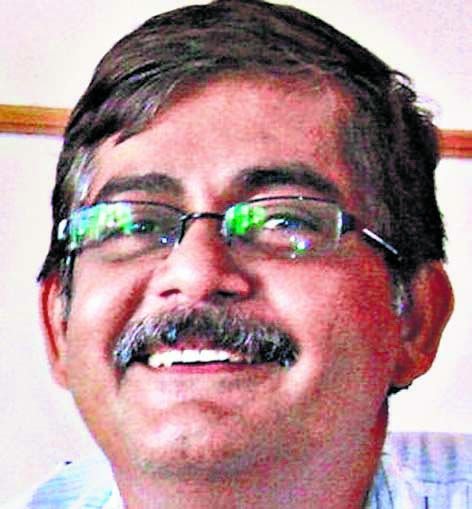
Maksud Alam Mollah outside his home in Dhulagarh, Howrah. Picture by Anup Bhattacharya

Maksud Alam Mollah won three medals in cycling at the Special Olympics in Los Angeles last month but came back with only two. The 22-year-old can’t recall where and how he misplaced the bronze that he had won in the 5km time trial event.

The only cyclist from Bengal in the Indian contingent has a condition called intellectual disability, characterised by a particularly weak memory. “He must have kept the bronze medal somewhere in the hotel or with a friend and forgotten about it,” said mother Kamruneesa.

Maksud has been taught to write down everything so that he doesn’t forget. But if there’s one thing that this young man from Dhulagarh, in Howrah, doesn’t need to be reminded of, it is how to cycle like a champion.

Maksud is convinced he would have won a fourth medal in Los Angeles with the cycle of his choice. “I had difficulty with the cycle that I was first given. It had a flat handlebar. My personal cycle has a curved handlebar. I couldn’t perform well in the first event because of this,” he recalled.

Athletes don’t take their own equipment to the Special Olympics. The Bharat chapter of the Games arranges everything.

“We changed Maksud’s cycle after we learnt that he was having difficulty riding the first one,” said Ashim Pal, the coach who had accompanied the Bengal contingent.

After that first hiccup and a new cycle, Maksud won a medal each in the three other events he competed in, including gold in the 5km road race and silver in the 10km road race.

To his parents, Maksud misplacing his third Special Olympics medal is just another footnote in his journey from Howrah to Los Angeles.

His elder brother Manzoor has the same condition and almost every day brings a new challenge for Kamruneesa and her husband Abu Sattar Mollah. “We had a zari business but couldn’t sustain it after I fell ill. My wife bought a sewing machine and started taking bulk orders for readymade pyjamas. I now run a small shop for candy and chocolates,” said Abu.

Although life is a struggle, the Mollahs are glad that Maksud has found his mission. “I feel proud of my son,” smiled Kamruneesa.

Only three years ago, the prospects weren’t so bright. Maksud had joined the National Institute for the Mentally Handicapped (NIMH) in Bonhooghly in 2012 with diminished cognitive abilities.

“He was studying in a madarsa but had fallen behind in studies. He couldn’t follow his lessons properly. We had to support and encourage him so that his performance improved. His cognition has since improved, which is why he is being able to perform better in sports as well,” said one of Maksud’s teachers at NIMH.

Help has come in other ways too. “The institute would often waive the fees for Maksud’s education. His coach hasn’t taken his fees for several months,” Kamruneesa said.

At NIMH, Maksud has trained under Tamal Chatterjee, the games teacher who also runs a sports centre called KC Memorial at Kamarhati. “I introduced Maksud to various sports. Through trial and error, I realised that cycling was his strongpoint. He went to the National Games organised by Special Olympics Bharat in Bhopal last year, where he was selected for the Special Olympics in Los Angeles,” Chatterjee said.

The selected athletes were required to attend four camps, where they were tested and trained in behaviour and independence, among other things. Maksud needed time to adjust to the fact that he would have to stay without his mother by his side for some time, Chatterjee recalled.

At KC Memorial, Maksud would practise using Chatterjee’s cycle. He got his own cycle after being selected for the Los Angeles trip.

Some residents of the neighbourhood and the panchayat pradhan of Dhulagarh, Rampada Dhonk, pooled in money for Maksud to buy his first cycle. The West Bengal chapter of Special Olympics Bharat sponsored his gear.

“The central government has announced cash awards for the winners. Gold medallists will be given Rs 5 lakh, silver medallists will receive Rs 3 lakh and bronze medal winners will get Rs 1 lakh each,” said Ashoke Chaki, the treasurer of Special Olympics Bharat, West Bengal.

For Maksud, the wheels of success and recognition have just been set in motion.

source: http://www.telegraphindia.com / The Telegraph, Calcutta,India / Front Page> Calcutta> Story / by Dalia Mukherjee / Tuesday – September 01st, 2015

Bazmi Husain named ABB’s global CTO

Swiss-engineering major ABB on Wednesday appointed  its India managing director Bazmi Husain as its global Chief Technology Officer (CTO) with effect from January 1, 2016.

BazmiHusainMPOs03sept2015

India-born Husain, an expert in power and automation who has been with ABB for more than 30 years, will report to CEO Ulrich Spiesshofer, says the statement issued by the company. In his new role, he will be based in Bengaluru with an office in Switzerland.

As CTO, Husain will be responsible for overseeing all aspects of ABB’s global R&D, which serves the entire company, its scientists and engineers, and for the R&D activities within ABB’s divisions.

Reporting to him will be the heads of R&D at group and division level as well as ABB’s venture capital arm, ABB Technology Ventures. With locations in seven countries, ABB’s corporate research centres bring together an international team of highly-skilled scientists across a variety of disciplines. ABB spends $1.5 billion annually on R&D and employs some 8,500 technologists.

“Bazmi Husain’s unrivalled know-how will drive technological innovation across multiple disciplines to support our profitable growth ambitions and the paradigm shifts in power and automation,” said CEO Spiesshofer.

source: http://www.deccanherald.com / Deccan Herald / Home> Business / DHNS / Bengaluru – September 03rd, 2015

France pays inter-faith tribute to World War I Indian heroes

The Indian ambassador to France, Dr Mohan Kumar (centre), was also present at the ceremony to pay tribute to the Indian soldiers who fought in the First World War. (HT photo)

An interfaith commemoration for Indian soldiers who died in the First World War was held at the Indian memorial in France on Sunday. This year also marks the 100th anniversary of the battle of Neuve Chapelle (March 10-13, 1915) which was the Indian Corps first major action in the war as a single unit.

Organised by the Indian Interfaith association and the local French administration at the Neuve Chapelle memorial, the event was attended by more than 1,300 Indians of different religious groups and about 300 French guests, the organisers told HT.

The memorial commemorates over 4,700 soldiers and labourers from British India who lost their lives on the Western Front during the First World War and have no known graves.

“Many come to pay homage to the Indian soldiers here, but we wanted to read their last prayers as this had never been done” said Ramesh Chandar Vohra, President of the Interfaith association.

A local band played the Indian and French national anthems as well as the last post, the final salute to fallen soldiers.

Pradeep Kumar Singh, a business executive said, “Back home, we tend to forget about these thousands of people who travelled thousands of kilometres to fight in unfamiliar territory and unfamiliar climate for a cause and for enemies that were not theirs”

The event took on a nationalist flavor, with Indian flags being waved and slogans of “Jai Hind” and “Indo-France ki Jai” greeting the prayers read by Muslim, Hindu, Christian, Sikh and Buddhist religious leaders.

The Indian ambassador to France, Dr Mohan Kumar, told HT, “We should appreciate the fact that the relationship between India and France goes back not just 40-50 years but a whole century.”

source: http://www.hindustantimes.com / Hindustan Times / Home> World / by Noopur Tiwari, Hindustan Times, Neuve Chapelle / September 02nd, 2015

Global rock music makes space in India’s heartland

For international rock and metal bands, India is on the top of their bucket list. Members of the music fraternity share their opinion.

'Metallica' a Heavy Metal Band performing a live concert at Palace Grounds, in Bangalore on October 30, 2011. Photo: K. Bhagya Prakash
‘Metallica’ a Heavy Metal Band performing a live concert at Palace Grounds, in Bangalore on October 30, 2011. Photo: K. Bhagya Prakash

Most of us spent our growing up years listening to iconic bands such as Iron Maiden, Metallica, Megadeth, Lamb of God, Mr. Big, Michael Learns To Rock and Cannibal Corpse among other legends on our walkmans and CD players. Much of our time went into memorising the lyrics and for the aspiring musician in us, learning and practising the riffs and beats. But none of us would have ever imagined getting to watch these childhood heroes perform live in our own country.

Fans during 'Metallica', the heavy Metal band's live concert at Palace Grounds in Bangalore on October 30, 2011. Photo: K. Bhagya Prakash
Fans during ‘Metallica’, the heavy Metal band’s live concert at Palace Grounds in Bangalore on October 30, 2011. Photo: K. Bhagya Prakash

Today, international bands are not only pulling in massive crowds to their gigs but also opening doors to discovering new audiences. India, particularly Bengaluru, has turned into a must-visit destination for international bands and in the last decade alone, a plethora of international acts have ticked India on their bucket list, some more than once. Here is what some of the country’s musicians have to say about the trend.

What set it off

Tony Das from ‘Peepal Tree’ says one thing that played a pivotal role in this rush of bands is that we were starved of them for quite a while.

“So when the time came, the fans of the slightly older bands that were around for a long time, jumped at the opportunity. Until recently, shows by international acts were random, erratic and rare. I guess they found a way to make it profitable especially with fans waiting for so long. Also, over time, people have developed a slightly more serious taste for music. People really love their music here and are willing to pay any amount to attend shows. My dream band to perform in India is American rock band Extreme since I’m a huge fan of frontman and lead guitarist Nuno Bettencourt.” Rajeev Rajagopal from ‘Thermal And A Quarter’ agrees that it is no surprise international bands head to India, and specially metro cities.

Role of language

“Among most metros, English is quite widely used. Also, the people in the country have developed a taste for international music from the Brit hangover here. It’s an international language and the audiences here listened to a lot of music. Hence, the reputation of a place really picks up. International bands know they will get an audience here. My dream band is American jazz band Steely Dan.”

Freelance musician and principal of Wings School of Music Ashley Joseph admits that India has always been a potential market for big bands with its big festivals. “The festivals are not only specific to one genre and there are a lot of blues and jazz artistes who also come down. There is an audience for everything here. India, in general, caters a wide range of audiences across genres. Artistes from here also have a significant audience abroad. My favourite band that must visit India is Rage Against The Machine/Audioslave.

Salman U. Syed, the promoter of the Bangalore Open Air metal festival, says India is also a new market since bands have been touring the States and Europe from the 80s itself. “Asia and India have always been a new market for these bands since they are a newer audience. My dream band that definitely needs to make a pit-stop iin India is British heavy metal band Judas Priest.”

Nathan Lee Harris from ‘Galeej Gurus’ points out that a lot of bands are now aware that there is an audience for their music. “These are mainly the newer bands, exploring third world countries before their music fizzles out. But I don’t have the same opinion for older bands. I believe that when they come to the Indian market, which they avoided 20-30 years ago, it is only to make a quick buck and go back. It’s quite obvious. Also on the flip side, these bands are now slightly more affordable. At the peak of their careers, we could not have afforded to bring them down. Now, since they are not at the peak of their careers, it’s easier to raise a sponsorship without feeling the pinch. My dream band, and most other musicians will also approve, is legendary Irish rock band U2.”

Jagadeesh M.R from ‘Moonarra’ says: “For bands from Europe and the States, India is affordable and has rapidly turned into a hotspot. The audience are quite varied and awareness of international music happens all the time through social media and the Internet. Musically, we are much more eclectic and even though Bollywood has a strong presence, other forms of music also survive and thrive, especially with alternate music culture. My dream artist will be Stevie Wonder.”

source: http://www.thehindu.com / The Hindu / Home> News> Cities. Bengaluru / by Allan Moses Rodricks / August 31st, 2015

Relic of finesse, hub of intellect buried in neglect

Lucknow :

Famous as ‘Shahji ki Deodhi’ or ‘Saat Aangan ki Kothi’ (mansion of seven courtyards), the residence of Amritlal Nagar is now in a dreadful state. Today, the kothi with a significant history is shadowed by past and broken with time. Not just family members, artists, neighbours and culturati want the mansion restored and declared heritage building.

The mansion is facing legal problems over property rights and encroachment issues. Put up for sale, a precious piece of history is on the verge of being lost. Daughter of the writer, Dr Deeksha Nagar said, “Government can transform the mansion into a live cultural museum.” In the maze of Old Lucknow there is a subtle presence of shredded memories woven by Nagar’s writings. “The mansion can be transformed into a place where literature can be created, reworked and performed as theatre,” she added.

When TOI contacted principal secretary culture Anita Meshram, she expressed inability to talk on the issue and said, “I cannot comment on this particular problem.” On tracing the forgotten house that Nagar lived in, it found to be actually a rented part of the kothi which originally belonged to Sharf-ud-Daula. It is said to have been the place where once Shahji had given refuge to Begum Hazrat Mahal, the night before she escaped to Nepal. The part of the kothi in which Nagar lived was the mardana (men’s) area of the Kothi’s original structure.

Saat Aangan ki Kothi may be lying in neglect but has not lost the resonance of beauty. Filmmaker Muzaffar Ali remarked, “Amritlal Nagar’s residence should be protected and marked as heritage of the City of Nawabs.” Some extensions of the kothi which earlier included a Thakurdwara, wooden doors and jharokhas with flawless filigree have slowly worn out over time, added Laavi Tikkha, neighbour of Amritlal Nagar from 1964-89.

Residence of Amritlal Nagar in those times used to attract lots of personalities from the Hindi film industry. “Shashi Kapoor, Shyam Benegal, Raj Babbar and K P Saxena were among the visitors and Junoon (1978) was shot here,” recalled Manoj Kumar Mehrotra, who resided in the house opposite Amritlal Nagar’s.

Though Nagar did not own any property, the kothi used to be an evening attraction of Mirza Mandi till a couple of decades ago. “The evening of courtly entertainment of poetry was part of his life in this kothi,” his neighbour Rahul Seth told TOI. Envisaging the past of 1980’s five and eighty years old Munendra Nath Mehrotra recalls that, “Amritlal Nagar’s kothi used to be a charm of this place but now it is surrounded by buildings on all sides.”

Blended with Lucknowi Tehzeeb and Nazakat, Amritlal Nagar was one of the renowned artistes of Lucknow’s literary repertoire. Former MP of Lucknow Lalji Tandon told TOI, “We tried to restore Nagar ji’s place a few years ago but didn’t make a headway. Government spending crores of rupees on development can easily restore this invaluable piece of history.”

Standing very differently from today’s world the work of Amritlal Nagar have transcended all boundaries compelling the reader to think. Made from ‘lakhauri’ and organic paste with Mughal architecture the mansion exudes an arresting aura of uniqueness. Wild grass growing on the 400-year-old building shrouds this relic of visual and oral arts of Old Lucknow.

(Compiled by Ashutosh Agarwal)

source: http://www.timesofindia.indiatimes.com / The Times of India / News Home> City> Lucknow / TNN / August 23rd, 2015

Shaikh Al Shareef, who belongs to family of Prophet, visits AMU

ShaikhAlSharifMPOs24aug2015

Shaikh Al Shareef Mustafa Fouad Shafaee, who belongs to the family of the Prophet of Islam, Hazrat Mohammad Mustafa (Peace Be Upon Him) recently, visited Aligarh Muslim University’s Maulana Azad Library to see the collection of rare manuscripts and books.

During his visit, he expressed happiness over the availability of the rare documents relating to the pre 18th century particularly on the history of Islam and the cities of Makkah and of Medina.

The visitor’s family has been holding the key of the Tomb of the Prophet (Peace Be Upon Him) for the last 14 centuries.

Shaikh Al Shareef belongs to the 41st generation of the Prophet and he has arrived in India to see the culture of the country. He had mentioned that he was interested to visit AMU and the Taj Mahal in Agra.

The AMU Librarian, Dr Amjad Ali accompanied Shaikh Al Shareef to the Manuscripts Division where he spent an hour consulting the documents relating to the geography, geology and history of Arab specially the cities of Makkah and Madina.

Shaikh Al Shareef had a look on Futuhat-e-Makkiah of Ibne Arabi and expressed joy over the method of scanning and preservation of the Islamic heritage. He added that he has visited libraries of some Islamic countries including Egypt and Turkey but could not see such a well-maintained rich collection, displayed for the visitors.

While praying for peace and prosperity of India, Shaikh Al Shareef added that this is the land where Hazarat Adam descended from Heaven and from where the human race spread all over the world. During his visit to the Manuscripts Division, the Shaikh added “I love India” and promised the Librarian, Dr. Amjad Ali to visit the Library again for a longer time.

Photo from AMU official

source: http://www.okhlatimes.com / Okhla Times / Home> Despatches / by OTNS – AMU / OT – August 23rd, 2015

States’ Monumental Revenue Rise as Taj Mahal Stays on Top

New Delhi  :

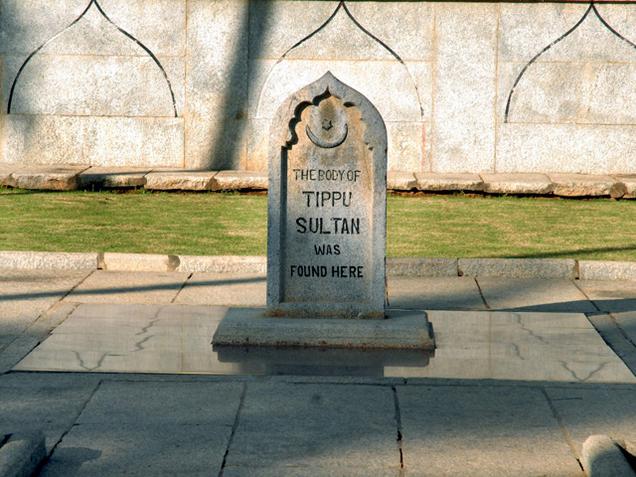
The alluring romance of famous monuments seems to be getting a little jaded with lesser-known ones tucked away in mofussil India garnering increased interest by domestic and foreign tourists. While the iconic Taj Mahal continues to maintain its top position in earnings through entry fees, smaller monuments in states witnessed a spike in revenue. The  Palace of Tipu Sultan in Bengaluru almost doubled its revenue with Rs 22 lakhs last fiscal.

StateMonumentsMPOs23aug2015

Last year, the Taj Mahal lost nearly Rs 60 lakh in revenues earned through entry tickets. In the 2014-15 fiscal, the ‘monument of love’ earned Rs 21.78 crore, while in 2012-13, its revenue was Rs 24.58 crore and Rs 22.40 crore in 2013-14.

Lesser known monuments such as, the Charminar in Hyderabad and Golconda Fort saw a surge in revenues this year; Rs 91 lakh in 2014-15 over Rs 84 lakh in 2013-14, and Rs 1 crore, up from Rs 92 lakh in the previous fiscal respectively.

Taj Mahal apart, some other big attractions showed a downward revenue trend. Revenues from UNESCO monument Red Fort dropped by Rs 10 lakh to earn Rs 5.9 crore, while the newly restored Humayun Tomb earned nearly Rs 70 lakh during 2014-15.

In Delhi, Jantar Mantar made Rs 23 lakh in the last fiscal, a drop of Rs 5 lakh. The Khajuraho Temples lost Rs 20 lakh to earn Rs 2 crore in 2014-15 and Ajanta and Ellora also saw a drop of Rs 2 lakh each.

According to the latest Ministry of Culture figures, many of the 116 ticketed monuments under the jurisdiction of the Archaeological Survey of India (ASI) were helping fill government coffers. In 2013-14, the ASI earned Rs 96.85 crore from monuments, which dropped to Rs 93.38 crore in 2014-15. Ironically, the money does not to go to the cash-starved ASI’s kitty but to the national treasury. Its battle to get the money for conservation of monuments has come to naught.

LowestEarnersMPOs23aug2015

The excavated remains in Nalanda in Bihar and Rani-ki-Vav (queen’s step well) in Patan, Gujarat, increased their revenues by over Rs 6 lakh each. Rani-ki-Vav was given a Unesco World Heritage Site status this year.

Other monuments that showed increase in revenues, though marginally, include the Rock-cut Hindu Temple at Undavalli and Buddhist Monuments at Guntuplli, both in Andhra Pradesh; Ahom Raja’s Palace at Sibsagar and Ranghar Pavilion at Bisnhudol, both in Assam;  ruins of Vikramshila, that was established by King Dharmapala (783 to 820) after a supposed decline in the quality of scholarship at Nalanda, and Sher Shah Suri’s Tomb in Bihar. On the other hand, the famed remains of Pataliputra in Patna showed a downward trend in ticket earnings.

The other significant monuments with increased entry tickets earnings are Sheikh Chilli (Haryana), Kangra Fort (Himachal Pradesh), Badami Caves and Gol Gumbaz in Karnataka, and Mandu monuments and Sanchi (Madhya Pradesh).

In Maharashtra, Ajanta and Ellora’s losses in revenue were gains for Aurangabad, Elephanta , Karla and Buddhist Kanheri Caves. In Delhi, Purana Qila, (which dates back to the days of the Mahabharata), Safdarjung Tomb and Tughlaqabad earned more this year while earnings from Red Fort and Humayun’s Tomb dipped. In Tamil Nadu, except for the Rock Cut Jain Temple in Sittannavassal, ticketed monuments like forts in Gingee and Dindigul had lesser earnings in 2014-15.

Interestingly, the Taj Mahal, Agra Fort and Qutub Minar collectively contributed over 45 per cent of the revenues through entry fee for ASI-run monuments The 17-century marble tomb with its intricate inlay work built by Mughal emperor Shah Jahan has been earning over Rs 20 crore every year through entry fees. Its revenue collections saw a drop in the last three years even though footfalls have been increasing. In 2012-13, Taj Mahal earned Rs 24.58 crore, Rs 22.40 crore in 2013-14 and Rs 21.78 crore in 2014-15.

“There has been no decrease in the number of total tourist footfalls in the past two years. In 2014, 60,72,501 domestic and foreign tourists visited Taj Mahal, against 58,35,342 in 2013,” culture minister Mahesh Sharma said.

Ironically, it isn’t just the Taj Mahal whose revenues have dropped. Revenue from the Khajuraho temples fell by Rs 20 lakh to Rs 2 crore in 2014-15, and Ajanta and Ellora also saw a drop of Rs 2 lakh each.

Indians and those from SAARC and BIMSTEC countries pay between Rs 5-10 while foreigners have to pony up between Rs 100 to Rs 500, depending on the monument.

On the other hand, funds spent on the upkeep of the Taj has been rising. The ASI spent Rs 12.04 crore in 2012-13, Rs 13.73 crore next year and Rs 16.24 crore in 2014-15.  Agra Fort, built by the Mughals in neighbourhood of the Taj earned Rs 10.58 crore in the last fiscal, while Qutub Minar grossed Rs 10.29 crore through ticket sales, a marginal increase over the previous year.

TajChartMPOs23aug2015

source: http://www.newindianexpress.com / The New Indian Express / The Sunday Standard / by Pratul Sharma  / August 02nd, 2015

Taj Mahal In World’s Top 5 Travel Hotspots In New List

The Taj Mahal has made it to the top five of a prestigious new list of the world’s best tourist attractions.

TajMahalMPOs21aug2015

Lonely Planet’s “Ultimate Travelist” ranks the historic mausoleum built in Agra by Mughal emperor Shah Jahan as the fifth most attractive travel hotspot in the world and describes it as a “magnificent Mughal masterpiece”.

According to the list, the architectural perfection is reached beginning with “acres of shimmering white marble. Add a few thousand semi-precious stones, carved and inlaid in intricate Islamic patterns. Take a sublime setting by a sacred river, in jewel-like formal gardens. Apply a little perfect symmetry, and tie up the whole package in an outlandish story of timeless love. And there you have the Taj Mahal”.

It notes that there’s no other building in India that so perfectly encapsulates the attitudes and atmosphere of its era.

The Temples of Angkor, a UNESCO World Heritage site in northern Cambodia, tops the list as a complex of more than 1,000 temples, shrines and tombs which attracts more than 2 million visitors annually.

The Great Barrier Reef in Australia comes in at number two, the Inca city of Machu Picchu in Peru at number three, and the Great Wall of China at four.

Travel writers and Lonely Planet staff were invited to submit ideas before voting on their favourites.

Voters were asked to consider which sights enthused, inspired, and excited them the most.

The one UK entry was the British Museum, which came in 15th on the wish list.

To celebrate the release of the new book, some of the world’s finest sand sculptors will recreate five sights from around the world on Peter’s Hill near St. Paul’s Cathedral in central London later this week.

source: http://www.focusnews.com / FocusNews.com / Home> LifeStyle> Food And Travel / Press Trust of India, New Delhi / August 21st, 2015

Over a cup of evening tea: A golden nugget from a bygone era


Dr. Javeed examining the Holy Quran.

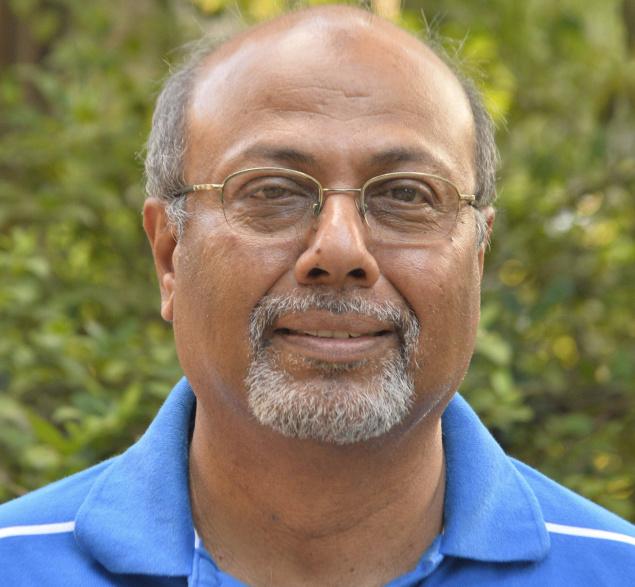
By Dr. K. Javeed Nayeem, MD

Late last night I had the good fortune of holding in my hands, albeit momentarily, a gold-leaved copy of the Holy Quran from a bygone era that had been seized recently by the Mysuru district Police when attempts were being made by some persons to sell it for a sum of rupees five crores. It all started with a late night phone call from my close friend A.G. Murali, who wanted to know if I had on hand someone who could read Arabic.

When I said that I could do it myself although I could not claim to have a scholarly knowledge of the language, he asked me if I could come down to the office of the DySP of Mysuru rural district. Sensing that I was puzzled by such an unusual request at such an odd time, he explained to me that the Police officers there were examining the recently seized Quran and were keen to know a little more about the book.

Excited by the request, I hurried to the place with my cousin Adil Pasha and my camera, sensing a rare opportunity to see and photograph the rare find. Most often I go looking far and wide for a subject to write about in my column and only once in blue moon a subject comes looking for me and here was one such Godsend!

After meeting the DySP Dr. Vikram Amte, when I eagerly asked him where the book was he smiled and pointed to an almost cubical object placed on the table right before him. Because of its unusual dimensions, I could not immediately recognise it as a book which I expected would be flat and broad as most books are. It was almost as thick as it was broad because its 302 sheets were unusually thick, being gold plated and inter-leaved with butter paper to preserve them. The rich black ink stood out against the golden background, the shine of which seemed to be without the slightest loss over the centuries. Printed on both sides of each sheet, the book has 604 hand-written pages, the text of which is very readable with the naked eye. The title page has the name ‘Al Quran Al Kareem’ like most other Qurans but on the last page is an unusual inscription; ‘Buzargaane Rava’ which the noted historian, Dr. B. Sheik Ali, after examining the book, has interpreted as a dedication of the labour of love by its calligraphers to contemporary saints. He has also said that going by the date AH 1050 on it which translates to 1605AD of the Gregorian calendar the book seems to have been crafted at the time when Emperor Jahangir ascended the throne. This was a time when hand-written calligraphy was at its pinnacle in the Moghul court.

Incidentally, the Islamic lunar year is eleven days shorter than the solar year which we follow and, therefore, an Islamic century is equal to 97 solar years. The present year of the Islamic calendar is 1436 Hijri. A book on calligraphy which I have says that the word which means ‘beautiful writing’ is derived from the Arabic and Persian word ‘Qalam’ which means pen.

Although calligraphy exists in almost every other language too, it is in the Arabic script that it has almost become an art form. The present artifact which has now passed perhaps from the Moghul court to the custody of the law court will perhaps pass on to the desk of the archaeologists who will verify its authenticity. And, if it confirmed to be a genuine antique really from an era of which it bears the date, it will perhaps go down in history as the biggest catch of our district Police led by our young and dynamic SP Abhinav Khare. The team deployed by him to tactfully nab the persons trying to sell it consisted of Dr. Vikram Amte, Dy.SP, Mysuru Rural Sub-Division; Inspectors D. Ashok, Mysuru South, Siddaiah, K.R. Nagar, Gopala Krishna, DCIB, Sub-Inspectors Gangadhar, Saligrama, Poonacha, DCIB and Police constables Bhaskar, Anand, Ravi, Zahoor and Pachche Gowda.

It appears the BBC channel has been trying to contact our district Police for details of their find. While it is now only the small fry that are in the Police net the actual owner has not yet been traced although evidence points to a source somewhere in the Hyderabad region which is again a prominent seat of royalty and, therefore, a well-known source of royal antiques. If this relic had found its way to the international market, it would perhaps have gone under the hammer for a price that would perhaps have made the whopping sum of five crores it was being peddled here for seem like a mere pittance!

e-mail: kjnmysore@rediffmail.com

source: http://www.starofmysore.com / Star of Mysore / Home> Feature Articles  / Friday – August 14th, 2015

Two Indians nominated for S African of the year

Miss World Roelene Strauss. Photo: Reuters

Johannesburg:

Two South Africans of Indian origin have been pitted against current Miss World Roelene Strauss among seven candidates nominated by public vote for the title ‘South African of the Year.’

The two contenders are Imtiaz Sooliman, Chairman of Gift of the Givers Foundation and Salim Abdool Karim, Director of CAPRISA.

Imtiaz Sooliman is the founder and chairman of Gift of the Givers Foundation, a relief organisation which has received international accolades for its immediate relief assistance in 41 countries across the globe hit by war or natural disasters for the past two decades.

Professor Salim Abdool Karim is a South African clinical epidemiologist and the director of the Centre for the AIDS Program of Research in South Africa (CAPRISA).

He also serves as pro-vice-chancellor at the University of KwaZulu-Natal. The two men will come up against Roelene Strauss, Miss SA 2014 and reigning Miss World 2014.

She is the third South African woman to have won the Miss World pageant in its history and is a medical student at the University of the Free State.

The prestigious honour will be finalised early next month.

A second strong woman candidate is the current head of the African Union (AU), Nkosazana Dlamini-Zuma, who is regarded as a trailblazer in her political career in South Africa before becoming the first woman to become chairperson of the AU.

The highly successful Protea Fire campaign to build public confidence in the national cricket side by declaring that that no matter how hot the fire burns, the national flower, Protea, will always survive, through has won Cricket South Africa a nomination in the ‘Campaigns’ category.

Proteas ODI cricket team captain AB de Villiers has been nominated in the ‘Sportsperson of The Year’ category, while former Proteas ‘keeper’ Mark Boucher is nominated in the ‘Conservation’ section for his non-profit company that aims to fight Rhino poaching in South Africa.

Boucher’s career was cut short by a serious eye injury a few years ago. The only other South African Indian in the awards is Shamiel Joosub, CEO and Executive Director of the Vodacom Group in South Africa.

An accountant by profession, Joosub has previously headed up the Spanish operations of mother company Vodafone.

He is nominated in the ‘Business Person of the Year’ category.

(With agency inputs)

source: http://www.english.manoramaonline.com / OnManorama / Home> News> World / by OnManorama Staff / Thursday – August 20th, 2015