Category Archives: World Opinion

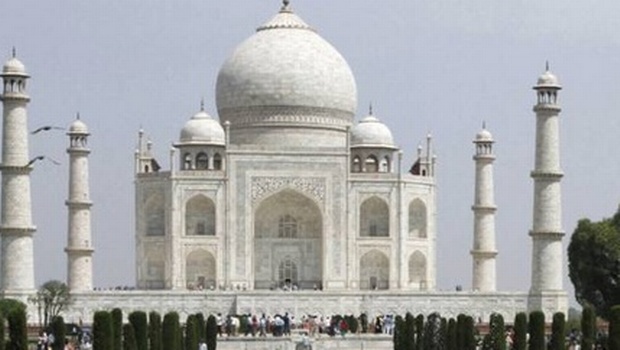
Is Mumtaz Mahal’s body mummified in Taj Mahal?

TajMahalMPOs30jan2015

The mystery surrounding Mumtaz Mahal’s burial at the Taj Mahal has deepened with a book claiming that her body was mummified.

Mughal emperor Shah Jahan built the 17th century Taj Mahal here in memory of his beloved wife Mumtaz who died while giving birth to their 14th child in Burhanpur, a town in what is now Maharashtra.

“The real truth about Taj Mahal was suppressed. If the truth had been revealed when Taj Mahal was being built, it would have become almost impossible to construct the monument,” Afsar Ahmad, author of the controversial e-book “Taj Mahal or Mummy Mahal” (Self-published, 200 pp, Rs.150), told IANS.

The journalist-turned-writer has also disclosed in the book what he claims are several unknown facts related to Mumtaz’s death.

The book has details about Mumtaz’s death and her last few days – and details the mummification of her body. Mumtaz was buried thrice – twice in a depository and then the final one.

But how was her body preserved during the period? Did the Mughals use the method of the ancient Egypt or was it some other procedure? Did the Mughal have a ritual of preserving dead bodies? But the biggest question the book tries to answer is if Mumtaz’s body is still preserved.

Ahmed said he wants to lift the veil and mystery surrounding the death and subsequent burial of Mumtaz.

Shah Jahan’s court writers could have shed light on the entire incident, but they could not do so as they were under instructions not to reveal anything which showed the emperor in poor light.

The author said the reader has the right to know the truth behind Mumtaz’s death and burial.

The e-book also tries to find answers if the Mughal only followed Islamic rituals and the different methods of burial. The book is available on Amazon in the Kindle format.

source: http://www.deccanherald.com / Deccan Herald / Home> National / IANS / Agra – January 28th, 2015

The man who made toys for Obama

Rahim Khan…artist..from Channapatna

About This Video : The Karnataka government is presenting a few finely crafted Channapatna toys to Barack Obama, the chief guest of this years Republic Day parade. When the President had come visiting in 2010, the first lady Michelle Obama had bought a few Channapatna toys in New Delhi.

source: Videos – Deccan Herald / You Tube

http://www.deccanherald.com/videos/watch/8739/man-made-toys-obama.html

Hockey: Ambassador XI, Team Coorg hog limelight at Republic Day of Indian Hockey Festival

Members of the Ambassador’s XI pose for a group photo after their title triumph. Photo – Supplied

Muscat:

Indian Ambassador XI and Team Coorg hogged the limelight at the eighth Republic Day of India Hockey Festival at the Sultan Qaboos Sports Complex in Bausher.

The festival was organised by Team Coorg and Friends of Naqvi Group to mark the 60th year of Indo-Oman diplomatic relations and 66th Republic Day of India under the patronage of Indian Embassy and the Oman Hockey Association (OHA).

Indian Ambassador J.S. Mukul was the chief guest and OHA chairman Sheikh Mahfoodh Juma Al Juma was the guest of honour.

The festival was supported by Mohammed Rafiq & Partners LLC, Dr. Mujeeb Hussain (Amana Modern Medical Center), Sandeeep Gupta of Global Pioneer Solutions (GPS), Pocari Sweat (Muscat Pharmacy) and Quality Printing Press.
The matches were played in a festive atmosphere and hockey lovers and their families turned up in large numbers to witness the keenly fought matches.

In the first match, the Indian Ambassador XI met their match in the young Indian School Al Seeb and the full time score read 2-2. The Ambassador XI managed to retain the Ambassador Cup 2015 which they had won in 2014 also, prevailing by a 3-2 margin in thrilling penalty shootout.

In the second match, Team Coorg (Muscat) faced Beatrice Sports Club in an exciting tie for the Republic Day Cup 2015. Team Coorg met a strong challenge from Beatrice Sports Club and the final result of 3-2 in favour of the Team Coorg is an indicator of the closely contested match.

The proceedings commenced with a two minute silence in memory of the departed King Abdullah of Saudi Arabia. The choir from Indian School Al Seeb rendered the national anthems of Oman and India and were awarded with certificates signed by the Indian Ambassador.

A novel competition was organised on the occasion for young students and participants for correct recitation of the Indian National Anthem and all participants were awarded certificates by J.S. Mukul and Sheikh Mahfoodh Ali Juma Al Juma.

The organisers also came up with a unique gesture to honour several personalities for their contribution to promotion of hockey — Mustafa Lawati (former OHA general secretary), Mohammed Shambeh Al Raisi  (former member of FIH Development Committee), Abdul Rehman (former national coach and international umpire), Belu Kuttappa (Manager, Team Coorg), Mohammed Osama Rawat (Festival Coordinator), Shakunthala Boppanna (athlete and national player) and Mohammed Irfan (Organizing Committee). Media personalities were also honoured.

Inayat Naqvi, former Bombay XI player and national umpire, was presented with a memento for his admirable services as the trustee of the NGO Abhi Foundation for supporting under privileged children and providing them with free kit for hockey, football and athletics and appointing trained coaches for them.

The Ambassador of India expressed his gratitude for celebrating Republic Day of India and congratulated all participants, spectators and sponsors. Sheikh Mahfoodh Ali Juma Al Juma also praised the organisation of the festival and congratulated the Indian Ambassador.

SAS Naqvi, former technical advisor of Oman Olympic Committee and now a sports consultant, proposed vote of thanks and acknowledged the support and services rendered by the sponsors, participants and media, while thanking the special guests.

source: http://www.timesofoman.com / Times of Oman / Home> Sports / by Times News Service / January 27th, 2015

Mughal era museum near Taj soon

Agra:

A museum dedicated to the Mughal era will come up in the vicinity of the Taj Mahal at an estimated cost of Rs 10 crore, and the construction work is likely to begin next year.

The proposed museum will be built near Shilpagram parking on the East Gate side of the monument. The land currently belongs to the state electricity department.

According to information, the project’s funding will be partly taken from the corpus granted by the World Bank under the pro-poor tourism development program. The program is aimed at improving infrastructure for tourists in order to generate revenue and employment in the state. The World Bank (WB) has reportedly loaned out Rs 1,800 crore to the country for the development of the Agra-Braj corridor. Rs 10 crore, amount needed for the building of the museum, will be taken from that amount.

Director general (DG) tourism Amrit Abhijat said a memorandum of understanding (MoU) would most likely be signed by the WB, the Central government and the UP government by September 2015. Construction work will start within a year after that. The state cabinet has reportedly given its approval fro the project in principle.

“The museum will have Mughal-era artefacts, armours, textiles and arms on display. The WB wants it to be developed on the lines of international museums. A detail project report (DPR) is under process,” Abhijat said, adding that foreign expertise will be sought to develop the museum.

The DG informed that besides the museum, there is also a plan to create an art gallery to promote trademark products of the city. Stone works, carpets and sweets, especially petha, will be on display at the gallery. There will also be a section from where tourists can buy finished products.

The centre will be built on the lines of Swiss museums, wherein they showcase the intricacies of cheese manufacturing. Similarly, tourists visiting the centre can learn about how carpets have been woven since the time of the Mughals. Petha production will be explained too.

source: http://www.timesofindia.indiatimes.com / The Times of India / Home> City> Agra / by Aditya Dev, TNN / January 13th, 2015

Hazarduari gets ‘Adarsh’ tag from ASI

Kolkata :

Hazarduari Palace in Murshidabad has been declared an Adarsh Monument by the Archaeological Survey of India (ASI) along with three others in eastern India.

The other three monuments are Vaishali-Kolhua in Bihar, Rang Ghar in Assam’s Sibsagar and the Konark Sun Temple in Odisha. These will be in the focus of international tourism promotion plan developed by the central government.

ASI has selected only 25 out of 3,680 protected monuments under the Adarsh Samarak Yojona. The list was made on the basis of the number of tourists these monuments attract annually. The list includes some of the biggest crowd-pullers like Taj Mahal, Khajuraho, Qutab complex and Red Fort.

All of them can be of great interest to international tourists, believes the ministry of culture. “Keeping that in mind, we are developing amenities of international standards, including washrooms, drinking water, signs, cafeterias, audio-visual centres, Wi-Fi connectivity, interpretation centres and encroachment-free areas,” said ASI regional director (eastern region) P K Mishra.

But more than anything else, security will be enhanced. The Centre is thinking of introducing the ‘tourism police’ force that is quite common across the world.

Hazarduari Palace, earlier known as Bara Kothi, is located on the campus of Kila Nizamat in Murshidabad, on the banks of the Bhagirathi. It was built in the early 19th century by Duncan MacLeod under the reign of Nawab Nazim Humayun Jah of Bengal, Bihar and Orissa (1824-1838). In 1985, the palace was handed over to ASI. Kila Nizamat or Nizamat Kila was the old fort of Murshidabad which was demolished to build this grand palace.

Built in the 13th century, the Konark Sun Temple is shaped like a chariot of the Sun God with 12 pairs of ornamented wheels dragged by seven horses.

Rong Ghor, meaning ‘House of Entertainment’, is a two-storied building that used to serve as the royal sports pavilion. Ahom kings and nobles used to watch buffalo fights and other sports at Rupahi Pathar in Rangpur, particularly during the Rangali Bihu. Said to be one of the oldest surviving amphitheaters in Asia, the building was constructed during the reign of Swargadeo Pramatta Singha in 1744-1750.

Kolhua in Vaishali is where the Buddha is said to have preached his last sermon. To commemorate the event, emperor Ashoka erected one of his famous lion pillars here in the third century BC. A hundred years after the Buddha’s death, Vaishali hosted the second great Buddhist council. Two stupas were erected to commemorate it.

Jainism, too, has its origins in Vaishali. In 527 BC, Lord Mahavir was born on the outskirts of the city and lived in Vaishali till he was 22. Vaishali remains an important pilgrimage centre for both Buddhists and Jains.

source: http://www.timesofindia.indiatimes.com / The Times of India / Home> City> Kolkata / by Krishnendu Bandyopadhyay, TNN / January 11th, 2015

7 Keralites on Hurun Philanthropy List

Kris Gopalakrishnan,  Ravi Pillai
Kris Gopalakrishnan, Ravi Pillai

Kochi :

Infosys co-founder Kris Gopalakrishnan has been named the most generous person from Kerala according to the Hurun India Philanthropy list 2014.

The IT behemoth’s executive vice chairman who is ranked 8th in the list donated Rs 255 crore mainly in healthcare charities.

The list prepared by Hurun Report, a media group based out of Shanghai, states that region-wise, South Indians were the most generous, donating Rs 13,300 crore, five-times that of the amount given in charity by North Indians.

Ravi Pillai of RP Group is ranked nine in the list with a contribution of Rs 145 crore, mainly in healthcare. As many as seven persons from Kerala have found a place in the list of 49. They together donated Rs 609 crore for charity. Keralites in the list include Azad Moopen (Rs 100 cr),  S D Shibulal (Rs 48 cr),  P N C Menon (Rs 26 cr),  M A Yusuf Ali (Rs 18 cr) and Sunny Varkey (Rs 17 cr).

“It is heartening to see that Indian businessmen are contributing more to philanthropy. This will create a more equitable society. Business is necessary for economic progress and with philanthropy business is also good for overall development of society. I feel proud to see this,” Kris Gopalakrishnan told Express.

The list has Wipro Chairman Azim Premji who gave away Rs 12,316 crore on top.

In September Hurun Report had published a Kerala Rich List topped by Emke Group Chairman M A Yusuf Ali who has a net worth of Rs 11,400 crore. RP Group’s Ravi Pillai came second with Rs 9,600 crore followed by Sunny Varkey, founder and executive chairman of Dubai-centered Gems Education with Rs 9,000 crore.

The India Philanthropy List, which highlights charity contributions made by India’s most generous measured by the value of their cash or cash equivalent donations, debuted in 2013. Donations made by a corporation in which an individual has more than 50 pc holding were recognised as being part of that individual’s personal donation. The period of calculation was from April 1, 2013, to October 31, 2014.

source: http://www.newindianexpress.com / The New Indian Express / Home> States> Kerala / by Express News Service / December 30th, 2014

Bengaluru theatre goes abroad

Plays from the city travelled across the world and the seven seas, new forms flourished… It was an exciting year for the city’s theatre scene

The Bangalore theatre scene, this year was marked by new productions, new forms, re-runs of older plays, and plays from the city staged abroad. Apart from the regular theatre festivals, including The Hindu MetroPlus Theatre Festival and Jagriti Season 2014, Ranga Shankara celebrated turning a decade and the 60th birth anniversary of veteran theatre personality, Shankar Nag, with a theatre festival that showcased some of the best contemporary Indian productions.

S. Surendranath, artistic director of Ranga Shankara, names three. “Ramneek Singh’s Chidiyon Ka Pinjra was very well received by the audience. Abhishek Majumdar’s Kaumudi was one of the best productions that happened in Indian theatre. The writing, the performances and the overall structure were excellent. And A Straight Proposal from Delhi was an eye opener.”

A scene from Trivial Disasters. Photo: special arrangement

Nimi Ravindran and Shiva Pathak are ecstatic with how much they have achieved with Sandbox. “We have done 110 shows. There have been 35 shows of Anish Victor’s Koogu. It was staged in Delhi, Kolkata and Assam and even travelled to Kenya. We also had 26 shows of Ajay Krishnan’s Trivial Disasters,” says Nimi. The focus of Sandbox is to stage plays at alternate spaces. Shiva adds that performances, so far, have primarily been held in home spaces. “But we have also had plays at offices, at academic spaces like IIHS quite a few performances at Humming Tree in Indiranagar and at Beaglesloft.”

A scene from Koogu. Photo: special arrangement

Remote Bangalore, presented by Rimini Protokoll and produced by Goethe-Insitut, Max Mueller Bhavan, was another unique theatre experience for Bangaloreans. The ‘performance’ involved a re-look at the city through a tour through undiscovered spaces. Sandbox Collective closely collaborated with German-based Rimini Protokoll for Remote Bangalore. Sandbox is set to welcome 2015 with travelling with The Company Theatre’s Piya Behrupiya to Chile.

2014 was yet another year of achievement for Abhishek Majumdar. He won the first Shankar Nag Theatre Award. His theatre company The Indian Ensemble, which he founded with Sandeep Shikhar, also had a fruitful year. Two landmark productions, Thook, commissioned by the Hunger for Trade Project, an international theatre network, and Kaumudi, were presented by Indian Ensemble. “It was a challenging year for us,” says Abhishek. “We have never had two openings in the same year. Thook andKaumudi were very different productions. Also, Indian Ensemble came together in a way that has made us very happy. We had our first international tour as a company. We travelled to the United States and performed at Carriage House Theatre in Hartford Connecticut and the Iseman Theatre at Yale.”

This year Indian Ensemble started the Director’s Programme. “It was started with four students, Basav Biradar, Amit Sharma, Anju Alva Naik and Karen D’Mello. The students have already put up individual scenes from Sakharam Binder.”

There were other members from Indian Ensemble who won awards and acclaim for their work. Ramneek Singh received the Inlaks Scholarship to continue his studies at LISPA and Anshuman Acharya won the Hindu MetroPlus Playwright Award.

Bangalore Little Theatre, the city’s oldest English theatre group, lived up to their reputation of staging stunning productions, including Finding Ananda, a tribute to Swami Vivekananda on his 150th birthday, Ira Hauptman’s Partition, directed by Sridhar Ramanathan, both held as part of the History of Ideas Programme, and Our Iceberg is Melting, directed by Amjad Prawej.

Vijay Padaki, director of BLT, says: “One of the most successful productions in the History of Ideas programme has been The Prophet and The Poet. Prasar Bharati commissioned a tele-film of the play. It was broadcast by Doordarshan twice in the year. An event of great significance was a theatre festival facilitated by BLT. It involved four other theatre groups of Bangalore, and was a tribute to the playwright-statesman Vaclav Havel. The experience of the Theatre Collective was presented by me in an international conference in Prague on Havel’s life and works. BLT organised the All-India Arts and Heritage Management Conclave that was held in Bangalore.”

Actor and director Vivek Madan says this year a lot of shows travelled abroad. “There were a lot of collaborations. New forms developed because of Sandbox Collective. There was also Zip Zap Pow, an all-woman, one-minute festival.”

But 2014 was also a year of loss and bereavement for the theatre community. One of the most talented light designers in the city, Beary Mustafa passed away, leaving behind a void in the theatre community.

“We worked together for ten years. It is a huge thing to adjust to going to a theatre space and not seeing him,” says Abhishek.

source: http://www.thehindu.com / The Hindu / Home> Features> MetroPlus / by Sravasti Datta / December 29th, 2014

Winners of Karate championship

 Mysuru, Karnataka :

The karatekas of Zen Shito Ryu Karate Federation,  V.V. Mohalla

KarateMPOs27dec2014

Chanchal, Sensei Mohan (who won bronze medals in Kumite) and Riva Manya (youngest participant from India) — who excelled at Asia Pacific Shito Ryu Karate Championship held at Singapore from Dec. 10 to 15, are seen with the Chief Instructor Sensei  Azeez  Khan (sitting).

source: http://www.starofmysore.com / Star of Mysore / Home> Sports  News /  Sunday , December 21st, 2014

Virasat award to Amjad Ali Khan

Ustad Amjad Ali Khan

Renowned sarod maestro Amjad Ali Khan will get the Alva’s Virasat 2015 award on the inaugural day of the three-day cultural event at Vidyagiri near Moodbidri on January 8.

A release issued by the Alva’s Education Foundation, which conducts the event, said the award carried a purse of Rs. 1 lakh.

The Padma Vibhushan recipient began performing at the age of six, said the release, adding that his music “spreads emotions of love and peace”.

The release described the man as “epoch-making”, with a personality that did not differ on-stage and off-stage.

Born in the Bangash family of musicians from Gwalior, he is sixth generation artiste. He trained under his father Hafeez Ali Khan and went on to become a legend in his chosen instrument sarod.

He has performed in many countries and is the recipient of many awards.

He has also been a visiting professor for international institutes and has paired with many artistes to present jugalbandis and fusion music programmes.

Two books have been written about him – The World of Amjad Ali Khan and Abba: Gods Greatest Gift To Us. Married to Bharatanatyam exponent Subhalakshmi, the couple’s sons Aman Ali Khan and Ayan Ali Khan are emerging sarod players.

source: http://www.thehindu.com / The Hindu / Home> News> Cities> Mangaluru / by Special Correspondent / Mangaluru – December 25th, 2014

Seeking Malihabad’s Jewish connect

Lucknow :

Straight aquiline noses, fair skin colour, chiselled features and a probable connection with the Ten Lost Tribes of Israel could be an addition to the identity of Afridi Pathans who have been dwelling in various parts of the erstwhile Awadh since centuries. In a quest to trace the lineage of exiled Israeli tribes, Jewish scholars from the far-off land of Israel have been guests to Malihabad over the years. Attracting world attention yet again, Malihabad will host Dr Ari Greenspan and Rabbi Dr. Ari Zivotofsky from Israel’s Bar Ilan University on Sunday, to assist their quest to understand more about Afridi Pathans’ historical connection to Judaism based on their hypothesis.

According to legend, ten of the 12 Israeli tribes had been exiled by Assyrian invaders in 721 BC, some of whom settled in India. Afridi Pathans, the supposed descendants of one such lost tribe came to India between 1202 and 1761 AD, making Uttar Pradesh their home amongst various other regions.

Barely an hour away from Lucknow, Malihabad has been home to as many as 650 families of Afridi Pathans, who take pride in their warrior genetics, but are in fact averse to the idea of bearing Jewish roots, if there be any.

The idea of Afridi Pathans tracing a Jewish ancestry grabbed attention when the Indo-Judaic studies scholar, Navras Jaat Aafreedi started working on the subject in 2002. Emphasising his thesis and claiming the lineage of Afridi Pathans to Ephraim, Navras himself an Afridi Pathan, managed to irate his kindred back then while proposing the idea of bearing Jewish roots to them.

In an email communication with Navras, the two scholars have explained how they “would like to understand the history and meet any elders who might hold or remember traditions linking the Pathans to the Jews.” It is believed some of the Jewish traditions bear resemblance to the ones followed by the Afridi Pathans.

In 2002, Professor Tudor Parfitt along with his team from the Centre of Jewish Studies, London University had collected DNA samples from the Malihabadi Afridi Pathans. In 2008, Shahnaz Ali, researching on the subject, blood samples collected from the clan, followed by gathering DNA samples in 2009. Result of the research carried out so far has not been made public, but most of the earlier studies worldwide have refuted such claims of heredity.

source: http://www.timesofindia.indiatimes.com / The Times of India / Home> City> Lucknow / TNN / December 21st, 2014

___________________________________________________________________________

Afridi Pathans resent linking lineage with Jews

Mahilabad :

On a foggy Sunday afternoon, the otherwise quite Malihabad bounced to its Pathani vigour as a group of Afridi Pathans sat in the orchard of revolutionary poet Josh Malihabadi and conversed with Rabbi Dr Ari Zivotofsky. It was meant to be a session in which the rabbi would have asked the Afridi Pathans questions about their traditions and history, but he found himself facing questions from youth who were anguished about the constant research on their genetics by Israelis. The questions were not limited to what the Afridi Pathans said were “false claims” trying to find their roots to Judaism, but also included the situation between Palestine and Israel.

Rabbi Dr Ari Zivotofsky decided to visit Malihabad to study the historical ancestry of Afridi Pathans in the region, after his interest was aroused in previous research on the subject. Earlier hypotheses claimed resemblance between certain traditions revolving around the common Semitic customs of Afridi Pathans with those of the Jews, hinting towards a probable connection between the two.

“Five years back when Shehnaz Ali visited us in Malihabad to take DNA samples of the Pathans, she misguided us about the real motive of her research. She told us it was to reaffirm if the Afridi Pathans of present day held the same warrior qualities and other characteristics of their ancestors hundreds of years back. We later got to know that it was to find a link of Pathan ancestry with Jews,” complained Ahsan Javed Khan, a raging Afridi Pathan, host to an Israeli scholar visiting the small tehsil, who was in Malihabad researching on Pathan history.

Speaking about his experience of the meeting, Zivotofsky said, “I am not intimidated by their questions but actually surprised with how offended the Afridi Pathans are by this research and how careful one has to be with an apolitical and benign approach.” The young men pointed out anomalies in previous research carried out by other individuals and averred that DNA studies done earlier could found no conclusive result. The Pathans also claimed that the research might have a political motivation in case one of the earlier researches was funded by Israel’s foreign ministry. “The points raised here have intrigued me to follow up on the research done back then. If no conclusive results were found probably the researches couldn’t arrive at the expected results so they didn’t publicise them. I would now like to get into those flaws,” said Zivotofsky.

In the old Kothi of Khalid Yusuf, belonging to the earliest families of Afridi Pathans in Malihabad, Dr Ari spoke about an oral tradition passed on through generations. “I remember my grandmother telling me that we belong to Bani Israel (Children of Israel) and Ephraim, however this does not mean that we are Jews. Why do Israelis want to trace our ancestry to one of the lost tribes of Israel?” said Asad Yar Khan, taking Zivotofsky around his hometown.

“With the knowledge that I am taking from here, it looks like the theory of Pathans having a link with Judaism is more of an oral tradition, and collecting blood samples will not help anymore. We should look into the books now for the research to come together. It could be a better idea to rephrase the research as ‘finding a link between Afridi Pathans and ancient Israel’ instead of with Jews, to whom the people here appear to be averse,” concluded Zivotofsky.

source: http://www.timesofindia.indiatimes.com / The Times of India / Home> City> Lucknow / by Yusra Husain, TNN / December 22nd, 2014