Category Archives: World Opinion

21 doors & a fiery spirit

By:Aliyeh Rizvi

I was standing outside the swank automobile showrooms in India Garage the other day, watching excited owners roll out onto St Marks Road in their ribbon wrapped cars. Ironically, the petrol bunk area inside this graceful building was where around 1920, Hajee Osman Sait, an eminent Cutchi Memon businessman, struck a match and deliberately set fire to all the imported goods sold in the Cash Bazaar as it was called back then.

HajeeOsmaanSaitMPOs03mar2015

This brazen act of arson must have seemed incomprehensible to gentile customers in the Cantonment. The Cash Bazaar opposite Bowring Institute (1868) was where they bought everything from pins and provisions to ‘English vegetables’, fruits and flowers. Setting fire to goods was something a flourishing trader just did not do. The popular shopping arcade was also a family legacy. It had been built by his grandfather Yousuf Pir Mohammed who had moved to Bangalore from Kutch. Each of his seven sons received ‘three doors’ from where they managed their business. The building, therefore, had 21 doors that opened onto a wide verandah with cast iron grills.

 
But while the Cantonment speculated, the Non-cooperation Movement (1920) led by Gandhiji escalated into public meetings and protests across the country. Amongst other things, it also advocated a boycott of British goods. This civil disobedience ran in parallel with the pan-Islamic Khilafat movement (1919-1924) whose leaders, including the brothers Maulana Mohammad and Shaukat Ali, were allied with the Indian National Congress at that time.

 
Hajee Osman Sait, President, Madras and Bangalore Khilafat Committee, was deeply inspired by India’s freedom struggle. He played host to Gandhiji, Pandit Nehru and the Ali brothers at his home on St Mark’s Road (around present day Hotel Nandhini). He sold his property, donated money and apparently even publicly auctioned off his eldest son to raise funds. Ebrahim was returned respectfully and the money, donated. He opened an Indian National School (1921) on his property, Stafford House (now Bishop Cottons Girls School) and sent his own children to local schools. The Cash Bazaar bonfire was yet another contribution to the movement.

 
Masood Ali, Yousuf Sait’s son, says his grandfather was an unbelievably wealthy businessman who owned over 20 acres in the area, including several large bungalows of which four were named after his sons — Yakhoob, Ebrahim, Khader and Yousuf Villas. Four white horses drew his famous buggy. They were housed on Residency Road before the Imperial Talkies was built and then moved to stables at the Cash Bazaar which also sold hackney carriages.
The stables were later occupied by Sir Mark Cubbon’s horses and used by the Bangalore Riders Club (1934). Later on, Addison & Co. sold bicycles, cars (Peugeots and Buicks among them) and motorcycles next door. India Garage’s history of hot wheels began here long before shiny automobiles arrived in India.

 
Haji Osman Sait’s dedication to the freedom movement cost him dearly. He passed away in 1928, in a rented home around the age of fifty-six. Masood Ali says his funeral procession was over 5 kms long and extended from the Jumma Masjid off Commercial Street to the Jayamahal Palace burial ground.

 
India Garage was subsequently sold in an auction in the 1930s and then became the first showroom of the pioneering VST Group founded by V S Thiruvengadaswamy Mudaliar in1911.The building retains the original structure and some trees he planted. But its doors now open out to a free, liberalised India.

The writer is a cultural documentarian and blogs at aturquoisecloud.wordpress.com

source: http://www.bangaloremirror.com / Bangalore Mirror / Home> Bangalore> Others / by Aliyeh Rizvi, Bangalore Mirror Bureau / May 12th, 2014

Mumtaz’s Body Was Transported to Taj Six Months After Her First Burial, Claims Book

TajMahalMPOs03mar2015

Agra :

Was Mumtaz Mahal’s body mummified before her temporary burial in Burhanpur and later finally laid to rest at the Taj Mahal in Agra?

This is the subject of a book “Taj Mahal ya Mummy Mahal?” written by Afsar Ahmad, released on Sunday by the registrar of Central Hindi Institute Dr Chandra Kant Tripathi, here.

Historical records say that Mughal emperor Shah Jahan, the builder of the world heritage monument Taj Mahal, had her body transported to Agra from Burhanpur, six months after her first burial.

Her body remained buried in a ‘kachcha’ grave in the Taj Mahal complex for around 12 years and was then transferred to the main mausoleum.

How was Mumtaz Mahal’s body preserved for so long? Afsar Ahmad tries to answer this question in his book “Taj Mahal ya Mummy Mahal?”

He claims that her body was mummified.

Shah Jahan built the 17th century Taj Mahal here in memory of his beloved wife Mumtaz who died while giving birth to their 14th child in Burhanpur, a town in Madhya Pradesh.

“The real truth about Taj Mahal was suppressed. If the truth had been revealed when Taj Mahal was being built, it would have become almost impossible to construct the monument,” Ahmad said.

The journalist-turned-writer has also disclosed in the book what he claims are several unknown facts related to Mumtaz’s death.

The book has details about Mumtaz’s death and her last few days and details of the mummification of her body.

The book has been published by Evoco Networks.

A large number of scholars and heritage conservationists were present at the release of the book at a hotel here.

source: http://www.newindianexpress.com / The New Indian Express / Home> Nation / PTI / March 01st, 2015

ZAK pays tributes to Chiropractic doctors of Palmer University

Hyderabad :

Paying rich tributes to the medical services rendered by Chiropractic doctors of Palmer University America during the past 18 years in Hyderabad, Mr. Zahed Ali Khan editor Siasat hoped that such camps will be held in future also.

On the occasion he thanked the team, Palmer University and the government for their cooperation and support in successful conduct of the camp.

He also thanked Prof. Moin Ansari Chairman Board of Nutrition Palmer University and Mrs. Shaheda Ansari under whose supervision the camps are being conducting for the past 18 years.

Mr. Zahed Ali Khan was addressing as chief guest on the occasion of valedictory function of 5-day free Chiropractic Medical Camp held by Siasat and Azam Vocational Junior College and Azam Hospital at Abid Ali Khan Eye Hospital, Darushifa.

In the beginning, camp coordinator Dr. Syed Ghousuddin informed that the 16-member team of Chiropractic doctors of Palmer University America conducted checkups of over 800 students of Mesco Grades Malakpet and carried out checkups of 700 patients at Abid Ali Khan Eye Hospital during the past 3 days.

Siasat news

source: http://www.siasat.com / The Siasat Daily / Home> Hyderabad / Siasat News / Sunday – March 01st, 2015

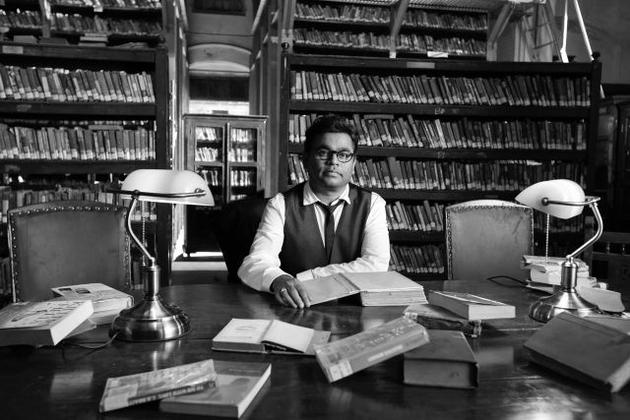
Those Mughal tales, those engaging books

MughalEraMPOs28feb2015

The Mughal era books need to be preserved for posterity

The library of Dara Shikoh, near Chakkipat on the Yamuna’s right bank in Agra, is now a municipal office and its vicinity boasts an akhara. The books housed in the library or most of them, were brought to Delhi when Shah Jahan moved his capital to it and wanted the heir apparent Dara to stay by his side lest any harm befell him if he was appointed governor of some province (subha), like his brothers Aurangzab, Shuja and Murad. The library existed in the Kashmere Gate area, later becoming a polytechnic institute, another library behind the Jama Masjid, became a girls’ school. But the question is what happened to most of the books? Quite a few of them were destroyed in 1857 by the British, bent on revenge. Some others fell into private hands and were sold as “raddi” during the upheaval of 1947 by those going away as refugees to Pakistan. It’s worth noting that the books in the library of Prof Ahmed Ali, author of “Twilight in Delhi”, in Kutcha Pandit were sold one by one by a servant who had stayed behind and was reduced to penury after the professor opted to migrate to Karachi.

Some books of the Mughal era may be found in the National Library, in the British Museum Library in London and in the U.S. Congress Library. Besides some others were taken away to Pakistan by migrants. A few of those books are with the old residents of Delhi, Lucknow, Hyderabad and Agra, like the now disintegrated library of Nawab Faiyaz Khan, but 75 per cent of them are lost forever. It was something like the loss of Greek, Arabian and Persian masterpieces when the libraries in Athens and Alexandria were burnt during wars and by Mongol and Han hordes and vandalism by fiercely bigoted Arab and Turkish soldiers fired by the zeal to destroy all vestiges of the “idolatrous ages” of the Middle East. Such destruction also took place during the medieval Crusades and earlier by Attila and Hannibal. The Emathian Conqueror (Alexander) may have spread the house of Pindars but little else.

In a study on medieval libraries, written in 1970, father had this to say:

“The Sultans of Delhi and their nobles, who preceded the Mughals, had rich literary tastes and established a large number of public and private libraries. Jalaluddin Khilji founded the Imperial Library in Delhi and appointed Amir Khusrau its librarian. But it was Babar who really did augment the Delhi library.

“Humayun, inherited the legacy and added to the library seven halls, each named after a planet. He was so fond of books that he carried them to the battlefields. On one such occasion in fact he lost several rare ones. At Agra, he raised a set of magnificent buildings called Khanna-i-Tilism (house of magic), the first floor of which housed the library. Towards the end of his adventurous life he converted the pleasure house of Sher Shah in Delhi’s Purana Quila into a library.

“Akbar, although illiterate, turned out to be the greatest patron of art and translation of books, for each of which he maintained a separate cell. The biggest of his several libraries was the Imperial Library in Agra Fort. According to Abul Fazl, the library was divided into several parts. Some of the books were even kept inside the harem.

“Experienced people bring them daily and read them before His Majesty who hears (sic) every book from beginning to end,” he wrote.

Akbar had books brought from distant places and also encouraged scholars to write treatises, calligraphists to copy them and painters to illustrate them. He bought a richly illustrated version of the manuscript of Razm-Nama (the Mahabharata translated into Persian) for £40,000. “There were more than 24,000 books in the Imperial Library alone and they kept increasing. Fazl’s collection of 4,300 manuscripts was added to the library and the library of Itimad Khan was acquired after the conquest of Gujarat.”

Jahangir was a great lover of art, with an avid interest in old tomes. Shah Jahan had a godly collection of books. His son Dara, however, was more studious and collected books on poetry, Sufism and mythology, including Hindu scriptures. Aurangzeb’s books were mostly religious ones. The latter Mughals did not evince much interest in books. Bahadur Shah Zafar was however a lover of learning, being a poet himself. The disintegration of Mughal libraries took place during the First War of Independence and the upheavals of Gardi-ka-Waqt but after that English scholars made good use of them, like William Fraser.

It would be worthwhile if the Union Human Resource Ministry and Archaeology Survey of India acquire Mughal era literature from all known sources and establish a Central Mughal Library in the near-deserted Purana Quila, bigger than the partially revived one of Dara Shikoh.

source: http://www.thehindu.com / The Hindu / Home> Features> MetroPlus / February 23rd, 2015

Ready for a Blast from the Past? Royal Collectible Goes Under the Hammer Today

Bengaluru :

A letter penned by Sri Krishnaraja Wadiyar IV of the Mysore royal family, bearing the royal coat of arms in gold glitter, will be the cynosure of all eyes in the city on Saturday as it goes on auction.

The auction is being organised by Marudhar Arts, a licensed auctioneer, as part of the ongoing National Numismatic Exhibition. The “extremely rare” collectible is pegged at a base price of `25,000. It was sent by the ‘Philosopher King’ to Maharaja Sir Bhanwar Pal Deo Bahadur of Karauli (Rajasthan) on October 14, 1917.

The letter is a response to King Bahadur’s letter, which had lauded Wadiyar for conducting the Dasara festival in an excellent manner. Wadiyar’s letter runs thus: “My dear Maharaja Saheb, I thank Your Highness most sincerely for your congratulations to me on my Dasara festival and I hope, as you do, that it may prove an augury of the complete victory of the British Arms. With all good wishes for the health of Your Highness and your family. Your Highness’s sincere friend, Krishnaraja Wadiyar.”

Wadiyar ruled the princely state of Mysore from 1894 till his death in 1940. His rule was billed as `Rama Rajya’ by Mahatma Gandhi and the state was described as the ‘Model State’ by the British.

When asked about the price the letter is expected to sell at, Archie Manu, co-director at Marudhar Arts, did not give an exact figure but expressed optimism that it would fetch a high  amount. He explained that the base price was fixed at `25,000 because it was the sum paid to the collector (name withheld) who had sold Marudhar Arts the letter. His father and co-director Rajendra Manu was more forthcoming. “We already have internet bidders showing interest (to pay) up to `40,000. I am confident of it (highest bid) crossing `1 lakh.”

The auction will be held between 5 pm and 8 pm on Saturday at The Bell Hotel and Convention Centre. The letter is likely to come up for bidding around 7.30 pm, Manu added. Three photos signed by Wadiyar too will be auctioned.

A novel aspect of this auction is the real-time audio and video bidding that will happen simultaneously on the website www.maruuction.com. “This is the first time in Asia this has been done in a numismatic auction,” Manu claimed.

Coin Fetches `6.25L

One gold and one silver coin (sold as one lot) belonging to the reign of Mubarak Shah, fetched the highest price of `6.25 lakh at the expo on Friday. It was among the 348 coins auctioned. It was bought by a North Indian bidder, said Manu. The same dye has been used on both coins and this is something very unique as usually, different dyes are used, Manu told Express. The base price quoted was `6 lakh.

The coins have a quotation from the Quran on the reverse. Another lot, of one gold and one silver coin from the Sultanate era, fetched `4.25 lakh.

“This pair is exceedingly rare and was being offered on auction for the first time ever,” said Archie Manu. The day’s auctioning was described as “good and satisfactory”.

On day two (Saturday), 579 coins will be up for bidding in two auctions.

three-day National Numismatic Exhibition Opens

The interest shown by the country’s youth in numismatics (study or collection of currency) is heartening, said Jan Lingen, regional secretary (Europe) of the Oriental Numismatic Society of London, on Friday.

Delivering the inaugural address at the three-day National Numismatic Exhibition at The Bell Hotel and Convention Centre, Lingen said every coin tells a story of its own. Lingen, who was born in the Netherlands, is known across the globe for his passion for Indian coins, and has written extensively on the subject.

Rezwan Razack, chairman of the Indian chapter of the International Bank Note Society, said the expo offers a platform for coin dealers and collectors from across the country. Overall, 76 numismatic dealers are taking part in the expo. Among the unique pieces on display are two lithographs on the city’s past, including the 1794 piece ‘The East View of Bangalore with Cypress Garden’.

Coins from the Mughal, the Hindu Medieval and the Sultanate eras, old tokens, medals and paper money are on display. The expo is open from 10 am to 6 pm and entry is free.

source: http://www.newindianexpress.com / The New Indian Express / Home> Cities> Bengaluru / by S. Lalitha / February 21st, 2015

Indian-American Rashad Hussain appointed as the Special Envoy and Coordinator for Strategic Counter-terrorism Communications

Rashad Hussain
Rashad Hussain

Indian-American Rashad  Hussain has been appointed as the Special Envoy and Coordinator for Strategic Counter-terrorism Communications.

According to the state department of US, the appointment will expand the global engagement and partnerships of the US in order to counter violent extremism.

Hussain is currently the US special envoy to Organization for Islamic Countries (OIC).

The 37-year-old will also serve as the Coordinator of the Centre for Strategic Counter-terrorism Communications to coordinate, orient and inform the government wide strategic communications which are focused on violent extremists and terrorist organizations.

ABOUT RASHAD HUSSAIN:

  • Hussain has completed his bachelor’s degree in Philosophy and Political Science from the University of North Carolina at Chapel Hill. He holds a Masters degree in Arabic and Islamic Studies from Harvard University
  • He has received Juris Doctoral from Yale Law School and has served as an editor of the Yale Law Journal
  • He has worked as a legislative assistant for the House Judiciary Committee and reviewed the USA Patriot Act
  • In January 2009, Hussain was appointed as the Deputy Associate Counsel to US President Barack Obama, whose role was to focus on national security, new media and science and technology issues
  • Before he joined the White House, Rashad Hussain, a Hafiz of holy Quran, was a member of legal staff for the Presidential Transition Team.
  • Earlier, he has also served as Trial Attorney at the US Department of Justice
  • In January 2013, he received the Distinguished Honor Award for outstanding service to the agencies of the US Government which has marked national or international significance

source: http://www.indiatoday.intoday.in / IndiaToday.in / Home> Current Affairs> News Digest> Story / New Delhi – February 19th, 2015

Municipal Corporation to light up memorial of 257 freedom fighters

Bareilly :

The Bareilly Municipal Corporation is all set to light up the memorial of 257 freedom fighters who laid down their lives during the country’s first war of independence in 1857.

The tower built in their memory is situated in the compound housing the office of divisional commissioner.

Though the memorial was built in 2006, there are no lights at the venue, plunging the place into darkness after evening hours.

The municipal authorities will install high mast lights around the memorial so that the venue is well lit and easily visible to commuters on the road running in front of the park during late evening hours.

After divisional commissioner Pradyuman Yadav took over as Bareilly commissioner, he asked municipal authorities to light up the park where the memorial is situated

“It was disappointing to learn that the tower built in the memory of 257 freedom fighters is lying in darkness. A majority of the locals are unaware about the importance and historical significance of this place,” said Sheeldhar Yadav, municipal commissioner.

Teams of municipal corporation visited the park where the memorial tower is situated on Sunday to survey the area. “We will install white or cream-colour high mast lights around the memorial so that it is able to grab the attraction of commuters moving on the opposite side of roads,” said the commissioner, adding that the work will be completed in the next 10 days.

Explaining the significance of this memorial, Yadav said these 257 freedom fighters were hanged to death on the branches of the banyan tree situated next to tower. During the first revolt of Independence against the British, Bareilly was the headquarter of Rohilkhand region, which included districts of Bareilly, Moradabad, Badaun, Pilibhit, Bijnor, Rampur and Shahjahanpur. On May 31, 1857, the freedom fighters killed British officials, including the principal of Bareilly College, during the revolt.

After their victory, the freedom fighters had made Khan Bahadur Khan, who was the grandson of Hafiz Rehmat Khan, the ruler of Rohilkhand region. Khan formed his own government and ruled the region till May 5, 1858. However, on the morning of May 5, the army of British forces gheraoed the city from all four corners. The British forces defeated the freedom fighters the next day by bombarding the city.

“Khan, along with his trustworthy 257 sepoys, fled to Nepal but British forces, with the help of Nepalese, captured them,” said Abhay Singh, associate professor, department of ancient history and culture at Mahatma Jyotiba Phule (MJP) Rohilkhand University.

On March 25, 1860, Khan was sentenced in the district jail of Bareilly, but 257 freedom fighters, who fought with him, were hanged to death with rope on the branches of the banyan tree in the presence of locals. The state government had constructed the tower next to the banyan tree in 2006 in memory of these freedom fighters.

source: http://www.timesofindia.indiatimes.com / The Times of India / Home> City> Bareilly / by Priyangi Agarwal, TNN / February 16th, 2015

DOWN MEMORY LANE – As others saw us

MemoryLaneMPOs17feb2015

India always fascinated foreigners who were smitten by its monuments, beauty, culture and much more

We are always curious to know what others think about us! About 118 years before President Obama came calling to Delhi, compatriot Mark Twain had observed: “So far as I am concerned India is the only foreign land I ever daydream about or deeply long to see again.” Fifty years later John Wohlfarth, after serving in India, recorded in his diary: “The world needs India intact! Tear down Roman ruins if you will, level Cyclopean walls, build bridges with stones of gothic abbeys and feudal fortresses but lay no hand on the glory and grandeur of India.” Both US visitors were among those who looked at the country without prejudice, unlike the British. Twain was fascinated by the monuments of Delhi and Wohlfarth too while sitting under the Qutub Minar, wandering in the Purana Quila and the Red Fort or while viewing the sublime beauty of the Taj Mahal. These impressions are among many recorded by Pran Nevile during research in the US Library of Congress which gave birth to the treatise, “India Through American Eyes” (Primus Books).

In 1833, while Akbar Shah-II was on the throne, American ice was introduced into the Mughal empire. It replaced mountain ice brought from the Himalayas since the time of Akbar the Great in bullock carts and stored in wells to last through the summer. In Shah Jahan’s reign there were ice-fields near Turkman Gate where ice made in winter was stored for use when the weather turned beastly hot. The credit for bringing the first ice-ships to Calcutta, Bombay and Madras goes to Frederick Tudor, who as a result became a very rich man and the ice-fields of Turkman Gate slowly disappeared.

There is a fascinating account of Elehu Yale (after whom Yale University is named) who as Governor of Madras received a female Mughal emissary (from Delhi) reported to be of “majestic form and the magnificence of whose pearls and diamonds were beyond description”. There was also a report about a nawab’s wife, published in 1743 (Mohammed Shah’s reign), whose “glittering costume, elaborate sophisticated make-up and exotic jewellery, which adorned her from head to toe”, was enchanting. The refreshments served on “gold plates, with guests being entertained to 60 dishes” were among the amazing accounts of Mughal hospitality.

Bayard Taylor, who came in 1853 (four years before the First War of Independence) as correspondent of New York Tribune, was fascinated by a ride in a palanquin. After going about in it in the Capital, he took a horse-drawn Dak buggy and travelled from Delhi to Meerut, Agra, Mussoorie, Kanpur, Lucknow, Allahabad, Benaras and Calcutta. About the Taj, he observed: “Did you ever build a castle in the air? Here is one brought down to earth… when seen from a distance, so like a fabric of mist and sunbeams.” In 1871, the Rev William Butler said “that a flute played gently in the vaults below where the remains of the Emperor and his consort repose, produces a sound, which is perhaps the finest to be heard as it were from heaven and breathed by angels”.

Gertrude Emerson, who visited Delhi, Agra and Lahore in 1923, says, “Here were lavishly scattered the great red sandstone forts and gates of Akbar, the marble palaces and pearl mosques of Jahangir, Shah Jahan and Aurangzeb and the magnificent tombs they constructed”. She goes on to say: “I sat alone for a long time once at the top of one of the four minarets surrounding the Taj Mahal. It was a night of a full November moon, and silver mists clung to the Jumna, flowing silently past the great marble platform from which the Taj rises with ineffable grace. I had had my first view of this far-famed ‘Crown of Palaces’ from the Jasmine Tower at Agra Fort, whence Shah Jahan, an old man and a prisoner, fallen upon evil days, must often have looked out mournfully at the beautiful mausoleum he had erected many years before, in honour of Mumtaz Mahal, his queen… Suddenly in the moonlight it was like the breast of a lovely woman.” According to Percy Brown, it was the magic of Indo-Persian architecture blended by rulers originally from beyond the Oxus.

As for dance and music, Lily Strickland Anderson, a prolific composer of music, writer and painter, was captivated by the performance of two nautch girls invited from Delhi to perform at a Raja’s party in Bombay. They were obviously from Chawri Bazar and akin to midsummer night fairies. Some other Americans were struck by the soulful singing in the fields and village streets “and the many sorts of (rural) work done to the lilt of a song”. All in all, an amazing saga of a medieval and emerging modern scene. Such was the milieu that produced Esther Sherman (Ragini Devi), her daughter, Indrani Rehman and granddaughter Sukanya.

source:http://www.thehindu.com  / The Hindu / Home> Features> MetroPlus / by R.V. Smitha / February 15th, 2015

Time to bring back Nizams’ jewellery

Unlike the Congress functionaries who did not fail to spew venom against the last Nizam Mir Osman Ali Khan whenever they got an opportunity, Telangana CM, K Chandrasekhar Rao, has been underscoring the developmental work done by the late Nizam. At the inauguration of Numaish on January 1, the CM once again highlighted the ways in which the Nizam tried to make Hyderabad a modern city. Among other things, he also spoke about the farsightedness of the Nizam in leasing out land for the Exhibition Society some 75 years ago. One of the things that KCR can do on a priority basis to restore the glorious heritage of the formerly Hyderabad state is to bring back the marvellous jewellery of the Nizams that is locked up in the RBI vaults for several years. This can be done amicably with little bit of cooperation between the Centre and Telangana governments.

Australian writer John Zubrzycki who has written two books on the Nizams, said sometime ago that Hyderabad was the natural choice for keeping the jewellery, and not the vaults of RBI.

Mir Osman Ali Khan after merging his state with the Indian Union in 1948, created over 50 trusts in 1951 to safeguard his own interest and that of his progeny. One of the most reputed among these trusts was the one that dealt with the jewellery. HEH the Nizam’s Jewellery Trust became the proud owner of 173 pieces of jewellery, 22 pieces of unset emeralds and the famous 184.5 carat Jacob diamond. According to observers of the Royal dealings, what became part of the trust was only a fraction of the wealth of the Nizam who was declared the richest man in the world in 1937. At the time of the formation of the trust there were 42 beneficiaries with Nawab Mukarram Jah holding the largest share. After the Nizam’s death in 1967 the trustees wanted to sell the jewellery as they felt that the family of the Nizam had fallen on bad times. Following enquiries, the trustees felt that the jewellery would fetch about Rs 10,000 crore if it was sold in the international market. But the Government of India (GoI) did not like the ideas as it felt that the jewellery was part of the national heritage. A long legal battle ensued between the government and the trustees. Finally, accepting the arbitration of A K Sen the trustees agreed to sell the jewellery to the government for Rs 206.49 crore. After tax deduction, the trustees were given Rs 165.5 crore in 1995.

The GoI organised a successful exhibition of the fabulous jewellery in Delhi followed by one at Salar Jung Museum in Hyderabad in 2001-2002 which drew about 2 lakh visitors including a large number of foreigners. The show was put up again in 2005 and 2007 when the number of visitors touched nearly 3 lakh. The government of united AP during the times of N Chandrababu Naidu as well as Y S Rajasekhara Reddy wrote many letters to the Centre to shift the jewellery to Hyderabad. They said that the GoI could retain the ownership but should allow the state government to put the jewels on display, since they formed part of the heritage of Hyderabad. A list of possible locations was drawn up subsequently that included Chowmahalla Palace, State Museum in Public Gardens, Jawahar Bal Bhavan in Public Gardens, Kela Bazaar land adjacent to SJM and the SJM itself. None of these locations were acceptable for some reason or the other.

Finally in 2009 the state government agreed to hand over the old municipal corporation headquarters where the Quli Qutb Shah Urban Development Authority is located to the tourism department for the construction of a new building to host the Nizams’ Jewellery gallery. The state government also agreed to bear the cost of construction as well as the recurring cost of maintaining security at the jewellery exhibition. Though all disagreements between the two governments were resolved the project did not move forward. No explanation has ever been offered on why it was stalled though.

This matter should be raked up by KCR now, given that he already has a well prepared plan (drawn up in the past). All he has to do is exercise his authority to ask the tourism department to begin construction of the gallery and ask the Centre to fulfil its promise of shifting the jewellery.

The Hyderabadis hope that KCR will prove his sincerity towards the city he always praises by expediting the return of the Nizams’ jewellery.

source:  http://www.thehindu.com / The Hindu / Home>  City> Hyderabad / by Mir Ayoob Ali Khan / January 25th, 2015

The tale of the idli

If I say the idli was brought to southern India by Arab settlers, it could raise hackles, especially among South Indians. But the truth cannot be suppressed. References to the modern way of making the idli appear in Indian works only after 1250 CE.

K.T. Acharya, the food historian, speculates that the modern idli might have originated in the region that is now Indonesia, which has had a long tradition of fermented food. According to him, cooks employed by the Hindu kings of the local kingdom may have invented the steamed idli there, and brought the recipe to India during the period 800-1200 CE. But this theory is being questioned by modern food historians such as Lizzie Collingham, Kristen Gremillion, Raymond Grew, Makhdoom Al-Salaqi (Syria), Zahiruddin Afiyaab (Lebanon). References available at the Al-Azhar University Library in Cairo also suggest that Arab traders in the southern belt brought in the idli when they married and settled down in those parts. Now the question is: how did that happen? It is known that Arab traders used to come to the southern coast for trade, and that pre-dated even the advent of Islam. The first mosque outside the Arab peninsula was erected by Arab settlers who came here as traders.

The Arab settlers were strict in their dietary preferences; many of them came here when Mohammed was still alive and they were neo-converts to Islam from Paganism. They insisted on halaal food, and Indian food was quite alien to their palate. To avoid all such confusion regarding what is halaal orharaam in food, they began to make rice balls as it was easy to make and was the safest option available. After making the rice balls, they would slightly flatten them and eat with bland coconut paste (Encyclopaedia of Food History, edited by Collingham and Gordon Ramsay of Britain, Oxford University Press, and Seed to Civilisation, The Story of Food, by Heiser Charles B, Harvard University Press, 1990). Later it was improved upon, and from the 8th century onwards, the idli in its modernavatar came into existence.

sumitmaclean@hotmail.com

source: http://www.thehindu.com  / The Hindu / Home> Opinion> Open Page / by Sumit Paul / February 01st, 2015