Category Archives: World Opinion

Vizhinjam all set to be a bunkering port

Proximity to global sea routes an advantage

The Department of Ports is gearing up to make Vizhinjam a bunkering port to tap the potential of the business in view of proximity to the international sea routes and the East-West Shipping Axis.

The procedures to extend bunkering services from the existing wharf at Vizhinjam had started, Director of Ports  P. I. Sheik Pareeth told The Hindu here.

The services of multiple agencies were needed and the modalities were being worked out with the stakeholders. The department was trying to exploit the strategic and unbeatable inherent advantages of the location, he said.

The port was just 10-12 nautical miles away from the busy Persian Gulf- Malacca shipping lines which carried almost a third of the world’s maritime traffic. Piracy issues had prompted vessels on the Red Sea – far east route to take a relatively northerly route and steam closer to west India. This would turn advantageous to Vizhinjam and Kochi, sources said.

The aim was to make available from the port food, water, and other things needed for the vessels that moved along the outer channel.

Besides generating revenue, bunkering business would bring in a sea change to the harbour and generate employment in the supply and logistics industry.

More maritime services could be generated in the port area. A supply hub could be developed and the increased utilisation of hotels and flights was possible, Mr. Pareeth said.

The preference shown by shipping lines towards Kochi and the government’s steps to promote it prompted the department to think of Vizhinjam as a bunkering port.

The service delivery would be as per Customs procedures governing the supply of fuel, ship stores, provisions, and fresh water to vessels on foreign run, round-the-clock, he said.

The government had reduced value-added tax (VAT) on bunkers being sold to foreign-going vessels. This had given a boost to bunker sales. Kochi and Colombo were the nearest bunkering ports. The annual bunkering market in India was estimated to be over 12 lakh tonnes, sources said.

source: http://www.thehindu.com / The Hindu / Home> News. Cities> Thiruvananthapuram / by S. Anil Radhakrishnan / Thiruvananthapuram – October 16th, 2014

For Malala, this West Bengal teenager is a true hero

Anoyara Khatun.— Photo: Sushanta Patronobish / The Hindu

As the world celebrates Pakistani teenager Malala Yousafzai winning the Nobel Peace Prize, Malala herself is celebrating the courage of a little known young girl from West Bengal’s Sandeshkhali area who has been quietly working against the trafficking of young girls from the region.

Anoyara Khatun, 18, from North 24 Parganas, has, with the support of other children and non-governmental organisations, built a strong network to resist trafficking of young girls and prevent child marriages in the region.

“Malala and the Malala Fund celebrate Anoyara’s exemplary courage and leadership. She has helped reunite more than 180 trafficked children with their families, prevented 35 child marriages, rescued 85 children from the clutches of child labour and registered 200 out-of-schools (drop-outs) into schools,” says a Facebook post by the Malalafund, an initiative by Malala.

The post made on October 13, International Day of the Girl, only a few days after Ms. Malala was awarded the Nobel Prize, has described Anoyara as “a true girl hero.”

When The Hindu met Anoyara at Sandeshkhali on Wednesday, she was aware of the Facebook post and could not stop talking about Malala. The first year student of a local college has also collected a number of vernacular newspapers that published news of Ms. Malala’s award and shared it with her friends.

“Though I have not met Malala, I did meet her father Ziauddin Yousafzai at Brussels in June 2012,” she said. She made the trip to Belgium when she was nominated for The International Children’s Peace Prize.

“Trafficking of young girls and child marriages were rampant in the villages here. Poverty and lack of awareness and education provided the ideal conditions for traffickers to operate here,” Ms. Anoyara said.

In 2008, Save the Children, an international non-governmental organisation working for child rights, helped establish a number of multi activity centres in the Sandeshkhali area. These centres help create awareness among the children of the region about the dangers of trafficking and similar crimes. Anoyara recalls stories of how she and others chased away traffickers who came offering jobs and marriage to young girls in the region.

Jatin Mondar, the State Programme Manager of Save the Children, West Bengal said that through these centres, the organisation had managed to put in place a “committee-based child protection model” in Sandeshkhali since 2004.

“Now, if someone approaches the villagers with the proposal to take a girl to Delhi or anywhere else for work, that person is sure to be handed over to the police by us,” Anoyara said.

source: http://www.thehindu.com / The Hindu / Home / by Shiv Sahay Singh / Sandeshkhali (North 24 Parganas) / October 16th, 2014

Mysore’s green warrior

Heritage

Karnataka owes much of its position as one of the top-ranking horticultural states in the country to the initiatives taken by Tipu Sultan, who sent missions abroad to collect seeds of flowering plants, vegetables and fruits including the famed Ganjam fig and the Devanahalli pomelo, writes S Tahsin Ahmed.

TipuMPOs15oct2014

On December 10, 1985, when I accompanied the CBI team as the official witness in a raid conducted at Mysore during which a sword belonging to Tipu Sultan was seized, I visualised Tipu as a brave and valiant king who died fighting the British invaders. Later, I realised that Tipu Sultan was a much celebrated ruler in the history of South India not just for his military exploits, but also for his contributions in the fields of sericulture, rocketry, animal husbandary, social reforms, handicrafts, trade and commerce, etc. There is another major achievement of Tipu Sultan that has not been highlighted enough: his contribution to the field of horticulture.

In fact, Karnataka owes much of its position as one of the top ranking horticultural states in the country to the various initiatives taken by Tipu Sultan in his 18-year rule (1782-1799). Today, horticultural crops are raised on 18.99 lakh hectares of land in Karnataka, accounting for about 15.07 per cent of the total cultivable area.
What do historical records reveal?

In 1799, immediately after the defeat of Tipu Sultan, the British asked Francis Buchanan to survey South India which resulted in the publication of the historical work, ‘A journey from Madras through the Countries of Mysore, Canara and Malabar (1807)’. This book gives an interesting account of horticultural fields which were called tota, as existing during Tipu’s regime. “In the ashta gramas, there are four kinds of tota or cultivated garden lands, tarkari tota or kitchen gardens; tayngana tota (read tengina) or coconut gardens; but many other kinds of fruit-trees are planted in them; yele tota or betel-leaf gardens; huvina tota or flower gardens.” Buchanan also lists 48 vegetables grown in the areas ruled by Tipu Sultan.

Francis Buchanan took notes at lectures at the Botanical Garden, Edinburg in 1780 (before he came to Mysore) which got misplaced. Through another traveller, it accidentally reached Srirangapatna and came to the possession of Tipu Sultan. Tipu got this manuscript bound in tooled leather and added it to his big library, a reflection of his interest in botany and passion for horticulture. His library included many books on management of fruit trees.

Tipu kept up a sustained campaign against feudal chiefs called palegars who usurped land belonging to farmers. Land seized from palegars was handed over to farmers, tenants and bonded labourers. Tipu, it seems, was one of the earliest champions of the land reforms movement. Farmers were encouraged to expand the area of horticultural cultivation. Waste lands were exempted from rent in the first year of cultivation which was followed by tax concessions in the succeeding years. Incidentally, area expansion is one of the major schemes of the National Horticultural Mission today.

Tipu had a huge army and military police, to whom he gave cultivable land in addition to regular pay. Low-level workers like nirgunties were also allotted land to boost cultivation. He is the only king in the history of Karnataka who did not grant a single jahgir. These anti-feudal reforms had a far-reaching impact on the growth of agriculture and horticulture.

Missions abroad

An 80-member mission headed by Mohammed Darwesh Khan was sent by Tipu to France. The mission reached Paris on July 16, 1788, and met the French emperor and handed over a memorandum given by Tipu.
Among other things, the memorandum demanded seeds of flowering plants, vegetables, European fruit plants and trees. The mission was successful in procuring spice plants and camphor seedlings from Molucca.

A huge trade mission was sent by Tipu Sultan to Turkey which met Sultan Hameed in Constantinopole on November 5, 1787. It carried large quantities of black pepper, cardamom, sandal wood etc and succeeded in identifying an overseas market for this produce.

The mission brought back seeds of many flowers, vegetables and fruits. The famous Ganjam variety of fig was brought from Turkey.

Tipu Sultan wrote letters to the darogha at Muscat and instructed him to buy saffron seeds and date palms. The darogha was also asked to obtain silk worms from Qishm island and send them to Srirangapatna alongwith a few men knowledgeable about sericulture.

Farmers were encouraged to cultivate mulberry in their lands. In several diplomatic and trade missions sent by Tipu Sultan to countries like Muscat, Oman, Jordan, Iraq, Iran and Penang, export and import of horticultural produce was a major component.
Role of Thigalars

Tipu noticed that a class of people called Thigalars near Salem had expertise in cultivation of vegetables.

He encouraged them to migrate to Bangalore, Hoskote, Kolar, Devanahalli and Sira, which boosted the cultivation of vegetables in Karnataka. Other measures taken were to exempt farmers growing vegetable crops and cash crops like cashew, cardamom and cinnamon from payment of land revenue. The famous Devanahalli pomelo was also introduced by Tipu.

It was made mandatory for the village patels to plant avenue trees on either sides of the roads throughout his kingdom. But the interesting aspect here is that Tipu ordered planting of mango and tamarind trees among other trees which reveals that preference was given to useful trees over ornamental or just shade-giving trees.

Establishment of gardens

One wonders how Hyder Ali, father of Tipu Sultan, who was in the thick of military campaigns throughout his reign, found time to establish gardens. Hyder who had a taste for gardens (‘Char-bagh’ style), planned Lalbagh on 40 acres of land at Bangalore along the lines of Khan Bagh at Sira, established during the time of Dilawar Khan, the representative of the Moghul emperor in the South.

He imported plants form Delhi, Multan, Lahore and Arcot, apart from laying out a garden at Malvalli and another fruit garden at Srirangapatna, also called Lalbagh.
Tipu expanded Bangalore’s Lalbagh by acquiring more land. The garden was earlier known as cypress garden because the roads from the entrance to the garden and inside the garden were lined with cypress trees.

This is evident from a painting of this garden drawn on the spot by R H Colebrooke and published in 1793 at London. Another painting of the Lalbagh by James Hunter published in 1805 and showing many cypress trees is captioned ‘East view of Bangalore with the Cypress garden.’

Equally magnificent was the Lalbagh at Srirangapatna. The Gardens around the Gumbaz where both Hyder Ali and Tipu Sultan are buried were full of fruit trees, flowers and vegetables of every description. This Lalbagh is also believed to have served as a nursery for the kingdom. Fruits like apples, pears, guava and plantains were successfully grown here. Imagine apple trees in a place like Srirangapatna and that too in the 18th century! Also grown were betel nuts, coconuts, sandalwood, sugarcane, indigo, cotton, mulberry, cereals and pulses.

In the Third Mysore War (1792), the cypresses of Lalbagh at Srirangapatna were axed to provide firewood for British troops. After the war, Tipu restored much of the glory. But in the final war of 1799, British troops breached the fort wall and devastated Lalbagh. Nothing remains of this garden except a painting of the entrance to Lalbagh at Srirangapatna by James Hunter (1805).

The fruit orchard at Malavalli also no longer exists. Buchanan who visited this garden after Tipu’s death noticed 2,400 trees with mangoes and oranges in abundance. The garden surrounding the Daria Daulat Bagh at Srirangapatna was more of an ornamental garden, but very well maintained.

Tipu Sultan’s love for horticulture was so great that he linked this with dispensation of justice. For petty offences, convicts had to plant fast growing plants and for major offences, they had to plant trees like jamun, mango and coconut. In 1788, Tipu Sultan issued a circular to all amildars and in 1792 he passed a regulation that the fines of the farmers shall be commuted if the offender plants two trees, waters them and nurtures them till they reach a certain prescribed height.

Can we think of a better environmentalist among kings gone by, long before environment and climate change became fashionable slogans?

(The author is Additional Director of Horticulture (Administration), Lalbagh, Bangalore.)

source: http://www.deccanherald.com / Deccan Herald / Home> Supplements> Spectrum / by S. Tahsin Ahmed / July 04th, 2011

Thankful for His Teachers

A volley ball enthusiast, ever-learning photographer, avid reader of science-related articles, ardent blogger and a passionate father would be too few words to describe Syed Maqbool Ahmed, who is presently heading the Central Instrumentation Laboratory of the University of Hyderabad, where he oversees the day-to-day functionings.

Perhaps the description that instantly draws eyeballs to him would be of his association with India’s successful Mars Orbiter Mission, Mangalyaan. Ahmed is the person who developed a quadrupole-based mass spectrometer, CHACE (Chandra’s Altitudinal Composition Explorer), which was used in India’s mission to the moon, Chandrayaan-1, which discovered water there. An upgraded variant of CHACE, named MENCA (Mars Enospheric Neutral Composition Analyser), is aboard Mangalyaan.

The 53-year old Principal Scientific Officer is known for his passion for science. Having worked at NASA’s Jet Propulsion Laboratory in the US earlier (1994-96) and with ISRO’s Chandrayaan-1 project, Ahmed is a content and accomplished scientist who acknowledges the role of destiny and his teachers in his success.

Ahmed was the project manager of the team of scientists who, as part of the Moon Impact Probe (MIP) mission, developed an indigenous science payload called CHACE, which detected the presence of water on the Moon in November 2008.

Hailing from a middle class family in the remote village Alampur in Mahabubnagar district of Telangana, Ahmed went to Hyderabad for higher studies after completing his schooling in the Telugu medium. “My family, comprising five brothers and three sisters, wanted me to become an Engineer due to obvious reasons of poverty. I gave the EAMCET entrance test thrice and failed each time. That was a big jolt in life, but my aspirations were alive,” says Ahmed.

Back then, he had no passion for Science. After BSc Honours from New Science College in the city, the biggest turnaround happened in his life when he gave the interview for MSc Physics at University of Hyderabad in 1982. “Out of the 30 faculty members in the Physics department, 28 were US returned. In the interview, I could barely understand the questions due to the complex language,” recalls Ahmed.

“AK Kapur sir in the panel understood my difficulty and started asking me questions in Hindi and translated others’ questions too. The panel was happy and I got through. Had he not done that, I would neither have got through nor have realised my passion for Science. Such teachers of exceptionally high standards are hard to find,” says Ahmed.

Soon after his postgraduation, while his parents wanted him to go to the Gulf to earn a living, he decided to join Physical Research Laboratory (PRL), Ahmedabad for a PhD in 1985. “I had to literally fight with my siblings to pursue my PhD and I had to choose PRL over two IITs because of a few hundred rupees extra I would receive towards fellowship,” quips the scientist.

He went on to complete his PhD in Simulation of Planetary Atmosphere or Laboratory Astrophysics in 1990 and joined the Institute for Plasma Research (IPR), Gandhinagar, in 1992 and continued to work as Associate Professor, till 2004. During a sabbatical in 2001-02, he was engaged with the Swiss Federal Institute in Switzerland.

Ahmed joined ISRO’s Chandrayaan project in 2005 and developed a quadrupole-based mass spectrometer, CHACE, which worked successfully in India’s Moon mission. He left ISRO at the age of 46 when he found about a mysterious disease that had infected his daughter. The same year, he joined Central Instruments Laboratory of University of Hyderabad as Principal Scientific Officer.

For him, life has been driven by serendipity. “ISRO happened to me by chance. It was a coincidence when I met Prof R Sridharan, Director of Space Physics Lab (SPL). He took me to the Chief, Madhavan Nair, who handpicked me from Department of Atomic Energy (IPR comes under this department) to Department of Space. This was incredible,” recollects Ahmed.

Acknowledging the contributions of his teachers in his life, Ahmed, presently, apart from heading CIL, holds regular talks on Indian space programmes and also conducts training sessions for Science teachers.

“Schools have to ensure Science is taught with passion. The introduction of the subject is very important. It is very difficult to capture students’ attention for more than half an hour. I try to link the subject to day-to-day activities,” he points out.

He believes a bit of Psychology and sequencing of dosage where teachers ensure students understand the basics first before moving on to bigger things too is important in teaching.

“Students today are much aware of things around them. When they ask me well-prepared questions, I am forced to say I don’t know,” says Ahmed, who believes teachers need to be honest and prepared to bring their experiences and observations from life into the classroom.

According to him, India has failed to attract the best minds into research. “The reason US prospers in Science and research is because they have attracted the best minds and are providing incentives. Our people are doing programming at the same time,” he laughs.

On the CHACE-turned-MENCA, he offers, “It is a very sensitive instrument and I am confident that we will be the first to locate water on Mars,” says the proud scientist, who has been blogging about Mangalyaan for the past 18 months.

Rahul.v@newindianexpress.com

source: http://www.newindianexpress.com / The New Indian Express / Home> Education> Edex / by Rahul V. Pisharody / Hyderabad – October 13th, 2014

Thumbay Group among Forbes ME ‘Top 100’ in Arab world

Ajman :

Thumbay Group has crossed another milestone today. Thumbay Group has been listed in “Top 100 making an impact in the Arab World”, a list compiled by Forbes Middle East Magazine in the May 2013 Issue 14. Rankings, awards, undoubtedly play an important role in recognizing an organization’s success. Thumbay Group, UAE ranks 44 in the list of “Top 100 Making An Impact In The Arab World”.

ThumbayMoideenMPOs12oct2014

Thumbay Group, UAE established in the year 1997 has come a long way. It has developed into a conglomerate having multifarious business activities and operations spread across the globe. The Thumbay Group, UAE today is a leading conglomerate with a host of medical and healthcare institutions under its ambit. The Group encompasses Gulf Medical University, GMC Hospital and Research Centre, Gulf Medical Centre & GMC Pharmacies in Dubai, Sharjah, Ajman and Fujairah.

Gulf Medical University has a student cohort from 67 nationalities, majority of them are locals and Arabs from the GCC, medical professionals and staff from 22 countries. Patients from over 175 nationalities ranging as far as Africa, Iran, Afghanistan, Pakistan, GCC countries and Western Europe receive treatment at GMC Hospitals & Research Centre, a constituent private teaching university hospital with a capacity of 250 beds housed with ultra-modern facilities. The Group also owns and manages international chain of Health Clubs and Coffee Shoppe, Chain of GMC Diagnostic laboratories, Chain of Pharmacies, Chain of Optical Centres.

“In a short span of time we have worked our way to reach to this position today. I thank the Almighty God, the great leaders of this country, all our staff members for their continued support in achieving this proud status today. We have very big and ambitious plans and God willing with each and every immeasurable support we will be able to reach to the pinnacle of success one day” commented Thumbay Moideen, founder president of Thumbay Group, UAE.

source: http://www.daijiworld.com / DaijiWorld.com / Home> Gulf / Media Release / Ajman – May 22nd, 2013 / posted Wednesday – May 22nd, 2013

Victoria Memorial Hall collections to find place in Google’s digital storehouse of art

The painting titled 'General Claude Martin and his Friends' or 'Colonel Polier with his Friends' depicts Colonel Antoine Polier, Claude Martin, and John Wombwell with the painter himself, Johann Zoffany (1733-1810), in the background, being waited on by Indian servants, probably in Lucknow around 1786-87.
The painting titled ‘General Claude Martin and his Friends’ or ‘Colonel Polier with his Friends’ depicts Colonel Antoine Polier, Claude Martin, and John Wombwell with the painter himself, Johann Zoffany (1733-1810), in the background, being waited on by Indian servants, probably in Lucknow around 1786-87.

Kolkata :

The Victoria Memorial Hall’s collections will find a place in the largest-ever digital repository of exhibits and collections on a global platform created by Google. Apart from Victoria, some others on the list are Metropolitan Museum of Art and Museum of Modern Art in New York, British Museum, National Gallery and Tate Gallery in London, Musee d’Orsay in Paris, Acropolis Museum in Athens and Hiroshima Peace Memorial Museum.

Victoria Memorial curator Jayanta Sengupta told TOI that the museum and its finest collection of art and artifacts are expected to join the Google Cultural Institute, a cyber platform created by Google Art that enables users to view high resolution images from various museums and even compile their own digital collection. It is fast emerging as an invaluable resource for researchers as they can have access to objects from museums across the world and learn about art objects, their history and artists at the click of a mouse.

“A team from Google will reach Kolkata with sophisticated video and still cameras to film the museum and photograph the 120-odd highlights. Of these, they will select one item and photograph it with high-definition gigapixel camera so that it can be magnified online without distortion. Once the exercise is over in a couple of months, a virtual tour of the galleries at Victoria Memorial will be created and the images uploaded on Google Cultural Institute,” said Sengupta.

Victoria Memorial signed a memorandum of understanding with Google Art in February 2013 and has been communicating with the team since. The museum has sent the list of 120 items it considers the best among its collection of 33,000+ objects of art apart from the 10,000+ small objects like stamps.

Though the Google team is at liberty to select any one of the 120 objects listed by Sengupta’s team as the museum’s highlight for the gigapixel photography, the curator has suggested a painting titled ‘General Claude Martin & his Friends’. The painting that has an alternative title ‘Colonel Polier with his Friends’ depicts Colonel Antoine Polier, Claude Martin, and John Wombwell with the painter himself, Johann Zoffany (1733-1810), in the background, being waited on by Indian servants, probably in Lucknow around 1786-87.

“We have suggested the painting by 18th century German neoclassical painter because it is intricate. There are six paintings within the painting that can be enlarged and viewed in detail when photographed in a gigapixel image,” explained Sengupta. Other paintings that make the cut are ‘Bharat Mata’ and ‘Passing of Shah Jahan’.

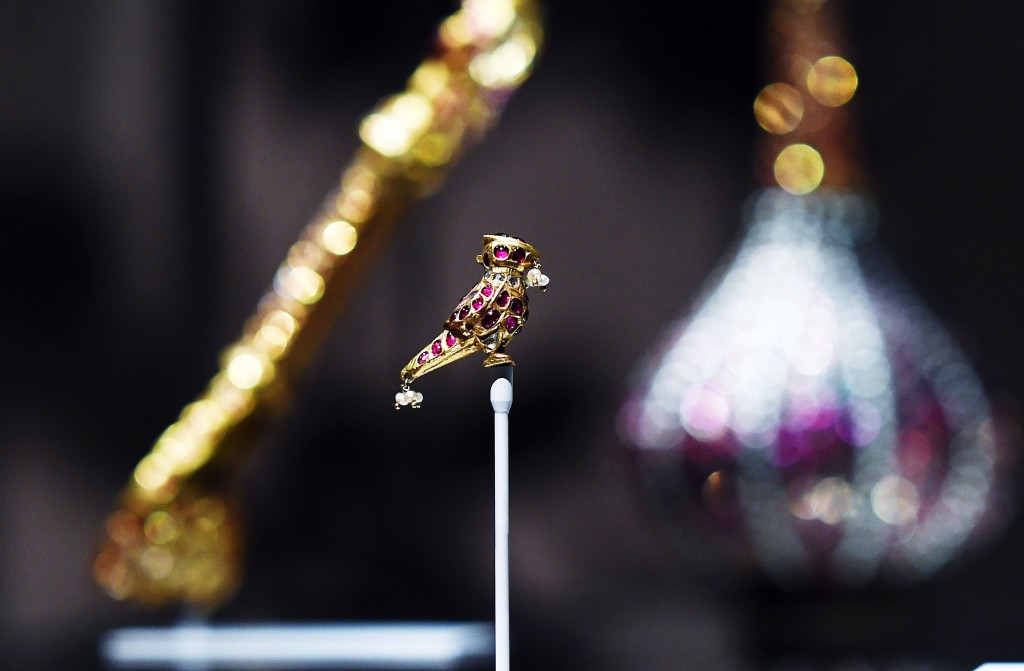
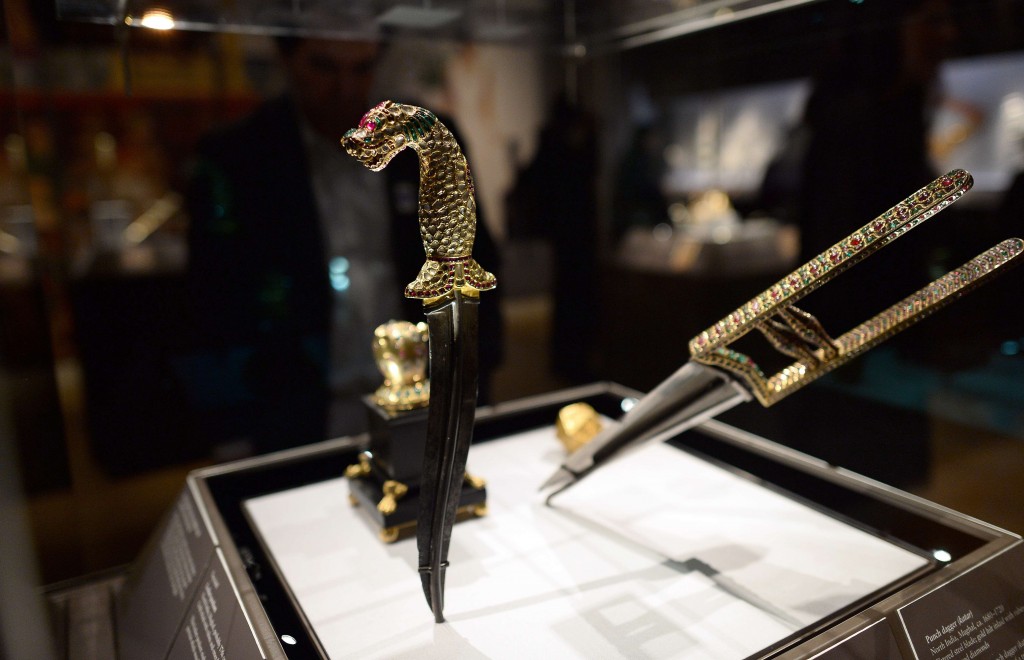
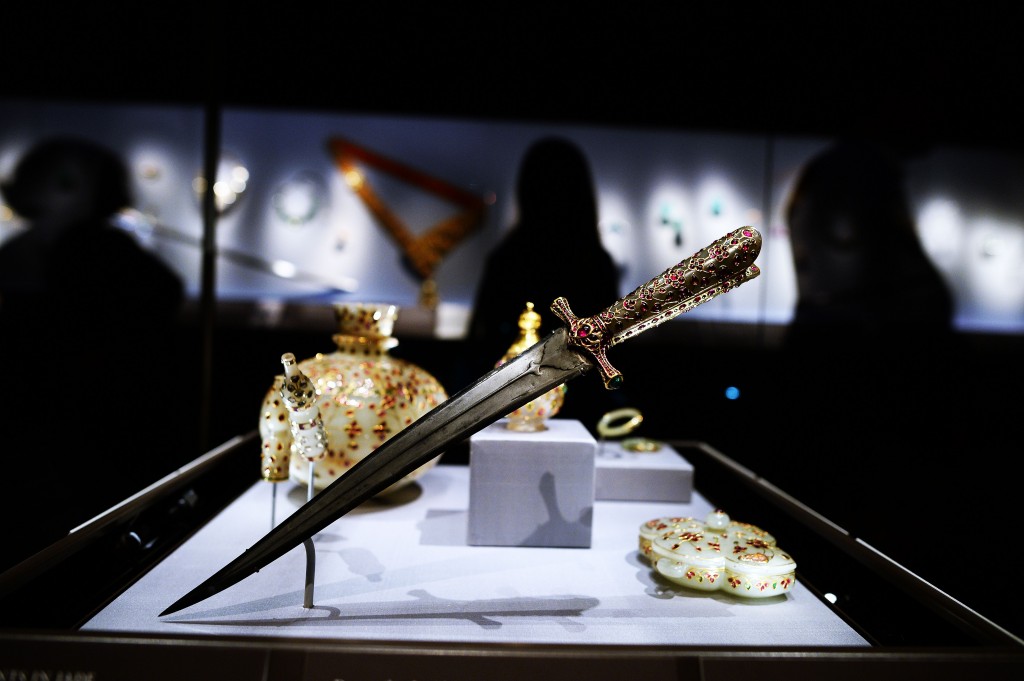
Among the other objects in the highlights shortlist are oil paintings by Thomas and William Daniel, Abanindranath Tagore and Gaganendranath Tagore, a 1964 copy of the Ain-e-Akbari manuscript, Persian translation of Aristotle’s treatise Six Principles of Ethical Life and commentary by Dara Shukoh as well as his Persian translations of Gita and Upanishad, Aurungzeb’s personal Quran, Tipu Sultan’s dagger, Maharaja Ranjit Singh’s sword and Queen Victoria’s piano.

“Once Victoria Memorial Hall joins the others on the Google Cultural Institute website, all objects that comprise the museum highlights will be there for the world to see and experience online. We have been working on documenting each object, detailing the history, the artist and its relevance. We are currently in the final lap of that exercise and expect to be on the website by this yearend or early next year,” said Sengupta.

source: http://www.timesofindia.indiatimes.com / The Times of India / Home> City> Kolkata / by Subhro Niyogi, TNN / September 07th, 2014

When a lensman’s passion takes the driver’s seat

Motor vehicle inspector Shefiq B.'s photograph of a leopard at the Parambikulam wildlife sanctuary won a prize at the State-level wildlife photography competition. Photo: K.K. Mustafah / The Hindu
Motor vehicle inspector Shefiq B.’s photograph of a leopard at the Parambikulam wildlife sanctuary won a prize at the State-level wildlife photography competition. Photo: K.K. Mustafah / The Hindu

A motor vehicle inspector’s commitment to wildlife photography

: His passion for photography almost cost him his life a decade ago when he was chased around by a herd of wild elephants in Thekkady. And that night in 2003, he stayed atop a tree to escape the wrath of the pachyderms.

For someone who took pictures with trembling hands and landed himself in trouble out of his ignorance about positioning, Shefiq B. has come a long way to grab the victor’s prize at the State-level wildlife photography conducted by the forest department.

A motor vehicle inspector by profession, Mr. Shefiq will receive the award from Forest Minister Thiruvanchoor Radhakrishnan on Tuesday at the Periyar Tiger Reserve in Thekkady.

Motor vehicle inspector Shefiq B.'s photograph of a leopard at the Parambikulam wildlife sanctuary won a prize at the State-level wildlife photography competition. Photo: K.K. Mustafah / The Hindu
Motor vehicle inspector Shefiq B.’s photograph of a leopard at the Parambikulam wildlife sanctuary won a prize at the State-level wildlife photography competition. Photo: K.K. Mustafah / The Hindu

The picture of a leopard lying on a rock at the Parambikulam wildlife sanctuary won him the prize.

“Initially, the animal was behind a rock and was not fully visible before it stepped on to the rock. From its stomach I could gauge that the animal had had its prey just then and would be resting there for a while,” he said.

Photography became his passion after he took a five-year break from his job as a vehicle inspector.

During this time, he took up a job in the Middle East which gave him the opportunity to travel to the wildlife sanctuaries of Kenya, a photographer’s delight.

So much was he consumed by the passion that he didn’t think twice before taking a loan for purchasing a professional worth Rs. 2.5 lakh.

Since rejoining duty at the Aluva Regional Transport Office last year, Shefiq puts in extra hours at work, so that he can go exploring nature in the company of his camera on weekends .

source: http://www.thehindu.com / The Hindu / Home> News> Cities> Kochi / by M.P. Praveen / Kochi – October 07th, 2014

ASI revives three water bodies near Qutub Minar

The 13th Century Gandhak ki Baoli. — PHOTOS: SUSHIL KUMAR VERMA

The Archaeological Survey of India (ASI) has revived three water bodies — Rajon ki Baoli, Gandhak ki Baoli, and Hauz-i-Shamsi or Shamsi talab — inside the Qutub premises.

All these baolis, except Shamsi talab, were nearly dry till recently. But for the last couple of months, the water level in these baolis has increased despite negligible rain this season.

“The more the level of water went down in Delhi, the water level in these baolis increased,” said an ASI representative, reasoning constant cleaning of these baolis, which till sometime ago were filled with mud and filth thrown by visitors and people living close by.

While water conservationists opined that the water level increased due to sealing of several borewells in the area, ASI representative argued that the same happened after the cleaning of the choked openings in the baolis, something even the locals agree with.

Ghulam Mohammad, an 80-year-old old resident of Mehrauli village, said: “Sumant Dogra of the ASI used to come here even when the temperature was nearly 49 degrees Celsius and get the baolis cleaned every day for past many months. Soon after the cleaning, we saw water gushing up despite the poor monsoon this year.”

A visit to all the baolis, however, reveals the careless attitude people have towards them.

The 13th Century Gandhak ki Baoli. — PHOTOS: SUSHIL KUMAR VERMA

The Rajon ki Baoli, which dates back to the 15 Century, “was chocked with 20 feet of filth — meaning two storeys of the baoli, leaving only the third or the last storey was visible. We got it cleared. It took us six months. Now the water level has come up to 20 feet. We had to stop intermittently due to lack of funds. We completed the cleaning, which the ASI started in 2004-05, in 2014.”

The baoli is filled with stagnant water covered with algae. One can reach it by climbing down nearly 60 stairs. The ASI official adds: “Visitors throw wrappers, packets and even spit in it. If we don’t clean it every day, the filth will reach 20 feet within a week.”

Gandak ki Baoli is located about 200 meters from this one. The water there “started rising two-three years ago. It now has about 40 feet of water,” he added.

Built in the 13 Century, the water in this baoli, as the name suggests, is mixed with Sulphur, which supposedly has medicinal qualities. Due to this, the locals bathe and wash their clothes in it.

When the reporter visited the spot, a man who has just finished washing his clothes was then seen urinating in the baoli, as a guard looked on helplessly. The ASI official, who comes here daily for inspection, said: “The locals use the baolis as their personal property. Vagabonds roam this area and it turns dangerous by the evening. If we ask them not to dirty the baoli, they take out knives in no time. Even the police is scared of them.”

The third water body or the Shamsi talab, is located in the middle of the Mehrauli market, most of which is unauthorised. The talab was once spread over a huge area, with a tomb in the centre. As the talab started shrinking due to lack of water, the tomb, which is still visible, has been relegated to a side. Water beyond it has dried up already. But “it now has 15 to 20 feet water,” the official adds.

The area around this talab remains unspoilt, filled with the chirps of thousands of birds. A reminder of what the baolis may have looked like in the past.

source: http://www.thehindu.com / The Hindu / Home> News> Cities> Delhi / by Rana Siddiqui Zaman / New Delhi – October 0th, 2014

Rashid Khan wins Eagleburg Masters

Rashid Khan is on a roll. The Delhi youngster bagged his sixth title pocketing the Rs. 40 lakh-PGTI Eagleburg Masters 2014, the fourth Super Series golf event of the season.

Rashid shot a confident three-under-69 in the final round to end up with a tournament total of 19-under-269 at the Eagleton-The Golf Resort course here on Friday.

C. Muniyappa of Bangalore also fired a 69 in round four to garner second place with a 17-under-271.

Rashid, a winner on the Asian Tour this year, said, “I played really good golf this week compared to the last two weeks on the Asian Tour. This is my second-best tournament total and I’m very proud of this effort.”

Muniyappa’s (69-67-66-69), runner-up finish helped him move up from 28th to 13th in the Rolex rankings and from 33rd to fifth in the Super Series. — Special Correspondent

source: http://www.thehindu.com / The Hindu / Home> Sports / by Special Correspondent / Bangalore – October 05th, 2014

India: Freedom struggle’s first journalist Martyr, Maulvi Muhammad Baqir

MaulviBaqirMPOs04oct2014

[A sketch of Maulvi Baqir’s execution. He and other scholars were tied to canons and were publicly blown away]

Maulvi Muhammad Baqir was a great advocate of Hindu Muslim unity.  When in order to weaken the freedom struggle the British started to sow the seeds of discord among the public Delhi Urdu Akhbar challenged them. On 4 June 1857 Maulvi Muhammad Baqir warned the masses of the conspiracies of the British and appealed to them to remain united. ‘Remember whoever misses this opportunity, falls prey to the tricks and is thumped by the inducements, tricks, and promises or is overwhelmed by the pomposity of the British, he is destined to face embarrassment in this world and the hereafter. No remorse will be of any help then and everyone will have to repent.’
.
By Laiq Rizvi

History of the Freedom Struggle is a live and self-narrating tale of dedication and selfless sacrifices. No one knows how many mothers lost their sons, how many women got widowed and how many spent their lives in prison cells and died there in the struggle to get their motherland freed from the clutches of slavery. Urdu writers too played active and leading role in this struggle. Pens became the swords and words banners of expression. The first name among those journalists who did not hesitate in sacrificing their lives for their country’s liberation by all means is that of Maulvi Muhammad Baqir, editor of Delhi Urdu Akhbar.

An sketch of Maulvi Baqir. He was tied to a canon and was publicly blown away.
A sketch of Maulvi Baqir’s execution. He and other scholars were tied to canons and were publicly blown away.

Maulvi Muhammad Baqir came from a respectable and educated family of Delhi. His father Maulana Muhammad Akbar Ali was a known Shi’a scholar and a known Mujtahid of his time of Delhi.

After finishing his religious education Maulvi Muhammad Baqir went to Delhi College for further education. After completion of his education he took up several jobs such as teaching at Delhi College and as a Tehseeldar in the Revenue Department but that was not his final goal.

In 1836 when the Government, after amendment in the Press Act, allowed publication of newspapers, he entered the field of journalism that became his art and identity.

In January 1837 Maulvi Muhammad Baqir launched weekly Delhi Akhbar. After Jam Jahan Numa of Calcutta this was the second Urdu language newspaper in the Indian sub-continent and first in north India. This newspaper survived for about 21 years during which its name was changed twice. On 3 May 1840 it was renamed as Delhi Urdu Akhbar while on 12 July 1857 Delhi Urdu Akhbar was renamed after the Mughal Emperor Bahadur Shah as Akhbar-al-Zafar. And then its ten last issues came out with this name.

Delhi Urdu Akhbar is the pioneer and founder of National Urdu journalism. Maulvi Muhammad Baqir used and introduced modern technology in the newspaper and shaped it to meet and fulfil contemporary demands. He focussed on news creating interest and newsworthiness in headline and newswriting and classified the news items. The section for Court (government) news was headed as ‘Huzoor-e-Wala’ while [East India] Company’s news was carried under ‘Sahib-e-Kalan Bahadur’.

In order to get latest news he had developed a network of authentic and reliable waqa-e-nigar [narrators or correspondents] who had access to higher authorities.

Delhi Urdu Akhbar was the proclaimer of the feelings of the nation. That was the period when there was no political party in the country. In such an atmosphere the newspaper played vital and leading role in creating political awakening in the masses and uniting them against the foreign rulers. It ignited the love of freedom and gave the courage and confidence to rally against the British Raj. An official report of 1853 described it as a wide-mouthed and outrageous newspaper.

Soon after the start of freedom struggle it became a freedom fighter itself. The fire of Freedom that got ignited in Meerut on 10 May 1857 helped Mujahideen [freedom fighters] reach Delhi by 11 May. Following this started a series of events of the magnitude that shook the ground underneath the feet of the Britishers. Maulvi Muhammad Baqir responding to this call to freedom was busy doing jihad with his pen. In its report of 17 May 1857 Delhi Urdu Akhbar carried a detailed report of the advance of Mujahideen. Following is an excerpt from the report.

’11 May 57 AD, due to the summer weather court proceedings were being held in early morning. Saheb Magistrate was busy presiding in the court room… At about 7 am Bridge In charge came and informed, “Some Turk soldiers have gone on a violent spree and started beating us. They wanted to plunder the collected revenue. Under some pretexts I engaged them in chatting and ulocked the barrage so that they could not advance further. They have burnt down the Revenue office and Saheb’s Bungalow at Sleempur Road.” As Saheb became thoughtful for a while and then stood up and went to Col Magistrate who was holding a session in the adjoining room. After some ghitpit [chatting in English] he went to the Treasury Room and in consultation with the Treasury Officer secured the treasury and ordered the treasury guards to get ready. As per order they loaded their guns and stood in a stand by position. Security was also deployed at the Jungi Darvazah at Kachehri.  It spread panic in the court room and its staff. Then with that information Magistrate Saheb went to the Commissioner. In the meanwhile rumours said that the Turk riders had gathered under the Jharonka of the Fort… A little later reports were heard that Qiladar, Bade Saheb, Dr Saheb and maim log [English ladies] had been killed at the gate and the riders had managed to enter the fort. His Lordship, wearing the ritual turban and an English sword also came to the court.

‘Initially these were few riders who came to the city and slaughtering the Britishers in Daryaganj, setting fire to the bungalow sent Dr Chaman Lal to the real Darul Shifa [killed him]. They were later joined by more riders and voices were heard and [rumours] that such and such British had been killed here and another such and such is lying killed there.’

In addition to eyewitness report about Delhi this issue also carries the news of freedom struggle from various parts of the country including Meerut, Saharanpur, Lucknow and Ambala. Reporting the causes of the revolt it reads, ‘There was already discontentment among Turk Riders and the fact that cartridges are greased with pig fat and tallow… For refusing to carry orders 85 soldiers have been imprisoned and on Monday inspired by religious spirit [Islam] and the zeal to defend religion flared up. All of a sudden all those in the platoon and the riders, in whatever state they were, took up their arms and freed their brethren from the jail and attacked the platoon and the whites.’

In order to encourage freedom fighters Maulvi Baqar commended them strongly and persuaded the masses to cooperate with them and participate in their struggle.  Such stimulating writings may be seen in several issues of Delhi Urdu Akhbar. ‘This gallantry of yours and the courage and zeal with which you have shattered the perversity of such a strong and arrogant empire and have humbled its Pharaoh like ego and Shaddad like pride will be remembered in channels of history…and you have relieved the masses of India from the unseen curse that had fallen upon them.

‘O my countrymen, Rule has changed; time has changed. System and management of government has changed. Now you too should change your habits, get rid of easy life style and your love for comforts that you have been accustomed since your childhood. Reform yourselves. Discard your habit of carelessness and fearfulness and embrace courage.’

Delhi Urdu Akhbar did not carry Maulvi Muhammad Baqir’s byline but researchers are of the opinion that most of the writings came from his forceful pen. At times Maulana Muhammad Hussain Azad also gave a helping hand to his father. The issue of 24 May 1857 includes his poem Tareekh-e-Inqalab Ibrat Afza [History of change is a lesson] that enthused in masses a new spirit and zeal. Some of the verses are:

Hai kal ka abhi zikr keh jo qaume nasara thi

Saheb-e-Iqbal o jahan bakhsh jahandar,

Allah hi Allah hai jis waqat keh nikle

Aafaq men taigh-e-ghazab Hazrat Qahar,

Sab jaohare aqal unke rahe sab taq pe rakhkhe

Sab nakhun tadbeer-o-khirad ho gai bekar,

Kaam aaee na ilm-o-hunar hikmat-o-fitrat

Poorab ke tilangoN ne liya sab ko yahan maar.

This forceful and armed resistance shook the British badly. In order to intimidate the masses notices from officials were displayed at various points. Maulvi Muhammad Baqir reproduced the text alongwith a strong and well-argued rebuttal. To defeat the British he uses their own phoney claims:

‘They [the British] call themselves the protectors and custodians of their subjects. Therefore it is incumbent upon them to return the trust, i.e. India back to the Indians unchanged and unaltered.’

Delhi Urdu Akhbar linked journalism to social issues as well. [Political] Situation coupled with the conspiracies of opportunists would lead to the shortage of food items and commodities of daily use. [Hence] Dishonest shopkeepers started charging prices as they pleased. It also created a situation of loot [illegal profiteering] and hoarding. Delhi Urdu Akhbar showed the mirror to those who were involved in such activities like this:

‘Shopkeepers of the city have gone on a rampage of high handedness and are behaving in a very cruel manner. With regard to cereals and other essential items people are suffering as most of the commodities are not available and if available then they are very expensive. In every market only small number of shops remains open and what remain open they present the [proverbial] scene of customers as ek anar sau beemar [one pomegranate for one hundred patients]. Similarly cereals [sold] are rotten and other commodities are of inferior quality. But hunger is powerful and lacks mercy and desperation worsens the situation. Helpless customers have no choice and buy whatever is available thinking it a blessing.

‘Because of this profiteering and black market masses are worried and confused. Be they the city dwellers or the outsiders most of them have resorted to plundering and the power and writ of police stations has become nil… The city is being looted. Many disguised as soldiers indulge in extortion and loot.’

Maulvi Muhammad Baqir was a great advocate of Hindu Muslim unity.  When in order to weaken the freedom struggle the British started to sow the seeds of discord among the public Delhi Urdu Akhbar challenged them. On 4 June 1857 Maulvi Muhammad Baqir warned the masses of the conspiracies of the British and appealed to them to remain united. ‘Remember whoever misses this opportunity, falls prey to the tricks and is thumped by the inducements, tricks, and promises or is overwhelmed by the pomposity of the Christians [the British], he is destined to face embarrassment in this world and the hereafter. No remorse will be of any help then and everyone will have to repent.’

By the beginning of September 1857 when Mujahideen became weak and started facing defeats, somewhere along the lines Maulvi Muhammad Baqir also started losing heart. The issue of 13 September 1857 reflects this and this proved to be the last issue [of Delhi Urdu Akhbar]. Maulvi Muhammad Baqir was arrested for revolt and without being tried, on 16 September 1957 was tied to a canon and was publicly blown away in front of the Khooni Darwaza. But this martyrdom strengthened the ongoing freedom struggle and sharpened the resolve of Mujahidana zeal of Urdu journalism. Contemporary publications and later newspapers and magazines followed the same national spirit and the mission to fight for liberation that had been set by Maulvi Muhammad Baqir.

Maulvi Muhammad Baqir’s newspaper had played a key role in igniting the spirit and courage in his fellow countrymen to fight for freedom. Any description of the freedom struggle will always remain incomplete without mentioning this brave and selfless Urdu journalist. Garabchand Chandan writes, ‘The short comments in Delhi Urdu Akhbar criticised the nepotism of the British, inefficiency of its police and bad practices of government departments. Therefore this newspaper did a tremendous service in creating an environment for and in providing complete information about the great rebellion of 1857.’ (Urdu Sahafat, Urdu Academy, Delhi, Page 88)

Delhi Urdu Akhbar was part of a mission. It was not launched for financial gains or fame and recognition. After paying for the expenses whatever return remained Maulvi Muhammad Baqir used to distribute it to help the poor. Its issues from January 1840 to September 1841 are available in the National Archive. In 1843 Maulana had also launched a religious magazine Mazhar-e-Haq that lasted until 1848.

Translated from Rashtriya Sahara, 15 September 2014 by Urdu Media Monitor.Com
http://www.urdumediamonitor.com/2014/09/23/freedom-struggles-first-journalist-martyr/

source: http://www.muslimnews.co.uk / The Muslim News / Homepage> News / September 24th, 2014