Category Archives: World Opinion

When Wajid Ali’s mother went to meet the Queen

Lucknow :

After Wajid Ali Shah, the last Nawab of Lucknow lost his empire, his mother Janab-i’Aliyyah went all the way to England to meet the Queen and seek justice, but she failed in her mission as she got no audience.

History lovers in Lucknow will now have access to new insights into the life and times of the last Nawab of Oudh along with rare pictures and never-heard before information. Regarded by the East India Company as a debauched ruler who spent his time with ‘fiddlers, eunuchs and women’ instead of looking after the kingdom, Wajid Ali Shah has become the centrepiece of yet another historical book.

Written by British historian Rosie Llewellyn Jones, ‘The Last King in India’ talks, besides his mother’s failed overseas mission, about Begum Hazrat Mahal’s revolt in 1857.

Though most artifacts of historical importance were lost forever after the downfall, with painstaking efforts, they have re-surfaced to narrate the story of an era in which the Nawab created exquisite poetry, theatrical pieces, music and dance. In the well researched book, he comes across as a compassionate person towards his subjects. The magnificent Qaiserbagh built by him came to be known as one of the most elaborate palace complexes ever created.

Given how little was known about the last Nawab of Awadh, the historian and author researched about Wajid Ali Shah from the original documents in Indian and British archives and through meetings with his descendants.

Several paintings and photographs have also been found. In one of the photographs Wajid Ali Shah is seen sitting with one of his 350 wives and a child on a couch. Although, almost every palace and structure along the banks of Hooghly river was either destroyed or auctioned by the British after his death in 1887, in order to eliminate any chances of a rebellion, his pictures still hang on the wall in Matiya Burj.

It is said that he had actually created a miniature Lucknow in Matiya Burj and transported its multi-faceted culture there.

At the release of her latest book, Jones said “I have always been a fan of Wajid Ali Shah. He was misunderstood by the British as he never wanted bloodshed in his kingdom and continued not to bow against them, much to their dismay. His love for poetry, art and dance is admirable and he was one of the greatest patrons of the cultural landscape.”

source: http://www.timesofindia.indiatimes.com / The Times of India / Home> City> Lucknow / by Shefali Mehrotra, TNN / September 28th, 2014

Commonwealth Games 2014: Shooter Mohammed Asab Wins Bronze in Men’s Double Trap

Mohammed Asab beat Nathan Xuereb of Malta to give India their ninth medal in shooting.

India's Asab Mohd displays his Men's Double Trap bronze medal. / PTI
India’s Asab Mohd displays his Men’s Double Trap bronze medal. / PTI

 Glasgow: 

Indian shooter Mohammed Asab won the bronze medal in the men’s double trap beating 17-year-old Nathan Xuereb of Malta in the bronze medal match of the 2014 Commonwealth Games at the Barry Buddon Shooting Centre here on Sunday.

The 26-year-old Asab shot 26 while Xuereb managed 24. Another Indian in the fray, Ankur Mittal missed out on a medal finishing fifth in the semi-final.

Shreyasi Singh grabbed the first medal of the day by winning the silver medal in the women’s double trap event. The Delhi girl shot 92 in the final round to win the silver, the fifth for the Indians from the shooting competition at the Barry Buddon Shooting Centre.

India’s medal count from shooting now stood at nine — three gold, five silver and a bronze.

Abhinav Bindra, Rahi Sarnobat and Apurvi Chandila have won the gold medals. The silver medal winners, besides Shreyasi, are Malaika Goel, Prakash Nanjappa, Ayonika Paul and Anisa Sayyed.

source: http://www.sports.ndtv.com / NDTV Sports / NDTV Sports> News / by Indo-Asian News Service / Sunday – July 27th, 2014

Bollywood Is Prancing Far Abroad

Shah Rukh Khan and Bollywood’s Global Fortunes Advance

The Bollywood superstar Shah Rukh Khan, left, and Deepika Padukone in “Chennai Express,” from 2013. Credit Red Chillies Entertainments/UTV Motion Pictures

Mumbai :

Shah Rukh Khan has many titles. The 48-year-old Bollywood superstar is known as King Khan, King of Bollywood and Bollywood Badshah (or emperor). This summer Mr. Khan became a knight. In a glittering ceremony in Mumbai, the French foreign affairs minister, Laurent Fabius, conferred France’s highest civilian honor — the Knight of the Legion of Honor — on Mr. Khan. In the official news release, Mr. Fabius said, “The French people hail Shah Rukh Khan’s talent and generosity,” which transcend “cultural and historical differences.”

Mr. Khan’s archrival Aamir Khan (no relation) was also transcending cultural differences. On July 25, his latest film, “Dhoom 3,” an action thriller and India’s highest-grossing film ever, was released on 2,000 screens in China, a first for an Indian film and a distribution strategy more often used for Hollywood blockbusters.

“There are numerous Aamir Khan fans in China,” the film’s Chinese distributor, Ying Li of HGC Entertainment, said in an email. “His image is very positive.”

The French and Chinese are among the many converts to Bollywood’s rapidly growing following. Hindi films have long had devoted fans among the 21 million Indians living overseas, and in the 1950s and ’60s, the actor-director Raj Kapoor became a household name in Soviet Russia, while Hindi films traveled to the Middle East and Africa. But in the last decade, Bollywood’s unique cocktail of emotion, song, dance and melodrama has found takers in several new markets. According to the box office tracking company Rentrak, revenues for Indian films across 36 territories rose from $66.2 million for 69 titles in 2009 to $289 million for 170 titles in 2013.

The new fans are in countries as diverse as Turkey, Peru, Panama and Iraq. Hindi films first reached Japanese theaters in 1952, but regular releases began only last year. Aki Sugihara of the Nikkatsu Corporation, the leading distributor of Hindi films there, said the Japanese like “the fact that there is not too much dependency on CGI, like in Hollywood movies.”

The Japanese pop musician and soundtrack composer Matsumura Masahide (known as Titi Matsumura) is a fan and said the appeal lies in the films’ ardent approach. “We like Indian films full of emotional feeling with the richness of heart, which Japanese people tend to miss now,” he said by email. “Even when films describe a negative problem, the way to describe it is full of big Indian love.”

The Germans are besotted with Shah Rukh Khan. Their ardor can be traced to 2004, when a German television station programmed a prime slot for “Kabhi Khushi Kabhie Gham” (“Sometimes Happiness, Sometimes Sadness”), featuring Mr. Khan as the estranged, adopted son of a rich industrialist. The three-hankie melodrama — the film’s tagline was “It’s all about loving your parents” — single-handedly opened up a new market. Viewers “cried, felt great pleasure, joy and release,” the film’s distributor, Stephan Holla, said by email. “We do not get this from German movies or Hollywood.”

Among those viewers was Julia Wessel, a 25-year-old student of cultural anthropology. “I was intrigued by it, but I was even more intrigued by the effect it had on my mother,” she said by email. “I cannot remember ever seeing my mother cry, not even at funerals. But there she was watching this film, and she had tears running down her face.”

Bollywood became such an obsession that Ms. Wessel dropped her studies and in 2006, started a German-language Bollywood magazine called Ishq (Urdu for love), which now has a circulation of 30,000 in Germany, Austria and Switzerland.

Despite evangelists like Ms. Wessel, Brand Bollywood hasn’t been an easy sell overseas. Hollywood and regional productions provide stiff competition. Even big-name studios like Disney India, which produces Disney-branded films, find it tough going in other countries. Amrita Pandey, who heads marketing and distribution for the studio, cited a host of factors in an email interview: “Language barriers, high investments required to develop new markets, the definite grammar of Hindi films and cultural gaps are also barriers.”

In Britain and the United States, these barriers have proved insurmountable. They are the largest overseas territories for Bollywood, but while Hindi films do penetrate mainstream theaters, the audiences are mostly of South Asian descent. Avtar Panesar, vice president of international operations for Yash Raj Films, one of Bollywood’s largest studios, pegs the non-Indian viewership at 0.5 percent. “We have done events in theaters, carried out media campaigns,” he said by email. “But it seems that these films are being made by Indians and watched by Indians.”

The crossover Hindi film has been the holy grail for Mumbai filmmakers since the success of Ang Lee’s “Crouching Tiger, Hidden Dragon” in 2000, the Oscar-winning American-Chinese-Taiwanese coproduction that drew mainstream audiences in the United States. But efforts at such cross-pollination have delivered uneven results. The Indian company Reliance Entertainment invested upward of $500 million in Steven Spielberg’s DreamWorks, but the hits have been limited. Initially, Hollywood studios in India stumbled with local productions. Eventually Disney found an Indian partner, UTV, and Disney India’s first film after the merger — a rom-com called“Khoobsurat” — was released in the United States on Sept. 17.

Relativity Media is hoping to alter the landscape. At the Cannes Film Festival in May, it announced a $100 million joint venture with B4U, a Bollywood entertainment company. “We don’t consider ourselves Hollywood,” Relativity’s chief executive, Ryan Kavanaugh, said by phone. “We consider ourselves a content technology company. Studios think, ‘How do we sell our stuff to them?’ We are looking at how to create content for this huge market.”

Instead of finding one film that satisfies both palates, the Relativity strategy is to tailor the same content for two markets. So with an as-yet-untitled action-comedy now in production with Zach Galifianakis, Owen Wilson and Kristen Wiig, the plan is to film it again in Bollywood. A reboot of  “The Crow” would follow a similar model, with two versions shot simultaneously — one in Hollywood and one in Bollywood with American actors in the Indian version and vice versa. “Our goal is to be at this long-term,” Mr. Kavanaugh said, “We go slowly and we take the consumer with us.”

Along with consumers, Hindi films have also evolved. They are no longer a monolithic entity defined by song and dance. Daring, more personal indie productions known as Hindie movies are also making inroads locally and globally. In the past year, “The Lunchbox,” a small-budget film starring Irrfan Khan as a widower forming a bond with a neglected Mumbai housewife, made about $10 million globally at the box office, with about 40 percent of that coming from America. Despite the absence of songs and mainstream Bollywood stars, “The Lunchbox” was among the highest-grossing Hindi films in the United States. It was distributed by Sony Pictures Classics, which perhaps helped it find viewers beyond the Indian market.

Could films like “The Lunchbox” help the Hindi film industry infiltrate the final frontier of the American mainstream? As Shah Rukh Khan put it in an email: “Our content is improving. Our technology is improving. It’s time.”

source: http://www.nytimes.com / The New York Times / Home> Movies / by Anupama Chopra / September 26th, 2014

___________________________________________________________________

A version of this article appears in print on September 28, 2014, on page AR15 of the New York editionwith the headline: Bollywood Is Prancing Far Abroad. Order Reprints|Today’s Paper|Subscribe

__________________________________________________________________

The legend of braveheart Turehbaz Khan lives on

The great patriot, however, remained unsung on January 24, which marks his 153rd death anniversary

The name of Turehbaz Khan conjures up images of valour and sacrifice. The name also puts Hyderabad on the map of the country’s First War of Independence or the Sepoy Mutiny of 1857. But how many of us know that January 24 marked the 153rd death anniversary of Turehbaz Khan, who, along with several others, rebelled against the English Resident, Major Cuthbert Davidson. The day simply passed off without a whimper.

It was in January 24, 1859, that many believe that Turehbaz Khan was killed in the forests of Toopran by the Talukdar, Mirza Qurban Ali Baig.

His body was brought to Hyderabad and according to several historical accounts was hung near the Residency, what is now Koti Women’s College, for public display and to act as a deterrent against any future rebellion.

Many in Hyderabad also do not know that the road in front of Osmania Medical College is named after Turehbaz Khan.

To mark the revolt of 1857, a memorial with the words ‘Memorial to the martyrs of July 17, 1857′ was constructed near Koti bus stand.

Even today, the name Turehbaz Khan is etched on the plaque.

Stark reminder:The memorial for Turehbaz Khan and others at Koti.– Photos: G. Ramakrishna / The Hindu

The uprising was led by Turehbaz Khan and a fiery preacher, Maulvi Allauddin, along with 500 Rohillas, who were of Pashtun (Pathan) stock.

Unequal fight

Essentially, the revolt was to free Jamedar Cheeda Khan, who was held in the prison inside the Residency. The 500 Rohillas tried to storm the Residency under the direction of Turehbaz Khan and Maulvi Allauddin, who controlled the revolt by occupying the houses of two local moneylenders, Abban Saheb and Jaigopal Das.

Historians point out that the fight between the Rohillas and British troops, who were led by Major S. C. Briggs, continued throughout the night. Apparently, Salar Jung alerted the British about the impending revolt. The British troops were prepared and waiting for Khan to attack.

Needless to say, the Rohillas, who wielded swords, were outclassed by trained British soldiers who opened fire on them. By morning the rebellion was crushed.

Shot dead

Many armed men who took part in the revolt were caught and sent to prison. Among them was Turehbaz Khan, who received a life sentence. However, the canny Turehbaz Khan managed to escape from prison on January 8, 1859.

Sentinel of history:The prison inside the Residency building, which is now the Koti Women's College, where it is believed that Jamedar Cheeda Khan was kept.
Sentinel of history:The prison inside the Residency building, which is now the Koti Women’s College, where it is believed that Jamedar Cheeda Khan was kept.

Immediately after the escape, the British authorities offered a reward of Rs. 5,000 to anyone who could apprehend Turehbaz Khan.

Within a few days, many believe that it was on January 24, 1859, when Turehbaz Khan was shot in the forest of Toopran by Talukdar Mirza Qurban Ali Baig. As a reward, the Talukdar received Rs. 5,000 and his salary was also raised by Rs. 200.

He was also promoted as Sadar Talukdar, say historical accounts.

________________________________________________________________________


  • Many believe it was on Jan. 24, 1859, that Khan was killed in Toopran forest by Qurban Ali Baig
  • Khan’s body was hung near the Residency to act as a deterrent against any future rebellion
  • ___________________________________________________________________

source: http://www.thehindu.com / The Hindu / Home> National> Andhra Pradesh / by M. Sai Gopal / Hyderabad – January 27th, 2012

Shooters Heena Sidhu, Rahi Sarnobat and Anisa Sayyed win 4th bronze for India in Asian Games 2014

rahi-sarnobat-and-anisha-sayyedMPOs25sept2014

India gets it first medal of Day 3 of Asian Games 2014 after the Indian trio shooters Heena Sidhu, Rahi Sarnobat and Anisa Sayyed bagged the fourth bronze for India. They won the bronze medal in 25m Pistol Women’s Team event finishing third behind the teams from Republic of Korea and China. With this medal, India’s medal tally moves up to 5 including 1 gold and 4 bronze medals.

Shooters Heena Sidhu, Rahi Sarnobat and Anisa Sayyed hit a total of 1729-45x while China’s ZHANG Jingjing, CHEN Ying and ZHOU Qingyuan finished second with 1747-57x while host nation South Korea, LEE Jungeun, KWAK Junghye and  KIM Jangmi wwon the gold medal with 1748-48x.

Earlier, India’s Ayonika Paul, Apurvi Chandela and Raj Chaudhry finish at the fifth spot in 10m Air Rifle Women’s Team Finals. In the individual 10m Air Rifle Women’s event, 21-year-old Ayonika Paul finished with a lowly 7th rank while Apurvi Chandela and Raj Chaudhry failed to qualify for the finals after finishing at the 12th place and 35th place respectively.

The bronze medal by shooters Heena Sidhu, Rahi Sarnobat and Anisa Sayyed is also fourth medal in shooting out of the 5 medals won so far with the one coming from Indian women’s badminton team.

source: http://www.india.com / India.com / Home> Sports / by Rashmi Mishra / September 22nd, 2014

Kashmir gives US its Muslim face

FarahMPOs24sept2014

Srinagar :

The highest-ranked South Asian in the White House traces her roots to the separatist stronghold of Sopore in Kashmir.

Farah Pandith was today appointed special representative to Muslim communities in the US state department headed by Hillary Clinton.

“This is not just an honour for our family but the entire Kashmir,” said her maternal uncle Mian Mushtaq Ahmad, a former chief engineer of the Jammu and Kashmir government.

“I spoke to her this morning and she was obviously very happy,” added the Srinagar resident.

Farah, in her early 40s according to her relatives, will be in charge of a new office that is responsible for reaching out to Muslims across the world, according to a release by the state department. They will take forward Clinton’s efforts to “engage with Muslims around the world at a people-to-people and organisational level”, it added.

Farah and Hillary : Indian connection

The Pandiths left for the US in 1970, when Farah was only four. Her father, Mohammad Anwar Pandith, is a businessman originally from Sopore, a place that has been in news for all the wrong reasons over the past 20 years. It is the hometown of Hurriyat hawk Syed Ali Shah Geelani and has been a separatist bastion all these years.

Her mother Mehbooba, from Srinagar, is a chest specialist. With their younger son, they live in Boston.

Farah, an alumni of the Fletcher School of Law and Diplomacy, has kept coming back to Kashmir over the years, her uncle said. She even did her postgraduation thesis on the Kashmir insurgency.

Earlier, she was a senior adviser on Muslim engagement at the state department, serving under the assistant secretary of state for European and Eurasian affairs.

“The last time she was here was some three years back. She was not allowed to come to this (troubled) region after that because she was working in the White House,” said Ahmad, many of whose relations are settled in the US.

The Pandiths are a respected business family in Sopore and Farah’s grandfather Abdul Samad Pandith was the first to set up a cinema there. Samad Talkies shut its doors after militants banned cinema in the Valley in 1990.

The appointment comes a year after the George W. Bush administration gave Neel Kashkari, a man of Kashmiri origin, the task of bailing out the US economy as the interim assistant secretary of the treasury for financial stability.

source: http://www.telegraphindia.com /  The Telegraph, Calcutta / Front Page> Nation> Story / by Muzaffar Raina / Srinagar, June 25th / Friday – June 26th, 2009

Jhelum of poet’s muse claims his house


Agha Shahid Ali’s submerged house in Srinagar’s Rajbagh. ( Source: Express photo by Shuaib Masoodi )

The Jhelum flowed through many of Kashmiri poet Agha Shahid Ali’s poems. “When I return, the colours won’t be so brilliant, the Jhelum’s waters so clean, so ultramarine. My love so overexposed”, he wrote. Shahid’s home, his wooden desk, a rocking chair, books and papers are now under Jhelum waters.

This hut of a house of two floors, lower than the nearby road, and nestled in a wild garden in Rajbagh had become the international address for Kashmir’s literary scene. Shahid, who brought into focus Kashmir’s tumult through his poems, grew up here. He later kept returning from the US where he taught at Amherst College till his death in 2001.

A piece of old architecture, this house was Shahid’s last memory in his home city. Its rooms and the hundreds of documents, photographs and books they contained were a reminder of the poet who introduced the ghazal form to English. Today all is submerged and probably destroyed. When Shahid’s father Agha Ashraf Ali was rescued from the house in a rush, nothing else could be saved.

While the deluge has ravaged Srinagar’s roads, buildings and homes, it has also taken away something more precious — invaluable parts of Kashmir’s history and culture. Flood waters have entered the government archives, cultural academy, the building housing Srinagar’s museum and several other libraries. The flood has also destroyed scores of private collections of texts, rare religious manuscripts, letters and other important connection to Kashmir’s past.

A mile from Shahid’s home, the Valley’s best known artist Masood Hussain said he could only save his latest work: seven paintings based on Shahid’s seven couplets that he had promised the poet before his death. “When the flood came, it submerged everything in my neighbourhood,’’ Hussain said. “My brother had two rubber boats but in those hours of crisis, I forgot everything and helped rescue some 40 people. Several houses around my home collapsed.”

A Kashmiri journalist had a 250-year-old copy of the Quran that had been passed from generations in his family. He could not take it out when the flood rushed into his house in Rajbagh. A resident of Tulsibagh had letters from 1890, documenting those times, preserved in his home. They are gone too.

Idrees Kanth, who is researching Kashmir’s social history for his PhD at Leiden University in Amsterdam, said the loss is irreparable. “Many people in Kashmir had private archives. The sudden onset of flood left them no chance to save the precious material, Kanth said. “It’s not just lives and property we have lost, we have lost a part of our history too.”

He said he was praying the government’s archives are safe. “There are 20 lakh files in the archives, which aren’t even indexed. We may never know what has been lost in these floods.”

Director of archives, Mohammad Shafi Zahid told The Indian Express, that the archives are safe. “The flood water has submerged the low lying building but not the one where our archives are housed,’’ he said. “The papers are all safe.”

The archives house old Kashmiri, Persian and Arabic manuscripts which are important for their religious, philosophical and literary value. The building also houses old land records, state subject documents, bureaucratic correspondence of J&K State since the Maharaja’s times among other papers. However, Saima Iqbal of Indian National Trust For Art and Cultural Heritage said she was not allowed into the archives to check.

source: http://www.indianexpress.com / The Indian Express / Home> India> India-Others / by Muzamil Jaleel / Srinagar – September 23rd, 2014

Float like a butterfly

JafriMPOs22sept2014

FLASHBACK – Naved Jafri

Producer Naved Jafri on meeting heavyweight champion Muhammad Ali

This picture was taken in 1981. I was 13 years old and accompanied dad on a trip to Abu Dhabi. The Sheikh had organised a fundraiser in order to build mosques in the area. The chief guest for the night was former American professional boxer Muhammad Ali, whom I was excited to meet.

Bollywood celebrities like Rishi Kapoor and Asha Sachdev were there to attend the event as well. For entertainment’s sake, my father and Ali had a friendly match. It was hilarious to see my dad and the heavyweight boxing champion, who stood at 6 ft 3 in, in the same ring.

For comic effect, dad even scampered around as Ali pretended to pound him. The crowd seemed to love it and everyone was cheering. After the fundraiser, which was a great success, a bunch of us went out for dinner with Ali. It was an elaborate dinner in a five star hotel. But one thing that struck me about that night was Ali’s sharp sense of humour.

When saying our goodbyes, he shook my hand. It was an impressive handshake, especially since his hand was three times the size of my little fist.

source: http://www.punemirror.in / Pune Mirror / Home> Others> Leisure / by Yolande D’Mello  / July 20th, 2014

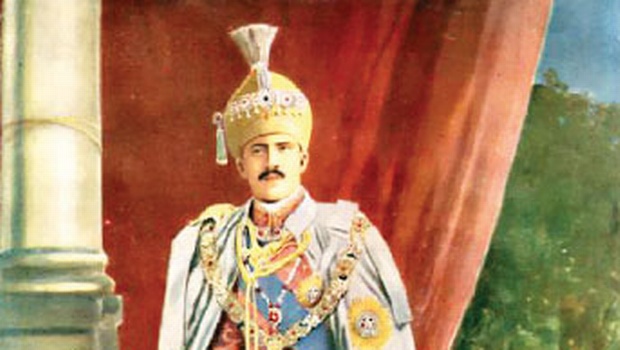
The rich legacy of Nizams

Mir Osman Ali Khan receives Prime Minister Lal Bahadur Shastri at Begumpet airport. Responding to Shastri’s appeal, the Nizam donated 5000 kg of gold to the National Defence Fund

OF POWER AND POISON

British Residents in Hyderabad spoke of the mutual antipathy that apparently existed between the Nizam’s eldest wife Dulhan Pasha and her sons Prince Azam Jah and Prince Moazzam Jah.

The mother of the two Sahebzadas was keen to marry them to her nieces, described by the Resident, Lt. Col. T.H. Keyes, as “two half-starved little Hyderabadi girls”. She had even been involved in a public slanging match with the Nizam on the issue of her sons’ marriage, and was supposed by British officials to be not fond of her sons.

To illustrate the discord between the mother and sons, Keyes recalled what Prince Moazzam Jah used to reveal to his guests. The younger Sahebzada claimed that his mother wanted to become the regent on the Nizam’s death. “When someone takes the cue and asks how she could be regent when his brother and he are of age, he replies: ‘We won’t be here. Mother is always experimenting with poisons, and there are no cats left in King Kothi’.”

…The rumours of poisoning in 1932 also led to revival of allegations that Sir Salar Jung I had been poisoned by the Nizam’s zenana as he had been insisting on Mahbub Ali Pasha being sent to Europe for education.

TONNES OF GOLD FOR WAR EFFORT
Mir Osman Ali Khan, Nizam VII, may have delayed his decision on merging Hyderabad State with the Indian Union after Britain left the country in August 1947, but he created a record when he responded to the call of Prime Minister Lal Bahadur Shastri in 1965. The PM visited Hyderabad and requested the Nizam to contribute generously to the National Defence Fund, set up in the wake of the Indo-Chinese skirmish. Without a second thought, Mir Osman Ali announced that he would contribute five tonnes of gold to augment the war fund. In monetary terms, the Nizam’s contribution was about Rs 75 lakh, or about three-fourth of the annual Privy Purse he received from the Centre. In terms of today’s gold price in the international market, this donation translates to a whopping Rs 1,500 crore.

The Nizam’s donation of 5,000 kg of gold to the National Defence Fund in 1965 was the biggest ever contribution by any individual or organisation in India and remains unsurpassed till today.

However, known for his wit and frugality, Mir Osman Ali Khan did not hesitate to seek the return of the empty iron boxes once the gold coins and bars were offloaded in Delhi. “I am donating the gold and not the iron boxes. Do not forget to return them,” the Nizam told the officials even as his son-in-law and confidant Ali Pasha carried trays of gold coins from the Nazri Bagh Palace. The empty boxes were duly returned.

ALBERT ABID AND     THE SILK SOCKS

Hyderabad’s history is full of fables about foreigners who gave Hyderabad a new meaning and purpose. Albert Abid Evans, a Jew from Armenia, gave Hyderabadis their first department store and a new name to an otherwise abandoned locality.

Abid’s, one of the busiest business centres of Hyderabad, owes its name to Albert Abid, who set up a shop that served the needs of Hyderabadis from needle to grains and stationery to clothes.

…As a valet of the Nizam, Abid looked after Mir Mahbub Ali Khan’s wardrobe, the biggest of its kind in the world. It is rumoured that Nizam VI did not like to repeat his silk socks and the enterprising Abid would put the used socks back in the packet they came in and recycle them while his trusting master kept paying for new socks! If rumours are to be believed Abid also helped himself to the rings from his ruler’s fingers when his ruler was in a stupor and promptly thanked the Nizam very profusely the next morning for gifting him the jewellery.

AN UNHAPPY PRINCESS
Niloufer Khanum Sultana, who was called the world’s most beautiful woman, was pained by the fact that she was unable to produce an heir and felt that she had failed in her duty as a princess. It was especially upsetting for her that her cousin Princess Durru Shehvar had given birth to two lovely boys, Prince Mukarram Jah and Prince Muffakham Jah.

On a particular occasion, when Princess Niloufer was in England in response to her mother’s distress call about her financial and social health, Prince Moazzam Jah decided to let everyone know that it was not he who was responsible for their childless marriage. He brought a lady of doubtful repute into his home, and was apparently able to demonstrate his virility. Princess Niloufer returned from England to learn of this treachery and never shared a room with her husband again.

Her husband’s betrayal was not the only fact that pained her. She also returned to find that her personal maid, of whom she was very fond, had died in childbirth. This moved her to open a hospital for children and women. The Niloufer Hospital is still a sought-after medical institution today.

This gesture of the childless princess earned her a place in the hearts of Hyderabadis.

BORN TO RULE
Prince Mukarram Jah had the best of education — Doon, Harrow, Cambridge and LSE. He also trained at the Sandhurst Military Academy in England. …During a visit to Hyderabad, his first wife Princess Esra said he was a bright young man when she married him but was overwhelmed by the fast-paced political developments at home.

In 1969, the Indira Gandhi government decided to discontinue the annual purse to descendants of former rulers of princely states, who numbered around 600. The land bank vanished with the Land Ceiling Act. Mukarram found himself at a complete loss when he lost his privy purse and was compelled to sell off his assets. He would dispose invaluable jewellery to meet his immediate needs without verifying the value of the gems he offered for sale. Not surprisingly, he was taken for a ride by everyone, while the list of those dependent on him kept expanding. This list had grown to include the legion of relatives (14,792), servants (14,000), grandfather’s concubines (42) and children (hundreds of them).

Despairing of the circumstances he found himself in after the demise of his grandfather, this last true blue Nizam protested, “I was taught to be a soldier, not an administrator.”

Given the title of the eighth Nizam and brought up as an imperial prince of the Ottoman Empire, he was not wrong when he once confessed, “I was born to rule. That was the only thing I was prepared for.” Some believe it was the burden of having to deal with so many trusts and their beneficiaries that caused Mukarram Jah to leave for Australia.

3,000 WIVES?

In June 1936, the India Office received a letter from one Irene Cowen from Sheffield, asking how many wives the Nizam had and how many children. “A Hyderabadi had given a lecture on the Nizam’s government and in that had mentioned that the Nizam had over 3,000 wives, but he did not know the exact number, and had described him as having ‘a good many children’,” she wrote. …The Foreign Office sent Miss Cowen this reply: “The statement made by your lecturer is, on (the) face of it, incredible. Nor is any record of the kind suggested maintained in this office.”

The Nizam, however, did have over 100 women in his zenana and was even accused of kidnapping some. As for his progeny, it is claimed that Osman Ali Pasha sired over 147 children. A more modest estimate puts this figure at 28 daughters and 44 sons. However, like most stories about the Nizam, this claim is often exaggerated.

According to his daughter Basheerunissa Begum, it was impossible even for the family to keep track of everyone in the palace as each wife of the Nizam and her children had separate living quarters within the palace and had numbered badges to help the palace guards keep track of their security and identity.

source: http://www.deccanchronicle.com / Deccan Chronicle / Home> Lifestyle> Offbeat / DC Correspondent / June 01st, 2014

From berry to brew…

CoffeeKODAGU21sept2014

Coffee was once a closely guarded Arabian secret until Baba Budan, a Sufi mystic, smuggled seven beans from Yemen and scattered them on the hills of Chikmagalur, from where it spread to the rest of India…Anurag Mallick and Priya Ganapathy spill the beans on the story of coffee, the world’s most popular brew.

It was Napoleon Bonaparte who once grandly announced, “I would rather suffer with coffee than be senseless.” Sir James MacKintosh, 18th century philosopher, famously said, “The powers of a man’s mind are directly proportional to the quantity of coffee he drank.” In The Love Song of J Alfred Prufrock, when T S Eliot revealed, “I have measured out my life with coffee spoons,” he hinted at the monotony of socialising and the coffee mania of the 1900s. German musical genius J S Bach composed the ‘Coffee Cantata’ celebrating the delights of coffee at a time when the brew was prohibited for women.

“If I couldn’t, three times a day, be allowed to drink my little cup of coffee, in my anguish I will turn into a shriveled-up roast goat,” cried the female protagonist! French author Honoré de Balzac wrote the essay ‘The Pleasures and Pains of Coffee’ to explain his obsession, before dying of caffeine poisoning at 51. Like Voltaire, he supposedly drank 50 cups a day! So, what was it about coffee that inspired poets, musicians and statesmen alike?

Out of Africa

Long before coffee houses around the world resounded with intellectual debate, business deals and schmoozing, the ancestors of the nomadic Galla warrior tribes of Ethiopia had been gathering ripe coffee berries, grinding them into a pulp, mixing it with animal fat and rolling them into small balls that were stored in leather bags and consumed during war parties as a convenient solution to hunger and exhaustion! Wine merchant and scientific explorer James Bruce wrote in his book Travels to Discover the Source of the Nile that “One of these balls they (the Gallas) claim will support them for a whole day… better than a loaf of bread or a meal of meat, because it cheers their spirits as well as feeds them”. Other African tribes cooked the berries as porridge or drank a wine prepared from the fermented fruit and skin blended in cold water.

Historically, the origins of the coffee bean, though undated, lie in the indigenous trees that once grew wild in the Ethiopian highlands of East Africa. Stories of its invigorating qualities began to waft in the winds of trade towards Egypt, North Africa, the Middle East, Persia and Turkey by the 16th Century. The chronicles of Venetian traveller Gianfrancesco Morosini at the coffee houses of Constantinople in 1585 provided Europeans with one of the foremost written records of coffee drinking. He noted how the people ‘are in the habit of drinking in public in shops and in the streets — a black liquid, boiling as they can stand it, which is extracted from a seed they call Caveè… and is said to have the property of keeping a man awake.’

It was only a matter of time before the exotic flavours of this intoxicating beverage captured the imagination of Europe, prompting colonial powers like the Dutch, French and the British to spread its cultivation in the East Indies and the Americas. Enterprising Dutch traders explored coffee cultivation and trading way back in 1614 and two years later, a coffee plant was smuggled from Mocha to Holland. By 1658, the Dutch commenced coffee cultivation in Ceylon (Sri Lanka). The word ‘coffee’ is apparently derived from qahwah (or kahveh in Turkish), the Arabic term for wine. Both the terms bear uncanny similarity to present day expressions — French café, Italian caffè, English coffee, Dutch koffie or even our very own South Indian kaapi. A few scholars attribute ‘coffee’ to its African origins and the town of Kaffa in Ethiopia, formerly known as Abyssinia. However, the plant owes its name “Coffea Arabica” to Arabia, for it was the Arabs who introduced it to the rest of the world via trade.

As all stories of good brews go, coffee too was discovered by accident. Legends recount how sometime around the 6th or 7th century, Kaldi, an Ethiopian goatherd, observed that his goats became rather spirited and pranced after they chewed on some red berries growing in wild bushes. He tried a few berries and felt a similar euphoria. Excited by its effects, Kaldi clutched a handful of berries and ran to a nearby monastery to share his discovery with a monk. When the monk pooh-poohed its benefits and flung the berries into the fire, an irresistible intense aroma rose from the flames. The roasted beans were quickly salvaged from the embers, powdered and stirred in hot water to yield the first cup of pure coffee! This story finds mention in what is considered to be one of the earliest treatises on coffee, De Saluberrima Cahue seu Café nuncupata Discurscus, written by Antoine Faustus Nairon, a Roman professor of Oriental languages, published in 1671.

Flavours from Arabia

Coffee drinking has also been documented in the Sufi monasteries of Yemen in South Arabia. Arabic manuscripts dating back to the 10th Century mention the use of coffee. Mocha, the main port city of Yemen, was a major marketplace for coffee in the 15th century. Even today, the term ‘mocha’ is synonymous with good coffee. Like tea and cocoa, coffee was a precious commodity that brought in plenty of revenue. Hence, it remained a closely guarded secret in the Arab world. The berries were forbidden to leave the country unless they had been steeped in boiling water or scorched to prevent its germination on other lands.

In 1453, the Ottoman Turks brought coffee to Constantinople, and the world’s first coffee shop Kiva Han opened for business. As its popularity grew, coffee also faced other threats. The psychoactive and intoxicating effects of caffeine lured menfolk to spend hours at public coffee houses drinking the brew and smoking hookahs, which incited the wrath of orthodox imams of Mecca and Cairo. As per sharia law, a ban was imposed on coffee consumption in 1511. The Grand Mufti Mehmet Ebussuud el Imadi was hailed when he issued a fatwa allowing the consumption of coffee, by order of the Ottoman Turkish Sultan Selim I in 1524.

Though subsequent bans were re-imposed and lifted at various points of time according to the whims of religious politics and power, coffee pots managed to stay constantly on the boil in secret, or in the open, for those desirous of its potent influence. Given the fact that Sufi saints advocated its uses in night-time devotions and dervishes and Pope Clement VIII even baptised the bean to ward off the ill-effects of what was regarded by the Vatican as ‘Satan’s drink’ and the ‘Devil’s Mixture of the Islamic Infidels’ till the 1500s, it is easy to see why coffee is nothing short of a religion to some people.

Coffee enters India & beyond

Surprisingly, India’s saga with coffee began in 1670 when a Muslim mystic, Hazrat Dada Hyat Mir Qalandar, popularly known as Baba Budan, smuggled seven beans from Arabia and planted them on a hillock in the Chikmagalur district of Karnataka. The hills were later named Baba Budan Giri in his memory. From here, coffee spread like bushfire across the hilly tracts of South India.

In 1696, Adrian van Ommen, the Commander at Malabar, followed orders from Amsterdam and sent off a shipment of coffee plants from Kannur to the island of Java. The plants did not survive due to an earthquake and flood but the Dutch pursued their dream of growing coffee in the East Indies with another import from Malabar. In 1706, the Dutch succeeded and sent the first samples of Java coffee to Amsterdam’s botanical gardens from where it made further inroads into private conservatories across Europe. Not wishing to be left behind, the French began negotiating with Amsterdam to lay their hands on a coffee tree that could change their fortunes. In 1714, a plant was sent to Louis XIV who gave it promptly to the Jardin des Plantes at Paris for experimentation. The same tree became the propagator of most of the coffees in the French colonies, including those of South America, Central America and Mexico.

The importance of coffee in everyday life can be gauged by the fact that its yield forms the economic mainstay of several countries across the world; its monetary worth among natural commodities beaten only by oil! It was only in 1840 that the British got into coffee cultivation in India and spread it beyond the domain of the Baba Budan hills.

Arabica vs Robusta

Kodagu and Chikmagalur are undoubtedly the best places to know your Arabica from your Robusta and any planter worth his beans will trace coffee’s glorious history with pride. The strain that Baba Budan got was Coffea arabica and because of its arid origins, it thrived on late rainfall. Despite its rich taste and pleasing aroma, the effort required to cultivate it dented its popularity. The high-altitude shrub required a lot of tending, was susceptible to pests, and ripe Arabica cherries tended to fall off and rot. Careful monitoring at regular intervals affected production cost and profitability.

Till 1850, Arabica was the most sought-after coffee bean in the world and the discovery of Robusta in Belgian Congo did little to change that. Robusta (Coffea canephora), recognised as a species of coffee only as recently as 1897, lived up to its name. Its broad leaves handled heavy rainfall much better and the robust plant was more disease-resistant. The cherries required less care as they remained on the tree even after ripening. Its beans had twice the caffeine of Arabica, though less flavour, which was no match for the intense Arabica. It was perceived as so bland that the New York Coffee Exchange banned Robusta trade in 1912, calling it ‘a practically worthless bean’!

But in today’s new market economy, the inexpensive Robusta makes more commercial sense and is favoured for its good blending quality. Chicory, a root extract, was an additive that was introduced during the Great Depression to combat economic crisis that affected coffee. It added more body to the coffee grounds and enhanced the taste of coffee with a dash of bitterness. Though over 30 species of coffee are found in the world, Arabica and Robusta constitute the major chunk of commercial beans in the world. ‘Filter kaapi’ or coffee blended with chicory holds a huge chunk of the Indian market. Plantations started with Arabica, toyed with Liberica, experimented with monkey parchment and even Civet Cat coffee (like the Indonesian Luwak Kopi — the finest berries eaten by the civet cat that acquire a unique flavour after passing through its intestinal tract), but the bulk of India’s coffee is Robusta.

As the coffee beans found their way from the hilly slopes of the Western Ghats to the ports on India’s Western Coast to be shipped to Europe, a strange thing happened. While being transported by sea during the monsoon months, the humidity and winds caused the green coffee beans to ripen to a pale yellow. The beans would swell up and lose the original acidity, resulting in a smooth brew that was milder. This characteristic mellowing was called ‘monsooning’. And thus was born Monsooned Malabar Coffee.

Kodagu, India’s Coffee County

Currently, Coorg is the largest coffee-growing district in India, and contributes 80% of Karnataka’s coffee export. It was Captain Lehardy, first Superintendent of Kodagu, who was responsible for promoting coffee cultivation in Coorg. Jungles were cleared and coffee plantations were started. In 1854, Mr Fowler, the first European planter to set foot in Coorg, started the first estate in Madikeri, followed by Mr Fennel’s Wooligoly Estate near Sunticoppa. The next year, one more estate in Madikeri was set up by Mr Mann. In 1856, Mr Maxwell and Mcpherson followed, with the Balecadoo estate. Soon, 70,000 acres of land had been planted with coffee. A Planters Association came into existence as early as 1863, which even proposed starting a Tonga Dak Company for communication. By 1870, there were 134 British-owned estates in Kodagu.

Braving ghat roads, torrid monsoons, wild elephants, bloodthirsty leeches, hard plantation life and diseases like malaria, many English planters made Coorg their temporary home. Perhaps no account of Coorg can be complete without mentioning Ivor Bull. Along with District Magistrate Dewan Bahadur Ketolira Chengappa, the enterprising English planter helped set up the Indian Coffee Cess Committee in 1920s and enabled all British-run estates to form a private consortium called Consolidated Coffee. In 1936, the Indian Cess Committee aided the creation of the Indian Coffee Board and sparked the birth of the celebrated India Coffee House chain, later run by worker co-operatives. With its liveried staff and old world charm, it spawned a coffee revolution across the subcontinent that has lasted for decades.

Connoisseurs say Coorg’s shade grown coffee has the perfect aroma; others ascribe its unique taste to the climatic conditions and a phenomenon called Blossom Showers, the light rain in April that triggers the flowering of plants. The burst of snowy white coffee blossoms rends the air thick with a sensual jasmine-like fragrance. Soon, they sprout into green berries that turn ruby red and finally dark maroon when fully ripe. This is followed by the coffee-picking season where farm hands pluck the berries, sort them and measure the sacks at the end of the day under the watchful eye of the estate manager.

The berries are dried in the sun till their outer layers wither away; coffee in this form is called ‘native’ or parchment. The red berries are taken to a Pulp House, usually near a water source, where they are pulped. After the curing process, the coffee bean is roasted and ground and eventually makes its journey to its final destination — a steaming cup of bittersweet brew that you hold in your hands.

The ‘kaapi’ trail

In India, coffee cultivation is concentrated around the Western Ghats, which forms the lifeline for this shrub. The districts of Coorg, Chikmagalur and Hassan in Karnataka, the Malabar region of Kerala, and the hill slopes of Nilgiris, Yercaud, Valparai and Kodaikanal in Tamil Nadu account for the bulk of India’s coffee produce. With 3,20,000 MT each year, India is the 6th largest coffee producer in the world.

Recent initiatives to increase coffee consumption in the international and domestic market prompted the Coffee Board, the Bangalore International Airport and tour operator Thomas Cook to come together and organize coffee festivals and unique holiday packages like The Kaapi Trail to showcase premium coffees of South India. Coffee growing regions like Coorg, Chikmagalur, B R Hills, Araku Valley, Nilgiris, Shevaroy Hills, Travancore, Nelliyampathy and Palani Hills are involved in a tourism project that blends leisure, adventure, heritage and plantation life.

At the Coffee Museum in Chikmagalur, visitors can trace the entire lifecycle of coffee from berry to cup. In Coorg and Malnad, besides homestays, go on Coffee Estate holidays with Tata’s Plantation Trails at lovely bungalows like Arabidacool, Woshully and Thaneerhulla…
The perfect cuppa

Making a good cup of filter coffee traditionally involves loading freshly ground coffee in the upper perforated section of a coffee filter. About 2 tbs heaps can serve 6 cups. Hot water is poured over the stemmed disc and the lid is covered and left to stand. The decoction collected through a natural dripping process takes about 45 minutes and gradually releases the coffee oils and soluble coffee compounds. South Indian brews are stronger than the Western drip-style coffee because of the chicory content. Mix 2-3 tbs of decoction with sugar, add hot milk to the whole mixture and blend it by pouring it back and forth between two containers to aerate the brew.

Some places and brands of coffee have etched a name for themselves in the world of coffee for the manner in which coffee is made. The strength of South Indian Filter coffee or kaapi (traditionally served in a tumbler and bowl to cool it down), the purity of Kumbakonam Degree Coffee, the skill of local baristas in preparing Ribbon or Metre coffee by stretching the stream of coffee between two containers without spilling a drop… have all contributed to the evolution of coffee preparation into an art form.

With coffee bars and cafes flooding the market and big names like Starbucks, Costa, Barista, Gloria Jean’s, The Coffee Bean, Tim Horton’s and Café Coffee Day filling the lanes and malls in India along with local coffee joints like Hatti Kaapi jostling for space, it’s hard to escape the tantalising aroma of freshly brewed coffee. And to add more drama to the complexities of coffee, you can choose from a host of speciality coffees from your backyard — Indian Kathlekhan Superior and Mysore Nuggets Extra Bold, or faraway lands — Irish coffee and cappuccino (from the colour of the cloaks of the Capuchin monks in Italy) or Costa Rican Tarrazu, Colombian Supremo, Ethiopian Sidamo and Guatemala Antigua. And you can customise it as espresso, latte, mocha, mochachino, macchiato, decaf… Coffee is just not the same simple thing that the dancing goats of Ethiopia once enjoyed.

source: http://www.deccanherald.com / Deccan Herald / Home> Supplements> Sunday Herald / September 21st, 2014