Category Archives: World Opinion

Region’s earliest interface with Islam was here

Madurai :

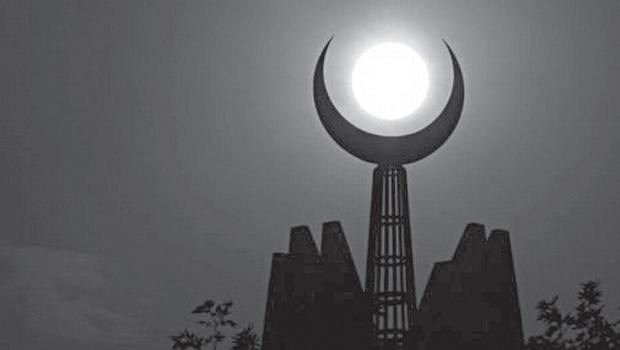
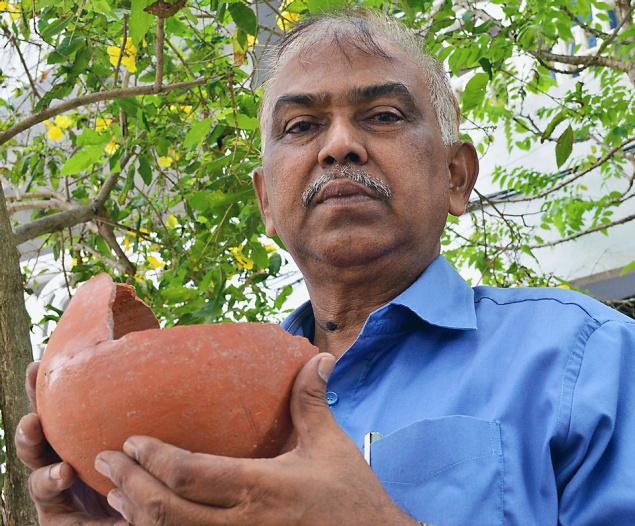
The wide Kazimar Street, which branches off from the busy TPK Road near Periyar Bus stand, is one of the oldest settlements of Muslims in Madurai. Historical legends state that Hazrat Kazi Syed Tajuddin came to Madurai from Oman in the 13th century and established the Kazimar Big Mosque on a land given to him by a Pandya monarch.

Till date, the descendants of Syed Tajuddin, who is believed to be a descendant of Prophet Mohammed, live on the Kazimar Street. They are hereditarily elected as the town kazis.

Syed Ahja Mueenudeen, the current town kazi, said that the Kazimar Big Mosque, which was constructed by Tajuddin as a thatched structure initially, was the first place of worship for Muslims in Madurai. The street has had Muslims settlement for over 700 years, he said. Thus, Islam arrived in Madurai even before Malik Kafur’s invasion of Madurai in the 14th century.

History professor R Venkataraman opines King Maravarman Sundarapandian might have been the contemporary of Tajuddin. Even before the advent of Islam, Arabs maintained trade links with South India, especially for the pearls Madurai Pandya Kingdom was famous for. “Sufis, Muslim saints, started coming to Tamil Nadu by 900 AD. The entry of Islam to the region was peaceful as Sufis conceived God as love,” he said.

The short-lived Madurai Sultanate and Islamic influence did have their impact on the city, especially on warfare and town planning. “Muslim rulers introduced arch construction they learnt from the Romans. It changed the style of architecture here in a significant way,” Venkataraman remarked.

The Big Mosque, which is an architectural attraction, accommodates Madurai Maqbara which is the dargah of sufi saints Hazrat Meer Ahamad Ibrahim, Hazrat Meer Amjad Ibrahim and Hazrat Syed Abdus Salaam Ibrahim Rahmatullahi Alaihim.

Syed Ali Hussaini, the renowned Chennai-based stunt artist, is originally from Kazimar Street. Recalling the legend of Tajuddin, he said: “It is believed that Tajuddin came from Arabia to Kerala and reached Madurai where he established a mosque. He became popular for divine healing powers. The Pandya king was irked with his fame, but Tajuddin cured the king himself when he suffered from a stomach ailment. The king gave away a land for mosque in gratitude,” he said. “Even today Tajuddin’s descendents, numbering more than 2,000, are annually given a customary nominal share of the income from the waqf lands originally donated by the king,” he added.

Till the 1980s, the residents of the street were engaged in rearing horses, rams, cocks and pigeons. “People were crazy about horses and many raised them. Rekla or bull cart race and pigeon racing were popular when I grew up in the area in the 1960s,” Hussaini recalled.

However, the face of the area has changed since then with many moving out for education and jobs, he said.

source: http://www.timesofindia.indiatimes.com / The Times of India / Home> City> Madurai / by J. Arockiaraj, TNN / April 27th, 2014

Remembering a titan of Hyderabad’s heritage

Remembering a titan of Hyderabad’s heritage

He played cricket and football for St Stephen’s Delhi with distinction. He did his masters in English as well as Arabic and he topped Punjab University in Persian. And if you are to name a saviour of the cave art of Ajanta and Ellora it is him:   Ghulam Yazdani,   a Padma Bhushan awardee as well as a recipient of OBE (Order of British Empire). 

As the Archaeology Department of Andhra Pradesh marks its 100 years the coming Friday, it is time to remember the man who created the department out of nothing.

If Hyderabad has a vestige of its heritage left, it is thanks to him. Deputed to Hyderabad as a Superintendent in 1914, he brought with him his expertise, energy and accountability. Not for him the claptrap of archaeology department doing the job of cataloguing and executing conservation work, Yazdani was a hands on man who got a road laid between Hyderabad and Bidar to protect the Bahamani heritage of Bidar and also between Toli Masjid and Golconda.

A man of sharp wit, he dismisses the decorative motifs of Toli Masjid as: “The impression made by such buildings overloaded with decorations is like the impression left by the ostentatious and lavish display of personal adornment, generally favoured by lowly persons suddenly become rich.”

For the restoration of the Ellora cave art, he tried to get Luigi Cavenaghi, the man linked to restoration of Leonardo’s Last Supper, to work on the paintings. Unfortunately, he could get only Lorenzo Cecconi, who applied shellac on the paintings, ruining them further. Ghulam Yazdani published a series of photographs and reproductions of the cave art with his explanations.

And by the way, Ghulam Yazdani’s salary was ` 560 per month. And just recently, the Archeology Department found it fit to name its museum after YS Rajasekhara Reddy!

source: http://www.timesofindia.indiatimes.com / The Times of India / Home> Life & Style> People / by Serish Nanisetti, TNN / April 21st, 2014

Creative collaborations

The father-son duo may not share the same calling, but are not averse to sharing notes on their respective artistic pursuits

YusufArakkalMPOs14apr2014

It was going to be different. This meeting. Artist Yusuf Arakkal, famous for his all-black attire as he is for his intense paintings, was dressed in pristine white kurta pyjama. “Don’t I look good?” he asks, leading the way to his large studio bathed in white light from huge north-facing windows. Paintings worth colossal amounts of money are stacked against the wall — some still await the maestro’s final touch.

Shibu, Arakkal’s only child, walks up to one of Arakkal’s paintings — an unnamed abstract — and wipes away a disturbing speck of dust. He then stands back and looks — not at the painting, but at the spot that he’s just cleaned. “I had no interest in art,” he says.

Arakkal cuts in: “In fact, I was worried that he would become an artist. I didn’t want him to be one. He would’ve been subjected to unfair comparisons.” There’s a reason behind Arakkal’s fear.

It was 1983. Arakkal was bestowed the National Award in Delhi along with Shamshad Husain, son of the legendary MF Husain. “After receiving the award,” recalls Arakkal, “we were walking back together when we overheard an artist say, ‘Baap ka beta hai isliye award le gaya.’ (He is THE father’s son, that’s why he took the award). That was terribly unfair to Shamshad.”

Arakkal never wanted Shibu to be subjected to such derision. He needn’t have worried.

Shibu’s calling was different. He wanted to become a photographer, but he didn’t know it at that time. Back then he wanted to be a football player, cricket player and also “an IAF pilot”.

He was a curious child, remembers the father. When he was two-years-old Shibu ripped off the film from his father’s Praktica camera and declared: “There is nothing to see.” Arakkal laughs, remembering the incident.

When he was in the eighth standard, Shibu was enamored by his father’s photographer friend, Regis Richard’s tiny camera. “It was almost like a spy camera,” recalls Shibu. He bombarded Richard with questions. And before he left the city, Richard gifted Shibu his Asahi Pentax 110 camera. “It was my first camera. Ever,” says Shibu.

However, Arakkal was convinced about his son’s talent as a photographer only when he saw a photo of a tiger clicked by him for an inter-college competition. “I looked at it and knew at once that this boy understood lighting,” says Arakkal, whose paintings are renowned for their artistic show of light and shadows. Shibu won the competition for the next three years in a row. “He had begun his journey that led him down an arduous route reserved for artists,” explains Arakkal.

The Arakkals discuss their works with each other freely. Shibu’s panoramic work from his series Passing By occupy pride of place at the Arakkal’s home. Jostling for attention is his baby portrait done by Arakkal during an eclipse when a four-year-old Shibu was more inclined to peer at the sun. “It was a way to keep him indoors and still by asking him to pose for me,” says Arakkal.

The duo might not agree on many things in life, but they firmly believe that to be an artist one has to have in-depth technical knowledge. As an art student at the Chitrakala Parishad College, Arakkal remembers his teachers sending them out “into the world to do live sketching” — 50 sketches a week and 10 watercolour paintings were the norm. The first thing he did after graduating in 1973 was to destroy most of his works done as a student. “I didn’t want to be burdened by those works and wanted to start afresh,” he says.

He then painted eight paintings — and several collages and collographs — depicting abstract and religious themes — and had his first solo show at the Alliance Francaise in 1975. It was a sell-out. “Today, students regularly hold solo shows even while learning art. There is a big hurry,” feels Arakkal. Shibu says the same is true of his world. “Half of the photographers have not seen a dark room and many do not understand the depth of photography.”

Father and son share the creative realm but their approach to it is different. “I am not emotional like him,” says Shibu. That could be because their early, impressionable years were diverse. Arakkal, from the royal Arakkal family in Kerala, had run away from home at 16. He wanted to be an artist. For two years he roamed the streets of Bangalore — unwilling to let go of his dream. “If I am an artist today, it is because I was stubborn about my dream,” says Arakkal. “He is the most stubborn person in our family,” laughs Shibu. His two-year-old daughter Zarah, he says, displays her grandfather’s stubborn streak. “Probably taking after him,” he says.

When Shibu recently won the Florence Biennale Gold Medal (2013) for his Constructing Life, Arakkal’s heart swelled with fatherly pride. The son had made a place for himself under the sun, away from his father’s colossal shadows. But there were detractors. Some of them commented that Shibu got the award because his father had influenced the jury. “Dad wanted to clarify but I told him not to,” says Shibu. “I rather focus on my work than answering them.” Arakkal nods in agreement. His son has indeed charted his own path.

source: http://www.bangaloremirror.com / Bangalore Mirror / Home> Columns> Sunday Read / by Jayanthi Madhukar, Bangalore Mirror Bureau / April 12th, 2014

Irrfan Khan scores over ‘The Grandmaster’

Irrfan Khan has just returned from Macau with the best actor and best screenplay trophies for The Lunchbox at the Asian Film Awards. 

Irrfan Khan
Irrfan Khan

What makes this award precious is that he beat Toni Chiu Wai Leung who was nominated in the best actor category for the Wong Kar Wai film, The Grandmaster.

“I’ve loved Toni’s work—Hero, In the Mood for Love, Chunking Express, Infernal Affairs and The Grandmaster. Even Ang Lee was impressed with The Grandmaster, which picked up the best film and best costume awards. Just being nominated with Toni was an honour,” he exults.

“What’s more encouraging is that The Lunchbox is growing everyday. It has released in around six countries, will open in 63 more. It’s just released in the UK, is growing bigger in the US, and has made a million in Hong Kong. This has never happened for an Indian film. It’s not patronised by only NRIs but the foreign market too.”

Still disappointed about missing out on the Oscar glory? “I was, for a day or two. Now, I’m happy the film is getting its due all over the world,” he asserts.

source: http://www.timesofindia.indiatimes.com / The Times of India / Home> Entertainment> Bollywood / by Roshmila Bhattacharya, Mumbai Mirror / March 29th, 2014

Indian scientist gets Order of Merit from German government

Hyderabad :

Eminent Indian scientist Prof Seyed E Hasnain has bagged the Cross of the Order of Merit of the Republic of Germany. He served as the founder-director of Centre for DNA Fingerprinting and Diagnostics (CDFD) and vice-chancellor of University of Hyderabad.

The award has conferred on Prof Hasnain in recognition of his contribution to Indo-German relations. The Order of Merit of the Federal Republic of Germany was instituted in 1951 by Federal President Theodor Heuss. It is the only honour that is awarded in all fields of endeavour and is the highest tribute the Federal Republic of Germany can pay to individuals for services to the nation.

German Ambassador to India, H E Michael Steiner, conferred the prestigious ‘Bundesverdienstkreuz’ on Prof. Seyed Hasnain at the German Embassy in India, says a statement from the University of Hyderabad on Thursday. Prof. Hasnain is a renowned microbiologist especially acclaimed for his path-breaking research on tuberculosis. He paved the way for the office of the German Research Foundation in India, which is one of the key forums for scientific cooperation between Germany and India. During his stay at the Robert Koch-Institute in Berlin and the University of Wurzburg, he produced remarkable research results in microbiology.

Prof. Hasnain has almost all major Indian Science Awards to his credit: GD Birla Award, Shanti Swarup Bhatnagar Prize, FICCI Award, J.C. Bose National Fellow Award, Ranbaxy Research Award, Goyal Award, Bhasin Award and several others. He is the first Indian elected member of the German National Academy of Sciences Leopoldina and one of the youngest to be elected Fellow of TWAS, Trieste, Italy. Internationally, Prof. Hasnain is a recipient of the prestigious Humboldt Research Prize, awarded by the Alexander-von-Humboldt Foundation, Germany; as well as the very exclusive Robert Koch Fellowship, of the Robert Koch Institute, Berlin.

source: http://www.timesofindia.indiatimes.com / The Times of India / Home> City> Hyderabad / by Syed Akbar, TNN / March 13th, 2014

Britain’s Royal Mail releases stamp on Noor Inayat Khan

Britain’s Royal Mail Monday issued a postage stamp of Noor Inayat Khan, the World War II heroine, who was a descendant of Tipu Sultan, the remarkable 19th century ruler of Mysore kingdom.

The stamp – part of a set of 10 stamps in their ‘Remarkable Lives’ series — honours Noor on her centenary year of birth. Others honoured in the set include actor Sir Alec Guinness and the poet Dylan Thomas.

“I am delighted that Royal Mail has commemorated Noor with a stamp,” said Shrabani Basu, author of “Spy Princess, The Life of Noor Inayat Khan”, and the chair of the Noor Inayat Khan Memorial Trust. “It will ensure that her sacrifice and bravery will not be forgotten. ”

Basu campaigned for a memorial for Noor which was unveiled in November 2012 by Princess Anne.

Noor Inayat Khan was born in Moscow in January 1914 to an Indian father, Hazrat Inayat Khan, and an American mother, Ora Ray Baker. The couple had met in the Ramakrishna Mission ashram in America. Hazrat Inayat Khan was a Sufi preacher and musician and travelled the world taking Sufism to the West.

Noor was brought up in Paris and the family moved to London when the city was occupied by the Germans in 1940 during the Second World War. In London, Noor joined the Women’s Auxiliary Air Force and was later recruited for the Special Operations Executive, a secret organisation started by Prime Minister Winston Churchill.

She was the first woman radio operator to be flown undercover to Paris and worked from there for three months under the code name Madeleine. However she was betrayed, arrested and finally executed in Dachau Concentration Camp in Germany. Though she was tortured and interrogated, she revealed nothing, not even her real name. Her last word as they shot her was “Liberte”! She was only 30.

Noor was posthumously awarded the highest honour, the George Cross, by Britain. France awarded her the Croix de Guerre.

In 2006, President Pranab Mukherjee, then the defence minister of India, paid an official visit to Noor’s family house outside Paris and described her bravery and sacrifice as “inspirational”.

source: http://www.mea.gov.in / Ministry of External Affairs, Government of India / Home> Media Centre> Articles> Articles in Foreign Media / Malaysia Sun / March 25th, 2014

Fareed Zakaria : Acclaimed Journalist

FareedZakariaMPos26mar2014

Fareed Zakaria is a prominent Indian-American journalist and author.

Early life
Zakaria was born in Mumbai on the 20th of January  1964 to parents Rafiq Zakaria, a politician and  Islamic scholar, and Fatima Zakaria, who was the editor of the Sunday Times of India at that time. In his younger days, he was enrolled in Mumbai’s Cathedral and John Connon School.

Zakarai also enrolled into Yale University, where he participated actively in numerous unions and societies. He was the President of the Yale Political Union, the editor-in-chief of the Yale Political Monthly, and a member of the Scroll and Key society and Party of the Right.

Zakarai graduated from Yale University with Bachelor in Arts. In 1993, he also obtained a P.hD from Harvard University in Political Science.

Career
At the young age of 28, Zakaria became the managing editor of Foreign Affairs magazine. He held this post for 8 years, before he became the editor of Newsweek International in 2000. During his stint at Newsweek, he wrote his award winning article, Why They Hate Us, which appeared as a headline story on the cover of the October 2001 issue.

Since 2008, Zakaria has also been hosting Fareed Zakaria GPS, which airs worldwide on CNN. He has interviewed numerous high profile leaders and personalities on his show like Barack Obama, King Abdullah II, Dmitry Medvedev, Muammar Gaddafi and the Dalai Lama.

Fareed Zakaria GPS is broadcasted in approximately 200 million homes across the globe and received an Emmy nomination in its first year.

Zakaria has written best-selling books like From Wealth to Power: The Unusual Origins of America’s World RoleThe Future of Freedom, and The Post-American World. He was also the co-editor of The American Encounter: The United States and the Making of the Modern World.

Awards
The Anti-Defamation League awarded Zakaria with a Hubert H. Humphrey First Amendment Freedoms Prize in 2005. However, he returned the award to the ADL as a sign of protest after the organisation opposed the building of an Islamic centre  two blocks away from Ground Zero.

In 2010, Zakaria received the the Padma Bhushan, the third highest civilian award in the Republic of India, by the Government of India. In the same year, he was named as one of the top 100 global thinkers by Foreign Policy. Zakaria also received a National Magazine Award that year.

Personal life
Zakaria is married to Paula Throckmorton Zakaria, with whom he has one son, Omar and two daughters, Lila and Sofia. Zakaria, a naturalised American citizen, lives with his family in New York.

This biography will be updated regularly.

References

Fareed Zakaria Website

source: http://www.southasiandiaspora.org / Home> Author, People / by Jaclyn / August 02nd, 2012

India-born British ‘curry queen’ hunts for new backers

London :

An India-born British ‘curry queen’ who made her name supplying ready-made Indian meals to supermarkets and pubs in the UK is looking for new backers for her food empire.

Perween Warsi, who moved to the UK from India in the 1970s, wants to expand her S&A Foods firm with an injection of fresh funds.

Advisers from PriceWaterhouseCoopers firm have been hired to lead the search for the company, she set up nearly 30 years ago, from her kitchen, according to the Sunday Times.

The Derby-based caterer, which has 600 staff, makes Indian curry dishes for UK supermarkets including the chain Asda, its biggest customer.

Sales last year were 51 million pounds with pre-tax profits of almost £700,000.

Warsi was famously inspired to start the company after being appalled by the quality of a samosa she had bought from a supermarket.

She founded S&A Foods in 1986 by supplying her local Indian takeaway and the following year had her big break after persuading several large grocery chains to include her food in a series of taste tests.

Warsi was producing the curries from home but, after beating several established food manufacturers in the tests, was persuaded to open a factory.

She was honoured with a Commander of the Order of the British Empire (CBE) in 2002.

S&A Foods confirmed it was “seeking partners” to fund future expansion and new production facilities.

source: http://www.timesofindia.indiatimes.com / The Times of India / Home> NRI> Other News / by PTI / March 09th, 2014

Turkish delights

A cold mezze platter. / Photo: K. Ramesh Babu / The Hindu

The Turkish food festival at Park Hyatt offers a lot more than the staple doner kebab

The connection between Hyderabad and Turkey goes back a few centuries; Alauddin Khilji of the Khilji dynasty which ruled the state in the 14th century was of Turkic origin, Sultan Quli Qutb Shah who founded the Qutb Shahi dynasty too was of the same ethnicity, Princess Durre Shehvar, wife of Azam Jah, the eldest son of the seventh Nizam of Hyderabad is the daughter of the last Caliph of Turkey and more recently, Princess Esra, wife of Prince Mukarram Jah too hails from the country.

Surprisingly, while Hyderabad still retains much of the Mughlai and Iranian influence when it comes to culinary matters, Turkish food still remains quite different in flavour, ingredients and in technique. Moreover, while Mediterranean food is quite popular in the city, the fare is restricted to Lebanese, Greek and Italian, with the latter being present in almost every restaurant. So we head, all excited, to the Turkish food festival at The Dining Room in Park Hyatt with Turkish chef Turgut Tonbol from the Grand Hyatt in Istanbul. We sit down with the chef, who hails from Bolu, a province which he informs us is a region known for its contribution to Turkish culinary heritage.

“Turkish food mainly consists of the cold mezze and grilled or boiled meat,” he informs us, “but we also have a lot of broad beans, chickpeas and lots of soups in the diet.” Hyderabadis are no strangers to the cold mezze platter which has become a staple in many multi-cuisine and continental restaurants but the platter offered by Chef Tonbol has more than the usual Hummus and Tzatziki. The most interesting of these is the vine leaves, stuffed with rice, nuts and spices doused in olive oil. The platter also contains a simple preparation with broad beans and a mild chilli sauce. The freshly baked pita bread goes well with all or any of these accompaniments.

The cold mezze includes mainly vegetarian dishes. “In Turkey, we don’t have meat for mezze. It is only vegetables,” points out Chef Tonbol who says that the festival includes at least one dish from all the different culinary traditions in Turkey.

Chef Turgut Tonbol./  Photo: K. Ramesh Babu / The  Hindu
Chef Turgut Tonbol./ Photo: K. Ramesh Babu / The Hindu

Ask Chef Tonbol what his favourite dish of the afternoon is and he doesn’t think too much before naming the Shrimp Guvec, a mild stew spiced with chilli and herbs. He also suggests the Chicken Sheesh, a grilled meat dish very similar to our own kebabs, except it is marinated with a special Turkish red chilli, a milder version of the Indian chilli. “It is more similar to Kashmiri chilli which is bright in colour but less spicy in taste,” he informs adding jokingly that to eat Indian food, you “must be a strong man” to be able to take the level of spice. “The Yayla soup, a yoghurt based soup with mint, rice and egg is also a uniquely Turkish dish and a must try.”

Desserts include the favourite Baklava, a Turkish rice pudding and Turkish pumpkin, a simple but fresh and tasty dessert of sweetened pumpkin and cream cheese. But whatever you may pick for the main course, Chef Tonbol advises that you don’t leave without savouring the Turkish coffee accompanied by Turkish delights. The strong black coffee is a must after a meal, “for the gossip sessions”.

source: http://www.thehindu.com / The Hindu / Home> Features> MetroPlus> Food / by Zeenab Aneez / Hyderabad – March 13th, 2014

Mazars of Delhi poets… a grave story

MazarsMPos21mar2014

WHILE THE last resting place of Sheikh Ibrahim Zauq in Paharganj has been restored some respectability, thanks to the Supreme Court’s intervention, the graves of Khwaja Mir Dard and Hakim Momin Khan Momin behind the Maulana Azad Medical College are still a picture of neglect. It’s high time something was done to save them.

Mir Dard Road leads to the grave of the great Urdu poet, but the land surrounding it has been sold by the unscrupulous, and palatial buildings have come up around it, leaving only a small plot for the mazar. The grave of Momin is within a boundary wall, along with the graves of Shah Walliullah, the saint whom the poet held in high reverence, and members of the Shah’s family.

Over 40 years ago the hilly land near the grave was bulldozed and plans made to do away with the mazars. A great lover of Momin, Sher Ali Mewati heard of this and came from Mewat (Haryana) to save them. It is said that he lay on the road in front of Teen Murti House and did not get up even when Pandit Nehru was being driven out in his car.

Nehru got down from the vehicle and enquired what the matter was. When Sher Ali told him that the graves of Shah Walliullah and Momin were about to be bulldozed, the Prime Minister got very upset and drove to the spot. The demolition was immediately halted, and later Sher Ali Mewati was able to get the mazars repaired and enclosed in a boundary wall.

RVSmithMPos21mar2014

The area where this kabristan is situated is known as Mehdian. Sher Ali Mewati, they say, actually lay before a bulldozer to stop the demolition and his leg was fractured in the process. Whatever may be the truth, the area needs another man like him to preserve it from encroachment.

Khwaja Mir Dard was born in 1719 in Delhi and died on January 7, 1785. “Mysticism ran in the family, for he was descended on his father’s side from Khwaja Baha-ud-Din Naqshbandi, and on the mother’s side from Hazrat Ghaus-e-Azam,” says Professor Muhammad Sadiq.”Dard studied theology with his father, and learnt the art of poetry from Khan-e-Arzu. For some time he was in the army, but he gave it up to lead a life of retirement and study and, at 39, on his father’s death, succeeded him as the head of a sanctuary.”

The vanity and unreality of life and its joys and sorrows, unity of existence, the greatness of man in the hierarchy of life, the mirage of the intellect, praise of intuition, the extinction of self and suspicion of worldly life, pietism, contentment, resignation – nearly one third of his poetry is devoted to these ideas.

Professor Sadiq says that Momin Sadiq’s ancestors had migrated from Kashmir to Delhi. “His father, Hakim Ghulam Nabi, was a physician of note and connected with the imperial court. Momin was born in 1800 and was given that name at the instance of his father’s spiritual guide, Shah `Abdul’ Aziz. His education had been thorough and systematic, as is proved by the embarrassing profusion of technical terms pertaining to medicine, astronomy, mathematics, music, etc., in his qasidas. A man of pleasure in his youth, he forswore his Bohemian ways when he became a disciple of Sayyid Ahmed of Rae Bareily, but he was far too human to sink into a dour puritan. The fruits of his conversion can be studied in his Masnavi-e-Jahadiyya and a few other pieces. He died in 1851.”

Momin is said to have predicted his death in verse, as he was also a najoomi (astronomer-cum-astrologer), saying he would end up with broken arms and legs (“dast-o-bazu”). This is actually what happened years later when he fell from a ladder and died after nine days. His famous couplet, “Tum mere pas hote ho goya/ Jab doosra aur koi nahin hota” made his contemporary Ghalib remark that Momin could take his entire dewan and give him just this pearl of a couplet in exchange.

Momin’s best work is Ab-e-Hayat (Parnassus literally, but water of paradise figuratively) Shouldn’t his grave and that of the great Mir Dard be preserved?

source: http://www.hindu.com / The Hindu – Online Edition / Home> Features> Magazine / Down Memory Lane  by  R V Smith  /  Monday – May 24th, 2004