Category Archives: World Opinion

Royal Absurdity

The former rulers of Lakshadweep want their kingdom back…or at least a modest raise in their royalty pension

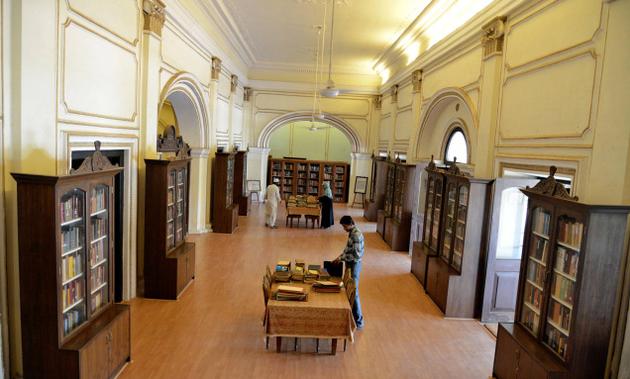
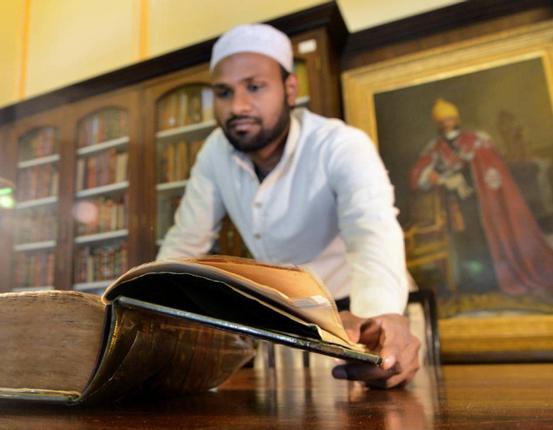
Arakkal museum, Kannur (Photos: RITESH UTTAMCHANDANI)

Once upon a time, a queen lost her kingdom to a foreign invader. Under the terms of surrender, she was allowed to retain her title, inheritable by the seniormost member of the royal family. She was also assured an annual payment to maintain her standard of living. It was a generous sum back then. Then came the passage of time. Sovereigns vanished into history and elected governments came into existence. The royal family didn’t live happily ever after. Their annual pension, a fixed sum, was ravaged by inflation.

It began to look smaller and smaller, until it came to a point where it was not even as much as the monthly salary any of them earned.

And then the family decided to make a calculation. When they were first allotted that sum, how much gold could they have bought with it? And how much would that gold be worth today? This figure, they convinced themselves, was the sum that they should logically be getting.

And so they went to the government and asked for it. Else, they demanded their kingdom back. They will probably not get either.

+++

That, in short, is the story of the Arakkal family that once ruled the city of Cannanore (now Kannur) and Lakshadweep Islands, a reign that lasted five centuries. The trust that governs their affairs recently made the bizarre demand that the Indian government either raise their pension or return Lakshadweep.

I had to wait ten minutes after ringing the bell at the present queen’s residence in Talassery, a town 20 km away from Kannur. A huge house modelled on the original palace that is now a museum of history, it is as silent and empty as any other house along the Malabar coast whose members have left for greener pastures abroad. The queen has three sons, all working overseas, and one daughter. It is the daughter, who looks around 50, who opens the door and welcomes us in. She had been busy with her evening prayers and apologises for making us wait. She and her mother are the only two residents of this palatial house.

I am taken to the queen’s room, where the 92-year-old Sultan Arakkal Adi Raja Sainaba Aishabi, also known as Arakkal Beevi, reclines on a bed. More than three years ago, she had suffered a stroke and never fully recovered. But she welcomes me with a gladdening smile. I have to bend forward to catch the words of her broken voice.

“Journalists often come here,” she whispers, “though I am not well enough to talk. You may get sufficient information from my children. Please don’t forget to have tea and some food before you leave.”

I ask her whether she is aware of the Arakkal royal family trust’s demand. She answers with the same bright smile. It is her daughter who speaks. “She is too old to get into such headaches,” she says.

For centuries, the royal title has been passed along to the seniormost member of the family irrespective of gender. A male king would be called Ali Raja Adi Raja (‘lord of the sea’) and a female, Arakkal Beevi.

According to historians, the Arakkal Dynasty was Kerala’s only Muslim family of rulers. There is no consensus on their origins, but some say their assumption of power dates back to the 13th century.

According to a piece of local lore, the dynasty was founded by a minister of Kolathiri Raja (the then regional ruler) who converted to Islam and became a ruler.

Another says that the Arakkal royal family traces its lineage to Mohemmad Ali, a nephew of Cheraman Perumal (a regional ruler before the region split into different principalities) who is said to have embraced Islam. The only thing certain is that the Arakkal Dynasty had sovereign control of Cannanore that later extended to Lakshadweep islands off the coast of Kerala in the Arabian Sea.

The arrival of European seafaring powers bolstered their kingdom’s trade and commerce. They had a love-hate relationship with the Portuguese, the Dutch and the British. According to Dr A Sreedhara Menon, a scholar on Kerala history, the Arakkal principality of power came to an end in 1790, the year in which St Angelo Fort of Cannanore was stormed by General Abercromby, the then British Army general. Locally known as Kannur Fort, it had been built in 1505 by the Portuguese; it was later owned by the Dutch, who then sold it to the Arakkal king for Rs 1 lakh. The fort is now a tourist destination. The East India Company later forced the then Arakkal Beevi into an agreement under which she had to give up control of Lakshadweep islands. She was allowed possession of Cannanore city, but deprived of any claim to sovereignty. The East India Company pensioned off the Arakkals the same way they did other local kings and chieftains in India.

By 1900, the family had lost every trace of power. In 1905, they had to make another agreement with the British giving up all sovereign claims on Cannanore and Lakshadweep. In return, they were entitled to receive an annual pension, termed malikhana, of Rs 23,000. This is a sum they still get, though from the Government of India, which took over the obligations of the departing British.

+++

On 10 July this year, a decision was taken at a meeting of the royal family trust to press the demand for a raise (or a return ‘surrender’ of their kingdom). “It is not the first time we have made this demand,” says Ali Raja Adi Raja Hameed Hussain, the eldest male member of the royal family. We are at a shop he has in Kannur, where he runs the family business of spice exports. He takes a bundle of papers off a wooden shelf to show us. The stack includes copies of representations submitted to Central and state ministers to raise their malikhana. “We have been demanding a reasonable hike for long,” he says, “This time we decided to make it public through the media.”

While that may be so, why they consider their demand reasonable remains a mystery. India, after all, is a democracy and there is nothing that entitles them to such a payment. “We need money because we want to continue the charity work which had been done by our ancestors,” says Hameed Hussain. But why demand public money for purposes of charity?

“Because we are descendants of a sovereign ruler,” replies Ali Raja Mohammed Rafi, younger son of Arakkal Beevi Sainaba Aishabi, who runs an advertising agency in the UAE. “As per the contract of 1905 with the English East India Company, we are entitled to receive an amount sufficient to maintain the standards of royal living.”

The agreement, a copy of which is with Open, reads: ‘The Government would pay to the Adi Raja and to his heirs and successors a Malikhana of Rs 23,000 per annum in equal monthly installments one half being paid to him during his life and after his death to the head of the family for the time being as a personal grant for the maintenance of his position and dignity and the other half being paid to him and to his heirs and successors as heads of the family.’

Mohemmad Rafi, who is the managing trustee of the royal trust, says that Rs 23,000 was a huge amount in 1905. If calculated in terms of gold, he says, it would have bought 64 kg of the metal in 1905. “Considering the value of gold [now], we should get around Rs 14 crore per annum,” claims Mohemmad Rafi. “We know that is not practically viable and so we are demanding only a reasonable hike in the annual pension.”

+++

This is not the Arakkals’ only family tussle over ancestral property. There is an ongoing dispute with another family of Muslim landowners, the Keyis, over 1.4 million Saudi riyals—about Rs 2.2 crore—said to be lying in the Saudi Arabian government’s treasury. The exact sum cannot be verified, though many believe it to be in the tune of Rs 90 crore. About 150 years ago, a member of the Keyi family, Mayinkutty, is said to have built a guesthouse in Mecca to accommodate Hajj pilgrims from Malabar. In 1971, the Saudi government demolished this structure as part of a development exercise, allotting 1.4 million riyals as compensation to be handed over to the Keyi heirs. At that point, the Arakkal royal family also staked claim to the amount on the grounds that Mayinkutty had married one of their members, Aychi Beevi. “It is beyond dispute that we are the legal heirs of Mayinkutty Keyi and have legitimate claim over that property,” says Mohemmad Rafi.

The Kerala government recently appointed an IAS officer, TO Suraj, to look into the matter and take a final decision. He says that neither family might have any right to it. “In my understanding, the property was dedicated to the Wakf for the welfare of pilgrims,” says Suraj, “The government is trying to attach the property [for use of] the Wakf Board by due process.”

Professor Rajan Gurukkal, a historian and former vice-chancellor of Mahatma Gandhi University, thinks that would be ideal. “It should go to the government and be used for a public purpose,” he says. Gurukkal also thinks that the demand to raise the malikhana has no legal validity. Dr KKN Kurup, a historian of the Malabar region, author of a book on the Arakkal family’s history called Aliraja of Cannanore and former vice-chancellor of Calicut University, terms the demand “absolutely irrational”. He says there is no reason to spend public money on the upkeep of aristocracies and royalties of the past. “The  malikhana was maintained primarily on the condition that they should be loyal to the English East India Company. How can they claim the same even after independence? Does it mean that the Arakkal family is still loyal to the British? What if all the heirs of rulers of princely states make similar demands?”

source: http://www.openthemagazine.com / OPEN Magazine / Home> Open> Feature / by Shahina KK / August 23rd, 2013

After 2 years,Isa Khan Tomb reopens in new-found glory

SUMMARY

Humayun’s Tomb made news in 2010 when US President Barack Obama and wife Michelle were photographed here,staring at the monument’s majestic elegance.
_________________________________________________________________________

Humayun’s Tomb made news in 2010 when US President Barack Obama and wife Michelle were photographed here,staring at the monument’s majestic elegance. On Thursday,the World Heritage Day,the Humayun’s Tomb complex will return to make news again to announce the unveiling of its most attractive structure,Isa Khan’s Tomb,after a two-year-long restoration.

Isa Khan’s Tomb,part of UNESCO World Heritage Site of Humayun’s Tomb,has a dome that resembles a plump inverted flower. But time and state negligence had robbed this flower of its beauty and fragrance. A 27-month-long conservation drive has attempted to infuse that lost beauty back into the tomb.

The restoration drive was jointly funded and undertaken by the Aga Khan Trust for Culture and the World Monuments Foundation,with help from the Archeological Survey of India. The project is part of a larger urban renewal project in Delhi that includes 50 monuments.

On Thursday,Union Minister for Culture Chandresh Kumari Katoch will open Isa Khan’s Tomb to the public. Almost 2,000 school children will be taken there for a heritage walk and design workshops.

Isa Khan was a noble in the court of Sher Shah Suri in the 16th Century. Suri ruled Delhi between the reigns of Humayun and Akbar.

Isa Khan’s Tomb is a resplendent example of the concept of a garden tomb,which pervaded that era. It combines the garden and the grave,symbolic of life and death.

This tomb is the only historical monument in India which has been restored by a non-government body. A key official of the restoration project said other than returning the mausoleum its lost glory,the project has also successfully achieved its objective of imparting knowledge of traditional architecture and design to the craftsmen who worked on it.

“We got them trained in making tiles in the Central Asian style,where the Mughal and Suri dynasties originated,” he said.

Today,the Mughals are primarily associated with their taste for rich architecture — the Indo-Persian school of architecture. But their love for fruity and floral plantations was legendary. Mughal monuments were designed in the centre of gardens primarily consisting citrus plantations. That same refreshing,tangy citrus scent will burst into the precincts of Isa Khan’s garden tomb again now with the generous re-plantation of this genus.

When restoration was underway in 2011 at this garden tomb,serendipity visited the project team. The monument suddenly had India’s oldest “sunken garden”. The official said,“The idea was to align the tree top-level with the eye level,so that when one stands on the courtyard of the main structure,one sees a carpet of green,giving a ‘sinking’ effect to the encircling vegetation.”

For a monument to achieve the prestigious UNESCO World Heritage Site status,its features must contain an “outstanding universal value”. The Humayun’s Tomb complex made the cut because it is not just the mausoleum of the second Mughal emperor,but an ensemble of 16th Century garden tombs like Bu Halima,Batashewala,Neela Gumbad and others,besides Isa Khan’s tomb.

The restoration project’s staff boasts of an “inclusive approach” undertaken while giving the garden tomb complex a makeover.

“For us,the craftsmen were the project’s centerpiece. We focused on the quality of work and not the traditional dihaari (daily wages) system. We also employed latest technology,like laser scanning and GPRS pointing,to fine tune things. Laser scanning helped to make an error-free structural assessment of the monument and GPRS pointing helped to locate underground archeology,if any,before we started work,” the source said.

Revival of the Garden tomb

On World Heritage Day,Union Minister for Culture Chandresh Kumari Katoch will open the Isa Khan Tomb to visitors,after a 2-year restoration drive

Isa Khan was a noble in the court of Sher Shah Suri in the 16th Century

His mausoleum is an example of the concept of garden tomb,which pervades that era. It combines the garden and the grave,symbolic of life and death

Dome — resembling an inverted plump flower — had weathered owing to time and negligence

Restoration jointly funded,and undertaken by Aga Khan trust for Culture and World Monuments Foundation,with help from ASI

It is the only historical monument in India restored by a non-government body

The project is part of a larger urban renewal project in Delhi which includes 50 monuments

For the project,craftsmen were trained in making tiles in the Central Asian style,where the Mughal and the Suri dynasties originated

Along with a crafts-based approach,latest technology,like laser scanning and GPRS pointing,was used to fine tune the work.

source: http://www.indianexpress.com / The Indian Express / Home> Cities> Delhi / by Ruchika Talwar / New Delhi  / April 18th,  2013

A tryst with history at Safardjung’s Tomb

SUMMARY

The Quest took students of Ramjas School, Pusa Road,on a visit to Safdurjung’s Tomb in New Delhi.
_________________________________________________________________________

Words are not enough to describe the feeling of utter amazement one feels as one steps into Safdurjung‘s Tomb. My first visit to this tomb – aptly described as the last flicker in the lamp of Mughal architecture — was an unforgettable and enriching experience.

The mausoleum is surrounded by lush gardens in Mughal style. The interior of the tomb with Safdurjung‘s cenotaph has a mysterious,yet serene air about it. My friend and I stood there awed by the amazing architecture,utterly captivated by its peaceful charm.

Amidst the city’s noises,there is this one place where you can be at peace. So when it was time to go,I didn’t feel like leaving. One just cannot have enough of its beauty. I look forward to going there again. I’d say it’s a must-visit place for its serenity and architectural value.

n Muskaan Sharma,XII-B

On April 9,our school organised a trip to Safdurjung’s Tomb for the students of Class XII. I was very excited about the trip as I’ve never been there. I did not know anything about Safdurjung so I thought he would be just another historic personality who would have fought many wars. When I arrived at the tomb,I was enthralled by the majestic monument with a white marble dome. It was surrounded by beautiful gardens and fountains. We were told the fountains don’t work due to water shortage in the city. While walking up the steep steps of the monument,one could see the tomb in the centre of a vast hall. One just can’t ignore the beautiful carving on the walls of the monument. We were told that Safdurjung was prime minister of Mughal Emperor Mohammad Shah. Safdurjung’s Tomb was inspired by the Taj Mahal and Humayun’s Tomb. Although the tomb was undergoing renovation, it remained open for general public. It was truly an unforgettable trip. The hard work of the architects is evident in the intricate carvings inside the tomb. This place is definitely worth a visit.

n Chetan Jajodia,XII – BCom. A

Described as ‘the last flicker in the lamp of Mughal architecture’,Safdarjung’s Tomb epitomises beauty and serenity. It was built by Shuja-ud-Daulah in memory of his father,Safdarjung,who served the Mughal Emperor Mohammed Shah as his prime minister. The garden tomb is characteristic of the Indo-Islamic architectural style. The central tomb is the main attraction of the complex. It has a huge dome which gives it an appearance of a ‘maqbara’. The walls of the tomb have fine and elaborate plaster carvings influenced by the pietra dura style. There are four water canals cutting across the garden to form a typical ‘charbagh’. Octagonal towers in the corners add more beauty to the central tomb. The garden is built in the Persian style and one can enter it through a gate with intricate Rajputana carvings on it. The whole tomb is made of red sandstone.

The way the Archaeological Survey of India has tried to preserve this monument is appreciable. But being responsible citizens of this country,we must also help protect and maintain our monuments. I am grateful to my school and The Indian Express for organising this heritage walk. It was truly an enlightening visit. This brush with history was an enriching one.

n Ananya Das,XII Sc A

Safdarjung’s Tomb — once you visit it,the mystique charm of the monument will remain with you for long. This tomb is considered the “the last flicker in the lamp of Mughal architecture in India”. It was built for Safdarjung,the powerful prime minister of Mughal Emperor Muhammad Shah. Safdarjung’s son Shuja-ud-Daulah constructed it in 1754.The fact that the monument is an amalgam of different architectural styles ignited my interest. The tomb has influences of the Humayun’s Tomb and the Red Fort in its design. As soon as I entered the monument,my eyes instinctively went up to the dome and I was mesmerised by the beautiful symmetrical designs. The dome seemed too high for someone to carry out such elaborate and perfect carvings. But the fact that it was done points to the mastery of the craftsmen in those days. The huge gardens,spacious balconies,corridors and the water canals fascinated me. The serene grave of Safdarjung reminded me of the spirit behind the construction of the monument — a son’s reverence,love and gratitude towards his father. The tomb also houses Shuja-ud-Daulah’s wife’s grave. The complex also included the three-domed mosque and three beautiful pavilions.

As we were got ready to leave,I turned again towards the tomb,wanting to get one last look of this magnificent structure. If only I could stand and stare a little longer.

n Apoorva singh,XII

“You employ stone,wood and concrete,and with these materials you build houses and places,that is construction. But when you suddenly touch my heart,you do me good and make me say ‘This is beautiful’,that is architecture.”

Life gets a fresh breath when history rises from its grave. It happened with me April 9,while we were counting our steps to Safdarjung’s Tomb. The tomb built for Safdurjung,the prime minister of Mughal Emperor Muhammad Shah. It was built in 1754 in the Mughal style and is described as “the last flicker in the lamp of Mughal architecture”. Today,it’s in a dilapidated condition,with cracks in the walls and the tomb’s walls turning yellowish grey from white. But though the tomb has lost its pristine beauty,it still gives a mystique feeling. The central tomb has a huge dome. There are four water canals leading to the four corners of the building — one has an ornately decorated gateway while the other three corners have octagonal towers. The canals are four oblong tanks,one on each side of the tomb. On the whole,the tomb has been decorated with cheap material,pointing to the economic conditions of that time. But in spite of this,I realised that the people in those times were full of life.

n Gayatri Chetal,XII Com-B

After tolerating the chaos of Delhi roads on a daily basis,one longs for some quiet time in a serene place. Safdarjung’s Tomb on Lodhi Road is one such place. It was built by Shuja-ud-Daulah after his father’s death in 1754. Safdarjung’s Tomb is a garden tomb with a marble mausoleum. It was built in 1754 in the Mughal style. Its façade is decorated with elaborate plaster carvings. There are four water canals inside the tomb leading towards one ornately decorated gateway and three pavilions with octagonal towers. I would like to thank The Indian Express for giving us the opportunity to learn about our past.

n Harshita Kakar,XII Com-B

My visit to this incredible heritage site was fascinating experience. The Safdarjung’s Tomb was constructed by Shuja-ud-Daulah for his father Safdarjung who was the prime minister of Mughal Emperor Mohammad Shah. The main entrance is a huge decorated gate with arrow silts. The tomb stands majestically surrounded by verdant lawns. The amalgamation of the Indo-Islamic and Hindu styles for the construction of the tomb is highly appreciable. It consists of chattris,minarets and cosmic signs. The way the Archeological Survey of India has tried to preserve the Safdarjung’s Tomb is commendable. I express my heartiest thanks to The Indian Express for giving me a chance to visit this historical place.

n Kashish Chaurasia,XII Com B

Safdarjung’s Tomb was built in 1754 by Nawab Siraj-Ud-Daulah,the son of Safdarjung Mirza Muqim Abul Mausum Khan,the prime minister of Mughal Emperor Mohammad Shah. Safdarjung’s Tomb is a beautiful mausoleum and is counted as a major heritage site in India. It is described as “the last flicker in the lamp of Mughal architecture “ because it reflects the last phase of Mughal architecture. The tomb is enclosed by a tall wall and can be entered through an imposing gateway. There are large pleasant gardens with elegant palm tree-lined paths surrounding it. We could see the remains of the water courses and fountains which had divided the garden up into four squares. The pavilions on the wall are run down and are now used for storage. The tomb stands on a high terrace in the centre of the enclosure. It is a solid square structure built of highly decorated red sandstone with a central marble dome. Apart from Safdarjung’s grave,there is another grave here,that of the wife of Shuja-ud-Daulah. The chambers in the room are surrounded by eight rooms. All the apartments are rectangular in shape except the corner ones that are octagonal in shape.The central chamber is beautifully carved and surrounded by rhombic compartments. The mosque,built in red sandstone on the second storey,was added later.

Safdarjung’s Tomb is a quiet haven in the middle of the city’s din. The tomb is similar to Humayun’s Tomb in its architecture. The environment around the tomb is extremely calming and to visit such a beautiful place is a refreshing experience.

n Namrata Das,XII Sc A

source: http://www.indianexpress.com / The Indian Express / Home> Cities> Delhi / by Express News Service / April 22nd, 2013

My Real Life Hero : Masarat Daud (DO NOT JUDGE A BOOK BY THIS COVER)

I have been pretty good about posting one of these every two weeks. I wanted to do Masarat this week because she is speaking at TED (March 15 – 28 ) on Thursday, March 20, 2014, 5:00pm-6:45pm PST.

When I first met Masarat, I was told (by Masarat) that I judged by what I saw. In fairness (to me), we did not have any interaction. She joined my place of work just as I was leaving to set up my own company. I think if I had spoken to her, I would have known the person I know (and adore) today. (Masarat, am I being sycophantic enough?)

masarat-daudMPos16mar2014

Masarat is a maverick on so many levels: as a woman/girl, as a muslim woman, as a muslim woman from rural Rajasthan in India, as a muslim woman IN A BURQA from rural Rajasthan growing up in Dubai and NOW living in UK. She breaks all the stereotypes you have in your head about these women. You just have to meet her once to know that. She does not broadcast about the work she does – she just does it. Her feet are firmly grounded, and she has a wicked sense of humour. I love her, in awe of her, and inspired by her. Like all my heroes, I sent her the same questions and here are her responses.

What inspires you?

This is a difficult question to answer. Inspiration comes to me in the most random, fleeting moments. These days, I am moved by a heightened sense of moralobligation. I feel that it does not leave me with much choice than to do what I am doing.

But on a larger level, I am inspired by good people. I have a deep respect for regular humans and their capacity to be good in challenging circumstances. In the middle of a communal riot victims’ camp, while walking around and talking to people about their conditions, almost everyone whose camp I passed, invited me to have tea or dinner—plain, boiled rice. I think these acts inspire me because they give me hope which we all desperately need these days! Plus, they push me to be closer to earth.

Who is your hero? Why?

Another tough question! I have many people who I admire for many different qualities. My hero is everyone who has fought the norm and created a different/better life for themselves. People who could stand up for what they believed was right; people who do not moan and whine that Life gave them a rotten deal. Whether it was my father who fought his society by educating himself and us; whether it is Person X [someone I know] who fought her deep pain to love us untainted, unconditional; whether it is people who I know are struggling personally but don’t lose themselves to bitterness and grudge…just so many.

If you had a choice of becoming one of your (all time – dead or alive; real or fiction) favourite character, who would it be and why?

I wouldn’t want to BE one of the people I know personally, simply because if I were them…then I would not experience them in my life the way I have. So I will have to choose outside: I think Sir Syed! A man who was way ahead of his time—in terms of thought process, passion and action. You can read more here: http://en.wikipedia.org/wiki/Syed_Ahmad_Khan

When are you happiest?

I am particularly happy when:

– When I am in my village

– When I am surrounded by my family (anywhere in the world)

– When I am doing something meaningful

What pisses you off most?

Hypocrisy (religious and other), Ego, Lies, Anchovies and capers in my food

What is your most embarrassing moment?

I think I got over this long time back. I can hardly remember any but maybe ages ago, when I turned up to school in two different shoes: one with heel and the other one flat

What would you describe as your most sublime experience?

In Berlin, at a random small Italian restaurant, eating the juiciest, more incredible tomato I had ever eaten. AND.

In Muzaffarnagar, hearing Urdu being spoken among regular people. You can then really understand why language is so important in shaping us as sensitive, respectful humans.

If you had a million dollars, what would you do with it?

Money is useless if it cannot allow me to make others happy. I know myself—I will give it to whoever has a more life-changing need than I. If something remains, I am booking travel tickets immediately!

Enjoy getting to know this amazing woman if you haven’t already and connect with her in the links below.

Twitter: @Masarat

Blog link http://ruralspirit.wordpress.com

source: http://www.mita56.wordpress.com / Home> MIta’s Views / by  Mita Srinivasan / March 16th, 2014

Mughal Emperors eyes medical tourists from Iraq

The company is promoted by Yakub Habeebudin Tucy, the great grandson of last Mughal Emperor Bahadur Shah Zafar.

Hyderabad-based Mughal Emperors Logistics Private Ltd is reaching out to Iraqi nationals interested in medical tourism in India.

The company, which is promoted by Yakub Habeebudin Tucy, the great grandson of last Mughal Emperor Bahadur Shah Zafar, said it was also looking at Jordan and Palestine.

According to Tucy, the potential medical tourists from Iraq to India is 800-900 every year. While a less severe medical therapy costs around Rs 60,000 in Iraq, in India it costs Rs 15,000-20,000. The cities mostly preferred for therapies are Mumbai, Chennai and Hyderabad.

On average, a medical tourist from Iraq stays for 20-25 days in India, while in some cases it’s around 60 days.

On the total Indians visiting Iraq annually, Tucy said more than 16,000 visit places of religious interest including the shrines of Abdul Qadir Gilani in Baghdad, Imam Hussain in Karbala and Imam Ali in Najaf. Some Indians also throng the ruins of Babylonia on the River Tigris.

Mughal Logistics is ferrying a batch comprising 100-120 individuals every two months to these holyplaces for the Muslim community.

It runs a seven and eight-day package for Indians travelling to Iraq, priced at Rs 65,000 and Rs 75,000 respectively.

source: http://www.business-standard.com / Business Standard / Home> Companies> News / by BS Reporter / Hyderabad – March 05th, 2014

Nizam’s Erstwhile Relic, Telangana’s Pride ?

Nizam’s Lost Glory ?

Railway Board Chairman Arunendra Kumar is on the test drive of John MorrisFire Engine, one of the priceless possessions of Indian Railways maintained at the National Rail Museum, before its participation in the 38th Statesman Vintage and Classic Car Rally to be held in New Delhi on 2nd March, 2014.

NizamsVintageHF13mar2014

This vintage FireEngine which was built by the famous Fire engineers M/S John Morris and Sons Ltd., Salfor, Manchester in 1914, completed 100 years of its existence this year (2014), coinciding the formation of Telangana, erstwhile Nizam’s state.

Will  Telangana also fight for its vintage and priceless proud possession, now that the new state is born?

(PIB)

source: http://www.microfinancemonitor.com / MF Monitor / Home / Thursday – March 13th, 2014

Bangalore to biennale

ShibuArakkalMPos13mar2014

Photography took Shibu Arakkal to Florence. He returned with the Lorenzo il Magnifico gold for digital art, finds NIRMALA GOVINDARAJAN

AwardLorenzioBF13mar2014

The time when Shibu Arakkal first looked at the world through his camera was also the time when he got hooked to it. “I never dreamed of being a photographer,” he confesses. Still, Shibu continued to fool around with his father Yusuf Arakkal’s very serious German single lens reflex camera. “He had paid quite a bit for it those days and it was always loaded with film. I would sneak into his studio, take one or two photographs and quietly put it back. When my dad got the role processed, he would always wonder how there were a couple of pictures he didn’t remember having taken.”

The first time Shibu put his camera to use – constructing a friend’s fashion portfolio, it went on to fetch her several modelling assignments.

After this recognition, Shibu’s momentous tryst with the camera began. “That first shoot got me deeply curious about photography and helped me decide what to do with my life.”

So Shibu’s world came alive through people and stories until recently in end 2013, when he went on to bag the prestigious Lorenzo il Magnifico gold prize for digital art at the Florence Biennale. “Dad always worried about what I would end up doing with my life given my long list of ambitions. When I got hooked to photography, I knew that this wasn’t just a fling. Two decades since, my camera and I have looked at the world, analysed and interpreted life around us, as my method of learning about this world and the things in it. Also to grow as a person and gain that bit of wisdom, which is somehow more important than just intelligence. What I photographed over the years has become my life’s journal and I have been conscious that it is by what I will be known, long after I am gone.”

Going for goldWith lifetime achievement awardee Anish Kapoor, the award and the work that got it

“Selection into the Florence Biennale 2013 came with certain confidence that I had the work worthshowing on such a stage. I had been working on the series Constructing Life for nearly four years when I had decided to can it half way through, realising that I needed to come back to it when I was a bit more mature. This body of work seemed to have a destiny of its own. The emotion, which the works from this series carried, was hence extremely powerful.”

ShibuItalyMPos13mar2014

Then came the moment in Florence when Shibu’s heart was heavy and light at once.

“Although the Lorenzo il Magnifico Gold Prize was being talked about in regard to my work from day one at the Biennale and knowing how strong my work was, I was also very aware of how these things are decided by people who also have subjective views and opinions. So when the award was announced without prior notice, it was entirely surreal, a moment, which I wasn’t fully conscious of, being thrown by the fact that I got awarded in a category above what I had entered. It however made the extremely trying times in my career and the very difficult actual process of executing the work, truly worthwhile.”

Back from the Biennale to life in Bangalore, Shibu explores India, reaching out to the world through what he does best – photography in an era of click on the go.

“It is a very real and satisfying life. Besides, Bangalore is home. It is where I was born and raised. I have resisted settling down abroad purely because of my love for it. It is ground zero and Bangalore has been extremely good to me in terms of recognition, patronage and support for my work in general. It is a place where I can be fearless in any sort of experimental work that I put out and be quite assured that it will be received for what it is,” he says as he readies for a day in his life – between his work, riding and the joy of being a dutiful father to his four-and-half-year old daughter.

source: http://www.thehindu.com / The Hindu / Home> Features> MetroPlus / by Nirmala Govindarajan / March 13th, 2014

With sheer grit, Haseena moves on

Haseena Hussain./  File photo: K.Gopinathan / The Hindu
Haseena Hussain./ File photo: K.Gopinathan / The Hindu

We want society to be humane to us: acid attack victim

Earlier this week, Laxmi, a victim of acid attack, was awarded the International Women of Courage Award by U.S.’s First Lady Michelle Obama for successfully leading the campaign against acid attacks on women in India.

The story of Haseena Hussain of Bangalore, who fought a long battle after an acid attack in 1999, is as inspiring as Laxmi’s.

Ms. Haseena was attacked with acid in 1999 by Joseph Rodriguez, her former employer, as she had not responded to the marriage proposal and had refused to stay back in his firm. Today, almost 15 years later, Ms. Haseena is the sole breadwinner of her family of four comprising her father, mother and grandmother.

Choosing not to be bogged down by 35 surgeriesand loss of vision in both eyes, besides constant “stares” and comments from relatives and acquaintances, she now works in a government office. When asked if she was offered the job by the government, an irked Ms. Haseena says: “I got this job on my own. I cleared several rounds of tests after undergoing computer training.”

Ms. Haseena hates re-living what she calls “sob story” and says that she hopes every acid attack victim is able to fight the odds and become independent. “As I was educated, I was able to secure a job. But acid victims, particularly in rural areas, may find it difficult to be independent. Most acid attack victims lose their vision. If the government provides jobs, they can remain independent.”

She adds categorically that she needs no sympathy. “We only want society to behumane to us.”

Besides the discrimination she faced in society, her family had a tough time mobilising resources for her surgeries and other medical aid. “My father had to sell our house and his entire bank balance was empty as we had to spend Rs. 15 lakh on my medical expenses.” Though the Supreme Court had directed all States to pay acid attack victims Rs. 3 lakh towards medical treatment and for after care rehabilitation, Ms. Haseena says it is inadequate.

It was nine years after the attack of Ms. Haseena that the accused was finally convicted, even as she struggled every minute of those years. “There is a need to have a fast track court for trying cases related to acid attack victims,” she says.

source: http://www.thehindu.com / The Hindu / Home> News> Cities> Bangalore / by Tanu Kulkarni / Bangalore – March 07th, 2014

A R Rahman foresees an industry in motion capture technology

A R Rahman (Photo-DC)

Chennai:

Oscar winning composer A R Rahman, who has scored the music for Rajnikanth’s ‘Kochadaiiyaan’, India’s first film on motion capture technology, today said he foresees a separate industry in this field.

“Like there is Hollywood and Bollywood and the industry for south Indian films, there can be an entire industry on films made with this technology,” he said at the audio launch of ‘Kochadaiiyaan’, directed by Rajinikanth’s daughter Soundarya R Ashwin.

He recalled how the film’s director Soundarya had put in efforts into making it and said he was sure it would succeed.

“When I came to Chennai from US, Soundarya told me about ‘Kochadaiiyaan’ which she said would get over in a year. I was wondering how and I took a week. By then, Rajini Sir had called up and I realised the kind of efforts going into this film. Then I decided to go ahead,” Rahman said.

Motion or performance capture technology helps filmmakers record the movements of the actor — in specially made suits, which capture the emotions, gestures and body language of the actor and translates it into animation.

source: http://www.deccanchronicle.com / Deccan Chronicle / Home> Entertainment> TV-Music / by PTI / March 09th, 2014

Ex-diplomat Mahmood passes away

Mahmood bin MuhammadMPos06mar2014

Hyderabad: 

Former Indian Ambassador Mahmood bin Muhammad, 89, a leading Indian police theoretician, passed away on Friday. An IPS officer, who served in various important positions including Ambassador of India to Saudi Arabia, was also a Indian Police theoretician. He served the country for nearly seven decades.

Muhammad, a 1953 cadre in Indian Police Service, served as additional home secretary, inspector general of prisons & director of correctional services, government of Andhra Pradesh, director-incharge, S.V.P. National Police Academy, Hyderabad; and deputy director (research), bureau of police research & development, ministry of home affairs, till his retirement.

After his retirement from police service, Muhammad continued to serve the country as Ambassador of India to Saudi Arabia from 1985 to 1987. He served on India’s Planning Commission on social defense and as India’s correspondent with the UN Secretariat in the field of prevention of crime and treatment of offenders.

He was invited to attend an international seminar at the Arab Security Studies and Training Centre, Riyadh, and deliver a lecture to trainees of the Institute of Diplomatic Training and Studies, ministry of foreign affairs, Saudi Arabia.

Muhammad, who has to his credit eight books, including one of his poems and his autobiography, was awarded the Rajiv Gandhi Sadbhavana Award for his contributions towards the promotion of communal harmony and peace in India in 2006.

Muhammad is survived by his wife Anees Syed Husain, a daughter, two sons, 10 grandchildren and a great grandson.

source: http://www.deccanchronicle.com / Deccan Chronicle / Home> Nation> Current Affairs / DC / October 20th, 2013