AR Rahman to celebrate the diversity of musical genres in Coke Studio
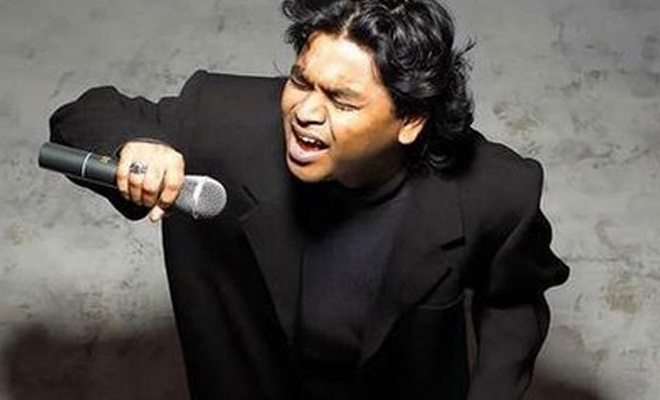
Nearly a decade ago, when composer and theatre director Andrew Lloyd Webber asked AR Rahman to tell him a story, he had none to share. “I said I am not a story guy, I am just a musician,” he recalls. Then it struck him that a creative person needn’t stick to only what he usually does. It sparked the composer’s quest to broaden his horizons and approach his craft with renewed world vision. This universal, all-pervasive quality can be felt in his music, which is a melting pot of sounds. The composer attributes this to be the primary reason for doing Coke Studio@MTV, whose ambitions in a broad sense, are the same as his — a celebration of the diversity of musical genres, a blend of the East and the West with the soul of world music.
“I like the concept of Coke Studio, its unusual musicality. Moreover, it is well produced and it’s watched in so many countries,” says the composer, whose Coke Studio debut will mark his return to non-film music since his last attempt, Connections, an album that was released in 2008.
The composer’s past record reveals that he is comfortable with collaborations too. From music icons such as Nusrat Fateh Ali Khan and Mick Jagger to international pop musician Dido, he has worked with several Indian as well as international artistes. “By collaborating with others, I have grown more confident and trusting towards fellow musicians,” he says.
For Coke Studio, he has a set of six songs. These songs celebrate cultures, under the overarching theme of happiness. “Not the jumping kind, but internal happiness and content,” he says. Apart from Hindustani classical singer Ghulam Murtaza Khan, other artistes who will feature in the Rahman episode include a Jordanian singer and a nun from Nepal. His band for the show comprises instrumentalists such as Sivamani, Keba Jeremiah and Prasanna Ramaswamy. “The episode will celebrate the coming together of two cultures. For example, the Jordanian singer and our Hindi poetry. This apart, we had fun, there are taranas going on with a rap,” he says.
source: http://www.indianexpress.com / The Indian Express / Home / by Sankhayan Ghosh / Chandigarh – Tuesday, July 09th, 2013
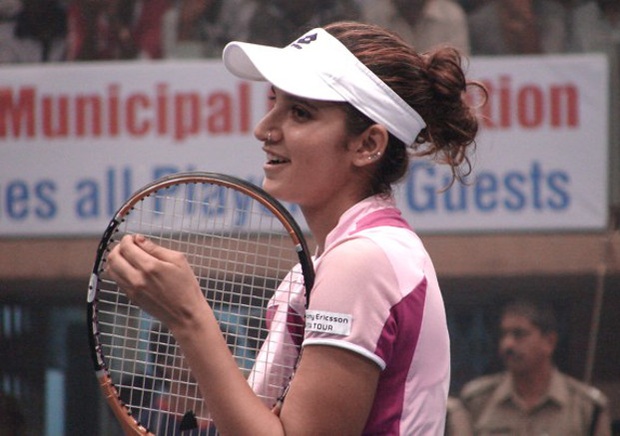
“When I was growing up I would go to tennis and people would come up to my parents and they would ridicule them and say she’s a girl from Hyderabad, you think she is going to play Wimbledon? But obviously my parents didn’t care.”— Sania Mirza, to NDTV, while discussing the high rate of female infanticide in her native India.
Mirza, now 27, is the best female player India has ever produced. She was ranked as high as No. 27 in singles (one career WTA title) and No. 7 in doubles. She’s the first Indian woman to have won a Grand Slam title (mixed doubles, at the Australian and French Opens). She’s also been relatively flamboyant and outspoken for a young Muslim lady from India.
She made her comments above during an interview in which one of the topics was the high rate of female infanticide in India—according to the United Nations, 12 million girls were aborted in India in the past two years, often because they were viewed as potential financial burdens.
Mirza went on to say, “For everything we achieve, why do we need a guy? . . . it’s our responsibility to try and educate people in India that having a girl is plus not a minus.”
Whatever the intent, her comment about not needing “a guy” surely got some people’s noses out of joint. But it wouldn’t be the first time her independent thoughts and actions stirred controversy.
In 2005, a Muslim scholar issued a fatwa regarding the skimpy tennis clothing Mirza (and all her peers) wear, saying it was not suited to Islam. She also faced prosecution under India’s Prevention of Insults to National Honour Act a few years ago, when she was photographed at the Hopman Cup resting her feet—and showing their soles—above an Indian flag. Her comments on safe sex once created a stir (she clarified her stance when the controversy erupted).
In fact, the collision of values was so strong at times that Mirza declared in 2008 that she would stop appearing in tournaments in India. If nothing else, security officials probably heaved a great sigh of relief; this was, after all, a Muslim woman who had played mixed doubles with a Jew, Shahar Peer. (Mirza returned to competition in India in 2010.)
India has provided tennis with a host of interesting characters, starting with Ramanathan Krishnan. He was a two-time Wimbledon semifinalist (1960 and ’61), and his son, Ramesh, was an ATP staple and three-time Grand Slam quarterfinalist in the 1980s. Vijay Amritraj (who had two brothers who also played professionally) won 16 singles titles and posted a career-high ranking of No. 16 in 1980. Then there’s pugnacious doubles genius Leander Paes, an eight-time Grand Slam men’s doubles winner.
All of them, and others, were more successful than Mirza. But none have been as colorful or controversial. Even Mirza’s wedding in 2010 caused a national uproar when it was confirmed shortly before her great day that her fiancé (Shoaib Malik) was already married. Malik obtained a divorce and wed Mirza five days later.
Like the lady said, who needs guys?
source: http://www.tennis.com / Tennis / Home> Pro Game> Commentary / by Peter Bodo / Friday – December 06th, 2013
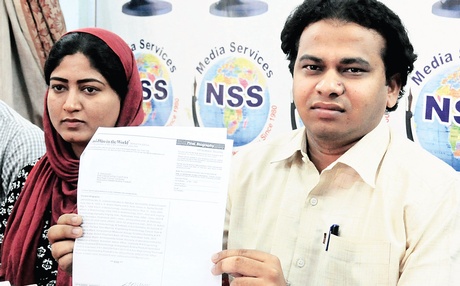
Zahoorullah S MD, assistant professor of biotechnology at JBR Engineering College, showing the letter received from Marquis Who’s Who in the World informing him of his name’s inclusion in the 2014 edition of the book at a press conference in Hyderabad on Monday. | RVK Rao
City-based biotechnologist and scientist Zahoorullah Shaikh Mohammed’s biography has been selected and enlisted for publication by Marquis Who’s Who in the World for year 2014.
The 29-year old is currently working as an assistant professor of biotechnology at Joginpally BR Engineering College here. A resident of Aziz Bagh Colony in Tolichowki, Zahoorullah has taught 27 subjects in engineering, presented 20 national and international research papers, attended 20 workshops and authored seven books. His lectures are available on the Internet and are being shared by many foreign universities, according to a press release issued here on Monday.
Marquis Who’s Who, established in 1899, is a renowned American publisher of a number of directories containing short biographies of individuals who are achievers in their respective fields. A subsidiary of News Communications Inc, the books are usually titled, Who’s Who in America, Who’s Who of American Women, Who’s Who in the World, Who’s Who in Science and Engineering, Who’s Who in American Politics, etc.
An M.Tech and Ph.D in biotechnology, Zahoorullah became an assistant professor at a young age of 23 and his appointment was ratified by JNTUH. He was also a teacher certified by Dale Carnegie Training Institute, USA in high-impact teaching skills.
He sent his biography in January and, after several stages of screening, its enlistment has been confirmed recently. “I want to become a very well-known scientist and motivate youngsters towards research. Despite having several good laboratories, our students are lagging behind in research. My only aim is to establish myself through innovation in science and engineering, and motivate others,” Zahoorullah told Express.
source: http://www.newindianexpress.com / The New Indian Express / Home> Cities> Hyderabad / by Express News Service – Hyderabad / December 03rd, 2013
Constructing Life, a digital artwork by Shibu Arakkal, son of noted artist Yusuf Arakkal, has won first prize at the prestigious Florence Biennale.
Based in Bangalore, Shibu said the event saw the participation of 475 artists under the categories of painting, sculpture, art on paper, video art, digital art, photography and installations. “Although, I applied under the photography category, the international panel of jurists awarded me under digital art due to the technique execution of my work”, he said. Shibu received the Lorenzo il Magnifico gold prize in digital art for 2013.
“Since none of us was told about the nominations, the winners were in for a pleasant surprise at the ceremony on December 8. My work measures 8 feet x 6 feet, comprising 12 panels. It’s a digital photo giclee print on canvas,” Shibu explained. The awards were presented by brothers Pasquale Celona and Piero Celona, president and vice-president of the Biennale.
Describing the artwork, he said: “Our daily lives and quality of life are not only signified by the physical buildings we inhabit but also speak about our tastes, culture and sophistication. One of our most serious endeavours in life is to create one such dwelling to exist and flourish in. Sophisticated and design-minded buildings are visually very different from the hard and weather-beaten appearances of the people who construct these structures. And yet there is such character in their form and faces! It is these ideas that have taken root in my mind to create portraits of the construction worker in a series that will question our ideas of what ‘interesting’ is.”
source: http://www.timesofindia.indiatimes.com / The Times of India / Home> City> Bangalore / by G S Kumar, TNN / December 17th, 2013
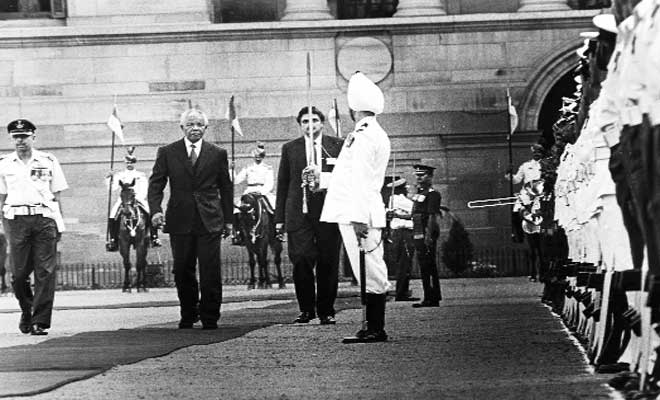
While Nelson Mandela was a symbol of the struggle against oppression across the globe, he and his movement always had a very special connection with India.
A Bharat Ratna awardee in 1990, he is the only non-Indian to receive the honour. (He was also given the Nishan e Pakistan in 1992).
Mahatma Gandhi, who evolved and perfected his technique of Satyagraha in South Africa, was a source of great inspiration to Mandela. On his India visit in 1990, Mandela, when informed of a veteran journalist’s 13-year-old daughter, who was his fan, said “Tell her that I was in fact inspired by a man who was born right here in India.”
Mandela used Gandhi’s tactics at several points as he went about evolving his own philosophy. In the early sixties, the ANC had a militant wing called the Umkhonto We Sizwe (Spear of the Nation) which Mandela was part of. In 1962, Mandela spoke of the need for forceful action and quoted Gandhi as saying: “If the choice is between cowardice and violence, I will pick violence.” Later, he once again used Gandhi as a guide in his efforts to build bridges between seemingly irreconciliable forces.
Several of Mandela’s closest comrades and associates were of Indian origin. Two of his closest comrades, Ahmed Kathrada, and Ismail Meer, with whom he spent almost all of his prison years, were Indian.
An Indian, Sonny Venkatrathnam, also jailed at Robben Island in the 1970s for his role in anti-apartheid activities, got his wife to smuggle ‘The Collected Works of Shakespeare’ inside the prison and passed it off as the Robben Island Bible. Nelson Mandela, Ahmed Kathrada, Chris Hani and others read Shakespeare’s plays as a relief from the boredom of having to break stones all day.
Mandela kept a diary while in prison, and hid it in the grass to ensure that the wardens do not destroy it. After twelve years in prison with Mandela, another Indian, Mac (Sathyandranath) Maharaj, who was released after 12 years, as opposed to Mandela’s 27 years, transcribed his notes and smuggled the account out, which was known to the world on its release in 1976 as The Long Walk to Freedom.
source: http://www.indianexpress.com / The Indian Express / Home / by Seema Chisti / New Delhi , Saturday – December 07th, 2013
Ahmed Kathrada, the Indian-origin veteran anti-apartheid activist and aide of Nelson Mandela, moved many mourners to tears when he paid a poignant tribute to the late statesman during the state funeral at Qunu village in South Africa’s Eastern Cape province Sunday.
“When Walter (Sisulu) died, I lost a father, when you died I lost a brother, now I don’t know who to turn to,” Kathrada said.
Ahmed Kathrada, the Indian-origin veteran anti-apartheid activist and aide of Nelson Mandela, moved many mourners to tears when he paid a poignant tribute to the late statesman.
A long-time friend of Mandela, Kathrada said the last time he saw Mandela alive was when he visited him in hospital, South Africa’s government news agency SA News reported.
“He tightly held my hand… and brought all emotions… Farewell my dear brother, my mentor my leader… I have lost a brother.”
Kathrada and Mandela were both imprisoned in Robben Island for their political views.
“I recall the tall, healthy strong man, the boxer, the prisoner who rigorously exercised every morning. Now the inevitable has happened. He left us to join the ‘A team of the ANC’.
“Together, we shared ideas and walked side by side in the shadow of death,” Kathrada said.
“We are deeply grateful to Madiba… We are deeply grateful that dignity has been restored to the people of South Africa, we are deeply grateful to Chapter 9 institutions that zealously guard our Constitution,” he added.
Mandela, South Africa’s first democratically elected black president, died of illness in his Johannesburg home Dec 5 at the age of 95.
source: http://www.economictimes.indiatimes.com / The Economic Times / Home> News> World News – International / by IANS / December 15th, 2013
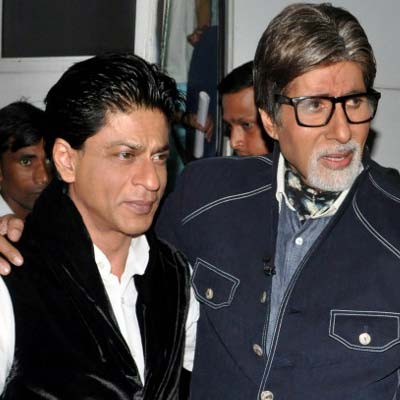
With divides like mainstream and parallel cinema, single screens and multiplexes, Indian cinema lives under a divide which is a deterrent to its own good, superstar Shah Rukh Khan said here Saturday, even as Amitabh Bachchan felt the need of the hour is to “blend in” to go global.
“Until we don’t inculcate a habit of collaborations, we won’t be able to inch towards global cinema,” Shah Rukh said at the Solutions Summit, a conclave organised by NDTV to celebrate 25 years of its existence.
The actor said it is important to be able to give to the world what it understands, in order to be accepted.
“If you want to be a part of global cinema, you have to tell what you want to tell, show the emotions which you want to show, but you have to put it in the way the world wants to see it,” he added.
Shah Rukh was joined on the panel with veterans like Amitabh Bachchan, Waheeda Rehman and Oscar-winning composer AR Rahman.
Rahman, who has created tunes for international projects like “Slumdog Millionaire” and “127 Hours”, says he finds himself in a situation when different things are expected from him in India and in foreign shores.
“I have been a victim of this. What is considered to be good here, is not good there…I have to switch between the two. However, there are some things which are common as well,” he said.
Amitabh, 71, who made his Hollywood debut with “The Great Gatsby” earlier this year, agreed with the fact that Indian cinema is unique, but added that we need to try and “blend in”.
“It is obvious that our cinema is unique. We need to blend with the west in order to be global,” he said.
Amitabh attributes this to the work of the current generation of actors and filmmakers, who are putting in efforts to make Indian cinema visible to the world.
“Shah Rukh Khan and Karan Johar are responsible in bringing commercial cinema to where it is now. The way they have marketed it has helped us a lot. I think that was a point when Indian cinema became global,” he added.
source: http://www.dnaindia.com / DNA / Home> Entertainment> Report / Place: New Delhi, Agency:IANS / Saturday – December 14th, 2013
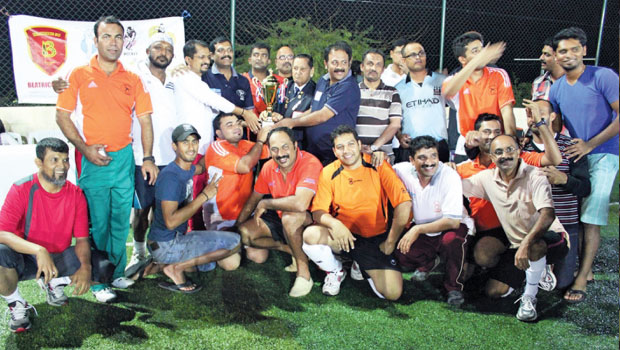
Winners Team Coorg pose for group photo after winning the final against Beatrice Dubai. – Supplied photo
Muscat:
Team Coorg lifted the Balan Master Memorial Trophy beating Beatrice Dubai 4-1 in the final. Organised by Beatrice Sports Club Muscat, the six-a-side hockey tournament was held at The Wave Stadium in the presence of former Indian hockey veteran S.A.S. Naqvi.
In an exciting final, Team Coorg showed their complete supremacy over Beatrice Dubai. Children’s football and family fun games were the sidelights of the final day.
Dr Mujeeb (Amana Polyclinic) delivered the keynote address. The tournament was organised in association with Team Coorg Muscat.
Former Oman national hockey coach K.K. Ponnacha and B. Kuttapa played an instrumental role in helping the Beatrice Sports Club Muscat to host the tournament with much fanfare.
During the concluding ceremony, the organisers of the tournament also honoured S.A.S. Naqvi, Mohammed Osama Rawat, K.K. Ponnacha and B. Kuttapa for their outstanding achievements in the field of sports.
Beatrice executive committee members Shahir, Dr Mujeeb, O.V. Feros, Feros. M, Said, Rasheed, Habib A.P.M and Zaheer thanked the audience for coming in large numbers to support the tournament.
Badr Shipping Company and Sixar Group were the sponsors.
source: http://www.timesofoman.com / Times of Oman / Home / by Times News Service / December 05th, 2013
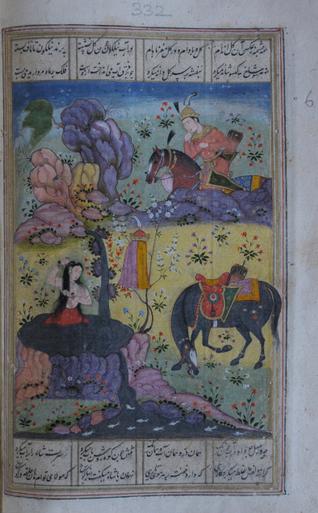
Khusrau espies Shirin bathing, a page from the ‘Khamsa-e-Nizami’ book. / Photo: Special Arrangement / The Hindu
Bearing excellent paintings, richly illuminated and gilded, the fine-bound manuscripts at Salar Jung Museum are real treasures
Salar Jung Museum contains some ‘valuable books of art’— illustrated manuscripts — of Persian and Deccani languages. Bearing excellent paintings, richly illuminated and gilded, fine-bound and owned once by royal personages the Museum’s manuscripts are real treasures.
Manuscript illustration was greatly prized by Mughal emperors, their nobles and Deccani Sultans. Akbar who had 100 artists – painters, illuminators, scribes, book binders – in his atelier had many manuscripts including Hamza Nama, Ramayana, Mahabharata illustrated. His principal noble at Ahmedabad, Khan Khanan, built up a world class library containing illustrated manuscripts. Ibrahim Quli Qutb Shah, who ruled Golconda from 1550 to 1580, had set up a studio in his palace for calligraphers, painters, gilders and book binders and had manuscripts of fine quality produced.
‘The art books’ of the royal workshops form a priceless heritage, “at times of regal splendour…. and always a joy to behold” (Karl Khandalavala).
Of Salar Jung Museum’s famous illustrated manuscripts, a description of four books is attempted here. They are: Tuhfe-e-Sami, Majalis-ul-ushshaq, Khamsa-e-nizami, and Diwan-e-sultan Muhammad Quli Qutb Shah.
1. Tuhfe-e-Sami: The author of this 229-folio Persian manuscripts is Prince Sam Mirza (1517-76), son of Shah Ismail, the founder of Safavid dynasty in Persia. Prince Sam Mirza dedicated Tuhfa containing biographies of poets, painters, calligrgaphers and other learned men to his brother Shah Tahmasp (1524-76), the ruler of Persia who, however, put ‘Sam’ to death in 1576 when he rebelled against him. The manuscript is gilded and highly ornamented. Done in Shirazi style of Persia the Thufa’s ten miniatures “are of excellent quality and very colourful with charming colour contrast’’ (Karl Khandalavala).
The manuscript scripted in fine Nastaliq bears a seal of the year of A.D. 1651 of one Mustafa Khan Lari, who was probably a Golconda noble.
2. Majalis-ul-ushshaq ( Assemblies of lovers): Purchased by Sir Salar Jung I (1829-83), ‘Majalis-ul-ushshaq’ is an account in Persian of the Sufi saints being in love with women and men. Sufi doctrines explain that to experience the beauty of the ‘unseen’ God the first step is the worldly love – love of women and men. The power and course of such love as experienced by some Sufi saints is depicted in majority of the 71 miniatures contained in the manuscript.
The book has a lot of gold used in decorating its 237 folios, headings and borders. The painting style of its miniatures is of Shirazi school of Persia.
The author of this manuscript is Mansur bin Baiqara (1469-1506) who wrote it in 1552. The script is good Nastaliq and the scribe is Amir-al-katib.
3. Khamsa-e-nizami: The Khamsa (five-piece verse collection) of the poet Nizami, a Persian poet, is one of the most famous Persian works and there are numerous illustrated copies of it in Persian and Mughal schools of painting. The Mughal style Museum’s Khamsa was purchased in 1739 for the library of Nawab Munirddoulah Wakil-us-sultan (Prime Minister). It consists of five ‘mathnavis’ (long poems) dealing with the stories of Laila-Majnun, Khusrau-Shirin, King Behraum Gaur, Sikandar and Sufism.
It contains five unwans (title pages), gilded and highly ornamented. Its 325 creamish folios are gold sprinkled. Its eleven full-page miniatures show animals, brilliantly drawn and figures, finely painted. Dated A.D.1618, the scribe of Khamsa is Fatah Muhammed bin Moulana Sahib Katib and the script is good Nastaliq.
The manuscript bears the seal of Lutfullah khan, a noble of Mughal family, who appears to have died in Golconda when Aurangazeb was engaged in conquering the fort.
4. Diwan-e-sultan Muhammad Quli Qutb Shah: Written in ‘Zubane-deccani’ by Sultan Muhammed Quli Qutb Shah who ruled from Golconda between 1581 and 1611 is regarded as the earliest poet in Deccani language(Urdu). He founded the city of Hyderabad and built the famous Charminar. His ‘Diwan’(odes) deals with subjects like sports and games, royal palaces, seasons and description of his 17 mistresses.
Dated 1595, the Diwan has eight miniatures, all gems of miniature art. It was written by Moulana Zainuddin, Khushnawis (calligrapher) of the Sultan. The paper used is gold sprinkled. The script is excellent Thulth. It has 138 handsome folios.
Deputy Keeper (Retd.), Salar Jung Museum
source: http://www.thehindu.com / The Hindu / Home> News> Cities> Hyderabad / by B. Kotaiah / September 19th, 2013
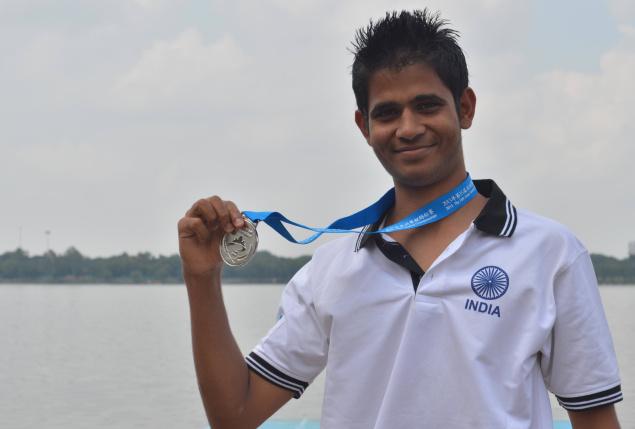
Mohammad Ahmed with the silver medal he won at the recent Asian Rowing Championship, at the Hussainsagar in Hyderabad on Tuesday. — Photo: V.V. Subrahmanyam / The Hindu
After a silver at the Asian Rowing Championship – the latest addition to the many feathers in his cap, this 20-year-old has set his sights on greater glory
For a sport dominated by personnel from the Services, 20-year-old local boy Mohammed Ahmed has managed to surprise, and delight all. He is now virtually the non-playing captain of the coxed eights Indian rowing team.
His recent silver in the Asian Rowing Championship in China shone bright in his smile as he returned to the Hussainsagar on Tuesday.
The son of Mohammed Ismail, a meat-seller from Kavadiguda, Ahmed took to the sport after one of his routine trips to the lake along with his father three years ago. Dronacharya Ismail Baig suggested the boy take up rowing. What ensued was rowing’s gain.
Ahmed won gold in the Kolkata Senior Nationals in the coxed four event, bronze in the Hyderabad Nationals in the coxed eight team and later a silver in the Asian championship later on in Korea. All these vindicated the faith shown by Baig, the untiring coach who has been shaping the destiny of most rowers in Hyderabad for close to 13 years now.
“I am enjoying every moment. Thanks to Ismail sir, I can now dream big,” the shy youngster says, even as he proudly displays his medal to his famed coach.
What exactly is this young rower’s role in a coxed eights event?
“Well, he is like a guide, telling the teammates when to accelerate in the course, how the conditions are at a given time. Otherwise, the rowers will be busy unleashing their power to keep up the pace. It is a very demanding job. Though he doesn’t row, it requires high levels of focus,” Mr. Baig says.
Ahmed, who adores cricketer Virat Kohli (he even tries to sport a similar hairstyle), plays cricket and badminton to relax after hard work in the waters. A student of St. Antony’s High School, this shy rower was only recently drafted into the CRPF, and will be reporting for duty next week.
“My next big target is to win a medal in the next year’s Asian Games and then think about the Olympics. I owe everything to my coach sir and to the Federation officials for backing me up,” Ahmed signs off.
source: http://www.thehindu.com / The Hindu / Home> News> Cities> Hyderabad / by V. V. Subrahmanyam / Hyderabad – October 01st, 2013