Category Archives: World Opinion

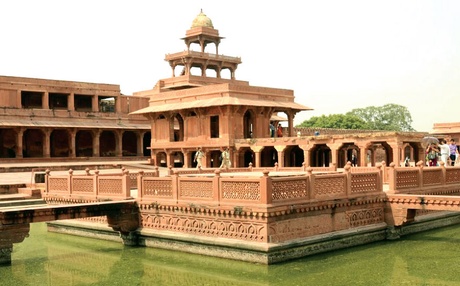
Kashmir Ki Kali: Srinagar’s famed Shalimar Bagh has been restored to what it was in Jehangir’s time — Farah Baksh

Srinagar’s famed Shalimar Bagh has been restored to what it was in Jehangir’s time — Farah Baksh, or ‘the delightful’. Now for the 15 others, writes Gargi Gupta

KashmirMPos21Nov2013

In a television interview, conductor Zubin Mehta proclaimed that despite the controversy about the concert, Kashmir now had a beautifully restored garden, fountains, flowers et al.  Many agree.

“Zubin Mehta’s concert was the best thing to happen to Shalimar Bagh,” laughs Sheikh Irfan Qadir, assistant executive engineer in the Roads & Building department of the Jammu & Kashmir government. Qadir should know — he’s been working at Shalimar Bagh since early this year, deputed by the state government in its race-against-time to restore the 17th century gardens laid out by Mughal Emperor Jahangir, in time for Mehta’s concert with the Bavarian State Orchestra held on September 7.

German ambassador in India Michael Steiner and Chief Minister of Jammu and Kashmir Omar Abdullah took close interest in the repair works, visiting the site several times in the months leading up to the concert. After all, this was a high-profile event, hosted by the German Embassy in India, attended by dignitaries and broadcast on high-definition to millions of viewers across the globe.

“When the German ambassador first came here,” says Qadir, “Shalimar Bagh was in such a bad state that he looked around and despaired at having the concert here.” Describing the state of ruin, an October 2012 report in British newspaper Daily Mail bemoaned that the ‘fountains have long stopped working and the walls are peeling at every corner’. Photographs accompanying the article, showed the water channels silted up and covered in vegetation.

Strangely, Shalimar Gardens, or any of the other 15 Mughal Gardens in Kashmir, is not protected by the Archaeological Survey of India, or its Kashmir circle. It is the floriculture department of the state government that looks after these gardens, which attracts lakhs of tourists every year.

“The last ‘sensible’ conservation effort took place in 1941,” informs M Saleem Beg, convenor of the Jammu & Kashmir chapter of Indian National Trust For Art and Cultural Heritage (INTACH), which has overseen the current restoration exercise. The committee prepared a detailed conservation plan for Shalimar Bagh in 2005. That, says Beg, came about by sheer accident. “In 2004, Jagmohan, then tourism minister, allocated Rs1 crore for reconstructing the Mughal wall in Nishat Garden. Appalled, I met him to point out how inappropriate ‘rebuilding’ a historic wall was.

He told me to come up with a conservation plan for the gardens and asked me to name the budget. I had rattled off a figure of Rs5 lakh. We ended up spending Rs9 lakh.”

Much of the work at Shalimar, says Beg, entailed undoing earlier unscientific, ill-considered conservation efforts. For instance, the water channels were covered in concrete. “We removed thousands of kilos of cement,” says Qadri. The channels, measuring 1,000 ft x26 ft, were relaid with crushed stones, then covered with lime concrete. “We had to source lime concrete, which is what the Mughals used, from Amritsar. The material takes much longer to dry than cement, but we were determined to do it the right way,” he says. “The stage for the musicians was laid out over these channels, but they did it very carefully, placing it over small metal stools so as not to leave a single mark on the grass,” says Qadir.

The stones that lined the rim along the water channels, the foot-bridges across them, niches along the walls and terraces had become loose or were displaced over time; these were carefully taken out, cleaned and refixed. The pavements too were re-laid with local devri stone. The Pink and Black Pavilions were restored with new shingle roofs and their walls covered with a 20mm coat of lime plaster. “We have not yet touched the ceilings,” says Qadir, pointing to the richly-painted panels, which are a more recent addition, probably the time of Kashmir’s Dogra rulers.

Nearly Rs3.5 crore was spent on Shalimar Bagh’s restoration. The fountains are working; the channels are clear; a Mughal-era hammam (public bath house) on the premises has been opened to public and there are better public conveniences. Of course, the problems too are visible, the most being the buildings outside that have been built too close to the Mughal-era boundary wall.

Perhaps, the only long-term hope for Kashmir’s Mughal Gardens is in securing a World Heritage Site status. Six of the better-known gardens did make it to the tentative list in December 2010. But despite several representations to the culture ministry, the elaborate dossier that is required for their final application, has not yet been prepared.

source: http://www.dnaindia.com / DNA / Home> Lifestyle> Report / by Gargi Gupta / Agency:DNA / Sunday – October 20th, 2013

Waheeda Rehman’s handprints take pride of place at film event

Waheeda Rehman says that she feels honoured to be a part of the panel

Legendary actress Waheeda Rehman’s handprints were captured at the South Africa India Film and Television Awards (SAIFTA) event and she said that she felt honoured.

“Taking handprints is a new trend. It is good for the artists. I feel honoured,” Waheeda said.

“It’s a great opportunity for two countries to come together. All the best,” she said about SAIFTA. The press meet was also attended by John Abraham, Manoj Bajpayee and Suniel Shetty.

SAIFTA, an annual event, will take place in Durban on September 6 and Saif Ali Khan will host it.

Shootout At Wadala and Shootout At Lokhandwala will be screened at the event.

The star-studded Indian panelists for the event include names like Waheeda Rehman, Mukesh Bhatt, Boman Irani, Rakeysh Omprakash Mehra and Farah Khan.

Sanjay Gupta, director of Shootout At Wadala, said: “Students in Durban want to know the film-making process. Our two films will be screened as they are unique and based on real events.”

The star cast of both the films will be present at the event and interact with the audience.

source: http://www.movies.ndtv.com / NDTV Movies / Home> Bollywood / Indo-Asian News Service / July 16th, 2013

Sandal Urus Shariff of Sufi Saint Hazarath Mohammed Salman Misbahi in city

Seen in the picture are Corporator Suhail Baig, Moulana Anwar Ahmed Nizami, successor of Hazarath Mohammed Salman Misbahi, Riyaz Pasha, Ilyas Baig, Fiyaz and others at the Astana Salamaniya Dargah at Badamakan burial ground near Tipu Circle in city recently.

Mysore :

Astana-e-Salamaniya Dargah Committee, Mysore, had organised Sandal Urus Shariff of Sufi Saint Hazarath Mohammed Salman Misbahi, Founder of Azeezia Educational Trust here recently.

The Sandal Urus Shariff procession consisting of students of Arabic College, Sufi Saint, Revered Moulvis, Ulmas, Islamic Clerics, Scholars, Dharvesh of Ahala-Sunnath-wo-Jamath and devotees began from the Association Office in Lashkar Mohalla and passed through Ashoka Road, Sawday Road, Pulikeshi road, Fountain Circle to reach Astana Salamaniya Dargah at Tipu Circle on Mysore-Bangalore road. The programme was held under the supervision of Fayaz Pasha, social worker Abdul Azeez, Riyaz, Ilyaz Baig and Corporator Suhail Baig.

A lecture on ‘Azmath-e-Ahowliya Allah’ was held under the guidance of Moulana Mohammed Anwar Ahmed Nizami, successor of Sufi Saint Hazarath Mohammed Salman Misbahi, Secretary of Azeezia Educational Trust under the Presidentship of Sir Khazi of Mysore Moulana Mohammed Usman Shariff.

Moulana Asgar Ali, Khateeb-o-Imam, Jamiya Masjid on Irwin road and Moulana Mufti Sajjad Hussain Khan, Principal, Jamiya Tipu Arabic College, Srirangapatna spoke on the life of Sufi Saint.

Moulana Abdul Salam, Moulana Maqbool Nizami, Moulana Syed Imdad Ulla, Syed Fazil Ashrafi, Riyaz Pasha, Fayaz, Abdul Jabbar, Tanveer Ahmed, and others participated.

Sir Khazi of Mysore Moulana Mohammed Usman Shariff released the new 2014 Azeezia calendar on the occasion.

source: http://www.starofmysore.com / Star of Mysore / Home> General News / November 11th, 2013

237th Annual Sandal Urus Shariff of Hazarath Hyder Ali held

Tanveer Sait, MLA and Chairman of Tipu Sultan Wakf Estate, Srirangapatna, along with religious leaders and devotees, is seen offering prayers during the Sandal Urus Shariff of Hazarath Nawab Hyder Ali Khan Bahadur, recently.

Mysore :

The 237th annual Sandal Urus Shariff of Hazarath Nawab Hyder Ali Khan Bahadur, organised by Madarasa-e-Quvatul Islam Nawab Saheb Physical Education Management Committee Secretary Afrooz Pasha in city recently.

Sandal Urus procession along with Fukras Jamath, Syed Ahmed Baba from Bangalore began from city to reach Tipu Tomb in Srirangapatna where Masjid Aqsa Tipu Tomb Srirangapatna Khateeb Moulana Inayath ur Rehman Razvi read Fatha Khani which was held under the Presidentship of MLA and Chairman of Tipu Sultan Wakf Estate, Srirangapatna, Tanveer Sait, who paid floral tributes to the tomb.

Senior advocate M.S. Mukram, Sufi Wali, Mysore Dist. Wakf Board Advisory Committee former member Sajjad Ahmed, President of Azeez Sait Block Congress Committee Rafeeq Ahmed, social worker Ayaz Pasha and devotees participated in the programme.

Afrooz Pasha proposed a vote of thanks.

source:  http://www.starofmysore.com / Star of Mysore / Home> General News / November 11th, 2013

Husain’s ‘Bhopal’ to go under the hammer

M.F. Husain’s “Bhopal”. / Photo: Special Arrangement / The Hindu

The oil on canvas has been valued at £200,000-300,000

‘Bhopal’, Maqbool Fida Husain’s anguished representation of the terrible consequences of industrial negligence in Bhopal, is to go under the hammer on October 8 at the Bonhams Auction House in London.

Husain’s framed and signed oil on canvas, with ‘Bhopal’ painted boldly on the side of the canvas — as if to leave no doubt on which disaster he is depicting — has been valued between £200,000 and 300,000, a press release from the auctioneers said.

“Just as Pablo Picasso’s passion and outrage towards the Spanish Civil War had inspired him to create ‘Guernica’ (1937), ‘Bhopal’ was the result of Husain’s horror at the long-lasting effects of the leak,” the press release said, though attributing the work’s energy to Husain’s own genius that was moulded by life around him. The Bhopal disaster occurred on December 3, 1984 when a poison gas leak from a Union Carbide factory killed around 2000 people.

Headlined by Husain’s ‘Bhopal,’ the October 8 auction of Indian and Islamic art will also auction ‘Bindu’ by Syed Haidar Raza (b.1922) that has been valued between £100,000 and 150,000, and ‘Untitled’ by Francis Newton Souza (1924-2002) valued between £40,000 and 60,000.

Raza started painting the Bindu series in the 1980s. “An act of meditation and the ‘Bindu’ is the centre of calm” the press release says.

Yet another highlight of the auction is ‘Four Figures” by Pakistani artist Sadequain (1937-1987) with an estimated valuation of £45,000-65,000.

This is not the first time that Husain’s paintings have been sold by Bonham’s, which specialises in Asian art. This April, an untitled Husain painting of horses was sold for £205,250; and in 2007, at the height of Husain’s troubles with right wing Hindu nationalist groups who hounded him for painting disrespectful and nude representations of Hindu goddesses, the same auction house sold his ‘Nude Woman’, a masterly painting of the naked female form, one that unfortunately had to find its home outside the country that inspired all his art.

source: http://www.thehindu.com / The Hindu / Home> Arts / by Parvathi Menon / London – September 20th, 2013

Mumbaikar climbs rare bandwagon

Salar Jung Museum in Hyderabad and (top) the British musical clock, one of the rare clocks housed there

Hyderabad’s Salar Jung Museum plans to evaluate & tabulate its antique clock collection.

The Salar Jung Museum in Hyderabad, will begin work on evaluating and tabulating its clock collection, considered by clock enthusiasts as among the finest in India. Speaking to dnaover the phone from Hyderabad, Dr Nagender Reddy, director, Salar Jung museum said that this would be the biggest such exercise since the clocks were taken over from various private collectors in the 1960s.

“We want to do it in a scientific way, to add value to what is already a glorious collection of more than 400 of the rarest clocks in the country. It is a tedious and delicate process which includes the showcases that hold these clocks, evaluating the individual parts. All of this has to be done in such a way that no damage, whatsoever, comes to the clocks,” said Reddy. The process would be done along with the Lucknow-based National Research Laboratory for Conservation (NRLC), which is the apex body in the country for the conservation of cultural heritage.

The plan to evaluate the clock collection has already begun creating excitement among watch-lovers with Dr Reddy admitting that several people had contacted the museum to be part of the process. However, he said that it calls for a lot of formalities at various levels of the government as outsiders are not allowed to be part of these processes.

dna has learnt that among the people who have shown willingness to be part of the process is a senior railway officer from Mumbai. Saurabh Mitra, an Indian railway accounts service officer with Western Railway. Mitra, a watch enthusiast and collector, however, refused to comment.

About Salar Jung Museum
The museum was established in 1951. A major portion of the collection was acquired by Salar Jung III. In 1958, it was taken over by the Indian government. It is now run by an autonomous board chaired by the governor of Andhra Pradesh.

source: http://www.dnaindia.com / DNA / Home> Mumbai> Report / by Binoo Nair / Place: Mumbai, Agency: DNA / Friday – November 08th, 2013

A red paper poppy for India too

Farrukh Dhondy
Farrukh Dhondy

”   Britain is not fully aware of the fact that thousands of Indian soldiers were used as cannon fodder in this war and sent to various parts of the world to fight the Germans and their Turkish allies ”


“Why do hearts break
And minds bend?
Why isn’t there a stick
With only one end?

Why does day break
The sun set
And the moon wax and wane?


—For heaven’s sake
What was the debt
That Abel owed to Cain?”


From Booch Sakhat Booch (A Parsi Discourse on Stoppers) by Bachchoo


Britain has been commemorating the end of the First World War this last week. The Queen and other Royals laid wreaths at the cenotaph in Whitehall, London, marking the memory of the war dead and in the war cemeteries in Belgium. The populace buys and wears red paper poppies on their left lapels or their blouses.

This is the last ceremony of remembrance before the 100th anniversary of the war. Next year will see a tsunami of books, TV dramas, stage plays, songs and services about the First World War. I hereby confess that I’ve been commissioned to write a stage play about it — but from a slightly unexplored angle.

With the commission in hand I began to explore this angularity. The play is to be about the soldiers from Imperial India who were recruited to fight this “Sahib’s War”. Britain is not fully aware of the fact that thousands of Indian soldiers were used as cannon fodder in this war and sent to various parts of the world — the Western Front in Europe, Africa, Malaya and West Asia — to fight the Germans and their Turkish allies. What Britain can recall if it will was that several hundred of these Indian wounded were hospitalised during the war in the Brighton Pavilion, a building or folly conceived it would seem for a film set of Ali Baba. Some bright spark thought its oriental structure with domes and frills would make the Indians feel at home.

Several Indians who displayed bravery in the field were rewarded with the Victoria Cross and other decorations.

One story that sticks in my memory is what our family cook Hukam Ali told me when I was a child. When he was a teenager he used to be a ball-boy on the tennis courts of the Poona Club. A British officer took a shine to him and offered him employment in his house. Hukam Ali took it on and by his own account gave good service. The officer was then summoned with his regiment, which consisted of “native” companies and British officers to war and suggested to Hukam Ali that he enlist as an infantryman, which Hukam Ali did.

He recalled his experience in this war — a British war against other “goras”. I was too young to appreciate then which war this was or who was fighting whom, but “Hukams” said he went on a long voyage by ship and then by train and his regiment was joined by Australians and South Africans, all “goras”. The Indians were bivouacked separately from the whites for a few days.

Then the fighting began and in Hukam Ali’s words the cry went up “Kaaley ko aagey dhaklo! Kaaley ko aagey dhaklo! (Shove the blacks forward)”. At the tender age at which I heard the story I didn’t think of querying the fact that the British officers were shouting this command or slogan in Hindustani. The import of Hukams’ story was clear and the end of it tragic. He said hundreds of his regiment, thrown on the enemy lines died. He survived and must have been in his sixties when he found employment in our household which helps me date his war.

My play begins with the memory of this story. I have discovered that long before Subhas Chandra Bose’s Indian National Army fell on the tactic of recruiting Indian Prisoners of War in Japanese camps to fight for Indian Independence by siding with the Nazis and Japanese, a similar initiative was attempted in the 1914-18 War. The Germans set out to persuade Muslim soldiers of the Raj whom they had captured to switch sides.

Their argument was that Germany was allied with Turkey and the Ottoman Emperor was the Caliph, the leader of world Islam. No Muslim should be fighting him and his forces. The other argument was, of course, that the British had manifestly used Indian troops as cannon fodder and thrown badly trained, badly equipped and badly led Indians against superior German forces, which proved how little the Raj cared for Indian lives. No doubt some argument about a victorious Germany granting India its political and economic Independence was dragged in.

Though several Muslim soldiers are reported to have been persuaded to switch sides, no such force was consolidated or ever put into the field by the Germans. Perhaps there were too few of recruits to this cause or perhaps the Germans didn’t trust their conversion.

Nevertheless, my researches have thrown up a story that’s not very well known. Britain is, despite all the trumpeting about heroism, deeply ambivalent about this centenary. Yes, the British and their allies defeated Willhelm’s troops in the end but can a victory which cost both sides millions of deaths be “celebrated”? Will the centennial be dedicated to the utter futility and meaninglessness of this slaughter?

Historians repeatedly claim that they can’t conclusively say why the assassination of the Archduke of Austria by a Balkan patriot in Sarajevo should lead to millions of men fighting each other in the soggy trenches of Belgium.

Their confusion is confusing. The usual answer to the causes of the First World War is that all the participant nations were obliged by treaty to join battle with and against each other. This explanation may satisfy addicted domino players but anyone with any sense ought to know that treaties are pieces of paper.

That war was Germany’s attempt to eliminate all the other Imperial powers and become the only one. If it had succeeded, with or without the help of its Indian Muslim PoW converts, would it have ended the colonial exploitation of India — or taken it a step further?

source: http://www.asianage.com / The Asian Age / Home> Opinion> Columnist / by Farrukh Dhondy / November 16th, 2013

Rani Hamid — Anand’s cheer girl from Dhaka

Rani Hamid /. Photo: R. Ragu / The Hindu

Rani Hamid is 69, but at the Jawaharlal Nehru Stadium here on Wednesday afternoon, she looks as excited as a little girl.

“I would be watching Viswanathan Anand playing the World championship and that is something I have been looking forward to for the past one week,” she says, even as she waits for the bus that would take her to Hyatt Regency. “I would be cheering for him.”

Rani is not your average grandmother who loves chess as a hobby. She is actually the grand old lady of Asian chess. She is a Woman International Master, the first from Bangladesh. And she is a veteran of several Chess Olympiads.

“I don’t remember how many Olympiads I have played exactly, but I have been representing Bangladesh since 1982 and I played at the Olympiad last year too,” she says. “I have also played on the men’s team.”

She has also won the British women’s championship on three occasions.

Proud achievement

And there is also another achievement she is proud about. “I could stretch Anand a bit when I played him at the Fakhruddin Ali Ahmed tournament in New Delhi, about three decades ago,” she says.

“Anand was a young boy and he was playing at lightning speed; he used to win in no time against his opponents, but our game was taking much longer than usual; I remember his mother getting a bit restless and worried because of that. I was an exchange up at one stage, but Anand of course won.”

She wants Anand to win the World championship. “He is not just the pride of India, he belongs to whole Asia,” she says. “Besides, I was an Indian too, till I was three years; you know I was born in 1944. So I have been the citizen of three countries – India, Pakistan and Bangladesh.”

Rani is here for the International Woman Grandmaster tournament. “I decided to play in the tournament largely because I wanted to watch the World championship,” she says.

“I have been playing in India for several decades and have many pleasant memories. I remember the Khadilkar sisters pioneering women’s chess in India and Bhagyashree Thipsay telling me that she would one day beat them. She did beat them, of course.”

Talented youngsters

She is happy to note that India has grown in stature in world chess over the years. “It’s nice to find that there are many talented youngsters around,” she says. “And I think Koneru Humpy is a potential women’s World champion.”

She has also noticed chess becoming a sport for the young. “Back in my time, it used to be an old man’s game,” she recalls. “And I used to be told that little girls should not play chess.”

Rani is fond of India for another reason. “My son Kaiser Hamid played for Mohammedan Sporting, Kolkata,” she says. “He has captained Bangladesh. Another son, Sohel Hamid has been a National squash champion.”

source: http://www.thehindu.com / The Hindu / Home> Sport> Other Sports / by P.K. Ajith Kumar / Chennai – November 14th, 2013

Have you visited the ‘Allah-Rakha Rahman st’ in Canada yet?

New Delhi:

AR Rahman’s music is remembered throughout the world for its charm and variety, but now, even his name will be remembered as a road’s name. A street in Markham, Ontario, Canada is named after him. It will be called ‘Allah-Rakha Rahman st’.

AR Rahman, who is also known as the Mozart of Madras, has been honoured for his contribution to the world of music and arts.

He is one of the few Indians to have won two Grammy awards and two Academy Awards, yet he retains the humility of a common man.

A street in Canada is named after AR Rahman. He has been honoured for his contribution to the world of music.

The music maestro made history when he became the first Indian to win two Oscars in a year, 2009, for Danny Boyle’s ‘Slumdog Millionaire’, the rags-to-riches story of a Mumbai slum-dweller. Rahman had also bagged two awards at the 52nd Annual Grammy for his song ‘Jai ho’ from the same film.

source: http://www.ibnlive.in.com / IBN Live.com / Home / November 06th, 2013

Hamid Ansari’s lecture at Oxford Centre for Islamic Studies, London

Following is the text of the lecture delivered by the Vice President of India, M. Hamid Ansari, on “Identity and Citizenship: An Indian Perspective” at Oxford Centre for Islamic Studies in London, United Kingdom on November 1, 2013.

“It is a privilege to be invited to address this august audience. Conscious of the gap between the immensity of the honour and the inadequacies of the speaker, I am humbled by the realisation that six decades earlier Sarvepalli Radhakrishnan, a very distinguished predecessor of mine as Vice President of India, was for long the Spalding Professor of Eastern Religion and Ethics at this University.

A few years back, when I was in the vicinity of Oxford in a group dabbling in the unfathomable mysteries of the Iraq quagmire, Dr. Nizami provided a welcome distraction by inviting me to see the site, and the plans, for the new building of the Centre. He also mentioned the debate on the proposed architectural design, and of the view in some quarters that it would change the inherited landscape of a hallowed community.

The change, as I understood it, implied an assertion of identity. It is now conceded, I am told, that the new structure did no aesthetic or spiritual damage to the skyline of Oxford. Perhaps, the injection of diversity has enriched it.

Speculating on the ‘ifs’ of history, Edward Gibbon had visualised a course of events that might have resulted in the teaching of the interpretations of the Qur’an at Oxford. He could not foresee a happier, intellectually more rewarding, happening that the concluding decades of the twentieth century would bring forth. Among its manifestations is the establishment of this Centre.

This is a tribute to Oxford’s capacity to accommodate the unusual.

II

Encouraged by this accommodative approach, I wish today to share some thoughts on the twin concepts of identity and citizenship and the manner of their impact on the building blocks of modern States.

Needless to say, it is an Indian perspective and draws in good measure on the Indian experience. It may be of relevance to some of the objectives of this Centre, since India counts amongst its citizens the third largest Muslim population in the world and the largest Muslim minority anywhere.

It is a truism that the human being is a social creature and societies consist of individuals who come together for a set of common purposes for whose achievement they agree to abide by a set of rules and, to that extent and for those purposes, give their tacit or explicit consent to the abridgment of individual free will or action. They, in other words, do not get subsumed totally in a larger whole and retain their individual identity. This identity, as pointed out by William James and sustained by more recent social-psychological research, is a compound of the material, social and spiritual self. Further more, and when acting together in smaller groups, they develop group identities and these too are retained. Thus in every society we have identities at three or four levels, namely individual, group, regional and national. We can also, in this age of globalisation, add an international dimension to it. The challenge in all societies, therefore, is to accommodate these layered identities in a framework that is harmonious and optimally conducive to social purpose.

Much has been written about identity, its theoretical framework and practical manifestations. An eminent sociologist has defined it as ‘the process of construction of meaning on the basis of a cultural attribute, or a related set of cultural attributes, that is given priority over other sources of meaning. For a given individual, or a collective of actors, there may be a plurality of identities.’ The question is to determine how this identification is expressed in every day life of individuals who are members of such specific groups?

Conceptually and legally, citizenship of a modern state provides this framework and encapsulates the totality of rights and duties emanating from the membership of the citizen body, inclusive of the right of representation and the right to hold office under the state. By the same logic, a certain tension is built into the relationship, even if the society happens to be relatively homogenous, in itself a rarity in modern times. Rabindranath Tagore described his family background as a ‘confluence of three cultures, Hindu, Mohammedan and British’. Away from India but in our own neighbourhood, Abdolkarim Soroush depicted the Iranian Muslim as ‘the carrier of three cultures at once’ having national, religious and Western origins.

Thus instead of a narrow concept of a singular identity implied by the classical concept of citizenship, the need is to recognise and accommodate the existence of a plurality of social identities. The contours of this were explored earlier by Thomas Marshall, and more recently by Will Kymlicka, Manuel Castells, Charles Taylor, Gurpreet Mahajan and others. Put simply, it has been argued that identity encapsulates the notion of authenticity, the demand for recognition, the idea of difference and the principle of equal dignity.

What then has been the Indian approach to, and experience of, the concepts of identity and of citizenship in a modern state? What is the accommodative framework for identities in modern India?

A distinctive feature of Indian society is its heterogeneity. The historian Ramachandra Guha depicts our recent history as ‘a series of conflict maps’ involving caste, language, religion and class and opines that conflicts relating to these ‘operate both singly and in tandem’. Each of these also brings forth an identity of varying intensity; together, they constitute what the opening line of the Preamble of our Constitution depicts as We, the People of India.

In other words, the superstructure of a democratic polity and a secular state structure put in place after independence on August 15, 1947 is anchored in the existential reality of a plural society. It is reflective of India’s cultural past. Our culture is synthetic in character and, as a historian of another generation put it, ‘embraces in its orbit beliefs, customs, rites, institutions, arts, religions and philosophies belonging to different strata of societies in varying stages of development. It eternally seeks to find a unity for the heterogeneous elements which make up its totality’. It is a veritable human laboratory where the cross breeding of ideas, beliefs and cultural traditions has been in progress for a few thousand years. The national movement recognised this cultural plurality and sought to base a national identity on it. The size and diversity of the Indian landscape makes it essential. A population of 1.27 billion comprising of over 4,635 communities 78 percent of whom are not only linguistic and cultural but social categories. Religious minorities constitute 19.4 percent of the population; of these, Muslims account for 13.4 percent amounting in absolute terms to around 160 million. The human diversities are both hierarchical and spatial. ‘The de jure WE, the sovereign people is in reality a fragmented ‘we’, divided by yawning gaps that remain to be bridged.’ Around 22 per cent of our people live below the official poverty line and the health and education indicators for the population as a whole, despite recent correctives, leave much to be desired.

The contestation over citizenship surfaced early and was evident in the debates of the Constituent Assembly. The notion of citizenship was historically alien to Indian experience since throughout our long history (barring a few exceptions in the earliest period) the operative framework was that of ruler and subject. There was, of course, no dearth of prescriptions about the duties of rulers towards their subjects and about the dispensation of justice but none of these went beyond Kautilya’s pious dictum that ‘a king who observes his duty of protecting his people justly and according to the law will go to heaven, whereas one who does not protect them or inflict unjust punishment will not’. The constitution-makers therefore had to address three dimensions of the question relating to status, rights, and identity, to determine who is to be a citizen, what rights are to be bestowed on the citizen, and the manner in which the multiplicity of claimed identities is to be accommodated. This involved addressing three aspects of the question: legal, political and psychological. The outcome was the notion of national-civic rather than national-ethnic, emphasizing that the individual was the basic unit of citizenship whose inclusion in polity was on terms of equality with every other citizen. At the same time and taking societal realities into account, the concept of group-differentiated citizenship was grafted to assure the minorities and other identity-based groups that ‘the application of difference-blind principles of equality will not be allowed to operate in a way that is unmindful of their special needs, and that these needs arising out of cultural difference or minority status will receive due attention in policy, and that the polity will be truly inclusive in its embrace’.

The crafting of the Constitution was diligent and its contents reflective of the high ideals that motivated its authors. The Preamble moved Sir Ernest Barker to reproduce it at the beginning of his last book because, as he put it, it seemed ‘to state in a brief and pithy form the argument of much of the book and it may accordingly serve as a keynote’. The Constitution’s chapter on Fundamental Rights addresses inter alia the protection of identities, and accommodation of diversities. These identities could be regional, religious, linguistic, tribal, caste-based, and gender-based. The right to equality and equal protection of the laws and prohibition of discrimination on grounds only of religion, race, caste, sex, or place of birth is guaranteed. Affirmative action is mandated by law in favour of those historically discriminated against on grounds of caste or tribal origin as well as all those who are identified as socially and educationally backward. Also guaranteed is freedom of conscience and the right to freely profess, practice and propagate religion. Yet another section safeguards the right to have and conserve language, script or culture and the right of religious or linguistic minorities to establish and administer educational institutions of their choice. The purpose of these, taken together, is to bestow recognition, acknowledge the difference and thereby confer dignity that is an essential concomitant of equality.

An inherent problem nevertheless was evident to the constitution-makers, or at least to some of them. This was expressed candidly, almost prophetically, by Ambedkar in words that need to be cited in full:

‘On the 26th of January 1950, we are going to enter into a life of contradictions. In politics we will have equality and in social and economic life we will have inequality. In politics we will be recognizing the principle of one man one vote and one vote one value. In our social and economic life, we shall, by reason of our social and economic structure, continue to deny the principle of one man one value. How long shall we continue to live this life of contradictions? How long shall we continue to deny equality in our social and economic life? If we continue to deny it for long, we will do so only by putting our political democracy in peril. We must remove this contradiction at the earliest possible moment or else those who suffer from inequality will blow up the structure of political democracy which this Assembly has so laboriously built up.’

Thus the objective of securing civic, political, economic, social and cultural rights as essential ingredients of citizenship was clearly delineated and the challenge squarely posed to the beneficiaries of the new dispensation. The dire prognosis of the last sentence, however, has not come to pass! The very complexity of the landscape impedes linear and drastic happenings. One serious student of Indian polity has noted that ‘the Indian model of development is characterised by the politicisation of a fragmented social structure, through a wide dispersal and permeation of political forms, values and ideologies’. As a result and in a segmented society and unequal economy, the quest for substantive equality and justice remains work in progress. Nevertheless, the slowing down of the egalitarian social revolution that was envisaged by the Constitution-makers and the implicit social contract inherent in it, does give rise to wider concerns about its implications.

Two questions arise out of this and need to be explored. Firstly, what has been the impact of this on the perception of identity? Secondly, how has the challenge been addressed?

Identity assertion in any society has three sets of impulses: civic equality, liberty and opportunity. Identity groups are a byproduct of the right of freedom of association. They can be cultural, voluntary, ascriptive and religious. They are neither good nor bad in themselves but do present challenges to democratic justice. This is true of India also. The functioning of democratic institutions and the deepening of the democratic process along with the efforts to implement constitutional mandates for affirmative action induced higher levels of political mobilisation. These manifested themselves, most visibly, in demand groups each with its own identity. A multiplication of identities seeking social status and economic wellbeing through the route of politics thus emerged as a logical consequence.

It has been argued that ‘casteism in politics is no more and no less than politicisation of caste which, in turn, leads to a transformation of the caste system’. The same holds for religious and tribal minorities. In an evolving quasi-federal state structure, yet another imperative emanates from the requirements of regional or state identity. ‘The new politics of caste has also reinforced old, upper caste solidarities. Brahmin, Kshatriya, Bramharishi Sabhas have reemerged and the logic of electoral politics has forced the forces of social justice to strike strategic alliances with them’. These, together, have induced political actors to develop narrower foci on their electoral management methodologies; these have been reinforced by the shortcomings of the first-past-the-post electoral system and the ability of a high percentage of candidates to win on a plurality rather than the majority of votes cast in an election.

III

A society so diverse inevitably faced the challenge of integration. It was two fold, physical and emotional. The former, involving the merger of 554 large and miniscule princely states with those parts of the former British India that became the Indian Republic, was attended to with commendable speed and was almost completed by the end of 1949. Emotional integration, on the other hand, was a more complex process. As early as 1902, Tagore had cautioned that unity cannot be brought about by enacting a law and in 1949 Sardar Patel, the architect of integration of states, had laid emphasis on the process taking ‘healthy roots’ and bringing forth ‘a wider outlook and a broader vision.’ The challenges posed by it were aptly summed up by a political scientist:

‘In the semantics of functional politics the term national integration means, and ought to mean, cohesion and not fusion, unity and not uniformity, reconciliation and not merger, accommodation and not annihilation, synthesis and not dissolution, solidarity and not regimentation of the several discrete segments of the people constituting the larger political community

‘Obviously, then, Integration is not a process of conversion of diversities into a uniformity but a congruence of diversities leading to a unity in which both the varieties and similarities are maintained.’

Thus the Indian approach steers clear of notions of assimilation and adaptation, philosophically and in practice. Instead, the management of diversity to ensure (in Nehru’s words) the integration of minds and hearts is accepted as an ongoing national priority. Some have described it as the ‘salad-bowl’ approach, with each ingredient identifiable and yet together bringing forth an appetising product.

The question of minority rights as a marker of identity, and their accommodation within the ambit of citizenship rights, remains a live one. It is not so much on the principle of minority rights (which is unambiguously recognised in the Constitution) as to the extent of their realisation in actual practice. A government-commissioned report on Diversity Index some years back concluded that ‘unequal economic opportunities lead to unequal outcomes which in turn lead to unequal access to political power. This creates a vicious circle since unequal power structure determines the nature and functioning of the institutions and their policies’. This and other official reports delineate areas that need to be visited more purposefully.

How far can this to be taken? A Constitutional Amendment in 1977, adding a section on Fundamental Duties of citizens as part of the Directive Principles of State Policy, carries a clause stipulating promotion of harmony and spirit of brotherhood “transcending religious, linguistic and regional or sectional diversities.” It is at this point that the rights of identity and the duties of citizenship intersect. The identification of this point, with any degree of precision, is another matter. The litmus test, eventually, must be the maintenance of social cohesiveness through a sense of citizenship premised on equality of status and opportunity so essential for the maintenance of democracy. The need for sustaining and reinvigoration of this sentiment is thus essential.

IV

The Constitution of India was promulgated in 1950. The past six decades have witnessed immense changes in social and political perceptions in societies the world over. Theories and practices of ‘assimilation’, ‘one-national mould’ and the ‘melting pot’ have been discredited and generally abandoned; instead, evolving perceptions and practical compulsions led individual societies to accept diversity and cultural pluralism. In many places, on the other hand, a process of reversal induced by xenophobia, Islamophobia and migrant-related anxieties, is also under way. The concept of multiculturalism, pioneered to address accommodation of diversity within the framework of democracy, is being openly or tacitly challenged. An ardent advocate of multiculturalism concedes that ‘not all attempts to adopt new models of multicultural citizenship have taken root or succeeded in achieving their intended effects’ because ‘multiculturalism works best if relations between the state and minorities are seen as an issue of social policy, not as an issue of state security’.

There is an Indian segment to the debate on multiculturalism. It has been argued that ‘while a multicultural polity was designed, the principles of multiculturalism were not systematically enunciated.’ It is asserted that multiculturalism goes beyond tolerance and probes areas of cultural discrimination that may exist even after legal equality has been established; it therefore ‘needs to explore ways by which the sense of alienation and disadvantage that comes with being a minority is visibly diminished, but in a way that does not replace the power of the homogenising state with that of the community. It should therefore aspire towards a form of citizenship that is marked neither by a universalism generated by complete homogenisation, nor by particularism of self-identical and closed communities’.

These debates and practices vindicate in good measure the vision and foresight displayed by the founding fathers of the Republic of India. The vindication is greater when considered in the context of the size and diversity of India and the stresses and strains it has withstood in this period. And yet, we cannot rest on our laurels since impulses tilting towards ‘assimilationist’ and homogenising approaches do exist, suggestive of imagined otherness and seeking uniformity at the expense of diversity. Indian pluralism, as a careful observer puts it, ‘continues to be hard won’. Hence the persisting need of reinforcing and improving present practices and the principles underlying them. Such an endeavour would continue to be fruitful as long as ‘the glue of solidarity’ around the civic ideal remains sufficiently cohesive, reinforced by the existential reality of market unity and the imperative of national security. There is no reason to be sceptical about the stability of the tripod.”

*****

Endnotes :

i Castells, Manuel. The Power of Identity (2nd edition, Wiley-Blackwell 2010) p.6

ii Sen, Amartya. Identity and Violence: The Illusion of Destiny (London 2006) p.169

iii Soroush, Abdolkarim. Reason, Freedom and Democracy in Islam (Oxford 2000) p.156

iv Waldron, Jeremy: ‘Cultural Identity and Civic Responsibility’ in Will Kymlica nd Wayne Norman. Citizenship in Diverse Societies (Oxford 2000) p. 157

v Guha, Ramachandra. India After Gandhi: The History of the World’s Largest Democracy (London 2007) pp ix-xx

vi Tara Chand. The Influence of Islam on Indian Culture (Allahabad 1922) p. i

vii Verghese, B.G. Race, Reconciliation and Security: Managing India’s Diversities (New Delhi 2008) p.216

viii Kautilya. The Arthashastra – ed. L.N. Rangarajan (Penguin 1992) p. 140

ix Jayal, Nirja Gopal. Citizenship And Its Discontents: an Indian history (New Delhi 2013) pp. 16 and 273-75. Also, B. Shiva Rao (ed) The Framing of India’s Constitution – A Study (2nd revised ed. 2012) p.150

x Barker, Ernest. Principles of Social and Political Theory (Oxford 1951) p vi

xi Constituent Assembly Debates, Volume X, p. 979 – November 25, 1949

xii Kothari, Rajni. Rethinking Democracy (New Delhi 2005) p. 98

xiii Patnaik, Prabhat. ‘Independent India at Sixty-Five’ in ‘Social Scientist’ (New Delhi) Vol.41, No. 1-2, Jan-Feb 2013 pp 5-15.

xiv Gutmann, Amy. Identity in Democracy (Princeton 2003) pp. 3-7, 37

xv Kothari, Rajni. ‘Rise of the Dalits and Renewed Debate on Caste’ in Partha Chatterjee. State and Politics in India (Oxford 1999) p. 444

xvi Apoorvanand. ‘Democratisation of communalism.’ DNA (Mumbai) September 23, 2013

xvii Menon, V.P. The Story of the Integration of Indian States (New Delhi 1956) p. 469

xviii Rasheeduddin Khan. Bewildered India – Identity, Pluralism, Discord (New Delhi 1995) p.295

xix Report of the Expert Group on Diversity Index (Submitted to Ministry of Minority Affairs, Government of India 2008) pp. vii-viii.

xxi Kymlica, Will. Multiculturalism: Success, Failure and the Future (Minority Policy Institute, Europe, February 2012) pp 1-2

xxii Mahajan, Gurpreet. The Multicultural Path: Issues of Diversity and Discrimination in Democracy (New Delhi 2002) pp. 15, 17, 217-218.

xxiii Guha, Ramachandra. ‘Politicians and Pluralism: The inclusive ideals of the Republic must not be lost sight of’.’ The Telegraph (Kolkata) September 7, 2013

source: http://www.thehindu.com / The Hindu / Home> News> Resources / November 04th, 2013