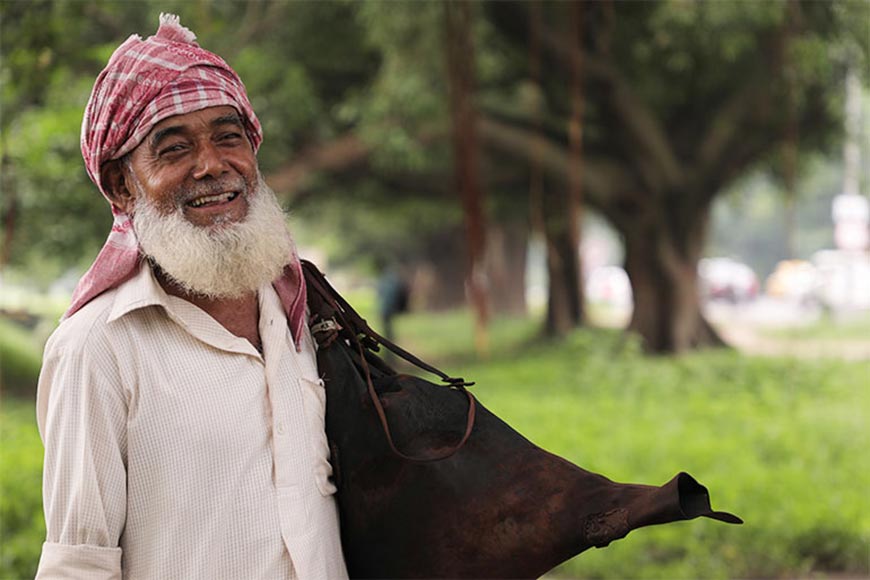
At 65, Sheikh Nazim is one of Kolkata’s old ‘bhistiwalas’ (water carriers). Every day, he walks along the city’s lanes and bylanes, witness to the living history of its brick and mortar heritage. One of the last survivors of our rapidly changing times, he is still tireless, still inseparable from his water bag or ‘mussock’ (mashak), which is so much more than just a repository for about 30 litres of water. It is, in fact, a repository of an entire history. Some of that history has now been captured in ‘Ripples Under the Skin’, a film by documentary maker Farha Khatun. And Nazim is the face of the film.
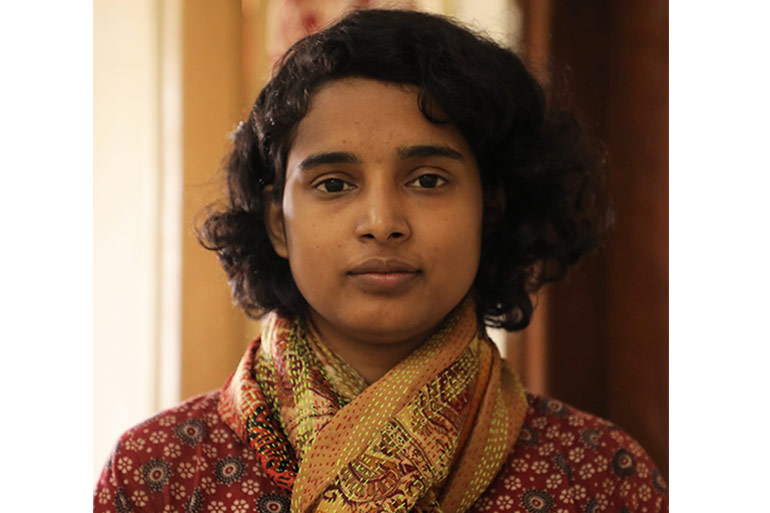
Farha Khatun
This is also a story about Kolkata, told from the perspective of a migrant labourer. There was a time when thousands of people like Nazim travelled to Kolkata from Bihar (including what later became Jharkhand) in search of livelihoods. With time, the city became their refuge, giving them a roof over their heads, some form of income, and at least two square meals a day. Some of them managed to scrape together enough money to build a home of their own, some spent an entire lifetime in rented rooms.
Farah’s film is up for screening on December 19 and 21 at the 28th Kolkata International Film Festival, in the Short and Documentary Panorama section. Explaining her choice of subject, Farah says, “I myself came to this city as a migrant in search of a living. Nazim chacha’s story was an inspiration. People like him fight relentlessly to stay afloat in the face of all odds, and help each other whenever needed. My film talks about this bond between warriors, through Nazim chacha.”
Farah herself travelled to Kolkata’s Roopkala Kendra to study film editing all the way from the remote Medinipur (West) village of Belda. Life as a Muslim woman among the city’s teeming millions wasn’t always easy. And her socio-political beliefs didn’t help. Which is what drew her to Nazim, who she met through a journalist friend. As she puts it, “I want my film to talk about the marginalised. We are all connected to water, and Nazim chacha is part of that connection.”
With previous films like ‘I Am Bonnie’ (co-directed with Satarupa Santra and Sourav Kanti Dutta) and the 2021 National Award-winning Urdu film ‘Holy Rights’ (a 53-minute docu on Muslim women kazis), Farah has taken ‘Ripples Under the Skin’ to Barcelona International Environmental Film Festival in Spain, Queens World Film Festival, USA, International Film Festival of Shimla, and other festivals.
Bhistiwalas hark back to a time when Kolkata had no pipelines to carry water. Their mussocks made of goatskin were a familiar sight across the city, carrying water to all quarters. Indeed, the word ‘bhisti’ apparently comes from the Persian word ‘behest’ or heaven, an indicator of the life-giving nature of the profession.
Mussocks slung across their shoulders, bhistiwalas supplied water primarily for cooking and bathing, though until the 195os, many of them were also engaged in washing some of the city’s important thoroughfares. Both Kolkata and Dhaka were home to entire neighbourhoods of bhistiwalas, though the picture has changed beyond recognition now. Of the handful of bhistiwalas who still supply water to a few North Kolkata homes and shops, Nazim is one.
Ripples Under the Skin poster
A demanding profession at any age, being a water carrier at 65 is a stiff challenge. Nazim charges Rs 10 for water supplied to ground floors, and between Rs 20 and 30 for upper floors. There was a time when he could carry up to 40 mussocks of water, which has now come down to eight or 10. At present, his only customers are meat and tea sellers, and forget the big screen, he cannot even remember the last time he saw himself in a photograph.
Kolkata is still home to around 40 bhisti families, most of them originally from Katihar in Bihar. Living in rented homes in central Kolkata, they primarily cater to the areas around Rafi Ahmed Kidwai Road, Brindaban Das Lane, Marquis Street, Elliot Road, the clientele comprising roughly 30 homes. Beginning their work at the crack of dawn, they visit each home and shop in turn. Nazim is happy with whatever he earns, his strong shoulders emblematic of an equally strong temperament. That is the strength of someone who carries history on his shoulders.
Ripples Under the Skin (Hindi, 29 minutes) will be screened at Nandan-3 at 2.00 pm on December 19 and at Sisir Mancha at 1.30 pm on December 21
source: http://www.getbengal.com / Get Bengal / Home> Culture> Film, Theatre & TV / by Suman Sadhu / December 17th, 2022
These researchers include Prof. (Dr.) Zafar Ahmad Reshi and Associate Prof. (Dr). Irfan Rashid Kakroo, both working in the Department of Botany of University of Kashmir, and Dr. Pervaiz Ahmad Dar who is working as Assistant Professor at Department of Botany, Amar Singh College Srinagar.Special arrangement
In a significant development, three Kashmir based academicians have published their research work in one of the leading journals “Nature Ecology and Evolution”.
These include two Professors from University of Kashmir Srinagar and one from Amar Singh College, Cluster University Srinagar.
The researchers from Kashmir have been able to publish their research work in the leading Journal at global level which marks one of the rarest occasions.
These researchers include Prof. (Dr.) Zafar Ahmad Reshi and Associate Prof. (Dr). Irfan Rashid Kakroo, both working in the Department of Botany of University of Kashmir, and Dr. Pervaiz Ahmad Dar who is working as Assistant Professor at Department of Botany, Amar Singh College Srinagar.
Notably, this study is a finding of the global network MIREN (Mountain Invasions Research Network; https://www.mountaininvasions.org/) and the Valley based three academicians and researchers are part of the work. This study has revealed that climate change is reshuffling plant species in general and alien plant species in particular.
The study has revealed that climate change is also contributing to a rapid upward shift of alien plant species which is posing a serious threat to our fragile high altitude ecosystems including endemic plant species.
The results of this study are extremely important for mountainous regions like Kashmir as alien plant species are increasingly threatening ecosystems of the region. This publication is recognition of the quality of research being carried out by this group and will encourage and motivate local youth towards quality research.
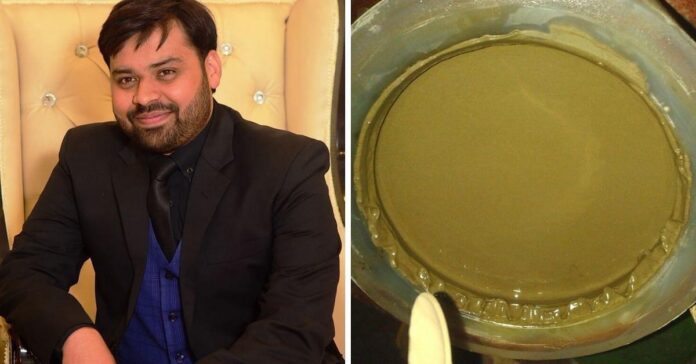
Jamia Millia Islamia (JMI) faculty have invented an environment-friendly cement. The cement was invented by Dr Ibadur Rahman, Assistant Professor, Department of Civil Engineering, Jamia Milia Islami, including other researchers from AMU. The Patent Office, Government of Australia has granted a patent to this cement as an intellectual property.
The invention is entitled ‘A Method for Preparing Modified Cement and Evaluating Mechanical and Chemical Properties,’ it’s main objective is to reduce carbon emissions.
Professor Mohammad Arif, Professor Abdul Baqi, Er Mohammad Gamal Al-Hagri, Er Amer Saleh Ali Hasan and Dr M Shariq are the co-inventors from Aligarh Muslim University (AMU).
Dr. Rahman said “There is a pressing need for the construction and other industries to go through green revolution-in other words, industries need to adopt and introduce environment-friendly materials.”
An official statement said this invention emphasis on the cement replacement effects with micro-silica fume, nano-silica fume and fly ash in a combination of two supplements on the mechanical properties of the concrete mixes.
The inventors said that the mixture of micro and nano-silica fumes, improves the mechanical properties of concrete and ultimately the microstructure and chemical analysis of the modified concrete show amplification in the morphological properties of concrete yielding to pore filling with further dense and compact formation.
Dr. Rahman has been working for the last eight years in the field of nano-based modified cement and concrete composite during his PhD research. A JMI statement said Dr. Rahman now has two patents to his merit.
Last year September, the intellectual property at the Patent Office, Government of India bestowed Dr. Rahman, the patent titled “High Strength Cementitious Nanocomposite Compositions and the methods of making the same.”
source: http://www.thehindustangazette.com / The Hindustan Gazette / Home> News> Lifestyle / by Rabia Shireen / June 11th, 2021
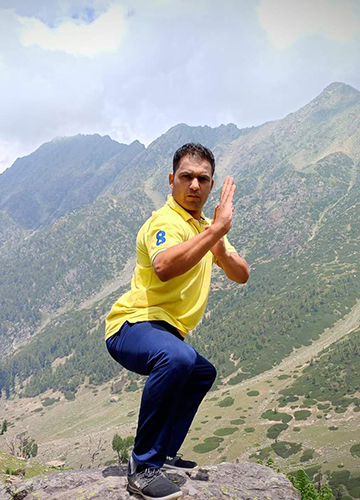
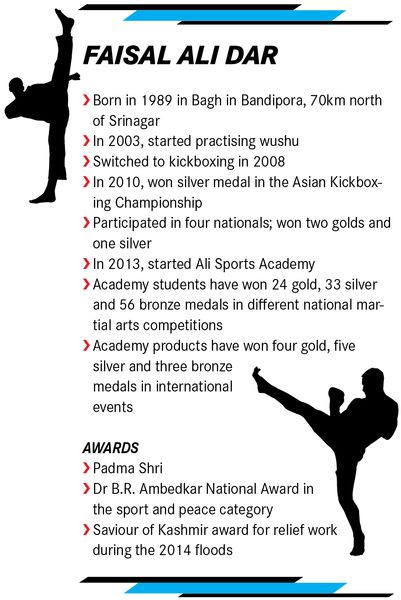
FAISAL ALI DAR watched Enter the Dragon when he was in class X. He was so enamoured by Bruce Lee that he started mimicking the martial arts master’s stunts. He persevered until he had perfected some of Lee’s on-screen moves. His friends and neighbours told him that his passion would bring him nothing. But he continued to pursue it with determination.
The journey that Dar embarked on in 2003, from a village boy to a martial arts trainer, motivational speaker and social worker, is a gripping tale of hard work, dedication and sacrifice. He started with wushu and switched to kickboxing in 2008. In 2010, he won silver medal in the Asian kickboxing championship. Initially, his efforts to woo youngsters to the sport did not evoke much response. “People thought it was a waste of time,”he said.
At his village of Bagh in Bandipora, 70km north of Srinagar, the lack of proper training and equipment impeded his efforts to establish himself as a kickboxer. “When I was training for kickboxing, I would use nylon slippers to practice punching with other kids, as I did not have money to buy pads and punchers,” he said. “I did not know the rules. I needed a coach and proper equipment which I could not afford.”
Things changed when coach Kuldeep Handoo—the first Dronacharya awardee from Jammu and Kashmir—took him under his wings. “He worked on my fitness and training and also taught me the rules of the game,’’ he said. “I worked as a labourer to save money to travel to Jammu for training.”
His family was supportive, but he did not want to burden them. “During the harvest, I would work in the orchards to load apples in trucks,” he said. The money was barely enough for his travel and stay, but he continued his training. He worked with building contractors to fund jerseys and equipment.
It was during this time that Dar realised the need for a training academy in Kashmir. “After participating in different tournaments, I realised that if our youngsters get proper training and support, they will make it big,” he said.
Dar participated in four nationals and won two golds and one silver. He called it quits in 2013 so that he could devote himself to coaching youngsters at his Ali Sports Academy, named after his late grandfather, Muhammad Ali.
There are 2,687 students registered in 17 clubs under the academy. Sixteen of them have participated in international championships, bagging four golds, five silvers and three bronzes in various events. “At the national level, 24 players have won gold, 33 silver and 56 bronze in different martial arts events,’’ he said.
The academy’s training programmes have been popular with girls. “One of our trainees, Abida Akhtar, won a silver in the 48kg category wushu championship in Malaysia in 2017,” said Dar.
The academy offers coaching at an annual fee of Rs50. “We have opened branches of our academy in eight districts now,” said Dar. “I believe athletes from Jammu and Kashmir, with proper training and physical fitness, can win Olympic medals.”
Dar took up another mission when he realised the depth of drug addiction in the valley. “We worked on de-addiction and then introduced them to sports so that they don’t return to drugs.” Dar and his volunteers played an active role in relief and rescue in the 2014 floods and during the Covid-19 pandemic. “During the pandemic, we mobilised our volunteers to distribute food and medicine to the people at their doorsteps.”
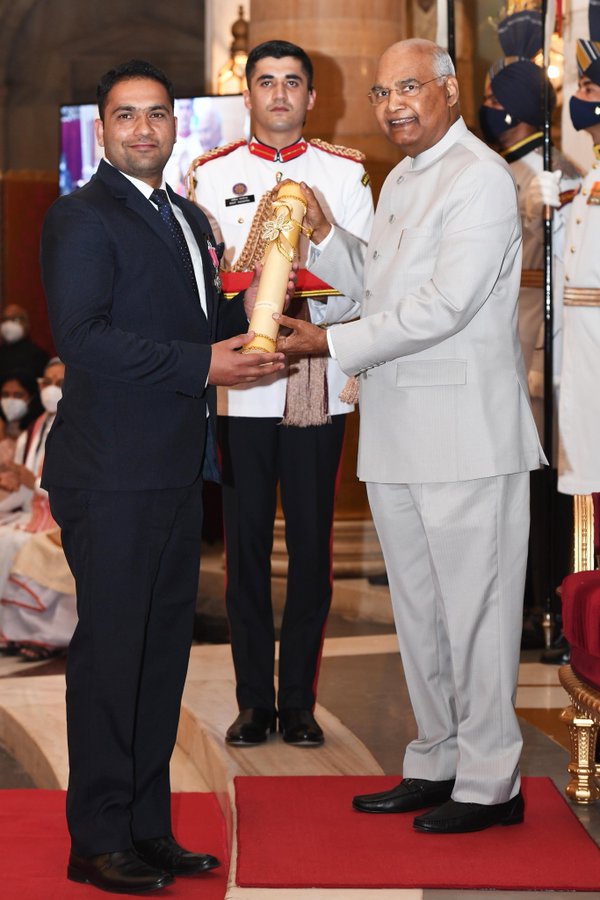
Dar has also been active in social projects like plantation drives, sanitation drives, blood donation camps, disaster management drives, female self-defence training camps, and women empowerment awareness campaigns. “We are honoured that he has been awarded Padma Shri,” said his father, Muhammad Shafi Dar.
pix @rashtrapatibhvn
Dar is the first Padma Award winner in sport from Jammu and Kashmir. “It is his hard work that has paid off,” said Arsalan Habib, a friend. “His contribution to the promotion of sports is exemplary.”
source: http://www.theweek.in / The Week / Home> The Week / by Tariq Bhat / additional pix edited @rashtrapatibhvn / February 13th, 2022
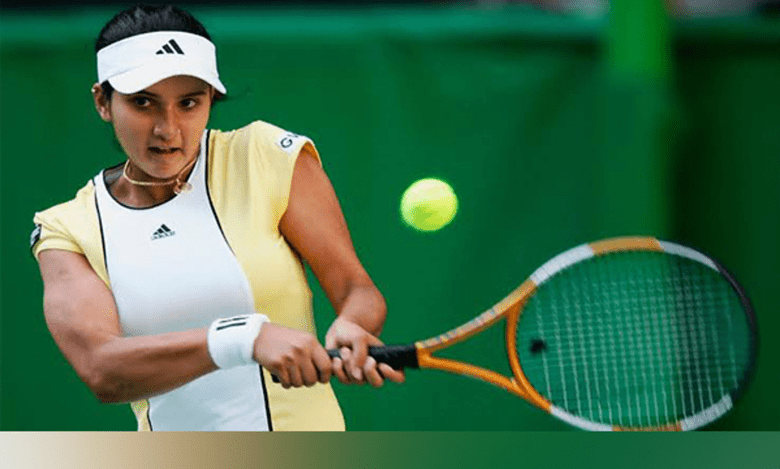
Sania Mirza is truly the first female tennis superstar from India.While Leander Paes led Indian tennis into the new millennium with his 1996 Atlanta Olympics bronze medal and several honours, tennis fans all around the nation yearned for a woman to represent the tricolour on the women’s court.Hyderabad-born, Sania Mirza gave the country just that.Here is a list of Sania Mirza’s Grand Slam titles, which helped her become India’s top female tennis player and a household name in the world of sports.
Source: Olympics Website
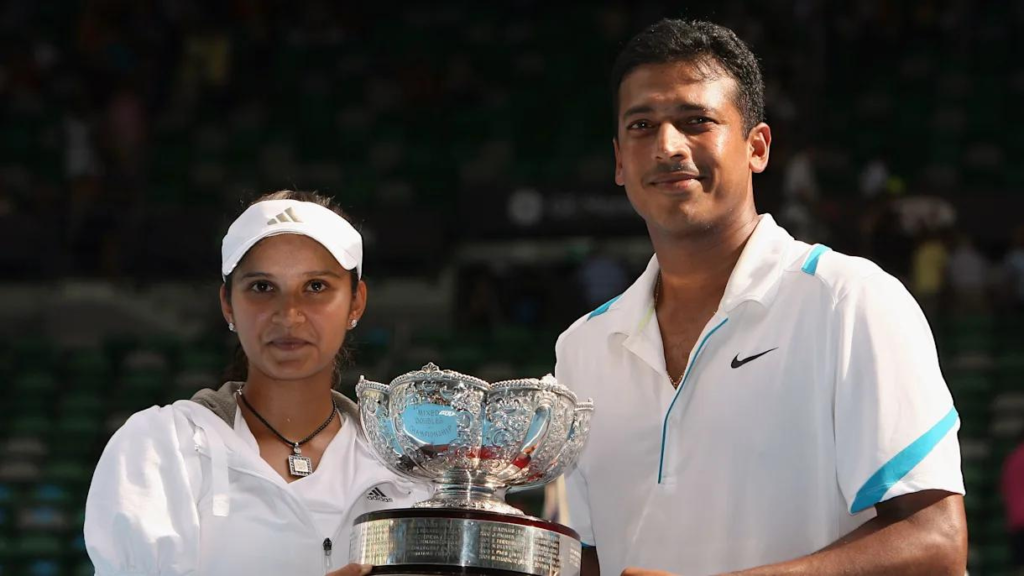
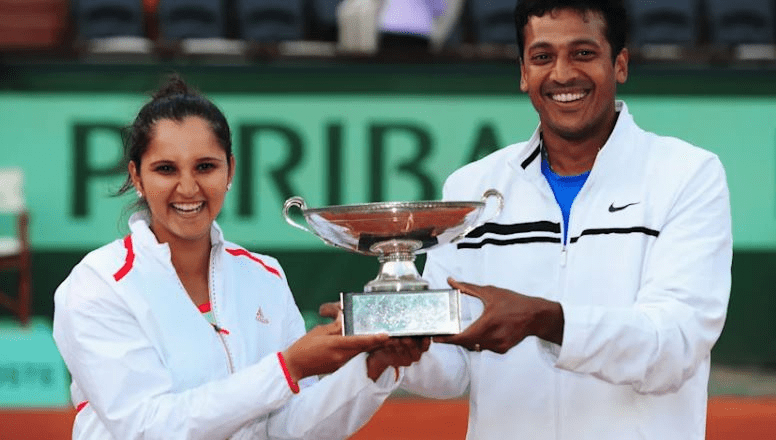
Australian Open 2009 mixed doubles
Her first victory came in 2009 when she teamed up with Mahesh Bhupathi to win the Australian Open mixed doubles championship.The pair was on a mission after falling short at the last hurdle at Melbourne Park the previous year and didn’t drop a set until making it to the quarterfinals.To win the title, the pair defeated Andy Ram of Israel and Nathalie Dechy of France 6-3, 6-1.
Source: Olympics Website
French Open 2012 mixed doubles
Three years later, the pair would team up once more to represent India with pride, this time on the revered clay of Roland Garros.Sania Mirza and Mahesh Bhupathi, who were the seventh seeds for the 2012 French Open, breezed through the competition.They won the title match 7-6, 6-1 against the Polish-Mexican team of Klaudia Jans-Ignacik and Santiago Gonzalez to win their second Grand Slam.
Source: Olympics Website
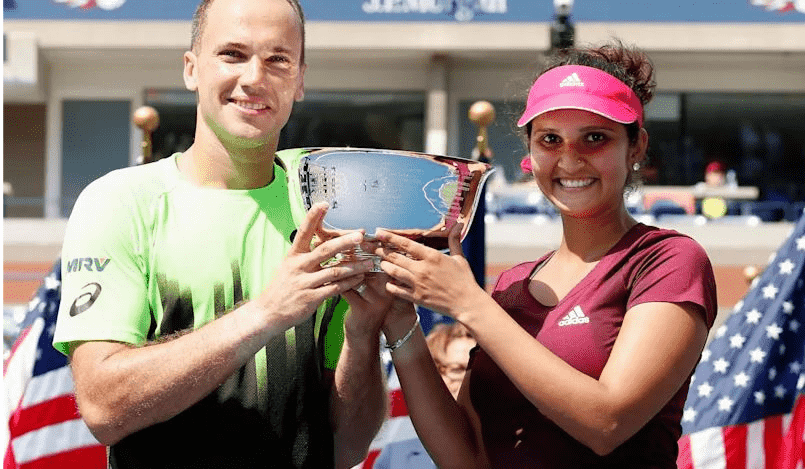
US Open 2014 mixed doubles
At the 2014 US Open, she teamed up with Brazilian player Bruno Soares to win her third mixed doubles championship at a Slam.The top-seeded pair lived up to their reputation by defeating Abigail Spears of the USA and Santiago Gonzalez of Mexico in the title bout, which required a tie-breaker.
Source: Instagram
Wimbledon 2015 Women’s doubles
Sania Mirza and Martina Hingis partnered in 2015 and won three consecutive Grand Slam doubles championships. They won their 1st Grand Slam title at Wimbledon in 2015. Without dropping a set, the pair advanced to the championship match against Sania Mirza’s previous partner, the Russian team of Ekaterina Makarova and Elena Vesnina.Sania Mirza and Martina Hingis persevered to win a closely contested three-set match in the final.
Source: Twitter
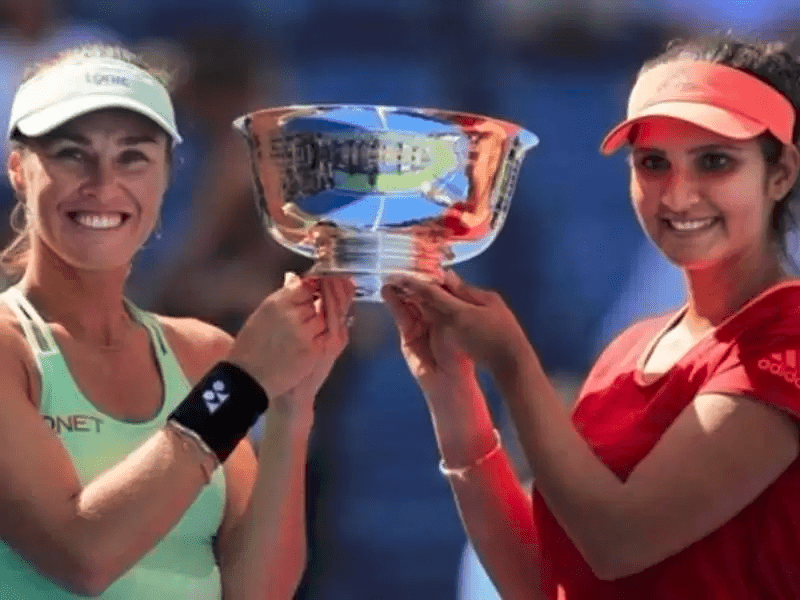
US Open 2015 Women’s doubles
The duo continued their rich vein of form and seemed almost unstoppable over the course of the next few months as they picked up the US Open 2015. Martina Hingis and Sania Mirza won their second Grand Slam doubles title together, defeating Casey Dellacqua and Yaroslava Shvedova in the final, 6–3, 6–3.
Source: Twitter
Australian Open 2016 Women’s doubles
In 2016, at the Australian Open, Sania Mirza captured her final Grand Slam. With Hingis, she had won three straight major championships.The top-seeded Indo-American team defeated Andrea Hlavackova and Lucie Hradecka of the Czech Republic 7(7)-6(1), 6-3, to claim the championship in Melbourne.
source: http://www.siasat.com / The Siasat Daily / Home> Photos / by Asian New International / posted by Abdul Rahman / January 28th, 2023
We are celebrating the 811 annual Urs (death anniversary) according to the lunar calendar of Khwaja Gharib Nawaz of Ajmer who was born on February 1 1143 AD in Sijz, Sistan, Iran. He left the world on March 15, 1236 AD in Ajmer, Rajasthan. Since that time his disciples and followers have been celebrating his death anniversary as per the Sufi traditions.
The Sufi mystics celebrate the death and not birth as for them death means a reunion with Almighty Allah.
He was brought up in Khurasan, Iran, while his father Ghayasuddinn died when he was 15. He studied in Isfahan, Samarqand, and Bukhara, and went to Baghdad in search of a spiritual mentor. There, he met Hazrat Khawaja Usman Harooni. Thereafter, he went to visit the two holy cities of Mecca and Medina. Eventually, he came to Ajmer in India via Lahore where he lived for the rest of his life and became his resting place after death.
It’s a surprising truth that Muslim kings ruled for around 800 years over India and built many historical monuments such as the Taj Mahal, Red Fort, Humayun Tomb, and Qutub Minar, and yet none of them is alive in the hearts of people except in the history books. Unlike kings and rulers, Khwaja Gharib Nawaz won the hearts of millions of helpless, poor, weaker, and underprivileged people and seekers of truth. With divine mercy, he became Gharib Nawaz (supporter of the poor), though his original name is Moinuddin (helper of the religion).
He fulfilled Huqooq ullah (God’s rights) and Huqooqul ibad (human rights) equally and served the weak and poor, loved the unloved, and fed the hungry irrespective of caste, creed, gender, and religion. It was his outstanding service and love towards humanity that attracted people from across the society, unlike any rulers. They loved and followed this Sufi mystic and therefore he was called “Sultanul Hind”, the king of the Indian subcontinent. He then developed the Chishti Sufi order in this subcontinent and became the Sufi mystic with the highest following in the world.
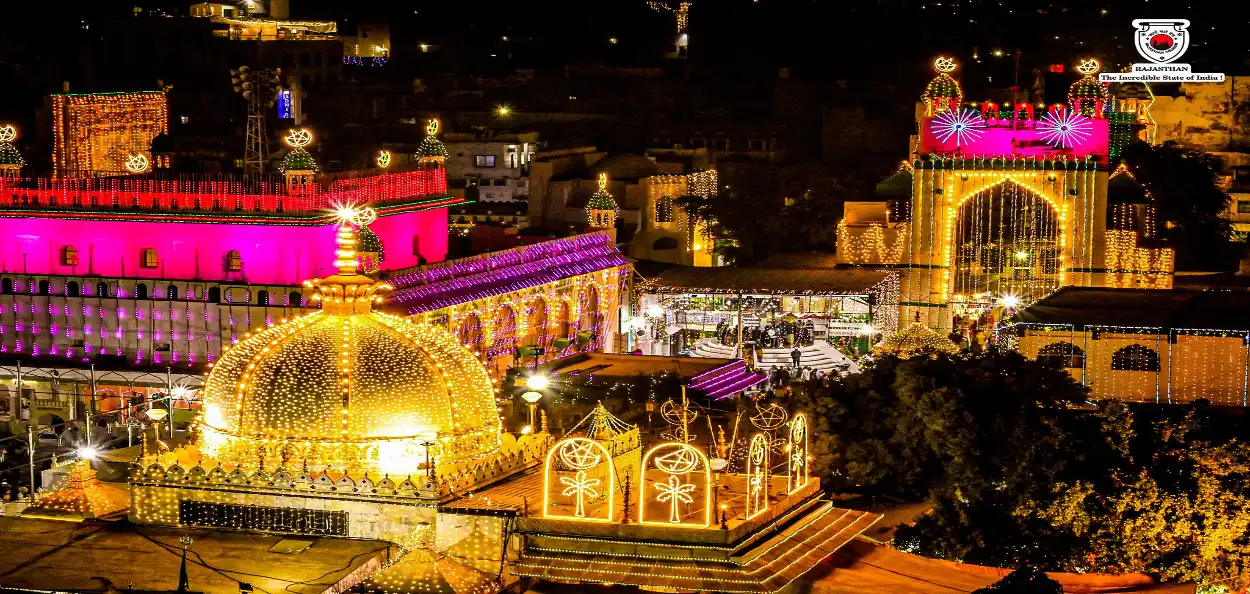
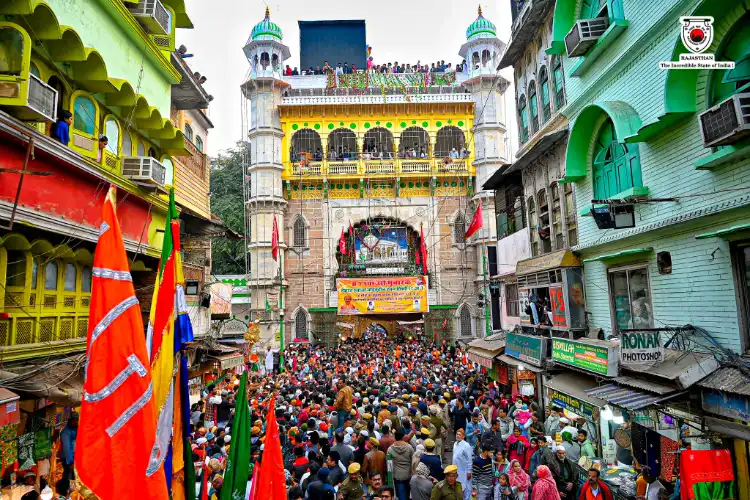
The scene outside the Ajmer Sharif dargah
The uniqueness of his Sufi order and his character was that he greatly impacted others with his pious character and selfless service and he accepted and accommodated the local traditions and made them part of his Sufi order.The message of universal fraternity, harmony, and brotherhood spread by the Sufis saints was so loud and inclusive that even after their union with God (Wisal-e-ilahi), their hospices remain abuzz with the people of all walks of life.
On top of all Indian shrines, the Dargah of Khwaja Moinuddin Chishti known as Daghah Khwaja Gharib Nawaz in the heart of Ajmer city surrounded by Tara Gadh hills is the shining example of love, harmony, unity, and fraternity.
Maulana Rumi beautifully talks about the human heart:
Ek dil behtar hazaran Ka’be ast
(One heart is far better than a thousand Ka’baas).
He further says (Translated version):
Bring your heart in your hand; your soothing is more important than a pilgrimage. A single heart is better than a thousand Ka’abas. The K’aba was built by Allah’s Khalil (friend) Prophet Hazrat Ibrahim (Abraham), while the heart, in contrast, was created and tested by the Almighty God Himself.
The great Sufi saint of India Khwaja Moinuddin Chishty who is also known as Gharib Nawaz of Ajmer often taught the people: love towards all and malice towards none. His disciples and successors held this message of their mentor by tooth and their hospices became the center for spreading universal love and affinity. His disciple Khwaja Nizamuddin Auliya of Delhi often recited the following couplets of Persian poet Abu Said Abul Khair:
“If people spread thorns in your path, you just put flowers in their way; otherwise the entire path would become thorny”.
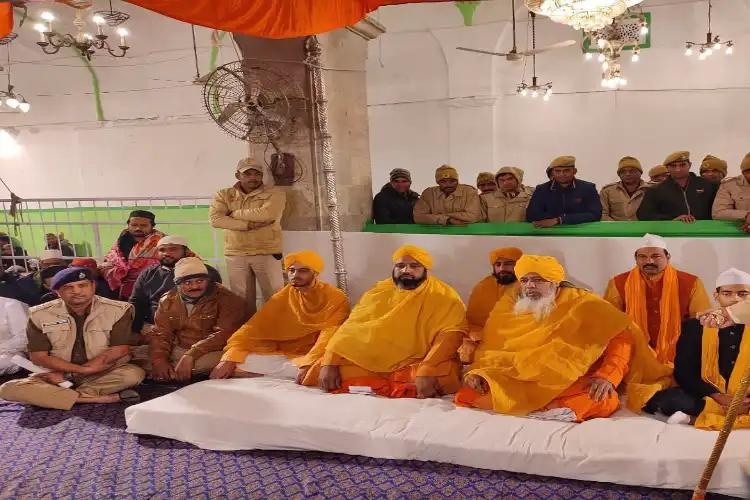
Sufi saints in a prayers at the Dargah during the Urs
Today, we Muslims in India must not forget what Khwaja Gharib Nawaz of Ajmer Sharif and Hazrat Nizamuddin Auliya of Delhi taught us.
The love, fraternity, and affection shown by the Sufi saints to the common people won their hearts, and their hospices (khanqahs were the center of love where people from all walks of life began to flock to seek succor for their miseries. These Sufi saints respected the local customs and culture to the extent that even many of them became vegetarian due to respect for their non-Muslim brothers. Khwaja Gharib Nawaz, Khawaja Nizamuddin Aulia, Sarmad Shaheed, Bu Ali Shah Qalandar, and many others had become pure vegetarians in respect of their non-Muslim brethren. Their philosophy was simple: live and let live; love and compassion to all, no hate or discrimination on the ground of caste, creed, culture, religion, and gender.
Chishty Sufis continued to adopting of local traditions. For instance in Delhi, Hazrat Amir Khusrau was the one who started celebrating Basant Panchami to make his mentor Nizamuddin Auliya happy. Since then, the Basant celebration is continuing on the premises of Dargah Hazrat Nizamuddin Auliya.
Being a Persian scholar and follower of a Sufi order, I came across the anthology of Sufi poets like, Rumi, Jami, Khusro, Shah Niaz be Niaz, Baba Bulle Shah, Shah Zaheen Taji, Bedam Shah Warsi in both Urdu and Persian languages. Their metaphysical and mystic poems were very impressive, moving, and touching. This has increased my curiosity to know more about it, I got a chance to attend a 3-day-long Sufi music concert in Delhi, organized by famous music composer and film director Muzaffar Ali with the title of Jahan-e-Khusrau in Humayun tomb. This concert is organized by him every year and attended by world-famous Sufi musicians and vocals from India, Pakistan, Afghanistan, Iran, Turkey, and many other countries. However, every year the well-known vocalist Abida Parveen of Pakistan steals the show.
As soon as she starts her melody in the most fascinating and moving voice, the people begin crying in their hearts. It seems as if she is on the direct hotline with the Almighty God. Though more than 2 decades have passed, I still remember the rhythm of her voice and her selection of poems from the anthologies of Amir Khausrau, Baba Bulle Shah, Shah Zaheen Taji, and Shah Niaz Bareilvi.
The following metaphysical mystic poems of Shah Niaz Barelvi recited by Abida Perveen attracted my special attention:
Yaar ko hum ne ja baja dekha, kahin zahir kahin chupa dekha…
I saw my beloved everywhere, somewhere apparent and somewhere hidden.
Kahin mumkin hua kahin wajib, Kahin fani kahin baqi dekha.
Somewhere He was merely a possibility and somewhere He was imperative. Somewhere I saw Him ephemeral, and somewhere I found him eternal.
Kahin wo badshah takht nashin, Kahin kasa liye gada dekha.
Somewhere, I saw Him a king sitting on His throne, and sometimes I saw Him mendicant with a begging bowl.
Kahin wo dar libas e mashooqan, Bar sare naz aur ada dekha.
Somewhere He was in the most beautiful attire, displaying His unique charm and attraction.
Kahin ashiq Niaz ki surat, Seena giryan to dil jala dekha.
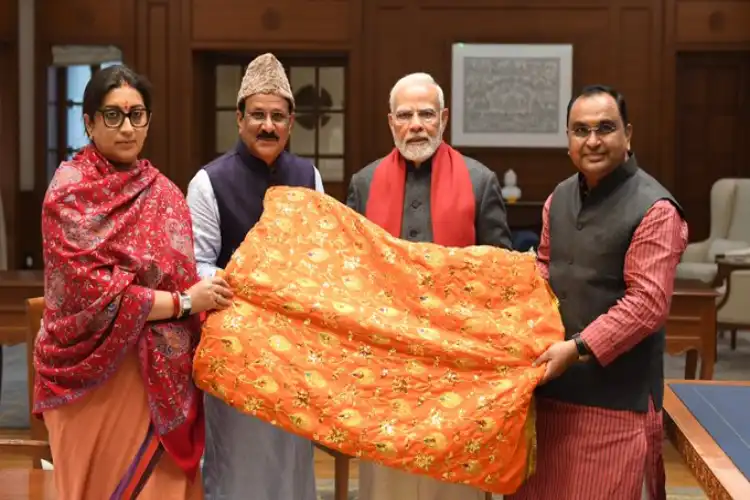
Prime Minister Narendra Modi handing over a Chadar for offering at the tomb of Moinuddin Chisty for the Urs
Somewhere He was like a lover Niaz, beating his chest and his heart was in flame.
This unique hymn of God almost mesmerized the entire audience. There was a pin-drop silence as the people felt that divine light is pervading from all sides. After hearing this fabulous hymn, I decided to pay my obeisance at his shrine built about 300 years ago in Bareilly.
Though he associated himself with both the Chishti and Qadri orders of the Sufis, he favoured the Chishty order in which the saints were encouraged to reach the maximum number of people whoever they may be. In the footsteps of his predecessors, he also followed the local customs and traditions to win the hearts of people from all creeds and castes. His main emphasis was to clean the heart instead of cleaning the apparent body and clothes.
The Chishty Sufi order was established in Indian Sub-Continent by Khwaja Gharib. It’s organised by Baba Fariduddin Ganj Shakar Pak Patan and it flourished to the highest level by Hazrat Nizamuddin Auliya of Delhi. The basic philosophy of Chishty Sufis is to love the unloved, welcome the ignorant, and serve the unserved. They united the human heart and lived in harmony by their nature of acceptance of others’ good things from local tradition and influenced others by their pious and selfless character. They said that whoever comes to us give them food and don’t ask about their religion. that’s the beauty behind flourishing their Sufi order even though it’s increasing day by day after 800 years. Khwaja Gharib Nawaz shrine is 5th largest gathering spiritual place in the world after the holy cities of Mecca and Medina in Saudia Arabia and Najaf and Karbala in Iraq..
Right from Khwaja Gharib Nawaz of Ajmer to Baba Farid Pak Patan, Nizamuddin Auliya Delhi, Sabir e pak in Peeran Kaliyar, Amir khusrau Dehlavi,
Sarmad Shaheed, Bande Nawaz Gesu Daraz in Gulbaga, Baba Tajuddin in Nagpur, Makhdoom Ashraf Jahangir Simnani in kichowcha and Alaul Haq Pandvi in Bengal, Shah Niaz in Bareilly and Haji Waris Ali shah in Dewa have their respective chains of Sufi shrines spread all over the Indian Sub-Continent. They continue to rule over millions of hearts through their unique philosophies of unconditional love and compassion. Anyone observes the impact of local traditions in their shrines’ rituals and amongst their followers.
Dr. Hafeezur Rahman is an author, Islamic scholar, TV host and the founder of Sufi Peace Foundation.
source:http://www.awazthevoice.in / Awaz, The Voice / Home / by Dr Hafeezur Rahman / posted by Aasha Khosa / January 29th, 2013
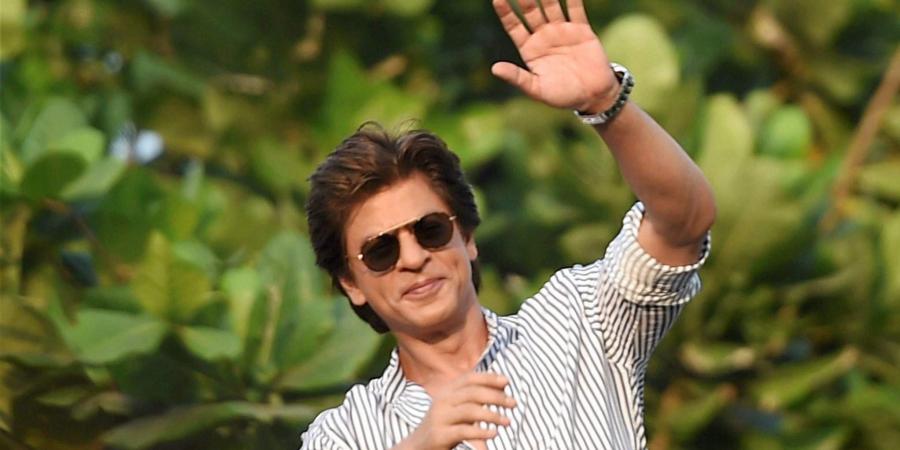
Bollywood superstar Shah Rukh Khan has become the only Indian to be named in an international list of 50 greatest actors of all time by a prominent British magazine.
The 57-year-old actor is included in Empire magazine’s list which also recognises Hollywood giants like Denzel Washington, Tom Hanks, Anthony Marlon Brando, Meryl Streep, Jack Nicholson and many others.
In the accompanying short profile, the magazine said Khan has a career that has now spanned four decades of “near unbroken hits, and a fanbase of pretty much billions”.
“You don’t do that without outrageous amounts of charisma and absolute mastery of your craft. Comfortable in almost every genre going, there’s pretty much nothing he can’t do,” it added.
From his extensive filmography, the publication highlighted Khan’s notable characters from four movies — Sanjay Leela Bhansali-directed “Devdas”, Karan Johar’s “My Name Is Khan” and “Kuch Kuch Hota Hai”, and “Swades”, directed by Ashutosh Gowarikar.
His dialogue from the 2012 movie “Jab Tak Hai Jaan” — “Zindagi toh har roz jaan leti hai… Bomb toh sirf ek baar lega” (Every day life kills us a little. A bomb will kill you only once) — has been recognised as the “iconic line” of his career.
“Jab Tak Hai Jaan” was filmmaker Yash Chopra’s swansong and featured Khan as an Indian Army Major named Samar Anand. The film also starred Katrina Kaif and Anushka Sharma.
The actor will be next seen in the actioner “Pathaan”, set to be released worldwide on January 25, 2023. Directed by Siddharth Anand, the movie also stars John Abraham and Deepika Padukone.
Khan will also star in two more movies — action-entertainer “Jawan” with filmmaker Atlee and the Rajkumar Hirani-directed “Dunki”.
“Jawan”, a pan-India project, is set to come out on June 2, 2023, while “Dunki”, also starring Taapsee Pannu, will release in December 2023.
source: http://www.varthabharati.in / Vartha Bharati / Home /December 20th, 2022
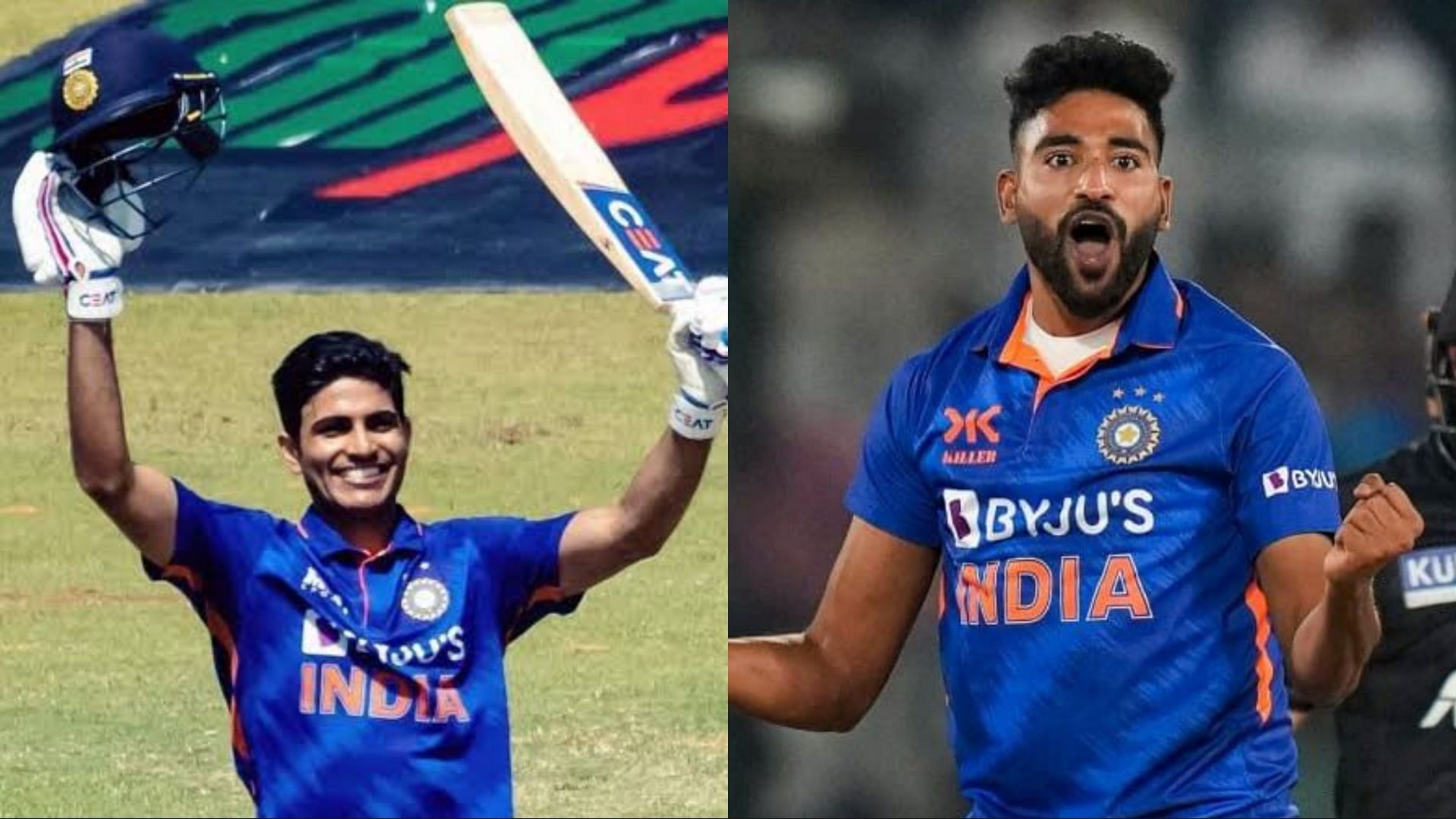
Shubman Gill (L) & Mohammed Siraj have gained big in the ICC Rankings
Mohammed Siraj has become the new world number one bowler in the ICC ODI Rankings. The Indian fast bowler replaced New Zealand’s Trent Boult at the top of the bowling charts thanks to his impressive performances in the 50-over format.
As far as Mohammed Siraj’s recent performances in ODI cricket are concerned, the right-arm fast bowler bagged 24 wickets in 15 matches last year. In 2023 so far, he has played five matches, scalping 14 wickets, including two four-wicket hauls. The 28-year-old achieved his best bowling figures of 4/32 in the third ODI against Sri Lanka on January 15.
Mohammed Siraj climbed to the third position in the rankings last week. He has now jumped ahead of Josh Hazlewood and Trent Boult to secure the top spot with 729 rating points to his name.
Trent Boult, who does not play ODI cricket these days for New Zealand, has slipped to the third spot with 708 rating points. Australia’s Josh Hazlewood is second in the rankings with 727 rating points.
The gap between Siraj and Hazlewood is of two points only. Interestingly, the two players will face off in the upcoming Border-Gavaskar Trophy and then play together for the Royal Challengers Bangalore in IPL 2023.
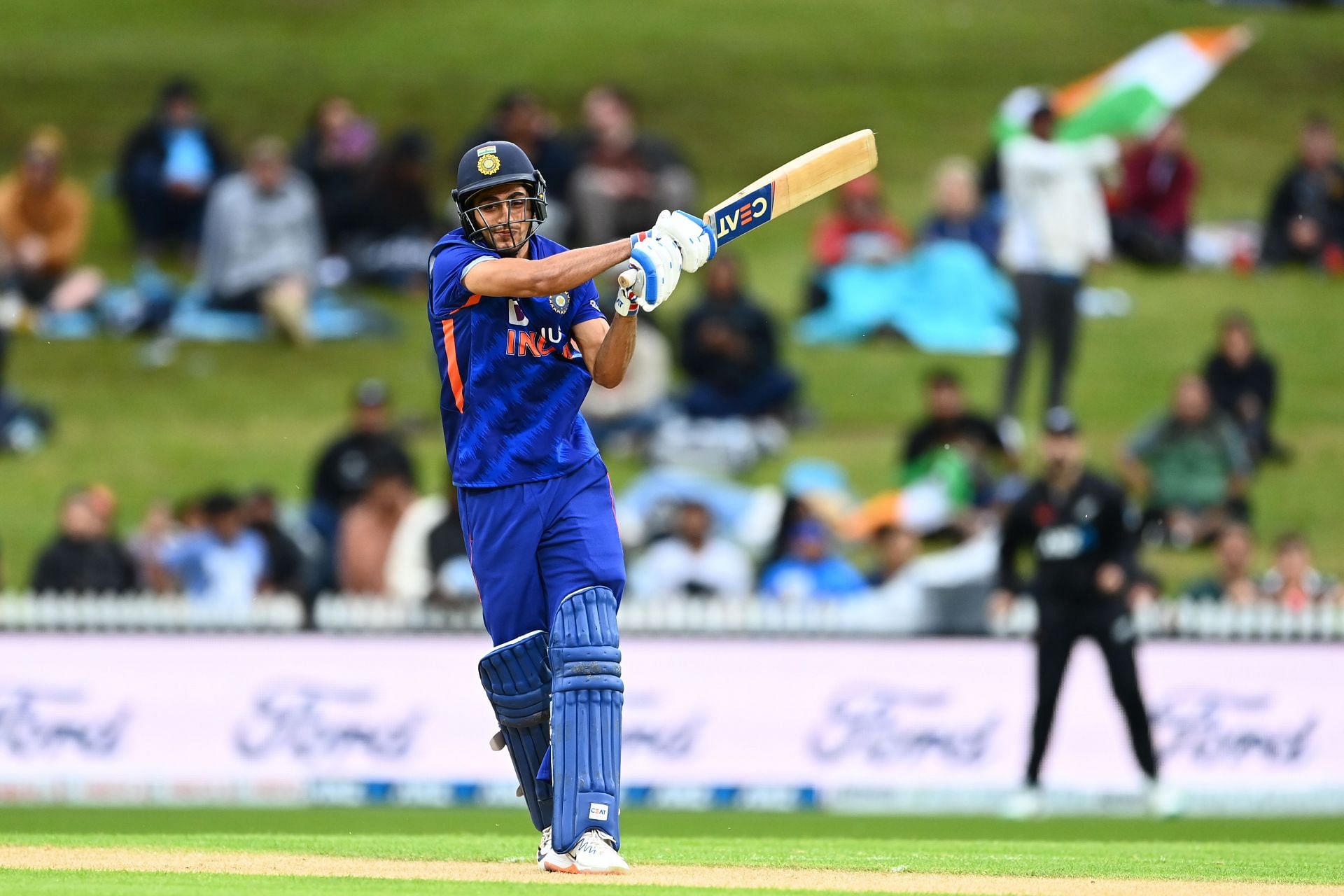
Mohammed Siraj was not the only Indian to gain big in ICC ODI rankings
New Zealand v India – 2nd ODI (Image: Getty)
Meanwhile, Shubman Gill has replaced Virat Kohli as the highest-ranked Indian batter in the ICC ODI Rankings. The young Indian opener aggregated 360 runs in three matches of the recently concluded series against New Zealand.
Gill now has 734 rating points to his name. He has moved from eighth to sixth position, overtaking Virat Kohli (727 rating points) and Steve Smith (719 rating points).
Indian captain Rohit Sharma has returned to the top 10 as well after scoring a ton against the Blackcaps. He is currently ninth with 719 rating points.
source: http://www.sportskeeda.com / SportsKeeda / Home> Cricket / by Vinay Chhabria / January 25th, 2023
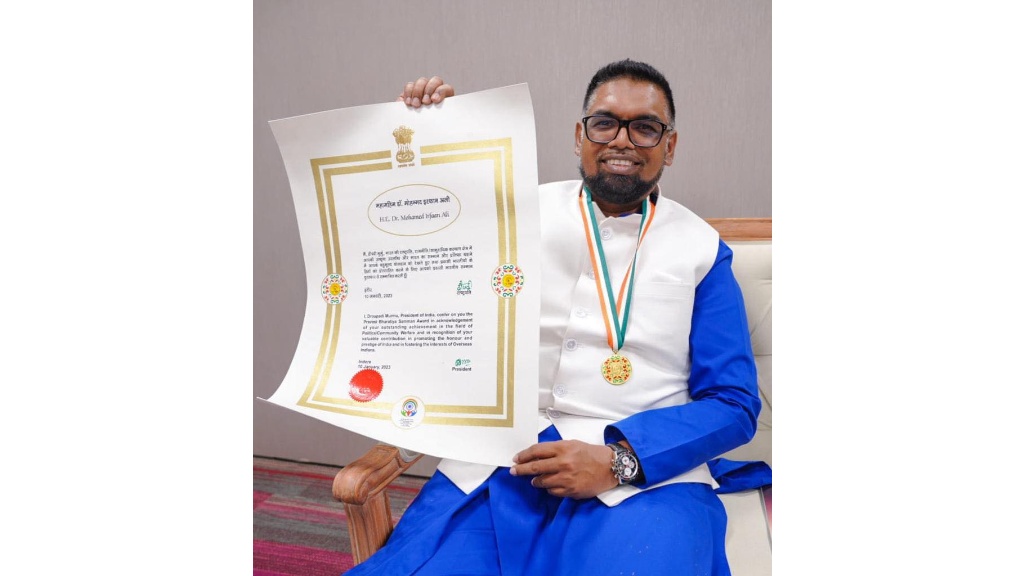
President Dr Mohammed Ifraan Ali receiving the Pravasi Bharatiya Samman Award from Indian President Droupadi Murmu.
Guyanese President Dr Mohamed Irfaan Ali was conferred today with the Pravasi Bharatiya Samman Award (PBSA).
The award is India’s highest honour for members of the Indian diaspora.
Indian President Droupadi Murmu presented Ali with the award at a special ceremony in Indore, India
President Dr Mohammed Ifraan Ali after receiving the Pravasi Bharatiya Samman Award. Photo: Office of the President
Ali, Trinidadian judge, Justice Frank Arthur Seepersad and Suriname’s Dr Dewanchandrebhose Sharman are the three Caribbean nationals of Indian origin, who were presented with the PBSA this year.
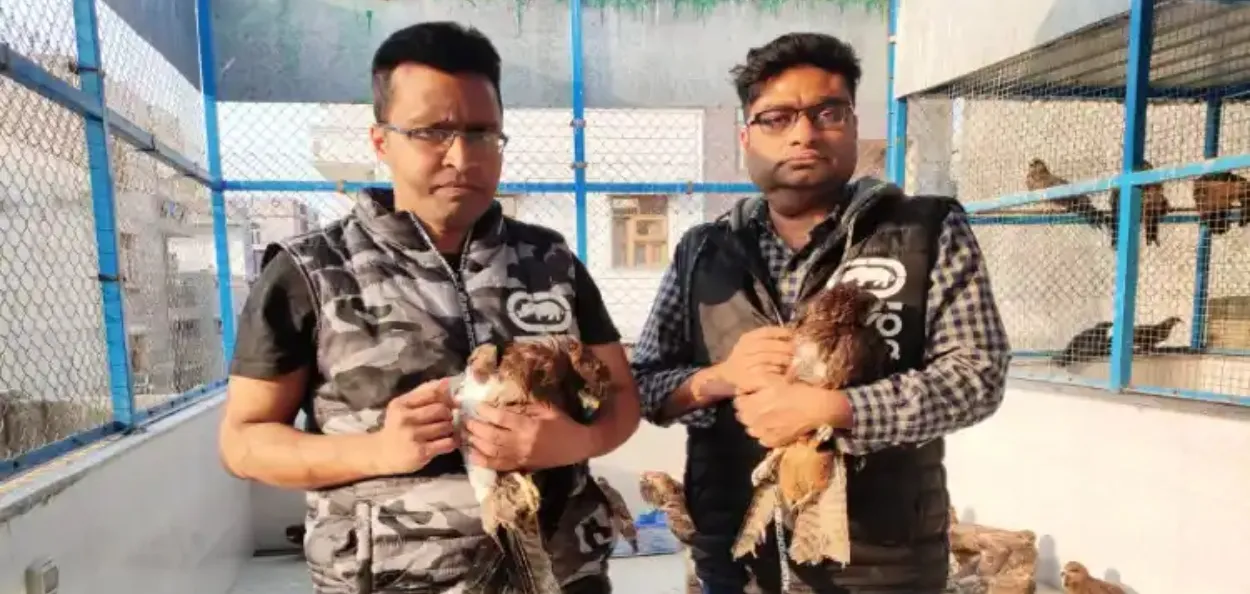
‘All That Breathes’ a Documentary feature film based on the lives of two brothers Mohammad Saud and Nadeem Shehzad of Delhi, who work out of their derelict basement in Delhi’s Wazirabad, to rescue and treat injured birds, especially the black kites, has made it to the Oscar nominations list.
‘All That Breathes’ made by Shaunak Sen has been nominated in the ‘Documentary Feature Film’ category against ‘All the Beauty and the Bloodshed’, ‘Fire Of Love,’ ‘A House made of Splinters,’ and ‘Navalny’.
Besides, the most- predicted and the much-celebrated music of ‘RRR’ also made it to the Oscars race. The magnum opus film’s energy-packed track ‘Naatu Naatu’ made it to the nominations this year in the ‘Original Song’ category.
After the Oscar nominations were announced, every Indian’s heart was pumped with pride and joy as we secured three nominations this year.
This lyrical composition of ‘Naatu Naatu’ by MM Keeravani, high energy rendition by singers Rahul Sipligunj and Kaala Bhairava, unique choreography by Prem Rakshith, and lyrics by Chandrabose are all the elements that make this ‘RRR’ mass anthem a perfect dance craze.
The song is competing against ‘Applause’ from the film ‘Tell It Like A Woman,’ ‘Hold My Hand’ from the movie ‘Top Gun: Maverick,’ ‘Lift me Up’ from ‘Black Panther: Wakanda Forever,’ and ‘This Is Life,’ from ‘Everything, Everywhere All At Once’.
Adding to the Indian list of nominations for Oscars 2023 is Kartiki Gonsalves’ ‘The Elephant Whisperers.”
‘The Elephant Whisperers’ has been nominated in the ‘Documentary Short Film Category’ against ‘Haul Out,’ ‘How Do You Measure A Year?’ ‘The Martha Mitchell Effect,’ and ‘Stranger At The Gate’.
The film’s plot revolves around a family who adopts two orphan baby elephants in Tamil Nadu’s Mudumalai Tiger Reserve.
The Oscars are going to be held on March 13 and while the wait is going to be quite a long one from now, the nominations have sure lifted the spirits of not just the crew and cast of the films mentioned above, but also of everyone who hopes to see an Indian movie bagging the prestigious award.
source: http://www.awazthevoice.in / Awaz, The Voice / Home / posted by Aasha Khosa, ATV / January 25th, 2023