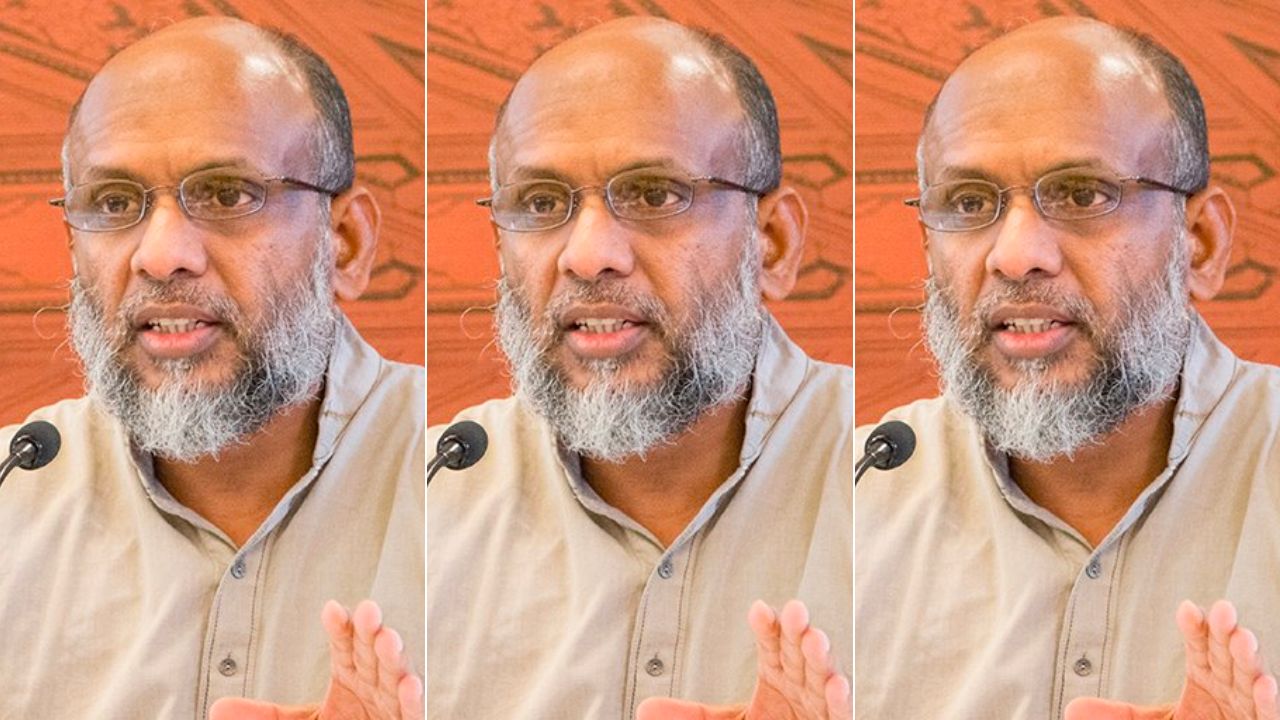
Three Kashmiri youths have been selected for the International Snow Sculpture Championship to be held in America on January 22. An official invitation from international ice sculpture organizer Breckenridge International invited the four participants to represent India in the competition in Colorado, USA.
Zahooruddin Lone from village Patan in Baramulla district, Irfan Latif Mir from a remote area of Kupwara district, Tasadeq Hussain Hijam from Magam village in Baramulla, and Mardul Upadhyay from Uttar Pradesh will be in the Indian ice sculpture team.
This will be the 32nd edition of the International Ice Sculpting Championship in Breckenridge, Colorado, USA. The organizing committee has a history of inviting artists from all over the world.
Team leader Zahooruddin Lone said.”This is an international competition that celebrates art, culture, and the ephemeral, beautiful nature of snow,” the invitation read. We are very pleased to have been selected for the International Snow Sculpture Championship to be held in Breckenridge, Colorado. We are grateful to the organizing committee for allowing us to participate in this championship.
Representing Team India is a huge achievement for us and we are very proud to be getting this opportunity from across Kashmir which will inspire many other youngsters here. They will try to participate in such international events and make Kashmir proud.
Zahooruddin Lone with his sculpture
Zahooruddin Lone popularly known as Zahoor Kashmiri has represented India twice in the International Snow Sculpture Championship, according to him snow is natural in Kashmir and it is easy for people to learn how to make snow sculptures.
According to Lone along with other professional ice sculptors Tasadeq Hussain from Budgam trains 20 students interested in making ice sculptures at the Government Degree College, Magam. He said that ice is an easy medium to work in.
Lone said that since the ice in Kashmir is natural and there is no stress of wastage, etc. The interested youth can take time to learn professional ice sculpting.
Hailing from the small village of Patan Singhpura in North Kashmir, Lone has done his Master’s in Fine Arts from Jamia Millia Islamia, New Delhi.He has gained experience in snow sculpting from ‘Snow Festa-2014’, organized by Apelner Event Management and J&K Tourism in Gulmarg followed by the International Snow Sculpting Championship.
He is the leader of a team of 35 professional snow sculptors from across India. Photos of snow sculptures created by young children soon after the recent snowfall have gone viral on social media, showing that the new generation is learning the art.
source: http://www.awazthevoice.in / Awaz, The Voice / Home / story by aasha@awazthevoice.in / January 17th, 2023
From Hyderabad there are only two football players who have had the honour of playing against the legendary Pele of Brazil. Although Hyderabad had produced several famous players in the history of Indian football, only two of them, namely the brothers Mohammed Habib and Mohammed Akbar, got the chance to play against the great man. That opportunity came when the New York Cosmos team, which included Pele as well as several other international stars, was touring Asia and decided to play a match at the Eden Gardens ground in Kolkata against Mohun Bagan club in 1977.
Mohun Bagan Athletic Club which is one of the oldest clubs in Asia was founded in 1889 in Kolkata and has had a glorious history. In 1977, the then President of Mohun Bagan, the famous Dr. Dhiren Dey, contacted his counterpart in Cosmos club and fixed up a date for the New York club to play against his own club at the huge Eden Gardens stadium in Kolkata on September 24.
Amidst massive fanfare and publicity, the foreign team arrived two days early in football mad Calcutta (as Kolkata was then called). But even as the team arrived, nature began sending out ominous signals. A steady downpour began which refused to ease up. Despite that, lakhs of people lined the streets to welcome the soccer superstars as their motorcade made its way from the airport to their hotel. About 90,000 tickets were sold out in advance and the sponsors and advertisers came flocking to be part of this great show on Indian soil.
Mohammed Akbar recently shared with siasat.com his memories of that historic occasion. “It continued to rain for two whole days and the ground’s condition at the stadium became appalling. There was almost ankle deep water and mud. The foreign players who included Pele, former Brazil captain Carlos Alberto and Italian superstar Georgio Chinaglia took one look at the ground and said that they will not play in such conditions. The players explained that if they get injured on such a ground, the insurance company will not pay the costs,” said Akbar.
“Then our Dhiren Dey sahab went rushing to their hotel and literally fell at the feet of Pele. He told Pele and the others that tickets had been sold out. Advertisers and sponsors had paid money which had already been spent on hoardings and media advertisements. The imagination of the public had been whipped into frenzy by the press. Now if the match does not take place, the fans of Calcutta will lynch me. They will burn down the stadium and my house and business. Please at least enter the ground. Let the people see the great Pele on the field of Calcutta, begged Dhiren Dey sahab,” said Akbar.
“After a lot of persuasion Pele realised the predicament of the organisers and very reluctantly agreed to enter the field and perhaps play at half speed. We the Indian players, especially those who had played in Calcutta, had no difficulty. So the match began with our Mohun Bagan team going into an all out attack against a half hearted and hesitant Cosmos team,” said Akbar.
“After a while our Shyam Thapa scored a goal and we took the lead. Then they equalized by scoring a goal even though they were playing at half speed. After Habib bhai scored the second goal for Mohun Bagan, their coach must have rebuked them soundly. They began playing much better. We began to feel the pressure. They scored their second goal to make the score 2-2 but then decided that they will be satisfied with a draw. They did not want to take more risks on the muddy ground. So the match ended in a draw at 2-2,” said Akbar.
“After the match ended, Pele praised Habib bhai and a few other Indian players in front of the media. We felt so encouraged to hear his words. That the greatest legend of football had hailed our efforts made us feel heroic. He said that in brains and execution, Indians are second to none. It is only in physique that Indian players are slightly behind. I felt very sad the day Pele passed away. He was not only a great footballer but also a thorough gentleman,” said Akbar.
source: http://www.siasat.com / The Siasat Daily / Home> News> Hyderabad / by Abhijit Sen Gupta / January 04th, 2023
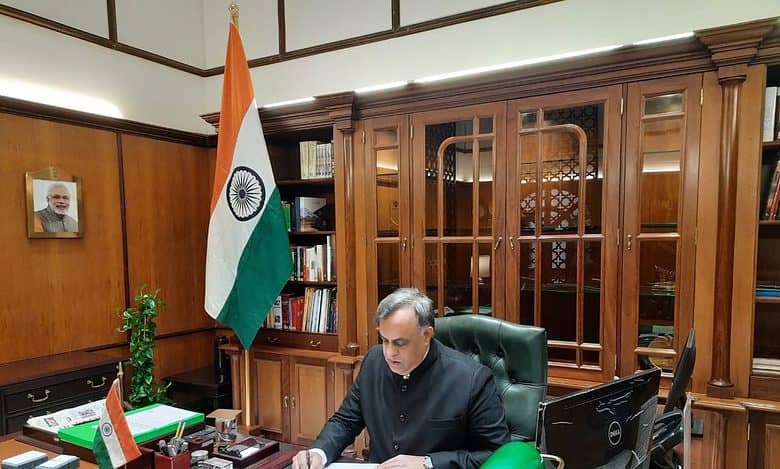
India’s new ambassador to Saudi Arabia Dr. Suhel Ajaz Khan assumed office on Monday amid welcoming voices and expectations from many quarters amidst positive momentum of deepening engagement between both countries.
Dr. Khan formally assumed charge in the embassy on Monday by unfurling the national flag following presenting his credentials to the Saudi foreign affairs ministry where he was received by the Chief of Protocol at the ministry, according to the Indian Embassy.
His posting is considered important as cooperation between the two countries have assumed greater significance in the last few years. Some high profile and key official visits between both countries are expected to begin soon.
Dr. Khan, a 1997-batch IFS was Indian Ambassador to Lebanon. A medical graduate and native of Indore in Madhya Pradesh, he had two stints earlier in Saudi Arabia.
source: http://www.siasat.com / The Siasat Daily / Home> News> Middle East / by Irfan Mohammed / posted by Neha Khan / January 16th, 2023
Popularly known as Frontier Gandhi, Badshah Khan, Bacha Khan and Fakhr-e-Afghan, his indomitable political spirit has found a place in all of his names.
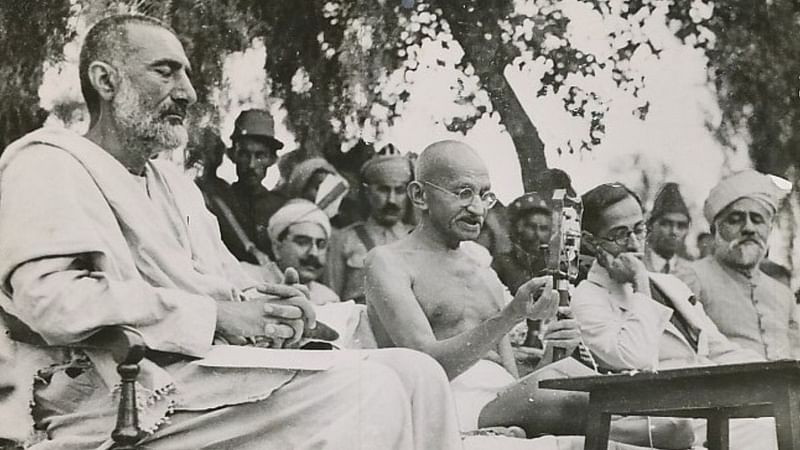
Khan Abdul Ghaffar Khan (L) with Gandhi at King Edward’s College, NWFP, in 1938 | Wikimedia commons
Buried under the historical violence of Pakistan’s tribal belt is a sliver of peace—and it is because of Khan Abdul Ghaffar Khan, a lifelong pacifist who mobilised Pathans against British colonialists in India. Popularly known as ‘Frontier Gandhi’, Badshah Khan, Bacha Khan and Fakhr-e-Afghan, his indomitable political spirit has found a place in all of his names, a reminder of peace, secularism and unity even 35 years after his death in January 1988.
Born into a wealthy Sunni Pashtun family in Pakistan’s Utmanzai in 1890, Khan hailed from the landowning Mohammadzai clan. He devoted his life and resources to upending poverty and promoting education and Hindu-Muslim harmony. But his biggest contribution to the Indian subcontinent, perhaps, came with the ‘Khudai Khidmatgar’, or Servants of God, movement in 1929—the beginning of mass mobilisation against an exploitative British Raj.
Khan’s innate ability to unite the masses non-violently turned him into a ‘powerhouse Muslim leader’ from the erstwhile North West Frontier Province (NWFP). Crackdowns, custodial violence and imprisonment only hardened his anti-colonial stance, laying the foundations for a spiritual resilience which is talked about to this day.
“It is my inmost conviction that Islam is amal, yakeen, muhabat – selfless service, faith, and love,” Khan had said. He had also urged Pathans to “arise and rebuild” their “fallen house.”
Powerhouse Pathan
While Khan’s life was fraught with hurdles and clashes with the colonial government, his political fervour refused to die. For instance, in 1921, he was asked to lead the Khilafat Committee in Peshawar as its president. During his tour of the province, he delivered speeches and emphasised the need to eliminate British imperialism in South Asia. He was subsequently jailed and tortured by the British for three years.
“When Abdul Ghaffar came out of jail in 1924, he was frail and worn-out in body, but his spirit was unvanquished. His blue eyes were proud of their suffering, determined and cold. The Pathans looked at Abdul Ghaffar with admiration; they had found their leader, thanks to the British,” writes documentary filmmaker Dinanath Gopal Tendulkar, in his book Abdul Ghaffar Khan: Faith is a Battle.
Khan led the Khudai Khidmatgar movement with the call to lay down arms and use civil resistance to challenge British rule. This massive movement involved 100,000 Pathans who took an oath to join the movement: “Since God needs no service, I promise to serve humanity in the name of God. I promise to refrain from violence and from taking revenge. I promise to forgive those who oppress me or treat me with cruelty. I promise to devote at least two hours a day to social work.”
Within a short time, they established a network in the province, particularly in neglected rural areas.
The leaders of the Khudai Khidmatgar movement put great emphasis on discipline. The volunteers were organised and drilled in a military fashion, given the ranks of generals, colonels, captains, etc. They even wore identical shirts in shades of brown or dark red. This move invited extensive propaganda from the British Indian government, which equated Khidmatgars to the Bolsheviks. But Khan never left his non-violent ideals.
“There is nothing surprising in a Muslim or a Pathan like me subscribing to the creed of non-violence. It is not a new creed,” Khan had once declared, as per his biographer Eknath Easwaran.
Friendship with Gandhi, relationship with Congress
Khan is also often remembered in history for his curious and close friendship with M.K. Gandhi. The link that connected the two has its roots in the 1919 Rowlatt Act. Khan stood up against the Act—which promoted indefinite imprisonment without a trial—and mobilised 50,000 people in Utmanzai to raise their voices in protest.
Scholars have differentiated how Khan and Gandhi approached their respective philosophies of non-violence. In popular discourse, it is often portrayed that Gandhi heavily inspired Khan’s ideals of non-violence. But J.S. Bright, a biographer of Khan, thinks differently.
Bright also said that in Gandhi’s case, his ideals received more publicity and that he should be called “Indian Khan” instead.
Khan never supported Partition
In December 1929, Ghaffar Khan and other prominent members of the Khudai Khidmatgar attended the Lahore Session of the Indian National Congress to raise awareness of the volatile situation in the NWFP.
Impressed with the Congress’s support, Khan endorsed the party’s programme of complete independence and non-payment of taxes and revenues.
But when it came to the issue of Partition, Khan felt “betrayed” by the Congress Working Committee. Owing to the violence and realpolitik, most Congress leaders agreed to the Partition plan laid out by British viceroy Louis Mountbatten, with the Congress Working Committee overwhelmingly ratifying it. Only four leaders held out – Gandhi, Khan, Ram Manohar Lohia and Jayaprakash Narayan.
“You have thrown us to the wolves,” Khan said in resentment, according to an article about his death published in Los Angeles Times.
The Pashtuns were only given the choice of going with India or Pakistan; independence was out of the question. Convinced that his participation in the decision-making referendum would lead to violence and bloodshed among Pathans, Khan and the Khudai Khidmatgars left the ball in the Muslim League’s court.
The NWFP eventually voted to join Pakistan, where Khan fought for a better deal for the frontier region and advocated for the province’s autonomy. For this, he spent years in prison.
After 17 years of isolation and imprisonment in Pakistan, Khan went on to live in Kabul in the mid-1970s.
He spent his last years in the Afghan city of Jalalabad, visiting India occasionally for medical treatment, mainly for arthritis. Khan died on 20 January 1988 of complications from a stroke while under house arrest in Peshawar and was laid to rest in Jalalabad.
(Edited by Zoya Bhatti)
source: http://www.theprint.in / The Print / Home> The Print Profile / by Shania Mathew / January 20th, 2023
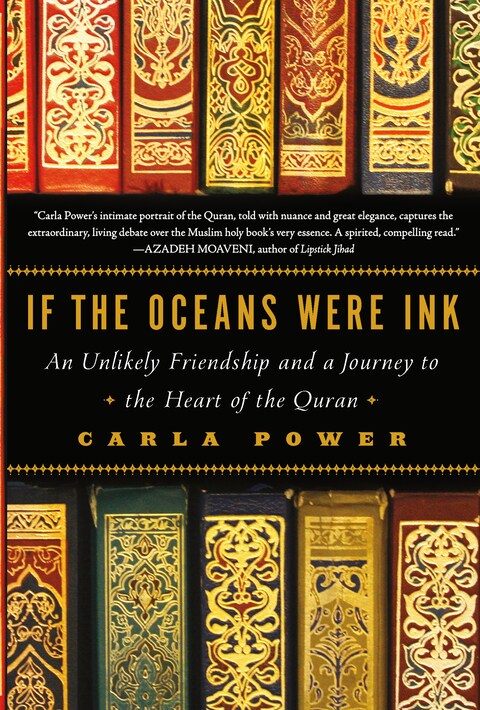
An Unlikely Friendship and a Journey to the Heart of the Quran
by Carla Power
Henry Holt. 336 pp. Paperback, $19
Since Sept. 11, 2001, popular media has tended to represent Islam as monolithic and menacing, a faith whose adherents spend their time plotting to murder infidels, oppress women and instill sharia law in Western democracies. While the actions of groups like the Islamic State seem to confirm the worst stereotypes, the worldviews of extremists do not account for the belief systems of the majority of the world’s 1.6 billion Muslims, who are, by journalist Carla Power’s account, “people as diverse as Pathan tribals and Kansan surgeons.”
Weary of the stereotypes and “blithe generalizations about ‘the Islamic world’ and ‘the West,’ ” Power, who holds a degree in Middle East studies from Oxford and has worked as a foreign correspondent in Muslim countries, decided to strike back. “If the Oceans Were Ink” is a unique account of the Islamic faith that focuses on the perspective of Sheikh Mohammad Akram Nadwi, a scholar and imam whom Power has known for more than 20 years. It is an unusual book, simultaneously an exploration of faith and of Islam as it is lived by those who know it most intimately.
The journalist became acquainted with the imam in the 1990s, when both were conducting research on Islamic scholars and mystics at a think tank, the Oxford Centre for Islamic Studies. Their paths crossed during the intervening years, as Akram achieved renown as a religious scholar and Power established herself as a successful journalist. After years of reporting on strongmen, politics and identity in Muslim societies, Power decided that she wanted “to explore the beliefs behind that identity and to see how closely they matched my own.” She asked Akram if he would take her on as a student. Over the years, Power had developed great respect for his scholarship, particularly his extensive biographical dictionaries on early Islam’s female scholars, whose lives have almost disappeared from the scholarly record. Through this work, Akram hopes to remind Muslims of the importance of women’s education and contributions to society.
Power turns what could have been a dry account of a series of interviews into a vibrant tale of a friendship and of her search for meaning through the contemplation of another religious tradition. Above all, her goal is to gain a deeper understanding of the importance of the Koran, whose “limitless possibilities” are best represented in the words of the Sura that give her book its name: “If the oceans were ink, for (writing) the words of my Lord, the ocean would be exhausted, before the words of my Lord were exhausted.”
Akram and Power meet regularly at Akram’s office, at an Oxford coffee shop, and at the study groups and lectures he leads for the local community. She gets to know his family and his followers well, and is particularly impressed by a group of outspoken, educated Muslim women who debate Akram and even cause him to change his position on controversial issues. Inspired by their time together, Power writes that “studying with a man who saw everything from tea leaves to algebra as gifts from God, I was struck by a new seam of gratitude running through me. I’d emerge from a lesson not with faith, but with what I suppose a fashionable guru would call mindfulness.”
Power skillfully navigates multiple layers of cultural interpretation that make subjects such as veiling so controversial in the West. Akram explains to her that, in Islam, modest dress is not meant to make women invisible but rather allows them “to be present and visible, with the power of their bodies switched off.” However, geopolitics has added additional layers of complexity. From the time of Algerian colonialism until 21st-century Afghanistan, Western military occupation has often been linked to the unveiling of Muslim women. “In the months after the Taliban’s fall, the Western press would rush to capture women shedding their veils. It was as though this transition from burqaed lump to woman was a 21st-century Pygmalion myth: a breathing of life into Afghanistan’s people.”
In contrast to some of his students, Akram eschews politics. He urges his students to focus solely on taqwa, or God-consciousness. Throughout the book, Akram disdains the idea of Islam as a tool to reach political ends, believing that those Muslims with the goal of a state governed by sharia law have a “deep envy of the West’s power and geopolitical supremacy.” Not all of his students agree with him, especially those espousing the need to participate in the revolutions against dictatorships that have wracked the Middle East since 2011. Yet to Akram, the concerns of this world are insignificant compared with the importance of becoming close to the divine.
As Power wraps up her studies with the imam, she concludes that they share many values, including ethics, democracy, equality and human rights. She envies Akram the feeling that prayer “could feel like returning to ‘the arms of your mother, when you are a child.’ ” For Akram, she writes, “existence was a circle, with God at its end, beginning, and every point in between.” For the pious individual, life, from birth to death, is a cycle of return, with the words of God at the center. Yet although the year leaves her with an enhanced appreciation of the complexity of the Koran — even to call the Koran a book is to limit it; “it is a place to which the faithful return, again and again,” she writes — she is ultimately unable to embrace Akram’s sense of religious conviction.
“If the Oceans Were Ink” should be mandatory reading for the 52 percent of Americans who admit to not knowing enough about Muslims. Years of anti-Muslim rhetoric in the media are beginning to take a toll on Muslims in the United States. According to a 2011 poll by the Pew Research Center, 6 percent said they had been victimized by hate crimes in the preceding year. FBI statistics for reported hate crimes against Muslims are five times higher since 9/11. Most recently, the killing of three Muslim students in North Carolina, ostensibly over a parking dispute, has also been alleged to be a hate crime. A Zogby poll released by the Arab American Institute in 2014 showed that only 27 percent of Americans reported favorable opinions of Muslims, down eight points from a poll in 2010. Yet among those polled who reported knowing Muslims firsthand, favorability was 33 percent higher.
Akram, steeped in religion but also thoughtful and open to dialogue, emerges from these pages as a complex and likable man, and it is hard to imagine readers not being moved by Power’s humanistic, evenhanded portrayal of him. “If the Oceans Were Ink” is a welcome and nuanced look at Islam through the eyes of an individual who lives his faith with every breath. It goes a long way toward combating the dehumanizing stereotypes of Muslims that are all too common in the United States today.
By Rachel Newcomb / Rachel Newcomb is associate professor of anthropology at Rollins College, where she also directs the Program in Middle Eastern and North African Studies.
source: http://www.washingtonpost.com / Washington Post / Home> Opinion / by Rachel Newcomb / April 30th, 2015
Jamdahan Village (Jaunpur District), UTTAR PRADESH / London, U.K. :
Mohammad Akram Nadwi is a renowned Islamic scholar, theologian, author and professor of Arabic and Islamic studies. He is known for his extensive knowledge of the Quran, Hadith, and Islamic law, as well as his ability to convey complex concepts in a clear and accessible manner.
Early Life and Education
Mohammad Akram Nadwi was born in India in 1963. He comes from a family with a long tradition of Islamic scholarship, and from a young age, he showed a strong interest in Islamic studies. He began his formal education by studying the Quran and Hadith under the guidance of local scholars and his father.
In 1975, Nadwi traveled to the city of Lucknow, India to study at the famous Nadwatul Ulama, an Islamic university and seminary. He studied under some of the most renowned scholars of his time, including Maulana Abul Hasan Ali Nadwi and Maulana Sayyid Abul Hasan Ali Hasani. He earned a degree in Islamic studies and later completed his PhD in Islamic theology from the University of Lucknow. Thereafter he was sent to England as Abul Hasan Ali Nadwi’s representative, becoming a Research Fellow at the Oxford Centre for Islamic Studies.
Personal Life
Mohammad Akram Nadwi is married and has children. He is known for leading a simple and humble lifestyle, and is dedicated to spreading the teachings of Islam to as many people as possible.
Career
After completing his studies in India, Nadwi began teaching at various universities and Islamic institutions in the United Kingdom, including the Oxford Centre for Islamic Studies and the Markfield Institute of Higher Education. He has also taught at universities in India and the United States.
In addition to his academic work, Nadwi is also a respected speaker and lecturer. He has delivered speeches and lectures at various conferences and events around the world, and is known for his ability to convey complex Islamic concepts in a clear and accessible manner.
Muhammad Akram Nadwi is also a founder of Al-Salam Institute, UK where he also serves as a principal. The Institute is dedicated to the traditional Islamic sciences and provide a platform for the authentic Islamic scholarship to be studied and transmitted.
Books
Mohammad Akram Nadwi is a prolific author, who has written several books and articles on various Islamic topics. Some of his most notable works include:
“Al-Muhaddithat: The Women Scholars in Islam” – This is a 43-volume biographical dictionary of female scholars of Hadith, and is considered one of the most comprehensive works on the subject. It is the first book of its kind in the Muslim world, and provides valuable insight into the role of women in the study and transmission of Islamic knowledge.
Madrasah Life: A Student’s Day at Nadwat al-‘Ulamā’
Al-Fiqh Al-Islāmī According to the Hanafi Madhab Rites of Purification, Prayers and Funerals Vol 1
Abū Ḥanīfah His Life, Legal Method & Legacy
Shaykh ‘Abū al-Ḥasan ‘Alī Nadwī: His Life & Works
Ibn Ḥazm on the Lawfulness of Women Attending Prayers in the Mosque
Journey to Andalus – Translated and edited by Dr. Abu Zayd.
Lessons Learned: Treasures from Nadwah’s Sages
Remembering Beautiful Days In Jerusalem
Foundation To Ḥadīth Science: A Primer on Understanding & Studying Hadith – Translated and edited by Dr. Abu Zayd.
He is also the subject of the best-selling book: If the Oceans Were Ink: An Unlikely Friendship and a Journey to the Heart of the Qur’an (2015).
Overall, Mohammad Akram Nadwi is a respected and influential Islamic scholar, known for his extensive knowledge of the Quran, Hadith, and Islamic law, as well as his ability to convey complex concepts in a clear and accessible manner. His work has helped to promote understanding and harmony within the Muslim community, and his lectures and writings continue to inspire and guide people on their spiritual journey.
source: http://www.thecognate.com / The Cognate / Home> Famous Muslims / by The Cognate News Desk / January 12th, 2023
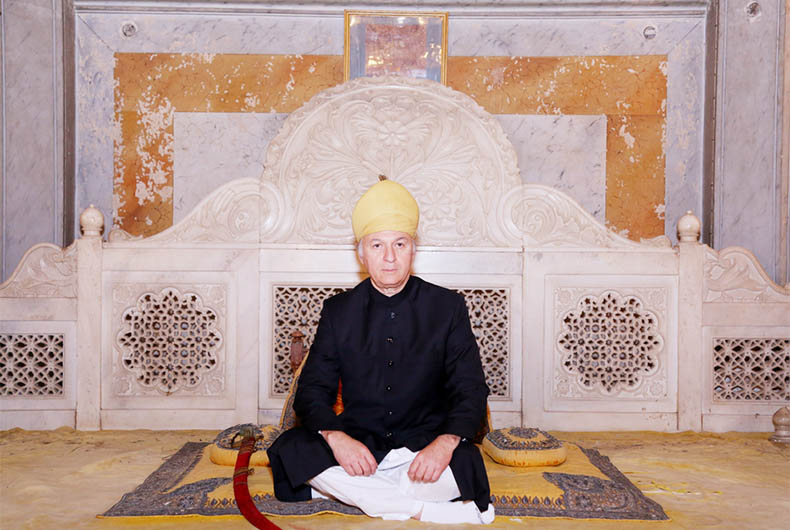
In a ceremony held at Chowmahalla Palace which was attended by close family members, Azmat Jah was coronated as successor to Mir Barkat Ali Khan Mukarram Jah Bahadur.
Hyderabad:
Azmat Jah, a professional photographer and filmmaker who worked with leading Hollywood directors, has taken over as successor of his father Mukarram Jah, the eighth and last formal Nizam of Hyderabad who passed away in Turkey last week.
In a ceremony held at Chowmahalla Palace which was attended by close family members, Azmat Jah was coronated as successor to Mir Barkat Ali Khan Mukarram Jah Bahadur.
Mukarram Jah’s first wife and Azmat Jah’s mother Princess Esra, sister Shekhyar and some other family members attended the ‘Dastar Bandi’ or coronation.
It was at the same palace that Mukarram Jah was coronated at in 1967 after the death of his grandfather and seventh Nizam Mir Osman Ali Khan, who was the last ruler of Hyderabad State.
‘No official status’
His coronation will have no official status or title of ninth Nizam as the government of India had abolished princely titles and privileges in 1971. As per the wish of his late father, he will be the caretaker of Nizam’s properties and Nizam Trusts.
According to sources, Mukarram Jah desired that his eldest son becomes his successor. It is believed that the coronation as successor will be symbolic but significant for legal purposes.
Mir Mohammed Azmat Ali Khan, also known as Azmat Jah, was born in London on July 23, 1960. He had early education in London and later studied at the University of Southern California.
A professional photographer and filmmaker, he has worked with leading Hollywood directors such as Steven Spielberg and Richard Attenborough.
Mukarram Jah Bahadur, the titular eighth Nizam of Hyderabad who passed away in Turkey on January 14, was buried at the historic Mecca Masjid in Hyderabad on January 18 with full state honours.
Mukarram Jah, grandson of last Nizam of Hyderabad Mir Osman Ali Khan Bahadur, passed away in Istanbul at the age of 89.
Born to Prince Azam Jah and Princess Durru Shehvar, the imperial princess of the Ottoman Empire, on October 6, 1933 in France, Mukarram Jah was coronated as Asaf Jah the Eighth on April 6, 1967, after the passing away of Mir Osman Ali Khan in February 1967.
Mukarram Jah was called Prince of Hyderabad till 1971, when then Prime Minister Indira Gandhi abolished all titles. He was also said to be India’s richest person till the 1980s. He lived most of his life in Turkey and Australia.
source: http://www.ummid.com / Ummid.com / Home> Education & Career / by IANS / January 22nd, 2023
Portrait of Ismail Siddique, popularly known as Bagh Hazarika. Credit: wikipedia
Many people know about Lachit Barphukan – the Ahom general – who led the Ahom army against the invading Mughals forces and defeated them in the Battle of Saraighat in 1671.
But very few know about Ismail Siddique, popularly known as Bagh Hazarika, who fought alongside Lachit Barphukan in the famous Battle of Saraighat.
Ismail Siddique, popularly known as Bagh Hazarika, a 17th century Ahom army warrior, is believed to be instrumental in turning the tide in favour of the Ahoms in the Battle of Saraighat.
The Battle of Saraighat was a naval battle fought in 1671 between the Mughal Empire (led by Ram Singh I) and the Ahom Kingdom (led by Lachit Borphukan) on the Brahmaputra River at Saraighat, now in Guwahati, Assam.
Although weaker, the Ahom Army defeated the Mughal Army by massive army, clever diplomatic negotiations to buy time, guerrilla tactics, psychological warfare, military intelligence and by exploiting the sole weakness of the Mughal forces—its navy.
The Battle of Saraighat was the last battle in the last major attempt by the Mughals to extend their empire into Assam.
Ismail Siddique, popularly known as Bagh Hazarika, was a 17th-century warrior who fought against the Mughals for the Ahom kingdom.
He was born in an Assamese Muslim family at Dhekerigaon village near Garhgaon in Assam.
LEGEND
The legend around his origins states that there was once a tiger that had entered his village and Ismail Siddique, who was unarmed, killed the tiger barehanded.
The news of this valour reached then King of the Ahom kingdom – Chakradhwaj Singha – who then called young Ismail Siddique to his court to display his strength.
The Ahom King was impressed by the show of strength and appointed Ismail as a Hazarika, an Ahom office in charge of 1000 paiks.
This event marked the beginning of the legend of the brave Bagh (Tiger in Assamese language) Hazarika that culminated in his acts of bravery during Battle of Saraighat.
In this first conflict, the Mughal forces were well entrenched on the hills of the north bank of the Brahmaputra river with a chain of huge cannons.
Bagh Hazarika suggested a plan on how to disable the Mughal guns to Ahom General Lachit Barphukan, royal minister Atan Burhagohain and other generals.
Impressed by the plan, they entrusted Bagh Hazarika with command to lead the operation.
That night an advance party led by Bagh Hazarika along with a few soldiers crossed the Brahmaputra by boat and landed on the northern bank of the river and laid in wait for the right moment.
While the Mughal soldiers were busy saying their Fajr or dawn prayers, Bagh Hazarika and his soldiers climbed the high embankments and poured water into the Mughal cannons, rendering them useless.
Later, the Ahom army announced their advance by blowing the trumpets. In response, the Mughal soldiers rushed to their posts and tried to fire the cannons at the advancing Ahom forces.
But, the wet cannons would not work. The Ahom forces used their cannons to the full strength and the Ahom army landed safely on the north bank and attacked ferociously as the Mughal soldiers retreated helplessly.
This victory proved the courage and valour of Bagh Hazarika beyond any doubt and he was felicitated by the Ahom King.
Bagh Hazarika thus went down in the annals of Assam history as a highly skilled front ranking military officer.
RECENT CONTROVERSY SURROUNDING BAGH HAZARIKA
A controversy erupted recently in Assam surrounding legendary Ahom warrior Bagh Hazarika.
A major controversy erupted in Assam following tagging of Ismail Siddique, popularly known as Bagh Hazarika, as a “fictional character” by chief minister Himanta Biswa Sarma.
Ismail Siddique, popularly known as Bagh Hazarika, was a 17th century Ahom army warrior, who fought the Mughals alongside Lachit Barphukan in the famous Battle of Saraighat.
Ismail Siddique alias Bagh Hazarika is believed to be was the second in command to Ahom general Lachit Barphukan in the Battle of Saraighat.
Recently, Assam chief minister Himanta Biswa Sarma, while addressing a state convention of the Akhil Bharatiya Vidyarthi Parishad (ABVP) in Guwahati, said that Bagh Hazarika was a “fictional character”.
Assam chief minister Himanta Biswa Sarma had claimed that there was no authentic information about Bagh Hazarika in the history books.
“Our history teachers have never questioned this narrative,” Assam CM Himanta Biswa Sarma said while saying that a narrative had been created about him (Bagh Hazarika).
Slamming the Assam chief minister over his statement on Bagh Hazarika, several Assam Muslim intellectuals and scholars rejected the CM’s “interpretation of history”.
“We reject the chief minister’s interpretation of history about one of Assam’s illustrious sons with a communal overtone,” a statement issued by 10 Assamese Muslim intellectuals and scholars said.
“If there is any confusion about Bagh Hazarika, the government should constitute a committee of historians under a university in Assam to find out whether he existed or not,” the statement said.
The 10 include professors Abu Nasser Syed Ahmed and Poynuruddin Ahmed, former Minister Samsul Huda, political activist Mehdi Alam Bora, and Kazi Nekib Ahmed and Mushtaq Golam Osmani of the Bagh Hazarika Research Forum.
Recently, the Tai Ahom Yuva Parishad (TAYP) had warned Assam chief minister Himanta Biswa Sarma against distortion of Ahom history.
In a statement, TAYP president Vijay Rajkonwar urged the Assam chief minister to refrain from distorting the history of Ahoms.
“Avoid the thought of distorting the history of the Ahoms. This history is thousands of years old and written history. Mahavir Lachit Borphukan cannot be made a Hindu hero even if you try a thousand times,” the TAYP president said.
“Lachit Borphukan is an Ahom and Assamese hero, he is not a religious warrior. We don’t even allow it to happen,” Rajkonwar added.
In his address at the ABVP conference, Assam chief minister Himanta Biswa Sarma had said that the name of Ahom King Chakradhar Singh carries the identity of Hindus.
Reacting to the Assam chief minister’s comments that there is no authentic information in history about the presence of Bagh Hazarika, Rajkonwar said whether he was a part of the battle of Saraighat or not, Tai script will tell.
“The chief minister or anyone else cannot keep saying it,” he added.
Referring to Chief Minister’s comments about Lachit Borphukan going to Kamakhya temple to offer prayers, the TAYP president said, “Ahoms are allowed to go anywhere. They eat all types of food. There is no restriction in Ahom tradition and beliefs. The Ahoms worship nature and their ancestors.”
source: http://www.nenow.in / NorthEast Now / Home> Assam / by NE Now News / January 12th, 2023
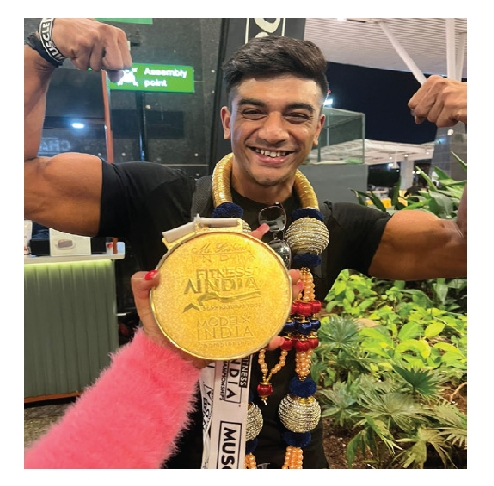
Meer Ashar Qureshi, a 27-year-old fitness trainer from the city, topped the Men’s Classic Physique Championship in Delhi and ‘Mr Karnataka Men’s Champion’ held this year by Musclemania. As many as 45 contestants from across the world participated in the championship, and Ashar defeated them all “in style”. It is not always that people with career passion achieve their goals in life.
But ‘Namma Bengaluru Huduga’ has learned what it really takes to be a successful trainer. The gymnast completed his Bachelor’s in Business Administration from Ramaiah institute of Management while excelling in his fitness career. At the age of 15, he not only represented India at the International Karate Championship in Sri Lanka, but also won the competition.
“After winning the competition in Sri Lanka, I decided to pursue a career in fitness. My family has been very supportive, and my father keeps me inspired,” Ashar told News Trail.
Ashar underwent several certification programmes including those offered by the National Academy of Wellness, the Diploma in Fitness and American Counselling on Exercise (ACE) before registering for the Musclemania competition in 2022. With a belief that fitness goes beyond physical transformation, the muscleman has also trained and transformed over 600 people across the world over a span of eight years.
As a coach, he works on bringing out the hidden potential in his clients. Ashar has now been selected for the Asian Division competition. “I am extremely happy about my achievements. I’m keen and preparing myself with the hope of representing my country in the next competition,” he said.
source: http://www.newstrailindia.com / NewsTrail / Home / by Hameed Ashrafi, NT / December 28th, 2022
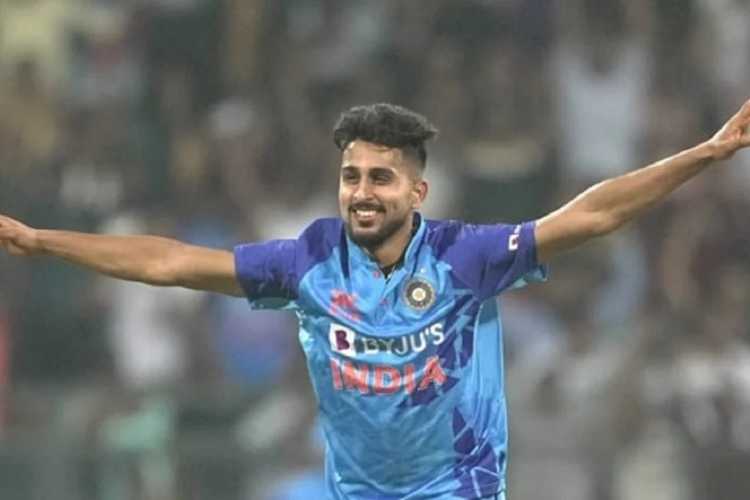
Young tearaway fast bowler Umran Malik on Tuesday bowled a 156 kph delivery to better his own record and deliver the fastest ball for India in international cricket, during the first ODI against Sri Lanka on Tuesday.
The 23-year-old achieved the milestone in the 14th over of the Sri Lankan innings. He picked 3/57 in his eight overs and acted as the middle-overs enforcer for India.
Recently, Umran had surpassed Jasprit Bumrah (153.6 kmph) to bowl the fastest delivery in international cricket by an Indian after clocking 155 kmph delivery in the first T20I against Sri Lanka.
Notably, the Jammu and Kashmir pacer has also bowled at a speed of 157 kmph in the IPL. He has been on the money off late controlling his line and length well apart from delivering balls at extreme pace.
“I have played 6 games, I just want to bowl well and in the right areas. The wicket was flat, I spoke with Siraj bhai, Shami bhai, the input was to make the most of my pace. I want to be as accurate as possible,” said Umran after India’s win.
Virat Kohli’s 45th ODI century and captain Rohit Sharma and Shubman Gill fifties powered India to a 67-run victory over Sri Lanka in the first game and 1-0 lead in the three-match series.
source: http://www.awazthevoice.in / Awaz, The Voice / Home> Sports / by awazthevoice.in / January 11th, 2023

.webp)