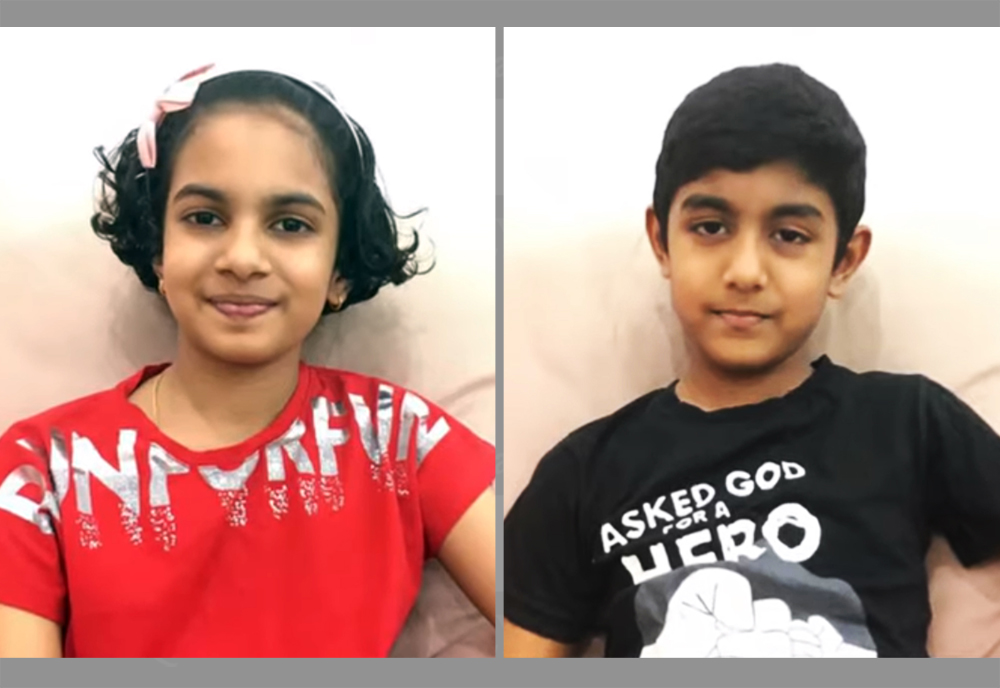
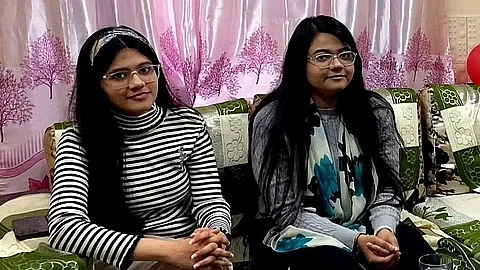
From left: Nada Zubaida Saleel and Jazil Saleel Salam
Doha:
Nada Zubaida Saleel and Jazil Saleel Salam, students of Ideal Indian School (IIS) set new world records in fastest recitation of names of countries, capitals and currencies thus entering the International Book of Records.
Zubaida Saleel, a student of class 6 of IIS recited the names of all countries along with their currencies in two minutes 42 seconds and has set a new world record while Jazil Saleel Salam, a grade 3 student recited names of Asian countries and capitals in a record time of 45 seconds, thus entering the International Book of Records.
source: http://www.thepeninsularqatar.com / The Peninsula / Home> Doha Today> Community / October 12th, 2021
When bullock carts were the prime mode of transport, an Arab businessman was pained to see the beasts carry loads up the steep, rough climb.
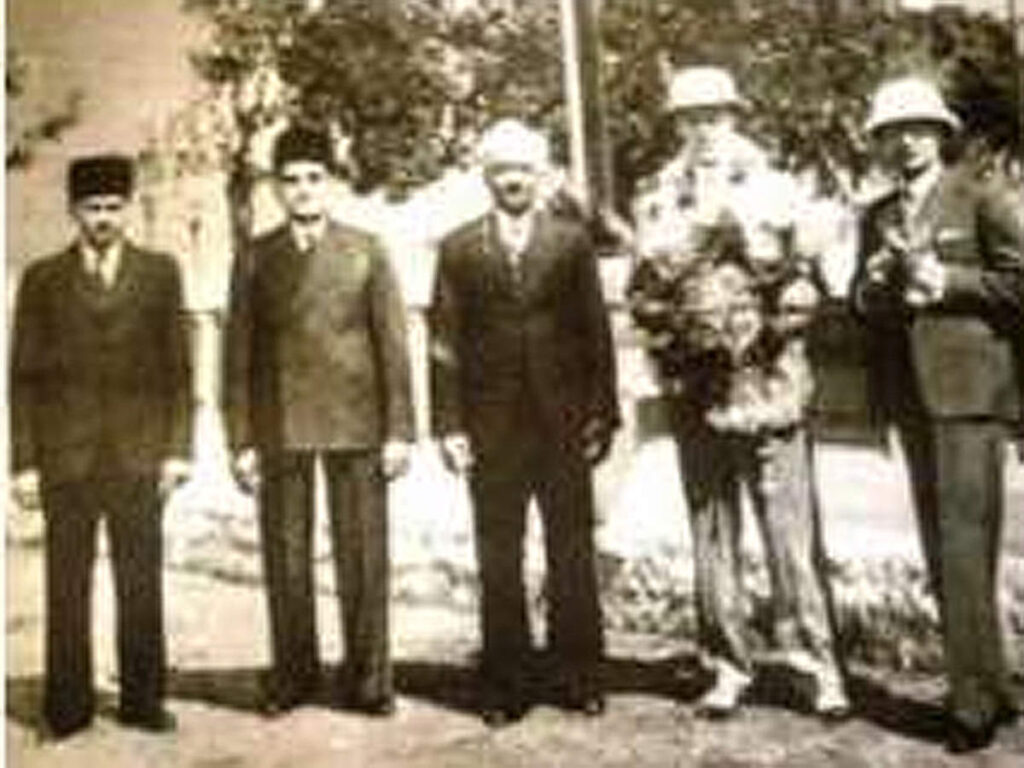
In the 1930s, when bullock carts were the prime mode of transport, an Arab businessman was pained to see the beasts carry loads up the steep, rough climb from Hebbal Tank. Their hoofs wore thin very soon. So, he levelled the path, spending Rs 10,000 out of his pocket. When this came to the notice of Sir Mirza Ismail, the then diwan of Mysore, he promptly informed Krishnaraja Wadiyar. A private citizen spending for public good, the king thought, reflected badly on his administration. He made good the businessman’s expenses and named the area at the junction of Bellary Road, Jayamahal Road and CV Raman Avenue in his honour. Today , we call it Mekhri Circle.
The selfless businessman was M Enayathulla Mehkri (not ‘Mekhri’ as it is spelt today). The Enayathulla Mehkri Square was inaugurated by Sir John Hope, governor of the Madras Presidency , in April 1935.The space had a lamp post with five lights. A garden around it was maintained by ward officers. Later, in 1965, RM Patil, minister of home and municipal administration, notified it as Enayathulla Mekhri Circle through a notification in the state gazette.
Mehkri’s story , however, goes beyond the one philanthropic initiative he is most known by.
Mehkris were originally based near Medina in Arabia and migrated to India after the Turkish invasion. The family’s legacy dates back to more than 600 years. “While people believe that our name is derived from a place called ‘Mehkr’ in Syria, documents suggest that we were named after Mekhar in Maharashtra,” said Fazal Mehkri, nephew of Enayathulla Mehkri.
In India, the family held key posts under the Mughals and the Mysore maharajas.
Enayathulla Mehkri, born in 1898, went on to become a freedom fighter. At 17, he joined the Indian National Congress.
A contractor by profession, he participated in the freedom struggle, and was jailed for six months at Madras Central Jail along with C Rajagopalachari and EV Ramaswamy Naicker.
Mehkri was the municipal commissioner (between 1947 and 1948) and a councilor of the City Corporation for 16 years before that. He was not only the only member from Karnataka to be on the Advisory Council of the Freedom Fighters Cell of the AICC, he also headed the Karnataka Freedom Fighters’ Association till his death on November 28, 1990.
source: http://www.economictimes.indiatimes.com / The Economic Times / Home> Panache> ET Magazine> Travel> Business News> Magazine / by Divya Shekhar, ET Bureau / April 28th, 2016
In the video, the student is seen walking with food in his hand. He was saying that the kind of suffering he is facing is beyond description.
A view of the central square following shelling of the City Hall building in Kharkiv, Ukraine. (Photo | AP)
New Delhi :
A student from Lakshadweep pursuing MBBS in Ukraine was trolled online for putting up videos of his experience in the war-torn country.
Aousaf Hussain, a fourth-year student of Kharkiv National Medical University, was criticised by persons from Kerala and Lakshadweep for going out and getting food for his friends who are living in a bunker in Kharkiv.
The trolls attacked him for walking in the war zone, eating and taking videos of soldiers.
In the video, the student is seen walking with food in his hand. He was saying that the kind of suffering he is facing is beyond description.
“Will someone contact the Indian embassy? What discussions are they having at this point of time? I don’t understand why they are wasting time on discussions”.
After the trolling, Aousaf went into depression. His mother was also hospitalised and had to be kept under observation.
According to his friends, Aousaf had stepped out of the shelter to get food because none of them had eaten anything that day.
“Shawarma was the only food available nearby. After packing the food for his friends, he was rushing back. Because he was hungry, he started eating his share,” said his friend Shana M Shaji.
In the video, Aousaf is also seen saying that he was stopped by some soldiers for shooting videos.
They did not come in an army vehicle, but a car. They asked him to delete the video. He thought he was going to be killed, but somehow managed to escape from the scene.
According to Afsal Husain, Aousaf’s elder brother, this video came under attack from people who posted comments saying he should be killed in the battlefield.
“Some right-wing social media accounts with around 2 million followers asked the Indian government to not evacuate him.”
Another video posted by Aousaf with his female friends also became the target of trolls. The girls allege that a large number of trolls had religious colour.
“We were wearing hoodies in the video and that was thought to be hijab. We were alerted by our parents that online comments are calling us terrorists,” said Shana.
source: http://www.newindianexpress.com / The New Indian Express / Home> Nation / by Ankita Upadhyay, Express News Service / March 08th, 2022
Over 17,100 nationals rescued from the war-torn country so far.
A medical student at the Sumy University, who did not wish to be identified, confirmed that the buses have arrived and students have started boarding the buses. File Picture.
Several Indian students stranded in the northeastern Ukrainian city of Sumy heaved a sigh of relief as their evacuation process started on Tuesday and hoped that they would be in a safe zone soon.
“The evacuation from Sumy has started. There was finally some good news on Tuesday. All Indian students will be evacuated from Sumy on Tuesday itself. They will be taken to a safe location from where they will be brought to India,” said Anshad Ali, a student coordinator.
A medical student at the Sumy university, who did not wish to be identified, confirmed that buses have arrived and students have started boarding the buses.
“We have been told that we will go to Poltava. I am praying that we reach a safe zone and this misery is over,” he told PTI from Sumy.
Union minister Hardeep Singh Puri told reporters here that 694 Indian students, who were stranded in Sumy, left for Poltava in buses on Tuesday.
“Last night, I checked with the control room, 694 Indian students were remaining in Sumy. Today, they have all left in buses for Poltava,” he said.
Prime Minister Narendra Modi held discussions with Russian President Vladimir Putin and Ukrainian leader Volodymyr Zelenskyy on Monday on ways to start the stalled evacuation process of the Indian students from Sumy, which is being pummelled by the invading Russian forces.
India has so far brought back over 17,100 of its nationals from Ukraine while Indian students remained stuck in Sumy, with their evacuation dependent on the facilitation of a safe passage by Russian and Ukrainian authorities.
“We stood in a queue for three hours in freezing cold on Monday, waiting to board the buses, and then, we were told that we cannot go. Thankfully, we left Sumi on Tuesday. I am hoping that we will be in a safe zone soon,” Aashiq Hussain Sarkar, another medical student, told PTI.
Sumy has been witnessing intense fighting between Russian and Ukrainian troops for days now. India has been making efforts to evacuate its citizens from the northeastern Ukrainian city, but with little success due to the heavy shelling and airstrikes.
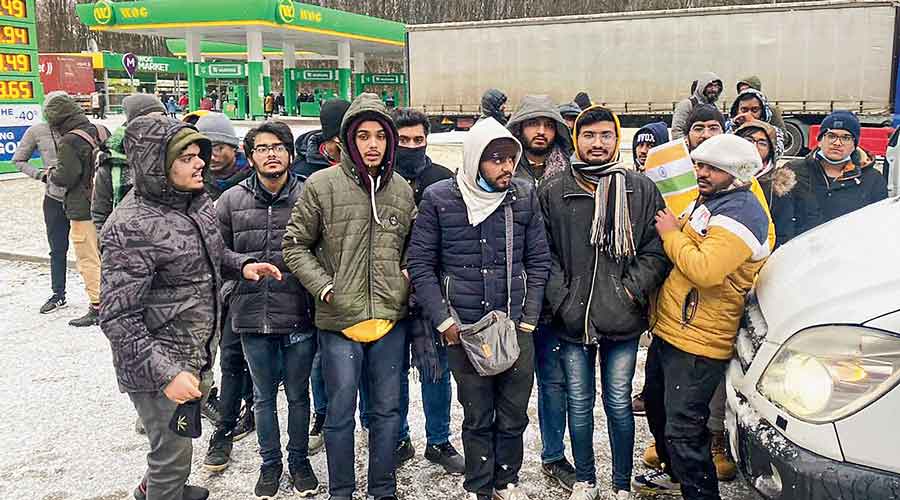
With no electricity and water supply, ATMs running out of cash, melting snow to slake their thirst, and fast running out of supplies, hundreds of Indian students trapped in Sumy stood on roads every morning, hoping that “today would be the day” when they would be rescued from the savagery of the war that has engulfed Ukraine.
The wait, however, got longer as fierce fighting blocked their way to safety across the Russian border.
Exasperated, the students posted a video clip on social media platforms on Saturday, saying they had decided to walk to the Russian border in biting cold amid the fighting, raising fears about their safety on the corridors of power in New Delhi.
Soon after the video went viral, the Indian government asked the students not to take unnecessary risks and to remain in shelters and assured them that they would be rescued soon.
source: http://www.telegraphindia.com / The Telegraph Online / Home> India / by The Telegraph Bureau, PTI / New Delhi / March 08th, 2022
The Union minister also spoke to the students on their return from Bucharest and assured safety of the people who are yet to be evacuated.
Speaking to reporters at the airport, Scindia said that approximately 13,000 Indians are stranded in Ukraine as of now.
When Aarushi Mamgain, a third-year MBBS student, walked out of the Indira Gandhi International (IGI) Airport, she felt weak with relief. The wait for this moment had been a long and anxious one.
Mamgain, a resident of Dehradun, was among the 688 Indian nationals — mostly students — who were brought back on Sunday from the war-torn Ukraine onboard three flights arranged by the Union government as part of Operation Ganga.
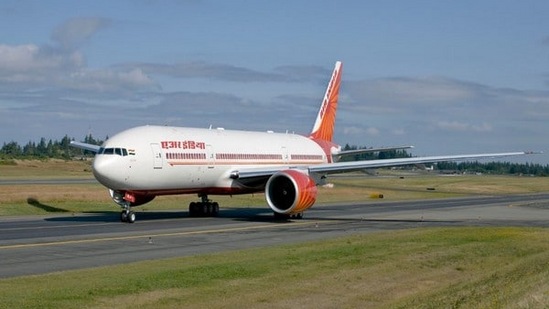
While the first flight from Bucharest (Romania) with 250 passengers onboard landed in Delhi around 2.55am and was received by Union civil aviation minister Jyotiraditya Scindia and minister of state for external affairs ministry V Muraleedharan, the second, coming from Budapest (Hungary), brought 240 passengers and landed at 9.30am. Another Air India flight from Bucharest with 198 Indian nationals landed in Delhi at 5.35pm.
Speaking to reporters at the airport, Scindia said that approximately 13,000 Indians are stranded in Ukraine as of now. “You know it is an extremely sensitive situation there (Ukraine). In this situation, we are talking with each Indian national, including students, through telecommunications,” he said. “We will bring them back as soon as possible,” he said.
The Union minister also spoke to the students on their return from Bucharest and assured safety of the people who are yet to be evacuated.
“I know you all have been through a very, very difficult time, a very, very trying time. But know this that the PM is with you at every step, the Indian government is with you at every step, and 130 crore Indians are with you at every step,” he told the returnees.
“PM Sh @narendramodi Ji, along with all the government agencies are working round the clock to ensure every Indian is brought back home quick & safe. #OperationGanga,” Scindia tweeted later in the day.
Mamgaim said her scheduled flight to Delhi was on February 24, but the same day Ukraine closed its airspace for commercial flight operations. “I was on a train to Kyiv airport when I got to know about it. Though our college helped us get back to the premises and even cross the Ukrainian border, it was a situation I have never seen before and I wish that I never get to face it again,” she told HT as she stepped out of the airport.
Relieved at her safe return, she said she was worried for her friends still stuck at the border of the European country.
“When I was there, around 250 of us were awaiting our turn to enter Romania, but now there is a chaos at the Ukrainian border and thousands have gathered, waiting to return to India. I have been receiving calls from their parents and all this is making me anxious,” she said.
Following the Russian military offensive against Ukraine, India has brought back a total of 907 stranded citizens from that country since Saturday, when the first evacuation flight from Bucharest with 219 people on board landed in Mumbai under Operation Ganga.
Only 24 hours ago, most of these students were hiding in their university hostels, even as sounds of airstrikes and gun-firing rattled cities in Ukraine. For parents of some of these students, it was a miracle of sorts to see their children return safely.
“The last few days have been tough on all parents. It was getting tough to sleep, knowing our child is stuck out there and there is a war raging on,” said Brijesh Tyagi, who came from Yamunanagar to pick up his daughter.
Diya Devgun, a first-year MBBS student at the Uzhhorod National Medical University, said while the impact of the war was yet to reach the city in Western Ukraine, the threat of invasion loomed for weeks.
“My father had booked a flight for February 27 a couple of weeks in advance after it seemed like Russia may attack. But the attack happened before we had anticipated and all flights were cancelled. As fate would have it I am safely back in my country on the same date,” she said.
A trio of first-year students from the same university in Uzhhorod — Meraj Ahmed, Mohammad Izhar and Moin Khan — were among the 240 students who were ferried on a bus to neighbouring Budapest, from where the Air India flight AI1940 rescued them.
“There are still over 1,500 Indian students stuck in our university alone. Since only 240 could be accommodated in this flight, we were asked by the university administration to fill our details on an online portal, through which the 240 students were chosen randomly,” said Khan.
Chiming in, Izhar said while they only had to pay the fare of the bus, the flight tickets were booked by the Indian government. “We constantly kept receiving voice or video calls from our family members and this rescue operation came at the right time. It is possible Uzhhorod could be attacked soon,” he said.
A majority of the students rescued in the two flights on Sunday are from medical universities in western Ukraine. However, most of the students who spoke to HT said they knew of more students who are still hiding in bunkers.
“I personally know people stuck in Kharkhiv, who are hiding in bunkers and are short on food too. The situation is gradually becoming worse and we were lucky to be only 30 km away from the Hungarian border and could be rescued swiftly,” said Bansi Pratap Singh, another medical student who had only gone to Ukraine in December last year to start his course.
Harsh Yadav, a medical student at the Bukovinian State Medical University (BSMU) in Chernivtsi, was part of the flight that landed at 9.30am.
“Those stuck in major cities like Kyiv seem to be bearing the brunt of the attacks. While we were getting rescued, we were getting contacted by other students who are also desperately waiting to return,” Yadav said.
Government officials from different states were also present at the Delhi airport, from where students were ferried to their hometowns. Rahul, an official representing the Haryana government, said cabs had been arranged for all Haryana residents, while others could be picked up from the Haryana Bhawan in Delhi.
A similar arrangement has been made at the Karnataka Bhawan. “A list had been prepared of all Karnataka students and they will now be taken to the Karnataka Bhawan, from where their families can bring them home,” said Ravi Kumar, an official from the southern state.
(with agency inputs)
source: http://www.hindustantimes.com / Hindustan Times / Home> India News / by Jasjeev Gandhok, Neha Tripathi, New Delhi / February 27th, 2022
Zenab and Kulsoom, residents of Old Delhi, say they felt completely helpless while returning from Ukraine as they were neither able to speak Ukrainian language nor got any help from Indian authorities.
Zeba and Kulsoom
“We could see three shells falling when we were walking towards the railway station. It was for the first time that we saw death so near,” recollects Zenab, who recently returned from Ukraine’s Kharkiv along with her sister Kulsoom.
These young girls, who saw death from up and close, say they felt completely helpless while returning from Ukraine as they were neither able to speak the Ukrainian language nor got any help from Indian authorities.
The two sisters, residents of Old Delhi, completed their primary education in Dubai before going to pursue further studies in Ukraine. The two young girls stayed together at same hostel and for that they had to fight with the university authorities, but their struggle turned out to be a blessing in disguise as during war they stayed together which was a big relief for both of them.
“I was so tense that they should remain together; even while returning I asked them to hold their hands tightly,” says their mother, Ghazala Salim.
Zenab and Kusoom, who were pursuing MBBS and MBA courses and never witnessed even a street fight during their life, had a horrifying experience of witnessing a full-fledged war. They, along with their friends, stayed in the bunker of a metro station and had to live on one meal a day as there was shortage of both food and money.
“We were allowed to use the washroom only once in 24 hours and we were not allowed to send videos or talk with our parents on mobile as per instructions, as Ukrainian authorities feared that the videos could be used for propaganda by the enemy,” recalls Kulsoom.
They witnessed tanks standing facing their hostel and even saw that certain signs were put on buildings which were to be targeted. The Russian army also hoisted their national flag atop the university.
“Our group finally decided to move out and one of our friends asked everyone to carry only water and food with very few clothes,” says Zenab.
They walked for two hours before reaching the railway station to catch a train for Lviv. Once they reached there, the group faced several problems. “Train authorities were only allowing local people first and after that girls were given permission whereas non locals boys were not allowed to board the train and were even roughed up. Traveling in the train was very suffocating too as it was very crowded,” they recalled.
On way to Lviv, they passed through Ukrainian capital Kyiv where heavy shelling was taking place. When the group reached Lviv, their parents advised them to move towards Romania instead of Poland and Hungary.
“The Romanian people were very nice and cooperative,” recalls Zenab.
Both the sisters said that from Kharkiew to Romania they did not receive any help from Indian authorities except they came to tell us that we have to check in from this point.
These sisters, who went to Kharkiv in December last year, miss studying in the university and want to return as soon as the situation returns to normal.
They said that there was huge a language problem, but otherwise also local people didn’t communicate with foreigners. They used Google Translate for their daily needs but in three months, they grew fond of their institution. “The girls feel terrible watching the news of bombardment in Ukraine, and miss their university a lot,” says Ghazal, the mother of the two girls.
Mohd. Salim, the father of the two sisters, is an engineer and was working in Dubai before he returned to Delhi just after Covid two years back. He is now running an eatery in Delhi and also has a distributorship of cosmetics. “The education is not cheap in these universities, but the education is very good,” he says.
The parents underwent an extremely stressful time for ten days but feel relieved now that their daughters have returned home safely.
“A WhatsApp group of parents was our only source of information from Ukraine as our daughters were so terrified that they just followed the instructions and only messaged that they are safe and not to worry,” says Ghazala.
source: http://www.nationalherald.com / National Herald / Home> India / by S Khurram Raza / March 08th, 2022
The Frank and Debbie Islam Incubation Center at AMU mentors the women in their craft, upgrading their skill base and providing them design and marketing support.
Aligarh:
The Frank and Debbie Islam Incubation Center of the Department of Business Administration at Aligarh Muslim University (AMU) is crafting the future of Muslim Women Entrepreneurs in Uttar Pradesh and elsewhere, and definitely the bells should toll for it on the Women’s Day that falls on March 8.
The Frank and Debbie Islam Incubation Center at AMU mentors the women in their craft, upgrading their skill base and providing them design and marketing support. This enables the incubation center to bring applique craftswomen to get trained in entrepreneurial skills to help start their small businesses.
This project was conceived during the world Alumni summit of 2008 when Mr. Ameer Ahmad (MBA1978) and Mr. A.G. Danish (MBA1988) committed Rs. 1 crore and Rs. 10 Lakh respectively for the building project.
The project got a major fillip when Dr. Frank Islam, a Washington-based AMU alumnus originally from Azamgarh and his wife Debbie Driesman, through their Frank Islam and Debbie Driesman, pledged USD 2 million for this project.
In addition to the contribution of Dr. Frank Islam, the project received contributions from other alumni, well-wishers, students, faculty members, and others from India and all over the world.
This building of this innovative project is constructed on a 3-acre plot in the Sir Syed House Complex. The Complex is the new home of the Department of Business Administration and Faculty of Management Studies and Research. The building is a state-of-the-art facility but maintains the architectural legacy of AMU.
The construction began in May 2015 and the foundation stone was laid on 15th February 2016. The Project was completed in a record time of two years, creating a facility of 50000 sq feet, containing an academic block, a faculty-cum-administrative block, a facility block comprising library & IT facilities, and open areas. Phase 1 of this Building was inaugurated on 12 Feb 2017 and it was occupied in June 2017.
Phase 2 of the project is being built with the help of Dr. Nadeem Tarin, another distinguished and committed alumnus of AMU. This phase shall house a seminar hall, an incubation center, additional classrooms, including facilities for executive training.
The additional facilities will broaden the scope of the MBA Department’s offering that has already started two additional Master’s programmes, namely MBA (Islamic Banking and Finance) and MBA (Hospital Management). Another MBA for working executive is due to be started soon. In addition, phase 2 shall provide additional space for other incubating start-ups.
source: http://www.ummid.com / Ummid.com / Home> Business & Economy / by Syed Ali Mujtaba / March 08th, 2022
P.T. Kunhammu Musliar, popularly known as Kottur Ustad, leading the opening prayer at a function held to celebrate the 60th year of his teaching career at Kottur near Kottakkal on Monday. | Photo Credit: SAKEER HUSSAIN
Educational institution will be set up to mark 60th year of Kottur Ustad’s teaching career, says Kanthapuram
Veteran Islamic scholar P.T. Kunhammu Musliar, popularly known as Kottur Ustad, was felicitated at a function held to mark the 60 th year of his dars or teaching career at Kottur near Kottakkal on Monday.
His disciples from across the State, many of them veterans including leading fiqh (jurisprudence) scholar Ponmala Abdul Khadir Musliar, attended the function and prayed for their teacher whom they endearingly called Tajul Muhaqqiqin.
Sunni leader and Grand Mufti Kanthapuram A.P. Aboobacker Musliar led a special prayer for Samastha Kerala Jamiyyathul Ulama vice president Syed Hyderali Shihab Thangal, who died on Sunday.
Delivering the keynote address, Mr. Kanthapuram announced that an educational institution named Masalik Attariqa Al Muhammadiyya would be set up at Kottur to mark the 60 th year of Kottur Ustad’s dars.
Kanthapuram A.P. Mohammed Musliar, head of the Department of Fiqh at Markaz Sharia College, inaugurated the function. Samastha Kerala Jamiyyathul Ulama (AP group) president E. Sulaiman Musliar presided over the function. Fiqh scholar Ponmala Abdul Khadir Musliar, Haj Committee chairman C. Mohammed Faizi, and Kerala State Sunni Students Federation general secretary Nizamuddin Faizi spoke.
E. Sulaiman Musliar and Markaz president Syed Ali Bafaqi were also felicitated at the function.
Kottur Ustad, who has been a member of the Samastha Mushawara, the highest body of Islamic scholars, since 1989, led the opening prayer. He is estimated to have more than 20,000 students spread across the country.
He won the Imam Bukhari Award given by the Bukhari Institutions, Kondotty, in 2019. In 2018, he won Madin Academy’s Syed Ahmed Al Bukhari Award for his contributions to the Arabic language. He was the winner of the Imam Gazzali Award instituted by the Darul Ma’arif, Kodampuzha, in 2010.
source: http://www.thehindu.com / The Hindu / Home> News> National> Kerala / by Staff Reporter / Malappuram – March 09th, 2022
A “Hope Registry” has been set up to help people who are in need of kidney transplant but unable to get it due to various reasons.
Fr. Davis Chiramel, found, Kidney Federation of India, is the chief patron of the registry. According to Jawad Ahmed, administrator, many people are forced to depend on dialysis because they are unable to do the transplant owing to lack of matching kidneys or other reasons.
The registry wishes to help these people due to swap transplant method. Both donors and receivers need to register their details. If the donors are incompatible with the recipients, their kidneys are exchanged with another pair. It is like a chain which continues till the first recipient gets a matching kidney. Fr. Chiramel said in a release that this was a legally accepted procedure and it was a first-of-its-kind initiative in the country. It was expected to stop social evils such as organ trade, he said.
Dr. Jawad said that the registration would be free and the cooperation of nephrologists in all the hospitals was being sought.
source: http://www.thehindu.com / The Hindu / Home> News> National> Kerala / by Special Correspondent / March 10th, 2022
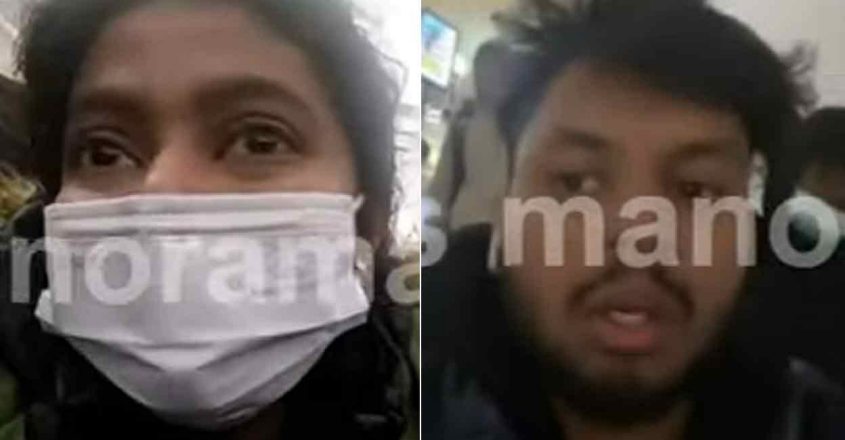
Hasna Iqbal (left) and Muhammed Nahid. Screenshots/ Manorama News
“They may shoot us,” said Hasna Iqbal, a Malayali student stranded in Kharkiv, the northeastern Ukrainian city that is under immense shelling from Russian forces on Wednesday.
Talking to Manorama News from the Vokzal metro station in Kharkiv at 3.45 pm (7.15 pm IST), the second-year medical student in Ukraine said they are unsure of what might happen next.
The student’s response comes hardly an hour after the Embassy of India in Kyiv issued a couple of advisories asking Indian citizens in Kharkiv to exit the city immediately.
The Embassy had reportedly acted in a haste based on Russian inputs. Vladimir Putin’s forces had been launching heavy attacks on the northeastern city the last two days.
“I don’t know what the Indian government wants us to do. Here there is a curfew from 4 pm to 6 am. If we are found outside during the curfew, they will shoot out,” Hasna said, braving tears. “There is heavy shelling and on top of it, we can hear gunfires.”
According to the Ministry of External Affairs, Kharkiv has, possibly, the biggest concentration of Indians in Ukraine. “At least 1,000 Indians are here,” Hasna said.
“Many have left by foot holding Indian flags. We don’t know what has happened to them. Things are getting worse here,” she said.
“Some of us reached the railway station at 6 am and three trains have left since. But not an Indian was allowed to board. They are giving preference to Ukrainians,” said Hasna.
“We’ll be here and hope to be safe, Insha Allah,” she added.
‘They aimed guns at us’
Another Malayali student Muhammed Nahid, who spoke to Manorama soon after, said they have not been contacted by the Embassy yet today.
“We reached the railway station at 5 am. They are boarding Ukrainians. They (Ukrainian forces) point guns at us and fired into the sky. We don’t know what to do,” said Nahid.
“We are still hanging around hoping we may be able to board a train somehow. We are running out of water and food,” he added.
source: http://www.onmanorama.com / OnManorama / Home> News> Kerala / by Onmanorama Staff / March 02nd, 2022