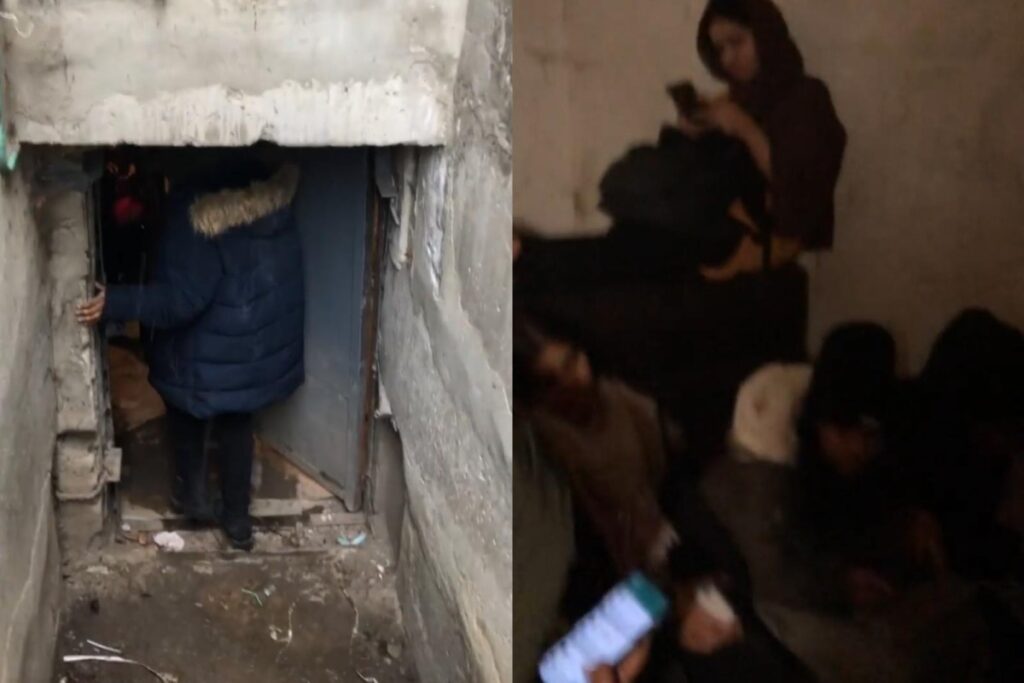
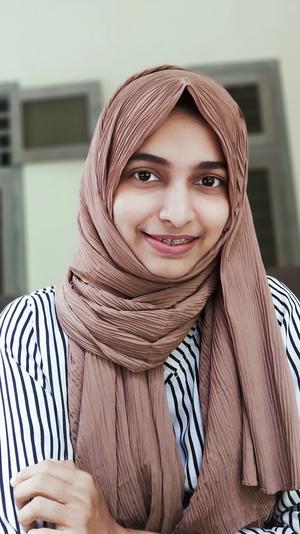
Screenshot from a video sent to The Peninsula by one of the students
Doha :
Around 23 Doha-based Indian medical students in Ukraine’s Kharkiv university have been staying in bunkers for the last four nights as fierce fighting between the Russian and Ukrainian forces has prevented them from fleeing the war-torn country.
The panic-stricken parents of these stranded students shared their anxiety with The Peninsula yesterday while requesting Indian authorities to quickly make arrangements for bringing back their children safely.
“It’s scary. We’re worried about the plight of our children after receiving disturbing text messages from them.
Even in this difficult situation, they’re consoling us saying Allah will show a way to overcome, says Doha resident Aysha Saibool, mother of Dua Khadeeja, a first-year medical student at the V N Karazin Kharkiv National University in Kharkiv.
She said that her daughter has informed that it will take at least seven hours from Kharkiv to reach the nearest border and since no security is guaranteed it is unsafe to travel.
The plight of the stranded students in the war zone was raised by her with the Minister of State of India’s External Affairs, V Muraleedharan.
The Minister said that travelling from Kharkiv, which lies in the eastern part of Ukraine, to the south – west borders of Romania, Hungary or Poland is not safe. He advised the students to stay where they are, until they receive further instructions from the Indian Embassy in Ukraine.
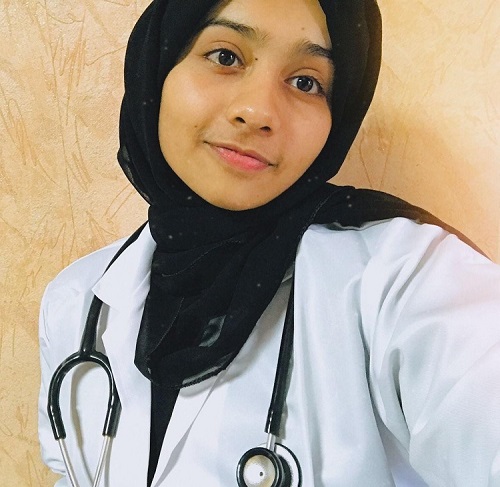
Dua Khadeeja
The Peninsula contacted Dua Khadeeja over telephone in Kharkiv and she said that she and 131 other students were stranded in the Mir hotel bunker in dire condition. They were told not to move out because of security reasons.
“We are sitting inside the bunker with the hope that we will be evacuated soon. Everyone is terrified. Some experience nose bleeding due to allergies and severe cold,” said Dua.
“There’s hardly any space to stand. We cannot even go to toilet. This morning we were allowed to go to hostel for a few minutes to freshen up. That was a little bit of comfort from this harrowing experience. Dua said that food is provided at the bunker.
The parents of Doha-based students have been sharing the latest developments through their whatsapp group.
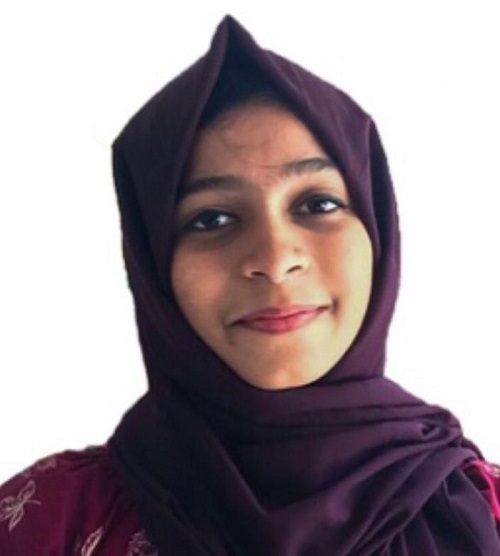
Nusrath Shamseer, whose daughter Fathima Sharbeen is also stranded in the hostel bunker in Kharkiv University, said they are worried about the situation. Fathima’s classmates Hiba and Riya are also staying in the hostel bunker since Thursday.
Fathima Sharbeen
“The easiest way for the students from Kharkiv to be evacuated is via Russia. But it is dangerous to cross the border without adequate security escorts from both Ukraine and Russia,” one parent said quoting his son’s message.
“The alternative routes are Romanian border in the south-west and Poland, Hungary and Slovakia in the west. These are too far from Karkhiv,” he added.
India has so far evacuated 709 students from Ukraine with the third flight carrying 240 students arriving in Delhi from the Hungarian capital Budapest last morning. The flight landed a few hours after Air India’s second evacuation flight from the Romanian capital Bucharest carrying 250 Indian nationals landed at Delhi Airport.
India’s evacuation operation of its stranded citizens, codenamed as ‘Ganga’, began on Saturday with the first flight bringing back 219 people from Bucharest to Mumbai.
Disturbing accounts by Indian students stranded in Ukraine are also circulating in social media with some complaining that they were beaten up by Ukrainian forces and were being kept from leaving the country.
According to Ukraine’s Ministry of Education and Science, there are over 18,000 students from India study in the country. Most of the students are from the southern Indian state of Kerala.
source: http://www.thepeninsulaqatar.com / The Peninsula / Home> Qatar> General / March 01st, 2022
Salman, along with countless others have been left to navigate to borders 800 kms away as the Indian government has absolved themselves of any responsibility.
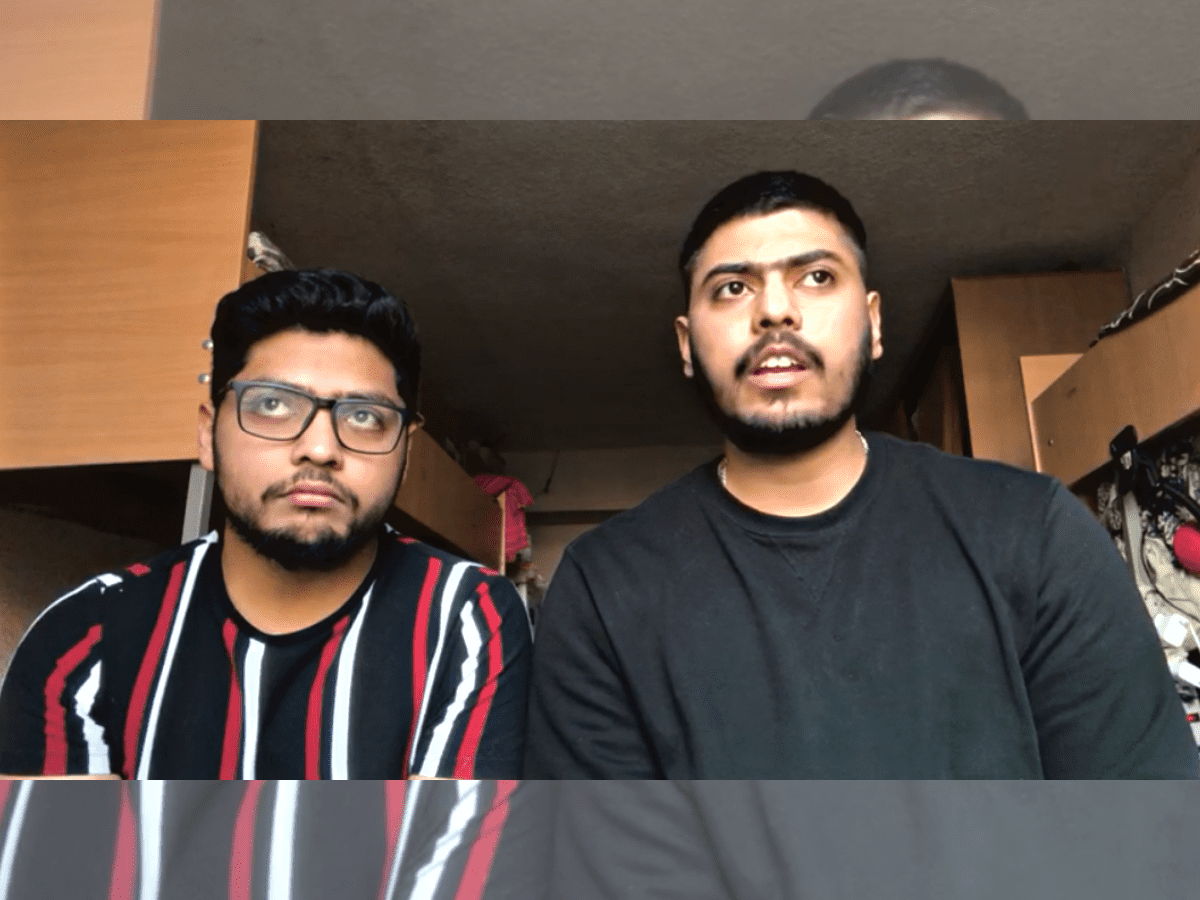
Salman (Left) and his friend Samiuddin. (Screengrab: Twitter)
Hyderabad:
At 8:30 pm, IST, Salman Mohiuddin, one of the countless Indian students stuck in Ukraine, over a WhatsApp call narrated the horrors he had witnessed over the last few days. His voice was meek, with hints of helplessness. He rushed through his statements and made it a point to mention that there was hope if the government chose to help them.
He used the collective word ‘them’ instead of the singular ‘me‘, as in times of war, nobody speaks in the singular.
Salman, along with countless others, has been stranded in the war-torn country since Russian President Vladimir Putin announced a military offensive against Ukraine, leaving expatriates stranded miles away from their homeland.
As a large number of students from the Dnipropetrovsk Medical Institute of Traditional and Alternative Medicine hurried to the airports in an attempt to fly to safety before the dreaded war began, their hopes were crushed as they were prevented from flying minutes before they boarded their flights.
“We were asked to leave the airport by officials and seek shelter elsewhere. A few minutes later, we heard a bomb detonate. We were a mere 1.6 kilometers from the bomb,” said a passive Salman over the call with Siasat.com.
Salman’s testimony made one thing clear.
The war had begun.
Students up until then were in a close-knit group. When the bomb made its presence known, they panicked and ran in different directions. Salman along with five of his friends ran towards and found shelter in the Kyiv Medical University’s hostel alongside 150 other resident students. Others ran towards the embassy in search of refuge.
When asked about bare necessities, Salman said that for the moment things were fine.
“We are a group of over 150 Indian students who are currently stuck in Kyiv. We have sufficient food to eat as we found shelter in the university’s hostel,” added Salman.
Salman’s account of Ukraine as mentioned before extends beyond his own self. While he hasn’t witnessed bodily offenses, he discusses how he has heard violence. The auditory account of violence is conveyed in his meek and yet somehow, detached tone.
“My friends who ran towards the Indian Embassy had been given shelter in a school nearby. However, the students have been struggling with little food, and are forced to bear the chilly weather, without mattresses or proper arrangements for a good night’s sleep,” he says.
Indian government and where they stand:
After three days of waiting around the students were able to contact the Indian Embassy in Ukraine.
“We were able to get in touch with the Embassy after a while. The Indian government claims to be rescuing students from Ukraine but we have been left to survive on our own,” said Salman. His up till then placid tone shifts to one of betrayal. “How can he do this to us?” he asks.
“We have been asked to stay where we are until the situation improves. The Embassy has left us to navigate the borders on our own, which are over 800 kilometers away,” said a now rootless Salman.
To make matters worse, the Indian embassy in Ukraine on Monday advised all Indian students stranded in Kyiv to reach the railway station in the Ukrainian capital for their onward journey to the western parts of the war-torn country.
The Indian government has so far rescued 907 stranded citizens from Ukraine following Russia’s military offensive against Ukraine.
Civil Aviation Minister Jyotiraditya Scindia said that approximately 13,000 Indians are stranded in Ukraine as of now, and the government is making efforts to bring them back as soon as possible.
Salman’s Hyderabad connection:
Salman’s family resides in Hyderabad’s Bahadurpura and like most families in Telangana has appealed to the state chief minister K Chandrasekhar Rao for help. Rao had earlier assured support for students from Telangana stranded in Ukraine.
Salman has earlier shared a video message, where he had shared glimpses of the heavily populated basement of the KMU as he pleaded with the Indian government for help.
Salman’s family resides in Hyderabad’s Bahadurpura and has appealed to the state chief minister K Chandrasekhar Rao for help, as he has promised to extend support in bringing back the students who are stranded in Ukraine, a copy of which has been accessed by Siasat.com.
“I spoke to my son a few hours ago. He told me that a few Ukrainian soldiers had tried to force their way into the hostel however were stopped and sent away by their hostel security guard. They are all stuck in the abasement of the hostel of KMU,” said Salman’s father Dr. Ghulam Mohiuddin.
They are stuck in Ukraine amidst a war. We are worried about them as bombs are dropping a few kilometers away from their location. We are appealing to the government for help,” said a helpless father.
Salman’s twin brother, Nomaan Hyder, who resides in Kazakistan, was the first to reach out to Siasat.com seeking help for his brother.
“He has been stuck in the basement alongside other students and we have been informed that they heard shots being fired at a distance when the Ukrainian soldiers arrived at the hostel. No one was hurt, however. Our family has been kept in the dark about a few terrifying incidents that have unfolded before my brother’s eyes in Ukraine,” said Nomaan.
The ongoing Russia-Ukraine War
The Russian army has launched coordinated missile attacks on several Ukrainian cities including the capital city Kyiv, on Thursday in Europe’s worst conflict in decades that was launched by Vladimir Putin on Thursday.
Negotiation talks are taking place in Belarus for Kyiv and Moscow however with little expectations.
Before the meeting, President Zelensky urged Russian forces to lay down their weapons and called for immediate EU membership.
On the fifth day of the Russian invasion of Ukraine, people in Kyiv are emerging from their homes after a weekend-long curfew.
As the Russian currency plunges, the interest rate is increased by 20 percent and experts warn of a possible run on banks.
UK’s defense secretary says that Russia could indiscriminately bomb cities as its frustration grows.
The northeastern city of Chernihiv was heavily bombed overnight however is still under Ukrainian control. However, reports of Belarus, a Russian ally, have decided to deploy its own soldiers to fight.
A number of World leaders have condemned the invasion and imposed sanctions against Russia, however, they have left little to no impact on the war-driven country. The US, EU, UK, and other allies have reportedly agreed to remove some Russian banks from the Swift payments system.
Germany also announced that it is sending anti-tank missiles and other weapons to Ukraine – marking a major change in policy.
A curfew had been put in place from Saturday to Monday morning after Russian missiles hit an oil depot in Vasylkiv, its mayor said, which has prompted fears of toxic fumes. Anyone who is seen on the street during the curfew will be treated as a Russian “saboteur”, said the capital’s mayor.
A large number of people have already fleed Ukraine, while some attempt to flee the war-struck country with a 27-hour-long queue of women and children, on the Moldovan border.
Heavy street fighting took place in Kyiv on Saturday as officials urged locals to take immediate shelter. Kyiv was struck by two missiles. As many as 198 Ukrainians, including three children, have been killed since the invasion began.
source: http://www.siasat.com / The Siasat Daily / Home> News> Hyderabad / by Syeda Faiza Kirmani / February 28th, 2022
Hyderabads Humera and Rashmikaa with the doubles trophies.
Hyderabad:
Hyderabad tennis players Shrivalli Rashmikaa and Humera Baharmus pair lifted the women’s doubles crown at the Haryana Women’s ITF $15k tennis tournament, in Gurugram on Saturday.
The talented youngsters, who were unseeded in the tournament, defeated top seeds Kovapitukted Punin of Thailand and Anna Ureke of Russia 6-3, 1-6, 10-3.
This is their maiden ITF women’s title. In the singles, Rashmikaa lost to Kovapitukted Punin in quarterfinals on Friday.
Safana Shamna who was selected for Sustainability Leadership Programme offered by Geneva-based United People Global. | Photo Credit: The Hindu
Safana Shamna, a young social worker and Kudumbashree trainer from Mankada in Malappuram district, has been selected for this year’s Sustainability Leadership Programme offered by Geneva-based United People Global (UPG).
She is among the handful of Indians who made it to the 500 young leaders selected from 159 countries. Announcing the selection, the UPG said that Ms. Shamna was selected after an intense review by 130 panelists.
The UPG offers training in sustainability leadership every year for select candidates from across the world. “It gives nine-week-long classes in sustainable leadership with the objective of attaining social sustainability,” said Ms. Shamna.
The chairperson of the Mankada Readers Forum, Ms. Shamna is also the district treasurer of Haritha, the women’s wing of the Muslim Students Federation. “I have been focusing on the idea of attaining sustainable development through mini training sessions,” she said.
The UPG Sustainability Leadership Programme classes will begin on March 14.
source: http://www.thehindu.com / The Hindu / Home> News> National> Kerala / by Staff Reporter / Malappuram – February 15th, 2022
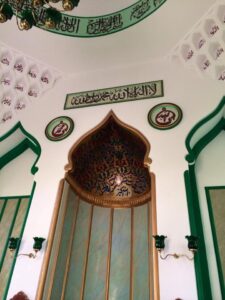
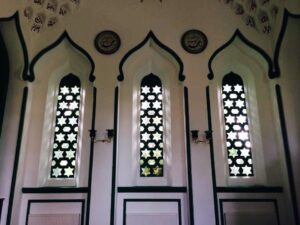
I have been visiting Shah Jahan Mosque and the Brookwood cemetery in Woking for a few years now.
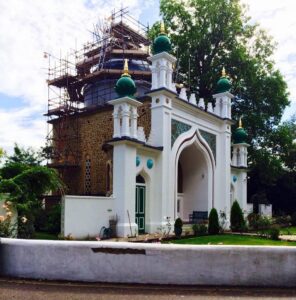
Woking, is a small town almost 30 miles from London. The town is famous for it’s first purpose build mosque in the UK .
During, the two great wars this mosque served a purpose of spiritual centre for Muslim soldiers in Britain.
A few miles from the mosque lies a burial ground which was a designated ground for Muslim soldiers of WWI. Later, it has been transformed into a memorial park.
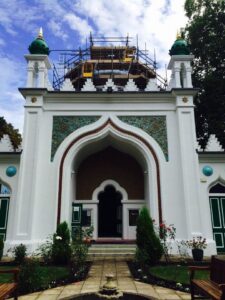
Shahjahan Mosque, Woking
Brookwood Cemetery is situated almost five miles from the Shah Jahan Mosque. The Cemetery is one of the largest in Europe. There are a number of famous Victorian Muslims resting here. Today, Woking has large Muslim population, mostly from Pakistan and they are very active in the community and maintaining the mosque very well.
My, very first trip was unplanned and somewhat impulsive. Though it was incredibly enlightening as well as moving. In 2016 after Eid prayer, on a spur I decided to drive my family to Woking. At the time I had only two boys; My eldest was 3 and his brother a year old. I had no idea how to reach to the mosque and locate graves of the early ‘Victorian Muslims.’ However I was committed to do both on the same day. On my SatNav I entered the postcode of Shah Jahan Mosque.
After two hours of drive we reached the Shah Jehan Mosque. There, we saw young and old, boys and girls in Asian Eid costumes. Contrary to the typical British cloudy weather it was a sunny day. Green dome of the mosque and good size open space with another impressive brick building gave an impression as if we are in a small but an affluent village of India.
The festive mood and the perfect sunny day was inviting us to explore and finish the target. After spending an hour there, we decided to drive to Brookwood cemetery.
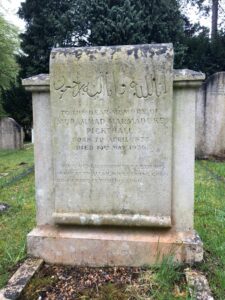
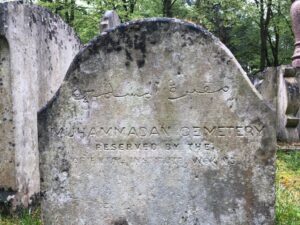
The most challenging part was to locate the old Muslim section of the cemetery, where I wanted to the visit graves of Abdullah Yusuf Ali, Marmaduke Pickthall and Lord Headley.
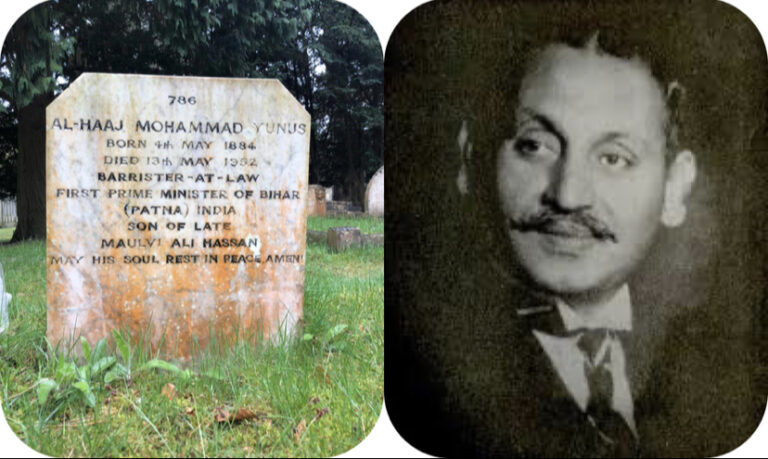
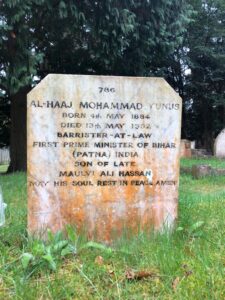
To solve the problem, after reaching the cemetery gate; my intuition suggested me to drive only on the road which took us to the right side of the cemetery. First right, second right and then the third right. After a very short drive it was evident that the direction of graves has started changing, Muslim names with some Islamic symbols – crescent and stars on grave stones reassured me that we have entered into the Muslim section of the cemetery. In the end I reached to the place I wished. It was not easy to recognise Mr. Pickthall’s grave, three rows further, very close to the road is buried my favourite Abdullah Yusuf Ali the well known translator of the Holy Qur’an in today’s contemporary world who passed away in 1953. I was in search of another unmarked grave of Mr. Abdullah Quilliam, when my wife called me to show something. She excitedly pointed to a marked grave of the first Prime Minister of Bihar.
Grave of Mohammed Yunus
My wife is born and brought up in the UK. However she is fluent in Urdu and has enormous interest in her Indian roots. She located the grave of the ‘First Prime Minister of Bihar’ – Haji Mohammad Yunus. It was a huge surprise for me.
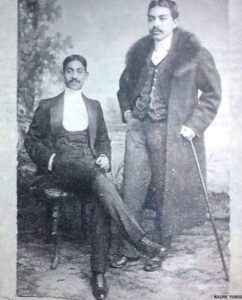
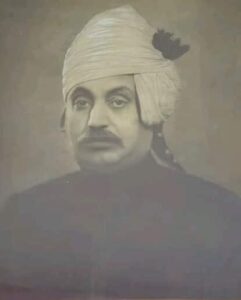
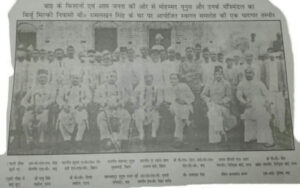
Barrister Mohammed Yunus (Sitting)
I don’t have any direct relationship with Late Haji Mohammad Yunus Saheb. However one of his nephews was my grandfather’s junior in the court and was a very close friend of his. My paternal grandfather was a successful and famous criminal lawyer who practiced in a small town in Bihar. Both of them worked in the same Court. In the 1940s my grandfather’s friend (Haji Yunus’s nephew) was the only Muslim in the town who had a Radio.
Barrister Mohammed Yunus
In fact in our ancestral town it was his radio that broke the bad news of Mahatma Gandhi’s cold blooded murder. Broadcasts from his Radio clarified that the murderer of Gandhi was ‘not a Muslim but a right wing Hindu’ . Which was a momentous relief for the frightened local Muslim population during the violent and uncertain communal climate of the partition of India.
So, finding his grave reminded me of the old story of partition. When I was in school, our eldest uncle shared his experience as a child and narrated us with many stories of the partition; further, how they were taken to a safe place in Bengal for a short period of time by train.
Barrister Mohammed Yunus as Prime Minister of Bihar
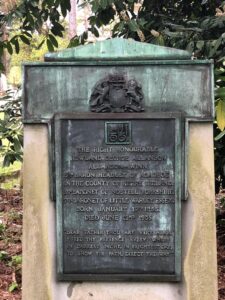
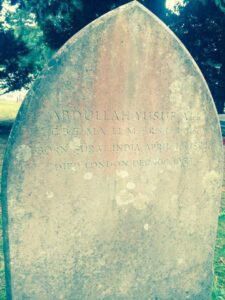
Below are photographs of Haji Mohammad Yunus grave stone and other famous British Muslims residents of the Brookwood Cemetery. May they all rest in peace; may Almighty Allah accepts their deeds and grant them highest place in Paradise. Ameen.
source: http://www.heritagetimes.in / Heritage Times / Home> Bihar> Heritage / by M S Siddiqui / July 29th, 2020
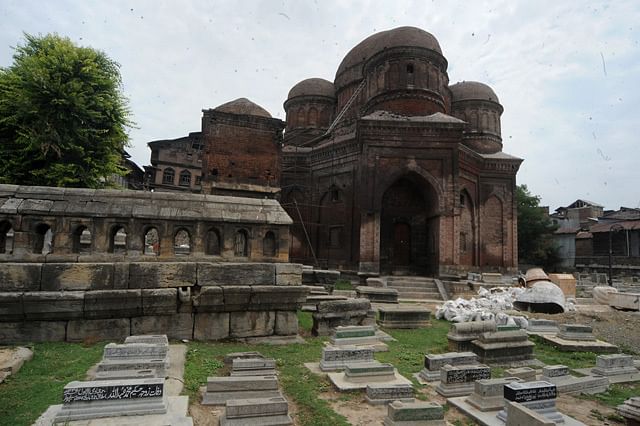
The earliest Persian and Arabic inscriptions are seen on the tombstones and walls in the olden graveyards of Kashmir
The historic tombs of the most famous Shahmiri period sultans and nobles, which included Sultan Sikander and Sultan Zain ul Abideen are also in this historic cemetery. [Tomb of Zain ul Abideen in Srinagar’s old city–Representational Image]File/ GK
With the establishment of Muslim sultanate in Kashmir, in late fourteenth century, the Sanskrit language and Sharda alphabet were also taken over by Persian and Arabic alphabet. The tradition of Sharda epigraphic culture also declined considerably and it gave way to Persian and Arabic inscriptions.
The earliest Persian and Arabic inscription are seen on the tomb stones and walls, in the olden graveyards, Khanqahs and mosques of Kashmir. Number of such inscriptions are documented in my book titled, Kashmir inscriptions of Kashmir, which was published in the year 2013 by Gulshan Books, Srinagar.
Persian inscription on a stone slab at the historic graveyard of Khanqah-e-mu’llah old Srinagar.
Epigraphs of royal graveyard at Mazari Kalan
Mazari Kalan popularly known to public as “Mazari Shiekh Bahau-ud-Din Ganj Baksh (RA)” lies in the foot of Kohi Maran to the west of Malkah. The history of the Mazar reveals that the site originally was proposed by Zain-ul-Abideen Badshah in 1421 AD for housing the only burial of her beloved wife called Ashama Bibi who belonged to a noble family of Bahaqi lineage. But when Sheikh Baha-ud-Din (RA), the reputed saint and Murshid of the Sultan left for heavenly abode in December 11, 1439 AD, he was laid to rest in this proposed site. Over the resting-place a shrine was also then erected.
Stone inscription in a dilapidated condition
The shrine looks to have been renovated, but it has lost most of its interesting architectural features. Adjacent to the shrine is seen the grave of a poet, Mir Illahi, who is saidto be the court poet of the Budshah. A beautiful inscription bearing few lines of his lyric is erected over the grave.
The grave of Asaha Bibi lies near the gate of the Mazar. The other burials it houses of the reputed saints and nobles of their times include; the grave of Solman, Sayyied Habib Shah Kashani, Moullana Mohammed Anie, Baba Qayim, Khwaja Mohammed Kakroo, Moullana Mohammed Balkhji, Sheikh Mohammed Trabali, Mulla Sarf-ud-Din Farhat, Mulla Nurullah Kath, Molvi Amir-ud-Din, Molvi Qulam-ud-Din Jami, Sayyied Mohammed Kermaniand others.
These all graves are very old and are crowned with gravestones, which are brilliantly carved in beautiful Arabic and Persian inscriptions.
Epigraphs of royal graveyard at Zain kadal
The royal graveyard of Zainkadal, locally called Mazari Salateen, enshrines the final resting places of Shahmeri Sultans. The historic tombs of the most famous Shahmiri period sultans and nobles, which included Sultan Sikander and Sultan Zain ul Abideen are also in this historic cemetery.
The tomb of Mirza Haider Dauglat, who administrated Kashmir as a Mughal governor for about 11 years during 1540-1552 AD, is also found in this historic graveyard.
There is a brilliant epigraph in Persian characters laid over his grave which is believed to have been installed by Moorcraft a British traveler during his vest of Kashmir in 19th century.
Persians inscription stone slab on the tomb of Mirza Haider Daughlat, Zainakadal Srinagar.
Zaindeep Epigraph
Persian stone inscription of Zain ul Abideen, SPS Museum Srinagar
Although there is no evidence of any standing Budshah’s Palace found anywhere in Kashmir valley but there is a magnificent stones slab inscription housed in the SPS museum at Lalmandi Srinagar which the experts claim provides vital information about Zaindeep, one of the famous Palaces of the Budshah’s period. Experts claim that this stone slab inscription, besides other details, has also provided the date of construction of this highest palace.
This inscription is Persian Nashk style. It is learnt that the inscription way back has been recovered from the Zianlank island of world famous Wullar lake in Bandipura district and later was shifted to this museum for its proper preservation. The inscription gives AH 841 as the date of construction of this world famous Zaindeep.
While providing description of this stone slab inscription experts say that this inscription is in Persian characters and is divided in four panels. The first two lines mentions the majesty, strength and the name of the Palace as Zaindeep and also describes it as the world famous, while as the date of foundation in Muslim calendar is mentioned in the last two lines in Persian words, which is calculated as 841.
Inscription of the palace
Ene bakha chun faluk muhakum bad
Mashoor ba zain deep dar alam bad
Shah Zain ibad ke daru jashin kunand
Pai vasta Chun tareekh khurdesh kahrum bad.
84l the inscription dates to 841 AH.
(The fort built by Shah Zain ul Abieein is so high and strong as the sky; and it is famous by the name of Zain deep. The king was very happy and celebrated the event when this palace was built)
Broken Stone inscription at Mazare Salateen old Srinagar
Besides these royal graveyards, the other historic and royal graveyards also carried brilliant epigraphs either engraved on tomb stones or on stone walls, these included Mazari Kalan, Mazari Salateen, Mazari Khanqah Mu’llah, Mazari Madine Sahib, Mazari Malik Sahib, Mazari Safakadal, Mazari Malkah and Mazari Bijbehra,.
But these human records are not preserved anywhere in these historic cementers. These inscribed records have fallen prey to the unchecked weathering and human vandalism.
Most of their inscriptions have defaced and it is very difficult to identify and decipher their epigraphs; steps are required to be taken to conserve this unprotected and unconcerned epigraphic heritage.
Disclaimer: The views and opinions expressed in this article are the personal opinions of the author.
The facts, analysis, assumptions and perspective appearing in the article do not reflect the views of GK
source: http://www.greaterkashmir.com / Greater Kashmir / Home> Op-Ed / by Iqbal Ahmad / February 20th, 2022
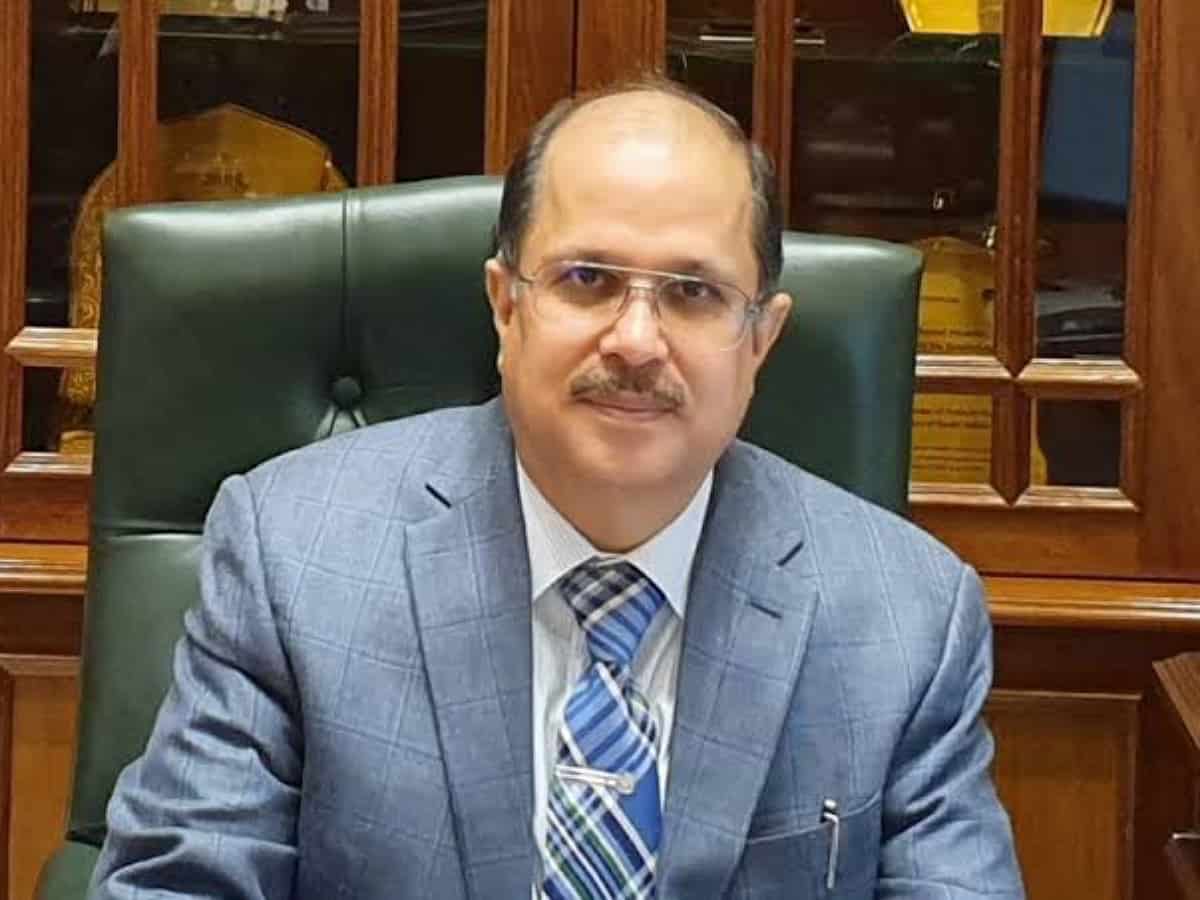
Dr. Ausaf Sayeed expected to accept his new assignment in New Delhi next month.
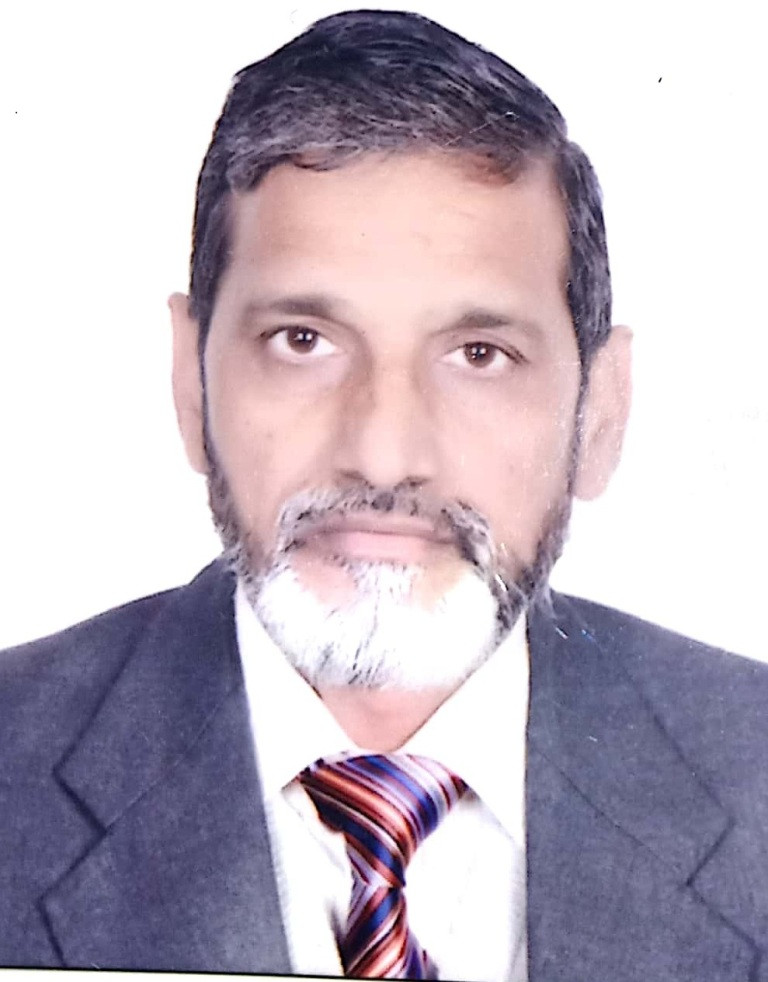
Dr. Ausaf Sayeed
New Delhi:
India’s ambassador to Saudi Arabia, Dr Ausaf Sayeed, has been appointed to a new position as secretary, overseas Indian affairs in the country’s Ministry of External Affairs.
He has been appointed as the Secretary, (consular, passport, visa and Overseas Indian affairs). He is expected to accept his new assignment in New Delhi next month. The name of his successor in Riyadh is yet to be announced, but as per reports, the selection process has begun.
In terms of the bureaucratic arrangement, the new post is a promotion because the post is several degrees higher than that of an ambassador. The appointment was approved by the Indian cabinet on Tuesday.
About Dr Ausaf Sayeed
Dr Ausaf Sayeed completed his three-year term in Saudi Arabia after being appointed ambassador to Saudi Arabia in March 2019.
Dr Ausaf Sayeed’s tenure in the Kingdom of Saudi Arabia first as a Consul General and as Ambassador has been exemplary in strengthening Indo-Saudi bilateral relations.
He belongs to a well-known educated family of Hyderabad. His father, Awaz Sayeed, was a well-known modern Urdu essayist and short-story writer. He has performed diplomatic services in Egypt, Qatar, Denmark, Yemen, Chicago and Shashail.
Dr Ausaf Sayeed is known for his love for the Urdu language and its propagation. Wherever he was posted, he always convened Urdu Mushairas and brought Indian diaspora on a single platform.
source: http://www.siasat.com / The Siasat Daily / Home> News> India / by News Desk / February 16th, 2022
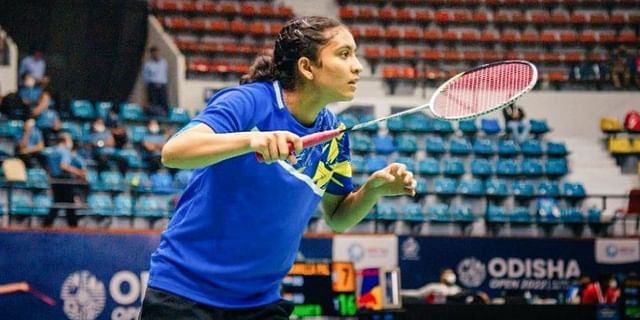
The 16-year-old from Gujarat, who became the first Indian woman shuttler to claim the world no. 1 status in u-19 singles, beat second seed Susato 21-11, 11-21, 21-7 in 51 minutes.
India’s Tasnim Mir beat Indonesia’s Yosephine Susanto at the 30th Iran Fajr International Challenge 2022. (Photo | Twitter, @BAI_Media)
Shiraz :
Junior World No 1 Indian shuttler Tasnim Mir on Friday notched a three-game win over Yulia Yosephine Susanto of Indonesia in the final to claim the women’s singles title at the Iran Fajr International Challenge here.
The 16-year-old from Gujarat, who became the first Indian woman shuttler to claim the world no. 1 status in u-19 singles, beat second seed Susato 21-11, 11-21, 21-7 in 51 minutes.
Tasnim, ranked number 404 in the senior world rankings, lagged 1-3 early on but she soon clawed back at 5-5 before reeling off six straight points to create a huge gap, which her rival couldn’t bridge.
The Indonesian came out all cylinders blazing in the second game, jumping to a 9-2 advantage.
She kept moving ahead to roar back into the contest in a jiffy.
In the decider, Tasnim got her bearings back, zooming to 6-1.
She didn’t look back and shut the door on her rival to comfortably pocket the title.
En route to the title, Tasnim defeated Iran’s Nazanin Zamani, Armenia’s Lilit Poghosyan, Iran’s Fatemeh Babaei, India’s Samayara Panwar before outwitting top seed and World Number 71 Martina Repiska in the semifinals.
source: http://www.newindianexpress.com / The New Indian Express / Home> Sports> Cricket / by PTI / February 11th, 2022
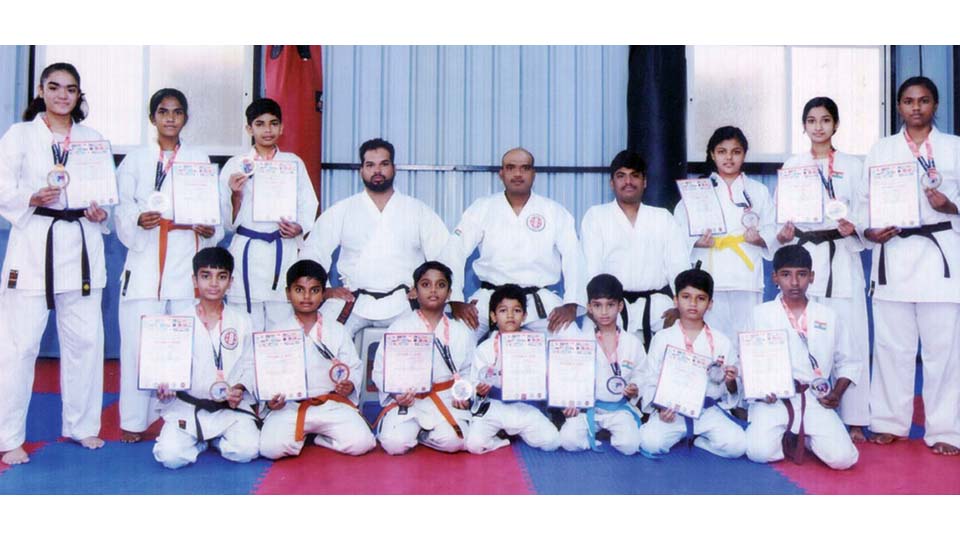
The Karatekas of IKA Karate Academy, Mysuru and Kali Warriors Academy, Karnataka, under Pekiti Tirsia Kali India, have bagged various medals in the World Online Karate Championship-2022 organised by Dynamic Shotokan Karate Do Association, World Union of Martial Arts Federations, World Karate Alliance and Evolution of Karate between Jan. 20 and Jan. 25, 2022.
Seen in the picture are (sitting from left): Raihan (Gold medal), Daniyal (Gold medal), Navanidh Surya (Silver), Saatvik (Silver), Md. Abdul Malik (Gold), Tharun (Bronze) and Abhimaanm (Silver);
Standing from left: Noushin (Gold), S. Pooja (Silver), Diganth (Gold), Sensei Mohamed Saqeeb Ur Rahman and Sensei Abdul Waseem (Senior Instructors and Head Coaches of IKA), Sempai Lali Vishnu (Instructor and Coach of IKA), Rihaana (Bronze), Poojitha (Silver) and Keerthana (Bronze).
source: http://www.starofmysore.com / Star of Mysore / Home> Sports / February 11th, 2022
All lathe machine operators, constantly worried about the fly out accidents during the machining operation can now rest easier as Aligarh Muslim University (AMU) Associate Professor from the University Polytechnic; Mr Shamshad Ali has invented an ‘Automatic Carriage Stopper’ which will reduce the chances of accidents.
The invention has been patented recently by the Patent Office, Government of India.
“The carriage stopper can be installed as a utility tool clamped on the lathe machine bed with a station ratchet system. It will be used as a multi stage stopper mechanism for turning application”, said Mr Shamshad.
He pointed out that the purpose of the invention is to reduce the likelihood of accidents, improve productivity, reduce product cost, lessen the rejection rate during manufacturing process and decrease the mental and physical fatigues of the operator.
Explaining how the invention will work, Mr Shamshad said: “The ‘Automatic Carriage Stopper’ will open the split nut in conventional lathe machines automatically to disengage the power source from the carriage, resulting in the carriage stop at desired position”.
“Similarly carriage movement through the feed rod will also be stopped automatically by using the ‘Automatic Carriage Stopper’. This auto carriage stopper can be used for any conventional lathe machine without any change in its design and it is easy to manufacture, maintain and operate at a low cost”, he added.
Mr Shamshad has invented the auto carriage stopper with his students, Suhail Ahmad.
source: http://www.amu.ac.in / Aligarh Muslim University / Home> Public Relations Office / February 08th, 2022