Awarded the Padma Shri in 2017, Karimul Haque began helping the sick commute to the hospital in his village. But his reason will bring you to tears.
Jugaad – a flexible approach to problem-solving that uses limited resources in an innovative way.
The reason I start with this definition of a colloquial Hindi term is only because the protagonist of my story—Karimul Haque (55), who is also referred to as ‘Ambulance Dada’—truly embodies the meaning of the word jugaad.
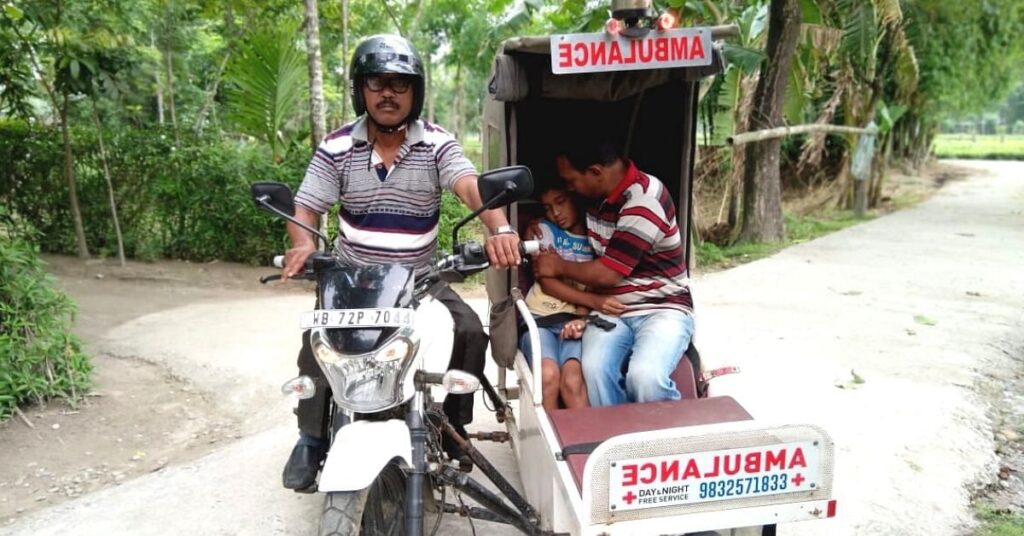
Losing his mother due to the non-availability of an ambulance in time led him to start his own motorcycle ambulance in 1998. Since then he has ferried over 5,500 patients from across 20 villages in West Bengal’s Jalpaiguri district.
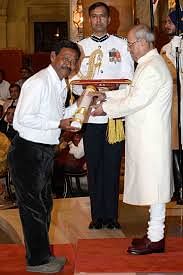
In 2017, Karimul was also awarded with a Padma Shri for his service. Karimul is a stellar example of the phrase – ‘service above self’.
No one should die for lack of treatment
Karimul Haque – Ambulance Dada
Having seen his mother pass away due to lack of timely access to treatment, Karimul says that his constant thought was to find a way to ensure that this does not happen to anyone else. He says, “It was just another day when I was working in the tea garden. I saw a fellow worker collapse and without thinking about it, I put him on my motorbike, tied him to me and took him to the nearest hospital.” It worked and Karimul managed to save his life.
“That incident was all the push I needed. I decided to use my motorbike to ferry those in need,” he says, adding, “I realised that in my area, a motorbike works better than a van or a full ambulance. The reason why a bike ambulance works best in this area is because the roads are not conducive for a larger vehicle to cross and sometimes even the rivers overflow. It is easiest to maneuver a motorbike in these conditions.”
‘People would mock and even laugh at my face’
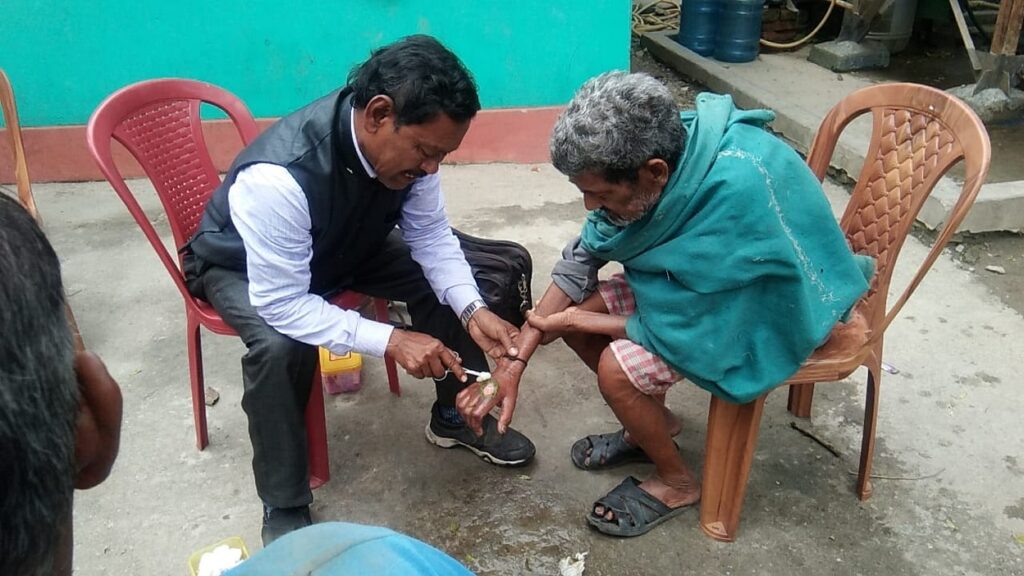
Ambulance Dada providing first aid to an elderly.
Since the ambulance that Karimul operates is not one that follows conventional norms, he says he was often mocked and even laughed at. “But once they saw the work that I was able to do and the number of people I was able to help, people’s perception started to change,” he says. Besides always being there for people when he is called upon, Karimul also seems to always have a solution to the problems people come to him with.
Not just an ambulance service provider
Day and night ambulance service.
With the passage of time, Karimul and his sons also got trained in administering basic first aid to patients. He says, “Today, I also organise regular health camps in the village. The kind of poverty that the villagers live in often stops them from visiting a doctor or the hospital. With these camps, many small niggling health issues are being corrected.”
Karimul has also gone one step further and converted a part of the land his house is built on to serve as a hospital. “We have tie-ups with doctors who also do video consultations now. Basic tests like sugar and blood pressure are also conducted at the hospital. In the case of an emergency, I am also trained to administer saline drips,” he says.
With former President Pranab Mukherjee.
Dr Soumen Mondal, a general surgeon practicing in Jalpaiguri says, “I have known ‘Ambulance Dada’ – Karimul since 2013. Not just dedicated but he is also someone who will go out of his way to help those in need. I have personally trained him in many of the basic first aid techniques and often help through video consults as well.”
Even busier during the pandemicpix06
At a time when a majority of us stayed indoors during the lockdown period, Karimul and his sons have been busy. “Besides ferrying patients to the hospital on my motorbike ambulance, we also saw that many of them were not even able to afford one meal a day. That was when we decided to start supplying rice to as many people as we could,” says Karimul.
So far close to 1,000 people have benefitted by the rice that Karimul and his family have distributed and another 200 families have been provided with cooked food. “These are migrant labourers, and with no work, they had no income whatsoever. We started cooking at home and serving these families,” says Raju, the elder son of Karimul.
He goes on, “Now people know baba (Karimul) and we also get donations and sponsorships. We have used the money to buy and provide blankets and food to those in need near our village.”
Raju ends the conversation by saying, “We have grown up seeing him readily available to everyone at whatever time they needed. Even though he is in his 50s, the energy he has sometimes even puts me to shame.”
This nine-times over grandfather says, “I may be 55 years of age but mentally and even physically I am not a day older than 30. It is my duty to serve those in need and will do so until the day I can’t any more.”
(Edited by Yoshita Rao)
source: http://www.thebetterindia.com / The Better India / Home / by Vidya Raja / December 04th, 2020
The BJP-led Hindu nationalist government has conferred Padma awards on 119 personalities. The awardees include eight Muslims.
Two renowned Islamic scholars, Maulana Wahiduddin Khan and MaulanaKalbe Sadiq have also been selected for the award.
Padma Vibhushan, the second-highest civilian award have been presented to Maulana Wahiduddin Khan, while Maulana Kalbe Sadiq have been provided Padma Bhushan, the third-highest civilian award.
Both the scholars had urged Muslims to give away their claim on Babri Masjid. Currently, a Ram Temple is being constructed on the site where Babri Masjid was standing till its demolition by Hindutva mobs, aided by BJP-RSS veterans, on 6 December 1992.
The awardees include, polymath Ali Manikfan, who has been awarded with the Padma Shri for his contribution in grassroots level innovations at Lakshwadeep. Born into an aristocratic family in 1938 in the Minicoy Island of Lakshwadeep, Manikfan is as marine researcher, ecologist, shipbuilder, agriculturist, and a polyglot.
Gulfam Ahmed from Uttar Pradesh for his contribution in the field of Art, Lakha Khan for Literature from Rajasthan, and Ghulam Rasool Khan for Art from Jammu and Kashmir, Sanjida Khatun for Art from Bangladesh and Col Quazi Sajjad Ali Zahir for Public Affairs from Bangladesh are among the recipients of the Padma Shri.
These awards cater to various disciplines including art, social work, public affairs, science and engineering, trade and industry, medicine, literature and education, sports and civil service. While ‘Padma Shri’ is awarded for distinguished service in any field, ‘Padma Bhushan’ is awarded for distinguished service of high order. ‘Padma Vibhushan’ is awarded for exceptional and distinguished service.
source: http://www.muslimmirror.com /Muslim Mirror / Home> Featured / by Muslim Mirror Staff / January 28th, 2021
Badharia Village (Azamgarh District), UTTAR PRADESH / NEW DELHI :
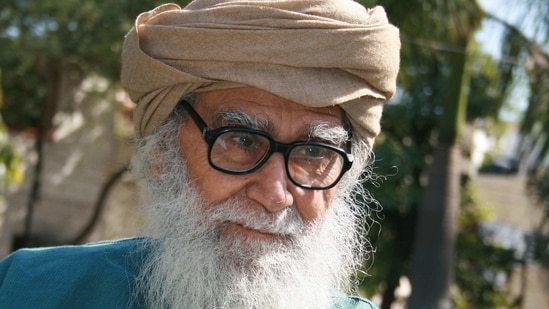
Maulana Wahiduddin Khan has been given Padma Vibhushan, India’s second-highest civilian award, for his exceptional contribution in the field of spiritualism.
File photo of Maulana Wahiduddin Khan.(CPS Global)
The Centre on Monday released the list of Padma awards on the eve of India’s 72nd Republic Day in which it has honoured 119 people for their achievements and contributions to their respective fields of work.
One of the names that is sure to pique interest is that of renowned Islamic scholar Maulana Wahiduddin Khan. He has been given Padma Vibhushan, India’s second-highest civilian award, for his exceptional contribution in the field of spiritualism.
Khan first shot to limelight when he gave a clarion call to Muslims to relinquish claims over the disputed Babri Masjid site, one the first community leaders to do so.
He then floated, along with others, the “Vajpayee Himayat (support) Committee”, which had extensively campaigned for the former BJP prime minister in the Lucknow constituency in the 2004 Lok Sabha elections.
Khan is known for his association with Vajpayee and his senior colleague in the Bharatiya Janata Party (BJP) L K Advani.
Khan has contributed articles to the RSS mouthpiece Organiser which presents him “as an enlightened alternative to Islamic fanaticism” for “reportedly counselling Muslims to abandon their claim on Ayodhya”.
His verified Facebook page describes the Islamic scholar as, “Maulana Wahiduddin Khan is an Islamic spiritual scholar who has adopted peace as the mission of his life. Known for his Gandhian views, he considers non-violence as the only method to achieve success.”
He established Centre for Peace and Spirituality (CPS) in 2001 to promote and reinforce the culture of peace. The website of the organisation says the Khan was born in Uttar Pradesh’s Azamgarh in 1925.
Padma awards – conferred in Padma Vibhushan, Padma Bhushan and Padma Shri categories – are among the highest civilian awards given in various disciplines/fields like art, social work, public affairs, science and engineering, trade and industry, medicine, literature and education, sports, and civil service.
source: http://www.hindustantimes.com / Hindustan Times / Home> India News /by HindustanTimes.com – edited by Amit Chaturvedi / January 25th, 2021
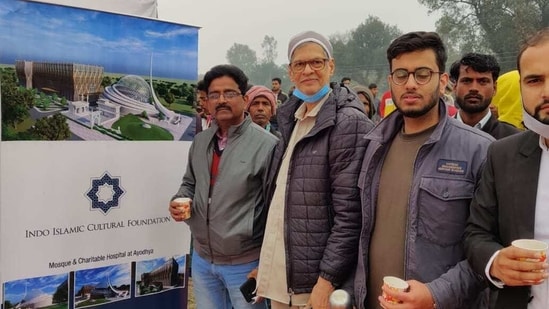
The Dhannipur project includes a mosque, hospital, museum, library, community kitchen, Indo-Islamic Cultural Research Centre and Publication House.
A plantation drive was also organised to mark the launch of the Dhannipur project (Sourced)
The Uttar Pradesh Sunni Central Waqf Board (UPSCWB) formally launched the Dhannipur project on the allocated five-acre land at Dhannipur village of Ayodhya by hoisting the national flag and planting saplings to mark Republic Day celebrations on Tuesday.
The Dhannipur project includes a mosque, hospital, museum, library, community kitchen, Indo-Islamic Cultural Research Centre and Publication House. The land was allotted to UPSCWB in compliance with the Supreme Court directives in the Ayodhya title dispute case in which the apex court, on November 9, 2019, paved the way for construction of Ram temple at the disputed site.
“I believe there is no better way than to start the project by planting saplings on the five-acre land. The plantation was carried out in the area of the project meant to be developed as a green area. The area will have plants and trees from all different geographical regions of India and from different parts of the world in order to create awareness about the imminent threat of climate change,” said Athar Hussain, spokesperson for Indo-Islamic Cultural Foundation (IICF) which has been set up by UPSCWB to look after the construction of the Dhannipur project.
Senior members of the board along with the members of the IICF hoisted the flag at 8.30 am on the 5 acre land in Dhannipuur village. The flag hoisting was followed by plantation drive where members and trustees of IICF planted saplings.
On December 19, the trust had released the blueprint of the mosque and other structures designed by Professor SM Akhtar, a Lucknow-based architect and town planner, whom the trust has hired to design the mosque that would come up in Dhannipur in place of the Babri Masjid that was demolished in 1992.
Akhtar is the founder dean of the Faculty of Architecture at Jamia Milia University, Delhi.
source: http://www.hindustantimes.com / Hindustan Times / Home> India News / by HT Correspondent / January 26th, 2021
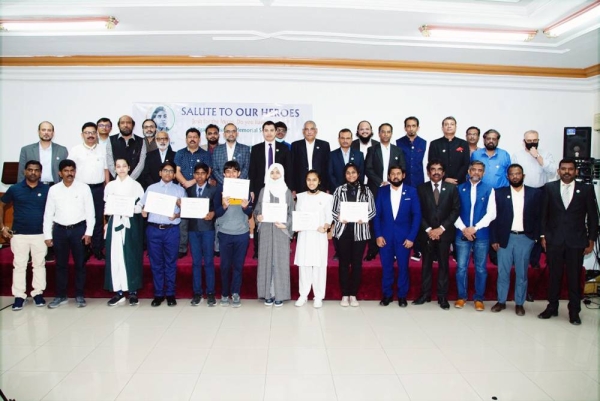
Acting Indian Consul General Y.Sabir poses for photos with winners of Brig. Usman Storytelling Contest and Organizers of the event at Indian Consulate in Jeddah
Jeddah :
Members of the Indian Community in Jeddah gave a big salute to the patriotic valor and great sacrifice of Brig. Mohammed Usman, who laid his life defending the honor of his great nation. Brig. Usman, who at a young age, declined the offer to assume the highest military rank of another country and instead preferred to defeat them in a crucial war by sacrificing his precious life on the war front and thus becoming the highest-ranking Indian Army officer to be martyred in the war.
This great Indian war hero, nicknamed as the “Lion of Nowshera,” was remembered recently during the community’s celebration of the Indian Army Day, which falls on Jan. 15, and that marked paying rich tribute to members of the Indian Armed Forces.
Acting Indian Consul General Y. Sabir was the chief guest of the event, titled “Salute to our heroes,” held in the presence of prominent community members at the conference hall of the Jeddah Consulate in which several highly decorated officers of the Indian Army joined virtually to speak about their experiences right from the field with great enthusiasm and passion.
The most distinguished among them was the keynote speaker Lt. Gen. Bhupinder Singh, former lieutenant governor of Andaman and Nicobar Islands. The younger generation of the community also were part of the celebration and posthumous honoring of the great Indian war hero with their participation in the “Brig. Usman Memorial Storytelling Contest.”
In his speech, Sabir shared with the audience how an Indian Army soldier goes through tough and arduous training that enables him to achieve all round personality development as a true role model of an Indian citizen.
“An Indian Army soldier is the epitome of courage and determination to his duty, and his role and responsibilities are not limited only to warfronts but rather cover much wider areas of serving the entire nation and people,” he said, while calling on the younger generation to come forward to take up a brilliant career in the Indian Armed Forces.
Sabir also lauded the efforts of Indian community for holding a unique event in honoring Brig. Usman, coinciding with the Army Day.
President of India Forum Mir Ferozuddin, who hails from the bloodline of Brig. Usman, spoke about the ‘josh’ of the soldiers that is more ferocious than the roar of a lion. “It is this josh that made the “Sher of Nowshera” reject the offer to become the Chief of Army of the neighboring country and continued to command his country’s army until he became a martyr on the soil of his own beloved country,” he said.
Ferozuddin invited Kargil war veteran Capt. Yashika Tyagi to join the session virtually to give a brief biography of Brig. Usman and insights into his heroic martyrdom.
She began her speech with the remarks of “Shera Shera Nowshera” feeling of pride of belonging to the banner of the great Brigadier. Tyagi described the courage and determination of Brig. Usman in recapturing Jhangar village in Kashmir. “In all senses of the word, Brig. Usman was a great warrior, who faced each set back in his life head-long and defeated each setback with the strength of his character.”
Capt. Tyagi, the first lady officer to be posted in extreme cold weather, also spoke eloquently about how a woman, a mother of a toddler and four-month pregnant, fought bravely to safeguard India’s borders. She motivated Indian girls and boys to join the Indian Armed Forces, with a promise to train them personally.
In his keynote address, Lt. Gen. Bhupinder Singh recalled: “Brig. Usman continued to remain an inspiring war hero all throughout my military and civil life ever since my joining of the Indian Army at the age of 19. Brig. Usman was among my heroes about whom I have been mentioning in all my writings,” he observed and lauded the family of Mir Ferozuddin as a fine example of true patriots.”
The event also saw a virtual CatFit deliberations to mark the Army Day. CatFit, a pioneer of M.A.S.T.S (Military Application and Special Forces Tactics for Students), covers all domains of psychological, mental, physical and emotional development and thereby ensuring that students achieve their optimum potential. Global Head of CatFit Arpan Dixit introduced the speakers.
Maj. D.P. Singh, a distinguished military officer who fought in the Kargil war and sustained serious injuries, spoke about the sheer determination of a soldier. Singh talked about the kind of soldiers the Indian Armed Forces develop with tough trainings. He showed his journey from 1999 when he got injured by a mortar bomb in Kargil to being the first blade runner of India.
Defense expert Brig. Anjum Shahab, who has over three decades of services in Indian Army, addressed the young generation and motivated them to join the Armed Forces and showed direction on how they can join. On his part, Maj. Mohammed Ali Shah drew attention to various TED (Technology, Entertainment and Design) Talks, giving full of inspiration and well connected with the young generation. Shah started off as an actor and then joined the Indian Armed Forces where he served for five years.
The Squadron Leader Meena Arora narrated her stories from the war field. She mentioned the use of technology in the Air Force and how it is influenced in winning a war. Arora talked about the strength of the Indian Air Force and mentioned the fight of Wing Commander Abhinandan Vardhaman, who landed in the enemy area but showed bravery in the face of death.
Zakaria Biladi, a prominent Indian community leader, was mainly behind organizing this unique event with the core objective of creating awareness among the younger generation about picking their brilliant career path in the Indian Defense Forces. In his speech Biladi said: “There is a dire need to ignite the passion for such services in the Indian youth living in Saudi Arabia particularly because they are not exposed to seeing the activities of Indian Army as much as the youth living in India are.”
Earlier, the event began with a welcome speech by Asim Zeeshan, the master of ceremonies, while Mohammed Hyder proposed the vote of thanks. The organizers of the event also included M. Siraj, Mohsin Sharif, KTA Muneer, and Imran Kausar.
Acting Consul General Y. Sabir gave away prizes to winners of the Brig. Usman Memorial Story telling contest. The winners are the following: Junior Category (7-9 classes) — Kavin Adhitiya & Ms. Danhushri Subramanyan (first); Syeda Umamah Qadri (second); and Ashwin Karuppasamy & Ms. Aishwarya Jayasankar (third). Senior Category (10-12 classes): Rimy Tomy (first); Marial Aranha (second) and Sana Ferozuddin (third).
Speaking to Saudi Gazette, Biladi said that the competition has been instrumental in inculcating a huge amount of patriotism and passion among the Indian students as well as to instill in them high esteem to the great sacrifices of Brig. Usman in defending the homeland.
Brig. Usman was the highest ranking officer of the Indian Army killed in action during the Indo-Pakistan War, immediately after the partition of the subcontinent in 1947. At the time of the partition, he, along with many other Muslim officers, declined to move to the Pakistan Army and even turned down the offer to become the first Chief of Army of the new state of Pakistan, and thus becoming a great symbol of India’s inclusive secularism.
It was during the defense of Jhangar in Jammu and Kashmir Usman was killed on July 3, 1948, by an enemy 25-pounder shell. He was then 12 days short of his 36th birthday. His last words were “I am dying but let not the territory we were fighting for fall for the enemy.”
For his inspiring leadership and great courage, he was awarded posthumously with the second highest military decoration for gallantry in the face of enemy, the Maha Vir Chakra. India’s first Prime Minister Jawaharlal Nehru and his Cabinet colleagues attended the funeral of Brig. Usman, who was buried in a grave in the Butla House near the Jamia Millia Islamia campus in New Delhi.
source: http://www.saudigazette.com.sa / Saudi Gazette / Home> Saudi Arabia / by Hassan Cheruppa, Saudi Gazette / January 25th, 2021
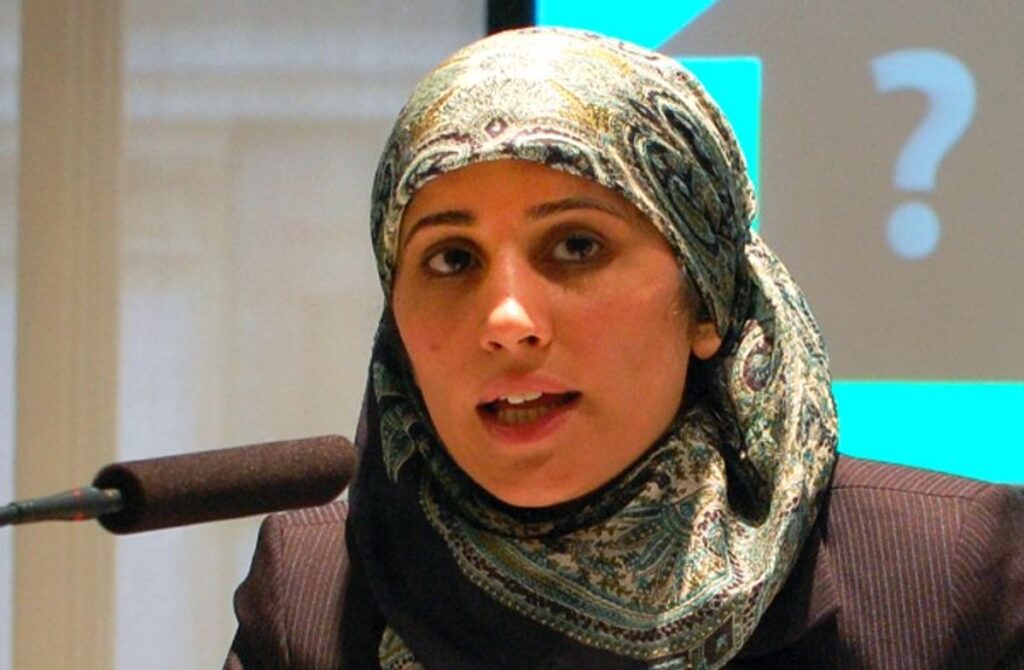
According to key nominations for the Department of State announced by Biden, Uzra Zeya has been nominated to be Under Secretary for Civilian Security, Democracy, and Human Rights
An Indian-American diplomat Uzra Zeya, who had quit the foreign service in 2018 in protest against the policies of US President Donald Trump was nominated on Saturday to a key State Department position by President-elect Joe Biden.
According to key nominations for the Department of State announced by Biden, Uzra Zeya has been nominated to be Under Secretary for Civilian Security, Democracy, and Human Rights.
Sharing the news on Twitter, Uzra Zeya wrote, “In my 25+years as a diplomat, I learned that America’s greatest strength is the power of our example, diversity & democratic ideals. I will uphold & defend these values, if confirmed, as Under Secretary for Civilian Security, Democracy, and Human Rights.”
_________________
Uzra Zeya @UzraZeya
In my 25+years as a diplomat, I learned that America’s greatest strength is the power of our example, diversity & democratic ideals. I will uphold & defend these values, if confirmed, as Under Secretary for Civilian Security, Democracy, and Human Rights.
President-elect Biden Announces Key Nominations for the Department of State / President-Elect Joe…. www.buildbackbetter.gov
Twitter
___________________
Wendy R. Sherman has been nominated to be Deputy Secretary of State, Brian McKeon as Deputy Secretary for Management and Resources, Bonnie Jenkins to be Under Secretary for Arms Control and International Security Affairs and Victoria Nuland to be Under Secretary for Political Affairs.
“This diverse and accomplished team, led by Secretary of State-designate Tony Blinken, embodies my core belief that America is strongest when it works with our allies,” Biden said.
“Collectively, they have secured some of the most defining national security and diplomatic achievements in recent memory — and I am confident that they will use their diplomatic experience and skill to restore America’s global and moral leadership. America is back,” he said.
Uzra Zeya served most recently as CEO and President of the Alliance for Peacebuilding, where she drew on over two decades of diplomatic experience in Near East, South Asian, European, human rights, and multilateral affairs.
As Chargé d’Affaires and Deputy Chief of Mission at the U.S. Embassy in Paris from 2014 to 2017, she oversaw the day-to-day operations of the Embassy, six constituent posts, and 50 offices and agencies engaged in U.S. government work. She quit against Trump’s policies in September 2018.
“Up to now, Foggy Bottom’s upper echelons are looking whiter, more male and less like America,” Zeya wrote in Politico in September 2018 alleging that the State Department under the Trump Administration was facing racial and gender bias.
“In my own case, I hit the buzz saw that Team Trump wielded against career professionals after leading the US Embassy in Paris through three major terrorist attacks over three years and after planning President Trump’s Bastille Day visit,” she wrote.
She said that upon returning to Washington, she was blocked from a series of senior-level jobs with no explanation. “In two separate incidents, however, colleagues told me that a senior State official opposed candidates for leadership positions — myself and an African-American female officer — on the basis that we would not pass the ‘Breitbart test’,” she wrote in Politico.
From 2012 to 2014, Zeya served as Acting Assistant Secretary and Principal Deputy Assistant Secretary in the Bureau of Democracy, Human Rights, and Labour.
She joined the Foreign Service in 1990, serving in New Delhi, Muscat, Damascus, Cairo, and Kingston. From 2011 to 2012, she was Chief of Staff to the Deputy Secretary of State and helped shape the U.S. response to the Arab Spring and worked to deepen U.S. engagement with emerging powers.
Zeya has also served as Deputy Executive Secretary to the Secretary of State, Director of the Executive Secretariat Staff, and as UN General Assembly Coordinator.
She is a recipient of the Légion d’honneur, France’s highest civilian honour, a Presidential Rank Award, and 15 Superior Honour and Senior Performance Awards.
She is a graduate of the Georgetown University School of Foreign Service.
On the key State Department nominations announced by Biden, Vice President-elect Kamala Harris said, “This remarkable team of distinguished diplomats and seasoned leaders reflects the very best of our nation”.
Secretary of State-designate Tony Blinken said, “To meet this moment, we need a Department of State that looks like America, led by diverse women and men who will be unafraid to challenge the status quo.
“That is this team. America at its best still has a greater capacity than any other country on earth to mobilize others to meet the challenges of our time. These passionate, energetic, deeply experienced nominees will help keep our people and our country safe, secure, and prosperous”.
With agency inputs
source: http://www.livemint.com / Mint / Home> News> India / by Staff Writer / January 17th, 2021
Dr. Maryam Afifa Ansari, who has secured admission for a postgraduate course in neurosurgery at Osmania Medical College, Hyderabad, is set to become the youngest neurosurgeon from India’s Muslim community following completion of her degree in three years.
She had gotten 137th rank in the All India NEET SS exams held in 2020.
Interestingly, Ms. Ansari, who has left many amazed with continuous successes, has been educated in Urdu medium schools till 10th class.
She studied till seventh class in the Tahzeen High School in Malegaon, Maharashtra. Then, she moved to Hyderabad and took admission to Princess Durrushawar Girls High School. She was a topper in her school in the 10th class examination and also a gold medalist.
After completing intermediate from MS Junior College, Hyderabad with the top rank, Afifa managed to take admission in MBBS at Osmania Medical College free of cost.
She received five gold medals during her MBBS course. After completing her course in 2017, she succeeded to get admission for a masters course in general surgery in the same college for free.
In 2019, she completed a postgraduate degree, MRCS, from Royal College of Surgeon, England.
In 2020, she did the Diplomate of National Board course. This is a special postgraduate degree awarded to the Specialist Doctors in India. After scoring high in the 2020 NEET SS exams, she was granted free admission in MCH at the Osmania Medical College.
Speaking to Muslim Mirror, she said ” my success is a gift from Allah and a responsibility’ .
She would try to serve the community through her profession, she added.
‘Don’t give up, never let anyone say you can’t do it… Prove them wrong, by achieving it, she said in her message to Muslim girls.
Ms. Ansari’s continuous hard work has helped her cross every hurdle on the path of success. She is an inspiration for the young generation in India.
source: http://www.muslimmirror.com / Muslim Mirror / Home> Featured / by Muslim Mirror Special Correspondent / January 11th, 2021
File image of Sameera Fazili, Deputy Director, National Economic Council at the White House| Twitter/ Sameera Fazili
‘Sameera Fazili has been named as Deputy Director, National Economic Council at the White House, the Biden-Harris Transition announced on Friday.
US President-elect Joe Biden has appointed Indian-American Sameera Fazili to a key White House position related to economy.
Sameera Fazili has been named as Deputy Director, National Economic Council at the White House, the Biden-Harris Transition announced on Friday.
The National Economic Council coordinates the economic policy making process and provide economic policy advice to the US president.
Fazili is currently the Economic Agency lead on the Biden-Harris Transition. She was earlier posted at the Federal Reserve Bank of Atlanta where she served as the Director of Engagement for Community and Economic Development.
Fazili is the second Kashmiri-origin Indian-American appointed to a key position in the incoming Biden administration.
In December, Aisha Shah was named as Partnerships Manager at the White House Office of Digital Strategy.
In the Obama-Biden administration, Fazili served as a senior policy advisor on the White House’s National Economic Council and as a senior advisor at the US Treasury Department in both Domestic Finance and International Affairs.
Prior to that she was a clinical lecturer of law at Yale Law School. Originally from Buffalo, she now lives in Georgia with her husband and three children. Fazili is a graduate of Yale Law School and Harvard College.
Before her time in government, Fazili was a clinical lecturer at Yale Law School’s community and economic development clinic, where she helped start a CDFI bank and a local anti-foreclosure initiative, and expanded the clinic’s work to international microfinance.
She also worked at ShoreBank, the nation’s first CDFI (community development financial institution) bank. Her work in finance has spanned consumer, housing, small business and microfinance.
She received her law degree from Yale Law School and her bachelor of arts in social studies from Harvard College.
source: http://www.indianexpress.com / The Indian Express / Home> World / by PTI / Washington – January 16th, 2021
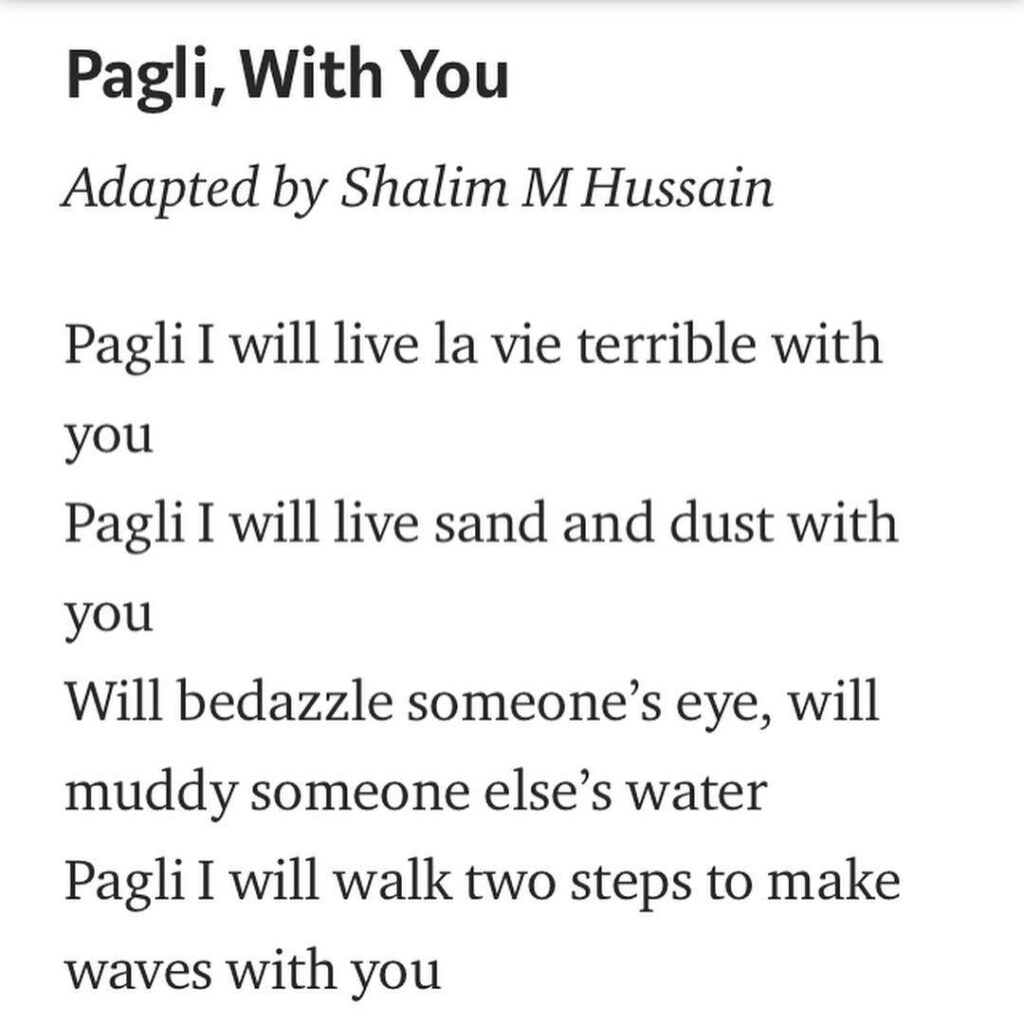
Delhi-based poet Shalim M. Hussain’s Miyah poetry provides the metaphorical loudspeaker to the long-ignored voices of the Bengali-Muslim migrants living in the riverine plains of the Brahmaputra by documenting their stories of love, loss, celebration and injustice
Nana I have written attested countersigned And been verified by a public notary That I am a Miyah Now see me rise From flood waters Float over landslides March through sand and marsh and snakes Break the earth’s will draw trenches with spades Crawl through fields of rice and diarrhea and sugarcane And a 10% literacy rate See me shrug my shoulders curl my hair Read two lines of poetry one formula of math Read confusion when the bullies call me Bangladeshi And tell my revolutionary heart But I am a Miyah See me hold by my side the Constitution Point a finger to Delhi Walk to my Parliament my Supreme Court my Connaught Place And tell the MPs the esteemed judges and the lady selling Trinkets and her charm on Janpath Well I am Miyah. Visit me in Kolkatta in Nagpur in the Seemapuri slums See me suited in Silicon Valley suited at McDonalds Enslaved in Beerwa bride-trafficked in Mewat See the stains on my childhood The gold medals on my PhD certificate Then call me Salma call me Aman call me Abdul call me Bahaton Nessa Or call me Gulam. See me catch a plane get a Visa catch a bullet train Catch a bullet Catch your drift Catch a rocket Wear a lungi to space And there where no one can hear you scream, Thunder I am Miyah I am Proud.
Shalim Muktadir Hussain is not an easy man to get a hold of. He belongs to the long tradition of Bengali-Muslims who have been sharing their lived experiences through the genre of Miyah poetry. The genre originates from the Bengal Partition-era migrants residing in Lower Assam, locally known as Char-Chapori. With stories of love, loss, celebration and injustice, it has historically served to lift up the long-ignored voices of the Bengali-Muslim migrants living in the riverine plains of the Brahmaputra and document their interactions with the world outside the region. But Hussain’s activism isn’t limited to the written word – the first time that I’m able to get in touch with him, he is attempting to rescue his fellow Miyah poets, who have been arrested on account of their ‘divisive’ poetry. I try again, and this time, I catch him in the middle of helping the victims of a bus accident. This humanitarian spirit shines through in his poetry, which I was first acquainted with at Godrej Culture Lab’s Migration Museum, a one-day pop-up that shed light on partition-era struggles. Months later, he shares his views on the Miyah genre, the under-representation of Assamese voices, and more.
Tell us about your personal journey as a poet. My journey with Miyah poetry, or the current phase of assertive Char Chapori poetry, started in 2016. Prior to it, I had been publishing poems for more than a decade. My first book of poems was published in 2017. Poetry as an art form came organically to me; I was looking at the world through a unique lens and had the ability to present this vision through carefully chosen words. Over the past few years, there has been a steady flow of literature from the Chars. This includes a strong collection of poems which depict the lived experiences of residents. Miyah poetry, in my opinion, is a continuation of the genre of Char Chapori poetry and its evolution. When the president of Char Chapori Sahitya Parishad, Hafiz Ahmed published the poem Write Down I am a Miyah on Facebook in April 2016, I responded to it with my composition titled Nana I have Written. Other poems were written in response to our poems and a small body of poetry emerged within a week. I realized that these were written primarily in Assamese and our local dialects which had to be translated to English so I started translating them and sent them out to literary journals and blogs. In the last couple of years, I have been writing poems in both English and the local dialect and translating both my own and works of other poets. Since then more translators have also emerged and by translating their works into other widely read languages such as English and Hindi, we have been able to reach wider audiences.
Do you think stories from Assam are under-represented? The national media focuses only on certain parts of the country. However, if the maximum potential of social media is harnessed, stories from not just Assam but other states too can find representation. Poetry is very personal for me, when I write about the land I was born and other fiction, the stories come from my personal experiences. The documentary films I have been involved in spotlight the performing arts of the Char Chaporis. According to me, all narratives – creative, journalistic, archival and academic are equally important. Miyah poetry gives a holistic view of life in Assam and the Chars.
How has digital media been helpful in popularising Miyah poetry? Digital media has aided in increasing reach and accessibility. For instance, one the offshoots of Miyah poetry is music videos and audio-visual recording of the poems. In August 2016, three poets started Itamugur, a YouTube channel named after a hammer-like instrument used to break hard clumps of earth before preparing the fields for sowing. That it is less aggressive and has a more meaningful purpose than a regular hammer is a telling quality of what they stand for. Their Bhatiyali music videos which have drawn great attention to the stories of the Char-Chaporis.
Do you think spoken word is more powerful to bring attention to the art form? I am just getting acquainted with spoken word but yes, it has played a huge role in the spread of Miyah poetry. We have read our poems at different venues and received great response from the audience.
Have you been able to change people’s perception about the community through this device? We have been able to change the perception of many people — even the residents of Assam — who didn’t know much about life in the Chars. Since Miyah poetry talks about lived experiences of love, loss, and celebration, it has been successful in bringing the ordinary life in the Chars to light. Until a couple of months ago, the representation of the Bengal-origin Assamese Muslims in media wasn’t positive; they were portrayed as thieves, dacoits and rapists. Today, we are representing ourselves appropriately through poetry regardless of others’ opinions. The narrative has definitely shifted.
You have explored various fields as a writer, poet, professor and filmmaker. Which one do you prefer? I like being a professor. One can communicate in real-time with their audience, which puts a lot of responsibility to be careful with the selection of material that should be used in the class and the language of communication. Writing allows me to tell my own stories, so there’s more freedom. As far as film-making is concerned, I wouldn’t call myself as a filmmaker. There are some art forms I think should be documented, and I do my best.
What is the future of Miyah poetry, according to you? As long as Miyah poems are written, the tradition will remain alive. In the absence of organisational structure, independent poets write poems and share them on social media platforms. There isn’t a formal definition of ‘Miyah Poetry’ which we abide by; poets themselves decide if their work qualifies to be termed in this genre. It is democratic, as no one decides if a work is a ‘real’ poem or critiques it as a good or bad poem. Every Miyah poet is an individual and each voice is precious for us.
*To reproduce the above poem in any form, copyright permission must be sought from Shalim.
source: http://www.vervemagazine.in / Verve / Home> Arts & Culture> Library / by Ojas Kolvankar / August 28th, 2019
When Suvendu Adhikari crossed over to the BJP, it was said there’s no reason to fuss over the desertion of Mir Jafars. Now actor Rudranil Ghosh has earned the sobriquet of Mir Jafar 2.0. But what is it to be the progeny of a man-turned-pejorative?
The setting of this story is Lalbagh, a locality in Murshidabad, erstwhile capital of Subah Bengal or present-day Bangladesh, Bengal, Bihar and Odisha. According to the book The Musnud of Murshidabad (1704-1904), “Being more conveniently situated than Dacca for the collection of revenue and the supervision of trade… Murshed Kuli Khan, the Great Dewan of Bengal, selected it as his headquarters and embellished it, giving it its present name after his own.” This was in the early 1700s.
Thirty kilometres away from Lalbagh is Plassey, and Calcutta is 200 kilometres away. The nawab’s estate here has an enormous entrance; it was designed such that stately elephants could saunter through. To its left there is a two-storey stretch limo of a building punctured with countless square windows. “It is the house of the Bade Nawab and the Chhote Nawab,” says local guide Swapan Chowdhury. Yes, the Government of India abolished the princely order in 1971, which means titles are not recognised; but the usage endures in various orbits of society to suggest legacy, status or power, oftentimes as veneer on a less grand present.
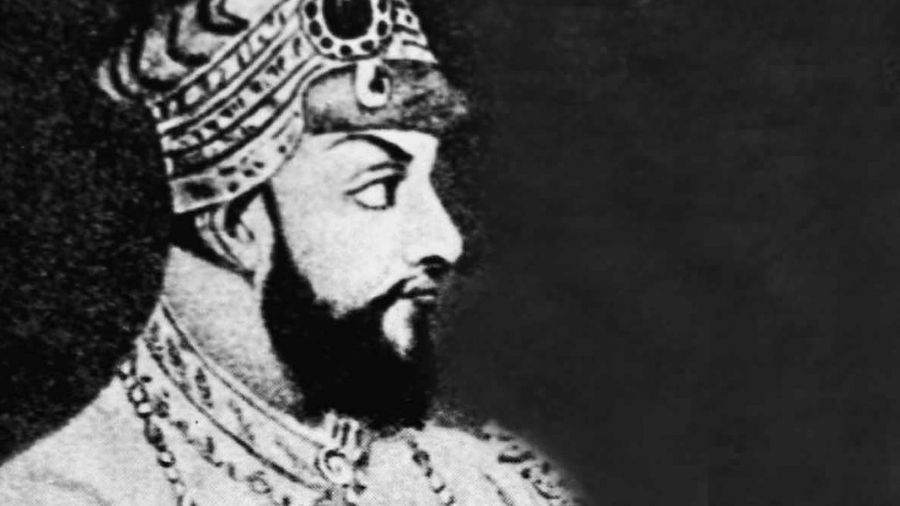
The two “nawabs” are among the living descendants — eighth generation to be specific — of Syed Mir Jafar Ali Khan Bahadur, commander of the Bengal army under Nawab Siraj ud-Daulah. He whom we today know as Mir Jafar, shorn of all gallantry, accomplishments and grandeur he might have been associated with once. The same who is synonymous with the betrayal he perpetrated on the young Siraj in Plassey in 1757.
And so you have — mir jafar (n) once man, now pejorative; most commonly used Indianism for traitor or turncoat.
***
Syed Mohammad Reza Ali Meerza or Chhote Nawab greets me as he hurriedly picks a white kurta from the clothesline and slips it over his head. “This is the building that housed the sentries during Mir Jafar’s time,” says the 79-year-old.
Reza Ali has worked as a state government employee all his life. “My tenure as a permanent employee fell short by a few days and that’s why I do not get any pension, etc.,” he lets slip a crib and thereafter quickly arranges some plastic chairs, and with a wave of his hand and a “tashreef rakhiye” continues his narration.
Pointing to the recently installed statue of Siraj ud-Daulah bang opposite his house he says, “Siraj ke aami khoob bhalobashi… I love Siraj very much. People say Mir Jafar betrayed him. Bhul bole… that’s wrong.”
And yet from what he says, it is clear this is one “wrong” he and his kin have trouble living down even today. Tourists, visitors, researchers, all continue to raise eyebrows when they learn about the family tree. What about locals? He replies, “Oh! People here love me. They say: ‘We do not care about Mir Jafar. We know you are a good human being’.”
He offers a quick tour of the andarmahal. There are pictures and memorabilia aplenty littered all over. Is any of this Mir Jafar’s?
No. Most of the belongings of the nawabs are kept in the museum inside Hazarduari Palace. That collection includes Mir Jafar’s sword, shield and dagger, his footwear, the cutlery he used.
The Hazarduari Palace, Wasif Manzil, and Begum Manzil are all part of the nawab’s estate. Reza Ali offers to take us around. On our way out, we meet Syed Mohammed Abbas Ali Meerza, or Bade Nawab.
Abbas Ali has a persona quite distinct from his younger brother’s. He is of reserved bearing and stands on ceremony. He is quick to inform that, in 2013, he won “the case” in the Supreme Court and since then he and his brother have been recognised as genuine claimants to the title of the Nawab of Murshidabad.
Without the prodding, Abbas Ali starts talking about his ancestor. “Who says Mir Jafar was a traitor? Mir Jafar hails from the Najafi dynasty. We are the direct descendants of Prophet Hazrat Mohammad.”
The Najafi dynasty was born when the Prophet’s grandchildren Hasan and Husyain’s children married. Abbas Ali explains, “Hasan’s son Hassan e Mussanah and Husyain’s daughter Hazrat Fatimah Sughra married. And then the Najafi dynasty was born. We are the descendants of Husyain Najafi. His son Ahmad Najafi was married to Zinnat-un-Nissa, daughter of Shah Jahan’s son Dara Shikoh. Mir Jafar was their son.” He adds, “Mir Jafar was much higher in status to Siraj ud-Daulah, both by bloodline and given that he was the son-in-law of Alivardi Khan, the nawab of Bengal and grandfather of Siraj.”
Says Abbas Ali, “Had he wan-ted to kill Siraj, he wouldn’t have had to go through all the drama of Plassey. He could have got the musnud (throne) from the Mughal emperor himself.”
Dr S.M. Reza Ali Khan is another descendant of Mir Jafar. The Telegraph had interviewed him in January 2020; months later he died. Khan was a professor of history and had done a lot of research on the Battle of Plassey and Mir Jafar. He had said over phone from Hyderabad, “The ignominy attached to this name does not give us a good feeling.”
Dr Khan believed it is not quite right to judge Mir Jafar by cutting him away from the age he belonged to, the environment and those circumstances. He had said, “It was the 18th century and there was no concept of nationalism. And even if there was, let me tell you Siraj was not a great nationalist either. Besides, he had killed his own brother, his uncle and even the husband of Alivardi Khan’s eldest daughter, Ghaseti Begum, to get the musnud.”
Through the lockdown Dr Khan would call many a time with this reference and that reference from history texts. He spoke about the Sheths of Murshidabad, a very powerful community in the 18th century. They did business with French and British traders. Jagat Sheth Mehtab Chand, one of the most prominent businessmen of Murshidabad, used to lend money to the British at a steep interest. Dr Khan had said, “When Siraj declared the British as his enemy, Mehtab Chand could not have been very pleased. His business would have been hampered.” It seems a fair number of Sheths had stood up against Siraj.
Abbas Ali too spoke about Siraj’s unpopularity. Siraj had planned to kidnap the daughter of Rani Bhabani, the queen of Nator. “This was not well received by the Hindu nobility… Siraj had insulted Mir Jafar once in the durbar by having his beard shaved off.”
Octogenarian Baquir Ali Meerza is yet another descendant; he too is based in Lalbagh, but in Kella Nizamat. He says, “It is true we have to suffer the ire of people because the history books say Mir Jafar did not fight in the Battle of Plassey. But these books do not say why he did not fight.”
In The Black Hole of Empire, Partha Chatterjee cites from the Fort William Select Committee Proceedings of May 1, 1757. It reads, “The Committee then took into consideration, whether they could (consistently with the Peace made with the Nabob) concur in the measures proposed by Meer Jaffir of taking the Government from Souragud Dowla, and setting himself up…” Sometime end-June, the British won Plassey. In the same book, Chatterjee writes, “The battle was over by the fall of dusk. The next day, Clive wrote to Mir Jafar: ‘I congratulate you on the victory, which is yours not mine…’”
Baquir Ali’s version differs. He says, “Mir Jafar’s tent was closest to the British forces. The British had come to fight the French, not Siraj ud-Daulah. Armed with only 2,000 soldiers, they came to Plassey and found that Siraj was waiting there with an army of 20,000. The French army stood in front of Siraj’s camp. Mir Jafar’s camp was far away.”
According to him, the British approached Mir Jafar and asked him to mediate with the nawab. Mir Jafar sent a messenger to Siraj but it would have taken a day to cover the distance. In the meantime, the French army opened fire. The British mistook it as Siraj’s rejection of their proposal and retaliated. “Mir Jafar was confused and did not know what to do… What happened at the battlefield of Plassey is a case of misunderstanding and not betrayal,” says Baquir Ali.
The Telegraph asked Abu Taher Khan, the Trinamul MP from Murshidabad, his views on Mir Jafar. A guarded Khan replied, “In this atmosphere it is best I don’t comment on Mir Jafar… But it was because of Mir Jafar that our country lost its independence. Many people say, ‘These people come from the land of Mir Jafar’. Anyone can understand in what context it is being said.”
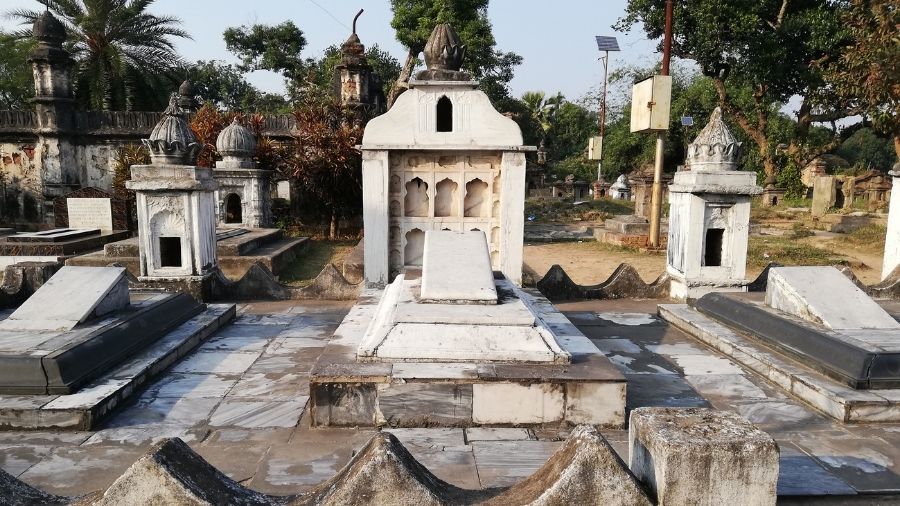
Grave Truths : Mir Jafar’s tomb in Murshidabad / Picture by Moumita Chaudhuri
On my way back from Murshidabad, I make two more stops — Mir Jafar’s palace and his tomb. As it turns out, there is no trace of the palace, only remains of what used to be its gates. The place is still referred to as nimakharam deuri or traitor’s gate. The Jafarganj cemetery that houses the tomb is also closed that day. The auto-rickshaw driver who has driven me around says, “Earlier it was always open, but then tourists would come and spit on it, kick it. That is when the local administration had it walled; a gate was installed.”
Locked too behind that gate are the graves of Heera and Panna, actors of the era’s dubious games of estate and empire. Falcons both, Heera and Panna flew spying sorties for the house of Mir Jafar — to the Siraj camp or, some say, to the British battlements, who knows? They were both killed in the line of duty, shot out of the skies — some say by Siraj’s marksmen, others that it was actually the British, who knows? Both were dear enough to be accorded resting places at the back of where Mir Jafar lies — to that there is sacrophagal evidence. The rest is contrary apocrypha, pick your version. That’s often the case with history too, narratives compete, interpretations duel.
I remembered what Abbas Ali had told me, “The British wrote our history. What I don’t understand is why the nawabs after Mir Jafar did not take it upon themselves to put out their version. If only…,” his voice had trailed off.Bloodline
Mir Jafar had three wives
Shahkhanum Begum
Offspring:
Fatima Begum and Mir Miran
Mir’s son is Murtaza Khan
Murtaza’s son is Mustafa Khan
Mustafa’s son is Asadullah Khan
Asadullah’s son is Azam Ali Khan
Azam’s son is Faiyaz Ali Khan
Faiyaz’s son is Jafar Ali Khan
Jafar’s son is *Dr S.M. Reza Ali Khan
Munni Begum
Offspring:
Nazam ud-Daulah
Saif ud-Daulah
Both died young
Babbo Begum
Offspring:
Mubarak ud-Daulah
Mubarak’s son is Babar Jung
Babar Jung had two sons, Ali Jaj and Wala Jah
Wala Jah’s son is Humayun Jah
Humayun’s son is Firadun Jah
Firadun’s son is Hassan Ali Meerza
Hassan Ali’s son is Wasif Ali Meerza
Wasif Ali’s daughter, Sahibzadi Hasmat-un-Nissa, married Sadiq Ali Meerza
Sahibzadi’s sons are
*Syed Mohammed Abbas Ali Meerza and
*Syed Reza Ali Meerza
*Descendants quoted in the story
source: http://www.telegraphindia.com / The Telegraph Online / Home> Big Story / by Moumita Chaudhuri / January 17th, 2021