He was awarded the Padma Shri in 1991, Sangeet Natak Akademi Award in 2003, Padma Bhushan in 2006 and Padma Vibhushan in 2018.
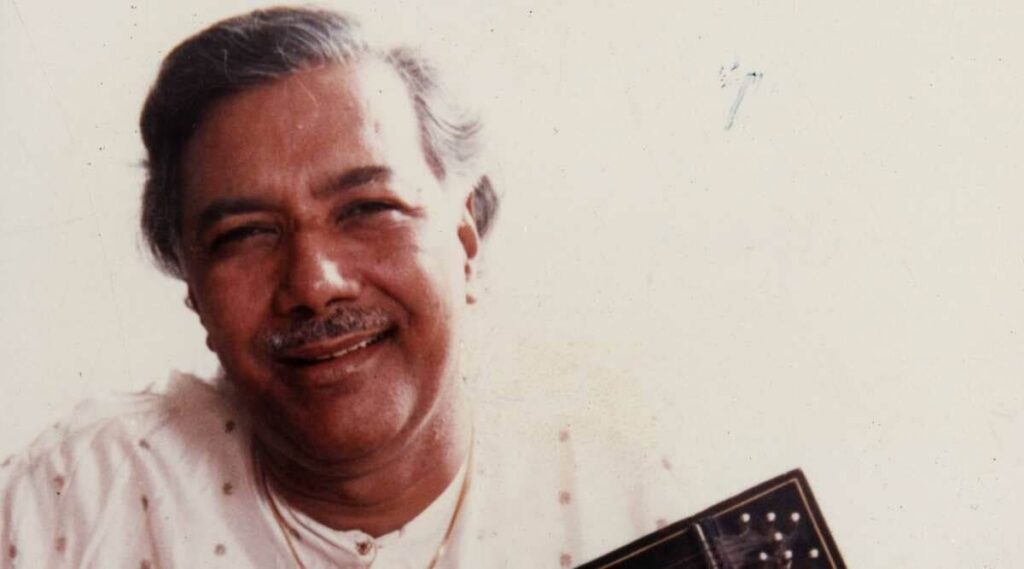
Ustad Ghulam Mustafa Khan
In Umrao Jaan (1980), filmmaker Muzaffar Ali’s seminal film, a five-minute melody manages to put life’s ebb and flow in perspective. The raagmala Pratham dhar dhyaan dinesh illustrates the induction of the protagonist, Ameeran, into classical music and dance and showcases her metamorphosis into Lucknow’s fanciful courtesan, Umrao Jaan.
Composer Khayyam’s composition is ambitious and arduous—based on seven ragas each of which defines time, mood and colour of varied moments in life. To sing this, Ali chose Ut Ghulam Mustafa Khan—the Hindustani classical giant whose deep and dazzling voice was representative of not just an iconic lineage but also a rigorous riyaaz and years spent teaching some of the greatest musicians of our time.
Opening with an alaap that chimes with the word Allah, the melody merges into Brahma, giving a glimpse into the Awadh of the 19th century, when the syncretic fusion of cultures in music was a norm. But a more remembered piece is perhaps Jhoola kinne daala re amaraiyan in raag Desh, the story of a bedecked swing on which two lovers sway together.
Ut Ghulam Mustafa, one of the finest Hindustani classical vocalists and torchbearer of the Rampur Sahaswan gharana, died at his home in Mumbai on Sunday. He was 89.
Expressing his condolences, PM Narendra Modi tweeted, “The passing away of Ustad Ghulam Mustafa Khan Sahab leaves our cultural world poorer. He was a doyen of music, a stalwart of creativity whose works endeared him to people across generations. I have fond memories of interacting with him. Condolences…”
President Ram Nath Kovind tweeted, “…In his passing, music world has lost not only a doyen but also a mentor for young generation…”.
Ut Ghulam Mustafa was born and raised in Badaun, Uttar Pradesh. His mother was the daughter of the legendary vocalist Ut Inayat Hussain Khan, the court musician in Nawab Wajid Ali Khan’s court. He learned from his father Warish Hussain Khan, followed by tutelage under other family members, including Ut Fida Hussain Khan, court singer of Baroda’s royal durbar and then his cousin, Ut Nissar Hussain Khan.
His first performance was at a Janmashtami concert at the age of eight, where he was hailed as a child prodigy. What was also interesting about Ut Ghulam Mustafa was his openness to all forms of music, a rarity in classical maestros of his time. So when most classical singers were banishing Hindi film music, he found it easier to adapt.
According to Pune-based dhrupad maestro Uday Bhawalkar, Ut Ghulam Mustafa changed the colour and tone of how music in Rampur Sahaswan gharana sounded. “Someone like the great Ut Nissar Hussain had an aggression in the tone. Ut Ghulam Mustafa toned it down and made it softer,” says Bhawalkar.
The musician also sang in Mrinal Sen’s Bhuvan Shome (1969), and Badnam Basti (1969) among others. Another significant performance was a part of Coke Studio @MTV where composer and Ut Ghulam Mustafa’s student AR Rahman presented his guru on stage. The musician sang a composition in raag Yaman alongside guitars and drums.
Ut Ghulam Mustafa, till he died, remained an eminent guru to many leading musicians including Asha Bhosle, Manna Dey, Ut Rashid Khan (also his nephew), Waheeda Rehman, Geeta Dutt, Hariharan, Sonu Nigam, Alisha Chinoy and Shilpa Rao.
He was awarded the Padma Shri in 1991, Sangeet Natak Akademi Award in 2003, Padma Bhushan in 2006 and Padma Vibhushan in 2018.
Once at a concert in Mumbai, Ut Ghulam Mustafa sang a thumri in Pilu, and got Ut Bade Ghulam Ali Khan on his feet. “Iitne dooble patle ho, kahan se gaate ho?” asked the musician. Ut Ghulam Mustafa Khan’s music, his bracing voice, its irrepressible vigour, probably came from his strict training. But also, from the joy he got from the seven notes that represented life for him.
source: http://www.indianexpress.com / The Indian Express / Home> Lifestyle> Art and Culture / by Suanshu Khurana, New Delhi / January 18th, 2021
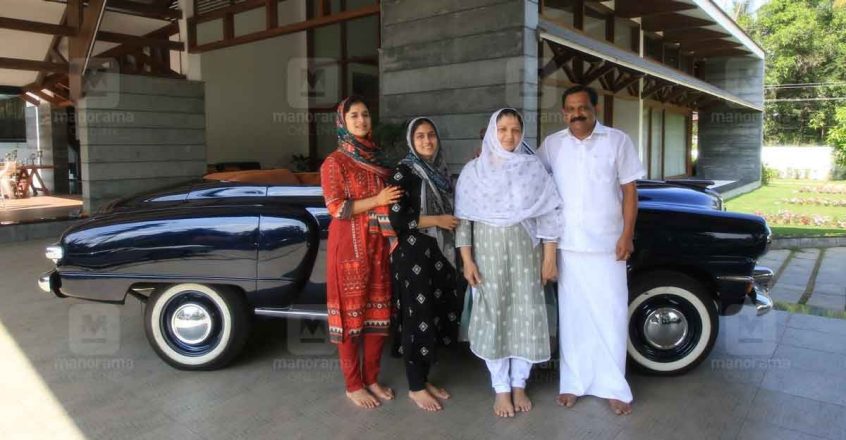
Expatriate businessman C P Salih had a happy reunion recently after 60 years — with a gleaming Studebaker car that had left his home in 1960.
Salih’s father Chandanaparambil C P Mohammad had bought this American car from Delhi. It is estimated that the car, manufactured in 1947, arrived in India in 1949.
It was in this car that the wedding party of the mother-in-law of prominent businessman Galfar Mohamed Ali had travelled to the wedding.
C P Mohammad sold the car in the 1960s. After changing several hands, it finally reached Delhi again. What’s more, it had the same old number — DBG 8213. Mohammad had written in his diary that he had bought the car for Rs 2,400. The car was tracked in Delhi with the help of the old number.
Salih purchased the car and brought it to his Valappad home to give it to his son Anhar Salih as a wedding gift. The car was originally red in colour. It has now turned blue. The top was lost due to age. But the engine is still the old one.
C P Salih with his family.
On seeing its return, many elders shared their memories of having seen the car in the past. All this was recorded and kept by Salih’s family. Many were not even allowed to touch the car. But C P Mohammad took everyone in the area in the car.
While the old car has been found, one puzzle related to it remains. CP Mohammad had written in his diary that an Ezhuthachan in Thrissur had helped him buy the car. Salih has not yet been able to find out who that was.
source: http://www.onmanorama.com / OnManorama / Home> News> Business / by OnManorama Correspondent / January 17th, 2021
How Azim Premji expanded his business from vegetable oils to info-tech and put his money where his heart is
The story of a person can be inspiring. The authors have chosen their subject well, for, everyone knows of Azim Premji, but few truly know what makes the man.
A book about such a person, if well-written, may possibly inspire the reader into action. In this case, soon after you read the book, it’s difficult not to look up the Azim Premji Foundation website, to see if it had any volunteering opportunities, even if you have done nothing like it before!
In chronicling any life, it is easy to get mired down with mind-numbing detail that comes your way if you are sifting through 50-odd years’ worth of the protagonist’s hits and misses. The authors have done well to stick to the most interesting parts of Premji’s life. Two things stand out across events and across time: his integrity and a penchant for frugality.
Zest for austerity
His insistence on paying for personal calls made on his office phone is legendary. His friends know of his love for cars but also about his unwillingness to spend fanciful amounts on one.
He once wanted to buy a Fiat that was registered in Wipro’s name. He got the finance department involved in the discussion as he wanted to play by the rules and pay for the purchase. But with depreciation, the car’s value was zero to the company. The transaction did not go through.
At one point, his friends were agog with excitement at his purchase of a Mercedes, but it was… hold your breath… a second-hand one!
At another time, when his team was preparing to welcome clients on a visit to headquarters, and took Premji over the arrangements that included meals from a five-star hotel, he quipped, “If our cafeteria is good enough for our employees, it should be good enough for clients too!”
It’s probably the same zest for austerity that had him pleased while on a U.S. visit, when two of his senior-most executives bought lunch for the three of them at a Burger King outlet for less than $7.50! And, this was a man who didn’t bat an eyelid when an employee of the vegetable oils business lost ₹25 lakh in a year in a trading position.
A long journey
The book chronicles the journey of Wipro from the time the Premjis put down roots in Mumbai. It throws light on the man’s spirit of entrepreneurship, as the company cautiously experimented with opportunities — expanding from vegetable oils to engineering products, computer hardware, tech services and consumer care and lighting. It also does not shy away from some of Wipro’s missteps such as the investment in financial services, a business which withered away despite the group’s entry into the space after much thought and preparation.
His management style
While doing justice to the man’s talent for perseverance, the authors have touched upon his management style that many say cramped some CEOs under his chairmanship. His taking over as CEO in 2005 after the abrupt exit of Vivek Paul, said to have been primed for the post, or his decision to have a joint CEO structure soon after, at a time when competitors were blazing ahead, had raised eyebrows in the world of IT services at the time.
The reader may get the sense that the authors occasionally sound deferential when talking about the man or his family. But, it’s difficult not to be overawed by someone who has never sold a single share in his company but who chose to give away $21 billion worth of wealth to his foundation, leaving his two sons with shares valued at about ₹65 crore. How can one give away so much wealth and still, on the morning the news about the latest transfer to the foundation breaks, irritably ask an employee — who speaks of congratulatory messages overwhelming social media — “What’s all the fuss about?” ?
This book is a must-read for anyone who can read English.
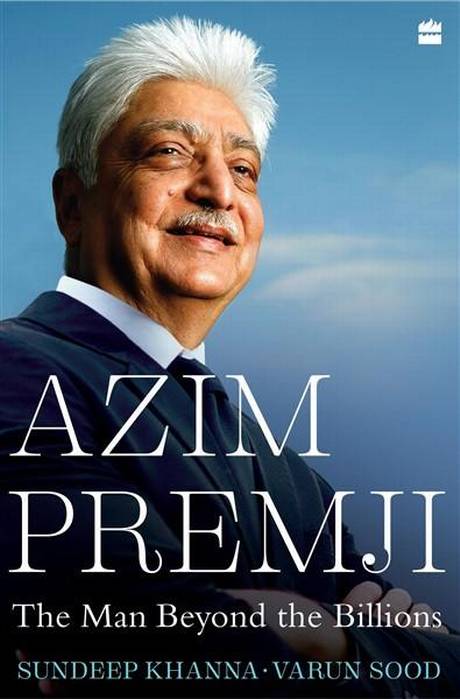
Azim Premji: The Man Beyond the Billions; Sundeep Khanna, Varun Sood, HarperCollins, ₹699.
bharatkumar.k@thehindu.co.in
source: http://www.thehindu.com / The Hindu / Home> Books> Reviews> Profile / by K Bharat Kumar / January 16th, 2021
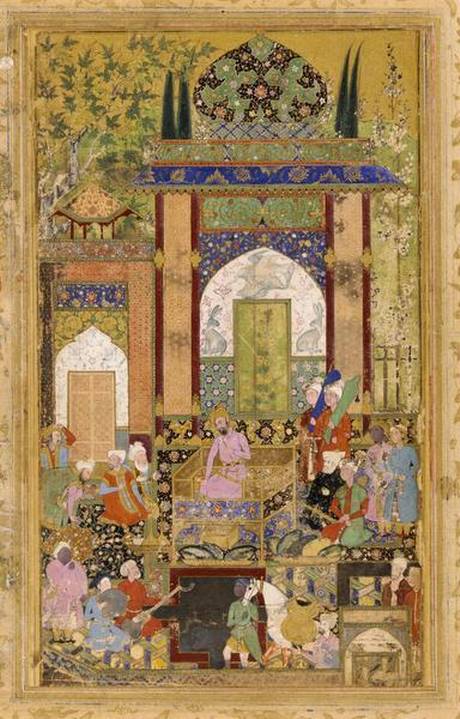
Resplendent: ‘Babur receives a courtier’ (1589) by Farrukh Baig. | Photo Credit: Wiki Commons
Babur was a sensitive memoirist with the rare ability to distance himself from his writing
Babur’s memoir did not have a name but is referred to as Baburnama or Tuzuk-e-Baburi. It is the first autobiography from the subcontinent and one of the first in the world. Babur came from two different cultures, of which one was literate and aspired to high culture. This was his father’s ancestral family, which was Timurid. His mother came from the nomadic Mongols, who weren’t literate. Babur describes his maternal uncles in his memoir.
The Timurids had a tradition of poetry, hawking, music, and, of course, war. Babur was from a family of minor nobles who had inherited the governorship of Ferghana. His autobiography begins with a description of the geography and tells us that his father, Umar Shaikh Mirza, died in an accident when he was 39 and Babur 12. The young Babur struggled to hold on to his inheritance, losing several battles, including one in Ferghana, which he had to give up to the victor.
Babur describes these decades of his life in an unemotional and direct way: he hardly valorises his own achievements. Like the great Caesar, whose books on his wars in Gaul and against Pompey may as well have been written by a non-partisan observer, Babur has the ability to distance himself from his life.
Keen naturalist
Babur’s life turns when he is found to be the only living heir to the throne of Kabul. He takes it and turns his eyes to India. For 20 years, he campaigns against India, being held back at the borders each time.
Then, as we know, he defeated the Lodi dynasty (introducing firearms to the subcontinent for the first time) and captured north India in 1526 after a decisive battle at Panipat. Babur died four years later, spending much of this time travelling across India and writing his memoir in the afternoons.
These paragraphs show how much of a keen naturalist he was. “The elephant, which the Hindustanis call hathi, is one of the wild animals peculiar to Hindustan. It inhabits the western borders of the Kalpi country… the elephant is an immense animal and very sagacious. If people speak to it, it understands. If they command anything from it, it does it. Its value is according to its size — the larger it is, the higher the price. On some islands an elephant is rumoured to be as tall as 20 or 30 feet, but here it is not more than 10 feet. It eats and drinks entirely with its trunk. If it loses the trunk, it cannot live. It has two great teeth (tusks) in its upper jaw, one on each side of the trunk. By setting these against trees and walls, it is able to bring them down; with these it fights and does whatever hard tasks fall to it. These teeth are called ivory and are highly valued by Hindustanis.’
‘Like a goat, the elephant has no skin hair. It is relied on to accompany every troop of their armies. It crosses rivers with great ease, carrying a mass of baggage, and three or four can drag without trouble a special piece of artillery that takes four or five hundred men to haul. But its stomach is large. One elephant eats as much as a dozen camels.
Elegant and clean
Babur’s book was not freely available till a British amateur linguist named Annette Susannah Beveridge translated it. She taught herself the particular version of Turkish that Babur wrote in (later Mughals wrote in Farsi) and published it in four volumes from 1912 to 1922.
At the time of the first British census a century and a quarter ago, India was 4% literate. Most Indians even today don’t have four generations of literacy: in fact, the proportion of those of us who can claim to have had great-grandparents who could write is tiny. Babur came from a tradition that already had centuries of literacy.
His is elegant and clean writing of the sort that one would expect from a very literate and sensitive person. Babur’s daughter, Gulbadan Begum, sister of Humayun and aunt of Akbar, also wrote a lovely memoir in which she describes her father’s attention to detail which he passed on to his family.
These two works, along with Jahangir’s autobiography, are some of the best material available on the Mughals. It’s a shame that these books are not taught in India’s schools today.
Aakar Patel is a columnist and translator of Urdu and Gujarati non-fiction works.
source: http://www.thehindu.com / The Hindu / Home> Books – Leather Bound / by Aakar Patel / January 16th, 2020
The Punjab Cabinet had given its nod for the acquisition, conservation and use of the palace for tourism on Monday.
Begum Munawwar-ul-Nisa. (Express Photo)
After decades of neglect, 150-year-old Mubarak Manzil Palace of Malerkotla will soon be a protected monument and restored and renovated by the Punjab government, thanks to Begum Munawwar-ul-Nisa, the wife of last Nawab of Malerkotla, who has handed over the private property to the government.
The Punjab Cabinet had given its nod for the acquisition, conservation and use of the palace for tourism on Monday.
Begum Nisa, a princess, is the successor of Nawab Sher Mohammad Khan of Malerkotla, who holds a special place in Punjab’s history. He had vehemently raised his voice against the execution of the younger Sahibzadas of Guru Gobind Singh, Baba Zorawar Singh and Baba Fateh Singh, in the court of the Subedar of Sirhind, Wazir Khan, in 1705.
The 97-year-old Begum Nisa, speaking to The Indian Express on a conference phone call through former Aam Aadmi Party (AAP) leader Arshad Dali, said, I have handed over the palace to the government. Meri akhiri ichchha, aap keh sakte ho, yahi hai ke main iss mahal ko pehle ki tarah jagmagata chorr kar jayun. (My last wish, you can say, is to see the palace return to its pristine glory before I die).” Begum Nisa has no child or legal heir.
Dali has become a bridge between the government and the Begum, who wanted the government to acquire the palace. “She was worried that after her the palace would be usurped by private parties. Now it will become a government’s possession. After all, there is the important history of this place. Guru Gobind Singh had presented a sword to Nawab Sher Mohammad Sahib as a mark of honour for his support for his sons.”
Sanjay Kumar, Administrative Secretary, Tourism Government of Punjab, told The Indian Express that the government would soon initiate the process of declaring the palace a protected monument of the state. “We will declare it a protected monument after inviting objections. It will be a protected monument under the state’s Act. After that, we will start conserving and renovating the palace. We have accepted the Begum’s precondition that we should allow her to stay in the palace during her lifetime. After that, none of her successors will be allowed to stake claim on the property. It will be Punjab government’s property.”
He said that the government had offered Rs 3 crore to the Begum, “She had been apprehensive that the palace of such historical importance would be lost if there is no taker.”
About the condition of the palace, Sanjay Kumar said, “I can say it is not good. Roof of several rooms has collapsed and the entrance is also in bad shape.”
Begum Nisa had been living in penury for many years. The valuables in the palace were sold off over the years. Former Cabinet Minister Navjot Singh Sidhu had once visited her and presented her with some pieces of furniture.
Begum Nisa had written to the state government that she is the sole owner, and has absolute rights to alienate the property to any person, including state or Tourism & Cultural Affairs Department.
The palace is spread over an area of 32,400 sq ft. There are several cases involving it going on in several courts.
The expected financial liability involved in purchase of this proposed protected monument and likely financial implications arising out of existing court cases is around Rs 5 crore. The government has got the land price evaluated.
source: http://www.indianexpress.com / The Indian Experss / Home> India / by Kanchan Vasdev, Chandigarh / January 13th, 2021
Sondarapally Village (Thalassery),KERALA / Sharjah , UAE :
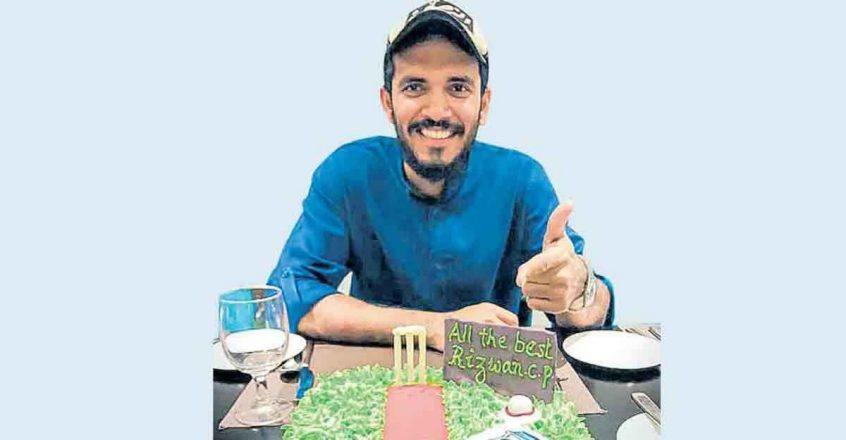
C P Rizwan won the man-of-the-match award his 109 against Ireland in the first ODI on Friday
Kannur:
The story of C P Rizwan, who on Friday became the first Keralite to score a One-Day International (ODI) century representing any country, bears testimony to the fact that if you strive hard and stay focussed, you will ultimately realise your dreams.
The 32-year-old hailing from Thalassery, the cradle of cricket in Kerala, never gave up and never lost hope, even when his career hit a roadblock.
Growing up at Saidar Pally, a small village near Thalassery, Rizwan’s childhood mostly revolved around playing cricket with his friends in the locality. The youngster was gifted with the qualities that make a batsman successful at the top level and had the potential to become a future star.
He went on to represent Kerala in the junior levels and captained the U-25 state team. Although his performance in age-group categories was rewarded with a place in the senior side which included the likes of Sanju Samson and Sachin Baby, he was never given a chance in the playing eleven.
As it was frustrating sitting on the bench, he moved to the UAE in 2014 and landed a job in Sharjah. He continued to play cricket there and was able to catch the attention of the local cricket fraternity with consistent performances in domestic tournaments. In 2018, Rizwan completed the four years required for him to be eligible to play for the UAE and was duly included in the national team.
Rizwan celebrates his hundred against Ireland
An electrical engineering graduate from the Cochin University of Science and Technology, Rizwan made his debut for the UAE on January 26, 2019, in an ODI against Nepal. The Emirates Cricket Board offered him a one-year central contract last month in recognition of his excellent batting against against the USA and Zimbabwe. Apart from him, two other Keralites – Basil Hameed and Alishan Sharafu – also made it to the squad.
On Friday, Rizwan made history when he guided the UAE to a six-wicket win over Ireland in the first ODI of the four-match series in Abu Dhabi by scoring 109 off 136 balls. The splendid knock, which earned him the man-of-the-match award, was laced with nine boundaries and a six. He shared a fourth-wicket partnership of 184 with Lahore-born Muhammed Usman, who made an unbeaten 102, and made short work of the 269-run target set by Ireland.
Centurions Rizwan and Muhammed Usman after the first one-dayer against Ireland
Born on April 19, 1988, to M P Abdul Rouf and C P Nasreen of Poovathankandy, Rizwan studied at the St Joseph’s Higher Secondary School in Thalassery and played for the local Students Cricket Club and the Kochi-based Cordiant Sports Foundation in his formative years.
The right-hander, who bats at No. 3, has so far scored 288 runs from 10 ODIs at an average of 32.
He is currently employed with the Eastern International LLC in Sharjah.
source: http://www.onmanorama.com / OnManorama / Home> Sports / by G. Dinesh Kumar / January 09th, 2021
Orial Imara, a Kerala-based soap manufacturer and exporter, has launched Elaria, nano soaps packed in tablet strips to help fight Covid conveniently on the go.
Jabir K C, Managing Director, Orial Imara, who developed the nano soap, said each tablet soap, weighing around 2 gm, is enough for one good hand wash. The company has now launched packets of 20 tablet soaps in two strips priced at Rs.30.
Elaria handwash nano soaps are made available in supermarkets and drug stores across Kerala and Karnataka now and will be taken to other south Indian markets in phases while exports to Qatar have already been started.
Jabir said according to many experts, a bit of soap and water is still the best way to get rid of germs, including the virus that causes Covid-19. Using alcohol-based sanitizer should be your second choice, according to the United States’ Centers for Disease Control and Prevention.
He also said Elaria could be first of its kind nano soap in the world which is ideal for people who are always on the move and those who do not want to touch soap dispensers in public places like restaurants. “It’s also a grade 1 soap with 76-80% total fatty matter (TFM),” he said.
Kozhikode-based Orial Imara is into the manufacture and export of grade 1 soaps with its R&D centre in Kozhikode and manufacturing units in Mumbai and Solan in Himachal Pradesh.
source: http://www.onmanorama.com / OnManaroma / Home> Lifestyle / by OnManorama Staff / January 08th, 2020
As students, brothers Khalid and Akram, bubbling with enthusiasm would dream of building a business of their own. They would experiment with entrepreneurship and were raring to do something.
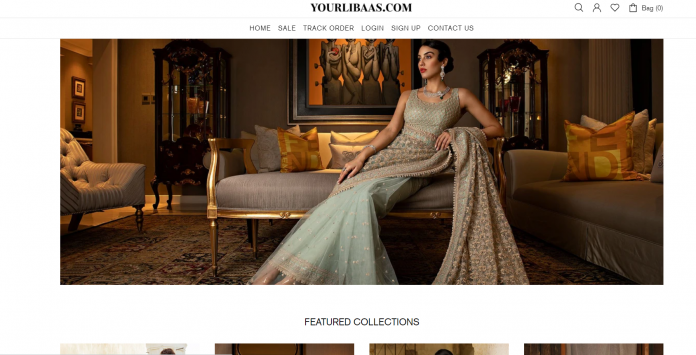
After several small ventures such as zamber, a social networking site, hostelneeds.com – an online e-store for dorm supplies and others – they finally succeeded in establishing www.yourlibaas.com
In 2014, Khalid – then 24 years-old, was in Pune Institute of Computer Technology (PICT) while his younger brother Akram, 19-years old then, had just joined Engineering in Aligarh Muslim Univsersity, the duo established yourlibaas.com, which is an online store for designer ethnic apparel bringing the best of Pakistani fashion to India. Their site has now gone global with top Pakistani and UAE Designers, including Sana Safinaz, Maria.B, Gul Ahmed, Sapphire, Zara Shahjahan, Élan, Faraz Manan, Charizma, Baroque, and Motifz, among others.
“When we began in 2014, ecommerce was in a nascent stage with the market being fragmented and multiple small players existing. Amazon and Flipkart were yet to emerge as market leaders. We now have an office in Noida but after the lockdown we have shifted to Jasola Vihar, New Delhi” said Akram while talking about their early days.
YourLibaas is an Urdu word that means your “garment or attire”. Today, the brothers claim that their online store is the market leader within the lawn suit market in India (by total revenue and market share).
“What began as a small start-up in New Delhi quickly transformed into a strong brand with an international presence. If you search for all related terms for apparel, we rank on the top position at Google. Today we have 23 employees on our payroll,” said Khalid Raza Khan, the founder and CEO of YourLibaas.
But it was not so easy to achieve success. Managing a business with college was difficult. There were several obstacles when they began.
They started off with inadequate capital pooling in their savings from the pocket-money they received from parents. Initially, they contacted small retailers and listed the suits on their site. When an order came in, they bought it from them and shipped it.
Khalid used to ship packages daily and often missed college because the courier offices and post-office closed by evening and packages would be delayed. In order to not miss college, he began sending the parcels from a post office that was 25 kmts from where he lived. This particular post office was open for 24 hours which was a good thing for the boys. During the nights, he would go on his scooty and send the parcels. And to save on costs, the duo delivered local orders themselves searching out the addresses while roaming on their two wheelers.
But missing classes had an adverse effect. Khalid could not cope with the lessons and failed in his exams due to which he had to repeat a year. The university in which he studied had different rules known as ATKT system wherein you have to repeat a year upon failing in a subject (unlike other colleges where you are promoted).
Akram who was pursuing engineering at AMU, handled digital marketing and technical development. And his studies also went downslide and he had a backlog of 14 papers.
As if that was not enough, they also suffered another set-back when they were duped by a wholesaler who didn’t send the products even after receiving full advanced payment of around Rs. 1.2 Lakh from them. This was a major setback and it took some time for them to bounce back.
They did the sourcing and packing themselves travelling in an auto rickshaw to the wholesaler bringing in heavy ‘katta bags’. As they slowly grew and as profits increased, they hired their first full-time staff named Sarfaraz for packing and logistics and 3 interns from Aligarh Muslim University for customer support and content writing.
However, they still were not in a position to pay handsome salaries due to which the staff left and they were back to looking after the packing and logistics till they could find replacements. In this way – slowly and bit by bit and through sheer perseverance, the brothers kept going.
With time as the business grew, so did their team.
“I remember how we generated enough profit to buy our own catalogue for around Rs. 60000. And we slowly moved to an inventory-model. Now, we completely own all the inventory displayed at the portal. It is imported from UAE as the majority of the dress designers are headquartered there” said Akram Tariq Khan, co-founder of YourLibaas.
Apart from these glitches they also had market regulations and compliance to overcome.
In 2015 they set up a basement office-cum-warehouse in Sector 50, Noida. The products arrived in Delhi and inter-state logistics was proving to be difficult. The brothers shifted to Jasola Vihar, Delhi.
Another major problem was dead stock or unsold items lying in their warehouse. This blocked their capital. To deal with the unsold stock, they started attending trade fairs and managed to sell the stocked clothes.
But after 2018, they stopped attending the fairs when Akram moved to Jamshedpur to pursue MBA.
Why specific focus on Lawn apparels and Pakistani suits?
Lawn fabric is purest form of cotton and is lightweight. It is produced in bulk in Pakistan as 90% of the lawn producing centres were located in Pakistan at the time of partition. Lawn suits have gained huge popularity due to it being lightweight, wrinkle free and soft. Mostly due its suitability to the hot Indian climate.
“Awareness regarding lawn suits primarily developed through Pakistani TV serials that were aired on Zee Zindagi in 2017,” feels Khalid.
“Pakistani suits were a rare commodity in India back then. The demand was high and supply limited. It wasn’t sold on marketplaces (and still isn’t) like Amazon, Flipkart, Myntra, and so on,” he added.
“Pakistani brands had tried entering the market through official partnerships that failed to materialize (like Sana Safinaz partnering with OCM Fabrics), and they chose Indian actresses to model for the latest collections (like Kareena Kapoor, Jacqueline Fernandes, Madhuri Dixit, and so on). We realized how a niche store specializing in Pakistani suits could be set up and that is what inspired YourLibaas” explained Akram.
Despite logistical hurdles and a rather negative connotation attached with Pakistani suits, the market size in India of Pakistani apparel is estimated at over INR 400 Crore.
Even though they set up YourLibaas and sell genuine Pakistani brands, they have competition from imitators. Many fashion houses and sites have replicas of the Pakistani designs selling at a lesser price.
But YourLibaas stuck to the originals even though they were expensive. Customers who preferred authentic designs from the original designers continued to buy from YourLibaas.
We have at least 40% repeat buyers, disclosed Akram.
“Designers and their team put in a lot of efforts and months of planning to launch a collection which the replica makers imitate thereby stealing the credit. Fortunately seasoned customers can easily make out an original from a replica. Moreover, selling replicas alongside originals hurts the brand equity. Replicas are a nuisance in India as these are manufactured by registered Indian companies and sold openly. A first time online buyer who is unaware of this would buy a replica since both display the same picture, but a replica is priced at 20-25% of the original cost. This leaves a bad impression of “Pakistani Suits” and the consumer never returns back to buying lawn suits. Further it creates trust issues especially if you’re selling online. We have maintained our reputation and people largely buy from us since local shops and sellers usually sell replicas and fool buyers especially new customers, ” elaborated Akram Khan.
Due to international demand, the duo made inroads into the global market by establishing a Dubai, UAE subsidiary and setting up a Freezone company. They have plans to also establish a physical office in Dubai.
Leveraging technology to their advantage
Being from a technical background proved to be an advantage and the duo used their technological skills to thwart competition wherever possible and establish a strong market presence.
For instance – they introduced cash on delivery as many of their customers where women who were non-working. They took this risk despite knowing that there could be cancellations and also non acceptance of goods when they arrived at their door step. They also offered no-questions asked returns. All this bolstered confidence amongst the customers.
Next was introducing ‘Order on WhatsApp’ & ‘Order on Phone’ options which made it easier for the women to order instead of logging on to websites. The YourLibaas WhatsApp commerce at YourLibaas employs AI-based NLP chatbots with human agents who answer the queries of the customers guiding them to successful shopping
Why do people prefer buying from YourLibaas rather than the brand itself?
“We provide multiple brands with easy accessibility, free shipping and easy returns on a single platform. Most of the consumers aren’t comfortable with buying online, so we have WhatsApp chatbots alongside human agents that assist them making the ordering process seamless. Secondly, buying from brands directly isn’t a feasible option – the shipment might get stuck at customs, or it could end up being delayed otherwise. Even in a normal scenario, the delivery timelines will be longer than what a domestic player can offer,” concluded Khalid Raza Khan.
Today, Khalid is totally dedicated to YourLibaas while Akram has his fingers in several pies. He writes for Entrepreneur.com a business magazine and has developed an online browser game called ‘Bhag Corona’ and is also part of entrepreneur’s leadership network in which he delivers lectures based on his experiences.
His game ‘Bhag Corona’ has received millions of hits and this game was hosted on ShareChat, a social network site.
Akram continues to explore new venues while his brother, now married, is steadily managing YourLibaas which they had begun as students.
source: http://www.twocircles.net / TwoCircle.net / Home> India News / by Nikhat Fatima, TwoCircles.net / January 01st, 2021
Among the multitudes of tombs in the City of the Dead in Cairo, there lies buried a lone Indian — an eminent scholar, writer, debonair statesman and a leader of the Indian freedom movement. Who is he? How did he get there? For a man who used both the lectern and the pen to devastating effect in the cause of the Indian Independence movement led by the likes of Mahatma Gandhi, Sardar Patel and Jawaharlal Nehru, very little is known of Syud Hossain.
Born to an aristocratic family in Calcutta, he started a career in journalism early in life and became the editor of Motilal Nehru’s nationalist newspaper, “The Independent”. After a brief elopement with Nehru’s sister, Vijaya Lakshmi Pandit, Hossain, under immense pressure from Motilal Nehru and Gandhi, annulled the marriage and was asked to stay away from the country for a few years. Thus began several years of exile.
Eventually, he landed in the US where he imparted Gandhi’s message far and wide across the country. Gathering a group of Indian freedom fighters around him, he fought for India’s freedom from afar, decrying British oppression and garnering support in the US for his cause. Flitting from one place to another, making homes of hotel rooms, Syud Hossain inspired and irked in equal measure. With every speech he delivered and every editorial he penned, he sent a shiver down the spine of the colonial rulers.
Adding to his formidable list of causes, Hossain also took on the fight for Indian immigrant rights in the US, one that successfully culminated in President Harry Truman signing the Luce-Celler Bill into an Act in 1946. He returned to India to witness the triumph of her Independence, as well as the tragedy of Gandhi’s assassination. He was appointed the first ever Indian ambassador to Egypt, where he died while in service and was laid to rest in Cairo.
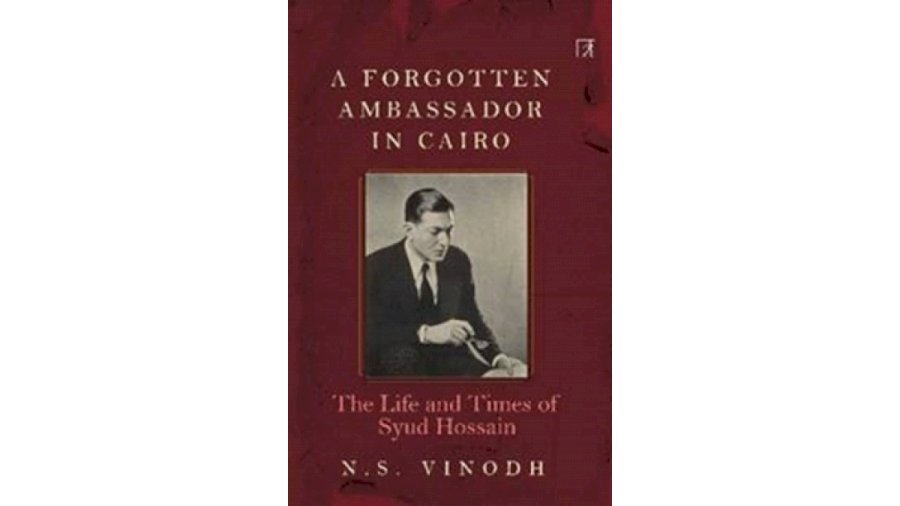
“A Forgotten Ambassador in Cairo” (Simon & Schuster) offers an illuminating narrative of Hossain’s life interspersed with historical details that landscapes a vivid political picture of that era. Through primary sources that include Hossain’s private papers, the British Intelligence files, letters of his friends and contemporary newspapers, N.S. Vinodh brilliantly brings to life a man who has been relegated far too long to the shadows of time. Vinodh, is a civil engineering graduate from IIT, Madras, and a M.B.A. from IIM, Lucknow. In a corporate career spanning 25 years, he has held senior positions in corporate real estate with leading multi-national financial services companies such as ANZ Grindlays Bank, HSBC, and Fidelity Investments. He opted for early retirement to start his own boutique real estate company, as well as pursue his passion of travelling and history. He is married to Sheela and they have two sons, both based in the United States. He is based in Bangalore.
IANS
source: http://www.thehawk.in / The Hawk / Home>Lifestyle / by IANS / December 30th, 2020
Kadalundi (Kozhikode District) KERALA / Dubai, UAE :
Shabna Sulaiman is the first Muslim woman from Kerala to become a Mahout. Shabna has to just whisper a command and tusker Manisheri Rajendran goes down on its buttocks. Manisheri Rajendran belongs to the Ottappalam Kappur elephant property. Malappuram Kadalundi native has trained the tusker Rajendran for the past two weeks. Shabna and the tusker have developed a strong bond. Shabna fed Rajendran with sugarcane, and watermelon and won his heart.
The 27-year-old can make the tusker make Rajendran sit, stand, turn around and raise its trunk and trumpet, indicating an instinctive way with animals. At first, it was difficult for Shabna to handle the tusker. But Shabna used everyday language and a conversational tone with the tusker to bond. She also didn’t use chains or hooks and managed to create a bond with him. Shabna told Kerala Kaumudi “It was not with stick or beating but with love I have conquered his mind.
Key Takeaways:
Shabna is taking training at the renowned Varikkassery Mana in Ottappalam in Palakkad district. Varikkassery Mana houses several elephants.
Shabna is doing research on elephants. She thought a much better way to learn about elephants would be by being close to them. Shabna will soon start the second phase of her training.
Sulaiman’s family owned a circus in the past. This was the major reason why her family loved animals.
About Shabna Sulaiman
The 27-year-old Shabna is taking training at the renowned Varikkassery Mana in Ottappalam in Palakkad district. Varikkassery Mana houses several elephants . Shabna will be the mahout of Manisheri Rajendran at the upcoming festival at the temple of Palakkad district. If this happens, Shabna will become the first woman mahout from the Muslim community in Kerala. Shabna is a medical professional from Dubai who has currently taken a break from her job.
“It is not an easy task for a woman to handle an elephant. But Shabna is very enthusiastic and skilful and she has learnt the basics easily. The training will continue for some more days.”
Shabna is doing her research on elephants. She thought a much better way to learn about elephants would be by being close to them. Shabna will soon start the second phase of her training. She told the Times of India “I am excited about the temple festivals. Hopefully, in those situations, I can learn a lot more in handling elephants.” Haridas a native of Ottaappalam told TOI “It is not an easy task for a woman to handle an elephant. But Shabna is very enthusiastic and skilful and she has learnt the basics easily. The training will continue for some more days.”
Shabna’s family owned a circus in the past and everyone in her family loves animals. She told TOI “It was after a tragic incident — my father’s brother was killed by a tiger during a training session — that my grandfather sold off the circus company.” She further added “But our family members still have a special affinity towards animals. When I expressed interest to train as a mahout their response was very positive. There was some opposition from my community, but I decided to go ahead.”
Picture Credit: The Wall
Mansi is an Intern at SheThe People.TV
source: http://www.shethepeople.tv / She The People / Home / by Mansi Wadhwa / January 29th, 2020