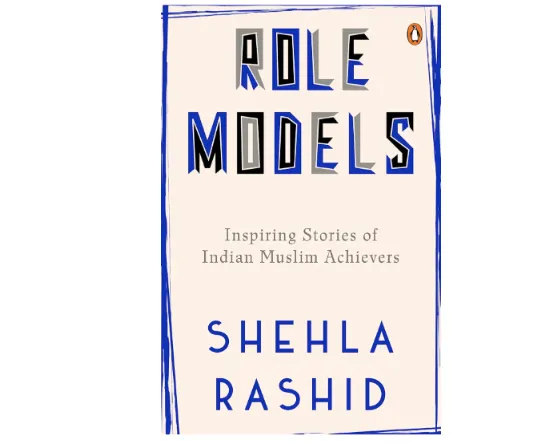
‘Role Model: Inspiring Stories of Indian Muslim Achievers’ by the former vice president of the Jawaharlal Nehru Students’ Union (JNUSU) Shehla Rashid comes at a time when the Indian Muslim has been negatively portrayed as a non-entity in the eyes of a commoner.
The first book by Shehla, who has research interests in technology and politics, is divided into 16 chapters which inclusively talk about the achievements of Indian Muslims in varied fields ranging from science, entertainment, and sports.
‘Role Model: Inspiring Stories of Indian Muslim Achievers’ highlights the contributions of Indian Muslims to civic national life by presenting the life stories and work of achievers.
The personalities which Shehla sheds light on are Nigar Shaji, Programme Director of Low Earth Orbit Missions at Indian Space Research Organisation (ISRO) and Project Director of the Aditya L-1 Solar Exploration Mission, globally renowned music composer and reticent genius A R Rahman, tennis ace Sania Mirza; Padma Shri awardee Dr Zahir Kazi, actor, producer, and author Huma Qureshi, military leader Lt Gen Syed Ata Hasnain, former ambassador of India to Saudi Arabia and Yemen, Dr Ausaf Sayeed, former vice chancellor of Aligarh Muslim University (AMU), Prof Tariq Mansoor, former vice chancellor of National Academy of Legal Studies and Research (NALSAR), Prof Faizan Mustafa, and the pioneer of dendritic cell immunotherapy in India, Dr Jamal Khan, among others.
“We have seen many negative media portrayals of Muslims, and this book attempts to humanise the discourse about Muslims by presenting inspiring life stories that everyone can relate to,” notes Shehla, a prominent youth figure in India.
The author emphasises that while people are somewhat aware of the contributions and sacrifices made by Indian Muslims during the freedom struggle, highlighting the work of notable Muslims in contemporary India was a long-overdue task. “This book is rare in that it provides detailed insight into their lives for the first time,” the author writes.
Interestingly, the foreword of the book is written by legendary film-writer Salim Khan. In his inspiring style, Khan, in the foreword, writes that the Indian Muslims must own their dreams and participate in the vision with vigour and optimism.
“Instead of unproductive fixations on our differences, we as Indians need to think about how to excel professionally and be kind to one another, for the sake of our motherland,” Khan writes in the foreword of the book.
Shehla, who is also a tech policy consultant, writes that the former President of India, the late Dr A P J Abdul Kalam, gave the country Vision 2020 for India and that Prime Minister Narendra Modi has energised people again with the mission of building a Viksit Bharat by 2047.
The book is published by Penguin Publishing House and costs just INR 203 on Amazon.
The author has accepted that while the book contains the life stories of a select few achievers, it must be mentioned that there is a vast majority of Muslims, which silently makes its contributions to various professions – civil services, fashion design, customer support, film direction, medicine, philanthropy, and so on.
Shehla, who cares deeply about the condition of Indian Muslims, notes that there are millions of Muslims engaged in informal employment in both organised and unorganised sectors who power the Indian economy, making life in India incredibly convenient and increasingly making the country a preferred destination for tourism, business, and investment. “We should be equally proud of them. All of them, whether rich or poor, skilled or semi-skilled, are an essential component of Brand India, which is premised on the power of youth, skills, innovation, a positive outlook, a growth mindset, and hard work,” the author points out.
Shehla, who deeply cares about women’s rights, notes that the unfortunate use of the term puncturewallas (‘puncture mechanic’) on social media as an insult for poor, hardworking Muslims has permeated the discourse.
She says that it is these puncturewallas who ensure that there isn’t a stranded woman anywhere in the country without recourse to assistance.
“While it is surprising that no volume on the contributions of contemporary Muslim public figures exists, it is also unsurprising because it wouldn’t make sense for them to over-emphasise their identity for fear of being boxed as ‘Muslim’ professionals when they are otherwise universally celebrated,” Shehla writes in the book.
The book is a celebration of contributions of Indian Muslims to the country. The book brings spotlight on the people who have long remained in shadows. It is a story that shatters the stereotypes. The book celebrates Muslim achievers of the country, a community that otherwise remains in the headlines for all the wrong reasons.
source: http://www.greaterkashmir.com / Greater Kashmir / Home> Opinion and Editorial / by Syed Rizwan Geelani / October 24th, 2024
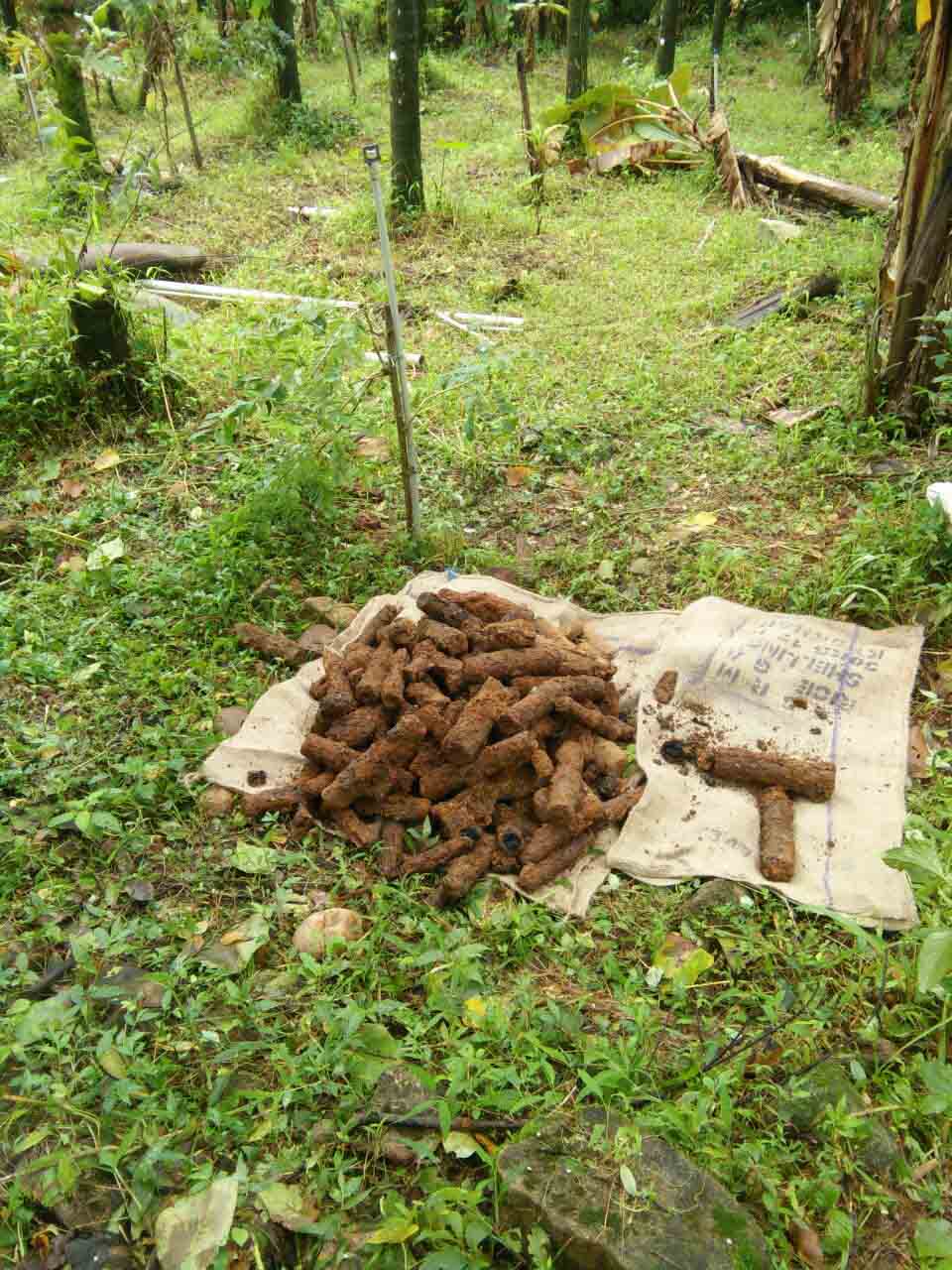
Rockets, Nagara Fort, India(Courtesy Karnataka Department of Archaeology, Museums, and Heritage (DAMH))
More than 1,000 unexploded rockets have been recovered from an abandoned well in the state of Karnataka in southern India.
The excavators believe the corroded shells date to the eighteenth century when the Muslim warrior King Tipu Sultan ruled the region.
The cache was uncovered when the well, located at Nagara Fort in the Shivamogga District, was being repaired. “The rockets, which are of several sizes, are metallic cylinders filled with some powder, possibly saltpeter or some form of explosive propellant,” says R. Shejeshwara Nayaka, assistant director of the Karnataka Department of Archaeology, Museums, and Heritage (DAMH), who led the excavation in 2018. “They have circular end caps on oneside, while on the other side there is an opening which lights like a fuse. We have also found some equipment that might have been used for assembling or making them.”
G. Venkatesh, commissioner of DAMH, adds, “Records say that Tipu Sultan’s father, Hyder Ali, was the first to use metal-cased rockets. He also had an armory and factory at Nagara Fort, a strategically very important city. There is a strong possibility that this site was used as a storage point or a factory for the rockets.”
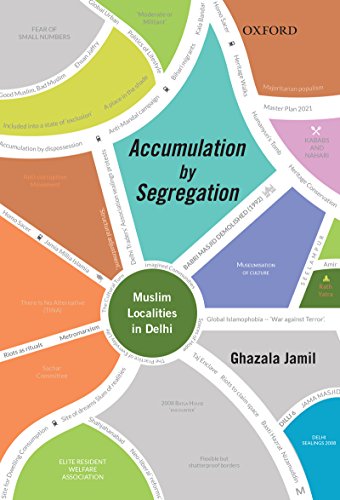
Accumulation by Segregation by Ghazala Jamil / India, OUP India, 2017 / 244 pages / ISBN: 9780199470655/750 INR
Muslims in India continue to live in precarious conditions. Being classified as a minority implies more than just their small numbers; historically, it has implied a completely varied identity, negatively affecting their political, social, or cultural lives. With complete disregard for the geographical and cultural diversity within the Muslim community, postcolonial Muslims in India are differentiated by their aspersed identity. Within this overall restriction, which frequently took violent turns and formed the circumstances for surviving, Muslims had to negotiate their citizenship. Muslims’ circumstances were affected by their humiliating, dehumanising, and stereotypical identity.
Seen in this light, this book by Ghazala Jamil is an intervention into the conditions of Muslims in Delhi, studied as a part of the globalisation process. It provides readers with a systematic way of looking at the segregation of Muslims in Delhi. It looks at segregation in the context of the 1857 mutiny, the partition of 1947, Emergency and communal violence, and examines the relationship between globalization and segregation. It also examines the discursive practices perpetuating and strengthening the Muslim identity as anti-modern, backward, and unchangeable, thereby hindering the developmental potential among Muslims.
The author argues that comparing the historical ghettos of the Jewish population in Europe to the concentration of Muslims is misleading. The situation of Muslims is not primarily caused by coercion, violence, and oppression but rather by the limited options they face. This makes their situation historically specific and functionally distinct, warranting critical examination.
The book largely focuses on areas in Delhi, including parts of the walled city and localities outside Shahjahanabad; Seelampur and other trans-Yamuna Muslim areas in North Eastern Delhi. It also includes Jamia Nagar in South Delhi; Nizamuddin and Nizamuddin West, and the Taj Enclave. Through ethnographic explorations, Jamil explores the city’s inhabitants’ memories, living experiences, dreams, and discontent.
Violence, displacement, discrimination, migration and hope remain common in making these settlements. Various events, such as post-partition violence, the beautification drive during the emergency, and subsequent violence associated with growing Hindu nationalism, particularly in Gujarat, have contributed to the establishment of these settlements. As a result, a large influx of people migrated to settle in Delhi. By the late 1980s, segregation in Delhi on religious identity lines became almost final and complete (p. 5). These settlements faced various forms of discrimination, including being labelled as centres of terrorism, poverty, backwardness, and fanaticism associated with Muslims.
These places are identified as Muslim settlements and are subsequently termed ‘mini-Pakistan’, as with Seelampur. These conditions further determine the relationship of Muslim settlers beyond the segregated areas.
In the context of economic liberalisation, Delhi provided a sense of security in segregation but also better educational and economic opportunities to Muslims. Capitalism is found in Muslims as an ‘incarcerated resource’. For example, in Jamia Nagar, students with the requisite skills are making their place in the global economy. In Seelampur, the small manufacturers, both semi-skilled and unskilled labourers have ‘benefited’ from manufacturing jobs brought to India by globalization. But what is making them functionally distinct and incarcerated resources from other beneficiaries is that their involvement with globalization is restricted by their location in the segregated areas, which limits their movement and confines them to these areas only. Globalization, in this case, is not promoting progress but rather enforcing separation and discrimination, creating barriers that are challenging for Muslims to overcome.
Muslims are incorporated into the capitalist objective of maximizing profits. However, their situation is distinct due to several limitations. Firstly, they receive less financial help from banks and lack capital, both socially and financially. Additionally, they face a disproving work and business environment. Moreover, they are often viewed as enemies, backward, stagnant, and traitors. These factors ultimately determine their terms of incorporation with the outside world. Hence, making the point that aspersed identity has a distinctly exploitative and material function.
Despite segregation, the real estate business thrives within these settlements while keeping the segregated topography of Delhi undisturbed. Within these processes Muslim neighbourhoods have become complex and diverse in economic classes. Zakir Nagar Extension, Jogabai Extension, Johri Farm and Taj enclaves have emerged as affluent enclaves, areas of the neighbourhood where the wealthy citizens are clustered. Despite being wealthy, the residents are unable to leave their neighbourhood because Hindu property owners in other sections of the city refuse to sell or rent their homes to Muslims or because they see a threat of violence or claim to have had already experienced it. They try to enclose themselves and try to become less like the popular stereotypes about Muslims.
The author argues further that old Delhi, Jama Masjid with adjoining areas and that of Nizamuddin fell prey to commodification from the 1990s. The less significant structures, the Partition’s history and legacy, the clothing, the eateries, and the fragrances all serve as living artefacts and installations for tourists in addition to the historical monuments and religious sites in the region. The taboo topics of Muslims and “Muslimness” have evolved into odd, even weird, spectacles for the adventurous.
People flock to the streets of old Delhi to explore the exotic and the antique, reducing the inhabitants to spectacular displays for the consumer while rendering political contestation and mobilization difficult (p. 91). Through accumulation, it functions as a means of constructing the identity of individuals, connecting them to a particular place and creating an impression of an inherent and unchanging nature.
Jamil notes that in this effort of commodification, the state, civil society, and media are all involved, promoting history tours and good exotic Muslim foods to tourists. Keeping these things in mind, marketable Muslims in segregated areas has to remain as it is for the consumption of others.
Ghazala Jamil, drawing from Althusser, argues on the same lines that ideological state apparatus is reflected in cinema and media representation. She argues that Muslims and Muslimness are always shown and understood as homogenous entities, with utter disregard for their variation in political interest and in cultural practices. This notion is sustained and perpetuated in popular media films. Where the lines between reality and the stage are blurred. The author here analyses various Hindi movies during the period between 2008 to 2010, where the popular image of Muslims depicted as fundamentalist, parochial and backwards was given a space and subsequently uncritically consumed by viewers. When examining print media descriptions, it is evident that irrational attitudes, dangerous behaviour, volatility, and backwardness continue to be prominently used to portray incidents involving Muslims, often generalising the entire community.
Further, framing her case through fake encounters, extra-judicial killing, and differential treatment, she claims the Indian Muslim is fashioned as homines sacri. They are being made to “feel guilty for the partition of the country, represented as irrational fundamentalist fiends, loathsome and polluted, disloyal normative non-citizens, and potentially dangerous terrorists”(p. 99).
Homines sacri, according to Trevor Parfitt (2009), are individuals who have been placed outside the boundaries of the law, rendering them outlaws. They can be harmed or even killed without any legal repercussions. Their lives are meticulously planned, controlled, and regulated in every possible aspect.
When employing the concept of ‘homo sacer’ for Muslims in India, akin to its application to Jews in concentration camps, it raises the question of how to interpret the legal constitutional rights granted to Muslims in comparison to the rights that Jews were deprived of. This brings to light the inquiry as to how the treatment of the Muslim case, which Jamil considers “historically specific and functionally distinct,” falls short in addressing this issue.
The author puts forth a convincing viewpoint concerning the Muslim community’s struggle with a deficit in citizenship and a feeling of alienation within the political sphere. This argument carries logical weight as it emphasizes the obstacles faced by Muslims in fully exercising their rights as citizens and achieving a sense of inclusion within the larger political framework.
Particularly since the rise of right-wing governments, hatred against Muslims has become more crude and naked; where everything associated with Muslims is being politicized and then criminalized. Every activity in the eyes of sponsored vigilantes has become some or other kind of jihad against the government and the people. Responses from the government include intimidation, demolitions, and arrests of victims guised as perpetrators. With the unfolding of these events, experts are even raising concerns over the situation and its striking similarity with past historical atrocities.
However, this violence is not absolute. The Muslim remains an equal citizen theoretically capable of posing counter-hegemonic discourse, which the author does acknowledge. Therefore, it is crucial to approach the situation of Muslims with an understanding that their experiences, though marked by violence, do not reduce them to the status of ‘homo sacer’, as they retain the capacity for political agency and the ability to contest dominant narratives.
The author in the end puts her hope in education and the growing enthusiasm around it among Muslims. Muslims themselves are expected to make interventions in their own circumstances and discourses around them. For instance, measures to combat epistemic Islamophobia would also require adjustments in other areas. This can be found in the ‘Discursive-Political’, which encompasses manifestations of daily life, culture, and behaviour and are primarily considered non-political. These activities, as she claims, involve transformative political practices that reveal the ‘contingent and socially constructed’ nature of what is portrayed as ‘necessary and natural’. The effective resistance for her is to claim and assert citizenship and be able to represent and define rather than getting defined.
References
Parfitt, Trevor. (2009). Are the Third World Poor Homines Sacri? Biopolitics, Sovereignty, and Development. Alternatives: Global, Local, Political, Vol. 34, No. 1 (Jan.-Mar. 2009), pp. 41-58.
source: http://www.thedaak.in / The Daak / Home> Issue No.4 / by Rizwan Hamid / July 15th, 2023
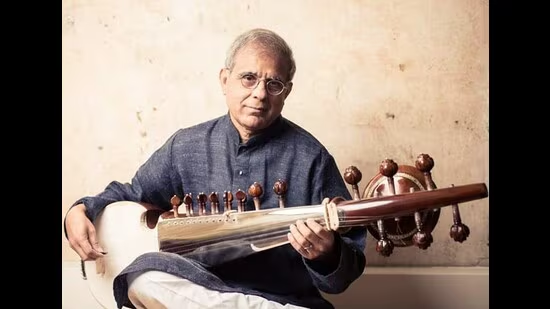
Ustad Irfan, 69, is the seventh generation of the family of gifted sarodiyas and sitarists — referred to as the Lucknow-Shahjahanpur gharana.
Ustad Irfan Muhammad Khan of Lucknow-Shahjahanpur gharana. (Sourced)
Lucknow :
Hailed as the ‘khalifa’ of the Lucknow-Shahjahanpur gharana, celebrated sarod player Ustad Irfan Muhammad Khan feels his disciples are his only hope to take the rich music legacy of his family forward.
Ustad Irfan, 69, is the seventh generation of the family of gifted sarodiyas and sitarists — referred to as the Lucknow-Shahjahanpur gharana.
This gharana has its roots in the Bangash tribe of Afghanistan, three of whom migrated to India some 200 years ago. Irfan’s great great grandfather Niyamatullah Khan played sarod in the court of Nawab Wajid Ali Shah. However, after the exile of the nawab to Calcutta (now Kolkata) following the 1857 uprising, Niyamatullah Khan also migrated.
More than half a century later, Irfan Khan’s grandfather Sakhawat Hussain Khan was invited to Lucknow by Vishnu Narayan Bhatkhande to teach at Marris College (now Bhatkhande Sanskriti Vishwavidyalaya). Later, in 1954, Irfan Khan was born in Lucknow. After completing his school education in Calcutta, he returned to his residence at the Latouche Road in Lucknow. While he had already been excelling in his sarod training in Calcutta, Khan’s skills were further honed under the guidance of his uncle Ustad Ilayas Khan, the legendary sitar player, in Lucknow.
For several years, Irfan has been keeping the rich tradition of his gharana alive. But in the face of reducing number of mehfil concerts, the gharana is struggling to preserve its rich musical tradition. Besides, the next generation of Irfan Khan’s family didn’t stick to being full-time artistes due to the shrinking size of the audience for sitar/sarod players.
Dwelling on the reasons behind the ‘disinterest’ among youths in classical instruments like sarod or sitar, Ustad Irfan Khan said, “A lot of youngsters look for overnight fame. Also, there is no parental support to pursue this training seriously as they don’t want their kids to stare at an uncertain future. Furthermore, concerts for classical music are limited to only a few cities. Lastly, organisers tend to invite only the big names — this creates a monopoly which further reduces opportunities for budding talents.”
In fact, most of Khan’s disciples are not Indians and he currently doesn’t have a single student from Uttar Pradesh, the birthplace of the Lucknow-Shahjahanpur gharana.
Speaking on this irony, one of his London-based students Pete Yelding said, “Hindustani music is constantly evolving. It has an inherently international and interfaith tradition with roots in Sanskrit, Persian, Arabic, and Greek musical philosophies. Within its history are stories of constant innovation, reinvention, and moving with the times. Approaching it in this way makes it much less alienating because there is something in it for everyone.”
He added, “I visit Ustad Ji once a year and learn via Skype the rest of the year… Carrying the flame of his illustrious musical lineage really is an honour.”
When asked about the steps that could revive the interest in the rich art form, Ustad Khan said, “Our schools should start training interested students in music. Training in formative years will help them appreciate classical music better. This, in turn, will increase demand for concerts by sarod/sitar players. I come across several bright young talents… Some of my foreign disciples are also doing very well, which keeps me hopeful.”
‘Don’t write off the gharana just yet’
Bringing an optimistic point of view to the table, Chandrima Majumdar, an eminent sarod player who also has a PhD thesis on the Shahjahanpur gharana (a different music school tradition), feels that it takes only one generation to revive a gharana and hence, the Lucknow-Shahjahanpur gharana should not be written off just yet.
“Yes, the artistes of this gharana are not in the limelight due to fewer concerts but there will always be some serious learners and practitioners. They will keep the tradition alive. I believe that one serious disciple of a gharana is enough to keep the torch burning. Thanks to digital media, people are able to listen, compare and enjoy the rendition of the same raag by different gharanedar artists,” said Majumdar, who has studied at the Bhatkhande Music College.
In a similar vein, Dr Ruchi Khare, assistant professor, Bhatkhande Sanskriti Vishwavidyalaya, said, “Bhatkhande has always supported sarodiyas and sitarists of the Lucknow-Shahjahanpur gharana and will continue to do so. For Ustad Ilayas, retirement rules were also relaxed. Several disciples of the gharana, including a Sri Lankan national, were taught here. Many of them are imparting this knowledge to their disciples now. In this way, the rich legacy of the gharana will continue to thrive.”
source: http://www.hindustantimes.com / Hindustan Times / Home / by Prateek Shukla / May 21st, 2023
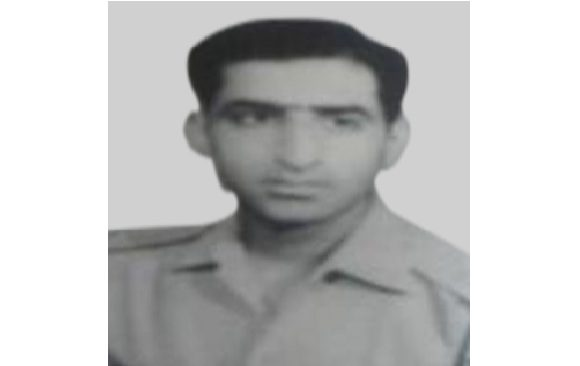
Major Mahmood Hasan Khan hailed from Dhanuri village in Jhunjhunu district of Rajasthan and was born on 02 March 1941. Son of Risaldar Nawab Mohd Hasan Khan, he was born into a military family but lost his father at an early age. He was brought up by his uncle Major Akbar Ali Khan who was serving with the then Nizam of Hyderabad. He completed his school education in Hyderabad and later went to Aligarh Muslim University for higher studies. He joined the Indian Army in the year 1962 as a Sepoy and subsequently got commissioned as a commissioned officer. He was commissioned into 14 Grenadiers of the Grenadiers Regiment, an infantry Regiment known for its brave soldiers with a rich history of various battle honours. In 1971, Maj MH Khan got involved in the thick of operations as his unit got deployed on the western border when the war with
Atian Supply Point Raid (Naushera Sector): 06 Dec 1971
During the Indo-Pak 1971 War, Maj MH Khan’s unit 14 Grenadiers was deployed on the western front. In December 1971, India had to go to war with Pakistan as the genocide perpetrated by the Pakistani army in their erstwhile eastern part of the country had resulted in an unprecedented influx of millions of refugees into India. Though the war was concentrated on the eastern front, Pakistan launched operations on the western front too. When the war was declared on 03 Dec 1971, 14 Grenadiers under the command of Lt Col Inderjit Singh was functioning under the operational control of 25 Div and was spread all over the Div AOR (Area of Responsibility) from Naushera to Poonch. On 06 Dec, 14 Grenadiers along with the elements of 8 Mahar battalion were tasked to raid the enemy’s Atian Supply Point to cause maximum damage to it. Maj MH Khan as ‘Raid Commander’ was tasked to carry out the assault along with two more officers, Capt Roy Chowdhary and 2nd Lt Prakash, and 49 OR (Other Ranks).
The raid involved going through a heavily guarded area and destruction of the objective of platoon strength. The team led by Maj MH Khan and divided into three groups planned a multi-directional attack on the enemy to achieve an element of surprise and cause maximum possible damage. The attack commenced at around 1800 hrs on 06 Dec and Major Khan led his men to the objective by shrewd manoeuvres, destroying post after post. The raid was thus successfully carried out after twelve hours of constant action. Maj MH Khan and his soldiers fightly valiantly, destroyed the enemy’s 12 storehouses, and 6 timber stocks, besides eliminating several mules and personnel. Maj MH Khan was given the gallantry award, “Vir Chakra” for his act of conspicuous gallantry, unyielding fighting spirit, and leadership. By the second week of Dec 1971, India had almost achieved victory on the eastern front but the border skirmishes were still going on, on the western front. Maj MH Khan’s unit 14 Grenadiers was involved in operations in the “Battle of Daruchhian” during that period.
“Battle of Daruchhian” (Indo-Pak War): 13/14 Dec 1971
After the failure of the Pakistani divisional attack on Poonch, the Indian Army decided to carry out local and limited actions all along the ceasefire line to improve its defensive posture. One such attack was launched by an infantry battalion in the area opposite Madarpur on the night of 10/11 December, and having captured Nangi Tekri, Jungle Tekri, Bump and other features denied the use of the Kotli-Madarpur-Hajira road to the enemy. As a follow-up to these operations, it was decided to secure Daruchhian, a feature blocking the Balnoi neck of the Kotli-Balnoi road between the Poonch River and the ceasefire line. Daruchhian was a conical feature, narrow and rugged at the top and with steep projections. It was forested on all sides except the southwest spur and was reportedly held by less than one Pakistani company of regular troops and some Mujahids as part of the main picquet line. 14 Grenadiers battalion under the command of Lt Col Inderjit Singh was tasked to launch an attack on Daruchhian and it was allotted an additional company and artillery support of four to six fire units. Maj MH Khan was functioning as a Company Commander of “D” Company at that time.
The capture of Daruchhian was planned to be carried out by 0800 hrs on 14 Dec in three phases. It was a multi-pronged attack involving primarily B, C, and D companies of 14 Grenadiers and elements of other outside resources. As per the plan, in Phase-I ‘B’ Company was to capture OP (Observation Post); in Phase-II ‘C’ Company was to capture West Spur and in Phase-III ‘D’ Company was to capture South West Spur. Besides the commanding officer Lt Col Inderjit Singh, Maj MH Khan, Maj HS Chahal(‘B’ Company Commander), and Capt Hamir Singh(‘C’ Company Commander) as company commanders were involved in planning and executing the operational plan. ‘A’ Company under the command of Maj SR Dogra was responsible for marking the FUP(Forming up Point) for Pase-I and then acting as a reserve for Phase II. The attack was launched on the night of 13/14 Dec 1971 in three phases with three assault groups attacking from different directions.
In Phase-III of the battle, Maj MH Khan’s ‘D’ Company was given orders to attack SW Spur at about 0400 hrs on 14 Dec. Maj MH Khan moved swiftly and ordered his platoons to give him fire support when he with one platoon moved towards the objective. Despite heavy enemy firing, Maj MH Khan and his men kept moving and reached the flat ground west of the OP position. While moving forward, Maj MH Khan noticed one of the enemy MGs that was impeding the advance and causing casualties. Maj MH Khan along with a few men in a daring move charged towards the bunker with grenades. However while doing so, Maj MH Khan was shot and got injured. But despite the injury, he moved forward and lobbed the grenade in the enemy bunker, before falling to another burst of fire on his head. The enemy gave a very stiff resistance and the battle for Daruchhian continued for over 12 hours. Maj MH Khan as the Company Commander of ‘D’ Company fought valiantly and led his men to give a befitting reply to the enemy firepower. In the fierce exchange of fire, during the battle, a total of eight officers, seven JCOs, and one hundred and forty-five other ranks were martyred, wounded, or missing in action. Besides Major MH Khan, the other martyred brave hearts included five officers (Maj HS Chahal, Maj SR Dogra, Capt OP Dalal, Capt Bakshish Singh, and 2nd Lt GP Bahukhandi), 4 JCOs ( Sub Jai Singh, Sub Taj Mohd Khan, Nb Sub Hasam Khan and Nb Sub Ram Sarup Singh) and 44 ORs.
Major MH Khan displayed commendable gallantry and devotion to duty during the operation and laid down his life in the service of the nation. Though he was given the gallantry award, “Vir Chakra” for his act of gallantry on 06 Dec 1971, he did not live long enough thereafter and made the supreme sacrifice on 14 Dec 1971 during the heroic ” Battle of Daruchhian”.
____________________________
2 Comments
Shaheen KhanReplyLate Major MH khan is my grandfather. We obviously have a lot of relevant information about him. Pease contact us so we can give as much info for the page of this great man.
Honourpoint is an online memorial to honour, appreciate and remember the spirited and valiant sons and daughters of India who had the distinction of serving the country in “military uniform”, and are no longer with us. It is an endeavour to ensure that supreme sacrifices of our soldiers and their families do not fade away and are given their rightful place in our nation’s collective consciousness. Read more…
In central Delhi’s Jor Bagh, lies a holy place that provides a spiritual sanctuary to those unable to visit holy shrines in distant lands
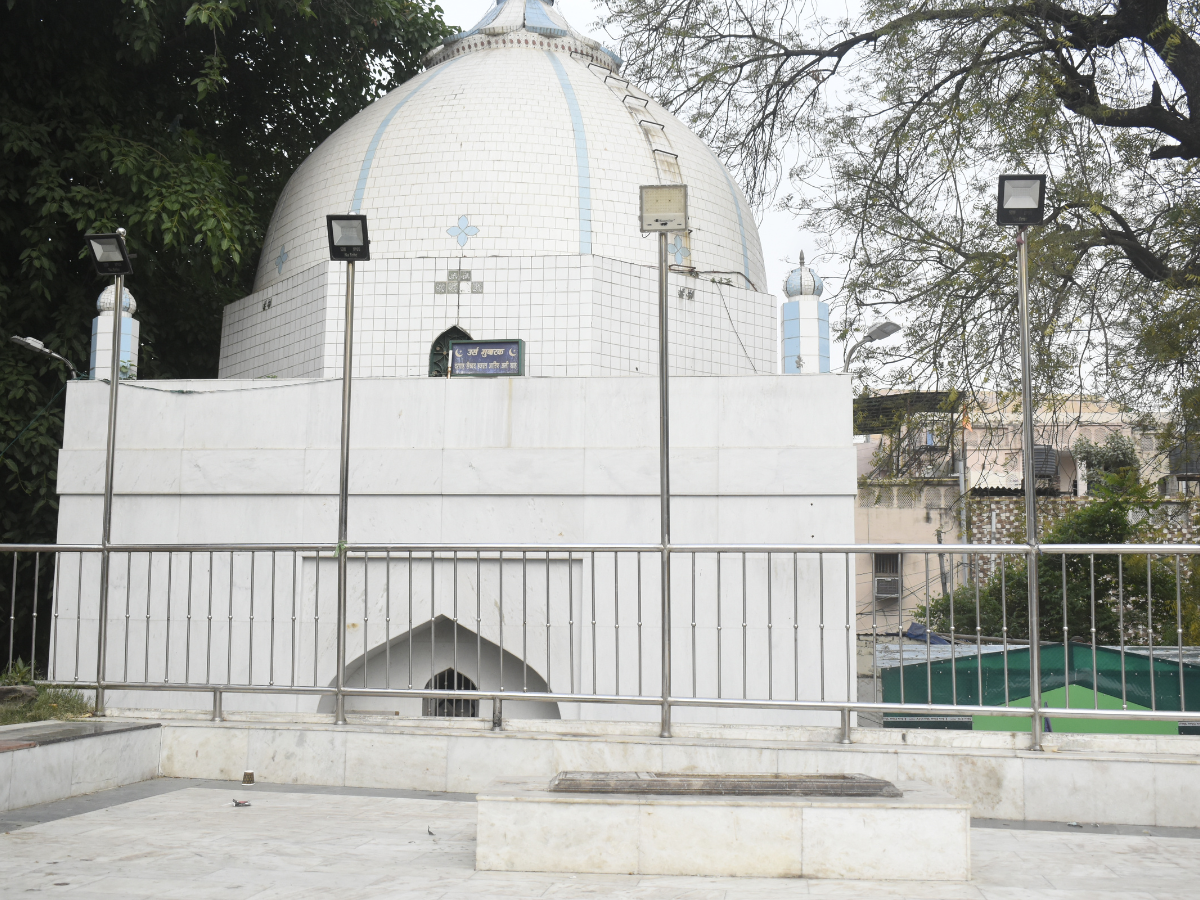
MODEL FOR DEVOTEES: A replica of shrine of Ali in Najaf, Iraq, at the Shah-e-Mardan dargah in Jor Bagh
Moinuddin meticulously sweeps the dusty floors surrounding a grave, his lips moving in silent prayer. With a handkerchief covering his head out of reverence for the “greats”, as he affectionately calls them, he speaks of his steadfast faith in the dargah.
“I have been coming to Dargah Shah-e-Mardan for the last seven to eight years,” he says, a glint of devotion shining in his eyes.
This 700-year-old dargah, nestled in Delhi’s Jor Bagh, holds the distinction of being one of India’s oldest. It attracts people from all walks of life, irrespective of religion, caste, or creed, each hoping for their wishes to be granted within its hallowed grounds.
According to historian Rana Safvi, the dargah’s origins are steeped in legend. It is believed that in the 15th or 16th century, a Shia Muslim man named Arif Shah sought refuge at the spot where the dargah now stands, invoking the name of Imam Ali. Legend has it that Imam Ali himself appeared before Arif Shah, saving him from harm and prompting the construction of the dargah.
ENTRE POINT: The Shah-e-Mardan dargah attracts processions from all over the city during Muharram
Named after Imam Ali, also known as Shah-e-Mardan, meaning ‘King Of Heroes’, the dargah holds immense significance for the Shia Muslim community.
Syed Bahadur Abbas Naqvi, General Secretary of Anjuman-e-Haideri, which oversees the dargah complex, emphasises its importance not only to Delhi’s Shia community but also to those living in neighbouring states like Uttar Pradesh and Haryana.
“Tazias from all over the city are buried on our Karbala ground,” asserts Abbas, referring to the commemorative processions marking the Battle of Karbala, a pivotal event in Shia Islam.
Karbala, a city in modern day Iraq is famous as the field of battle between forces of Umayyad Caliph Yazid and Husayn Ibn Ali, son of Imam Ali in 680 AD.
The papier mache replicas, known as Tazias, are carried by mourners during the month of Muharram to honour Imam Husayn Ibn Ali’s sacrifice.
Reflecting on the dargah’s rich history, Abbas notes the impact of the 1947 Partition. The area was initially known as Karbala Colony. Today, it is known as BK Dutt Colony and is surrounded by structures commissioned by Qudsia Begum, grandmother of the last Mughal emperor Bahadur Shah Zaffar.
Renowned filmmaker and heritage activist, Sohail Hashmi praises Qudsia Begum’s contributions, highlighting structures like Qudsia Begum Mosque and Bibi ki Chakki within the dargah complex.
“She was a powerful regent and administrator in her own right,” he says.
While both shrines draw devotees daily, only women are permitted entry into Bibi ki Chakki.
Devotees flock to Bibi ki Chakki to pray before a millstone believed to have been used by Fatima, daughter of Prophet Muhammad.
Hashmi reveals historical accounts of Timur’s visit to the dargah in 1399 AD, during which a Tazia was buried, marking one of the earliest such burials in the world.
RESTING: The grave of Saiyid Fazl Ali, a former judge of Supreme Court who served as Governor of two states as well as head of States Reorganisation Commission
The regal begum now rests peacefully alongside an odd 111 graves at her mazar (mausoleum) in Karbala Ground.
“It is a great honour to be able to witness and pray to the very footprint of our Shah-e-Mardan,” says a devotee who did not wish to be named.
“Qudsia Begum was very spiritual in her own right and she was the one who brought this important stone to the land,” claims Abbas.
The dargah has also hosted eminent figures like India’s first prime minister, Jawaharlal Nehru, and Rajiv Gandhi, attesting to its enduring significance.
With lakhs of devotees visiting during Muharram and Chhehlum, the dargah’s complex, adorned with centuries-old graves, serves as a site of spiritual solace for many.
For devotees like Mahfooz Ali from Moradabad, Uttar Pradesh, the dargah offers a sacred refuge.
“We don’t have many dargahs to turn to, hence I make it a point to visit here every once in a while,” he shares.
Abbas emphasises the dargah’s role in providing a spiritual sanctuary for those unable to visit holy shrines in distant lands.
“With important religious symbols enshrined here, people get an opportunity to observe their religious practices,” he explains.
As devotees continue to stream into the dargah, seeking solace and blessings, Moinuddin reflects on its inclusive nature.
“Dargahs are an essential feature of the Sufi doctrine,” remarks Hashmi, underscoring their enduring appeal.
“The great Imam will keep inspiring future generations,” adds Abbas, his voice filled with pride.
source: http://www.thepatriot.in / Patriot / Home> Heritage / by Monish Upadhyay / April 11th, 2024
Chathiramanai village (Perambalur district) /Tiruchi, TAMIL NADU :
A. Basheer Khan, right, and his son Mohamed Imran, of Tiruchi demonstrate the oil spill filtration device that they have designed and obtained a patent. / | Photo Credit: SPECIAL ARRANGEMENT
A. Basheer Khan, 62, and his son B. Mohamed Imran, 28, of Tiruchi recently received a patent for a device that they designed to remove oil spill from seawater through filtration along coastal areas.
The recognition was given on September 24 by the Patent Office and is valid for 20 years from the date of filing.
“At present, the technology to deal with oil spill on land is limited. Our device uses a low-energy method to draw out the oil contaminated water from a targeted area, and after filtering, pumps cleaned water back into the sea. The filtered sediment has to be processed further for eco-friendly usage,” Mr. Khan told The Hindu.
Mr. Khan, who retired as a machinist at the Ordnance Factory Tiruchi (OFT) in 2023, was interested in engineering from a young age while growing up at Chathiramanai village, Perambalur district. “ I studied at an Industrial Training Institute in the 1980s and apprenticed at Bharat Heavy Electricals Limited (BHEL). I used to be inspired by mechanical objects and science concepts to invent my own machines. In 2017, when an outbound empty tanker collided with an inbound loaded oil tanker in Ennore, Chennai, the crude oil was spread all over the coastal areas. I decided to design something to deal with such situations, and started working on the concept from 2018,” he said.
A prototype of the device is available at his home. It consists of a metal tank with two sections for polluted and clean water. The inlet pipe is lined with fine nylon mesh and sieved sand to allow free movement of water contaminated with oil.
During a demonstration on Saturday, Mr. Khan mixed machine oil into water in one section of the device and created ‘waves’ in it with the help of a small steel snack plate fitted to a pulley and sewing machine motor. To guide the water into the filtering inlet pipe, a manually operated shutter fixed with multiple springs is placed at the mouth of the targeted area. In a matter of minutes, the oil and grease were separated from water.
Mr. Imran, who helped his father in research and trials, said the prototype had potential for commercial development. “In the event of an oil spill, our machine can help not only save the environment, but also keep salvage workers safe from direct exposure to harmful chemicals,” he said.
source: http://www.tartv.in / TARTV / Home / by admin / October 19th, 2024
While debate on Jama Masjid’s decision to disallow women from visiting the premises for non-praying activities rages on, it is time to look at some of Capital’s mosques built by women.
All photos: Mohd Shehwaaz Khan
Women may have been restricted from entering Jama Masjid for non-prayer activities due to a recent decision by the committee of the Mughal-era mosque that was seemingly miffed by those making social media videos, but there is no denying the contribution of women in many mosques across the country.
Even in the Capital, some of the old iconic mosques have been built – rather commissioned to be built — by women. Patriot takes you through some of these iconic monuments.
Mubarak Begum Masjid (Randi Ki Masjid)
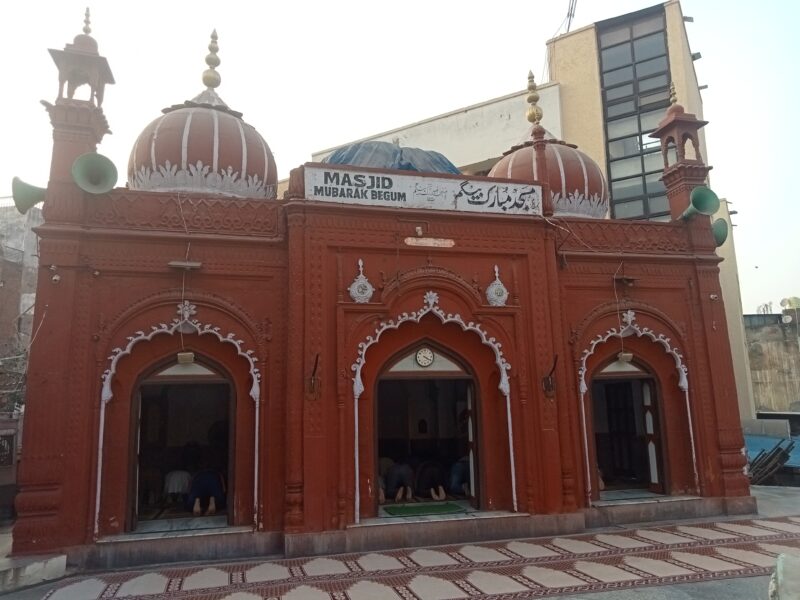
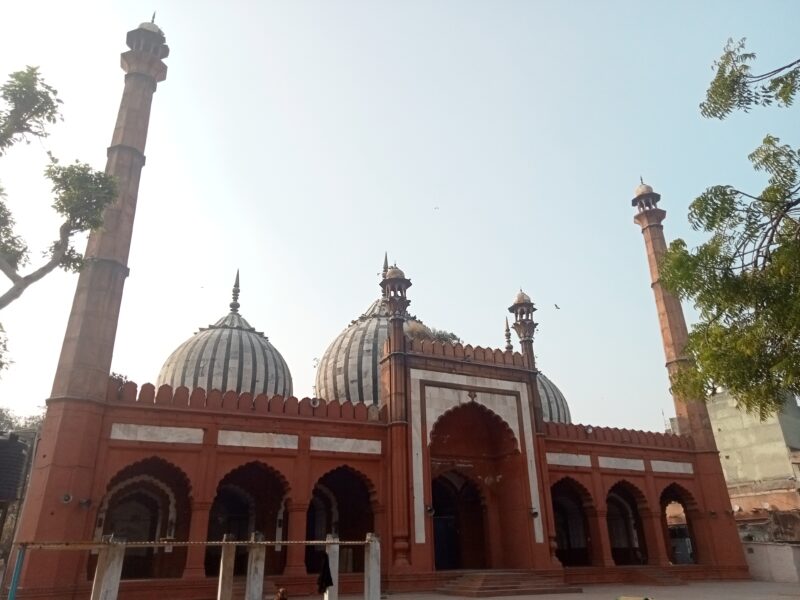
Lying among tall buildings, shops of machine parts as well as clusters of electric wires running from one pole to another, the double-storeyed Mubarak Begum Masjid – also known as Randi ki Masjid (courtesan’s mosque) – serves as a reminder to a more peaceful and simpler time. The honking of vehicles and the shouting of vendors and labourers on the street that faces the mosque and runs from Hauz Qazi to Lal Kuan comprise the hustle-bustle of old Delhi. The mosque, however, reminds one of a different era.
The upper floor consists of a prayer chamber and the ground floor has toilets. The central one of the three red-and-white striped domes, which collapsed in 2020, is covered by black canvas.
COURTESAN’S LEGACY: Masjid Mubarak Begum is famously known as Randi Ki Masjid
“A lot of people come here for the first time and say that they feel as if they have been here for years,” says the Imam of the mosque after the prayer, smiling in admiration. The imam has been looking after the mosque for the last 17 years.
The mosque was constructed in 1823 by Bibi Mahru Tun Mubarak-ul-Nisa Begum (Mubarak Begum), a nautch girl from Pune, who came from a Brahmin family and converted to Islam after she married General David Ochterlony, who was the British Resident in Delhi during the time of Emperor Akbar Shah II.
Ochterlony was a ‘white mughal’ who was known for his lavish lifestyle, his love for hookahs and mistresses. Mubarak Begum was one of the 13 wives of the British official. After the death of Ochterlony in 1825, Mubarak Begum married a Mughal nobleman who fought in the 1857 mutiny against the British.
According to Scottish scholar William Dalrymple, the Begum’s house was famous for Mughal culture where the Mughal prince Mirza Farhatullah Baig organised the last Urdu mushaira before the Mughal empire was overthrown by the British.
Due to the early profession of the Begum, the mosque is famously known as Randi Ki Masjid. The randis or courtesans, during the Mughal period, were highest in the order of women entertainers, who were skilled not only in dance, but also singing, conversation and poetry. It is said that young nawabs were sent to learn the art of conversation with randis. They were called city’s divas who were visited by the rich and powerful – who often shared with them the secret of the city and society.
Asked about how the mosque is perceived by the visitors and people in the area, the caretaker says: “The courtesans at that time were not as we understand them today. They were respectable and influential women. Many tourists come here and ask if the mosque was built by a prostitute. All of this is best left in history books. All I know is that whoever built, must have built it with good intention and halal (legitimate) money.”
People in the area were embarrassed by the infamous name of the mosque. When one asked them where Randi Ki Masjid was located, they chuckled and laughed, before hastily pointing at the Mubarak Begum Masjid.
During the Mughal era, so many Mughal princesses built mosques. In Bengal, mosques had side corridors with lattice walls for women.
– Ziya Us Salam, journalist and author of Women in Masjid
Sunehri Masjid
A couple of kilometres away from Mubarak Begum Masjid, stands a mosque built in 1747 by khwajasara (eunuch) Jawed Khan and emperor Ahmad Shah Bahadur’s mother Qudsiya Begum. It is located in a corner, just opposite the busy Nishad Raj Marg and Red Fort parking. This mosque is often confused with the Sunehri Masjid of Chandni Chowk, which was built a few decades earlier – in early 1720s – by a Mughal noble, Raushan-ud-Daulah, during the reign of Mughal emperor Mohammad Shah Rangila.
However, the one at the Red Fort is often called the Parking Waali Sunehri Masjid.
Qudsiya Begum, whose real name was Udham Bai, was introduced to the Mughal court as a nautch girl. In the court, she met Muhammad Shah Rangila who became fond of her and eventually married her. With time, she became influential in the court: even appointing the mansabdars (high rank holder such as civil or military officers) who would enforce the rule of the Emperor.
After the death of her husband, she served as a regent to her son Ahmad Shah Bahadur from 1748 to 1754. Known for her generosity and influence, Qudsia provided the Begums and the late emperor’s children with pensions using both her personal money and government finances.
GOLDEN TIMES: Sunehri Masjid was built by Qudsiya Begum for Jawed Khan khwajasara (eunuch)
It is believed that Qudsia had an affair with Jawed Khan khwajasara, who was also the Darogha (police chief) under Mohammad Shah Rangila and a eunuch-superintendent of the zenana (women) quarters. This proximity between the two led to the construction of the Sunehri Masjid. It was built by the efforts of Jawed Khan and commissioned by Qudsiya Begum, as written on its epitaph:
‘sayi-e-nawab-bahadur sahib-e-lutf-o-karam
saakht tameer-e-haseen jawed aali dastgaah’
(By efforts of Nawab Bahadur, the bestower of rewards and grants,
Jawed of high reach and commands, was constructed this beautiful structure)
As expected, those who came for prayers were unaware of the history of the mosque despite an inscription outside the mosque. The grave of Qudsiya Begum lies in the backyard of the mosque.
Khairul Manazil Masjid
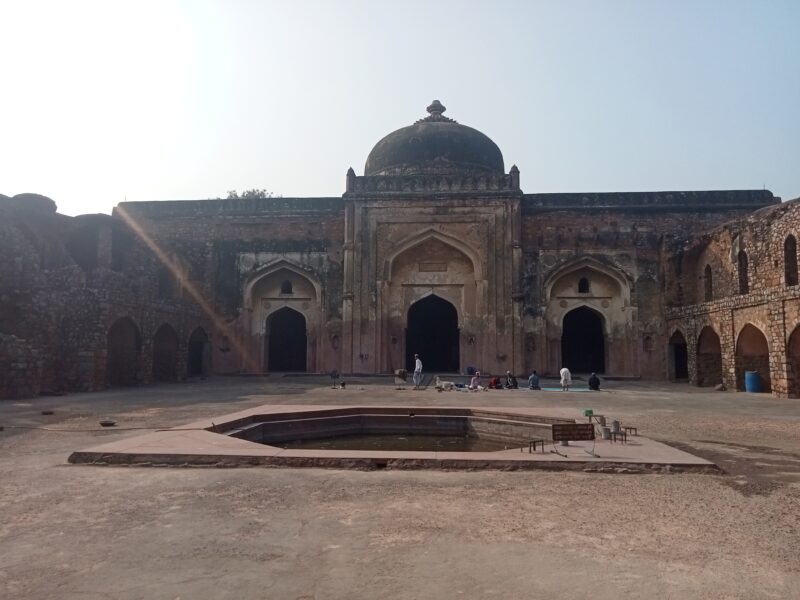
Situated just opposite to Purana Quila (Old Fort), the Khairul Manazil Masjid is often confused by the visitors to be a part of the Quila. Many tourists enter the mosque thinking they are visiting the monument and are surprised when the caretaker of the mosque asks them to remove their shoes as they move into the prayer chamber.
The confusion stands valid as the mosque is in complete ruins, just like the monument opposite to it. The hauz (ablution tank) is not functional and there is no electricity in the premises. The prayer chamber serves as a permanent abode for pigeons and the inscription on the walls is hard to make sense of.
There were many mosques built by women in regular spaces in the past. The bigger ones, such as Fatehpuri Masjid and Khairul Manazil mosque, stand as a testament to this.
– Rana Safvi, author and historian
The three walls with small rooms – which were once part of the madrasah – also lie in dilapidated state. It is currently protected and maintained by the Archaeological Survey of India.
“We just offer prayers three times a day here, that is Asr (afternoon), Zuhr (midday) and Maghrib (sunset) – along with the Friday prayers. It is because the mosque is a heritage sight,” says the caretaker of the masjid.
Khairul Manazil, which literally translates to ‘best of houses’, has a numerical value that corresponds to the year of the construction of the building, 969 hijri as per Islamic calendar or 1561–1562 AD.
IN RUINS: Prayers at Khairul Manazil mosque are offered three times a day
It was commissioned by Maham Anga, the wet-nurse of the Mughal emperor Akbar, and is believed to be the first mosque in Delhi commissioned by a woman. Anga served as the de facto regent and the young emperor’s political advisor. The inscription on the central arch of the mosque reads that Shihabuddin Ahmad Khan assisted in its erection.
The ASI attempted to ban Islamic prayers in the mosque in 1992 but without success.
Zeenat-ul-Masajid
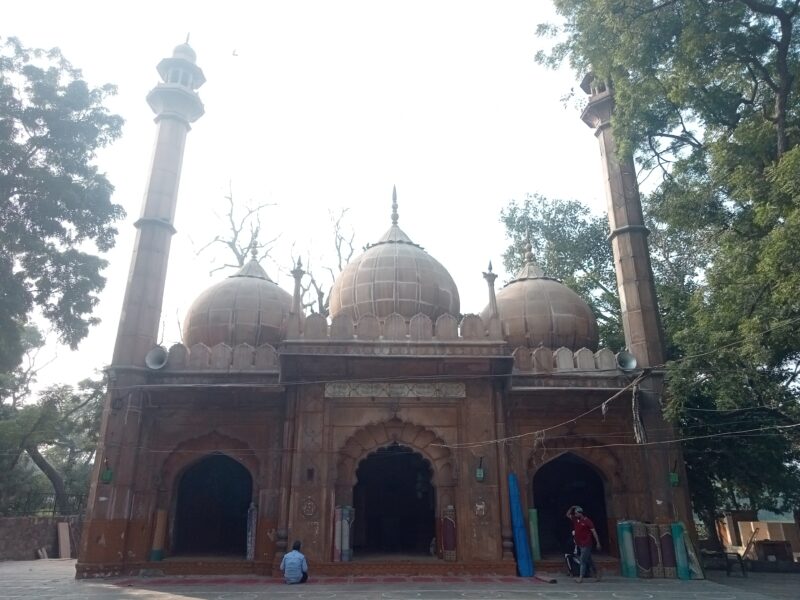
Zeenat-ul-Masajid was built by Zeenat-un-Nisa, the second daughter of the Mughal emperor Aurangzeb, in 1700 AD. The mosque is famously known as Ghata Masjid, which may perhaps be derived from its proximity to a bank (ghat) of the river Yamuna back then or the tall minarets that touch the clouds (ghata).
While a mosque can be a place of prayer for men, it isn’t quite so for women. It is a place of dignity, safety, protection, and aid. A woman’s mosque, that which focuses on preserving all these things, is the solution to most of our problems.
– Huda Ahsan, architect and independent researcher
The locals in the area dearly call the mosque Ghata Masjid and are unaware of its real name.
The part of Daryaganj, where the mosque is located, is also known by the name of Ghata because of the presence of the mosque.
The caretaker of the masjid says that the mosque is rarely visited by tourists and only attended by the men who come to pray. The Jama Masjid at opposite Urdu Bazaar, constructed by Zeenat-un-Nisa’s famed and adored grandfather, Shah Jahan, is thought to have served as an inspiration for the mosque.
OLD TREASURE: Zeenat-ul-Masajid, famously known as Ghata Masjid, is inspired by Jama Masjid in old Delhi
Like in many mosques in the Capital, the hauz (or ablution tank) is not functional but the mosque remains in good condition despite some signs of decay. The mosque is constructed on a plinth. It has three marble domes and seven arched entrances opening to the prayer chamber. Two towering minarets flank the mosque’s front and support an octagonal pavilion made of white marble. In the quaint campus of the mosque, there is no one present except the caretakers.
During the first war of independence, when the Mughal emperor in Delhi joined the uprising against the British in 1857, the mosque experienced some dark times. After the Mughals and the British sepoys lost the war, the mosque was first used by the British as a barrack and later converted into a bakery.
The grave of Zeenat-un-Nisa was also destroyed. However, on the southern corner of the mosque, a tomb for the princesses has been rebuilt as a memorial. The mosque is surrounded by plants of a variety of flowers, especially roses.
Fatehpuri Masjid
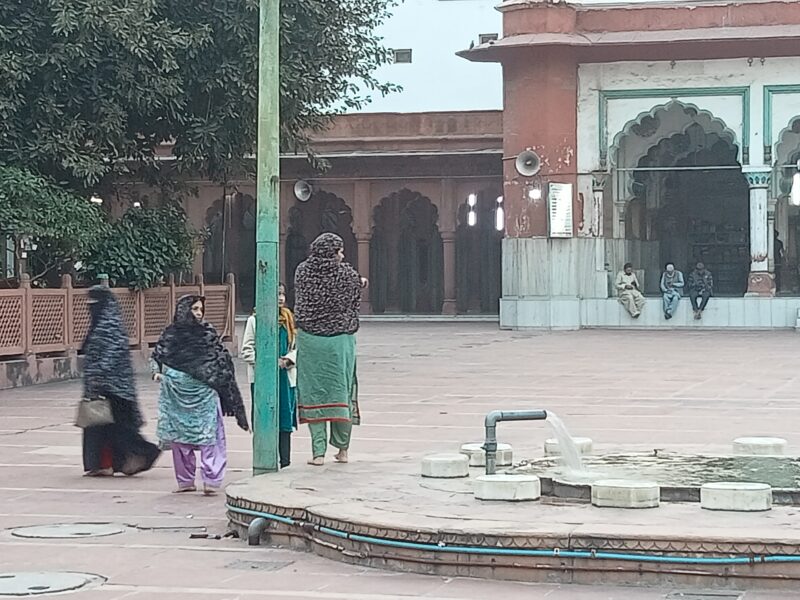
Of all the mosques Patriot visited, only Fatehpuri Masjid had visitors flocking in numbers. The hauz of the mosque is full with tap water – which in the past was fed with water directly from Yamuna – and tourists often sit by its side. The mosque is the second largest in Delhi after Jama Masjid and it was built in 1650 by Fatehpuri Begum, one of emperor Shah Jahan’s wives who was from Fatehpur Sikri.
“The number of visitors to this mosque are just a tad lesser in number than Jama Masjid,” said one of the caretakers of the mosque.
Surprisingly, one found as many women in the mosque as men.
VISITING HISTORY: Women visitors at the Fatehpuri mosque
The mosque has a fluted dome made of red sandstone with a kalash (inverted lotus) on top.
The mosque has a conventional design with seven-arched entrances in the prayer hall and is surrounded by minarets. One of the minarets is under construction.
The Shahi Imam of the mosque attends visitors who come to tell him their dukh-takleef (complaints) and seek his blessings as well as medicines.
The room of the Imam is occupied mainly by women who had come to pay him a courtesy call and seek his blessings and prayers. Interestingly, the women sitting with the Imam were unaware that the mosque was built by a woman.
GRAND WELCOME: One of the three main gates of Fatehpuri Masjid that opens to Lal Quan
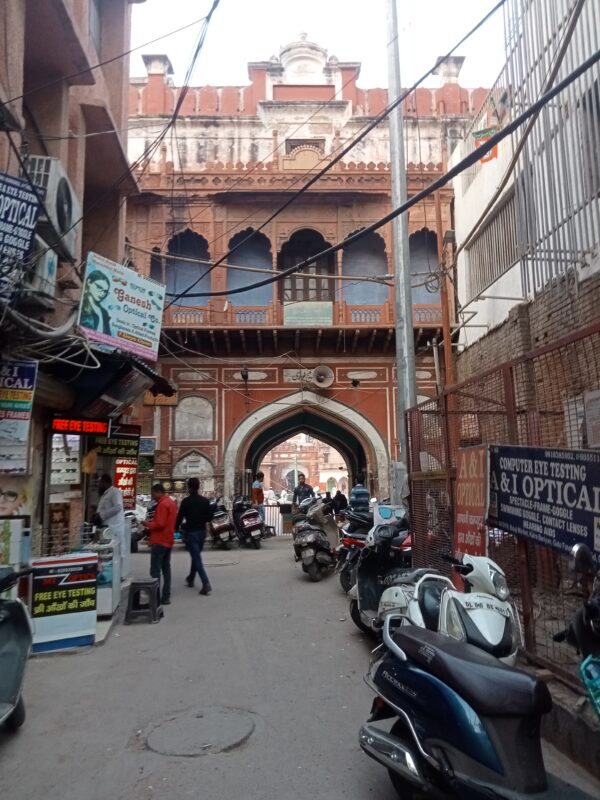
The mosque has three main gates, one of which opens to Chandni Chowk and the other two to Lal Kuan and Old Delhi Railway Station.
source: http://www.thepatriot.in / Patriot / Home / by Mohd Shehwaaz Khan / Delhi NCR / December 08th, 2022
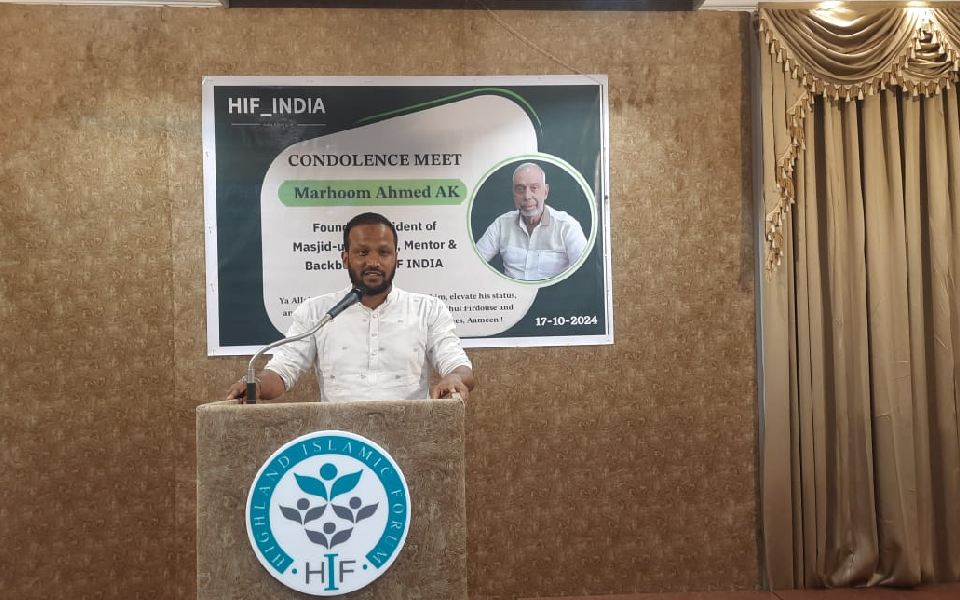
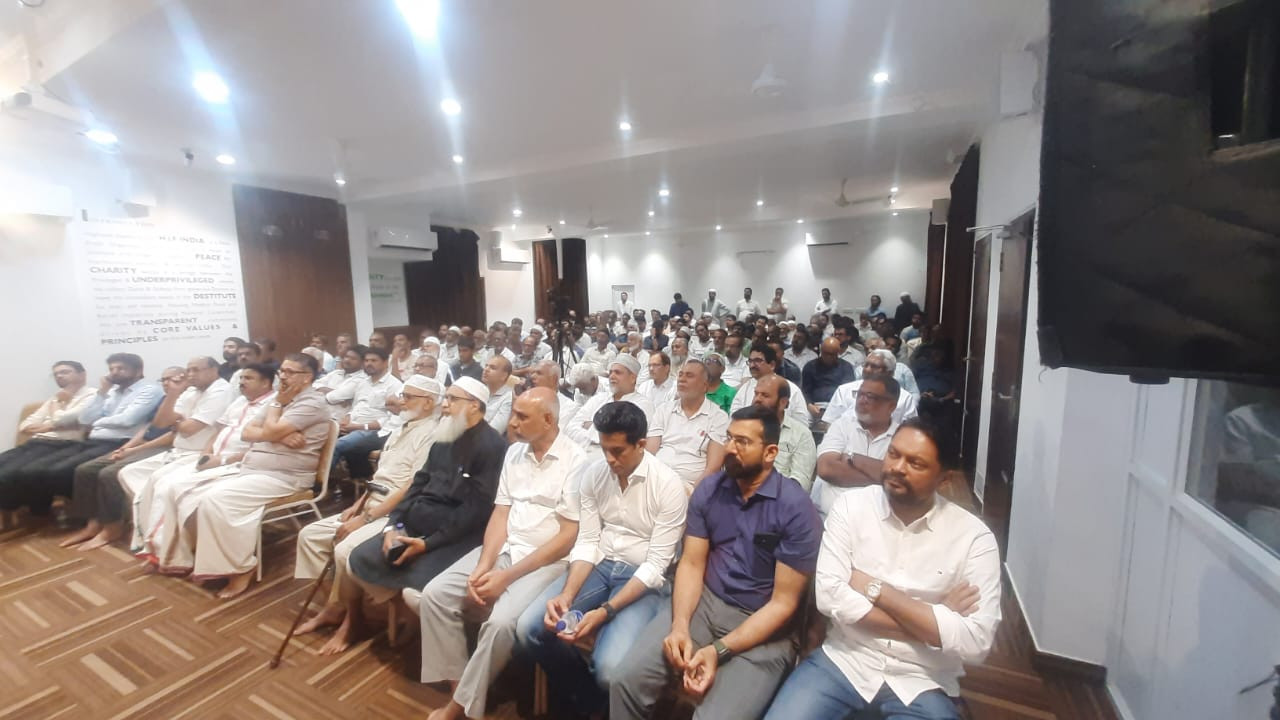
In a tribute to Late Ahmed AK, the Founder Chairman of Ehsaan Masjid and a key figure behind HIF India, a Condolence Program was held on Thursday, 17th October 2024, at the HIF Auditorium (Masjid-ul-Ehsaan) in Vaslane, Mangalore. The event, which began after Isha prayers, saw a gathering of distinguished community members, businessmen, professionals, and leaders who came together to honour the contributions of Ahmed AK to the community.
The speakers at the event, including prominent figures like Nasir Luckystar, Yusuf KLP (Chairman of Tube Care and Amber Group Dubai), and Dr. Roshan (Director of City Hospital), expressed their deep admiration for the values that Ahmed AK embodied throughout his life. They lauded his discipline, commitment to punctuality, and his humility in always remaining behind the scenes, never seeking the spotlight. Other respected figures like Dr. Mohammed Ismail H, Dr. ZK Misri, Corporators Navin, Lateef, and Rauf, as well as Jaidev Kudva, Associate Director of Cognizant, and Anup Nair, Global Human Resources Manager in Abu Dhabi, were also present and echoed similar sentiments.
In their addresses, they praised his ethical approach to business, describing him as a true and just businessman who was always ready to extend a helping hand to those in need, without any discrimination based on religion or background. His selfless service to the community was a key theme throughout the evening, as speakers shared personal anecdotes and reflections on how he had positively impacted countless lives.
The event was presided over by HIF President, Adil Parvez, while Rizwan Pandeshwar served as the host. A beautiful Qirath recitation by Bilal Raif set the tone for the evening. The event was also attended by several other well-known individuals, including Saud Mohtisham, Arshad Mohtisham, Hassanair Pandeshwar, Mohiddin Usman, Latif Kandak, and Mohammed Kunhi from Shanti Prakashan, among others.
Speakers reflected on his role in establishing Ehsaan Masjid, which stands as a symbol of his commitment to unity and service. His ability to provide support without seeking recognition was a recurring theme, as was his dedication to promoting peace and harmony within the community.
The event concluded with a sense of gratitude for Ahmed AK’s life and work, with attendees expressing their determination to carry forward his mission of helping others and building an inclusive and compassionate community.
Association of Muslims Professionals (AMP) will be conducting their 5th Annual National Talent Search Exam (AMP-NTS 2024), for School & College students on Saturday, 7th December 2024.
The National Talent Search Exam is organized with the intention of increasing and rewarding the students’ general awareness and competitive spirit and identifying the best and brightest students to support and nurture for the forthcoming national competitive exams.
The specially designed poster of AMP-NTS 2024 was launched at a grand function in the auditorium, Arcade Business College auditorium in Patna on October 19, where more than 200 influential people like social and community leaders, professionals, policy makers, retired bureaucrats, and others were present.
Farooq Siddiqui, Head of AMP National Coordination Team, welcomed the dignitaries, guests and students. He said that the purpose of AMP NTS is to create achievers from smaller cities and informed the audience that in NTS 2023, 90% of top rankers were from tier 2 and 3 cities. He further informed that this year, the AMP NTS 2024 intends to reach out to 1000 Blocks in all the minority-concentrated districts of India and is bound to achieve many milestones.
Dr. Syed Shah Shamimuddin Ahmad Munemi, Sr. Professor & HOD Arabic Department, Oriental College, Patna, was the guest of honour at the event. He said, “The Association of Muslim Professionals has brought about a revolution in the country in the field of education. Their commitment and focus are exemplary. They have touched innumerable underprivileged lives through their many activities and I wish them well for the 5th edition of their National Talent Search 2024 competition.”
Mohammad Ashfaq Sir, Director-Gravity Classes & Lead partner – AMP NTS, said “When AMP approached us to support them for their National Talent Search exam, we wholeheartedly agreed as we believed in their vision. We all need to create awareness regarding this talent search all over the country especially in smaller cities and towns so they can benefit, as their students’ IQ level is the same as in bigger cities, and those who start the training from 9th Standard onwards have a higher ratio of success.”
Dr. Abdul Qadeer, Director & Founder – Shaheen Education Foundation said, “AMP is known all over India for its excellent work in education and we decided to collaborate with them for the National Talent Search. This year we will be selecting students for the Common University Entrance Test (CUET) as well, which is for 450 Universities, through AMP NTS 2024.”
Mohammad Reyaz Alam, AMP State Head, Bihar and the driving force for this programme hosted the event very successfully and explained to the audience the purpose of the event, which was to launch the promotion and students’ registration of AMP NTS – 2024.
The AMP NTS 2024 exam will be held for 3-Categories of students:
* Senior/Degree Colleges (Undergraduates)
* Junior Colleges (11th & 12th Std)
* Schools (8th, 9th & 10th Std)
This year 2.5 lakh-plus students from over 8,000 schools and 2,000-plus colleges from 600-plus districts across India are expected to participate. This year, this competition will be held offline in a physical mode in 1000 exam centres of over 400 districts across the country. There will also be an online version available on the AMP World mobile app for those who are unable to appear in person.
The top 500 students will be given IIT-JEE/NEET coaching scholarships worth Rs. 10 Crores ranging from 50% to 100% by AMP’s top 20 training partners. Also to encourage the students to participate in the NTS 2024, AMP is giving out cash rewards worth ₹ 5 lakhs+. Other than these, academic scholarships worth over ₹ 20 lakhs will also be given to deserving underprivileged students through IndiaZakat.com, their Zakat-based crowd-funding platform, plus a whole lot of additional support for the students.
The uniqueness of this competition is, that along with school, college, NIOS, ITI, and Diploma students; even Madrasa students between the ages of 13 to 15 years can also participate in the National Talent Search.
This examination will be conducted simultaneously across the country on December 7, 2024 from 11 am onwards. The last date for registration in this competition is November 26, 2024.
More details about the NTS 2024 exam are available at: www.ampindia.org/National_talent_search
The AMP NTS 2024 promotion launch event ended on a positive note with all present affirming that they will try to reach the maximum number of institutions and students to become exam centres and register for the exam. The local AMP Bihar team and the respective chapter executive team members all worked relentlessly for the success of the launch event.
source: http://www.indiatomorrow.net / India Tomorrow / Home> Education / by admin India Tomorrow.net / October 21st, 2024