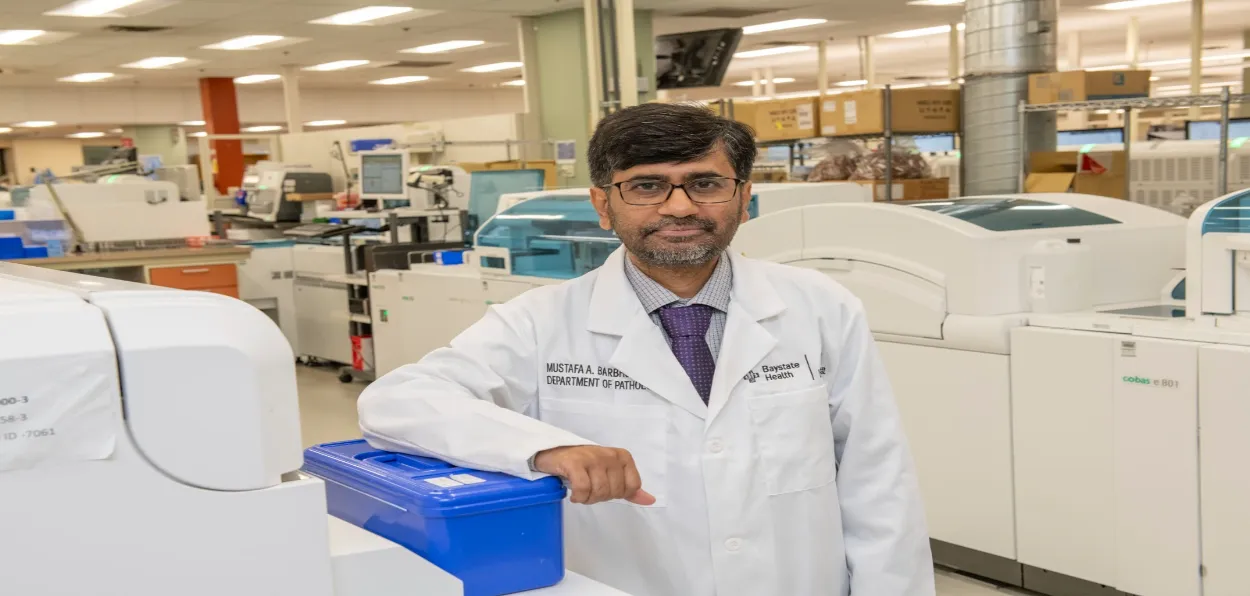
Dr. Mustafa A. Barbhuiya at his workplace in the US
Hailing from a remote village in southern Assam’s Hailakandi district, Dr. Mustafa A. Barbhuiya has been selected among top 100 most influential people in Pathology, specifically, as one of the Top 20 Heroes of Pathology in US for this year.
Featured in ‘The Pathologist Power List’ 2024, Dr Mustafa has demonstrated innovation, leadership, and achievement in the field of Pathology. But the journey of Dr Mustafa to achieve this coveted position was not so easy.
Dr Barbhuiya completed his elementary schooling (HSLC/10th) in Sanuhar Ali Memorial High School, Bahadurpur, a remote village in Hailakandi district of southern Assam. During those days in the early nineties, his village neither had electricity nor had motorable road communication.
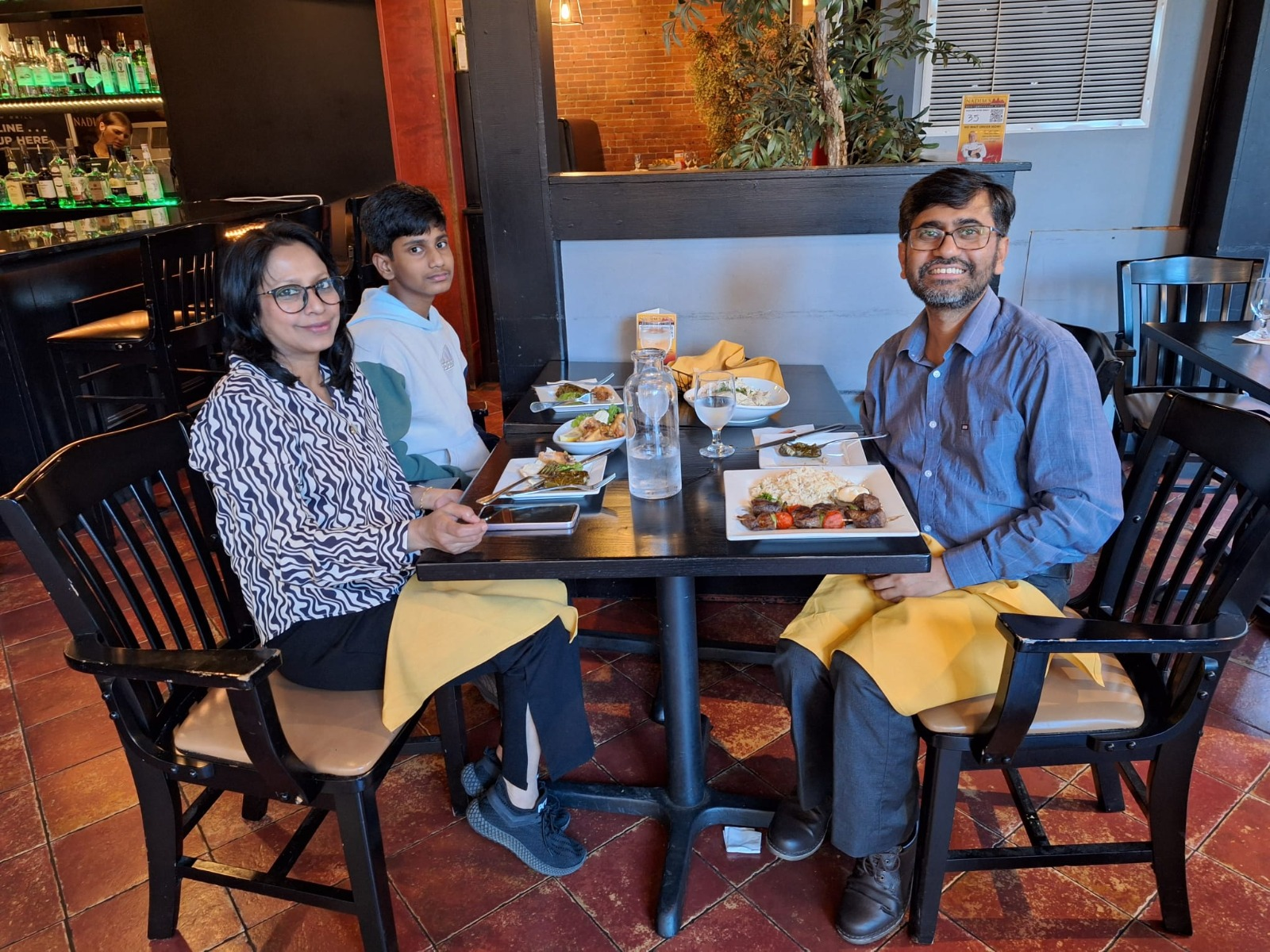
Dr Barbhuiya Mustafa with his family
“I used to cycle from my village on muddy roads to attend Advanced Mathematics and Science classes in Hailakandi town. I went to Gurucharan College, Silchar, Assam for 12th and Bachelor of Science with a major in Zoology and pass course in Botany, Chemistry and other science and language electives,” Dr Barbhuiya told Awaz – The Voice.
He studied further in Jiwaji University, Gwalior for Masters and PhD in Biochemistry which paved his way to become a Clinical Biochemist and a Molecular Biologist.
“I will remain ever grateful to two of my teachers who helped me to become what I am today. One is Prof. Baby Singha (Retired) of Department of Zoology, Gurucharan College, Silchar with whom I have specialized in the subject of Parasitology and I have never looked back. The other teacher who actually got me into Clinical Biochemistry was Late Prof. Meenu Rai, former Head of Biochemistry, College of Life Sciences, Cancer Hospital and Research Institute, Gwalior, Madhya Pradesh.
“My PhD guide Prof. Pramod K. Tiwari shaped me as the future molecular biologist with whom I have not only learnt about science of medicine, study of diseases but several life lessons that I continue to carry as of today,” Dr Barbhuiya said.
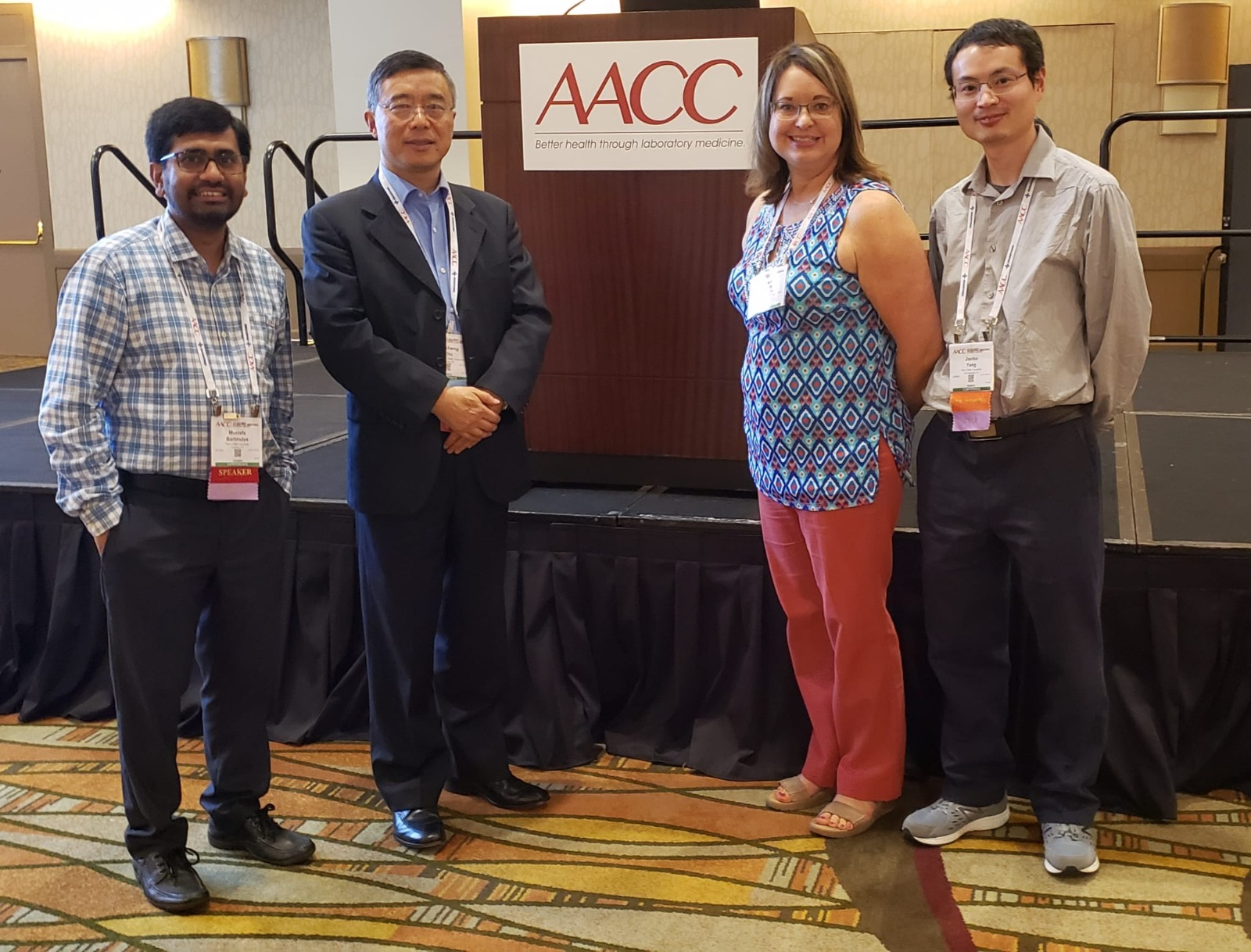
Dr Barbhuiya with his collegaues
Dr Barbhuiya completed his PhD in Biochemistry Jiwaji University, Gwalior, Madhya Pradesh in July, 2013. He went to Johns Hopkins School of Medicine, Baltimore, Maryland, USA in July 2013 to pursue advanced postdoctoral training.
“The ultimate goal was to return to India and set up my own laboratory around clinical biochemistry and molecular diagnostics in my home state Assam. But the circumstances after completion of my postdoctoral training in Johns Hopkins and lack of securing a suitable job back in India compelled me to pursue things in the United States. I further completed my clinical chemistry fellowship in Penn State College of Medicine, Hershey, Pennsylvania, USA and have become a practicing clinical biochemist and clinical laboratory director,” he said.
Dr Barbhuiya currently holds the position of section medical director overseeing the Clinical Chemistry and Point of Care Testing operations of Baystate Health Pathology services across Western Massachusetts, USA. He provides clinical consultation to physicians and other healthcare providers regarding the laboratory test interpretations in the subspecialty area as systems consultant.
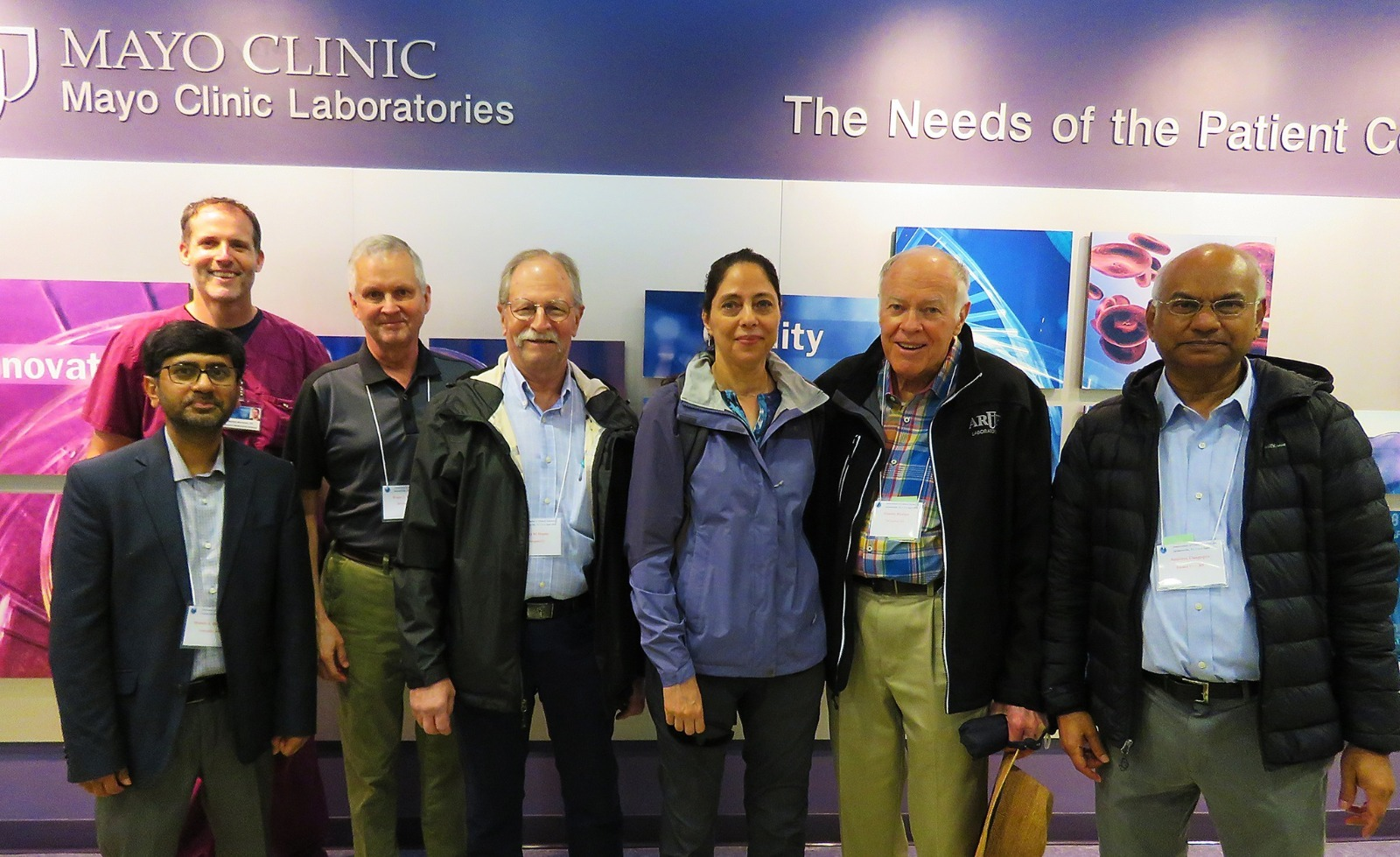
Dr Barbhuiya with other renowned pathologists
He ensures that the clinical laboratory meets several US federal and local state regulations delivering timely and accurate diagnosis for patients. He is accountable for the effective management and administrations of clinical operations of the Clinical Chemistry and Point of Care Testing service within the Baystate Health Pathology operations. He also serves as Assistant Professor of Pathology; Healthcare Delivery and Population Sciences, UMass Chan Medical School- Baystate Regional Campus.
Dr Barbhuiya has set up a global non-profit organization, Foundation for Advancement of Essential Diagnostics, both in the USA and India. “My next goal is to take my non-profit foundation activities to low and middle-income countries around the world and locally serve in underserved areas of the United States,” he added.
Academically, Dr Barbhuiya is making efforts to continue his research areas of interest. His primary areas of research are studying biliary tract (liver and gallbladder) cancer mechanisms, discover biomarkers of diagnostic and therapeutic values.
source: http://www.awazthevoice.in / Awaz, The Voice / Home> Story / by Daulat Rahman, Guwahati / October 27th, 2024
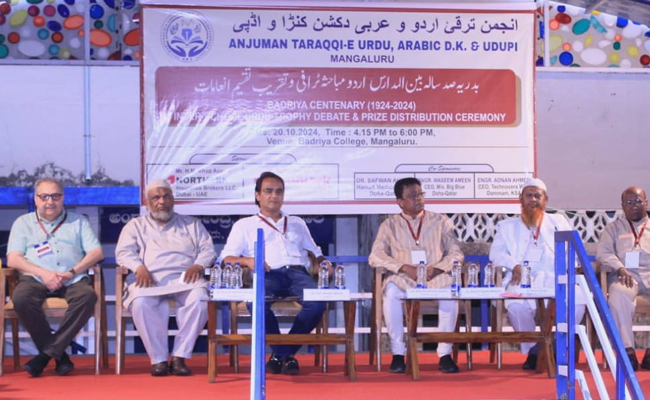
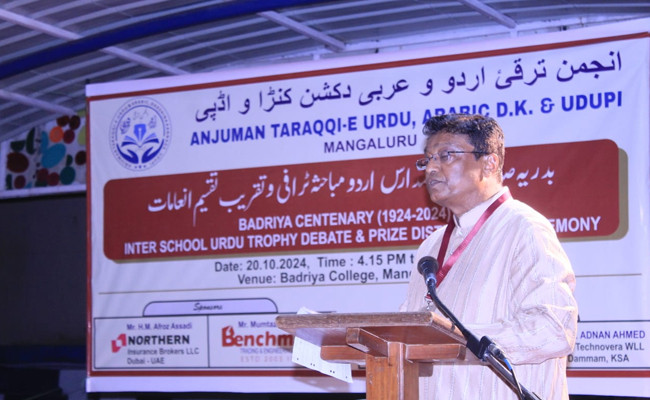
Anjuman Taraqqi E Urdu, an NGO promoting the Urdu language in Dakshina Kannada and Udupi districts, organised a debate competition on 20th October at the Badria College campus as part of the Badria Centenary celebrations (1924–2024). The competition featured the Badria Centenary Urdu Debate Trophy.
The event, divided into morning and evening sessions, saw a debate competition in the morning followed by a trophy award ceremony.
Chief Guest P.C. Hashir, Managing Director of Peecy Group of Companies and Correspondent of Badria Institution, alongside Keynote Speaker Abid Ulla Athahar Shimogavi, a retired principal and president of the State Organization, Secretary of Urdu Taraqqi Hind and H. M. Afroz Assadi, Managing Director of Northern Insurance LLC, Dubai, who sponsored the event, were present at the event Mumtaz Hussain, an NRI entrepreneur from Qatar, chaired the proceedings.
Both sessions commenced with a recitation from the Holy Quran. In his address, P.C. Hashir highlighted the role of debates and educational activities in fostering intellectual growth among students, suggesting that such competitions could help shape future lawmakers.
Keynote Speaker Abid Ulla Athahar stressed the importance of primary education in one’s mother tongue, citing the example of countries like Japan, Germany, and France, which educate children in their native languages. He noted that studying in the mother tongue allows for better comprehension compared to learning in foreign languages like English.
Mumtaz Hussain, an alumnus of Badria Institution, shared the brief history of the institution, founded in 1924 by Marhoom C. Mehmud as AL MADRASATHUL BADRIA, initially offering religious education to local children in Bunder and Kudroli. The relationship between Badria and the Urdu language is profound; it was the first school to offer Urdu studies in the undivided Dakshina Kannada and Udupi districts since 1947. After C. Mehmud’s passing, various presidents led the organization, with Marhoom Thumbe Ahmed Hajee serving the longest from 1975 to 2020. Hussain recounted that, in the past, students were required to speak Urdu within the institution or face punishment for using other languages.
The junior-level debate competition saw participation from seven higher primary schools in Dakshina Kannada.
Mohammed Ghouse from Higher Primary School Kandatpalli won first place, with Rifa and Fathima Suzana from Government Urdu Higher Primary School, Kawalkatte (Bantwal Taluk), securing second and third places, respectively.
At the senior level, five high schools from Dakshina Kannada and Udupi districts participated. Abdul Baari and Abdur Rahman from Thouheed English Medium High School, Gangolli, Udupi district, took first and second places, while Khadeejatul Farzana from Sayyed Madani Urdu High School, Ullal Taluk, D.K., came third.
The junior-level Badria Centenary Championship Trophy was awarded to Government Urdu Higher Primary School, Kawalkatte (Bantwal Taluk), and the senior trophy went to Thouheed English Medium High School, Gangolli, Udupi district. Twenty other participants received consolation certificates.
Five 10th standard students, Mohammed Meraj Khan, Fouzia Banu, Moulana Mohammed Uzaim, Sabiya Naaz, and Aysha Ruha were also felicitated for excelling in Urdu in the Karnataka State Board Examinations (2023–24).
The event began with a welcome address by Mohammed Hanif Master, Secretary of Anjuman. A.S. Madani, President of the organisation, outlined its objectives and future plans for promoting the Urdu language. Engineer Khaleel, Assistant Secretary, provided logistical support, and Rahmathulla, an active member of the Anjuman, gave the vote of thanks. The event was hosted by Badria alumnus and international emcee, Sahill Zahir.
source: http://www.english.varthabharati.in / Vartha Bharati / Home> Karavali / by Vartha Bharati / October 21st, 2024
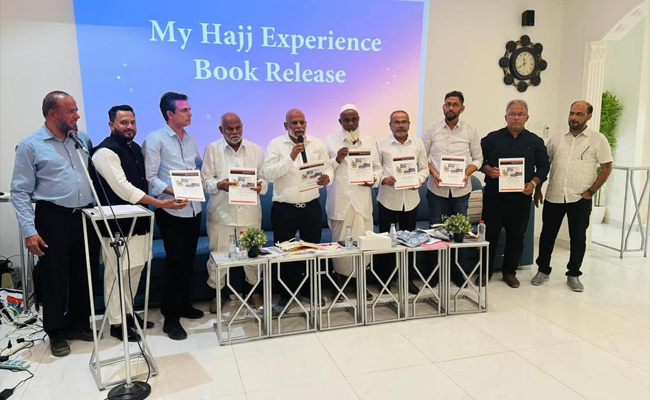
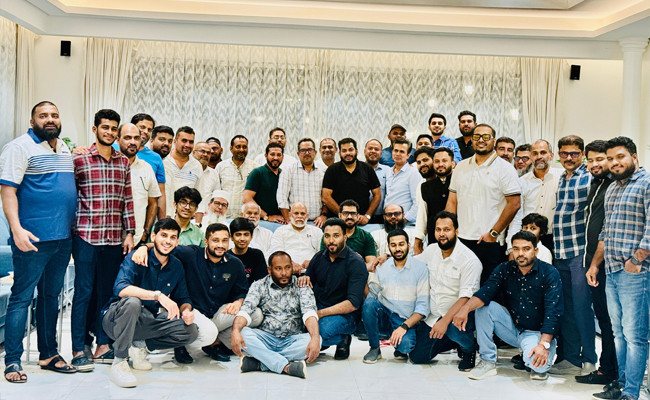
The Annual General Meeting of the NRI Brothers Mukka Committee was recently convened at the ‘Mask 7’ hall in Jubail.
Over 100 participants from Saudi Arabia, Dubai, and Qatar attended the event, which focused on reviewing the Committee’s achievements and planning future initiatives.
During the meeting, Committee President KM Hasan, along with Muzaffar and Shameem Moidin, introduced a new program, the Family Relief Fund (FRF) project. Mohammad Zainuddin provided an overview of the Committee’s establishment and its accomplishments to date.
The occasion also witnessed the launch of Shameem Moidin’s book, Hajj Experience 2024.
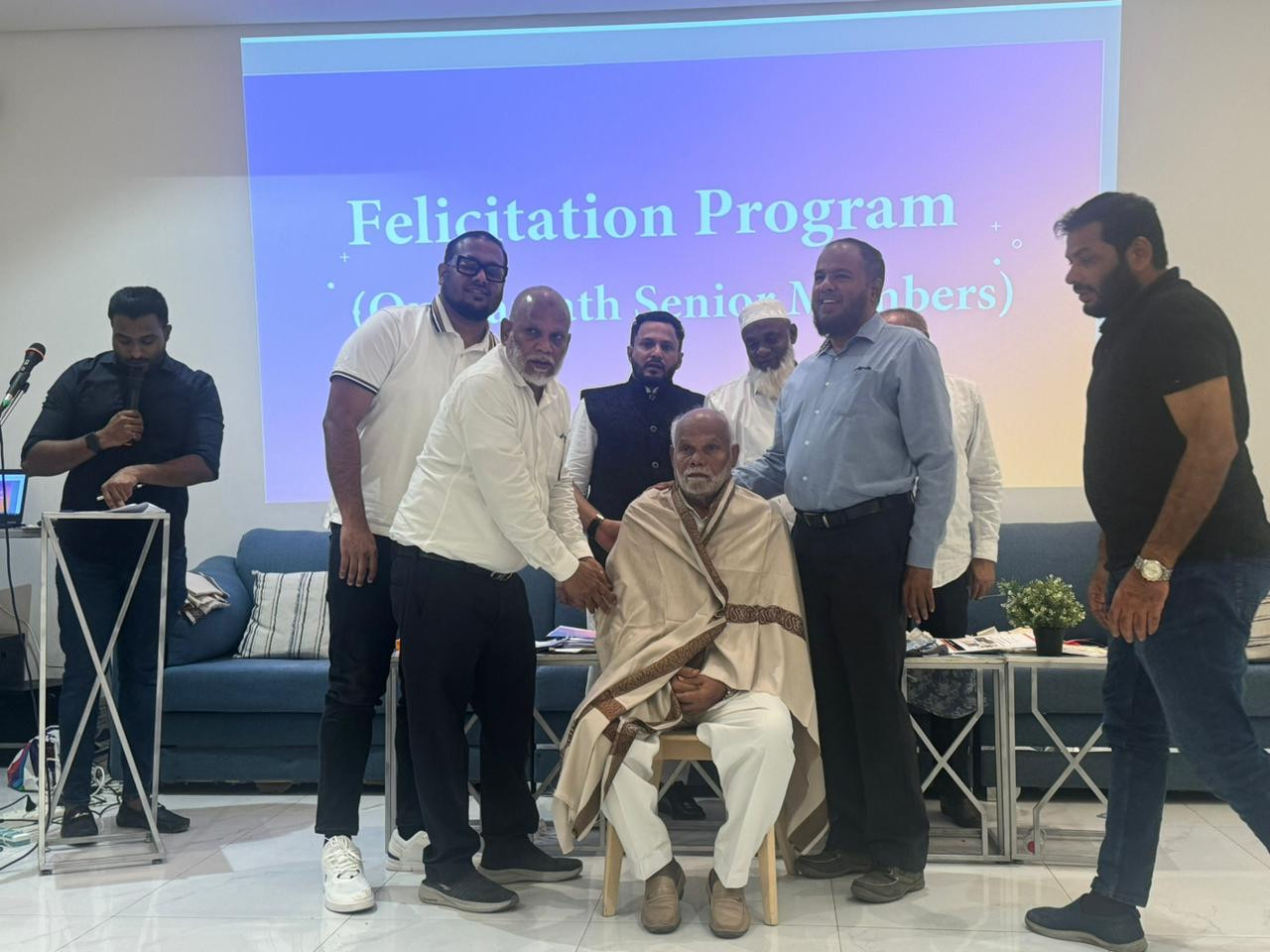
Senior members KM Iddinabba, Iqbal Hasan, and Abdul Ghafoor were honoured for their contributions to the Committee.
A quiz competition, led by Shameem Moidin, added an interactive element to the event.
New office-bearers were selected during the meeting. Sadiq Moidin assumed the role of President, while Mushtaq Ahmad and Mohammad Shaik were named Vice Presidents. Mohammad Safwan took over as the new General Secretary, with Mohammad Zainuddin and Rizwan Shafi as Joint Secretaries. KM Hasan was appointed as Treasurer.
The meeting commenced with a recitation of Quran by Muhammad Ashraf and concluded with the recitation of three salaths.
source: http://www.english.varthabharati.in / Vartha Bharati / Home> Gulf / by Vartha Bharati / October 07th, 2024
Yasir Ahmad Khan Pathan has been selected as the Congress candidate for the Shiggaon Assembly constituency by the party leadership, Chief Minister Siddaramaiah announced on Thursday.
Yasir will file the nomination in Shiggaon on Friday after taking out a procession. Party bigwigs are expected to join the event. It is prestigious for Minister for Housing and Haveri District In-charge Minister Zameer Ahmad Khan to ensure the victory of the candidate.
The constituency has a large number of Muslim community votes and if Lingayat votes are divided and Dalit and backward classes votes go to the Congress party, the victory is certain.
However, the competition is tough as BJP MP Basavaraj Bommai has been camping and touring every corner of the constituency for two months and preparing ground for his son. Unlike other constituencies, the Muslim community is not hostile towards Basavaraj Bommai as he managed good relations with them.
Yasir Ahmad Khan was defeated by Basavaraj Bommai in the 2023 assembly election from the Shiggaon constituency. He secured 64,038 votes and lost the election by 35,978 votes. In 2018, the Congress had fielded Syed Azampeer Khadri, who also lost against Basavaraj Bommai.
The Congress had delayed the announcement of the candidate as too many aspirants came forward to contest. The district in charge Minister Zameer Ahmad Khan has demanded a ticket for a Muslim candidate. However, the local leaders had contended that fielding a Muslim candidate would result in the BJP’s victory and the ticket must be given to a Hindu leader.
The demands were also raised for fielding Congress MLA Vinay Kulkarni’s daughter from the constituency to stop the polarisation of Lingayat and Hindu votes.
Deputy Chief Minister D.K. Shivakumar earlier stated “We are looking at what will benefit us politically.”
Karnataka Home Minister G. Parameshwara had said the screening committee is collecting all information. “The final decision is made on the winnability and it is the criterion. Based on the party workers’ opinion, a candidate would be selected,” he said.
Bharat Bommai, son of former Chief Minister and BJP MP Basavaraj Bommai, filed his nomination as a BJP candidate from the Shiggaon Assembly constituency in Karnataka on Thursday morning.
“I submitted my nomination at an auspicious time following my mother’s guidance. I will submit another set of nominations on Friday,” said Bharat Bommai while talking to media persons after filing his nomination in Shiggaon town.
Bharat said that people have always blessed his father and requested that people bless him as well just like they have done with his father.
“I will work for the welfare of the poor, youth, and women. If victorious, I would share details of various initiatives to be implemented in the coming days,” said Bharat.
source: http://www.daijiworld.com / DaijiWorld.com / Home> Karnataka / by IANS / October 24th, 2024
The ensemble of luxurious silks and embroidery was the quintessential garment for aristocratic Muslim women and generations of brides from my family.
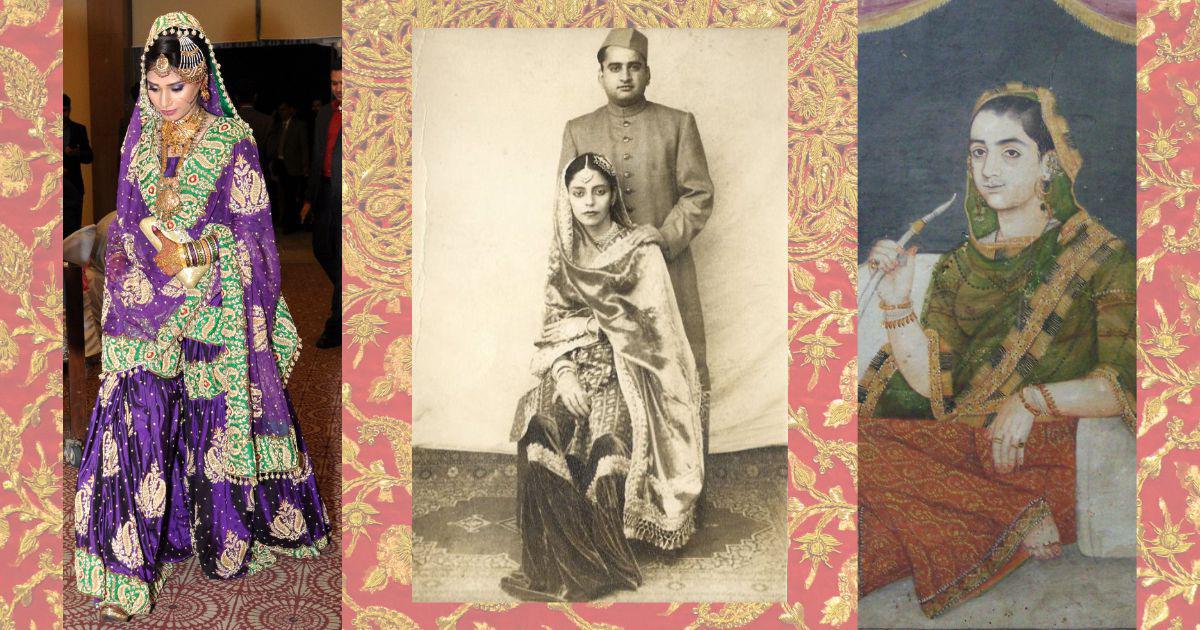
A bride in her ‘nikah’ gharara, a photograph of a couple at a wedding from the 1874 album ‘The Beauties of Lucknow’ by Darogah Abbas Ali and a miniature said to be of “Bahu Begum”, the queen of Nawab of Oudh Shuja-ud-Daula. The backdrop is of a 20th-century silk wedding gown that has been decorated using gilt thread, beads and ‘zardozi’, or embroidery. | Public domain images and Farmina Khan, CC BY-SA 4.0, via Wikimedia Commons
My cousin, Tee, relinquished her oath of singlehood, got her ears pierced and was besieged with intense gharara pangs. She would not, like the rest of us, wait for the groom’s family to bring the wedding gharara. Making your own bridal gharara was unheard of in a conservative Muslim family in 2005, but one could only expect the unexpected from Tee. The besotted groom decided to spin a story about a designer friend making the gharara and we, the sisterhood of cousins, busied ourselves in making Tee’s trousseau and the all-important nikah gharara.
The gharara is a pair of wide-legged pajamas worn with a tunic and a dupatta. A farshi gharara, which Tee craved, has a train that would trail behind on the floor – the “farsh”. For a North Indian Muslim bride, the gharara ensemble is the essence of the nuptials. The groom’s family is judged by the bridal ensemble offered and the bride sees it as a testimony of the love of her future family. My mother wept seeing her sister’s too-plain wedding gharara, feeling sure that the sister would have to endure a tough, married life.
Like Tee, I too desired a farshi gharara trailing behind me, held by my teary-eyed sisters as I walked towards my smiling groom. My in-laws got an elaborate farshi of 20 metres of cloth for me – it had sliced my waist in half and contributed to my delirious happiness.
By the mid-19th-century, inspired by Awadh fashions, the gharara became the embodiment of elegance in the aristocratic Muslim families of North India. Abdul Haleem Sharar writes in Guzishta Lakhnau, a historical work on Awadh, that in the early 19th century, ladies’ pajamas had voluminous skirts fitted at the waist and the hems were tucked in at the waist while walking – a precursor of the present farshi gharara.
Rampur, a Muslim princely state under British colonial rule, was deeply influenced by Awadhi culture. Jan Sahib Rekhtigo’s composition, Musaddas e Tahniyāt e Jashn e Benazir, which describes a festival at the Benazir Palace of Rampur in 1860s, has sketches of tawaif courtesans wearing farshi ghararas with short blouses. The book can be said to be a cultural snapshot of Rampur, reflecting the changes in its Rohilla Pathan culture.
By the end of the 19th century, the farshi gharara, or farshi pāyechā, was essential courtly attire for women attending the zenana durbar to pay respect to Her Highness Begum Rampur. It was quintessential dress for weddings and festivities. At home, the noblewomen generally wore a shorter version of the gharara gathered at the knee with an ankle-length frill. This was the gharara my grandmother wore all her life with a mulmul kurta and a crinkled cotton or georgette dupatta. The colour of the dupatta changed to white when she was widowed – she had to give up the gharara altogether when she became bedridden and was made to wear the more convenient petticoats. She knew, then, that life was dwindling to its logical end for her.
For generations, the brides of my family wore intricately embroidered Rampuri ghararas. Heirloom ghararas with real silver work were bequeathed to daughters-in-law. When my grandparents moved from Rampur to Aligarh, a wedding necessitated several trips to Rampur’s narrow gullies for embroidery and stitching of ghararas. My mother and aunts favoured the shorter gharara and the fashionable single skirt – the sharara – for their wedding trousseaus in the 1970s.
For some reason, all married aunts left their ghararas in their rambling maternal home at Aligarh as they busied themselves with childbearing, household duties and shifted locations to wherever fate and husbands took them. A large tin box was the repository of generational masses of silk ghararas, which were sunned every winter.
The ladies of the bride’s or groom’s family are dressed in ghararas – the married ones wear ghararas from their trousseaus and the singletons borrow, or, if they are lucky, get them stitched for the occasion. We sisters dipped into the gharara box trying out and fighting over the garments before every wedding. There was a hectic mixing and matching of ghararas and dupattas, the kurtas were tightened or loosened to accommodate our body types and metamorphosing bodies.
The bridal gharara was out of bounds, only to be worn by married women. It was too heavy, anyway, to negotiate the rituals and festivities in which we were to play an important role – joota churai, rasta rukai, the dancing and eating. Only an NRI cousin had her own ghararas because her mother decided to get her trousseau made years in advance, even though there was no boy in sight.
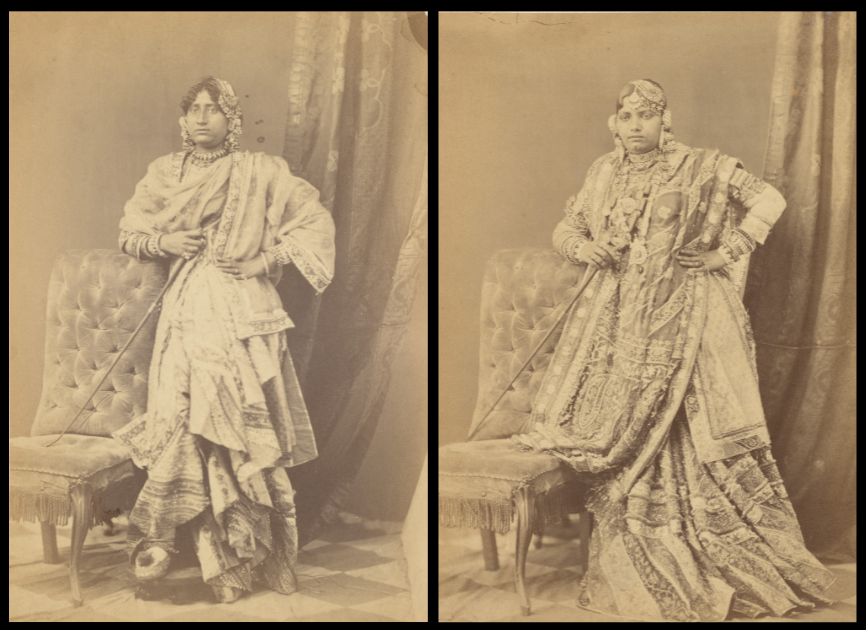
Photographs of the “dancing girls” of the “Oudh Court of Lucknow”, from the 1874 album, “The Beauties of Lucknow”, by Darogah Abbas Ali. Credit: public domain images, The New York Public Library Digital Collections.
About 20 years later, confronted with Covid-19 lockdowns and my son’s sudden decision to get married, I wished I had the NRI aunt’s foresight. My daughter had already laid claim to my nuptial ensemble. The bride and bridegroom to be, working from their respective homes, wanted only a simple ceremony before the impending third wave.
Everything could be arranged within a few days, except the bridal gharara. A gharara is generally custom made but there were no markets to get the material from: the embroiderers were ill or had been forced to close their workshops. The option of a store-bought lehenga was unthinkable. A bride had to have her bridal gharara, even in the middle of a pandemic. I was one of the hundreds of desperate Muslim mothers-in-laws attempting to make a suddenly fashionable – thanks to Pakistani wedding Instagram sites – farshi gharara. I was also trying to demonstrate our love by giving our daughter-in-law the nuptial gharara of her dreams.
I was pondering using my sky-blue Banarasi saree and magenta Kanjeevaram to make a farshi gharara when my cousin Mona, the one and only gharara queen of our sisterhood, entered the fray. “You cannot, I repeat, cannot pair a brocade with a tanchoi!” she screamed.
Over long video sessions, she pulled out her old ghararas and educated me on luxurious silks – poth, kamkhab, atlus – which had to be spruced up with dabka, aari, thread, sequins and bead embroideries. Then came the moving parts of the gharara: two legs with the upper half, called the paat, and the lower half, the goat, each with several sub parts and embroidered ribbons, tassels, and lachkas stitched to the seams. The upper tunic has now – thanks to Pakistani fashion – transformed from a short, plain garment to a long and thickly embellished kurta. And finally, the heavily embroidered dupatta.
Mona sent me a slew of Instagram photographs of farshi ghararas that left me hyperventilating. I didn’t even have the material to begin working and Mona said it took two months to get a decent gharara made. Meanwhile, my daughter had shared Kareena Kapoor’s wedding pictures on the family WhatsApp group and the bride and groom could only think of Kareena’s heirloom gharara.
Even in the 1990s, when I got married, there were few people who could stitch a farshi gharara in Rampur. Now, the Rampuri embroidery work has deteriorated, real zardozi work is hardly done here because it is more lucrative to make sequins and bead work. I contacted a gharara maker in Lucknow and sent him pictures.
“You are the 21st person who has called me for this Kareena gharara,” Mr Lucknow gharara sighed on the phone. After lamenting the sad extinction of the tissue silk – the material of Kareena’s heirloom gharara – he suddenly “found” a similar material that we could use. Mona said the best option was to buy the material from him, but the gentleman was loath to part with the material. We broke off with teeth-gushing politeness from both sides. Now, I had no cloth, no farshi in sight and two months to the wedding.
Mona, in lifesaver mode, introduced Nilo appi, an experienced farshi gharara maker from Lucknow. We could send her the brocade and monitor the work over Zoom calls. We made a life-threatening trip to Delhi, double-masked, grabbed brocades and silks in the manner of surgical strikes and couriered the material to Nilo appi.
The next two months were filled with disastrous pictures from Nilo appi and damage control Zoom meetings. The kurta sprouted stereotypical roses on the stem and had to be hidden in masses of nebulous patterns and the pearl beads on the dupatta were too trite. Finally, the kurta was declared irretrievable and the bride had to cover it by wrapping the elaborate dupatta around.
The sisterhood agreed that the red and sea green ensemble looked magnificent – Mona still mourned the kurta – the opulent skirt trailed behind the bride with timeless perfection, as she glided into our lives buoyed with our love.
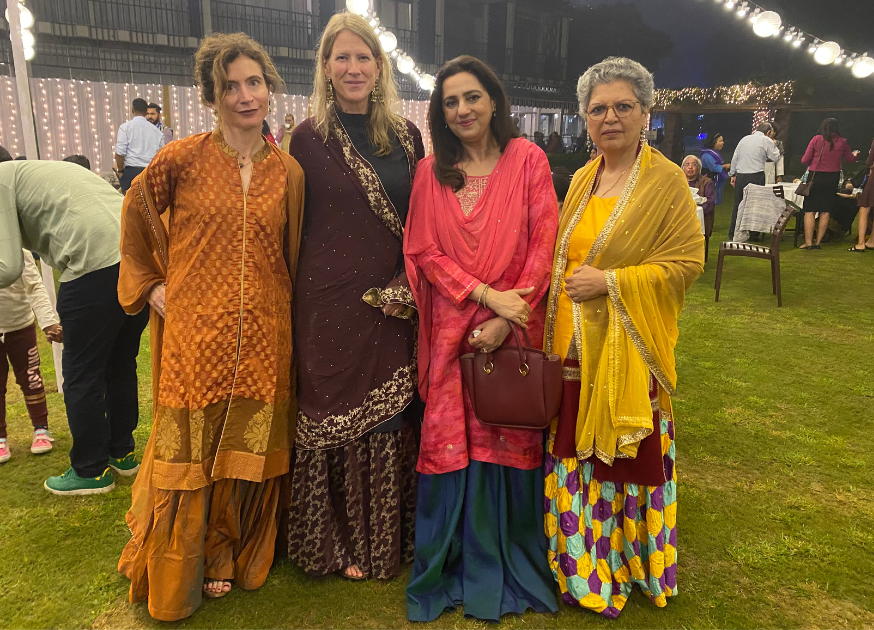
Writer Claire Chambers, Historian Siobhan Lambert Hurley with author Tarana Husain Khan and historian Rana Safvi at the Jashn-e-Rampur food festival. Credit: Tarana Husain Khan.
Tarana Husain Khan is a writer and food historian based in Rampur.
source: http://www.scroll.in / Scroll.in / Home> History / by Tarana Hussain Khan / September 22nd, 2024
‘Between Nation and Community’ cites primary and secondary sources and oral testimonies to understand what India thinks of the two universities.
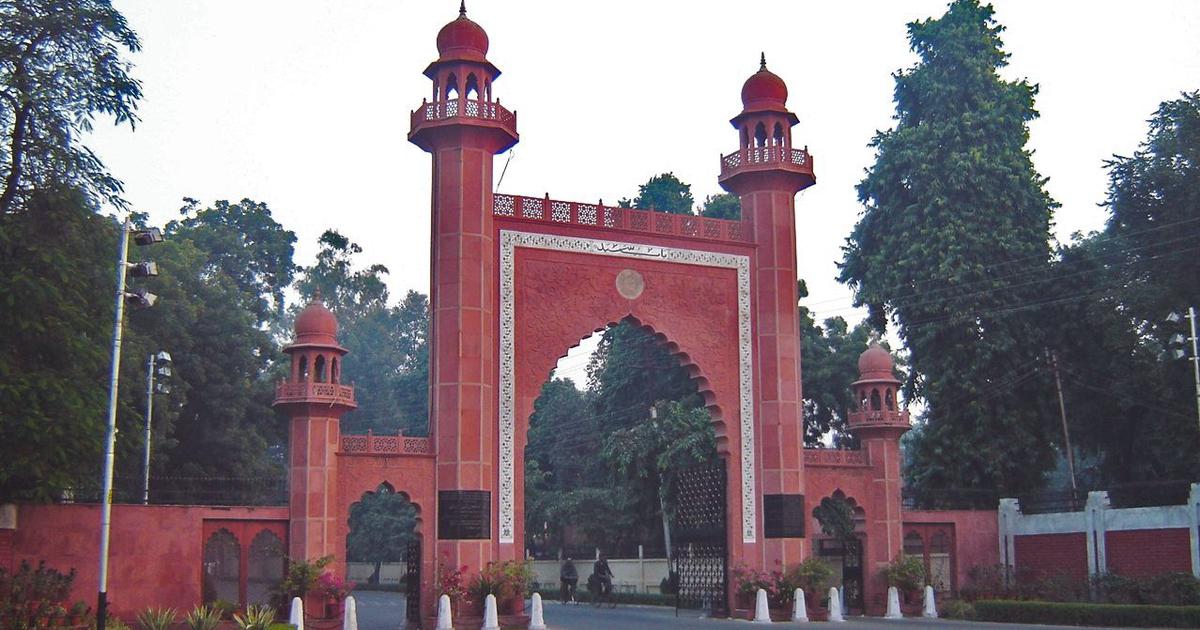
Bab-e-Sayyad, the entrance to Aligarh Muslim University. | Hhkhan / CC BY-SA 3.0
By sheer serendipity, I happened to begin reading Laurence Gautier’s Between Nation and ‘Community’immediately after TCA Raghavan’s Circles of Freedom, which locates the life and career of the barrister-politician Asaf Ali in the national freedom struggle and probes the challenges of being a moderate Muslim or a nationalist Muslim within the Indian National Congress. Coming close on the heels of Raghavan’s book, I was struck by the opening line of Gautier’s Introduction: “Can a Muslim university be an Indian university?” Clearly, the doubts and apprehensions, the mistrust and suspicion that afflict Indian Muslims similarly afflict Muslim institutions, including universities that Gautier is at pains to clarify at the very outset were “established by Muslim individuals or organisations, primarily – though not exclusively – for Muslim students.”
Between Nation and ‘Community’: Muslim Universities and Indian Politics after Partition, Laurence Gautier, Cambridge University Press.
Having worked briefly at both Aligarh Muslim University (AMU) and Jamia Millia Islamia (JMI) – a few short months at Aligarh and a few years at Jamia – I can say that there is a Muslimness, an unmistakably Muslim character to both: the time table changes during the month of Ramzan, a long break for the Juma namaz, the presence of several mosques on campus, the opening of academic/formal events with recitations from the Holy Quran, and increasingly the presence of ever more hijab-clad women (this was pointed out by mother who studied at AMU in the 1950s and noted that there were very few women in hijab let alone the full burqa in her time). The question, however, is: Does any of this diminish or detract or take away from the Indianness of these universities or, for that matter, from those who study or work here? That would lead us to the larger question: What is Indianness?
We come back to the question posed by Gautier in her very first line when she goes on to cite Gyanendra Pandey, who has compared Hindu nationalists and nationalist Muslims. Hindus are seen as nationalists by default whereas Muslims are often put to an agni pariksha to prove their nationalist credentials. As Gautier puts it: “Indian Muslims are taken to be primarily Muslims, whatever their political stance might be. Unlike Hindus, their commitment to the nation cannot be taken for granted; it has to be proven, for their Muslimness casts doubt on their Indianness.”
Incidents like Batla House in the Jamia neighbourhood or the anti-CAA protests at both JMI and AMU bolster the argument that these universities are nurseries of disaffected anti-nationalists and prompting a politician to famously declare: “Desh ke gaddaron ko…Goli maaro saalon ko.”
Aligarh Muslim University and Jamia Millia Islamia
While there is much to read and reflect on in this richly detailed book that brings together, seamlessly, many primary and secondary sources and oral testimonies, a few things need to be flagged. One is the obvious differences between AMU and JMI, by now both Central Universities though the two have entirely different histories. The reasons and the circumstances behind their establishment and their distinct “historical character” have cast a long shadow on their growth and development. AMU was set up to provide secular, western education to the Muslim qaum in a campus modelled on the colleges at Oxford and Cambridge, and to “develop a strong bond with the colonial authorities in order to preserve their access to power”.
JMI on the other hand clearly had different ideas right from its inception: “Hers was a voice of rebellion, one that highlighted the dissonances within the supposedly unified Muslim community.” A splinter group of ardent nationalists, led by Maulana Mohamed Ali, broke away from the MAO College to set up a new kind of educational institution devoted to the service of the nation. In the heady days of the Khilafat Movement and the high noon of Hindu-Muslim unity, Gandhi pledged instant support to this new venture, famously declaring to go begging bowl in hand, if need be, to support this nationalistic enterprise.
It’s interesting to note the different treatments meted out to the two universities immediately after independence, and their vastly different public perception. While AMU was given Central University status in 1951, one among three central universities, Jamia – that had once been famously called the “lusty of the freedom movement” – struggled financially. It seems as though it quite suited the Congress government of the day and Nehru in particular – who had close personal ties with several of Jamia’s teachers and was a frequent visitor – to view the Jamia as a quaint space where visitors such as the Shah of Iran would be shepherded to view its projects and schemes.
Even the cover photograph on Gautier’s book written with immense empathy though it is, perhaps unintentionally, reinforces this quaintness with gamine-faced boys dressed like grown-ups in shervani and Gandhi caps against a building designed by the German architect Karl Heinz. There are other photographs in the Jamia archives showing several eminent people earnestly poring over rough-and-ready hand-made charts and diagrams. Overall, the picture that emerges is that it suited everyone to have this quaint, charming, idealistic venture in one’s backyard as long as it showed no great ambitions to grow into anything bigger or grander.
The Jamia too, I suspect, chose to live in a shell of its own making, hiding its light under a bushel, making a virtue of frugality and simplicity and service. It seemed content to allow the world to view it as a curiosity, a whimsical other-worldly place, a retreat from the mainstream; for some, it was even a recalcitrant child bent upon being odd and different from others, especially its older sibling, the AMU. For far too long, the serious students and the professional scholars stayed away from the Jamia choosing to go to AMU instead.
The differences
The Jamia biradari – a word constantly used by Prof Mushirul Hasan, the most faithful chronicler of Jamia’s history – was a close-knit community. Being small, much smaller than the sprawling AMU campus, Jamia fostered from its earliest days a sense of fellowship among its students and teachers. We get a sense of that in the oral testimonies and memoirs of its teachers and students frequently referred to by Gautier: the annual Jamia Mela, the idea of selfless service (be-laus khidmat) reinforced by teachers often voluntarily taking cuts in their salaries, the emphasis on community service and shram daan, the sense of community living, the devotion of not just staff but their families to the “idea” of Jamia, all of which was fostered by the compactness of the campus. Also, Jamia was more democratic in its functioning than AMU, again possibly due to its size. In this, it drew inspiration from early Islamic society. There are instances of school functions starting punctually on the dot when the chief guest, Vice Chancellor Dr Zakir Hussain, happened to be running late.
Then there was the presence of female students from its earliest days – in classes, in reading rooms, even on stage – with the earliest students being daughters and sisters of Jamia teachers and workers. However, as Gautier points out, this was “primarily out of practical considerations, not out of ideological principles” and Mujeeb, a long-serving Vice Chancellor, recognised it as a valuable project only in hindsight. Whatever the reason, Jamia offered new opportunities for women in its feeder schools, Balak Mata centres, teacher training courses, and adult literacy classes.
The presence of women on campus seen as a threat in AMU with Islamist groups gaining ascendancy, was much less so in JMI in the 1970s and 80s when debates on “proper” and “improper” mingling of the sexes began to gain ground between the “conservatives” and “progressives” and questions about the presence of women, especially in cultural programmes, began to be raised. While present in JMI, too, these voices were muted and not as strident as in AMU.
Then, there is the rather obvious difference of location and how that has impacted the development of the two universities: Jamia’s location in Delhi compared to AMU’s approx 180 km away. While in the early years, AMU was far more cosmopolitan than the mosquito-infested neck of the woods beside the Yamuna that was home to Jamia, from the 1980s a perceptible change became visible. The establishment of a working women’s hostel in 1982 by AJ Kidwai was possible in Jamia primarily due to its location, followed by the MCRC. We see that change accentuated in recent years in the changing profile of both staff and students with Jamiabeing more open to change and AMU becoming more closed, more insular, more inward-looking.
source: http://www.scroll.in / Scroll.in / Home> Book Review / by Rakshanda Jalil / September 29th, 2024
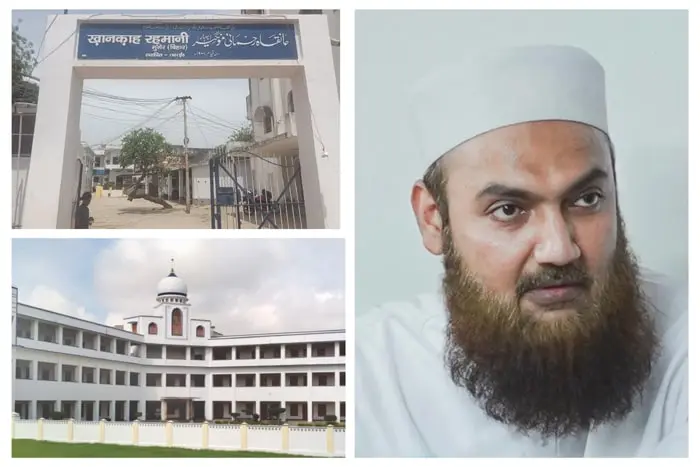
The long history of social change at Khanqah Rahmani. Where freedom fighters and future leaders meet. Rahmani30 has sent 513 students to different IITs and 838 students to the National Institutes of Technology (NITs)
Munger:
When you reach Khanqah Rahmani during the last asra (phase) of Ramadan, you will find hundreds of people doing itikaf – a ritual, in which faithful reside inside the mosque from the night of the 21st Ramzan till the sighting of the Eid Moon. They pray and fast and reside there only. Mohammed Salauddin, is a regular for itikaf for three decades.
The 64-year-old man remained associated with Khanqah for the last 32 years.
And the obvious question arises, what does he get by giving so many years of his life in the Khanqah?
“Everything,” the tall man gives a single-word answer. And adds, “I am an angutha chap (an illiterate person). For employment, I got a driving license in 1982, and since then I started working for the Rahmani Saheb family. And did other jobs as well but remained attached to the Khanqah.
“Later Salauddin got married and became the father of two sons. Both of his children studied in Jamia Rahmani.
“I became hafiz from Jamia and then did an initial study of Alimiat from here. And went to Deoband for the completion of Alimiat. And took a graduation degree from Munger, MA from CCU Meerat, BEd from Haryana, Mass communication from Jamia Millia Islamia. I cleared state and centre level teacher’s eligibility tests. Then sat in the examination of Bihar Public Service Commission’s TRE2 and became a teacher in February this year,” informs Mohammed Najmuddin, Salauddin’s son. Najmuddin is also pursuing a PhD from Munger University.
Najmuddin is not alone. Along with him, Mohammed Mudassar Usmani (MA, MEd), Akbar (MA, BEd) and Mohammed Hassan (BA, BEd) all are huffaz of Khanqah Rahmani who cleared the BPSC TRE 1 and 2 and have become teachers in 2023 and 2024.
Najmuddin’s elder brother Shahabuddin also a hafiz from Jamia is now an officer in the National Council For Promotion Of Urdu Language, has done a BA from Jamia Millia Islamia, MA from Maulana Azad Hyderabad, qualified NET and done an MPhil from Delhi University before joining NCPUL, Delhi.
“All these were possible for a person like me because of Khanqah Rahmani and its educational centres,” claimed Salauddin, the father.
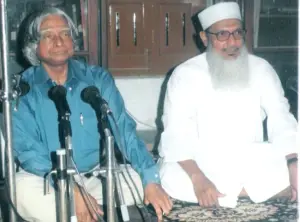
APJ Kalam and Mohammed Wali Rahmani in Khanqah Rahmani in 2003 | Arranged
The history of Khanqah Rahmani
It was established in 1901 by Maulana Mohammed Ali Mungeri. Since then the Khanqah not only remained as a center for societal reform and purification of souls but also helped freedom fighters during the freedom struggle. Freedom fighters like Mahatma Gandhi, Jawahar Lal Nehru, Abul Kalam Azad and Dr Rajendra Prasad among others stayed at this centre. Former Prime Minister Rajiv Gandhi also visited the Khanqah.
After Ali Mungeri, Maulana Syed Shah Lutfullah Rahmani, his nephew ran the centre. And thereafter Minnatullah Rahmani and then his son Mohammed Wali Rahmani and now his son Ahmad Wali Faisal Rahmani is taking care of it. His brother Fahad Rahmani is the CEO of Rahmani Programmes of Excellence under which Rahmani30 functions.
Khanqah was also been instrumental in establishing the All India Muslim Personal Law Board, which safeguards Muslims in protecting their personal laws and identities.
Who is Ahmad Wali Faisal Rahmani, the present head?
The chief of Imarat-e-sharia and the secretary of All India Muslim Personal Law Board, Ahmad Wali Faisal Rahmani, is also head of the Khanqah. He has studied Information Technology from the University of California and worked as a teacher there. His professional career also includes working for Adobe and British Petroleum. However, Faisal Rahmani got his early education in Khanqah Rahmani as he got his elementary education in Arabic, Quran, Deeniyat and Mathematics in the Khanqah. He started looking after the activities of the Khanqah after the demise of his father Mohammed Wali Rahmani.
Whenever he gets time from the activities of Imarat Shariah and AIMPLB, he spends time in the Khanqah. He does not let anyone chide even a screaming child. There are a large number of women who come to listen to him. He prefers to eat along with the students and members as well as the faculty of the centre.
Students of Rahmani BEd College | Arranged
Jamia students hold the Quran on one hand and tablets on other
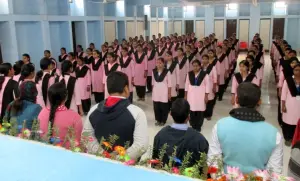
Jamia Rahmani, which came into existence in 1927 is one of the several centres run by the Rahmani Foundation , a charity body of Khanqah Rahmani. Jamia’s students not just memorize the Qur’an, but also understand it by learning Arabic.
Here, every student also learns science, English and Mathematics as well and gets tablets for their study. They have smart classes too.
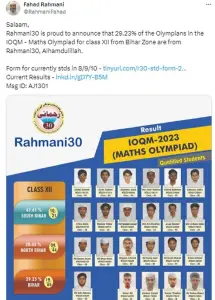
But this is just the beginning for the students. The Khanqah has Rahmani30, to prepare for JEE Advanced (IIT), JEE Mains. It has branches in several cities across India. There is also a centre for Medical (NEET) entrance and for the preparations for Chartered Accountant and Company Secretary entrances. It has a BEd College, which has a large number of female students. Jamia Rahmani has added several new courses after 2011.
“When Ahmad Wali Faisal Rahmani became head here, the first thing he did was, start a one-year Diploma in Mass Communication in journalism course in Jamia. Later started two years of Master in Islamic Jurisprudence Study and last year, a two-year course, Diploma in English Language in Professional Skills also began,” said Fazle Rahma Rahmani, head of the Department of Journalism and Mass Communication.
The Khanqah also provides residential facilities to the families of its faculties as well as the cooks. It provides meals to almost 1200 people three times a day. Most of the beneficiaries are the Jamia students and people associated with the Khanqah.
Then there is the Rahmani School of Excellence (where students can get enrolled in a Nursery and study up to standard twelve). In the School Management Committee, Muslims as well as non-Muslims teachers are present, it has females too. And it has a diverse background of students.
“While Jamia Rahmani and Rahmani30’s study is completely free, BEd, school education and other studies have some fee structure. But where there are fees, Khanqah authorities give scholarships to needy students and have a liberal approach to such cases where parents approach the centre. Money never became a hurdle in getting an education from the educational centres related to Khanqah,” points out Fazle Rahma.
Since the inception of Rahmani30, 513 students have been admitted to different IITs in the country. While 838 students reached JEE Advanced to get admission to the National Institute of Technologies (NIT) during the same period.
“Several students of School of Excellence have become IITians so far,” claims Fazle Rahma.
Whereas, many students of different centers of Rahmani30 also take part in the Olympiad, every year.
The Jamia Rahmani’s Taleemgah building was inaugurated by Former President of India APJ Abdul Kalam. Kalam, who wanted to be known as a Professor rather than a former President, in 2003 itself, says a lot about Khanqan’s educational work.
From the stage of Khanqah, the scientist claimed that he was also a student of the Madrasa Board.
However, neither before the visit of the President of India nor after it, did Khanqah Rahmani’s educational works got the attention that it should have got the mainstream media.
source: http://www.enewsroom.in / eNewsRoom India / Home> Education / by Shahnawaz Akhtar / April 09th, 2024
Thirty two students from humble background clear NEET 2023 with the help of Urooj, celebrate medical dreams.
Kolkata :
Three years ago, amidst the fast-paced hustle of Blinkit, grocery deliveries zipped past Mohammed Iqbal. But on Sunday, in a Kolkata school auditorium, a stethoscope draped around his neck marked a stark contrast to his past – a future doctor stood ready to embark on a new journey.
“In 2021, I was an auditor for Blinkit. I have to visit Blinkit stores and check their qualities,” Iqbal, now a student of Bachelor in Dental Studies (BDS) at Burdwan, reminisced. “My father ran a small clothing shop. Juggling studies and supporting my family, NEET (National Eligibility cum Entrance Test) coaching seemed like a distant dream. That’s when I found Urooj.”
Urooj Institute, recognizing Ahmed’s financial constraints and demanding work schedule, extended a helping hand. Dr Minhjuddin Khurram, the institute’s anchor man, vividly recalled their first meeting,
“He came in wearing a Blinkit t-shirt. We understood his situation – he couldn’t afford coaching while working in a job where he has to be mobile most of the time. So, we helped him secure a librarian job, allowing him to study for NEET while earning an income.”
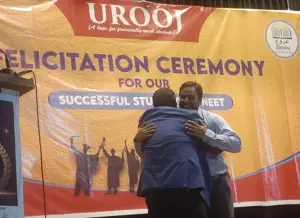
Teacher Amrendra Kumar (face not visible) and Dr Minhajuddin Khurram hug each other during the felicitation | eNewsroom
This act of support and understanding proved crucial. With renewed focus and dedication, Ahmed aced the exam on his second attempt. Now, he sets his sights even higher, aiming for an MBBS seat next time.
Similar struggles resonated in the story of Sarfaraz, a former freelance video editor. “My father, a primary school teacher who started working late in life, couldn’t afford luxuries,” Raiyan, now a BDS student, shared. “To support myself, I did video editing. Urooj’s guidance proved invaluable, helping me score 569 marks in NEET 2023.” Like Ahmed, Raiyan plans to retake the exam to improve his rank and qualify for an MBBS seat.
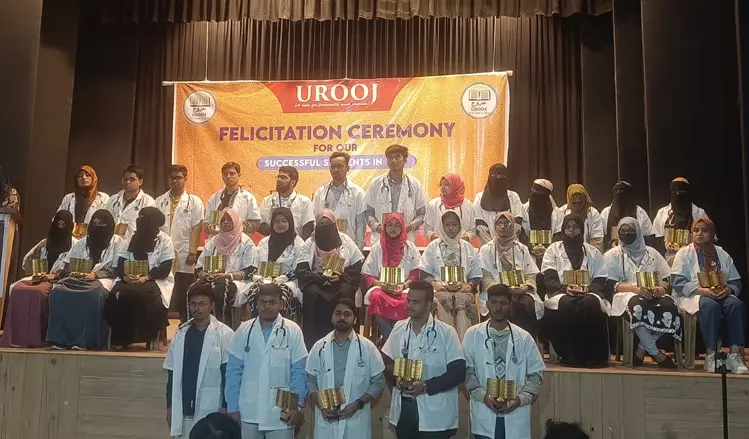
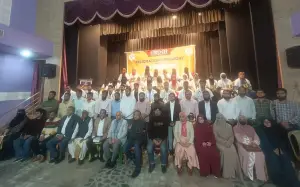
Ashraf, whose father owns a paan shop, and Shenaz, daughter of a bus driver who fell short of an MBBS seat by just one mark in 2022, were among the 32 Urooj students celebrated by renowned practicing doctors in Kolkata.
The evening buzzed with stories of resilience and triumph, each one a testament to the transformative power of opportunity.
Urooj’s students with the felicitating doctors | eNewsroom
Urooj also recognized its partners, including Headmaster Mohammed Alamgir of MD High School. His words resonated throughout the hall, “The government invests heavily in each doctor’s education – crores of rupees, funded by taxpayer money. So, if you studied at a government medical college, remember your responsibility to serve the public. Don’t think your success solely relies on you and your parents’ hard work. Society plays a vital role through taxes.”
Several doctors echoed Alamgir’s sentiment, urging the newcomers to pay it forward by helping others pursue their medical dreams, just like Urooj helped them.
On the occasion, Urooj also honoured three of its teachers- Md Irshad, Amrendra Kumar and Nadim Haider.
Abdullah Amir of Helping Hand Trust told the medical students about the butterfly effect and that every small work matters.
Dr Jawera Mehreen reminded the students, “In Palestine, doctors are true heroes. Remember, you have to serve the humanity wherever you will be.”
These 32 young individuals, embarking on their journeys as future doctors, represent not just personal triumphs but testaments to the power of collective support and dedication. As they step into the white coats, a shared commitment to serve humanity unites them, a promise whispered in the echoes of their past struggles and fueled by the unwavering support they received.
Last year, 22 students of Urooj, most of them from humble background had cleared NEET 2022.
The names of the students have been changed on their requests.
source: http://www.enewsroom.in / eNewsRoom India / Home> Education / by Shahnawaz Akhtar / February 12th, 2024
In Siyasi Muslims, Hilal Ahmed offers “an evocative story of politics and Islam in India, which goes beyond the given narratives of Muslim victimhood and Islamic separation”
How do we make sense of the Muslims of India? Do they form a political community? Does the imagined conflict between Islam and modernity affect the Muslims’ political behaviour in this country? Are Muslim religious institutions, such as mosques and madrasas, directly involved in politics? Do they instruct the community to vote strategically in all elections? What are ‘Muslim issues’?
These are just a few of the questions Siyasi Muslims (Penguin India), a recently published book by Hilal Ahmed, attempts to answer. “Examining the everydayness of Muslims in contemporary India, Hilal Ahmed offers an evocative story of politics and Islam in India, which goes beyond the given narratives of Muslim victimhood and Islamic separation,” a synopsis for Siyasi Muslims reads.
Ahmed, who is associate professor at the Centre for the Study of Developing Societies in New Delhi, discusses some of the ideas articulated in his book in this interview with Firstpost.
You begin your book with Ramachandra Guha’s now infamous op-ed in Indian Express in which he compared the burqa with a trishul. While Guha later admitted that his comparison was ill-chosen, you write that even in his clarification, the idea of the Muslim community as an unchanging and regressive monolith remains. In your experience, how pervasive is this gaze about Muslims among liberal intellectuals?
Let me begin with a clarification. I find Ramachandra Guha’s intervention very powerful and provocative. He forced many of us to revisit the idea of Muslimness to problematise the given imagination of public presence of Muslims in postcolonial India. This line of argument is not systematically explored — primarily because Muslimness is always seen in relation to aggressive Hindutva.
Guha, in my view, pushes us to get rid of the official story of Muslim victimhood and pay close attention to those internal power structures which determine the everyday life of Muslim communities. In this sense, Guha was criticised for the wrong reasons!
I did not respond to the Indian Express debate intentionally. The debate centres on a puzzling binary between ‘declared liberals’ and ‘problematic liberals’. It gave us a strong impression that complex ideas and arguments about Muslims can easily be accommodated in these neat and clean categories. It was not an easy task for someone like me to adjust my findings and inferences in this framework.
There was also a problem of perception. Those who participated in the debate (except a few) did not take the idea of Muslim social and political heterogeneity very seriously.
We must remember that there is a difference between Muslim presence and Muslim everyday life.
Muslim presence is always constituted as a homogeneous entity in the public discourses; while highly diversified Muslim everyday life has its own pace and rhythm. Many a time, we invoke ‘Muslim presence’ as a read-to-use-template to explain virtually every aspect of Muslim social life.
This is what we observe in this debate as well. Most of the participants expressed their opinions to the nuances of Muslim presence without problematising the idea of Muslim oneness. This analytical laziness eventually led to oversimplification. Consequently, we are again forced to choose between liberal beliefs and Hindutva stereotypes.
Nevertheless, I do recognise the significance of this debate. In this sense, I offer a constructive, critical analytical framework in Siyasi Muslims — not refute what Guha and his adversaries argue — but to expand the scope of the present mode of thinking about Muslimness and its politics.
Your book is prefaced with an FAQ that has 19 questions and answers about Muslims and politics. This is not something commonly found in books and I couldn’t but think of it as a burden of a Muslim scholar writing on Muslims to clarify certain positions and address misinformation up front. Did you imagine the FAQ as something similar? Who do you think is the audience for this book?
I am a trained researcher and an academic. I write primarily for an academic public — teachers, researchers and students of social sciences and humanities. But Siyasi Muslims is not written exclusively for them. My aim is to reach out those readers who are interested in knowing about Muslims and Islam or what is now called ‘political Islam’.
I have been observing for a long time that our English-educated public in general and literate public in particular do face two very specific problems:
First, the ‘reading culture’ is declining. The pace of life, especially in metro cities, where English-educated readers are mainly located, does not allow them to follow an argument in densely written texts. I often describe the contemporary moment of knowledge as an “FAQ moment”. The reader wants a summary that can navigate him/her into the text.
Unlike other academics, I do not blame my students/readers for their apathetic attitude towards reading. They are the product of the FAQ moment! On the contrary, I take up this challenge as an author to write for an indifferent reader — to provoke him/her to go beyond the WhatsApp University and FAQ mode.
The second problem, in my view, is related to the subject matter — Muslims/Islam. As I said, we rely heavily on a few liberal beliefs and Hindutva stereotypes to think about Muslims. The 19 FAQs I identify in the book emerge from these perceptions. As an academic, I believe that it is my duty to answer these questions by using my research tools so that the reader could draw her/his own informed meaning. I believe that this book must also be written in Hindi so that it could reach out to non-English readers as well.
That said, I do not feel that it is a burden for me because I am a Muslim. My Muslimness is also related to other identity attributes of my individual self: I am a teacher, a researcher, and an author. These attributes are not in conflict with each-other.
You touch upon the issue of caste among Muslims a few times in the book and also profile Ali Anwar. Caste has been one of the most glaringly omitted aspects in studies and theoretical frameworks about Indian Muslims so far, and consciousness about it among mainstream and upper caste writers is very nascent and due to the work and assertion of Pasmanda scholars and activists. How would you say your understanding of caste has affected the manner in which you understood politics around ‘Siyasi Muslims’ in India?
Yes, I agree with this observation. I admire the Pasmanda movement because this has given us a new vantage point to look at the question of Muslim social stratification and the diversity of Muslim political discourse in India. In my view, the Pasmanda movement as an intellectual force has expanded the scope of the tradition of the internal critique initiated by Hamid Dalvai and further developed by Asghar Ali Engineer and Ali Anwar.
My understanding of caste among Muslims is inextricably linked to my theoretical position on Muslim politics.
I believe that caste, class, and gender play a very powerful role in shaping the nature of Muslim engagements with different form of politics.
Two related arguments that emerged in different historical moments — the 1960s and early to mid-2000s — may be useful to elaborate this point:
The 1960s argument was that Muslims must act as a homogeneous minority pressure group in the realm of competitive electoral politics so as to protect their cultural-religious interests. This evocation of Muslim oneness allowed the upper caste, upper class, aristocratic and/or Ulama elite to establish themselves as community representatives.
In the mid-2000, especially after the publication of the Sachar Report — a revised version of this argument is produced. We have been told that Muslims are more backward than Scheduled Castes. Therefore, there is a need to have a comprehensive agenda of Muslim empowerment.
No one can deny that Muslims are poor and marginalised. But, it does not mean that they should be treated as a singular entity for the purpose of affirmative action. The caste and class are two important sociological indicators to offer a context-specific view of Muslim backwardness.
Interestingly, the publication of the Sachar Report, which aimed at transforming the Muslims into a developmental category, eventually reestablished Muslim homogeneity as a frame of reference in the political sphere. This led to what I call a counterproductive politics of Hindutva victimhood.
In a chapter on religiosity, you use CSDS data to note that unlike what is otherwise perceived, Muslims do not think of themselves as very religious, and many Muslim do not observe namaaz or roza regularly. This is important to note but I have a question on the method of understanding and determining religiosity in general.
You treat the “Five Pillar Theory” [of Shahada (belief), Namaaz, Roza, Zakat and Hajj> as the root of Islam for Muslims in India. However, are there any studies to show that Muslims across India consider these the basic constituents of Islam in their lived experience? I ask this because recent work by religious studies scholars iterates that daily lived experiences and practices are a better marker of religiosity than “belief”.
For example, what about subcontinent practices like faith in a mazaar and dargah that many Shia and Sunnis communities swear by? Are they necessarily subordinate to the “Five Pillars” of Islam?
This is a very valuable question. I agree with your point that Muslim religiosity should not be reduced merely to the Five Pillar Theory.
However, the purpose of that chapter is not to reestablish the supremacy of textual Islam over the lived religiosity. On the contrary, I am interested in unpacking the idea of pucca Musalman — a dominant mode to measure Muslim religiosity and moral conducts. This question leads me to two sets of issues: the nature of organised/reformed Sunni Islam and the self-perceptions of Muslims about their own religiosity.
The Five Pillar Theory, in this schema, emerges as an important reference point to compare the Muslim self-perceptions about their own religious practices. If you closely look at the structure of the chapter and presentation of data, you may find that it actually corroborates the point you make here: Muslims do not think that they are sufficiently religious because various forms of lived religiosities cannot entirely be accommodated in the given framework of textual-reformed Sunni Islam. The chapter ends with Hali’s comments on everyday religiosity and the attitude of [the> Ulama to further substantiate this argument.
You have dedicated a chapter to discuss Muslim “backwardness”. You show that only six percent of the total Muslim male workforce manages to get white collar occupations, and Muslims constitute only three percent of the directors and senior executives among the BSE 500 companies. Could you throw some light for our readers on what these numbers say about the overall backwardness of Muslims in general, and class-caste disparity among Muslims?
There can be two ways to look at this issue. We may interpret the given set of information to underline Muslim backwardness by arguing that there are very few Muslims in white collar jobs. However, we can also infer this data to make a completely different observation: it can be suggested that there are very few Muslims at top level which shows that there is serious economic disparity among Muslims in India. In my view, both of these interpretations are valid for the purpose of my argument. I try to demonstrate the nature of class division among Muslims to show how the idea of backwardness merges with the emerging forms of politics, especially in the post-Sachar period.
Muslim Personal Law has been in the eye of the storm with the Triple Talaq Bill. In your book, you write about how the evolution of Sharia as a legal entity drew its inspirations from colonial modernity. How do we understand the Sharia vis-a-vis the Quran on one hand and colonial modernity on the other?
The Islam we know today (which is often described as a more than 1,400-year-old religion) is a relatively new phenomenon.
Muslims in India — and for that matter South Asia — follow those versions of Islam that emerged in the 19th century as religious reform movements. This is true of other religions as well. The Islamic reform movements had to respond to colonial rule in two very different ways: First, they had to adjust themselves with a new kind of political institutions, which were completely alien to them. On the other hand, the intellectual challenges posed by the colonial knowledge system forced the religious elite to reconfigure their imaginations of Islam itself.
Interestingly, they imbibed the framework of modern knowledge to produce a more organised form of Islam: the society of the Prophet Mohammad was identified as the classical Islamic past; the spread of Islamic power was presented as the triumph of Islam; strict sets of rules and norms were codified as Shariat. This structured form of idealised religion eventually received official recognition by the colonial state. The Shariat Law of 1937 is good example in this regard. This process continued in postcolonial India in a very different form. The Islamic religious organisations and elites recognised the discourse of minority rights as a source to refashion their interpretation of Islam.
In this backdrop, the book makes a modest attempt to problematise the popular perceptions about Shariat and its politics, especially with regard to the triple talaq issue.
Many readers would be surprised to read that the Shahi Imam of Delhi’s Jama Masjid appealed to vote for the BJP in 2004. In your book, you suggest that around 6-7 percent of Muslims vote for the BJP at the national level. But you go on to say that “in 2014, there was a tacit acceptance of Narendra Modi among Muslims”. What makes you say that?
I have written extensively on fatwa politics and the idea of the Muslim vote bank in my first book, Muslim Political Discourse in Postcolonial India: Monuments, Memory, Contestation (2014), which examines the nature of Muslim politics.
The second part of the question is about the 2014 elections. We find that unlike previous elections, the Muslim support for BJP increased significantly in 2014. The party managed to get around nine percent Muslim votes at the national level. This trend continued in 2019 as well.
However, this national picture must be adequately analysed. There are four important aspects of Muslim voting, which we must note while discussing the increasing vote share of BJP among Muslims:
First, Muslim voting pattern depends on party competition at the state level. In those states where the nature of electoral competition is bipolar (meaning there are only two main parties in the fray such as Gujarat), the Muslim vote would naturally be divided between two main contenders. Therefore, the chances of the BJP to secure Muslim voters would be higher.
Second, we must also remember that a number of regional leaders have joined the BJP in last few years. These leaders also bring with them a section of ‘loyal voters’, which also includes Muslims.
Third, elections are always fought at the constituency level, where personal equations, caste considerations and economic interests play a major role. BJP, like other parties, try to use informal network to attract Muslim voters at this level.
Finally, the anti-Muslim discourse somehow also creates an atmosphere of fear. Muslims are directly threatened to vote for the BJP, like Maneka Gandhi in one of her election meetings this time.
source: http://www.firstpost.com / Firstpost / Home> Lifestyle / by Shireen Azam / August 17th, 2019
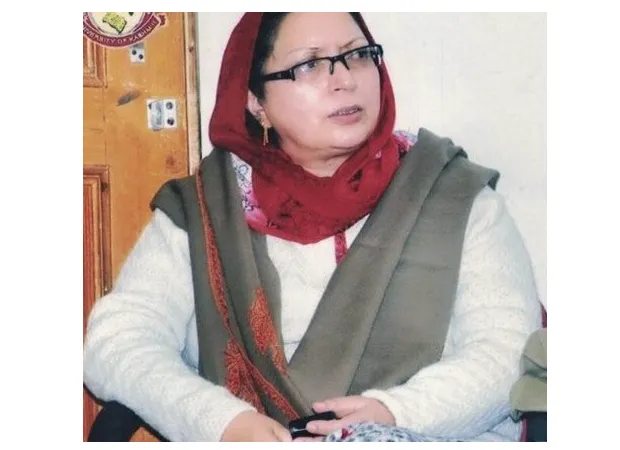
The university observed a two-minute silence to honour Prof Neelofar Khan
File/GK
Srinagar :
The University of Kashmir (KU) mourned the demise of Prof Neelofar Khan, a distinguished scholar and former Director of the Centre for Distance and Online Education (CDOE) and the Directorate of Lifelong Learning (DLL) during a condolence meeting held here Wednesday.
Prof Khan also served as the Coordinator of the National Service Scheme (NSS), leaving behind a legacy of significant contributions to the university and the broader academic community, an official statement issued here said.
The Dean of Academic Affairs, Dean of Research, Dean of College Development Council, Deans of various schools, Heads of Departments (HODs), and other officers of the university administration, teachers, scholars and students attended the condolence meeting expressing their grief over the loss.
The university observed a two-minute silence to honour Prof Neelofar Khan.
“The university community, particularly the academic fraternity is deeply saddened by her passing away and expressed profound sorrow and extended heartfelt condolences to the bereaved family,” a spokesperson said in the statement.
In her condolence message, KU Vice Chancellor Prof Nilofer Khan, conveyed her sympathies to the bereaved family on behalf of the entire university community, including teaching and non-teaching staff as well as students.
“Prof Neelofar Khan was not only a committed academic but also a visionary leader who significantly shaped the educational landscape at the University of Kashmir. Her dedication to expanding educational opportunities and fostering a culture of lifelong learning will continue to inspire us all,” the KU Vice Chancellor said.
KU Registrar Prof Nasser Iqbal also paid tributes to the departed soul.
He said, “The university has lost a remarkable scholar and an exemplary leader. Prof Khan’s contributions will remain etched in the history of our institution and her legacy will continue to guide us.”
Meanwhile, a separate condolence meeting was held at the office of the Director of the Centre for Distance and Online Education, where staff members, teachers, scholars and students gathered to honour the memory of Prof Khan.
The attendees shared fond memories of her impactful work and prayed for her soul to rest in eternal peace.
Director, CDOE, KU, Prof Showkat Ahmad Shah in his condolence message said: “Prof Khan’s tenure at the University of Kashmir was marked by dedicated service in several key roles. Her leadership at the Centre for Distance and Online Education and the Directorate of Lifelong Learning was instrumental in expanding educational access and promoting the principles of lifelong learning. Her contributions have left a lasting impression on the university and her influence will be felt for generations to come.”
“The University of Kashmir mourns the loss of a beloved educator and leader and extends its deepest condolences to Prof Neelofar Khan’s family,” he said. “Her contributions to the academic community will be remembered with enduring respect and admiration.”
source: http://www.greaterkashmir.com / Greater Kashmir / Home / by GK News Service / August 29th, 2024