Kirmani wishes team for ODI World Cup for the Blind

Bengaluru, KARNATAKA :

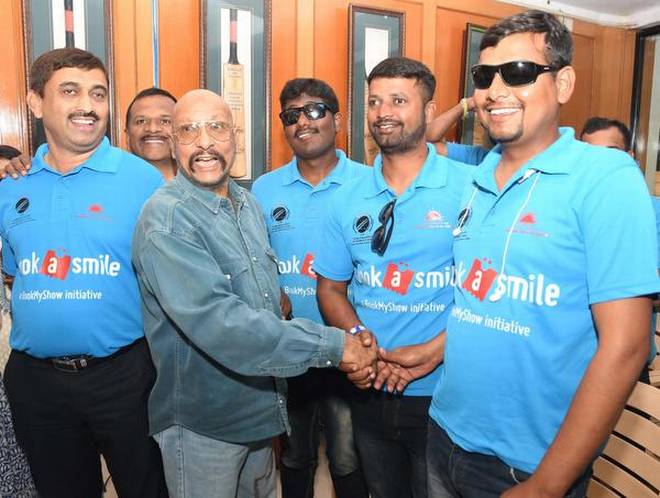
Mahantesh G. Kivadasannavar, founder and managing trustee of Samarthana Trustm, former cricketer Syed Kirmani, cricketers Prem Kumar Prakash Jayaramaiah, Mahender Vaishnav and others at the closure of the coaching camp for the Indian cricket team for blind, in Bengaluru. | Photo Credit: Sudhakara Jain

The tournament to be held from January 7 to 21

Syed Kirmani called on the Indian cricket team for the blind to bring glory to the nation, much like he and his teammates did when they scripted the historic 1983 World Cup triumph.

The Indian team goes to the 5th ODI World Cup for the Blind – to be jointly hosted by United Arab Emirates and Pakistan – as the defending champion.

India, Pakistan, Nepal, Bangladesh, Sri Lanka and Australia will participate in the tournament to be held from January 7 to 21.

“This talented Indian blind team has seven all-rounders, just like our 1983 World Cup side. I saw these guys train recently, and it was amazing to see them dive, make direct hits and hit big sixes. I am sure that they will bring laurels to our country by retaining the World Cup,” Kirmani said on Wednesday.

Kirmani, who donned the gloves with distinction during his long career, added, “The cricketers are as skilled as Virat Kohli, M.S. Dhoni and all the others of this era.”

Prakash Jayaramaiah, star batsman for the team, is confident of putting on a good show. “Pakistan and India are the strongest units. Playing against Pakistan brings out the best in us,” he said.

The 33-year-old, who was born in Channapatna, appealed to the State government to provide jobs to visually impaired cricketers. “When we won the 2017 Blind World Twenty20 in Chinnaswamy Stadium, the State government promised to give us jobs. But that hasn’t happened yet. If we are given a job in a public sector company, we will be able to provide for our families,” Jayaramaiah said.

The game

* A team of 11 players consists of three categories

– B1 (totally blind), B2 (partially blind), B3 (partially sighted)

* Underarm bowling

*The bowler has to give an audio clue before delivering the ball

* The batsman must respond with an audio clue to indicate that he is ready

* The ball is made of hard plastic, and fitted with ball bearings.

* The sound made by the bearings helps the batsmen and the fielders to track the ball

* Bats of standard International Cricket Council specifications

source: http://www.thehindu.com / The Hindu / Home> News> Cities> Bengaluru / b y Ashwin Achal / January 03rd, 2018

Many facets of an activist

GUJARAT / Mumbai, MAHARASHTRA :

ducationist par excellence: Kulsum Sayani (Centre) with her sons, radio broadcaster Ameen Sayani (left) and Hamid Sayani. (Courtesy: Sayanis)

She was inspired by Mahatma Gandhi to unite Hindi and Urdu. Kulsum Sayani also worked tirelessly for adult literacy…

“Each one, teach one”, one of the most effective schemes to promote education today was popularised by a woman few remember, but who was a pioneer in the field of adult literacy in India.

Kulsum Sayani’s name might not ring a bell for many but her life and work are truly remarkable. Mother of the well-known radio personality Ameen Sayani, Kulsum was born in 1900. Her inspiration was none other than Mahatma Gandhi. Her father, Dr Rajabally Patel, was the personal physician to Gandhiji and Maulana Abul Kalam Azad.

During the several protest meets organised against the visit of the Prince of Wales to Bombay in 1921, the city had become volatile. The result was baton charges, arrests and martial laws. There were dozens of people wounded, and seriously injured.

Describing those trying times, Kulsum Sayani wrote, “A new Congress hospital was founded to care for the wounded. My late husband Jan Mohamed Sayani was the first physician to be put in charge of it. We had a small Saxon car with the Red Cross badge prominently showing on it. My husband would go to the hospital daily, practically on totally deserted roads lined up with policemen on both sides. I would be sitting by the phone until he called from the hospital telling me of his safe arrival.”

Sayani’s interactions with Gandhiji and the importance attached to education in her family made her realise the need to eradicate illiteracy. In 1938, with a capital of Rs. 100 she employed two teachers and made the rounds of Muslim localities to get students. Considering the conservative attitude towards female education even now, imagine the effort it must have taken on Sayani’s part to convince families about the importance of educating girls at that time. There were times people used to slam their doors on her face, exclaiming, “Why should women learn to read?”

Her tireless efforts proved that there was a tremendous need to work in the field of education, which needed a more organised set-up. Her experience made her a part of several committees, which were formed to increase literacy among adults in Bombay, now Mumbai. She was associated with the first National Planning Committee that was set up by the Congress government in Bombay in 1938. The Bombay City Social Education Committee, formed in 1939, asked Sayani to take over their 50 centres catering to Muslim women. Slowly and steadily the classes grew and reached 600 in number. Of course, her efforts were not limited to the Muslim community alone. She was also appointed the general secretary of the All India Women’s Conference in 1944 and worked for the empowerment of women.

But it was in spreading the word on education that she is best remembered. The New Delhi edition of ‘The Times of India’ (March 10, 1970) noted, “From 1939 when she (Kulsum Sayani) took charge of the Bombay City Social Education Committee five lakh adults have become literate through one of the five languages – Urdu, Hindi, Gujarati, Marathi and Telugu. Her days are a mad rush of dashing to schools to enthuse children into teaching adults and her nights are spent dreaming up new schemes of literacy.”

Dedicated

Sayani was very pragmatic and initiated several schemes to spread literacy, notably including “Each one, teach one”. She used to visit several schools and encourage young students to devote 15 minutes every day to teach one adult. Under the scheme, students were supposed to teach and read one new alphabet every day to any adult in their family, neighbourhood or domestic helpers. Highly conscious of the importance of moral values, she encouraged students to request adults to tell them a folk tale or a story from the epics.

“The lower middle-class women, who are forced to work, have no help but to abandon their children to the streets after school, while the fashionable ones have no time left for children after bridge and mah-jong parties,” she once said.

Another literacy initiative she initiated was reading out aloud. School students were encouraged to gather friends and adults and each one had to read out aloud. This, she believed, was necessary to improve the confidence and interest of neo-literates. To ensure the success of these schemes she used to visit three to four schools every week meeting and egg students on.

During the freedom struggle hundreds of political prisoners languishing in jails improved their Hindustani by reading out aloud ‘Rahber’, the newspaper she brought out. ‘Rahber’, started in 1940, was aimed at the new learners. It was published in three scripts – Nagari, Urdu and Gujarati. The language of ‘Rahber’ was Hindustani, a mixture of Hindi and Urdu. Those were the times when the Hindi supporters were using heavy Sanskrit words and the proponents of Urdu were lacing the language with Persian and Arabic in their efforts to distinguish the two languages and establish their superiority.

Support

Gandhiji was in favour of Hindustani written in the Nagari or the Urdu script. ‘Rahber’ sought to take forward Gandhiji’s idea of Hindustani. In a letter dated June 16, 1945, Gandhiji addressed Sayani as ‘Beti Kulsum’ and wrote: “I like the mission of ‘Rahber’ to unite Hindi and Urdu. May it succeed.” The newspaper was read by hundreds of political prisoners lodged in jails across the country; anyone interested in learning Gandhiji’s Hindustani picked up the paper.

When the Constituent Assembly deliberations began in the months leading to India’s Independence, the language controversy erupted again. A letter dated July 22, 1947, from Gandhiji to Sayani, shows his resolve to stick with Hindustani. He wrote: “Heaven knows what is in store for us. The old order changeth giving place to new. Nothing is settled. Whatever is decided by the C.A., Hindustani with the two scripts remains for you and me.”

Sayani also represented India at several international forums on education across the world. She attended the UNESCO conference in 1953 in Paris (France) and shared ideas and gained new perspectives after talking with representatives from several countries. Her other interest was to promote peace and increase understanding between India and Pakistan. Her well known status as an activist helped her get audiences with top leaders in both the countries. Among Pakistani politicians, she directly met Pakistani presidents, Ghulam Mohammad and Ayub Khan, among other senior leaders.

In India, her reputation as ‘Rahber’s’ editor helped her get appointments with Nehru, B.G. Kher, V.K. Krishna Menon, Rafi Ahmed Kidwai and Indira Gandhi. She received encouragement and support from politicians of all hues in India for her efforts to forge a friendship with Pakistan. However, after the passing away of Nehru and Rafi Kidwai, who shared her concerns on improving relations with Pakistan, she devoted her energies to propagating Hindustani.

Sayani’s life is an inspiration to many. Married when she was only 18, she managed her family and pursued her social interests with equal elan. Her sons, Hamid and Ameen, both radio broadcasters, created their own identity. Ameen Sayani attributes his “basic grounding in clear and credible communications in Hindustani” to his involvement in assisting his mother in bringing out ‘Rahber’.

Old age and bureaucratic red tape forced her to stop ‘Rahber’ in 1960 after she had single-handedly brought it out for 20 years. She continued to be associated with the Hindustani Prachar Sabha and organised several lectures and seminars

She never lost focus from her lifelong passion to eradicate illiteracy. She received the Padma Shri in 1960 and was also awarded the Nehru Literacy Award in 1969.

Sayani, who died in 1987, belonged to an era when people believed in giving their best to the nation without expecting anything in return.

(© Women’s Feature Service)

source: http://www.thehindu.com / The Hindu / Home> History / by Danish Khan / August 14th, 2010
Muslim family that sheltered Bhagat Singh’s mother

Ludhiana, PUNJAB :

Ludhiana:

Sardar Abhay Singh Sandhu nephew of the great freedom fighter and martyr, Bhagat Singh, said here while talking to media persons that the sacrifices of the families of founding Ulama of Majlis Ahrar-e Islam of Ludhiana are unparalleled in the history of India’s war of independence.

He said “this is the only family which has been continuously fighting against the British from 1857 to 1947.”

Maulana Habiburrahman with the son of Bhagat Singh’s brother

He said that there are no two views that the crusader of freedom, Raeesul Ahrar late Maulana Habibur Rahman Ludhianvi, while following in the footsteps of his great grand father Shah Abdul Qadir Ludhianvi was in the forefront of the fight against the British rule.

Sardar Sandhu said that he felt proud that ‘our relationship with this family is very old’. This family helped our family at a time when because of the British, people had been keeping a distance from the family members of Bhagat Singh.

He said that Raeesul Ahrar late Maulana Habibur Rahman Ludhianvi had secretly given shelter to his grand mother (Bhagat Singh’s mother) even at the risk of his own life.

He also said that Shaheed Bhagat Singh’s brother, (late) Sardar Kaltar Singhji greatly respected this family because of this reason. He said that what is needed today is that all the heirs of the crusaders of freedom should once again get united and try to set up a clean and honest political system in the country.

Abhay Singh said that Punjab’s Shahi Imam Maulana Habibur Rahman Sani Ludhianvi deserves congratulations for keeping the traditions of his forefathers alive and he salutes the Shahi Imam who enabled Muslims of Punjab to once again achieve a respectable and high place in the field of politics.

In reply to a question he smilingly said that this Shahi Imam is the pride and glory not only of ours but of the entire Punjab.

source: http://www.milligazette.com / The Milli Gazette / Home> Online News / January 02nd, 2013 (Print edition 16-31 December 2009 )

The Maulana who bridged the water divide

Ludhiana, PUNJAB :

In 1929, Maulana Habib-ur-Rehman Ludhianvi forced the British government to end the system of different water pitchers for Hindus, Muslims at

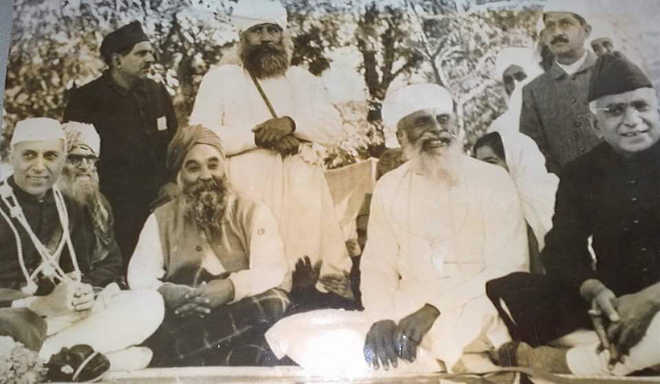
(From left) Pandit Jawaharlal Nehru, Maulana Habib-ur-Rehman Ludhianvi with Master Tara Singh, Satguru Pratap Singh and Saifuddin Kitchlu at a convention at Bhaini Sahib near Ludhiana in 1931. A file photo

When the entire nation was suffering under the Divide and Rule policy of the British, there was one man, who stood up and raised his voice.  Voices calling out Hindu paani lelo, Muslim paani lelo were common at the railway stations as there were separate pitchers of water for the Hindus and the Muslims.

But in 1929, Maulana Habib-ur-Rehman Ludhianvi raised his voice against this and protested at Ghaas Mandi Chowk and, with the help of his volunteers, broke earthen pots.As a result, the British government was forced to install one common pitcher at all railway stations across the country giving the message sabka paani ek hai. In this activity, nearly 50 volunteers were arrested and sent to jail.

“We have heard a lot about our great grandfather. He was instrumental in India’s freedom movement and the Hindu paani, Muslim paani issue was taken up by him,” said Usmaan Ludhianvi Rehmani, the great grandson of Maulana Habib-ur-Rehman Ludhianvi.

Ludhianvi hoisted the Tricolour on the banks of the Ravi to oppose the idea of partition of India and Pakistan. As many as 300 British policemen were sent to stop Ludhianvi from doing so, but he managed to hoist the flag and was arrested and sent to jail for a year.

Even Partition didn’t deter his spirit and he helped thousands of families stranded across the new border in uniting with each other.

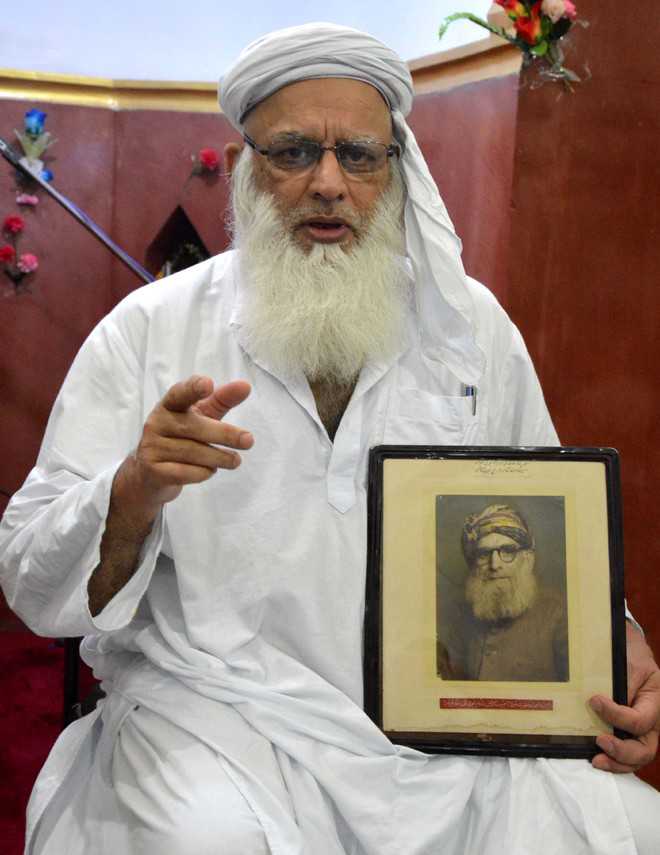
Maulana Habib-ur-Rehman Sani Ludhianvi, Shahi Imam of Punjab

Maulana’s grandfather Maulana Shah Abdul Kadir Ludhianvi in 1857 had issued a fatwa against the British rulers and the present Shahi Imam of Punjab, Maulana Habib-ur-Rehman Sani Ludhianvi, is his grandson.

The Shahi Imam of Punjab, said: “Our ancestors laid down their lives for the country. My only request to the present generation is not to waste the effort of our ancestors and be grateful to them.”Maulana, though not a poet, was well-versed in poetry and used to host poetic evening once a month.

He had spent 14 years of his life in various jails at various places, including Dharamsala, Shimla, Mianwali, Multan and Ludhiana.

source: http://www.tribuneindia.com / The Tribune / Home / Ludhiana – August 12th, 2017

Bengal Madrassa Teacher’s Son Tops Jadavpur Varsity to Bag 2 Gold Medals

Sonakur (Nadia District) , WEST BENGAL :

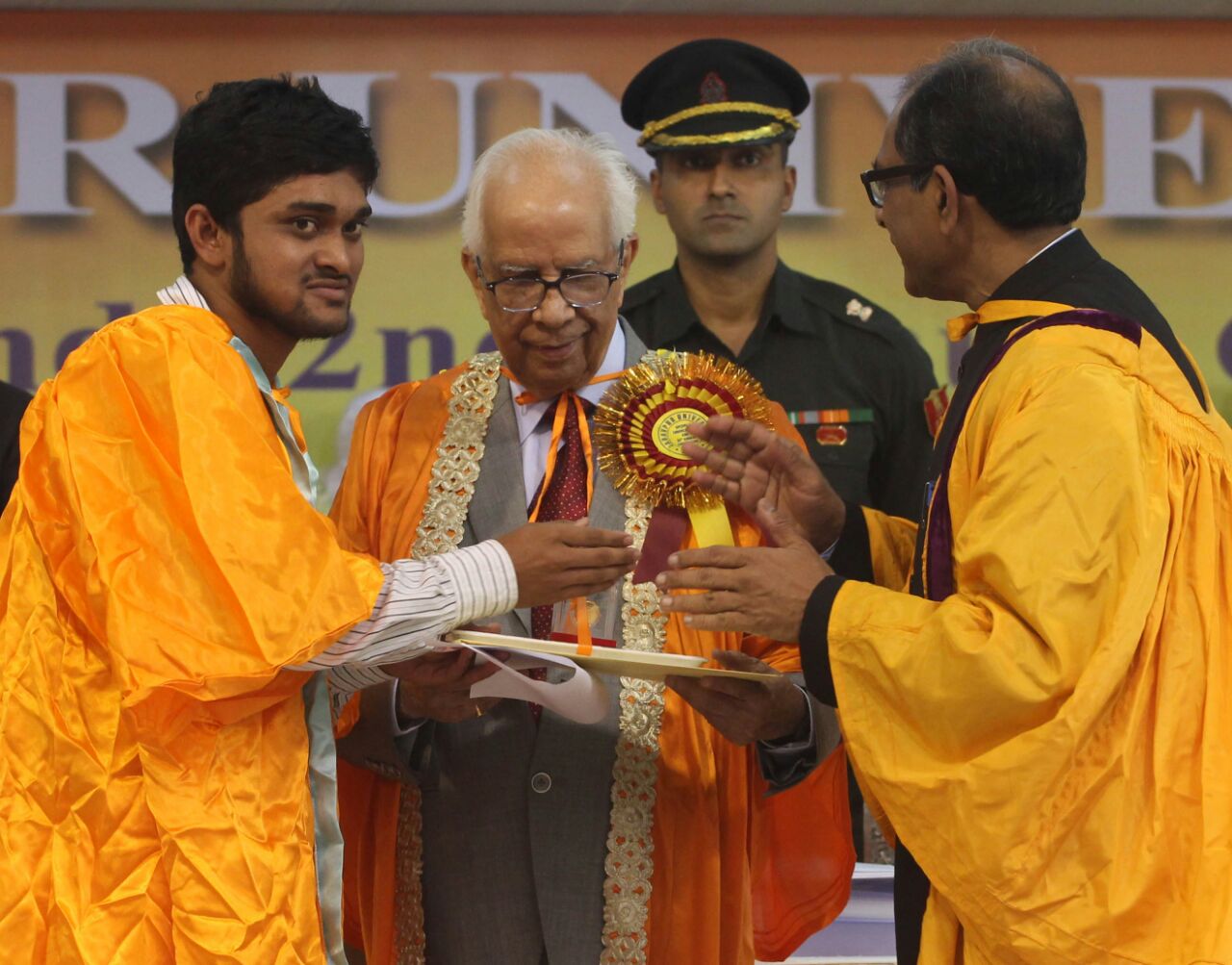
Irfan Habib receives his degree from West Bengal governor K N Tripathi. Caravan Daily
Irfan Habib receives his degree from West Bengal governor K N Tripathi. Caravan Daily.

Kolkata :

It’s not every day that someone from a remote village bags a double gold medal at the convocation ceremony of one of India’s finest universities. Meet Nadia’s Irfan Habib, son of a madrassa teacher, who has beaten all odds to top the Jadavpur University’s undergraduate programme in Mathematics.

The 22-year-old travelled all the way from Sonakur, a village in Bengal’s Nadia district, to pursue his dream of mastering mathematics. Talking to Caravan Daily, he said, “My mathematics teacher has played a vital role in influencing my career choice. He is the best Mathematics teacher in the world. It was he who motivated me to take it up as my major subject.”

Irfan bagged two gold medals during the 62nd Convocation of the University. “I secured 93 percent in B Sc to top my department. But, I have not just topped my department but also all the other departments of the University. Hence the two medals,” said he.

The convocation was attended by former President of India Pranab Mukherjee, West Bengal Governor Keshri Nath Tripathi and Vice Chancellor Suranjan Das. An excited Irfan gushed, “I can’t express my happiness on being awarded in the presence of the former president Pranab Mukherjee.”

He said, “I come from an average middle-class Muslim family, which believes that education is the only way out to emerge triumphant in life. My father is a senior madrassa teacher and mother is a homemaker. And to be honest, I had never thought of taking up mathematics for my higher education till I met my teacher who has played a vital role in shaping my career graph.”

Irfan did his schooling from FrontPage Academy, a residential institution situated in North 24 Parganas. “It was here that I met teachers who helped me script my success story. It was under their guidance that I scored 90.6% and 91.2% for Secondary and Senior Secondary Examination,” says the young boy, who aspires to earn a doctorate in Abstract Algebra.

Irfan’s elder sister also is pursuing her masters in mathematics. On being asked if mathematics runs in their blood, he laughed and said, “No, No. It is just a coincidence that both of us have taken up mathematics.”

On being asked if he faced any discrimination or difference in the quality of education once he shifted base to Kolkata, he said, “Not really. Jadavpur University and my professors have been very accommodating and kind to me. They have helped me out on many occasions. In fact, before joining the University, I had heard tales of the ragging sessions of the University. However, contrary to the belief that we have, I have witnessed no such ragging sessions within the University premises.”

source: http://www.caravandaily.com / Caravan / Home> Community> Editor’s Pick / by Shabina Akhtar , Caravan Daily / December 27th, 2017

Family which built orphanage for Moplahs donated Rs 100,000 annually for freedom struggle

KERALA :

WarMPOs03jan2018

In yet another instance to show how the Bhartiya Janata Party (BJP) and Rashtriya Swayamsevak Sangh (RSS) distort history to suit their communal agenda and to gain political mileage, the party’s Kerala unit chief Kummanam Rajasekharan called the Malabar Rebellion of 1921, also known as Moplah Rebellion, “the first jihadi massacre” in Kerala.

As the BJP’s Jan Raksha Yatra entered Muslim-dominated Malappuram district last Monday, Kummanam Rajasekharan, said the Malabar rebellion of 1921 was the first jihadi massacre in Kerala.

Rajasekharan, who lead the yatra as it entered Muslim-dominated Malappuram district, said that depicting unprovoked massacre of Hindus as part of the independence struggle is an insult to history as well as the majority community in the state.

“If it were an agitation against British rule, why were thousands of people butchered and temples destroyed? It high time we stopped glorifying this massacre depicting it as freedom struggle. If anyone is given pension on behalf of this rebellion, it should be given to those who had to flee their homes during the riot and the dependents of the victims of the jihadi massacre”, he is quoted as saying by media.

The Malabar rebellion or Moplah rebellion of 1921 was an uprising of Muslims tenants against the British government and Hindu landlords, and the culmination of a series of revolts that recurred throughout the 19th century and early 20th century.

It began as a reaction against a heavy-handed crackdown on the Khilafat Movement, the campaign also supported by top Congress leaders including Mahatma Gandhi, in defense of the Ottoman Caliphate by the British authorities in the Eranad and Valluvanad taluks of Malabar.

In initial stages, a number of minor clashes took place between Khilafat volunteers and the police, but the violence soon spread across the region. The Mappilas attacked and took control of police stations, British government offices, courts and government treasuries. The Hindus loyal to the British rule also came under attack. And it is because of this the right wing Hindu extremists and biased British historians to sow the seeds of communal divide gave it a communal colour claiming “fight against the British ended up as large-scale massacre and persecution of Hindus”.

This is what exactly they did in case of the freedom struggle in Malegaon. On April 25, 1921, a police officer loyal to the British rule was killed by Muslims and Hindus together. It is also on record that two Muslim constables were also killed in the same uprising. Following the crackdown by the British, five freedom fighters were hanged in Pune’s Yerwada Jail and two died during interrogation – all 07 Muslims. But, the right wing Hindu extremist groups claiming that the Malegaon uprising was a communal riot and an attack on Hindus, have till now not allowed to put the names of these seven Muslim martyrs on the memorial built by the government to recognize their sacrifice.

Historians and scholars have recorded in detail how Hindus and Muslims together participated in the 1921 uprising of Malegaon. The union and state governments too acknowledged this in their respective gazettes. But for the right wing Hindu groups, acknowledging the sacrifices of Muslim freedom fighters of Malegaon will serve none of their purposes. Hence they give the entire incident a communal colour and propagate accordingly.

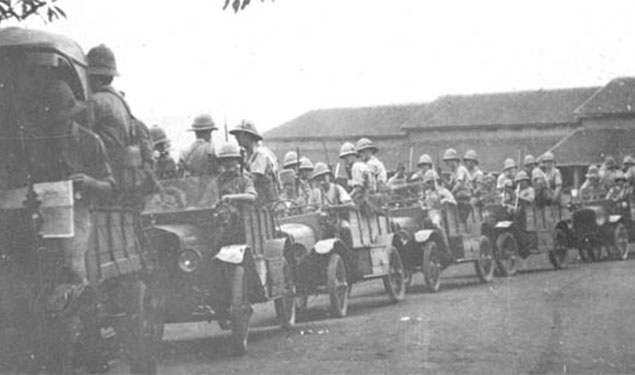
Similar is the case of Moplah Rebellion also known as Malabar Rebellion. According to the Kerala government’s own admission, the British government put down the rebellion with an iron fist, British and Gurkha regiments were sent to the area and Martial Law imposed.

“One of the most noteworthy events during the suppression later came to be known as the “Wagon tragedy”, in which 61 out of a total of 90 Mappila prisoners destined for the Central Prison in Podanur suffocated to death in a closed railway goods wagon”, says the Kerala government’s history section on its website.

The Moplah Muslims and others involved in the uprising were continuously in touch with the national leaders leading the freedom struggle. These leaders were shaken by the reports of the persecution of Moplahs at the hands of the British forces. They became restless and started searching for means to provide relief to this persecuted lot, renowned scholar Abdul Hameed Rahmani, wrote in an article published by monthly At Tibyan March 2008 issue.

“Maulana Abdul Qadir Kasuri rushed his younger brother Abdullah Kasuri and two sons Mohiuddin Ahmed Kasuri and Mohammad Ali Kasuri to Calicut in Kerala. After helping them with immediate relief, they established one of the oldest orphanages for the Moplah victims on over 50 acres of land which besides other things also catered to their educational needs”, he wrote.

A branch of the center was also established later on in Pune.

Born in April 1889, Mohiuddin Ahmed Kasuri, the eldest son of renowned Ahle Hadees scholar Maulana Abdul Qadir Kasuri, was once a close associate of freedom fighter and India’s first education Minister Maulana Abul Kalaam Azad. Maulana Azad invited him to Calcutta from where he published daily “Eqdam”.

In July 1916 when Maulana Abul Kalaam Azad was sent to Ranchi Jail, Mohiuddin Ahmed Kasuri went back to Kasur. The British government detained him from Kasur and kept him incarcerated in Hoshiarpur till 1919.

Abdul Hameed Rahmani recalled that the Kasuri family established businesses in Bombay and the profit earned from these businesses related to salt, textiles and leather industries were used to fund its charity institutions established in Calicut and Pune.

“The family donated for years Rs. 100,000 annually to Maulana Abul Kalam Azad as fund to be used for India’s freedom struggle”, he wrote.

After partition of India, the Kasuri family moved to Pakistan. Former Foreign Minister of Pakistan Khurshid Mahmud Kasuri in Pervez Musharraf’s cabinet belonged to the same family.

[The writer Aleem Faizee is founder editor of ummid.com. He can be reached at aleem.faizee@gmail.com.]

source: http://www.ummid.com / Ummid.com / Home> Views & Analysis / by Aleem Faizee, Ummid.com / Friday – October 13th, 2017

This Boy From a Delhi Slum Will Train in Usain Bolt’s Club in Jamaica

NEW DELHI :

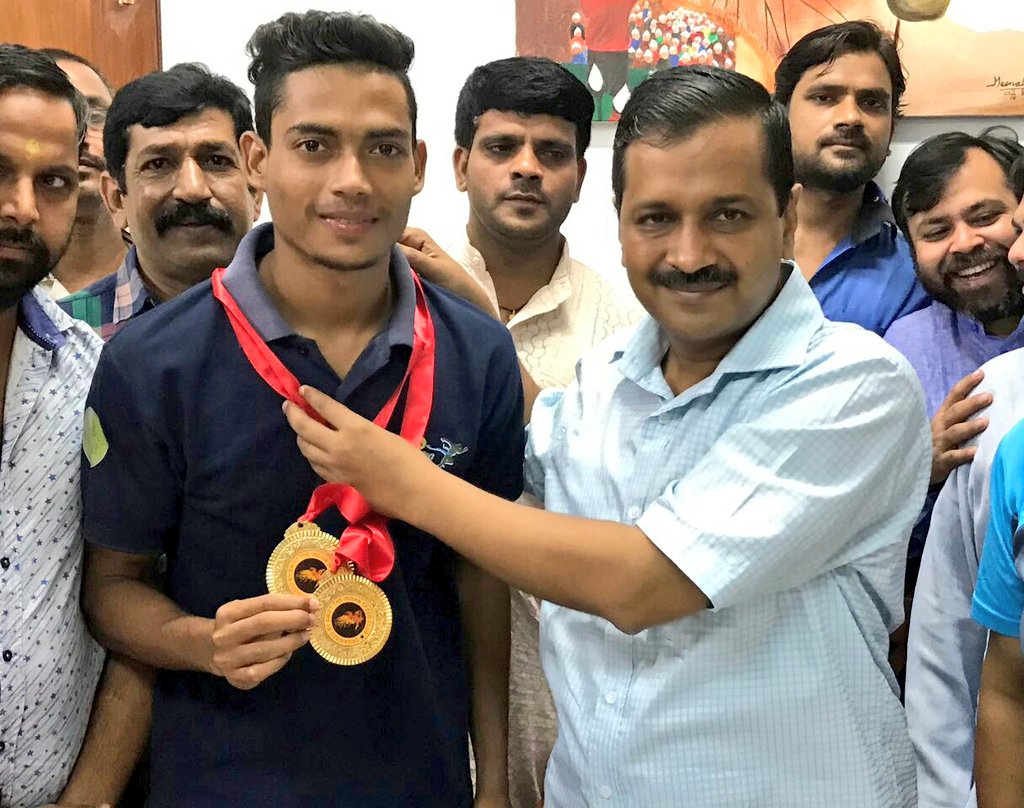
Nisar Ahmed is part of a 14-member contingent of budding young athletes selected to train at the famed Racers Track Club in Kingston, Jamaica.

Stories of individuals doing extraordinary things despite their difficult circumstances never get old. The sporting history of pretty much any nation is laden with such stories.

Living in a 10×10 feet tin shack near the railway tracks in the Bada Bagh slums of Delhi’s Azadpur area, Nisar Ahmed is looking to forge one such heart-warming story.

Nisar is all set to leave the slum and its surroundings behind and embark on a journey that takes him to the famed Racers Track Club in Kingston, Jamaica, which is where the most iconic personality in modern-day track and field, Usain Bolt, trained.

The son of a rickshaw puller and housemaid, Nisar was chosen with 13 other budding athletes to undergo a one-month training programme at one of the most hallowed track, and field venues in the world reported the Times of India .

These 14 promising athletes in the 15-18 age group from Odisha, Uttarakhand, Delhi, Kerala and Tamil Nadu were chosen for an initiative backed by the Gas Authority of India Limited, a public-sector enterprise, and sports management company, Anglian Medal Hunt.

Nisar Ahmed felicitated by Delhi Chief Minister Arvind Kejriwal at a function last year. (Source: Twitter)

After vetting the ability and potential of these athletes, the Kingston-based track club agreed to take them in for a four-week training programme.

It is remarkable that a 16-year-old Nisar has managed to maintain his tremendous athletic ability, even though his parents barely manage to pull in Rs 5,000 every month. Despite the daily poverty the budding athlete and his family endure, Nisar tells the Times of India that his parents “somehow manage” to provide him and his sister with regular food.

A student of the Government Boys Secondary School, Ashok Vihar, Nisar has big dreams, and his talent is unmistakable. At a recent Delhi State Athletics meet, he surpassed two national under-16 records, running 100 metres in 11 seconds, and clocking 22.08 seconds in the 200-metre event.

“I sometimes cry because God has given me a very tough life,” he tells the Times of India. “But it is my poverty that has inspired me to work hard in the face of such challenges.”

source: http://www.thebetterindia.com / The Better India / Home> Quick Bytes> Sports / by Rinchen Norbu Wangchuk / January 02nd, 2018

AMU research scholar receives ‘Prof C V K Baba Award’ for best thesis…

Aligarh, UTTAR PRADESH :

Ms Farhana Zaidi (Phd student, Department of Physics, Aligarh Muslim University—AMU) has been conferred with the ‘Prof C V K Baba Award’ for the best thesis of the year during a ‘Department of Atomic Energy-Board of Research in Nuclear Sciences’ sponsored symposium on Nuclear-Physics held at Thapar University in Patiala.

The award was given by Indian Physics Association.

Ms Zaidi is also a recipient of Young Physicist Award—2 017, S N Ghoshal Award for Best Young Physicist and Pratyasa Kumar Basu Memorial Award for best presentation.

source: http://www.goonjtimes.com / GoonjTimes / Home> AMU / December 30th, 2017

AMU scholar bags first prize for her paper at YPC 2017

Aligarh,  UTTAR PRADESH :

Aligarh :

AMU research scholar Farhana Zaidi from Department of Physics received the first prize from The Indian Physical Society (IPS) for her paper on ‘Nuclear Medium Effects in Neutrino Nucleus Scattering at J Lab and Minerva Energies’ at the 35th Young Physicists’ COLLOQIUM (YPC 2017), Saha Institute of Nuclear Physics, Kolkata.

The second and third prizes were awarded to research scholars from the Tata Institute of Fundamental Research.

Zaidi’s paper was selected from 17 entries submitted by research scholars from all over the country, which were reviewed by three referees. After a 25-minute paper presentation, Zaidi answered questions on her research.

Earlier, she also received S N Ghoshal Award for the best young physicist and Pratyasa Kumar Basu Award for the best young scientist at the event.

With the award, Zaidi has also received cash, popular books on science and IPS lifetime membership.

source: http://www.twocircles.net / Two Circles.net / Home> Youth / by TCN news / August 19th, 2017

Hafiz Amjad Hussain Karnataki conferred Honorary Doctorate from Gulbarga University

Shikaripur, (Shimoga District ), KARNATAKA :

DrAmjadHussainMPOs02jan2018

Gulbarga  :

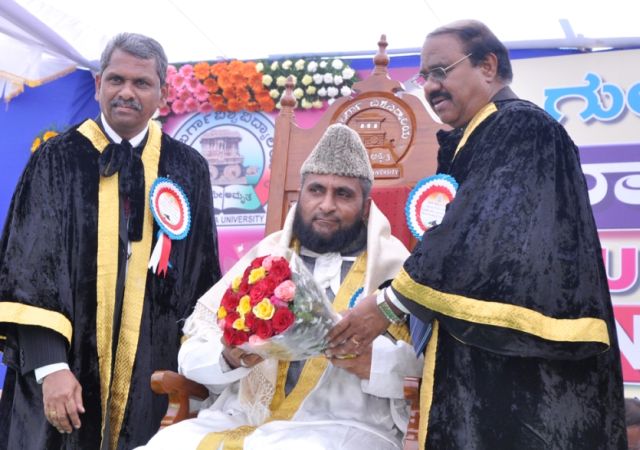
The chairman of Karnataka Urdu Academy, Janab Hafiz Amjad Hussain Karnataki conferred with Honorary Doctorate from Gulbarga University at its 31st annual convocation held on 6th March 2013 in Jnana Ganga Campus.

Mr Karnataki was chosen for this honor for his services and contribution to Urdu language.

This year the University has chosen 11 persons including Mr Karnataki for this honor.

The program was graced by former CM of Karnataka Mr N Dharam Singh, ex-minister Vaijnath Patil, Gurpad Nagmarpallli, Mahanth Shiva Acharya, Mr D J Sagar and Senior Jounalist Mr Shrinivas Sarnurkar.

Bhatkallys News Service

source: http://www.bhatkallys.com / Bhatkally.com / Home> India / March 2013