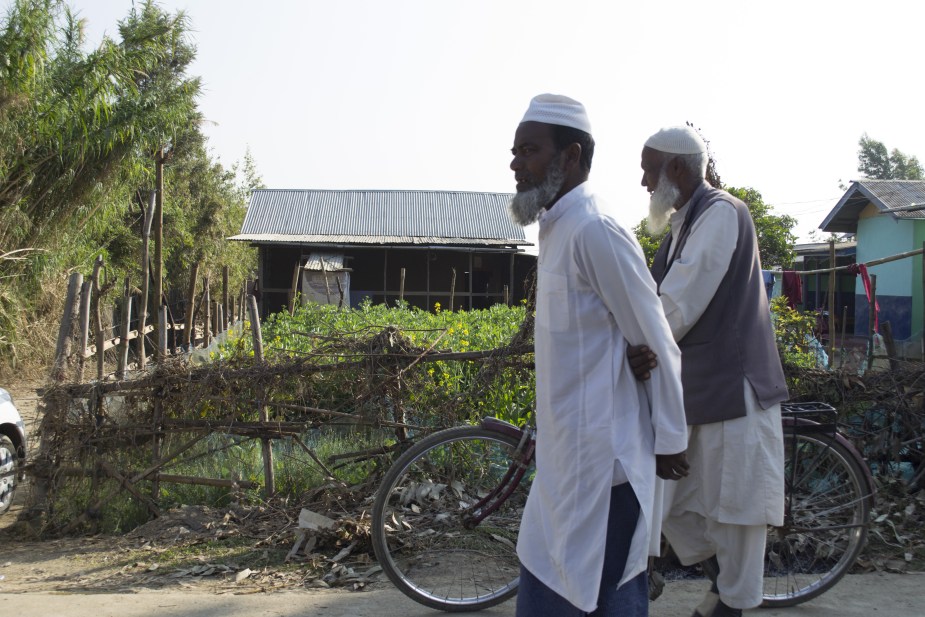
The Kutchi Memons who came here in 1815 first settled in Mattancherry
Kochi:
If a phrase can describe the Kutchi Memon community in Kochi it is great cultural resilience. In rebuilding their lives, so far away from the place of their origin, the first generation Kutchi Memons here demonstrated a remarkable ability to flourish in the face of greatest of odds.
“I just wonder how they made it to Kochi,” says Javeed Hashim of the Abad Group of companies of his great grandfathers who arrived in Kochi from Kutch, in Gujarat early in the 19th century.
Would it have been by sea? Or, over land? Whichever way they came, they showed great spirit. The same spirit of perseverance and enterprise that stand them in good stead to this day. Mr. Hashim is just one example of the way generations of Kutchi Memons, a close-knit and mostly endogamous community, have rebuilt their lives in their new homelands becoming ever closer to the societies that accepted them and at the same time, keeping alive the flame of cultural identity and social coherence. he language is a big factor that has kept our identity intact, says Mr. Hashim. “At home I speak Kutchi, and the moment I am out, I have to switch either to English or to Malayalam,” he says. Kutchi is a language closer to Sindhi than Gujarati. The Kutchi Memons who came here in 1815 first settled in Mattancherry, the hub of business and nucleus of the old city. They have now spread out into other parts as the city grew over the decades.There are about 500 families of Kutchi Memons in Kochi, says Rasheed Usman, president of the Kutchi Memon Association.
Religious festivals like Eid and social occasions like marriages are times when the community cements its unity. On days of religious festivals there are family get-togethers at places that are fixed by communities in each locality, says Dr. Sadath Sait, a Homoeopath.
And marriage celebrations last more than a week with the pre-marriage celebrations bringing together relatives and friends in large numbers to the homes of the bride and groom. While the community members have more or less adopted the local dress code, the older people still love to wear their traditional dresses. Dr. Sait says that the Kutchis love their food and though have adopted the local food in many ways, the mix of masalas or the preparation of Biriyanis etc differ a lot from the local practices. The Kutchi Memon Association and the Cutchi Memon Jamath are engaged in both charity work and also in helping the more needy members of the community. The Kutchi Memon Association lays great stress on helping people to attain higher education, says Adam Essack, the Association Secretary.
The Kutchi Memons have made their mark both on the political and business fronts in Kerala. Ebrahim Suleiman Sait and G. M. Banatwala, both from the Kutchi Memon community are examples of great innings in politics.
source: http://www.thehindu.com / The Hindu / Home> National> Kerala / by K.A.Martin / July 25th, 2008
A decorated soldier of the 1965 Indo-Pak war who rose to become a union minister, Capt Ayub Khan was laid to rest at his village Nuah in Jhunjhunu district with full military honours on Friday. He was born in 1932 in a Kayamkhani Muslim family of soldiers. His grandfather and father too served the Indian Army and now his cousins and their sons are continuing the family tradition.
Capt Ayub, the state’s first Muslim to win a Lok Sabha election and twice be a Congress MP from Jhunjhunu, was also a recipient of the Vir Chakra from President Dr S Radhakrishnan for destroying four Pakistani Patton tanks and capturing one in the Sialkot sector of J&K. Prime Minister Lal Bahadur Shastri had hugged the brave soldier and remarked, “I never met the Pakistani President Gen Ayub Khan but I’m proud to meet the Indian Ayub.”
In the 1965 war, Ayub was posted in the Sialkot sector that was under Lt-General P O Dunn. The 26th Infantry Division was ordered to capture Sialkot. The 18th Cavalry’s Bravo squadron, led by Risaldar Ayub Khan, was ordered to clear the Sialkot Road from Pakistan’s occupancy. The squadron moved upfront facing enemy fire. On September 9, the squadron confronted a large column of Pakistani forces with Patton tanks.
The Pakistani tanks attempted to encircle Indian troops, so the squadron commander ordered his troops to turn about and check the enemy encirclement. Ayub moved back and headed to close up with the enemy tanks that were threatening to cut off Indian troops from the rear. Ayub led from the front and destroyed four tanks before Pakistan could realize that an Indian troop had turned back to attack it.
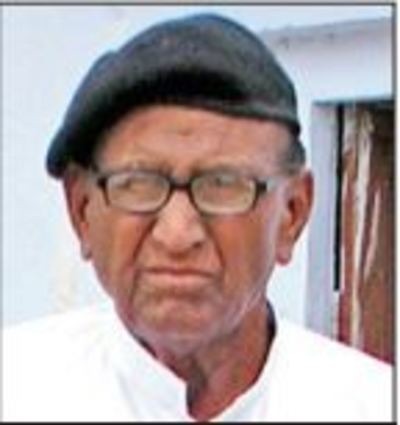
In 1983, Ayub retired from the army and was granted the rank of Honorary Captain. Later, he joined politics and became a union minister in the cabinet of Prime Minister PV Narasimha Rao. Ayub Khan chose to wear white kurta-pyjama and sported the black army cap of the 18th cavalry, minus the crest. At 84, Capt Ayub used to sit at home and enjoy life with his family. He was no longer active in politics, as he hated the present day caste-based politics.
source: http://www.timesofindia.indiatimes.com / The Times of India / News Home> City> Jaipur / by Prakash Bhandari / TNN / September 17th, 2016
Akiyal was born with a rare heart condition known as double outlet, right ventricle
Nine-month-old Akiyal with doctor Adil Sadiq (Photo: DC)
Bengaluru:
Nine-month-old Akiyal’s father Farhan, an engineer from the Maldives, is all praise for Facebook.
“It was very difficult for us to generate funds for our son’s operation,” he says. “We could do it only because of Facebook.” Akiyal was born with a rare heart condition known as double outlet, right ventricle (DORV), a condition in which the blood vessel that carries oxygen-rich blood from the heart, is located in the wrong place.
“It was a complex surgery in the sense that the child was born with one side of the heart not developed, undeveloped left pumping chamber and a large hole in the heart along with a blockage of the artery going to the lung. He required a complex repair job, which wasn;t being done in the Maldives,” says the child’s treating doctor, Adil Sadiq, Head Cardiothoracic Surgeon, Sakra World Hospital.
Farhan says, “It was not possible to get funds in the Maldives, so my family and I decided to go online and ask for help from the social media. We went ahead with creating a Facebook page for our son.” They started the Facebook page, ‘Help Akiyal — Save A Child’s Heart’.
“We promoted the page by paying five dollars, which implied that 20,000 Facebook users would see the page,” says Farhan. In no time, people across the world saw it and donations started pouring in. “The money that we used to promote the page time and again was less than 100 dollars, but we were able to raise Rs 8 lakh over the course of the year,” adds Farhan.
This digital media approach helped Farhan to get donations from anonymous altruists in Sri Lanka, Belgium, Maldives and even Bangalore. Those who could not donate sent Akiyal their earnest prayers and blessings. By the end of the year, the page had 4,388 likes and thousands of people had visited it.
“She is now fine and we would be taking her back home to Malidives in a few days,” says an elated Farhan.
source: http://www.deccanchronicle.com / Deccan Chronicle / Home> Nation> Current Affairs / DC / by Joyeeta Chakravorty / May 25th, 2014
When Anant Khanna, a student of La Martiniere College was informed he had secured All India Rank 6 in the result of the Common Law Admission Test (Clat) 2015 for BA-LLB, he was “blown away”. The result announced late Tuesday night by Ram Manohar Lohiya National Law University (RMLNLU), Lucknow, reminded Anant of his father’s advice “Look for what you want and go deep into it.”
Not a fan of the Sciences and with a flair for debating, Anant had been fixated on pursuing law from National Law School of India University (NLSIU), ever since he passed class X. “My mother (Rashmi Khanna) suggested to me this career, looking at my interest in debating. When one of her friends’ son went to NLSIU Bangalore, I got interested. I have been obsessed with NLSIU ever since,” said Anant, his voice crackling with joy on the phone talking to TOI.
Visiting NLSIU later in that year, Anant said, it felt like the right place. Earlier, on Monday, he had secured 94% in his ISC examination result. “My initial interest was in history, which interested me like a story. Then my interest shifted to political science, when I delved into the political backdrop of historical events. Ever since I started aspiring for law, there was no other thing on my mind,” he said.
While Anant Khanna made Lucknow proud with an All India 6th rank in the UG course and a score of 131 out of 200, Akash Jain from Madhya Pradesh was declared topper of the Common Law Admission Test (Clat) 2015 for BA-LLB, scoring 141.25 out of the total 200. Ankit Raj Singh from Uttar Pradesh, on the other hand, bagged the top position in the PG programme (LLM), with a score of 123.25 out of 150 for PG (LLM).
Neha Ludha from Rajasthan with an overall rank 9, was adjudged topper among women candidates. Gulshan Jahan from Delhi with 111.25 marks out of 150 and all India rank 14, bagged the top position in women’s PG category, informed RMNLU vice chancellor Gurdip Singh, who was convener for organising CLAT 2015.
NUMBER OF ASPIRANTS DOUBLES
More than double the number of candidates had appeared for the competitive exam compared to last year. 42,222 candidates appeared for the entrance exam, which is a gateway to 16 National Law Universities (NLUs). Last year 29,628 students had appeared for the exam. For the UG course (BA-LLB), 37,358 students appeared, out of whom 20,392 were boys and 16,965 girl students. For PG (LLM) 4,863 candidates appeared, out of whom 2,292 were boys and 2,571 were girl students. Last year 2,024 candaites had appeared. Out of the top 2,000 who qualified, 1,181 were boys and 819 girl students.
source: http://www.timesofindia.indiatimes.com / The Times of India / News Home> City> Lucknow / TNN / May 20th, 2015
Oinam Dam Makhong, (Imphal East District )Imphal, MANIPUR :
Imphal:
Yumkhaibam Sabir from Manipur cleared the Civil Services Examination, 2011 conducted by Union Public Service Commission. He has got 244th rank. Sabir becomes the third Muslim from Manipur to ever clear the coveted competitive exam of this country.
23-year-old Sabir is the son of Mohd. Tayeb Ali and Mrs. Sahida of Oinam Dam Makhong, Oinam in Imphal East district. He is the youngest among the seven siblings. His father is a retired Lower Primary teacher.
Sabir addressing a felicitation program organized by Delhi Association of Manipuri Muslim Students (DAMMS) at Jamia Nagar, New Delhi on 5th May 2012
Decorated journey of education
Sabir received his higher education in New Delhi. He graduated from Khalsa College under Delhi University as overall topper in 2009. He completed his Masters in Political Science from Jawaharlal Nehru University, New Delhi in 2011. He was ranked second topper in M.A.
Sabir passed his matriculation exam from The Little Master English Higher Secondary School in Samuou in Imphal West district. He cleared the High School Leaving Certificate exam conducted by Board of Secondary Examination, Manipur in 2003 securing 24th position in the state. He then cleared the Higher Secondary Examination conducted by Council of Higher Secondary Education, Manipur in 2005 securing 4th position, obtaining highest marks in Physics and Chemistry from The Brajalal Institute of Science, Moirangkhom in Imphal.
In all, 12 candidates from Manipur cleared the Civil Services exam 2011. The others are: Aribam Radhabinod Sharma (rank 128), Oinam Sarankumar Singh (147), Nongmaithem Bandana Devi (301), Soibam Victor Devi (724), Robert Moirangthem (779), G Panmei (841), H. Sauntak (885), Yengkhom Nagakiswar Singh (894), P. Ngaihte (903) and Bantee Singh Konthoujam (908).
Five candidates from Assam cleared the exam. This time no Muslim from the state cleared the exam. Last year seven candidates cleared the exam including a Muslim, Mannan Akhtar (rank 55).
Manipur Muslims to clear Civil Services exam
Yumkhaibam Sabir is the third Muslim from Manipur to ever clear the coveted competitive exam for Civil Services.
Mohd. Noor Rahman Sheikh from Top Khongnangmakong, Khetri, in Imphal East district is the first Muslim from Manipur who cleared the Civil Services exam in 2002 (217th rank) and again in 2003 (187th rank). He was placed in the Indian Foreign Service. Rahman served as Under-Secretary in West Africa Division in the External Affairs Ministry at New Delhi and also worked in Indian Embassy in Jordan. He was, a few months back, given charge as Consul for Hajj in Indian Consulate in Jeddah, Saudi Arabia, who is responsible for handling Hajj-related works from the Indian side. He is just 32 years old.
Yumkhaibam Sabir (right) being felicitated by DAMMS in New Delhi on 5th May 2012
The second Muslim to clear the Civil Services exam was Mohd. Altaf Hussain (Mayangmayum) from Khetri Bengoon in Imphal East district. He cleared the exam in 2007. He is serving as Indian Revenue Service.
At the all-India level, 30 Muslims cleared the Civil Services exam 2011. They are: Syed Abid Rasheed Shah (rank 23), Nooh P B (rank 43), Mohd. Shariq Badr (rank 48) and Amna Tasneem (rank 73), Syed Sehrish Asgar (118), Inayat Khan (176), Adeela Abdulla (230), Shanavas C (235), Yumkhaibam Sabir (244), Mohd. Aijaz (268), Inamulhaq Mengnoo (280), B Fouzia Taranum (307), Mirza Azhar Beig (313), Toufel Tahir (345), Mohammad Imran (408), Mohammad Arshi (419), Bashir Ahmad Bhat (434), Manazir Jeelani Samoon (451), Qazi Mohd Salman Ibrahim (459), Patil Salmantaj Jafertaj (466), Naieem Mustafa Mansury (520), Waseem Akram (568), Irina Masoom (604), Mohd. Imteyaz Alam (649), Afsar Ali (667), Shama Parveen (685), Zeeshan Qamer (706), Mohd. Rehan Raza (760), Ilyas K P A (764) and Zahid Parvez (776).
The results are based on the written test of the Civil Services (Main) Examination, 2011, conducted by UPSC in October – November 2011 and the interviews for Personality Test held in March – April 2012.
A total number of 910 candidates have been recommended for appointment to (i) Indian Administrative Service, (ii) Indian Foreign Service, (iii) Indian Police Service and (iv) Central Services, Group ‘A’ and Group ‘B,’ including 420 General (including 21 Physically Challenged candidates), 255 Other Backward Classes (including 8 Physically Challenged candidates), 157 Scheduled Castes (including 4 Physically Challenged candidate) and 78 Scheduled Tribes candidates.
31 Muslims (out of 920) had cleared the Civil Services exam 2010.
source: http://www.twocircles.net / TwoCircles.net / Home> Indian Muslim / by Dr.Syed Ahmed for TwoCircles.net / May 06th, 2012
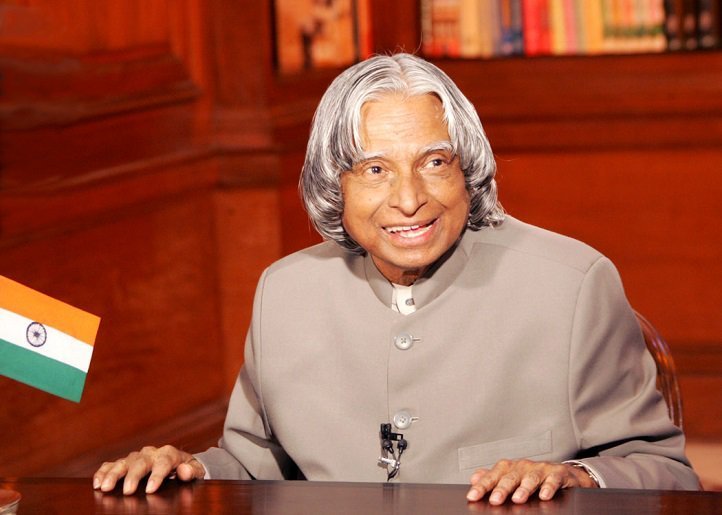
While India mulls over giving an appropriate tribute to the late former India President APJ Abdul Kalam and fights over his social media accounts, the UN has decided to name a satellite after the late scientist as a tribute to celebrate his vision.
Founded in 1999, CANEUS (CANada-Europe-US-ASia) serves to develop a common platform for space technology solutions for natural and man-made disaster management. The ‘GlobalSat for DRR’ is a UN-driven global initiative on sharing space technology for disaster risk reduction, Milind Pimprikar, chairman of CANEUS, told IANS.
The satellite will provide a common platform that will allow sharing of space and data segments, with an ability to serve individual nation’s disaster management and development needs, IANS reported.
Talking about the similarities between the satellite and Dr. Kalam, Pimprikar said, “In his ‘World Space Vision-2050’ Mr. Kalam had envisaged space faring nations joining hands to find solutions to mankind’s major problems such as natural disasters, energy and water scarcity, health-care education issues and weather prediction. Therefore we now plan to dedicate the UN GlobalSat initiative as a tribute to Late Dr. Abdul Kalam by renaming it ‘UN Kalam GlobalSat’.’
He hopes that the renaming will inspire new generations and scientists, and they’ll strive to work like Dr Kalam.
source: http://www.scoopwhoop.com / Scoop Whoop / Home / by Isha Jalan / August 08th, 2015
We at s2h are very sad to report the sudden demise of Nabi Mohammad, a yesteryear star player of Tamil Nadu. He was 66.
Nabi, a well known international umpire, is father of Md Riaz, who represented India in two Olympics.
Nabi was officiating in the Tamil Nadu inter-district Women Hockey tournament in Nagerkovil in Kanyakumari District, when death came calling.
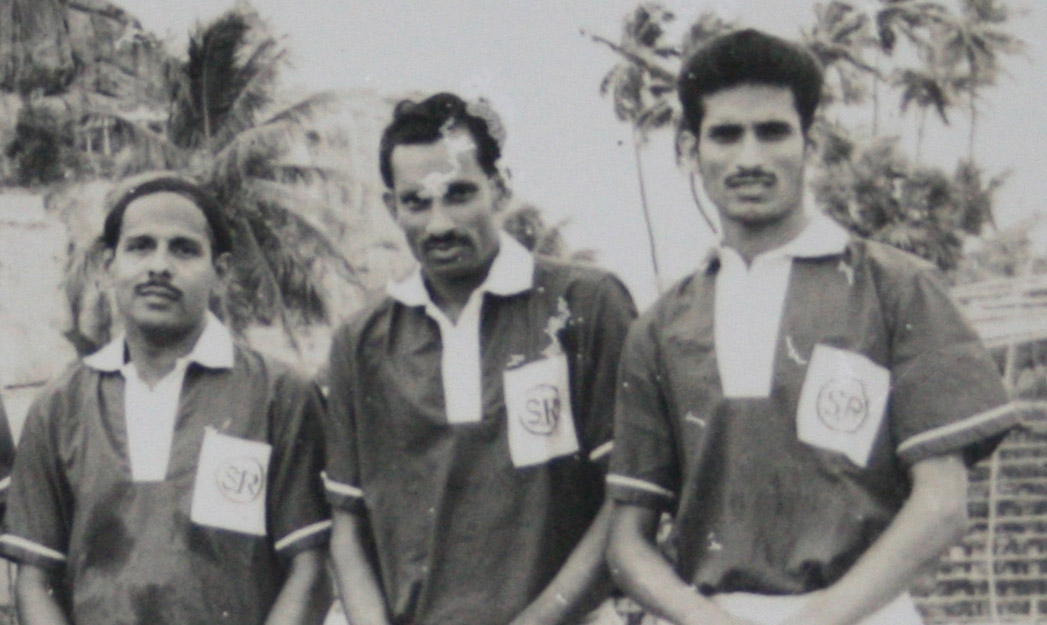
Pic: Md. Nabi (Centre) lining up for Tamil Nadu state team
“He was a great inside-forward, excellent schemer, intelligent player. I played with him for long time in the State. He was an India stuff but did not get chance”,Olympian Munir Sait, said.
“He has devoted his entire life to hockey, and it so happened he died when he was supervising a tournament”, Anil Kumar, a shocked umpire and coach of the Aggarwal Vidhyala in Chennai, said.
“Am an umpire today because of him”, he added.
The mortal remains of departed soul is being brought to Chennai, where he will be cremated tomorrow, by road.
He died due to massive heart attack
This writer met him last month during the Ruskin Inter-School tournament, where he was the tournament director. Before that he assumed the same role for the Syed Ahmad Memorial Cup.
Nabi is a product of famous Govt. Madrasa-I-Azam School, was part of famous Tamil Nadu State team in the 60s.
His other two sons, Jameel and Nawaz also took up hockey and shone. While Jameel plays for Indian Overseas Bank, Nawaz plays for Indian Oil Corporation.
Mrs.Renuka Lakshmi, who organized the Women’s Inter-District Tournament, and on whose invitation Nabi was in Nagerkovil, expressed shock.
“It is really shock for me, he is an out out hockey soul, ready to help everybody for the sake of hockey. We will miss him, it is a big loss, she said.
source: http://www.stick2hockey.com / Stick2Hockey.com – S2h / by K Arumugam / July 01st, 2011
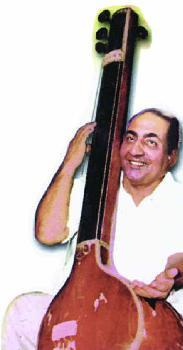
Mohammed Rafi imprinted his name on the musical firmament with his mesmeric voice. Although he is no more, he is still fondly remembered for his captivating songs in Hindi films. A tribute to the singer whose death anniversary falls today.
STRANGE, BUT one of the earliest memories of Mohammed Rafi are of his funeral procession. It was July 31, 1980. One of the greatest singers of independent India had passed away and sub-editors of various newspapers across the country were struggling to find appropriate words for the following day’s headline. It had to be precise, yet do justice to the man who sang nearly 26,000 songs. The headline had to say something about the man who was too shy to propose to his would-be wife, about the man who wanted to be an actor yet asked his directors not to show him on the screen and merely use his voice! The few words in bold print had to be all about the man who was, what one would in modern parlance call, a method singer, the man who would brook no banter when in the studios – something quite opposite to what his contemporary Kishore Kumar used to do. The headlines had to say something about the dedication of the man who recorded his last song, Tu kahin aas paas hai dost… for music directors Lakshmikant-Pyarelal a couple of days before he breathed his last. The film was Dharmendra-Hema Malini-starrer, Aas Paas. It bombed at the box office but the cine-goers could not help humming Tu kahin aas paas hai dost in memory of the singer whose voice had an innate sense of life.
Years have rolled by; singers have come and gone. But the matchless Rafi magic lingers. Just the other day one happened to be in Bhopal. Talking of some interesting sidelights about the city, a Bhopal veteran took yours truly to the house of Kaif Bhopali, a well-known poet in the Urdu mushaira circles who did not quite get his due in Bollywood. Fine but why are we talking of Kaif at this time? Well, simply because Kaif’s main claim to fame in the Hindi film world was provided by Mohammed Rafi. The song was the timeless Chalo dildar chalo, chand ke paar chalo, the film Pakeezah with Naushad and Ghulam Mohammed as music directors. The song had a haunting quality which brought to mind the picture of two lovers quietly moving into the sunset, hand in hand, far from the maddening crowd. Rafi’s voice had enough zing to match the lilt of the music and vivacity of his co-singer Lata Mangeshkar. Between them they gave Kaif his passport to an acquaintance with posterity.
Yes, that is what Rafi did to countless other artistes – Shammi Kapoor and Rajendra Kumar would have vouched for it. Remember Rafi’s Yahoo! Chahe koi mujhe jungli kahe which gave Shammi Kapoor his identity. And Baharon phool barsao or Mere mehboob tujhe meri mohabbat ki qasam which sent Rajendra Kumar’s career on the highway to success and many a young, dainty heart aflutter. Yet he did it all and more. Interestingly he managed the almost impossible. When he sang for a star, the image which the music-lovers nurtured in their mind was of the star, not the singer. Yet while doing so he managed to carve out his own niche, his own identity; some thing the common man could identify with. He came to be associated with songs that had life written over them, that could get the romantically-inclined humming and the youngsters swaying. Though he probably did not have the melancholy of Talat Mahmood’s voice or the sadness of Mukesh, he still managed to pull off many a tragic number with the least fuss. Remember Teri zulfon se judai to nahin maangi thi… .? Or even Aye duniya ke rakhwale…where he teamed up with Shakeel Badayuni and Naushad to come up with a lasting testimony of India’s pluralist culture?
Born on December 24, 1924 in a small village near Amritsar, Rafi trained under Ghulam Ali Khan and recorded his first song in 1944 for a Punjabi film Gul Baloch with Shyam Sunder. He even acted in a couple of films – Laila Majnu in 1945 and Jugnu in 1947. It was Feroze Nizami who gave him his first major hit with Yahan badla wafa ka bewafai in Amar Raj. From there to Kya hua tera vada in Hum Kisise Kum Nahin, Rafi was always on song. And when Rafi sang, he was worth going miles to listen to. Pity he is no more.
ZIYA US SALAM.
source: http://www.thehindu.com / The Hindu / Home> MetroPlus Hyderabad / Wednesday – July 31st, 2002
“Women bow down to men because they are uneducated. Lack of education deprives them of their political right.”
Najima Bibi is the first Meitei Muslim woman to contest an assembly poll. Credit: Amanat Khullar
Wabagai (Thoubal), Manipur:
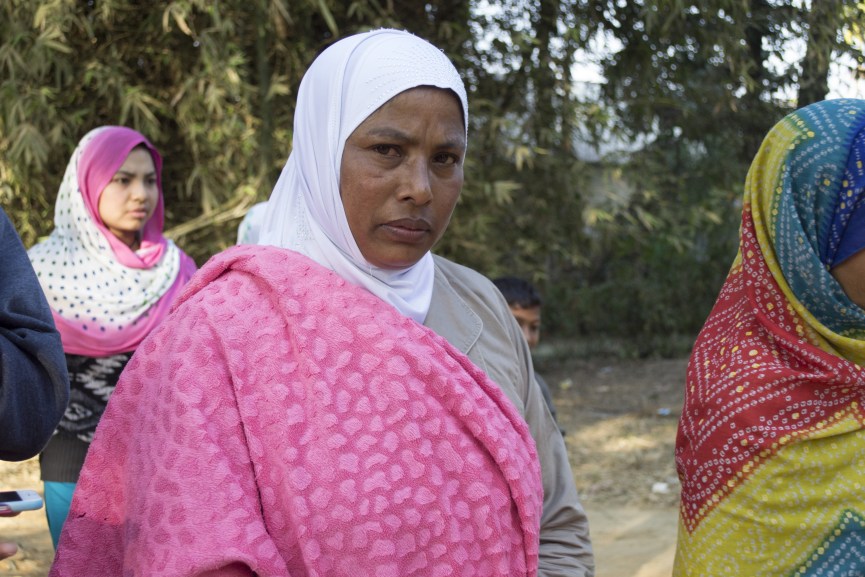
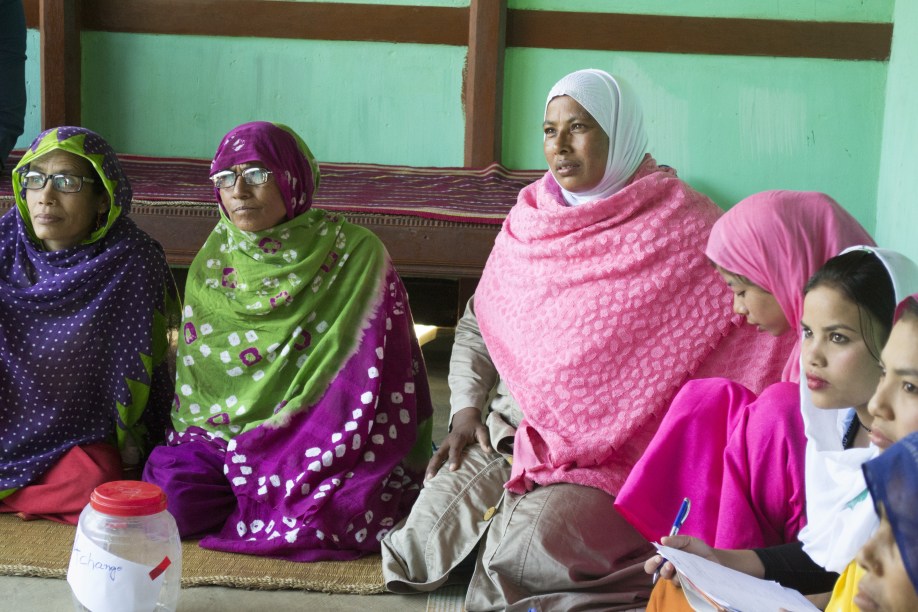
Donning a brown abaya and with a white synthetic cloth clutching her forehead, Najima Bibi sat on a mat on the mud floor of a neighbour’s hut with a cluster of men and women, both young and old, surrounding her.
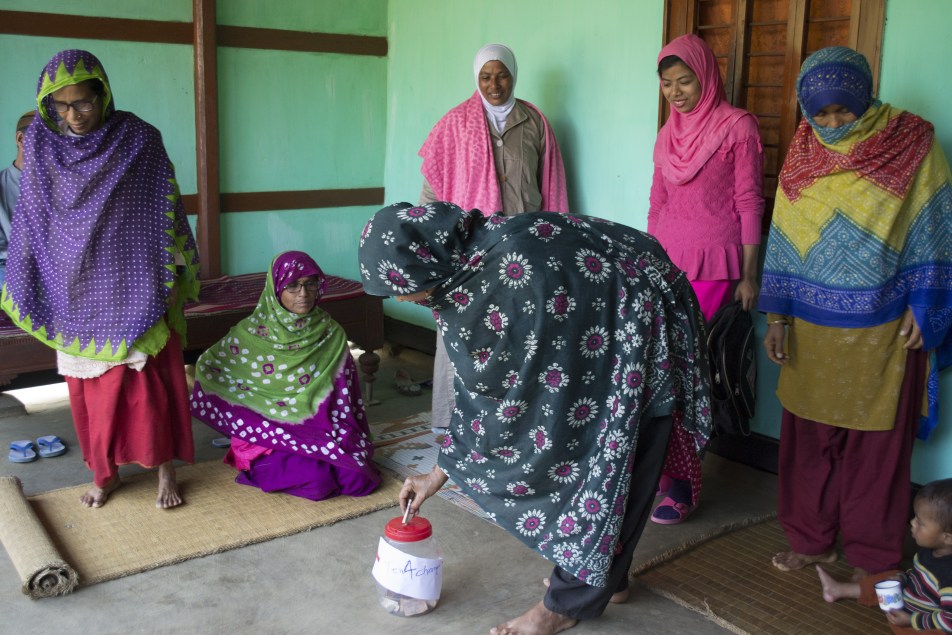
A used plastic container with a bright red lid filled with ten rupee notes sat in front of the 44-year-old who scanned her surroundings with a slight smile.
With the words ‘Ten4change’ scrawled in blue ink on a paper taped to it, the container served as a donation box. By the time Najima ended the community meeting, each one of those present had made their contribution for ‘change.’
Just as cups of lukewarm black tea – a definite afternoon pick-me-up – were being handed out by the owner of the hut, Najima passed around forms listing questions about the basic facilities in the village and about the expectation of the people from their representative.
Community members make donations to Najima Bibi’s party – PRJA. Credit: Amanat Khullar
Najima, also known to many as Najima Phundreimayum, has been a social activist for over 15 years in and around Santhel Mamang – the leikai (colony) she belongs to in the Wabagai area of Manipur’s Thoubal district. After years of activism, she changed gears and decided to contest the upcoming Manipur assembly elections.
Alternating between contemplating and then hurriedly jotting down their answers, a few seemed a bit unsure of what to put down in the form and what to leave out. Even as they began returning the filled sheets of paper to her one by one, it became apparent that she didn’t quite need such thermometers to measure the ills of the poor people of her Muslim community, particularly the womenfolk. The level of comfort between her and them was obvious.
Yet, these forms are seen as a key for gauging the mood and expectancies of the people who would choose between her and three other major candidates in the March 8 elections in the Wabagai assembly constituency.
Even though forms are often seen by voters as a novelty in Manipur, Najima – a first-time contestant in an assembly election – felt that “They are vital.”
“The answers will help me focus more on what exactly they are seeking from me as a contestant, and if I win, as their representative in the assembly,” she reasoned.
For those unfamiliar with the candidates in the fray for the upcoming elections in the state, Najima’s immediate introduction to them would be as the Wabagai seat contestant from the anti-AFSPA activist Irom Sharmila’s party, Peoples Resurgence and Justice Alliance (PRJA). She is also the treasurer of PRJA.
She is also someone who has made her name in Wabagai as an intrepid trendsetter among the Meitei Muslim women. A dynamic woman to have challenged her conservative background to demand her gender rights, she has been a relentless voice for women’s empowerment within her community.
However, her name would go down in history for something even more exceptional – being the first Muslim woman contestant of Manipur.
Stepping into the public life as a woman has never been easy, not even in the Northeast, where the general myth about women being relatively more empowered than in the rest of country looms large.
“My struggle has been long and lonely. First, I was mildly taunted for what many saw as breaking rules set for girls in our community, and then gradually it turned into serious opposition,” she said.
Across Santhal Mamang leikai, billboards announcing various government schemes weren’t hard to spot. Stuck to the walls of the mud huts were also posters asking the villagers to “break silence” on the “war crimes in Syria” and the “genocide of the Rohingyas” in Myanmar – the country that Manipur shares a border with.
A few labourers have been repairing one end of the main road that runs through the leikai and which is broken in several parts.
The main road in Najima’s constituency of Wabagai in Imphal. Credit: Amanat Khullar
On being asked about the repair work, Najima smiles and says, “That’s the reason I am contesting elections. There’s only patchwork in the name of development by the people’s representatives.”
“I have been working against domestic violence faced by our women, for our right to food, etc. We are poor people. We have many problems. We can get effective results from various government schemes that already exist if our representatives are supportive of us. But what we get is only ample show of money power and muscle power by the MLAs and people connected to them.”
When Sharmila announced the launch of her party, Najima resolved to join her. She had her reasons. “I thought this would be the best way to expand the scope of my work. What I have been doing at an individual level could be done in a bigger way if I can be the MLA,” she told The Wire.
Najima, unlike most women from her community, found her voice by dint of her sufferings. If being the only girl in her class was an assertion of her right to educate herself early in life, being the first girl in her family to have completed the tenth standard was certainly an eyebrow raiser, among relatives and others.
When Najima was about to be married off aganst her wishes, she did what she knows best – defy. “I ran away to marry a man I met only twice before. That marriage turned out to be a disaster.”
Within six months, she took another step which women from her community would usually avoid – a talaq.
Thereafter, day-to-day survival taught her a lesson on self-reliance. She initiated ‘Cheng Marup’, a rice thrift fund for the women of her leikai.
“Everyday, the women in the group would take out one handful of rice from the quantity to be cooked in their homes. These were collected and kept in my house, and twice a month, whoever’s turn came, she would get the entire rice and would sell it to earn some money. It was looked at with suspicion by many people in the leikai as I was divorced and our saving was considered a theft. But we kept it running. Slowly, people realised its benefits,” she recalled.
Najima made small moves to claim her space in her conservative society, like riding a bicycle.
Outside Najima’s house in Wabagai in Thoubal. Credit: Amanat Khullar
“Even now, everyone makes fun of me when I ride a bicycle to the meetings but I don’t mind. Muslim women were not allowed to ride a bicycle just to slow them down. I realised that I can begin fighting most of it off by just riding a bicycle. Alongside, I was also able to make it on time everywhere and get a lot of things done,” she said in a recent campaign meeting with women voters of her constituency.
Soon after she announced her decision to contest the polls, she was met with a warning from local clerics. “They not only warned me against contesting the elections but also said if I do, I would not be given space for my grave in the local kabristan. They also warned that anyone who supports me or talks to me would meet the same fate,” Najima told The Wire.
This, however, was not the first time that the clerics had declared a fatwa against her.
“After attending a workshop on gender by an NGO in Imphal in 2001, I realised what I had experienced and what many of my fellow women had experienced daily was gender violence. I began to help out such women,” she said.
“I now run a destitute home for such women here. All such activities led to a fear in the minds of the clerics that I am turning into a follower of Meira Paibi (a powerful women’s rights organisation in the Meitei community). They tried to stop me but couldn’t. So in early 2006, the clerics announced on the local loudspeaker used for namaaz that all women self-help groups in the area were banned on religious grounds. They named me for provoking women, still I didn’t bother. Then they issued a fatwa as per which I was stopped from taking water from the local pond. No shopkeeper would sell me goods. I defied it too and went to bring water from the pond.”
Najima surrounded by women from her community. Credit: Amanat Khullar
Her defiance led some people to beat up her present husband, twice. “I am proud of him, he chose to stand by me,” she said.
A few months later, the matter was settled after the intervention of Jamiatul Ulama, Manipur and some other Muslim organisations that sided with her for helping Muslim women get empowered.
For the present fatwa, Najima countered the contention that such a call from them had come only because she was a woman. “There is a leadership crisis. I have been raising questions on the distribution of ration through the PDS system. This ban by the clerics is one of the tools used by the local politicians to stop me from contesting the polls. Else, those in power run the risk of getting exposed,” she said.
The sitting MLA from Wabagai, Fajur Rahman, who is from the Congress party, is also contesting the elections. Taking on him is yet another stalwart, U. Deben, a former MLA. Then there is the BJP rebel candidate Habibur Rehman, who is contesting as a Janata Dal (United) candidate. Rehman was the vice-president of BJP’s state minority morcha.
So where does she see herself in this complicated fight?
“I know I am fighting formidable forces; they know many a trick to win elections. It is the biggest struggle for me to convince the voters about what is actually good for them. But I am confident to surmount it with the help of my supporters,” she replied.
Irrespective of who wins, the fact that Manipur is seeing in its elections the participation of a woman from its sizeable Muslim community for the first time in the 70 years of independence, is certainly notable.
What took so long for this to happen?
“The main problem is, ours is a male-dominated society, women are afraid of confronting men. When they say you can’t contest elections, it becomes the final word,” she said. “Women bow down to men because they are uneducated. Lack of education deprives them of their political right.”
source: http://www.thewire.in / The Wire / Home> Gender / by Sangeeta Barooah Pisharoty and Amanat Khullar / February 24th, 2017
Emotions flooded former England skipper and commentator Nasser Hussain’s mind as he made his way to the pitch at the MA Chidambaram Stadium on Friday. Born in then-Madras in 1968, Hussain shares a special bond with the city – he spent the six years of his life in Chennai before moving to the UK.
Incredibly, in the mid-1980s, Hussain even scored a few hundreds at Chepauk as a TNCA league cricketer. “I’m very pleased to be back in the place of my birth. I think I was born in a hospital just over the other side of the stadium. Actually, I didn’t realise that. It was Ashwin who told me about that the other day when I saw him,” Hussain told TOI on Friday.
The 48-year-old was sad to see the devastating effects of Cyclone Vardah but lauded the people of Chennai for coming up with a “magnificent” rescue act.
“It’s obviously been difficult to see the devastating damage from the cyclone over the last couple of days. But the community spirit from the people of Chennai, the way they have been trying to clear up the trees on the road has been absolutely magnificent,” Hussain said.
An honourary member of the Madras Cricket Club (MCC), Hussain wants to soak in the atmosphere here over the next five days.
source: http://www.timesofindia.indiatimes.com / The Times of India / News> Sports News> Cricket News / by Bagwati Prasad / TNN / December 17th, 2016