Watch This Film Which Reveals The Story Of India’s Forgotten Hero – ‘Shamsher’

Guntur, ANDHRA PRADESH :

It all started on the 2nd of October last year when I chanced upon an article on a sports news website. It told the story of India’s first Olympic swimmer, Shamsher Khan, who represented the country in the 1956 Melbourne Olympics. Prior to that, he had set national records in all four strokes, or categories, as well as in water polo and diving, making him the only Indian to do so!

One of his contemporaries happens to be Milkha Singh, whose victories are celebrated and remembered by the entire country. On the other hand, Mr. Khan languishes in anonymity. Nobody in the country knows his name or is even aware of his whereabouts. The article identifies his village as Islampur, situated in rural Andhra Pradesh.

After reading the article, I was determined to document his untold story on camera. I decided to visit his village along with four of my friends and attempted to make a documentary on the forgotten legend.

Over the next few weeks, we pieced together Shamsher, our tribute to India’s greatest swimmer. In a series of interviews, we conversed with his contemporaries, family members, well-wishers and finally, the man himself. We encountered an interesting variety of opinions not just about his life, but also about the lack of recognition sportspersons get in India. What started as a documentation of the life of one forgotten sportsman became the story of countless unknown athletes who struggle to get by on the back of their glorious achievements.

In the end, we were faced with difficult questions about the current condition of sports in the country, to which we found no easy answers. Our only hope is to spread more awareness about Shamsher Khan, and his services to a nation that refused to recognise him.

Shamsher: The Forgotten Legend | A documentary by Bharat Misra

Blue Pencil Entertainment

Published on Jan 22, 2016

He represented India at the Olympics for the first time in swimming. He was once the national record holder in all strokes.
He saw two wars during his service in the Indian army…and then, he disappeared from limelight.
Watch as we trace the life of the legendary Shamsher Khan, who lies forgotten in today’s India, like so many gifted sports personalities…
Narrated and Directed by Bharat Misra
Edited by Abhash Singh & Bharat Misra
Shot by Godwin Tirkey & Abhash Singh
Location Sound by Aniket Sawant S
Subtitles by Bhavya Bhagtani

source: http://www.youthkiawaaz.com / Youth Ki Awaaz (YKA) / Home> Society> Sports> Video /by Bharat Mishra / February 11th, 2016

‘I used to scratch the letters ‘IAS’ on the desk’

Kuttiyadi (Kozhikode) , KERALA :

“It was quite unusual in our community (for girls to be educated and independent) but my father was different.

“For him, education was of utmost importance.

“I wanted to be a part of the nation building process and I felt I would be able to contribute positively if I became an IAS officer.”

Atheela Abdullah, 29, talks to Shobha Warrier/Rediff.com about how she achieved her dream.
Atheela01MPOs22mar2017

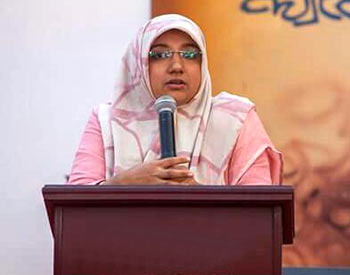
Atheela Abdullah (pictured left) grew up in a small village in the Malabar region of Kerala where Muslim girls were not generally encouraged to study or work. Her father, however, encouraged his wife to work and his daughters to study and pursue their dreams.

He worked in the Middle East and her mother, a school teacher in the village, took care of their children.

Although Atheela studied medicine, she wanted to become an Indian Administrative Service officer. Her husband, who was her classmate at medical college, encouraged her to follow her dream.

Thus began the inspiring story of a young mother — Atheela has two small children — and her single-minded pursuit of her dreams, discovers Shobha Warrier/Rediff.com.

Growing up in a village

I grew up in Kuttyadi, a small village near Kozhikode in Kerala.

My mother was a school teacher and, till Class IV, I studied at a primary school there. After that, my father sent me to a boarding school in Kozhikode because he wanted his children to study in a good English medium school. My elder brother and sister were already in boarding school.

My father wanted both his daughters to grow up into independent women. This is quite unusual in our community (for girls to be educated and independent) but my father was different. For him, education was of utmost importance. He used to tell us how he met a German lady in the seventies who advised him to give his children the gift of education.

My father never differentiated between his son and his daughters.

The atmosphere at the boarding school helped develop my interests like reading, elocution, essay writing, participating in quizzes and debating.

A passion for nation building

In school, I used to scratch the letters ‘IAS’ on the desk; it was the only way I revealed my hidden desire.

I wanted to be a part of the nation building process and felt I would be able to contribute positively if I became an IAS officer.

Sometimes, I thought of becoming a scientist instead and contributing to the nation like Abdul Kalam but I knew I didn’t have the scientific temperament that is needed. So, I decided to be an administrator.

It was unusual for a girl from a middle class Muslim family in a small village, who had never seen an IAS officer, to dream of becoming one.

The options available to me as a student were to either become an engineer or a doctor. I chose the latter as I felt I would be able to do something for the community as a doctor.

Joining medical college

I joined the MES Medical College in Perunthalmanna. Believe me, I would scribble ‘IAS’ on the desk here too, perhaps to remind myself that it was my ultimate dream.

Though I was studying medicine, my reading involved a wide range of topics. I spent a lot of time in the library reading magazines and newspapers.

Meeting her husband

I became friends with Rabeeh, (the man she would marry, Dr Rabeeh V) who was studying medicine in another college, because of the interests we shared. He used to write, while I was a public speaker.

I was 23 and doing my house surgency (internship). My parents were looking for a match for me. Rabeeh and I thought, why not get married? After all, we were from the same community and shared the same interests. Our relationship started off as a literary bond, we became good friends and, after four years of knowing each other, we got married.

By then, I realised that my interest did not lie in giving injections and prescribing medicines. My passion lay in working for the community; at the same time, I knew I did not want to study community medicine.

Even as a medical student, what interested me was talking to patients, understanding their background and needs, and their socio-economic condition. I felt there was a gap somewhere that needed to be filled.

In January 2011, I completed my studies.

From medicine to IAS

My husband was extremely supportive of my desire to become an IAS officer. He told me that though we had not seen anyone from our community achieve such a dream, if I were to achieve this, I would motivate more women to become IAS officers. Both of us want women from our community to come to the mainstream and be independent.

It was at that time that one of Rabeeh’s friends got selected as an IPS officer. We went to meet him to take his advice on how to prepare for the examination. He asked me a couple of questions and I could answer them so he asked me to go ahead and write the exam.

I went to Delhi to attend a three-month coaching class. Rabeeh came along to help me find a place to stay. He was with me for 10 days. He was preparing for his postgraduate entrance exam then.

When I returned, I took up a job as a pathology tutor in a medical college. This time, I decided to support the family as Rabeeh was preparing for his examination.

I didn’t have much time to prepare for the preliminary exam but I didn’t find it difficult; in fact, it was easier than my medical examinations. Here, I was studying subjects I really liked — English, social science, etc.

I knew I was risking my career in medicine but I was prepared.

Luckily, I got through in the preliminary examination in the first attempt itself. For the next two months, I prepared for the main exam. I was in Delhi for a month to prepare for the public administration paper; the other optional paper was medical science which I had studied in medical college.

This time, I stayed at the Hamdard Study Circle, which the government had started for the minorities in India; it is a free study circle.

While I wrote the mains, my husband wrote his PG exam.

The Attapadi community centre

As we did not have children then, we decided to work at the Attapadi community centre, which is a rural tribal area. The experience was an eye opener; we were exposed to a government system that didn’t work. We also understood some of the deficiencies in the system when we saw a tele-medicine unit worth Rs 4 crores lying unused.

We felt really helpless when we were unable to treat emergency cases. Nobody wanted to work there. At times, when you needed a workforce of 60 people, you had only six people to work with.

The mains hurdle, cleared!

While I was at Attapadi, the mains results were announced; I had cleared it. It was time for another trip to Delhi for another round of coaching. This time too, I stayed at the Hamdard Study Circle. The coaching, which lasted for a month, was quite helpful.

Though I was pregnant and had all the uneasiness connected with it, I tried to forget the difficulties and concentrated on the preparation. I didn’t want to waste an opportunity. I wanted to prove to the family that I could achieve whatever I want to and also do what was expected of me as a daughter, wife and daughter-in-law.

I knew was charting a new course for someone like me in our community. As the first one, I had to work hard to prove myself so that, tomorrow, perhaps my daughter will have it easy. There was no question of my complaining about anything as I liked taking up challenges and coming out victorious.

Facing the interview board

My interview was scheduled in April 2012. I was four months pregnant then.

They asked me a lot of questions on the kind of work I was doing at Attapadi and also about the tribes there, their lifestyle, their traditional occupation, the common health problems they face, etc. They also asked me about the role of technology in medicine, my opinion on euthanasia, etc.

They wanted to know why I wanted to be a civil servant when I was comfortable with the profession I was in. I told them that I always wanted to be a civil servant; it was a dream that I had carried with me from the time I was in school.

I was quite hopeful after the 30-minute interview.

When the results were out, I had secured a rank of 230.

I think I am the first Muslim woman from the Malabar area to become an IAS officer.

Becoming a mother
Atheela02MPOs22mar2017

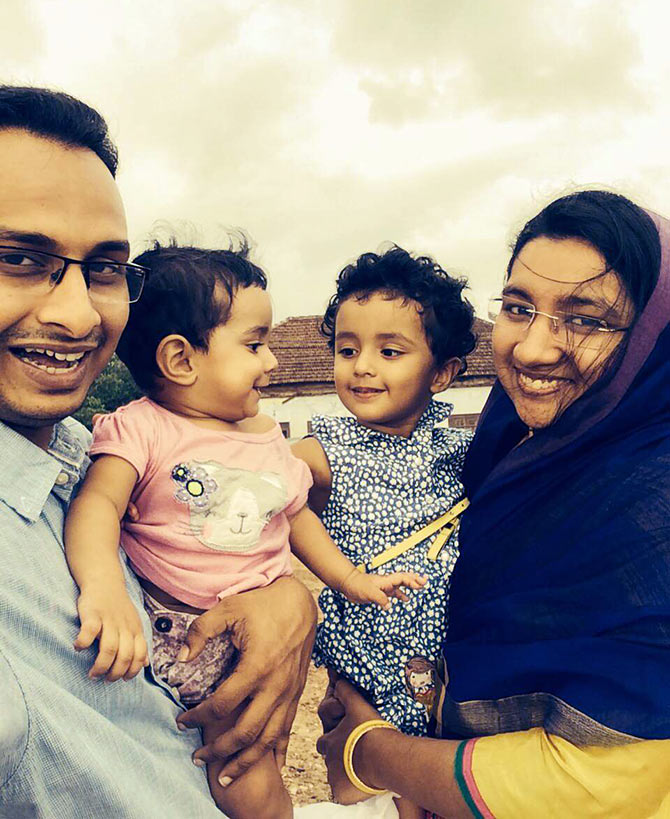
I couldn’t complete my training as I had to take leave for my first delivery. I went back after my child was born and completed the training.

I was posted as assistant collector at Kannur for a year. By then, I was pregnant with my second child. After my second maternity leave in 2014, I was posted in the Tirur sub-division as an assistant collector. I could not complete my training at Mussorie — I have eight months left and will be leaving soon to complete it — as I had to go on maternity leave.

Childbirth and bringing up children come with a lot of sacrifices and responsibilities for women, but I feel they still have the ability to have a successful career.

I am glad this happened at the beginning of my career so I need not take breaks later. I hope to focus on my career in the years to come. I am able to manage both the kids reasonably well with support of my husband and our family.

It is extremely important to have the support of your husband if you want to chase your dreams. My husband is extremely proud of me and encourages me to be independent. If he sees someone really smart, he urges me to be as smart as him/her.

Wearing a hijab

People ask me why an independent woman like me wears a hijab. You won’t believe it, but I didn’t know till now that what I wear is called a hijab.

I grew up in northern Malabar, which is a very conservative area. All Muslim women wear a thattam (the cloth with which you cover your head) here. I have seen my grandmother and mother wear a thattam. I’ve worn a thattam since I was a school kid. When I wear a sari, I just cover my head with the sari.

I never wore the headgear which the Arabs use.

Just because I am an IAS officer now, should I change the way I dress? I believe that as long as the Constitution gives you the freedom to follow your traditions and beliefs, I can dress the way I always have.

I can say that these things have never come in the way of my job as a doctor or as an IAS officer.

For the first time in my life now, I am asked questions about the way I dress. I feel I need not answer such questions. According to me, we shouldn’t waste time talking about such symbols.

India is a great country that allows you to be what you are. That is the beauty of our country. I don’t think any other country gives this kind of personal freedom to an individual.

Even when we were growing up, my father had told me I should have the willpower and strength of character to move forward even if something pulled me backwards. So people commenting on the way I dress do not bother me. What matters to me is my integrity.

Those who influenced her

What guided me forward are the teachings of Mahatma Gandhi who, according to me, was a yogi and a bhakt.

It is because of the influence he had on me that I want to serve my country.

Our country is fortunate to have three great people to guide us; Mahatma Gandhi, Bhagat Singh and Abdul Kalam.

Kalam, according to me, was a yogi like Mahatma Gandhi.

But the three people who have helped me realise my dream are my father, mother and my husband.

Working as an IAS officer

The experience I had at Attapadi made me all the more determined to be in the system and make a difference, even if it is a small one.

Although we are a very developed civilisation, we have not been able to bring the entire population to a desired level socially in the last six decades. Many more people have to be part of the nation building process; only then we can make our country a developed country for all.

A good politician can also bring about positive changes in the society but I was not sure if I could be a politician.

Nobody has told me anything negative about being in the civil services, I have only positive views about it.

I have just started my career and have only idealistic thoughts in my mind, which I know is unrealistic. I would say, let me have my idealistic thoughts till I face reality!

Advice to the young

~ Have faith in yourself and work hard.

~ You should have the will power and strength to face adverse situations. You should always be focused.

~ The positive energy you get from your family only adds to your contribution. Your efficiency improves if you have very good support from the family.

~ Don’t ever think about what society or others think about you; believe only in your ability.

Photographs: Courtesy Ateela Abdullah

Shobha Warrier / Rediff.com

source: http://www.rediff.com / rediff.com / Home> Getahead / by Shoba Warrier / September 30th, 2015
Remembering Syed Shahabuddin – Muslim Heart, Indian Mind

Ranchi (JHARKHAND) formerly BIHAR /  NEW DELHI :

His arrival on the political scene as an articulate Muslim leader was no ordinary event in the journey of the Indian republic.

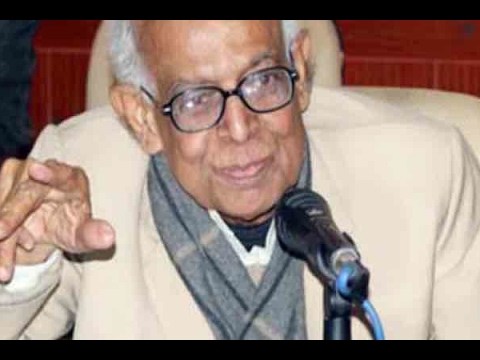
Syed Shahabuddin, 1935-2017. Credit: Youtube

Writing an obituary of the writer, diplomat and politician Syed Shahabuddin is actually an exercise in writing of the journey of Muslims in the Indian republic. The much maligned gentleman was somebody who could never be ignored. As a very bright student of physics in the academically brighter phase of Patna University in the first decade of India’s independence, he drew the attention of his teachers. The memoirs of his professors, Mohsin and Kalimuddin Ahmad, describe Shahabuddin’s promise in glowing terms. Soon thereafter, he became known for the leadership he provided to a student movement in 1955, including leading a 20,000-person march to wave black flags against Jawaharlal Nehru when he visited Patna – in protest against police firing on students.

He managed to get a job as a lecturer at the same time as qualifying for the civil services in 1957. He ranked second among all the aspirants, with a particularly high score in the interview section, and joined the Indian Foreign Service. Many delicious legends were fabricated around the kind of questions he was asked and his witty responses. His success not only inspired many students, but also helped overcome the trepidation among Muslims about their place in India after Partition.

While a section of Hindus looked upon Muslims as potential fifth columnists, a section of Muslims was also not very confident of the inclusionary-pluralist democracy that was being built up under Nehru. Notably, even as a student, Shahabuddin too was contributing towards this task of nation-building. With some ‘socialist’ leanings, though not formally with any party, his activism allowed certain critiques of the Nehruvian consensus to be heard.

He paid a price for this activism, though a minor one. Owing to Shahabuddin’s involvement in the student agitation of 1955, he had to wait for police/intelligence clearance and therefore could join the services a little later than his other batchmates. Legend has it that Nehru himself finally cleared the file.

In the late 1970s, the hegemony of the ruling Congress came be challenged by the socialists, Shahabuddin became restless within the confines of bureaucracy. He decided to quit government service and join politics.

Until then, Indian politics lacked a pan-Indian Muslim leader with well informed and articulate views. Although Maulana Azad had occupied an important position, he was part of the Nehruvian consensus and did not challenge it. Nor were academics looking at the worrying economic and educational locations of Muslim communities and their disproportionately inadequate share in the structures and processes of power. A few exceptions existed, such as the volume on castes among Muslims edited by Imtiaz Ahmad in the late 1960s and the works of Uma Kaura and Mushirul Hasan looking at the marginalisation of Muslims by the Congress under majoritarian pressures in 1970s, but these were rare.

None of the important dissenting voices in Indian democracy, whether Ram Manohar Lohia (1910-67), the defender of the lower castes, Jai Prakash Narayan (1902-79) nor the Left were paying attention to this issue.

Shahabuddin saw this vacuum in Indian politics and adventurously jumped in to fill it. His arrival on the scene as an articulate Muslim politician was no ordinary event in the journey of the Indian republic. As he stormed in, with his enviable articulation and abilities invoking constitutional values and spirit, he was almost matchless. He could not be dismissed, but he could be maligned as a sectarian, conservative and even communal reactionary. Often, he gave his critics grounds to do so. His stand on the gender issue in the Shah Bano case, where he stood on the side of the clerics, and on free speech, by asking for Salman Rushdie’s Satanic Verses to be banned are particularly problematic as the repercussions continue to play out today. On the issue of caste among India’s Muslims too, he was dismissive of pasmanda activists, although unlike many ‘reactionary’ Ashraaf, he never denied the reality of caste-based oppression and discrimination in Indian Islam.

His critics had little time for complexities and he was frequently clubbed with people like Maulana Bukhari, the Shahi Imam of Jama Masjid in Delhi, despite there being little to compare the two in either democratic legitimacy or point of view.

Throughout the 1980s and ’90s, Shahabuddin, through his English monthly, Muslim India, a journal of “Research, Reference and Documentation”, kept articulating and disseminating the concrete (as well as emotive) issues of concern to Indian Muslims, besides contributing  extremely powerful, informed and passionate editorials. Putting together news reports and views from across periodicals, the magazine also carried parliamentary speeches, interventions, government reports, book reviews, personality profiles and statistical data demonstrating the under-representation of Muslims in various sectors of the economy and employment, and many other crucial areas. This was done with candid, coherent, persuasive prose, laced with facts and figures, and at times beautified with apt Urdu couplets.

The title of the monthly he had chosen turned out to be provocative, as this expression is said to have been used in certain documents of the Muslim League in late colonial India. But the sharp (and cunning, if I may say) mind of Shahabuddin had a very strong defence in the English grammar. He explained that in the expression ‘Muslim India’, the former is  an adjective and the latter a noun. Thus, ‘Muslim India’ would grammatically put emphasis on the Indian identity of someone just happening to be Muslim. It was more patriotic than the expression ‘Indian Muslims’, wherein more emphasis was on Muslim (who happened to be Indian). Hence, he preferred ‘Muslim Indian’ to ‘Indian Muslim’.

Besides making interventions in a range of journalistic and academic periodicals, including even the ‘provocative’ English monthly, Debonair, Shahabuddin’s Muslim India carried very powerful editorials on almost every issue which touched the Muslim segment of Indian democracy. Nobody before and after him could muster that much of courage, conviction, energy and determination to do all these, that too all alone. Yet, he found enough time to reply to all the letters he received. He religiously wrote and dispatched letters.

The editorials that had particular impact are worth recalling. In July 1994, he wrote on Lalu Prasad Yadav’s brazen Yadavisation in Bihar at the expense of his core and unflinching support base – Muslims. The argument was well made, even by the standards of Shahabuddin’s characteristic articulation, with so much data damning the Lalu regime on almost every aspect of governance. Predictably, soon after, he left the Janata Dal. In July 2000, he published another editorial on the problems of governance at the Aligarh Muslim University (AMU) and their possible remedies. This was meant as advice from a senior IFS officer to a junior one, Hamid Ansari, who had joined as the vice chancellor of AMU. Yet another important editorial was on the 1988 Act making Jamia Millia Islamia (JMI) a central university. He called the Act a “swansong” for JMI. He later expanded this editorial and wrote a long essay,  ‘How to revive the spirit of Jamia Millia ‘,  in the Milli Gazette in 2010. Focussing on the AMU Act 1981, the lawyer in him kept arguing that the legislated Act did not provide AMU with minority status, though it did have minority character.

In the final years of his life, many of his projects remained unfinished. The tragic and mysterious murder of his only son Parwez (an IIT alumnus and a promising scientist) in the US in 2005 had perhaps broken him from within, even though he did carry on with his life as bravely as ever. He never got around to finishing it but the title he chose for his autobiography was Muslim Heart, Indian Mind. Perhaps that is the best way to remember him by.

Mohammad Sajjad is an associate professor at the Centre of Advanced Study in History at Aligarh Muslim University and the author of Muslim Politics in Bihar: Changing Contours.

source:  http://www.thewire.in / The Wire / Home> Politics / by Mohammad Sajjad / March 09th, 2017

Munir Sait is Tournament Director

Chennai, TAMIL NADU :

Chennai:

Former Olympian and member of the Competitions Committee in the International Hockey Federation, Munir Sait, has been nominated as the Tournament Director for the Oceania Zone Olympic qualifier to be held at Brisbane from September 11 to 16.

This is the last of the continental competitions to decide the automatic qualifiers for the Olympics. – Hockey Correspondent.

source: http://www.thehindu.com / The Hindu / Home> Sport / August 29th, 2007

India 20 Under 40 – This ‘modest fashion’ startup is giving Muslim women more than clothes

UNITED KINGDOM :

Muslim women are flocking to a startup that promises them fashionable clothes that fit with their faith.

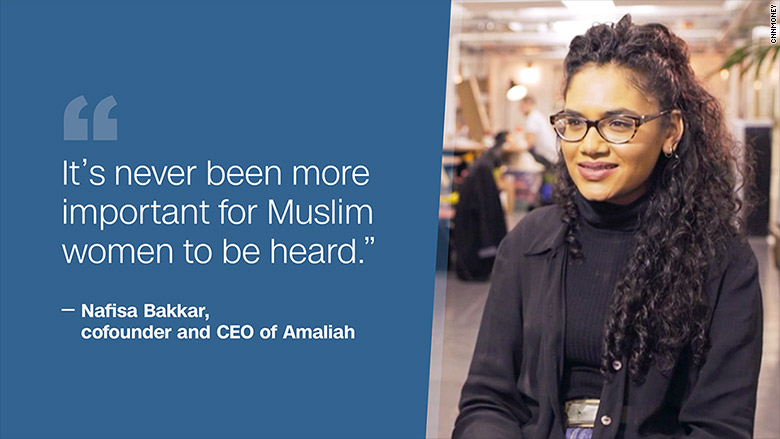
Nafisa Bakkar and her sister, Selina, launched Amaliah from their mother’s kitchen table in 2015 as an Instagram page to curate Muslim-friendly clothes from top brands.

Since then, that page has grown into an online community of more than 250,000 Muslim women.

The sisters grew up in the U.K., born to Indian immigrants from the eastern city of Kolkata.

Nafisa Bakkar told CNNMoney they grappled with multiple identities throughout their upbringing, but soon realized how big a role Islam played — and the challenges they faced as a result.

One of those was how to find clothes that were stylish but allowed them to adhere to their religion.

“Amaliah started as a personal frustration,” the 24-year-old said. “We realized that it was a big pain point for Muslim women to find clothes that were modest but also fashionable.”

That Instagram page has grown into a platform that allows Muslim women to share their perspectives, experiences and, of course, find the right clothes. The company’s website  features a curated collection from leading stores such as H&M, ASOS and Zara, which customers can order directly online.

It also features blogs and articles with titles such as “My journey to being a part-time hijabi” and “Empowerment looks different to everyone.”

“I see Amaliah as a … tool for cultural change,” Nafisa Bakkar said. “I don’t really see us as just a clothing brand.”

NafisaMPOs22mar2017

The ultimate objective is gradually to change the perception of Islam in an increasingly polarized world.

“In today’s political turmoil… it’s never been more important for Muslim women to be heard,” the young CEO told CNNMoney. “What we’re seeing in the Islamic economy [is] a lot of start-ups rising out of frustrations, out of feeling that we’re not catered for.”

That market is growing, and big global brands are beginning to notice. Bakkar says fashion powerhouses such as Dolce & Gabbana and DKNY have started catering more to Muslim women over the past couple of years.

But there’s still a long way to go.

“In an ideal world, Amaliah wouldn’t exist,” Bakkar said. “It wouldn’t be difficult for a Muslim woman to find the right clothes that she doesn’t feel compromises her culture and values, it wouldn’t be difficult to hear the opinion of a Muslim woman in the mainstream news.”

Abad group chairman Sait is dead

Kochi, KERALA :

Kochi:

Abad group chairman Hashim Usman Sait (85) passed away at his residence here on Saturday. He is survived by his children Anvar, Arif, Javeed, Yasmin, Nelupher, Jabeen, Suman and Kiran.

The funeral will be held on Sunday at Central Juma Masjid at noon.

The Kochi-headquartered Abad group was started by Mohammed Kasim Allana in 1894 and has branches across Kerala.

Hashim Usman Sait played a major role in expanding the business interests of the group, which is one of the leading players in hospitality field of Kerala.

source: http://www.timesofindia.indiatimes.com / The Times of India/ News Home> City> Kochi / TNN / February 26th, 2012

She lost her legs but not will to be a doctor

Mumbai, MAHARASHTRA :

Raushan Jawwad
Raushan Jawwad

______________________________________________________________

HIGHLIGHTS

  • The law allows only people with “up to 70% handicap” to study medicine, she was found to be 88% handicapped
  • Raushan lost both of her legs in a train accident, moved the Bombay high court to study medicine

________________________________________________________________

Mumbai :

In an instance of triumph of will over circumstances, Raushan Jawwad, the fiesty 24-year-old from Jogeshwari who lost both her legs to a train accident in 2008 and later moved the Bombay high court to study medicine, managed to get the prefix of “doctor” attached to her name on Tuesday evening.

Jawwad Shaikh, her vegetable vendor father, and mother Ansary Khatoon, a homemaker, had tears in eyes when they saw people clap for their daughter while she was being conferred with the MBBS degree during the convocation ceremony.

Nine years after the accident, Raushan has become the first doctor in her family.

A bright student, she scored 92.15% in her Class X exam in 2008. A few months later, on October 16, 2008, she was pushed out of a crowded local train near Andheri station. She was on her way home after writing her college exam papers at Bandra’s Anjuman-i-Islam Girls College in the train when she fell on to the tracks and lost her legs under the moving train. Hearing Raushan’s screams, some commuters pulled the chain and the train was stopped. It took her a year to pull herself out of the trauma and resume her education.

“I am thankful to Allah for giving me the courage to continue my studies. I am now preparing for MD entrance. I want to start a hospital in my ancestral village in Azamgarh where many people face medical problems due to non-availability of good hospitals,” Raushan told TOI on Wednesday. She has expressed willingness to work for the poor in villages near Mumbai too. Last year, Raushan secured a first class in the final-year MBBS exam at KEM Hospital.

While the law allows only people with “up to 70% handicap” to study medicine, she was found to be 88% handicapped post the accident. To continue her education, Raushan had to put up a fight. She approached the Bombay high court seeking its intervention to secure an admission. Despite qualifying for the entrance exam, the government found her “unfit” to study medicine. The then high court Chief Justice Mohit Shah directed the state to give her admission. “When she can come all the way to court, why do you think she won’t be able to come to class?” asked Justice Shah.

Raushan stays with her parents, an older brother and younger sister in a 10-by-10-foot rented room in a Jogeshwari chawl.

“While studying at KEM, I used to stay in a college hostel. All my classmates, colleagues and teachers helped me a lot. The credit for my success goes to them too. They would always be very helpful and I never felt disabled when in their company,” said Raushan. When TOI first reported the accident, several people came forward to help Raushan financially. But her family did not even have a bank account.

source: http://www.timesofindia.indiatimes.com / The Times of India / News> City News> Mumbai News / by Mateen Hafeez  / TNN / March 12th, 2017

Ajgar & Musthafa are the champions

Erode (TAMIL NADU ) & KOLKATA :

Ajgar Ali (left) and Mohammed Musthafa in Siliguri on Thursday

Siliguri:

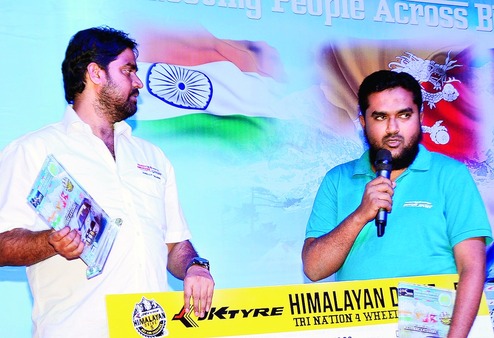
Ever since they took the lead on Day I, Sheikh Ajgar Ali and Mohammed Musthafa never had to look back, emerging winners of the Biswa Bangla JK Tyre Himalayan Drive V – Tri-Nation 4-Wheeler TSD Rally – that concluded here on Thursday.

After driving more than 1250 km through forests, riverbeds, mountain roads and dirt tracks across India, Bhutan and Nepal over five days, the duo lifted the coveted HD 5 trophy.

Ajgar and Musthafa – the reigning National TSD (Time, Speed Distance) Rally champions – finished with 174 to win the competition for the second time. They had won the inaugural edition back in 2013. Deep Dutta and Prakash Muthusamy finished second, while Ashish Budhia and Calcutta’s Arindam Ghosh came third in the rally.

Talking about the experience, Ajgar, who comes from the village of Dighasipur (in Haldia), felt that things were more challenging for them on the first two days.

“The competition sector was really tough… The terrain was challenging. In Bhutan and Nepal the roads were really, really difficult. But I think it was far more challenging on Day I and II. Really hectic…,” the 36-year-old said after the prize distribution ceremony at a shopping mall.

Anurag Srivastava, district magistrate, Darjeeling, was the chief guest.

Ajgar added: “We started here (in Siliguri) and went to Paro. Thereafter, we went to Thimpu, then back to Paro again… Then Darjeeling, Hile (in Nepal) and back to Siliguri… So, one should understand how tough it was.”

Ajgar and Musthafa had to brave temperature of three-degrees Celsius in Paro. “In Nepal too, it wasn’t easy. The temperature was around 4-5 degrees Celsius,” Ajgar said.

“But thanks to the Himalayan Rally back in October, where the temperature was some minus five or six (degrees Celsius), we could survive the conditions in Paro and Nepal. That experience certainly helped.”

Ajgar’s navigator Musthafa thinks the duo were under more pressure, having taken the lead on the first day. “Look, this event was far more challenging for us because our performance in the past events weren’t too good.

“If you are the favourites in a competition, there’s bound to be extra pressure on you… The pressure of expectations… So, in that sense, the first day’s lead added to our pressure because everyone’s focus was on us and we were the team that others chased. Maintaining the lead was really difficult, from Day I to Day V.

“The rally was well and truly a roller-coaster…

“We, therefore, decided that we would just not look at the results and instead, concentrate on the basics. In any case, Ajgar and I share a wonderful rapport and we understand each other really well.

“The intensity was high and the end result is there for everyone to see,” said Musthafa, who comes from Erode.

The duo now look forward to the Uttarakhand Adventure Rally in April, where they will certainly be one of the favourites. “Honestly, our understanding developed ever since the first time we came together as a pair, which was at the Himalayan Drive (HD) I back in 2013.

“We won that as the understanding between the two of us had already developed well,” Musthafa said.

Ajgar and Musthafa, having won India’s premier rallies like the Raid de Himalaya and Desert Storm in the adventure categories, had come second in HD II and third in HD III.

source: http://www.telegraphindia.com / The Telegraph, Calcutta,India / Front Page> Sports> Story / by Sayak Banerjee / Friday – March 03rd, 2017

Ajgar-Mustafa rule the roost

Erode (TAMIL NADU ) & KOLKATA : 

Siliguri:

After traversing through the hills and the plains for over 1,250km in five days, Ajgar Ali (Kolkata) and co-driver Mohammed Mustafa (Erode) emerged a clear winner over nearest rivals Deep Dutta (co-driver Prakash Muthusamy) in the Biswa Bangla JK Tyre Himalayan Drive 5 here on Thursday.

Ajgar and Mustafa enjoyed the extra edge of a strong lead in the national class points table going into the final day. But the duo decided to stick to the basics. They showed great understanding from the start (Hile in Nepal) and reached here without having to nurse the car right through the journey.

“There was nothing much to do for us today. We had to just keep the car on the road for the title,” said Mustafa.

They were obviously thrilled to have clinched their maiden international title.

“We have driven together for five years and have been successful in about 50 TSD events. But this was our first international event. It was a totally new experience. We saw different countries, beautiful locations and lovely people and that set the winning mood for us,” he added.

Mustafa said they were under some pressure after taking the lead on the first day. “But we managed to come clean thanks to Ajgar’s brilliant drive. I was always confident of him. He also does not complicate things.”

Ajgar was pretty pleased as well and credited the title win to Mustafa’s clean work. “He did a great job right through.”

Having tasted success at the international stage, the former Himalayan

Drive champions promised to return next year. “We will be back and in

an even better shape to defend our title,” said Ajgar.

Ashish Budhia (co-driver Arindam Ghosh) had to rest content for the third place.

source: http://www.thehindu.com / The Hindu / Home> Sports> Other Sports / by Rayan Rozario / March 02nd, 2017

Sahul Hameed Ujire new president of Al Ameen Association Dammam-Jubail unit

 Dammam (SAUDI ARABIA ) / Ujjire (Dakshina Kannada) KARNATAKA   :

Dammam :

The third annual general body meeting of  was held on February 23. The programme began with Qirat by Maher Mohammed.

Imam of Ujire Central Masjid, Abu Sufyan H I Ibrahim Madani, Hamed Saeed Al Ghamdi, Anwar Hussain Goodinabali, Kamaruddin Goodinabali, Amjad Khan Polya, Qasim Tolhath president of Al Ameen Riyadh unit and Usman Kotrody senior vice president of Al Ameen Dammam-Jubail unit were the chief guests at the function.

Dammam-Jubail unit president, Sahul Hameed Ujire welcomed the audience and the chief guests. Vice president S A Azeez of Al Ameen Dammam-Jubail Unit anchored the programme.

Azeez S A delivered a brief introduction of the educational and other activities carried out by Al Ameen Association Ujire and explained how Al Ameen worked all these years back home. He also thanked each and every member of the unit.

Ubaidullah Ujire, general secretary, presented the audit reports.

Qassim Tolhath, appreciated the efforts of the unit and took up the responsibility to dissolve the old committee and announce the newly formed committee. He also wished the new committee.

Sahul Hameed Ujire was named president unanimously for the third time.

Abu Sufyan H I Ibrahim Madani Imam of Ujire Central Masjid expressed his gratitude to all the members and thanked them for their dedicated service to the community.

Hamed Saeed Al Ghamdi, Anwar Hussain Goodinabali and Kamaruddin Goodinabali called on the office bearers to exercise their team spirit and tireless effort to serve the community and their complete dedication toward the noble cause.

Ubaidulla Ujire proposed the vote of thanks.

Al Ameen Dammam-Jubail unit executive committee members for the year 2017-2018 are as follows:
Sahul Hameed Ujire (president), Azeez S A (general secretary), Usman Kotrody (vice president), Ubaidulla Ujire (vice president), Farook Alankar (treasurer), Mansoor Kuntini (joint secretary) Siddik Charmadi (joint secretary) and Asif QTF (auditor).

Advising committee:
Yakoob U A, Yusuf U H, Mohammad Ali and Bava Hussain

Executive members:
Mehboob, Salahuddin, Mohammed Anees, Irfan, Hudaifa, Suhail, Zameer, Mansoor Athaje, Hameed Athaje, Abdullah Muguli, Rafeeq Muguli, Abdul Khader Halepete, Rafeek vital, Ashraf Bellur, Amjad Khan, Raheem Arkula, Yusuf Vitla, Ibrahim Khader, Mohammed Iqbal and Shamsuddin.

source: http://www.daijiworld.com / DaijiWorld.com / Home> Middle East / Thursday – March 02nd, 2017