American federation of Indian Muslims pledges Scholarships worth Rs.4 crore; gives Excellence Awards for Luminaries

NEW DELHI  / Nuh ( Mewat)- HARYANA  /  U.S.A.  :

Educational Excellence Celebrated at AFMI’s Silver Jubilee Convention in Delhi

American Federation of Muslims of Indian Origin’s Silver Jubilee convention held at the Kedar Nath Sahani Auditorium in New Delhi Dec.31-Jan.1st celebrated the accomplishments and marked a milestone in the organization’s history. The convention was held in co-ordination with the Delhi Youth Welfare Association.

More than 120 Muslim students from across India were awarded with gold, silver, and bronze for attaining meritorious distinction in the board exams. In addition, the prestigious Sir Syed Ahmed Khan Award conferred about leading Mumbai philanthropist Dr. Abdul Kader Fazlani Sopariwala. The Mir Taqi Mir Award was given to Mr. Sanjiv Saraf, founder of the popular web portal www.rekhta.org, for his contributions in promoting the Urdu language. The website now features more than 22,000 titles of Urdu books.  Excellence Awards were given to former Chief Electoral Commissioner S.Y.Quraishi and the historic Anglo Arabic Senior Secondary School.
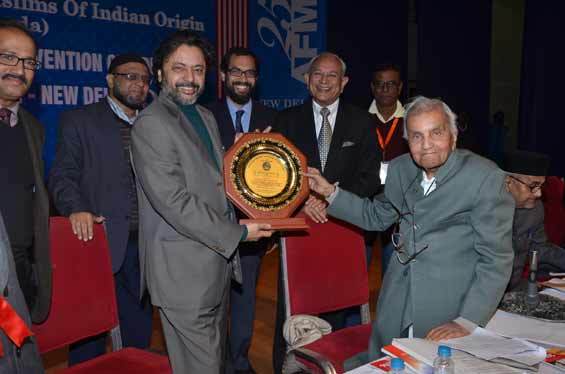
Sanjiv Saraf accepting his award from Justice Sachar

In a first for AFMI convention all the medallists were interviewed by Dr. Fazlani’s philanthropic organization and scholarships worth Rs.4 crore were pledged.

Awards to top students were given at the hands of Delhi Deputy Chief Minister Manish Sisodia. He praised the work of AFMI and that more such efforts need to be undertaken to uplift the society. He mentioned that education remains the top priority of the Delhi government with as much as 25% of the state government’s budget dedicated to it.

AFMI’s flagship awards program has been instrumental in spreading awareness about educational excellence and empowerment across the country. Dr.A.R. Nakadar, AFMI’s founding trustee, said that the fruits sown by AFMI at its inception are now bearing fruit. He said that due to such efforts there has been a remarkable improvement in the educational scenario of Indian Muslims. Citing the latest census reports, published in Indian Express, he stated that there has been a 98.8% increase in the number of Muslim graduates between 2001 and 2011. During the same period the Indian Muslim literacy rate has increased from 59.1% to 68.5%. He said that the day is not too far when, through the collective efforts of all, AFMI’s dream of 100% literacy will be realized.

Dr. Nakadar urged the students to not to rest on the laurels but to use the award as a motivational tool to attain even grater heights of educational excellence. He also asked them to not to forget those who have been left behind and to spread the message of educational empowerment everywhere.

AFMI’s incoming president Dr. Khutb Uddin, a practicing psychiatrist from Indiana, in his remarks applauded the students for their hard work. He urged them to not to be distracted by negative thoughts and to focus on their education.  He also pointed out that everyone from the individual to the government should be involved in raising the quality of education in the country and that it should be everyone’s top most priority.

The inaugural session of the convention was addressed by Justice Rajinder Sachar, Mr. Anil Swarup, Secretary Education & Literacy (Government of India), Mr. Naseem Ahmad, Chairman of National Commission for Minorities, and convention chairman Mr. Mohammad Naeem, president of Delhi Youth Welfare Association. The session was ably moderated by AFMI Trustee and leading scholar Dr. Aslam Abdullah.

The convention was also addressed by Prof. Akhtarul Wasey (Vice Chancellor of Maulana Azad University, Jodhpur); Mr.Siraj Hussain, IAS, former VC Jamia Hamdard,  Dr. S.Y.Qureshi (former Chief Election Commissioner), Justice Fakhruddin, Mr. Ali Quraishi (New Mexico), Mr. Tayeb Poonawala (New York), Mr. Siraj Thakore (Canada), Mr. Farhad Rahmani, Mr. Ayub Khan, Prof. Janaki Rajan, Dr. Shabistan Gaffar, Mr. Mohsin Siddiqui, Mr. Suhel Tirmizi (Editor, Gujarat Today), Dr. Husain Nagamia (Florida),  Mr. Shafi Lokhandwala (Detroit), Mr. Khalil Ahmad,  etc.

The convention also featured an AFMI Alumni session in which previous year’s medalists spoke on their experiences after winning the award. They also offered their guidance for the students in choosing their career pathways. Among those who addressed this session include Dr Nurul Islam (pediatric cardiologist), Mrs. Darakshan Khan (IT consultant), Dr. Suhail Qureshi (oncologist), Dr. Naseem Ahmed (Orthopaedic surgeon), Dr. Nabeel A.K., Ms. Samreen Siddiqui, Mr. Uzair Khan, among others.

In his closing remarks Dr. Nakadar thanked all the organizers and volunteers of Delhi Youth Welfare Association, under the leadership of Mr. Mohammad Naeem, for organizing a very memorable convention.

A seventeen member delegation of the American Federation of Muslims of Indian Origin, led by Dr. A.R.Nakadar, met the Vice President of India Mr. Hamid Ansari on January 2, 2017 and appraised him of AFMI’s activities. Mr. Ansari appreciated the efforts of AFMI and the concerns and care of NRIs for improving the quality of education in India.

An AFMI delegation met the Deputy Chief Minister of Delhi Mr. Manish Sisodia on January 3rd and discussed the current situation of education in Old Delhi.

AFMI’s Regional Awards Program in Mewat
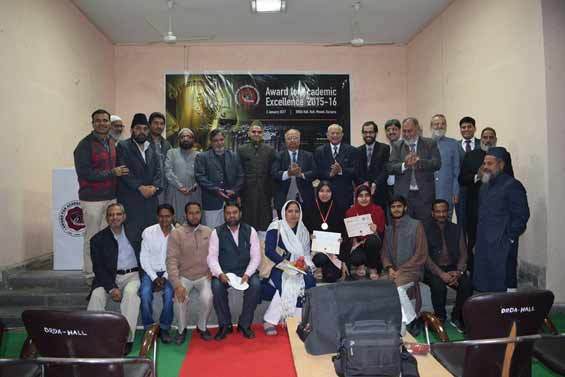
AFMI02mpos24jan2017

AFMI held its regional awards program in Nuh, Mewat in coordination with the Human Welfare Foundation. One of the key organizers of the program is Uzair Khan, a former AFMI medalist, who is now carrying its message to the interiors of Mewat region. He is presently pursuing MBA from Jamia Millia Islamia.

Reviving  Delhi’s Educational Institutions

AFMI’s NRI delegates visited a number of educational institutions in Old Delhi which have held aloft the banner of education among trying circumstances. The schools visited include Anglo Arabic Senior Secondary School, Mazhar ul Islam School, and the Fatehpuri School. AFMI’s governing board will soon formulate a a plan for help in the revival of these historic institutions.

source: http://www.milligazette.com / The Milli Gazette / Home> Online News> Education and Careers / January 23rd, 2017
On the Kutch food trail

London / Kochi, KERALA :

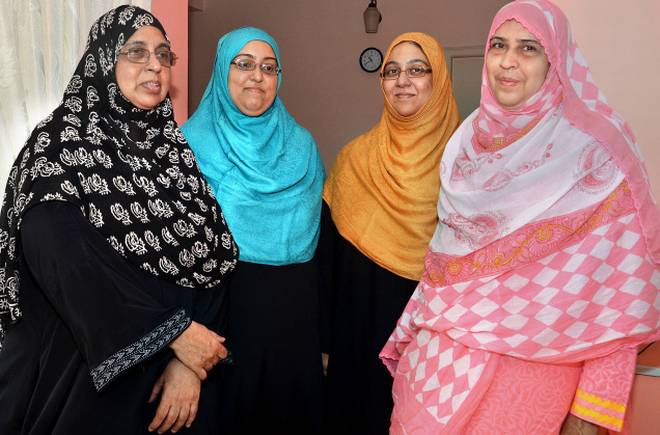
Together for food : From left, Sajida Aslam, Ruqia Suhaib, Nazia Tamir and Munira Munir from ‘Cutchi Kitchen’. Photo :Thulasi Kakkat

‘Cutchi Kitchen’ documents Kutchi cuisine through memories and recipes.

Almost 200 years ago, Sajida Aslam’s grandfather moved to Alappuzha from the Kutch region of Gujarat. Seventy-five years ago, her father moved to Kochi, where she was born among the growing community of Kutchi Memons in the city. Today, Sajida’s daughter, Shazia Wahid, is the founder of ‘Cutchi Kitchen’ — an initiative that documents through history and memories, the rich cuisine of the migrant community.

‘Cutchi Kitchen’ runs a website and a catering service primarily of Kutchi delicacies, with world cuisine as well. While Shazia runs the website from her present home in London, her mother Sajida, aunt Munira Munir Sait, sister Nazia Tamir and cousins Ruqia Suhaib and Sabiha Munir man the local orders from their homes in Ravipuram and Kaloor. “Shazia was inspired to begin ‘Cutchi Kitchen’ after she left the country,” says Ruqia, “She gave us all the first big push and we’ve completed almost a year now.”

‘Cutchi Kitchen’ opens with Shazia’s tribute to her ummima’s (maternal grandmother) special Kutchi chicken biryani. It is a detailed affair with three layers of rice sandwiching chicken in between, and served with raita. This recipe has been a favourite in our family for three generations for its minimal standing-by-the-stove time, writes Shazia. While two generations of Sajida’s family are involved in the daily workings of ‘Cutchi Kitchen’, Ruqia and Nazia say their children have taken a keen interest too, often chipping in with the preparations and tasting.

‘Cutchi Kitchen’ now has an active Facebook presence with over 3,000 fans and several followers on Twitter too. “We try and post at least once a day — either tips, or full recipes,” says Nazia. Thus far, they’ve had two online competitions too — the more elaborate one after they completed 100 recipes.

Their popularity rose most during the Ramzan fast, when they put together nine special Iftar menus, each with six dishes from starter, drink and main course to dessert. One of the highlights of these menus was their falooda recipes. While Sajida created an unusual falooda pudding made from China grass and cut into diamonds once set, Munira prepared the falooda drink, served cold and with jelly or ice cream. The menus were then released as an e-book.

The fasting season also brought with it almost daily orders for homemade frozen chicken fillets, samosas and rolls that only have to be fried before consumption. Their most ordered dish was also ‘Cutchi Kitchen’s’ most prized recipe — the goond jo laddoo, a powdery, sugary dessert served for auspicious occasions, given to brides before weddings and to mothers after deliveries. Explains Sajida, “The goond (acacia gum) has medicinal properties, and though the recipe for the laddoo is simple, it takes years of practice to get the mixture to hold right without giving way or being too sticky.” Sajida and Munira are the only ones in the family who prepare the laddoo, even today, as the next generations are still grasping the knack.

Changing rituals

Time has changed much among the Kutchi Memons, says Sajida. Old, prolonged rituals have turned brief, and with it, the associated foods have morphed too.

For example, by tradition, the peeti (haldi) ceremony for brides lasted several days and the household favourite was muthiya, a steamed rice dumpling dish that could be served dry or with gravy. “I remember my ummima sitting and shaping the muthiyas all by herself, not trusting anyone to make them correctly with her special mix of spices and ingredients,” writes Shazia. Peeti ceremonies now are associated more with quicker dishes such as kaaja (a badusha-like savoury) and paalchaya, a condensed milk-based drink. Hot favourites are also the Kutchi koottan (a dal curry served with pathiri), beef kofta (boneless beef meatball curry), buttery, cookie-like nankhatais and mitta ghatia, a deep-fried flour-based snack.

Sajida counts among her most prized possessions, a kombi, a 100-year-old bandini shawl bordered by gold, traditionally placed over the bride’s head at weddings. What they also cherish is their Kutchi language — a conglomeration of Sindhi, Gujarati, Urdu and Hindi, reflective of the community’s wide travels.

“We still speak it at home and though it has no specific script, all our children have learnt it too alongside Malayalam, Hindi and English,” says Sajida in fluent Malayalam. Someday, they hope to bring out a book of their family’s recipes. For now, ‘Cutchi Kitchen’ conducts workshops on their food, alongside those on Arabian recipes and world cuisine. Find the ‘Cutchi Kitchen’ at www.cutchikitchen.com

source: http://www.thehindu.com / The Hindu / Home> Food / by Esther Elias / November 14th, 2013

Sarfaraz Ashraf registers incredible T20 bowling figures

Bengaluru, KARNATAKA :

Sarfaraz Ashraf recorded incredible figures of 6 for 0 for Young Pioneer CC in a KSCA T20 tournament fixture, held at the Aditya Global grounds here.

Sarfaraz Ashraf, who recorded incredible figures of 6 for 0 for Young Pioneer CC in a KSCA T20 club tournament fixture. – SPECIAL ARRANGEMENT

Sarfaraz Ashraf recorded incredible figures of 6 for 0 for Young Pioneer CC in a KSCA T20 club tournament fixture, held at the Aditya Global grounds here. Ashraf’s heroics helped his team coast past Mercara Youth CC.

Ashraf, a left-arm chinaman bowler, stated that he took five wickets in the first over of his spell. This included a hat-trick, which came in the final three deliveries of the over. His final figures read 3-3-0-6. He also scored 40 as Young Pioneer put up 264 for four in its 20 overs. Mercara Youth CC was bowled out for 57 in the chase.

The 27-year-old has represented Jharkhand in List ‘A’ and Twenty20 matches. In the 2013-14 Syed Mushtaq Ali Trophy T20 tournament, Ashraf picked up 11 wickets for Jharkhand, in eight matches.

“I am from Bengaluru, but I had moved to Jharkhand a few years ago because I got a chance to play at the national-level. Now, I have moved back to Bengaluru,” Ashraf said.

Ashraf was also part of the Hubli Tigers side which competed in the Karnataka Premier League last year.

The score:

Young Pioneer CC 264 for four in 20 overs (Sarfaraz Ashraf 40, Deepak 74, H.B. Kiran 70, Sunil 33 n.o.) bt Mercara Youth CC 57 in 14.3 overs (Madan 3 for 21, Sarfaraz Ashraf 6 for 0).

source: http://www.sportstarlive.com / Sport Star (Sport Star Live) / Home> Cricket / by  Ashwin Achal, Bengaluru / January 16th, 2017

Nawab who misses the royal culture

Hyderabad, TELANGANA :

At 92, Shah Alam Khan visits his office daily and tries his best to preserve Hyderabad’s culture.

Shah Alam Khan, one of Hyderabad’s royals who is still referred to as ‘Nawab’.

At 92, Shah Alam Khan, one of Hyderabad’s royals who is still referred to as ‘Nawab’, is gracious enough to stand up to welcome you into his study at the Hyderabad Deccan Cigarette Factory in Musheerabad. What’s more, he eloquently reminisces on the “good old days” when Hyderabad was still ruled by the Nizams.

“Life was not expensive at all. I once saw a goat being sold for four rupees… four rupees!” he says incredulously. With seven sons, Alam’s family has, over the years, expanded their businesses in various fields but one thing that they all take pride in is ensuring that the Nawabi and Hyderabadi culture isn’t forgotten.

Alam’s son Mehboob Alam Khan is a well-known food historian and connoisseur who has helped preserve the Hyderabadi Mughlai cuisine that the city is famous for. Working with various restaurants, Mehboob helps them maintain authenticity in their recipes.

“Hyderabad was known for two things — biryani and sherwani!” says Alam, and says that training today’s chefs is all that is required to bring back the lost culture. “The cooks in our city know only a little bit of this and that. But our womenfolk know a lot of recipes,” he says.

Sipping a typically Hyderabadi cup of chai, he talks about growing up in the Cantonment area in Secunderabad and moving on to study at the Jagirdar College — what’s now known as Hyderabad Public School. “We had the best of Continental as well as Mughlai food. Even the schools served amazing food, that we didn’t even get at home!” he remembers.

Alam then pursued a Bachelor’s degree in Economics and Political Science from Osmania University, where he says his professors helped mould his life: “I can’t forget the way my English teacher, Prof Doraiswamy, taught us. When the results came out and I passed, I went to his house and fell at his feet.”

The lessons came in handy when he took over the reins of a cigarette factory from his wife Begum Abida Khader’s father in 1945. “When I used to hoist the flag during ceremonies, I’d tell them that this is the place where you as well as me fill our tummy. If there’s a quarrel in the house between the husband and the wife, then your house is not good. If there’s a quarrel in the factory, it’s not good for the industry,” Alam explains.

Alam still goes to office every day but has one regret: Not doing enough to preserve Hyderabad’s culture — “I once had the opportunity to address the old boys’ association of Osmania University in Karachi. And I told them with tears rolling down my cheeks that I can’t believe that the association is here… it should have been in Hyderabad. And with it, you have also taken away our culture.”

source: http://www.deccanchronicle.com / Deccan Chronicle / Home> Lifestyle> Viral and Trending / Deccan Chronicle – by Christopher Isaac / March 18th, 2016

A.R. Antulay, Maharashtra’s first Muslim CM, is dead

Ambet District (Raigad) – Mumbai, MAHARASHTRA :

Mumbai :

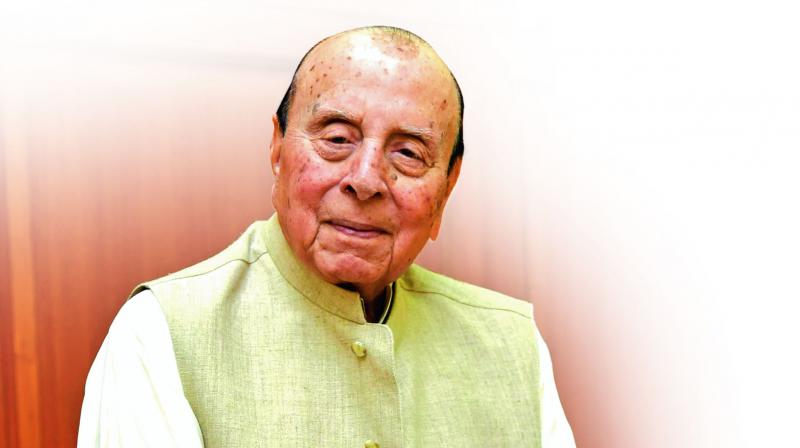
Congress veteran Abdul Rahman Antulay, Maharashtra’s first Muslim chief minister and a former central minister, died here Tuesday following prolonged illness, his nephew said. He was 85.

Antulay passed away at the Breach Candy Hospital where he was admitted a few days ago.

He is survived by his wife Nargis, son Naved and daughters Neelam, Shabnam and Mubina, said nephew and son-in-law Mushtaque Antulay.

Known as ‘Barrister Antulay’, he was the state’s first Muslim chief minister, from June 1980 to January 1982 and a loyalist of then Congress president and prime minister Indira Gandhi.

The party’s most prominent face in the Konkan region, Antulay served as a union minister in 1995 and later in the UPA-I government of prime minister Manmohan Singh.

“We plan to hold the funeral ceremonies Wednesday in his village Ambet in Raigad district,” Mushtaque Antulay told IANS.

This is the second Congress veteran to die in Maharashtra after former union minister Murli Deora expired in Mumbai Nov 24.

Maharashtra Chief Minister Devendra Fadnavis condoled the demise of Antulay.

“Maharashtra has lost a leader who worked for the interest of the common man,” Fadnavis said.

Political leaders cutting across party lines, including former chief minister Manohar Joshi of the Shiv Sena, paid glowing tributes to Antulay. – IANS

source: http://www.weekendleader.com / The Weekend Leader / Home / Mumbai – December 02nd, 2014

Sania Mirza wins Brisbane doubles title but loses No.1 rank

Hyderabad, TELANGANA :

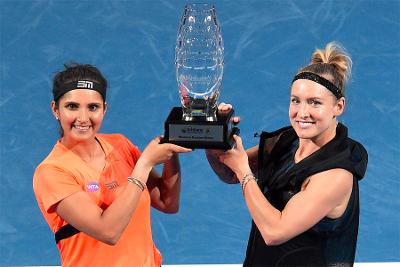
Sania Mirza and Bethanie Mattek-Sands pose with their trophy. (AFP Photo)

__________________________________________________

Highlights :

  • Sania Mirza picked up her first title of the season
  • The top-seeded Indo-American duo triumphed 6-2, 6-3 against the second-seeded Russian team
  • The Indian had come into the tournament as a defending champion


__________________________________________________

Brisbane :

Indian tennis ace Sania Mirza picked up her first title of the season, combining with American Bethanie Mattek-Sands to lift the Brisbane International women’s doubles title, but ended up losing the World No.1 crown to her partner.

The top-seeded Indo-American duo triumphed 6-2, 6-3 against the second-seeded Russian team of Ekaterina Makarova and Elena Vesnina in the final here.

The trophy, however, ended Sania’s 91-week reign as the world No.1 doubles player in the WTA rankings. That position was taken over by Bethanie.

“I feel like I’m handing over Miss World No.1 crown,” Sania said in her post-match speech.

The Indian had come into the tournament as a defending champion, having won it with Swiss ace martina Hingis last year.

“We always have good matches (against Vesnina/Makarova). It’s great to come back as defending champion. Thank you to my partner and best friend. We go a long way, we play once a year, the last time we played, we won in Sydney,” Sania said.

“I think we should play a lot more. Thanks for playing with me. I was No.1 in the world but congratulations to her for becoming No.1 now. If not me, than her, she has had an amazing year,” she added.

Sania will go back to pairing with Czech Republic’s Barbora Strycova in Sydney next week and the Australian Open, which starts on January 16.

source: http://www.timesofindia.indiatimes.com / The Times of India / News> Sports> Tennis > Top Stories / PTI / January 07th, 2017

Inside India: a teacher’s battle to get girls into male school

NEW DELHI :

It has been a tough battle for Faiza Nisar Ali who helped steer the entry of girls into the male bastion of the Anglo-Arabic School.

New Delhi

It has been a tough battle for Faiza Nisar Ali who helped steer the entry of girls into the male bastion of the Anglo-Arabic School.

Her struggle of that of many other Muslim women created history when the school admitted girls for the first time this year in its more 300-year-old existence.

Ms Ali’s fight began in March when she was appointed to prepare a feasibility report on why Muslim boys and girls should study under the same roof.

She had to contend with numerous pitfalls along the way, including frantic phone calls from community hardliners trying to dissuade her, being blamed for scripting something “un-Islamic”, countless sleepless nights and the trauma of a miscarriage.

“After months of research, consultations with educationists, psychologists and parents, I concluded in my report that co-education among Muslims would result in greater progress and help them in the later stages of life,” Ms Ali, who has been the business studies teacher at the same school for more than six years, told IANS.

She recounted the events with moist eyes.

“After the report was done, the staff became very resistant. The teachers went against me and I was held liable for being un-Islamic,” she said.

The report spoke on how co-education could boost academic performance of both the sexes, the structure of the Anglo-Arabic school, located as Ajmeri Gate, in the old quarters of Delhi, and its importance. The report also highlighted that Muslim parents wanted their girls to go to a co-ed institution.

Despite facing internal resistance from the predominantly male school staff, the managing committee of the school on March 26 decided to open its doors to girls.

However, the landmark decision did not end Ms Ali’s agony. While her family was supportive, the mental pressure due to the angry reactions sent her to hospital.

Then eight weeks pregnant, Faiza went through a miscarriage.

“I had this invisible pressure about how to face colleagues in the school. I had gone through a lot, but I did not want to leave it in the middle,” the mother of a five-year old said, adding that her “mother had even suggested [she] distance herself from all the activities”.

Her cause to turn the school coed gained strength when a Jawaharlal Nehru University student, Fatima Alvi, filed a petition in the Delhi High Court.

On May 24, the court backed their cause. The school management swung into action and has so far admitted more than 30 girls in Classes 6 to 11.

For many Muslim girls studying in nearby girls’ government schools, the move is a dream come true as they can switch to the Anglo-Arabic School that has had among its students Liaqat Ali Khan, the first prime minister of Pakistan, Sir Syed Ahmad Khan, founder of Aligarh Muslim University, JN Dixit, former national security adviser and foreign secretary.

Burqa-clad Darakshna Fatima, 17, beams with joy for having made it to the school.

“I lost my father 6 years back, since then my mother has been the pillar of strength for me,” Darakshna, who aspires to become a chartered accountant, told IANS.

The Class 11 student added, “Our relatives had reservations, but I am proud that my mother fought for my education.”

Darakshna’s sister Gulafshan has also secured admission to the school, that started off as Madrasa Ghaziuddin around 1692.

However, Ms Ali says the fight is not over yet. Though girls have been admitted, the resistance among many staff members remains.

“Let’s hope there is an attitudinal shift and changes begin to happen,” Ms Ali said.

source: http://www.thenational.ae / The National / Home> World> Asia / IANS / June 04th, 2017

No Living Moghals, for now

Hyderabad, TELANGANA ( formerly ANDHRA PRADESH )

Hyderabad :

The City Civil Court has granted injunction order stopping the telecast of the documentary film, `Living Moghals,’ produced by the Public Service Broadcasting Trust.

The documentary, which has been screened on various TV channels, has attracted flak from the descendants of the last Mughal emperor, Bahadur Shah Zafar, for projecting Princess Laila Umahani and her two sons as the only surviving heirs. Taking objection to the `misleading’ documentary, Prince Yakub Habibuddin Tucy, great grandson of Bahadur Shah, and 34 other members of the family approached the court and obtained the injunction order, pending disposal of the suit.

Prince Habibuddin told presspersons here on Sunday that both print and electronic media were giving a wrong picture showing Princess Umahani and her sons — Ziauddin Tucy and Masihuddin Tucy — as the surviving heirs. The fact was that Umahani’s elder sister, 88-year-old Princess Hussan Jahan Ara Begum, her children and grandchildren were also present. There were at least 55 Mughal descendants living in the city alone.

“All this is being done with an ulterior motive,” Prince Habibuddin said. He said all the descendants of the Mughal family wherever they might be living should come under the banner of Mughal Emperors Family Society so as to preserve their identity.

source: http://www.thehindu.com / The Hindu / Home> Southern States> Andhra Pradesh – Hyderabad / by The Hindu Staff Reporter / Monday – December 09th, 2002

Nineteen years later, Rampur Begum laid to rest in Iraq

Rampur, UTTAR PRADESH :

OBITUARY

NawabBegumAftabMPOs16jan2017

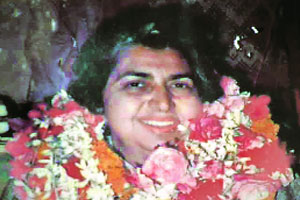
Almost 19 years after her death, Nawab Aftab Dulhan Sakina-uz-Zamani Begum Sahiba, the wife of the last Nawab of Rampur, Syed Murtaza Ali Khan Bahadur, has found her final resting place in Karbala, Iraq.

Hailing from Peerpur estate in Lucknow, the Begum died on August 4, 1993. Before dying, she had reportedly expressed her desire to be buried in Karbala. Since the Nawabs of Rampur are Shias, they favour a burial in Karbala, and are even reported to have a reserved place there.

But for all these years, the family failed to get the Iraqi government’s permission. So, the body was kept at the ancestral Imambara of Kothi Khas in Rampur. Till last week, when the body was finally taken to Iraq.

It is learnt that the Iraqi government finally gave the required permission in October last year.

After completing the necessary formalities, including obtaining a no-objection certificate from the district administration, the Begum’s body was finally taken to Iraq on February 23.

Confirming this, Nawab Kazim Ali Khan, nephew of the late Nawab, said the burial had been carried out in Karbala. “It was her wish, but somehow the matter was delayed,” he said.

The Begum, who contested the 1984 Lok Sabha elections under the banner of Sanjay Vichar Manch which was floated by Maneka Gandhi, is survived by two children — a Delhi-based daughter, Nighat Abedi, and a Goa-based son, Mohammad Ali Khan.

source:  http://www.archive.indianexpress.com / The Indian Express / Home> Archive / by Faisal Fareed / Lucknow, Wednesday – February 29th, 2012

The Subaltern Speak

Mumbai, MAHARASHTRA :

A Mumbai-based voluntary group launches a diary about the contribution of Indian Muslim women.

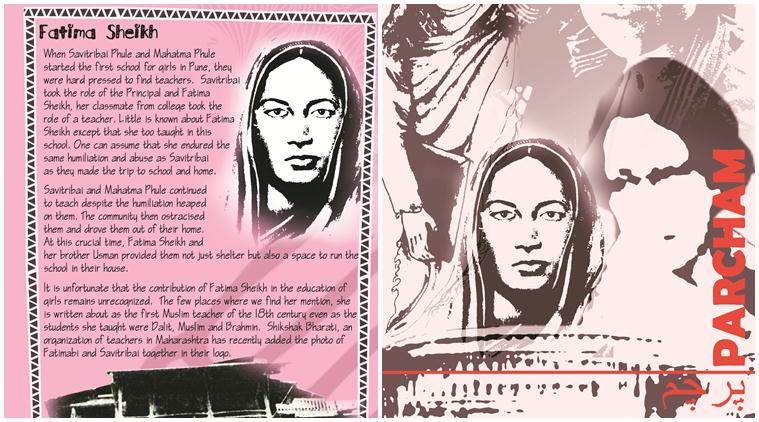
(From right) Book jacket of the diary; one of the inside pages that acts as a separator

Earlier this week, several Indian intellectuals and feminists paid homage to Savitribai Phule on her 185th birth anniversary. The contribution of the social reformist towards women’s rights, especially in the field of education, is now being recognised. However, Fatima Sheikh continues to be an elusive figure in Indian history. A diary introduced by Parcham Collective — a voluntary group in Mumbra in Thane district — celebrates Sheikh and several other pioneering Muslim women, who have contributed to society but have remained largely unacknowledged.

“In a political environment when the minorities in India, especially the Muslims, are having to prove their allegiance to the country, we hope this diary will reiterate that we aren’t the ‘other’,” says Sabah Khan, one of the co-founders of Parcham Collective, which attempts to break stereotypes based on religion, class, caste and gender. Active since 2012, they have been working with girls and have been successful in using football among adolescents to reclaim public space for the feminine gender and also bridge the gap between Hindus and the dominant Muslim population of Mumbra.

In the diary, Sheikh, a 2016 organiser, is the first Muslim woman, among six. Savitribai’s classmate from college, she not only taught at her school but also gave the Phule couple shelter when they were ostracised by the society for their work. The other women include Rokeya Sakhawat Hossain (1880-1932), Nazar Sajjad Hyder (1894-1967) and Rashid Jahan (1905-1952), among others. Their stories appear with illustrations and act as separators between the diary pages.

The idea of a diary, says Khan, came up earlier in 2015 during a discussion on Muslim women and their contribution to society. “At a time when education of the Muslim girl child is an issue and girls often drop out of school in Mumbra, we wanted to highlight women as role models who would inspire people,” says Khan.

The Parcham Collective team had been trying to unearth names and information of such women for a long time; the information had been tough to come by. It took them three months of research, tapping feminists such as Uma Chakravarti, and the names started to come up.

So there is Rashid Khan, a gynaecologist and writer, who was an inspiration to writers such as Premchand, Ismat Chughtai and Faiz Ahmed Faiz. A member of the Progressive Writers’ Movement, Rashid spoke about the oppression Muslim women faced everyday. As for Begum Qudsia Aizaz Rasul (1908-2001), few are aware that the Indian Women’s Hockey Cup is named after her. A politician from a privileged family, her key contributions include fighting for the abolition of the zamindari system and encouraging sports among women.

This is their first diary, but Parcham Collective wants to make it an annual project, using it to talk about subaltern women. They hope to dedicate the 2017 diary to Muslim women across the world in the arena of sports. “While the diary has been welcomed by feminists, we believe the real success of the project will be if common people purchase it and gain from it,” says Khan. Buyers can visit Parcham Collective’s Facebook page page and place an order for the diary.

source: http://www.indianexpress.com / The Indian Express / Home> Lifestyle> Book / by Dipti Nagpaul D’Souza / January 07th, 2017