Indian businessman gives Rs 10 lakh to compatriot living on terrace in UAE

KERALA / GCC  / Muscat, SULTANATE OF OMAN :


Dr K T Mohammed Rabeeh Rabeeullah

Dubai :

An Indian philanthropist from Oman has given Rs 10 lakh to a jobless compatriot who has been living on the terrace of a building in the UAE for more than eight months without proper food, media report said on Friday.

Sajeev Rajan, an electrician in his early forties, belongs to Kollam in Kerala where his wife, two children and ageing parents live.

Indian philanthropist from Kerala Dr K T Mohammed Rabeeh Rabeeullah, chairman and managing director of a healthcare conglomerate, came from Muscat and handed over 5,000 dirham (Rs 93,272) to Rajan for immediate relief. He also promised to transfer Rs 10 lakh to his bank account in India, Khaleej Times quoted Rajan’s friend Biju as saying.

He was left with no other option but to live on the terrace of a building in Ajman city because his employer had refused to return his passport after settling his dues, the paper said.

His company officials visited the Indian consulate and agreed to return his passport at the earliest.

The Indian mission in the UAE and social workers have come forward with moral and material support for the man.

“It is a big relief for me because my pocket is empty. I have not received any money for the past eight months and my travel back home seemed impossible,” Rajan said.

He spent 236 days on the terrace because he does not have a job or money to get a bed space, the report said.
He has been surviving with the generosity of some construction workers and shop owners, it said.

“My contract ended on March 11 and I wanted to go home. Working for 900 dirham (Rs 16,761) per month did not meet my expectations,” he said.

Ranjan alleged that his employer was not ready to relieve him from work and send him back home after clearing his gratuity and leave salary.

On March 21, Ranjan was forced to vacate the company accommodation in Ajman.

“The employer from Punjab, India, promises to return my passport in front of officials who mediate for my release, but once he leaves their office, he refuses to hand it over to me,” he was quoted as saying by the paper.

After his plight was highlighted by the paper, several people came forward with offers to buy air tickets, give him a job among others, the report added.

source: http://www.timesofindia.indiatimes.com / The Times of India / News> NRI> Middle East News / by PTI / November 25th, 2016

Siyadutt— The unsung hero in Gopichand’s support staff

Hyderabad, TELANGANA :

Hyderabad :

He has been the silent performer in Indian badminton for long. Mohd. Siyadutallah, more familiar as Siyadutt in badminton circles, has always been the unsung No. 2 of the support staff in Gopi’s absence for many majors including the Super Series.

In fact, when Rio Olympics silver medallist, P.V. Sindhu won her maiden China Open recently, he was there along with women’s coach Madhumita Bist to don the role of a mentor. Significantly, he was there when Sindhu won her first major international title too in 2010 Maldives Challenge Series.

For someone who was with Gopi since 2004, Siyadutt knows every player from Gopi Academy and has a better rapport with them than many.


Great opportunity

“It’s nothing like a challenge for me but it is always a great opportunity for me to accompany players like Saina Nehwal, Sindhu, Kidambi Srikanth,” says Siyadutt now in the Asian circuit with the Indian team.

“Yes, sometimes I do speak in Telugu with players during the match. And, this also meant I had to explain to Saina (when she was with Gopi Academy) to explain her in Hindi later on,” he says with a big smile.

“Well, when it comes to intensity in preparations, my first objective is to ensure exactly what Gopi Bhaiyya would have done if he were to be there. See the weather, whether the courts are fast or slow, the quality of shuttles and then shift the focus to the strong points of our players and the weaknesses of opponents lined up for the day,” the soft-spoken coach explains.

“I just enjoy my work a lot and don’t feel any pressure, because I have been watching these players from the age group category. So, there is that comfort zone for me to work with them,” remarked Siyadutt.

“Definitely, exchanging views on the game during breaks and giving whatever little advice I can is a huge responsibility,” admits the coach. “Yes, this job also reminds of the kind of trust in me. This itself is a huge morale-booster and helps me stay focused,” he says.

“And there is no better joy than seeing the players produce the results and the fact that Gopi Academy continues to be the assembly-line in producing champion shuttlers is also an indicator of the kind of scientific training programme we have in place for all age groups,” reminds Siyadutt.

Memorable moments

For Siyadutt, whose best individual performance as player was making it to the Nationals quarterfinal once, Kidambi Srikanth and Saina Nehwal completing an Indian ‘double’ by winning the 2014 China Open men’s and women’s singles titles respectively remains the “most memorable, especially Srikanth beating five-time world champion and crowd favourite Lin Dan in the final”. “Working with someone like Gopi always makes you richer in experience and knowledge. I always believe learning is a continuous process and I am lucky to work under him,” he says.

“Yes, I never thought that I will be in this position and I owe everything to Gopi Anna,” says a grateful Siyadutt, who adores Lin Dan.

And, he recalls the 2014 China Open when he struggled to find any weaknesses in Lin Dan’s game before the final featuring Lin Dan and Srikanth.

“I was watching all his matches and confused to spot weakpoints. But later during the final, it was more easier to understand his weak points and accordingly guided Srikanth. Glad that he won the title. The best part being Gopi sincerely appreciating my efforts. These are the kind of gestures which keep you going,” he signs off before joining his players in Macau Open.

source: http://www.thehindu.com / The Hindu / Home> Sport> Other Sports / by V.V.Subrahmanyam / Hyderabad – December 02nd, 2016

Double Delight

KARNATAKA :

shafiquekhanmpos03dec2016

by Dr. Padmavathi Narasimhan

All India Radio (AIR) has been playing a pivotal role in the preservation and propagation of the two streams of Indian Classical Music — Hindustani and Karnatak Music. AIR – Mysuru celebrated Karnataka Rajyotsava on Nov. 18 in collaboration with the Department of Kannada and Culture.

The programme included prize distribution to the winners of various events held at Akashavani for its staff, rendition of Kannada songs in and about Kannada and to crown it all, a grand sitar-violin jugalbandi concert.

Akashavani is always known for its timing. The programme began as per schedule at 6 pm on the dot. But the stage formalities were too prolonged, which reflected on the main attraction of the evening — the jugalbandi concert by Mysore Nagaraj and Ustad Shafique Khan.

Perhaps the distribution of the prizes and the felicitations could have been organised in a separate function exclusively for the staff, which would avoid monotony to the mute audience.

The rendition of Kannada songs by G. Pushpalata, her son Alap and Nitin Rajaram Shastri was impressive with clarity in lyrics and Nitin’s admirable harmonium playing. Thanks to AIR, there were no electronic instruments accompanying the artistes.

Tumkur Ravishankar and Nitin said (did) it all.

The first of the series was Anuradha P. Samaga’s ‘Modalige Eraguve Amma Ninnadige’ sung by Nitin. Alap has a soft, resonant voice and a natural instinct for singing with feeling. Nitin and he together sang H.S. Venkatesh Murty’s ‘Kannada Naadina Makkalu Naavu,’ for which Praveen Godkhindi has directed the music.

The other numbers were ‘Kannadiga Tanemba Satyavanu Aritavage’ by Siddiah Puranik (music composed by G. Pushpalata) and ‘Banagala Haradide Kannadada Garime’ sung with high patriotic spirit.

The main event of the evening was the concert much-looked-forward-to by Mysore Nagaraj and Shafique Khan. Working now as a top grade artiste at AIR, Dharwad, Shafique Kahan’s style blends both Gayaki style and the Instrumental style (Tantrakari ang). The pair treated the listeners to an evening of melody and expressive music.

Both are from established families of music. Charukeshi allows space for a variety of moods.

Shafique Khan’s alap of Charukeshi evoked inexplicable emotions. A composition followed. Here the duo alternated in taking a leading and supporting role. In Pantuvarali (Puriya Dhanashri), Nagaraj led with a meditative mood and in an amazing time span of 20 minutes, the two gave a commendable version of Pantuvarali.

Ravishankar and Uday Raj Karpoor chose to provide accompaniment by bringing the soft but lively touch to their instruments.

Nagaraj and Shafique Khan concluded the concert with the popular Bhajan of Sachchidananda Swamiji of Sri Ganapathy Ashrama, Mysuru — ‘Pahi Pahi gajanana’ in Sindhubhairavi.

source: http://www.starofmysore.com / Star of Mysore / Home> Feature Articles / November 27th, 2016

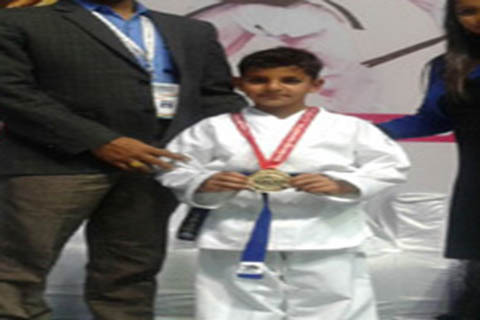
7-yr-old B’pora boy wins Asian youth Karate championship

JAMMU & KASHMIR :

Governor, Naeem Akther congratulate Mansoor

GK Photo
GK Photo

After seven-year-old girl it’s now seven year old boy from north Kashmir’s Bandipora district who has brought laurels not only to the state but India as well by winning gold in Asian Youth Karate Championship in New Delhi.

Hashim Mansoor, 7 son of Mansoor Ahmad Shah resident of Nadihal area of Bandipora has won gold in Asian Youth Karate Championship by beating his Sri Lankan rival on Tuesday.

Earlier, a seven year old, Tajamul Islam from the district had won a gold medal in world Kick-boxing championship held in Italy early this month.

Hashim Mansoor, who represented India in Sub-Junior below 25 kg weight category in the championship, won a gold medal by beating a Sri Lankan in finals at Talkatora stadium in New Delhi.

Hashim a second standard student of Symbiosis School in Plan Bandipora got selected for the championship during trials that were held in Indoor Stadium Srinagar early this month.

The championship was organized by the All India Youth Karate Federation at Talkatora stadium in New Delhi in which 19 countries participated.

“Earlier, Mansoor defeated his Bhutanese and Malaysian rivals,” Ghulam Nabi Tantray, President J&K Youth Karate Federation told Greater Kashmir. “This was possible due to hard work of Mansoor’s coach Fasil Ali Dar,” added Tantray.

He also said that Hashim has qualified for World Youth Karate Championship to be held in Europe next year, where he is going to represent India. “He can only participate in the world championship after he gets sponsorship. I hope he gets a sponsorship so that he could make whole country proud like Tajamul did,” he said.

Pertinently, both Tajamul and Hashim have been trained in Ali’s academy-local Martial Arts training school run by Faisal Ali Dar in Bandipora.

Meanwhile, Hashim’s coach Faisal Ali Dar also received Dr. B.R. Ambedkar National Award on Monday in “Sport and Peace” category for his contribution in “Peace Building Activities” through Jammu and Kashmir Kick-boxing Association. Faisal Ali who hails from Bandipora was presented the award by Dr. B.R. Ambedkar Sports Foundation.

source: http://www.greaterkashmir.com / Greater Kashmir / Home> Sports / by Ejaz-ul-Haq Bhat / Bandipora – November 30th, 2016

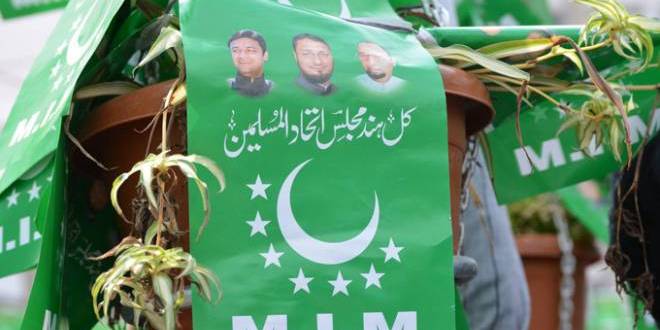
AIMIM registers impressive performance in Maharashtra Municipal election

Hyderabad , TELANGANA / MAHARASHTRA  :

aimimmpos29nov2016

Mumbai:

All India Majlis-e-Ittehadul Muslimeen (MIM) on Monday registered a victory by winning 08 wards in the Municipal Council election of Umerkhed, Yavatmal district of Maharashra’s Vidarbha region, reports ummid.com

The report further said that AIMIM with 08 seats is so far is the highest tally by any party in Umerkhed.

According to the preliminary reports, the Hyderabad-based party has won 04 seats in Shahada – a small town near Dhule in North Maharashtra and 02 seats in Beed district.

Shahada Nagar Palika has a total of 27 seats and the AIMIM with 04 seats will play important role in electing the president in the Shahada Municipal Council, the report added.

Last year, the party won two seats in the Maharashtra Assembly polls, one from Aurangabad and another from Byculla in Mumbai.

The election results shows BJP, Shiv Sena have currently taken the lead.

Counting of votes began at 10 AM Monday morning in the election to 147 municipal councils and 17 nagar panchayats across 25 districts in Maharashtra.

As many as 15,826 candidates are in the fray for 3,705 seats spread over the municipal councils and nagar panchayats, where voting was held yesterday in the first phase with around 70% of the electorate exercising its franchise.

The polls are being viewed as ‘mini’ Assembly elections and a test of popularity of Chief Minister Devendra Fadnavis who led BJP-government in Maharashtra.

source: http://www.siasat.com / The Siasat Daily / Home> News> Hyderabad / November 28th, 2016

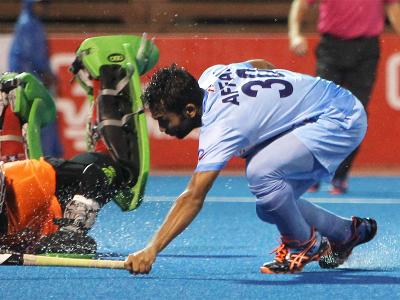
Hockey: Affan Yousuf scores twice in India’s 3-2 win over Australia

Bhopal,  MADHYA PRADESH :

_________________________________________________________

HIGHLIGHTS

  • Affan Yousuf slotted two goals as the Indian men’s hockey team claimed a 3-2 win over Australia
  • Skipper VR Raghunath struck the winner just seconds after Australia equalised in the third quarter
  • Overall, this was the 22nd time an Indian men’s hockey team beat Australia, in 117 head-to-head matches
  • ____________________________________________________

affanyousufmpos29nov2016

New Delhi  :

Talented youngster Affan Yousuf slotted two huge goals during the first half and skipper VR Raghunath struck just seconds after Australia equalised in the third quarter, as the Indian men’s hockey team claimed a 3-2 win over the world No 1 in the first of two Tests in Bendigo, Victoria on Tuesday.

The win came just days after the tourists claimed bronze in the Four Nations Invitational Tournament, and helped Raghunath’s team extract revenge on hosts Australia who beat them 3-2 during that tournament. Overall, this was the 22nd time an Indian men’s hockey team beat Australia, in 117 head-to-head matches.

Australia’s goals came from shots from the field by Matthew Willis and Trent Mitton in the 36th and 43rd minutes, but Raghunath’s penalty corner in the 44th minute put India ahead for good.

This was Affan’s second stand-out performance this month, following on from his late goal during the nail-biting victory over Pakistan which won India the Men’s Asian Champions Trophy in Malaysia. The 22-year-old struck twice in the 21st minute with two excellent field goals after the first quarter ended with the teams yet to score.

In the second half, Australia hit back through Willis and Mitton but Raghunath’s goal ensured the deadlock was snapped quickly. The final quarter was a tense period in which defenders on both ends were made to scurry but India did enough to shut the door on Australia.

After scoring four goals during the ACT, Tuesday’s performance against Australia was another feather in the car of Yousuf, who was born into hockey. His father Mohammed Yousuf, grandfather Khuda Dad and uncle Sameer Dad have each represented India.

The Kangaroos are the No 1 ranked hockey team in the world. In the span of ten days, they beat New Zealand to lift the Trans-Tasman Trophy in Auckland and the Four Nations in Melbourne. India are ranked sixth.

The second Test is on December 1.

Remembering sacrifice of those killed in line of duty

Mysuru, KARNATAKA :

Eight families of Army personnel to be felicitated

District administration to do the honours during the official Republic Day function

VeKare Ex-Servicemen Trust’s president says it is for the first time war widows will be honoured

Mysore:

On Republic Day, the district administration will honour the family members of the armed forces personnel who laid down their lives while defending the country.

M.N. Subramani, president of the city-based VeKare Ex-Servicemen Trust, who first mooted the idea of felicitating ex-servicemen and remember the personnel who were killed in the line of duty by honouring their family members, said that this is for the first time that war widows were being honoured by the district authorities during Republic Day celebrations. “Of those who are being honoured, five are war widows and three are mothers of unmarried soldiers who laid down their lives for the sake of the country”, said Mr. Subramani.

Dakshayani, Nirupa Madappa, Salma Shafeeq, Sarala, Jyothi Bai, Yallammal, Lakshmi and Saroja will receive the felicitation on the occasion.

Dr. Dakshayani, a resident of Vijayanagar II Stage, is the wife of Lt.Col. N.S. Yogesh of 6 Rashtriya Rifles. He was killed in an army operation against terrorists in Jammu and Kashmir on May 11, 1996. On receiving specific information about the presence of two terrorists, Yogesh immediately led his men and cordoned off the village. When the house in which terrorists had taken shelter was being cordoned off two terrorists rushed out and fired indiscriminately. In the encounter that followed Lt.Col. Yogesh sustained a bullet wound in the abdomen. Disregarding the bleeding injury he followed the second militant and in the firing that followed, the militant was injured but Lt.Col. Yogesh succumbed to his injuries. The Government recognised his contribution by way of conferring him gallantry medal posthumously.

Nirupa Madappa, a resident of Ramakrishna Nagar, is the wife of late Major Ganesh Madappa of 36 Rashtriya Rifles. Maj. Ganesh Madappa was directed to carry out a raid on a suspected militants’ hideout at Bachchru village in Badgam district of Jammu and Kashmir on September, 27, 1995. Major Ganesh Madappa immediately had the house cordoned off and he rushed to block the exit. Shocked militants rushed out and started firing in desperation. Maj. Ganesh Madappa boldly engaged the militants at a close range. As a result, he suffered bullet injuries. Yet, he charged at the militants killing one of them before collapsing. He later succumbed to his injuries and was awarded the Shaurya Chakra posthumously.

Salma Shafeeq is the wife of late Major Shafeeq Mahmood Khan Ghori. Maj. Shafeeq Mahmood Khan Ghori (Artillery) died on July 1, 2001 while fighting terrorists in Boban Watsar forests of Jammu and Kashmir. Major Shafeeq Mahmood Khan Ghori was posthumously awarded the Chief of the Army Staff’s Commendation for his meritorious service.

Sarala, wife of late Sepoy Naik Kiran Kumar, will also be honoured on Tuesday by the district authorities. Her husband laid down his life fighting terrorists in Kashmir on January 9, 2008.

Jyothi Bai is the wife of Sepoy Sakriya Naika who was killed by terrorists on May 13, 2003 in Kashmir.

Yallammal is the mother of late Sepoy S. Vasu. Sepoy Vasu laid down his life on July 1, 1990 while fighting terrorists in Jammu and Kashmir during Operation Rakshak.

Lakshmi is the mother of late Sepoy Hema Chandu. Her son died fighting terrorists at Surankot in the Poonch district of Jammu and Kashmir on August 26, 2001.

Saroja’s son Sepoy A.P. Prashanth died on December 31, 2003 fighting terrorists in Kashmir during ‘Operation Rakshak II’.

source: http://www.thehindu.com / The Hindu / Home> National> Karnataka / by Special Correspondent / January 25th, 2010

Mohammed Shami and Co show India can pack a pace punch

UTTAR PRADESH :

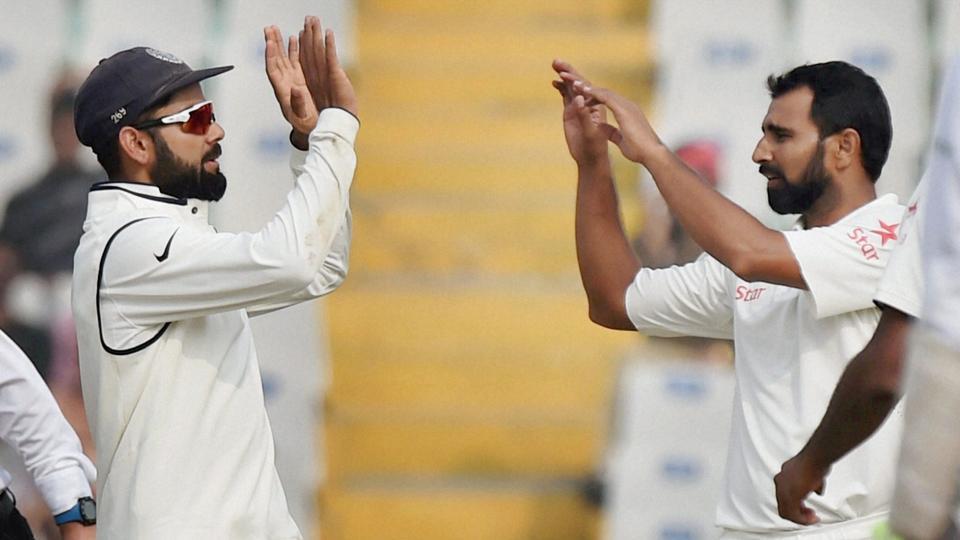
India captain Virat Kohli celebrates with Mohammed Shami the wicket of England batsman Adil Rashid, on the fourth day of the third Test match between India and England in Mohali on Tuesday. PTI Photo by Vijay Verma(PTI11_29_2016_000081B) (PTI)

The one great feature for India under Virat Kohli’s Test captaincy has been collective victories, even when individuals stand up and deliver that bit extra. This has allowed the team to make constant changes in the playing eleven forced by injuries.

With India playing all but six of the 20 Tests under his captaincy in the sub-continent — 10 at home — the spin attack, led by Ravichandran Ashwin, has dominated.

However, India’s pace bowlers have provided real value with their wicket-taking ability. No longer content with playing the support role to spin on slow pitches, pace bowlers, Mohammed Shami, Umesh Yadav and Ishant Sharma in particular, have showed they have come of age as a strike unit.

It is not that India pacers have not done well at home. Kapil Dev, Javagal Srinath and Zaheer Khan have produced crucial spells.

But the England series has shown the pace department has taken it to a different level.

In Mohali, India could easily have been left chasing a tricky target but for Mohammed Shami’s double strike in one over with the second new ball. Two perfect short deliveries induced awkward shots from Chris Woakes and Adil Rashid.

Shami bowled perhaps the ball of the second Test in Visakhapatnam, pitched up and swinging in to shatter skipper Alastair Cook’s off-stump.

Of the 20 games under Kohli, only two Tests in Australia in the 2014-15 series were played on pitches conducive to seam. The rest have been on slow tracks.

Shami and Umesh have consistently cranked up their pace to 140 kph plus on slow pitches. And Kohli has used them as attacking options, to provide breakthroughs and not just relief to Ashwin and Co.

Shami has been at his metronomic best since returning to the side in the West Indies, after more than a year out following knee surgery. In the Caribbean, his 11 wickets were only next to Ashwin’s series-leading 17.

Sharing the workload

In this series too, Shami’s 10 wickets again are only next to Ashwin’s 15 and level with Ravindra Jadeja. More importantly, he has bowled 103 overs and Umesh Yadav 94.5 overs, sharing the workload with the spinners (Ashwin 173.4 overs, Jadeja 161 and Jayant 50.3).

Umesh has only five wickets against England, but four catches were dropped off his bowling on a flat Rajkot pitch. Still, he accounted for Joe Root and Ben Stokes, England’s best batsmen so far in this series.

In Visakhapatnam, his dismissal of Jonny Bairstow broke a crucial partnership as England lost their last four wickets for 65 runs. That gave India a 200-run lead and a firm grip on the match.

The spinners may be carrying the day with ball and bat, but Indian pace bowlers have become an integral unit.

source: http://www.hindustantimes.com / Hindustan Times / Home> Sports> Cricket / by N Ananthanarayanan, Hindustan Times / November 29th, 2016

Justice V. Khalid: An immaculate judicial career

Kannur, KERALA / JAMMU & KASHMIR / Chennai, TAMIL NADU :

MUHAMMED NOUSHAD profiles Justice V Khalid, renowned Supreme Court judge and veteran jurist, a man of integrity and knowledge.

Certain human beings mark a place in history with their impeccable professional decorum and striking humility that springs forth from profound knowledge. Even after long years of service at the highest offices of the world’s largest democracy, they remain incorruptible, refusing fame and glitter despite every right to claim significance. Power doesn’t infect their souls, though they have closely witnessed dirty tugs of war in the formidable corridors at capital cities. Justice V Khalid belongs to this rare breed.
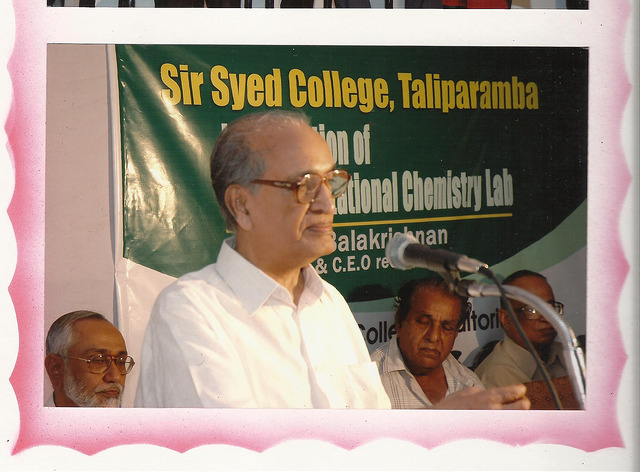
JusticeKhalidMPOs29nov2016

Justice V. Khalid

Having learnt of an impressively well-read, extremely sophisticated veteran with enviable experiences at the highest national offices in India, you do not expect to meet a polite, down to earth, self-effacing smiling saint. Justice Khalid has been to the forbidding interiors of Indian politics, but it least affected him, as it appears. He was not only a renowned justice at the Supreme Court of India, but also served Governor to India’s one of the most tumultuous states – Jammu and Kashmir.

Childhood & Education

Vazhakkulangarayil Khalid has his story’s humble beginnings in Kannur city, a few kilometers away from Kannur. He was born on 1 July, 1922 as the fourth child of a lower middle class couple – Mr. CC Marakkar and Ms. Zainaba. They had six children: three girls and three boys. His father was helping his elder brother in the business of coffee husk, coffee and tea at Changanassery.

Arakkal Raja, the then king from the sole Muslim royal family in Kerala history, was his immediate neighbor. Khalid studied in Madrasa Ma’dinul Ulum, an aided school, where he received both religious and modern education. A philanthropist called Koyakkunji, alias Koyikka, had founded the school with the aid of the Arakkal family. Koyikka’s vision and commitment has been instrumental to many people’s education in Kannur. Khalid gratefully remembers: “Koyikka is responsible for what I am. He himself was not educated. But he helped a lot of students to get education. He was very able, powerful and influential.”
When Khalid was 10, his father passed away. Koyikka came to his home, and decided to teach him. It was a sort of adoption; till graduation he was supported by Koyikka. Same was the case for many. He believed in the power of education. He was not rich, but he was very generous.

Obviously, Khalid was a bright student. He learnt Arabic, English, Malayalam, Urdu and a little Persian apart from other subjects at the school. The languages he learnt there would come for great help in his later career. It was 1926-27. Thereafter, he studied in Municipal High School, Kannur, did intermediate at Government Brennen College in Thalassery and went to Presidency College in Madras to do graduation in mathematics.

Stint as Teacher

Sultan Abdurahiman Ali Raja of the then Muslim League was an MLA and a respected Raja. When the British officer, then Director of Public Instruction, Sir Reverend Stathem visited him, the Raja introduced Khalid to the former. Having learnt of the unemployed boy’s educational qualification, the British officer immediately offered a King’s Commission in the army to be a second lieutenant. Khalid’s mother was not happy, however. She started crying as she was worried that her son might be killed in war. She wanted to dissuade him from joining the army. He obeyed his mother and soon found himself a PSC (Public Service Commission) appointed teacher at Malappuram Government High School.

He was 21 years old, then. In his one year stint as a teacher, he befriended two colleagues who would make a lasting influence on him: two brilliant science teachers, Mr. Koya and Mr. Mukundan, with whom Khalid stayed in a lodge. They initiated him to the world of reading, chess and star gazing. Khalid read classics, history, science, everything in their collection, and fell in love with letters. After one year, he went to study law, at Madras Law College thanks to the encouragement of his relative, Mustafah Sahib.

Lawyer, Husband, Judge

Having completed the course in law, he came home and joined the Kannur Munsiff’s Court in 1948. Only 19 advocates were there. Khalid remembers he was lucky to be with “saintly” lawyers like PS Narayana Iyer and later after a year in Thalassery with SS Ramanadha Iyer.

After the practice in Thalassery bar since 1949 to 1964, he moved to the Kerala High Court. It was not part of a well-planned ambitious career goal. This small-town boy had a thirst for knowledge and exposure, and a sincere attitude towards his society. But, that was enough. He was meant for big things. Later, after years of service as a reputed judge, in one of his lectures, he would speak about the decision to shift from Thalassery to the High Court: “it was a jump in to the unknown. Nothing was planned. I cannot boast of any heraldry. Nor do I have any ancient legacy. I just decided to go. I thought I will either sink in the backwaters of Cochin or swim. Sink I did not. I swam, rather successfully”.

In 1949 December, Khalid married Rabiya, daughter of Mr. AC Muhammed, a rich and generous business man in Kolkata, originally from Thalassery. Khalid remembers how his richly brought up wife reconciled herself to the very ordinary and moderate ambience of his home. They have one daughter: Thahira.

In 1969 came the first proposal to elevate Khalid as a Judge in the Kerala High Court. Syed Abdurahiman Bafaqi Tangal, one of the foremost leaders of the Muslim League, was behind this move. Khalid hadn’t even known him personally, nor had he targeted it in near future. When the news of the vacancy broke, Tangal wanted him to meet Justice Hidayatullah, the Chief Justice of the Supreme Court of India. Khalid remembers it was an order, from an irresistibly sincere politician. Khalid was already in Madras for a surgery for his wife, and was least prepared for a formal meeting with a high dignitary in Delhi. But, owing to Tangal’s command, he did go to meet Justice Hidayatullah, borrowing the coat of his friend Prem Nazir, Malayalam film industry’s one of the first super stars. However, the meeting didn’t bring the fruit Tangal had expected. The Justice was of the opinion that Khalid was too young for the designation and can wait.
Khalid waited. He kept practicing as a lawyer and was principled not to approach anyone for the post. Justice TC Raghavan affectionately asked him to be a High Court judge and the dream of many of his well-wishers came true on April 3, 1972. Justice Khalid remained at the office of the High Court till 1983.

Kashmir Calling

There was a growing rift between the Prime Minister Ms. Indira Gandhi and the Jammu and Kashmir Chief Justice Justice Bahauddin. Ms. Indira was looking for a Muslim judge to replace Justice Bahauddin. Since 1981, Justice Khalid kept receiving proposals, in the form of phone calls and letters from VIPs, to be the Chief Justice of J&K. “I was afraid to go to Kashmir, as I was not very sure if I will be welcomed, due to political circumstances. I resisted the offer for two years, despite the continuous insistence of friends like Krishna Iyer,” notes the Justice. Eventually, Dr. PC Alexander, the then private secretary of Ms. Indira came to Kochi on a personal visit and invited him for a friendly dinner. In the end of the dinner, Dr. Alexander told Justice Khalid firmly: “You must leave for Delhi tomorrow.” Justice Potty, the then Acting Chief Justice of the Kerala High Court was surprised. Khalid was left with no options: he had to leave for Delhi the next day and he found all documents ready at the Kerala House. He then flew to Srinagar. “Kashmir was a beautiful experience. The people were so good-natured. I loved the place and the people. However, I soon realised that most of them had strong anti-India feelings. It was all connected with the Centre’s promise to hold plebiscite,” adds Justice Khalid. He would later recall his short stint as the Chief Justice of Jammu and Kashmir, quoting two lines from one of his favourite Urdu poems by Bahadur Shah Zafar:

Umre daraaz maang kar laaye the chaar din
Do aarzu mein kat gaye, do intezaar mein..

(Having sought a long life, I had brought four days.
Two were lost in desire, and two in waiting.)

Soon after the arrival, he met Mr. Farooq Abdullah, the Chief Minister, who was not in good terms with the Centre. The Chief Minister did express his resentment with the Centre in the first meeting itself, though the relationship between the judge and the CM later turned out to be personal, to the extent that the CM’s mother, Sheikh Abdullah’s widow, Noorjahan became very close to him. “She was a very pious lady, and everyone called her as ‘mother’, with veneration”, says Justice Khalid.
JusticeKhalid02MPOs29nov2016

Another important person Justice Khalid was to befriend in the valley was none other than the then Governor of the State Mr. BK Nehru. He was an upright and sane statesman. When Mrs Gandhi demanded the Farooq Abdullah ministry to be dismissed – as an eventuality of a long unpleasant political battle between the two – Mr. BK Nehru forthrightly rejected the idea. BK Nehru replied that he could do it only on the floor of the assembly, as per the constitution. Obviously, it infuriated Mrs Gandhi. Mr. BK Nehru, in one of his lecture tours to the US, requested Justice Khalid to “look after the state” and thus Justice Khalid was appointed the Governor of Jammu and Kashmir for 12 days, in 1984 winter.

After the tenure of Mr. BK Nehru, Jagmohan came as the governor. Many of the chroniclers of the Kashmir dispute have rightly registered him as the main culprit who worsened the crisis with gruesome human rights violations. He was very unfriendly to the people of Kashmir. He reportedly commented that he didn’t want the people of Kashmir, but only the land. Justice Khalid remembers the days Jagmohan reached the State. “When he assumed the office, I had to administer the oath of office to him as the Chief Justice. He desired to take oath in Urdu and wanted to know if I could do it. He and his circle expected that I may not be able to speak all those chaste Urdu words, as I am a South Indian. To their surprise, I said yes, and accordingly, the oath was taken in Urdu.” Once, Jagmohan gave a dinner to Fraooq Abdullah and Justice Khalid. In a very friendly ambience, the host was cracking jokes at Pakistani leaders like Ziaul Haq, eating with Mr. Farooq Abdullah and Justice Khalid. It was a total surprise when the very next morning the same Governor had dismissed the Chief Minister. Quite long, Mrs Gandhi had been waiting for this.

As Justice Khalid’s term at the High Court of J&K was about to end, Dr. Alexander called him to offer the chairmanship of the National Minority Commission. He politely declined, telling that he would like to be with the Supreme Court. But, becoming a Chief Justice at the SC required a nod from the Centre, and Mrs Gandhi was not very sympathetic to Justice Khalid as she thought his judgment, along with Justice Potty’s, was responsible for her colleague K. Karunakaran’s resignation as the Chief Minister of Kerala, after the Rajan murder case. However, Dr. Alexander, playing the role of a great well-wisher, kept reminding her about the imminently ending term of Justice Khalid in Kashmir and his interest to come to New Delhi. As soon as Mrs Gandhi gave a silent nod, Dr. Alexander hurried the procedures and Justice Khalid became a Justice at Supreme Court of India without the usual procedural delays. It was 1984. The year Mrs Gandhi was killed. Fate had it that Justice Khalid would sit to hear the plea of the ones who were accused in the assassination of Mrs Gandhi.

Though there was no official relationship between Justice Khalid and Mrs Gandhi, their first meeting was in 1984, as the Supreme Court Judge and the Prime Minister had a chance encounter at the venue of the inauguration of the India Islamic Cultural Centre at New Delhi. Justice Khalid remembers it was late Mr. Hasan Haji of the Calicut-based JDT Islam Orphanage who introduced him to her. In a brief conversation, Justice Khalid told her that he was “in solitary confinement”. “Why?” she asked. “I am staying in a room of Kerala House,” he replied, as no house had been allotted to him. The next day, as per the instructions of the Prime Minister, he was shifted to a beautiful house. Their second and last meeting was at an official dinner, in which Mrs Gandhi complimented Justice Khalid’s wife for her simplicity and demeanour.

After three months of his arrival in Delhi, Khalid got one of the most shocking news he would ever hear: Mrs Gandhi was assassinated by her own body guards. It shook Delhi in umpteen ways. After trial, the three accused were sentenced to capital punishment. A special bench was constituted to hear the case and Justice Khalid was the senior on the bench. The appeal of the accused came. The evidences were strong and it was horrendous crime. But for the second and third accused, Kehar Singh and Balbir Singh, the evidences produced were not sufficient to find them guilty. However, the general talk in the elite clubs in Delhi was that the bench will reject the appeal of the accused, with the blunt harshness it deserves, saying that the conscience of the nation wanted it. It is in classic situations like these, that the judicious discernment of a judge is put to test. The talks in the clubs reached the ears of Justice Khalid, too. Political circles expected the appeal would be rejected outright. Justice Khalid couldn’t just do that. Not because he didn’t love his country or its assassinated Prime Minister. Just for the opposite reason. He loved the country. And firm was his belief that judicious decisions are judicious only when the evidences are gathered indefectibly.

He decided to go through the bundle of papers being submitted. “The records came the previous day; I went through the records at a stretch from 2 pm to 8 pm. Though the murder was shocking and I was mentally prepared to confirm the sentence, I felt on going through the records that there were some grey areas in the evidence which for an impartial Judge, knowing Criminal Law, would like to give an opportunity to hear the counsel for the accused,” he recalls. The decision to issue notice surprised almost everybody in the capital’s high offices. It invited longstanding wrath from many from the ruling class. However, this would bring deep reputation for his nonchalant commitment to the fundamental principles of judicial system. For instance, Adv. Ram Jethmelani, one of the most demanded and most expensive criminal lawyers India has ever seen, would say on the retirement of Justice Khalid, in a farewell party: “Judge, normally I am not sorry when a judge leaves the Supreme Court. But in your case, I feel sorry.” The Judge gives his characteristic smile back to him. After an immaculate service of three years, Justice Khalid returned from New Delhi, at the age of 65.
“I was told by many that I was the first Muslim Judge in the history of Supreme Court who practiced namaz. Of course, there were many reputed Muslim judges before me. However, my regular prayers and attendance in Friday prayers became a talk among the staff and colleagues. Later, many Muslim judges followed my path,” adds Justice Khalid.

Shah Bano Case and Other Muslim Legal Issues

Shah Bano case was, perhaps, the most controversial judgment in the history of India, thanks to politically instigated agitations and provoked reactions from the Muslim community. It simply stated that the divorced Muslim woman has the right to maintenance from her ex-husband. However, the judgment contained a passing reference to the effect that the Qur’an is the word of the Prophet. Muslim politicians like Ebrahim Sulaiman Sait and G.M. Banatwala came to meet him. The congress ministry soon brought a new law, arguably to appease Muslims, as an election was imminent.

There were situations in the judicial career of Justice Khalid where he would worry about the pathetic state of the community, particularly its criminally negligent attitude towards women. He also had issued a verdict saying that even after talaq, a woman has to get maintenance from her ex-husband till she is remarried. About the triple talaq custom, Justice Khalid famously wrote in a verdict: “my judicial conscience is disturbed at this monstrosity of giving three talaqs together. When this monstrosity will end? Will the conscience of the leaders of the community also be disturbed at this?”

As a Judge at the Kerala High Court, in one of the verdicts, he told: “if a question is raised as to whether a Muslim wife can get divorce except through the intervention of court, my answer is an emphatic no.” However, this judgment was subject to criticism from various corners. Justice Khalid was sane and humble enough to realise it was not the way it should have been expressed. “I also later realised that I was not fully correct in what I wrote. I waited for an opportunity till retirement in the Supreme Court, to correct this mistake, but the opportunity did not come. I hope someone will correct it.”

Justice Khalid has always been a firm believer. Whenever there was a case which had a negotiating point with the Islamic Shariah or the Muslim Personal Law, he was very conscious of both the Qur’an and the India legal system. He says he didn’t practically find much contradiction or conflicts between the two. “I have always felt that ours is a remarkable constitution. 85 per cent of those who wrote it were Hindus, still they went for a secular state, instead of declaring it a Hindu Rashtra”, says he. However, Justice Khalid is not in favour of a uniform civil code as he believes it can be made only through a direct conflict with Shariah rules. He adds that a codification of Muslim personal law is absolutely necessary so that the gap between the Mohemmaden law and the Shariah regulations are minimised. “But remember, the codification must be strictly in accordance with the Shariah. For example, our law of divorce is to be completely changed. The Quranic scheme is neglected in its current form. In the case of inheritance laws also, there are contradictions with what Quran says. Our leaders and political parties do not seem to be interested, for political reasons. As the Muslim masses are not educated about this, the parties are frightened about consequences. What they don’t realise is that we don’t have to go against the Shariah, but as per the Shariah. The spiritual exploitation is to blame here,” concludes Justice Khalid.

Justice Khalid has always been unhesitant to correct whenever he found his interpretations on the wrong side of the Shariah’s intended spirit. Honesty to acknowledge one’s mistake, indeed, is a value to be saluted. His love for the Quran is famous among those who know him closely. He took inspiration from the Quran, almost always, and read many translations. Quran literature has been his favourite genre for reading.

For a short term, during his retirement life, he went into Hadith negation. A strict rationalist in him, for a short period, thought that many Hadith are beyond the logic of Islamic values. His Hadith negation was a critical stage in his intellectual growth; he didn’t stay there for long as his honest enquires through various scholarly books from the Muslim world thoroughly convinced him that without Hadith, Islam cannot be fully understood.

After retirement, he has served in different government bodies, including the Chennai based Railway Rates Tribunal. Also, he headed a Police Commission for Tamil Nadu. He served as the chairman of the PM Foundation from its inception in 1988 to 2008.
The best qualifier to denote Justice Khalid’s career would perhaps be “judicious”. He has been fully committed to its virtuous and dignified service of his nation, his people, and the judicial system. He has resisted and refused powerful pressures from both governments and corporate: sometimes mild and covert, sometimes harsh and overt. His political orientation was broadly pro-socialist as many of his judgments, along with his reputed colleagues, stood with the interest of labourers. He belonged to a period when judges were venerated with a degree of fear, by the public and the political class. He hates the custom of judges hanging out and mixing up with public figures and millionaires. With an immaculate record, this man of integrity and knowledge offers a lot of hope. He smiles self-effacingly, sitting in his drawing room, spending time with his books and family. Judiciary’s future lies in the hands of judges with formidable integrity, he reminds us with his life full of accomplishments.

—
M. Noushad is a Kerala-based teacher of journalism.

source: http://www.twocircles.net / TwoCirlcles.net / Home> Articles / by Muhammed Noushad / July 29th, 2012

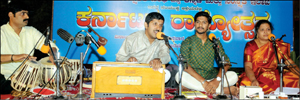
Anjuman-E-Hadeqathul Adab Hosts : 12th Eid Milan Programme

Mysuru, KARNATAKA :

Viqar Ahmed Sayeed, Asst. Editor, Frontline Magazine, delivering the keynote address at Eid Milan prog. yesterday. Picture right shows a section of audience.

Mysuru :

Anjuman-e-Hadeqathul Adab, Mysuru, had organised its 12th Eid Milan programme at Abids Convention Hall in Bannimantap, here yesterday.

The programme started with the recitation of the verses of the Holy Quran by the Anjuman Treasurer M. Noor Ulla Shariff which were translated into English by Ajuman member Muazzam Ahmed Khan Tanveer.

Anjuman member Anees Ghori welcomed the guest and invitees.

Syed Shafi Ahmed, President of the Anjuman, presented a report on the activities and the aims and objectives of Anjuman and paid rich tributes to the founders who established this Anjuman to promote brotherhood and communal harmony in the city of Mysuru. He also lauded the work of the past office-bearers and members.

Speaking on the occasion, Dr. K. Javeed Nayeem, former President of the Anjuman, said that only when we are concerned about our neighbour’s pain and problems and embrace one another forgetting that we are from different religions that we become the true followers of our religion.

He cited the example of how in Chhattisgarh, a Muslim by name Razak Khan perform the last rites of Santosh Singh, his neighbour, according to the traditions and customs of Santosh Singh’s religion and one more instance of how in Colaba during Ganesh Chaturthi festival, on a Friday when Hindus saw their Muslim Brethren performing Juma Prayer in a open space outside the Masjid under the scorching sun, they invited them to offer their Namaz in a pendal erected in front of the Temple.

Anjuman member Dr. Irfan Ahmed Riazi presented some Urdu couplets on the present scenario in society.

Viqar Ahmed Sayeed, Assistant Editor, Frontline Magazine, in his keynote address, stressed on the need for establishing communal harmony in society and fostering good relations between members of different communities.

Hazrath Moulana S.M. Abbas Sajjadi, speaking on the occasion, requested Muslims to spread the message of love, brotherhood and communal harmony not just amongst themselves but also across other communities respecting all other religions.

The Moulana lauded the services of the Anjuman in spreading the message of communal harmony which is need of the hour.

Srihari, a member of the Alert Citizens Trust (ACT), speaking on the occasion, stressed on the need to not only protect communal harmony but also the need to make our environment greener by planting more trees. He urged each family to plant at least five saplings and nurture them.

Zee TV Kannada Comedy Khiladi-2008 winner and International Mimicry Artiste Ramesh Babu entertained the audience with his mimicry and jokes and greeted the members of the Anjuman for their efforts to spread the message of peace, brotherhood and harmony.

Anjuman Vice-President S. Moinuddin Pasha proposed a vote of thanks.

source: http://www.starofmysore.com / Star of Mysore / Home> General News / November 28th, 2016