The lady with a legacy

MorrisMinorMPOs10nov2015

As a young boy, Javeed Mehkri would watch his father spend hours with his favourite car — a 1950 model of Morris Oxford, better known in India as the Hindustan 14. Javeed not only learnt about the car and its mechanics but thoroughly enjoyed the drive in it to and from school.

The passion for the Morris Oxford is living on through four generations with Javeed now transferring the ownership of the car to his 22-year-old son Junaid Mehkri. Junaid shares as much passion for the classic beauty as his father.

The car has an interesting history to it and Javeed gets nostalgic when he settles down to talk about it. Javeed says, “My grandfather, AK Mehkri, purchased it. He was working as the superintendent of engineering in the Shimsha hydro-electric station in the erstwhile princely state of Mysore. The car was initially registered and used in Mysore for three years, after which my great grandfather moved to Bengaluru. The car has been with us since,” explains Javeed.

Almost every member of the Mehkri family has driven the car. Those who revelled at its wheel include MG Mehkri, private secretary to the Yuvaraja of Mysore; Dr MS Mehkri, founder of the Bangalore Medical College; and ME Mehkri, a freedom fighter and a well-known philanthropist. “In fact, the landmark, Mehkri Circle, is named after ME Mehkri,” adds Javeed.

Decades after, the car has been restored with some of its parts being replaced and brought to perfect working condition. “The car was taken care of by Rasheed Mehkri, my late uncle. Rasheed passed away in 2013 and wasn’t there to see the car in running condition,” says Javeed.

However, he admits that the biggest challenge, is to maintain the car. “Spare parts for the American-made vintage and classic cars are available online but you will never find perfect spares for British classic vehicles in India. I got some of the parts replicated here but again you have to personally supervise it to make sure you are not taken for a ride. It is an expensive and time-consuming process to maintain these cars,” he says.

Javeed says among those who were drawn to his car was former prime minister of Nepal, Tulsi Giri. “There’s a church just opposite our house and he used to visit the church whenever he was in the City. Once, he saw the car parked outside my house and he asked me why I didn’t do anything to get it back on the roads. When he returned six months later, he again asked me the same question. I got the same advice from my cousin Sajjad. All this hastened the restoration process,” adds Javeed.

Among Javeed’s prized possession is also a 1960 model Lambretta Scooter — his father’s first purchase. “My father rode it and I used to go to college on it. Now, my youngest son Uzair gets dropped by the scooter once in a while,” he says. Like other youngsters of their age — Junaid and Uzair — love swanky cars but they value their two prized possessions more.

The Morris Oxford has been a regular at Karnataka Vintage and Classic Car Club rally for the last two years. And Javeed loves basking in all the adulation the car draws. “It was during one of the rallies that a lady in a car stopped beside us. She asked me: ‘How old is she?’ I said 65. She smiled and said: ‘She’s my age’. Total strangers admire and compliment me on the car,” he narrates.

(Javeed can be reached on Javeedmehkri@hotmail.com)

source: http://www.deccanherald.com / Deccan Herald / Home> Supplements> MetroLife / by Nina C. George / DHNS – Bengaluru , November 10th, 2015
Abdul Rahman is a special poet, Karunanidhi says

Chennai  :

As a poet, Abdul Rahman is special because his poems give a kind of power which could even destroy any establishment,” said DMK chief M Karunanidhi.

“I fist met Rahman in the 1950s. It was at a poetry reading session I first heard his poems. I still read his poems. He questions the order that we are compelled to follow due to various reasons. His poems are very powerful and they give an voice for the voiceless,” said Karunanidhi.

Speaking at a function organized to pay tribute to the veteran Tamil poet, the DMK chief said, “Abdul Rahman is special. What makes him special is the way he handles the subject. He uses satire and irony in a most powerful way,” he said.

Born in Madurai in 1937, Rahman worked as professor of Tamil for 29years at the Islamia college, Vaniambadi. His ‘Aalapanai’, a collection of poetry, won Sahitya Akademi Award for Tamil in 2009. Politicians, artists, writers and musicians participated in the event held at Kamaraj Arangam in the city on Tuesday.

Veteran music composer A R Rahman, poet and lyricist Vairamuthu, state BJP president Tamilisai Soundararajan, MDMK chief Vaiko and VCK chief Thirumavalavan were present.

source: http://www.timesofindia.indiatimes.com / The Times of  India / News Home> City> Chennai / by M.T.Saju, TNN / October 27th, 2015

Death of a book connoisseur

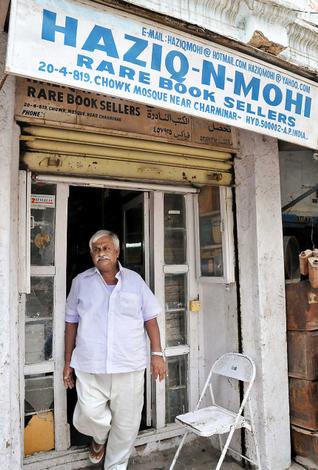
Ahmed Bin Mohammed Bafanna of Haziq-N-Mohi, had run the shop for about 50 years, in Hyderabad.– Photo: G. Krishnaswamy

The death of Mohammed Bafanna, who used to run Haziq-N-Mohi, has come as a shock to lovers of rare books

At about 3 a.m. on October 17, 67-year-old Ahmed Bin Mohammed Bafanna breathed his last at his house in the lanes of Himmatpura near Charminar. While many may not be aware of his existence, his passing away has come as a shock, especially for Urdu and Persian literature lovers, who would contact him whenever they needed rare books which they could not find.

And nobody knows the importance of Haziq-N-Mohi Rare Book Suppliers, Buyers and Exporters better than 42-year-old Khaled Bafanna, the youngest of the late Mr. Bafanna’s siblings. “He had been running the store for about 50 years, selling rare books and buying them. We have now got two book experts to help us in running the shop, which all of us brothers will run together,” said Khaled. Situated in a small lane after Chowk Masjid near Laad Bazar area, Mr. Bafanna’s book store is one place where anyone looking for something different or a particular book from a certain period would never be disappointed.

The 50-year-plus old shop was set up by him after he inherited his grandfather’s collection of books from his library. Later, he began purchasing books from Nawabs and others, who sold their books to add to his collection. “He was introduced to Persian, Urdu, English and French literature by our grandfather Salim Bin Ali Bafna Jamedar, who came here from Yemen, and used to work for the then Nizam government,” said Khaled. With the passing away of Mr. Bafanna, his siblings have vowed to run the shop with the same passion their oldest brother had for it. “It’s a big responsibility. Ahmed had a good knowledge of books, as he was with our grandfather, who had a vast collection of books and who also loved him the most. Later, while in college, our brother began collecting books and started the shop,” explained Khaled. In fact, their oldest brother’s passion was so well known at the Sunday morning book bazaar at Abids that sellers would call him and inform him whenever they had any rare book.

Ever since his demise, Khaled has been receiving calls from different countries, who are their customers. Apart from the two experts they have sought help from, his two nephews will also soon help them run the shop. “More than selling, he loved collecting rare books, which was his passion. For that, he had even learnt French apart from Arabic and Persian,” said Abdallah Bafanna, another sibling.

Both the brothers said that their oldest brother did not suffer from any acute illness, and that Mr. Bafanna’s death came as a shock to them as well. “He just had fever and cold from three days before he passed away. In fact, the doctor had also checked his health a day before, and said that he could start working again from the next day,” said Khaled.

Among others, Mr. Bafanna had also supplied Persian sources to author William Dalrymple for his book White Mughals . Having never married, he was the oldest among seven siblings, out of which five are alive today. The shop would be open from October 26, said Khaled.

He had been running the store for about 50 years. We now have got two book experts to help us in running the shop, which all of us brothers will run together  / Khaled Bafanna – Mohammed Bafanna’s brother

source: http://www.thehindu.com / The Hindu / Home> News> Cities> Hyderabad / by Yusus M. Lasania / Hyderabad – October 27th, 2015

PhD on Mamata’s management skills

Kolkata  :

Mamata Banerjee’s leadership in the Singur and Nandigram land movements, which propelled her to power, is now the subject of a PhD thesis by a management student of Vidyasagar University.

“Mamata Banerjee is an inspiration not only for me but for millions of Indians. She has been the subject of discussion for her unconventional way of looking at things, be it administrative protocol, resolving a political issue or addressing a mass rally. She has never been the kind of leader we are used to. Her out-of-the-way style can be a subject of research because it can be used an effective model in our society as well as the corporate world,” said PhD scholar Rezaul Islam, a resident of Hatipota village in Burdwan.

The research paper, titled ‘Charismatic Women Leaders in People Management — A Case Study on Mass Leader Mamata Banerjee’, will analyse how the firebrand leader turned a nearly lost battle into a winning one through her managerial skills. Rezaul believes the Ma-Mati-Manush CM’s rise in the national political scene has had wide ranging social impacts and led to a considerable rise in representation of women in different spheres.

The research paper includes other successful Indian women. “I will make a detailed study of Mayawati, Jayalalitha, Sheila Dixit, Indira Nooyi and Arundhati Mukherjee but the special focus will be on Mamata Banerjee,” Rezaul said.

Rezaul’s guide, Avijit Pakhira, is from Singur. “I have seen the anti-acquisition movement and Mamata Banerjee very closely. I followed the movement and saw how she turned a nearly lost battle into a political success. She has always been on the side of farmers but never discouraged corporates, either. She has struck a fine balance between the urban and rural world in her own charismatic way,” Pakhira said, adding: “If we can analyse her unconventional method of functioning, this might open up new avenues in human resource development.”

source: http://www.timesofindia.indiatimes.com / The Times of India / News Home> City> Kolkata / TNN / October 31st, 2015

Bikerni Sisterhood

Hyderabad  :

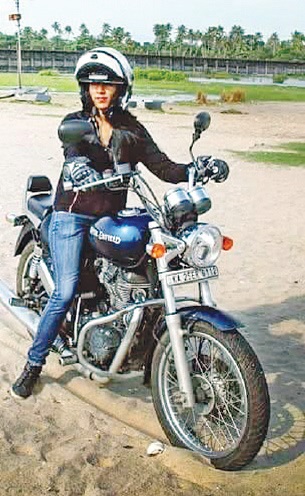
Like most children, 24-year-old Candida Louis’ fascination with bikes began while riding as pillion with her father. The breeze caressing her face as they drove along scenic landscapes gave her a rush of adrenaline and drew her towards biking.

Bucking the trend of machismo that surrounds the male-dominated sphere of biking, Candida, a corporate employee from Bengaluru, refused to confine her biking experience to being a pillion and decided to become a rider herself.

After eight years of riding, Candida is currently on a solo tour across the country – India on a Motorcyle.

On her brief stop in Hyderabad, she begins with a story that is pleasantly surprising and underlines the prominence of brotherhood (sisterhood in this case) of bikers and bikernis in the country.

Candida Louis
Candida Louis

“I finished Kerala, Tamil Nadu, and Karnataka in the South. My next stop was Hyderabad. I saw biker Sana Iqbal’s post in one of the Facebook groups and pinged her asking her about the best routes to Hyderabad,” recalls Candida. They met and then instantly, Sana, who was returning from Bengaluru to her hometown Hyderabad asked Candida to tag along. The two of them reached Hyderabad in the early hours of Thursday morning and Candida made Sana’s home in Mehdipatnam her own for a night.

“I am amazed by the way she received me. She didn’t just let me tag along, she also let me stay with her,” she smiles. Sana Iqbal was on a solo ride herself – Hyderabad – Udupi – Mangalore – Bangalore – Hyderabad. “I wanted to meet up with bikers in Bengaluru and happened to meet Candida,” she tells us. 27-year-old Sana has been riding since she was in grade seven and now, a mother of a four-month-old boy, Sana still finds riding cathartic.

Candida’s solo ride from the start has been picking up things, experiences and advice on the go. The same way, when the two women started off from Bengaluru, they started talking about Gandikota and Belur caves. “I heard a lot about it, but haven’t been there. When Candida asked me about it, we thought why not and then took a diversion,” beams Sana. Just like that, they rode all the way to Gandikota and Belur Caves. “It is beautiful, Gandikota. It is called the Grand Canyon of India, but doesn’t have many tourists,” she adds.

Apart from making new friends and experiencing the thrill of riding, Candida is also on a mission to discover unknown, yet exotic destination on her three-month long journey . “One thing I am looking to do on this tour is also locate those undiscovered places in the country and write about them.

Another place I went to was in Kerala – Varkala. It was beautiful. Again, not a lot of people know about it. I asked locals and they directed me to go there,” shares Candida hoping that she will discover more such places and meet people.

source: http://www.newindianexpress.com / The New Indian Express / Home> Cities> Hyderabad / by Rajitha S / October 31st, 2015

Tipu’s b’day bash divides opinion

Bengaluru  :

The state government’s move to celebrate Mysuru warrior Tipu Sultan’s birth anniversary as an official event across Karnataka on November 10 has ruffled the BJP and right-wing groups. They’ve opposed the government’s move to celebrate the event in a grand manner, terming the ruler as anti-national.

The decision to commemorate Tipu’s birth anniversary as a state-sponsored one was made by chief minister Siddaramaiah at the release of a book on Tipu in 2014.The BJP has accused the CM of trying to appease the minorities with the decision and has opposed the setting up of a university named after the ruler. Senior BJP leader D H Shankaramurthy, who is chairman of the Karnataka legislative council, told TOI that though he cannot comment on the celebrations, he will not attend the main function in Bengaluru.

The government’s move has cleaved opinion on Tipu, with historians, writers and politicians on both sides. While historian M Chidananda Murthy has likened Tipu to Adolf Hitler, writer S Shettar says reviling the rule without research is abuse of scholarship. Shettar said, “Condemning Tipu as anti-Hindu without properly studying the facts about his contributions and administration amounts to abuse of our scholarship. It is possible that Tipu might have hurt the sentiments of a particular community during his rule which could be a political compulsion rath er than his hatred for that community.

The scholars.” With less than a week for the function, right wing groups have gone into a huddle deliberating ways to oppose. BJP legislator from Mysuru, Go Madhusudan, is against setting up of a Tipu varsity , claiming that Tipu had offered support to Afghan ruler Ahmed Khan Abdali in waging war against India. “This shows he was an anti-national and doesn’t deserve to be venerated,” he said.

Historian Talakadu Chikkarange Gowda debunks theories that the ruler killed Hindus for refusing to convert to Islam. “In 1781, Peshwa Parasuram Bahu pillaged Sringeri Shankaracharya’s mutt. It was Tipu who came to the mutt’s rescue. Do right-wingers know that Chhatrapati Shivaji was betrayed by his own Peshwas,” he asked.

He also pointed to temples in the vicinity of Tipu’s palaces in Mysuru or Bengaluru. “I agree there are lapses on his part. But one mistake should be overlooked for the 99 other welfare measures he brought in,” he added.

Barkur Udaya, assistant professor, department of history, Mangalore University, said the anti-Tipu brigade is only reiterating Britishers’ view of him as a traitor.

source: http://www.timesofindia.indiatimes.com / The Times of India / News Home> City> Bengaluru / TNN / November 06th, 2015

Who is the superstar?

ShahrukhMPOs07nov2015

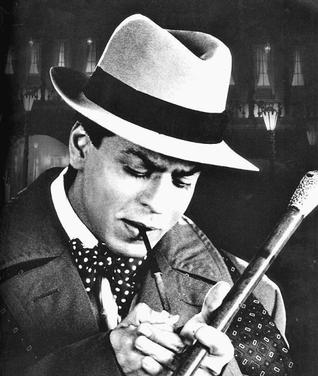
Shahrukh Khan has managed to become the darling of the press and the public. He’s forthright and speaks his mind but is never offensive

It’s strange. The troika of superstars that bamboozles pundits and blazes the box-office and effortlessly breaks records seemingly every single time in Hindi cinema are fifty years old. While Aamir and Shahrukh have touched the landmark, Salman is just shy of it. As far as I’m concerned, nobody has yet occupied the throne left by Amitabh Bachchan. The three Khans occupy it temporarily depending on the financial figures thrown up by their last release. It’s a throne with thorns. Right now Salman sits uneasily on it after the humungous success of ‘Bhajrangi Bhaijan’. Shahrukh’s next release could unseat him, albeit temporarily. Among the three, Shahrukh is the outsider with absolutely no ‘filmi’ background. Connections don’t guarantee success but there’s an aura of respect when you make it without a reference that’ll open doors.

Shahrukh has come a long way. Essentially a budding sportsman, he was the typical, aimless teenager who was befuddled by the choices that lay before him. A bad back injury scuttled the chances of his appearing in the sports pages. He wanted to chase an MBA but ended up pursuing a course in Mass Communication which was akin to learning filmmaking. Theatre beckoned and he joined Barry John. Hindi cinema was the last thing on his mind. Trained in theatre, he probably had a condescending attitude towards cinema. “I felt Hindi cinema was not for serious actors. The attitude at that age foolishly was that I was better equipped,” said Shahrukh, when I had interviewed him during ‘Dil Se’. “The actors I liked were Naseer Saab, Kamal Haasan and Smita Patil. I thought they were the ones who knew about acting.” Well, destiny had different designs for him. Lekh Tandon watched a play and recommended he do a TV serial. “TV was just becoming big and Aziz and Saeed Mirza were the kind of makers I liked.” Shahrukh became popular with mothers wanting to lovingly ruffle his mop of mane and girls dreaming of drowning in his dimples. “I’d promised my sister and Gauri that I’d commute between Delhi and Bombay. Kundan Shah and Mani Kaul told me I had a third dimension as an actor and I succumbed. On June 26th, 1991, I signed four films, with FC Mehra, Hema Malini, Rakesh Roshan and GP Sippy. Four days later, I signed ‘Deewana’. I was stuck in Bombay,” he had said.

Success did not come overnight but there was something about him that audiences identified with and it was not just moony-eyed females. There was an aura about him that permeated earnestness and sensitivity. Add to that the fact that there were not even whispers of any kind of misdemeanour. He laughed when I suggested that there were more women envious of his wife because he professed monogamy, than men who envied his success. “My wife tells me the same thing but says that’s because they don’t know me. I’m not a fantastic husband. I think she’s a better person. I’ve just been monogamous so far. I don’t even promise that in the future. I may fall in love with someone else and I’ve told my wife that too. I’m basically shy. I belong to a time when platonic relationships are possible. Gauri is quite wonderful. She’s not very sweet to me neither is she very caring. As a matter of fact, she’s not very nice to me either. I like her for what she is. She smiles when she sees me which is not very often but I know that smile is exclusively for me.

I’ve never made claims that I’m a one woman man, it’s just that I’ve never thought of sleeping with the girls I work with. I’m not that kind of person. I love intelligent, good-looking women but don’t see them as objects of desire. Beyond that we’re not even very compatible, ,” said the star who speaks sans a pause but with rare candour.

Success does strange things to people. Some develop a demeanour of arrogance as a defence mechanism. The lack of privacy becomes an irritant strangely after craving for adulation and attention. Shahrukh has managed to become the darling of the press and the public. He’s forthright and speaks his mind but is never offensive. He confessed that he loved the lack of privacy. “If I were private I’d be alone. I’d rather have the problem of walking into a restaurant and being mobbed than walk along Chandni Chowk unrecognised. An actor spends half his life trying to be recognised and the rest wearing dark glasses. It’s stupid. I’m myself in public. I’m an honest actor. I don’t want people to feel I’m different or superior. If you ask me what makes me a successful actor I’d say it’s because I’m forthright. I don’t have the voice of Amitabh, the acting capability of Kamal, the dancing prowess of Prabhu Deva or the comic timing of Govinda,” he had said.

Shahrukh is hardworking, humble and hassle-free as Mani Ratnam mentioned. His greatest asset is that he knows his limitations and doesn’t try to be someone he’s not or can’t be. His energy levels and drive could be the envy of today’s teenagers. He’s at the pinnacle of success and his powers as an entertainer and performer. For him fifty is just a number.

sshivu@yahoo.com

source: http://www.thehindu.com / The Hindu / Home> Features> Friday Review / by S. Shivakumar / Bengaluru – November 05th, 2015

The Muse speaks from prison

Poems by ten people who were imprisoned during the Emergency.

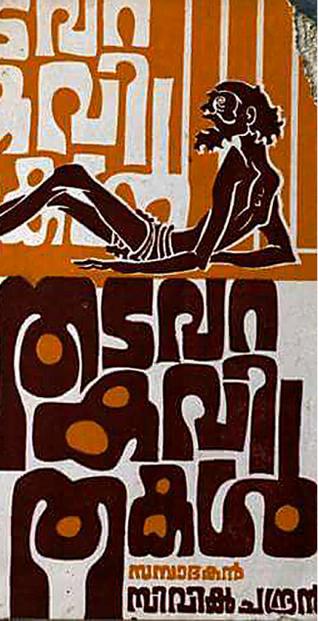
The Emergency in 1975 has had many gruesome after-effects. But ‘Thadavara Kavithakal’ is one positive outcome of the times.

The anthology, the English translation of which is getting ready to be published soon under the title ‘Poems from the Prison’, consists of poems penned by ten people who had been imprisoned during the emergency for various reasons. It was their endless days in prison that unearthed the poets in most of them.

The anthology in Malayalam was first published in 1977, edited by Civic Chandran, one of the poets, and republished with extensive notes and memoirs in 2010. Some of the poems had been translated and used in various English anthologies over the time.

The cover photo of 'Thadavara kavithakal' the English translation of which is getting ready to be published.
The cover photo of ‘Thadavara kavithakal’ the English translation of which is getting ready to be published.

First time

This is for the first time an attempt was made to translate the anthology completely into English and published as one book.

Freshly translated by noted Malayalam poet K. Satchidanandan, with a foreword by Balachandran Chullikkad, the anthology carries 25 poems by ten poets, most of whom are still alive, while a few like Muhammed Ali and Udayabhanu have bid adieu to this world.

The remaining — M. Somanathan, V. K. Prabhakaran, M. M. Somasekharan, Das (Kuttikrishnan), C. K. Raghunath, Purushothaman, C. K. Abdul Azees and Civic Chandran –- are mostly still active as writers, theoreticians, editors and activists, having moved away from the Maoist ideology that had stirred them in the Seventies.

The poems are on diverse themes. ‘An evening note’ by P. Udayabhanu recalls the turbulent times when revolution was brewing across the country while V.K. Prabhakaran’s ‘The People of my village’ is about the unrest beneath the surface.

However, they are marked by certain recurring symbols such as storm and rain and the spirit of revolution.

source: http://www.thehindu.com / The Hindu / Home> News> Cities> Kozhikode / by Aabha Anoop / Kozhikode – November 04th, 2015

New Office-Bearers – Mysore Karate Association

Mysuru, Karnataka :

Chidanand M.B. and Sosale Siddaraju have been elected as president and general secretary respectively of the Mysore Karate Association.

The other office-bearers include Nagaraju (vice-president), Azeez Khan (joint secretary), N. Shankar (treasurer), N.G. Shivadas, Mahadevaswamy, Sunil Kumar and Deepak (Directors), according to a press release here.

source: http://www.thehindu.com / The Hindu / Home> National> Karnataka / Mysuru – November 04th, 2015

Hussain Zaidi’s back to live action!

Hussain Zaidi
Hussain Zaidi

Journalist and author S Hussain Zaidi talks on crime reporting and what keeps him ticking

Journalist and author Hussain Zaidi, the face behind seven books based on the underworld, and also an active journo, who’s making his presence felt at Tata Literature Live! (Mumbai LitFest) speaks on fiction writing, underbelly, crime reporting and his understanding of cinema in a chat with MetroPlus.

What reorientation did you have to undergo when writing a fiction with Mumbai?

I had a 20-year long stint in journalism, which made it easy for me to write non-fiction. I basically had to write larger versions of my stories and make it into a book. Meanwhile, with Mumbai Avengers, fiction was a new territory, but I was very interested to weave in a plot around the 26/11 incident and show the discontentment of a nation. I was aghast on how easily a terrorist group could cross the borders and create mayhem in another country.

Writing a script was a challenge but there was a top cop from Mumbai, who was immensely helpful in getting the research and the detailing right, so much that I titled my lead character after him (Brijesh Singh). I approached Kabir Khan to make a film out of the idea (Phantom), who later introduced me to producer Sajid Nadiadwala.

Phantom, the film adapted from the same book received extreme reactions worldwide. How did you deal with the troubles?

The trouble in Pakistan was something that I’d honestly anticipated. What shocked me the most was how, without the film being censored or watched, the Pakistan Government sided with the petition filed by the suspect Hafiz Saeed. It was heartbreaking to see the rejection sans a proper basis. Interestingly, this entire incident raked up curiosity in the Gulf and the film’s collection in the region showed a sudden jump. Otherwise too, the film didn’t get affected much financially.

Given you had ventured into a space not many had gone into, was it easier to get noticed as an author?

It was an advantage that I’d written about the underworld, a subject that many hadn’t touched. I understood it was fresh. The intention also was because I realised nobody would have read my work had it been a done-to-death genre. Now having written a series of books on the same subject, I doubt if I have more material to write. So, moving forward, the ambition will be to choose another niche genre.

How did your the journalistic roots come to use and how different was it to get material on the subject?

The journalist roots did help me find sources. I had clear cut information on who were the witnesses, victims and how I had to procure the background information. Having been in the same field, it’s easier to work than others and get material, when the sources trust you. My first novel Black Friday took about four years to complete, Dongri to Dubai, about seven and Mumbai Avengers, close to 1.5 years. Journalism helps you to get into a writing habit everyday, so from 2000 words a day to 60000 words in a month wasn’t so big a challenge.

How does your family react with your involvement in such a dark space?

My wife is also a crime reporter, so it’s not conventional talk that goes on in the house. I have a college-going son and at home, it’s not movies or serials that get us talking. We talk about gangsters, their lives, hideouts rather openly, because our world as investigative journos revolves around that. It’s quite normal though.

Your views on the break he took from journalism and getting back?

I’m back to working as a reporter now. It feels good to be back in action from where I’d started. I had basically taken a break from my journo career in 2011 due to a series of commitments made to publishers, producers and directors. A lot of things were on the backburner and I had to finish nearly four books in the meantime.

The differences you noticed between cinema and written media?

I still feel it’s Greek and Latin when I talk about the cinematographic representation of a book. WithPhantom too, it was a revenge mission for the 26/11 incident of its own kind. In spite of the story being similar in both formats, I sensed a lot of difference in the results, the treatment, the characterisations. It may take its own time for the distinction to set in me.

Did you still have that bit of adrenaline rush when you heard the news of Chota Rajan’s arrest?

When I just heard the news of him being arrested, I didn’t have to search hard to access information about him. I sat on my desk, had all that extra material to write while all the other reporters in the country were desperate in their search of authentic and exclusive information.

source: http://www.thehindu.com / The Hindu / Home> Features> MetroPlus / by Srivathsan Nadadhur / Hyderabad – October 31st,  2015