Telegana Oppn leader Mohammed Ali Shabbir felicitated in Chicago

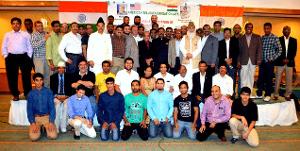
Mohammed Ali Shabbir, opposition leader, Telangana State Legislative Party(India) at a reception organized by American Telugu Association (ATA) and Telangana Association of North America (TANA) in Chicago, USA.

Chicago :

American Telugu Association and Telangana Association of North America, headed by its President Iftekhar Shareef, organized a reception dinner in honor of Mohammed Ali Shabbir, MLC, and Opposition leader of Telangana state legislative council at North Shore Banquets, Chicago.

Shabbir said that the extension of the benefit of 4% reservations, during his tenure as cabinet minister, enabled minority students to make their mark in education and employment. “Success in reservation for minorities, despite multiple legal hurdles and strong opposition from some sections of society, was a milestone,” said Shabbir.

Shabbir said nearly two million Telugu diaspora in the USA have been immensely contributing to the growth of both American and Indian economies and thereby making Telugu people proud. He also encouraged them to invest their savings in their home states. “However, considering the heavy incidence of backwardness in the rural areas of Andhra Pradesh and Telangana, the NRIs, with flair for social service, may use their resources in finding enduring solutions to these problems,” said Shabbir.

“Iftekhar Sharief, who was the first recipient of dual citizenship, continues to be a role model for all NRIs,” said Shabbir and thanked ATA and NATA for arranging the reception.

Iftekhar Shareef, trustee and events chair of the Federation of Indian Association, Chicago, said that the political career of Shabbir reflects the true secular credentials of the Indian voter. “Even though the non-Muslim voters constitute a staggering 92% in his constituency, Shabbir won the elections with thumping majority,” he said.

source: http://www.timesofindia.indiatimes.com / The Times of India / News Home> NRI> US & Canada News / August 13th, 2015

Azim Premji, Shiv Nadar among world’s tech billionaires

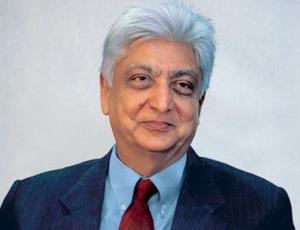
Wipro founder Azim Premji makes it to the tech billionaire's list
Wipro founder Azim Premji makes it to the tech billionaire’s list

Washington : 

Two Indian tech tycoons,Wipro chairman AzimPremji and HCL co-founder Shiv Nadar are in the Forbes’ first-ever list of the 100 richest people in the technology field, dominated by Americans with Microsoft founder Bill Gates at the top.

Two Indian-Americans tech czars, Romesh Wadhwani, CEO and chairman of Symphony Technology Group, and Bharat Desai, co-founder of IT consulting and outsourcing company Syntel also figure on the list released last week.

Premji, 70, with a net worth of $17.4 billion is ranked 13th on the list followed by Shiv Nadar, 70, in the 14th spot with $14.4 billion.

Wadhwani, 67, is ranked 73rd with a net worth of $2.8 billion while Desai, 62, with $2.5 billion is in the 82nd spot.

Premji’s Wipro, India’s third-largest outsourcer, reported a 10 percent rise in revenues to $1.9 billion in the last quarter, on the back of new business from clients such as ABB and Philip Morris, the magazine noted.

Nadar, Forbes noted, has diversified into healthcare with HCL Avitas, a new firm in partnership with John Hopkins Medicine International, which has opened 10 clinics in Delhi.

Wadhwani has a degree in electrical engineering from the Indian Institute of Technology and a PhD from Carnegie Mellon. His Symphony Technology Group is a collection of 20 companies spanning big data, analytics and software.

Syntel, co-founded by Desai and his wife Neerja Sethi, now generates over $900 million in revenue, has a market cap of over $3 billion and more than 24,500 employees across the globe.

While 51 American billionaires are on the list, tech barons from Asia made a strong showing as well, with 33 people hailing from that region. Forty of the 100 live in California.

Bill Gates, who’s also the world’s richest man, ranks number one among tech tycoons, with a net worth of $79.6 billion.

Number two on the list is Larry Ellison, founder of database software firm Oracle, with a net worth estimated at $50 billion.

The third richest on the list is Jeff Bezos with a net worth of $47.8 billion followed by Facebook founder Mark Zuckerberg in the fourth place with $41.2 billion.

Google co-founders Larry Page and Sergey Brin are ranked fifth and sixth respectively.

Altogether, the world’s 100 richest tech billionaires are worth $842.9 billion.

Just seven women made the list, the wealthiest of whom is Laurene Powell Jobs, the widow of Steve Jobs, with an estimated net worth of $21.4 billion.

Nearly all of the 100 are self-made billionaires: 94 made their own luck, 3 inherited their fortunes, and 3 have inherited fortunes but have been actively expanding them.

source : http://www.timesofindia.indiatimes.com / The Times of India / News Home> NRI> US & Canada News / IANS / August 13th, 2015

Unfurl tricolour on rooftops on Independence Day, Deoband tells Muslims

Faizabad :

Leading Islamic seminary Darul Uloom, Deoband has asked Muslims to put up the national flag on their houses and other establishments on Independence Day and has also appealed to the members of Muslim community to celebrate the national day with spirit of patriotism.

Talking to TOI, the seminary spokesman Ashraf Usmani said, ulemas (religious leaders) of Darul Uloom played prominent role in the freedom struggle.

“Call for complete independence which later turned into the ‘Poorna Swaraaj’ movement, was first given by Hussain Ahmad Madani and Maulvi Ahmadulla Shah of Deoband and were among a long series of freedom fighters who laid their lives down for independence of the motherland,” said Usmani, adding, “Darul Uloom has asked Muslims across the country to unfurl the national flag on their houses and other establishment on Independence Day ”

Reacting to the appeal, seminary leader Maulana Arshad Qasmi said, “We have advised all madrassas across the country specially to host the tricolour and enlighten students about India’s freedom struggle and the country’s original spirit of unity in diversity.”

“Muslim community has always been on the target of communal forces,” said Hafiz Akhlaaq Ahmad Latifi, who runs a madrassa in Ayodhya, adding, “They always question our patriotism. In madrassas we always teach love for motherland and patriotism. In the past too, we have celebrated Independence and Republic Days, and will continue to do so.”

source: http://www.timesofindia.indiatimes.com / The Times of India / News Home> India / by Arshad Afzal Khan, TNN / August 14th, 2015

Indians must live up to ideals of Constitution, says Delhi Lt Guv Najeeb Jung

He also exhorted the people to set an example of good citizenship and emphasised the need for treating everybody with respect and dignity irrespective of caste, class, gender, religion or region.

File Photo dna Research & Archives

 In what can be seen as a message to the ruling AAP, which has often termed his orders “unconstitutional” in the bitter ongoing tussle between the two, Delhi Lt Governor Najeeb Jung today stressed on the need for citizens to live up to the ideals of the Constitution.

“We must live up to the ideals of our supreme document, the Constitution of India,” Jung said in his message on the eve of Independence Day.

The Delhi LG urged people to remember and pay homage to the many who through their sacrifice “delivered this much cherished independence to us”.

“Independence Day must mark an occasion for us to renew our pledge to serve our nation with greater sincerity, commitment and truth in all walks of life,” a L-G House statement said.

He also exhorted the people to set an example of good citizenship and emphasised the need for treating everybody with respect and dignity irrespective of caste, class, gender, religion or region.

source: http://www.dnaindia.com / DNA / Home> News> India / Place:  New Delhi / Agency: PTI / Friday – August 14th, 2015

Panchala Museum plans gallery for freedom fighters

Bareilly :

With the 69th Independence Day less than a week away, authorities at Panchala Museum are planning to set up a gallery dedicated to the lives of freedom fighters from the Rohilkhand region.

Officials have started collecting pictures, letters and other memorabilia belonging to those who were a part of the freedom struggle.

Abhay Singh, a professor at MJP and the project coordinator, said, “We are requesting families of these bravehearts to provide photographs and texts related to their lives. We are working on a strategy to gather as many belongings of the freedom fighters as we can and we also plan to appeal to the public through newspapers in this connection.”

“Residents aren’t aware of the kind sacrifices freedom fighters from this region made. With the gallery we plan to highlight their glories in our museum. For instance, FR Rahman alias Chunna Miyan who was known as Gandhi of Bareilly worked for creating communal harmony in the city,” Singh added.

However, setting up of the gallery is subject to the availability of required material.

Shyam Bihari Lal, head of the department of ancient history and culture, said, “The gallery will be set up in the museum only after we receive enough material to put things up on display.”

Many people from the Rohilkhand region, including Bareilly, Shahjahanpur, Pilibhit, Rampur, Badaun, Moradabad, Bijnor and Sambhal played an active role in the freedom struggle.

Bareilly was the headquarter of the Rohilkhand region during the revolt of 1857. In fact, on May 31 that year, freedom fighters killed several British officials including the principal of Bareilly College.

The museum is located on the MJP Rohilkhand University campus. Till now, it was only accessible to varsity students but it will be opened to public from this month.

“There will be no entry fee for outsiders but there will be timings for public visits,” said Singh. He added the final touches are being given to the renovation and beautification work at the museum.

source: http://www.timesofindia.indiatimes.com / The Times of India/ News Home> City> Bareilly / by Priyangi Agarwal, TNN / August 10th, 2015

Enclave’s first baby after freedom named Azad

Kolkata :

Midnight on July 31 had ushered in a new freedom in Cooch Behar’s 51 Bangladeshi enclaves. It took the wail of a newborn 12 days later to underline what it actually meant. Named Azad, he is the first baby born in free territory -with his parents’ real names, and calling what was no-man’s land his home.

When TOI had met the pregnant 18-year-old Jharna Biwi a fortnight ago, the Bangladeshi enclave of Poator Kuthi in Cooch Behar was excited because this baby would be special. At 6.30am on Wednesday , Azad was born at Bamonhat primary health centre. Never has the birth of a newborn -to a teenage mother -been the cause of such joy in any enclave.

Gone are the days when even quacks, what to speak of doctors, would refuse to deliver babies of enclave residents.Would-be-mothers would suffer the ignominy of lying about their husbands’ name.Azad’s elder brother, born four years ago, was named Saheed (martyr). Grandfather Mujibur Ali is ecstatic but cannot forget the shame and agony of half a century .”When Saheed was born in 2011, we had to send Jharna to her maternal home in Dinhata’s Picnicdhora, evading BSF patrols. We had to lie about her husband’s name and give a fake Indian address just to get her into hospital. Not any more,” Ali said. “Azad signals the new dawn,” he said, before hurrying off to offer sweets to visitors flocking to his home.

When Jharna felt pre-mature labour pains in the predawn hours, her brother-inlaw Meharul and mother-inlaw Jamina Biwi took her in a van rickshaw to the primary health care centre, half-anhour away . This in itself would be a huge task a fortnight ago. Being Bangladeshis, they couldn’t step out of their villages for fear of being hounded by BSF or police.And getting admission in a state-run health facility was out of the question.

As Poator Kuthi savoured the sweets of Azad’s birth, 70 year-old Mansoor Ali recalled how Asima Biwi was denied treatment in 2010.

“Nearly 3,500 enclave residents braved a nine-hour stand-off with police and BSF to get her treated at Dinhata sub-divisional hospital. The administration relented only when they realized the protest could snowball into a huge agitation. Her baby was born that day and we named him Jehad (struggle),” said Mansoor, president of Poator Kuthi enclave exchange committee. Mansoor said, “Jehad’s birth may have brought our plight before the people but it didn’t change our way of life. Expectant mothers had to fudge their husbands’ name (give an Indian’s name) and address to get admitted to hospitals. Nothing can be a bigger insult to a married woman than to lie about the father of her child.” He added, “But this morning, I held Jharna’s hand and told her to go with her head held high and tell them that she belongs to Poator Kuthi, India, and her husband’s name is Jamidul Ali. She did.”

source: http://www.timesofindia.indiatimes.com / The Times of India / News Home> India / by Kamalendu Bhadra, TNN / August 13th, 2015

Picking the pieces of a rich heritage

KuttichiraMPos14aug2015

Efforts needed to preserve the unique socio-cultural identity of Kuttichira

Kuttichira, a predominantly Muslim settlement in the coastal region of Kozhikode, holds testimony to the city’s trade relationship with the Arab world.

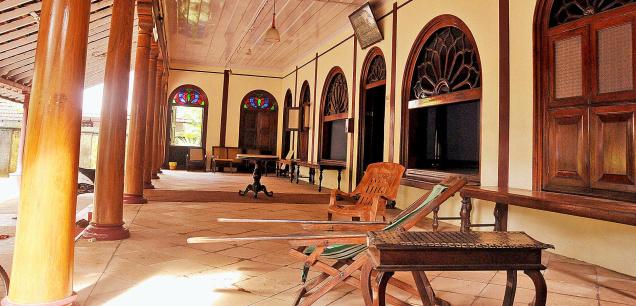
Built around centuries-old mosques, the region comprises hundreds of families who still keep its unique socio-cultural identity at different levels. The last vestiges of its physical expressions—the ancestral homes and a number of household articles—are vanishing and efforts to set up a cultural museum to preserve them failed to bear fruit.

After a few decades, no one would believe that more than 100 members of a family in a matrilineal descent system lived in a single tharavadu at a time, says Hassan Vadiyil, a veteran journalist and a member of a prominent family in Kuttichira.

Six kitchens for a single house may sound like a bit of an exaggeration. But that was what some of these colossal houses had at a time. “Some of them even had three domestic wells around them,” says Mr. Vadiyil, who had first hand experience of the entire socio-cultural practices and customs that were part of life in Kuttichira.

Ramsy Ismael, member of CIESCO, a socio-cultural organisation based at Kuttichira, had a good collection of a number of artefacts related to the cultural life of Kuttichira. They included a decorative cap used by the groom on the wedding day and even furniture used during special occasions like wedding. “But many of them have been lost,” says Mr. Ismael.

Most of the families at Kuttichira have now left their joint families migrated to the Middle East. “Members of the new generation have been completely disconnected from their glorious common past,” says Parappil Muhammed Koya, writer and historian, who has an entire title ‘ Kozhikkotte Muslimgalude Charithram,  written on the lives of people in Kuttichira. “Documenting and preserving at least the valuable remnants of this remarkable culture is a necessity,” he says.

At least one of the traditional homes in the area could be purchased or taken over on lease by the tourism department to be converted into a museum which can house whatever is available to tell the story of Kuttichira to the future generation, says Dr. Koya.

“That can also become one of the most valuable tourism attractions of the city if materialised,” he says.

source: http://www.thehindu.com / The Hindu / Home> News> Cities> Kozhikode / by Jabir Mushthari / Kozhikode – August 14th, 2015

Gandhi, Akbar among Time magazine’s top 25 political icons

GandhiMPOs14aug2015

New York  : 

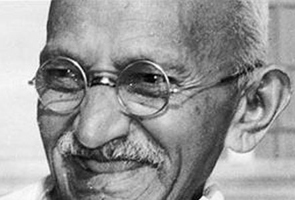
Indian political geniuses Mahatma Gandhi and Emperor Akbar have been listed among the ‘Top 25 Political Icons’ of all time by TIME magazine, along with Tibetan spiritual leader the Dalai Lama and Mao Zedong, the father of modern China.

Released on the 100th birth anniversary of the late US President Ronald Reagan, the TIME list figures names like the great conqueror Alexander the Great and some of history’s most polarising figures like Adolf Hitler and Benito Mussolini.

Gandhi’s experiments with satyagraha — the genesis of the non-violent methods of protest pioneered by him — and his leadership of India’s freedom movement that has inspired many revolutionaries of later years, led him to the top of the list of the 25 all time greats.

Describing Mohandas Gandhi as a figure “few will ever forget”, the prestigious magazine said his struggle paved the way for other social movements including America’s struggle for civil rights.

“While working as a lawyer in South Africa, he pioneered the concept of satyagraha, or, civil disobedience in response to tyranny, helping Indians there campaign for civil rights,” it said.

“Working with Jawaharlal Nehru, the nation’s future prime minister, Gandhi led the country in peaceful protest against foreign domination, exemplified by the 1930 Salt March in protest to a British salt tax. His rise paved the way for
India’s independence in 1947,” it said.

Gandhi, who left behind a universal influence, has inspired leaders like American civil rights movement leader Martin Luther King and South Africa’s anti-apartheid champion Nelson Mandela, and also US President Barack Obama.

The 16th century Mughal Emperor Jalaluddin Mohammad Akbar, a figure who played a major role in unifying the largely scattered fiefdoms in northern India, also finds a place in the elite list.

The ethos of pluralism and tolerance pioneered by the Muslim ruler in a Hindu-majority India underline the values of the modern republic of India, the magazine said.

The third Mughal ruler of India presided over a flourishing of the arts, sponsoring artisans, poets, engineers and philosophers at a time when Europe was still in its
pre-Renaissance stage.

“If ever a leader merited a tautology, it was the Mughal Emperor Akbar the Great. Under Akbar, a fragile collection of fiefs around Delhi grew into the great Mughal
Empire, a diverse and sprawling kingdom across northern India,” the magazine said.

“He was a canny warlord whose conquests gave rise to one of the early modern world’s wealthiest states. Moreover, while a Muslim, Akbar was spiritually curious and hosted religious scholars from Hindu gurus to Jesuits at his vast,
diverse court,” it said.

source: http://www.ndtv.com / NDTV / Home> India / by Press Trust of India / February 06th, 2011

Kalam’s Parting Gift to Children: A Sequel to Ignited Minds

KalamMPOs14aug2015

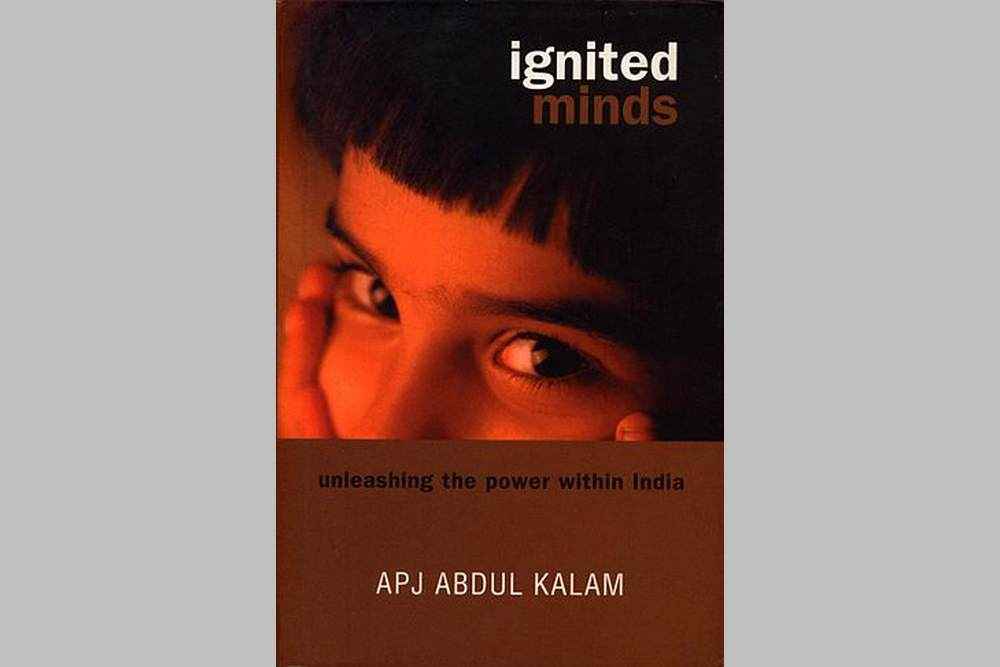
A number of new books by late A P J Abdul Kalam, including a sequel to his ever-popular Ignited Minds, are lined up for publication in the next few months.

Puffin Books will publish My India: Ideas for the Future, billed as a sequel to Ignited Minds. It will be a collection of insightful and thought-provoking speeches from Kalam’s post presidency years.

Organised into seven sections, the speeches in this collection are a roadmap for children, and adults alike, to follow their dreams and contribute to a better India, the publishers said.

Drawn from Kalam’s addresses to parliaments, schools and universities across the world, these speeches include his thoughts on nation building, poverty, failure, science and self-confidence in the 21st century.

Scheduled to be published later this year, My India: Ideas for the Future is a book that will inspire, invigorate and empower many generations to come, the publishers said.

Brought out in 2003 by Penguin, Ignited Minds: Unleashing the Power within India went on to become a bestseller. The book examines why, given all our skills, resources and talents, we, so obviously capable of being the best, settle so often for the worst.

Kalam offers no formulaic prescription in Ignited Minds. Instead, he takes up different issues and themes that struck him on his pilgrimage around the country as he met thousands of school children, teachers, scientists and saints and seers in the course of two years: the necessity for a patriotism that transcends religion and politics; for role models who point out the path to take; and for confidence in ourselves and in our strengths.

Puffin had recently published Reignited: Scientific Pathways for a Brighter Future, co-authored by Kalam and his aide Srijan Pal Singh, in which the writers worked to inspire a new generation of Indians in careers in science.

HarperCollins will also be taking through to publication one of Kalam’s last projects,Advantage India, co-authored with Singh, which draws upon some remarkable examples from his life to illustrate how India could have a winning edge.

The book will deal with subjects like Make in India, Skill Development, Digital India, Smart Cities project, rural development models and new energy policies.

Known for his visionary ideas grounded in practical experience, Kalam published numerous books including Wings of Fire, Target 3 Billion, Life Tree: Poems, Mission 2020, Beyond 2020 and Turning Points, his highly readable account of his presidency.

Written in straight-forward, accessible language, each book shares his passion to help India and Indians dream big, and offers an action plan to help realise these goals.

The power of true spirituality, of faith that inspires good deeds and thoughts, the very special relationship between a teacher and a disciple, all of these are enshrined inTranscendence, a book that HarperCollins just published by Kalam, co authored with Arun Tiwari.

The book is about the unique spirituality-science fellowship that was formed between Kalam and Pramukh Swamiji Maharaj, who is one of the most inspiring spiritual figures of modern times and the fifth spiritual successor of Bhagwan Swaminarayan.

In The Family and the Nation (with Acharya Mahapragya), Kalam said how any task of nation building had to begin at an individual’s first training ground, the home. In A Manifesto for Change (with V Ponraj), he took up the crucial subject of how we should elect our leaders, and how those we elect should carry out their duties.

Kalam was also reportedly working on a book in Tamil with a vision for the growth of Tamil Nadu and completed seven chapters.

The book was titled Ennathil Nalamirunthal Kanavu Tamilagam Uruvagum, Puyalai Thandinal Thendral and seven chapters of it were completed after detailed discussions, co-author of the book and scientific advisor to Kalam when he was President, V Ponraj said.

Says Udayan Mitra, Associate Publisher at Penguin Random House who worked as Kalam’s editor for more than 10 years,

“Kalam managed to inspire the millions of people who met him, listened to his speeches, and read his books – and he ignited their minds.

“Having had the privilege to know Kalam personally and to have published his books for over a decade, I will miss him dearly, as I know the entire nation will. But his dream and his extraordinary personality will live on in his books, and it is in their pages that we will be able to find Kalam in our midst again, and celebrate his vision anew.”

Meanwhile, Kalam’s aide Singh is also mulling an idea of incorporating the unfinished lecture on ‘Creating a Livable Planet Earth’ at IIM-Shillong into a book.

source:  http://www.outlookindia.com / Outlook / Home> News / by Zafar Mudasser Nofil / New Delhi – July 31st, 2015