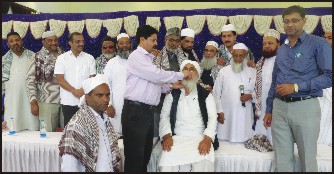
Mysore District Haj Committee had organised a day-long Haj Training and Vaccination Camp for the Haj 2015 pilgrims at Milan Annexe Function Hall, in city this morning.
Sir Khazi of Mysuru Hazrath Moulana Mohamed Usman Shariff presided over the camp.
The camp began with the recitation of verses from the Holy Quran by Hazrath Moulana Maqboo Ahmed Saheb Nizami and Naath was presented by Syed Fazil Ashrafi.
Abdul Azeez Chand welcomed the Haj 2015 pilgrims and the guests.
All India Milli Council Mysuru President Hazrath Moulana Mohamed Zakaulla Siddiqi, speaking on the occasion, said about the performance of Umra and provided information to the pilgrims. Prior to the commencement of the camp, homage was paid to former President of India Dr A.P.J. Abdul Kalam, who passed away on July 27.
Dr. Mohamed Shiraz Ahmed, Dr. Javeed Pasha, Dr. Aleem, Dr. Fahad, Dr. Anitha, Dr. Bushra, Dr. Parveez Ahmed and other Medical staff from the Health Department administered vaccination to the Haj pilgrims which is mandatory for the visa stamping.
Jamia Tippu Sultan, Secretary Alhaj Syed Yunuss, MCC Ward 43 Corporator Suhail Baig, Jameel Ahmed Ashrafi and Shahabuddin were present.
source: http://www.starofmysore.com / Star of Mysore / Home> General News / Friday – July 30th, 2015
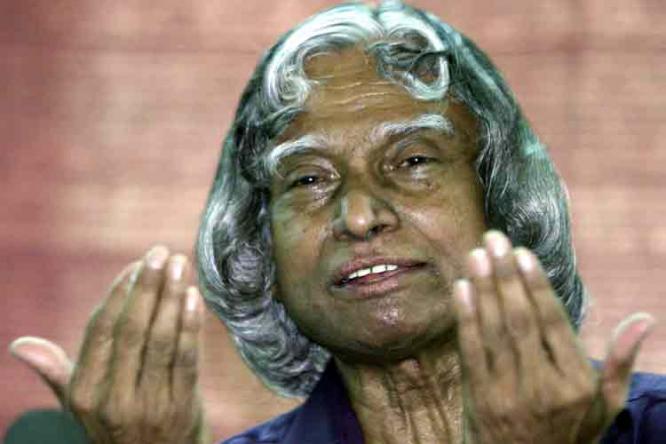
Describing him as one of the most “exuberant boosters” of India’s nuclear capabilities, the US media on Tuesday highlighted the contribution of ‘missile man’ A P J Abdul Kalam to the country’s atomic and space programme.
Kalam, who would have turned 84 in October died after suffering a massive cardiac arrest during a lecture at the IIM Shillong on Monday, plunging his country into overwhelming grief.
Describing him as one of the most “exuberant boosters” of India’s nuclear capabilities, the US media on Tuesday highlighted the contribution of ‘missile man’ A P J Abdul Kalam to the country’s atomic and space programme.
“He was one of the most exuberant boosters of the country’s nuclear program,” The New York Times wrote in a rare obituary for Kalam.
“He used the spotlight to urge India to build up its military strength and to free itself from the threat of domination by outside forces,” the daily said.
The Times said that Kalam spent little time outside India. “For him, it was a point of pride that India had developed its bomb without much help from foreign powers. And he described himself as thoroughly Indian,” it said.
Kalam has been credited with helping develop his country’s first space satellites. In the 1980s, he helped design the nuclear-capable ‘Prithvi’ and ‘Agni’ ballistic missiles, The Washington Post said.
“He played a crucial role when India tested its nuclear weapons in 1998. The test resulted in sanctions against the country but helped elevate Mr Kalam to the status of folk hero in his country,” the Post said in its obituary.
The Wall Street Journal reported that Kalam, who was born into a poor Muslim family in Tamil Nadu, was at the forefront of the country’s efforts to develop a space programme and a strong advocate for India’s self-reliance in defence technologies.
“He encouraged the development of India’s first indigenous satellite launch vehicle that brought the country into an elite club of space-faring nations and guided India’s missile-development programme,” the daily said.
“Dr. Kalam also played a key role in boosting India’s nuclear capabilities, leading to nuclear tests in 1998, a technological achievement seen as pivotal in asserting the country’s place in global politics,” the WSJ said.
“He was the first scientist to hold the office, and was widely viewed as an apolitical figure,” the CNN said.
source: http://www.ibnlive.com / IBN LIVE / IBN Live> World / Press Trust of India / July 28th, 2015
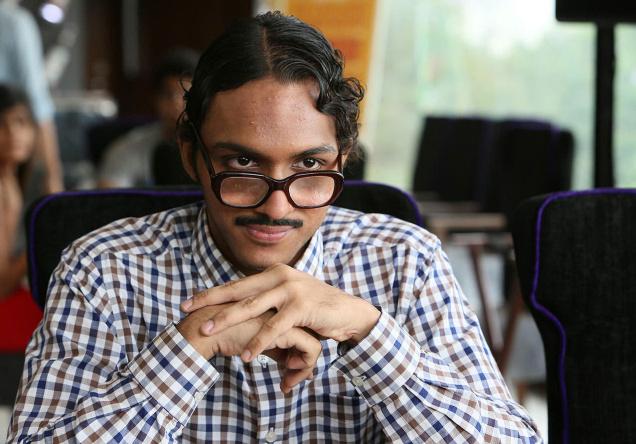
Nasser’s son Luthfudeen Baasha,currently featuring in Idhu Enna Maayam, tells sudhir srinivasan that he’s grown as an actor
Luthfudeen Baasha tells me that since his debut in director A. L. Vijay’s Saivam, he has taken the time to study acting. He spent two weeks at an acting workshop in Pondicherry conducted by a performance company called Adishakti. He also spent time with N. K. Sharma of Act 1, a Delhi-based theatre group. All this information surprises me. He has Nasser for a father. Can acting training come from a better qualified person? “You should probably ask him about it,” he says, and throws me off guard by passing the phone to Nasser. “You see, the problem with trying to teach your child is that you never know when they will start arguing or when they will suddenly want a break. The connection is too personal, and it’s difficult to create a teacher-student relationship,” says Nasser. He also points out, in all modesty, that thanks to the workshops that his son has attended, he has learnt a couple of acting tips himself.
Luthfudeen has now done a role in Idhu Enna Maayam, another A. L. Vijay film. He hasn’t done any other films since Saivam owing to “personal commitments”. He explains his role in the just-released film with an Anniyan reference. “Remember how Ambi turns into Remo in that film? I undergo a similar transformation in this film.” Interestingly, Vijay’s original choice for the role wasn’t Luthfudeen. “He was visiting us once, and I told him about the acting workshops I had attended. He sensed that I was very keen to do films again, and offered me this role.” He remembers how he had to hide signing Saivamfrom Nasser. “He was shouting from the rooftops that actors must be trained, and right under his nose, his son, utterly untrained, had just signed a film. Thankfully though, he wasn’t livid as I expected him to be. But I’ve fulfilled my promise that I’d go through formal training in acting after I completed that film.”
However, his long-term plan is to turn filmmaker, and to that end, he views these roles as a kind of paid internship. “Let’s say I’m creatively building myself until I’m ready to make films.” So, for now, he’s happy to try and become more proficient as an actor. And yes, those training sessions came in handy, thank you very much. “I remember taking as many as 10 takes for many scenes in Saivam. This time, it was just three or four.”
source: http://www.thehindu.com / The Hindu / Home> Features> Cinema Plus / by Sudhir Srinivasan / August 01st, 2015
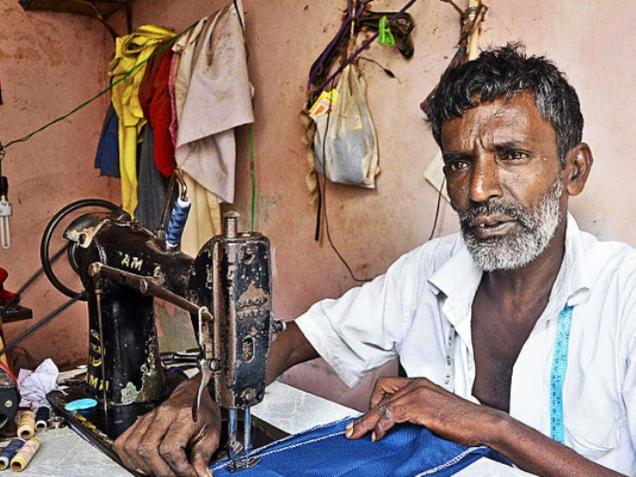
Rare chance: This humble tailor in Mandapam made the decorative cloth for the cortege of former President A.P.J. Abdul Kalam.— Photo: L. BALACHANDAR / The Hindu
“I was much privileged to do the work and I am painfully happy. I will cherish the moment all my life”
A differently abled tailor in this coastal town had the privilege of making the decorative cloth for the army vehicle which carried the mortal remains of former President A.P.J. Abdul Kalam on the final journey on July 30.
R. Rabi Khan (51) had just returned from the Mandapam helipad after witnessing the arrival of Kalam’s body on July 29 when an army man brought a 10.5-metre-long cloth for making frills. He was in no mood to work and refused to take up the job.
But the moment the army man said it was for Kalam’s cortege, he sprang up and completed the work in two hours.
“I am in the profession for close to three decades and this was the profound moment in my life. Making the decorative cloth for Kalam was the most satisfying job in my career,” Mr. Khan told The Hindu on Monday.
The frill cloth he made was tied around the base of four sides of the army vehicle, on which the coffin was placed for the final journey. The army man had offered some good money for the work, but Mr. Khan refused to take it. “I was much privileged to do the work and I am painfully happy. I will cherish the moment all my life,” said Mr. Khan who was moved to tears.
Though he had briefly worked in a tailoring shop run by Kalam’s nephew in Pamban, he never had the opportunity to meet the People’s President. He saw Kalam only once when he came to Mandapam railway station last year to board a special train to travel across the Pamban rail bridge on the occasion of its centenary celebrations, he said.
A school dropout, this gents’ tailor owns a single 1989-make Rama sewing machine and works independently. His wife works in a marine export company to supplement family income.
source: http://www.thehindu.com / The Hindu / Home> National> Tamil Nadu / by D.J. Walter Scott /Mandapam – August 04th, 2015
The wind-catcher at the Takht Mahal in Bidar fort.— photo: gopichand t.
This natural cooling system is in existence in the old Bidar fort
What is the warranty period on your air-conditioning system — five, seven or at the most 12 years? How about a system that has a warranty of 550 years?
Bidar fort houses this system. The Gagan Mahal, or the grand palace that has the takht (throne), has just such a natural cooling structure.
Local guides call it the ‘Bahmani AC’. Built by the Bahmani kings in the 15th century, it still functions.
Cool air gushes out from the bottom of the twin tunnels that are connected to towers on the ceiling. However, the roof of the building has collapsed, depriving visitors of a real air-conditioned experience.
The technique involved is simple. Hot air, sucked in from the surroundings, moves up a quadrangular pillar. It gets cooled, gains weight and comes down. Air is thus cooled by convection and evaporation.
The walls of the tower, exposed to the sun, attract cool humid air towards them. This happens through multiple vents, providing ample supply of cool air. Two such pillars are fixed in each room, on opposite sides of the hall.
These structures, called Badgeer, Malqaf or Hawa Khamba (wind-catcher), are also found in other buildings, including the Rangeen Mahal, Turkash Mahal or Queen’s Palace, and the Diwan-e-Khas or VIP enclosure.
There are some such structures inside the city too. Havelis of zamindars and the rich had these structures. “I had saw them while growing up in the old city,” says historian Abdul Samad Bharati.
V. Govindan Kutty, groundwater expert who has worked on the Surang Bavi system of medieval era aqua ducts in Bidar, said the method of cooling buildings involved both wind tunnels and underground water canals.
“There were several wind-catchers along the Jamuna Mori or the Shukla Teertha channels originating in the old city and ending in the Bidar fort. Some houses had basements where people would collect water. The combination of wind-catchers and underground channels led to general cooling of these houses,” Mr. Kutty said. He points out that this system is used extensively in Iran, where multiple wind-catchers are built over cisterns to chill water.
“The government should take steps to conserve these structures” says Digambar Thakur, heritage enthusiast.
This natural cooling system is in existence in the old Bidar fort
source: http://www.thehindu.com / The Hindu / Home> National> Karnataka / by Rishikesh Bahadur Desai / Bidar – July 31st, 2015
The Sports Ministry today confirmed that Wimbledon doubles champion Sania Mirza has been recommended for the Rajiv Gandhi Khel Ratna but made it clear that the final decision rests with only the Awards Committee.
Sania won her career’s first ever women’s doubles Grand Slam title with Swiss partner Martina Hingis in June. She also became world number one before winning the Grass Court major.
Sports Secretary Ajit Sharan said the Sports Minister Sarbanada Sonowal has indeed recommended to the tennis exponent for the highest honour given for achievement in sports.
“We had got a late recommendation from AITA but the Minister accepted that and recommended the same to the Awards Committee,” Sharan told PTI.
“But the final decision to give the honour rests with the Awards Committee,” he clarified.
Sania, who has won three mixed doubles Grand Slams in her career, is reportedly competing with Squash player Deepika Pallikal and discus thrower Vikas Gowda for the prestigious award.
Sania’s father and coach Imran Mirza said it was a great honour for her to be recommended for the Khel Ratna.
“It is a great honour to be nominated for the Khel Ratna award. This is surely going to inspire her to earn more laurels for the country,” Imran Mirza told.
source: http://www.outlookindia.com / Outlook / Home> News / New Delhi – August 01st, 2015
The passing away of the ‘People’s President’ and the ‘Missiles Man’ A.P.J. Abdul Kalam has shocked the Soliga tribal people in the B.R. Hills, who fondly remember him as he used to frequently visit the Vivekananda Girijana Kalyana Kendra (VGKK) there, when he was working as scientist at the Defence Research and Development Organisation (DRDO).
In fact, Dr. Kalam’s first visit to Chamarajanagar district was in 1998 and the last one was on October 16, 2006, when he participated in the silver jubilee celebrations of the VGKK. Incidentally, the day had a special significance as it coincided with the 76th birthday of Dr. Kalam.
Dr. Kalam was attracted by the beautiful environment of B.R. Hills. The tribal reminisce the way Dr. Kalam interacted with their children, including the youths. He was pleased to see the establishment of the New Tribal Hospital and development of roads, besides creation of facilities for their education. It was Dr. Kalam’s ideology to have “One Village One Product” for a comprehensive development of 128 tribal podus. He had advocated this ideology to ensure that the products produced by the tribal people by using modern technology could become viable and competitive commercial products at national and international levels.
Dr. Kalam had suggested the tribals in the B.R. Hills to embark on a bamboo mission. According to him, the mission should envisage an integrated programme of expansion bamboo plantations, their scientific management and promotion of value-added products of bamboo at community levels, besides development of entrepreneurial skills of tribal people. He had also suggested cultivation of Jatropha in about 1,000 acres of land, particularly on wastelands in hilly regions, to bring about rural prosperity through production of bio-diesel.
Another novel programme suggested by Dr. Kalam to VGKK was to consider creation of B.R. Hills PURA, encompassing all the 128 tribal hamlets and the 20,000-population. According to him, PURA was “providing urban amenities to rural areas”, envisaging provision of physical, electronic and knowledge connectivity for achieving economic connectivity. This would, according to Dr. Kalam, bring into focus the development of skills in cottage industry, dry-land agriculture, production of honey, handicrafts and processed food for which core competence was existing among tribal communities. The most important aspect of PURA concept was to create market avenues for the products.
His visit on October 16, 2006 to participate in silver jubilee celebrations of the VGKK coincided with the 76th birthday of the ‘People’s President’
source: http://www.thehindu.com / The Hindu / Home> National> Karnataka / Correspondent / Chamarajanagar – July 30th, 2015
For celebrity chef Izzat Hussain, who started out life as a Unani practioner, creating food that is easy to digest and beneficial to the health of countless patrons is de rigueur. Thus, his USP is preparing mouth-watering dishes without water! Yes, you read it right, without water.
“To maintain consistency in the taste of my food, I don’t use water as its taste varies from region to region,” the chef told IANS at an ongoing Awadhi food festival here.
So, what does he substitute water with? A variety of liquids but principally milk.
“There is a certain consistency I find in milk and that’s why it’s my preferred choice. It definitely enhances the overall taste. I use milk for my dishes, milk for kneading dough, cream for pickles and so on,” Izzat explained.
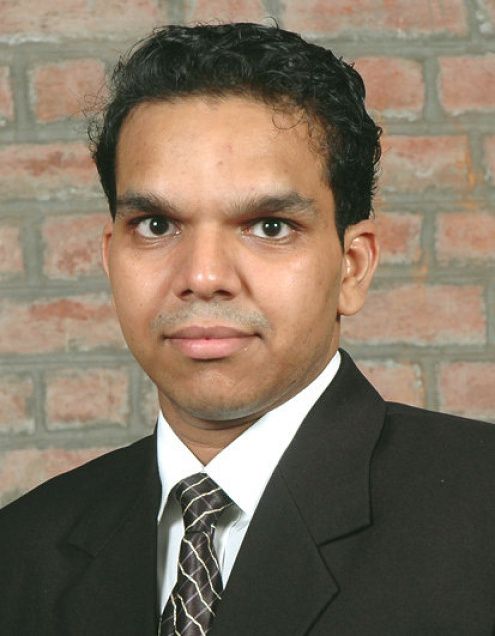
chef Izzat Hussain. | IANS
With an enviable lineage tracing back to Nawab Wajid Ali Shah, the last nawab of Oudh, Hussain is known the world over for his Awadhi cuisine.
“There is a strong need to keep the trust and taste of the people who come to savour authentic and healthy food,” he said at the Radisson Blu hotel here.
Having practised Unani, Hussain said he gives a lot of importance to the health of his patrons. “I take great pride in creating food that is easy to digest and beneficial to one’s health,” he emphasised.
Asked about the idea behind the food festival, the celebrity chef said: “The concept of good food and genuine ‘nawabi’ cuisine is changing with every passing day. With these food festivals, I intend to keep alive the originality and heritage of these delicacies and present authentic food on the platter.”
Hussain also debunked the popular belief that Mughlai food needs a lot of oil to prepare and is difficult to digest.
“People think that Mughlai food contains a lot of oil and ghee, but the fact is that these foods take much less oil to prepare compared with other dishes. In fact, it gives us an option to drain out most of the oil once the food is cooked,” Hussain said.
Hussain has a unique distinction of giving to the culinary world a loaf named after him. The flat bread or chapati – named Izzat ki Roti – is made by mixing mixed-grain flour with secret Unani herbs.
Now he plans to develop a concoction of green tea and mulethi (medicinal spice liquorice) which, he said, could be a healthy alternative to normal tea and coffee.
Talking about the food festival, he said it is “one of the best” Delhi has seen in the recent past.
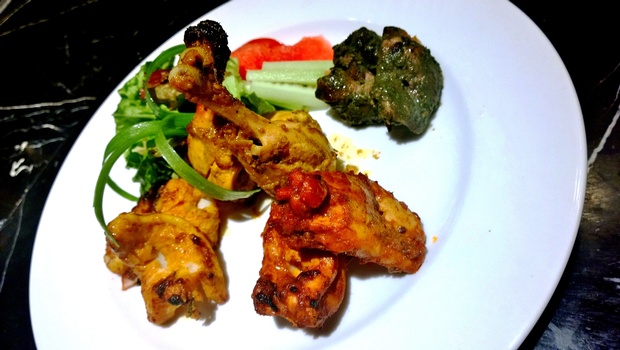
The lavish fare on offer at the festival includes mouth-watering reshmi galouti kebab, malai boti kebab, mutton nehari, murgh begum pasand, mutton dum biryani and murgh tursh pulao, among others for the non-vegetarians.
For vegetarians, paneer kebab, Izzati kebab, Shahi Korma, Chakundari Paneer, Kathal Stew, Kathal Biryani, and Kaju Biryani are on offer.
So, whether you are a vegetarian or a non-vegetarian, you can certainly dig in the platter on offer at the food festival and lick your fingers amid the lush ambience and strains of ‘qawwali’ singing in the background at the Radisson Blu hotel.
source: http://www.newindianexpress.com / The New Indian Express / Home> LifeStyle> Food / by IANS / July 29th, 2015
I write this obituary from the C-130 Air force plane with Dr. Kalam’s mortal remains a few feet behind me to be taken to Rameshwaram. He is draped in the national flag, the tricolor he served and deserves. He was the hero of my generation – I remember how I used to be glued to his Presidential address just as I was finishing school. He was an ocean of experience, ideas and motivation and to capture his personality and contributions in a few hundred words is a near impossible task. But as Dr. Kalam always said, “don’t stop trying” so here goes my attempt.
Srijan Pal Singh
“Funny guy! Are you smashing?” This is what I would hear from Dr. Kalam at every single dinner or lunch we had together. “Smashing” was the typical “Kalam call-sign” for asking whether the food was good. “Funny guy” was of course a more complicated expression, which could mean a whole variety of things. Depending on the tone in which it was said, it could mean good, not good, embarrassing or simply a casual reference. If you were working with Dr. Kalam, being able to decipher his usage of the word “funny” was almost a mandatory art to know which could be learnt only through experience. It took me a good one year to figure it out! Funny!
Dr. Kalam was a teacher, mentor, guide, co-author, friend, boss from whom I received care like a mother and concern like a father. I had the great fortune of working with him closely, travelling with him so frequently for over six years, till the point he left us all. He was infectiously optimistic, to him there was never an end. He never really watched TV, but still was a cricket fan – asking me scores on matches when we travelled between functions. His favorite cricketers were Dhoni and Sachin. I remember if I told him India was not doing well in a particular match, he would reply, “Watch! Our captain will come and do something unique.”
Uniqueness was so common to him. He had a voracious appetite for knowledge. The library and reading room occupying half of his 10 Rajaji Road House would be spilling books into bedroom and sometimes right upto the garden. He never departed on a journey without carrying a couple of books in his hand baggage. On the very last day of life, I remember lifting his hand baggage – it was heavy. I said, “Sir! Your bag is getting heavier!” He replied, “That is because I am reading more!”
To me the line which separated Dr. Kalam from the rest was not just his knowledge. It was his sensitivity and humility. He always introduced everybody as friend — whether it be his secretaries, his driver, his gardener, his cook or the people who maintained his house or even a stranger he just met. To him the world was truly flat, and there was no place for hierarchies and ranks in his life. I have had lunch and dinner with him at least 2000 times – often being the second to come to the table. Not once did he start eating on his own, not once did he miss asking whether I was liking the food.
He had the gift of empathy – and his memory of other people’s difficulties was impeccable. That was his art of winning over people. If he saw anyone with even with a small cold on a day he would offer you medicine or hot soup. The next day his first words would be – “Are you repaired?” No matter what you replied, his reaction would be, “Funny fellow you are!”
Dr. Kalam’s greatest faith was the nation and its youth. Even in the final two hours of his life, we discussed on terrorism as a threat to sustainability and the issue of Parliament becoming dysfunctional – two recent pieces of news which had pained him the most. He trusted the youth, particularly his students, to come up with a solution for these issues. He was an eternal believer in the power of the ignited mind of the youth – which he termed as most powerful, on the earth, above the earth and under the earth.
What next? We are bereft of Dr. Kalam as a physical form but we are still blessed with Dr. Kalam as an idea, a vision and a dream. His thoughts and missions about empowering rural areas, about clean energy, about value based education, about creativity, innovation and integrity are still flying high.
When I was his student in 2008 at IIMA, he told me in an after-class conversation, “If you are blessed with intelligence, and empowered with education – it is your responsibility to change the world”. That statement changed my life. He often said, “my dream is to see a billion smiles on billion faces”. Let us give our eternally optimistic, grand old friend, inspiration, mentor and beloved People’s President of the nation a reason to smile, wherever he is now. Salute you Kalam sir!
Srijan Pal Singh was an advisor to Dr. A.P.J. Abdul Kalam.
source: http://www.thehindu.com / The Hindu / Home> National / by Srijan Pal Singh / July 29th, 2015
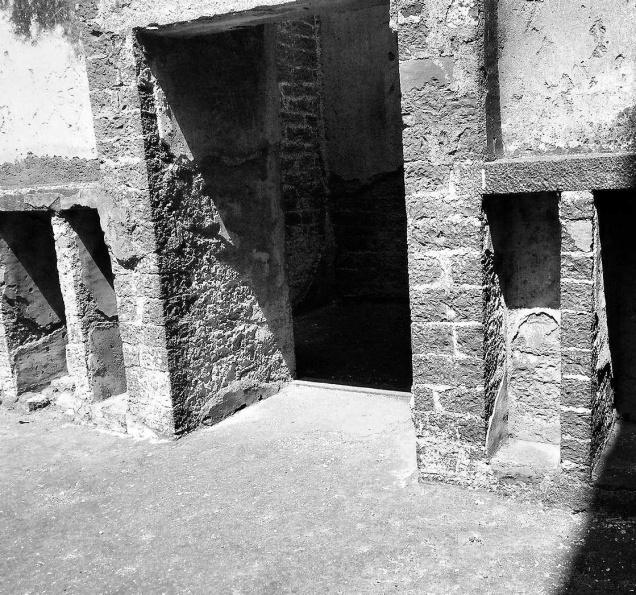
At this non-descript place hidden in the chaotic Kalasipalyam, Mysore ruler Tipu Sultan had stacked his ammunition cache. The 200-year-old armoury of Tipu Sultan behind Bangalore Medical College, which till now was treated like nobody’s baby, will soon be taken over by the Archaeological Survey of India (ASI) and declared a protected monument.
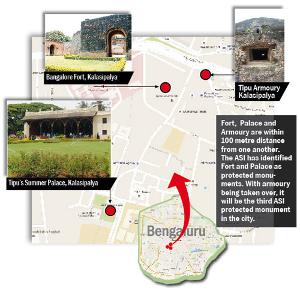
Fort, Palace and Armoury are within 100 metre distance from one another. The ASI has identified Fort and Palace as protected monuments. With armoury being taken over, it will be the third ASI protected monument in the city
It will be the third ASI-listed protected monument in the city after Tipu’s Palace and Tipu’s Fort, all situated near KR Market.
The three monuments – armoury, palace and fort – are situated within a 100 metres of each other. Commissioner, state department of archaeology, museums and heritage, C G Betsurmath wrote to ASI approving the takeover about three weeks ago.
For several years now, the armoury has been in news, albeit for wrong reasons. Lack of upkeep resulting in condition of the structure deteriorating; the unkempt place turning into a gamblers’ den; the state archaeology department and BBMP passing on the buck of responsibility to each other, and so on. Only in 2002, it was, that the 18th century armoury saw some conservation by Indian National Trust for Art and Cultural Heritage (Intach), Bangalore Chapter. The not-for-profit non-governmental organisation shifted a retaining wall and exposed the original steps leading to the monument after removing the compound wall. A toilet illegally built on the southern wall of the structure was also removed.
Of the recent development, Arun Raj T, superintending archaeologist, ASI, Bengaluru circle told Bangalore Mirror: “The state government wrote to us saying they have no objections in ASI taking over Tipu’s Armoury. It is good news and a result of continuous effort of Intach. This is the first step and we have a process to follow. We will have to write to our Delhi office and complete some formalities with the Bruhut Bengaluru Mahanagara Palike. Given the historical importance, it is necessary to protect the armoury and connect the three monuments (fort, palace and armoury) as these three are remnants in the city that date back to Tipu’s period.”
However, there is a small hitch – a school building adjacent to the armoury. ASI and BBMP will have to conduct a joint survey of the place and find a solution. “The school almost abuts the armoury and once the armoury is declared a protected area, the school will have to be vacated considering that a buffer has to be maintained around our monuments. In that case, we would need BBMP’s help in relocating the school,” added Arun Raj.
Intach, Bangalore Chapter, which has campaigned for the armoury is overjoyed. In fact, a month ago, Intach had written to BBMP suggesting that they hand over the armoury to ASI. “ Once it is declared a protected monument, there will be no threat to the armoury in terms of encroachment and will be well maintained. We have been pushing for this for a long time and finally, the move has come through,” said Meera Iyer, co-convener of Intach.
History has it that this armoury was built below the ground level to store ammunition and the structure style is so relevant that it still being followed by the army. Armoury also called magazine is always built below the ground level, has just one entrance and is not exposed to the outside world by growing grass on the exteriors.
According to historian Suresh Moona who has chronicled the city’s history, this armoury in Kalasipalyam housed missiles and ammunitions and in a nearby area, Taramandalpet, rockets were experimented. Taramandalpet is close to Jumma Masjid Road near Raja Market where Tipu’s missile manufacturing unit functioned. Every night, rockets would be fired, which looked like a cluster of stars in the sky – hence the name Taramandalpet.
Pride of the city
» Under ASI Bangalore Circle of ASI, there are 207 monuments.
» In Bengaluru, there are two ASI-listed monuments – Tipu Fort and Tipu Palace; Bengaluru district houses six monuments including the fort at Devanahalli and Hunting Lodge on Nandi Hills.
» Monuments in Hampi are the most well-known; Tipu’s properties in Srirangapatna have also become popular tourist attractions.
source: http://www.bangaloremirror.com / Bangalore Mirror / Home> Bangalore> Others / by Kushala S, Bangalore Mirror Bureau / July 30th, 2015