HIDDEN HISTORIES – House of memories

Pokku Moosa Maraykkar was a prosperous merchant of Poovar who had close links with the royals of erstwhile Travancore.

Pokku Moosa Maraykkar, a Muslim merchant who was instrumental in introducing young Kesava Pillai to Karthika Tirunal Rama Varma, is a name that is seldom remembered in popular history. Kesava Pillai began as an accountant in Pokku Moosa Maraykkar’s warehouse. Later, he became a trusted officer to the royals and rose to the position of Dewan. It is said that Raja Kesavadas, as he was later known, had a special place in his heart for his early mentor’s family.

Although Pokku Moosa Maraykkar’s name is often associated with Raja Kesavadas, it seems that Maraykkar was an important person who had sided with Marthanda Varma during one of the most turbulent phase in the history of erstwhile Travancore.

According to local lore, Pokku Moosa was a member of Valiya Kallaraikkal Veedu, a prominent family of traders who operated from Thengapattanam and Poovar. In 1918 A.D., Amshi K. Raman Pillai wrote about Raja Kesavadas and his association with Kallaraikkal Veedu.

Pillai is of the opinion that Maraykkar was the one who supplied goods to Valiya Kottaram in Thiruvananthapuram, and through this connection the merchant entered into the good books of the royals.
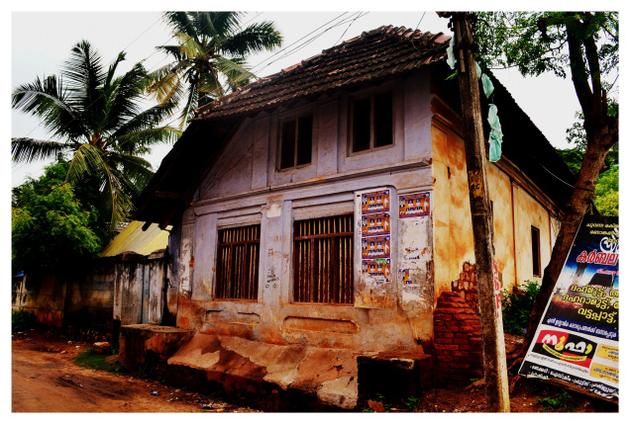
he existing wing of the old Kallaraikkal Veedu in Poovar. / Photo: Sharat Sunder Rajeev / The Hindu

Kallaraikkal Veedu, the ancient house of Pokku Moosa, was a landmark structure in Poovar. This structure has now been replaced by a concrete structure. However, local residents still associate the house with Marthanda Varma. It is said that when Marthanda Varma was hounded by the Ettuvettil Pillamar, he had once sought refuge at the Kallaraikkal Veedu in Poovar. Later, after he vanquished his enemies, Marthanda Varma bestowed the family with honours. The patriarchs of the family were granted the title of ‘Maraykkar’, and thereafter they were considered as nobles in their community.

Kallaraikkal family had a branch in Thengapattanam, where an old well, supposedly dug following the order of Raja Kesavadas, was spotted by Amshi K. Raman Pillai.

The ancient buildings associated with the family, unfortunately, fell prey to modernisation.

In Poovar, a stone’s throw away from the site of the Valiya Kallaraikkal Veedu is located a house of a family member who is struggling to keep up with the changing times.

“This house is more than 150 years old,” says Hassan Kannu who occupies the house. According to Hassan Kannu, in olden days the Kallaraikkal family owned many edifices in the locality and his house is perhaps one of the last to survive.

“This house had seen better days when my ancestors had enjoyed royal patronage,” says Hassan, “I still remember my elder brother’s nikâh, when a horse adorned with silver ornaments was sent from the royal stable to take the groom for the procession,” he adds. This tradition has been recorded by Raman Pillai in an article.
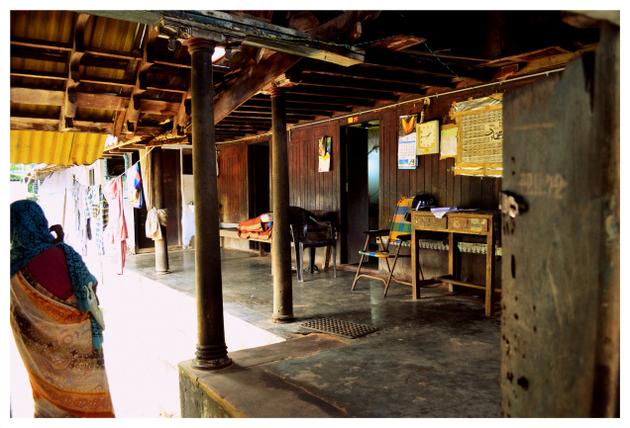
Pillared verandah opening to the inner yard of the existing wing of the old Kallaraikkal Veedu in Poovar./  Photo: Sharat Sunder Rajeev / The Hindu
Pillared verandah opening to the inner yard of the existing wing of the old Kallaraikkal Veedu in Poovar./ Photo: Sharat Sunder Rajeev / The Hindu

The old house, Hassan explains, still retains some traces of its glorious past. The main entrance, a thick wooden door, opens to a spacious yard, with wide verandahs on either side. “Only a small fraction of the house still exists, the padippura, the nalakam, the courtyard wing, and other associated structures have been demolished to make way for new constructions,” says Hassan.

“I don’t know for how long I will be able to maintain the house, but I will do my best,” he adds with a smile.

[The author is a conservation architect and history buff]

source: http://www.thehindu.com / The Hindu / Home> Features> MetroPlus> Hidden Histories / by Sharat Sunder Rajeev / Thiruvananthapuram – July 03rd, 2015

Remembering the ‘Beypore Sultan’ Vaikom Mohammed Basheer

Kozhikode:

It has been 17 years since Vaikom Muhammed Basheer left us. But that wouldn’t serve as a reason not to remember him on his 103rd birth anniversary. The ‘Beypore Sultan’ is indeed always in the minds of Malayalis. And that is precisely why literary figures and critics and even children in schools organize programmes to commemorate him every year, some even visiting his family and home at Beypore.

PhilatelyBeyporeBasheerKerala07jul2015

Basheer was born on January 21, 1908 at Thalayolaparambu in Vaikom. He studied initially in a Malayalam medium school and then went to an English medium school in Vaikom. Attracted to the teachings of Mahatma Gandhi and the Swadesi movement, he left school and joined the freedom struggle when in fifth form. As the princely states of Kochi and Travancore were not much in the freedom movement, Basheer went northwards to Malabar.

In 1930 he went to Kozhikode to take part in the Salt Satyagraha and got arrested along with several others. Basheer was sentenced to three months’ imprisonment at the Kannur jail. He, along with hundreds of other political prisoners, was later released as per the Gandhi-Irwin Pact in 1931.

Soon after his release Basheer again got involved in anti-British struggles and edited a revolutionary journal named ‘Ujjivanam’ (meaning Uprising) for which he was issued an arrest warrant. He soon left Kerala and began his long journey of seven years across the country and abroad.

Basheer wandered doing all sorts of works that helped him keep away from starvation. He worked as a cook, newspaper seller, fruit seller, watchman etc. He even spent a few years at the Himalayas and the Ganges basin with Hindu saints and Sufi mystics.

When he came back to Kerala, he again got involved in political works and got arrested. He was jailed in different places and the stories he heard from the police and fellow prisoners there later appeared in his novels and short stories.

He wrote ‘Premalekhanam’ (Love Letter) from jail in 1943 and published it on release. He wrote ‘Baalyakaalasakhi’ (Childhood Friend) also from jail, but published it only in 1944 after making revisions after his release. The novel is said to be ‘a piece torn from his life’. ‘Mathilukal’ (meaning Walls) is a famous work which tells the story of the love of a male prisoner and a female prisoner who never saw each other as they were on either sides of a wall.

Basheer left active politics after India won freedom. He married Fabi who was much younger to him in his forties. Afterwards, he settled down for a quiet life with his wife and two children Anees and Shahina at Beypore in Kozhikode, though continuing his writings. And the man, born and educated in Vaikom and settled in Beypore, became the ‘Beypore Sultan’. As common with great writers, Basheer too suffered from mental illness and had to undergo treatment in mental hospital twice. He died in Beypore on July 5, 1994.

The writer in Basheer was a strong critic of social customs and practices, as well as superstitions especially in the Muslim community of the time. And he said it all in the down-to-earth style unique to him only, which attracted him to the literary critics as well as the common people alike. Basheer wrote about the social conditions and situations in his own thought-provoking yet humorous style. Highly appreciated is his novel ‘Ntuppooppakkoranaendaarnnu’ (1951) which RE Asher (who translated most of Basheer’s work into English) translated with the title ‘Me Grandad ‘ad an Elephant!’. It deals with the mid 20th century Muslim community in Kerala, such as boasting about the past glory without doing much in the present, through the story of uneducated Kunjippaathumma and poet Nisaar Ahmed. Other notable works are Shabdangal (Voices), Paaththummaayude Aadu (Paathumma’s Goat), Bhaargavi Nilayam, Sthalathe Pradhaana Divyan, Muchcheettukalikkaarante Makal, Aanavaariyum Ponkurishum, Ettukaali Mammoonju etc.

Basheer never differentiated between the written language and the spoken one. He wrote in the language of his characters, who were mostly traditional rural Muslims, and a majority of them were uneducated. Their local dialects and natural style of talking were brought as such into his writings. Basheer gave importance to emotions and telling the story, without considering the grammar and structure of sentence.

Basheer was awarded the Padma Sri in 1982. He got the Kendra Sahitya Academy Fellowship and the Kerala Sahitya Academy Fellowship, besides the Vallathol Award and the Muttathu Varkki Award in 1993, and the Lalithambika Antharjanam Award in 1992.

source: http://www.twocircles.net / TwoCircles.net / Home / by  Najiya O, TwoCircles.net / January 21st, 2011

Young Advocates should strive for a corruption-free India : State Bar Council Chairman

103 JSS Law graduates receive degree certificates

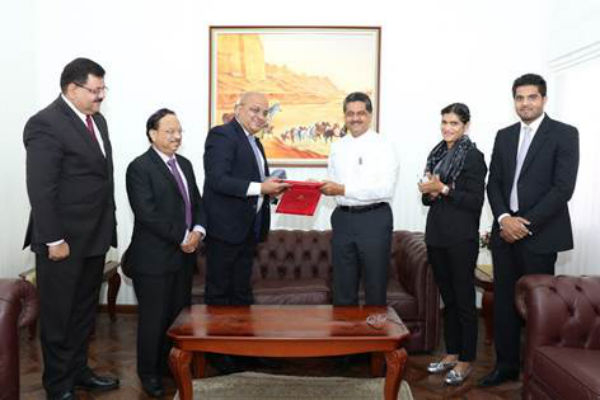
JSS Law College toppers are seen with (from left) Principal Prof. K.S. Suresh, KAT Registrar M. Mahadevaiah, Karnataka State Bar Council Chairman P.P. Hegde, Suttur Seer Sri Shivarathri Deshikendra Swamiji, JSS Mahavidyapeetha Executive Secretary B.N. Betkerur, Chairperson of Karnataka State Women's Commission Manjula Manasa and Vice-Principal Shivananda Bharathi.
JSS Law College toppers are seen with (from left) Principal Prof. K.S. Suresh, KAT Registrar M. Mahadevaiah, Karnataka State Bar Council Chairman P.P. Hegde, Suttur Seer Sri Shivarathri Deshikendra Swamiji, JSS Mahavidyapeetha Executive Secretary B.N. Betkerur, Chairperson of Karnataka State Women’s Commission Manjula Manasa and Vice-Principal Shivananda Bharathi.

 Mysuru :

Karnataka State Bar Council Chairman P.P. Hegde called upon young advocates to strive their best for a corruption-free India.

He was delivering the eighth Graduation Day address of JSS Law College at the College premises on New Kantharaj Urs Road, Kuvempunagar, here yesterday.

Noting that our country has a glorious legacy of heritage and culture, Hegde said that the country is making big leaps in almost all fields and it would be no surprise if the country becomes a super-power shortly.

Pointing out that learning is a continuous process, he advised the graduating lawyers to always look at opportunities for enhancement of knowledge while reiterating his call for the young advocates to root out corruption and other social evils that have been haunting the country.

Suttur Mutt Seer Shivarathri Deshikendra Swamiji graced the occasion. B.N. Betkerur, Executive Secretary, JSS Mahavidyapeetha, presided.

Chairperson of Karnataka State Women’s Commission Manjula Manasa and KAT (Karnataka Administrative Tribunal) Registrar M. Mahadevaiah were the guests of honour. College Principal Prof. K.S. Suresh, Vice-Principal Shivananda Bharathi and others were present.

A total of 103 students from three under-graduate (BBA LLB; BA LLB and LLB) and one post graduate (LLM) programmes were awarded degree certificates.

The toppers in BBA LLB are:  Preethi L. Malavalli,  Keerthana Gopal,  Swathi Sharma, Anjana Hariprasad and  Apoorva Tripathi.

BA LLB:  Albert Meena,  S.S. Sirichandra and  A. Abhishek.

LLB: S. Razia Sultana,  B.B. Chinnu Theresa and  A. Stephen Okai.

LLM:  B.S. Pratibha and Premalatha.

source: http://www.starofmysore.com / Star of Mysore / Home> General News  / Wednesday – July 01st, 2015

Filling Gaps in History

Hyderabad  :

“Konjem konjem Telugu vastundi and thoda bahut Hindi bol leta hun,” says Benjamin E Cohen with a boyish grin. An associate professor in history at the University of Utah, Benjamin was on one of his yearly visits to the city. Also a research scholar, he was here to launch his second book, ‘In the Club’.

PIC: A RAdhakrishna
PIC: A RAdhakrishna

“People at the book launch said that my books and writings are ‘history, with a twist’. I like that. That is how my work is,” he says, with a wink.

Though it may seem quite natural for a history scholar to explore the history of clubs in a diverse country like India, the idea of dedicating a book that helps understand club culture is unconventional.

Benjamin explains, “I knew there were many old clubs across India and South Asia. I investigated whether or not any scholar had taken up their history – their whole history and not just one individual club. It turns out that there was a gap. I was interested in filling that gap.” He also shares his experience, “when you ask people if they know about the Secunderabad Club, they say yes. But if you ask them to elaborate, nobody will.”

The book takes a look at clubs in India, their role in building an associational life and a civil society in colonial India.

“It also talks about their role when India was transitioning from colonial rule to independence,” he elaborates.

His first book, ‘Kingship and Colonialism in India’s Deccan: 1850-1948’ was a fresh perspective on the relationship between the rulers and the ruled. Using archival material and not hearsay and rumour, Benjamin reconstructed the societal equations without any blinkers.

Benjamin is grateful to his friends and colleagues especially here in the city who have helped him draft the book. His biggest strength is his fluency to read, write and converse in Telugu, Hindi and Urdu. “I studied my languages first as a graduate student at the University of Wisconsin in Madison. Then I had the opportunity to live and work in Hyderabad during my graduation. I took private lessons with both Telugu and Urdu teachers. I tried to keep up with the languages back in the states,” he shares and adds that his interest in the area began when he was a child. As the son of a political scientist who also specialised in South Asian studies, he first came to India in 1977.

“I lived in Vizag, Delhi and Mussourie. We spent a year in Hyderabad. My whole life, I have either come to India or grew up in a home that was steeped in either Indian or South Asian culture,” he recalls. He worked in Chicago for three years after that.

“I was tired of that life,” he admits, “What I really wanted to do was find out more about India and South Asia,” he shares. Ask him what he likes about India and he counter questions, “How can I begin to answer that question?” and adds, “India is both a very old civilisation also a very young democracy. I find that combination fascinating. India has more excitement in one block than America has in 10.”

That is why he enjoys coming to India and is glad to contribute to its rich and diverse history. He also has two interesting projects lined up.

“I am finishing a book on Nawab Mehdi Hasan Fateh Nawaz Jung who was a minister  in Hyderabad from 1883 to 93. He came here from Lucknow to work in the Nizam’s government. He had a British wife and they ran into some trouble. It was a scandal and was on the front pages of all the newspapers,” he tells us.

Another is a long history of water in Telangana from the Kakatiya rule. “I am very excited about these projects,” he exclaims.

source: http://www.newindianexpress.com / The New Indian Express / Home> Cities> Hyderabad / by Rajitha S / June 19th, 2015

The Beypore Sultan

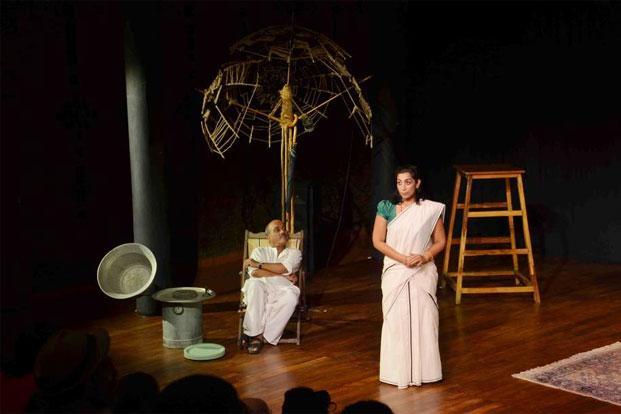
Perch Collective’s ‘Under The Mangosteen Tree’ will now play Vaikom Muhammad Basheer’s favourite music.

An earlier staging of the play, ‘Under The Mangosteen Tree’

 Malayalam writer Vaikom Muhammad Basheer was known to be an incredible storyteller. When he settled down to a quiet life at Beypore in Kozhikode, visitors would call on him every day. No one was turned away. They would just move to his favourite spot—the author in his easy chair, under the mangosteen tree in his house, and the expectant audience seated around him, waiting to hear his next story.

This is the 10th year of Chennai-based theatre group Perch Collective’s journey with the late Basheer. They opened with a play in 2004, Moonshine And Skytoffee, which was based on two of Basheer’s love stories. Perch’s play Under The Mangosteen Tree (UTMT), a tribute to the iconic writer, opened in 2008, Basheer’s birth centenary year. It weaves together six of Basheer’s short stories, and includes the character of Basheer as narrator, participant and witness.

Perch’s revised UTMT, which will be staged this weekend, has two-three changes. When it premiered, it had a cast of 11; there are seven now. Plus, the play will feature some of Basheer’s favourite musical compositions in the background—Basheer loved his records, stacked in multicoloured buckets in his house; his gramophone; and his easy chair.

“He created a new idiom in Malayalam writing by breaking away from the Sanskritized version of the language and coming up with a vocabulary that was colloquial and accessible. He invented words like badukoos which could mean anything—an idiot, a fool, or anything that you wish to make of it,” says Rajiv Krishnan, the director of the play.

While most of the play is in English, it contains a smattering of Malayalam to keep the flavour of Basheer’s language. The play, which touches upon different aspects of Basheer’s writing, is largely humorous in tone, tinged with sadness and satire.

Poovan Banana, one of the six stories, tells the story of a man who fancies himself as the local gangster but becomes a pawn in the hands of his wife after marriage. He tries to reassert his independence, in the process creating room for a considerable amount of repartee. Voices, the story of a soldier back from war, launches a philosophical enquiry into how human beings can be capable of such brutality. The World Renowned Nose is a rather contemporary story of the media and political attention showered on a man whose nose starts growing, drooping to his navel. Walls, which was made into a film by Adoor Gopalakrishnan, is said to be based on Basheer’s imprisonment by the British for seditious writing. In the story, the character of Basheer hears the voice of a woman named Narayani across the wall of his prison cell, and builds a relationship with her.

“We did a lot of research when we conducted a festival in Chennai to celebrate Basheer’s centenary in 2008. We spoke to several members of his family and friends. One of them told us that Basheer actually looked for Narayani after he was released but he couldn’t find her. Of course, that could be part myth,” says Krishnan.

Under The Mangosteen Tree will be staged on 25-26 April, 3.30pm and 7.30pm, at Edouard Michelin Auditorium, Alliance Française of Madras, 24, College Road, Nungambakkam. Tickets, Rs.200, available onin.bookmyshow.com and www.eventjini.com. For details, call 9445961425.

source: http://www.livemint.com / LiveMint> Hindustan Times / Home> Leisure / by Karthika Gopalakrishnan / Thursday – April 23rd, 2015

The making of a civil servant, with zakat funds

Of 37 Muslims who cleared UPSC, 15 were sponsored by Zakat Foundation of India

Zainab Saeed of West Benga ranked 107 and Afaq Ahmed Giri of Jammu and Kashmir who ranked 457 in UPSC were students of Zakat Foundation

Zainab Saeed of West Bengal has qualified for UPSC on her third attempt, having opted for low-key coaching in the first two years. Those prepared her only for the prelims and the mains, not the crucial interviews. “It was too costly in prominent coaching institutes,” said Zainab, who has cleared the interviews now with a rank of 107 in the final list.

She eventually trained for the interviews free, with the mock interviews sponsored by Zakat Foundation of India. “The facilities of ZFI are a boon for the minority community,” said Zainab, daughter of a businessman. “They have a diverse panel for interviews. It helped me a lot.”

The UPSC results traditionally show a low representation of Muslims, with 37 out of 1,200-odd in this year’s selection list, but among those 37 is a high representation of aspirants sponsored by ZFI. Using zakat, the compulsory alms given by Muslims every year, ZFI has been funding and providing coaching for needy Muslim candidates for eight years. Of the 40-odd it sponsored this year, 26 cleared the UPSC prelims and 15 of them eventually made it to the selection list.

“We always talk about poor representation of the community in the civil services, but hardly 2,000 Muslims appeared in the exam among 11 lakh. When you don’t appear, how will you succeed?” Zafar Mahmood, who founded ZFI in 1997, told The Indian Express. “We talk of poor representation but one needs to prepare students who can crack the examination. It is the toughest examination in the country.”

Mahmood is a former civil servant. He had worked with the Sachar Committee and retired as chief commissioner, income tax, in New Delhi in 2009.

ZFI initially engaged in activities such as running an orphanage and helping the destitute. The coaching programme began in 2007. In eight years, 63 of its students have cleared UPSC including the 15 in the current year. The 63 include seven Christians.

The model ZFI follows is unlike that of organisations that hire teachers for coaching. ZFI allows each student to choose what they feel is the best coaching institute in Delhi. “Most students prefer civil services coaching in Mukherjee Nagar locality. We arrange for hostel accommodation in the same locality and pay the fees. For each student the expenses come to around Rs 1.75 lakh.”

The number of students depends on the zakat received from Muslims. It ranges between around 30 and 55 students and ZFI has to select them through a test for a bunch of applicants. This year 1,150 students took the test before 40-odd were selected. “We are soft towards girls and encourage them,” Mahmood conceded. “However, no seats are reserved for them.”

Afaq Ahmed Giri of Jammu and Kashmir is among those who availed the ZFI facilities. “I had my own arrangements for staying in Delhi and did not take the hostel offered by the organisation. But I took part in a mock interview session and that helped me,” Afaq told The Indian Express.

He had qualified for IRTS last year and was working. That would mean he was not “needy” in the sense of zakat, but the interview sessions were free for him too. This year, he ranked 457 in UPSC.

source: http://www.indianexpress.com / The Indian Express / Home> India> India-Others /by Mohd. Faisal Fareed, Lucknow / July 07th, 2015

Engineer Feroze: Accomplished Urdu writer

FerozeMuzaffarMPOS07jul2015

Feroze Muzaffar is an engineer by profession and works with a government department in Delhi.

When he is free he dabbles into Urdu writing also. Over the years, he is known in the literary circle as an accomplished writer.

Recently, Delhi government minister Azeem Ahmad Khan released a book Shad Arfi Hayat-o-Jihat penned by Er Feroze Muzaffar at his residence.

Muzaffar, a resident of Batla House and an alumnus of Jamia Millia Islamia, shared the photo with the OKHLATIMES. 

source: http://www.okhlatimes.com / Okhla Times / Home> Local / Okhla Times Reporter – Batla House / OT – July 07th, 2015

Revisiting the Life and Works of the ‘Beypore Sultan’

Poet-activist Sugatha Kumari planting a sapling during the release of book ‘Basheer Enna Anugraham’ written by K A Beena in Thiruvananthapuram on Sunday | Mithun Vinod

Thiruvananthapuram :

The air of an informal get-together marked the meeting held at Manaveeyam Veedhi on Sunday to commemorate the 21st death anniversary of Vaikkom Muhammaded Basheer. A cloth-bound easy chair and an earthen water jug took centre stage while a ripe bunch of ‘poovanpazham’ and a goat perked up the backdrop. The setting was simple and yet richly evocative of the Basheerian cosmos. Poet Sugatha Kumari summed up the spirit of the event saying that the sapling of Mangosteen planted on the wayside was the most befitting tribute to the author who celebrated the equality of all beings in nature.

The meeting was organised by Thiruvananthapuram Women Writers’ Forum. Sugatha Kumari released the second edition of ‘Basheer Enna Anugraham’, a memoir penned by K A Beena, by handing over a copy to author Susmesh Chandroth. The book describes the author’s association with the iconic literary figure during her student days.

The simple nature of the event was thoughtfully orchestrated as it was in accordance with Basheer’s philosophy, said Geetha Nazeer, convener of the Writers’ Forum. Sugatha Kumari remembered that when she sent out letters to writers in the State asking for their support against the Silent Valley Project in the late 1970s, Basheer was the first to reply. “I had written to every writer in Malayalam asking for them to join in this battle to be lost. Basheer wrote back, saying – ‘I enlist my support for this battle to be lost’. He also pinned a 100 rupee note to the letter which had the value of some thousands back then,” she said.

She referred to the recent exhortation of Pope Francis to ‘feed the hungry’ and said that Basheer’s writings echo the same sentiments. “His heart went out to the hungry and the homeless. Nature was God to him. His boundless optimism and humour derived from the superior awareness of a mystic,” she said.

Susmesh Chandroth, who has coveted attention as an emerging voice among the younger generation of authors, spoke about the influence of Basheer on Malayalam literature. “Basheer’s novel ‘Shabdangal’ is a case study in technique and style. I would prescribe it as a must-do text for every student of literature and aspiring writer,” he said. He added that Basheer is a timeless author and is in the same league as the finest writers in world literature. “Whatever age you are, you will find a Basheer story that you will enjoy. Basheerian texts compliment the insights gained at every stage of life,” he said.

B Lakshmi, daughter of Guptan Nair, shared her thoughts about the book authored by K A Beena. In her valedictory speech, Beena recounted her prolonged correspondence with Basheer and the freedom she enjoyed in his home as a young girl. Shailaja P Ambu presented an impressive stage adaptation of Basheer’s famed short story, ‘Ente uppupak oru ana undarnnu’ under the direction of Sam  George.

source: http://www.newindianexpress.com / The New Indian Express / Home> States> Kerala / by Express News Service / July 06th, 2015

Oncologist bags Basheer award

Noted oncologist V.P. Gangadharan has been selected for the 21st Basheer award instituted by the Doha-based Pravasi Trust in memory of litterateur Vaikom Muhammed Basheer.

The award carries a cash prize of Rs.50,000, a sculpture by artist Namboothiri and a citation.

The M.N. Vijayan memorial endowment for students, of Rs.10,000, will be presented to a student for his study on the native place of the Basheer award winner.

The award will be presented at a function to be held in Kochi in September.

The winner was selected by a jury comprising writer M.T.Vasudevan Nair, also a patron of the Trust, Babu Mather and M.A. Rahman.

The award committee from Doha consists of  C.V. Rappayi,  K.K. Sudhakaran and Shamsudheen.

source: http://www.thehindu.com / The Hindu / Home> News> Cities> Kozhikode / by Staff Reporter / Kozhikode – July 06th, 2015

Dubai: Thumbay Group, SNTTA sign MoU to boost medical tourism

Dubai :

“Dubai has a well-deserved reputation for excellence and professional practice and we want to contribute our mite to the vision, mission and goals of the UAE health authorities,” says Akbar Moideen Thumbay, director healthcare and retail, Thumbay group UAE.

ThumbayCT06jul2015

“There are so many issues relating to medical tourism and because the area is developing so quickly it’s becoming essential that hospitals, insurers and policy makers, to name a few work together closely to streamline processes to cater to this market. UAE has tremendous potential to come up as the most important medical-tourism destination for the people of this region,” he added.

Founder president of Thumbay Group UAE, Thumbay Moideen and T L S Iyer, general manager of SNTTA signed a memorandum of understanding to offer advanced services for medical and health tourists. Akbar Moideen Thumbay, director healthcare and retail, Thumbay Group UAE, Dr Benazir Ameer Ali, director Thumbay International Medical and Health Tourism Department, Valsala Kumar, group general manager (finance and administration) and Vishal Sood, general manager SNTTA were present on the occasion.

Thumbay Hospitals and SNTTA have strategically partnered to assist and offer world-class services at affordable prices to international patients and guests and to look after all their needs whilst in the UAE. We understand the changing dynamics medical tourism and we are learning to adapt, says Dr Benazir Ameer Ali, director Thumbay medical and health tourism department.

The partnership will help Thumbay Hospital to extend its reach and market worldwide to prospective patients. This partnership will leave Thumbay Hospital to concentrate on its commitment of providing world class healthcare at affordable prices. SNTTA will look after the travel, accommodation and other logistics for Thumbay Hospital’s international patients and increase their client base which is a win-win situation for both and create an all-inclusive package for international patients including air flights, hotel accommodation, visa and excursion facilities.

SNTTA will be venturing in medical tourism for the first time and will be able to offer healthcare services to its ever growing number of tourists said T L S Iyer, general manager of SNTTA. SNTTA tourists will now have a preferred healthcare provider in Thumbay Hospitals to take care of their tourists 24X7 in the UAE.

“As part of the strategic plans, Thumbay Group is planning to open representative offices in 20 countries to educate people about medical facilities and services at all Thumbay Hospitals in UAE. We expect to have about 1000 patients as medical tourists per day in the next 5 – 6 years. It is ambitious but achievable,” says an optimistic Akbar Moideen Thumbay.

Medical tourism is now perceived as one of the fastest growing segments in healthcare. The recent trend is for patients to travel from developed countries to third world countries for medical treatment because of cost consideration, waiting time, privacy, and confidentiality, though the traditional pattern still continues. Technology will lead the way in future medical tourism. Along with that we can expect extremely personalized services, niche specialist centers, wider network of partnerships, increased number of accreditation, certifications and industry specific associations said Dr Benazir. To offer our personalized services, we are the first medical tourism provider to have opened a counter in Sharjah International Airport and we are planning to open one in Dubai International Airport soon, she added.

“Thumbay Hospitals have been at the forefront of developing the necessary infrastructure to attract medical tourists. We have a department here establishing this,” Akbar Moideen said. The international medical tourism department of Thumbay Hospitals aims to cater to an extensive number of patients and be known as the preferred hospital for medical tourism in UAE. Currently, Thumbay Hospitals receive inquiries from a wide range of clientele including hospitals, medical practitioners, partnered agents, and various inquiry forwarding websites from across the globe.

Thumbay Hospitals is aligning itself with Dubai’s Vision 2020 for medical tourism. Along with Dubai, the other Emirates of UAE are gearing up to attract more medical tourists in the near future. This would mean increasing patient requirements, higher demand for facilities and larger calls for personalization.

Looking at the current and future trends in medical tourism, Thumbay Hospital has developed enhanced facilities, maintaining highest standards of quality and offering packages with a wide range of personalization options. The medical tourism industry is going through an exciting phase where international and intra-regional activities are taking place within this sector of the health market.

source: http://www.daijiworld.com / DaijiWorld / Home> Gulf / Media Release / Dubai – July 06th, 2015