Girl group on mission to revive forgotten art forms

Lucknow :

When engineer Ashrya Srivastava sat talking art with her childhood friend Meenakshi Srivastava, an MA student at Lucknow University’s Arts College, both the 23-year-olds were shocked to find that 63 Indian art forms were on the verge of death. Determined to revive and propagate them, the two roped in friends from different fields. Dr Anitya Srivastava (24), who had just finished her MBBS and commerce graduate Naghma Parveen (21), joined the cause.

The four young girls have now formed a group called ‘San Rachna’ and are organising an Indus Valley inspired ‘galiyara’ (art aisle) on July 8, at Dr Ram Manohar Lohia Park to bring art forms other than just the popular Madhubani to the city’s notice.

“Starting with awareness, we will move on to conservation and lastly the revival of these indigenous art forms, since there are only a handful of people practicing them,” shares Anitya.

“Art forms like Kohvar and Sohrai were practiced by tribes from Chhattisgarh and focused on women issues. They are now almost defunct, since the tribe itself is slipping into extinction. The Basholi and Guler paintings, primarily from the mountains with a hint of Mughal and Rajasthani influence, are also dying. There are scores of such arts that will fade into oblivion, if people are not made aware of their existence and urged to follow them,” she says.

Ashrya recalls, “Two years ago, I was pursuing engineering in Allahabad when a foreigner at the Kumbh Mela asked me where ‘my’ indigenous Indian art form was amid all the western abstract art that had taken centre stage at the mela. He had a point, we had lost track of our cultural heritage.”

The girls have been managing all the funds themselves for the upcoming live demonstration of art and culture under ‘Ek Shaam’.

“We have done it all on our own, from designing the logo to preparing everything. We have put in all our internship stipends for this traditional galiyara setup, which will have painting, pottery, music and dance, all orchestrated by students. It has all been possible under the guidance of senior artist Asha Srivastava,” said Ashrya.

After three months of six hours of intense research daily on the history of art, the girls are now all set to revive indigenous art forms of India.

“As we sat studying our cultural heritage, we came to know why particular colours are used, what season and area they depict, and the various arts forms practiced and styles used, both in art and dress codes. It was all new and interesting information and we wish to bring out from within the yellowing pages of old books,” say the two girls.

source: http://www.timesofindia.indiatimes.com / The Times of India /Home> City> Lucknow / by Yusra Husain, TNN / July 07th, 2015
Encouraging women to become entrepreneurs

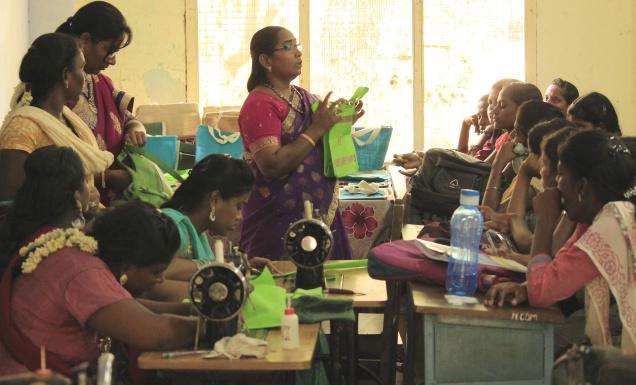
Jute making workshop at Queens Mary's College in the city. Photo: Paul Joshua
Jute making workshop at Queens Mary’s College in the city. Photo: Paul Joshua

Dhanalaxmi teaches jute-bag making and helps student start their own businesses

Over 100 students of Queen Mary’s College learnt the nuances of jute bag-making from Dhanalaxmi, who has been encouraging woman to become entrepreneurs. The owner of IVERS Bags, Dhanalaxmi has been in this business for the past 11years. Five years ago, she started helping others start their own businesses. She has been training self-help groups and NGOs in making and marketing jute bags and jewellery.

“A few years ago, when the IT scene was bad, one couple from the IT industry approached me, asking me to train them in the art. Today, they run a successful jute business,” she said.

In the session conducted at the college, students from corporate secretaryship, sociology, zoology and B.Com departments walked away with certificates presented by Akathar Begum, principal, on successful completion of the workshop.

“These are the bags we have made. Dhanalaxmi ma’am also gave us a kit box with materials to try more designs at home,” said a student showing off a table full of sling bags, pencil pouches and tambulam bags made by her.

Dhanalaxmi is ready to conduct training for groups and individuals . “This is an eco-friendly product and helps reduce the use of plastic. People should make a switch to jute product.”

Dhanalaxmi can be contacted at 92831 35238/98405 33611.

source: http://www.thehindu.com / The Hindu / Home> Features> Downtown / by Flavia Plaidus / Chennai – July 04th, 2015

1st woman to undergo bypass in India enters 40th yr after surgery

Chennai :

On April 23, 1976, when Daisy D’Costa was wheeled into the operation theatre she didn’t know she would be the first woman in the country to undergo a bypass surgery. “No one told me. I just vaguely recall someone in surgical scrubs telling my husband, ‘She will live’,” said the octogenarian, 39 years later.

While Daisy was being prepared for the surgery, the mood in the operation theatre was equally tense as the team was about to wield the scalpel for a procedure they had done just once before. “The facilities back then were nothing like what we have now. We had no cath lab (examination room with diagnostic imaging equipment), no cardiologist or cardio-anesthetist. No one in the team had done a bypass surgery before,” said Dr K M Cherian, the doctor in the surgical scrubs who assured Daisy’s husband.

Daisy had been brought to the Railway Hospital in Perambur the previous evening with total blockage in an artery. “I had skipped going to the cinema with my husband as I was really tired. All of a sudden, I couldn’t breathe normally and I felt a tightness in my chest. My son, who was at home, rushed me to the nearest hospital,” recalled Daisy. “The doctors managed to resuscitate me. In my haze, I heard someone say, ‘We need to cut her open’, and I blacked out again.”

Daisy needed a coronary artery bypass surgery. The procedure entailed restoring the blood flow to the heart muscle by diverting the blood around the blocked section by using a harvested vein from the leg. Although the first such surgery was performed in the US in the 60′s, the concept was new in India. In June 1975, Kajah Mohideen, a 42-year-old engineer from Integral Coach Factory, became the first in the country to undergo the surgery.

“The procedure on Daisy was no different from Kajah’s, but Daisy’s veins in her legs were thinner and harder to reach because of the fat. Besides that, we followed the same process. I still remember every conversation and the mood in the theatre,” says Dr Cherian, who had also operated on Kajah. “We didn’t even have a process of magnifying the blood vessels, which is mandatory now. I used my eyes to find the vessels that are 1.5 to 2mm. I was young back then,” said Dr Cherian, chuckling. The procedure took a little more than three hours.

Daisy woke up to find shutterbugs queuing to interview her. “That’s when I realised I was the first woman,” she said, smiling and showing a sepia-tinted newspaper showing a younger version of her. Although through the years she has had minor chest problems, she didn’t have to go under the scalpel again.

source: http://www.timesofindia.indiatimes.com / The Times of India / Home> City> Chennai / by Ekatha Ann John, TNN / July 09th, 2015

Living memories and a father’s voice

MUSIC – Payel Sengupta

Pride, aristocracy and tradition: these components of Indian classical music are synonymous with a gharana known as the Agra Gharana. This gharana reached its zenith during the reign, as it were, of the illustrious maestro, Ustad Faiyaz Khan. He had an unparalleled, unique style of singing. The flow of the Agra Gharana had developed a new stream with the blending of another prestigious gharana, Atrauli (especially a gharana of Jaipur).

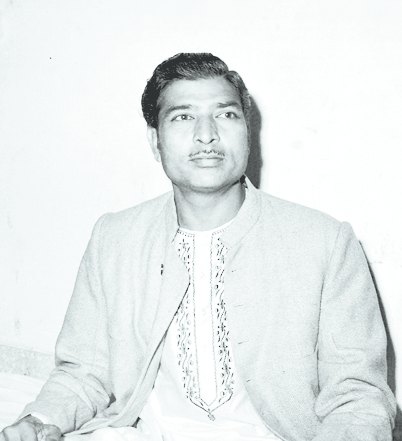
Sharafat Hussain Khan

Ustad Sharafat Hussain Khan, a practitioner of the Atrauli Gharana, was adopted by Ustad Faiyaz Khan at the tender age of eight, and was introduced to the Agra Gharana. The young Sharafat surprised the musical doyen with his voice. But he was only twenty when his mentor died. In the meantime, Sharafat started gaining a reputation as the promising vocalist. After the death of his beloved mentor, Sharafat took his training from Ustad Ata Hussain Khan of the Atrauli Gharan and Vilayat Hussain Khan of the Agra lineage.

That was the post-Independence era of Indian classical music; the arena of classical music was being dominated by names like Bade Ghulam Ali Khan, Roshan Ara Begum, Ustad Nissar Hussain Khan, Ghulam Mustafa Khan and D.V. Paluskar. But Sharafat became the busiest artist at that time for his distinctive potential. The priceless compositions ( bandishes) of the Agra Gharana found a new life in the voice of Sharafat Hussain Khan. His sudden demise was undoubtedly a blow to the glory of the Agra and the Atrauli gharanas. Probably to revive these incomplete, lost memories of Sharafat’s singing, his disciple, Vidushi Purnima Sen, organized a programme in commemoration of her guru’s death anniversary, where the principal attraction was the vocal recital by Sharafat’s son, Shaukat Hussain Khan. But before Shaukat’s performance, the programme commenced with a sitar recital by Agnibha Banerjee. He enchanted the listeners with his simple and sweet alaap, jor and jhala in Poorvi and gats in Shyam Kalyan.

Shaukat commenced his performance with the Raga Shudhha Kalyan. The Agra Gharana has a distinguished feature in which the alaap is sung in an elaborate, vast manner, with the variation of vistaars like Dhrupad and Dhamar. Maintaining this tradition, the artist presented a long alaap and overwhelmed the audience. His touches on a specific note from one octave to another without interruption were especially attractive. His smooth, generous rendition completed a circle of varied moods. The drut kheyal also became interesting for the ornamented taans and vistaars in the antara.

Shaukat Hussain Khan

Shaukat’s next presentation was the Raga Yogkaus. Like the previous performance, the artist again presented an elongatedalaap which brought out the soul and beauty of this particular raga. He made an exceptional utilization of pancham which increased the charm. Shaukat is blessed with a wonderful, generous voice, and has an expert dominance over every octave, which is a very special attribute of his gharana. The munificent gift of his voice brought his ancestor’s memory alive. The kheyals on Yogkaus were a typical, attractive presentation of the Agra Gharana.

Suhaag Sugrai is a very special raga of the Agra Gharana. Shaukat performed this raga with the greatest supremacy. The most enjoyable part was the briefkheyal which was embellished with small vistaars and smart, forceful taans. After a beautiful aochaar, he sang a famous bandish of his gharana, “Gha Gha Ghana Ghana” in the Raga Surmalhaar, which reminded the audience of his father. He made a proper tuning to this composition, which was followed by the Raga Megh. Shaukat’s mighty voice helped in the full bloom of the raga, and the compositions like ” Garaje Ghata Ghana Ghor” and especially the drut bandish, ” Dhume Dhame Aawe“, were able to create an atmosphere of thunderstorms on that sultry summer evening. A robust masculinity is a hidden beauty of the gayaki of the Agra Gharana, and Shaukat Hussain Khan perfectly fits this category. He skilfully shifted to a soulful ambience from the storm and started singing a prominent tappa, “Miyan Bejanewale” based on the Raga Kafi, which portrayed not only the musical prowess of the artist, but also drew up the light of nostalgia. He sang a brief kafi tarana in a cheerful manner. Shaukat concluded with a popular dadra of his ‘Ghar’, ” Banao Batiyan“, which reflected an essence of the golden period of Indian classical music. He touched every note carefully with a mellifluous style. Shaukat was perfectly accompanied by Sujit Saha on the tabla.

Shaukat shared some personal feelings with the audience which included some memories of his father. According to him, Sharafat Hussain Khan used to practise only Bhairav and Yaman, but always sang the tough and rare ragas like Patmanjari, Jhinjhoti and Dhaneshree while performing on stage. He never refused the requests of his listeners. It seemed that his son probably got the same training in the ragas, because he seemed to fulfil the wish lists of his listeners. Perhaps there could have been no better way to commemorate his father’s death anniversary.

source: http://www.telegraphindia.com / The Telegraph, Calcutta, India / Front Page> Opinion> Story / by Payel Sengupta / Saturday – May 23rd, 2015

145 yrs of Hazrat Ali taboot in Lucknow

Lucknow :

Considered the seat of azadari (practices related to mourning the death of Imam Hussain and his family), Lucknow this year completes 145 years of carrying out the taboot (coffin) of Hazrat Ali on the 21st Ramzan, falling this year on Thursday.

As per Shia belief, Ibne Muljim struck Hazrat Ali with a poisoned sword as the latter was offering morning prayers at a masjid in Iraq on 19th Ramzan. After battling for his life, Hazrat Ali succumbed to injuries on 21st Ramzan.

On this day, Shia Muslims observe martyrdom anniversary of Hazrat Ali (son-in-law of Prophet Mohammad) by holding grand majlis and mourning processions, a tradition started by Syed Hasan Mirza from his house in Moulviganj in 1870 and within a decade, it became so popular organizers had to shift to a spacious place.

The procession now starts from Najaf Rauza (Rustamnagar) and culminates at Karbala Talkatora. By the time the procession reaches Haiderganj it is broad daylight and the coffin is covered with a century-old piece of black cloth brought by Hasan Mirza when he visited Najaf (Iraq). Due to this, it is popularly known as Hasan Mirza taboot. A majlis is also organised where Maulana Meesam Qasim Jerveli recites the Hadees.

General Secretary of the anjuman (committee) that prepares the coffin and fourth generation of Hasan Mirza, Syed Mukhtar Hussain Zaidi, said, “Except for the period from 1978 to 1998, when azadari was stopped in Lucknow, the procession has been taken out every single year.”

source: http://www.timesofindia.indiatimes.com / The Times of India / Home> City> Lucknow / by Uzma Talha, TNN / July 09th, 2015

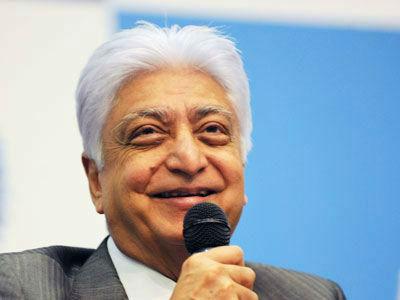
Premji gives half of his stake in Wipro for charity

In Wipro's annual report for the year ended March 2015, Premji said he has now allocated the equivalent of 39% of the company's shares to a trust focussed on philanthropic initiatives, mainly primary education.
In Wipro’s annual report for the year ended March 2015, Premji said he has now allocated the equivalent of 39% of the company’s shares to a trust focussed on philanthropic initiatives, mainly primary education.

Bengaluru :

Wipro’s billionaire chairman Azim Premji, the first Indian to sign the Giving Pledge, has set aside more than half of his wealth for charity by allocating an additional 18% stake in the company to fund philanthropy.

Premji, who will turn 70 this month, controls a 73.39% stake in India’s third-largest software company, which is worth about Rs 99,500 crore ($15.7 billion). In Wipro’s annual report for the year ended March 2015, Premji said he has now allocated the equivalent of 39% of the company’s shares to a trust focussed on philanthropic initiatives, mainly primary education. The additional 18% stake forms the latest tranche of shares Premji has allocated for charity.

The Giving Pledge is an effort to invite the world’s wealthiest individuals and families to commit half of their wealth to philanthropic causes and charitable organisations. In his pledge in 2013, Premji said he believes that those who are privileged to have wealth should contribute significantly to try and create a better world for the millions who are far less privileged. “Over the past 15 years, I have tried to put this belief into action through my personal philanthropic work. Over these years, I have irrevocably transferred a significant part of the shareholding in WiproBSE -0.03 %, amounting to 39% of the shares of Wipro, to a trust (of which ownership of 21.14% was transferred and for the balance, the trust is entitled to the beneficial interest of dividends and sale proceeds),” Premji wrote in a letter to shareholders.

People close to Premji said he has been quietly and steadily been transferring wealth to fund philanthropy.

“Apart from the Tata Trust, nothing comes close to the commitment made by him on this front,” said a person who knows him well. “And now, he has two engines to carry on philanthropy—theAzim Premji Foundation, and the newly formed Philanthropic Initiatives formed to making grants to NGOs.”

Last year, Premji hired Amnesty India head G Anantha Padmanabhan to build an organization that will offer grants to external agencies.

“The new initiative of making grants to NGOs has just started under what we call Philanthropic Initiatives. We are continuing to look at various areas, e.g., nutrition, water — the only area that we have decided on is support to NGOs working with the most vulnerable people — eg, street children, urban homeless, teenage girls from disadvantaged communities, women at risk of violence,” said Anurag Behar, CEO of Azim Premji Foundation and vice-chancellor of Azim Premji University.

“The Foundation’s work continues to expand and deepen in helping improve public (government) school education across seven states, which have about 350,000 schools. The university that we run also continues to expand. This year, we have launched a Master’s in public policy and governance and also our undergraduate programme,” Behar added.

Philanthropy has been on the rise among the rich in India as Microsoft cofounder Bill Gates, the world’s richest person, and business magnate Warren Buffet urged the wealthy to give their fortunes to charitable causes.

According to the Hurun Research Institute, at least 50 individuals donated over Rs 10 crore to philanthropic causes in 2014.

Premji, Anil Agarwal, Shiv Nadar and Ratan Tata were the most generous givers in India, according to the Hurun India Philanthropy List 2014.

source: http://www.timesofindia.indiatimes.com / The Times of India / Home> Business> India Business / by Pankaj Mishra,  ET Bureau / July 08th, 2015

AMU Scholar awarded ‘Young Scientist Research Fellowship’

DrNuzhatMPOs09jul2015

Aligarh,  UP :

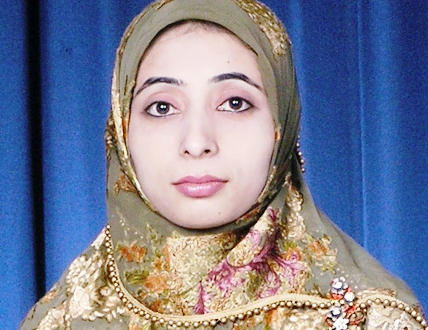
Aligarh Muslim University Scholar, Dr Nuzhat Parveen has received ‘Young Scientist Research Fellowship’ with a research grant of Rs 32, 79,000 awarded by Science and Engineering Research Board (SERB), Ministry of Science and Technology, Govt. of India.

She will work on Nanotoxicology at Cytogenetics and Molecular Toxicology Laboratory, Section of Genetics, Department of Zoology, AMU, Aligarh.

Dr Parveen was awarded PhD and M phill degrees from AMU on topics entitled ‘Mitigation of the genomic instability caused by iron induced free radicals through some antioxidants in vivo’ and ‘Genotoxic effects of anti-malarial drugs on human chromosomes in vitro’ respectively under the supervision of Dr G G H A Shadab, Section of Genetics, Department of Zoology.

Earlier, Dr Parveen was awarded ‘Young Scientist Fellowship,’ by Council of Science and Technology, U P (CST-UP) with a research grant of Rs 10, 80,000.

She has participated in 26 National and International conferences and presented 9 papers (3 oral and 6 posters). She has also attended several workshops and hand-on trainings on several latest aspects related with her research. She has published 13 research papers in the peer-reviewed journals of National and International repute and 5 chapters in book.

Dr Parveen is also a life member of Indian Society of Cell Biology and Indian Science Congress Association.

source: http://www.aapkatimes.com / Aapka Times , News Express of India / by Admin / July 03rd, 2015

AMU Alumnus Wins Blavatnik National Award for Young Scientists

Alumnus of the Aligarh Muslim University, Syed Ali Jafar wins Blavatnik National Award for Young Scientists

Aligarh, UP:

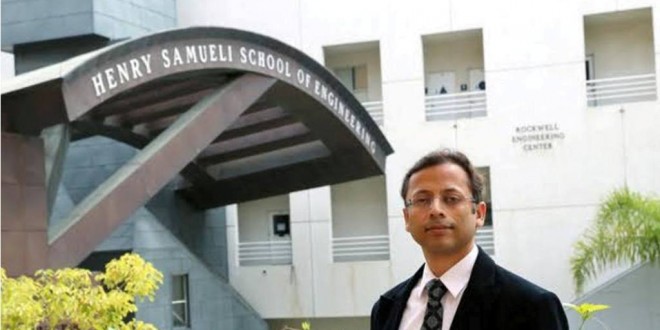
AMU Alumnus Wins Blavatnik National Award for Young Scientists on 4th July, 2015. An alumnus of the Aligarh Muslim University, Syed Ali Jafar, a computer scientist at the University of California Irvine (UCI), USA, who has changed the world’s understanding of the capacity of wireless networks, has won the 2015 Blavatnik National Award for Young Scientists in physical sciences and engineering. One of the three winners chosen from amongst 300 candidates from highly ranked American universities and research institutions, Jafar will receive a $250,000 unrestricted cash prize and a medal in September at New York’s Museum of Natural History.

“I am incredibly honored and humbled to be recognized on the national stage – from such an amazing cohort of extremely accomplished finalists – by such an illustrious jury of the nation’s most distinguished scientists,” Jafar said. “I am deeply indebted to my brilliant students and collaborators, who are my true miracle workers. It is my hope that this recognition will lead to broader exposure to and appreciation of both the beauty of information theory and the tremendous impact it has on our lives. It’s also a ‘shot in the arm’ for me to continue taking on challenging problems in our research group.”

A professor of electrical engineering & computer science, Jafar explores the fundamental performance limits of wireless communication networks. Determining network capacity – the maximum data rates that can be reliably supported – is the holy grail of network information theory, according to Jafar and others. And with the rapid growth of wireless communication networks, the quest has taken on unprecedented urgency. Jafar’s research group has gained worldwide recognition for its numerous seminal contributions to this topic, including its groundbreaking work on interference alignment in wireless networks. This research found that data rates are not limited by the number of devices sharing the radio frequency spectrum, a discovery that changed the thinking about how wireless networks should be designed.

“Syed Jafar revolutionized our understanding of the capacity limits of wireless networks. He demonstrated that each user in a wireless network can access half the spectrum without interference from other users, regardless of how many are sharing the spectrum,” said one of the judges, Paul Horn, senior vice provost for research at New York University. “This is a truly remarkable result that has a tremendous impact on both information theory and the design of wireless networks.”

Jafar became interested in science in high school. “Einstein’s E=mc2 captured my imagination,” he said. The equation made him wonder about how something so profound could be so simple and beautiful – and it became his lifelong dream to pursue beauty through science. As a graduate student studying information theory at the California Institute of Technology, Jafar found similar elegance in the formula describing the capacity of an information channel. He realized that much about the capacity of communication networks was still unknown and made it his life’s work to solve the mystery.

The Blavatnik National Awards for Young Scientists program, established by the Blavatnik Family Foundation with the guidance of the New York Academy of Sciences, recognizes America’s most innovative and promising young faculty scientists and engineers. The organization’s judges include Nobel laureates, National Academy of Sciences members and National Medal of Science recipients. They select three laureates annually, one each in life sciences, chemistry, and physical sciences & engineering.

Jafar earned a B.Tech. at the Indian Institute of Technology in Delhi, an M.S. at Caltech and a Ph.D. at Stanford University, all in electrical engineering. He’s a fellow of the Institute of Electrical & Electronics Engineers, and he recently received the UCI Academic Senate’s Distinguished Mid-Career Faculty Award for Research. Jafar was also recognized as a Thomson Reuters Highly Cited Researcher and included by ScienceWatch among the World’s Most Influential Scientific Minds in 2014.

Syed Jafar grew up in Aligarh, a city that is home to the Aligarh Muslim University. His father, late Prof. Syed Jafar Raza Zaidi and mother, Dr. Shabnam Zaidi, were both university professors, in the departments of Hindi and English at the AMU, respectively. Syed Jafar finished his secondary school examination at AMU’s STS High School (Minto Circle) in 1991, and the senior secondary exam in 1993. As the University topper in AMU’s senior secondary exam he received the University Gold Medal.

The University of California, Irvine is currently celebrating its 50th anniversary. UCI is the youngest member of the prestigious Association of American Universities. The campus has produced three Nobel laureates and is known for its academic achievement, premier research, innovation and anteater mascot. Led by Chancellor Howard Gillman, UCI has more than 30,000 students and offers 192 degree programs.

source: http://www.educationanalysis.in / Education News & Analysis / Home> Events / Aligarh, U.P. / July 06th, 2015

Four doctors scoop prestigious William Harvey Award

ProfSayeedMPOs08jul2015

Professor Sayeedul Hasan Arif, Department of Pathology, J N Medical College with his colleagues, Dr Kafeel Akhtar, Associate professor Department of Pathology and Senior Residents Dr Shagufta Qadri and Dr Suhailur Rahman has been conferred prestigious William Harvey Award 2015 in Haematology for his paper published in The Journal of Haematology.

The research has a rare case study of Haemaglobinopathy in Aligarh. The paper shows a seven-year-old male child suffering from Haemoglobin C (Hb C) trait.

The case study patient is suffering from Mixed Type of Nutritional Anaemia but despite the treatment, the anaemia is not corrected so the electrophoresis was advised and final diagnosis was made.

Hb C disease is common in West African and Mediterranean countries and big parts of North America. It is so far, rare in Indian subcontinent and Asia.

Prof Arif’s journal is published by Photon Foundation along with other journals of ‘Medical Specialty’ and ‘Super Specialty’ from USA.

After completing MD in pathology in 1991, Prof Arif joined the Department of Pathology, J N Medical College as demonstrator. In 1995, Prof Arif was appointed Lecturer in the Department of Pathology. He was promoted to the post of a Reader in 2004, joining as an Associate Professor in 2007. Since 2010, Prof Arif has been working as a Professor in the Department of Pathology.

Prof Arif also holds the posts of Blood Bank and Central Investigation Laboratory In-Charge. He was member of Medical Education Unit in Faculty of Medicine from 2009 to 2014 and served J N Medical College and Hospital in the capacity of DMS from 2011 to 2013.

Dr Arif’s subordinate in his award winning paper, Dr Kafil Akhtar, Associate Professor; Department of Pathology has special interests in Cytopathology, Hematology and Blood Banking subdivisions of Pathology. He has teaching experience of over 13 years in various topics of the subject. He is a regular contributor to journals of National and International repute.

While, Dr Shagufta Qadri who has also worked with Dr Arif  on the award winning paper is a MBBS and MD in Pathology from J N Medical College. She is currently working as a Senior Resident in the Department of Pathology. With her focus on ‘Surgical pathology,’ she has special interest in Oncopathology. She is also experienced in various other subdivision of pathology as Cytopathology, Transfusion Medicine and Clinical pathology.

Another subordinate in the award winning paper, Dr Suhailur Rehman did his MBBS and MD Pathology from J N Medical College and is currently working as a Senior Resident in the Department of Pathology. With work experience in different fields of Histopathology, Cytopathology, Hematology, Transfusion Medicine, and Clinical Pathology, Dr Rehman has also gained experience of teaching Undergraduate and Postgraduate students.

source: http://www.okhlatimes.com / Okhla Times / Home> Dispatches /  OTNS-AMU / July 08th, 2015

Naziya Syed is Student of the Year at ICAEW

NaziyaSyedMPOs08jul2015
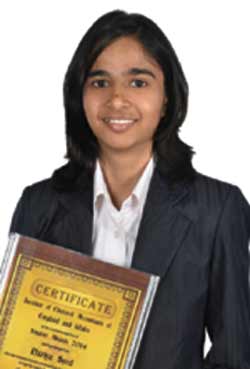
Institute of Chartered Accountants in England and Wales (ICAEW) has selected Naziya Syed of Bangalore for Student of the year 2013-2014 Award along with four other students across the globe who appeared for the exam and overall academic performance. Naziya completed her Certificate, Professional and Advanced Level , in the year 2012- 2013 respectively from ICAEW

The award was given at Chartered Accountant Hall’s at the headquarters of ICAEW in London on 17 November 2014.

Naziya, aged 21, is a qualified Chartered Accountant Article (Intern) at Ernst and Young.

When asked what special did she do that she was awarded student of year she said “Dream big and commit yourself to your dreams, and believe that your hardwork will return you great rewards.”

She is thankful to her teachers and family for their support and guidance. Naziya did her 10+2 from RV College (Bangalore) and schooling from Shantiniketan Educational Institute (Bangalore) in the year 2009.

She said her future plans are to pursue MBA and Insha Allah lead a firm one day.

source: http://www.milligazette.com / The Milli Gazette / Home> Online News > Special Reports / Online pub. Jan 20th, 2015  / Print: 1-15 Jan 2015