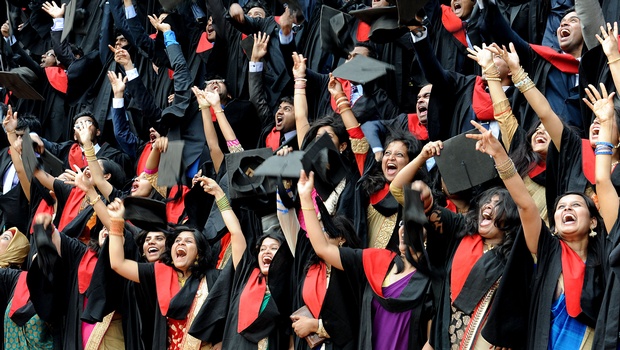
Bangalore Medical College students exulting during the convocation at the institute on Sunday I NAGESH POLALI
Bengaluru :
“I want to serve my nation that has given me an identity as a doctor,” said Dr Gowra Chattannavar, who received five gold medals at the convocation ceremony held by Bangalore Medical College and Research Institute for the 2009 batch MBBS students on Sunday.
She secured gold medals in biochemistry, physiology, pharmacology, general medicine and pediatrics.
Dr Kishen Rao, who hails from Sullia, received the best outgoing student award in sports category. He said, “Now I want to pursue my IAS exam to serve my people and make my poor parents proud of me.”
Dr P K Devadas, dean, Bangalore Medical College and Research, said a trauma centre at Victoria Hospital will become operational from next month. The disaster management unit would be the first in the state, and would have 40 beds for disaster management and 40 beds for intensive care.
Dr Devadas congratulated the 150 graduates and asked them to serve patients without any bias. He said BMCRI has already started the construction of a new seven-storey complex, which will have all the latest facilities including a food court and gym. This will be at a cost of `130 crore.
Medical Education Minister Dr Sharan Prakash Patil said more than the students, parents should be congratulated for taking the pain to educate their children.
Dr S S Harsoor, director of medical education, Dr T K Ramesh, director of Minto Eye Hospital, Dr Syed Iqbalulla Khadri, medical superintendent of Bowring and Lady Curzon Hospital, Dr Girish, special officer of PMSSY Hospital, Dr I Durganna, medical superintendent of Victoria Hospital, and Dr Gangadhar Velvadi, medical superintendent of Vani Vilas Hospital were present.
source: http://www.newindianexpress.com / The New Indian Express / Home> Cities> Bengaluru / by Express News Service / March 02nd, 2015
Mr. Mohammed Shah Aalam Rasool Khan, Chairman Shadan Educational Society announced to provide free education to students of Hifz-e-Quran, orphans, labour and children of families living below poverty line and said that he has done this for the Sawab-e-Jariya of his late father Dr. Mohammed Vizarat Rasool Khan. Mr. Shah Aalam Rasool Khan announced this while addressing the 25th annual function (Silver Jubilee) of Shadan Group of Modern Schools, Khairiatabad branch.
Mr. Shah Aalam Rasool Khan also said that morals and character building are must right from the primary education for reformation of society. He also stressed the need to pay attention on communication skills besides character building.
Siasat news
source: http://www.siasat.com / The Siasat Daily / Home> Hyderabad / Siasat News / Sunday – March 01st, 2015
Paying rich tributes to the medical services rendered by Chiropractic doctors of Palmer University America during the past 18 years in Hyderabad, Mr. Zahed Ali Khan editor Siasat hoped that such camps will be held in future also.
On the occasion he thanked the team, Palmer University and the government for their cooperation and support in successful conduct of the camp.
He also thanked Prof. Moin Ansari Chairman Board of Nutrition Palmer University and Mrs. Shaheda Ansari under whose supervision the camps are being conducting for the past 18 years.
Mr. Zahed Ali Khan was addressing as chief guest on the occasion of valedictory function of 5-day free Chiropractic Medical Camp held by Siasat and Azam Vocational Junior College and Azam Hospital at Abid Ali Khan Eye Hospital, Darushifa.
In the beginning, camp coordinator Dr. Syed Ghousuddin informed that the 16-member team of Chiropractic doctors of Palmer University America conducted checkups of over 800 students of Mesco Grades Malakpet and carried out checkups of 700 patients at Abid Ali Khan Eye Hospital during the past 3 days.
Siasat news
source: http://www.siasat.com / The Siasat Daily / Home> Hyderabad / Siasat News / Sunday – March 01st, 2015
Agra will on Saturday celebrate the 275th birth anniversary of noted 18th century Urdu poet Nazeer Akbarabadi, popularly known as the “people’s poet”. This year, the anniversary falls on Basant Panchami — the first day of spring.
The modest tomb of Akbarabadi, who wrote on subjects of love and common man’s life, is located just 100 metres away from Taj Mahal. It will be in focus Saturday as his admirers will queue up to pay him homage.
For most part of the year, Nazir’s tomb in the Taj Ganj area lies in a neglected state. Only during Basant Panchami does it springs back to life as a ‘mushaira’, or poets’ conclave, is held.
The Agra Municipal Corporation and the Agra Development Authority took the initiative to provide a canopy over the tomb and spruce up the area to attract tourists who visit the Taj Mahal.
His life in Agra
It was Nazeer Akbarabadi who gave Agra a new identity through his poetry.
He wrote about things that touched the hearts of both Muslims and Hindus and these included festivals, dance and theatre, bird fights and kite-flying.
Nazir looked at the follies of royalty with disdain but sang lyrically about the antics of Lord Krishna and poked fun at the fundamentalists.
Nazir also loved the Taj Mahal ‘deeply’ and there is a story that once he decided to leave Agra for greener pastures but returned after walking some distance when he lost sight of the monument. IANS
source: http://www.thehindu.com / The Hindu / Home> News> In School / by IANS / Agra – January 24th, 2015
70-year-old Jamal Baig is one among those who persistently combat with poverty and destituteness since their childhood. He hails from Udgir district of Karnataka state. He had arrived Hyderabad 30-year-ago and has been residing in Jhirra Karwan since then.
Jamal Baig has been pulling Rickshaw for 20 years. He is becoming weaker day by day but is compelled to work otherwise it would be difficult to make both ends meet. He has 4 daughters and a son.
Sadly two of his daughters have become widow and he has to shoulder their responsibility too.
Unfortunately his only son is mentally ill hence his wife Amena Begum is busy all day taking care of the boy. Jamal Baig’s worries didn’t with that, he also has an 8-year-old, grandson who is diabetic. His widow daughters also work as domestic servants to support the family.
Siasat News
source : http://www.siasat.com / The Siasat Daily / Home> Hyderabad / Siasat News / Thursday – February 26th, 2015
A Qutub Shahi Masjid was uninhabited at Amarkunta village of Ghatkesar. The 450 year old Qutub Shahi masjid was uninhabited since police action. According to locals 2 years ago miscreants had tried to demolish the masjid but local Muslims foiled their nefarious plan. Only some part of the walls is remaining while the roof is almost gone. A builder named Pop Reddy was eying on the Waqf land he was doing plotting around the masjid.
According to a local elder Mohammed Yaqoob Ali Quadri it is likely that the Waqf land under the Masjid is 24 acre but plotting has been done on almost all the land and just a few sqyds are remaining. Keeping in the view the situation, local Muslims with the help of TRS leaders and police offered Friday prayers in the masjid. They pledged to reconstruct the masjid and offer 5 day prayers in it.
Siasat news
source: http://www.siasat.com / The Siasat Daily / Home> Hyderabad / Siasat News / Saturday – February 21st, 2015
Success story: Musthafa believes it was team work all the way that helped.
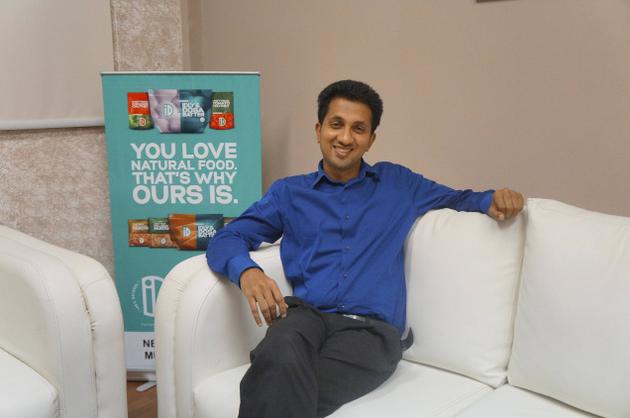
Musthafa P.C, a school dropout who went on to study at IIMB, quit his software job to start an enterprise that sold idly-dosa batter. His is a success story that has trickled down to his 600 –odd rural employees too
A young techie who could just about make himself daal, rice and papad in his bachelor days now runs a company with a 70 crore turnover that provides almost five lakh idlis a day to hungry Bengalureans. Most young working people in the city in a rush, simply fish out the now-famous “iD Fresh” readymade idly/dosa batter from their refrigerator for their quick breakfast fix.
While Bengaluru is where all this began for techie-turned-entrepreneur Musthafa P.C, his idlis and dosas find a place on the breakfast tables in households in Mysuru, Mangaluru, Hyderabad, Mumbai, Pune, Chennai, and even Dubai! And it’s not limited to idlys and dosas anymore. Their oeuvre now includes parotas, chapattis and chutneys too, all made without chemicals and preservatives, Musthafa is quick to add.
It started in a small corner of the city’s Thippasandra locality where Musthafa’s cousins ran a grocery store. “This was eight years ago, and a local supplier would sell idly/dosa batter in an unbranded plain plastic bag tied up with a rubberband, on weekends. There was a great demand, but they couldn’t keep up the quality. That’s when I felt there was a gap in the market,” says the 42-year-old Musthafa, CEO of iD Fresh Food, one of the new-age food startups in the city.
And then, one can conclude, the Malayali business instinct kicked in!
The enterprising cousins set up a 50 square foot kitchen — “our so-called factory” laughs Musthafa, and started a trial in 10 stores in and around Indiranagar. “In a year’s time we were selling 100 packets of batter a day.” During that time, Musthafa had quit his plum job to study his MBA at the Indian Institute of Management-Bangalore (IIM-B). “I did a proper survey and found that Bangalore then had a production requirement of 5,000 kg of batter a day.” The sales and the survey gave them the confidence to set up a 600 square foot kitchen in Kaggadasapura, where Musthafa pumped in six lakh from his savings. They were still using regular household grinders to make the batter. “I had a high-profile job in Dubai. I had worked with Motorola, Citibank, had lived in the U.K., and then later even worked with Intel. But I wanted to come back to India to pursue higher studies, spend time with my parents, and give something back to society,” says Musthafa of making the proverbial switch.
It is with this intent that Musthafa is very particular that they identify “smart guys from rural areas who are unemployed” and provide them opportunities in their company. Today they employ 650 such people from the eight regions they work in across India. “I come from a life of poverty in Wayanad (Kerala) where my dad was a coolie, and breakfast was a luxury. I was a school dropout after I failed my sixth standard. The teacher persuaded me to repeat the class and continue my studies.”
No one supported his decision to quit the IT industry; it was a job that had brought stability to the family, helped him build a home and marry off siblings. Even his wife’s family was upset that he was becoming a “rice merchant”.
But by 2008, his company had expanded into a proper factory in Hoskote, with the help of the Karnataka State Industrial Development Council (KSIDC). Custom-made grinders were brought in from America. “With Indian grinders, cleaning is the most difficult task. Moreover the small grinders would take an hour to grind a kilo of dal. So we had to import these large, modified grinders that self-sterilise at the touch of a button.” Musthafa swears the actual batter making process is “the same that your mom uses at home, starting with the soaking”. “We are only professional assistants to the homemaker. Our products will always be ready to cook, not ready to eat. So they don’t reach the dining table; they first go into the kitchen. If the idli is good, the homemaker gets the credit; if the idli turns out bad, iD takes the credit!” All the products, he says, are first tested on his children aged 12, nine, and five.
Business is of course growing phenomenally with venture capital (VC) firms wanting to invest in them; 60 companies evinced interest in pumping money; mostly American. Finally Helion Venture invested Rs. 35 crore in their expansion plans. “We are targeting expansion to 10 Middle-Eastern cities over the next five years. As well as expanding into north India, especially Delhi.” While initially a friend named it iD for “idly-dosa”, Musthafa says it now stands for their “identity”.
Every employee in the company is an entrepeneur like he is, believes Musthafa.
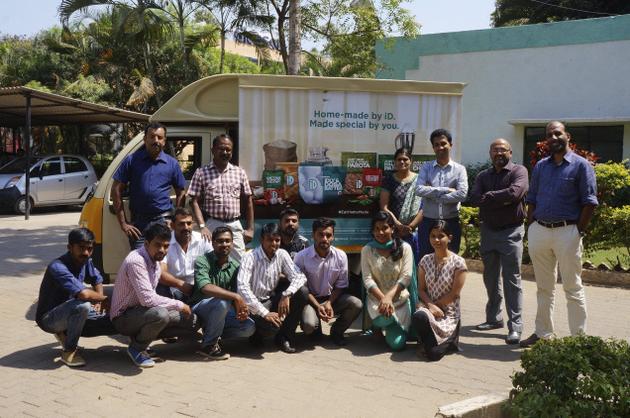
Musthafa makes it a point to stress on the fact that it has been team work all along the way; first his cousins came on board, then his engineering classmates and then family friends, to start the operation in various cities. “We don’t work on an employment basis; there is no fixed pay. Every employee is a micro-entrepreneur. For example, each area sales team is given a vehicle and “they have to maintain their own profit and loss account,” explains Musthafa. Whitefield, Jayanagar, Indiranagar and Koramangala is where they do their best business, he says. They have a SAP-based backend platform so that they have a zero inventory model – 90 per cent of the products are sold on the same day; a mobile app keeps track of sales patterns in each store.
Musthafa’s personal favourite from his company is the wheat parota. “We eat our idli and dosa once a week at home, then three days of wheat parota,” he breaks into a boyish grin.
source: http://www.thehindu.com / The Hindu / Home> Features> MetroPlus / by Bhumika .K / February 26th, 2015
The Mughal era books need to be preserved for posterity
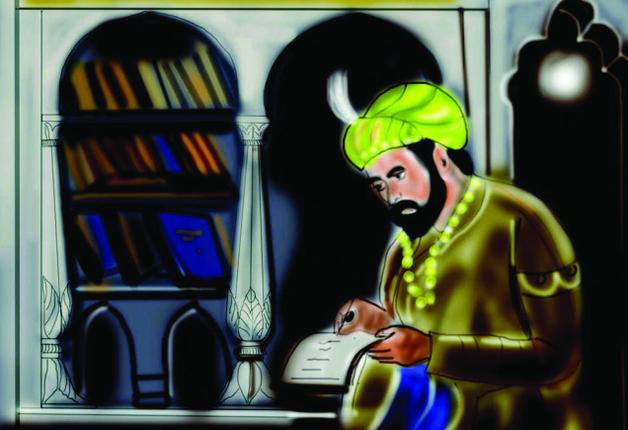
The library of Dara Shikoh, near Chakkipat on the Yamuna’s right bank in Agra, is now a municipal office and its vicinity boasts an akhara. The books housed in the library or most of them, were brought to Delhi when Shah Jahan moved his capital to it and wanted the heir apparent Dara to stay by his side lest any harm befell him if he was appointed governor of some province (subha), like his brothers Aurangzab, Shuja and Murad. The library existed in the Kashmere Gate area, later becoming a polytechnic institute, another library behind the Jama Masjid, became a girls’ school. But the question is what happened to most of the books? Quite a few of them were destroyed in 1857 by the British, bent on revenge. Some others fell into private hands and were sold as “raddi” during the upheaval of 1947 by those going away as refugees to Pakistan. It’s worth noting that the books in the library of Prof Ahmed Ali, author of “Twilight in Delhi”, in Kutcha Pandit were sold one by one by a servant who had stayed behind and was reduced to penury after the professor opted to migrate to Karachi.
Some books of the Mughal era may be found in the National Library, in the British Museum Library in London and in the U.S. Congress Library. Besides some others were taken away to Pakistan by migrants. A few of those books are with the old residents of Delhi, Lucknow, Hyderabad and Agra, like the now disintegrated library of Nawab Faiyaz Khan, but 75 per cent of them are lost forever. It was something like the loss of Greek, Arabian and Persian masterpieces when the libraries in Athens and Alexandria were burnt during wars and by Mongol and Han hordes and vandalism by fiercely bigoted Arab and Turkish soldiers fired by the zeal to destroy all vestiges of the “idolatrous ages” of the Middle East. Such destruction also took place during the medieval Crusades and earlier by Attila and Hannibal. The Emathian Conqueror (Alexander) may have spread the house of Pindars but little else.
In a study on medieval libraries, written in 1970, father had this to say:
“The Sultans of Delhi and their nobles, who preceded the Mughals, had rich literary tastes and established a large number of public and private libraries. Jalaluddin Khilji founded the Imperial Library in Delhi and appointed Amir Khusrau its librarian. But it was Babar who really did augment the Delhi library.
“Humayun, inherited the legacy and added to the library seven halls, each named after a planet. He was so fond of books that he carried them to the battlefields. On one such occasion in fact he lost several rare ones. At Agra, he raised a set of magnificent buildings called Khanna-i-Tilism (house of magic), the first floor of which housed the library. Towards the end of his adventurous life he converted the pleasure house of Sher Shah in Delhi’s Purana Quila into a library.
“Akbar, although illiterate, turned out to be the greatest patron of art and translation of books, for each of which he maintained a separate cell. The biggest of his several libraries was the Imperial Library in Agra Fort. According to Abul Fazl, the library was divided into several parts. Some of the books were even kept inside the harem.
“Experienced people bring them daily and read them before His Majesty who hears (sic) every book from beginning to end,” he wrote.
Akbar had books brought from distant places and also encouraged scholars to write treatises, calligraphists to copy them and painters to illustrate them. He bought a richly illustrated version of the manuscript of Razm-Nama (the Mahabharata translated into Persian) for £40,000. “There were more than 24,000 books in the Imperial Library alone and they kept increasing. Fazl’s collection of 4,300 manuscripts was added to the library and the library of Itimad Khan was acquired after the conquest of Gujarat.”
Jahangir was a great lover of art, with an avid interest in old tomes. Shah Jahan had a godly collection of books. His son Dara, however, was more studious and collected books on poetry, Sufism and mythology, including Hindu scriptures. Aurangzeb’s books were mostly religious ones. The latter Mughals did not evince much interest in books. Bahadur Shah Zafar was however a lover of learning, being a poet himself. The disintegration of Mughal libraries took place during the First War of Independence and the upheavals of Gardi-ka-Waqt but after that English scholars made good use of them, like William Fraser.
It would be worthwhile if the Union Human Resource Ministry and Archaeology Survey of India acquire Mughal era literature from all known sources and establish a Central Mughal Library in the near-deserted Purana Quila, bigger than the partially revived one of Dara Shikoh.
source: http://www.thehindu.com / The Hindu / Home> Features> MetroPlus / February 23rd, 2015
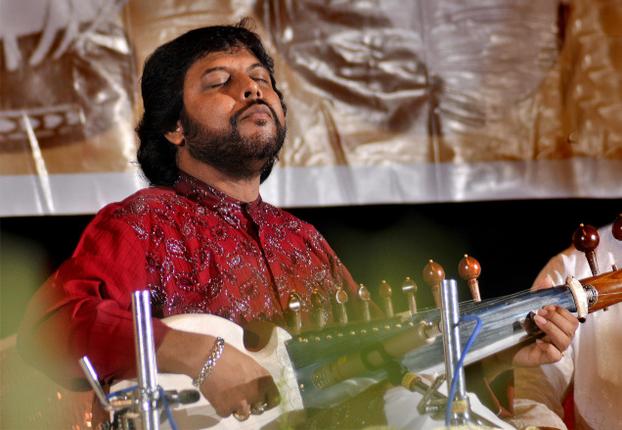
Sarod exponent Joydeep Ghosh tells Meena Banerjee his musical education allowed him to take uncommon ragas in his stride.
One discovered an intriguing fact from versatile musician Joydeep Ghosh, the concluding artiste of the annual soiree organised recently by Kolkata’s Ballygunge Maitreyee Music Circle, dedicated to the late Sangeetacharya Radhika Mohan Moitra (Radhubabu). On this occasion his sarod etched a rare raga, Kedari-Marwa, with admirable clarity. In this both Kedar and Marwa remained intertwined; like in a braid; without giving up their identity. Such an interpretation, replete with unexpected bends, does not allow complacency, either to the player or to his listeners. This was definitely a show by a maestro for initiated listeners only. The latter is a dwindling community even in Kolkata nowadays; but going by Ghosh’s usual selection of ragas, one was inspired to ask:
What encourages you to choose rare ragas for concerts?
I was only five when I started learning at the feet of great masters Anil Roychoudhury and Radhubabu; and later from Buddhadev Dasgupta. They all belong to the famous Senia Shahajahanpur sarod gharana and they are revered for their enviable melodic treasures. I also learnt tabla and vocal music from venerable gurus. Subsequently, I came under the wings of the erudite and versatile master Bimalendu Mukherjee, a doyen of the famous Imdadkhani gharana of sitar and surbahar. Under their priceless guidance I assimilated vocalism, instrumentalism and the style of rhythmic play along with raga elaboration.
The simple fact is that my gurus did not tell me what were common and what ‘rare’ ragas were. They all came naturally as sister ragas, with their key phrases loud and clear, during the learning process of one major raga; even the jod-ragas (blend of more than one) were taught to me without much ado; just as they did not categorise any instrument and made me learn to play sarod, surshringar and mohanveena.
Isn’t the mohanveena a newly invented instrument?
Radhubabu’s mohanveena.
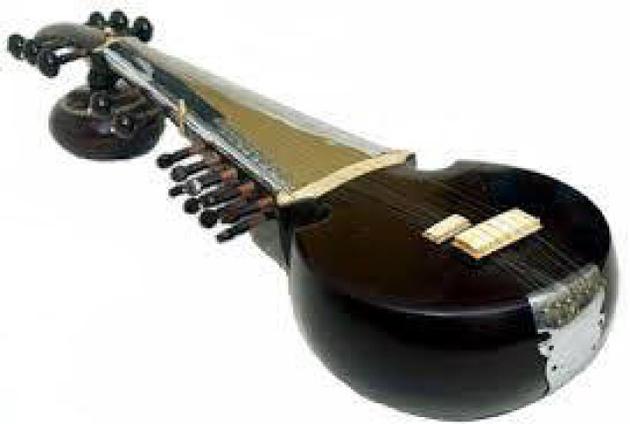
Unfortunately, very few remember the history of the original mohanveena, conceived and invented by Radhubabu in early 1948! Once, around 1944, he played the surshringar in a jugalbandi (duet) with the famous beenkar (Rudra veena player) Ustad Sadiq Ali Khan in Lucknow. The concert inspired him to design a unique instrument in which the playable materials of both the sitar and the sarod could be appropriately exploited and the tonal quality of the Rudra veena could be equally maintained. Since he was proficient in both, having had his training from Ustad Mohammad Ameer Khan of the Shahajahanpur gharana and Ustad Inayat Khan of the Etawah gharana in the sarod and the sitar respectively, Radhubabu’s experiment succeeded.
The instrument’s majestic tonality impressed Thakur Jaidev Singh, the renowned musicologist who was then Chief Producer, All India Radio, Delhi. In 1950, Thakur Saheb named the instrument ‘mohanveena’ and also arranged an archival recording for AIR, followed by an extensive interview of Radhubabu, its inventor. Radhubabu was invited in several music festivals all over India to play the mohanveena. Some of his rare recordings for AIR archives are available in compact discs as precious documents.
So, despite the emergence of another, Hawaiian guitar-based instrument of the same name almost fifty years later, the original mohanveena exists along with its own unique excellence till date, through some of the devoted torchbearers of Radhubabu’s legacy. I am also a humble exponent of the mohanveena.
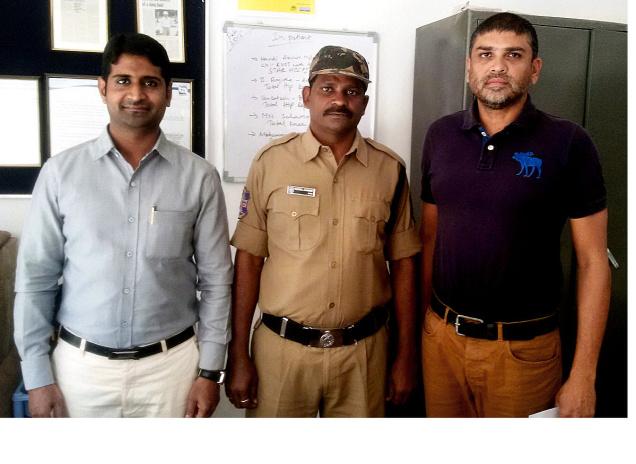
Mohammed Anwar, who is now a Home Guard with the Jeedimetla police, is flanked by Mujtaba Hasan Askari and Mohd. Imran of Helping Hand Foundation.– PHOTO: By Arrangement
When everyone gave up hope, including doctors, he clung on to dear life. Today, Mohammed Anwar is not only hale and healthy, but has landed a government job too. Diagnosed with Acute promyelocytic leukaemia, a rare type of blood cancer of the white blood cells, Anwar had a slim chance of living. He grew anaemic and feeble by the day and was bedridden for a year.
A car driver by profession, he couldn’t afford the huge expenses at a corporate hospital where he was admitted two years ago. He was then referred to the Nizam’s Institute of Medical Sciences (NIMS).
It was here that somebody told him about the Helping Hand Foundation (HHF) which helped patients in distress. Once convinced about his pathetic condition and poor financial position, the HHF took over his case. Under its Cancer Support Programme for the bread winners, the HHF supported the induction chemotherapy.
Anwar was determined to live for his family. He responded to the treatment and survived blood cancer to which many succumb. His one worry was the education of his three daughters. With a healthy diet like whole grains, pulses, legumes and millets his condition improved. “We also gave Vitamin D3 supplements, which are a major source of fighting cancer,” says Mujtaba Hasan Askari, who heads the HHF.
A weak and emaciated Anwar slowly gained weight as his ailment went into remission stage. Even as he was on the road to recovery, Anwar applied for the position of a home guard in the Cyberabad Police. He was selected as a driver attached to the Jeedimetla Police Station. “I couldn’t believe my ears when I heard of my selection. God has been very kind to me,” says an overwhelmed Anwar who joined duty a fortnight ago.
source: http://www.thehindu.com / The Hindu / Home> News> Cities> Hyderabad / by J.S. Ifthekhar / Hyderabad – February 28th, 2015