Amardip Malik breaks victory barrier with playoff triumph at PGTI Noida Masters

Noida:

Amardip Sinh Malik of Greater Noida clinched his maiden title at the Rs. 40 lakh PGTI Noida Masters after a playoff win against Md Zamal Hossain Mollah of Bangladesh at the Noida Golf Course. Chikkarangappa S of Bangalore won the Super Series title to earn a bonus prize of Rs. 30 lakh after ending top of the table at the seventh and final Super Series event of 2014.

AmardipKF21dec2014

Amardip Sinh Malik (70-67-70-78) and Md Zamal Hossain Mollah (72-69-73-71) ended the regulation 72 holes with matching totals of three-under-285 and thus proceeded for the playoff on the 18th hole. Malik sealed it with a par on the first playoff hole even as Zamal dropped a bogey. While Malik was two on the green and two-putted for par, Zamal found the green in four shots after landing it in the bunker.

The 29-year-old Amardip Sinh Malik, the overnight leader by four shots, seemed to be losing grip of the match as he made four bogeys and a double-bogey on the first 14 holes to be six-over for the day. He then made two birdies and two bogeys on the last four holes to end the day with a six-over-78. Malik was a picture of grit and determination in the playoff as he wrapped it up with a five-feet par putt.

Amardip, who climbed from 49th place to 23rd place in the Rolex Rankings after his win on Friday, said, “I’m delighted to post my first win. I’ve come close to winning on quite a few occasions in the past. But it was great to finally cross the line. I had a forgettable fourth round as I missed a lot of short putts and found myself in tough situations. However, I hung in there with two birdies towards the end. My perseverance paid off in the playoff. This win has boosted my confidence for the last two events of the season.”

Md Zamal Hossain Mollah mixed three birdies with two bogeys in his final round of one-under-71 before losing out in the playoff.

Noida’s Vikrant Chopra shot a final round of even-par-72 to finish third at two-under-286.

Chikkarangappa became the Super Series champion after finishing tied fourth at one-under-287. He fired a 71 in the final round on Friday. Chikka, a winner of two Super Series events in 2014, ended on top of the Super Series Points Table with a total of 3837.61 to earn the bonus prize of Rs. 30 lakh. The 21-year-old also continues to lead the Rolex Rankings with earnings of Rs. 36,89,711.

Kapil Kumar of Delhi and Mukesh Kumar of Mhow shared fourth place with Chikkarangappa.

Delhi’s Rashid Khan, who finished tied 12th at Noida at three-over-291, claimed second place with 3394 points.

Amardip Sinh Malik finished third in the Super Series with 2252.19 points.

source: http://www.indiansportsnews.com / Indian Sports News / Home> Golf / Monday – December 15th, 2014

Government Will Celebrate Tipu Jayanti, Says Siddu

Bengaluru : 
The state government has decided to celebrate Tipu Jayanti henceforth, said Chief Minister Siddaramaiah on Monday.

He was speaking at the book release of Tipu Sultan: A Crusader for Change by historian Prof B Sheik Ali, which has been published by the Karnataka Gazetteer Department.

“There has been a lot of pressure from various quarters to celebrate Tipu Jayanti on the likes of Valmiki Jayanti and others. We have decided to take this into consideration and will announce the date shortly,” Siddaramaiah said. Sources said the date is likely to fall in May.

Referring to the book, Siddaramaiah heaped praise on Ali. “However, the book must also be translated into Kannada as it will have a wider reach. There have been allegations that Tipu was against Hinduism. I would like to clarify that this is false and he was known to have built several temples along with mosques. He was a good administrator. The real fight for freedom against the British actually originated with Tipu Sultan,” he said.

Ali said the book primarily focuses on the achievements of Tipu as an administrator along with details about his life.

“Tipu had said that a state’s structure and its success depended entirely on whether the welfare of its people was guaranteed or not. He imbibed the best qualities of the Renaissance and Reformation and implemented it in the administration. The concept of equal rights for all was first initiated by him,” he said. Principal Secretary of the Kannada and Culture Department Shalini Rajneesh said the book had been written and published with a grant of `10 lakh from the Central government.

MP Rehman Ali, Minister for Infrastructure Development, Information and Haj Roshan Baig, Minister for Energy D K Shivakumar and others were present.

source: http://www.newindianexpress.com / The New Indian Express / Home> Cities> Bengaluru / by Express News Service / December 23rd, 2014

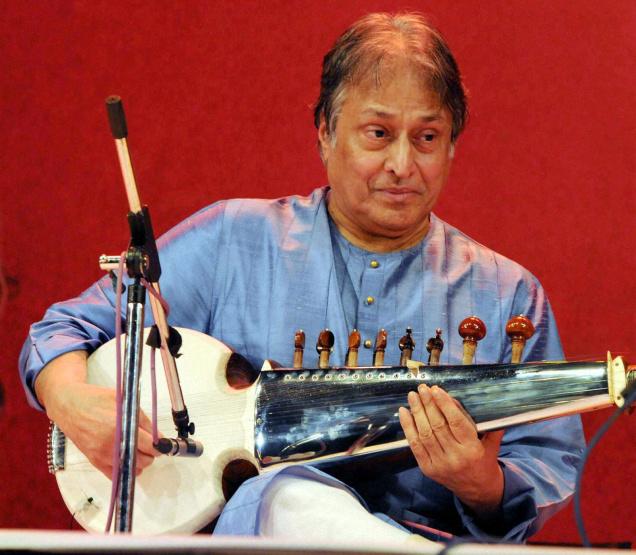
Virasat award to Amjad Ali Khan

Ustad Amjad Ali Khan

Renowned sarod maestro Amjad Ali Khan will get the Alva’s Virasat 2015 award on the inaugural day of the three-day cultural event at Vidyagiri near Moodbidri on January 8.

A release issued by the Alva’s Education Foundation, which conducts the event, said the award carried a purse of Rs. 1 lakh.

The Padma Vibhushan recipient began performing at the age of six, said the release, adding that his music “spreads emotions of love and peace”.

The release described the man as “epoch-making”, with a personality that did not differ on-stage and off-stage.

Born in the Bangash family of musicians from Gwalior, he is sixth generation artiste. He trained under his father Hafeez Ali Khan and went on to become a legend in his chosen instrument sarod.

He has performed in many countries and is the recipient of many awards.

He has also been a visiting professor for international institutes and has paired with many artistes to present jugalbandis and fusion music programmes.

Two books have been written about him – The World of Amjad Ali Khan and Abba: Gods Greatest Gift To Us. Married to Bharatanatyam exponent Subhalakshmi, the couple’s sons Aman Ali Khan and Ayan Ali Khan are emerging sarod players.

source: http://www.thehindu.com / The Hindu / Home> News> Cities> Mangaluru / by Special Correspondent / Mangaluru – December 25th, 2014

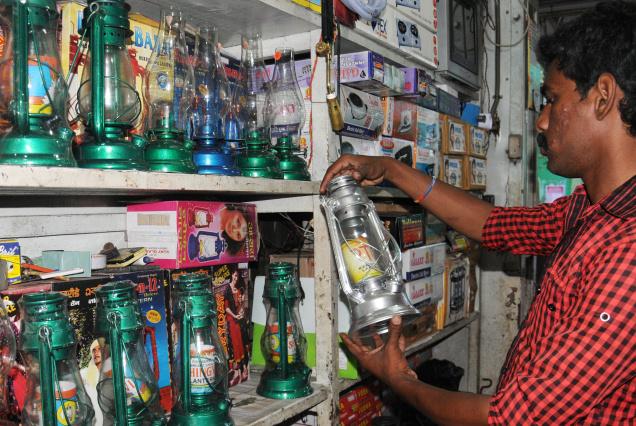
A dim outlook for the lamps of olden days

The lamps are now purchased only by restaurants, cinemas, serial production houses and interior decorators. Photo: B. Jothi Ramalingam / The Hindu

Hurricane lanterns, once a common sight in households, are now a part of antique collections

If you were to search the loft in your house, you might find a hurricane lamp with the faint smell of kerosene still emanating from it. These lanterns, which were once a common sight in households, are now a part of antique collections.

Until about two decades ago, most homes in the city owned hurricane lamps with wicks. The flame would never get extinguished, not even on windy nights. The children of the house were often entrusted with the task of cleaning them in the evenings.

“As children, we had to remove the glass covering carefully, and clean the soot gathered from the previous day’s use. After this, kerosene was poured in the bottom chamber and the wick lit. We used to study under its light,” recalls V. Aryadevi, an octogenarian resident of Mylapore.

Now, these lamps are purchased only by some restaurants, cinemas, serial production houses and interior decorators. “Earlier, we used to sell around 300 lamps per month. But, now, the number has fallen to 100,” says Shair Ali, who has been selling lanterns since 1945 on Evening Bazaar Road.

Though electric lamps have replaced hurricane lights, he says the latter burn for a longer duration. “I use one in my house to this day. You can still spot them in villages,” he says.

K. Nizam, who also sells hurricane lamps in the locality, says those who sell food on Marina and Elliots beaches, and petty shop owners purchase the lanterns from him. “But most customers prefer electric lamps. They feel that pouring kerosene and lighting the lamps is too much of a hassle. Hurricane lamps are more of a decorative piece in most homes now,” he adds.

source: http://www.thehindu.com / The Hindu / Home> News> Cities> Chennai / by Vivek Narayanan / December 24th, 2014

Seeking Malihabad’s Jewish connect

Lucknow :

Straight aquiline noses, fair skin colour, chiselled features and a probable connection with the Ten Lost Tribes of Israel could be an addition to the identity of Afridi Pathans who have been dwelling in various parts of the erstwhile Awadh since centuries. In a quest to trace the lineage of exiled Israeli tribes, Jewish scholars from the far-off land of Israel have been guests to Malihabad over the years. Attracting world attention yet again, Malihabad will host Dr Ari Greenspan and Rabbi Dr. Ari Zivotofsky from Israel’s Bar Ilan University on Sunday, to assist their quest to understand more about Afridi Pathans’ historical connection to Judaism based on their hypothesis.

According to legend, ten of the 12 Israeli tribes had been exiled by Assyrian invaders in 721 BC, some of whom settled in India. Afridi Pathans, the supposed descendants of one such lost tribe came to India between 1202 and 1761 AD, making Uttar Pradesh their home amongst various other regions.

Barely an hour away from Lucknow, Malihabad has been home to as many as 650 families of Afridi Pathans, who take pride in their warrior genetics, but are in fact averse to the idea of bearing Jewish roots, if there be any.

The idea of Afridi Pathans tracing a Jewish ancestry grabbed attention when the Indo-Judaic studies scholar, Navras Jaat Aafreedi started working on the subject in 2002. Emphasising his thesis and claiming the lineage of Afridi Pathans to Ephraim, Navras himself an Afridi Pathan, managed to irate his kindred back then while proposing the idea of bearing Jewish roots to them.

In an email communication with Navras, the two scholars have explained how they “would like to understand the history and meet any elders who might hold or remember traditions linking the Pathans to the Jews.” It is believed some of the Jewish traditions bear resemblance to the ones followed by the Afridi Pathans.

In 2002, Professor Tudor Parfitt along with his team from the Centre of Jewish Studies, London University had collected DNA samples from the Malihabadi Afridi Pathans. In 2008, Shahnaz Ali, researching on the subject, blood samples collected from the clan, followed by gathering DNA samples in 2009. Result of the research carried out so far has not been made public, but most of the earlier studies worldwide have refuted such claims of heredity.

source: http://www.timesofindia.indiatimes.com / The Times of India / Home> City> Lucknow / TNN / December 21st, 2014

___________________________________________________________________________

Afridi Pathans resent linking lineage with Jews

Mahilabad :

On a foggy Sunday afternoon, the otherwise quite Malihabad bounced to its Pathani vigour as a group of Afridi Pathans sat in the orchard of revolutionary poet Josh Malihabadi and conversed with Rabbi Dr Ari Zivotofsky. It was meant to be a session in which the rabbi would have asked the Afridi Pathans questions about their traditions and history, but he found himself facing questions from youth who were anguished about the constant research on their genetics by Israelis. The questions were not limited to what the Afridi Pathans said were “false claims” trying to find their roots to Judaism, but also included the situation between Palestine and Israel.

Rabbi Dr Ari Zivotofsky decided to visit Malihabad to study the historical ancestry of Afridi Pathans in the region, after his interest was aroused in previous research on the subject. Earlier hypotheses claimed resemblance between certain traditions revolving around the common Semitic customs of Afridi Pathans with those of the Jews, hinting towards a probable connection between the two.

“Five years back when Shehnaz Ali visited us in Malihabad to take DNA samples of the Pathans, she misguided us about the real motive of her research. She told us it was to reaffirm if the Afridi Pathans of present day held the same warrior qualities and other characteristics of their ancestors hundreds of years back. We later got to know that it was to find a link of Pathan ancestry with Jews,” complained Ahsan Javed Khan, a raging Afridi Pathan, host to an Israeli scholar visiting the small tehsil, who was in Malihabad researching on Pathan history.

Speaking about his experience of the meeting, Zivotofsky said, “I am not intimidated by their questions but actually surprised with how offended the Afridi Pathans are by this research and how careful one has to be with an apolitical and benign approach.” The young men pointed out anomalies in previous research carried out by other individuals and averred that DNA studies done earlier could found no conclusive result. The Pathans also claimed that the research might have a political motivation in case one of the earlier researches was funded by Israel’s foreign ministry. “The points raised here have intrigued me to follow up on the research done back then. If no conclusive results were found probably the researches couldn’t arrive at the expected results so they didn’t publicise them. I would now like to get into those flaws,” said Zivotofsky.

In the old Kothi of Khalid Yusuf, belonging to the earliest families of Afridi Pathans in Malihabad, Dr Ari spoke about an oral tradition passed on through generations. “I remember my grandmother telling me that we belong to Bani Israel (Children of Israel) and Ephraim, however this does not mean that we are Jews. Why do Israelis want to trace our ancestry to one of the lost tribes of Israel?” said Asad Yar Khan, taking Zivotofsky around his hometown.

“With the knowledge that I am taking from here, it looks like the theory of Pathans having a link with Judaism is more of an oral tradition, and collecting blood samples will not help anymore. We should look into the books now for the research to come together. It could be a better idea to rephrase the research as ‘finding a link between Afridi Pathans and ancient Israel’ instead of with Jews, to whom the people here appear to be averse,” concluded Zivotofsky.

source: http://www.timesofindia.indiatimes.com / The Times of India / Home> City> Lucknow / by Yusra Husain, TNN / December 22nd, 2014

Home hero leads ATK victory lap – ‘For a sports fan, this is the place to be’

As Atletico de Kolkata won the first edition of the Indian Super League with a last-gasp goal in Mumbai on Saturday evening, the 17-year-old sat transfixed in front of the television, grateful to be playing football at a time when the game has finally gone international in India.

The Class XII student at Frank Anthony Public School, who captains his team and wears the No. 10 jersey, writes for Metro what the ISL and Atletico de Kolkata’s victory meant to him.

LiamBainKOLKATA22dec2014

The nail-biting football that had the nation hooked for 90-odd minutes on Saturday night was not only a fitting finale to the first edition of the ISL but also a big triumph for Calcutta, which is the place to be for any sports fan like me.

Atletico de Kolkata’s victory completed a rare double for the city – 2014 IPL and ISL champions – while our home-grown forward Mohammed Rafique’s winning goal made me believe that perseverance and dedication matter the most in the quest for glory.

ATK’s never-say-die attitude in the final was inspiring too. I have won and lost many finals and I know how mentally draining it can be. But the ATK players were calm. Your instincts and talent matter but your mindset can make or break you. Big matches are nerve-wracking and brutal to lose.

Super-sub Rafique’s 95th-minute header reminded me of two occasions where I have been in a similar position. During my training at Club Atletico Boca Juniors, I had come on as a substitute in a friendly and scored a late goal that gave my side a 1-0 win. In the quarter-finals of the Keventer Cup 2014, my school team was awarded a last-minute penalty, which I calmly converted.

On the flip side, I have been in the boots of Kerala’s Michael Chopra, who thought he had scored the winner, only to discover that his shot had been saved by the brilliant Edel Bete.

Like Michael, my heartbreak moment had come in the dying moments of a final of the inter-Frank Anthony schools’ tournament, which cost us the match. That’s the harsh reality of sport.

Saturday’s final taught me how a strategy like keeping a defender at the first post (which Kerala goalkeeper David James should have done) or a brilliant save (like Edel’s) can be the fine line between triumph and misery.

Without Luis Garcia in the starting XI and Fikru out of the match, ATK had their backs to the wall from the beginning. They initially lacked creativity in the midfield and Kerala looked a much better team. But Kerala failed to convert chances and I was amazed how Arnab Mondal and Josemi, the defensive stalwarts, and goalkeeper Edel kept ATK alive in the game.

With missed chances at both ends, each side was almost resigned to 30 minutes of extra time until, astonishingly, ATK found a way out of it!

In the end, I think, India was the real winner of the ISL, opening up so many avenues for the growth of football in the country.

The ISL also gave young footballers like me the much-needed push to dream of making it big. It gave me new heroes like Sandesh Jhingan, who makes match-winning tackles; Elano Blumer, whose free kicks I would like to emulate; Luis Garcia, whose skills and leadership qualities I have tried to embrace; and Iain Hume and Steven Pearson, whose stamina and perseverance inspire me.

source: http://www.telegraphindia.com / The Telegraph, Calcutta / Front Page> Calcutta> Story / Monday – December 22nd, 2014

Getting the Royal Look

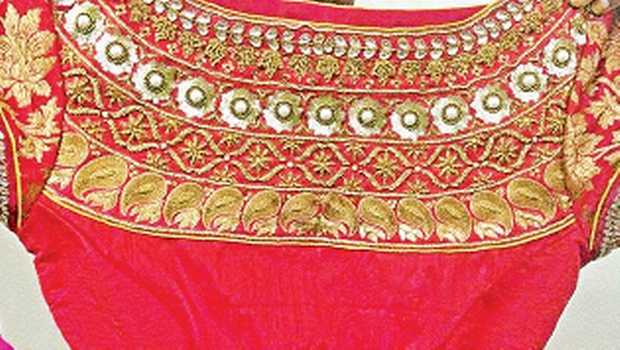
RoyalMPOs22dec2014

Hyderabad :

The bylanes of Charminar have series of shops offering Zardozi work. Most of them have been running the show for the past thirty to thirty-five years.

Stopping by Mohammed Haji at Laad Bazar, the artist, Mohammed Haji himself sits on the floor behind the wooden equipment working on a piece of cloth, held taut with two long pieces of wood and thread to enable him to work easily.

“Though in the beginning of my career, I used to do a lot of work on sarees, I mostly work on blouses now as people these days like heavy blouses,” says the 24-year-old, who started designing when he was in school.

Not being a family business, he got into the craft full-time after his class VII. “I started with helping my brother Mohammed Latif in my childhood as my mother would not like me wasting time. She asked me to pick up the skill as it would make a good source of income in future. I later dropped the idea of continuing schooling,” clarifies Haji.

He now has set up a separate workshop for himself in Laad Bazar and works along with one of his helper.

He says, “The way sarees are pre-designed these days has changed the fashion style.”

Today, we can witness a blend of the past with the present, the old with the modern. Zardozi has become a well-known and fashionable hand embroidery. “Earlier people would prefer heavy zardozi sarees. But now its limited to blouses only. Which in turn is affecting our income,” he rues.

The Zardozi work has not only kept up with modern embroidery but is also booming.

Ranging from gold to silver to the metal one, the craft though has changed with the passing time, Haji is more focussed on using the metal one, which he blends with zari, kundan, lace, chain, beads and resham threads. “But zardozi is what completes the design,” he informs.

Speaking about designs, he says, “Peacock and mango are the most popular designs which people prefer these days. They come up with their own designs. Sometimes if the customer has no idea about the design, I suggest them as per their material and the occasion. They add their own ideas to it and that’s how we brainstorm.”

Budget plays an important role while deciding design he says.

As his workshop is on first floor, there is not much footfall there so he generally picks orders from a nearby boutique.

The materials used to do the embroidery are bought from the city market.

The smallest work takes a day to be completed. “Gold, silver and antique Zardozi is in vogue now. Along with that, people also prefer using coloured ones,” explains Haji.

Each piece is charged as per the design and the materials used for embroidery. The quality check of the Zardosi, Haji says comes through years of experience.

The Zardosi works can specify patterns and motifs to suit their budget and choice. “Normally for a blouse we charge anywhere between `1,000 to `5,000. But for bigger works we charge more,” says Haji.

source: http://www.newindianexpress.com / The New Indian Express / Home> Cities> Hyderabad / by Pratima Shantaveeresh / December 22nd, 2014

A dawn awaits forgotten people

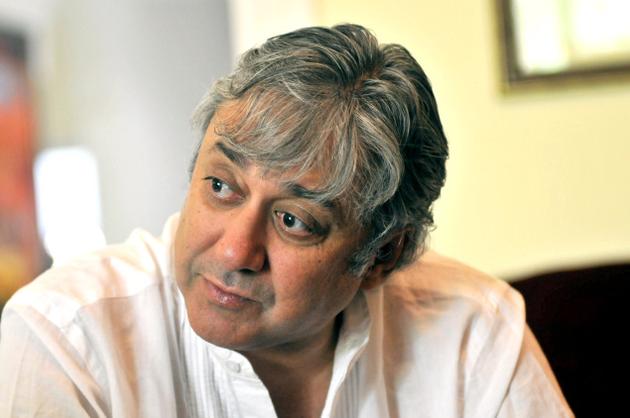
Jungle Tales: Saad Bin Jung loves the wild and the wilderness. Photo: Nagara Gopal / The Hindu

Saad Bin Jung talks about his latest book and what inspired him to pen the thought provoking pages.

Saad Bin Jung is reviving his touch with what we call ‘civilization.’ After spending months in the jungle resorts which he owns in Karnataka and Africa, Saad is seemingly enjoying his life though he would love to return to the jungle at the first instance. After all, holidaying there had never been his intention.

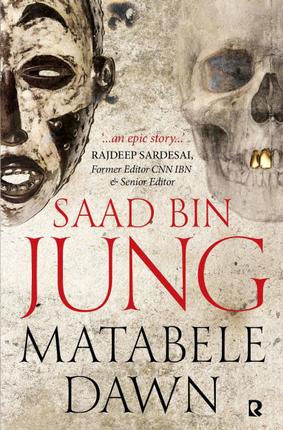
He plays a jungle guide, photographer, observer and lover of the natural life that surrounds him. His visit to the city is with a purpose and closely linked to the life he spends and the thoughts that cross his mind as he watches the animals enjoy the wilderness. He , is currently engaged in a multi-city tour to launch his recently authored book Matabele Dawn. Having dedicated his life to conservation, he has spent time with many tribes, in many parts of Africa and India.

Saad Bin Jung's book
Saad Bin Jung’s book

So is Matabele Dawn a culmination of these experiences? “These fortunate meetings have made me realise that conservation is all about addressing a conflict. The conflict between the authorities and the local people /tribes that live in remote areas of both Africa and India. They are a forgotten people that eke out a living against all odds and live in the buffer regions of our protected forests.” He adds, “It is nice to be back in familiar space for a change. But I would prefer the wilderness any day.” And this wilderness helped Saad complete the book comparing his life in India and Africa. The author and activist describes the book as a thought-provoking journey through the heart of Africa and India. Saad elaborates , “Matabeleland was a thriving nation in erstwhile Zimbabwe. When Cecil Rhodes believed that King Solomon’s mines were located here, he mowed down the tribe. In a matter of months Matabeleland ceased to exist. No such mines were found but beautiful people were annihilated.

The book is about the journey of a few of that tribe, about their trials and tribulations as they move towards Maasailands in search of their destiny. Set deep in the heart of tribal India and Africa, it unfolds an epic saga of two lives in disarray where the solution is more lethal than the problem. Chenjerai is born in the African bush and a nation is wiped out. Shaaz’s birth in Europe heralds World War II. Chaos rule their lives and their search for answers remains elusive. When the veil does lift, it brings them face to face with a terrifying evil, one that threatens not just both their lives but also that of generations to come. From the Matabeles of Lobengula and the Maasai of Mbatiany to the Nawabs of India and the Gonds of Bastar, their quest cuts across the very heart of two mysterious worlds, leaning on each other, creating chaos.

The author claims he wrote the book in a way that enables one to smell the land, touch the wilderness and embrace the people and, above all, be a part of the story that shaped the history of both the regions. Real incidents also went onto inspire the author in Saad. “When I read about our Indian tribal girls in central India being tortured and physically abused, my blood boiled and my mind started to tick. The final straw was when I went to Africa and learnt of the Matabeles. That’s when I knew a book was coming but exactly where and how, I was not certain. Through my travels in Africa, the idea of Chenjerai took final shape and finally when I read the old books on central India, about the Nawabs and the tribes therein, the character of Shaaz was born. That I was upset at the way Africa had been raped is without any doubt. A motive took birth and the final puzzle of the book fell into place,” he says.

The descendant of the Paigah family is also troubled at the ease with which India rescinded on its constitutional assurances. He says, “One such promise being the abolishment of the privy purses; having experienced first hand life among a beautiful set of truly vulnerable people, I witnessed the 5000 year old institution of Indian royalty being wiped out from the face of this earth in but a matter of days. It’s filled me with unending anger and frustration and Matabele Dawn was the culmination of such harsh realities that I was exposed to — both in India and Africa — through my journey of life.”

source: http://www.thehindu.com / The Hindu / Home> Features> MetroPlus / by Prabalika M. Borah / December 18th, 2014