Vizhinjam all set to be a bunkering port

Proximity to global sea routes an advantage

The Department of Ports is gearing up to make Vizhinjam a bunkering port to tap the potential of the business in view of proximity to the international sea routes and the East-West Shipping Axis.

The procedures to extend bunkering services from the existing wharf at Vizhinjam had started, Director of Ports  P. I. Sheik Pareeth told The Hindu here.

The services of multiple agencies were needed and the modalities were being worked out with the stakeholders. The department was trying to exploit the strategic and unbeatable inherent advantages of the location, he said.

The port was just 10-12 nautical miles away from the busy Persian Gulf- Malacca shipping lines which carried almost a third of the world’s maritime traffic. Piracy issues had prompted vessels on the Red Sea – far east route to take a relatively northerly route and steam closer to west India. This would turn advantageous to Vizhinjam and Kochi, sources said.

The aim was to make available from the port food, water, and other things needed for the vessels that moved along the outer channel.

Besides generating revenue, bunkering business would bring in a sea change to the harbour and generate employment in the supply and logistics industry.

More maritime services could be generated in the port area. A supply hub could be developed and the increased utilisation of hotels and flights was possible, Mr. Pareeth said.

The preference shown by shipping lines towards Kochi and the government’s steps to promote it prompted the department to think of Vizhinjam as a bunkering port.

The service delivery would be as per Customs procedures governing the supply of fuel, ship stores, provisions, and fresh water to vessels on foreign run, round-the-clock, he said.

The government had reduced value-added tax (VAT) on bunkers being sold to foreign-going vessels. This had given a boost to bunker sales. Kochi and Colombo were the nearest bunkering ports. The annual bunkering market in India was estimated to be over 12 lakh tonnes, sources said.

source: http://www.thehindu.com / The Hindu / Home> News. Cities> Thiruvananthapuram / by S. Anil Radhakrishnan / Thiruvananthapuram – October 16th, 2014

Export Inspection Council of India branch to serve exporters

Export Inspection Council of India (EIC) logo. (Photo: Official websit of EIC)

Nellore:

Export Inspection Council of India (EIC), a regulatory authority for quality control and pre-shipment inspection of notified export commodities to European Countries, opened its branch in Nellore.

The new branch is a boon to 13 shrimp, fish and fishery product establishments and two milk establishments in Nellore. Hitherto these companies used to go all the way to Chennai for certification for export and the new branch has put an end to their ordeals.
This is the third branch for EIC, which got branches in Bhimavaram and Visakhapatnam in AP.

According to the Director of EIC, Dr S.K. Saxena, EIC is nodal certification body for certificate of origin under various preferential tariff schemes, designates and approve private inspection agencies and laboratories to supplement its own activities through Export Inspection Agencies.

It is also an advisory board to Government of India on measures to be taken for enforcement of quality control and inspection of commodities intended for export and to draw up programme for quality control and inspection of commodities.

He said that the new office in Nellore is the seventh sub-office under Export Inspection Agen-cy, Chennai and 27th sub-office under Export Inspection Council of India.

The inception of the Nellore sub-office is to cater the need of fish and fishery products and food establishments at Nellore and surrounding areas also covering the primary production level.

“As a major port in Asia, the export and import activities have been increased by manifolds in Krishnapatnam port. Certification activities of EIA, Chennai, in the issuance of certificate of origin are also expected to be more in the coming years. To ease the trade community for approaching EIA, Chennai regional office at Che-nnai for all the activities, the new sub-office at Nellore is established with modern laboratory facilities,” the Director said.

Nellore mayor and noted shrimp exporter Abdul Azeez said that the branch will save time to the exporters located in and around Nellore.

source: http://www.deccanchronicle.com / Deccan Chronicle / Home> Nation> Current Affairs / DC Correspondent / October 12th, 2014

For this blind student, PhD is another feat

Coimbatore :

When Anjum Khan received her PhD on Monday, it meant more than it does to most doctoral candidates-the 27-year-old lost her vision at the age of five after an attack of measles and has studied entirely in Braille.

Anjum is an assistant professor of English at Avinashilingam University. Her family moved from Gwalior in Madhya Pradesh to Coimbatore in 1993 for her treatment but doctors said she would never regain her vision.

“While my parents were thinking what next, the doctors told us about Avinashilingam school for girls,” says Anjum. She began learning Braille and use audio technology to help her read, write and study.

Her father, Mehmood Khan got a job at a private cement company in Madukkarai, 27km from Coimbatore. If Anjum had to continue her studies, Avinashilingam was among the few options as it had facilities and faculty to help her.

“I decided I would live in hostel and study. It is then that I realised that to gain something, one has to sacrifice something,” Anjum says. She lived in the hostel for 12 years from Class 6 till she finished her postgraduate degree.

After finishing school, Anjum joined the Avinashilingam University for Women to pursue a Bachelor of Arts in English Literature. “She finished her masters’ degree and applied for her doctoral studies in 2009,” says S Kalamani, Anjum’s guide and an associate professor in the department of English, Avinashilingam University. “Anjum had to leave thehostel after her MA, but, regularly visited me every Friday and told me how her research was progressing,” she says.

Anjum’s younger brother Abid Ali died in a road accident eight years ago while she was doing her masters’ degree. “My father had bought him a bike to make his commute between college and home easier,” says Anjum.

“It was a difficult time for the family. But, I have faced so much that I treat happiness and sorrow equally,” she says. Anjum has dedicated her PhD to her brother.

Anjum did her research on ‘Ethnic Silhouettes: An Interpretation Of The Community In Select Works Of M G Vassanji In The Light Of New Historicism’. She became an assistant professor in January 2013 in the university in which she studied.

Besides teaching at the university, Anjum also teaches blind children Braille and computer operations. “I consider teaching a means to reach people,” she says.

source: http://www.timesofindia.indiatimes.com / The Times of India / Home> City> Coimbatore / by Adarsh Jain, TNN / October 14th, 2014

For Malala, this West Bengal teenager is a true hero

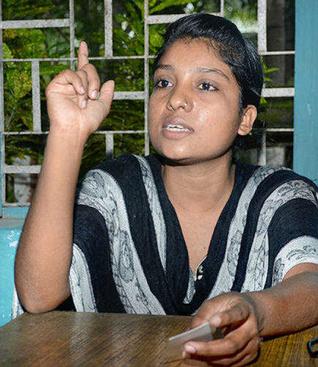
Anoyara Khatun.— Photo: Sushanta Patronobish / The Hindu

As the world celebrates Pakistani teenager Malala Yousafzai winning the Nobel Peace Prize, Malala herself is celebrating the courage of a little known young girl from West Bengal’s Sandeshkhali area who has been quietly working against the trafficking of young girls from the region.

Anoyara Khatun, 18, from North 24 Parganas, has, with the support of other children and non-governmental organisations, built a strong network to resist trafficking of young girls and prevent child marriages in the region.

“Malala and the Malala Fund celebrate Anoyara’s exemplary courage and leadership. She has helped reunite more than 180 trafficked children with their families, prevented 35 child marriages, rescued 85 children from the clutches of child labour and registered 200 out-of-schools (drop-outs) into schools,” says a Facebook post by the Malalafund, an initiative by Malala.

The post made on October 13, International Day of the Girl, only a few days after Ms. Malala was awarded the Nobel Prize, has described Anoyara as “a true girl hero.”

When The Hindu met Anoyara at Sandeshkhali on Wednesday, she was aware of the Facebook post and could not stop talking about Malala. The first year student of a local college has also collected a number of vernacular newspapers that published news of Ms. Malala’s award and shared it with her friends.

“Though I have not met Malala, I did meet her father Ziauddin Yousafzai at Brussels in June 2012,” she said. She made the trip to Belgium when she was nominated for The International Children’s Peace Prize.

“Trafficking of young girls and child marriages were rampant in the villages here. Poverty and lack of awareness and education provided the ideal conditions for traffickers to operate here,” Ms. Anoyara said.

In 2008, Save the Children, an international non-governmental organisation working for child rights, helped establish a number of multi activity centres in the Sandeshkhali area. These centres help create awareness among the children of the region about the dangers of trafficking and similar crimes. Anoyara recalls stories of how she and others chased away traffickers who came offering jobs and marriage to young girls in the region.

Jatin Mondar, the State Programme Manager of Save the Children, West Bengal said that through these centres, the organisation had managed to put in place a “committee-based child protection model” in Sandeshkhali since 2004.

“Now, if someone approaches the villagers with the proposal to take a girl to Delhi or anywhere else for work, that person is sure to be handed over to the police by us,” Anoyara said.

source: http://www.thehindu.com / The Hindu / Home / by Shiv Sahay Singh / Sandeshkhali (North 24 Parganas) / October 16th, 2014

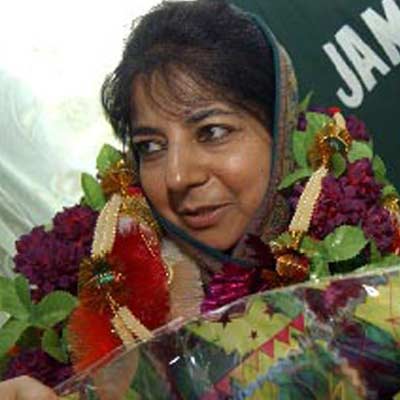
Mehbooba Mufti urges Centre to rebuild health sector in Jammu and Kashmir

MehboobaMPOs150ct2014

PDP leader Mehbooba Mufti today sought financial help from the Centre to rebuild health sector in Jammu and Kashmir besides a medicine bank and AIIMS-like institutes.

In the Consultative Committee of Parliament for the Ministry of Health and Family Welfare, Mufti said health sector was affected the most in recent  floods and the mountainous region of the state needed fully-equipped ambulances. Health Minister Harsh Vardhan  chaired the first meeting of the committee since the BJP government came to power.

The militancy-hit state also required trauma centres due to large scale violence and cases of road accidents, she said.

Mufti, whose party is in opposition in the state, also drew Vardhan’s attention to the non-functioning status of super-specialty hospitals in the state, saying only buildings exist and no patient care is available there.

She said there should be a nodal officer at the Centre to oversee the central-sponsored projects in the state and added that Centre should partner the state to provide health insurance to people. The premium of the scheme, she said, should depend of the financial status of the people.

Given the magnitude of damages, the situation calls for both material and technical intervention from the Centre to bring the health sector back on rails, Mehbooba told the Health Minister, according to a statement released in Jammu.

“Most of the vital diagnostic equipments including CT scans, X-ray plants, laboratories and blood banks at Srinagar’s referral hospitals – SMHS, Bone and Joints, Lal Ded, JVC and GB Pant – have suffered immense damage due to floods and needs to be restored on priority,” she said.

She also urged the Centre to ask the Medical Council of India (MCI) to relax the norms for J&K so that the newly sanctioned five medical colleges are made functional immediately to cope up with the shortage of doctors. She pointed out that the doctor-patient ratio in Kashmir was 1:1000, far below the World Health Organization (WHO) standard of 1:500.

Apart from medical colleges, Mehbooba also stressed on the need for paramedical institutes like nursing colleges and demanded the setting up of All India Institute of Medical Sciences (AIIMS) and a National Institute of Public Health in the state.

She also stressed the need for strengthening referral healthcare facilities at the district level by setting up integrated super-specialty, trauma, maternity, pediatric and other such institutions in the peripheries so that the patient rush is lessened at existing facilities in the urban centres.

“A major crisis  witnessed during floods was that due to complete breakdown of the healthcare infrastructure in Srinagar and lack of connectivity, the patients had to be diverted to less equipped hospitals both within and outside the city,” she said.

The PDP president also drew the Centre’s attention to lack of funding for equipping health care  centres with necessary infrastructure.

Due to the massive damage to major medical stores in Kashmir because of floods, there is a pressing need for ensuring adequate drug supplies to hospitals in J&K especially for patients suffering from life-threatening diseases, cancer, cardiac problems, diabetes, kidney problems, maternity problems and psychiatric disorders etc, she said.

“A drug bank should be created both at the provincial and district-levels to ensure speedy availability of quality life-saving  drugs  and surgical support on subsidised rates to the patients,” she said.

Mehbooba also called for moving the health sector from a “cure” to a “care” model and introducing Patient Protection and Affordable Care Act which seeks to link the quality of care with the cost of care.

“This law must seek to rebalance the system’s resource allocation and reward the value of care over volume of care,” she said.

She also called for focusing on primary healthcare with thrust on public-private participation in tertiary and super-specialty arenas.

source: http://www.dnaindia.com / DNA / Home> News> India / Place: New Delhi, Agency: PTI / Wednesday – October 15th, 2014

Former Maharashtra labour minister Sabir Shaikh dies

Kalyan :

Senior Sena leader and former state labour minister Sabir Shaikh died on Wednesday due to prolonged illness in a private hospital in Bhiwandi. Qureshi was 71-year-old.

Shaikh who was unmarried was living alone at Kongaon area in Bhiwandi. He was only biggest Muslim face of party who win three times MLA election and was also posted at state labour minister post during Sena-BJP government in state.

It is said that Shaikh was suffering from illness and recently he was admitted in Ved hospital in Kongaon where he died during the treatment.

source: http://www.timesofindia.indiatimes.com / The Times of India / Home> City> Mumbai / Pradeep Gupta, TNN / October 05th, 2014

Lokmanya Tilak’s immortal stamp on Ahmedabad

Ahmedabad :

The city is rightly regarded as the battlefront chosen by Lokmanya Tilak for India’s struggle for Independence as it figured prominently in all his endeavours. To commemorate Tilak’s birth anniversary today, TOI trawls through history and comes up with some fascinating facts about Tilak’s close association with Ahmedabad and  Mahatma Gandhi .

According to city historian Rizwan Qadri, Tilak – one of the earliest and strongest advocates of Swaraj (self-rule) and a strong radical in the Indian consciousness – first came to Ahmedabad in 1893 to attend a Bombay Provincial Council meeting. In the city, he met reformist poet Kavi Dalpatram, who played a major role in promoting the Gujarati language. When Dalpatram died, Tilak presented a tribute in Kesri, a Marathi newspaper Tilak had founded in 1881 as a voice of the freedom movement.

At the 1902 Congress session in the city, several close aides of Tilak participated. In 1907, a moderate Congress leader from Ahmedabad, Ambalal Sakarlal Desai, had a direct clash with Tilak over ideological differences.

The forms of political action initiated by Tilak – the boycotting of British goods and passive resistance – later found resonance in Gandhiji’s strategies to win liberty for India.

On July 22, 1908, Tilak, a bitter critic of British colonialism and its oppressive rule in India, was arrested for sedition. Tilak was shifted to Ahmedabad by a special train on July 23 in 1908, which happened to be his birthday. Tilak was incarcerated in the Sabarmati Central Jail for 53 days, during which hundreds of supporters protested the British move. This forced the British to deport him to Mandalay, Burma (Myanmar), to serve the sentence of six years.

During the Navratri of 1908, around 60 to 70 garba songs were written keeping Tilak in mind, which were banned by the British.

source: http://www.timesofindia.indiatimes.com / The Times of India / Home> City> Ahmedabad / by Ankur Tewari, TNN / July 23rd, 2014

Office-Bearers of MEWA

The Executive Committee of Muslim Employees Welfare Association (MEWA) was reconstructed at the Annual General body Meeting (AGM) held recently.

The following are the office-bearers unanimously elected for a period of three years, according to a press release from Secretary Shameem Ahamed: V.A. Siddique (President), Capt. Mir Afzal Hussain (Vice-President), Shameem Ahamed (Secretary), Baqar Umer Khan (Joint Secretary), Syed Ibrahim Hussaini (Treasurer), Anwar Pasha, Abdul Razak Shariff, Syed Rafiulla Hussaini and Thalath Afroze (Members) and Mir Sarfarazur Rahman and K. Shafiulla Khan (Co-opted members).

source: http://www.starofmysore.com / Star of Mysore / Home> In Brief / October 09th, 2014

Sweetest sound of secularism

Ahmedabad :

Fourteen-year old Ayesha Belicha, a native of Radhanpur, knows whole chapters of Bhagvad Gita by heart. Ask her about the second stanza of the book’s ninth chapter and she will recite it with perfect diction. She is one of the five Muslim girls from city-based Prakash Andh Kanya Vidyalaya who on Sunday made it to the finals of the Gita recitation competition organized by a religious organization, Adhyatma Vidya Mandir.

“I was not exposed to the Gita at all before the competition. But with encouragement and the constant support of my teachers, I started understanding the meaning of the shlokas that I recite. It is not about religion but about an overall philosophy of life,” said Ayesha.

It was a rare show of religious harmony at the competition that was held in Thaltej on Sunday. The five girls stood out for their brilliant performance. A total of 86 students from class V to IX, who were selected out of 450 students of 12 city-based schools, participated in Sunday’s event.

Kundan Rawal, principal of Prakash Andh Kanya Vidyalay, said that they have all-faith prayers at the school where they identify the good singers and girls with good memory.

“We asked the bright girls whether they would like to participate and they happily agreed. For the past one-and-a-half months, they have listened to audio tapes to refine their pronunciation. They have also got Gita in braille script,” she said.

Swami Viditatmanand of Adhyatma Vidya Mandir said that they see it as blurring of communal lines. “A child does not know about religion or faiths. We are glad that children from other faiths are participating as it will at least expose them to the world outside. It will also provide them a viewpoint for evaluating other faiths. Our goal in organizing this annual event is only this ? to make the children aware of their heritage,” he said.

source: http://www.timesofindia.indiatimes.com / The Times of India / Home> City> Ahmedabad / TNN / August 25th, 2014

Mysore’s green warrior

Heritage

Karnataka owes much of its position as one of the top-ranking horticultural states in the country to the initiatives taken by Tipu Sultan, who sent missions abroad to collect seeds of flowering plants, vegetables and fruits including the famed Ganjam fig and the Devanahalli pomelo, writes S Tahsin Ahmed.

TipuMPOs15oct2014

On December 10, 1985, when I accompanied the CBI team as the official witness in a raid conducted at Mysore during which a sword belonging to Tipu Sultan was seized, I visualised Tipu as a brave and valiant king who died fighting the British invaders. Later, I realised that Tipu Sultan was a much celebrated ruler in the history of South India not just for his military exploits, but also for his contributions in the fields of sericulture, rocketry, animal husbandary, social reforms, handicrafts, trade and commerce, etc. There is another major achievement of Tipu Sultan that has not been highlighted enough: his contribution to the field of horticulture.

In fact, Karnataka owes much of its position as one of the top ranking horticultural states in the country to the various initiatives taken by Tipu Sultan in his 18-year rule (1782-1799). Today, horticultural crops are raised on 18.99 lakh hectares of land in Karnataka, accounting for about 15.07 per cent of the total cultivable area.
What do historical records reveal?

In 1799, immediately after the defeat of Tipu Sultan, the British asked Francis Buchanan to survey South India which resulted in the publication of the historical work, ‘A journey from Madras through the Countries of Mysore, Canara and Malabar (1807)’. This book gives an interesting account of horticultural fields which were called tota, as existing during Tipu’s regime. “In the ashta gramas, there are four kinds of tota or cultivated garden lands, tarkari tota or kitchen gardens; tayngana tota (read tengina) or coconut gardens; but many other kinds of fruit-trees are planted in them; yele tota or betel-leaf gardens; huvina tota or flower gardens.” Buchanan also lists 48 vegetables grown in the areas ruled by Tipu Sultan.

Francis Buchanan took notes at lectures at the Botanical Garden, Edinburg in 1780 (before he came to Mysore) which got misplaced. Through another traveller, it accidentally reached Srirangapatna and came to the possession of Tipu Sultan. Tipu got this manuscript bound in tooled leather and added it to his big library, a reflection of his interest in botany and passion for horticulture. His library included many books on management of fruit trees.

Tipu kept up a sustained campaign against feudal chiefs called palegars who usurped land belonging to farmers. Land seized from palegars was handed over to farmers, tenants and bonded labourers. Tipu, it seems, was one of the earliest champions of the land reforms movement. Farmers were encouraged to expand the area of horticultural cultivation. Waste lands were exempted from rent in the first year of cultivation which was followed by tax concessions in the succeeding years. Incidentally, area expansion is one of the major schemes of the National Horticultural Mission today.

Tipu had a huge army and military police, to whom he gave cultivable land in addition to regular pay. Low-level workers like nirgunties were also allotted land to boost cultivation. He is the only king in the history of Karnataka who did not grant a single jahgir. These anti-feudal reforms had a far-reaching impact on the growth of agriculture and horticulture.

Missions abroad

An 80-member mission headed by Mohammed Darwesh Khan was sent by Tipu to France. The mission reached Paris on July 16, 1788, and met the French emperor and handed over a memorandum given by Tipu.
Among other things, the memorandum demanded seeds of flowering plants, vegetables, European fruit plants and trees. The mission was successful in procuring spice plants and camphor seedlings from Molucca.

A huge trade mission was sent by Tipu Sultan to Turkey which met Sultan Hameed in Constantinopole on November 5, 1787. It carried large quantities of black pepper, cardamom, sandal wood etc and succeeded in identifying an overseas market for this produce.

The mission brought back seeds of many flowers, vegetables and fruits. The famous Ganjam variety of fig was brought from Turkey.

Tipu Sultan wrote letters to the darogha at Muscat and instructed him to buy saffron seeds and date palms. The darogha was also asked to obtain silk worms from Qishm island and send them to Srirangapatna alongwith a few men knowledgeable about sericulture.

Farmers were encouraged to cultivate mulberry in their lands. In several diplomatic and trade missions sent by Tipu Sultan to countries like Muscat, Oman, Jordan, Iraq, Iran and Penang, export and import of horticultural produce was a major component.
Role of Thigalars

Tipu noticed that a class of people called Thigalars near Salem had expertise in cultivation of vegetables.

He encouraged them to migrate to Bangalore, Hoskote, Kolar, Devanahalli and Sira, which boosted the cultivation of vegetables in Karnataka. Other measures taken were to exempt farmers growing vegetable crops and cash crops like cashew, cardamom and cinnamon from payment of land revenue. The famous Devanahalli pomelo was also introduced by Tipu.

It was made mandatory for the village patels to plant avenue trees on either sides of the roads throughout his kingdom. But the interesting aspect here is that Tipu ordered planting of mango and tamarind trees among other trees which reveals that preference was given to useful trees over ornamental or just shade-giving trees.

Establishment of gardens

One wonders how Hyder Ali, father of Tipu Sultan, who was in the thick of military campaigns throughout his reign, found time to establish gardens. Hyder who had a taste for gardens (‘Char-bagh’ style), planned Lalbagh on 40 acres of land at Bangalore along the lines of Khan Bagh at Sira, established during the time of Dilawar Khan, the representative of the Moghul emperor in the South.

He imported plants form Delhi, Multan, Lahore and Arcot, apart from laying out a garden at Malvalli and another fruit garden at Srirangapatna, also called Lalbagh.
Tipu expanded Bangalore’s Lalbagh by acquiring more land. The garden was earlier known as cypress garden because the roads from the entrance to the garden and inside the garden were lined with cypress trees.

This is evident from a painting of this garden drawn on the spot by R H Colebrooke and published in 1793 at London. Another painting of the Lalbagh by James Hunter published in 1805 and showing many cypress trees is captioned ‘East view of Bangalore with the Cypress garden.’

Equally magnificent was the Lalbagh at Srirangapatna. The Gardens around the Gumbaz where both Hyder Ali and Tipu Sultan are buried were full of fruit trees, flowers and vegetables of every description. This Lalbagh is also believed to have served as a nursery for the kingdom. Fruits like apples, pears, guava and plantains were successfully grown here. Imagine apple trees in a place like Srirangapatna and that too in the 18th century! Also grown were betel nuts, coconuts, sandalwood, sugarcane, indigo, cotton, mulberry, cereals and pulses.

In the Third Mysore War (1792), the cypresses of Lalbagh at Srirangapatna were axed to provide firewood for British troops. After the war, Tipu restored much of the glory. But in the final war of 1799, British troops breached the fort wall and devastated Lalbagh. Nothing remains of this garden except a painting of the entrance to Lalbagh at Srirangapatna by James Hunter (1805).

The fruit orchard at Malavalli also no longer exists. Buchanan who visited this garden after Tipu’s death noticed 2,400 trees with mangoes and oranges in abundance. The garden surrounding the Daria Daulat Bagh at Srirangapatna was more of an ornamental garden, but very well maintained.

Tipu Sultan’s love for horticulture was so great that he linked this with dispensation of justice. For petty offences, convicts had to plant fast growing plants and for major offences, they had to plant trees like jamun, mango and coconut. In 1788, Tipu Sultan issued a circular to all amildars and in 1792 he passed a regulation that the fines of the farmers shall be commuted if the offender plants two trees, waters them and nurtures them till they reach a certain prescribed height.

Can we think of a better environmentalist among kings gone by, long before environment and climate change became fashionable slogans?

(The author is Additional Director of Horticulture (Administration), Lalbagh, Bangalore.)

source: http://www.deccanherald.com / Deccan Herald / Home> Supplements> Spectrum / by S. Tahsin Ahmed / July 04th, 2011