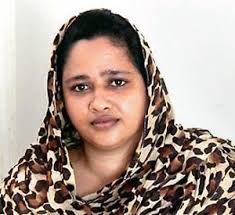
A Muslim, she looks after 14 Hindu HIV positive kids

TabassumMPOs15oct2014

by:Deepthi Sanjiv

​Tabassum faced tough opposition from family and society when she decided to work with the children

Breaking the HIV taboo is a challenging task. The moment a case is diagnosed, some families choose to distance themselves from the victims. About ten years ago, when a close friend of Tabassum died just two days after the doctors told her that she was suffering from HIV, Tabassum saw that none of her friend’s family even wanted to touch her. At this point, Tabassum was left alone to perform her last rites. That was when she decided to dedicate her life for the sake of HIV positive children. Until then, her job with an NGO was nothing more than a source of income.

Speaking to Bangalore Mirror, Tabassum said, “For the past 14 years, I have been working for HIV positive children and pregnant women. My outlook changed after this incident.” Recollecting her past, she said, “I hail from a very poor family. I secured a distinction in SSLC and wanted to study further, but my family could not afford to support my studies. I somehow managed to go up to PUC, but by then, my family got me married. After marriage, I did not want to stay at home and went on to do my degree, after which I took up a job with an NGO for the sake of a living. It is never easy for a Muslim woman to come forward and work, specially with an NGO where you deal all kinds of people. I somehow fought opposition from family and went ahead. I continue to work at the NGO even today, and at the same time since I enjoy working with kids, I took it up as a challenge and went ahead to set up my own protection care centre called ‘Snehadeep’ about two years ago,” she said.
“Strangely, I received lot of opposition; some even said it was not right for a Muslim lady to take up this responsibility. I can proudly say that at Snehadeep, I look after 14 girls in the 7-12 years age group and all of them are Hindus. There is no religion once these children fall sick. Often, their families prefers to distance themselves from the children.

More than their physical health, these children suffer from psychological pain or want of company. The bigger children scan through newspapers everyday looking for any new medicine that can cure them. They know that they will die soon. At times, convincing them to study is also difficult. When these kids are at their last stage and are shifted to the hospital, nobody from their family wants to associate with the child.

Often, they are left to die alone. I try my best to be there with them during their last stage though it is very painful and perform their last rites in the best way I can. With every death, I only pray and hope that this is last child dying before me. The initial days were a struggle. I used to go door-to-door on a Sunday asking people for help. Even a packet of biscuits for kids would make a difference. Getting funds for food is always a big task,” she said.

For Tabassum, spending time with the kids provides peace of mind. “Recently, I was very happy when a child received 92 percent in PUC. ”

source: http://www.bangaloremirror.com / Bangalore Mirror / Home> Bangalore> Others / by Deepthi Sanjiv / Bangalore Mirror Bureau / October 15th, 2014

Shah Rukh to star in Farah Khan’s next after Happy New Year

Absence makes hearts grow fonder, and who knows it better than Farah Khan. And that’s why the director is planning another film with her best friend Shah Rukh Khan , even before their latest collaboration has hit the screens.

Farah, SRK still best of friends

Farah Khan recently told a leading tabloid that the superstar will feature in her next film post Happy New Year.

Farah and Shah Rukh, gave blockbusters Main Hoon Na and Om Shanti Om, have been friends since their early days in Bollywood. Their friendship soured after the two had a fallout over Farah’s husband Shirish Kunder. But like all true friendships, they swam past it.

When asked how did they resolve their differences, Farah credited SRK’s wife Gauri for the patch-up. “She kept the friendship going”, said Farah.

Well, we wish them all the best for Happy New Year that releases next week.

source: http://www.indiatoday.intoday.in / IndiaToday.in / Home> Movies> Bollywood / October 14th, 2014

Thankful for His Teachers

A volley ball enthusiast, ever-learning photographer, avid reader of science-related articles, ardent blogger and a passionate father would be too few words to describe Syed Maqbool Ahmed, who is presently heading the Central Instrumentation Laboratory of the University of Hyderabad, where he oversees the day-to-day functionings.

Perhaps the description that instantly draws eyeballs to him would be of his association with India’s successful Mars Orbiter Mission, Mangalyaan. Ahmed is the person who developed a quadrupole-based mass spectrometer, CHACE (Chandra’s Altitudinal Composition Explorer), which was used in India’s mission to the moon, Chandrayaan-1, which discovered water there. An upgraded variant of CHACE, named MENCA (Mars Enospheric Neutral Composition Analyser), is aboard Mangalyaan.

The 53-year old Principal Scientific Officer is known for his passion for science. Having worked at NASA’s Jet Propulsion Laboratory in the US earlier (1994-96) and with ISRO’s Chandrayaan-1 project, Ahmed is a content and accomplished scientist who acknowledges the role of destiny and his teachers in his success.

Ahmed was the project manager of the team of scientists who, as part of the Moon Impact Probe (MIP) mission, developed an indigenous science payload called CHACE, which detected the presence of water on the Moon in November 2008.

Hailing from a middle class family in the remote village Alampur in Mahabubnagar district of Telangana, Ahmed went to Hyderabad for higher studies after completing his schooling in the Telugu medium. “My family, comprising five brothers and three sisters, wanted me to become an Engineer due to obvious reasons of poverty. I gave the EAMCET entrance test thrice and failed each time. That was a big jolt in life, but my aspirations were alive,” says Ahmed.

Back then, he had no passion for Science. After BSc Honours from New Science College in the city, the biggest turnaround happened in his life when he gave the interview for MSc Physics at University of Hyderabad in 1982. “Out of the 30 faculty members in the Physics department, 28 were US returned. In the interview, I could barely understand the questions due to the complex language,” recalls Ahmed.

“AK Kapur sir in the panel understood my difficulty and started asking me questions in Hindi and translated others’ questions too. The panel was happy and I got through. Had he not done that, I would neither have got through nor have realised my passion for Science. Such teachers of exceptionally high standards are hard to find,” says Ahmed.

Soon after his postgraduation, while his parents wanted him to go to the Gulf to earn a living, he decided to join Physical Research Laboratory (PRL), Ahmedabad for a PhD in 1985. “I had to literally fight with my siblings to pursue my PhD and I had to choose PRL over two IITs because of a few hundred rupees extra I would receive towards fellowship,” quips the scientist.

He went on to complete his PhD in Simulation of Planetary Atmosphere or Laboratory Astrophysics in 1990 and joined the Institute for Plasma Research (IPR), Gandhinagar, in 1992 and continued to work as Associate Professor, till 2004. During a sabbatical in 2001-02, he was engaged with the Swiss Federal Institute in Switzerland.

Ahmed joined ISRO’s Chandrayaan project in 2005 and developed a quadrupole-based mass spectrometer, CHACE, which worked successfully in India’s Moon mission. He left ISRO at the age of 46 when he found about a mysterious disease that had infected his daughter. The same year, he joined Central Instruments Laboratory of University of Hyderabad as Principal Scientific Officer.

For him, life has been driven by serendipity. “ISRO happened to me by chance. It was a coincidence when I met Prof R Sridharan, Director of Space Physics Lab (SPL). He took me to the Chief, Madhavan Nair, who handpicked me from Department of Atomic Energy (IPR comes under this department) to Department of Space. This was incredible,” recollects Ahmed.

Acknowledging the contributions of his teachers in his life, Ahmed, presently, apart from heading CIL, holds regular talks on Indian space programmes and also conducts training sessions for Science teachers.

“Schools have to ensure Science is taught with passion. The introduction of the subject is very important. It is very difficult to capture students’ attention for more than half an hour. I try to link the subject to day-to-day activities,” he points out.

He believes a bit of Psychology and sequencing of dosage where teachers ensure students understand the basics first before moving on to bigger things too is important in teaching.

“Students today are much aware of things around them. When they ask me well-prepared questions, I am forced to say I don’t know,” says Ahmed, who believes teachers need to be honest and prepared to bring their experiences and observations from life into the classroom.

According to him, India has failed to attract the best minds into research. “The reason US prospers in Science and research is because they have attracted the best minds and are providing incentives. Our people are doing programming at the same time,” he laughs.

On the CHACE-turned-MENCA, he offers, “It is a very sensitive instrument and I am confident that we will be the first to locate water on Mars,” says the proud scientist, who has been blogging about Mangalyaan for the past 18 months.

Rahul.v@newindianexpress.com

source: http://www.newindianexpress.com / The New Indian Express / Home> Education> Edex / by Rahul V. Pisharody / Hyderabad – October 13th, 2014

Surgical cure for ‘silent fracture’

Kolkata :

An alarming 45 to 50% Kolkatans in the age group of 55 to 70 suffer from osteoporosis or some form of bone disorder, mentions a survey done by orthopaedics.

For about half of them, the disorder results from loss of bone density and it cripples them within two years.

“Silent fracture” of the vertebral column induced by osteoporosis is a common manifestation of bone disorder that now affects thousands in the city and 25 million across the country.

However, there is some ray of hope as a new form of treatment has emerged over the last few years to treat bone compression fractures effectively, say experts.

Balloon kyphoplasty is a technique that involves repairing a fractured and compressed bone with a balloon that’s inserted into the vertebral fracture.

It helps to restore the bone in its original position, thereby curing the resultant stoop caused by a curved spine.

The effect, according to doctors, is a long-lasting one and has helped patients improve their quality of life.

“Bone degeneration starts from the age of 45 and it gets very acute in some people. Loss of bone density leads to osteoporosis, often resulting in fracture of the spine. Once that happens, the spine gets curved, leading to a stoop that restricts movement. Balloon kyphoplasty is the only way of repairing a fracture-induced curve. But, it is used only in those who are in intense pain and have a severe stoop,” said Abrar Ahmed, orthopaedic surgeon at Apollo Gleneagles Hospital.

The surgical procedure is a simple one and the recovery time is just about two hours.

A small hole is drilled on the skin near the position of the vertebral fracture. A needle with the balloon is inserted into the fracture to lift up the bone to its normal height, thereby restoring the curve.

The balloon is then taken out with the needle and the gap is filled up with a fluid. The patient can walk within two hours of the surgery. Balloon kyphoplasty is also effective in trauma-induced spinal fractures.

“It works well for trauma patients with spinal fractures,” said Sisir Mandal, another rorthopaedic surgeon.

Experts said a simple bone mass density (BMD) test could help prevent bone compression and spinal fractures. “Those above 50 years of age, people who have been taking steroids for a long time and those with a history of bone injury or illness should undergo the test. BMD helps assess bone health and works as an alert for making pharmacological and lifestyle interventions to restore it timely. It could help to curb at least half of the spinal disorders including fractures. But, very few undergo the test on time,” said Ahmed.

The surgery is expensive, though. It costs Rs 2 lakh and is recommended only when all other forms of treatment are ruled out.

A healthy diet and a regular, active lifestyle help to slow down bone degeneration, said experts.

“Over the last decade, we have seen a major shift in lifestyle and food habits that has affected bone health. Sadly, awareness about bone diseases is among the lowest. This is probably why we have seen a spurt in the number of osteoporosis patients,” said Debashish Basu, preventive medicine expert.

Ahmed said balloon kyphoplasty was among the “safest and most advanced surgeries” of modern times.

source: http://www.timesofindia.indiatimes.com / The Times of India / Home> City> Kolkata / TNN / October 13th, 2014

ISL Tour Diary: Kolkata, a city that offers something new every time

Kolkata is known for its love for the game of football. (Photo: Shubasish Dutta)

Being a Probashi Bengali (a non-resident Bengali), my affair with Kolkata is a long-standing one. Born to parents who were originally from Kolkata, I have been brought up in Delhi all my life. I always had a strange feeling whenever I visited the city, predominately because of the culture difference. While I was growing up, I have always seen Kolkata as an outsider, without having a chance to feel the soul, the spirit of the city.

But each time I had been there, the city gave me a sense of belonging, offered me something new to take back. The City of Joy, as it is affectionately called, does something to you which cannot be upturned. Every time I have travelled to this city, it left an everlasting impression on me as a person.

My latest trip to the city was an official one, for two days, to cover the inaugural game of the Indian Super League (ISL) – the new hope of Indian football. I have always heard of the city’s madness for football but it was only this time that I had the opportunity to witness it from close quarters.

The city is crazy about football

The people of Kolkata force you to rethink the definition of passion. The zeal with which they follow their game is probably something I haven’t seen before. Wherever you go, from a narrow lane in north Kolkata to swanky grounds of the south, you would see a bunch of kids playing football. A day before the match I planned to travel around the stadium and see the buzz generated by the ISL in the city. It was a rainy afternoon, drizzling to be precise, and I saw people unmoved from their queues, standing undeterred in front of the ticket counters at the iconic Salt Lake Stadium.

From school kids to senior citizens, everybody braved the rain to get their ticket. If this was not enough, then on the match day when I checked out of my hotel to reach the stadium, a journey of not more than 10 minutes took an hour to complete. Hoards of people were charging towards the stadium entrance giving the traffic police a nightmare. It wasn’t a Kolkata derby clash but people here just love the game. The stadium was jam-packed with sixty thousand plus attendance. The crowd made Mexican wave on every good move by the home team Atletico de Kolkata, which eventually won 3-0 against Mumbai City FC. If you want to watch football, Kolkata is the place for you. The city’s passion for the game is second to none.

An unplanned visit to Syed Rahim Nabi’s home

It happened to be that I went to attend a lunch invite to one of my relatives living in Howrah. In the middle of a lunch-table conversation, when I disclosed my purpose of visiting the city, my uncle quickly rose up and with an animated face, said: “Nabi lives near our house! Yes, footballer Nabi lives a few blocks away.” And suddenly all my focus shifted from the delicious lunch cooked by my aunt to Nabi’s house. So quickly after finishing the food (leaving the table without finishing the food is a sin in Kolkata), I went to check out Mumbai City FC captain’s house.

But the visit left us disappointed when we realised that nobody was at home. However, I was left flabbergasted with the modesty of Nabi’s home. It was a simple three-storey building located in one of the narrow lanes of Howrah. For a person unfamiliar with the locality, it was not until I saw the sign board that I realised that I am standing in front of Nabi’s home. It speaks a volume about Nabi’s character and the hardship behind his success.

The Maidan Area – home of the legends
If you are in Kolkata and the purpose of the visit is football, then a visit to the Maidan area is a must. The name of the area struck me at first when I heard it but when I reached there I realised why it is called the Maidan area, mostly because of the gigantic grounds. The place is home to three of the most legendary football clubs in the country – Mohun Bagan, East Bengal and Mohammedan Sporting.
These clubs have so far ruled over the city, creating a divide in the fan base. Not just these, many more city football clubs are located in the area, which is maintained by the Army. There’s also a statue of Gostha Pal, which grabbed my attention. Pal is considered one of the most celebrated and gifted defenders the country has ever produced. A Mohun Bagan legend, Pal was nicknamed “The Great Wall of China” for his great defensive skills. He was the first Indian footballer to be honoured with the Padma Shri award.

Incidentally, my fascination towards the Maidan area didn’t end here. It is also home to the Mecca of Indian Cricket – The Eden Gardens. And even on a tour to cover football, I couldn’t resist but to quickly grab a few clicks of the legendary stadium.

source: http://www.ibnlive.in.com / IBN Live / Home> Football Next> News / by Subhasish Dutta, IBN Live Sports / October 14th, 2014

New Urdu booklet makes a case for low salt intake


Abid Moiz / PHOTO:G_RAMAKRISHNA / The Hindu
It is dubbed a silent killer. But many tend to take the doctor’s advice with a pinch of salt. Literally. Studies show that Indians consume twice the recommended salt intake, exposing themselves to high health risks. While there is enough literature on the dangers of high salt diet in English, the same is not the case with vernacular languages.

Urdu readers can now heave a sigh of relief. For the first time perhaps, a good Urdu booklet on the need for reducing salt intake has hit the market. Abid Moiz explains the deleterious effects of excessive salt consumption in a telling manner in his book Namak Ka Istemal Kam Karein. Through charts and tables, the 35-page booklet lists the risks involved and the care to be taken.

Dr. Moiz talks about salt in a gripping manner, adopting a narrative style. In easy to understand language, he traces the history of salt and how it was earlier used as a preservative to store meat and other food. Salt is made up of 40 per cent sodium and 60 per cent chloride. “It might add to the flavour of food, but its overuse impacts the kidney and heart, says Dr. Moiz.

He also establishes a link between the excessive use of salt and high rate of calcium excretion. “Cutting down on salt is also necessary to prevent bones from becoming brittle,” he writes.

In the coming days, Dr. Moiz plans to bring out health series on different subjects such as low consumption of sugar, choosing the right of type of cooking oil, excessive use of fruits and vegetables.

Another interesting book recently penned by Dr. Moiz in Urdu is about medical tests – Aam Tibbi Muaine. It is quite informative as it talks in depth about different types of tests such as stool, body fluids tests, mammography, endoscopy, imaging and prenatal tests. There is also a chapter about unnecessary tests being prescribed by doctors these days. ‘Defensive medicine’ as it is called, is intended to avert future possibility of malpractice. Such tests are primarily to avoid liability rather than benefit the patient, says Dr. Moiz.

source: http://www.thehindu.com / The Hindu / Home> News> Cities> Hyderabad / by J. S. Ifthekhar / Hyderabad – October 13th, 2014

Swachh Bharat Abhiyan received a huge response at the Aligarh Muslim University campus

AligarhMPOs14oct2014

Aligarh: 

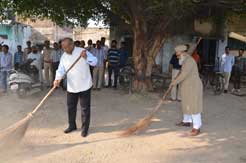
Swachh Bharat Abhiyan, an ambitious programme launched by the Government of India, has received a huge response at the Aligarh Muslim University campus. All schools, colleges, departments and Halls of residence in AMU organized cleanliness drive in their premises on a large scale.

The Pro-Vice Chancellor, Brigadier S. Ahmad Ali launched the Swachh Bharat Abhiyan in the Department of Electricity. He urged the people to adopt cleanliness as a permanent ethos of their life and work for generating awareness regarding clean atmosphere and personal hygiene. Member Incharge, Prof. Mohibullah was also present on this occasion.
Professor Naima Khatoon, Principal, Women’s College initiated the cleanliness drive and took to sweep in the college along with faculty members Professor Imrana Naseem, Dr Hina Parvez, Professor Masood Alvi, Dr Jabir Raza, Dr Shaukat Haseen and Rumana Siddiqui. A large number of girl students participated in the drive. The AMU Girls High School, Principal, Ms Amna Malik led the drive. Addressing on the occasion, she urged the students to promote cleanliness and hygiene and work for a pollution free campus.

At the Centre for Distance Education, Director, Dr Nafees Ansari started the Swachh Bharat Abhiyan and urged the students to strengthen the mission by carrying it to common people in nearby localities.

Professor Shahab F Hashmi, Provost, Hadi Hasan Hall, along with his team of wardens, students and staff members initiated the drive and pledged to maintain cleanliness in the Hall premises. The Swachh Bharat Mission was launched in Begum Sultan Jahan Hall under the supervision of Dr Seemi Hasan, Provost of the Hall. Dr Shireen Sadiq, Dr Albina Shamsi, Dr Sabiha Tabassum and Dr Sana Chaudhary, wardens, residents of the Hall and staff participated in the national initiative with great enthusiasm.

Officiating Provost, R. M. Hall, Dr Imtiaz Ahmad Khan inaugurated the campaign. All post holders and senior students of the Hall took part in the drive. At the Abdullah Hall for girl students, the Swachh Bharat Abhiyan commenced under the supervision of Dr Ghazala Parveen, Provost of the Hall and her team of wardens. The TW Hostel was awarded first prize in the Clean Campus competition.

In order to promote the campaign and create awareness about the Swachh Bharat Mission, Dr Zaheeruddin, Provost, Aftab Hall, along with wardens and office staff, carried out a cleanliness drive in the Hall premises.

source: http://www.indiaeducationdiary.in / IndiaEducationDiary.in  / Thursday – October 09th, 2014

Razzak elected chairman of UP Bar Council

Lucknow-based lawyer Abdul Razzak Khan was declared elected as chairman of the Bar Council of Uttar Pradesh on Sunday.

Razzak won unopposed as all the other contestants- Hari Shankar Singh, Anil Pratap Singh and Shree Nath Tripathi withdrew their nominations in his favour. All the 25 members of the Bar Council, who had to elect the chairman, were present at the headquarters of the Bar Council of UP at Thrornhill Road on Sunday.

Later, Khan promised to make all possible efforts to get welfare schemes for lawyers implemented. Outlinign his priorities, he said that first of all, he would persuade the state government to implement the insurance scheme worth Rs 5 lakh for the welfare of lawyers. Secondly, he assured to request the state government to implement the scheme of stipend to new lawyers.

He even warned the state government that if these two long standing demands were not fulfilled expeditiously, then he would lead the members on a dharna in front of chief minister’s residence on October 31, to pressurize the state government to provide all the necessary assistance to get these two welfare schemes for lawyers implemented.

He further promised to taken more steps for the welfare of lawyers after getting the aforesaid two demands implemented.

source: http://www.timesofindia.indiatimes.com / The Times of India / Home> City> Allahabad / TNN / October 12th, 2014

ASI to dig out Deccani Gardens at Naya Qila

Hyderabad :

In a move that could shed more light on the important historical aspects of Naya Qila heritage complex, the Archaeological Survey of India (ASI) has started excavating the site of what was once the Qutub Shahi Gardens.

Reliable sources from the Archaeological Survey of India told TOI that officials of the Hyderabad Circle of the archaeological juggernaut conducted an inspection of the heritage precinct last week. The land is currently in possession of the tourism department and its private partner, the Hyderabad Golf Association, the sources said.

“We have received orders from the director general of the ASI in New Delhi to begin work. The intention is to expose the Qutub Shahi Gardens, also known as Deccani Gardens. Further, there has been a long-pending demand from the activists for us to begin work,” said an ASI official who did not wish to be identified.

The ASI plans to drain the land parcel of the sewage water that has been accumulated over the years. Further, the vegetation and the debris on the heritage land would be also cleared as part of the plan.

“A report by eminent historian Ghulam Yazdani explains the presence of Qutub Shahi Gardens. We are hopeful that the results will be seen within a week of the excavation,” said ASI superintending archaeologist R Krishnaiah.

Rumours about the ASI unearthing a treasure chest began spreading early last week. The ASI, on the other hand, was swift enough to deny these claims.

“There is no treasure. The land was tilled by farmers until a few years ago. All these reports are baseless,” an ASI official said.

source: http://www.timesofindia.indiatimes.com / The Times of India / Home> City> Hyderabad / TNN / October 06th, 2014

Thumbay Group among Forbes ME ‘Top 100’ in Arab world

Ajman :

Thumbay Group has crossed another milestone today. Thumbay Group has been listed in “Top 100 making an impact in the Arab World”, a list compiled by Forbes Middle East Magazine in the May 2013 Issue 14. Rankings, awards, undoubtedly play an important role in recognizing an organization’s success. Thumbay Group, UAE ranks 44 in the list of “Top 100 Making An Impact In The Arab World”.

ThumbayMoideenMPOs12oct2014

Thumbay Group, UAE established in the year 1997 has come a long way. It has developed into a conglomerate having multifarious business activities and operations spread across the globe. The Thumbay Group, UAE today is a leading conglomerate with a host of medical and healthcare institutions under its ambit. The Group encompasses Gulf Medical University, GMC Hospital and Research Centre, Gulf Medical Centre & GMC Pharmacies in Dubai, Sharjah, Ajman and Fujairah.

Gulf Medical University has a student cohort from 67 nationalities, majority of them are locals and Arabs from the GCC, medical professionals and staff from 22 countries. Patients from over 175 nationalities ranging as far as Africa, Iran, Afghanistan, Pakistan, GCC countries and Western Europe receive treatment at GMC Hospitals & Research Centre, a constituent private teaching university hospital with a capacity of 250 beds housed with ultra-modern facilities. The Group also owns and manages international chain of Health Clubs and Coffee Shoppe, Chain of GMC Diagnostic laboratories, Chain of Pharmacies, Chain of Optical Centres.

“In a short span of time we have worked our way to reach to this position today. I thank the Almighty God, the great leaders of this country, all our staff members for their continued support in achieving this proud status today. We have very big and ambitious plans and God willing with each and every immeasurable support we will be able to reach to the pinnacle of success one day” commented Thumbay Moideen, founder president of Thumbay Group, UAE.

source: http://www.daijiworld.com / DaijiWorld.com / Home> Gulf / Media Release / Ajman – May 22nd, 2013 / posted Wednesday – May 22nd, 2013