Tag Archives: Aasif Mujtaba

Delhi: How Women Are Stitching New Lives from Fabric of Loss and Thread of Hope After in Riot-Hit Shiv Vihar

DELHI :

Women at the Sabaat Center share a moment of joy, building community through their shared work

New Delhi: 

Shiv Vihar carries the silence of broken dreams. The 2020 Delhi riots swept through this northeast Delhi neighbourhood. Homes were burned, shops looted and lives uprooted. Among the soot and rubble, 19-year-old Shumayla and her family lost everything. Their house was reduced to memories.

Today, she sits at a sewing machine in the Sabaat Centre, threading fabrics into full-grown suits. “I began at ground level. Now I can make entire suits. It feels nice to create something on my own,” she said.

For her, the needle of her sewing machine is like a compass guiding her towards hope.
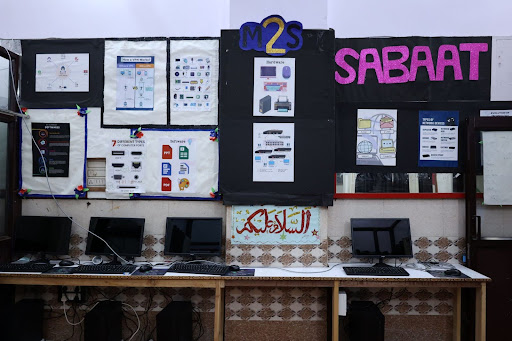
The Sabaat Center at Shiv Vihar

Sewing Stories with Sabaat

An initiative of the Miles2Smiles Foundation, the centre was born from the same flames that destroyed Shumayla’s world. Its founder, Aasif Mujtaba, witnessed firsthand how survivours in Shiv Vihar held together their shattered worlds.

“I saw women in Shiv Vihar holding their worlds together with grace, and I knew they deserved more than just pity,” he said.

From this empathy came Sabaat, a place where women learn to stitch, create and rebuild their identities.

Shabnam, a mother of three, leaves behind her home chores for a few hours to learn something creative at the centre.

“While managing the house along with the work is difficult, I love coming here,” she says.

At the center, women thread, stitch and craft, turning cloth into outfits, tote bags, pouches, magnets, mugs and keychains.

Women work at sewing machines in the Sabaat Center, crafting outfits and other merchandise

Aasif calls their work a story: “Every tote bag, keychain, magnet or cup has a story of survival, strength and hope.”

Farheen Ansari, a fashion designer who leads the training, ensures their skills match market demands. The women attend morning sessions from 9 am to 11 am, growing from beginners to masters over six months or more, depending on their pace.

“We get orders from local boutiques,” she told TwoCircles.net.

Their crafts are sold through the Sabaat Store, returning income directly to the women who made them.

Beyond Stitching

But Sabaat’s work is not limited to sewing. Women learn how to handle orders, set prices, brand products and even promote them online. Acquiring these skills are essential to turn trainees into entrepreneurs.

“Whenever a student learns something new, I tell her to implement it at home,” says Farheen, adding that some do just that.
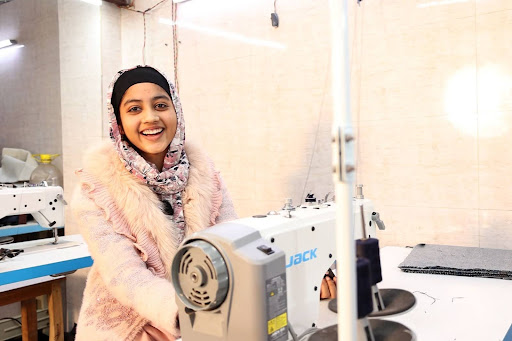
Sabaat empowers women by providing emotional support alongside practical skill training

Women like Sangeeta, Daraqshan, Saiba and Gulafshan have started their own small businesses.

Initiated for survivors of hate violence, widows and women from marginalised and economically vulnerable groups, Sabaat has already trained 70 women.

“Impressively, at least 70% of them have achieved financial independence, whether working within Sabaat or starting their own ventures,” claims Aasif.
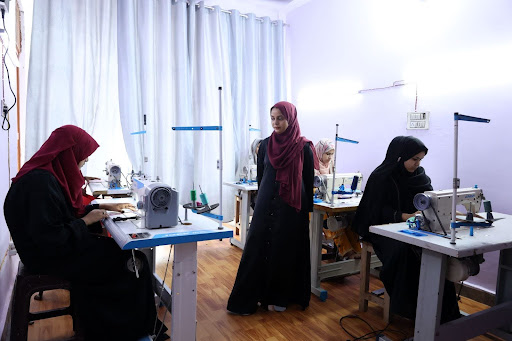
Women at the center undergo an extensive training program for manufacturing products

In addition to offering skill-based training, the programme is also bridging trauma and offering dignity, trust and a voice. Most days end in shared smiles. The women’s laughter fills the centre, evidence that even broken neighbourhoods can teach courage.

Amid ongoing struggles for justice and pending compensation, Sabaat brings healing where paperwork lags. Plans are underway to expand, bringing this safe space to more women and more neighbourhoods.

source: http://www.twocircles.net / TwoCircles.net / Home> India News> Indian Politics> Indian Muslim> Lead Story> Women / by Maryam Hassan & Unzila Sheikh, TwoCircles.net / August 10th, 2025
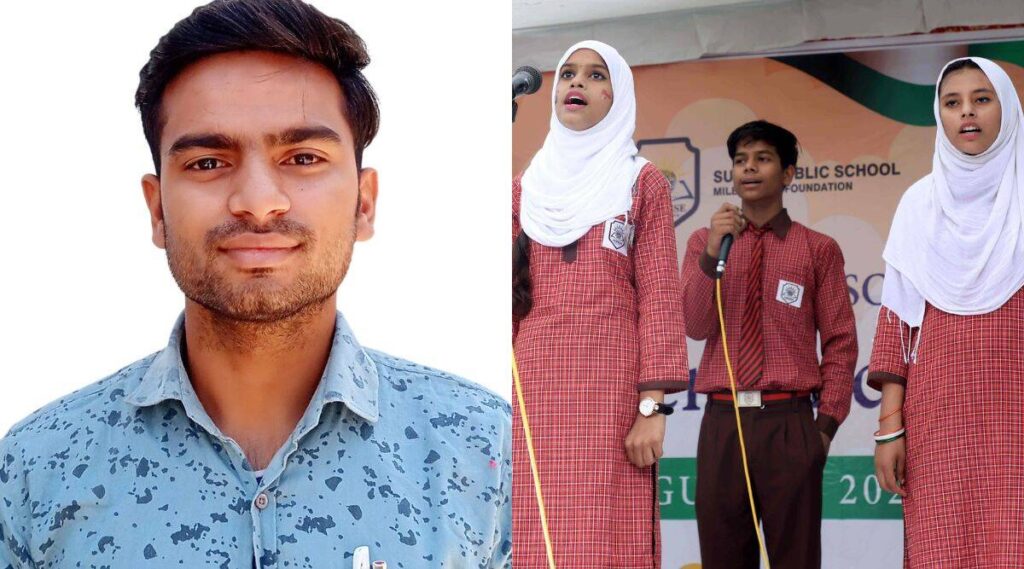
Teachers’ Day 2022: Meet Islamuddin, a Delhi riot victim who teaches at school started for child victims of the February 2020 violence

Ghaziabad, UTTAR PRADESH (Delhi NCR) :

Teachers’ Day 2022: He teaches Hindi as well as Social Science and tries to help students work through their own trauma at Sunrise Public School, Ghaziabad.

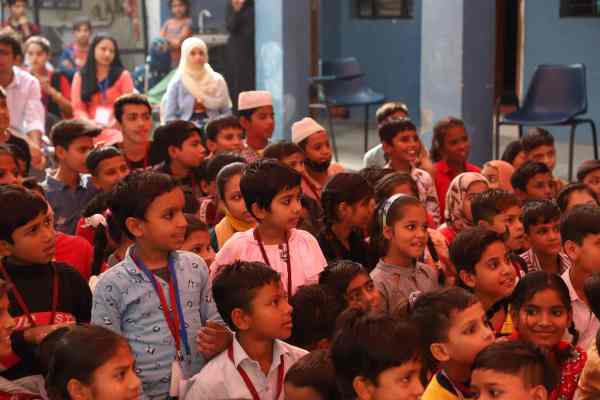
Teacher’s Day 2022: The school began with the number but has now grown to 350, most from the areas hit by the riot. (Express photo by Sukrita Baruah)

Teachers’ Day 2022: 

For 24-year-old Islamuddin, a resident of Shiv Vihar, one of the worst-hit areas during the 2020 communal riots in Delhi, images of the incidents in February two years ago – his grandfather’s house being gutted by fire and his family’s motorbike being destroyed – would keep reappearing in front of him each time he heard a sudden sound or saw a group of people huddled together.

Today, he is teaching Hindi and Social Science to children affected by the riot and is trying to work through their trauma.

Islamuddin is one of 14 teachers at Sunrise Public School Loni, Ghaziabad which was started in August 2020 for children who were victims of the riot. It was started by the Miles2smile foundation, a non-profit run by Aasif Mujtaba who was then pursuing his Ph.D. at IIT-Delhi.

“In August 2020, after the violence and the national lockdown – I met some families who said they were not able to afford the education of their children because of the ‘double trouble’. Initially we thought that we could make a list of 10-15 troubled families and sponsor the children’s education. But when our volunteers went out to meet people about this, they came back with a list of 80 children,” said Mujtaba.

So the school started with 80 children, and over the last two years, the number of students has grown to 350, most of whom are from riot-affected areas, but there are also children from the school’s vicinity. According to Mujtaba, 22 students had lost their fathers during the riots.

The teachers, too, are from riot-affected areas, and seven teachers are from Shiv Vihar, including Islamuddin, who is currently doing an M.A. in Hindi Literature from IGNOU.

“I had never seen such things in front of my eyes before: petrol bombs being thrown, people shouting slogans from afar, threatening to kill. That was all a flash, but when it was over, and we tried to return to normalcy a week or two later, those scenes would not leave my eyes,” he said.

While teaching the children, he says, addressing their trauma is the most challenging part.

(Express photo)

“There are children who lost their homes and witnessed the violence, and then there are children who lost their fathers. It is still easier to explain what happened to the former. But for the latter, it was difficult to even call them to study and talk to them. In the early days, even if you mentioned the word ‘papa’ their eyes would start tearing up. We started with the older children, explaining to them that coming to school and studying is the best way to move on. We took them to a picnic, conducted competitions, told them to express themselves through writing, and gradually tried to create a sense of normalcy. We try to talk to them more about the future and what they want to do,” he said.

The school teaches children from nursery to Class 8, after which the foundation either helps to get the children enrolled in a government school or sponsors their education in a private school.

“We teach all subjects in the school but starting this session, since we are able to do physical classes fully again, we have decided to reduce the syllabus and spend more time on extra-curricular activities,” said Mujtaba.

source: http://www.indianexpress.com / The Indian Express / Home> Education / by Sukrita Baruah, News Delhi / September 04th, 2022